
Last refreshed: October 5, 2026 (Pacific)
Model Accuracy Note — Updated October 2026
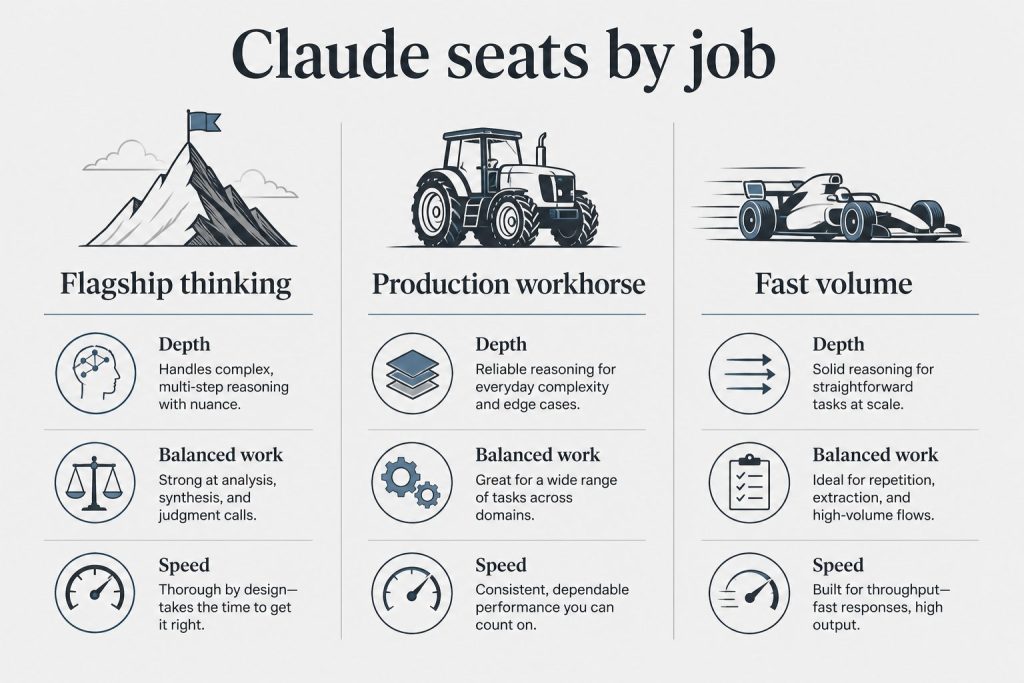
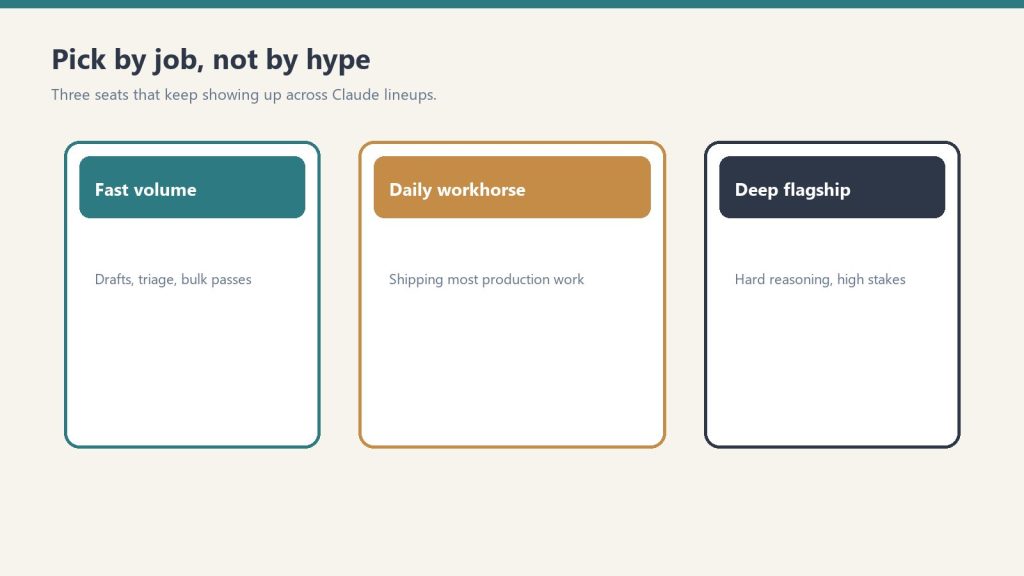
Current lineup (October 2026, verified): Claude Fable 5.1 is the top tier above Opus, with Claude Opus 5.5 the current Opus, Claude Sonnet 5.5 (released September 28, 2026), and Claude Haiku 4.5. Opus 4.7 is now a legacy model. Full lineup: Claude Fable 5 guide. Claude Opus 4.7 referenced in this article has been superseded. See current model tracker →
Anthropic released Claude Opus 4.7 on April 16, 2026, alongside an update to Claude Haiku 4.5. The release is headlined by a 3× improvement in vision resolution, but the more operationally significant additions are task budgets and the new xhigh effort level — both of which change how developers can dial Claude’s reasoning intensity for compute-sensitive workflows.
Vision Resolution: What 3× Actually Means
Claude Opus 4.7 processes images at three times the resolution of its predecessor. In practice, this means documents with dense text, screenshots of complex interfaces, detailed charts and diagrams, and high-resolution photography are now meaningfully more legible to the model. Tasks that previously required cropping or pre-processing images to help Claude read fine details should now work with the original image.
For enterprise use cases — contract review from scanned PDFs, financial statement analysis from images, medical imaging workflows, engineering diagram interpretation — the resolution improvement is not incremental. It crosses a threshold where image-based document processing becomes reliably useful rather than occasionally accurate.
Task Budgets
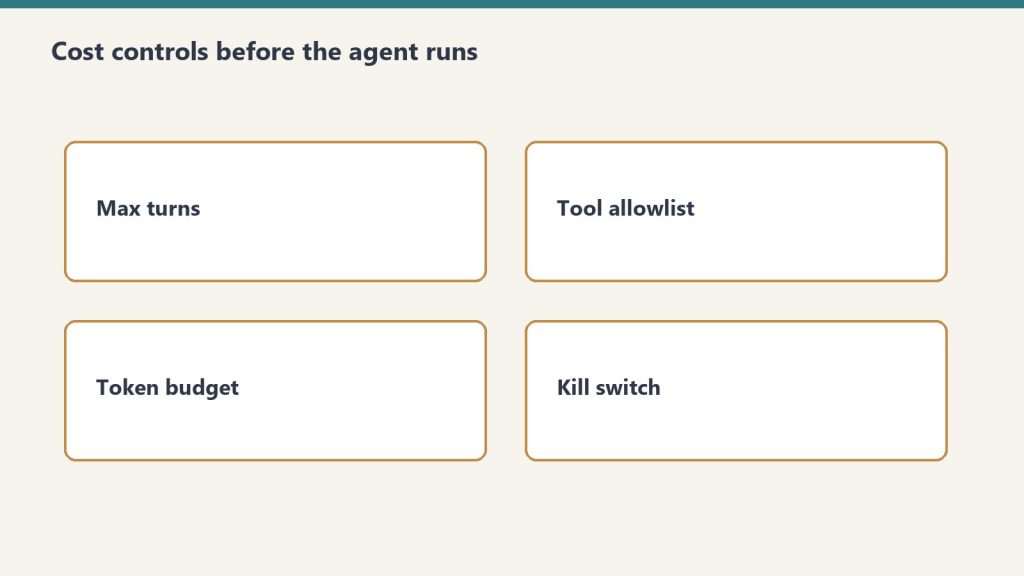
Task budgets give developers a mechanism to cap how much compute Claude spends on a given task before returning a response. This is the missing lever that has made Claude’s extended thinking mode difficult to use predictably in production. Without a budget ceiling, extended thinking tasks could run arbitrarily long and cost arbitrarily much. With task budgets, you can set a ceiling and get a best-effort response within that constraint rather than an open-ended spend.
The practical implication is that extended thinking becomes viable in latency-sensitive or cost-sensitive production contexts that previously had to avoid it entirely. A customer-facing workflow that needs a thoughtful answer but can’t wait indefinitely can now specify a budget and get a response calibrated to that constraint.
The xhigh Effort Level
Alongside the existing effort levels, Opus 4.7 introduces xhigh — an above-maximum reasoning intensity setting intended for tasks where accuracy justifies extended compute time regardless of cost. Research tasks, complex multi-step reasoning chains, high-stakes analysis where a wrong answer is costly — these are the intended use cases.
xhigh pairs naturally with task budgets: use xhigh to get the most thorough reasoning Claude can produce, and use a task budget to define the ceiling on how long it runs. Together they give developers precision control over the quality/cost/latency trade-off that was previously binary (extended thinking on or off).
Pricing: Unchanged from 4.6
Opus 4.7 maintains the same pricing as Claude Opus 4.6: $5 per million input tokens and $25 per million output tokens. For teams currently on Opus 4.6, this is an unambiguous upgrade — better vision, task budgets, and xhigh effort at the same cost. The Haiku 4.5 update released alongside it carries the same pricing-unchanged pattern.
Deprecation note: Claude Haiku 3 was retired on April 19. Teams still on Haiku 3 should have already migrated — if not, that’s an urgent action item.
Source: Anthropic — Claude Opus 4.7 Release
Leave a Reply