Category: Claude AI

Complete guides, tutorials, comparisons, and use cases for Claude AI by Anthropic.

  • Anthropic IPO 2026: Timeline, Valuation, and What Investors Need to Know

    Anthropic IPO 2026: Timeline, Valuation, and What Investors Need to Know

    Claude AI · Fitted Claude

    Anthropic’s IPO is one of the most anticipated public offerings in technology history. The company behind Claude AI — valued at over $61 billion in its most recent private round — is widely expected to go public in 2026 at a valuation that could rank among the largest technology IPOs ever. This guide covers the timeline, valuation analysis, and investment options available to retail and accredited investors.

    IPO Timeline: What We Know

    No official IPO date has been announced as of April 2026. Multiple reports point to a target of late 2026, with Goldman Sachs and JPMorgan Chase as lead underwriters. Anthropic reportedly surpassed $30B annualized revenue run rate in early 2026 — a strong foundation for a premium valuation multiple.

    Valuation: What the Numbers Suggest

    Anthropic’s last private valuation exceeded $61 billion. Analysts and bankers model an IPO range of $400-500 billion — a 6-8x step-up from the most recent private round, based on revenue growth trajectory and market position. This would place Anthropic among the top 20 most valuable public companies at listing.

    Pre-IPO Investment Options

    Secondary Market Platforms (Accredited Investors Only)

    • Hiive — Anthropic shares listed at approximately $849/share as of early 2026
    • EquityZen — Pre-IPO share access for accredited investors
    • Forge Global — Another secondary market platform for private company shares

    Important: Secondary market access requires accredited investor status (typically $1M+ net worth or $200K+ annual income). Shares may be illiquid until IPO and carry meaningful risk.

    Indirect Exposure

    Amazon (AMZN) has committed up to $4 billion in Anthropic investment. Google/Alphabet (GOOGL) invested $2 billion. These provide indirect exposure, though Anthropic represents a small fraction of either company’s total value.

    What to Watch

    • Revenue growth rate and enterprise customer count
    • Claude Code developer adoption metrics
    • Official S-1 filing (IPO prospectus)
    • Lead underwriter announcements and roadshow schedule

    Frequently Asked Questions

    When is the Anthropic IPO?

    No official date announced. Reports target late 2026, subject to market conditions.

    Can retail investors buy Anthropic stock before the IPO?

    Accredited investors can access pre-IPO shares through Hiive, EquityZen, or Forge Global. Retail investors without accredited status must wait for the public offering.


    Need this set up for your team?
    Talk to Will →

  • The Complete History of Anthropic: From OpenAI Split to $380B Valuation

    The Complete History of Anthropic: From OpenAI Split to $380B Valuation

    Claude AI · Fitted Claude

    Anthropic’s founding story is one of the most consequential in the history of artificial intelligence. Seven researchers who helped build the most powerful AI systems in the world walked away because they were worried about what those systems might become. This is the complete history.

    The OpenAI Origins

    By 2020, OpenAI had produced GPT-3 — a 175-billion-parameter language model demonstrating qualitatively new capabilities. Dario Amodei, VP of Research, and several colleagues were growing increasingly concerned: what happens when these systems become significantly more capable? The company’s “capped-profit” structure and commercial partnerships with Microsoft were creating tensions with pure safety research.

    The Precita Park Meetings

    In spring 2021, senior OpenAI researchers began meeting in Precita Park, a neighborhood park in San Francisco’s Bernal Heights. These conversations crystallized around a founding team: Dario Amodei (CEO), Daniela Amodei (President), Jared Kaplan (CSO), Chris Olah, Tom Brown, Sam McCandlish (CTO), and Jack Clark. All seven had been at OpenAI. All seven left within a compressed time period in mid-2021.

    The Founding

    Anthropic was incorporated in 2021 as a Public Benefit Corporation (PBC) — a legal structure that formally embeds a social mission alongside profit objectives. The name “Anthropic” (relating to human existence) reflects the mission: building AI safe and beneficial for humanity. Early funding: $124 million seed from Spark Capital.

    Constitutional AI

    Anthropic’s most significant research contribution: Constitutional AI — training models to follow written principles rather than relying solely on human feedback at every step. The “constitution” is a list of principles Claude upholds: honesty, avoiding harm, respecting user autonomy. This creates more consistent safety behavior across a wider range of situations.

    Growth and Current Status

    Major investments from Google ($2B) and Amazon (up to $4B) validated Anthropic’s trajectory. By 2026, Anthropic is valued at over $61 billion. Claude competes directly with GPT-4o and Gemini as one of the three most capable AI assistants in the world. An IPO targeting late 2026 at $400-500B is widely expected.

    Frequently Asked Questions

    Who founded Anthropic?

    Seven former OpenAI researchers: Dario Amodei (CEO), Daniela Amodei (President), Jared Kaplan (CSO), Chris Olah, Tom Brown, Sam McCandlish (CTO), and Jack Clark.

    Why did the Anthropic founders leave OpenAI?

    Growing concerns about AI safety practices and tensions between commercial pressures and rigorous safety research.


    Need this set up for your team?
    Talk to Will →

  • Claude AI Alternatives: 10 Tools for When Claude Isn’t Enough

    Claude AI Alternatives: 10 Tools for When Claude Isn’t Enough

    Claude AI · Fitted Claude

    Claude is one of the best AI assistants available — but it’s not the right tool for every job. It can’t generate images, doesn’t have default real-time web access, and lacks deep Google Workspace integration. Here are the 10 best Claude alternatives, each matched to where it genuinely wins.

    1. ChatGPT — Best All-Around Alternative

    Use when: You need image generation (DALL-E), broader plugin ecosystem, or voice mode. Price: Free / $20/month Plus / $200/month Pro.

    2. Perplexity — Best for Real-Time Research

    Use when: You need current information with source citations. Searches the live web in real time. Price: Free / $20/month Pro.

    3. Gemini — Best for Google Workspace

    Use when: You live in Gmail, Docs, Sheets, or Drive. Native integration across all Google Workspace apps. Price: Free / $20/month Advanced.

    4. Midjourney — Best for AI Image Generation

    Use when: You need high-quality AI-generated images. Claude cannot generate images at all. Price: $10-120/month.

    5. GitHub Copilot — Best IDE-Native Coding

    Use when: You want AI coding assistance embedded in VS Code or JetBrains with persistent autocomplete. Price: $10/month individual.

    6. Otter.ai — Best for Audio Transcription

    Use when: You need to transcribe meetings or audio files. Claude cannot process audio directly. Price: Free / from $10/month.

    7. Jasper — Best for Marketing Content at Volume

    Use when: You’re a marketing team producing high volumes of structured content with brand voice memory and SurferSEO integration. Price: From $49/month.

    8. Microsoft Copilot — Best for Office 365

    Use when: Your work lives in Word, Excel, PowerPoint, Teams, and Outlook. Native M365 suite integration. Price: $30/user/month.

    9. Notion AI — Best for Workspace-Embedded Writing

    Use when: You want AI assistance directly inside Notion — summarizing pages, drafting within documents, auto-filling databases. Price: $8-10/month add-on.

    10. DeepSeek — Best for Cost-Sensitive API Use

    Use when: Building API applications where per-token cost is the primary constraint and you’re not handling sensitive data. DeepSeek API is 10-20x cheaper. Note data sovereignty considerations. Price: Free consumer / very cheap API.

    Frequently Asked Questions

    What is the best free alternative to Claude AI?

    Gemini has the most generous free tier with capable model access. Perplexity free includes limited Pro searches. ChatGPT free uses GPT-4o-mini.


    Need this set up for your team?
    Talk to Will →

  • Claude Max Plan: Who Actually Needs $100/Month

    Claude Max Plan: Who Actually Needs $100/Month

    Claude AI · Fitted Claude

    The jump from Claude Pro to Max is a 5x price increase — $20/month to $100/month. Whether it’s worth it depends entirely on how you use Claude and where your current plan fails you. Here’s the data to make that decision.

    What’s Actually Different

    Feature Pro ($20/mo) Max 5x ($100/mo) Max 20x ($200/mo)
    Usage volume Baseline 5x Pro 20x Pro
    Heavy prompts/day ~12 ~60 ~240
    Claude Code No Yes Yes
    Extended thinking Limited Full Full
    Model access Sonnet + Opus Sonnet + Opus Sonnet + Opus

    Key insight: you don’t get different models at Max — you get more of them. The difference is usage capacity and Claude Code access.

    Who Should Stay on Pro

    • You use Claude regularly but not all day — a few substantive sessions per week
    • You’re hitting limits occasionally but not consistently
    • You don’t need Claude Code

    Who Needs Max 5x

    • You hit Pro limits daily and it disrupts your workflow
    • You want Claude Code — only available at Max tiers
    • Claude is your primary work tool, not supplementary

    Who Needs Max 20x

    • Heavy Claude Code user running multi-hour sessions daily
    • Processing massive document volumes — dozens of long PDFs per day
    • You’ve been hitting Max 5x limits regularly

    Frequently Asked Questions

    What does Claude Max include that Pro doesn’t?

    Claude Code access, higher usage limits (5x or 20x), full extended thinking, and higher priority during peak times.

    Is Claude Max worth $100 a month?

    For developers using Claude Code and professionals hitting Pro limits daily: yes. For moderate users: Pro at $20/month is sufficient.


    Need this set up for your team?
    Talk to Will →

  • Claude vs Perplexity: Research Engine vs Reasoning Partner

    Claude vs Perplexity: Research Engine vs Reasoning Partner

    Claude AI · Fitted Claude

    Comparing Claude to Perplexity is a category error — they’re not trying to do the same thing. Perplexity is a real-time research engine. Claude is a reasoning partner. Understanding the distinction helps you build the most effective research workflow.

    What Perplexity Does Best

    • Real-time information: Searches the live web, summarizes current events with source links
    • Source citation: Every claim has source links for verification
    • Quick research: Fast sourced answers for “what is X” and “what happened with Y”
    • Academic research: Academic mode searches peer-reviewed papers

    What Claude Does Best

    • Deep reasoning: Complex multi-step analysis and strategic thinking
    • Document synthesis: Upload a 200-page report and ask for analysis — Perplexity cannot do this
    • Writing quality: Significantly stronger long-form writing
    • Code: One of the best coding models. Perplexity is not a coding tool.
    • Private documents: Works with confidential content you upload

    The Hybrid Workflow (Best of Both)

    1. Perplexity first: Rapid research, current information, source discovery
    2. Claude second: Synthesis, analysis, writing. Take what Perplexity found and reason through the implications

    At $20/month each, running both costs $40/month — worth it for professionals who research and write regularly.

    Frequently Asked Questions

    Should I use Claude or Perplexity for research?

    Use Perplexity for finding current information with sources. Use Claude for analyzing, synthesizing, and writing. Ideally, use both — Perplexity first, Claude second.

    Does Claude have real-time web access?

    Not by default. Claude has a knowledge cutoff and doesn’t browse the web in real time unless connected via MCP or specific integrations.


    Need this set up for your team?
    Talk to Will →

  • Claude vs DeepSeek: Performance, Pricing, and Privacy

    Claude vs DeepSeek: Performance, Pricing, and Privacy

    Claude AI · Fitted Claude

    DeepSeek emerged as the most disruptive AI development since GPT-4 — a Chinese lab producing frontier-quality models at dramatically lower cost. In 2026, it’s a genuine competitor to Claude in several categories. But the comparison isn’t only about performance. Privacy and data sovereignty matter. This guide covers all three dimensions.

    Performance Comparison

    Benchmark Claude Opus 4.6 DeepSeek
    SWE-bench (coding) 80.8% ~49% (V3), higher for R1
    GPQA Diamond 91.3% Competitive
    Math reasoning Top tier R1 leads on pure math
    Context window 200K tokens 128K tokens

    Claude leads on real-world software engineering and long-document reasoning. DeepSeek R1 is competitive or superior on pure math. For most professional use cases, Claude holds the performance edge.

    Pricing Comparison

    DeepSeek’s API pricing is 10-20x cheaper than Claude’s — roughly $0.27-0.55 per million input tokens vs Claude’s $3-15. For high-volume API applications where cost is the primary constraint, DeepSeek is a serious consideration. The consumer interface is free vs Claude’s $20-200/month paid tiers.

    The Privacy Question

    DeepSeek is a Chinese company. Its data handling is subject to Chinese law, which includes requirements to provide user data to Chinese government authorities under certain circumstances. Multiple national governments have restricted DeepSeek on government systems. For professionals handling confidential client data or sensitive business information, the data sovereignty difference between Anthropic (US-incorporated) and DeepSeek (Chinese-incorporated) is material.

    Choose Claude If You…

    • Handle confidential professional, legal, or medical data
    • Need highest performance on software engineering tasks
    • Require long-document analysis (200K vs 128K context)
    • Need US-based data handling

    Frequently Asked Questions

    Is DeepSeek as good as Claude?

    Competitive on math and logic. Claude leads on SWE-bench software engineering, long documents, and writing quality.

    Is DeepSeek safe to use?

    For general consumer use, immediate risk is low. Professionals handling sensitive data should consider DeepSeek’s Chinese data jurisdiction carefully.


    Need this set up for your team?
    Talk to Will →

  • MCP Servers Explained: Model Context Protocol Tutorial

    MCP Servers Explained: Model Context Protocol Tutorial

    Claude AI · Fitted Claude

    Model Context Protocol (MCP) is the most important infrastructure development in Claude’s ecosystem in 2026. It’s an open standard for connecting AI models to external tools, data sources, and services — replacing fragmented one-off integrations with a universal interface. This guide explains what MCP is and how to set up your first server.

    What Is MCP?

    MCP defines a universal interface: any tool that implements the MCP server specification can connect to any AI application implementing the MCP client specification. Build once, connect anywhere. Before MCP, connecting Claude to external systems required custom integration code for every integration — and none of it worked across different AI tools.

    MCP Architecture

    • MCP Host: The AI application (Claude desktop, Claude Code, your custom app)
    • MCP Client: Built into the host; manages connections to servers
    • MCP Server: Lightweight program exposing tools, resources, or prompts

    Setting Up MCP in Claude Desktop

    Go to Settings → Developer → Edit Config. Add your server configuration:

    {
      "mcpServers": {
        "filesystem": {
          "command": "npx",
          "args": ["-y", "@modelcontextprotocol/server-filesystem", "/path/to/directory"]
        }
      }
    }

    Restart Claude Desktop. Claude can now read, write, and manage files in your specified directory.

    Popular MCP Servers

    Server What It Does
    Filesystem Read/write local files
    GitHub Manage repos, issues, PRs
    PostgreSQL Query databases
    Slack Read/send messages
    Brave Search Real-time web search
    Zapier Connect to 8,000+ apps

    Frequently Asked Questions

    Is MCP open source?

    Yes. Anthropic open-sourced the MCP specification and official server implementations.

    Do I need to code to use MCP?

    To install existing servers: basic command-line comfort is enough. To build custom servers: TypeScript or Python knowledge required.


    Need this set up for your team?
    Talk to Will →

  • Claude API Tutorial: Python and JavaScript Getting Started

    Claude API Tutorial: Python and JavaScript Getting Started

    Claude AI · Fitted Claude

    The Claude API gives you programmatic access to Claude in your own applications and scripts. This guide gets you from zero to a working integration in Python or JavaScript.

    Prerequisites

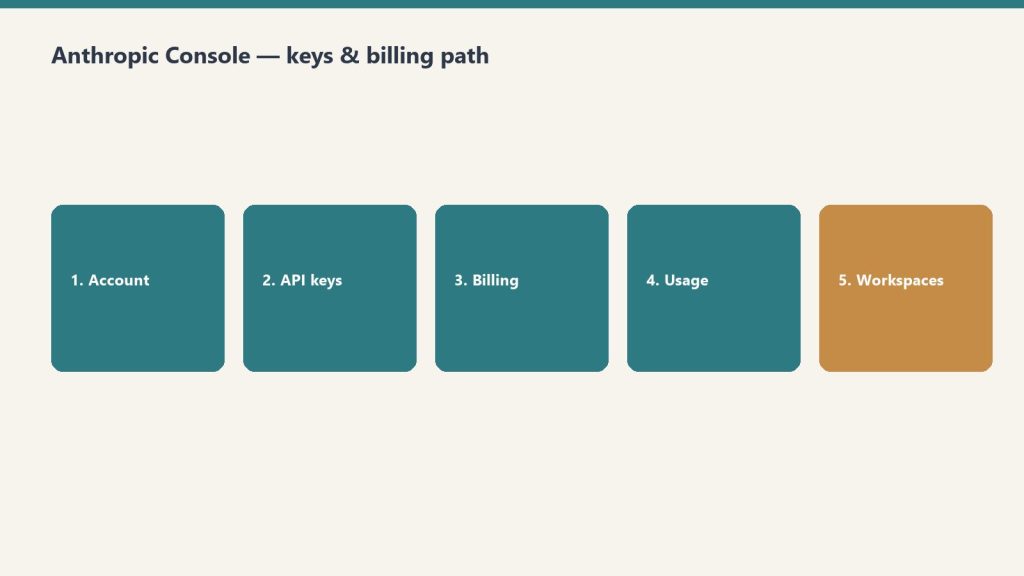
    • Anthropic account at console.anthropic.com
    • API key from Console → API Keys
    • Python 3.7+ or Node.js 18+

    Installation

    # Python
    pip install anthropic
    
    # JavaScript
    npm install @anthropic-ai/sdk

    Your First API Call (Python)

    import anthropic
    
    client = anthropic.Anthropic(api_key="your-api-key-here")
    
    message = client.messages.create(
        model="claude-sonnet-4-6",
        max_tokens=1024,
        messages=[{"role": "user", "content": "Explain APIs in plain English."}]
    )
    print(message.content[0].text)

    Adding a System Prompt

    message = client.messages.create(
        model="claude-sonnet-4-6",
        max_tokens=1024,
        system="You are a helpful customer support agent for Acme Corp.",
        messages=[{"role": "user", "content": "How do I reset my password?"}]
    )

    Streaming Responses

    with client.messages.stream(
        model="claude-sonnet-4-6",
        max_tokens=1024,
        messages=[{"role": "user", "content": "Write a 500-word blog post about AI."}]
    ) as stream:
        for text in stream.text_stream:
            print(text, end="", flush=True)

    Model Selection

    Model String Best For
    Claude Opus 4.6 claude-opus-4-6 Complex reasoning, coding
    Claude Sonnet 4.6 claude-sonnet-4-6 Balanced everyday tasks
    Claude Haiku 4.5 claude-haiku-4-5-20251001 Fast lightweight tasks

    Frequently Asked Questions

    How much does the Claude API cost?

    Pricing is per token (input and output separately). Check anthropic.com/pricing. Haiku is cheapest, Sonnet offers the best cost/quality balance for most applications.

    Do I need a Claude subscription to use the API?

    No. API access is separate. Create an Anthropic Console account and pay per token used.


    Need this set up for your team?
    Talk to Will →

  • Claude Extended Thinking: When and How to Use It

    Claude Extended Thinking: When and How to Use It

    Claude AI · Fitted Claude

    Extended thinking is Claude’s most powerful reasoning mode — and the one most people never use correctly. This guide explains what extended thinking does, when it genuinely improves outputs, how to enable it, and when you’re better off with a standard prompt.

    What Is Extended Thinking?

    Extended thinking gives Claude a dedicated reasoning phase before generating its final response. Claude works through a problem on “scratch paper” before writing its answer — exploring multiple approaches, identifying errors in its own reasoning, and building a more deliberate chain of thought. In Claude 4.6 models, this is called adaptive extended thinking — Claude dynamically adjusts how much thinking it does based on problem complexity.

    When Extended Thinking Genuinely Helps

    • Complex math and logic problems requiring step-by-step reasoning
    • Multi-step coding tasks with many interdependent components
    • Strategic analysis requiring weighing many variables
    • Difficult research synthesis where accuracy matters most
    • Any task where “think step by step” would help — extended thinking does this automatically

    When Extended Thinking Is Overkill

    • Simple factual questions with clear answers
    • Routine writing tasks (emails, summaries, short copy)
    • Format conversion or data transformation
    • Tasks where speed matters more than depth

    How to Enable Extended Thinking

    In Claude.ai: Look for the thinking toggle before sending your message. Available on Max tiers and higher.

    Via API: Pass "thinking": {"type": "enabled", "budget_tokens": 10000} in your request. Higher budget_tokens allows more thorough reasoning but increases latency and cost.

    What You See During Extended Thinking

    Claude shows a collapsed “thinking” section before its response. Expand it to see the reasoning chain — useful for verifying logic or understanding how Claude approached a problem. The thinking section is exploratory and may contain dead ends; this is normal.

    Frequently Asked Questions

    Does extended thinking always give better answers?

    No. It improves accuracy on complex reasoning tasks but adds latency. For simple tasks, standard mode is faster and just as accurate.


    Need this set up for your team?
    Talk to Will →

  • Claude Memory: How It Works and How to Configure It

    Claude Memory: How It Works and How to Configure It

    Claude AI · Fitted Claude

    Claude’s memory feature changes the product from a stateless chatbot into something that actually knows you. Without memory, Claude starts from zero every conversation. With memory configured, Claude builds a growing knowledge base about you that it draws on automatically. This guide explains how it works and how to get the most from it.

    How Claude Memory Works

    Claude’s memory is an auto-synthesized knowledge base. Approximately every 24 hours, the system reviews recent conversations and extracts facts, preferences, and patterns worth remembering — then stores those as structured memory entries. Memory is separate for Projects vs. standalone conversations — each Project has its own memory space.

    What Claude Can Remember

    • Your name, role, and professional context
    • Preferred communication style and tone
    • Ongoing projects and their context
    • Tools, frameworks, and workflows you use
    • Output format preferences
    • Things you’ve asked Claude not to do

    How to Configure Memory

    In Claude.ai, go to Settings → Memory. You’ll see auto-generated memory entries. You can review, edit, delete, or manually add memories. You can also instruct Claude directly: “Remember that I prefer bullet points” or “Don’t forget my target audience is non-technical executives.”

    Memory vs. Project Instructions

    Project instructions are static — written once, apply to every conversation. Memory is dynamic — evolves as Claude learns. Use Project instructions for consistent role context. Use memory for personal preferences and evolving project context.

    CLAUDE.md for Claude Code

    For Claude Code, place a CLAUDE.md file in your project root. Claude Code reads it at the start of every coding session. Use it for: project architecture, coding standards, common patterns, known issues. This is the most powerful memory tool for developers.

    Frequently Asked Questions

    Does Claude remember everything I say?

    No. Memory synthesizes and stores key facts and preferences, not verbatim conversation logs. It’s selective — designed to capture what’s useful.

    Can I delete Claude’s memories about me?

    Yes. Go to Settings → Memory in Claude.ai to view and delete any memory entries.


    Need this set up for your team?
    Talk to Will →