Updated November 13, 2026 — facts, pricing tiers, models, and field-sheet PDF verified against live Anthropic documentation.
Direct Answer · Verified November 13, 2026
Claude scales editorial, SEO, email, and social workflows by pairing detailed content briefs with brand-voice Projects — drafting structured H2/H3 outlines, on-page optimization passes, nurture sequences, and social repurposing while leaving fact-checking and original insight to human editors (claude.com/product/overview). Throughput scales with editorial depth and 5-hour/weekly plan caps rather than a fixed daily article quota: solo writers start on Pro ($20/mo, $17 annual), high-output operators step up to Max ($100) or Ultra ($200), and multi-writer teams run Team Standard ($20 annual / $25 monthly). Compare tiers on Claude AI pricing and pair team playbooks with solo creator workflows on Claude for content creators.
Claude for Content Creation & SEO — Tygart Media Field Sheet (PDF)
Claude has become a core tool for content teams — not as a replacement for human writers, but as a force multiplier that changes what’s possible with limited resources. This guide covers the practical workflows that professional content creators, SEO specialists, and marketing teams use with Claude in 2026, including where it excels, where it falls short, and how to integrate it into a production content operation.
Blog Posts and Long-Form Content
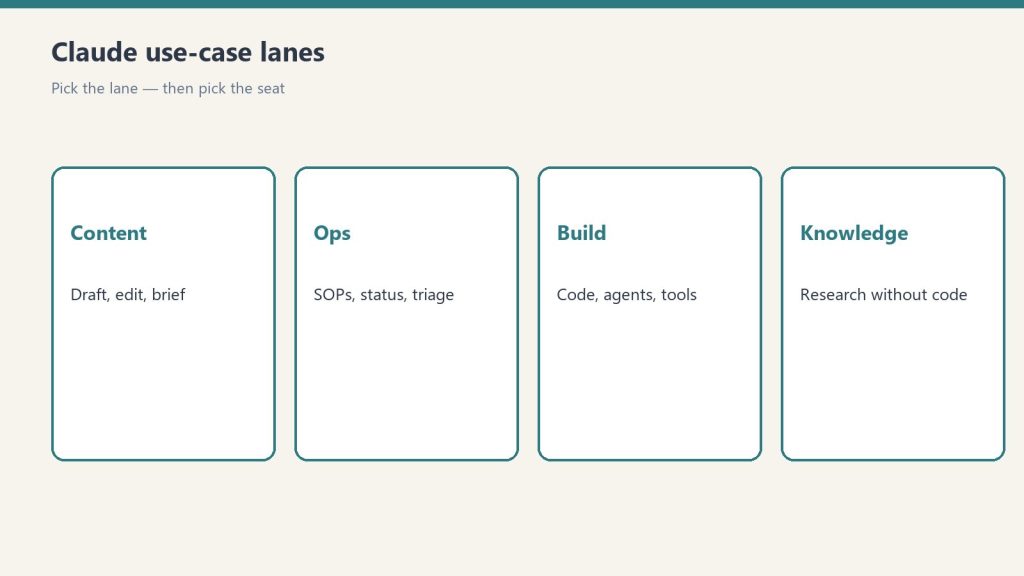
Claude excels at drafting long-form content when given proper direction. The key is providing a detailed brief — not just a topic, but the target keyword, the audience, the desired structure, the tone, competing content to differentiate from, and any specific data or examples to include. A well-briefed Claude request produces a first draft that’s 70-80% of the way to publishable, versus a vague request that produces generic filler.
Best practices for blog production: write a content brief first (or use Claude to help write one), include your brand voice guidelines in a Project, specify the exact structure you want (H2s and H3s), request specific word counts, and always edit the output for accuracy, originality, and brand alignment. Never publish AI-generated content without human review — this is especially important for factual claims, statistics, and technical accuracy.
Get The Signal
What we actually ran, what it measured, and what it means for a restoration shop — every week, including the flops.
SEO Content Optimization
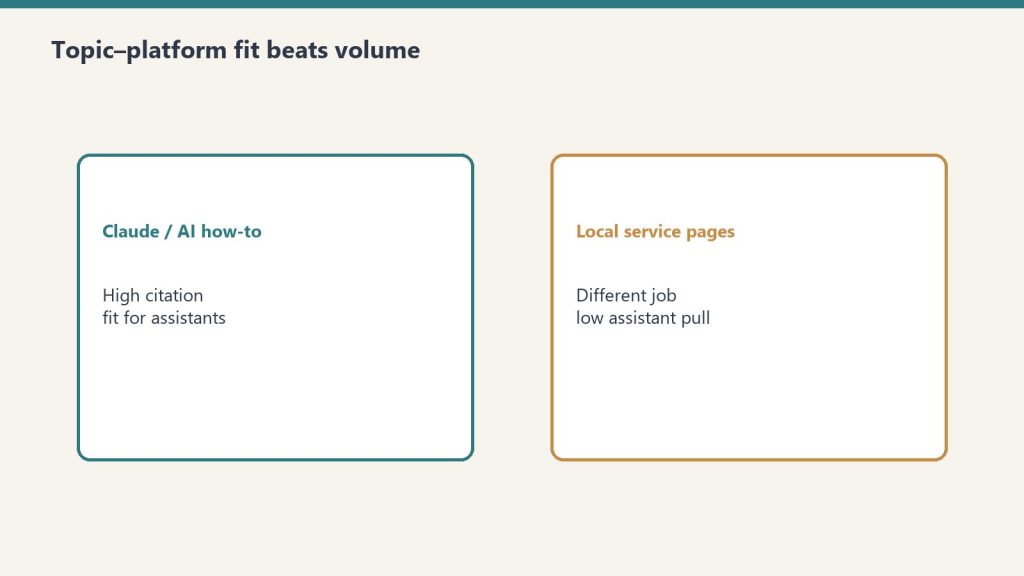
Claude can analyze existing content for SEO improvements — identifying missing keywords, suggesting heading structure changes, improving meta descriptions, and recommending internal linking opportunities. Feed Claude your target keyword, your current content, and competitor content, and ask for specific optimization recommendations. Claude can also generate FAQ sections with structured data markup, which directly targets featured snippets and People Also Ask placements.
For new content, Claude can research keyword clusters, identify search intent, and draft content structured for both traditional SEO and emerging AI search optimization (AEO/GEO). The combination of web search capability and content generation means Claude can research a topic and draft optimized content in a single session.
Email Marketing
Claude handles email marketing content effectively — subject line variations, body copy, CTAs, and nurture sequences. The workflow that works best: share your product/service details and audience information in a Project, then request specific email types (welcome sequence, promotional, re-engagement, newsletter). Claude can generate multiple variations for A/B testing and adapt tone for different segments.
Social Media Content
Claude can repurpose long-form content into social media posts tailored for different platforms — LinkedIn articles and thought leadership posts, Twitter/X threads, Instagram captions, and Facebook updates. Provide the source content and specify the platform, tone, and any hashtag or formatting requirements. Claude adapts naturally between professional (LinkedIn), conversational (Twitter), and visual-caption (Instagram) styles.
Content Strategy and Planning
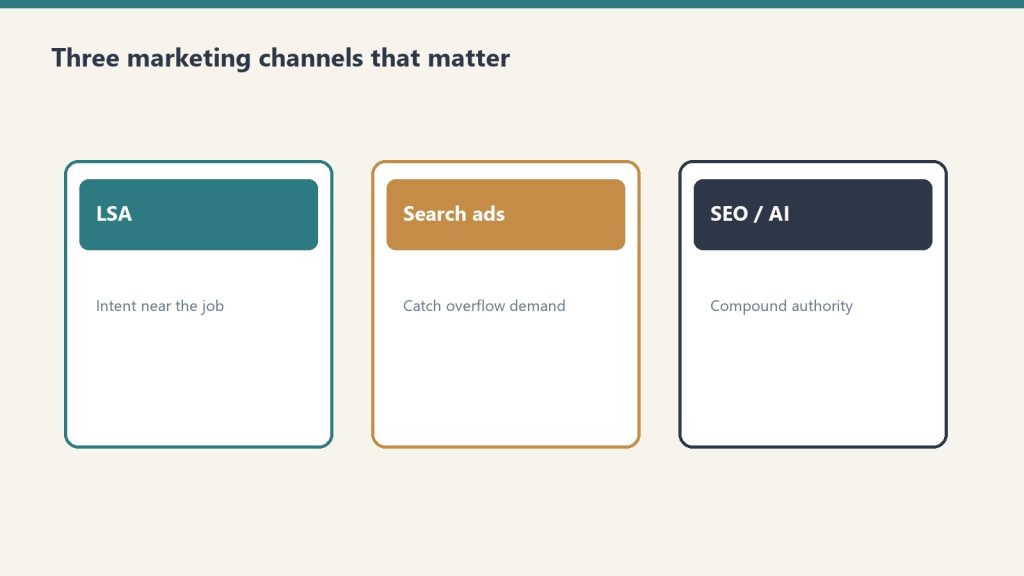
Beyond individual pieces, Claude can help with content strategy — editorial calendar planning, content gap analysis, persona development, and competitive content auditing. Upload your existing content inventory, share your business goals and target audience, and ask Claude to identify gaps, suggest topics, and prioritize based on potential impact. This is especially powerful with web search enabled, allowing Claude to analyze competitor content in real-time.
Marketing Team Pipelines, Synthesis & Workspace Setup
Marketing teams get the strongest leverage from Claude not as an autonomous content button, but as a structured thinking partner and first-draft engine that eliminates the repetitive 80% of structural work while leaving strategy, positioning, and final editorial judgment with humans.
Brief-to-First-Draft & Campaign Strategy Documents
Start every assignment inside a Brand Voice Project with a structured 400–600-word creative brief before asking for prose so writers spend their review cycle sharpening accuracy and angle rather than building scaffolds. For campaign launches, supply your objective, target buyer, budget tier, and competitive context to generate structured messaging frameworks and launch briefs your whole marketing team can critique and align around.
Competitive Research Synthesis & A/B Copy Variants
Feed Claude a competitor’s landing page alongside reference articles and your current positioning to surface messaging gaps and untested angles before creative kickoffs. For paid acquisition and lifecycle testing, provide your control copy and request five or more testable variants built around distinct hooks, CTAs, and tone registers — letting strategists pick the top two or three candidates for live split tests.
Organizing Shared Projects Across a Marketing Team
Deploy shared channel Projects — separate Projects for blog, email, social, and paid creative, each preloaded with voice guides, buyer personas, and past top performers — on Team Standard ($20/seat/mo annual or $25 monthly; 2–150 seats) with SSO, central billing, and zero model training by default. Heavy campaign producers can mix in Team Premium ($100 annual / $125 monthly, 5× Standard capacity) inside the same workspace, while organizations with 20+ seats needing SCIM, audit logs, and compliance API controls deploy Enterprise ($20/seat/mo annual + API usage).
Quality Control and Accuracy
AI-generated content requires human quality control. Every piece should be checked for factual accuracy (especially statistics, dates, and specific claims), brand voice consistency, originality (run through plagiarism detection), legal compliance (disclaimers, disclosures), and genuine value to the reader. The biggest risk with AI content is not that it’s bad — it’s that it’s competent but generic. Human editors should push for the specific insights, examples, and perspectives that make content genuinely useful rather than just technically correct.
Related on Tygart Media: Claude for content creators · Claude AI pricing · beginner prompting.
Frequently Asked Questions
Can Claude write SEO content?
Yes. Claude can draft keyword-optimized content, generate meta descriptions, create FAQ sections with schema markup, and analyze content for SEO improvements. Human review for accuracy and originality is essential.
Should I use Claude to write my entire blog?
Use Claude as a drafting and optimization tool, not a hands-off content factory. The best results come from human-directed Claude drafts that are then edited for accuracy, brand voice, and genuine insight.
Can Google detect AI-written content?
Google has stated it focuses on content quality regardless of how it’s produced. The key is creating content that’s helpful, accurate, and provides genuine value — whether written by humans, AI, or both.
How much content can Claude produce per day?
Throughput depends on research depth, primary-source verification, and editing rigor rather than a fixed daily article quota. On Pro ($20/mo, or $17/mo annual), subscribers receive at least 5× Free usage per 5-hour session plus a weekly cap across current 1M-context models (Sonnet 5.5, Opus 5.5); high-volume operators step up to Max ($100/mo), Ultra ($200/mo, no 5-hr limit for verified accounts), or Team Standard ($20/seat annual / $25 monthly) — see full limits on our Claude AI pricing guide and workspace specs on claude.com/product/overview.
Get The Signal
What we actually ran, what it measured, and what it means for a restoration shop — every week, including the flops.
Leave a Reply