Blog

  • Job Posting Schema for Restoration Shops: How Google Reads a Vacancy

    Job Posting Schema for Restoration Shops: How Google Reads a Vacancy

    Last verified: October 2, 2026 against Google’s Job posting structured data (docs last updated September 8, 2026) and AIOSEO’s 4.9.9 announcement.

    Direct answer: JobPosting schema is structured data that labels a single open role — title, employer, work location, description, posted date — so Google can treat the page as a vacancy instead of a brochure. Done correctly, the listing becomes eligible for Google for Jobs. Eligibility is not placement. Google still decides. The markup must match what a candidate can read on the page.
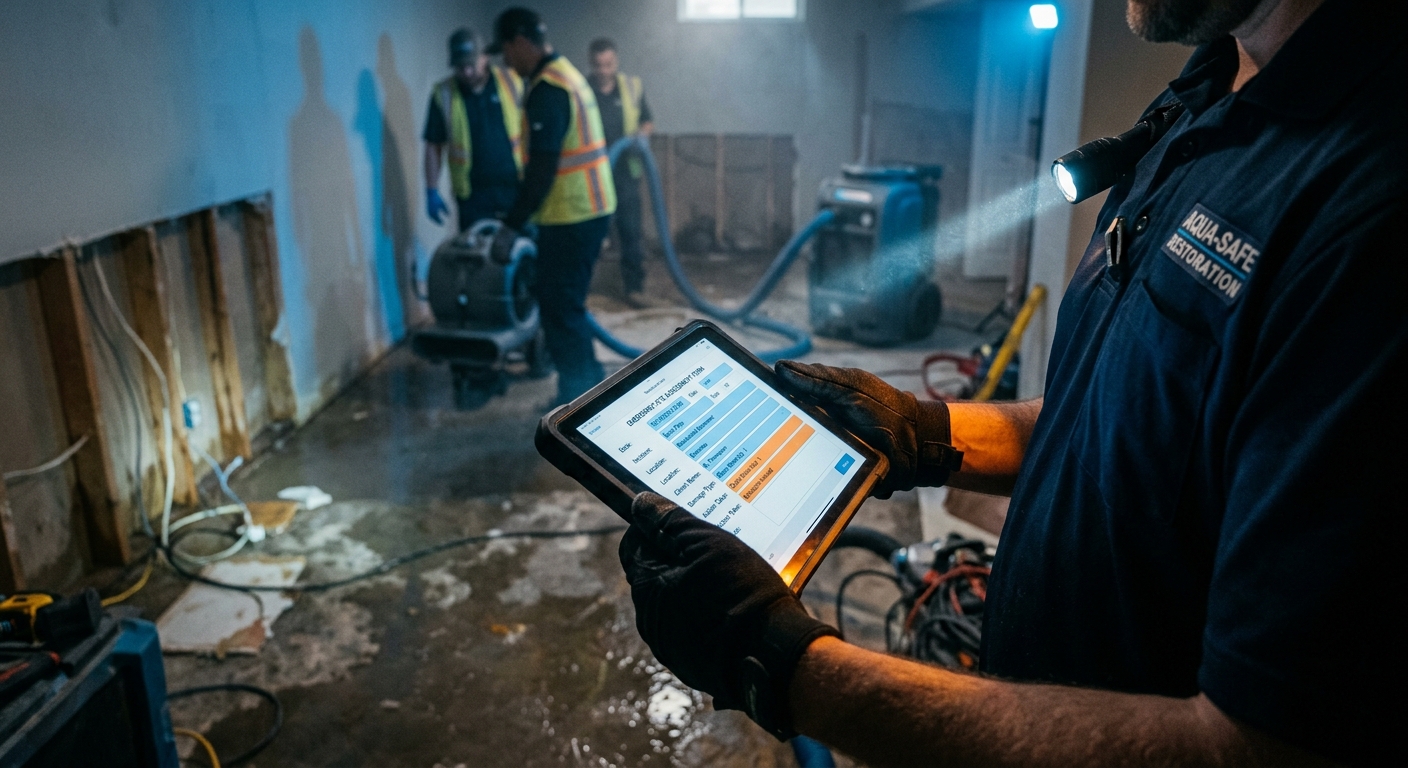
    Tech documenting a water loss on a tablet
    A careers page on your domain is the object Google can attach JobPosting schema to. The board is optional.

    Trigger for this desk: All in One SEO emailed Tygart Media on September 25, 2026 that Job Posting schema (and Event schema) now ships on every paid AIOSEO plan starting with Basic, as of AIOSEO 4.9.9. That is a product-access change, not a ranking promise. tygartmedia.com runs Rank Math. The schema type is the same either way. The plugin is a generator. Google’s Job posting structured data spec (docs last updated September 8, 2026) is the rulebook.

    Why a restoration shop should care

    Related: Schema Markup for AI Search: The New Meta Description · Your Google Profile Is Your New Front Door

    Most restoration companies hire the way they market: on someone else’s board. Indeed, Facebook, a text to a former tech. That works until storm season, and then the shop needs a water tech in Everett, a project manager in Lynnwood, or an estimator who already knows Snohomish County adjusters. If the only public copy of the role lives on a job board, Google indexes the board. Your domain does not own the vacancy.

    A careers page on your site is the durable object. JobPosting schema is the label on that object. Answer engines and Google for Jobs both prefer a page that states the role in plain sentences and then repeats the same facts in JSON-LD. That is AEO and GEO in one hang: the page answers “who is hiring water mitigation technicians in Everett, WA,” and the markup gives the city, employer, and dates without forcing the model to guess.

    What Google requires

    Google’s required JobPosting properties, from Search Central:

    • title — the job title only. “Water Mitigation Technician,” not “Water Mitigation Technician — $28/hr — Everett — Apply Now!!!”
    • description — the full description in HTML. Duties, qualifications, hours, education, experience. A teaser fails.
    • hiringOrganization — the company, not the branch nickname. Name plus a sameAs URL to the official site.
    • jobLocation — where the person reports. PostalAddress with addressCountry. For a 100% remote role, use jobLocationType TELECOMMUTE plus applicantLocationRequirements instead.
    • datePosted — original post date in ISO 8601. Do not refresh it to fake newness.

    Recommended properties that matter for a restoration hire: validThrough (when the listing dies), employmentType (FULL_TIME, PART_TIME, CONTRACTOR, TEMPORARY, PER_DIEM), baseSalary as a MonetaryAmount with currency and unit (HOUR / YEAR), and identifier so you do not duplicate the same role across reprints.

    AIOSEO’s walkthrough (updated August 21, 2026) maps those fields into a Schema Generator: title, description, employment type, location, hiring organization, salary, requirements, publish date, expiration date. Rank Math exposes the same JobPosting type. Fill the fields from the visible page. Do not invent a salary in schema that is missing on the page.

    GEO: mark the city the truck leaves from

    Local service hiring is geographic. A candidate searching “water damage technician jobs Everett WA” or “IICRC tech hiring Lynnwood” is not looking at a national career hub. Put the reporting city in the visible copy and in jobLocation.addressLocality / addressRegion / postalCode / addressCountry.

    Worked example for a shop that stages out of Everett and runs the Lynnwood–Mukilteo–Mill Creek pack:

    • Title on the page and in schema: Water Mitigation Technician
    • hiringOrganization.name: the legal company name, not “Everett Crew”
    • jobLocation: Everett, WA, United States, with the real street if that is where they report
    • description: names the pack — Everett, Lynnwood, Mukilteo, Mill Creek — as service area, not as four fake job locations
    • employmentType: FULL_TIME or PER_DIEM, whichever is true
    • validThrough: a real close date, then take the page down or set the date in the past when the seat is filled

    Do not stamp four JobPosting graphs on one page for four cities unless there are four distinct open seats. Google wants one job per leaf URL. A list page of “all openings” is the wrong surface.

    AEO: write the vacancy so an engine can quote it

    Schema does not rescue thin copy. Open the careers page with the answer a model can lift:

    We are hiring a full-time water mitigation technician based in Everett, Washington. The role reports to our Everett shop and runs losses across Snohomish County. Pay is listed on this page. Apply on this page.

    Then the body: first-day duties, IICRC or in-house training, on-call expectations, what “storm mode” means, whether the truck is assigned. That paragraph is the description field. If ChatGPT or Gemini is asked “who is hiring restoration technicians near Everett,” the engine needs a quotable sentence plus an organization it can attach to a maps entity. JobPosting is the attachment point. The sentence still has to exist in public HTML.

    How to hang it in WordPress

    1. Create one WordPress post or page per open seat. Slug like /careers/water-mitigation-technician-everett/.
    2. Write the full vacancy on the page first. Salary, city, dates, how to apply.
    3. In Rank Math (this site) or AIOSEO Schema Generator (if that is the client stack), add schema type JobPosting. Map every field to visible text.
    4. Validate with Google’s Rich Results Test. Fix errors before you call it done.
    5. When the seat fills: set validThrough to a past date, or 404/410 the URL. Do not leave a live JobPosting on a closed role.

    AIOSEO 4.9.9 made that generator available on Basic instead of reserving it for higher tiers. If a client already pays for AIOSEO, they do not need an upgrade to mark up jobs. If they are on Rank Math, they already had the type. Do not switch plugins to chase a newsletter.

    What gets a listing dropped

    • Markup on a jobs index that lists many roles
    • Title or salary in schema that the page does not show
    • Expired jobs still marked active
    • No way to apply on the page
    • jobLocation missing addressCountry, or a “remote” job that is not actually remote
    • Keyword stuffing in the title (“#1 BEST WATER TECH JOBS SEATTLE EVERETT TACOMA”)

    Google can issue a manual action for job spam. Fake seats used as lead magnets are not a grey area. If you are not hiring, do not hang JobPosting.

    The line to remember

    A careers page without JobPosting is a flyer. JobPosting without a real, dated, city-true vacancy is spam. Host the seat on your domain, mark the five required fields, expire it when the truck is staffed, and let Google decide whether it belongs in the job experience.

    FAQ

    Q: Does JobPosting schema guarantee a listing in Google for Jobs?
    A: No. It makes a qualifying page eligible. Google still applies content and spam policies. The official spec is explicit on that point.

    Q: We only hire on Indeed. Should we still put jobs on our site?
    A: If you want the vacancy attached to your entity — maps profile, site, AI answers — yes. The board can stay as an apply path. The leaf page on your domain is what you can mark up.

    Q: Can one page cover Everett, Tacoma, and Belfair?
    A: One page can describe a service area. Schema jobLocation should be the report-to city. Separate open seats in separate cities need separate URLs.

    Q: Is this an AIOSEO-only feature?
    A: No. AIOSEO expanded plan access in 4.9.9 (announced July 13, 2026). Rank Math and hand-written JSON-LD can emit the same type. Use the generator you already pay for.

    Q: What if we do not publish pay?
    A: baseSalary is recommended, not required. Do not invent a number in JSON-LD. Leave it out until the page states pay.

  • The Best Tax Product Reads the Notice Against the Roll

    The Best Tax Product Reads the Notice Against the Roll

    The county already published the roll. The owner still pays on a number that may not match the sales next door. That gap is the product.

    Listen to this essay. https://drive.google.com/file/d/1wVsHeFtnR0uHMDh4-JeqJcwD6X9tt0Qu/view?usp=drivesdk

    The idea mills keep minting a tax chatbot, an appeal-letter filler, and a “save on property tax” micro-SaaS. Three names. One object. A line on a notice that does not sit next to the comps the assessor used, or claimed to use.

    The notice is not the file

    Most owners treat the proposed-value postcard as weather. It arrives. They groan. They pay. The public record underneath it is larger than the card: parcel attributes, last sale, neighborhood sales, exemptions, and the protest calendar.

    In August 2026 the National Bureau of Economic Research posted Working Paper 35632, “Taxpayer Behavior in the Age of AI,” by Justin E. Holz, Ricardo Perez-Truglia, Andrew Simon, and Alejandro Zentner. Dallas County mailed 45,200 postcards and studied 645 owner-occupied households who actually opened a site built for the 2026 protest window. Proposed values dropped April 14. The deadline was May 15. Half the visitors got the same evidence pack plus a chatbot. Seventy-eight percent of that half started a conversation. Filing a direct appeal, without a paid agent, rose from 41.4 percent to 50.5 percent — 9.1 points.

    That is not a vibe. That is a field experiment on a real calendar, with a real county roll, in a year when the average bill in the study setting sat near $7,900. A prior mailed-guide intervention in the same market (Nathan and coauthors, 2025) moved filing by about five points. The chatbot almost doubled that lift. It did not file for anyone. It helped people judge the packet they already had.

    Who files, who does not

    The gap is not “people hate taxes.” The gap is who can assemble the file before the window closes.

    Forbes, writing in June 2026 on Cook County’s assessment cycle and citing the treasurer’s office, put commercial appeal rates at 64 percent and homeowner appeal rates at 27 percent. In some lawyered pockets the rate ran to 92 percent. In poorer neighborhoods it sank near 5 percent. A 2025 University of Chicago Center for Municipal Finance evaluation of Cook County’s 2019–2024 residential work found the assessor had cut the old regressivity. Appeals on the commercial side still shift 3 to 4 percent of the tax base onto houses every year.

    Park City agent Wayne Levinson told the Park Record in March 2026 he used AI to screen Summit County parcels and help secure $13.9 million in assessed-value cuts in the 2025 window — then a person still filed, still sat the hearing, still took a contingency. That is the split this shop already runs: the model drafts. A named human owns the send.

    Do not build “AI for assessors” or “AI for tax agents.” Those slogans die in a demo. The customer is holding a notice. They want to know if the number is high relative to recent sales of like parcels, wrong on square footage or condition, or fine.

    Two primitives, one wedge

    Primitive one is photo-and-PDF review. The mills have been shipping receipt readers for months. The input here is the notice of appraised value, the assessment card, or the protest packet. Parcel ID in the header. Proposed market value in the box. Exemption lines underneath.

    Primitive two is the public roll. Counties already publish parcel data and, in most large metros, a comparable-sales extract or an open GIS layer. The checker does not invent a value. It joins the notice to the roll and to sales that closed near the valuation date, or it says the join failed and why.

    The first action a stranger will take this week is upload. Phone photo of the notice on the kitchen table. No account required to see the first verdict: high, in band, or roll too thin to judge. If it is in band, you still captured a labeled pair. If it is high, you draft the protest the owner signs.

    That is the only honest offer on day one. Do not ask them to connect a county API. Do not ask an assessor to install anything. Do not scrape the whole state before you have watched a hundred notices fail a join.

    The chatbot is a flag, not the company

    Holz and coauthors are careful. The lift was smaller among less-educated owners, lower-valued homes, and minority households — suggestive, not a clean three-way slam. A product that only talks will recreate the old lawyer gap in cheaper clothes. The wedge is the labeled join, not another chat pane on top of a PDF.

    British Columbia’s Property Assessment Appeal Board already had to write an AI disclosure rule after filings cited case law that did not exist. CBC reported the Vancouver file in late 2025. Hallucinated precedent is how this category gets banned from the hearing room. Cite the roll. Cite the sale. Do not cite a case the model dreamed.

    Douglas County, Colorado, spent August 2026 warning residents about a viral video inventing a federal “Senior Homeowner Tax Review Request.” There is no such form. A checker that points at the county’s real protest page is useful. A checker that invents a federal program is a scam adjacent.

    What compounds

    The first useful output is a three-line verdict. The business is the labeled corpus.

    After a few thousand notices you know which neighborhoods the mass-appraisal model overshoots after a sale year, which condition codes drift, which exemption lines get dropped when ownership changes, which counties publish a roll you can join and which publish a PDF theater. That map is what a property manager, a small landlord book, a union housing desk, or a county watchdog will pay for. Not another portal. A ranked list of tracts where posted value and nearby sales refuse to meet.

    Do not sell the map first. Close real questions on real notices. The dashboard of “possible savings” is how this idea dies in a pitch.

    Irreversible steps stay human

    A model can draft the protest. It can pull three comps and write the condition paragraph. It can calendar the hearing. A person owns the send. An appeal moves the tax base and creates a record the county will treat as a claim. Same rule we use on every filing in this shop: the model drafts, a named human signs.

    Do not let the product call itself an agent of record. Do not let it submit the protest, accept a contingency check, or speak at the appraisal review board. Those are seats, not features. Charge after the join shows a mismatch, or do not charge.

    What not to build

    Do not build a nationwide assessment platform in month one. You will drown in homestead rules, freeze provisions, and county file formats.

    Do not scrape every roll on day one and call it a marketplace. Most of the files will fail a join. Your first hundred uploads teach you which columns actually exist.

    Do not brand this as an agentic tax copilot. The sentence attracts the wrong first ten users and the wrong first ten deputy assessors.

    A build order that will survive contact

    • Week 1–2: one checker. Photo or PDF in. High, in band, or roll too thin. No account for the first answer. One county.
    • Week 3–4: a draft protest pack with a human signer. Comps, condition notes, exemption check. Contingency or a cheap per-letter fee only after the first free verdict.
    • Month 2: add the prior-year notice as a second document type for the same parcel. Keep one metro until the join rate is honest.
    • Month 3: publish the first ugly internal scoreboard. Tracts, mismatch rates, win rates on human-filed protests. That scoreboard is the seed of the B2B SKU.

    If you cannot get a stranger to photograph one notice this week, you do not have a company. You have a policy thread.

    Why this cut, not the last one

    The leakage essay was tariffs, seats, and subscriptions. The rebate essay was a nameplate. The recall essay was a label. The short-pay essay was a contractor packet. The bill essay was an EOB against a hospital file. This one is the property version of the same primitive pair: a document the customer already holds, plus a public file the institution was forced to publish, joined before the protest window closes.

    The noticing used to require a tax agent and a weekend. It now requires a model that can read the page and a person who will sign the form. Recovery still works because the first check costs the owner almost nothing. Charge them after the roll proves a mismatch, or do not charge them.

    Someone will own the labeled map of noticed versus sold. The mills will keep proposing a new .ai name for each county form. Ignore the names. Join the line. Keep the map.

    Will Tygart — Tygart Media.

    This is the idea-mill series.

  • Storm Updates: Southern High Plains Flood Slight, Quiet Severe Day — Friday, September 25, 2026 (Morning)

    This is a live Friday morning snapshot of local storm-type events across the United States as of the morning of Friday, September 25, 2026. The organized desk is still water on the southern High Plains, not a national wind outbreak. The Storm Prediction Center 1300 UTC Day 1 Convective Outlook, valid 251300Z–261200Z, carries no severe thunderstorm areas. Summary language from Norman: organized severe thunderstorms are not expected today. The Weather Prediction Center 12Z Day 1 Excessive Rainfall Outlook, valid 12Z Friday through 12Z Saturday, holds a Slight Risk of excessive rainfall across portions of the southern High Plains — southeast New Mexico into the Texas Panhandle and parts of West Texas.

    These are county- and ZIP-scale thunderstorms and leftover runoff, not a U.S. mainland hurricane landfall. Restoration exposure this morning is water already in low crossings and buildings from last night’s New Mexico–west Texas MCS, plus isolated heavy rain if cells redevelop this afternoon. Conditions change fast. Verify with the National Weather Service for the specific county or ZIP before you roll.

    What is live this morning

    No tornado or severe thunderstorm watches are current. The SPC watch page, updated 1300 UTC Friday, states no watches are valid. The last issued convective watch on the board is Watch 674, already expired. Yesterday evening’s 0100 UTC Day 1 outlook had carried a Marginal Risk over parts of the Texas Panhandle; that window closed overnight. Today’s 1300 UTC package dropped categorical severe probabilities entirely.

    Overnight flash-flood warnings from Midland/Odessa, Albuquerque, and El Paso/Santa Teresa covered northwestern Eddy County, southwestern Chaves County, and central Otero County in New Mexico, plus southeastern El Paso County and parts of Hudspeth County in western Texas. Those products were valid into the predawn hours — Eddy and Chaves until 530 AM MDT, Otero until 730 AM MDT, El Paso extensions into 330–445 AM MDT. By this morning desk they have expired. That is the just-hit pile, not a live warning overlay.

    Hotspot 1 — Southeast New Mexico into the Texas Panhandle and West Texas

    This is today’s flood ticket, trimmed from Thursday’s Moderate. WPC’s 410 AM EDT Friday discussion keeps a Slight Risk from southeastern New Mexico to the southern Panhandle and extends it south into parts of West Texas, where 3-hour flash-flood guidance is under an inch. Overnight activity over eastern New Mexico and the Texas Panhandle can still produce additional flooding concerns into mid to late morning. Guidance then has storms diminishing as the shortwave and deeper moisture lift northeast. Afternoon cells over West Texas can still dump 1–2 inches locally on already wet ground.

    SPC’s Day 1 discussion notes a convectively modified disturbance over eastern New Mexico lifting toward the central High Plains, mid- and high-level clouds over western Oklahoma, and only a low-probability severe gust if a stronger storm develops late this afternoon in western Oklahoma. Southern New Mexico, in the wake of the early-day MCS, may see a couple of stronger cells with some hail risk, but confidence in a severe-caliber threat is low. That is why there is no categorical severe area this morning.

    Cities and counties to watch: Artesia, Hope, Lakewood, and Brantley Lake in Eddy County; Dunken and Elk in southwestern Chaves; Sacramento, Mayhill, and Weed in Otero; Tornillo, Hueco Tanks, and rural east-central El Paso and Hudspeth Counties. Streams named in overnight warning text include the Rio Penasco, Bluewater Creek, and Agua Chiquita Creek.

    Restoration read: water first. Extraction and drying on structures that took overnight runoff. Low-water crossings and rural roads in the Sacramento Mountains and Pecos Valley stay a drive-around, not a drive-through. Stage pumps where last night’s warnings sat. Do not treat this as a wind event.

    Hotspot 2 — Western Oklahoma scatter

    SPC leaves the door cracked for a stronger storm or two late this afternoon over western Oklahoma under modest mid-level lapse rates and up to about 1500 J/kg MLCAPE, with a low-probability severe gust. Cloud cover from the departing MCS and tropical-origin moisture aloft will limit heating. This is not a watch candidate at 1300 UTC. Treat it as isolated outflow and lightning, not a Plains outbreak.

    Hotspot 3 — Hurricane Nolo, Big Island of Hawaii

    The National Hurricane Center and Central Pacific Hurricane Center are issuing advisories on Hurricane Nolo. As of the 200 AM HST Friday advisory, Nolo was near 15.8°N 155.6°W, moving north-northeast at 5 mph, with maximum sustained winds of 85 mph and a minimum pressure of 980 mb. Headline language: catastrophic and life-threatening flash flooding possible on the Big Island of Hawaii into the weekend. Local NWS Honolulu products own the island warning suite. This is a Hawaii County flood-and-wind desk, not a CONUS landfall. Fay and Gonzalo in the Atlantic and Odalys and Polo in the eastern Pacific are not U.S. mainland land threats this morning.

    Just hit

    SPC today’s storm reports for the 1200 UTC September 24 through 1159 UTC September 25 window show no tornado reports and no hail reports as of this desk. One preliminary wind report: 60 mph at Memphis in Hall County, Texas, at 1758 UTC Thursday, relayed by NWS Lubbock. That is yesterday afternoon’s High Plains Marginal, not a new overnight severe pile.

    The overnight work that did verify is water. NWS Midland issued a flash-flood warning for northwestern Eddy County until 530 AM MDT covering Artesia, Hope, Seven Rivers, Brantley Lake, Dayton, Lakewood, and Atoka. Albuquerque warned southwestern Chaves County until 530 AM MDT for Dunken and Elk, with considerable damage-threat language on the Rio Penasco and Bluewater Creek. El Paso/Santa Teresa warned central Otero County until 730 AM MDT for Sacramento, Mayhill, Weed, and several canyons, and separately warned pieces of El Paso and Hudspeth Counties where 1 to 3 inches had already fallen. Those warnings are expired this morning. Survey and extraction replace the warning overlay.

    Pulse table

    RegionMain threatsSPC / NWS / WPC levelStatus this morning
    SE NM / TX Panhandle / West TexasFlash flood, leftover runoff, isolated heavy rainWPC Slight excessive rainfallOvernight FFWs expired; Slight still live
    Western OK / southern NM cellsIsolated gust or hail, low confidenceSPC 1300 UTC: no categorical areaAfternoon scatter only
    Hall County, TX (Memphis)60 mph wind Thursday afternoonYesterday Marginal LSRJust-hit / closed
    Big Island, HawaiiFlash flood, tropical windHurricane Nolo, 85 mphLive Hawaii desk
    CONUS severe watchesNoneNo watches valid; last was 674Quiet

    What this means for restoration teams

    Friday is a Quiet Pulse on the severe side and a water desk on the southern High Plains. Overnight flash flooding in Eddy, Chaves, Otero, El Paso, and Hudspeth Counties is the work that already happened. Interior water starts a 24–48 hour mold clock. Photograph in daylight if it is safe. Do not drive flooded crossings in the Sacramento Mountains or the Pecos Valley.

    Western Oklahoma and southern New Mexico may still fire isolated strong cells this afternoon. Staff that as local lightning and a possible isolated gust or hail stone, not a regional wind swath. Hawaii County is a separate tropical-flood ticket under Nolo. Do not mix that crew map with the New Mexico overnight pile.

    What this is not

    This is not a regional derecho and not a U.S. mainland hurricane landfall. SPC has no Day 1 severe area. No convective watch is up. Thursday’s Moderate flood risk over southeast New Mexico has been stepped down to a Slight. The work this morning is leftover water and a trimmed rainfall overlay. That is the local-storm pattern this desk should staff.

    Looking ahead

    The SPC 0600 UTC Day 2 Convective Outlook, valid 261200Z–271200Z Saturday, carries a Marginal Risk of severe thunderstorms for portions of the central and southern Plains. Summary: isolated hail and damaging winds may accompany a few strong to severe thunderstorms Saturday from parts of Kansas into western Texas and Oklahoma, including the Wichita-to-Lubbock corridor. Watch the afternoon Storm Tracker rather than treating Friday’s quiet severe map as the weekend map.

    Sources and how to verify

    Primary sources: NOAA Storm Prediction Center 1300 UTC Day 1 Convective Outlook for Friday, September 25, 2026; SPC current watch page (no watches valid; last issued Watch 674); SPC storm reports for 1200 UTC September 24 through 1159 UTC September 25; Weather Prediction Center Day 1 Excessive Rainfall Outlook discussion issued 410 AM EDT Friday; National Weather Service flash-flood warning text from Midland/Odessa, Albuquerque, and El Paso/Santa Teresa overnight; National Hurricane Center / Central Pacific Hurricane Center advisory on Hurricane Nolo at 200 AM HST Friday.

    Check weather.gov for the county warning, spc.noaa.gov for the outlook, watch, and LSRs, and WPC excessive rainfall for the flood overlay. Prior desk: Thursday afternoon, September 24 storm updates.

    Informational only — not an official weather warning. Follow local authorities and the National Weather Service. Turn around, don’t drown.

  • We Retired the Living Leaderboard. Date Your AI Comparison Pages.

    We Retired the Living Leaderboard. Date Your AI Comparison Pages.

    Direct answer: a living AI model leaderboard rots. On the public Claude 4.6 vs GPT-5 leaderboard we replaced the promise that standings were “continuously updated by our autonomous tracker” with a September 2026 editor’s note. The table stayed. The date stayed. The page is now a snapshot of the race on 30 May 2026 — not a live scoreboard.

    If an answer engine cites an undated comparison as current, it will be wrong within a release cycle. Date the page. Point prices at a desk you actually re-verify. Leave last season’s Elo alone unless you re-measured it.

    What changed on the public pages

    Three live URLs now say the same thing in different words:

    • Claude 4.6 vs GPT-5: The 2026 Leaderboard — editor’s note that the autonomous tracker retired after the 30 May 2026 update. The LMSYS box still reads Last Updated: 2026-05-30, with Claude 4.6 Sonnet (Elo 1345), GPT-5 Early Preview (Elo 1338), and Claude 4.6 Haiku (Elo 1312). Those numbers were not rewritten this month.
    • Claude 4.6 Roadmap: Guide for Technical Founders — September 2026 editor’s note at the top of the body: the roadmap is a May 2026 generation snapshot. Stop 2 now points at the leaderboard snapshot for where Claude 4.6 stood against GPT-5 in May 2026.
    • Anthropic Slashes Claude 4.6 Haiku API Pricing by 40% — September 2026 outcome note. The phrase “verified Claude pricing page” goes to the live desk at /claude-ai-pricing/, not to a second rate card buried in the old post.

    Titles and slugs did not move. The old URLs are the record.

    Why a “living” leaderboard fails the reader

    Model names, list prices, and context windows moved several times between that May snapshot and late September 2026. The live Claude desk we keep — last verified 23 September 2026 against Anthropic’s own pages — is a different document from a May Elo box. Mixing them on one URL trains both humans and models to treat last season’s table as this week’s answer.

    That is an AEO problem and a GEO problem. Answer engines prefer a short, dated sentence they can lift. Generative engines prefer a page that does not contradict the next page in your cluster. A tracker you cannot staff is worse than a snapshot you labeled.

    The method: snapshot the race, live-link the meter

    1. Put the as-of date in the first screen. “Last Updated: 2026-05-30” in the box. “Editor’s note (September 2026)” above it. Two dates, two jobs: when the numbers were taken, when you admitted they froze.
    2. Do not invent a new leaderboard you did not run. We did not scrape LMSYS tonight. We did not publish a September Elo column. If the measurement is not in the room, the number does not go on the page.
    3. Send current prices to one desk. Token rates and seats live on Claude Pricing (September 2026). The Haiku cut post now points there. A short companion on the 22 September Opus list sits at Claude Opus 5.5 Cuts Token Price 20% — $4 / $20 List. Quote the desk. Do not fork a third table.
    4. Keep the historical URL. Changing the slug of a comparison page that already earned links and citations throws the evidence away. Date the body. Leave the address.
    5. Say what the page is not. A May snapshot is not a buying guide for today’s default model. A 40% Haiku headline from an earlier cycle is not the live list. The pricing desk is the live list.

    What we would not claim

    • We would not claim a September 2026 LMSYS or Arena ranking. We did not pull one for this note.
    • We would not claim Claude 4.6 is still the current default. The live desk names current Opus, Sonnet, Haiku, and Fable lines separately. Read that page for names and rates.
    • We would not restated a full rate card here. Rates move. The desk is dated 23 September 2026 and cites claude.com/pricing and platform.claude.com.
    • We would not describe internal work orders, agents, or edit packets. Those are not the public record. The public record is the three URLs above.

    How to write the editor’s note so an answer engine can use it

    Keep the note to one sentence that answers “is this current?” Then link the current desk.

    Pattern we used: Editor’s note (Month Year): the living tracker was retired after [snapshot date] — the standings below are preserved as a snapshot of the race at that point.

    That sentence is the AEO payload. It is short. It names the freeze date. It tells a model not to treat the table as live. GEO follows if the rest of the cluster agrees: founder roadmap says snapshot, pricing post says “go to the desk,” desk says last verified.

    FAQ

    Q: Should I delete an old model comparison?
    A: No, if the URL already has links or citations. Label it a snapshot, keep the slug, and point current buyers at the live desk.

    Q: When does a snapshot need a new page instead of an editor’s note?
    A: When the question changed. “Where did Claude 4.6 sit vs GPT-5 in May 2026?” is a history question. “What does Claude cost this week?” is a desk question. Different questions get different URLs.

    Q: Can I keep a living tracker?
    A: Only if someone re-measures on a published cadence and the page shows the last run date. A tracker you do not run is a lie with a progress spinner.

    Q: Where are current Claude prices?
    A: tygartmedia.com/claude-ai-pricing/, last verified 23 September 2026 against Anthropic’s public pricing pages. Confirm Anthropic before you quote a customer.

    Q: Does this mean the May Elo numbers were wrong?
    A: It means they are dated. They remain the numbers printed on that page for 30 May 2026. They are not a September 2026 ranking.

    Sources

    • Live pages on tygartmedia.com, read 24 September 2026: leaderboard snapshot, founder roadmap snapshot note, Haiku pricing outcome note, Claude pricing desk (desk last verified 23 September 2026).
    • Official Anthropic seats and API tables linked from the pricing desk: claude.com/pricing and platform.claude.com pricing.

    Related on Tygart Media: May 2026 leaderboard snapshot · founder roadmap snapshot · Haiku pricing note · live Claude pricing desk · Opus 5.5 list-price note · the site has to be the answer.

    I write pages like this so AI search cites a dated sentence instead of last season’s table — then I do the same for operators who publish. That’s what Tygart Media does.

  • Storm Updates: Southeast New Mexico Flood Moderate, High Plains Marginal — Thursday, September 24, 2026

    This is a live Thursday afternoon snapshot of U.S. local-storm activity as of Thursday, September 24, 2026. The organized desk is water, not a national wind outbreak. The Weather Prediction Center 16Z Day 1 Excessive Rainfall Outlook upgrade holds a Moderate Risk of excessive rainfall across parts of southeast New Mexico. The Storm Prediction Center 1630 UTC Day 1 Convective Outlook holds a Marginal Risk of severe thunderstorms across portions of the eastern Texas Panhandle, western Oklahoma, and western Kansas. No convective watches are in effect as of the 2107 UTC SPC watch page.

    These are county-scale thunderstorms and flash-flood cells on saturated soils, not a mainland hurricane landfall. Restoration exposure this afternoon and tonight is interior water and mud where New Mexico cells train, plus isolated wind, hail, and tree work if a High Plains downburst verifies. Conditions change fast. Verify with the National Weather Service for the specific county or ZIP before you roll.

    What is live this afternoon

    SPC’s 1630 UTC Day 1 outlook, issued 1114 AM CDT Thursday, September 24, 2026, and valid 1630Z Thursday through 1200Z Friday, places a Marginal Risk over about 42,181 square miles and roughly 370,000 people. Named population centers inside the contour include Dodge City, Kansas; Altus, Oklahoma; Pampa, Texas; Woodward, Oklahoma; and Elk City, Oklahoma. The official summary: a couple of marginally severe thunderstorms are possible late this afternoon into the early evening across parts of the southern High Plains. A 2000 UTC outlook update discussed on secondary feeds left the contour unchanged and pointed to Mesoscale Discussion 2327; by 1801 UTC the SPC mesoscale page showed no discussions in effect, with 2326 the most recent archived number.

    WPC’s Day 1 excessive-rainfall discussion issued 417 PM EDT Thursday, September 24, 2026, upgraded the existing Slight Risk to a Moderate Risk for portions of southeast New Mexico after coordination with NWS Albuquerque and El Paso. The language cites slow-moving thunderstorms, saturated soils from multiple prior Moderate ERO days, and HREF neighborhood probabilities over 70 percent for both 3 inches of rain and 10-year ARI exceedance over parts of Lincoln, Chaves, and Otero counties. Surrounding Slight and Marginal flood-risk language remains over parts of the Southwest into the southern and central Plains. WPC Mesoscale Precipitation Discussion 1375, issued 238 PM EDT Thursday and valid 1838Z Thursday through 0003Z Friday, flags the Pecos River Valley: flash flooding likely, with 2 to 4 inches possible where cells backbuild near the Sacramento Mountains.

    No tornado or severe thunderstorm watches are current. The last issued convective watch on the SPC board is Watch 674, already expired. SPC today’s storm reports (1200 UTC September 24 through 1159 UTC September 25) show one preliminary wind report as of this desk: 60 mph at Memphis in Hall County, Texas, at 1758 UTC, relayed by NWS Lubbock. No hail or tornado reports have posted on that same page yet.

    Hotspot 1 — Southeast New Mexico: Lincoln, Chaves, Otero

    This is the live flood upgrade. WPC and WFO coordination put the Moderate Risk on the eastern slope of the Sacramento Mountains and the upper Pecos drainage, where soils already sit at very high NASA SPoRT moisture percentiles and flash-flood guidance is low. Cities and counties to watch: Ruidoso and the Lincoln County high country, Roswell and Chaves County, Alamogordo and Otero County, plus adjacent terrain toward the Texas line covered by MPD 1375.

    Restoration read: water first. Treat any ZIP that takes a 1- to 2-inch-per-hour core as an extraction job tonight, not a tomorrow morning survey. Photograph only if it is safe. Low-water crossings and arroyos fail before the living room does. Turn around, don’t drown.

    Hotspot 2 — Eastern Texas Panhandle, western Oklahoma, western Kansas

    This is the SPC Marginal contour. Outlook language from Mosier and Chalmers at 1114 AM CDT Thursday: mid-to-upper 60s dewpoints east of a mid-level moisture plume, afternoon temperatures in the mid to upper 80s, MLCAPE 1500 to 2000 J/kg, weak shear, disorganized storm mode, a few water-loaded downbursts, and a couple of weak supercells possible into Kansas where a weak vorticity maximum moves through. Isolated hail or damaging gusts are the ceiling in the official text. Dodge City, Pampa, Amarillo’s eastern approaches, Altus, Elk City, and Woodward sit inside or on the edge of that language.

    Restoration read: isolated wind and hail tickets, not a line. Stage one tarp crew and one extractor, not a CAT convoy. The 60 mph Memphis, Texas, report is the only official LSR on today’s SPC page as of this writing — treat it as a local pulse, not proof the whole contour verified.

    Hotspot 3 — Hawaii County under Tropical Storm Nolo; East Coast coastal low is not a named landfall

    The National Hurricane Center and Central Pacific Hurricane Center are issuing advisories on Tropical Storm Nolo. As of the Thursday afternoon NHC/CPHC board, Nolo was south of the Big Island with maximum sustained winds near 70 mph, a Tropical Storm Warning in effect for Hawaii County, and forecast language that it could reach hurricane strength later Thursday. That is U.S. land exposure on the Big Island. It is not a continental U.S. landfall.

    Tropical Storm Fay is in the central Atlantic, hundreds of miles west-southwest of the Azores, and is not a U.S. land threat on current advisories. Hurricane Polo is off southwestern Mexico. Hurricane Odalys is well west-southwest of Baja. WPC short-range discussion also flags a developing East Coast coastal low for coastal flooding, rip currents, wind gusts, and heavy rain into the weekend. That feature is not a named hurricane making U.S. landfall. Do not staff the Mid-Atlantic as if Fay or Polo were coming ashore.

    Just hit

    Yesterday’s SPC report page (1200 UTC September 23 through 1159 UTC September 24) is already a ticket list, not today’s new watch: quarter-size hail at New England in Hettinger County, North Dakota, at 2307 UTC; a tree down at Van Wert in Polk County, Georgia, at 2000 UTC; a 58 mph gust 4 SE of Frederick in Tillman County, Oklahoma, at 2158 UTC. Overnight into this morning, NWS Dodge City had a Flash Flood Warning covering parts of Grant, Hamilton, Kearny, Morton, and Stanton counties in southwestern Kansas until 500 AM CDT Thursday after 2 to 3 inches of rain. That Kansas water is yesterday-into-dawn work still on the books.

    The Thursday morning Storm Updates already logged the New Mexico–Plains flood slight and Dakotas hail pulse. This afternoon post is the upgrade desk: WPC Moderate on southeast New Mexico, SPC Marginal still on the High Plains, watches still zero.

    Pulse table

    RegionMain threatsSPC / NWS levelStatus this afternoon
    SE New Mexico (Lincoln / Chaves / Otero)Flash flood, training 2–4 in coresWPC Moderate + MPD 1375Live flood desk
    Eastern TX Panhandle / western OK / western KSIsolated damaging gusts, isolated hailSPC MarginalNo watch; late-day cells
    SW Kansas overnight countiesAlready-fallen 2–3 in rainExpired FF.W overnightAftermath / still wet
    Hawaii CountyTS wind, surf, heavy rainTropical Storm Warning (Nolo)Live tropical warning
    East Coast coastal lowCoastal flood, rip, gusty windWPC short-range languageNot a named landfall
    CONUS watchesNoneNo valid SPC watchQuiet watch board

    What this means for restoration teams

    Southeast New Mexico is a water night. Saturated soils plus another 2 to 4 inches in a training core is wet drywall, crawlspaces, and a 24-to-48-hour mold clock. High Plains Marginal cells, if they verify, are roof, siding, and isolated tree-on-structure work — staff them as single-ZIP pulses. Hawaii County under Nolo is a separate tropical desk: wind-driven rain, surf, and outages on the Big Island, not a Gulf or Atlantic landfall. Do not mix those three crews in one dispatch board.

    For teams near Roswell, Ruidoso, or Alamogordo: stage extractors and pumps before dark, not after the first flash-flood warning. For teams near Pampa, Altus, or Dodge City: one severe-warned cell is the ticket, not the whole outlook contour. Property owners should photograph damage in remaining daylight only if it is safe, call the carrier, and start extraction the same night if water is inside.

    What this is not

    This is not a regional derecho and not a U.S. mainland hurricane landfall. Fay is mid-ocean. Polo is off Mexico. Odalys is well offshore in the eastern Pacific. Nolo is a Hawaii County warning, which is real U.S. land exposure, but it is not the CONUS headline. The work tonight, if it comes, will be scattered: a flooded arroyo in Lincoln or Chaves County, a downburst roof in the Texas Panhandle or western Oklahoma, leftover Kansas water from last night. That is the local-storm pattern this desk should staff.

    Looking ahead

    The SPC 1730 UTC Day 2 Convective Outlook issued 1228 PM CDT Thursday, September 24, 2026, valid 1200Z Friday through 1200Z Saturday, carries no severe thunderstorm areas. Summary: severe thunderstorms are not expected Friday. WPC Day 2 excessive rainfall, updated Thursday, holds a Marginal Risk from New Mexico into the Plains and over southeast New England. Day 3 convective language on the SPC homepage still shows a later Marginal window. Watch the next Storm Tracker update rather than assuming today’s Moderate flood contour is the last water line of the week.

    Sources and how to verify

    Primary sources dated Thursday, September 24, 2026: NOAA Storm Prediction Center 1630 UTC Day 1 Convective Outlook; SPC current watches page (no valid watches as of 2107 UTC); SPC today and September 23 storm-report pages; Weather Prediction Center Day 1 Excessive Rainfall Outlook and 417 PM EDT discussion (Moderate Risk, southeast New Mexico); WPC Mesoscale Precipitation Discussion 1375 (Pecos River Valley); WPC Day 2 ERO; SPC 1730 UTC Day 2 outlook; National Hurricane Center / CPHC advisory board for Tropical Storm Nolo, Tropical Storm Fay, Hurricane Polo, and Hurricane Odalys; National Weather Service warning text including the overnight Dodge City flash-flood warning.

    Check weather.gov for the county warning, spc.noaa.gov for the outlook, watch, and LSRs, and WPC excessive rainfall for the flood overlay. Related desk: Thursday morning Storm Updates.

    Informational only — not an official weather warning. Follow local authorities and the National Weather Service. Turn around, don’t drown.

  • Meta Connect 2026: The Event Where AI Left the Phone

    Meta Connect 2026: The Event Where AI Left the Phone

    Meta Connect has always been the show where Zuckerberg tells you what the next ten years look like. This year, the message fit in one sentence: the AI doesn’t live in your phone anymore. It lives on your face, your wrist, your keychain — wherever you are.

    The keynote ran September 23 from Menlo Park, with the developer stream following on September 24. Here’s everything that matters, with the hardware that backs it up.

    Meta Connect 2026 keynote — official Meta video.

    The headline: Meta VR Glasses

    The show opened with the device the rumor mill called Project Phoenix: Meta VR Glasses, an ultralight headset that looks more like glasses than gear. About 100 grams on the face — five times lighter than a Quest 3, by Meta’s own comparison — with a 5K display, full-color passthrough, and a tethered compute puck (Snapdragon Reality Elite) carrying the processor, battery, and storage. Up to three hours of high-res playback. No controllers: you navigate with your eyes and hand gestures. $1,299.99, shipping spring 2027.

    No new Quest headset was announced. That absence is the statement: Meta confirmed it is focused on smart glasses as the next-gen computing platform, not headsets.

    The glasses lineup goes wide

    Meta isn’t betting on one expensive pair. The whole range:

    • Ray-Ban Meta Gen 3 — $449, on sale now. Slimmer design, action button, 12MP camera with 3K video, up to nine hours of battery, six mics for call noise reduction. 27 frame-and-lens combos including a limited 90th-anniversary Aviator.
    • Ray-Ban Meta Audio — $349, shipping October 13. Meta’s first glasses without a camera: open-ear speakers, calls, music, and AI requests without reaching for your phone. Twelve hours of use, 43 grams.
    • Meta Adventurer — Meta’s own-brand budget line, from $249, shipping October 23.
    • Meta Ray-Ban Display — the display-in-lens model expands to Canada, the UK, France, Italy, and Germany.
    • A hearing-enhancement feature, FDA-cleared, at $149.99 — an accessibility play hiding inside a consumer keynote. It launches in the US later this year, set up at home in minutes with no clinic or prescription, and it’s also available through a Meta One subscription.

    Meta says the Ray-Ban, Oakley, and Meta glasses ranges will cross 100 styles by the end of 2026.

    “One more thing”: Muse Charm

    The closer was pure showmanship. Zuckerberg’s “one more thing” unveiled the Muse Charm — a puck about the size of an Apple Watch, worn on a keychain or in a pocket, with a Tamagotchi-like interactive avatar. It’s the fastest way to talk to Muse without unlocking a phone or putting on glasses: tap the fingerprint sensor, start talking.

    His words from the stage:

    We packed the whole Muse experience, including the whole real-time voice and avatar stack, into something that fits on a keychain and is always available to talk to. You just go ahead and tap here in the fingerprint sensor in the corner, and you can start talking without having to unlock a phone or open an app. So if you’re not wearing glasses, this is going to be by far the fastest way to talk to your Muse and to show what’s going on around you.

    No price yet. Meta is aiming to have it on sale by the holiday season. Worth noting: Bloomberg reported September 22 that Apple has postponed its own AI pendant project — Meta is going all-in on a category its biggest rival just walked away from.

    Muse, the agent, is the actual product

    The hardware is the delivery mechanism. The product is Muse, Meta’s personal AI agent (launched September 8), now positioned as the center of everything. Connect’s agent news:

    • Free for users — though Zuckerberg signaled Meta will eventually take a cut of transactions Muse completes.
    • Computer use is coming to Mac: Muse operating your apps, not just chatting at you.
    • Muse email addresses are on the way.
    • Integrations announced with Walmart, Best Buy, Gap, Sephora, Instacart — plus Box, GitHub, Granola, Notion.
    • New personalized voices and a real-time voice/avatar stack, including a digital avatar you can video chat with.

    About four minutes into the keynote, Zuckerberg told the room: “We believe Muse will help you make money.” And the business model is showing: 97.6% of Meta’s revenue last quarter was advertising ($59.36B of $60.80B in Q2 2026), and Zuck anticipates a small commission on Muse transactions long-term. The agent that does the shopping takes a cut of the shopping — and Meta isn’t the first to see it. OpenAI has been pushing commerce inside chat on the same track.

    The read: AI is becoming ambient

    Step back and the strategy is blunt. Meta wants Muse following you through the day — glasses when you’re wearing them, the Charm when you’re not, your computer when you’re working. Every device is another doorway to the same agent. As one recap put it: Meta wants its AI to stay with users throughout the day, and glasses, phones, and small devices each become another way to reach the same AI service.

    That’s the “lifestyle agentic” wave the social feeds are buzzing about — not a chatbot you visit, but an always-on companion that’s just there. Google, Apple, and OpenAI are all building toward the same ambient model. Meta just showed the most complete hardware version of it.

    The human-first question

    The hardware is impressive. The question hanging over all of it — the one people were actually posting about — is the human one: as AI moves onto our faces and keychains and follows us through the day, how do we keep prioritizing human connection and a human-first approach?

    The tech answers “how.” Nobody on that stage answered “why it should feel like a friend.” That’s still the open lane — and the one worth watching.


    Sources: Meta Connect 2026 opening keynote (Meta Developers, Sep 23); Meta’s official Connect 2026 summary; MacRumors, VR.org, Road to VR, Gadgets360, TechCrunch, Analytics Insight coverage, Sep 23–24, 2026; official keynote.

  • “I Show Up When They Ask One Way, but Not When They Ask Another”

    “I Show Up When They Ask One Way, but Not When They Ask Another”

    Direct answer: That’s normal — and it’s the single biggest reason one-shot self-checks mislead. Shoreline Digital Agency’s August 2026 newsletter — built on 31,495 AI prompts across ChatGPT, Gemini, Perplexity, and Claude — points to a citation study finding a brand’s AI visibility can vary by more than 4.5 times across closely related topics in the same niche. “Best plumber in Katy for a slab leak” and “plumber Katy” are, to an AI engine, two completely different questions that retrieve completely different evidence. If you checked once, with one phrasing, you haven’t checked.

    The owner who concluded too fast

    Related: Your Website Doesn’t Need More Traffic. It Needs to Be the Answer.

    Here’s the scene: an owner opens ChatGPT, types “plumber near me” or “best plumber in Katy,” doesn’t see his company, and concludes “ChatGPT doesn’t know me.” He might then spend money fixing a problem he doesn’t have — or ignore a problem he does.

    CI Web Group’s checklist contains the corrective in one line: “‘Best plumber in Katy for a slab leak’ beats ‘plumber Katy.’” The specific, question-shaped phrasing — service, city, job type — retrieves different sources, triggers different reasoning, and names different businesses than the keyword-shaped phrasing. The homeowner asks questions. The owner tested keywords. They weren’t running the same query. (CI Web Group)

    Shoreline Digital Agency’s August 2026 newsletter, “31,495 AI Prompts Later: What Actually Gets a Local Business Cited,” points at a citation study that found a brand’s AI visibility can vary by more than 4.5 times across closely related topics in the same niche. A business cited constantly for one phrasing can be invisible for a near-identical one. Shoreline’s own prescription is structural: “Coverage across many phrasings, not one keyword. Businesses that show up for ‘who does X in Y,’ ‘list of X near Y,’ and ‘recommend an X in Y’ all at once get cited far more often than ones chasing a single exact-match term.”

    More than 4.5x. Same business, same niche — over four-and-a-half times the visibility depending on how the question is worded.

    Why phrasing changes the answer

    An AI answer isn’t a ranking; it’s an assembly. The engine takes the question, searches the web for sources matching that specific question, and builds an answer from what comes back. Change the question and you change the retrieval:

    • “plumber Katy” retrieves directory-shaped results — list pages, aggregators, whoever dominates the category pages.
    • “Best plumber in Katy for a slab leak” retrieves answer-shaped results — Reddit threads where someone asked exactly that, review language mentioning slab leaks, service pages that actually discuss slab leak work.
    • “Who should I call for a slab leak under my foundation in Katy?” retrieves yet another set — possibly forums, possibly Q&A content, possibly nobody, if nothing on the web answers it that specifically.

    Each phrasing is a different retrieval against a different slice of the web. Your business can be the best-evidenced answer for phrasing two and absent from phrasing one, because the evidence the engine found differs. This is also why the engines differ from each other on the same question — different retrieval, different wells.

    Note what this is not: it’s not geography (that’s the “new towns I’ve never ranked in” phenomenon — a different question). It’s not randomness, exactly — though non-determinism means the same phrasing can vary run to run. It’s phrasing variance: systematic, repeatable, and measurable.

    The matrix: test like a homeowner, not like an SEO

    Run this matrix on the cadence in LLM visibility measurement.

    Stop running one check. Run a matrix. For each service × city you care about, test 6–12 phrasings across the question shapes homeowners actually use:

    1. Direct: “Who’s the best [trade] in [city] for [job]?”
    2. List: “List [trade] companies near [city].”
    3. Recommendation: “Recommend a [trade] in [city].”
    4. Problem-first: “My [specific problem] in [city] — who should I call?”
    5. Comparison: “Which [trade] in [city] is best for [job]?”
    6. Urgent: “Emergency [trade] [city] right now.”

    Run each in ChatGPT, Perplexity, and Gemini (or Google with AI Overviews). Screenshot everything with the date. Record three statuses separately: named, cited-but-not-named, absent. Do it monthly.

    What you’ll find: a pattern, not a verdict. Maybe you’re named for problem-first phrasings but absent from list phrasings — that tells you your review language is strong but your directory presence is thin. Maybe you’re cited everywhere but never named — that tells you the engine uses your content but trusts someone else’s entity. The matrix turns “am I visible?” into “visible where, for which questions” — and each cell suggests a different fix.

    What to build: one page per job, in the customer’s words

    The fix for phrasing variance is coverage, and coverage comes from pages. A business owner quoted in a July 2026 Reddit thread (via pluspoint.io’s write-up) described the move exactly: “I made a page for each of the top five types of jobs… I’ve been getting a lot of people who found me on AI.” The move is five pages, not one services page listing five jobs. Each page answers one job’s questions in quotable sentences: what it costs in your area, how long it takes, what happens on the first visit, what goes wrong.

    Outside research the newsletter lines up backs the shape: answer-first content earns meaningfully higher citation rates than generic copy, and pages that open with a clear, direct answer — the “answer capsule” — outperform pages that make the AI assemble an answer from scattered text. Structured formats (Q&A, clear headings) beat dense paragraphs. A large-scale analysis of tens of thousands of brands found brand mentions across the web correlate with AI citation about 3x more strongly than backlinks. A benchmark found a complete business profile makes you roughly 70% more likely to appear in AI local recommendations. And separate local ranking research puts review signals at roughly 20% of local ranking weight now, up from 16%.

    None of that is phrasing-specific. All of it is coverage: be the best-evidenced answer for as many phrasings as possible, instead of optimizing for one.

    The discipline: never decide on one screenshot

    This is the behavioral point, and it’s the one that costs owners money. The failure modes:

    • One check, wrong conclusion: “ChatGPT doesn’t know me” (tested one keyword phrasing, once).
    • One check, false confidence: “We’re all over ChatGPT” (asked the exact question your homepage answers, once).
    • One check, wasted spend: buying a “visibility package” because a vendor’s single screenshot showed you absent.

    That 4.5x finding is the antidote. Any single observation sits somewhere on a range wider than 4.5x, and you don’t know where. The matrix is the minimum viable measurement. Monthly is the minimum viable cadence — answers shift as sources get re-crawled and engines retune retrieval (August 2026’s ChatGPT retrieval change moved citation shares overnight).

    Pair this with the interrogation habit: when the matrix shows you’re absent for a phrasing where a competitor is named, ask the engine “Why did you recommend them?” for that phrasing. The variance tells you where to look; the interrogation tells you what to fix.

    The line to remember

    Your visibility isn’t a fact. It’s a range — more than 4.5x wide — across the phrasings your customers actually use. One check proves nothing. Run the matrix monthly, build one quotable page per job, and stop letting a single screenshot make decisions for you.

    FAQ

    Q: How many phrasings do I really need to test? A: Six to twelve per service × city, across the question shapes above, in three engines. That’s 20–40 checks monthly — about half an hour once you have the template. Start with your top three services and top three cities.

    Q: Should I phrase my website to match? A: Write pages in the customer’s question language, not keyword language — but write for the customer, not the matrix. A page titled “Slab Leak Repair in Katy: Cost, Process, and What Happens First” naturally covers five phrasings. Gaming phrasings is a treadmill; answering questions is durable.

    Q: Does this variance mean AI answers are random? A: No. Phrasing variance is systematic — the same phrasing retrieves similar evidence repeatedly. Same-phrasing re-runs wobble too, so don’t treat any single check as final. That’s why the matrix works: patterns emerge across runs even though individual answers wobble.

    Q: My competitor shows up for every phrasing. How? A: Coverage: they’re quotable across more question shapes — more specific reviews, more directory completeness, more answer-shaped pages, more mentions. Interrogate the engine (“why did you recommend them?”) on the phrasings where they win and you’ll see which evidence you’re missing.

  • Which AI Should I Actually Care About — ChatGPT, Google AI Overviews, or Perplexity?

    Which AI Should I Actually Care About — ChatGPT, Google AI Overviews, or Perplexity?

    Direct answer: The data can’t crown a winner — and that’s the answer. “No AI search platform has been shown to bring better leads than another; what differs is which sources each one trusts.” (BaaDigi, Sept 2026.) But the three engines drink from radically different wells, and knowing which well is which tells you exactly where to spend your effort. Stop asking which engine to bet on. Start asking which sources each engine trusts — then feed those sources.

    The question behind the question

    When a contractor asks “which AI should I care about,” they mean: I have limited time and money — where does it pay off? It’s a budget-allocation question disguised as a tech question. And the honest answer, from the best contractor-vertical study available, refuses to pick a winner — because lead quality was never measured. Citations were.

    BaaDigi ran 88 contractor-marketing questions across all three engines in August 2026 and collected 1,429 answers (updated September 23, 2026). The headline finding isn’t a ranking. It’s a split: each engine trusts a different slice of the web. (BaaDigi, “Which AI Search Platform Brings Better Leads?”)

    The split, in numbers

    For how each engine actually behaves, see Platform-Specific AI Optimization (PSAO).

    Here’s what the 1,429 answers showed about where each engine looks:

    | Source | ChatGPT | Perplexity | Google AI Overviews | |—|—|—|—| | reddit.com | 136 citations | 382 citations | 139 citations | | google.com | 0 | 0 | 310 | | youtube.com | 4 | 71 | 214 | | linkedin.com | 6 | 246 | 39 |

    Read the rows, not just the totals. Perplexity leans on Reddit almost 3x harder than ChatGPT does. Google AI Overviews leans on YouTube 53x harder than ChatGPT does (214 vs. 4). LinkedIn is a Perplexity phenomenon (246) that barely registers for ChatGPT (6). And google.com — Google’s own domain — appears 310 times in AI Overviews and literally zero times in ChatGPT or Perplexity answers.

    As BaaDigi puts it: “A page that Perplexity quotes may never surface in an AI Overview. That is why one screenshot from one engine says little about the other two.”

    The pattern matches what practitioners report engine by engine: Perplexity rewards specific, substantive websites; ChatGPT leans on review platforms and directories; AI Overviews lean on Google’s local-pack signals. Different wells, different water.

    Why “which one sends leads” is the wrong bet

    Here’s the sentence that should reframe your budget: “A citation proves a page was used in an answer. It does not prove a customer read it, visited you or called.”

    Nobody — not BaaDigi, not the agencies, not the platforms — has published measured lead-quality data comparing the three engines for contractors. Anyone selling you a ranking (“ChatGPT buyers convert 2x better”) is inventing conversion rates. BaaDigi’s guide says so explicitly: “It does not declare a national winner or invent conversion rates.”

    And the usage picture is genuinely unclear. Surveys show a growing share of customers asking AI for local recommendations, but every study counts it differently: Kordless claims 62% of consumers now use AI tools to research products and services before buying (their own marketing page, no study cited — an independent Bazaarvoice survey of 3,600+ adults landed on the same 62% for AI-assisted shopping). Google’s AI Overviews show up on roughly half of tracked searches (BrightEdge, Feb 2026) — but only about 7% of local queries. And Pew’s 2025 study found users click an organic result 47% less often when an AI Overview is on the page (15% click-through dropping to 8%). Perplexity is the smallest audience with arguably the most research-intent users. Each of those facts points a different direction, which is why the “just tell me which one” demand can’t be satisfied honestly.

    The reframe: bet on sources, not engines

    Since you can’t pick a winning engine, pick the source pools — because one fix often feeds multiple engines:

    Feed ChatGPT: review platforms and directories. ChatGPT’s answers lean on Yelp (3.4x more citations than the next platform across 28M+ AI answers — Foundation Marketing + AirOps, May 2026), Reddit threads, and structured directories. Complete Yelp profile, steady specific reviews, accurate directory data. This is also where the in-chat “Request a Quote” button lives now.

    Feed Perplexity: your own website, in depth. Perplexity cites specific websites far more than the others — 246 LinkedIn citations and heavy Reddit use, but also the engine most likely to quote your page if the page actually answers the question. Answer-first service pages, real job detail, quotable sentences. If you only fix one thing for Perplexity, make your site worth quoting.

    Feed AI Overviews: Google’s local signals. AI Overviews cite google.com 310 times to the others’ zero — the local pack, your Google Business Profile, and YouTube (214 citations). Complete GBP, real job videos on YouTube, consistent NAP. The AIO game is closer to classic local SEO than the other two.

    Notice what just happened: the three work lists barely overlap, and none of them is “optimize for the engine.” They’re all be legible where that engine looks. Do all three and you’ve covered the field. Do one and you’ve placed a bet you can’t evaluate.

    The measurement that actually answers “which pays off”

    Use the LLM visibility measurement stack so you compare inquiry records, not screenshots.

    BaaDigi’s guide proposes the only honest version of this comparison — run it in your own office:

    1. Ask the same buyer questions across all three engines. Same services, same cities, saved with dates. Keep “feature not shown,” “business not named,” and “source unavailable” as separate statuses — they’re different observations.
    2. Track by stage, not by screenshot. Observed appearance → website visit → inquiry → qualified opportunity → customer. A citation is stage zero. “Compare inquiry records, not screenshots.”
    3. Define qualified before you look. Accepted service, actual territory, a need your crew can handle. Track duplicates and spam separately.
    4. Label uncertainty. A customer saying “found you through AI” goes in the record as a self-reported source — it doesn’t authorize you to invent which engine, which prompt, or which citation.

    Run that for 90 days and you’ll know which engine sends you leads, in your market, for your services. Nobody else’s data can tell you that. The national studies tell you where to look; only your ledger tells you what pays.

    A baseline to calibrate against

    If you are invisible in the answers at all, start with be the cited answer, not another rank.

    If you run the checks and find yourself absent everywhere, that’s normal — absence is the starting point, not an emergency. In 254 free BaaDigi audits run March through September 2026, Perplexity named the audited business for its own service-and-city query only 23.2% of the time, with a median of three competitors listed ahead. You’re not behind. You’re at the baseline, with three wells to start filling.

    And don’t abandon what’s working: “Do not abandon working search, referral or advertising activity because an assistant produced an attractive answer. A channel decision needs costs, capacity and outcomes.”

    The line to remember

    There is no national winner, and anyone selling you one is selling certainty they don’t have. The engines don’t compete for your attention — they compete for different evidence. Feed all three wells: reviews and directories for ChatGPT, a quotable website for Perplexity, Google-local signals for AI Overviews. Then let your own inquiry ledger — not a screenshot — tell you which one pays.

    FAQ

    Q: So I have to do three times the work? A: No — the work overlaps heavily. A complete Yelp profile, specific reviews, answer-shaped service pages, an accurate GBP, and real job videos cover all three engines. It’s one body of legibility work, not three campaigns.

    Q: What about Gemini and Copilot? A: The contractor-vertical studies cover ChatGPT, Perplexity, and AI Overviews. In practice, Gemini’s answers draw on Google’s ecosystem (closer to the AIO well) and Copilot’s draw on Bing — same source-pool logic, just without a contractor study measuring it yet.

    Q: Should I pay for a tool that tracks all three? A: Only after you’ve run the manual version for a month. If you can’t interpret three screenshots by hand, a dashboard of three hundred won’t help. Measurement discipline first, tooling second.

    Q: Does being cited mean I’ll get calls? A: No. A citation means your page was used in an answer. Calls come from being recommended — named as the answer — with a working path to contact you. Track the stages separately.

  • When Someone Taps “Request a Quote” in ChatGPT, Who Gets the Lead?

    When Someone Taps “Request a Quote” in ChatGPT, Who Gets the Lead?

    Direct answer: Yelp gets the rails, your competitor gets the job if you’re not on them. The “Request a Quote” button inside ChatGPT is Yelp’s feature, delivered through the Yelp–OpenAI data deal — and one detailed write-up of the arrangement says a quote request submitted inside ChatGPT is treated as a billable Yelp lead, the same economic event as a lead generated in the Yelp app. Neither Yelp nor OpenAI has confirmed that part, and nobody has published the per-lead price or whether in-chat requests carry a source tag. The business still gets the lead. But if the reporting holds, it arrives through Yelp’s plumbing, at Yelp’s per-lead price, with no source tag telling you it came from ChatGPT.

    The scene nobody planned for

    PushLeads, a contractor-marketing shop, put it as a dare in a September 2026 video: “Ask ChatGPT to find you a water damage company in your town. Go ahead, try it tonight. Somebody’s business comes back with a name, a rating, and a button that says ‘request a quote.’”

    Sit with that image. A homeowner never opens Google. Never sees your website. Never sees an ad. They describe the problem to ChatGPT, ChatGPT names a business, and right under the name is a button that starts the job request — inside the chat. The question this page answers is the one nobody in the trade press has asked: when a stranger taps that button, whose system processes the lead, who bills for it, and what does the winning business have to have in place to be the name on the button?

    Why the button says Yelp

    The button exists because of the Yelp–OpenAI deal. Here’s the timeline, with the one discrepancy flagged honestly:

    • February 2026: Yelp disclosed an agreement with OpenAI in its shareholder letter announcing 2025 results, with CEO Jeremy Stoppelman saying the company had “recently signed an agreement with OpenAI.”
    • July 23, 2026: Axios reported the details — ChatGPT would surface Yelp reviews, star ratings, photos, and business details inside local answers, with Yelp branding and backlinks, plus a Request-a-Quote button letting users contact a service business without leaving the chat. Yelp’s stock rose 8% on the report. (One source, PushLeads, dates the announcement to July 23, 2025; every other account — Axios via multiple outlets, Yelp’s own February 2026 disclosure — points to 2026. Treat the 2025 date as an error.)
    • August 2026: The integration rolled into ChatGPT. A September 2026 survey of AI-search data sources notes that Yelp’s 10-Q confirms the in-chat Request a Quote feature is live.

    The deal is non-exclusive — Yelp can license the same data to other AI companies, and OpenAI can sign competing review platforms — and Yelp already licenses business data to Apple Maps, Yahoo, and Alexa. The financial terms were not disclosed. (Yelp’s own Feb 12, 2026 press release; Search Engine Land on the July 23, 2026 Axios exclusive; citybiz; LinkedIn / Michael Notbohm)

    Why Yelp, of all platforms

    Related: Your Google Profile Is Your New Front Door — GBP still anchors entity facts even when Yelp wins the in-chat button.

    Because the models trust it more than anything else in local. An analysis of more than 28 million AI responses to local business queries across ChatGPT, Gemini, Perplexity, and Google AI Mode — covering Q4 2025, published May 28, 2026 by Foundation Marketing and AirOps — found Yelp earned 512,680 citations, 3.4 times more than the second-ranked platform (the BBB at 149,710) and more than all five tracked competitors combined. LMH Agency’s August 2026 write-up of the same data calls Yelp “the single source AI tools cite most” for contractor queries. (ppc.land; LMH Agency)

    The licensing corpus is the moat: roughly 330 million reviews and more than 8 million business listings, now piped into the fastest-growing answer engine on earth. For a contractor who spent a decade hating Yelp — the review filter, the sales calls, the ad treadmill — this is a genuine reversal. The platform you dismissed is now the citation gateway. The reviews you stopped tending are an input to the machine recommending your competitors.

    LMH puts the mechanism plainly: when a question has money attached, the model reaches for a source the reader will believe, and Yelp carries reviews, photos, hours, service categories, and structured business data in one place. “Your Yelp page is quietly becoming your storefront on platforms you never signed up for.”

    So who gets the lead? Follow the money.

    Here’s the part that matters for your P&L. One write-up of the deal’s structure (ainvest.com, September 2026 — the only outlet to describe the billing mechanics) describes the load-bearing detail this way, and none of it has been confirmed by Yelp:

    • A quote request submitted from inside ChatGPT counts as a billable Yelp lead — the same economic event as a lead generated in the Yelp app (reported, not Yelp-confirmed).
    • The per-lead price is unpublished.
    • The leads carry no source tag, so the business can’t tell a ChatGPT lead from an app lead (reported, not Yelp-confirmed).
    • OpenAI controls how the content is presented; Yelp’s management attached no specific revenue number to the partnership.

    Read that as an owner. The homeowner taps the button in ChatGPT. The request lands in your Yelp inbox (or wherever your Yelp leads route). You pay Yelp’s lead price for it — at least that’s the write-up’s read of how the billing works; Yelp hasn’t confirmed it. You never know ChatGPT was involved. OpenAI decides which businesses get the button and how it looks.

    So the honest answer to the headline question has three parts:

    1. The business gets the lead — if its Yelp profile is claimed, complete, and set up to receive quote requests.
    2. Yelp gets the billing event — on the reporting so far, it’s Yelp’s lead product, on Yelp’s rails, at Yelp’s price.
    3. OpenAI gets the placement decision — which businesses appear with the button is OpenAI’s call, not yours and not Yelp’s.

    If you are not on Yelp — no claimed profile, Request a Quote not enabled, categories wrong — you are not in the running for the button at all. Somebody else’s name is under it.

    The second door: Angi bought its own entrance

    While Yelp became the citation layer, Angi bought the front door. On September 16, 2026, OpenAI launched the Sponsored Agents pilot — a ChatGPT ad format where tapping the ad opens a separate, clearly-labeled conversation with the brand’s own AI agent. Angi was among the first pilots (alongside Wayfair, Newegg, Best Buy, Lowe’s, and VistaPrint). Angi’s own September 16 release says its agent can appear in home-services conversations and hand the homeowner off to Angi’s service request flow to get matched with a local pro. (aieranews.com; Angi via GlobeNewswire)

    Two different doors inside ChatGPT now route to two different intermediaries: the organic citation path runs through Yelp’s data and Yelp’s quote button; the paid path runs through Angi’s agent into Angi’s matching flow. Neither door is your website. And the paid door, per aerianews’ math on Angi’s Q2 2026 numbers, still costs what the marketplace always cost — about $44.50 a lead across 106,000 monthly active pros. A new front door doesn’t change what the marketplace charges the people standing behind it.

    Worth noting: Sponsored Agents are in limited alpha — OpenAI’s help page says they’re “available only to selected advertisers” and not accepting access requests. As aerianews put it: anyone selling you placement in ChatGPT’s Sponsored Agents right now is selling something that is not for sale.

    What to do before the next homeowner taps the button

    1. Claim and complete your Yelp profile. Categories, service areas, hours, photos of real work, license info. This is the record the button reads.
    2. Enable Request a Quote and know your lead price. Find out what Yelp charges you per lead in your market before the first ChatGPT-routed request lands, so the invoice isn’t a surprise.
    3. Watch response time. Quote-request leads decay fast. If the request routes to an inbox nobody checks, you’re paying for introductions you never make. Yelp’s $270 million acquisition of Hatch — an AI lead-management platform — tells you where Yelp thinks the money is: in the follow-up, not just the introduction.
    4. Ask Yelp directly how in-chat requests are labeled. As of September 2026, reporting says they carry no source tag. That may change. You want to know which of your “Yelp leads” are actually ChatGPT leads, because the homeowner’s expectations — instant, conversational, in-chat — are different.
    5. Don’t confuse the two doors. Organic citation (Yelp data, reviews, profile completeness) and paid placement (Angi’s agent, sponsored formats) are separate games with separate costs. Play the organic one first — it’s the one you can influence this week.

    The questions nobody has answered yet

    Honest gaps, stated plainly: nobody has published what the per-lead price is for a ChatGPT-routed request versus an app-routed one. Nobody has confirmed whether the homeowner sees any Yelp branding at the moment of tap. Nobody has shown whether enabling Request a Quote changes your odds of being named in the answer, or only your odds of carrying the button once named. These are the measurements worth running — and the vendors worth pressing.

    The line to remember

    The homeowner’s journey now goes: problem → ChatGPT → a name → a button → a lead. Your website is not in that chain. Yelp is. Whether you ever liked Yelp is now a historical question, like whether you liked the phone book. The button is real, the leads look billable, and the only vote you get is a complete profile.

    FAQ

    Q: Do I have to advertise on Yelp to get the button? A: No published source says advertising is required. What’s required is a claimed, complete profile with Request a Quote enabled. That said, Yelp’s lead product is the monetization — expect the economics to favor Yelp either way.

    Q: Will the homeowner know the lead went through Yelp? A: Yelp branding and links appear when its content is used in answers, per the Axios reporting. At the moment of the tap itself, the exact presentation is OpenAI’s design decision and hasn’t been documented in detail.

    Q: Can I get the button without Yelp — through my own site? A: Not through this integration. The in-chat Request a Quote is Yelp’s feature. (Separately, AI agents are beginning to visit business websites on customers’ behalf to compare companies and request quotes — BaaDigi, Sept 2026 — but that’s your site being browsed, not a button in the answer.)

    Q: Is this just for big markets? A: The rollout is early. Coverage by market hasn’t been published. The profile work is worth doing regardless — it feeds every AI surface, not just this button.

  • Do I Need to Be on Reddit for ChatGPT to Recommend Me?

    Do I Need to Be on Reddit for ChatGPT to Recommend Me?

    Direct answer: No — but you need to understand why the question exists. In 511 answers ChatGPT gave to 88 contractor-marketing prompts (BaaDigi study, Aug 2026), reddit.com was cited 136 times and google.com zero times, and nothing in that sample came from a Google Business Profile. Reddit wins citations because Reddit threads answer the buyer’s question while your services page just lists services. The fix is not “get on Reddit.” The fix is to become the kind of source that gets quoted — on Reddit and everywhere else.

    The number that started this conversation

    Related: Your website doesn’t need more traffic — it needs to be the answer.

    BaaDigi, a contractor-marketing agency, ran 88 prompts the way a homeowner would ask them and collected 511 answers from ChatGPT in August 2026, updating the write-up September 23, 2026. Across those answers, reddit.com appeared as a cited source 136 times. google.com appeared zero times. No Google Business Profile contributed a single citation. (BaaDigi, “Why Does ChatGPT Recommend Local Businesses?”)

    That ratio — 136 to 0 — is doing all the work in this debate. It is worth sitting with before reacting to it. ChatGPT did not decide Reddit is better than your company. ChatGPT assembled answers from the pages its search tool retrieved, and for contractor questions, the pages that keep getting retrieved look like Reddit threads and directories, not contractor websites.

    Why Reddit threads answer and your website doesn’t

    The mechanism was stated plainly by the team at digitaldomination.ai: “Because those pages answer the question and your website describes your services. A Reddit thread titled who is a good electrician in this town contains exactly the language and structure a model needs. Your services page contains a list of things you do. Only one of those can be quoted as an answer.” (digitaldomination.ai)

    Read that twice, because it is the whole game. A homeowner asks, “who should I call for a slab leak in Katy?” A Reddit thread literally contains neighbors naming names and saying why. Your plumbing page says “We offer slab leak detection and repair.” A model building an answer can lift the first one. It can only summarize the second. Models quote what answers the question.

    A Medium essay by Radusferlic (June 2026) gave this the name it deserves: ChatGPT is “a consensus engine, not a ranking engine.” It does not crawl your homepage and score it. It builds a verdict from what the rest of the internet says about you — reviews, directories, articles, forums, “best of” lists. “The recommended ones are talked about — consistently, in multiple places, by sources the model trusts.” (Medium)

    That is the uncomfortable sentence: to the model, your web silence reads as absence. An excellent company nobody mentions online is, for recommendation purposes, the same as a company that doesn’t exist.

    Three separate facts get mashed into one rumor

    Fact one: Reddit content is heavily indexed and recommendation-shaped. Reddit threads carry first-person recommendation language (“we used X, they showed up same day, cost about $400”), and OpenAI and Reddit have a partnership, announced May 16, 2024, that gives ChatGPT access to Reddit’s Data API — which digitaldomination.ai notes as one reason Reddit appears in citations “far more often than its size would suggest.” When the question is a comparison — which plumber, which roofer — directories get cited for the same structural reason: they present comparable information about many businesses at once, which is exactly what a model needs when the question is a comparison.

    Fact two: most businesses are simply absent from the conversation. A Search Engine Journal recap of an Uberall session reported that when someone asks ChatGPT, Gemini, or Perplexity a question about a category, the model reads 5 to 16 different sources before answering — and your own website accounts for about 15% of what it finds. The rest comes from Reddit threads, review platforms, directories, and forums. Roughly three-quarters of businesses are absent from the AI conversations happening about their category. If a Reddit thread in your category exists and you’re not in it, a competitor or a wrong answer fills the space. (Search Engine Journal)

    Fact three: the pattern moves. This is the part the Reddit maximalists skip. In August 2026, ChatGPT’s search changed how it retrieves the web — shifting toward site-scoped queries against specific trusted domains — and Reddit’s share of visible ChatGPT citations reportedly fell roughly 86%, per reporting digitaldomination.ai cited from Axios. (An independent analysis on Medium by Analyst Uttam documented the same August 8, 2026 shift, noting that official documentation and help centers rose as Reddit fell.) (digitaldomination.ai; Medium)

    Three facts, one conclusion: Reddit matters because it is a shape of evidence — real people answering real questions in quotable sentences — and that shape is what gets lifted. But any single source can fall out of favor overnight. The durable strategy is to be legible as an entity everywhere, not to rent one channel.

    What “being on Reddit” actually means

    There are three rungs, and most contractors only need the first two.

    Rung one: get mentioned. Somebody in r/plumbing, your city’s subreddit, or a homeowner thread names your company with a specific story attached — the job, the price range, the crew member’s name. You don’t write it. A customer does. This is the hardest rung to control and the most valuable.

    Rung two: be present. A profile that matches your real business name, occasional genuine answers to trade questions (not pitches), an AMA if you have the temperament for it. Presence makes you findable and real; it rarely drives citations by itself.

    Rung three: get recommended repeatedly. This is what the 136 citations represent — threads where the model found your name attached to a specific, quotable recommendation. You cannot manufacture this. You can only earn it by doing work people talk about, then making it easy for them to talk about it precisely (ask for reviews that name the job, the material, the outcome — not just stars).

    What to actually do this month

    Pair this checklist with a recurring LLM visibility measurement cadence.

    1. Search Reddit for your company name and your trade + your city. See what exists. Most contractors will find nothing — which means the space is empty, not occupied by competitors. Empty space is an opportunity.
    2. Fix your own answer-shaped pages first. Publish pages that answer the actual questions in your trade in quotable sentences: what a job costs in your area, how long it takes, what happens on the first visit, what the common failure modes are. As digitaldomination.ai puts it: “Give a model something worth lifting and it will lift it.” Your website should be the easiest thing on the internet to quote about your own work.
    3. Seed precise review language. Reviews that say “great service” teach the model nothing. Reviews that say “they re-piped our 1970s copper with PEX in two days and the city inspector passed it first try” are matchable to real questions. Ask for the specifics.
    4. Participate on Reddit like a neighbor, not a marketer. Answer trade questions in relevant subreddits without pitching. One useful comment history is worth more than ten promotional posts — and the promotional posts are what get you banned and what get cited as spam.
    5. Do not buy Reddit placement. Any vendor selling guaranteed Reddit mentions in ChatGPT answers is selling what BaaDigi’s own study warns against: “Do not buy a package promising placement because you reached a review count or installed schema.” Astroturfed threads are detectable, removable, and — when discovered — they poison the entity instead of helping it.

    The line to remember

    You don’t need to be on Reddit. You need to be quotable everywhere Reddit-style evidence lives — threads, reviews, directories, roundups — in sentences a model can lift whole. The 136-to-0 number isn’t a verdict that Reddit beats your website. It’s a verdict that answered questions beat service lists. Write the answers.

    FAQ

    Q: Will posting on Reddit myself make ChatGPT recommend me? A: Probably not directly, and spammy self-promotion backfires. Genuine participation builds a real presence; citations come from threads where other people recommend you with specifics. The highest-leverage move is making customers’ recommendations quotable.

    Q: Is my Google Business Profile useless for ChatGPT then? A: Not useless — keep tending your Google profile as the front door; it feeds the directories and aggregators the models read, and it anchors your entity’s facts (hours, services, location). But the BaaDigi data shows it is not itself a citation source in ChatGPT answers. Keep it accurate; don’t expect it to win recommendations alone.

    Q: What if competitors are trashing me on Reddit? A: That’s a different problem — reputation defense, not discovery — and it has its own playbook. Monitor your name monthly, respond factually where the platform allows it, and make sure the accurate record (your site, your profiles, your reviews) outweighs the attack in volume and specificity.

    Q: Didn’t ChatGPT stop citing Reddit in August 2026? A: Reddit’s share of visible citations dropped sharply after a retrieval change — it didn’t disappear. The lesson isn’t “Reddit is dead” or “Reddit is everything.” It’s that single-source bets are fragile and entity legibility across many sources is the durable play.