
Last verified: October 13, 2026.
Claude Code and Cursor are the two tools most working developers actually reach for in 2026, and they are not the same kind of thing. Cursor is an AI-native code editor (a VS Code fork) where the model lives inside your IDE. Claude Code is a terminal agent that lives in your shell and edits files, runs commands, and drives git from the command line. This is the honest version: what each one is good at, what they cost right now, and a simple rule for picking.
Claude Code vs Cursor: what is the actual difference?
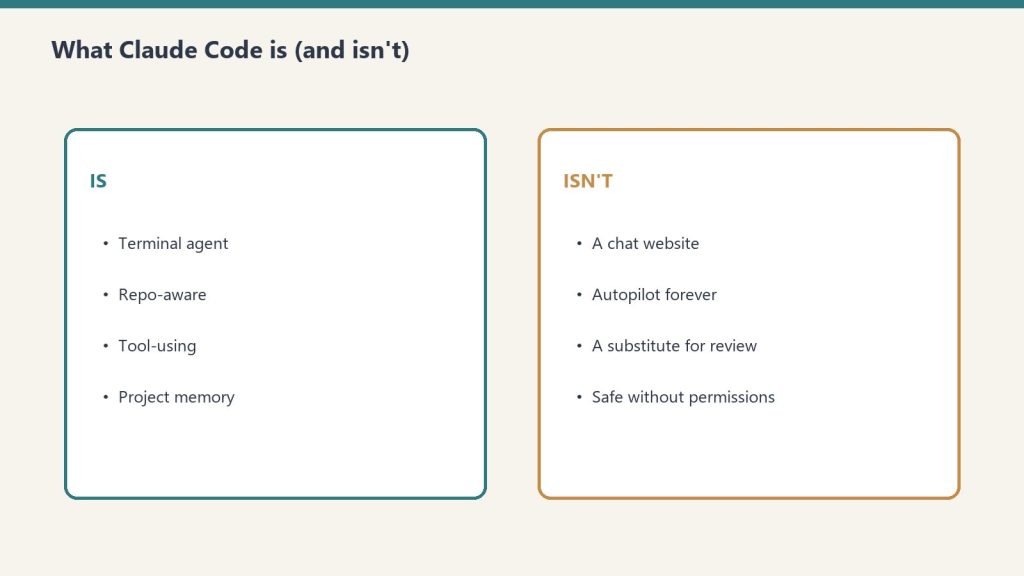
The short answer: Cursor is an editor you type in; Claude Code is an agent you delegate to. Cursor keeps you in the driver’s seat with autocomplete, inline edits, and a chat sidebar that sees your open files. Claude Code takes a goal and works the repo autonomously in the terminal, asking permission before it touches things.
| Dimension | Claude Code | Cursor |
|---|---|---|
| Form factor | Terminal CLI (plus IDE extension, web, desktop) | Full IDE (VS Code fork) |
| Primary loop | Delegate a task, approve actions | Type code, accept suggestions |
| Models | Claude only | Multi-model: Grok included on higher tiers; Claude/GPT/Gemini at API list on Premium+ |
| Best at | Multi-file refactors, scripted/headless runs, git workflows | Tight edit loops, autocomplete, staying in one window |
| Entry price | $20/mo (Pro) or $17 annual | Free limited / Plus $8 (Grok only) / Premium $30 |
| Billing model | Usage windows (5-hour + weekly) | Shared AI usage pool; third-party models at API list on Premium and above |
How does each one actually work?
Claude Code (terminal agent)
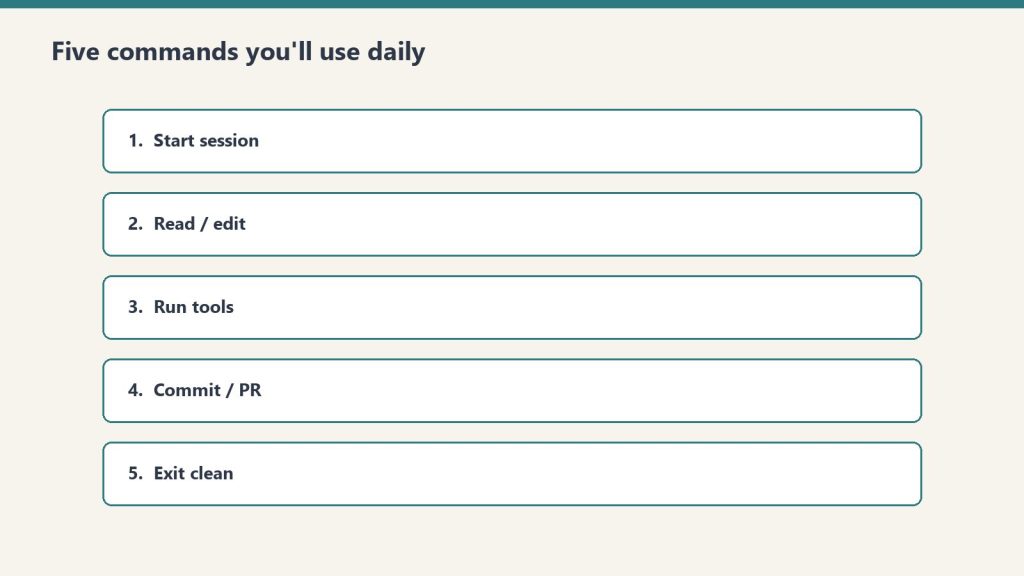
You install it and run it from inside a project directory. Official claude.com copy: Claude Code is included in all paid Claude plans and shares the same usage pool as chat.
npm install -g @anthropic-ai/claude-code
cd my-project
claude
From there you talk to it in plain language. It reads files, proposes edits as diffs, and runs shell commands only after you approve them. Drop a CLAUDE.md in the repo root. Headless mode: claude -p "...".
Cursor (AI IDE)
Cursor is a download. Tab completion, inline edit, agent mode, and a model picker. Official cursor.com/pricing (checked October 13, 2026) lists Free, Plus $8/mo (Grok models only), Premium $30/mo (4x Plus; third-party models at API list price), Super $100/mo (15x), Ultra $200/mo (50x), Teams from $30+/user. Docs at cursor.com/docs/models-and-pricing still reference older Pro $20 / Pro+ $60 / Ultra $200 pools. Quote both; do not average.
What does Claude Code cost in 2026?
As of October 13, 2026, official claude.com / platform.claude.com:
- Pro: $20/month, or $17/month billed annually ($200 up front). Includes Claude Code.
- Max 5x: $100/month. 5x Pro usage. Includes $100/month API credits.
- Max 20x: $200/month. 20x Pro usage. Includes $200/month API credits.
- API: Haiku 5.5 $0.10 / $0.50 per MTok under 100k prompt tokens ($0.50 / $2.50 over); Sonnet 5.5 $2 / $10 with cache reads $0.10; Opus 5.5 $4 / $20 (cache read $0.20); Fable 5.1 $10 / $50 (cache read $0.25). Batch 50% off. US-only inference 1.1x on Claude 4.6+.
There is a 5-hour rolling session window plus weekly limits on paid plans. Chat and Claude Code draw from one pool. Confirm in Settings > Usage.
What does Cursor cost in 2026?
- Free: Limited.
- Plus: $8/month. Grok models only.
- Premium: $30/month. 4x Plus usage. Third-party models (Claude, GPT, Gemini) at API list price.
- Super: $100/month. 15x Plus.
- Ultra: $200/month. 50x Plus. Earliest access.
- Teams: From $30+/user/month.
On the live pricing page, third-party model usage is not included in the monthly price and is billed separately at API list. Docs still describe older Pro/Pro+/Ultra usage pools for Cursor Models vs Other Models. Existing subscribers may keep prior plans.
Which models do you actually get?
- Claude Code is Claude-only.
- Cursor includes Grok on Plus and above; Premium and higher add third-party models at API list price.
Which one is better for big refactors and automation?
Claude Code for repo-wide delegate work and headless claude -p runs. Cursor agent is strong inside the IDE; it is not a cron target.
Which one is better for everyday coding flow?
Cursor for most people who want tab completion and one window, especially if Grok covers the loop.
Can you use both together?
Yes. Common setup: Cursor as the editor, Claude Code in the integrated terminal. Claude Pro is $20; Cursor Premium is $30 if you need Claude models inside Cursor at API rates.
Bottom line
- Pick Claude Code if you want an autonomous terminal agent and you are happy with Claude as your one model. Entry is Pro at $20/$17.
- Pick Cursor if you want autocomplete, Grok included, and a model picker. Entry for third-party is Premium at $30 plus API list.
- Pick both if the seats are cheaper than the hours you lose switching contexts.
FAQ
Is Claude Code or Cursor cheaper?
Claude Code starts at Pro $20/mo ($17 annual). Cursor Free is limited; Plus is $8 (Grok only); Premium is $30 with third-party models billed at API list on top. Claude Code meters by 5-hour plus weekly windows. Cursor meters a shared pool then on-demand / API list.
Does Cursor use Claude?
Yes, on Premium and above, at API list price (not included in the seat). You do not need a Claude Pro seat to use Claude models inside Cursor, but you pay the list rate for them.
Related reading: Claude API rates · Claude Code vs Codex.
Start here: Claude Code vs Cursor: Which AI Coding Tool is Better? — the full head-to-head comparison.
Get The Signal
What we actually ran, what it measured, and what it means for a restoration shop — every week, including the flops.
Leave a Reply