Claude Code vs Alternatives - Tygart Media

Category: Claude Code vs Alternatives

  • Claude Code vs Cursor in 2026: An Honest Comparison for Developers Who Ship

    Claude Code vs Cursor in 2026: An Honest Comparison for Developers Who Ship

    The conversation about Claude Code vs Cursor has collapsed into lazy takes: Claude Code is smarter, Cursor is friendlier, buy both. That framing is not wrong, but it isn’t useful. If you’re deciding where to put your coding tool budget in 2026, you need to know where each tool wins and loses – with specifics, not vibes.

    Here’s what a year of both tools in production actually looks like.

    The Fundamental Architecture Gap

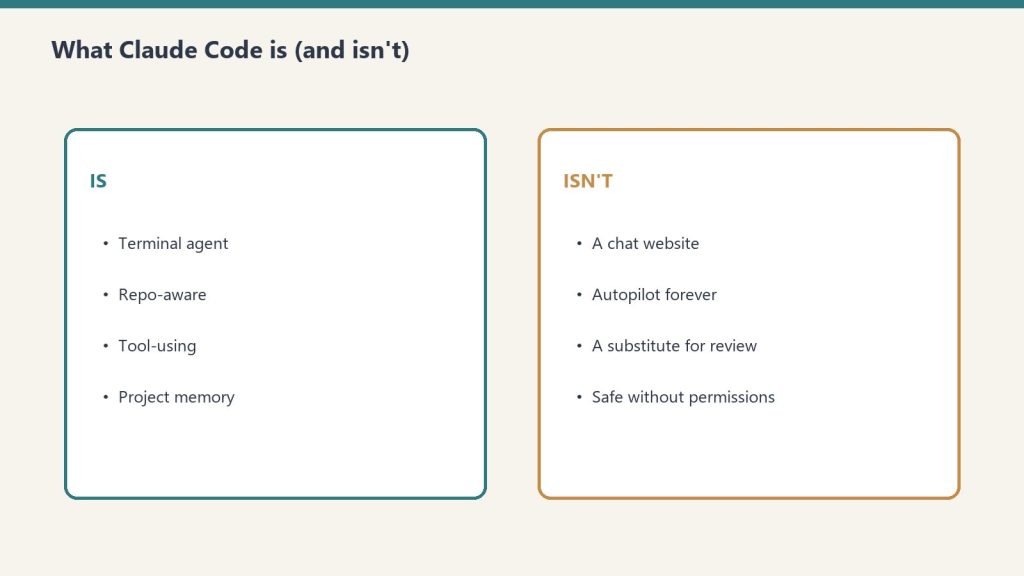
    Claude Code is a terminal-native CLI agent. You run it with claude in your shell, point it at a codebase, give it a task, and walk away. It has no GUI. It doesn’t autocomplete as you type. What it has is the ability to autonomously execute multi-step tasks – read files, write code, run tests, iterate on failures – without you babysitting it.

    Cursor is an IDE built on VS Code. It has tab autocomplete, an inline chat panel, Agent mode for longer tasks, and a polished visual interface that feels like VS Code with a superpower grafted on. If you already live in VS Code, Cursor’s learning curve is close to zero.

    These are genuinely different tools. The “which one wins” question should really be “which one wins for what.”

    Where Claude Code Wins: Long Autonomous Runs

    The biggest measurable advantage Claude Code has right now is context. Running on Claude Opus 4.6 or 4.7, Claude Code natively supports a 1 million token context window – and that’s a first-class, supported number with no per-token surcharge for long context on the API.

    Cursor’s advertised context is lower, and it draws from multiple model backends depending on which you select. On a large monorepo task – think refactoring an auth system across 40 files – the difference between context limits is the difference between Claude Code holding the whole codebase in view and the alternative having to page through it.

    Claude Opus 4.6 scores 80.84% on SWE-bench Verified, per Anthropic’s published system card. Opus 4.7 improved on that, particularly on the hardest problems in the benchmark set, and on Rakuten-SWE-Bench (a production-task evaluation, not just GitHub issues) it resolves 3x more tasks than Opus 4.6. That is a meaningful gap.

    The autonomous-run workflow looks like this in practice:

    claude "Refactor the payment module to use the new Stripe SDK, update all tests, and make sure existing integration tests still pass"

    Claude Code will read the relevant files, identify the Stripe version mismatch, write the new implementation, run your test suite, and iterate if something fails – often without a single follow-up prompt. That same task in Cursor’s Agent mode typically requires you to approve each file write and re-prompt when the agent stalls on an error.

    Where Cursor Wins: Daily Developer Experience

    Cursor’s tab autocomplete is genuinely good. It’s not a feature Claude Code has at all – Claude Code is not an IDE and doesn’t inject suggestions while you type. If your daily workflow is: open file, write code, open file, write code, Cursor is the better tool for that rhythm.

    Cursor’s @codebase reference and file mention system is also excellent for interactive exploration. You can ask “why does this function fail on null input?” while looking at the code, and Cursor’s inline context makes that conversation fast. Claude Code can answer the same question, but you’re doing it in a terminal with no visual reference.

    For teams on an existing GitHub workflow, GitHub Copilot’s deep integration with PRs, issues, and Actions is hard to match. If your team is standardized on GitHub and your security team needs IP indemnity coverage, Copilot is the defensible enterprise choice – Claude Code and Cursor both require more procurement work.

    The Pricing Reality

    Plan Monthly Cost
    Claude Code via Claude Pro $20/month
    Claude Code via Max 5x $100/month
    Claude Code via Max 20x $200/month
    Cursor Pro $20/month
    GitHub Copilot Individual $10/month

    The entry point is the same for Claude Code (via Claude Pro) and Cursor. At that tier, Claude Code’s usage limits are more restricted. The Max 5x plan at /month is where Claude Code becomes a full autonomous-agent platform – higher rate limits, Opus access, and Claude Code usage limits that are double the Pro tier.

    For individual developers doing heavy autonomous runs, the Max 5x plan at competes directly with a Cursor Pro subscription plus meaningful API spend. For teams, the calculus shifts: Cursor’s team plan pricing is lower per seat than a premium Claude Code subscription, which matters when you’re buying for 20 developers.

    The Honest Call

    Claude Code wins on: autonomous multi-step tasks, large codebase refactors, long-running agents, raw SWE-bench performance, and 1M token context on complex jobs.

    Cursor wins on: daily IDE experience, tab autocomplete, interactive inline chat, onboarding speed for VS Code users, and team-tier pricing.

    The recommendation most senior developers are landing on in 2026 is two tools: Cursor open in the background for interactive work, Claude Code for the tasks you used to put in a Jira ticket and wait two days for. If you can only buy one and you mostly write code file-by-file, get Cursor. If your bottleneck is “I need to refactor three services and I don’t have three days,” Claude Code is the one that changes your output.

    The Max 5x plan makes that bet financially coherent for a senior developer. The Pro tier is a reasonable way to find out if autonomous coding is a workflow you actually use.

  • Claude Code vs Cursor in 2026: Token Efficiency, Agent Teams, and What I Actually Run

    Claude Code vs Cursor in 2026: Token Efficiency, Agent Teams, and What I Actually Run

    I’ve been running both Claude Code and Cursor on the same codebases for the last eight months. Not as a reviewer — as someone who has to actually ship features in both tools and watch the credit meter tick. Here is what the comparison actually looks like in May 2026, after Cursor’s credit overhaul, after Claude Opus 4.7, and after Claude Code’s agent teams went GA.

    The Real Pricing Picture

    The headline subscription numbers are nearly identical: Claude Pro at $20/month, Cursor Pro at $20/month. That’s where the similarity ends.

    Cursor’s Pro tier in 2026 ships with unlimited “Auto” mode requests plus a $20 credit pool for premium models. Pro+ is $60/month with roughly 3x credits and background agents. Ultra is $200/month at 20x usage. Hobby is still free with limited requests. Teams is $40/user/month.

    Claude Code on the Pro plan gets you Sonnet-tier usage with quota limits. Max at $100/month unlocks Opus access and 5x the usage envelope. The team plan for Claude Code is where the real spread shows: Anthropic’s team pricing on Claude Code lands materially higher than Cursor Teams for a comparable seat count. If you’re a 10-person team buying the most generous tier of each, you’re looking at roughly 3x more for Claude Code.

    For solo developers, the cost is a wash at the entry tier. The decision is not about money — it’s about how each tool burns tokens.

    Token Efficiency Is the Hidden Variable

    This is the number I wish I had known a year ago: independent benchmarking through 2026 has Claude Code using roughly 5.5x fewer tokens than Cursor on identical tasks. Not 5.5% — five and a half times fewer.

    The why matters. Cursor’s agent loop tends to re-read files, re-include context, and verify intermediate steps by stuffing prior turns back into the prompt. Claude Code’s CLI architecture leans on a tighter context budget by default, and on Opus 4.7 the model itself is doing more work per token. When you’re paying by credit (Cursor) and your power-user-hours start adding up, that ratio is the difference between a $60 month and a $200 month.

    The honest counterpoint: Cursor’s median completion time on simple, single-file edits is roughly 12% faster than Claude Code. If you live in the find-and-fix-a-typo loop, Cursor’s IDE integration genuinely wins.

    Where Claude Code Wins

    The 1M token context window is now generally available on Claude Opus 4.6, Opus 4.7, and Sonnet 4.6, at standard per-token pricing with no long-context surcharge. A 900,000-token request costs the same per-token rate as a 9,000-token one. For codebases that need to be understood holistically — monorepos, large migrations, anything where “ctrl-F across 200 files” is part of the problem — this is the single most consequential capability difference in 2026.

    Agent teams went past experimental in 2026 with Claude Code v2.1.32 and the CLAUDE_CODE_EXPERIMENTAL_AGENT_TEAMS=1 flag. The team-lead pattern — one Claude session coordinating teammates who can message each other, share a task list with dependencies, and lock files — is a genuinely different primitive than Cursor’s background agents. The cost is real: agent teams use approximately 7x the tokens of a single session in plan mode. The benefit is also real: the work that previously needed a human program manager now runs unattended.

    On full-feature implementation tasks — the kind where a benchmark measures end-to-end PR shipment, not single edits — Claude Code was roughly 18% faster on median wall-clock time. Opus 4.7 specifically lifted resolution on a 93-task coding benchmark by 13% over Opus 4.6, including four tasks that neither Opus 4.6 nor Sonnet 4.6 could solve.

    Where Cursor Wins

    The editor. This is not a small thing. Cursor is still a VS Code fork that evolved into an agent workbench. The integrated diff view, the multi-file edit preview, the in-line ghost text completions, the model picker in the corner — none of that exists in Claude Code, which lives in a terminal pane. If you have a strong opinion about your IDE and you want AI features welded inside it, Cursor is the answer.

    Cloud agents on Cursor Pro and above run AI tasks in isolated cloud VMs with no access to your local machine. The use case — fire off a refactor and walk away from your laptop — is well-served. The catch: background agents always use MAX mode, which adds a 20% surcharge on credit cost, and a single agent run on a 50,000-line codebase can consume around 22.5% of a Pro plan’s monthly credits. One bad day of agent runs eats your month.

    Model variety is also a Cursor advantage. You can route a task to a non-Anthropic model when the situation calls for it. Claude Code is Claude all the way down.

    What I Actually Run

    Both. For $40/month at the Pro tier on each, I get the most powerful AI coding setup available in 2026. Claude Code handles the long-context architectural work, the cross-cutting refactors, the agent-team orchestration where one Claude is doing program management and three teammates are touching different services. Cursor handles the IDE work — the small-bore edits, the in-line completions, the moments where I want to see a diff hover above the line I just changed.

    If forced to pick one, the answer depends on the work. Heavy backend, large codebases, multi-agent workflows: Claude Code. UI-heavy, single-file iteration, “I just want my editor to be smarter”: Cursor.

    The Honest Limitation

    Claude Code on a team plan is genuinely expensive at scale. A 10-person team running Claude Code at the team-equivalent tier is roughly 3x the Cursor Teams equivalent. If you’re cost-sensitive at headcount, that math may decide the question regardless of capability. The token-efficiency advantage helps Claude Code claw back some of that on per-task economics, but the subscription line item is the line item.

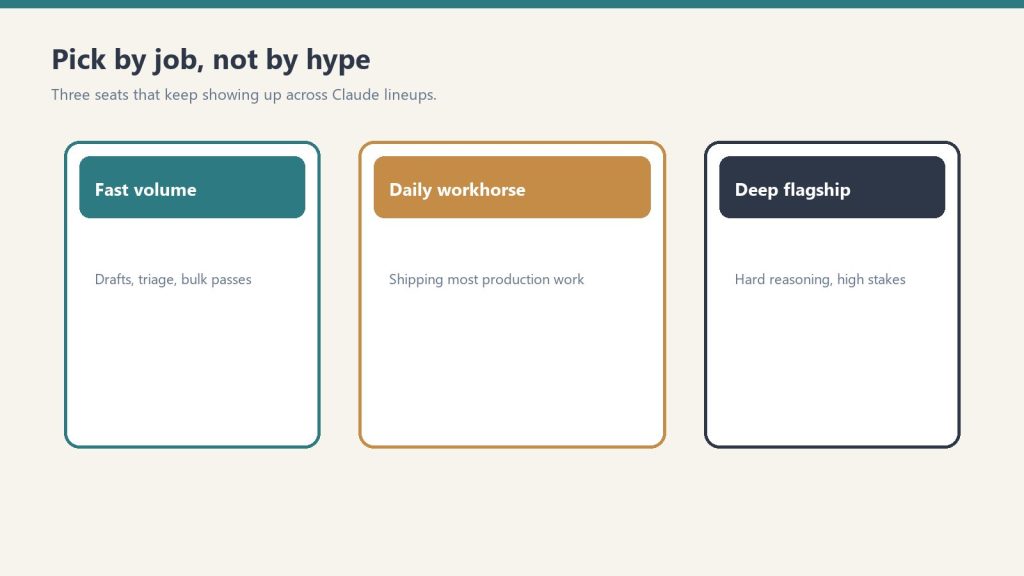
    The other honest limitation: model versions move fast. As of May 26, 2026, the current Anthropic lineup is Claude Opus 4.7 (flagship), Claude Sonnet 4.6 (workhorse), and Claude Haiku 4.5. Any comparison written more than a quarter ago is already partially wrong on the model column. Read pricing pages, not blog posts, when you’re committing budget.

    The Bottom Line

    Cursor wins on editor experience, model variety, and team subscription cost. Claude Code wins on token efficiency, context window economics, agent-team primitives, and Opus 4.7’s raw coding capability on hard tasks. If you’re optimizing for one tool, pick the one that matches the bulk of your work. If you can afford $40/month, run both — and pay attention to which one you actually open first in the morning. That’s your real answer.

  • Claude Code vs Cursor in May 2026: A Practitioner’s Honest Take After Agent View and Composer 2.5

    Claude Code vs Cursor in May 2026: A Practitioner’s Honest Take After Agent View and Composer 2.5

    Almost every developer I trust has both Claude Code and Cursor open at the same time. The “which is better” question is the wrong one. The real question is which tool earns which job, and that answer has shifted twice in the last six weeks. Cursor 3.0 landed on April 2 with the Agents Window, Anthropic shipped Agent View into Claude Code on May 11, and Cursor Composer 2.5 dropped on May 18 — yesterday. If you locked in your mental model of these tools at the start of the year, it is already stale.

    Here is the honest version of where they stand right now, where each one loses, and how I am actually using them in May 2026.

    The pricing is closer than the discourse suggests

    Both Pro tiers start at $20/month. Cursor knocks that to roughly $16 on annual billing, Anthropic to $17 on annual. From there the price ladders are nearly mirror images: Cursor sells Pro+ at $60 and Ultra at $200; Claude Code sells Max 5× at $100 and Max 20× at $200. Cursor Business is $40/seat with admin controls and centralized billing. Claude Code routes team buyers through Team Premium, which lands somewhere between $100 and $150 per seat depending on configuration.

    For a ten-person engineering team, that math gets real. Cursor Business at $40 × 10 is $400/month. Claude Code via Team Premium is roughly $1,000–$1,500/month for the same headcount. That is a 2.5×–3.75× spread, and it is the single biggest reason Cursor still wins net-new enterprise pilots in 2026. Sticker shock is a feature, not a bug, in procurement.

    Token efficiency cuts the other way. In side-by-side benchmark runs, Claude Code on Opus 4.7 has been hitting roughly 5× lower token usage than Cursor’s agent on identical tasks — one widely circulated benchmark showed 33K tokens vs 188K tokens for the same refactor. If you are on metered API pricing rather than a flat plan, the headline seat price is misleading. The plan tier you actually need depends on whether your team mostly types alongside the agent (Cursor’s strength) or dispatches autonomous jobs and walks away (Claude Code’s strength).

    The May 2026 feature gap, honestly

    Claude Code spent the spring building out parallelism. The headline is Agent View, which shipped in Claude Code v2.1.130 on May 11. Running claude agents opens a single CLI dashboard showing every background session, which ones are waiting on input, and which are still grinding. You can dispatch a session, send it to the background, and pull it forward only when it has a question. Combined with subagents — which already let you scope tool access and route to claude-haiku-4-5-20251001 for cheap exploration work before handing off to claude-opus-4-7 for the actual edits — you now get both horizontal parallelism between sessions and vertical parallelism inside one. The /goal command, also from this release window, lets you define outcome-based tasks that run with minimal supervision. Rate limits doubled in the same release window.

    Cursor’s answer is the Agents Window from Cursor 3.0 (April 2), expanded yesterday by Composer 2.5. The Agents Window is the same idea as Agent View but lives inside the IDE rather than the terminal — multiple background agents, each in its own sandboxed checkout, running tests and shell commands while you keep editing. Composer 2.5 is Cursor’s house frontier model, tuned for low-latency agentic loops; Anthropic claims most turns complete in under 30 seconds, with a smaller Composer 2 variant doing cheap coordination work and calling out to stronger third-party models only when needed.

    The contours: Claude Code’s parallelism story is built around a CLI agent that lives in your repo and treats the editor as optional. Cursor’s parallelism story is built around an IDE that treats the agent as one of several panes. Neither approach is obviously correct. Which one feels right depends on whether you already live in your terminal or your editor.

    MCP support is finally a tie

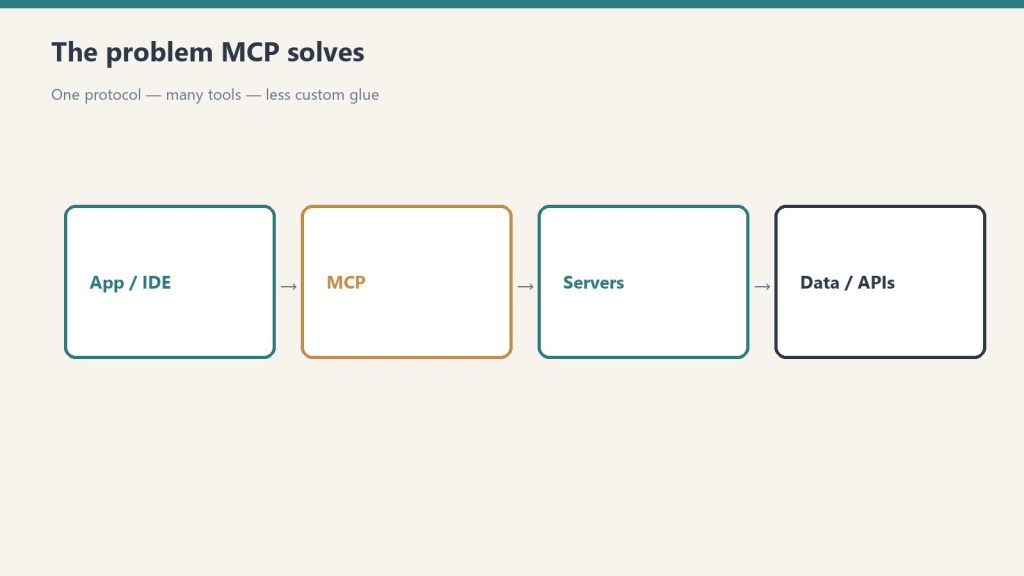
    This was Claude Code’s structural advantage all the way through 2025 — native Model Context Protocol support, which let you wire the agent to Postgres, Notion, Linear, internal APIs, anything that spoke MCP. That moat is gone. Cursor shipped native MCP support during the 3.0 cycle and the rough edges are now mostly sanded down. Both tools can query your database schema mid-session, both can hit your Linear or Notion workspace, both let you write custom MCP servers for internal tooling.

    The remaining difference is ecosystem inertia. The Anthropic-published MCP servers tend to land in Claude Code first, and the third-party MCP server registry skews toward Claude Code usage patterns. If you are wiring up esoteric internal systems, expect to write more glue code on the Cursor side. If you are connecting standard SaaS, both tools are fine.

    Where Claude Code still wins outright

    One-million-token context on Opus 4.7, generally available since March, with no surcharge — a 900K-token request costs the same per-token rate as a 9K one. For codebases above roughly 200K tokens of relevant context, this is decisive. Cursor in “auto” mode picks a model and manages context for you, which is fine for small repos and unreliable for large ones. When I am asking a question that genuinely requires the agent to hold most of a service in its head — cross-service refactors, undocumented legacy code, migration planning — I open Claude Code.

    The other Claude Code win: the agent will happily run for an hour on a hard problem without checking in, then come back with a working branch. Cursor’s agent prefers shorter loops and more interaction. That is a design choice, not a defect on either side, but it makes Claude Code the right answer for “go fix this entire test suite while I am in standup.”

    Where Cursor still wins outright

    Anything where you want the agent to be a faster you, not a substitute for you. Inline completion is still better in Cursor. Tab completion is still better in Cursor. The “watch my edits and infer the pattern” loop is still tighter in Cursor. If 80% of your day is writing code with occasional AI assistance, the IDE wraps the model better than a CLI does, no matter how good the CLI gets.

    The other Cursor win: cost discipline at scale. Composer 2 doing cheap coordination and calling out to Opus or GPT only when needed is a smart cost-management pattern, and it shows up in your monthly bill. Cursor’s @codebase, @docs, @web, and @file mentions let you constrain the context window manually, which means fewer tokens chewed up by speculative retrieval.

    How I actually use them

    Cursor for the 80% — daily edits, feature work, bug fixes where I am still doing most of the thinking. Claude Code for the 20% — anything where I want to dispatch the agent and stop watching. Migrations. Test suite repair. Schema refactors that touch fifteen files. Anything where the right loop is “kick it off, go to lunch, come back to a PR.”

    The decision rule that keeps me sane: if I will be in the editor anyway, I use Cursor. If I would otherwise be doing something else while waiting, I use Claude Code’s Agent View and let it run.

    The tools are converging on feature parity at the surface — both have agent dashboards, both speak MCP, both have background sessions, both ship frontier models. The differences left are about texture: where you live (terminal vs editor), how much autonomy you want to grant in a single turn, and whether your spend looks more like a flat subscription or a metered API line item. Pick the texture that matches how your day already runs. Switching cost is low. Switching pain is real.

  • We Published Hundreds of Articles About Claude — And Some of Them Were Wrong. Here’s Everything We’re Doing About It.

    We Published Hundreds of Articles About Claude — And Some of Them Were Wrong. Here’s Everything We’re Doing About It.

    Last refreshed: May 15, 2026

    I owe you an apology.

    Tygart Media has been publishing about Claude — Anthropic’s AI model — for months. We’ve written about its capabilities, its pricing, its API strings, how to use it, why it matters. We positioned ourselves as a resource for people who want to understand and use Claude intelligently.

    And some of what we published was wrong.

    Not intentionally. Not carelessly in the moment. But wrong in the way that happens when you’re moving fast, publishing at scale, and not building the right systems to catch your own errors. Model version numbers were stale. Pricing figures were outdated. API strings referenced models that had been retired. If you used our content to make a decision about Claude — about which model to use, what to pay, how to call the API — some of that information may have led you in the wrong direction.

    That’s unacceptable to me. And I want to tell you exactly what happened, exactly what I found, and exactly what I’ve built to make sure it never happens again.


    How We Found Out

    It didn’t start with our own discovery. It started with a message.

    Kristin Masteller, the General Manager of Mason County PUD No. 1, reached out on LinkedIn to flag inaccuracies in our local coverage — a different set of articles, but the same underlying problem: we had published with confidence about things we hadn’t verified carefully enough.

    That message hit differently than a normal correction request. Because it made me ask a harder question: if our local coverage had errors, what about our Claude coverage? We had 200+ posts. We were publishing multiple times per day. We had never built a systematic quality check.

    So we ran one.


    The Audit: What We Found

    We wrote a scanner that pulled every post from tygartmedia.com and ran each one through a quality gate checking for four categories of errors:

    • Category A: Stale model names (e.g., “Claude Haiku” with no version number, or references to Claude 3 models as current)
    • Category B: Wrong pricing (e.g., Haiku priced at $0.80/MTok when the actual price is $1.00/MTok)
    • Category C: Deprecated feature claims (features or behaviors that no longer apply)
    • Category D: Cross-site contamination (content from other publication contexts bleeding into Claude coverage)

    Out of 2,333 total posts on the site, 701 touched Claude or AI topics. Of those, 65 posts had violations — 121 individual errors in total.

    We auto-corrected 28 posts immediately — wrong model strings, wrong pricing, outdated API references. 18 posts with more complex issues are still flagged for human review. We are working through them.

    I’m not sharing this to perform humility. I’m sharing it because you deserve to know the scope of the problem, and because the methodology for finding it might be useful to you.


    What We Built to Fix It

    The audit was a one-time fix. What we actually needed was a system — something that would catch these errors before they went live, and keep our model information current automatically.

    Here’s what we built:

    1. The Claude Intelligence Desk

    A dedicated Notion page that serves as the single source of truth for all Claude model information across our entire content operation. It contains the current model truth table — every model name, API string, input/output price, context window, and status — verified against Anthropic’s live documentation.

    The rule is simple: before anyone writes, edits, or publishes any article that mentions Claude, they check this page. If the “Last Verified” timestamp is more than 12 hours old, they run a refresh before proceeding.

    2. The Claude Intelligence Scanner (Automated, Twice Daily)

    A scheduled task that runs at 6 AM and 6 PM Pacific every day. It fetches Anthropic’s models documentation page, compares the current model table to what’s in our Notion desk, and if anything has changed — a new model, a price change, a deprecation — it updates the desk automatically and flags it for human review.

    We will never again be caught publishing outdated Claude information because a model changed and we didn’t notice.

    3. Pre-Publish Quality Gates

    Every new Claude article now runs through the quality gate categories above before it goes live. Wrong model string → blocked. Outdated pricing → blocked. Deprecated claim → flagged.

    4. The Fix Log

    Every correction we make is logged with the post ID, the original wrong content, the correct replacement, and the date. Accountability in writing, not just in words.


    Why I’m Telling You All of This

    Because I think the way most AI content operations work is broken — and I think transparency about that is more useful than pretending we had it figured out.

    The standard playbook for AI content is: write fast, publish often, stay ahead of the news cycle. The problem is that AI — and especially Claude — moves so fast that “write fast” and “stay accurate” are genuinely in tension. Models change. Prices change. Features get added, deprecated, retired. If you’re not building systems to track that, you’re going to drift.

    We drifted. We caught it. We fixed it. And now I want to open up everything we built.

    The Claude Intelligence Desk methodology, the quality gate framework, the scanner architecture — I’m making all of it available. If you’re publishing about Claude, if you’re building automations around Claude, if you’re running a content operation that touches Anthropic’s ecosystem in any way, you can use what we built. Adapt it. Improve it. Tell me what I got wrong in the system design.

    This is not a product. This is not a lead magnet. It’s just the actual work, shared openly, because that’s how we get better together.


    I Want to Build This With You

    Here’s what I’ve learned from this process: the people who catch errors fastest are the people closest to the technology. The developers who are actually calling the API. The builders running Claude in production. The researchers who read every Anthropic paper when it drops. The people in Singapore, India, the UK, Europe, Brazil — every region where Claude is being adopted rapidly and where the local context matters.

    I don’t have all of that knowledge. No single publication does.

    So I’m opening this up.

    If you use Claude seriously — if you’re building with it, writing about it, researching it, deploying it — I want you to write with us.

    What that looks like:

    • Writers and researchers: You bring the knowledge and the perspective. We provide the platform, the distribution, the SEO infrastructure, and editorial support. Your byline, your voice, your expertise.
    • Builders and developers: You’re running Claude in production. You know what actually works, what breaks, what the documentation doesn’t tell you. Write that. The practitioner perspective is the most valuable thing we can publish.
    • International voices: What does Claude adoption look like in Singapore right now? What’s the conversation in India’s developer community? How are European companies thinking about AI compliance alongside Claude? These are stories we cannot tell without you — and they’re stories our audience desperately needs.
    • Correctors: If you read something on this site that’s wrong, tell us. We have a system now. We will fix it, log it, and credit you if you want the credit.

    This is not about content volume. We publish enough already. This is about getting it right — and getting perspectives we genuinely don’t have.


    How to Get Involved

    If any of this resonates — if you want to write, contribute, correct, or just have a conversation about where Claude is going — reach out directly: will@tygartmedia.com

    Tell me where you are, what you’re building or writing or researching, and what you’d want to say if you had a platform to say it. No formal application. No content calendar to fit into. Just a conversation.

    We’re also building out a formal contributor program at tygartmedia.com/contribute/ — trade affiliates, community writers, featured contributors. If that’s more your speed, start there.

    But honestly? Just email me. Let’s figure out what makes sense.


    The work continues. The scanner runs twice a day. The quality gates are live. And if you find something wrong on this site — about Claude, about anything — I genuinely want to know.

    That’s the standard I should have been holding from the beginning. We’re holding it now.

    — Will Tygart
    Tygart Media