Logic Apps vs Cloud Workflows: No-Code Automation Across Two Clouds
Every content operation runs on small invisible chains of “when this happens, do that.” Publish an article → notify a channel → write a row to the ledger. None of it is hard, but you don’t want to babysit a script for it — you want a managed orchestrator that fires on an event, calls a few services, and logs the result, for free. Azure and Google each have one, and they take opposite philosophies to the same job.
We wire the same publish → notify → log automation on both Azure Logic Apps and Google Cloud Workflows, on the free tiers, and compare. Short answer: Logic Apps wins when the work is gluing SaaS services together — its connector library and visual designer are unmatched, with a free grant of 4,000 built-in actions/month. Cloud Workflows wins when the work is lightweight, code-first orchestration inside GCP — its 5,000 internal + 2,000 external steps/month free tier pairs cleanly with Eventarc and Pub/Sub. One is a no-code SaaS glue gun; the other is a YAML orchestration engine.
This is the breakdown from the running lab on tygart.media — connector ecosystems, visual designer vs YAML, triggers, and free ceilings.
The free-tier ceilings

How we do it
| Azure | Google Cloud | Verdict | |
|---|---|---|---|
| Free grant/month | 4,000 built-in actions | 5,000 internal + 2,000 external steps | Comparable, units differ |
| Billing model | Per-action (Consumption) | Per-step (internal vs external) | Different mental models |
| What counts | Each connector/built-in action | Each workflow step executed | Tie at our volume |
| Fit for a glue chain | Generous | Generous | Tie |
| Our actual bill | $0 | $0 | Tie where it counts |
Both free grants comfortably cover a real automation cadence. A publish → notify → log chain is three or four actions/steps per run; at a few publishes a day, neither 4,000 actions nor 7,000 steps comes close to binding. The units differ — Azure counts actions, Workflows splits internal vs external steps (external = calls out to other services, which are scarcer) — but for our workload both run free.
Connectors vs code-first
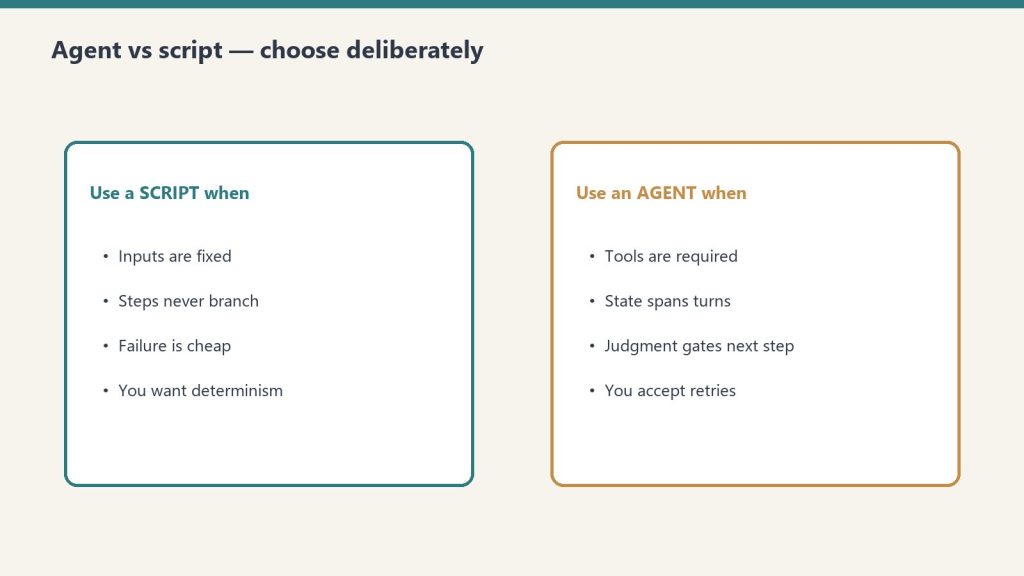
This is the real fork in the road, and it decides the choice.
How we do it
| Azure | Google Cloud | Verdict | |
|---|---|---|---|
| Connector library | Hundreds (SaaS + Microsoft + 3rd-party) | HTTP + GCP services, no big SaaS catalog | Logic Apps, decisively |
| Authoring model | Visual designer (drag-and-drop) | YAML (code-first) | Logic Apps for no-code |
| SaaS glue (Slack, email, etc.) | Native connectors, prebuilt auth | Roll your own via HTTP | Logic Apps |
| GCP-native orchestration | Possible via HTTP | First-class | Cloud Workflows |
| Versioning / review in git | Exportable, but designer-first | YAML lives in git naturally | Cloud Workflows |
Logic Apps’ superpower is its connector library — hundreds of prebuilt, pre-authenticated connectors for Slack, Office, Salesforce, Twitter/X, databases, and most SaaS you’d name. Wiring “post to Slack when an article publishes” is point-and-click, with the OAuth handled for you. Cloud Workflows takes the opposite stance: it’s code-first YAML with no big SaaS catalog — you orchestrate GCP services and arbitrary HTTP endpoints, building any integration you need by hand. That’s less convenient for SaaS glue but cleaner for engineers who want their orchestration in git, reviewed like code.
Triggers and event sources
How we do it
| Azure | Google Cloud | Verdict | |
|---|---|---|---|
| Native triggers | Many (HTTP, schedule, connector events) | HTTP + Eventarc/Pub/Sub | Logic Apps on built-in variety |
| Event-driven on cloud events | Via Event Grid | Via Eventarc (first-class) | Cloud Workflows for GCP events |
| Schedule / cron | Built-in recurrence | Cloud Scheduler | Tie |
| SaaS event triggers | Connector-based, prebuilt | Roll your own | Logic Apps |
| Pub/Sub-style fan-out | Event Grid | Pub/Sub (native pairing) | Cloud Workflows in GCP |
Logic Apps can be triggered by connector events directly — “when a new email arrives,” “when a row is added” — which keeps SaaS-driven automations entirely no-code. Cloud Workflows leans on Eventarc and Pub/Sub for event sources, which is the idiomatic, powerful path if your events originate in GCP. Each is strongest for events native to its own cloud.
What surprised us

- Logic Apps’ connector library is the whole ballgame for SaaS glue. Pre-authenticated connectors turned a “write a small integration” task into a five-minute drag-and-drop. Nothing on the GCP side matches that catalog.
- Cloud Workflows’ YAML-in-git is quietly the better engineering experience. When the orchestration lives in the repo and gets code-reviewed, it stops being a clickable black box. We liked that more than expected.
- The free grants are both ample. We worried about per-action metering and never came near either ceiling at a realistic publishing cadence.
- External steps are the scarce currency on GCP. Workflows’ 2,000 external steps (calls out to other services) is the limit to watch, not the 5,000 internal steps.
The takeaway
Pick Azure Logic Apps if your automation is mostly gluing SaaS services together — Slack, email, CRMs, Microsoft 365 — and you want a visual, no-code designer with hundreds of pre-authenticated connectors. It’s the fastest path from “I wish X notified Y” to a running flow.
Pick Google Cloud Workflows if your automation is lightweight orchestration inside GCP — coordinating Cloud Run, Functions, Pub/Sub, and HTTP endpoints — and you want it defined as code-first YAML that lives in git and pairs with Eventarc. It’s the cleaner engineering primitive when the events and services are already on Google’s side.
For our publish → notify → log chain, the deciding factor is where the notify lands: a Slack or email notification leans Logic Apps for the free connector; a fan-out into Cloud Run or Pub/Sub leans Workflows. Running the same chain on both made the connector-vs-code-first trade concrete.
This is part of our “Two Clouds, One Site” series — we run the same media property on both Azure and Google Cloud on the free tiers, wiring the same automation on each to see which orchestrator fits which job. The lab lives on tygart.media; the findings publish here.
Related on Tygart Media: Azure Functions vs Cloud Run · $0 cloud stack · Cosmos DB vs Firestore.
Frequently asked questions
What’s the free tier for Azure Logic Apps and Google Cloud Workflows? Azure Logic Apps (Consumption) includes a free grant of 4,000 built-in actions per month. Google Cloud Workflows includes 5,000 internal steps and 2,000 external steps per month free. Both comfortably cover a realistic automation cadence, so a small glue chain runs at $0 on either.
Which is better for no-code automation, Logic Apps or Cloud Workflows? Logic Apps is the no-code choice — it has a visual drag-and-drop designer and hundreds of pre-authenticated connectors for SaaS services. Cloud Workflows is code-first YAML with no big SaaS catalog, so it suits engineers orchestrating GCP services rather than non-developers gluing apps together.
Does Cloud Workflows have a connector library like Logic Apps? No. Cloud Workflows orchestrates GCP services and arbitrary HTTP endpoints, but it has no large prebuilt SaaS connector catalog the way Logic Apps does. To integrate a third-party SaaS in Workflows, you call its HTTP API and handle authentication yourself, whereas Logic Apps provides a ready-made connector.
How do I trigger automation when an article is published? On Azure, a Logic App can be triggered by an HTTP request, a schedule, or a connector event, then call further connectors with no code. On Google Cloud, a Workflow is typically triggered via Eventarc or Pub/Sub for cloud-native events, or by HTTP. Each is strongest for events that originate inside its own cloud.
Which is better for gluing SaaS and cloud events together? Logic Apps wins for SaaS glue thanks to its connector library and visual designer, making things like “notify Slack when X happens” nearly code-free. Cloud Workflows wins for lightweight, code-first orchestration of GCP services that lives in git and pairs with Eventarc and Pub/Sub. Pick by where your events and services already live.
Leave a Reply