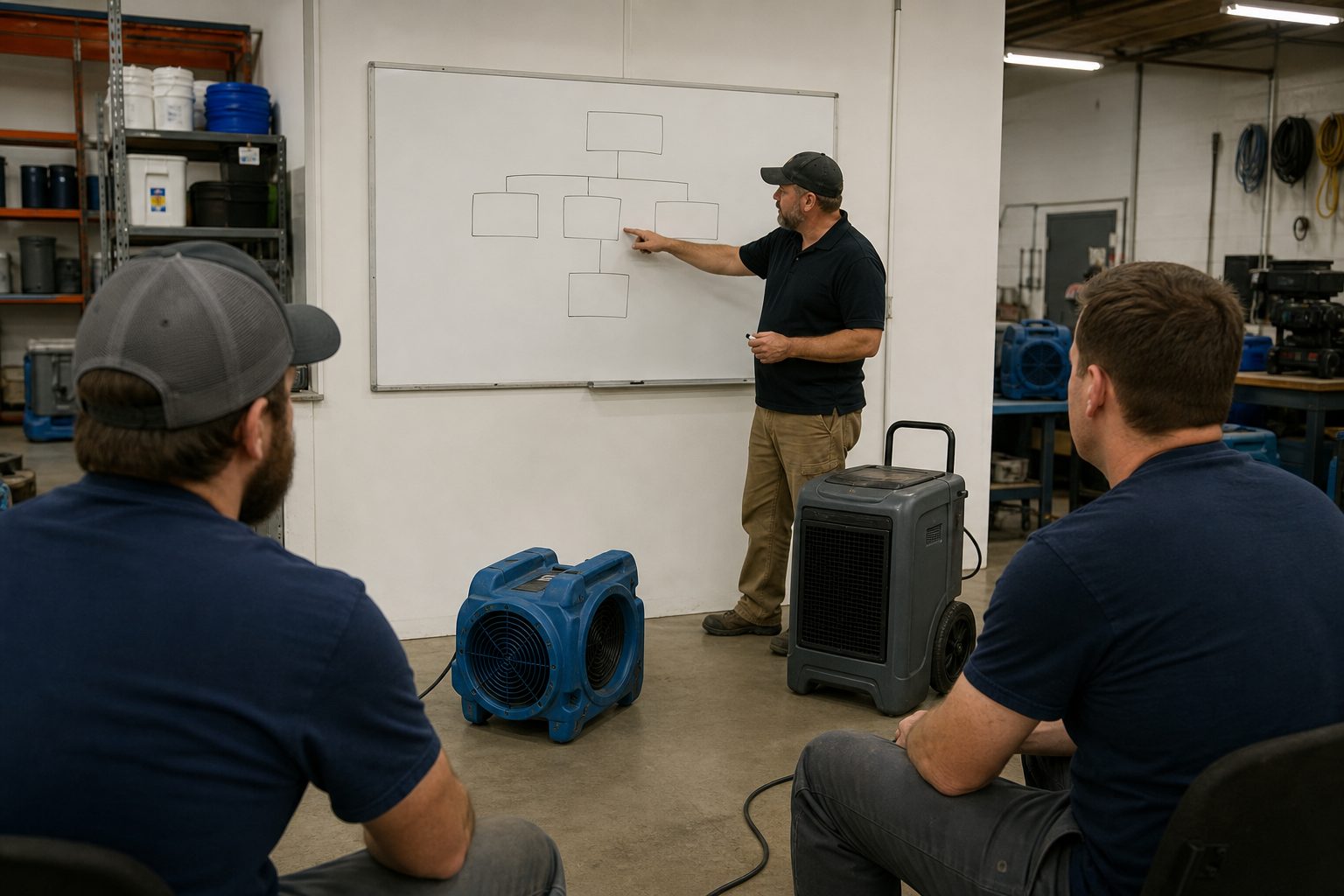
Accountability Conversation Planner
$39
Delivered by email after checkout.
Secure checkout via Square — all major cards accepted
You can copy this method and do it yourself. Plan a hard conversation before you have it, so it stays about the work, not the person. Buy Now is the packaged Notion planner you duplicate for each talk, so you are not rebuilding the six prompts from a blank doc.
Tool #4 of the Restoration Leadership Toolkit. Use this when an employee, manager, or family member in the business keeps missing the mark and you have been avoiding the talk. Ten minutes of prep keeps the conversation calm, specific, and fixable.
Most restoration owners handle performance problems the same way. They tolerate underperformance for too long. They address it once, informally, in a conversation that does not result in change. They tolerate it some more. Then they either fire the person abruptly, often in response to a specific incident rather than the pattern, or they keep tolerating it because replacing people is painful. Neither outcome serves the business. The people who are performing well watch this and conclude that performance does not matter here.
How to use it
- Duplicate a page so the blank stays clean for next time.
- Work through prompts 1 through 6 in order. Be specific. Vague prep makes for an emotional conversation.
- Draft your opening line and close from the script outline, then set a follow-up date.
- Keep your notes factual. This is a planning doc, not a personnel record. Log formal actions where your policies require.
Fill the situation first: who this conversation is with; their role / relationship to the business; the date you plan to have it; where (private, not on the job site, not by text).
You cannot hold someone accountable for expectations you have not communicated clearly. If the standard was never spelled out, that is on you to own in the room, and to fix going forward. Accountability without support is just pressure.
The six prompts
1. What is the actual issue?
One or two sentences. The pattern, not a single bad day. Name the business impact: missed deadline, blown margin, safety, crew morale, a client complaint. Strip out the frustration and the personality read.
Accountability is forward-looking: what went wrong, what is the standard, how do we close the gap? Blame is backward-looking and personal. Stay on the first one.
2. What specific behavior needs to change?
An observable action someone could see on a camera. “Calls in after the crew is already on site,” not “doesn’t care.” If you cannot point to the behavior, you are not ready to have the talk yet.
“Do good work” is not an expectation. “Complete moisture documentation within 2 hours of equipment placement, using the standard form, with readings at all points on the moisture map” is an expectation. The more specific the expectation, the more possible accountability becomes.
3. What have I already allowed or tolerated?
Be honest. Where did I let this slide, stay quiet, or fix it myself instead of addressing it? Naming your part keeps the conversation fair and stops it from sounding like an ambush.
The most powerful signal in any shop is what the leader does, not what the leader says. If you have been the one quietly finishing their job file, they learned the standard was optional.
4. What expectation needs to be clarified?
State the standard plainly, the way you would want it repeated back. “On site by 7:00, truck stocked the night before.” If this was never spelled out, own that in the room.
For each role you eventually need written performance standards: output (what they produce), behavior (how they show up), and development (what they are working to improve). Share them at hire and review them at every performance discussion. The planner is the prep for one talk. The standards are what make the next talk shorter.
5. What consequence or support is needed?
Both sides. What changes if the behavior continues (the consequence) AND what you will provide to help them succeed (training, a checklist, a ride-along, clearer priorities).
If doing good work and doing poor work produce the same outcome, the same pay, the same treatment, the same opportunities, there is no accountability mechanism. Consequences must exist and must be applied consistently. That cuts both ways: recognition for excellent work, and a real next step when the standard is missed.
6. What does success look like in 30 days?
Concrete and measurable, so you both know if it worked. “Zero late starts for four weeks.” “Job files closed within 48 hours.” This becomes the check-in agenda on the follow-up date.
The longer the gap between a performance miss and the feedback, the weaker the feedback becomes. Address it in the moment or as soon as you can. Then put the 30-day target on a calendar so the talk is not a one-off.
Conversation script outline
Five beats. Keep it calm and short. Say your piece, then listen. Fill the blanks from your answers above.
- Open (set the tone): “I want to talk through [issue] because I think you can do this well and I have not been clear. This is not about [personality].”
- Name the issue + behavior (1 and 2): “What I am seeing is [behavior]. The impact on the business is [impact].”
- Own my part (3): “I have let this go without saying anything, and that is on me. Clarifying now.”
- State the expectation + support (4 and 5): “Going forward the standard is [standard]. To help, I will [support]. If it keeps happening, [consequence].”
- Confirm the 30-day target + listen (6): “In 30 days, success looks like [target]. What is your take. What would help, and is any of this off?”
Write their response under the script. Do not argue it in the room. Listen, then come back to the standard and the 30-day target.
Follow-up
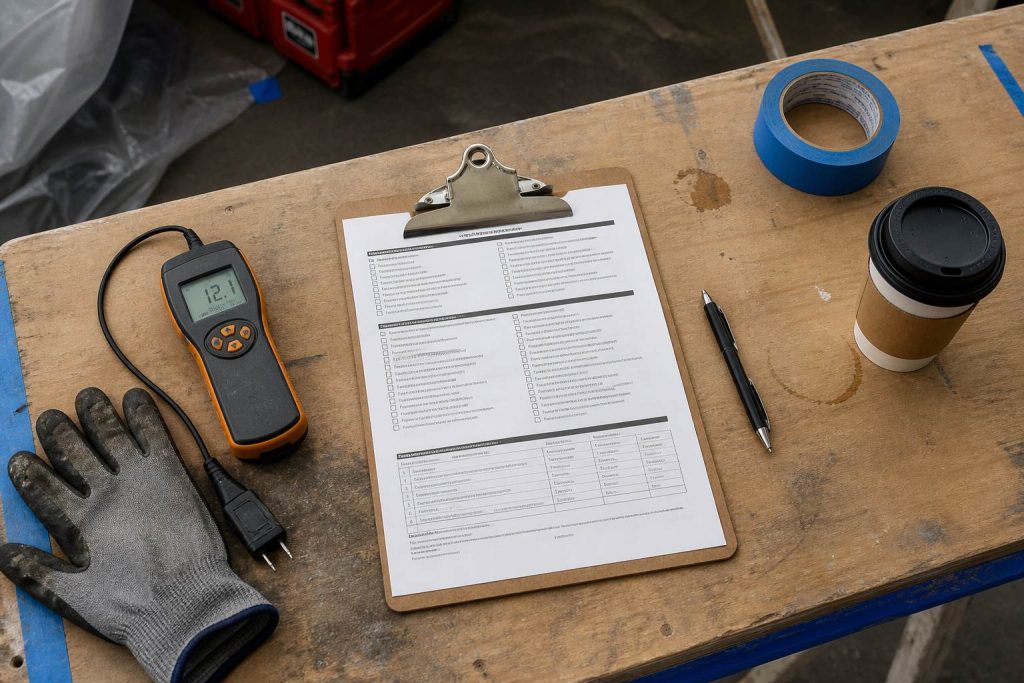
- Follow-up check-in date
- What I will look at on that date (from Prompt 6)
- Outcome: On track / Needs another conversation / Resolved
This planner is Weeks 9-10 of the 90-Day Doer-to-Leader Transition Plan: hold one real accountability conversation this phase, and have your developing manager run the huddle at least once while you sit in. A weekly 15-minute huddle with a fixed agenda (numbers, jobs at risk, who needs what) is the rhythm that makes the hard talk less of a surprise.
A prompt you can give your own Claude if you want it walked: walk me through these six prompts for this specific situation and hand back a finished script and 30-day follow-up, in our company’s voice.
If you want the packaged planner
You can run the six prompts on a legal pad. Buy Now is the Notion page delivered by email after checkout. Duplicate it (··· → Duplicate) for each conversation so the master stays clean. The situation block, the six prompts, the script outline, and the follow-up are already laid out. Same Square button at the top of this page.
Pairs with the Leadership Readiness Checklist (does accountability live below you, or are you the only enforcer) and the 90-Day plan. Matching Claude skill: accountability-planner. Coaching and operational tool only. Not legal or HR advice. This is a planning doc, not a personnel record.
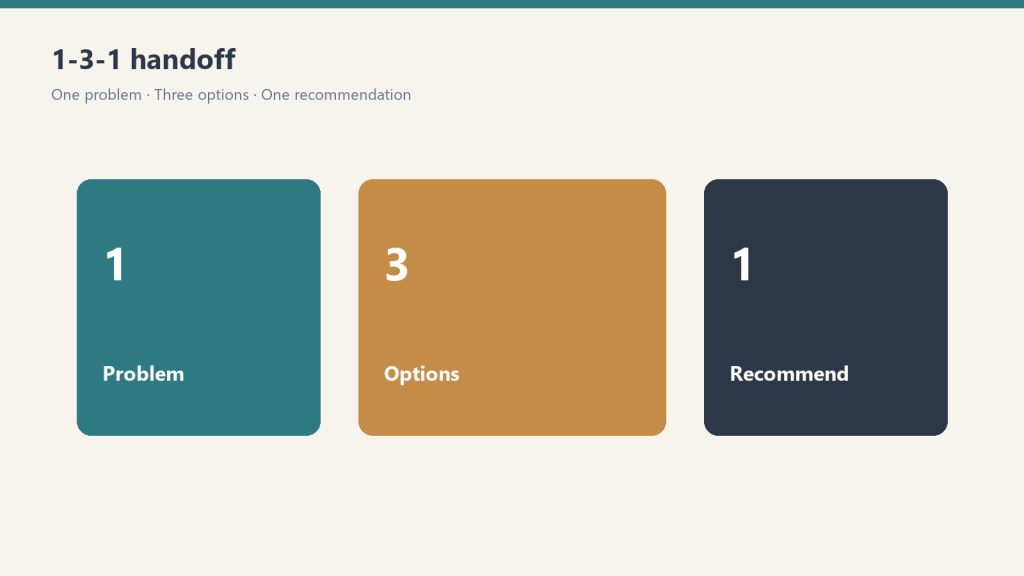
Related: Restoration Leadership Toolkit — Claude Edition. Also 1-3-1 Delegation Worksheet.
Leave a Reply