Tygart Media · Disaster Recovery Guides · Temporary housing & ALE
QUICK ANSWEROriginally published at recovery.tygartmedia.com · Reviewed October 4, 2026
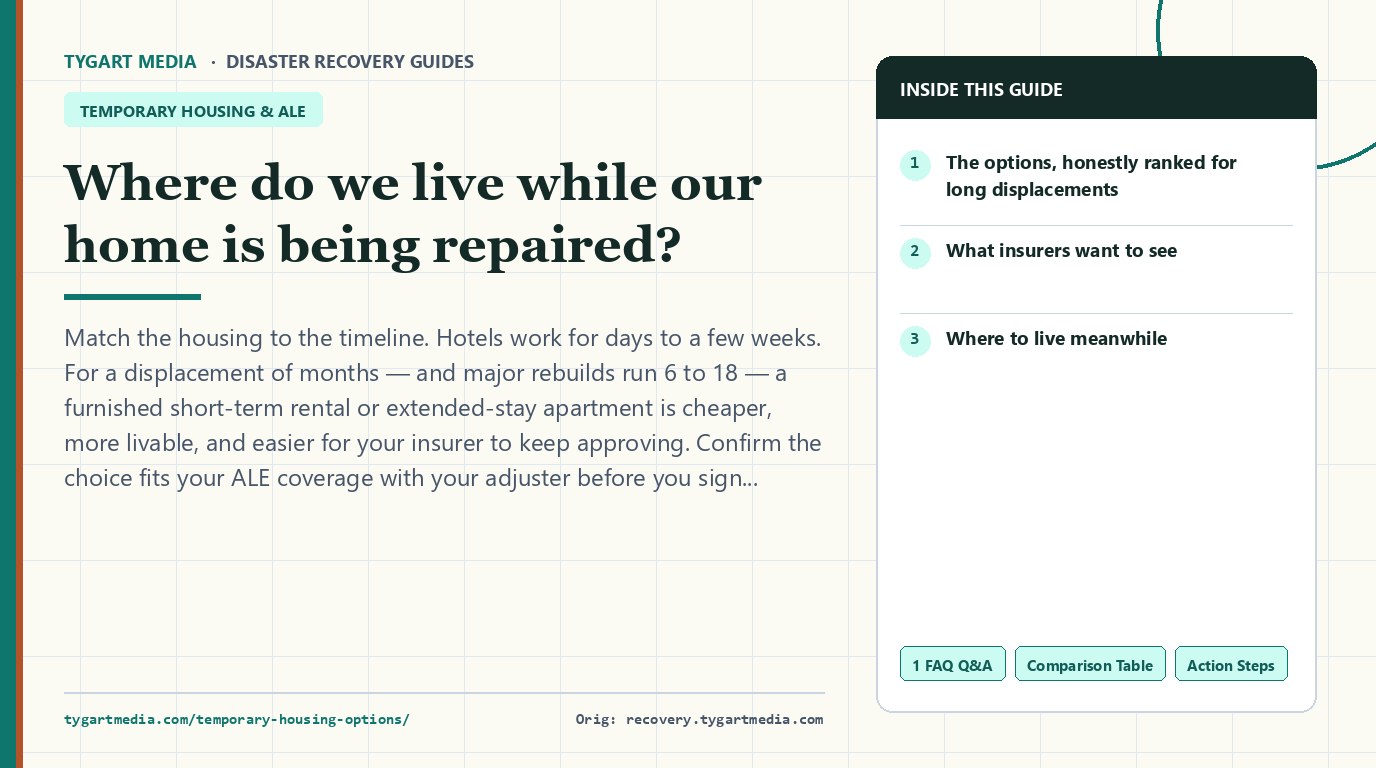
The short answer: match the housing to the timeline. Hotels work for days to a few weeks. For a displacement of months — and major rebuilds run 6 to 18 — a furnished short-term rental or extended-stay apartment is cheaper, more livable, and easier for your insurer to keep approving. Confirm the choice fits your ALE coverage with your adjuster before you sign anything, and get the okay in writing.
The options, honestly ranked for long displacements
- Furnished short-term rental. A real kitchen, laundry, space for the kids and the dog, and usually half the monthly cost of a hotel. The best option for anything over a month. Look for disaster-relocation specialists and corporate-housing companies — they work with insurers routinely.
- Extended-stay hotel or apartment. Kitchenette, weekly rates, no lease. A good bridge while you search for a rental.
- Standard hotel. Fine for the first week or two. Punishing past a month — cost, no kitchen, no routine. If you’re “hotel hopping” between properties, that’s a sign to switch strategies.
- Family or friends. Saves money and keeps you sane in the short term. Past a month or two it strains every relationship involved — set expectations and an exit timeline up front.
- RV, trailer, or on-property temporary dwelling. Some jurisdictions allow it during rebuilds; some don’t. Check local ordinances before buying the trailer.
What insurers want to see
Insurers are required to cover reasonable temporary housing — and for long displacements, “reasonable” usually means a rental, not a hotel. Proposing a rental yourself, with costs documented, often gets approved faster than waiting for the adjuster to suggest it. Keep every receipt regardless. What ALE covers →
Editor's Note
Kids, pets, medical needs If anyone in the household has medical equipment, mobility needs, or school continuity requirements, say so explicitly and in writing — insurers must consider reasonable needs, and documented medical necessity strengthens every housing request you make.
Important Notice
Don’t sign a long lease without insurer sign-off A 12-month apartment lease feels stable, but if your ALE only runs 6 more months or your adjuster disputes the cost, you’re personally on the hook for the difference. Get the housing plan approved in writing first.
Disclaimer
Informational only — not legal, financial, or insurance advice.
Housing rules and ALE terms vary by policy and state. Confirm your plan with your adjuster before committing to housing costs.
Where to live meanwhile
| Option | Pros | Cons |
|---|---|---|
| Extended-stay hotel | No lease, ALE-friendly billing | Expensive long-term |
| Short-term rental | Kitchen, space, normalcy | Lease terms, availability |
| Family / friends | Cheap | Strain over months — set expectations |
| FEMA temporary housing | Available after declarations | Limited supply, eligibility rules |
Get The Signal
What we actually ran, what it measured, and what it means for a restoration shop — every week, including the flops.
Track the AI tools you actually use
Vendor-neutral prices & limits for ChatGPT, Claude, Gemini, Perplexity and more — tracked in AI Stack Watch.
See the live AI tracker →or set up your alerts
Leave a Reply