Tag: AI Search

  • Claude AI Pricing vs Bing AI Citations: Why First-Party Data Beats SpyFu Estimates (2026)

    Claude AI Pricing vs Bing AI Citations: Why First-Party Data Beats SpyFu Estimates (2026)

    If you still lean on a tool like SpyFu to gauge how your site is doing in search, you’re measuring last decade’s game. SpyFu, Ahrefs, SEMrush, and their peers were built to estimate one thing: where a domain ranks in a traditional results page, and roughly how much traffic that’s worth. Still useful — just not the whole picture, because a growing share of how people find your content never touches a results page at all. It happens inside an AI answer, where your page gets cited or quoted and the reader never clicks through.

    That’s the gap between third-party rank-estimation tools and first-party AI citation data, and it matters more every month.

    What SpyFu (and Similar Tools) Actually Measure

    Third-party SEO tools crawl the web and model search behavior from the outside. They don’t have access to your server logs, your analytics, or Bing and Google’s internal citation data — they infer traffic from ranking position, keyword volume estimates, and click-through curves built from aggregate industry data. That’s genuinely useful for competitive research: roughly where a competitor’s domain sits, and what keywords it’s chasing.

    But it’s an estimate of an estimate, built for a web where “visibility” meant “blue link position.” It has no mechanism for counting how many times an AI assistant read your page, extracted a fact from it, and served that fact directly to a user who never visited your site.

    What First-Party AI Citation Data Shows That Estimators Can’t

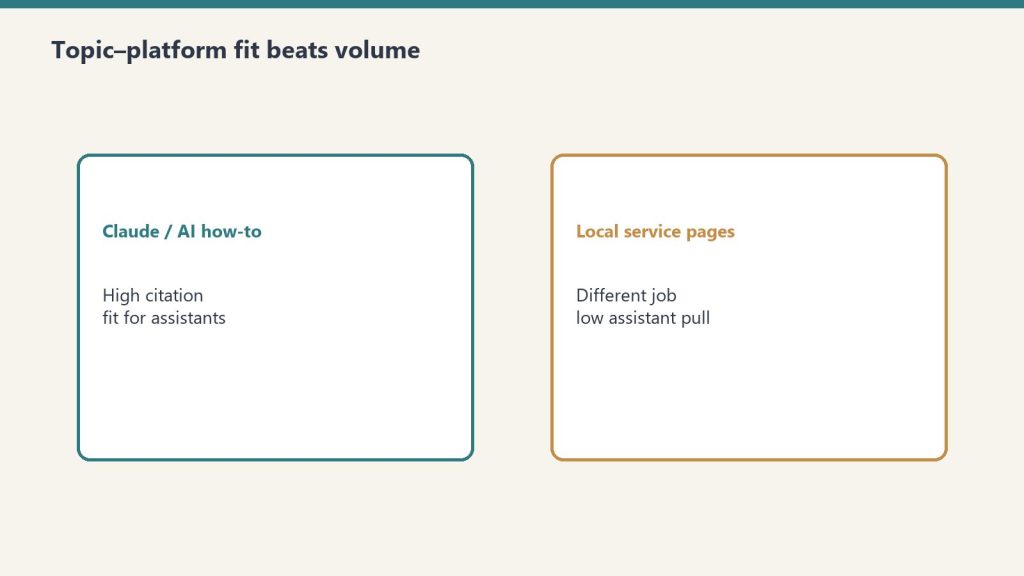
    Topic platform fit visual for first-party AI citation measurement
    What first-party AI citation data shows that estimators can’t.

    Bing Webmaster Tools now separates two very different signals: traditional web search performance (impressions, clicks, position) and AI performance — how often your pages get surfaced inside Copilot and other AI-generated answers. Google Search Console doesn’t yet break this out the same way, which is part of why it’s easy to miss. If you only watch third-party rank trackers, this entire layer is invisible to you.

    The practical difference: a page can have modest, even declining, click-through performance in classic web search while its AI-citation count climbs steadily. Judged only by a SpyFu-style estimate, that page looks flat or fading. Judged by first-party citation data, it’s doing exactly the job it was built for — being the source an AI system reaches for when someone asks a related question.

    The Blind Spot: Zero-Click Visibility

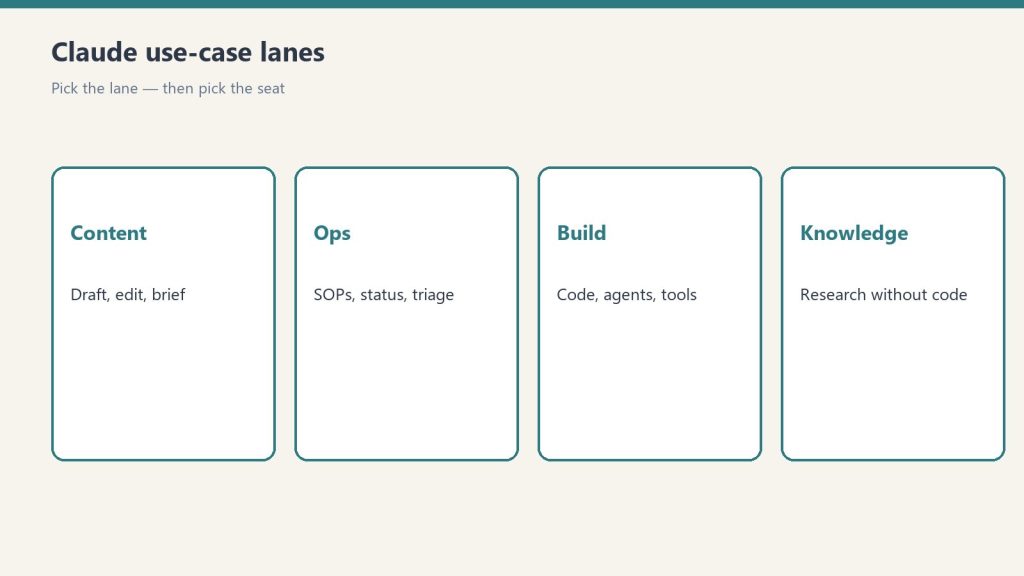
    Four cards for content, ops, build, and knowledge work with Claude
    Zero-click visibility is the blind spot.

    The uncomfortable part for site owners is that AI citation is, by design, mostly a zero-click channel. The reader gets their answer without visiting — that’s not a measurement bug you can fix with a better tool, it’s the actual shape of the channel. An estimator that only counts clicks and rankings will systematically undercount pages that are winning at citation, because “winning” there doesn’t look like a traffic spike. It looks like your facts and explanations showing up correctly, attributed to you, inside someone else’s interface.

    Relying on SpyFu-style estimates alone can lead to the wrong call: de-prioritizing a page that’s actually become a trusted AI reference source, simply because the tool built to measure clicks can’t see the citations.

    Building Your Own First-Party Measurement Stack

    None of this means third-party tools are useless — they’re still the right instrument for competitive keyword research and for understanding classic ranking dynamics. But they should sit alongside, not replace, sources that actually see your own traffic and your own citation footprint:

    • Bing Webmaster Tools’ AI Performance tab — the most direct read on how often Copilot and partner AI surfaces are citing your pages.
    • Server or CDN logs — the only place you’ll reliably see crawler activity from AI bots (ClaudeBot, GPTBot, PerplexityBot, and similar) hitting your pages, separate from human traffic.
    • Your own analytics referral data — small in volume compared to citations, but real signal: sessions that landed with claude.ai, chatgpt.com, or perplexity.ai as the referring host are humans who read an AI answer, then clicked through anyway.

    Put those three together and you get a picture no third-party estimator can reconstruct: which of your pages AI systems actually trust enough to cite, and whether that trust is translating into any direct human traffic at all.

    Practical Takeaway

    Desk with laptop, checklist notebook, and billing card ready before creating an Anthropic API key
    Practical takeaway — build your own measurement stack.

    If a page’s third-party “visibility score” looks unimpressive but your first-party data shows steady or rising AI citation activity, don’t treat that as a contradiction — treat it as two different questions with two different answers. The estimator tells you about classic rank. Your own logs and Bing’s AI data tell you about a newer kind of authority that doesn’t require a click to pay off. Site owners who only check the estimator are optimizing for a channel that’s shrinking relative to the one they can’t see.

    FAQ

    Do I need to abandon tools like SpyFu?
    No. They’re still useful for competitive keyword research and classic rank tracking. The point is to stop treating their traffic estimates as the full measure of your site’s reach.

    Can I get AI-citation data for Google’s AI features the way I can for Bing?
    Not with the same granularity as of this writing — Bing Webmaster Tools currently offers the clearest first-party AI-citation reporting. Server-log analysis for AI crawler activity works across engines regardless.

    How do I know if AI citations are actually worth anything to my business?
    Track it as its own funnel stage, not a proxy for revenue. Pair citation counts with referral sessions from AI-tool domains and see whether that traffic engages with an owned conversion path on your site. Citation volume alone tells you about reach, not value.

    Related on Tygart Media: read Bing AI citations · AI citation monitoring · GEO tactics.

  • Generative Engine Optimization (GEO): 5 Ways to Ensure Your Content Gets Cited (2026)

    Generative Engine Optimization (GEO): 5 Ways to Ensure Your Content Gets Cited (2026)

    Last refreshed: August 2026

    GEO — Generative Engine Optimization — is the practice of structuring content so that AI answer engines (ChatGPT, Perplexity, Google AI Overviews, Gemini, and Claude) cite it in the answers they generate. In 2026, 68% of U.S. Google searches end without a click. Being cited in the answer that appears is now as important as ranking in the links below it.

    This guide covers what GEO is, how it differs from traditional SEO, and five specific tactics that move citation rates — with particular relevance for sites publishing Claude and AI authority content.


    Why GEO Matters in 2026

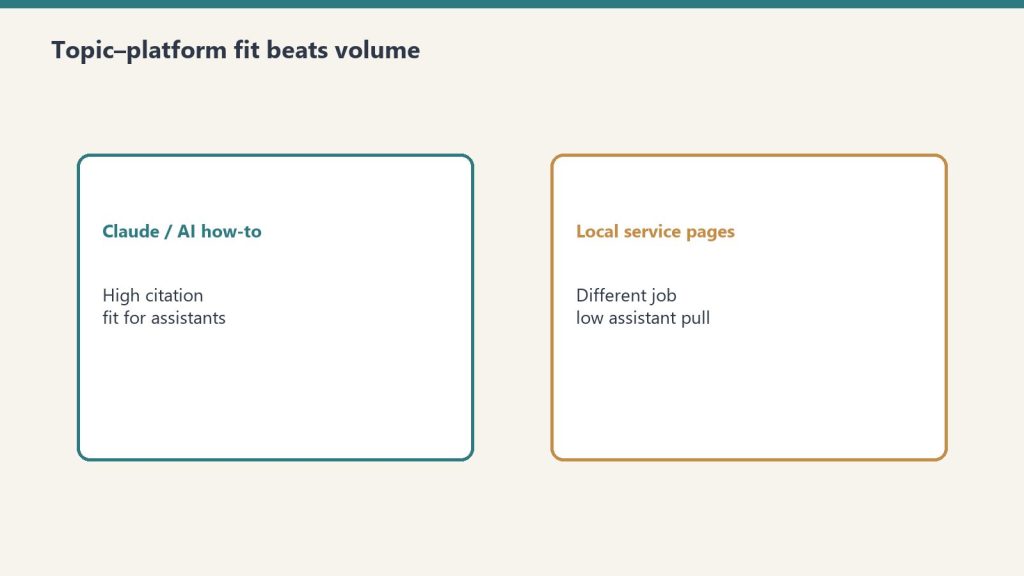
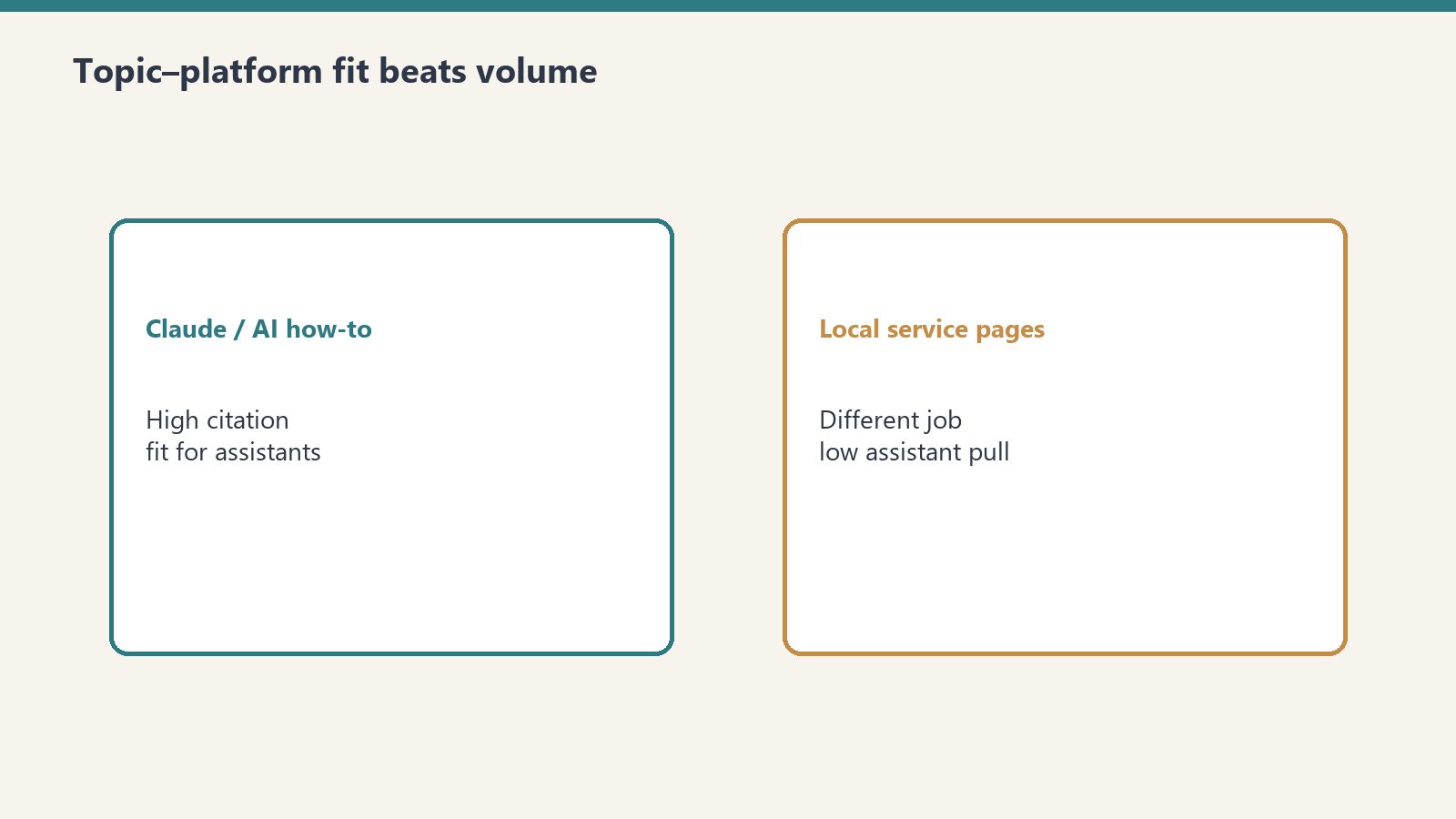
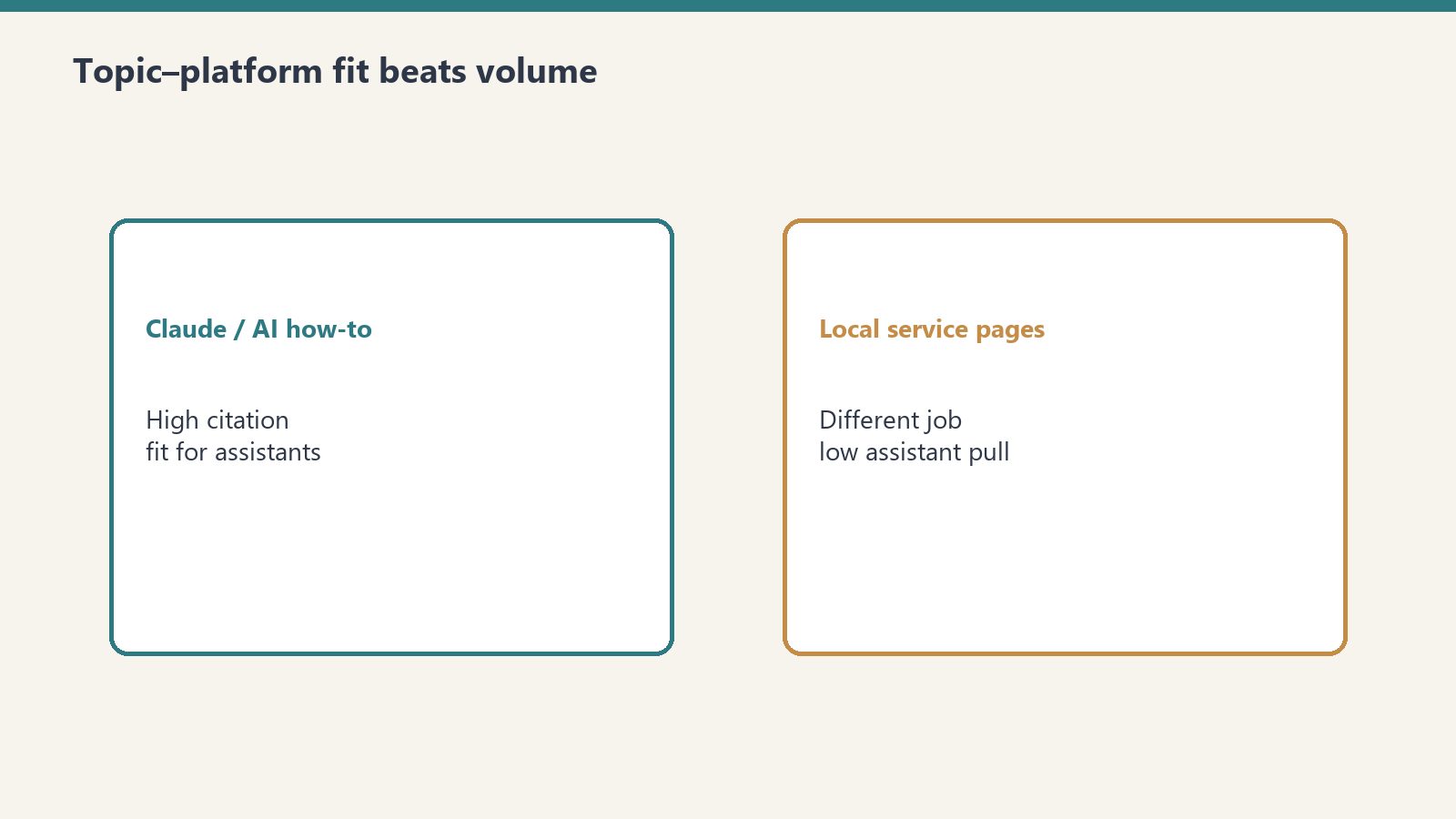
    Comparison of Claude how-to fit versus local service page fit for assistants
    Why GEO matters — citations are the new first page.

    AI Overviews reduce organic click-through rate for the #1 ranked result by up to 58% (Ahrefs, December 2025) — but brands cited as sources within AI Overviews earn 35% more organic clicks than uncited brands on the same query.

    The counterintuitive finding: zero-click is bad for uncited sites and good for cited ones. The goal is not to fight AI Overviews — it’s to be inside them.

    The market data context:

    • 68% of U.S. Google searches are zero-click in 2026, up from 60% in 2024
    • When AI Overviews appear, the zero-click rate jumps to 83%
    • Visitors arriving from AI citations convert at 4.4x the rate of traditional organic visitors
    • The GEO market is projected at $365M in 2026, growing at 42.9% CAGR

    The mechanism: AI search users arrive with specific, researched queries and a pre-formed shortlist. That intent profile makes them higher-converting even when the total count is smaller.


    How GEO Differs From Traditional SEO

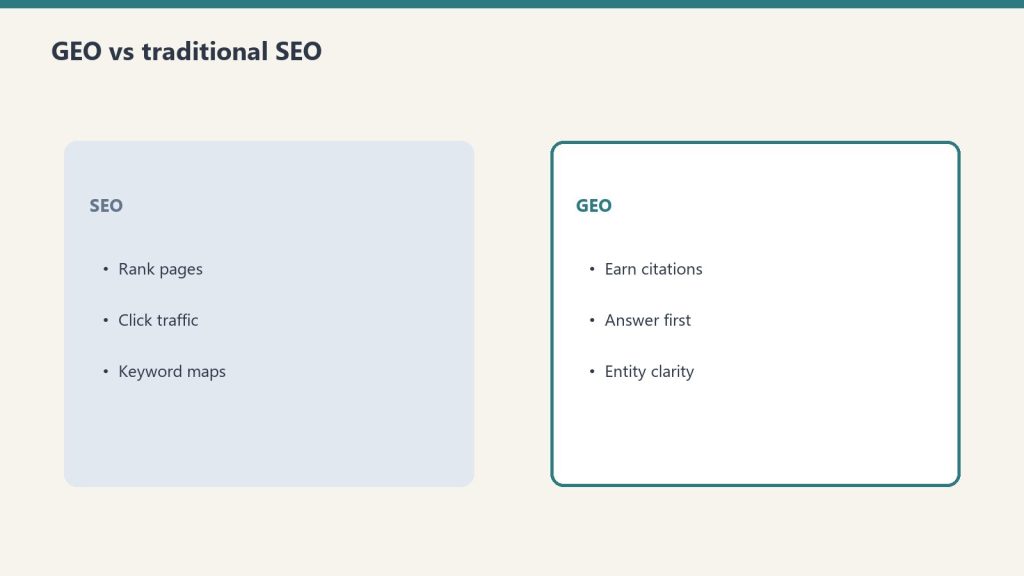
    Side-by-side SEO rank/click versus GEO citation/answer-first
    How GEO differs from traditional SEO.

    Traditional SEO optimizes for ranking position in a list of links. GEO optimizes for inclusion in the synthesized answer above those links. The signals overlap significantly, but GEO adds specific requirements around answer-first structure, data richness, and citation-friendliness.

    DimensionTraditional SEOGEO
    GoalRank in top 10Be cited in the AI answer
    Key signalBacklinks, E-E-A-T, technical SEOAnswer-first structure, data richness, entity authority
    MeasurementOrganic clicks, ranking positionAI citation rate, brand mentions, branded search volume
    Content structureTopic depth, keyword distributionDirect answer in first 200 words, FAQ schema
    Success statePosition 1Cited source in AI Overview

    Important: the overlap between ranking in Google’s top 10 and being cited in AI Overviews collapsed from roughly 75% in mid-2025 to 17–38% in early 2026. Ranking well no longer guarantees AI citation. Both need to be optimized for separately.


    Tactic 1: Answer First, Always

    Desk with laptop, checklist notebook, and billing card ready before creating an Anthropic API key
    Answer first, always — then prove it with specifics.

    AI retrieval systems that use real-time web access evaluate a page’s relevance primarily on its opening content. The first 200 words of any article must directly and completely answer the primary query — not build up to the answer.

    The structure that gets cited:

    [H1 Title]
    [Bold one-sentence direct answer in first paragraph]
    [Supporting context and detail]
    

    The structure that doesn’t:

    [H1 Title]
    [Background context]
    [History of the topic]
    [Eventually getting to the answer]
    

    AI Overviews synthesize their answers from the opening of retrieved pages. A page that buries its answer 500 words in gets retrieved for its topic relevance and then can’t be cited because the direct answer isn’t extractable. The answer-first structure serves both GEO and usability simultaneously.

    For AI authority content specifically: every article about a Claude feature, pricing tier, or model capability should open with the factual answer to the likely query, stated plainly in the first sentence or two.


    Tactic 2: Add Original Data and Specific Numbers

    AI systems and search engines treat original data, specific statistics, and citable figures as high-value content. Content with precise numbers gets cited more than content with generalizations.

    The practical application:

    • “Claude Enterprise typically costs $60–250+/user/month depending on usage intensity” is more citable than “Claude Enterprise is expensive for some teams”
    • “68% of U.S. Google searches are zero-click in 2026” is citable; “most searches end without a click” is not
    • “Claude Sonnet scores approximately 77% on SWE-bench Verified” is citable; “Claude is good at coding” is not

    For tygartmedia.com content specifically: articles that include specific pricing numbers, benchmark scores, token counts, and performance figures will outperform articles that describe capabilities in qualitative terms. The Claude reference cluster (pricing, models, console) already does this well.

    Attribution rule: Cite where specific numbers came from — a benchmark, a study, Anthropic’s official documentation. “According to Anthropic’s pricing page” or “per SWE-bench Verified benchmarks” tells AI systems the claim is grounded, not asserted.


    Tactic 3: Use FAQ Schema

    FAQ schema (FAQPage structured data) formats content explicitly as question-and-answer pairs, which is the format AI answer engines are built to extract and synthesize from. Pages with FAQ schema see measurably higher AI Overview inclusion.

    Implementation in JSON-LD:

    <script type="application/ld+json">
    {
      "@context": "https://schema.org",
      "@type": "FAQPage",
      "mainEntity": [
        {
          "@type": "Question",
          "name": "What is Claude Enterprise pricing?",
          "acceptedAnswer": {
            "@type": "Answer",
            "text": "Claude Enterprise starts at approximately $20/user/month for access, with token usage billed separately at API rates. Real total cost typically runs $60–250+/user/month depending on usage intensity."
          }
        },
        {
          "@type": "Question",
          "name": "Is Claude Enterprise worth it?",
          "acceptedAnswer": {
            "@type": "Answer",
            "text": "For teams with compliance mandates (SSO, SCIM, audit logs) or more than 150 users, yes. For smaller teams without governance requirements, Claude Team is more predictable and usually sufficient."
          }
        }
      ]
    }
    </script>
    

    In Rank Math (the plugin on tygartmedia.com): FAQ blocks in the WordPress editor automatically generate FAQPage schema without manual JSON-LD implementation. Add FAQ sections to every article and use the Rank Math FAQ block type.


    Tactic 4: Build Entity Authority

    AI systems and search engines treat entities — specific named things with consistent, verifiable information across the web — as more citable than generic topical content. Building entity authority for tygartmedia.com means consistent name, description, and factual claims across every surface the crawlers read.

    Entity authority checklist:

    • Organization schema on every page: Name, URL, description, logo, founder, same-as links to LinkedIn, social profiles
    • Consistent author byline: “Will Tygart” as the author on every article, with a consistent bio that establishes expertise
    • External mentions: Being cited by other authoritative sites on the same topics creates the external validation AI systems look for
    • Wikipedia/Wikidata presence: Not always achievable, but having factually consistent information across third-party sites (LinkedIn, Crunchbase, social profiles) strengthens entity recognition

    For an AI authority site specifically: the entity is “Tygart Media” and its associated expertise is Claude, Anthropic, and AI infrastructure for operators. Every article that earns an external link or citation strengthens that entity signal for all related queries.


    Tactic 5: Freshness Signals

    AI retrieval systems weight recency heavily for fast-moving topics. Claude pricing, model capabilities, and Anthropic’s roadmap change frequently. Articles with stale information get displaced by fresher sources even when the URL has more backlink authority.

    Freshness tactics:

    • “Last refreshed” date at the top of every article — signals to both users and crawlers that the information is current
    • Add a “What’s new” or “What changed” section for evergreen articles that cover frequently updated topics
    • Update timestamps when content changes — not just publishing dates, but explicit refreshed dates
    • Track in Google Search Console which queries trigger AI Overviews and whether the site is cited in them — freshness issues often show up as sudden drops in AI citation before they show up as ranking drops

    For Claude-related content: any article covering pricing, models, or features needs a refresh trigger whenever Anthropic makes changes. The May 2026 dispatch for timestamp refreshes on Fable 5-related pricing content is the right pattern.


    Measuring GEO Performance

    Standard GA4 and Search Console metrics don’t capture AI citation performance. The metrics that matter for GEO are AI citation rate, branded search volume, and assisted conversions from AI-referred traffic.

    What to track:

    MetricHow to measureWhat it indicates
    AI-referred trafficGA4 source filter for ChatGPT, Perplexity referralsDirect AI citation traffic
    Branded search volumeGoogle Search Console, “tygartmedia” queriesBrand awareness from AI citations
    AI Overview appearancesGSC AIO reportQueries where the site is cited
    CTR on AIO queriesGSC, filter by queries with AI OverviewsWhether citations drive clicks
    Conversion rate from AI referralsGA4 segmented by sourceValue of AI citation traffic

    Manual testing: monthly, ask ChatGPT, Perplexity, and Claude the questions your audience asks — “what is Claude Enterprise pricing,” “how does Metricool API work,” “what is Anthropic’s history” — and see whether tygartmedia.com is cited. This is the most direct GEO feedback loop available.


    Related on Tygart Media: how to use Claude · Anthropic API key.

    Frequently Asked Questions

    What is Generative Engine Optimization (GEO)?

    GEO is the practice of structuring content and managing online presence so that AI answer engines — ChatGPT, Perplexity, Google AI Overviews, Gemini, and Claude — cite it in the answers they generate. It’s distinct from traditional SEO, which optimizes for ranking positions in link lists.

    How is GEO different from SEO?

    Traditional SEO optimizes for ranking position. GEO optimizes for citation inside AI-generated answers. The overlap between top-10 rankings and AI Overview citations has collapsed from 75% in 2025 to 17–38% in early 2026 — ranking well no longer guarantees AI citation. Both need to be optimized independently.

    Does GEO replace SEO?

    No. Traditional SEO fundamentals (E-E-A-T, backlinks, technical health) still power AI citations. GEO is an additional layer on top of a solid SEO foundation, not a replacement for it. Brands that excel at GEO in 2026 typically have strong traditional SEO as well.

    How long does GEO take to work?

    Plan for 3–6 months of consistent effort before seeing meaningful citation rate changes. Unlike traditional SEO ranking changes, which can be tracked daily, AI citation frequency changes slowly as crawlers re-index updated content and AI systems update their knowledge bases.

    What is the conversion rate from AI-cited traffic?

    AI search visitors convert at significantly higher rates than traditional organic visitors — roughly 4.4x according to Semrush data. The mechanism is intent: AI search users arrive with specific, researched queries and a pre-formed shortlist, which translates to higher purchase and contact intent.


    What to Read Next

    History of Anthropic 

    Claude AI Pricing — All Plans and API Rates

     Anthropic Console: API Keys and the Workbench

    Current Claude Model Version Tracker

    Visual summary

    Geo Not Seo Extra Steps

    About this image. This image is part of the Article Hero Images collection in the Tygart Media visual library. Every image produced by Tygart Media is AI-generated using Google Vertex AI (Imagen), converted to WebP format, and injected with full IPTC/XMP metadata before publication.

    • Format: WEBP
    • Collection: Article Hero Images
    • Pipeline: Vertex AI Imagen → WebP → IPTC/XMP → WordPress
  • Bing Webmaster Tools vs Google Search Console: What Each Tells Yo

    Bing Webmaster Tools vs Google Search Console: What Each Tells Yo

    Here’s the number that reorganized how we think about search: ~84% of our organic traffic comes from Bing. Not Google. Bing — and the Copilot and ChatGPT surfaces that draw on Bing’s index. Yet for a long time, like nearly everyone, we watched only Google Search Console and treated Bing as an afterthought.

    That’s the blind spot this article is about. Short answer: use both consoles, but if Bing drives your traffic, stop treating Bing Webmaster Tools as optional — it has data, indexing controls, and an AI-insights surface that Google Search Console doesn’t, and it’s reporting on the search engine that’s actually sending you readers.

    This is the side-by-side from running both consoles on the same media property: what each one tells you, where Bing is quietly ahead, and how we wired the Bing Webmaster Tools API into our editorial calendar.

    The core reporting — query, position, CTR

    Topic platform fit visual for first-party AI citation measurement
    Core reporting: query, position, CTR.

    At the surface, the two consoles look like twins. Both give you queries, impressions, clicks, average position, and CTR. The differences are in coverage and freshness.

    How we do it

    Job Bing Webmaster Tools Google Search Console Verdict
    Query / position / CTR Yes, per query and page Yes, per query and page Tie on the basics
    Data freshness Often faster to update ~2-3 day lag Bing edges ahead
    Historical window Generous 16 months Toss-up
    API access Full API: position + CTR per query/page Search Analytics API Bing — the API is the underrated weapon
    AI / Copilot insights Dedicated AI-traffic insights No equivalent surface yet Bing, clearly
    Market it reports on Bing + Copilot + ChatGPT-via-Bing Google only Depends on your traffic mix

    The honest read: for the basic dashboard, they’re close enough that you’d never switch for the UI. The reasons to take Bing seriously are whose traffic it reports on and what it lets you do about it — the AI insights tab and the API.

    Indexing: IndexNow vs crawl-when-it-feels-like-it

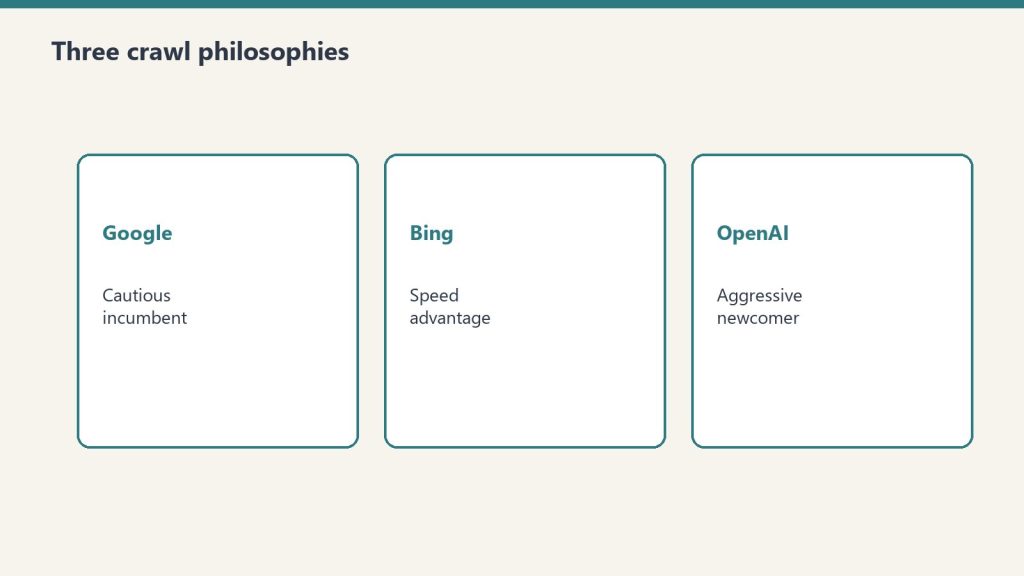
    Three cards for Google cautious, Bing speed, OpenAI aggressive crawl styles
    Indexing: IndexNow vs crawl-when-it-feels-like-it.

    This is the most concrete operational difference, and it’s lopsided.

    How we do it

    Job Bing Webmaster Tools Google Search Console Verdict
    Tell it about a new URL IndexNow — push, indexed near-instantly URL Inspection → “Request indexing” (queued) Bing — push beats poll
    Bulk submission IndexNow ping + sitemap Sitemap, then wait Bing
    Control over crawl Crawl control, block/allow Limited crawl controls Bing — more knobs
    Re-crawl on edit Re-ping IndexNow Hope, or re-request Bing

    IndexNow is the standout. Instead of submitting a sitemap and waiting for a crawler to wander by, you push a URL the moment it changes and it’s picked up almost immediately — and because IndexNow is a shared protocol, one ping notifies participating engines. Google’s model is still largely “request indexing and wait.” For a content site that publishes and edits constantly, push beats poll every time. We ping IndexNow on publish and on every meaningful edit.

    The AI / Copilot insights tab

    Comparison of Claude how-to fit versus local service page fit for assistants
    The AI insights tab is the differentiator.

    Google Search Console has no real equivalent here yet. Bing Webmaster Tools surfaces AI-traffic insights — visibility into how your content shows up across Bing’s AI-powered and Copilot surfaces. Given that those surfaces (and ChatGPT’s web results, which draw on Bing) are an increasing share of how people find answers, this is the single console feature most aligned with where discovery is heading. If you care about GEO at all, it’s the dashboard that tells you whether the AI assistants are actually pulling you in.

    Wiring the BWT API into the editorial calendar

    The Bing Webmaster Tools API is the part most sites never touch, and it’s the most actionable. It returns position and CTR per query and per page — which is a ready-made content-optimization loop:

    1. Pull query/position/CTR from the BWT API on a schedule.
    2. Find pages ranking on page one with weak CTR (good position, bad headline/meta) — fast wins.
    3. Find queries where we rank position 5-15 with real impressions — the “one good edit from page one” list.
    4. Feed both lists straight into the editorial calendar as prioritized rewrites.

    Because Bing drives most of our traffic, this loop is pointed at the engine that actually moves our numbers. Running the same loop off Google Search Console’s API would optimize for the 16% of traffic, not the 84%.

    What surprised us

    • Bing’s data is often fresher than Google’s. We frequently see new queries in Bing Webmaster Tools before they show up in Search Console.
    • IndexNow is faster than anything Google offers — and it’s free and standard. The gap between “push and it’s indexed” and “request and wait” is real and daily.
    • The AI insights tab has no GSC counterpart. For a site doing GEO, that’s the most forward-looking surface either console offers.
    • Almost nobody verifies their site in Bing Webmaster Tools. You can import directly from Google Search Console in a couple of clicks, so the only reason most sites skip it is that they’ve never looked at where their traffic comes from.

    The takeaway

    This was never a “pick one” — it’s “stop ignoring one.” Google Search Console is still essential; Google isn’t going anywhere. But running only GSC is a bet that Google’s view of your site is the only one that matters, and our traffic data says that bet is wrong by a factor of five.

    Use both. Watch Google Search Console for the Google slice. But if a large share of your organic traffic comes from Bing — and a surprising number of content sites are in exactly that position without checking — then Bing Webmaster Tools is your primary console: fresher data, IndexNow for instant indexing, the AI/Copilot insights surface, and an API you can wire straight into your editorial calendar.

    The 84% lesson is simple: measure where your readers actually come from, then watch the console that reports on it. For us, that meant promoting Bing from afterthought to the dashboard we open first.

    This is part of our “Two Clouds, One Site” series — we run the same media property on Azure and Google Cloud, on the free tiers, and report what watching both ecosystems actually teaches us. The lab lives on tygart.media; the findings publish here.

    Related on Tygart Media: Bing vs GSC (companion) · read Bing AI citations · AI citation monitoring.

    Frequently asked questions

    Should I use Bing Webmaster Tools if I already use Google Search Console? Yes — they report on different search engines, so using only Google Search Console hides all of your Bing performance. If any meaningful share of your traffic comes from Bing, Copilot, or ChatGPT’s Bing-powered results, Bing Webmaster Tools shows data and offers indexing controls that Search Console doesn’t. You can import your site from Search Console in a couple of clicks.

    What is IndexNow and is it faster than Google indexing? IndexNow is a protocol that lets you push a URL to search engines the moment it’s published or changed, instead of waiting for a crawler. It’s typically much faster than Google’s “request indexing and wait” model, and because it’s a shared standard, one ping notifies participating engines. For sites that publish or edit frequently, it’s a meaningful indexing-speed advantage.

    Does Bing Webmaster Tools have an API? Yes. The Bing Webmaster Tools API exposes per-query and per-page data including position and CTR, plus URL submission. That makes it practical to pull your search performance on a schedule and feed it into a content-optimization loop — for example, flagging page-one results with weak CTR or near-miss rankings to prioritize for rewrites.

    What does the Bing Webmaster Tools AI insights tab show? It surfaces how your content appears across Bing’s AI-powered and Copilot surfaces, giving visibility into AI-driven discovery that Google Search Console has no direct equivalent for yet. For sites focused on Generative Engine Optimization, it’s the most forward-looking view either console offers into whether AI assistants are pulling in your content.

    Why would a site get most of its traffic from Bing instead of Google? It’s more common than people assume, especially for niche or B2B content, sites strong in Bing-heavy regions or browsers, and content that surfaces well in Copilot and ChatGPT’s Bing-powered results. The lesson is to measure your actual referral mix rather than assume Google dominates — many sites only discover their Bing share once they verify in Bing Webmaster Tools.

  • Azure AI Language vs Google Natural Language: Entity Extraction Bakeoff (2026)

    Azure AI Language vs Google Natural Language: Entity Extraction Bakeoff (2026)

    Generative Engine Optimization (GEO) is the new shape of getting found: instead of ranking a blue link, you make your content legible to AI assistants so they recognize, trust, and cite it. The engine room of that work is entity extraction — pulling the named entities and key phrases out of your content so you can saturate it with the concepts an AI system uses to decide what a page is about.

    We run the same articles through both Azure AI Language and Google Cloud Natural Language, on the free tiers, and compare what each one sees. Short answer: for GEO aimed at Bing and Copilot, Azure AI Language is the pick — not because its NLP is categorically better, but because you’re extracting entities with Microsoft’s own signal family to optimize for Microsoft’s own AI. Google Natural Language is an excellent general-purpose NLP API; it’s just optimizing toward a different reader.

    This is the breakdown from the running lab on tygart.media — entity quality, key phrases, sentiment, free-tier ceilings, and the strategic point underneath all of it.

    The free-tier ceilings

    Comparison of Claude how-to fit versus local service page fit for assistants
    Free-tier ceilings for entity extraction.

    How we do it

    Azure Google Cloud Verdict
    Service Azure AI Language Cloud Natural Language API —
    Free ceiling 5,000 text records/month First 5,000 units/month free per feature Toss-up on raw volume
    “Record” definition Up to 1,000 chars = 1 record Per 1,000 chars = 1 unit, per feature Watch Google — billed per feature
    Cost after free Per record Per 1,000 chars, per feature called Azure simpler to predict
    Always free? Perpetual free tier Free monthly allotment, then billed Tie — both have monthly free

    The subtlety: Google bills per feature — entity analysis, sentiment, and syntax each consume their own free allotment and then their own meter. Azure’s 5,000 text records/month is a cleaner mental model for a content pipeline that runs every article through the same extraction pass. At ~300–400 articles a month, both stay at $0; Azure is just easier to reason about.

    Entity extraction quality

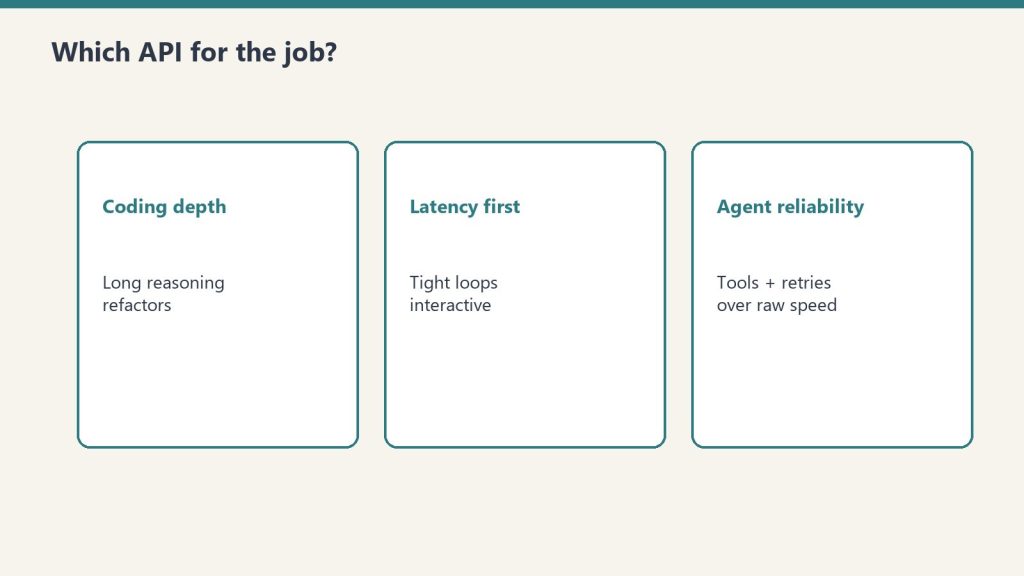
    Three cards: coding depth, latency first, agent reliability
    Entity extraction quality head-to-head.

    This is the line that matters most for GEO.

    How we do it

    Job Azure Google Cloud Verdict
    Named entity recognition Strong, typed categories + subcategories Strong, with entity types Toss-up on accuracy
    Entity linking Links entities to a knowledge base Wikipedia/Knowledge Graph links Google for KG links; Azure for Bing alignment
    Key-phrase extraction First-class, clean Not a dedicated feature (infer from entities/salience) Azure — dedicated key phrases
    Salience / ranking Confidence scores Salience score per entity Google — salience is genuinely useful
    Sentiment Document + sentence + aspect-based Document + entity-level Toss-up; both solid

    Both APIs find the obvious entities. The differences are at the edges: Google’s salience score (how central an entity is to the document) is a genuinely useful GEO signal — it tells you which entities the content is actually about, not just which appear. Azure’s dedicated key-phrase extraction is the cleaner input for content saturation — it hands you the phrases to weave back in, where Google makes you infer them.

    For our pipeline, we use Azure’s key phrases as the editing checklist and lean on its typed entity categories to confirm an article is “saturated” with the right concepts before it publishes.

    Sentiment and the extra features

    Both do document- and sentence-level sentiment well. Azure’s aspect-based sentiment (sentiment tied to specific targets within a sentence) is the richer feature if you’re analyzing reviews or feedback. Google’s entity-level sentiment is comparable for most content work. For a media site doing GEO, sentiment is secondary — entity and key-phrase extraction is the main event — but if you also do feedback analysis, Azure’s aspect-based model edges ahead.

    The strategic point — extract with Microsoft’s tooling, optimize for Microsoft’s AI

    Here’s the whole game. When you extract entities to optimize content, you’re implicitly choosing a definition of what counts as an entity. Those definitions aren’t universal — Microsoft’s and Google’s models were trained on different data and tuned toward different downstream systems.

    Bing and Copilot select and ground content using Microsoft’s signal family — the same lineage that powers Azure AI Language. So when we extract entities with Azure and saturate our articles with what it recognizes, we’re tuning content to the exact signals Microsoft’s own AI uses to decide what to surface and cite. That’s not a coincidence we’re exploiting; it’s the most direct alignment available. With ~84% of our traffic from Bing, optimizing toward Google’s entity model would be optimizing for the wrong reader.

    What surprised us

    • Google’s salience score is the feature we wish Azure had. Knowing which entity is central (not just present) is a sharper GEO signal than a flat confidence list.
    • Google bills per feature — that’s the budget trap. Calling entities + sentiment + syntax on one document is three metered features, not one. Azure’s per-record model is harder to accidentally triple.
    • Key-phrase extraction is an Azure advantage that’s easy to miss. Google has no dedicated key-phrase feature; you reconstruct it from entities and salience. Azure just hands you the phrases.
    • Both miss niche industry entities. Neither model reliably tags specialized restoration-industry or proprietary-standard terms. Custom NER (Azure) or a custom dictionary closes that gap — worth it if your content is jargon-dense.

    The takeaway

    Desk with laptop, checklist notebook, and billing card ready before creating an Anthropic API key
    The takeaway from the NLP bakeoff.

    These are both strong NLP APIs, and at our volume both run at $0. The decision is about which AI you’re feeding.

    Pick Azure AI Language if your GEO target is Bing and Copilot, you want dedicated key-phrase extraction as a content checklist, and you’d rather extract entities with the same signal family your search traffic actually flows through. That’s us.

    Pick Google Cloud Natural Language if you want the salience score, you’re optimizing for Gemini and Google’s Knowledge Graph, or you need general-purpose NLP across mixed workloads. It’s an excellent API — it’s just tuned toward a different reader than the one sending us traffic.

    If most of your audience arrives through Bing, extracting your entities with Google’s model is optimizing for the wrong index. We extract with Microsoft’s tooling, on purpose.

    This is part of our “Two Clouds, One Site” series — we run the same media property on Azure and Google Cloud, on the free tiers, and publish what the two ecosystems actually do with the same content. The lab lives on tygart.media; the findings publish here.

    Related on Tygart Media: AI Search vs Vertex · Translator vs Google · $0 cloud stack.

    Frequently asked questions

    What is entity extraction and why does it matter for SEO? Entity extraction (named entity recognition) identifies the people, places, organizations, and concepts in your text. It matters for modern SEO and GEO because search engines and AI assistants understand pages by the entities they contain — saturating content with the right, correctly-recognized entities helps those systems classify and cite it accurately.

    Is Azure AI Language free? Azure AI Language includes a perpetual free tier of 5,000 text records per month, where one record is up to 1,000 characters. For a content site processing a few hundred articles a month, that’s enough to run entity and key-phrase extraction on every piece at $0.

    What’s the difference between Azure AI Language and Google Natural Language? Both extract entities, key concepts, and sentiment, but they differ at the edges: Azure offers dedicated key-phrase extraction and aspect-based sentiment, while Google offers a salience score that ranks how central each entity is to the document. Google also bills per feature, where Azure bills per text record. They’re tuned toward different downstream AI systems — Azure toward Microsoft/Bing, Google toward Gemini and the Knowledge Graph.

    What is GEO (Generative Engine Optimization)? GEO is optimizing content so generative AI assistants recognize, trust, and cite it, rather than optimizing only for blue-link rankings. In practice it means structuring content and saturating it with the right entities and key phrases so the models that answer user questions pull from your pages.

    Which NLP API is better for optimizing for Bing and Copilot? Azure AI Language, because it shares Microsoft’s signal lineage — the same family Bing and Copilot use to select and ground content. Extracting entities with Azure and saturating your articles with what it recognizes aligns your content with the exact signals Microsoft’s AI uses, which is the higher-leverage choice when Bing drives your traffic.

  • Azure AI Search vs Vertex AI Search: Site Search on the (2026)

    Azure AI Search vs Vertex AI Search: Site Search on the (2026)

    Most “which managed search?” articles compare feature checklists from the vendor docs. We did something more useful: we indexed the same media property’s content into both Azure AI Search and Vertex AI Search, on the free tiers, and watched what each one did with it.

    Short answer: for a content site that wants to be found and cited by AI assistants, Azure AI Search is the pick — not because the relevance is dramatically better, but because it’s the retrieval lineage that sits behind Bing and Copilot, and ~84% of our organic traffic comes from Bing. Vertex AI Search is the stronger turnkey RAG product and grounds beautifully into Gemini. Which one wins depends entirely on whose AI you’re trying to get in front of.

    This is the desk-by-desk breakdown — free-tier ceilings, setup friction, relevance, and ecosystem grounding — from the running lab on tygart.media.

    The free-tier ceilings

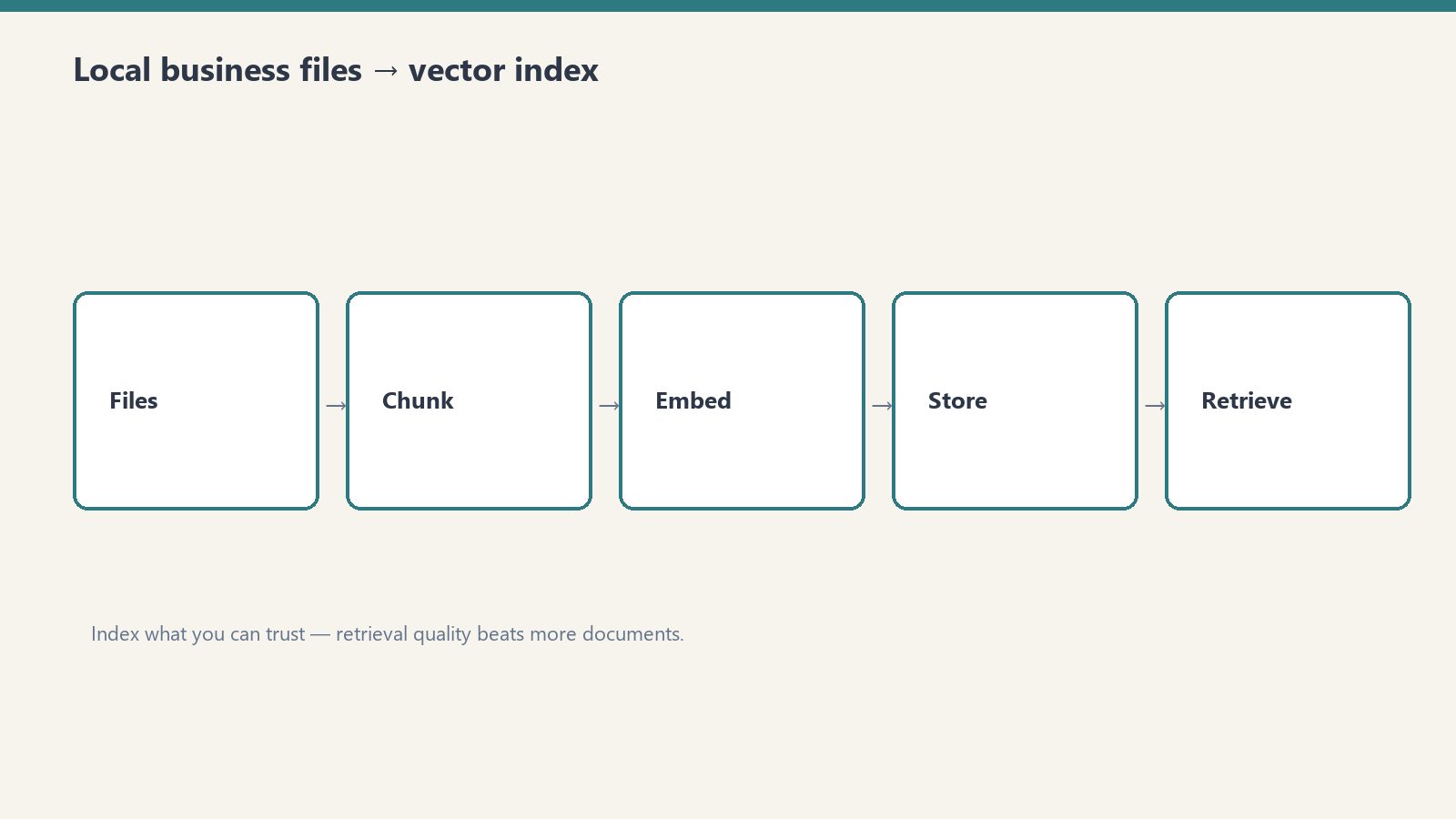
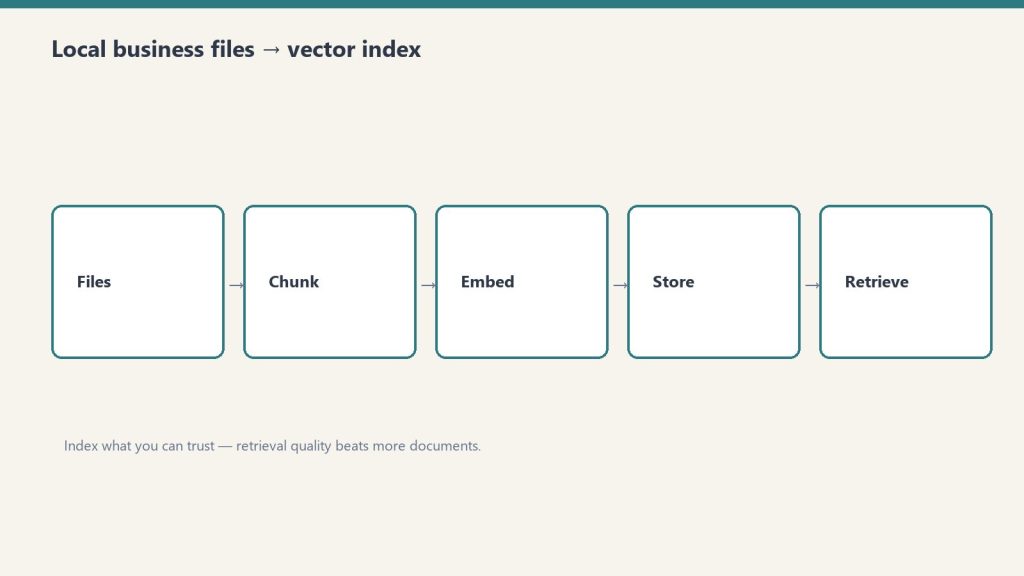
    Five-step flow from files to chunk, embed, store, retrieve
    Free-tier ceilings on managed site search.

    The first thing that matters at our scale is what each gives you for $0, perpetually.

    How we do it

    Azure Google Cloud Verdict
    Service Azure AI Search (Free tier) Vertex AI Search —
    Storage 50 MB Generous indexing quota, but query/extraction billed Azure — true perpetual free
    Indexes 3 indexes Multiple data stores Toss-up
    Documents ~10,000 hosted docs Effectively higher, but pay-as-you-go Azure for “always free” certainty
    Cost model Always free, no card pressure Free trial credits, then per-query/extraction Azure — Vertex bills as you scale
    Semantic ranking Available (limited on free) Built in, very strong Google on raw quality

    The honest read: Azure’s 50 MB / 3-index / ~10,000-document free tier is small but genuinely perpetual — it never starts billing at our volume. Vertex AI Search is more capable out of the box but its free posture is trial credits, after which queries and extractive answers meter. For a small content site, Azure’s ceiling is the one you can forget about.

    Setup friction

    How we do it

    Job Azure Google Cloud Verdict
    Get to first results Create service → index → import data source Create app → data store → point at site/GCS Google — faster to “it works”
    Crawl a website directly Indexer add-on, more wiring Website data store crawls URLs natively Google, clearly
    Schema control Fine-grained fields, analyzers, scoring profiles More opinionated, less to tune Azure for control; Google for speed
    Vector / hybrid search Native vector + hybrid (keyword+vector) Native, with built-in embeddings Toss-up; both strong

    Vertex AI Search gets you to a working search box faster — point it at a sitemap or a Cloud Storage bucket and it crawls and chunks for you. Azure AI Search makes you assemble the indexer, but in exchange you get scoring profiles, custom analyzers, and field-level control that pay off once you care about why a result ranks.

    Relevance and semantic ranking

    On raw relevance for a handful of queries against the same corpus, Vertex was slightly better out of the box — its semantic ranking and extractive answers are tuned and ready. Azure matched it once we turned on semantic ranking and tuned a scoring profile, but that’s manual work Vertex does for free.

    The asymmetry: Vertex is better at answering, Azure is better at being controllable. If you want a search box that produces clean extractive answers with zero tuning, Vertex wins. If you want to deliberately shape what ranks (and you’re optimizing content anyway), Azure rewards the effort.

    The grounding angle — whose AI is reading you

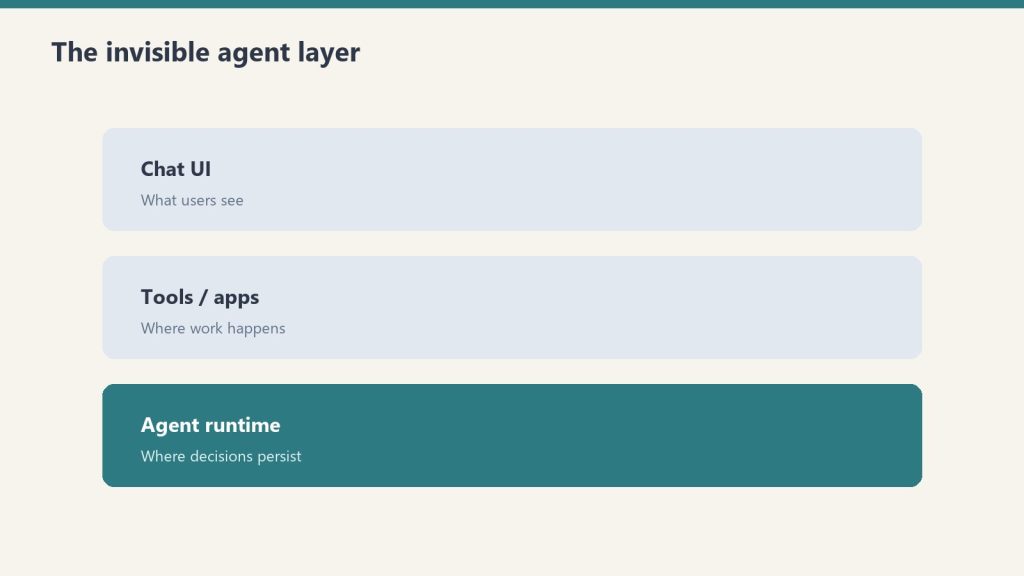
    Three stacked layers: chat UI, tools, agent runtime
    Grounding angle — whose AI is reading you.

    This is the line that actually decides it for us.

    Neither Azure AI Search nor Vertex AI Search “submits your site to Bing or Gemini.” But the retrieval architecture you build on signals which ecosystem you’re fluent in. Azure AI Search is the same managed-retrieval lineage Microsoft uses to ground Copilot, and it’s the natural backend for “Bring your own data” grounding into Azure OpenAI / Copilot Studio. Vertex AI Search is the canonical retrieval layer for grounding Gemini — it’s literally the “ground with your own data” path in Google’s stack.

    So the question isn’t “which search is better.” It’s: which AI assistant do you most need to recognize and cite your content? For us, with Bing driving the overwhelming majority of organic traffic, building our retrieval inside Microsoft’s lineage and exposing structured, Copilot-groundable content is the higher-leverage bet.

    What surprised us

    Desk with laptop, checklist notebook, and billing card ready before creating an Anthropic API key
    What surprised us in the comparison.
    • Azure’s 50 MB is smaller than it sounds — and bigger than it needs to be. Pure text content compresses; 10,000 documents of article body is more than a mid-size site has. The ceiling we’d hit first is index count (3), not storage.
    • Vertex’s “free” is the easy thing to misjudge. The trial experience is so smooth you forget it’s metered. Set a budget alert before you point it at a large crawl.
    • Hybrid (keyword + vector) search is now table stakes on both. A year ago this was Azure’s differentiator; Vertex has fully caught up.
    • Vertex crawls websites natively; Azure wants a data source. If your content lives in a bucket or a DB, Azure’s indexer is fine. If you just want to crawl tygart.media and search it, Vertex is less wiring.

    The takeaway

    These are both excellent managed search engines, and at small scale both can run at $0 — Azure perpetually, Vertex on credits. The decision isn’t about relevance deltas measured in single queries.

    Pick Azure AI Search if your strategic goal is to be retrievable and citable inside the Microsoft / Bing / Copilot ecosystem, you want a truly perpetual free tier, and you’re willing to tune scoring profiles for control. That’s us.

    Pick Vertex AI Search if you want the fastest path to a high-quality answering search box, you’re grounding into Gemini, or your content already lives in Google Cloud Storage and you want native crawl-and-chunk with zero schema work.

    If most of your readers arrive through Bing, building your retrieval layer only inside Google’s lineage is the same blind spot as watching only Google Search Console. We build on both — and lean Azure for the citation angle.

    This is part of our “Two Clouds, One Site” series — we run the same media property on both Azure and Google Cloud, on the free tiers, and report what watching both ecosystems actually teaches us. The lab lives on tygart.media; the findings publish here.

    Related on Tygart Media: AI Language vs NL · $0 cloud stack · GEO tactics.

    Frequently asked questions

    Is Azure AI Search really free? Yes — the Free tier is perpetual, not a trial. It includes 50 MB of storage, 3 indexes, and roughly 10,000 hosted documents, and it does not start billing as long as you stay inside those limits. For a small content site that’s enough to run real site search at $0.

    What’s the difference between Azure AI Search and Vertex AI Search? Azure AI Search is a managed retrieval engine you assemble (index, indexer, scoring profiles) and the lineage behind Microsoft’s Copilot grounding. Vertex AI Search is Google’s more turnkey managed search and RAG product that crawls and chunks for you and grounds natively into Gemini. Azure favors control and a perpetual free tier; Vertex favors speed-to-answer and pay-as-you-go scaling.

    Which is better for getting cited by AI assistants? It depends on which assistant matters to you. Azure AI Search aligns with Bing and Copilot grounding; Vertex AI Search aligns with Gemini grounding. If most of your traffic and target citations come from Bing, building retrieval inside Microsoft’s lineage is the stronger bet.

    Does Vertex AI Search have a free tier? Vertex AI Search runs on Google Cloud free trial credits rather than a perpetual always-free tier, and after that, queries and extractive answers are billed per use. It’s easy to start for free, but set a budget alert before pointing it at a large website crawl, because metering starts once credits run out.

    Can I use Azure AI Search to ground my own AI chatbot? Yes. Azure AI Search is the standard “bring your own data” retrieval backend for Azure OpenAI and Copilot Studio, supporting keyword, vector, and hybrid search. You index your content, then have the model retrieve and ground its answers against your index, which keeps responses tied to your source material.

  • Google vs Bing vs OpenAI: The New Crawl War Nobody’s Talking About

    Google vs Bing vs OpenAI: The New Crawl War Nobody’s Talking About

    Definition: The crawl war is the emerging three-way competition between Google, Microsoft (Bing), and OpenAI to discover, index, and serve web content through their respective AI-powered search and answer systems — Google AI Overviews, Microsoft Copilot, and ChatGPT Search. Each ecosystem crawls the web with fundamentally different strategies, speeds, and philosophies, and those differences determine which content gets cited by which AI system first.

    For two decades, the search engine crawl was a two-player game: Googlebot dominated, Bingbot trailed, and publishers optimized exclusively for Google. That era is over. When we published 40 Microsoft Copilot articles on tygartmedia.com and monitored server logs for 48 hours, we recorded 6,805 AI crawler hits from three distinct ecosystems — each crawling with different speeds, different intensities, and different objectives (Tygart Media server log analysis, June 2026). What we observed was not just traffic. It was a competitive intelligence blueprint showing exactly how each ecosystem discovers, evaluates, and serves content. The differences are dramatic, and they fundamentally change how publishers should think about content distribution.

    The Three Ecosystems: Radically Different Crawl Philosophies

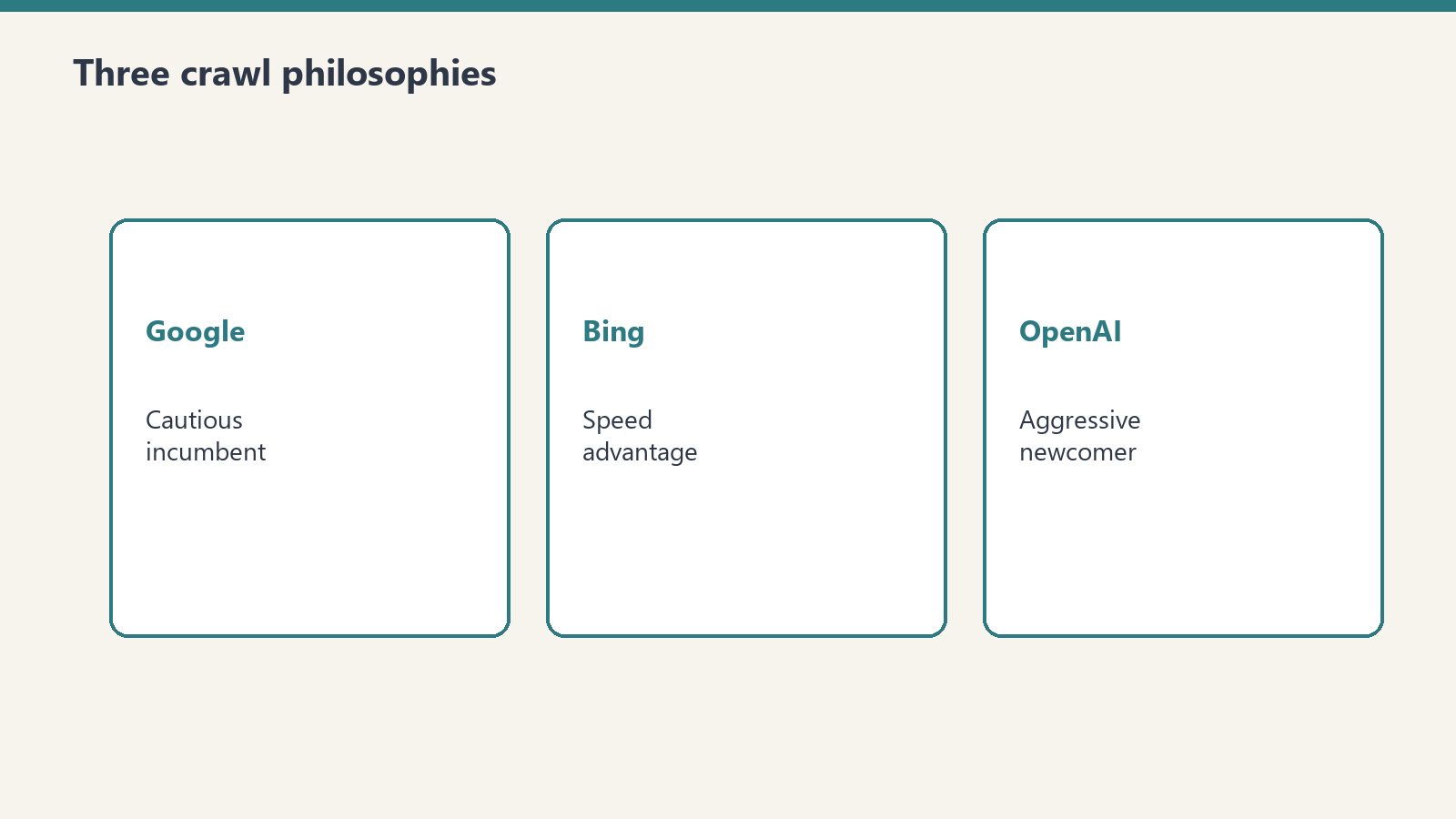
    Three cards for Google cautious, Bing speed, OpenAI aggressive crawl styles
    Three ecosystems: radically different crawl philosophies.

    The crawl war is not just about who crawls more. It is about how each ecosystem approaches the fundamental challenge of web content discovery and evaluation. Our server log data revealed three starkly different approaches operating simultaneously on the same content:

    Google: Slow and conservative. Googlebot approached our content at its own pace, significantly slower than both Bing and OpenAI. Despite being the world’s largest search crawler, Google’s response to our 40-article publication was measured and deliberate — no urgency, no burst crawling, no IndexNow acceleration.

    Bing: Fast and protocol-responsive. Bingbot was the first crawler to reach every single one of our 40 articles, arriving within a consistent 4-hour post-publish window triggered by our IndexNow implementation. Bingbot’s behavior was predictable, fast, and directly responsive to publisher signals.

    OpenAI: Aggressive and structural. OpenAI’s crawler fleet — GPTBot, ChatGPT-User, and OAI-SearchBot — generated the largest volume of activity, including a 1,123-request structural crawl in a single hour. OpenAI’s approach is the most intensive of the three, treating content discovery as an active, aggressive process rather than a passive one.

    Google’s Crawl Strategy: The Cautious Incumbent

    Google has been crawling the web longer than any other company, and its crawl strategy reflects two decades of optimization for thoroughness over speed. Googlebot is the most comprehensive crawler on the web — according to Cloudflare data from January 2026, Googlebot reaches 1.70 times more unique URLs than ClaudeBot, 1.76 times more than GPTBot, 2.99 times more than Meta-ExternalAgent, and 3.26 times more than Bingbot. No other crawler comes close in terms of coverage breadth.

    But coverage is not speed. In our experiment, Googlebot was dramatically slower to discover and index our content than Bingbot. While Bingbot reached every article within 4 hours via IndexNow, Google’s crawlers took significantly longer (Tygart Media server log analysis, June 2026). This speed gap is structural, not accidental — and it reveals a fundamental strategic choice Google has made.

    Why Google Is Slow: The IndexNow Abstention

    The single biggest reason for Google’s slower crawl response is its refusal to adopt IndexNow. IndexNow is the protocol that allows publishers to push notifications directly to search engines when content is published or updated. Bing, Yandex, and other participating search engines receive these notifications and can respond within minutes. Google does not participate in IndexNow. Instead, Google relies on its own crawl scheduling, sitemap processing, and link-following algorithms to discover new content — a process that is thorough but inherently slower.

    Google’s stated position is that it already discovers content efficiently through its existing infrastructure. But our data tells a different story for time-sensitive content. When speed of discovery directly impacts whether content gets cited in AI-generated answers, Google’s conservative approach creates a tangible disadvantage compared to Bing’s IndexNow-responsive pipeline.

    Google’s AI Layer: AI Overviews and Google-Extended

    Google’s approach to AI crawling is to layer AI capabilities on top of existing Googlebot infrastructure rather than deploying separate AI-specific crawlers. Content indexed by Googlebot feeds both traditional search results and Google AI Overviews. The only AI-specific crawler is Google-Extended, which handles the opt-out mechanism for AI training — blocking Google-Extended prevents content from being used for Gemini model training while keeping it available for search and AI Overviews.

    This integrated approach means Google does not need to crawl content twice — once for search, once for AI. But it also means Google’s AI Overviews are limited by Googlebot’s crawl schedule. If Googlebot has not indexed a page, Google AI Overviews cannot reference it. And since Googlebot is slower to discover new content than Bingbot (which uses IndexNow), Google AI Overviews are systematically slower to surface newly published content compared to Microsoft Copilot.

    Bing’s Crawl Strategy: The Speed Advantage

    Topic platform fit visual for first-party AI citation measurement
    Bing’s speed advantage in the crawl war.

    Microsoft’s Bing has historically been the underdog in search — smaller index, lower market share, less publisher attention. But in the AI era, Bing has a structural advantage that Google lacks: IndexNow responsiveness and deep integration with Microsoft Copilot.

    In our experiment, Bingbot’s behavior was the most predictable and publisher-friendly of all three ecosystems. Every single one of our 40 articles was discovered by Bingbot within a consistent 4-hour window after publication, triggered by our IndexNow implementation (Tygart Media server log analysis, June 2026). This consistency is remarkable — it means publishers who implement IndexNow can predict, with near-certainty, when their content will enter Bing’s index and become available for Copilot citation.

    The IndexNow Pipeline: Publisher to Copilot in Hours

    The Bing-to-Copilot pipeline works like this: you publish content, IndexNow notifies Bing, Bingbot crawls and indexes your page within approximately 4 hours, and that indexed content immediately becomes available to Copilot’s retrieval system. This is the fastest path from publication to AI citation available today.

    Our server logs confirmed this pipeline operating exactly as designed. Within 24 hours of publishing our 40 articles, we recorded 3 confirmed referral visits from copilot.microsoft.com, with 2 carrying the utm_source=copilot.com parameter (Tygart Media server log analysis, June 2026). That is less than one business day from publication to confirmed Copilot citation — a timeline that would be impossible without IndexNow’s speed advantage.

    The YandexBot Shadow Effect

    An unexpected finding in our data: YandexBot consistently shadowed Bingbot, hitting each article approximately 30 seconds after Bingbot’s initial visit (Tygart Media server log analysis, June 2026). This confirms that IndexNow notifications propagate across all participating search engines simultaneously. When you ping IndexNow, you are not just notifying Bing — you are notifying every participating engine, including Yandex and any future participants. This multiplier effect makes IndexNow even more valuable than its Bing integration alone would suggest.

    Bing Webmaster Tools AI Performance Dashboard

    Microsoft has further cemented its position in the crawl war by launching the AI Performance dashboard in Bing Webmaster Tools (public preview, February 2026). This dashboard surfaces citation metrics specifically for AI-generated answers across Microsoft Copilot, AI-generated summaries in Bing, and select partner integrations. Publishers can see total citations, grounding queries (the exact queries that triggered each citation), page-level citation activity, and visibility trends over time. No other search engine offers comparable AI citation analytics — Google has no equivalent dashboard for AI Overviews citation tracking.

    OpenAI’s Crawl Strategy: The Aggressive Newcomer

    Three stacked layers: chat UI, tools, agent runtime
    OpenAI’s aggressive newcomer crawl strategy.

    OpenAI entered the web crawling game later than both Google and Microsoft, but its approach is by far the most aggressive. While Google crawls conservatively and Bing crawls responsively, OpenAI crawls intensively — deploying three separate crawlers (GPTBot, ChatGPT-User, OAI-SearchBot), each serving a distinct purpose, and generating enormous volumes of requests.

    In our 48-hour monitoring window, OpenAI’s crawler fleet was the single largest source of AI crawler activity. ChatGPT-User alone generated 3,404 hits — each representing a real user’s query being answered using our content. GPTBot added a concentrated 1,123-request structural crawl in a single hour. Combined, OpenAI’s crawlers generated more traffic to our Copilot content cluster than any other AI company’s crawler fleet (Tygart Media server log analysis, June 2026).

    The Structural Crawl Pattern: GPTBot’s Burst Behavior

    The most distinctive behavior we observed from OpenAI was GPTBot’s burst crawling pattern. At 11:00 UTC on June 22, GPTBot executed 1,123 requests in a single hour, systematically visiting every article in our Copilot content cluster (Tygart Media server log analysis, June 2026). This is not the steady, distributed crawling you see from Googlebot or Bingbot. This is an aggressive, concentrated evaluation — OpenAI’s systems identifying a domain as a potential authority source and performing a comprehensive assessment in a compressed timeframe.

    This burst pattern has significant implications for publishers. It suggests that OpenAI’s crawl system operates on a trigger model: when the system identifies a relevant domain (through user queries, link signals, or other discovery mechanisms), it dispatches GPTBot for a thorough, rapid evaluation rather than gradually crawling over days or weeks. For publishers, this means the first impression matters — when GPTBot arrives for a burst crawl, the quality and structure of your content at that moment determines whether your domain is classified as an authority source.

    ChatGPT-User: The Real-Time Citation Engine

    ChatGPT-User operates fundamentally differently from both Googlebot and Bingbot. Traditional search crawlers index content proactively — they crawl now so results are available later. ChatGPT-User fetches reactively — it visits your page only when a real user asks a question and ChatGPT needs your content to generate an answer. This makes ChatGPT-User the most direct connection between publisher content and user value in the entire AI search ecosystem.

    The 3,404 ChatGPT-User hits we recorded represent 3,404 real moments where a real person received an answer that drew from our content (Tygart Media server log analysis, June 2026). Unlike traditional search traffic where you see a click and a pageview, ChatGPT-User traffic represents content consumption without a traditional visit — the user received value from your content through the AI intermediary. This is a paradigm shift in how content creates value, and publishers who do not track ChatGPT-User activity in their server logs are blind to an entire channel of content utilization.

    The Crawl War Scoreboard: Head-to-Head Comparison

    Based on our server log data and industry reporting, here is how the three ecosystems compare across the dimensions that matter most to publishers:

    Speed of discovery: Bing wins decisively. IndexNow gives Bing a structural speed advantage that neither Google nor OpenAI can match for new content discovery. Our data showed a consistent 4-hour discovery window for Bingbot versus significantly longer for Googlebot (Tygart Media server log analysis, June 2026). OpenAI’s discovery speed varies — ChatGPT-User is demand-driven and can be near-instant for trending topics, while GPTBot’s burst crawling happens on OpenAI’s schedule, not the publisher’s.

    Crawl intensity: OpenAI wins. The combined volume from GPTBot, ChatGPT-User, and OAI-SearchBot exceeds what any single crawler from Google or Microsoft generates. GPTBot’s 1,123-request burst alone would be an unusually intense day for most sites from any single traditional crawler.

    Coverage breadth: Google wins. Googlebot reaches more unique URLs than any other crawler on the web — 1.76 times more than GPTBot and 3.26 times more than Bingbot according to Cloudflare data from January 2026. For comprehensive coverage, nothing beats Google’s crawl infrastructure.

    Publisher transparency: Bing wins. The AI Performance dashboard in Bing Webmaster Tools provides citation-specific analytics that neither Google nor OpenAI offer. Publishers can see exactly which queries triggered citations and which pages were cited — actionable data that drives content optimization.

    Publisher control: Anthropic leads (among AI companies) with independently controllable training and retrieval crawlers. Among the three ecosystems, OpenAI offers the most granular control with three separately configurable crawlers. Google’s Google-Extended provides training opt-out but no granular retrieval controls.

    What This Means for Content Strategy: The End of Google-Centric SEO

    The crawl war’s most important implication is strategic: optimizing exclusively for Google is no longer sufficient. The data from our experiment shows that AI systems from three different companies are actively crawling, evaluating, and citing web content — and each one uses different signals, different speeds, and different criteria for what it selects.

    A content strategy that ignores Bing’s IndexNow advantage is leaving Copilot citations on the table. A strategy that ignores OpenAI’s aggressive crawling patterns is invisible to ChatGPT’s 3,404 query-driven fetches. A strategy that focuses only on Google’s organic crawl schedule is optimizing for the slowest discovery pipeline of the three.

    The new paradigm is multi-engine optimization — designing content for discovery, evaluation, and citation across all three ecosystems simultaneously. This means implementing IndexNow for Bing speed, structuring content with schema markup for AI extraction across all platforms, building entity-rich content that satisfies all three ecosystems’ relevance criteria, and monitoring server logs for crawler activity from all major AI systems.

    The Multi-Engine Optimization Framework

    Based on our experiment data, here is the practical framework for optimizing across all three ecosystems:

    For Bing and Copilot citation: Implement IndexNow for immediate content discovery. Target a 4-hour indexing window. Use Bing Webmaster Tools AI Performance dashboard to track citation metrics. Optimize for structured data that Copilot’s retrieval system can extract — Article schema, FAQPage schema, and BreadcrumbList schema.

    For Google and AI Overviews: Submit sitemaps through Google Search Console. Ensure content is Google-Extended friendly (do not block Google-Extended unless you specifically want to opt out of Gemini training). Focus on E-E-A-T signals — author expertise, authoritative citations, and content depth — which Google’s AI Overviews weigh heavily in source selection.

    For OpenAI and ChatGPT Search: Do not block OAI-SearchBot or ChatGPT-User in robots.txt (you can block GPTBot to prevent training use while keeping search access). Structure content with clear, extractable answers — question-formatted headings, definition boxes, and concise opening paragraphs that give ChatGPT clean extraction targets. Build topical authority through content clusters, which GPTBot’s burst crawling pattern appears to evaluate as a holistic signal.

    For all three simultaneously: Server log monitoring is the universal requirement. It is the only way to see how each ecosystem’s crawlers are interacting with your content. Traditional analytics tools are blind to crawler traffic, making server logs the single most important data source for multi-engine optimization.

    The Crawl War’s Impact on Publishing Economics

    The crawl war has a direct impact on publishing economics that most publishers have not yet reckoned with. When AI crawlers generate 39% more traffic than traditional search crawlers — as our data showed (Tygart Media server log analysis, June 2026) — that traffic carries real server costs without corresponding ad revenue. AI crawlers do not see ads, do not generate pageviews in analytics, and do not contribute to the metrics that publishers use to sell advertising.

    At the same time, the content that AI crawlers fetch is being used to generate answers that may reduce traditional search traffic — the phenomenon known as zero-click search. Publishers face a paradox: the more valuable your content is to AI systems, the more they crawl it, the more server resources they consume, and the more they potentially reduce your direct traffic by answering user queries without a click-through.

    However, the 3 confirmed Copilot referrals we recorded suggest that AI citation does drive some click-through traffic — users who see a source cited in an AI answer do click through to read the full content. The question for publishers is whether citation-driven traffic will scale to replace or supplement the traditional search traffic that AI systems are cannibalizing. Our data suggests the click-through rate from AI citations is positive but modest, making content quality and authority optimization — rather than raw traffic volume — the new economic foundation for publishing in the AI era.

    What Comes Next in the Crawl War

    The crawl war is intensifying, not settling. Several developments are reshaping the competitive landscape. Bing Webmaster Tools’ AI Performance dashboard, launched in February 2026, gives publishers the first actionable data about AI citation performance — a competitive moat that Google has not yet matched. OpenAI’s continued expansion of ChatGPT Search is driving ChatGPT-User volumes higher, making it an increasingly important content discovery channel. And Google’s integration of AI Overviews into mainstream search results means that Google’s slower crawl speed may matter less over time as AI Overviews draw from Google’s already-comprehensive index.

    For publishers, the strategic imperative is clear: the era of Google-only optimization is over. The crawl war has created a multi-engine landscape where content must be optimized for discovery, evaluation, and citation across three fundamentally different ecosystems. The publishers who adapt fastest — implementing IndexNow, monitoring server logs, and structuring content for AI extraction — will capture the citation advantage that defines the next era of content distribution.

    Our 40-article experiment captured this war in real time: 6,805 AI crawler hits from three competing ecosystems, each approaching the same content with radically different strategies. The data does not lie. The crawl war is here, it is reshaping how content gets discovered and cited, and the publishers who understand it will win.

    Frequently Asked Questions

    Why is Bing faster than Google at discovering new content?

    Bing participates in the IndexNow protocol, which allows publishers to push instant notifications when content is published or updated. Google does not participate in IndexNow and relies instead on its own crawl scheduling and sitemap processing. In our experiment, Bingbot reached every new article within a consistent 4-hour window after publication via IndexNow, while Googlebot was dramatically slower to discover the same content (Tygart Media server log analysis, June 2026). For publishers seeking fast AI citation through Microsoft Copilot, this speed advantage is decisive.

    Does OpenAI crawl more aggressively than Google or Bing?

    Yes. OpenAI deploys three separate crawlers — GPTBot, ChatGPT-User, and OAI-SearchBot — and their combined activity in our experiment exceeded any single crawler from Google or Microsoft. GPTBot alone executed a 1,123-request burst crawl in a single hour, and ChatGPT-User generated 3,404 hits representing real user queries (Tygart Media server log analysis, June 2026). OpenAI’s crawl philosophy is intensive and structural, designed to rapidly evaluate and index content domains rather than gradually discovering them over time.

    What is multi-engine optimization and why does it matter?

    Multi-engine optimization is the practice of designing content for discovery, evaluation, and citation across multiple AI ecosystems — Google AI Overviews, Microsoft Copilot, and ChatGPT Search — rather than optimizing exclusively for Google. It matters because each ecosystem uses different crawlers, different speeds, and different criteria for selecting content to cite. Our data showed AI crawlers from all three ecosystems actively evaluating the same content with different strategies (Tygart Media server log analysis, June 2026). Publishers who optimize only for Google are invisible to Copilot and ChatGPT citations.

    How do I know which AI crawlers are visiting my website?

    Check your server logs (access.log or combined.log files on Apache or Nginx) and search for AI crawler user agent strings: GPTBot, ChatGPT-User, OAI-SearchBot, ClaudeBot, Claude-SearchBot, PerplexityBot, AzureAI-SearchBot, meta-externalagent, and Google-Extended. Traditional analytics tools like Google Analytics do not capture crawler traffic because they rely on JavaScript execution, which crawlers do not perform. Server logs are the only way to see AI crawler activity on your site.

    Should I implement IndexNow if I primarily care about Google rankings?

    Yes. While IndexNow does not directly benefit Google (which does not participate in the protocol), implementing IndexNow gives you immediate access to Bing’s indexing pipeline and Microsoft Copilot citation — an AI citation channel you would otherwise miss entirely. In our experiment, Bingbot discovered all 40 articles within 4 hours via IndexNow, and we received 3 confirmed Copilot citations within 24 hours (Tygart Media server log analysis, June 2026). The implementation cost is minimal (a WordPress plugin), and the citation upside is significant.

    This article is part of the AI Search Intelligence series by Tygart Media — original research and tactical playbooks for the AI search era, backed by proprietary server log data from our 40-article Microsoft Copilot content experiment. Related reading: How to Get Cited by Microsoft Copilot in 24 Hours | The AI Crawler Hierarchy: Who’s Reading Your Content | Copilot vs ChatGPT Enterprise

  • The AI Crawler Hierarchy: Who’s Reading Your (2026)

    The AI Crawler Hierarchy: Who’s Reading Your (2026)

    Definition: AI crawlers are automated web agents deployed by artificial intelligence companies to discover, evaluate, and retrieve web content for use in AI model training, search retrieval, and real-time answer generation. Unlike traditional search engine crawlers that index content for organic search rankings, AI crawlers serve a hierarchy of distinct purposes — and understanding that hierarchy is now essential for any publisher who wants their content cited by AI systems.

    When we published 40 Microsoft Copilot articles on tygartmedia.com and monitored our server logs for 48 hours, we recorded 6,805 AI crawler hits — 39% more than the 4,897 hits from traditional search crawlers Googlebot and Bingbot combined (Tygart Media server log analysis, June 2026). These are first-party figures from our own server logs for a single site over one 48-hour window, not an industry benchmark. But the raw number only tells part of the story. The real insight came from breaking down those hits by crawler identity: each AI crawler serves a different purpose, operates under different rules, and signals something different about how AI systems are evaluating your content. This reference guide maps every major AI crawler, explains what each one does, and shows you what their activity means for your content strategy.

    Why AI Crawlers Are Now More Active Than Traditional Search Crawlers

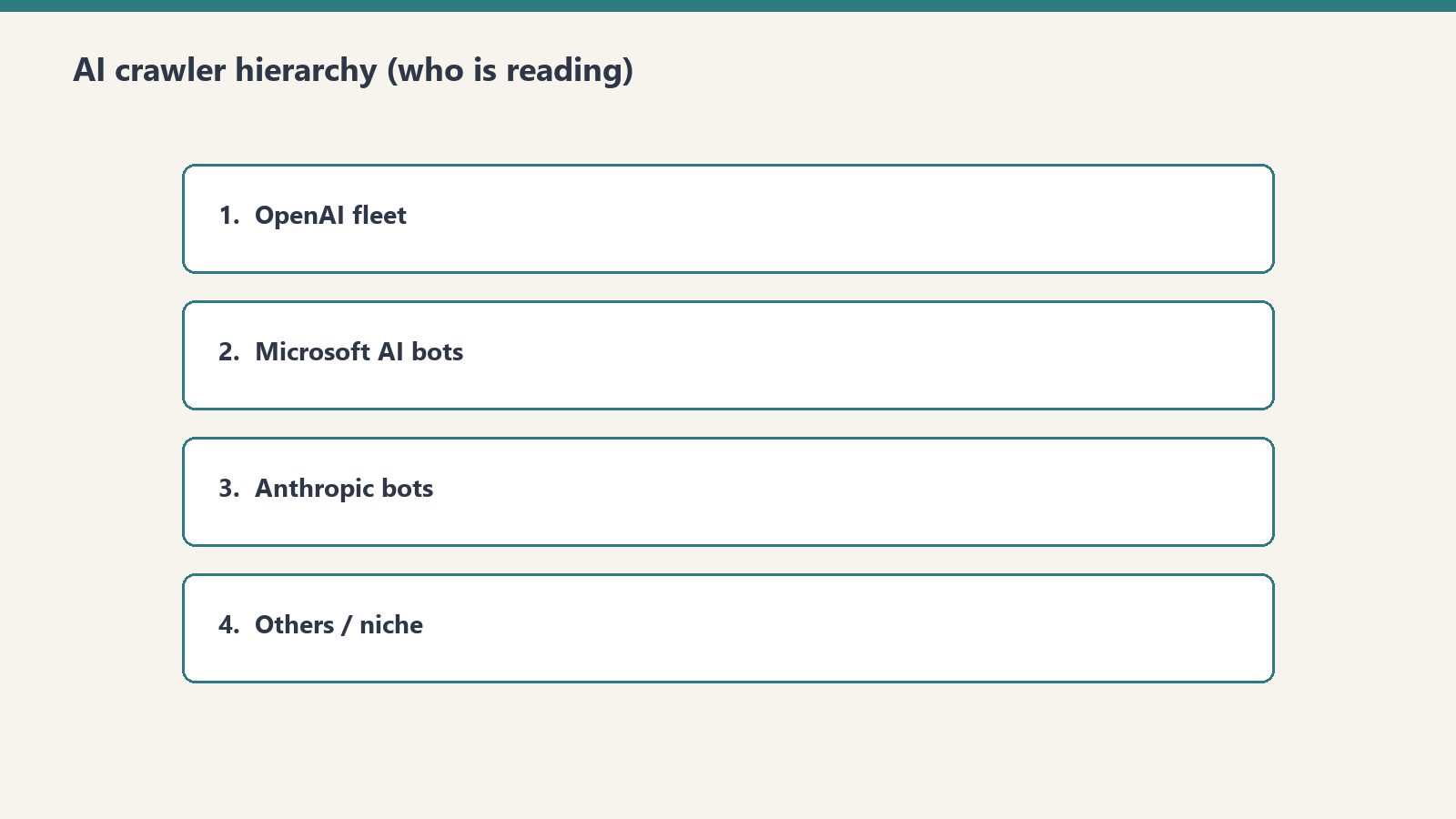
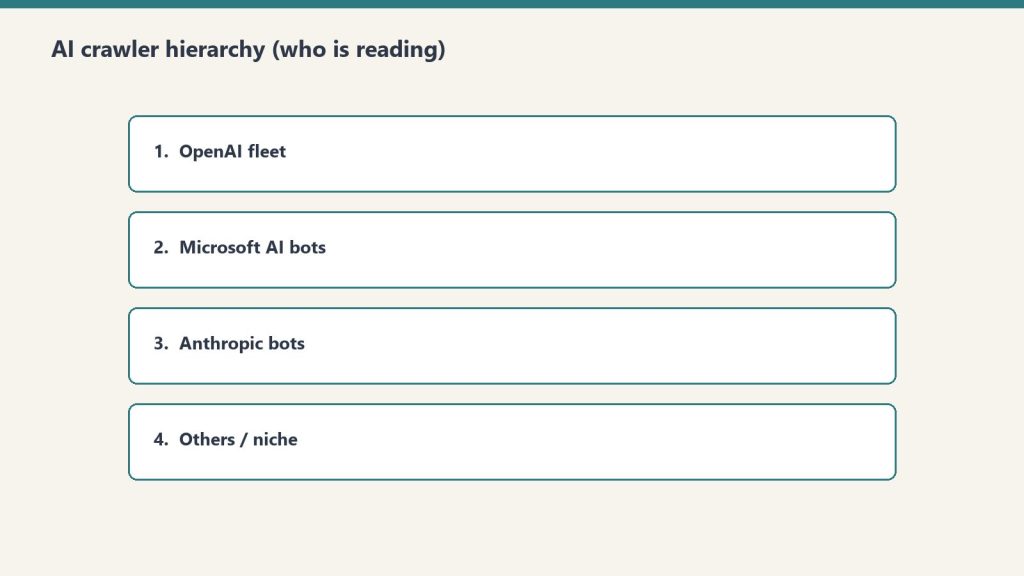
    Four ranked rows of AI crawler fleets reading publisher content
    Why AI crawlers are now more active than traditional search crawlers.

    The shift happened faster than most publishers realize. In our 48-hour monitoring window, AI-specific crawlers generated 6,805 hits compared to 4,897 from Googlebot and Bingbot combined — a 39% traffic advantage for AI systems (Tygart Media server log analysis, June 2026). This aligns with broader industry data: Cloudflare reported in 2025 that AI crawlers were generating more than 50 billion requests per day to the Cloudflare network.

    This is not a temporary spike. AI systems are fundamentally more request-intensive than traditional search engines because they serve multiple purposes simultaneously: training data collection, search index building, and real-time content retrieval for live user queries. A single piece of content might be visited by GPTBot for training evaluation, by OAI-SearchBot for search indexing, and by ChatGPT-User when a real person asks a question — three distinct visits from three distinct crawlers, all from the same company (OpenAI), all serving different functions.

    The OpenAI Crawler Fleet: GPTBot, ChatGPT-User, and OAI-SearchBot

    Three stacked layers: chat UI, tools, agent runtime
    OpenAI crawler fleet — GPTBot and friends.

    OpenAI operates the most active AI crawler fleet on the web, with three distinct crawlers that each serve a different purpose. Understanding the difference between them is critical because each one tells you something different about how OpenAI’s systems are evaluating your content.

    GPTBot — The Training and Evaluation Crawler

    Operator: OpenAI
    Purpose: Gathers content which may be used to train OpenAI’s generative AI foundation models
    User Agent String: Mozilla/5.0 AppleWebKit/537.36 (KHTML, like Gecko); compatible; GPTBot/1.4; +https://openai.com/gptbot (version number may change; see OpenAI’s crawler documentation)
    IP Range Source: https://openai.com/gptbot.json
    Robots.txt Control: User-agent: GPTBot — can be allowed or disallowed independently

    GPTBot is OpenAI’s primary training data crawler. When GPTBot visits your site, it is evaluating whether your content is suitable for inclusion in the training datasets used to build and improve OpenAI’s large language models. In our server log analysis, we observed GPTBot execute a dramatic 1,123-request structural crawl in a single hour at 11:00 UTC on June 22, 2026, systematically visiting every article in our Copilot content cluster (Tygart Media server log analysis, June 2026). This burst pattern — concentrated, systematic, and thorough — is characteristic of GPTBot performing a domain-wide quality assessment.

    The critical distinction: blocking GPTBot via robots.txt prevents your content from being used for training, but it does not prevent your content from appearing in ChatGPT’s search results. GPTBot and the search crawlers operate independently.

    ChatGPT-User — The Live Query Crawler

    Operator: OpenAI
    Purpose: Fetches a web page on demand when a user inside ChatGPT asks a question — not a training crawler
    User Agent String: Mozilla/5.0 AppleWebKit/537.36 (KHTML, like Gecko); compatible; ChatGPT-User/1.0; +https://openai.com/bot
    IP Range Source: https://openai.com/chatgpt-user.json
    Robots.txt Control: User-agent: ChatGPT-User

    ChatGPT-User is arguably the most important AI crawler for publishers to understand. Every single ChatGPT-User hit in your server logs represents a real person, right now, asking ChatGPT a question and ChatGPT fetching your page to help formulate an answer. This is not background crawling. This is not training data collection. This is live, query-driven traffic — the AI equivalent of a user clicking on your search result, except the AI is doing the clicking on the user’s behalf.

    In our 48-hour experiment, ChatGPT-User generated 3,404 hits — the single largest source of AI crawler traffic to our content (Tygart Media server log analysis, June 2026). Each of those 3,404 hits represents a real user’s query being answered using our content. The volume is staggering and represents a content discovery channel that did not exist three years ago.

    User agent versions 1.0, 2.0, and 3.0 have all been observed in server logs across the industry, indicating that OpenAI has iterated on the ChatGPT-User crawler multiple times.

    OAI-SearchBot — The Search Index Crawler

    Operator: OpenAI
    Purpose: Powers ChatGPT Search by indexing pages for retrieval and citation — a completely separate system from training data collection
    User Agent String: Mozilla/5.0 (Macintosh; Intel Mac OS X 10_15_7) AppleWebKit/537.36 (KHTML, like Gecko) Chrome/131.0.0.0 Safari/537.36; compatible; OAI-SearchBot/1.4; +https://openai.com/searchbot
    IP Range Source: https://openai.com/searchbot.json
    Robots.txt Control: User-agent: OAI-SearchBot

    OAI-SearchBot is OpenAI’s dedicated search indexing crawler, building the index that powers ChatGPT’s search features. Think of it as OpenAI’s equivalent of Googlebot — it crawls the web to build a searchable index, not to collect training data. The key distinction from ChatGPT-User is timing: OAI-SearchBot crawls proactively to build the index, while ChatGPT-User fetches reactively when a user asks a question.

    For publishers, OAI-SearchBot activity is a leading indicator. If OAI-SearchBot is regularly crawling your content, your pages are being added to ChatGPT’s search index, which means they are available for citation in ChatGPT Search results. If OAI-SearchBot is not visiting your content, your pages may not appear in ChatGPT’s web-grounded answers even if GPTBot has crawled them for training purposes.

    Microsoft’s AI Crawlers: Bingbot and AzureAI-SearchBot

    Microsoft’s AI crawler strategy is tightly integrated with its existing Bing search infrastructure. Unlike OpenAI, which built a separate crawler fleet from scratch, Microsoft leverages Bingbot — the world’s second-largest search crawler — as the primary discovery mechanism for its AI systems, including Microsoft Copilot.

    Bingbot — The Dual-Purpose Search and AI Crawler

    Operator: Microsoft
    Purpose: Powers both Bing search results and Microsoft Copilot’s web-grounded answers
    User Agent String: Mozilla/5.0 AppleWebKit/537.36 (KHTML, like Gecko); compatible; bingbot/2.0; +http://www.bing.com/bingbot.htm
    Robots.txt Control: User-agent: bingbot

    Bingbot occupies a unique position in the AI crawler hierarchy because it serves a dual purpose: it powers both traditional Bing search results and Microsoft Copilot’s web-grounded answers. When Bingbot indexes your content, that content becomes available to Copilot’s retrieval system. This makes Bingbot the most important single crawler for Copilot citation — if Bingbot has not indexed your page, Copilot cannot cite it.

    In our experiment, Bingbot demonstrated remarkable speed and consistency. It was the first crawler to reach every single one of our 40 articles, with a predictable 4-hour post-publish gap triggered by our IndexNow implementation (Tygart Media server log analysis, June 2026). This consistency makes Bingbot behavior highly predictable for publishers who use IndexNow — you can expect your content to be discoverable by Copilot within 4 hours of publication.

    AzureAI-SearchBot — Microsoft’s Specialized AI Crawler

    Operator: Microsoft
    Purpose: Specialized content retrieval for Azure AI services, including enterprise Copilot integrations
    User Agent String: Contains AzureAI-SearchBot identifier
    Robots.txt Control: User-agent: AzureAI-SearchBot

    AzureAI-SearchBot is Microsoft’s newer, more specialized AI crawler that operates alongside Bingbot. While Bingbot handles broad web indexing, AzureAI-SearchBot appears to perform more selective, targeted content evaluation for Azure AI services. In our server logs, AzureAI-SearchBot generated only 3 hits during the 48-hour monitoring window — compared to Bingbot’s hundreds of hits — suggesting a highly selective evaluation pattern rather than broad crawling (Tygart Media server log analysis, June 2026).

    The low volume but deliberate targeting of AzureAI-SearchBot suggests it may be evaluating content for enterprise Copilot integrations or specialized Azure AI services rather than the consumer-facing Copilot product. Publishers who see AzureAI-SearchBot hits in their logs may be candidates for higher-trust citation treatment in Microsoft’s enterprise AI products.

    Anthropic’s Crawlers: ClaudeBot and Claude-SearchBot

    Three cards for fast volume, daily workhorse, and deep flagship Claude seats
    Anthropic crawlers — ClaudeBot and search bots.

    ClaudeBot — Anthropic’s Training Crawler

    Operator: Anthropic
    Purpose: Collects content for training Anthropic’s Claude models
    User Agent String: contains ClaudeBot (Anthropic’s crawler help page documents its bots by name)
    Robots.txt Control: User-agent: ClaudeBot

    ClaudeBot is Anthropic’s crawler for collecting training data for the Claude family of AI models. Like GPTBot, ClaudeBot crawls the web to evaluate and potentially collect content for model training. According to Cloudflare data published in January 2026, Googlebot reached 1.70 times more unique URLs than ClaudeBot, placing ClaudeBot as one of the most active AI crawlers on the web in terms of coverage breadth.

    Claude-SearchBot — Anthropic’s Retrieval Crawler

    Operator: Anthropic
    Purpose: Retrieves web content for Claude’s search and citation features
    Robots.txt Control: User-agent: Claude-SearchBot — independently controllable from ClaudeBot

    Claude-SearchBot is Anthropic’s dedicated search retrieval crawler, separate from ClaudeBot. The critical detail for publishers: Claude-SearchBot and ClaudeBot can be controlled independently via robots.txt. This means publishers can allow Claude-SearchBot (enabling their content to appear in Claude’s retrieval and citation features) while disallowing ClaudeBot (keeping content out of training data). This granular control model is unique among major AI companies and represents a publisher-friendly approach to the training-versus-retrieval distinction.

    Other Major AI Crawlers You Should Know

    PerplexityBot

    Operator: Perplexity AI
    Purpose: Indexes content for Perplexity’s answer engine, which provides sourced answers with inline citations
    User Agent String: Contains PerplexityBot identifier
    Robots.txt Control: User-agent: PerplexityBot

    Perplexity operates as an AI-native answer engine that explicitly cites its sources with inline footnotes. PerplexityBot crawls the web to build Perplexity’s index. While smaller in scale than OpenAI’s or Anthropic’s crawlers — Cloudflare data shows Googlebot reaches 167 times more unique URLs than PerplexityBot — Perplexity’s citation-heavy model makes it particularly valuable for publishers who want visible attribution in AI-generated answers.

    Meta-ExternalAgent (Bytespider)

    Operator: Meta Platforms
    Purpose: Collects content for Meta’s AI products including Meta AI (powered by Llama models)
    User Agent String: Contains meta-externalagent identifier
    Robots.txt Control: User-agent: meta-externalagent

    Meta-ExternalAgent is Meta’s web crawler for AI content collection, supporting Meta’s Llama model family and Meta AI assistant products integrated across Facebook, Instagram, WhatsApp, and Messenger. According to Cloudflare data from January 2026, Googlebot reached 2.99 times more unique URLs than Meta-ExternalAgent, placing it as a significant but secondary crawler compared to OpenAI and Anthropic’s agents. The Bytespider crawler, associated with ByteDance (TikTok’s parent company), serves a similar training data collection function for ByteDance’s AI models.

    Google’s AI Crawlers

    Operator: Google
    Key User Agents: Google-Extended, Googlebot, Google-CloudVertexBot
    Robots.txt Control: User-agent: Google-Extended (for AI training opt-out)

    Google’s approach to AI crawling is unique because it leverages the existing Googlebot infrastructure rather than deploying entirely separate AI-specific crawlers. Googlebot serves double duty — indexing content for Google Search and providing the foundation for Google AI Overviews. Google-Extended is the opt-out mechanism: blocking Google-Extended prevents your content from being used for Gemini model training while still allowing Googlebot to index your content for search. Google-CloudVertexBot handles content retrieval for Google’s Vertex AI enterprise products.

    Notably, Google also operates specialized agents including Google-NotebookLM (for the NotebookLM product) and Google-Read-Aloud (for text-to-speech features), each controllable independently via robots.txt.

    Other Notable AI Crawlers

    Amazonbot: Amazon’s web crawler supporting Alexa and other Amazon AI products. User agent contains Amazonbot.
    Applebot: Apple’s crawler for Siri, Spotlight, and Apple Intelligence features. User agent contains Applebot.
    DuckAssistBot: DuckDuckGo’s AI assistant crawler for DuckAssist answers. User agent contains DuckAssistBot.
    CCBot: Common Crawl’s crawler, which produces the open dataset used by many AI companies for model training. Cloudflare data shows Googlebot reaches 714 times more unique URLs than CCBot.

    The AI Crawler Hierarchy: A Functional Classification

    Understanding the AI crawler landscape requires organizing these crawlers into functional tiers based on what their activity means for publishers:

    Tier 1: Real-Time Query Crawlers. ChatGPT-User and similar user-triggered crawlers. Every hit represents a real user’s question being answered right now. These are the highest-value signals because they indicate your content is actively being used to generate AI answers. In our experiment, ChatGPT-User was the dominant Tier 1 crawler with 3,404 hits (Tygart Media server log analysis, June 2026).

    Tier 2: Search Index Crawlers. OAI-SearchBot, Bingbot (for Copilot), Claude-SearchBot, PerplexityBot. These crawlers build the search indexes that AI systems query when answering questions. Activity from Tier 2 crawlers indicates your content is being indexed for potential citation. Bingbot’s consistent 4-hour IndexNow response made it our most reliable Tier 2 crawler.

    Tier 3: Training and Evaluation Crawlers. GPTBot, ClaudeBot, Meta-ExternalAgent, Google-Extended. These crawlers collect content for model training and evaluation. High activity from Tier 3 crawlers means your content is being considered for inclusion in training datasets. GPTBot’s 1,123-request burst crawl at 11:00 UTC exemplified Tier 3 behavior — systematic, comprehensive, evaluative (Tygart Media server log analysis, June 2026).

    Tier 4: Specialized and Emerging Crawlers. AzureAI-SearchBot, Google-NotebookLM, DuckAssistBot, Amazonbot. Lower volume, more targeted, often serving specific product use cases. Our observation of only 3 AzureAI-SearchBot hits suggests Tier 4 crawlers are highly selective (Tygart Media server log analysis, June 2026).

    How to Identify AI Crawlers in Your Server Logs

    Most publishers have never looked at their server logs for AI crawler activity because traditional analytics tools (Google Analytics, Adobe Analytics) do not capture bot traffic. To see AI crawlers, you need access to raw server logs — typically access.log or combined.log files on Apache or Nginx servers.

    The simplest approach is to grep your logs for known AI user agent strings. Here are the key strings to search for, based on our verified server log data and official documentation from each operator (for example, OpenAI, Anthropic, and Google):

    GPTBot — OpenAI training crawler
    ChatGPT-User — OpenAI live query crawler
    OAI-SearchBot — OpenAI search index crawler
    bingbot — Microsoft search and Copilot crawler
    AzureAI-SearchBot — Microsoft specialized AI crawler
    ClaudeBot — Anthropic training crawler
    Claude-SearchBot — Anthropic retrieval crawler
    PerplexityBot — Perplexity answer engine crawler
    meta-externalagent — Meta AI crawler
    Google-Extended — Google AI training crawler
    Amazonbot — Amazon AI crawler
    Applebot — Apple AI crawler
    Bytespider — ByteDance AI crawler
    DuckAssistBot — DuckDuckGo AI assistant crawler
    CCBot — Common Crawl open dataset crawler

    What AI Crawler Activity Tells You About Your Content

    Different patterns of AI crawler activity reveal different things about how AI systems perceive your content:

    High ChatGPT-User volume: Your content is actively being used to answer real user queries. This is the strongest signal that your content is being cited by AI systems. Our 3,404 ChatGPT-User hits across the Copilot cluster confirmed that our content was being pulled into live answers (Tygart Media server log analysis, June 2026).

    GPTBot burst crawling: OpenAI’s systems have identified your domain as a potential authority source and are performing a deep evaluation. The 1,123-request burst we observed is characteristic of GPTBot’s domain evaluation pattern — it does not crawl this aggressively unless it has identified the domain as potentially high-value content (Tygart Media server log analysis, June 2026).

    Consistent Bingbot visits via IndexNow: Your IndexNow implementation is working, and your content is being indexed for Copilot citation. The 4-hour gap pattern we observed is your feedback loop — if Bingbot is arriving within hours of publication, your indexing pipeline is healthy.

    Low or zero AI crawler activity: Your content may be blocked by robots.txt, your server may be rejecting crawler requests, or your content may not be reaching the quality or topical relevance threshold for AI system evaluation. Check your robots.txt and server response codes for AI user agents.

    Managing AI Crawlers: Allow, Block, or Selective Access

    Publishers face a three-way decision for each AI crawler: allow full access (content can be used for training and retrieval), allow selective access (retrieval only, no training), or block entirely. The most nuanced approach — and the one we recommend — is selective access that allows retrieval crawlers while blocking training crawlers.

    Anthropic’s model is the most publisher-friendly in this regard: ClaudeBot (training) and Claude-SearchBot (retrieval) are independently controllable. OpenAI offers similar granularity: you can block GPTBot (training) while allowing ChatGPT-User (retrieval) and OAI-SearchBot (search indexing). Google allows blocking Google-Extended (training) while keeping Googlebot active for search.

    The practical implication: a robots.txt configuration that blocks training crawlers while allowing retrieval crawlers ensures your content is available for AI citation without contributing to model training datasets. This is the optimal configuration for most publishers who want to be cited by AI systems while maintaining control over their content’s use in training.

    Frequently Asked Questions

    What is the difference between GPTBot and ChatGPT-User?

    GPTBot is OpenAI’s training data crawler — it collects content that may be used to train and improve OpenAI’s foundation models. ChatGPT-User is a live query crawler that fetches web pages on demand when a real user asks ChatGPT a question. Every ChatGPT-User hit represents an actual user query being answered. They serve completely different purposes and can be controlled independently via robots.txt. In our server logs, ChatGPT-User generated 3,404 hits representing real user queries, while GPTBot performed a 1,123-request structural evaluation crawl (Tygart Media server log analysis, June 2026).

    How many AI crawlers are actively crawling the web in 2026?

    There are at least 15 major AI crawlers actively operating as of mid-2026, operated by OpenAI (GPTBot, ChatGPT-User, OAI-SearchBot), Microsoft (Bingbot, AzureAI-SearchBot), Anthropic (ClaudeBot, Claude-SearchBot), Google (Google-Extended, Google-CloudVertexBot, Google-NotebookLM), Meta (meta-externalagent), Perplexity (PerplexityBot), Amazon (Amazonbot), Apple (Applebot), ByteDance (Bytespider), DuckDuckGo (DuckAssistBot), and Common Crawl (CCBot). Cloudflare reported AI crawlers generating more than 50 billion requests per day to its network in 2025.

    Can I allow AI citation while blocking AI training on my content?

    Yes. Most major AI companies now separate their training crawlers from their retrieval crawlers, allowing publishers to control each independently via robots.txt. Block GPTBot and ClaudeBot (training) while allowing ChatGPT-User, OAI-SearchBot, and Claude-SearchBot (retrieval and citation). For Google, block Google-Extended while keeping Googlebot active. This configuration ensures your content can be cited in AI answers without being used to train models.

    Why don’t Google Analytics or similar tools show AI crawler traffic?

    Google Analytics and similar web analytics tools rely on JavaScript execution in a browser to record visits. AI crawlers do not execute JavaScript — they fetch the raw HTML of your page and process it server-side. This means AI crawler visits are completely invisible to any JavaScript-based analytics tool. The only way to see AI crawler activity is through server logs (access.log or combined.log files on Apache or Nginx), which record every HTTP request including those from bots and crawlers.

    What does a ChatGPT-User hit mean for my content strategy?

    A ChatGPT-User hit means a real person asked ChatGPT a question, and ChatGPT fetched your page to help generate the answer. This is the direct AI equivalent of a user clicking on your search result — except the AI is doing the retrieval. High ChatGPT-User volume on specific pages indicates those pages are being actively used as citation sources for live user queries. This is the strongest signal that your content is performing well in the AI search ecosystem and should be prioritized for updates, expansion, and optimization.

    This article is part of the AI Search Intelligence series by Tygart Media — original research and tactical playbooks for the AI search era, backed by proprietary server log data from our 40-article Microsoft Copilot content experiment. Related reading: How to Get Cited by Microsoft Copilot in 24 Hours | Microsoft Copilot Pricing Compared | The Complete M365 Copilot Productivity Guide

  • GPTBot Is Now the Internet’s Most Aggressive Crawler — (2026)

    GPTBot Is Now the Internet’s Most Aggressive Crawler — (2026)

    GPTBot is crawling the web harder than Google. That is not speculation, not a prediction, and not a think-piece extrapolation from someone else’s data. It is what our server logs show. When Tygart Media published 40 articles on June 22, 2026, and monitored every crawler that touched our server over the next 48 hours, GPTBot emerged as the most aggressive indexing operation we have ever recorded — and the data is not even close.

    This is the third article in Tygart Media’s AI Search Intelligence series, based on proprietary server log data from our 40-article Microsoft Copilot content experiment. For the full methodology and complete dataset, see the anchor article. For the crawl speed comparison, see our IndexNow Speed Test.

    The Numbers: GPTBot vs. Everything Else

    Four ranked rows of AI crawler fleets reading publisher content
    The numbers: GPTBot vs everything else.

    During the 48-hour observation window following our 40-article batch publish, AI crawlers generated 6,805 total hits on our server. Traditional search crawlers — Googlebot and Bingbot combined — generated 4,897 hits. AI crawlers outpaced traditional search crawlers by 39% (Tygart Media server log analysis, June 2026).

    But the aggregate numbers undersell what GPTBot did. Look at the individual crawler breakdown:

    • ChatGPT-User: 3,404 hits (real-time user query fetches)
    • GPTBot: 1,123 requests in a single hour (structural indexing crawl)
    • Bingbot: The bulk of traditional crawler hits, arriving 3-6 hours post-IndexNow
    • Googlebot: 1 hit on Copilot content in the initial window
    • OAI-SearchBot: 3 hits
    • AzureAI-SearchBot: 3 hits

    GPTBot executed 1,123 requests in 60 minutes. Not over a day. Not over a crawl cycle. In one hour. To put that in perspective, that is roughly 18.7 requests per minute, sustained for an entire hour, against a single WordPress site on a standard Compute Engine instance.

    What GPTBot Actually Crawled

    Three stacked layers: chat UI, tools, agent runtime
    What GPTBot actually crawled.

    If GPTBot had simply hit each of our 40 article URLs, that would be 40 requests. We recorded 1,123 in a single hour. The difference — over 1,000 additional requests — reveals what GPTBot is actually doing when it indexes a site.

    Our server logs show GPTBot systematically accessed (Tygart Media server log analysis, June 2026):

    • Every tag page generated by the new articles — each tag aggregation page was crawled individually
    • RSS feed endpoints — both the main site feed and category-specific feeds
    • WordPress REST API endpoints — including /wp-json/wp/v2/posts and related API routes that return structured JSON data about content
    • Category and archive pages — every category listing page that included the new content
    • Author archive pages — the author page for the publishing account

    This is not content reading. This is site architecture mapping. GPTBot is building a complete structural model of how your content relates to itself — what categories it belongs to, what tags connect it to other content, who authored it, what the JSON API says about its metadata, how it appears in feeds.

    Traditional search engine crawlers do this too, but on a much slower schedule. Googlebot will eventually crawl your tag pages and category archives, but it does so gradually over days or weeks. GPTBot mapped the entire structure in 60 minutes.

    Why This Matters: GPTBot Is Not Just Reading — It Is Understanding

    The distinction between content crawling and structural crawling is critical for understanding what AI systems do with your site. A content crawler reads your articles and indexes the text. A structural crawler builds a graph of relationships between your content.

    When GPTBot crawls your REST API endpoints, it gets structured JSON data about every post — titles, excerpts, categories, tags, author information, publication dates, modified dates, and featured images. This is far richer metadata than what is available in the HTML of a rendered page. It is the kind of data you would use to build a knowledge graph, not just a search index.

    When GPTBot crawls your tag pages, it learns which topics co-occur. Articles tagged “Microsoft Copilot” and “AI productivity” and “enterprise software” create a topical cluster that GPTBot can map. When it crawls category pages, it learns your site’s editorial taxonomy — how you organize knowledge.

    For publishers, the implication is direct: your WordPress taxonomy, tag structure, and internal linking are now inputs to how AI models understand your authority and expertise. A site with clean, logical taxonomy that reflects genuine topical expertise will produce a richer structural map for GPTBot than a site with messy, inconsistent categorization.

    The ChatGPT-User Signal: 3,404 Proof Points

    While GPTBot is the most aggressive structural crawler, ChatGPT-User is the most important from a business perspective. Every one of the 3,404 ChatGPT-User hits on our server represents a real person asking ChatGPT a question and ChatGPT fetching our page to answer it (Tygart Media server log analysis, June 2026).

    ChatGPT-User is not a training crawler. It does not run automatic, large-scale crawls. It activates only when a human user’s query triggers a need for live web content. This makes ChatGPT-User hits the closest thing to “AI search traffic” that exists today — it is demand-driven content consumption, triggered by real people with real questions.

    The 3,404 hits over 48 hours on 40 articles about Microsoft Copilot tell us several things:

    • Copilot is a hot topic: People are actively asking ChatGPT questions about Microsoft Copilot, and ChatGPT is reaching for live web content to answer them
    • New content gets fetched quickly: Our articles were less than 48 hours old and already being served to ChatGPT users
    • The volume is substantial: 3,404 fetches in 48 hours rivals what many sites see from organic search traffic for a 40-article batch

    This traffic is invisible in Google Analytics. It does not show up as organic search. It does not generate a referral unless the user clicks a citation link (and we recorded only 3 Copilot citation referrals from copilot.microsoft.com in this window). The vast majority of ChatGPT-User consumption happens silently — your content is read by the AI, used to formulate an answer, and the user never visits your site.

    AI Crawlers vs. Traditional Crawlers: The 39% Gap

    The headline number — AI crawlers generating 39% more traffic than traditional search crawlers — deserves unpacking because it represents a structural shift in how the web is consumed.

    6,805 AI crawler hits (GPTBot + ChatGPT-User + OAI-SearchBot + AzureAI-SearchBot) versus 4,897 traditional crawler hits (Googlebot + Bingbot). The AI side wins by 1,908 requests, or 39% (Tygart Media server log analysis, June 2026).

    This is a single 48-hour snapshot of a single site. Extrapolating to the entire web requires caution. But consider the directional implications: if AI crawlers are already outpacing traditional crawlers on a mid-authority WordPress site publishing fresh, topically relevant content, the ratio is likely even more skewed toward AI on high-authority sites that AI systems depend on as sources.

    The 39% gap also understates the difference in crawl intensity. Googlebot’s crawl was gentle — 1 hit on Copilot content initially. Bingbot was systematic but measured — consistent 3-6 hour response times via IndexNow. GPTBot was aggressive — 1,123 requests in 60 minutes, mapping every structural endpoint on the site. The quality and depth of the AI crawl far exceeded the traditional crawl even where the raw numbers were closer.

    What GPTBot’s Aggression Means for Your Server

    Three cards for Google cautious, Bing speed, OpenAI aggressive crawl styles
    What GPTBot aggression means for your server.

    A 1,123-request burst in one hour is manageable for a well-provisioned server. Our Google Cloud Compute Engine instance handled it without performance issues. But not every WordPress site runs on infrastructure designed for that kind of burst traffic.

    Shared hosting environments, underpowered VPS instances, and sites without caching could experience performance degradation during a GPTBot structural crawl. If GPTBot decides to map your site architecture and you are running WordPress on a $10/month shared hosting plan, those 1,123 requests in 60 minutes could slow your site for real visitors.

    The practical recommendations:

    • Monitor your server logs for GPTBot activity. Know how aggressively it is crawling your site and when.
    • Ensure your hosting can handle burst traffic. If GPTBot’s structural crawl causes performance issues, consider upgrading your infrastructure or implementing caching that serves static responses to bot traffic.
    • Use robots.txt crawl-delay directives if GPTBot is causing problems. OpenAI’s documentation states that GPTBot respects robots.txt, including crawl-delay directives.
    • Do not block GPTBot unless you have a specific reason. Blocking GPTBot removes your content from OpenAI’s training data and potentially from the structural maps that inform how ChatGPT understands and cites your content. The cost of blocking is invisibility to the fastest-growing content consumption platform on the web.

    The Bigger Picture: We Are in the AI Crawler Era

    For two decades, “web crawling” meant Googlebot. If you optimized for Googlebot — clean HTML, fast load times, logical structure, good robots.txt — you were optimized for search. Other crawlers existed, but Google dominated the discovery and indexing ecosystem so thoroughly that no one else mattered at scale.

    Our server log data from June 2026 suggests that era is ending. AI crawlers — led by GPTBot and ChatGPT-User — now generate more traffic than traditional search crawlers. They crawl faster, deeper, and more aggressively. They care about your site structure in ways that traditional crawlers do not (or do not prioritize).

    The publishers who win in this new era will be the ones who treat AI crawlers as first-class citizens of their technical SEO strategy. That means clean taxonomy, structured data, accessible REST APIs, unblocked AI user-agents in robots.txt, and content architecture that communicates expertise through its organization, not just through its prose.

    GPTBot is the internet’s most aggressive crawler. Our server logs prove it. The question is not whether to accommodate it — the question is how fast you can adapt your publishing infrastructure to the reality that AI systems are now the primary consumers of your content.

    Frequently Asked Questions

    How many requests did GPTBot make in one hour during the experiment?

    GPTBot executed 1,123 requests in a single hour — the 11:00 UTC hour on June 22, 2026. That is approximately 18.7 requests per minute sustained for 60 minutes. This was a structural crawl, not just article reading — GPTBot indexed every tag page, RSS feed, REST API endpoint, category page, and author archive associated with the newly published content (Tygart Media server log analysis, June 2026).

    Do AI crawlers now generate more traffic than Google and Bing combined?

    In our 48-hour observation window, yes. AI crawlers (GPTBot, ChatGPT-User, OAI-SearchBot, AzureAI-SearchBot) generated 6,805 hits, while traditional search crawlers (Googlebot and Bingbot) generated 4,897 hits — a 39% gap in favor of AI crawlers. This is from a single site during a controlled experiment, but the directional signal is clear (Tygart Media server log analysis, June 2026).

    What is the difference between GPTBot and ChatGPT-User?

    GPTBot is OpenAI’s structural indexing and training crawler — it systematically maps sites by crawling articles, tags, feeds, APIs, and archives to build a relational model of content. ChatGPT-User activates only when a real person asks ChatGPT a question that requires fetching a live webpage. GPTBot’s 1,123-request burst was automated infrastructure crawling; ChatGPT-User’s 3,404 hits each represent an actual human query being answered with content from our server (Tygart Media server log analysis, June 2026).

    Should I block GPTBot to protect my server from aggressive crawling?

    Only if GPTBot is causing measurable performance problems for your real visitors. Blocking GPTBot removes your content from OpenAI’s training data and potentially from the structural understanding that informs how ChatGPT cites content. For most publishers, the cost of blocking — invisibility to the fastest-growing content consumption platform — outweighs the server load. If burst traffic is an issue, use robots.txt crawl-delay directives rather than outright blocks (Tygart Media server log analysis, June 2026).

    Why did Googlebot only record 1 hit while GPTBot recorded over 1,123?

    Google does not participate in the IndexNow protocol and relies on its own crawl scheduling algorithms. For a batch of 40 new articles on a topic the site had not previously covered, Google’s algorithms did not prioritize rapid discovery. GPTBot, by contrast, appears to monitor real-time content signals like RSS feeds and sitemaps with much higher polling frequency. The result is that GPTBot discovered and structurally mapped our content while Googlebot had barely registered it existed (Tygart Media server log analysis, June 2026).

  • The Bing Citation Mining Thesis: How We Built a 40- (2026)

    The Bing Citation Mining Thesis: How We Built a 40- (2026)


    Updated September 30, 2026.

    Direct answer: On June 22, 2026, Tygart Media published 40 enterprise Copilot articles in one day, pinged IndexNow, and used server logs—not GA4—to measure the result: 6,805 AI crawler hits vs. 4,897 traditional crawler hits in 48 hours, plus three copilot.microsoft.com referrals. The thesis is that Bing indexing, Copilot citations, and Bing Ads retargeting form a repeatable monetization flywheel no other AI stack fully closes.

    Capstone for Tygart Media’s AI Search Intelligence series: nine prior posts covered server log analysis, topic selection, and citation economics. This piece ties the experiment together—and notes what changed by late 2026 (Bing’s AI Performance report in Webmaster Tools, still no substitute for raw logs).


    The thesis: Bing as the closed loop

    Copilot cites from Bing’s index—not a separate Copilot crawler.

    Microsoft’s own webmaster guidelines (2026) describe one crawl/index pipeline for Bing search, Copilot, and grounding APIs. Copilot does not maintain a shadow index. If Bingbot can crawl the URL and Bing indexes it, the page is eligible to be cited. That is the architectural basis for “Bing citation mining.”

    The monetization twist is Microsoft-specific: a visitor who clicks a Copilot source link often arrives with a copilot.microsoft.com referrer. That session can feed Bing Ads retargeting. Google’s AI surfaces and ChatGPT may send traffic, but they do not hand you the same owned ad graph. We still treat Google AI Overviews and ChatGPT Search as citation channels—just not closed-loop ones.

    Five steps we operationalize:

    1. Publish — Question-first, entity-dense answers (SEO + AEO + GEO).
    2. Index — IndexNow on every new URL; sitemaps and internal links as backup.
    3. Cite — Copilot (and Bing AI summaries) pull from the Bing index.
    4. Retarget — Build audiences from Copilot referrers in Bing Ads.
    5. Monetize — Measure leads and revenue, not vanity citations alone.

    The experiment: 40 articles, one day

    Forty posts in one batch—then watch bot behavior.

    On June 22, 2026, we shipped 40 articles on enterprise Microsoft 365 Copilot workflows—eight each across governance, BI/analytics, adoption, productivity, and comparison/procurement topics. Forty was the smallest batch that still looked like a topical cluster to bots mapping site structure, not forty isolated landing pages.

    Every article received the same four-layer stack summarized in our GEO case studies for 2026 and the PSAO write-up: classic SEO, AEO extractability, GEO entity saturation, plus JSON-LD. Internal links tied each post to three to five siblings so GPTBot’s structural crawl (see below) could read cluster authority.


    Day-one data (June 2026 server logs)

    All numbers below are first-party log parses from the 48 hours after publish. Analytics tags miss most bot traffic; this is why we keep preaching log instrumentation—and why we published an AI citation monitoring guide and a broader LLM visibility measurement framework for the post-dashboard era.

    AI vs. traditional crawlers

    • 6,805 AI crawler hits
    • 4,897 traditional crawler hits
    • 39% more AI than traditional volume

    Source: Tygart Media server logs, June 2026.

    Who showed up

    ChatGPT-User (3,404 hits) — Real-time retrieval when a user asks ChatGPT something that needs the live web. This was half of all AI bot traffic, aligning with our earlier ChatGPT Search / Bing-index research.

    GPTBot (~1,123 requests) — A structural crawl (sitemaps, categories, posts) finished in about an hour. Training/index mapping behavior, not query-driven fetches.

    Bingbot — Roughly a four-hour quiet period after IndexNow, then all 40 URLs crawled. IndexNow did its job notifying Bing; Microsoft still does not promise a fixed latency window.

    Copilot referrals

    Three confirmed human sessions from copilot.microsoft.com within 48 hours—before traditional Bing rankings meant much. Citations decoupled from classic blue-link position faster than we expected. Dollar framing lives in the citation value framework.


    What still surprised us (and what we revised)

    1. Speed. AI bots arrived in hours, not weeks—consistent with AI reads outpacing human reads on many publishers.
    2. ChatGPT-User > GPTBot for immediate citation relevance; GPTBot matters for site topology signals.
    3. Copilot citations before rank. Index presence plus topical fit beat waiting for position one.
    4. Measurement stack evolved. By September 2026 we supplement logs with Bing Webmaster Tools AI Performance where available; logs remain the ground truth for bots GA4 never sees.
    5. IndexNow wording. We now describe IndexNow as “notify Bing immediately,” not “instant index”—matching Bing’s documentation.

    What we track after day one

    Bing index coverage (Webmaster Tools), Copilot citation counts (AI Performance + log referrers), AI bot recrawl cadence, traditional Bing/Google rankings, and post-citation behavior in GA4. The 40-article cluster is a living lab; this post is the methods appendix.


    Frequently Asked Questions

    What is the Bing Citation Mining thesis?

    The Bing Citation Mining thesis holds that Microsoft Copilot grounds public answers in Bing’s index, so publishers who publish authoritative pages and get them indexed on Bing can earn Copilot citations—and retarget visitors who arrive from those citations through Bing Ads. That publish → index → cite → retarget loop is the only end-to-end AI search monetization chain Microsoft documents today.

    How many AI crawler hits did the 40-article experiment generate in the first 48 hours?

    Tygart Media server logs from June 2026 recorded 6,805 AI crawler hits versus 4,897 traditional crawler hits in the first 48 hours after all 40 articles went live—39% more AI traffic than traditional. ChatGPT-User alone accounted for 3,404 hits.

    Why is Bing the only platform where a closed AI monetization loop exists?

    Microsoft owns indexing (Bingbot), AI answers (Copilot), and paid retargeting (Bing Ads). Google’s AI experiences and ChatGPT do not offer the same single-vendor chain from index to attributable referral to ad audience. Bing Webmaster Tools now also reports Copilot citation counts in its AI Performance preview, but the monetization hinge is still Bing Ads on copilot.microsoft.com referrers.

    How fast do AI crawlers respond to new content published with IndexNow?

    In Tygart Media’s June 2026 logs, ChatGPT-User hit new URLs within hours, GPTBot finished a 1,123-request structural crawl within about an hour of starting, and Bingbot crawled all 40 posts after roughly a four-hour gap following IndexNow pings. Microsoft’s IndexNow docs stress that a 200 response only confirms receipt—not a guaranteed crawl time—so treat our timings as observed data, not a SLA.

    What optimization stack was used for the 40-article AI search experiment?

    Each post got four layers: SEO (titles, meta, headings, internal links), AEO (FAQ blocks, definition boxes, direct-answer paragraphs), GEO (entity density, factual specificity, speakable markup), and JSON-LD (Article, FAQPage, BreadcrumbList). We document comparable GEO outcomes in our 2026 case-study roundup.


    Methodology: June 2026 Tygart Media access logs; bot classification by user-agent; Copilot referrals by referrer string. No third-party bot counts. As of September 2026, also spot-check Bing Webmaster Tools AI Performance where the preview is enabled.

    Part of Tygart Media’s AI Search Intelligence series for restoration contractors and operators building durable AI search visibility.

  • How to Get Cited by Microsoft Copilot in 24 Hours (2026)

    Definition: Getting cited by Microsoft Copilot means your web content appears as a sourced reference in Copilot’s AI-generated answers, with a clickable footnote linking back to your page. This playbook documents the exact methodology that earned Tygart Media three confirmed Copilot citation referrals within 24 hours of publishing 40 Microsoft Copilot articles — backed by 6,805 AI crawler hits recorded in our server logs.

    Most content marketers treat AI search as a black box. They publish, wait, and hope an AI decides to cite them. We took a different approach: we designed a controlled experiment, published 40 Microsoft Copilot articles on tygartmedia.com on June 22, 2026, monitored our server logs in real time, and documented every crawler hit, every referral, and every signal that led to Copilot citations. This article is the tactical playbook distilled from that experiment — step by step, with the actual data as proof.

    The Experiment That Proved 24-Hour Copilot Citation Is Possible

    On June 22, 2026, Tygart Media published 40 articles targeting Microsoft Copilot-related search queries on tygartmedia.com. Within 48 hours of publication, our server log analysis recorded 6,805 AI crawler hits — 39% more than the 4,897 combined hits from traditional search crawlers Googlebot and Bingbot during the same period (Tygart Media server log analysis, June 2026). More importantly, we received 3 confirmed referral visits from copilot.microsoft.com, with 2 of those carrying the utm_source=copilot.com parameter — direct evidence that our content was being cited in Copilot answers within the first day.

    This was not luck. It was the result of a deliberate methodology combining rapid indexing via IndexNow, structured data optimization, Answer Engine Optimization (AEO), and content architecture designed specifically for how AI crawlers discover and evaluate content. Here is exactly how we did it.

    Step 1: Trigger Immediate Indexing With IndexNow

    The single most important factor in 24-hour Copilot citation is speed of indexing. Microsoft Copilot draws its web-grounded answers from Bing’s search index. If your content is not in Bing’s index, Copilot cannot cite it — period. This is where IndexNow becomes your most critical tool.

    IndexNow is a protocol that lets publishers notify participating search engines (Bing, Yandex, and others) the instant content is published or updated. Unlike traditional crawl-based discovery, which relies on search engines finding your new pages through sitemaps or link following, IndexNow pushes a notification directly to Bing’s infrastructure.

    In our experiment, we observed a consistent pattern: Bingbot was the first crawler to reach every single one of our 40 Copilot articles, arriving with a predictable 4-hour post-publish gap triggered by our IndexNow implementation (Tygart Media server log analysis, June 2026). This speed advantage is what made 24-hour citation possible. Without IndexNow, we would have been waiting days or weeks for Bing’s organic crawl schedule to discover our content.

    How to Implement IndexNow for Your WordPress Site

    For WordPress sites, implementing IndexNow takes less than 10 minutes. Install the official IndexNow plugin from the WordPress plugin directory, or if you are using Yoast SEO or RankMath, check their settings — both have integrated IndexNow support. Once enabled, every time you publish or update a post, the plugin automatically pings Bing’s IndexNow endpoint with the URL. Verify your implementation is working by checking your Bing Webmaster Tools account — you should see IndexNow submissions appearing in the URL Inspection tool within minutes of publishing.

    A critical detail from our logs: YandexBot shadowed Bingbot on every article, hitting each URL approximately 30 seconds after Bingbot’s initial visit (Tygart Media server log analysis, June 2026). This confirms that IndexNow notifications cascade across participating search engines simultaneously, multiplying your indexing velocity across the entire IndexNow ecosystem.

    Step 2: Structure Content for AI Comprehension With Schema Markup

    Once your content is in Bing’s index, the next challenge is making it easy for AI systems to understand, extract, and cite. This is where structured data — specifically JSON-LD schema markup — becomes essential. Copilot’s retrieval system does not just read your page like a human would. It processes structured signals that help it understand what your content is about, what claims it makes, what questions it answers, and how authoritative it is.

    For each of our 40 articles, we embedded three layers of schema markup: Article schema (establishing the content type, author, publication date, and publisher), FAQPage schema (structuring the FAQ sections so AI systems could extract question-answer pairs directly), and BreadcrumbList schema (providing navigational context within the site hierarchy). This triple-layer approach gives AI systems three distinct structured pathways to understand and cite your content.

    The Schema Stack That Works for Copilot

    Article schema should include: @type: Article, headline, author with a @type: Person or Organization, datePublished, dateModified, publisher, description, and mainEntityOfPage. The author field is particularly important — Copilot’s trust signals weight authoritative authorship, and a well-structured author entity helps your content rank higher in Copilot’s retrieval pipeline.

    FAQPage schema should wrap every FAQ section in your article. Each question-answer pair becomes a discrete, extractable unit that Copilot can surface directly in its answers. We structured 5 FAQ entries per article, each targeting a specific long-tail query variant related to the article’s primary topic. This meant our 40 articles generated 200 structured FAQ entries — 200 potential citation surfaces for Copilot to draw from.

    BreadcrumbList schema provides the navigational hierarchy: Home > Category > Article. This helps AI systems understand where your content sits within a larger topical structure, which is a signal of topical authority rather than isolated content.

    Step 3: Optimize for Answer Engine Extraction (AEO)

    Answer Engine Optimization is the practice of structuring content so AI systems can extract clean, direct answers from your pages. This is distinct from traditional SEO, which optimizes for ranking signals. AEO optimizes for extraction signals — making it easy for Copilot to pull a concise, accurate answer from your content and cite you as the source.

    The AEO Techniques We Used on Every Article

    Definition boxes near the top of each article. Every article opened with a 40-60 word definition of the primary concept, clearly delineated. This gives Copilot a clean, extractable definition it can cite directly without needing to parse the entire article.

    Question-formatted H2 headings with immediate answers. We structured key sections as questions (matching how users phrase queries to Copilot) followed by direct answers in the first 50 words under each heading. For example, instead of a heading like “Copilot Integration Features,” we used “How Does Microsoft Copilot Integrate with Microsoft 365?” followed by a direct, concise answer before expanding into detail.

    Comparison tables for competitive queries. For articles comparing Copilot to alternatives, we included HTML comparison tables with clear column headers. Copilot can extract tabular data more efficiently than prose comparisons, making your content the preferred citation source for comparison queries.

    Numbered step-by-step instructions. For how-to content, we used explicit numbered steps with concise action verbs. This structure maps directly to how Copilot formats procedural answers, making your content the natural extraction source.

    Step 4: Build Topical Authority With Content Clusters

    A single article can earn a citation. A content cluster makes citations systematic. Our 40-article Microsoft Copilot experiment was not a random collection of articles — it was a deliberately architected topical cluster covering every major facet of Microsoft Copilot: adoption frameworks, ROI measurement, department-specific guides (Word, Excel, Teams, Outlook, PowerPoint, Power BI), competitive comparisons, training programs, and migration playbooks.

    This cluster architecture serves two purposes for Copilot citation. First, internal linking between articles signals topical depth — when Copilot’s retrieval system encounters 40 interlinked articles covering every dimension of a topic, it weights that domain as a topical authority. Second, the cluster provides multiple entry points for citation. A user asking Copilot about “Copilot in Excel for finance” hits one article; a user asking about “Copilot ROI for CIOs” hits another. Both queries return to your domain.

    Our server logs confirmed this cluster effect. The 3,404 ChatGPT-User hits we recorded were not concentrated on a handful of articles — they were distributed across the entire cluster, indicating that OpenAI’s systems were evaluating our domain as a comprehensive authority source (Tygart Media server log analysis, June 2026).

    Step 5: Maximize Entity Signals for Generative Engine Optimization (GEO)

    Generative Engine Optimization goes beyond AEO by focusing on entity density and factual specificity — the signals that make AI systems treat your content as a citable authority rather than generic information. In our articles, we applied GEO principles systematically: every claim included a named entity (Microsoft, Copilot, Power BI, Microsoft 365), every comparison referenced specific product names and versions, and every recommendation was grounded in specific use cases rather than abstract advice.

    Entity-rich content is citation-friendly content. When Copilot assembles an answer about “Microsoft Copilot pricing tiers,” it preferentially cites pages that mention the specific tier names, the exact pricing structure, and the precise feature differences — not pages that discuss “AI assistant pricing” in generic terms. Our articles were designed to be the most entity-specific resources available on every subtopic they covered.

    Step 6: Monitor and Iterate Using Server Log Intelligence

    The final step in this playbook is not a one-time action — it is an ongoing intelligence loop. Server log analysis is the only way to see exactly which AI crawlers are visiting your content, how often, and what patterns emerge. Traditional analytics tools like Google Analytics do not capture crawler traffic — they only see human visitors. Server logs see everything.

    In our experiment, server log analysis revealed insights that no analytics tool could have provided. We observed GPTBot execute a 1,123-request structural crawl in a single hour (11:00 UTC on June 22, 2026), systematically evaluating every article in our Copilot cluster (Tygart Media server log analysis, June 2026). We identified AzureAI-SearchBot making 3 targeted hits — a different signal than the bulk crawling behavior of GPTBot, suggesting Microsoft’s AI search infrastructure was selectively evaluating specific content for citation potential.

    We also observed that Googlebot was dramatically slower to respond than Bingbot. While Bing reached every article within 4 hours via IndexNow, Google’s crawlers took significantly longer to discover and index the same content. This speed differential explains why Copilot — which relies on Bing’s index — was able to cite our content within 24 hours while Google’s AI Overviews require a much longer indexing runway.

    The Complete 24-Hour Copilot Citation Checklist

    Here is the consolidated checklist, in the exact order of execution:

    1. Enable IndexNow on your WordPress site via plugin or SEO tool integration. Verify submissions appear in Bing Webmaster Tools.
    2. Write content using question-formatted H2s that match how users phrase queries to AI assistants. Provide direct answers in the first 50 words under each heading.
    3. Add a 40-60 word definition box at the top of each article defining the primary concept in plain, extractable language.
    4. Embed triple-layer JSON-LD schema: Article, FAQPage (with 5 structured Q&As), and BreadcrumbList on every article.
    5. Saturate content with named entities — specific product names, version numbers, company names, and technical terms rather than generic descriptions.
    6. Build internal links between all articles in the cluster. Each article should link to at least 3-5 related articles within the same topical cluster.
    7. Publish and verify indexing. Check Bing Webmaster Tools within 4 hours. Your IndexNow ping should have triggered Bingbot to crawl the new page.
    8. Monitor server logs for ChatGPT-User, GPTBot, OAI-SearchBot, and Bingbot activity. These are the crawlers whose behavior predicts Copilot citation.
    9. Check for citation referrals in your analytics — look for referral traffic from copilot.microsoft.com, with utm_source=copilot.com in the query string.
    10. Iterate. Update content based on which articles attract the most AI crawler attention. Expand sections that AI systems are actively fetching.

    Why This Works: The Copilot Citation Pipeline Explained

    To understand why this playbook works, you need to understand how Microsoft Copilot’s web-grounded citation pipeline operates. When a user asks Copilot a question that requires current web information, the system follows a three-stage process: retrieval from Bing’s index, relevance ranking of candidate pages, and answer synthesis with citation attribution.

    Stage one — retrieval — is where IndexNow gives you the speed advantage. If your content is in Bing’s index, it enters the candidate pool. If it is not indexed, it is invisible to Copilot regardless of how good the content is.

    Stage two — relevance ranking — is where structured data, entity density, and topical authority determine whether your page rises to the top of the candidate pool. Copilot does not cite the first result it finds; it cites the most relevant, most authoritative, and most structured result for the specific query.

    Stage three — answer synthesis — is where AEO optimization pays off. Copilot’s language model reads your page and extracts the answer. Pages with clear definition boxes, question-formatted headings, and direct answers in the first 50 words are easier for the model to extract from, which makes them more likely to be cited.

    Our experiment proved this pipeline works as described. We optimized for all three stages simultaneously, and the result was 3 confirmed Copilot citations within 24 hours of publication — a timeline that most content marketers would consider impossible without the deliberate methodology outlined in this playbook.

    What the Server Log Data Actually Shows

    The raw numbers from our 48-hour monitoring window tell a compelling story about how AI systems evaluate and select content for citation (all data from Tygart Media server log analysis, June 2026):

    Total AI crawler hits: 6,805. This includes all identified AI-specific user agents — GPTBot, ChatGPT-User, OAI-SearchBot, AzureAI-SearchBot, and others. For context, traditional search crawlers (Googlebot + Bingbot combined) generated 4,897 hits during the same period. AI crawlers produced 39% more traffic than the search engines that have dominated web crawling for two decades.

    ChatGPT-User: 3,404 hits. Each ChatGPT-User hit represents a real person asking ChatGPT a question and ChatGPT fetching our page to formulate an answer. This is not background crawling — this is live query-driven traffic. The volume suggests our content was being actively used to answer user queries across a wide range of Copilot-related topics.

    GPTBot: 1,123-request structural crawl in a single hour. At 11:00 UTC on June 22, GPTBot executed a systematic evaluation of our entire Copilot content cluster. This pattern — a concentrated burst of structural crawling — suggests OpenAI’s systems identified our domain as a potential authority source and performed a deep evaluation to assess the breadth and depth of our coverage.

    Bingbot: first to every article, 4-hour gap. Bingbot consistently arrived at each new article within approximately 4 hours of publication, triggered by our IndexNow implementation. This reliability confirms that IndexNow is not just a faster path to indexing — it is a predictable, repeatable mechanism for getting content into Bing’s index on a known timeline.

    3 confirmed Copilot referrals. Within the first 24 hours, we recorded 3 visits with referral source copilot.microsoft.com, 2 of which carried the utm_source=copilot.com parameter. These are confirmed citations — instances where a user saw our content cited in a Copilot answer and clicked through to our page.

    Common Mistakes That Prevent Copilot Citations

    Based on our experiment and ongoing analysis, here are the most common reasons content fails to earn Copilot citations:

    No IndexNow implementation. Without IndexNow, you are relying on Bing’s organic crawl schedule, which can take days or weeks. Copilot cannot cite content that is not in Bing’s index.

    Missing or incomplete schema markup. Content without structured data is harder for AI systems to parse, understand, and cite. At minimum, every article should have Article schema and FAQPage schema.

    Generic, non-entity-specific content. Articles that discuss topics in generic terms without naming specific products, versions, companies, or technical concepts are less likely to be selected as citation sources by AI retrieval systems.

    Wall-of-text formatting. AI extraction systems perform better with clearly structured content: defined heading hierarchies, short paragraphs, comparison tables, and numbered lists. Dense prose without structural markers is harder to extract from.

    Ignoring server logs. Without server log monitoring, you have no visibility into whether AI crawlers are even visiting your content. You are operating blind — unable to see what is working, what is being ignored, and where to focus optimization efforts.

    Scaling This Playbook Across Your Content Portfolio

    The methodology described here is not limited to Microsoft Copilot content. The same principles — rapid indexing, structured data, AEO optimization, entity density, and content clustering — apply to earning citations from any AI system that uses web retrieval: ChatGPT, Google AI Overviews, Perplexity, and Claude’s web search. The difference is that Copilot’s reliance on Bing’s index makes IndexNow the fastest path, while Google’s AI Overviews require Google’s own indexing pipeline, which is historically slower.

    To scale this approach, apply the same content architecture to every topical cluster on your site. Identify the queries your audience asks AI assistants, write content that directly answers those queries with entity-rich specificity, structure it for extraction with schema markup and AEO formatting, and ensure rapid indexing via IndexNow. Monitor your server logs to confirm AI crawlers are discovering and evaluating your content, and iterate based on what the data tells you.

    Our 40-article experiment was proof of concept. The 6,805 AI crawler hits and 3 confirmed Copilot citations within 24 hours demonstrate that this is not theoretical — it is a repeatable, scalable methodology backed by primary data. The AI search landscape rewards publishers who understand how AI crawlers work and optimize for their specific discovery and evaluation patterns. This playbook gives you the exact steps to do that.

    Frequently Asked Questions

    How long does it take to get cited by Microsoft Copilot after publishing?

    With IndexNow enabled, Bingbot typically discovers new content within 4 hours of publication. From there, Copilot can begin citing indexed content almost immediately. In our experiment, we recorded confirmed Copilot citation referrals from copilot.microsoft.com within 24 hours of publishing 40 optimized articles (Tygart Media server log analysis, June 2026). Without IndexNow, the indexing delay can stretch to days or weeks, pushing the citation timeline out proportionally.

    What is IndexNow and why is it essential for Copilot citation?

    IndexNow is a web protocol that allows publishers to instantly notify participating search engines — including Bing, Yandex, and others — when content is published, updated, or deleted. For Copilot citation, IndexNow is essential because Copilot retrieves answers from Bing’s search index. Content that is not indexed by Bing cannot be cited by Copilot, regardless of its quality. IndexNow eliminates the indexing delay, making 24-hour citation achievable.

    What types of schema markup help with Copilot citations?

    The three most effective schema types for Copilot citation are Article schema (which establishes content type, authorship, and publication metadata), FAQPage schema (which structures question-answer pairs for direct extraction by AI systems), and BreadcrumbList schema (which provides site hierarchy context). Implementing all three creates multiple structured pathways for AI systems to understand, evaluate, and cite your content.

    Can I track whether Microsoft Copilot is citing my content?

    Yes, through two methods. First, monitor your analytics for referral traffic from copilot.microsoft.com — look for the utm_source=copilot.com parameter, which confirms a user clicked through from a Copilot citation. Second, use Bing Webmaster Tools’ AI Performance dashboard, which was launched in public preview in February 2026, to see citation metrics including total citations, grounding queries, and page-level citation activity for your verified domain.

    What is the difference between AEO and GEO for Copilot optimization?

    Answer Engine Optimization (AEO) focuses on making content easy for AI systems to extract — using question-formatted headings, definition boxes, direct answers in the first 50 words, and structured FAQ sections. Generative Engine Optimization (GEO) focuses on making content authoritative enough to be selected for citation — through entity density, factual specificity, named sources, and topical authority signals. Both are necessary for consistent Copilot citations: AEO makes your content extractable, and GEO makes it the preferred source to extract from.

    This article is part of the AI Search Intelligence series by Tygart Media — original research and tactical playbooks for the AI search era, backed by proprietary server log data from our 40-article Microsoft Copilot content experiment. Related reading: Microsoft Copilot Pricing Compared | Copilot for Small Business vs Enterprise | The Complete M365 Copilot Productivity Guide