Tag: AI Search

  • SiteBoost for Estate Planning Attorneys and Trust Law Practices

    SiteBoost for Estate Planning Attorneys and Trust Law Practices

    What SiteBoost for Estate Planning Attorneys Is: A structured SEO and content program for trust and estate law practices that need to reach high-net-worth clients at the moment they are researching — not the moment they already have an attorney. We build content that demonstrates command of the subject matter, earns organic visibility for the search queries your ideal clients actually use, and structures your site so AI platforms cite your firm when someone asks where to start with estate planning.

    Why Estate Planning Firms Lose the Search

    Estate planning is one of the highest-value legal categories in private client services. The average engaged client represents years of ongoing work — trust administration, estate settlement, wealth transfer planning, business succession. The CPC for competitive estate planning keywords runs high precisely because the LTV justifies it. But most estate planning firms are losing the organic search to generalist legal directories and content farms that have never advised a client on a generation-skipping trust or a spousal lifetime access trust.

    The gap is not in the legal expertise — it is in the content architecture. Attorneys who have the knowledge to write authoritatively about SECURE 2.0 implications, IRC Section 2010 sunset provisions, and GRAT strategy do not have the time or the infrastructure to publish that knowledge in formats that search engines and AI systems can use. That is what we build for them.

    The AI search shift for legal research: High-net-worth individuals and their family offices increasingly begin estate planning research on AI-assisted platforms. A query like “what is the difference between a revocable and irrevocable trust” or “what happens to a business under estate tax if there is no succession plan” is now answered by ChatGPT or Perplexity before it reaches a law firm website. Firms whose content informs those answers earn the next click. Firms whose content does not exist are invisible in that channel.

    What We Build for Estate Planning Practices

    • Practice area entity optimization — Content that names and accurately describes the specific instruments, strategies, and planning scenarios your firm handles: revocable and irrevocable trusts, charitable vehicles, business succession structures, asset protection planning, generation-skipping frameworks
    • High-intent client query content — Direct answers to what prospective clients search: how estate taxes are calculated, when trusts avoid probate, what a pour-over will does, what the federal estate tax exemption is and what its scheduled changes mean — written accurately and at a level that respects a sophisticated reader
    • GEO visibility for AI-assisted research — Structured so that when a prospective client asks an AI assistant about estate planning strategies or which firms handle complex multi-generational wealth transfer, your practice is named as a credible source
    • Local and regional authority content — State-specific content for the jurisdictions your practice serves, because estate planning law varies meaningfully by state and state-specific searches are less competitive than national terms
    • Attorney expertise architecture — Content that builds individual attorney authority as a searchable entity, not just the firm — because clients searching for estate planning attorneys in your market may search by attorney name or credential

    The Comparison

    Dimension Generic Legal SEO Agency SiteBoost for Estate Planning
    Content accuracy Generic legal terms Instrument-specific, IRC-referencing, technically sound
    Client tier served General public High-net-worth and ultra-high-net-worth prospects
    AI search visibility Not considered GEO optimization — structured for ChatGPT, Perplexity citations
    State-specific content National boilerplate Jurisdiction-specific content for your practice states
    Attorney authority Firm page only Individual attorney entity optimization for searchability

    Who This Is For

    Estate planning practices of any size that have never had a serious SEO program. Boutique trust and estate firms competing against large general practices for a sophisticated client who is choosing based on expertise signals. Estate planning attorneys who publish nothing because they do not have the infrastructure to publish consistently, but who have genuine expertise that should be visible. Multi-generational wealth planning practices whose complexity of offering is not reflected in their web presence.

    Not for firms that want volume at the expense of quality. The client this program attracts is doing serious research before they contact anyone. The content needs to meet that client at their level.

    Ready to talk about your practice?

    Tell us your practice states, the client tier you serve, and what your current web presence does or does not do for new client acquisition. We will give you an honest read on the opportunity.

    will@tygartmedia.com

    Frequently Asked Questions

    Can you write estate planning content accurately without being attorneys?

    Yes. We research the specific instruments, IRC provisions, and planning strategies relevant to the content before we write. The content goes to your attorneys for review before it publishes — we do not bypass that step, and we do not expect to. What we provide is the infrastructure and the draft; you provide the legal accuracy sign-off.

    How does this handle compliance concerns around legal advertising?

    We write content that informs and demonstrates expertise rather than content that makes specific legal promises or creates attorney-client relationships. All content includes appropriate disclosures. We have experience writing in compliance-sensitive verticals and understand where the lines are.

    What is GEO optimization and why does it matter for a law firm?

    GEO — Generative Engine Optimization — means structuring your content so that AI systems cite your firm when prospective clients are researching estate planning strategies. High-net-worth individuals are sophisticated researchers. When they ask an AI assistant about multi-generational wealth transfer structures and your firm’s content informs the answer, you have earned the next step in the conversation before a single call has been made.

    How long does it take to see results?

    State-specific and instrument-specific content typically shows rank movement within two to four months because competition in those searches is weaker than broad legal terms. For AI search visibility, results depend on content depth and entity structure — we typically see citation patterns emerge within four to six months of a full build-out.

    Do you work with solo practitioners or only larger firms?

    Both. A solo practitioner with a genuine specialty and a well-structured content program can outrank a larger generalist firm for the specific search queries that matter most. Expertise and content architecture matter more than firm size in this context.

  • SiteBoost for Private Auction Houses and Specialist Auctioneers

    SiteBoost for Private Auction Houses and Specialist Auctioneers

    What SiteBoost for Auction Houses Is: A structured SEO and content program for independent and specialist auction houses that need to earn both consignor trust and bidder trust. We build content that speaks to the sophistication of your market — provenance standards, condition terminology, estimate methodology, category expertise — and structures it so search engines and AI platforms surface your house when serious buyers and sellers are researching their options.

    The Search Gap in the Auction Market

    For every independent and specialist auction house, the dominance of the major brands feels like an insurmountable wall — but it is not. The majors optimize for their brand. They do not optimize for the specific category searches where specialist houses actually win: the consignor who needs to sell a collection of a specific medium or era, the bidder looking for property the generalist houses rarely feature, the category specialist who wants an auctioneer that understands what they are selling as well as they do.

    Those are winnable searches. Most independent houses are not competing for them because they have no content infrastructure at all.

    The consignor research reality: Before a consignor contacts an auction house, they research. They look for evidence of expertise, for results in their specific category, for a house that will understand what they are bringing. If that evidence does not exist in your web presence, you lose to the house with content depth before the call is made.

    What We Build for Auction Houses

    • Category and specialty expertise pages — Deep content around the categories your house handles best: provenance standards, condition methodology, market context, the kinds of properties that perform well in your sale format
    • Consignor-facing content — What the process looks like, what estimates are based on, what reserves mean, what the timeline from intake to hammer is — structured as direct answers
    • Bidder-facing content — Condition report standards, bidding mechanics, absentee and online bidding, post-sale logistics — questions first-time and repeat bidders actually have
    • GEO visibility for AI-assisted research — Structured so that when a potential consignor asks an AI assistant about specialist auction houses in a given category, your house is named
    • Past results architecture — Historic sale performance surfaced as both credibility evidence and ongoing SEO asset

    The Comparison

    Dimension Generic Agency SiteBoost for Auction Houses
    Content focus Brand awareness Category expertise that earns consignor and bidder trust
    Terminology accuracy Generic (“high-quality items”) Market-accurate (provenance, condition, estimate, reserve, hammer)
    AI search visibility Not considered GEO optimization for ChatGPT, Perplexity, Google AI Overviews
    Consignor content Contact form only Process, estimate methodology, timeline, category fit
    Competitive positioning Versus major houses (unwinnable) Category searches where independent specialists actually win

    Who This Is For

    Independent auction houses with genuine category expertise who compete on knowledge and service rather than brand scale. Specialist auctioneers — coins, militaria, books and manuscripts, tribal art, design, jewelry — who own a collector base but do not own the search results for their category. Regional houses with national reach who want to attract consignors beyond their geographic footprint. Online auction platforms that need content depth to earn credibility with bidders making meaningful purchase decisions without the ability to inspect in person.

    Ready to talk about your house?

    Tell us what you specialize in, what your consignor acquisition challenge looks like, and what your current web presence does or does not do for you. We will tell you honestly what is possible.

    will@tygartmedia.com

    Frequently Asked Questions

    Can an independent auction house compete with the major brands on SEO?

    Not head-on, and that is not the strategy. The majors are unbeatable on brand keywords. They are very beatable on category-specific and consignor-intent searches. A specialist house that owns its category content earns more qualified inquiries from search than a generalist house ranked fifteenth for a generic term.

    How do you handle content for multiple sale categories?

    We prioritize by category revenue and search opportunity. The highest-value categories get the deepest content treatment first. As each category builds authority, it pulls traffic to adjacent categories. It is a compounding architecture, not a simultaneous launch across everything.

    What is GEO and why does it matter for consignor acquisition?

    GEO — Generative Engine Optimization — means structuring your content so that AI platforms name your house when potential consignors ask which auction houses specialize in a specific category. Those queries happen constantly. The house that is named wins the call.

    Can this help online-only or hybrid sale formats?

    Yes, and online auction houses arguably need this more than traditional houses because the in-person credibility signal is absent. Content depth is the substitute for the ability to walk into the saleroom. We build the content that creates the same trust signal for bidders making real purchase decisions remotely.

  • SiteBoost for Fine Wine and Rare Spirits Investment Platforms

    SiteBoost for Fine Wine and Rare Spirits Investment Platforms

    What SiteBoost for Wine Investment Is: A structured SEO and content program for fine wine merchants, rare spirits platforms, and wine investment services that need to reach buyers who already know what Liv-ex is, who already track specific producers, and who will immediately leave a site that does not speak their language.

    Why Fine Wine and Spirits Platforms Have a Search Problem

    The fine wine investment market has two distinct buyer types with completely different search behavior. The collector searches by producer, vintage, and region — specific enough that generic wine content is useless to them. The investor searches by performance metrics, market liquidity, and allocation access — sophisticated enough that a blog post about “wine as an investment” is not going to earn their attention.

    Most fine wine platforms optimize for neither. They build beautiful cellar imagery and write about terroir in language that would serve a restaurant website but does not serve the Liv-ex subscriber deciding where to place a six-figure allocation order. The SEO is either nonexistent or built by an agency that cannot spell négociant without looking it up.

    The emerging AI search dimension: When collectors and investors research acquisition decisions, AI-assisted platforms are increasingly the first stop. A query like “which platforms offer allocation access to first growth Bordeaux” or “where to buy investment-grade Burgundy” is now answered by AI systems as often as by Google. Platforms structured for that kind of query have a structural advantage that did not exist three years ago.

    What We Build for Wine and Spirits Platforms

    • Producer and vintage entity optimization — Content with the depth that earns authority: appellation structure, producer profiles, vintage character by region, market performance context using Liv-ex data points and Robert Parker score references where applicable
    • Investor-tier content — Market performance articles, allocation access guides, storage and insurance considerations, exit strategy content — written at the level of someone who already understands the asset class
    • GEO visibility for AI-assisted research — Structured so that when a buyer asks an AI assistant which platforms are considered authoritative for a specific producer or category, your platform is a named result
    • Category architecture by region and style — Organized the way serious buyers search: by appellation, by producer tier, by investment grade, by vintage quality classification
    • Trust signal content for first-time fine wine investors — The top-of-funnel content that converts educated-but-not-yet-committed buyers into inquiry-stage prospects

    The Comparison

    Dimension Generic Agency SiteBoost for Wine Investment
    Content vocabulary Generic (“fine wine investment”) Market-accurate (Liv-ex, négociant, en primeur, case equivalent)
    Buyer tier served Consumer curiosity Serious collector and investor tier
    AI search visibility Not considered GEO optimization for ChatGPT, Perplexity, Google AI Overviews
    Producer content depth Thin descriptions Vintage notes, market performance, appellation context
    Investor-specific content Absent Allocation guides, performance context, exit considerations

    Who This Is For

    Fine wine merchants with a serious collector customer base who have never had a content program built for that buyer. Wine investment platforms that need to earn credibility with sophisticated investors before those investors will commit to an allocation. Rare spirits dealers who operate in a category that is growing fast and has almost no serious SEO competition. Négociants and brokers whose expertise is deep and whose web presence does not reflect it.

    Ready to talk about your platform?

    Send us a note. Tell us what you sell, who your current buyer looks like, and what you feel is missing from your digital presence. We will give you an honest read on what is possible.

    will@tygartmedia.com

    Frequently Asked Questions

    Do you understand wine investment as an asset class?

    Yes. We write at the level of Liv-ex data, appellation classification, and vintage performance — not at the level of someone who just discovered that Bordeaux appreciates in value. The content earns credibility with sophisticated buyers because it is accurate and specific.

    How does this work for rare spirits rather than wine?

    The rare spirits market — particularly single malt Scotch and Japanese whisky — has almost no serious SEO competition at the collector level. The opportunity is significant precisely because most players in that market have not invested in content infrastructure. We have written for spirits contexts and understand distillery nomenclature, age statement significance, and independent bottler dynamics.

    What is GEO optimization and why does it matter here?

    When a potential investor asks an AI assistant which platforms are considered authoritative for a specific producer or category — a query that is now extremely common among affluent buyers doing initial research — your platform needs to be named. That is what GEO optimization delivers. It is structuring your content so that AI systems have enough context to cite you as a credible source, not just index you as a website.

    How long does the program take to produce results?

    Producer and category pages begin showing movement in two to four months for most fine wine searches because the existing competition is weak. For investment-tier content and AI search visibility, the timeline varies by how aggressively we build the entity architecture. We set realistic expectations at the start and report against them.

  • SiteBoost for Classic Car Dealers and Collector Vehicle Specialists

    SiteBoost for Classic Car Dealers and Collector Vehicle Specialists

    What SiteBoost for Classic Car Dealers Is: A structured SEO and content program built for dealers, brokers, and marque specialists who sell collector vehicles to knowledgeable buyers. We build content that speaks to someone who knows what a matching-numbers car means, who understands the difference between a restored and an unrestored example, and who will immediately dismiss a website that talks about “vintage cars” in generic terms.

    The Content Gap in Collector Automotive

    The collector car market runs on specificity. A buyer looking for a numbers-matching example of a particular model year does not search “classic cars for sale.” They search the marque, the production year, the body style, and sometimes the production number range. The dealers who rank for those searches have a structural advantage that no amount of advertising spend can fully replicate.

    Most collector car dealer websites are not built to capture that search behavior. They are digital brochures — handsome, occasionally well-photographed, and almost impossible to find for anything other than the dealership name. The SEO is either absent or handled by a general agency that writes about “timeless classics” without a single reference to Concours condition, AACA judging standards, or what a correct date-coded component means for value.

    What Hagerty and Barrett-Jackson have that most dealers do not: Massive content archives that have been indexed for years. Every article about a specific model builds domain authority for that model. Every buyer who researches that model passes through their content ecosystem first. SiteBoost builds that same architecture — at dealership scale.

    What We Build for Collector Car Dealers

    • Marque and model entity optimization — Content with the technical depth that earns authority: production history, option codes, matching-numbers standards, known variants, correct restoration references
    • Buyer intent content — Guides that answer what serious buyers are actually researching: how to evaluate a car before purchase, what correct looks like for a given year, what restoration costs realistically are, how to transport and insure
    • GEO visibility for AI search — Structured so that when a buyer asks an AI assistant which dealers specialize in a specific marque, era, or condition tier, your name surfaces as a credible option
    • Inventory schema — Structured data that communicates year, make, model, condition, and provenance signals to search engines beyond a basic product listing
    • Category architecture by marque and era — Organized the way collectors search: by manufacturer, by decade, by body style, by condition tier

    The Comparison

    Dimension Generic Agency SiteBoost for Classic Cars
    Content vocabulary Generic (“vintage automobile”) Marque-accurate (matching numbers, date-coded, Concours, unrestored)
    Search targeting “Classic cars for sale” Year + make + model + condition queries that buyers actually use
    AI search visibility Not considered GEO optimization for ChatGPT, Perplexity, Google AI Overviews
    Provenance content Not addressed Documentation standards, AACA criteria, authenticity content built in
    Trust signals for buyers Generic testimonials Expert content depth that demonstrates knowledge before first contact

    Who This Is For

    Independent dealers with real inventory and real expertise who have never had an SEO program that matched their knowledge level. Marque specialists who own a category of buyer but do not own the search results for it. Broker-dealers who work primarily by referral but want inbound inquiries from qualified buyers. Restoration shops with a sales arm who need content that communicates both capability and inventory.

    Not for dealerships looking for volume at the expense of quality. The buyer this program attracts is researching seriously before they contact anyone. If your inventory and your process cannot support that buyer, this program will not help you.

    Ready to talk about your dealership?

    Tell us what you specialize in, where your inventory lives online right now, and what kind of buyer you most want to reach. We will give you an honest read on the opportunity.

    will@tygartmedia.com

    Frequently Asked Questions

    Can you write about specific marques accurately?

    Yes. We do not write generic automotive content. We research the specific marque, model, and production history before we write a word. The goal is content that a knowledgeable buyer finds credible, not content that a knowledgeable buyer immediately skips.

    How does this work for dealers who move inventory quickly?

    The most valuable content is not inventory-specific — it is category and expertise content that builds authority over time regardless of what is currently in stock. Buyers researching a specific marque find your expertise pages, develop confidence in your knowledge, and contact you when the right car comes available. That is a better outcome than ranking for a car you already sold.

    What is the difference between traditional SEO and GEO for this market?

    Traditional SEO gets you into Google search results. GEO — Generative Engine Optimization — gets your dealership named by AI assistants when buyers ask questions like “which dealers specialize in unrestored American muscle” or “who are the best Ferrari specialists in the US.” Both matter. We build for both.

    How long does it take to see results?

    Marque and model content typically shows movement in search rankings within two to four months. The long-tail queries — specific production years, option combinations, condition standards — often rank faster because existing content competition is thin. We start with the highest-value searches for your specific inventory profile.

  • SiteBoost for Independent Watch Dealers and Horological Specialists

    SiteBoost for Independent Watch Dealers and Horological Specialists

    What SiteBoost for Watch Dealers Is: A structured SEO and content program built for independent watch dealers, vintage specialists, and horological retailers who sell to serious collectors — not tourists. We write content that speaks to someone who knows the difference between a 5513 and a 1680, and we structure it so search engines and AI platforms surface your inventory and expertise at the exact moment a buyer is researching their next acquisition.

    Why Watch Dealer Websites Underperform

    The independent watch market is one of the most knowledge-dense retail categories that exists. The buyer is sophisticated. They know reference numbers. They know execution variants. They know what a tropical dial is and what it means for value. But most dealer websites are built as if the buyer does not know any of this — generic copy, thin product descriptions, zero schema, no entity depth. The result is that the specialist with the better inventory frequently loses the inquiry to the dealer with the better-optimized website.

    Generic SEO agencies cannot help with this. They will write you a blog post called “5 Reasons to Buy a Luxury Watch” and consider it done. They will not know how to write about calibre architecture, movement finishing, or why a particular reference commands a premium on the secondary market. They will not know how to structure content so that when a collector asks an AI assistant which dealers specialize in a specific reference or era, your name comes up.

    The collector search reality in 2026: A significant share of serious watch acquisition research now begins on AI-powered platforms. Collectors ask ChatGPT and Perplexity about specific references, about which dealers are considered authoritative in a given category, about what fair market looks like for a particular watch. If your content is not structured for machine readability, you are not in that conversation.

    What We Build for Watch Dealers

    We build the content infrastructure that makes a specialist dealer findable by the buyers who are most likely to transact. That means reference-level content for the watches you specialize in. It means articles that address the questions serious collectors ask — authentication signals, service history standards, case condition grading, what a correct dial looks like for a given reference. It means your knowledge, structured into the formats that search engines and AI systems can actually use.

    • Reference and brand entity optimization — Content built around specific references, calibres, and manufacturers with the technical depth that earns authority signals from Google and AI platforms
    • Collector query content — Direct answers to what buyers actually search: authentication, pricing context, what to look for, how to evaluate condition — all at a level that respects the reader
    • GEO visibility for AI search — Structured so that when a collector asks an AI assistant about specialists in a given reference, period, or brand, your dealership is a named result
    • Product and inventory schema — Structured data that communicates your inventory characteristics to search engines beyond the basic product listing
    • Category architecture by reference and era — Organized the way collectors actually think: by manufacturer, by reference family, by movement generation, by decade

    The Comparison

    Dimension Generic Agency SiteBoost for Watch Dealers
    Content vocabulary Generic (“luxury timepiece”) Reference-accurate (calibre, execution, case variant, dial generation)
    Structured data Basic or none Product + LocalBusiness + FAQPage schema built for horological inventory
    AI search visibility Not considered GEO optimization for ChatGPT, Perplexity, Google AI Overviews
    Collector search alignment Brand name keywords Reference-level, era-specific, condition and authentication queries
    Content credibility Obvious AI filler Reads like it was written by someone who actually wears vintage watches

    Who This Is For

    Independent dealers who have deep inventory knowledge and zero time to build the content architecture their business deserves. Vintage specialists who have never had a serious SEO program and have watched less-knowledgeable dealers rank above them for searches they should own. Grey market and pre-owned retailers who need to build trust signals with new buyers who cannot walk into a boutique to verify their purchase. Horological retailers whose expertise is genuine and whose website does not reflect it.

    Ready to talk about your dealership?

    Send a note. Tell us what you specialize in, what your current website situation is, and what kind of buyer you most want to reach. We will tell you honestly what we think is possible.

    will@tygartmedia.com

    Frequently Asked Questions

    Do you actually understand the watch market?

    Yes. We are not writing about watches as a category exercise. We understand reference families, movement generations, the difference between what matters to a collector and what matters to someone buying their first serious watch. The content we produce does not embarrass specialists.

    How does this work for dealers who do not list inventory publicly?

    Most of the value is not in product pages — it is in reference guides, authentication content, market context, and category expertise pages that build authority over time. Dealers who operate by private list or by inquiry benefit from the same infrastructure because it earns the right kind of inquiry.

    What is GEO optimization and why does it matter for watch dealers?

    GEO stands for Generative Engine Optimization — structuring your content so AI systems like ChatGPT and Perplexity cite your dealership when collectors ask questions in those platforms. It matters because high-end watch buyers are increasingly research-first, AI-assisted buyers. Being named by an AI assistant when someone asks about specialists in a specific reference is now a meaningful acquisition channel.

    How long does the program take to show results?

    For competitive brand and reference terms, three to six months for meaningful rank movement. For long-tail collector queries — specific references, authentication questions, condition and pricing context — results often appear within weeks because the competition in those searches is thin and the authority signals are strong.

    Can you work with dealers who handle multiple brands and eras?

    Yes, and that is often where the biggest opportunity is. Dealers with broad inventory frequently rank for nothing because the site is too thin across too many categories. We prioritize by volume and margin, build the anchor content for the highest-value categories first, and expand from there.

  • SiteBoost for Fine Art Galleries and Private Dealers

    SiteBoost for Fine Art Galleries and Private Dealers

    What SiteBoost for Fine Art Galleries Is: A structured SEO and content program built specifically for galleries, private dealers, and secondary market specialists. We write content that speaks the language of collectors and institutions — provenance, attribution, medium, period, and market — and structure it so search engines and AI systems surface your inventory and expertise when serious buyers are looking.

    The Problem With Art Dealer Websites

    Most gallery and dealer websites are beautiful and findable by no one. They were designed for the opening night crowd, not for the collector in London who searches “American Impressionist landscapes for sale” at 11pm on a Tuesday. The SEO is an afterthought. The content is vague. The structured data is nonexistent. And the gap between what your inventory deserves and what Google shows for it is enormous.

    Generic SEO agencies make this worse. They write blog posts about “the art market” without understanding the difference between a primary and secondary market transaction. They do not know what TEFAF is. They cannot write about attribution chains or condition reports without making you wince. And they certainly do not know how to structure content so that AI systems like ChatGPT and Perplexity recommend your gallery when someone asks where to buy a specific artist’s work.

    The search reality for fine art dealers in 2026: Collectors increasingly begin acquisition searches on AI-powered platforms. If your site is not structured for machine readability — entities named, schema marked, provenance language present — you are invisible to the buyer who never opens Instagram.

    What We Actually Do

    We build what galleries rarely have: a content infrastructure that works while the gallery is closed. Artist profile pages written with the depth of a serious catalog essay but optimized for how collectors search. Category pages built around medium, period, and price point — not just your current show. FAQ content structured so Google surfaces your gallery when someone asks which galleries represent living painters working in a given tradition.

    The stack we deploy on gallery and dealer sites:

    • Artist and artwork entity optimization — Named artist entities with biography depth, auction record context, and market positioning language that search engines treat as authoritative
    • AEO content for collector queries — Direct answers to the questions serious buyers ask: how to authenticate, how to transport, how to insure, what to expect in the acquisition process
    • GEO visibility for AI search — Structured so that when a collector asks an AI assistant to recommend a dealer specializing in a given artist or period, your gallery is a named result
    • Schema markup for arts entities — VisualArtwork, LocalBusiness, and ItemList schema that communicates inventory structure to search engines
    • Category architecture — Organized by medium, period, geography, and price — because that is how collectors think, not how most dealer sites are organized

    The Comparison

    Dimension Generic Agency SiteBoost for Fine Art
    Content vocabulary Generic (“beautiful artwork”) Domain-accurate (medium, period, provenance, attribution)
    Structured data Basic or none VisualArtwork + LocalBusiness + ItemList schema
    AI search visibility Not considered Built-in GEO optimization for ChatGPT, Perplexity, Gemini
    Artist entity depth Name only Biography, market context, comparable sales language
    Collector search alignment Brand keywords only Medium + period + price + acquisition intent queries

    Who This Is For

    Galleries with an established inventory who have never had a serious SEO program. Private dealers who operate without a storefront but need digital authority. Secondary market specialists whose inventory moves through relationships but who want inbound acquisition leads. Auction specialists who need content depth around specific categories and periods.

    This is not for galleries that want to publish a monthly blog post and call it content marketing. This is structural work — the kind that takes three to six months to show in rankings but compounds for years.

    Ready to talk about your gallery?

    Send a brief note. Tell us what you sell, what you feel is missing, and whether you have ever had a real SEO program. We will tell you honestly what we think the opportunity is.

    will@tygartmedia.com

    Frequently Asked Questions

    Do you need to understand the art market to do this work?

    Yes, and we do. The difference between useful SEO content for a gallery and embarrassing SEO content is entirely in the vocabulary and the accuracy. We write about art in a way that does not make your curatorial team roll their eyes.

    How long before we see results?

    Organic SEO for competitive niches typically shows meaningful movement in three to six months. For less competitive long-tail queries — specific artists, specific periods, specific media — movement can happen within weeks. We prioritize the realistic wins first.

    Will this work for a gallery that does not sell online?

    Yes. Most serious gallery transactions happen off-site regardless. The goal is to be the gallery that serious collectors find when they are researching. The website earns the inquiry. The relationship closes the sale.

    What does the process look like?

    We start with a site audit, entity mapping, and category architecture review. Then we build the content calendar based on your inventory priorities and collector search behavior. Content goes to you for review before it publishes. Nothing goes live without your sign-off.

    Is this just SEO or does it include AI search optimization?

    Both. In 2026, separating SEO and AI search optimization is a false distinction. We optimize for traditional search rankings and for the AI-powered answer engines — ChatGPT, Perplexity, Google AI Overviews — that affluent collectors increasingly use to research acquisitions.

    What makes you different from an agency that claims arts specialization?

    Most agencies that claim arts specialization mean they have worked with a theater company or a music school. We mean vocabulary, schema, and entity architecture that is native to the art market. That distinction matters when the person reading the content is a serious collector.

  • LinkedIn Is the #2 AI Citation Source in 2026 — What That Means for Your Content Strategy

    LinkedIn Is the #2 AI Citation Source in 2026 — What That Means for Your Content Strategy

    Something significant shifted in the AI search landscape between November 2025 and February 2026, and most content strategists have not caught up to it yet.

    LinkedIn jumped from the 11th most-cited domain to the 5th most-cited domain on ChatGPT in just three months. Profound, which tracks 1.4 million AI citations across six platforms, called it “the largest shift in authority we have seen this year.” Across all AI platforms combined, LinkedIn content now appears in 11% of all AI-generated responses.

    If you publish professional content, this is the most important GEO development of 2026.

    The Numbers Behind the Shift

    Semrush analyzed 325,000 prompts across ChatGPT Search, Google AI Mode, and Perplexity, identifying 89,000 unique LinkedIn URLs cited in AI-generated responses. The platform-by-platform breakdown:

    • ChatGPT Search: LinkedIn appears in 14.3% of all responses
    • Google AI Mode: LinkedIn appears in 13.5% of all responses
    • Perplexity: LinkedIn appears in 5.3% of all responses

    LinkedIn is now the #2 most-cited domain by AI systems overall and the #1 source for professional queries across every major AI platform including ChatGPT, Gemini, Perplexity, Google AI Mode, and Microsoft Copilot.

    What AI Systems Are Actually Citing

    The composition of LinkedIn’s AI citations has shifted dramatically. Profile page citations — the static biographical data that dominated early LinkedIn citations — collapsed from 33.9% to just 14.5% of all LinkedIn citations in a three-month window. Meanwhile, posts and long-form articles grew from 26.9% to 34.9%.

    AI systems are not citing LinkedIn because of who you are. They are citing LinkedIn because of what you published.

    Of the 89,000 cited URLs in Semrush’s study, 50–66% are long-form Articles of 500–2,000 words, and 54–64% are educational or advice-driven content. The median cited post has just 15–25 reactions and roughly one comment. Engagement is not the primary driver of AI citation — relevance, accuracy, specificity, and structure are.

    Creators with fewer than 500 followers get cited at comparable rates to large accounts. This is not a follower game. It is a content quality and structure game.

    The Personal Profile vs Company Page Split

    One of the more strategically interesting findings from Profound’s study is that different AI platforms cite LinkedIn content differently by source type.

    ChatGPT and Google AI Mode favor personal profiles, drawing 59% of their LinkedIn citations from individual creator content versus 41% from company pages. Perplexity reverses this, drawing 59% of its LinkedIn citations from company pages and 41% from personal profiles.

    The strategic implication is a dual-publishing approach. Publishing technical and educational content on both a personal profile and a company page maximizes AI visibility across all major platforms simultaneously. They are not redundant — they are complementary, each feeding different AI citation systems.

    Why LinkedIn Content Gets Cited: The Structural Reasons

    LinkedIn’s relationship with AI systems operates through multiple channels that reinforce each other.

    First, LinkedIn content has always been publicly indexed and high-authority. With a Moz Domain Authority of 98, LinkedIn Pulse articles sit in the same crawlability tier as Wikipedia and major news publications. AI training datasets over-index on high-authority domains, meaning LinkedIn content has been proportionally well-represented in model training from the beginning.

    Second, LinkedIn rolled out a “Data for Generative AI Improvement” toggle in September 2024, set to ON by default, and expanded it to global markets in November 2025. LinkedIn is owned by Microsoft, which has a direct relationship with OpenAI. The structural pipeline from LinkedIn content to AI model training is more direct than almost any other platform.

    Third, LinkedIn content shows semantic similarity scores of 0.57–0.60 with AI-generated outputs, higher than Reddit (0.53–0.54) or Quora (0.44). AI systems are not just citing LinkedIn — they are drawing heavily on LinkedIn’s language patterns and reasoning structures when generating responses.

    What This Means for B2B and Restoration Industry Content

    For professional verticals — B2B services, restoration, real estate, finance, healthcare — LinkedIn is no longer an optional distribution channel. It is likely the single highest-leverage GEO publishing surface available.

    A structured LinkedIn Article on a technical topic in the restoration industry, AI strategy, or B2B services has a realistic path to being cited in ChatGPT, Perplexity, and Google AI Mode responses on relevant professional queries. It does not require a large following. It does not require viral engagement. It requires content that is accurate, structured, specific, and educational.

    Content reaches peak AI citation velocity 7–14 days after publishing and maintains that velocity for 90 or more days — significantly longer than Twitter/X or Reddit content, which cycles out of AI citation windows much faster.

    The Practical GEO Framework

    Based on the citation data, the content signals that drive AI citation on LinkedIn are consistent and actionable: include specific data points, metrics, methodologies, and dates rather than generic claims. Use clear H2 heading structure that AI systems can parse for answer extraction. Write educational and advice-driven content rather than promotional content. Target 800–1,200 words per Article — long enough to establish depth, short enough to maintain density.

    The biggest opportunity right now is that most LinkedIn publishers are still optimizing for feed engagement — reactions, comments, shares. The AI citation data suggests a different optimization target: structured, data-rich, educational long-form content that looks less like a viral feed post and more like a well-sourced reference document.

    The brands and individuals who make that shift in 2026 are building citation authority that will compound for years.

    Frequently Asked Questions

    Is LinkedIn the most cited source in AI search?

    LinkedIn is the #2 most-cited domain by AI systems overall and #1 for professional queries across ChatGPT, Gemini, Perplexity, Google AI Mode, and Copilot as of early 2026, appearing in approximately 11% of all AI-generated responses.

    What type of LinkedIn content gets cited by AI systems?

    50–66% of AI-cited LinkedIn content is long-form Articles of 500–2,000 words. Educational and advice-driven content accounts for 54–64% of citations. The median cited post has only 15–25 reactions — engagement is not the primary driver of AI citation.

    Does LinkedIn company page content get cited by AI?

    Yes. Perplexity draws 59% of its LinkedIn citations from company pages. ChatGPT and Google AI Mode favor personal profiles at 59%. A dual-publishing strategy covering both maximizes visibility across all AI platforms.

    How long does it take for LinkedIn content to appear in AI citations?

    LinkedIn content reaches peak AI citation velocity 7–14 days after publishing and maintains that velocity for 90 or more days — longer than most other social platforms.


  • How Insurance Agencies Get Cited in AI Search — And Why It Matters More Than Page 1

    How Insurance Agencies Get Cited in AI Search — And Why It Matters More Than Page 1


    Tygart Media — Insurance Content Strategy

    How Insurance Agencies Get Cited in AI Search — And Why It Matters More Than Page 1

    By Tygart Media Updated: April 12, 2026
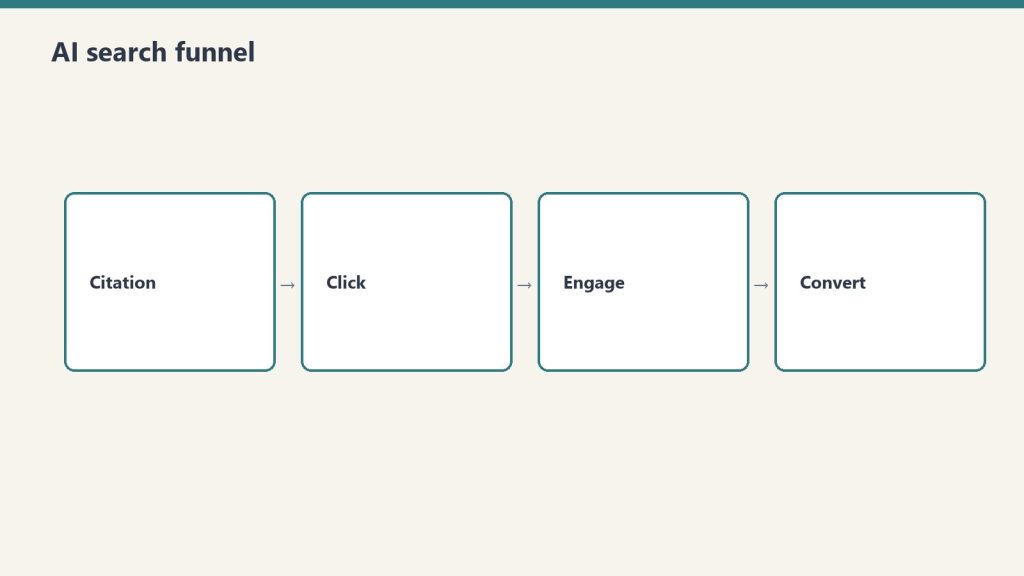
    The insurance AI conversion advantage: According to Amsive’s 2026 AEO research, an insurance site achieved a 3.76% LLM (AI) conversion rate compared to 1.19% from organic search — more than three times the conversion rate. The reason: prospects who find an insurance agency through an AI citation have already done extensive research, understand the coverage they need, and arrive at the agency’s website pre-qualified and pre-educated. They’re not browsing. They’re ready to quote.
    3.76%
    AI-referred conversion rate for insurance sites vs. 1.19% from organic search
    Source: Amsive AEO Research, 2026

    Why Insurance Is One of the Best Verticals for AI Citation

    According to Search Engine Land data from August 2025 cited by Position Digital’s 2026 AI SEO statistics report, consultancy-driven sectors — legal, finance, health, and insurance — drive higher AI visitor rates than other industries like SaaS and eCommerce. Insurance prospects research coverage questions extensively before contacting an agent, and they increasingly do that research in AI assistants. This makes insurance one of the highest-ROI verticals for AI citation optimization because the prospect who arrives via AI citation is further along in their purchase journey than any other channel.

    Nationwide’s Agency Forward blog identified the mechanism in 2026: “With the convenience of overviews, the conversion funnel is collapsing, and search can lead to online quotes and binds in a single online session.” The prospect who asks an AI assistant “how much umbrella insurance do I need?” reads a cited agency article, and sees a “Get a free quote” CTA can bind coverage in that same session — without ever running a Google search or visiting a comparison site.

    How do insurance agencies get cited by ChatGPT and Perplexity for coverage questions?
    Insurance agencies earn AI citations for coverage questions when their WordPress content combines: organic ranking in the top 20 results for the query (the access prerequisite), named regulatory and standards entity references that AI systems can verify (NAIC, ISO policy form numbers, AM Best ratings, ACORD standards), direct-answer speakable blocks providing 40–60 word answers to the specific coverage question being asked, FAQPage JSON-LD schema making Q&A pairs machine-parseable, and InsuranceAgency schema connecting the content to the licensed agency entity. Content that answers “how much umbrella insurance do I need?” with specific, verifiable criteria and named coverage standards earns AI citation at the exact moment prospects are forming their coverage decisions.

    The Four Content Formats That Earn Insurance AI Citations

    1. Coverage Definition Content

    “What is [coverage type] insurance?” articles with specific named policy form references, coverage inclusions and exclusions, and a definitional speakable block in the first 50 words after the heading. This is the most-cited insurance content type in AI systems because coverage definition queries are among the most frequent insurance questions asked of AI assistants — and the most answerable with specific, verifiable entity references.

    2. Coverage Comparison Content

    “[Coverage A] vs. [Coverage B]” articles comparing specific ISO policy forms, coverage triggers (occurrence vs. claims-made), or product types (term vs. whole life). These earn AI citations because comparison queries (“what is the difference between HO-3 and HO-5”) are directly answerable from well-structured, entity-rich content — and the prospect asking them is in active evaluation mode.

    3. Coverage Cost Content

    “How much does [coverage type] cost?” content with named premium factors (credit-based insurance scores, loss history, coverage limits, deductible amounts) and rate tier references. Insurance cost content earns high AI citation because it addresses the most-asked insurance pre-quote question — and content that provides specific, verifiable premium factors is more AI-citable than generic “rates vary” responses.

    4. Coverage Exclusion Content

    “What doesn’t [coverage type] cover?” articles with named exclusions by ISO form reference. Prospects research coverage exclusions before contacting an agent specifically because they want to know what they’re not protected against. This content builds trust — acknowledging limitations honestly — and earns AI citations because it answers the skeptical coverage questions that prospects ask when they don’t trust generic “comprehensive coverage” descriptions.

    The GEO optimization layer that builds insurance AI citation infrastructure — NAIC/ISO entity injection, speakable blocks, FAQPage schema, InsuranceAgency schema — is applied to your existing articles through WordPress content optimization for insurance agencies via SiteBoost.

    Frequently Asked Questions

    Which AI systems matter most for insurance agency visibility?

    Google AI Overviews reaches the most insurance prospects because it appears at the top of results for coverage research queries. Perplexity is increasingly used for detailed insurance research because it cites sources inline — giving cited agencies visible brand attribution during the research process. ChatGPT’s growing search integration captures conversational coverage questions. All three evaluate similar content signals: NAIC/ISO entity references, direct-answer formatting, and FAQPage schema. Optimizing for one effectively optimizes for all three, since the content quality signals are largely platform-agnostic.

    How quickly can insurance agency content start earning AI citations?

    For insurance content already ranking in the top 20 organic results, AI citation eligibility is established within 2–6 weeks of optimization being indexed — the time for AI systems to crawl and re-evaluate the updated content. Insurance is a high-citation-frequency vertical for AI because coverage questions generate consistent research behavior. Content with strong NAIC/ISO entity references, FAQPage schema, and speakable blocks often begins appearing in AI responses within one crawl cycle after optimization is applied to existing ranking articles.

    Is there a compliance risk to insurance agency content being cited by AI systems?

    The compliance risk in insurance content relates to specific coverage claims, guarantee language, and state-specific regulatory accuracy — not to being cited by AI systems. An insurance agency article that provides accurate, educational coverage information with appropriate disclaimers (coverage depends on specific policy terms; consult a licensed agent for personalized advice) and named source citations (NAIC, ISO) meets both compliance and AI citation standards. Content that makes unverifiable coverage guarantees or omits required state-specific disclosures creates compliance risk regardless of where it is cited.

    Sources: Amsive, “Answer Engine Optimization (AEO): Your Complete Guide to AI Search Visibility” (2025); Nationwide Agency Forward, “Benefits of SEO, GEO and AEO for Insurance Agents” (2026); Position Digital, “90+ AI SEO Statistics for 2025” (citing Search Engine Land August 2025 data); Insurance Advocate, “AEO vs. SEO: What Insurance Agencies Need to Know” (February 2026)
  • How Real Estate Agents Get Found in AI Search Before Buyers Contact Anyone

    How Real Estate Agents Get Found in AI Search Before Buyers Contact Anyone


    Tygart Media — Real Estate Content Strategy

    How Real Estate Agents Get Found in AI Search Before Buyers Contact Anyone

    By Tygart Media Updated: April 12, 2026
    The AI pre-search reality for real estate: Gartner projects up to 25% of traditional search volume will migrate to AI tools by the end of 2026. In real estate, this means buyers and sellers are asking ChatGPT, Perplexity, and Google AI Overviews questions like “What’s the best neighborhood in [city] for families with young kids and walkable schools?” and “How competitive is the [city] real estate market for buyers right now?” — before they open a browser tab, before they visit Zillow, and before they contact an agent. The agent whose content is cited in those answers enters the consideration set at the very beginning of the buyer’s journey.

    Why AI Citation Matters More Than Position 1 for Real Estate

    Traditional real estate SEO chased position 1 rankings for local keywords. AI citation operates differently: it targets the research-phase questions that precede any specific property or agent search. A buyer who asks ChatGPT “what is [neighborhood] like for a family moving from out of state” is not yet searching for a property. They’re building a mental model of the market. The agent cited as the authoritative source on that neighborhood during this phase establishes credibility before any competitor has been considered.

    According to Digital Agent Club’s 2026 real estate digital marketing analysis, AI search queries in real estate are “full-sentence questions people actually ask out loud” — specifically neighborhood character, school quality, market competitiveness, and commute viability. These are exactly the questions that well-optimized neighborhood guides and market reports are built to answer.

    How do real estate agents get cited in ChatGPT and Perplexity for neighborhood and market questions?
    Real estate agents earn AI citations for neighborhood and market queries when their WordPress content combines: ranking in the top 20 organic results for the query (the access prerequisite), named geographic entity references that AI systems can verify (school district names, transit corridors, MLS board as data source, NAR terminology for market conditions), direct-answer speakable blocks targeting neighborhood character questions (“what is [neighborhood] known for” and “what are the schools like in [neighborhood]”), and FAQPage JSON-LD schema making Q&A pairs machine-parseable. National portals have generic neighborhood pages. Local agents have genuine local knowledge encoded in entity-rich, schema-structured content — which is exactly what AI systems prefer to cite.

    The Four Real Estate Content Types That Earn AI Citations

    1. Neighborhood Character Guides

    The most AI-citable real estate content directly answers “what is [neighborhood] like?” — the question buyers ask AI before they search for properties. Guides with named school entities, commute corridor references, community character description, and price range context are machine-verifiable by AI systems against geographic and institutional data. A guide that says “Oakwood Heights is served by Lincoln Elementary (GreatSchools rating 8/10), is 22 minutes to downtown via I-90, and has a median home price of $487K per NWMLS Q1 2026 data” provides entity anchors that AI systems can cite with confidence.

    2. Market Condition Analyses

    Buyers ask AI “is [city] a buyer’s or seller’s market right now?” Market report content with specific MLS data, defined market condition criteria (months of supply, list-to-sale ratio), and a dated “last updated” date is AI-citable because it provides a verifiable, sourced, current answer to a question buyers actively ask during market research. Undated or unverified market commentary is not citable — AI systems evaluate content freshness before surfacing market data.

    3. Buyer and Seller Process Explainers

    Process questions are high-citation opportunities: “how does the home buying process work,” “what is earnest money,” “how do real estate contingencies work,” “what does days on market mean.” These are universal questions with verifiable, direct answers that don’t require geographic specificity. FAQPage schema targeting these questions earns both People Also Ask placements and AI citation for the specific process queries buyers ask AI assistants during active home search.

    4. Local Market Comparison Content

    “[Neighborhood A] vs [Neighborhood B]” comparison content is highly AI-citable because it directly answers one of the most common pre-decision buyer questions. AI systems surface content that provides the specific comparison a buyer is asking about — school district comparison, price difference, commute difference, neighborhood character comparison. An agent who writes authentic, data-backed neighborhood comparison content owns a content type that neither national portals nor most local competitors are producing.

    Geographic entity injection, speakable blocks targeting neighborhood AI queries, and FAQPage schema are the three GEO deliverables applied to real estate WordPress content through WordPress content optimization for real estate agents via SiteBoost.

    Frequently Asked Questions

    Which AI systems matter most for real estate agent visibility?

    Google AI Overviews has the largest reach — appearing at the top of results for real estate research queries including neighborhood character, school quality, and market condition searches. Perplexity is increasingly used by out-of-state buyers doing research before relocation because it cites sources inline, giving cited agents visible brand exposure. ChatGPT’s growing search integration captures the “which neighborhood should I consider” research questions that precede any specific search. All three evaluate similar content signals: named geographic and institutional entity references, direct-answer formatting, and FAQPage schema. Optimizing for one effectively optimizes for all.

    Can a new real estate agent website earn AI citations?

    Yes, for specific hyper-local queries with low competition. A new agent website with one deeply optimized, entity-rich neighborhood guide for a specific neighborhood can rank in positions 11–20 for that neighborhood’s character and school queries — and earn AI citations for those specific queries even without broad domain authority. The AI citation selection among ranking pages rewards content quality signals — entity depth, direct-answer structure, schema — not just ranking position. Starting with your primary farm area and building one genuinely authoritative guide is more effective than thin coverage of many neighborhoods.

    How is AI search optimization different from traditional real estate SEO?

    Traditional real estate SEO prioritized local signals — Google Business Profile, NAP consistency, location-specific pages, and review volume. AI search evaluates content quality signals: named geographic entities (school district names, transit references, MLS board citations), direct-answer formatting (speakable blocks with 40–60 word direct answers), and machine-readable schema (FAQPage, LocalBusiness, RealEstateListing). Traditional SEO remains the prerequisite — 97% of AI citations come from pages already ranking organically. But among ranking pages, AI citation requires the additional entity and schema layer that most real estate agents’ WordPress content currently lacks.

    Sources: Digital Agent Club, “Real Estate Digital Marketing 2026” (November 2025); Luxury Presence, “194 Best Real Estate Keywords for 2025–2026”; Gartner 2025–2026 search migration projections (cited via Digital Agent Club); LLMrefs, “Answer Engine Optimization: The Complete Guide for 2026”
  • How Medical Practices Get Featured in Google AI Overviews (And Why It Matters More Than Page 1)

    How Medical Practices Get Featured in Google AI Overviews (And Why It Matters More Than Page 1)


    Tygart Media — Healthcare Content Strategy

    How Medical Practices Get Featured in Google AI Overviews (And Why It Matters More Than Page 1)

    By Tygart Media Updated: April 12, 2026
    The AI Overview reality for healthcare: Since March 2025, Google AI Overviews have grown by 115% in healthcare search results. Approximately 45% of medical keywords now trigger an AI Overview at the top of results — appearing before every organic listing, every ad, and every local pack result. According to PracticeBeat’s 2026 SERP data, AI Overviews and Local Pack results combined now capture over 80% of clicks for medical queries. Being cited as a source in an AI Overview is not just an SEO metric — it is how independent medical practices compete with large health systems for patient attention at the moment of highest urgency.

    How Google Selects Medical Content for AI Overviews

    Google’s AI Overview system does not randomly select medical content. According to Silvr Agency’s 2026 AI Overview analysis, Google evaluates websites based on E-E-A-T signals, content quality (comprehensive, well-researched, with proper citations), and structural accessibility — whether the AI can parse and extract the answer it needs. For medical content specifically, the evaluation is stricter: physician authorship schema, clinical entity references, and MedicalCondition or MedicalProcedure schema are the signals that distinguish AI-citable medical content from content that gets bypassed.

    How do medical practices get cited in Google AI Overviews for health queries?
    Medical practices earn Google AI Overview citations when their WordPress content combines: ranking in the top 20 organic results for the query (the access prerequisite — 97% of AI citations come from top-20 pages), named physician authorship with credential schema (Experience and Expertise signals), clinical entity references that AI systems can verify (ADA, CDC, NIH guidelines, ICD-10 codes, specialty board standards), MedicalCondition or MedicalProcedure schema markup that makes the content machine-parseable, and FAQPage schema with direct-answer pairs targeting patient questions. Practices with all five elements in their highest-traffic condition and treatment articles are systematically more likely to appear in AI Overviews than practices missing any one of them.

    The Five Structural Requirements for Medical AI Overview Eligibility

    1. Organic Ranking in the Top 20 (The Prerequisite)

    AI Overview citations come almost exclusively from pages that already rank in the top 20 organic results. This means the traditional SEO foundations — title tag optimization, meta description, internal linking, backlinks from authoritative medical sources — must be in place before AI citation can occur. Optimization for AI Overview citation assumes the article is already ranking; if it isn’t, the priority is first getting it into the top 20.

    2. Named Physician Authorship With Schema

    Google’s AI does not cite anonymous health content. The authorship requirement is specific: a named physician, linked to a bio page with verifiable credentials, with Physician schema markup connecting the content to that named medical entity. PracticeBeat’s 2026 AI Overview research notes that “every medical page must include machine-readable author and reviewer information” including degrees, licenses, professional affiliations, and links to trusted digital identities such as LinkedIn, PubMed, or medical board profiles.

    3. Clinical Entity References

    Named clinical entities are the verifiable anchors AI systems use to evaluate medical content authority. For an article about hypertension: “JNC 8 blood pressure guidelines,” “ACC/AHA 2017 hypertension guidelines (130/80 mmHg threshold),” “ICD-10 I10 for essential hypertension,” “thiazide diuretics as first-line therapy per ACC/AHA recommendations.” These are machine-verifiable by the AI against known clinical standards — which is exactly what Google’s systems check before citing a source.

    4. MedicalCondition or MedicalProcedure Schema

    Schema.org’s MedicalCondition and MedicalProcedure types provide explicit structured data that tells Google’s AI exactly what the page is about clinically. A condition article with MedicalCondition schema identifying the condition’s name, symptoms, risk factors, and treatments in machine-readable format is significantly more AI-citable than the same article without schema — the AI doesn’t have to infer the structure, it’s explicitly provided.

    5. FAQPage Schema With Patient-Focused Questions

    FAQPage schema directly feeds People Also Ask placements and AI Overview citation. For medical content, the questions that earn AI citations target the patient research phase: “What are the symptoms of [condition]?”, “How is [condition] diagnosed?”, “What treatments are available for [condition]?”, “When should I see a doctor about [symptom]?” These direct-answer pairs, with FAQPage JSON-LD, make the content machine-extractable for AI synthesis.

    The five AI Overview eligibility requirements — physician schema, clinical entity injection, MedicalCondition/Procedure schema, and FAQPage schema — are applied across your existing article library as part of WordPress content optimization for medical practices through SiteBoost. Clinical content unchanged.

    Frequently Asked Questions

    Are Google AI Overviews replacing traditional search results for medical queries?

    AI Overviews appear above traditional organic results for approximately 45% of medical keywords and are growing rapidly — up 115% since March 2025. They do not replace organic results, but they significantly reduce clicks to organic listings for queries where an AI Overview appears. Practices cited as sources in AI Overviews receive attribution links that still drive traffic, and the brand recognition from being cited as a medical authority carries value even in zero-click scenarios. The priority in 2026 is appearing in both the AI Overview (citation) and the organic result below it (direct traffic).

    Can a small independent practice get featured in AI Overviews against large health systems?

    Yes — and this is one of the significant opportunities of AI Overview optimization. Large health systems have brand authority but often produce generic, committee-authored content that lacks the clinical specificity and direct-answer structure AI systems favor. An independent specialist practice with highly specific, physician-authored condition and procedure content — optimized with clinical entity references and FAQPage schema — can outperform large health systems for specific condition queries where their content is more precise and more directly answerable.

    How long does it take for optimized medical content to appear in AI Overviews?

    For content already ranking in the top 20 organic results, AI Overview eligibility can be established within 2–6 weeks of optimization — the time it takes Google’s crawlers to re-evaluate the updated content with its new entity references, schema markup, and structured Q&A pairs. AI Overviews update more frequently than organic rankings. Content that was ranking but not being cited in AI Overviews often begins appearing within one crawl cycle after clinical entity and schema optimization is applied.

    Sources: PracticeBeat, “AI Overviews & SEO for Doctors in 2025” (November 2025); PracticeBeat, “SEO for Doctors in 2026: Medical SERP Playbook” (December 2025); Silvr Agency, “AI Overviews & SEO in 2026: A Complete Guide for Medical Practices”; Digitalis Medical, “Medical SEO Strategy” (2026)