Tag: AI Search

  • Why AI Agents Are Different From Chatbots, Automations, and APIs

    Why AI Agents Are Different From Chatbots, Automations, and APIs

    These terms get used interchangeably. They’re not the same thing. Here’s the actual distinction between each one, where the lines get genuinely blurry, and which category fits what you’re actually trying to build.

    Chatbots

    A chatbot is a software interface designed to simulate conversation. The defining characteristic: it’s stateless and reactive. You send a message; it responds; the exchange is complete. Each interaction is largely independent.

    Traditional chatbots (pre-LLM) operated on decision trees — “if the user says X, respond with Y.” Modern LLM-powered chatbots use language models to generate responses, which makes them dramatically more capable and flexible — but the fundamental architecture is the same: you ask, it answers, you ask again.

    What chatbots are good at: answering questions, providing information, routing conversations, handling defined service scenarios with natural language flexibility. What they’re not: action-takers. A chatbot can tell you how to cancel your subscription. An agent can cancel it.

    Automations

    Automations are rule-based workflows that execute when triggered. Zapier, Make, and similar tools are the canonical examples. When event A happens, do B, then C, then D.

    The key characteristic: the path is predefined. Every step is specified by the person who built the automation. If an unexpected situation arises that the automation wasn’t built for, it either fails or skips the step. There’s no reasoning about what to do — there’s only executing the specified path or not.

    Automations are highly reliable for well-defined, stable processes. They break when edge cases arise that weren’t anticipated. They scale perfectly for the exact task they were built for; they don’t generalize.

    APIs

    An API (Application Programming Interface) is a communication contract — a defined way for software systems to talk to each other. APIs are infrastructure, not agents or automations. They’re the mechanism through which agents and automations take action in external systems.

    When an AI agent “uses Slack,” it’s calling Slack’s API. When an automation “posts to Twitter,” it’s calling Twitter’s API. The API is the door; agents and automations are the things that open it.

    Conflating APIs with agents is a category error. An API is a tool, not a behavior pattern.

    AI Agents

    An AI agent takes a goal and figures out how to accomplish it, using tools available to it, handling unexpected situations along the way, without a human specifying each step.

    The distinguishing characteristics versus the above:

    • vs. Chatbots: Agents take action in the world; chatbots respond to messages. An agent can book the flight, not just tell you how to book it.
    • vs. Automations: Agents reason about what to do next; automations execute predefined paths. When an unexpected situation arises, an agent adapts; an automation fails or skips.
    • vs. APIs: APIs are tools an agent uses; they’re not the agent itself. The agent is the reasoning layer that decides which API to call and what to do with the result.

    Where the Lines Actually Blur

    In practice, real systems often combine these categories:

    LLM-powered chatbots with tool access: A customer service chatbot that can look up your order status, initiate a return, and send a confirmation email is starting to look like an agent — it’s taking actions, not just responding. The boundary between “advanced chatbot” and “limited agent” is genuinely fuzzy.

    Automations with AI decision steps: A Zapier workflow with an OpenAI or Claude step in the middle isn’t purely rule-based anymore — the AI step can produce variable outputs that affect what the automation does next. This is a hybrid: mostly automation, partly agentic.

    Agents with constrained scopes: An agent restricted to a single tool and a narrow task class starts to look like a sophisticated automation. The more constrained the scope, the more the distinction collapses in practice.

    The useful question isn’t “what category is this?” but “is this system reasoning about what to do, or executing a predefined path?” That’s the actual distinction that matters for how you build, monitor, and trust it.

    Why the Distinction Matters Operationally

    Reliability profile: Automations fail predictably — when an edge case hits a path that wasn’t built. Agents fail unpredictably — when their reasoning goes wrong in a way you didn’t anticipate. Different failure modes require different monitoring approaches.

    Maintenance overhead: Automations require explicit updates when processes change. Agents adapt to process changes automatically — but may adapt in unexpected ways that need to be caught and corrected.

    Auditability: Automations are fully auditable — you can read the workflow and know exactly what it does. Agents are less auditable — you can inspect their actions, but not fully predict them in advance. For compliance-sensitive contexts, this matters significantly.

    Build cost: Automations are faster to build for well-defined, stable processes. Agents are faster to deploy when the process is complex, variable, or not fully specified — because you’re specifying a goal rather than a procedure.

    For what agents can actually do in production: What AI Agents Actually Do. For a business owner’s introduction: AI Agents Explained for Business Owners. For hosted agent infrastructure: Claude Managed Agents FAQ.


    Hosted agent infrastructure pricing: Claude Managed Agents Pricing Reference.

  • What AI Agents Actually Do (Not the Hype Version)

    What AI Agents Actually Do (Not the Hype Version)

    Not the version where AI agents are going to replace all human jobs by 2030. The actual version, right now, based on what’s deployed in production.

    The Actual Definition

    What an AI agent is

    Software that takes a goal, breaks it into steps, uses tools to execute those steps, handles errors along the way, and keeps working without you directing every action. The distinguishing characteristic is autonomous multi-step execution — not just answering a question, but completing a task.

    The Key Distinction: One-Shot vs. Agentic

    Most people’s experience with AI is one-shot: you type something, the AI responds, the exchange is complete. That’s a language model doing inference. An AI agent is different in one specific way: it takes actions, checks results, and takes more actions based on what it found — often dozens of steps — without you approving each one.

    Example of one-shot AI: “Summarize this document.” You paste the document, the AI returns a summary. Done.

    Example of an AI agent doing the same task: “Research this topic and produce a summary with verified sources.” The agent searches the web, reads multiple pages, identifies conflicts between sources, runs additional searches to resolve them, synthesizes findings, and returns a summary with citations — without you specifying each search query or each page to read. You gave it a goal; it handled the steps.

    What Agents Can Actually Do

    The tools an agent can use define its capability surface. Common tool categories in production agents:

    • Web search: Query search engines and retrieve current information
    • Code execution: Write and run code in a sandboxed environment, use results to inform next steps
    • File operations: Read, write, and modify files — documents, spreadsheets, data files
    • API calls: Interact with external services — CRMs, databases, project management tools, communication platforms
    • Browser control: Navigate web pages, fill forms, extract information
    • Memory: Store and retrieve information across steps within a session, sometimes across sessions

    The combination of these tools is what makes agents capable of genuinely autonomous work. An agent that can search, write code, execute it, check the results, and write findings to a document can complete a research and analysis task that would otherwise require hours of human work — without you steering each step.

    What “Autonomous” Actually Means in Practice

    Autonomous doesn’t mean unsupervised indefinitely. Production agents are typically configured with:

    • Defined scope: The tools the agent can use, the systems it can access, the actions it’s allowed to take
    • Guardrails: Actions that require human confirmation before proceeding — making a payment, sending an email externally, modifying a production database
    • Reporting: Checkpoints where the agent surfaces what it’s done and asks whether to continue

    Autonomy is a dial, not a switch. You set how much the agent handles independently versus checks in. Most production deployments start more supervised and reduce oversight as trust in the agent’s behavior is established.

    Real Production Examples (Not Hypotheticals)

    Concrete examples from confirmed public deployments as of April 2026:

    • Rakuten: Deployed five enterprise Claude agents in one week on Anthropic’s Managed Agents platform — handling tasks across their e-commerce operations including data processing, content tasks, and operational workflows
    • Notion: Background agents that autonomously update workspace pages, synthesize database content, and process meeting notes into structured summaries without manual triggers
    • Sentry: Agents integrated into developer workflows — monitoring error streams, triaging issues, and surfacing relevant context to engineers
    • Asana: Project management agents that update task statuses, synthesize project health, and move work items based on defined triggers

    These are not pilots. These are production systems handling real operational load.

    How They’re Built

    An agent is built from three components:

    1. A language model: The reasoning layer — the part that decides what to do next, interprets tool results, and determines when the task is complete
    2. Tools: The action layer — APIs, code execution environments, file systems, or anything else the model can call to take action in the world
    3. Orchestration: The loop that connects them — manages the sequence of model calls and tool executions, maintains state between steps, handles errors

    Historically, builders had to construct the orchestration layer themselves — a significant engineering investment. Hosted platforms like Claude Managed Agents handle the orchestration layer, letting builders focus on defining the agent’s goals, tools, and guardrails rather than the mechanics of running the loop.

    What Agents Are Not Good At (Yet)

    Honest calibration on current limitations:

    • Long-horizon planning with many unknowns: Agents perform best on tasks with relatively defined scope. Open-ended exploratory work over many days with fundamentally uncertain requirements is still better handled by humans in the loop at each major decision point.
    • Tasks requiring physical world interaction: No production general-purpose physical agent exists. Software agents operating through APIs and interfaces are the current state.
    • Tasks where errors are catastrophic: Agents make mistakes. For any irreversible, high-stakes action — financial transactions, production data modifications, external communications to important relationships — human confirmation steps should remain in the loop.

    For how hosted agent infrastructure works: Claude Managed Agents FAQ. For the difference between agents and chatbots: AI Agents vs. Chatbots, Automations, and APIs. For an SMB-focused explanation: AI Agents Explained for Business Owners.


    For pricing specifics on hosted agent infrastructure: Claude Managed Agents Complete Pricing Reference.

  • How to Write Content That AI Systems Actually Cite

    How to Write Content That AI Systems Actually Cite

    Tygart Media / Content Strategy
    The Practitioner JournalField Notes
    By Will Tygart
    · Practitioner-grade
    · From the workbench

    Being cited by AI systems is not luck and it’s not purely a domain authority game. There are structural characteristics of content that make AI systems more or less likely to pull from it. Here’s what those characteristics are and how to build them in deliberately.

    Why Content Structure Determines Citation Likelihood

    AI systems — whether Perplexity, ChatGPT with web search, or Google AI Overviews — are trying to answer a question. When they search the web and retrieve candidate content, they’re looking for the passage or page that most directly and reliably answers the query. The content that wins is the content that makes the answer easiest to extract.

    This has direct structural implications. A 3,000-word narrative essay that eventually answers a question on page 2 loses to a 600-word page that answers the question in the first paragraph, provides supporting evidence, and includes a definition. Not because shorter is better, but because clarity of answer placement is better.

    The Structural Characteristics That Drive Citation

    1. Direct Answer in the First 100 Words

    Every piece of content you want AI systems to cite should answer the primary question it’s targeting before the first scroll. AI retrieval systems don’t read like humans — they identify the most relevant passage, and that passage needs to contain the answer, not just lead toward it.

    Test: take your target query and your first 100 words. Does the answer exist in those 100 words? If not, restructure until it does. The rest of the piece can develop nuance, context, and supporting evidence — but the answer must be front-loaded.

    2. Explicit Q&A Formatting

    Question-and-answer structure signals to AI systems that the content is explicitly organized around answering queries. H3 headers phrased as questions, followed by direct answers, are one of the most reliable patterns for citation capture.

    This is why FAQ sections work — not because of FAQPage schema specifically, but because the underlying structure gives AI systems a clean extraction target. Schema reinforces it; the structure is the foundation.

    3. Defined Terms and Named Concepts

    Content that defines terms clearly — “X is Y” statements — becomes citable for queries looking for definitions. AI systems frequently answer “what is X” queries by pulling the clearest definition they can find. If your content doesn’t include a crisp definitional sentence, it’s not competing for definition queries even if you’ve written a thorough treatment of the topic.

    Add definition boxes. State “AI citation rate is the percentage of sampled AI queries where your domain appears as a cited source.” Don’t bury the definition in the third paragraph of an explanation.

    4. Specific, Verifiable Facts

    AI systems weight specificity. “$0.08 per session-hour” gets cited. “A relatively modest fee” does not. “60 requests per minute for create endpoints” gets cited. “Limited rate limits apply” does not.

    Replace hedged language with concrete numbers and specific claims wherever your content supports it. Don’t fabricate specificity — wrong specific numbers are worse than honest hedging. But wherever you have real, verifiable data, make it explicit and prominent.

    5. Entity Clarity

    Content that makes clear who is speaking, what organization they represent, and what their basis for authority is gets cited more reliably. This is the E-E-A-T signal applied to AI citation: the system needs to assess whether this source is credible enough to cite.

    Name the author. State the organization. Link to primary sources. Include dates on time-sensitive claims (“as of April 2026”). These signals tell the AI system this content has an accountable source, not anonymous text.

    6. Freshness on Time-Sensitive Topics

    For any topic where recency matters — product pricing, regulatory status, current events — AI systems heavily weight recently indexed, recently updated content. A page published April 2026 beats a page published January 2025 for queries about current status, even if the older page has higher domain authority.

    Update time-sensitive content. Add “last updated” dates. Re-publish with fresh timestamps when the underlying facts change. Freshness signals are real citation drivers for volatile topic areas.

    7. Speakable and Structured Data Markup

    Speakable schema explicitly marks the passages in your content best suited for AI extraction. It’s a direct signal to AI retrieval systems: “this paragraph is the answer.” Combined with FAQPage schema, Article schema, and HowTo schema where relevant, structured markup makes your content more parseable.

    Schema doesn’t replace the underlying structure — it reinforces it. A well-structured page with schema beats a poorly structured page with schema. But a well-structured page with schema beats a well-structured page without it.

    8. Internal Link Architecture

    AI systems that crawl the web assess topical depth partly through link structure. A page that sits within a tight cluster of related pages — all cross-linking around a topic — signals topical authority more strongly than an isolated page, even if the isolated page’s content is comparable.

    Build the cluster. The hub-and-spoke architecture is as relevant for AI citation as it is for traditional SEO. Every spoke article should link to the hub; the hub should link to every spoke.

    What Doesn’t Work

    A few patterns that are intuitively appealing but don’t translate to citation lift:

    • More content for its own sake: 5,000 words of padded content is not more citable than 900 words of dense, accurate content. AI retrieval is looking for passage quality, not page length.
    • Keyword density: Traditional keyword repetition strategies don’t make content more citable. The query match is handled at retrieval; the citation decision is about answer quality, not keyword frequency.
    • Generic authority claims: “We’re the leading experts in X” is not citable. A specific data point that demonstrates expertise is.

    The Compound Effect

    These characteristics compound. A page with a direct front-loaded answer, Q&A structure, defined terms, specific facts, clear entity signals, fresh timestamps, and schema markup sitting within a well-linked cluster is materially more citable than a page with only two or three of these characteristics. The full stack produces disproportionate results.

    For the monitoring layer: How to Track When AI Systems Cite You. For the metrics: What Is AI Citation Rate?. For the full citation monitoring guide: AI Citation Monitoring Guide.


    For the infrastructure layer: Claude Managed Agents Pricing Reference | Complete FAQ Hub.

  • AI Citation Monitoring Tools — What Exists, What Doesn’t, What We Built

    AI Citation Monitoring Tools — What Exists, What Doesn’t, What We Built

    The Lab · Tygart Media
    Experiment Nº 570 · Methodology Notes
    METHODS · OBSERVATIONS · RESULTS

    You want to monitor whether AI systems are citing your content. What tools actually exist for this, what they do, what they don’t do, and what we’ve built ourselves when nothing on the market fit.

    The Market as of April 2026

    The AI citation monitoring category is real but nascent. Here’s an honest inventory:

    Established SEO Platforms Adding AI Visibility Metrics

    Several major SEO platforms have added “AI visibility” or “AI search” modules in the past 6–12 months. These generally track:

    • Whether your domain appears in AI Overviews for tracked keywords (via SERP scraping)
    • Brand mentions in AI-generated snippets
    • Comparative visibility versus competitors in AI search results

    Ahrefs, Semrush, and Moz have all moved in this direction to varying degrees. Verify current feature availability — this has been an active development area and capabilities have changed rapidly.

    Mention Monitoring Tools Expanding to AI

    Brand mention tools like Brand24 and Mention have begun tracking AI-generated content that includes brand references. The challenge: they’re tracking brand name occurrences in crawled content, not necessarily AI citation events. Useful for brand visibility in AI-generated content that gets published, less useful for tracking in-session citations.

    Purpose-Built AI Citation Tools (Emerging)

    Several purpose-built tools targeting AI citation tracking specifically have launched or raised funding in early 2026. This category is moving fast. As of our last check:

    • Tools focused on tracking specific brand or entity mentions across AI platforms
    • API-first tools targeting developers who want to build citation monitoring into their own workflows
    • Dashboard tools with pre-built query sets for common industry categories

    Treat any specific product recommendation here as a starting point for your own research — the category will look different in 6 months.

    Google Search Console

    The strongest existing tool, and it’s free. AI Overviews that cite your pages register as impressions and clicks in GSC under the relevant queries. This is first-party data from Google itself. Limitation: covers only Google AI Overviews, not Perplexity, ChatGPT, or other platforms.

    What We Built

    When no existing tool covered the specific workflows we needed, we built our own. The stack:

    Perplexity API Query Runner

    A Cloud Run service that runs a predefined query set against Perplexity’s API on a weekly schedule. It parses the citations field from each response, checks for domain appearances, and writes results to a BigQuery table. Total engineering time: roughly one day. Ongoing cost: minimal (Cloud Run idle cost + Perplexity API usage).

    The output: a weekly BigQuery record per query showing which domains Perplexity cited, with timestamps. Trend queries show citation rate over time by query cluster.

    GSC AI Overview Monitor

    Not a custom build — just systematic review of GSC data. We check weekly which queries are generating AI Overview impressions for our tracked sites. The signal: if a page is generating AI Overview impressions on new queries, that’s a citation event.

    Manual ChatGPT Sampling

    For highest-priority queries, manual weekly sampling of ChatGPT with web search enabled. We log results to a shared spreadsheet. Less scalable than the API approach, but ChatGPT’s web search activation is inconsistent enough that API automation adds complexity without proportional reliability gain.

    What Doesn’t Exist (That Would Be Useful)

    The tool gaps that we still feel:

    • Cross-platform citation dashboard: A single view showing citation rate across Perplexity, ChatGPT, Gemini, and AI Overviews for the same query set. Nobody has built this cleanly yet.
    • Historical citation rate database: Knowing your citation rate is useful. Knowing whether it improved after you published a new piece of content is more useful. The temporal correlation is hard to establish with spot-check sampling.
    • Competitor citation tracking at scale: Easy to check manually for specific queries; hard to monitor systematically across a large competitor set and query space.

    These gaps exist because the category is new, not because the problems are technically hard. Expect the tool landscape to fill in significantly over the next 12 months.

    How to calculate citation rate: What Is AI Citation Rate?. How to set up tracking: How to Track When ChatGPT or Perplexity Cites Your Content. How to optimize for citations: How to Write Content That AI Systems Cite.


    The Perplexity API monitoring stack we built runs on Claude. For the hosted infrastructure context: Claude Managed Agents Pricing Reference | Complete FAQ.

  • What Is AI Citation Rate? (And How to Calculate Yours)

    What Is AI Citation Rate? (And How to Calculate Yours)

    AI citation rate is a metric that doesn’t have a standard definition yet, which means everyone using the term might mean something slightly different. Here’s what it is, how to calculate it, and what it actually measures — and doesn’t.

    Definition

    AI Citation Rate

    The percentage of sampled AI queries where a specific domain or URL appears as a cited source in the AI system’s response.

    Formula: (Queries where your domain appeared as a source) ÷ (Total queries sampled) × 100

    A Concrete Example

    You run 50 queries in Perplexity across your core topic cluster. Your domain appears as a cited source in 12 of those responses. Your AI citation rate for that query set on that platform: 12/50 = 24%.

    That’s the basic calculation. The complexity is in what you define as your query set, which platforms you sample, and what counts as a “citation.”

    What Counts as a Citation

    Not all AI source mentions are equal. Some distinctions worth tracking separately:

    • Direct URL citation: The AI explicitly lists your URL as a source. Highest confidence — trackable programmatically via API.
    • Domain mention: Your domain name appears in the response text but not necessarily as a formal source citation.
    • Brand mention: Your brand name appears in the response. May or may not correlate with your web content being the source.
    • Implied citation: Content clearly derived from your page but no explicit attribution. Only detectable through content fingerprinting — difficult at scale.

    For tracking purposes, direct URL citation is the most reliable signal. Brand mentions are noisier but still worth tracking for brand visibility purposes.

    How to Calculate It

    Step 1: Define Your Query Set

    Select 20–100 queries where you want to appear. Good sources for your query set:

    • Your highest-impression GSC queries (you rank for these — do AI systems cite you?)
    • Queries where you’ve published dedicated content
    • Queries from your keyword research that match your expertise
    • Questions your clients or prospects actually ask

    Step 2: Sample Across Platforms

    Run each query in Perplexity (most trackable — consistent citation format), ChatGPT with web search enabled, and Google AI Overviews (via organic search). Track results separately by platform — citation rates vary significantly between platforms for the same query set.

    Step 3: Log Results

    For each query on each platform, record:

    • Whether your domain appeared as a citation (binary: yes/no)
    • Position if ranked (first citation, third citation, etc.)
    • Date of query

    Step 4: Calculate Rate

    Aggregate by time period (weekly or monthly). Calculate separately by platform and by topic cluster — aggregate rate across all platforms and queries hides the variation that’s actually useful.

    Step 5: Establish Baseline, Then Track Change

    Your first 4–6 weeks of data sets your baseline. After that, track directional change — is the rate improving, declining, or stable? Correlate changes with content updates, new publications, and competitor activity.

    What Citation Rate Actually Measures (And Doesn’t)

    AI citation rate is a proxy for content authority signal in AI systems — not a direct ranking factor you can optimize mechanically. It reflects:

    • Whether your content is being indexed and surfaced by AI systems for your target queries
    • Whether your content structure and freshness match what AI systems prefer to cite
    • Relative authority versus competitors for the same query space

    It doesn’t measure:

    • Whether AI systems are using your content without citation (training data influence)
    • User behavior after AI responses (do they click through to your site?)
    • Revenue impact of being cited (cited ≠ converting)

    Benchmarks and Context

    Because this metric is new, industry benchmarks don’t exist yet. What matters is your own trend line, not comparison to a published standard. A 20% citation rate in a highly competitive topic cluster might represent strong performance; 20% in a niche you should dominate might indicate underperformance. Context is everything.

    For the full monitoring setup: How to Track When ChatGPT or Perplexity Cites Your Content. For tools available: AI Citation Monitoring Tools Comparison. For content optimization: How to Write Content That AI Systems Actually Cite.


    For the agent infrastructure behind automated citation tracking: Claude Managed Agents Pricing and FAQ Hub.

  • How to Track When ChatGPT or Perplexity Cites Your Content

    How to Track When ChatGPT or Perplexity Cites Your Content

    Tygart Media Strategy
    Volume Ⅰ · Issue 04Quarterly Position
    By Will Tygart
    Long-form Position
    Practitioner-grade

    ChatGPT cited a competitor’s blog post instead of yours. Perplexity summarized the wrong article. An AI answer engine described your service category without mentioning you. You’d like to know when this happens — and whether it’s improving over time.

    The problem: no one has built a clean, turnkey tool for this yet. Here’s what actually exists, what we’ve pieced together, and what a real tracking setup looks like.

    Why This Is Hard

    Web search citation tracking is solved: rank trackers like Ahrefs and SEMrush show you who’s linking to what. AI citation tracking has no equivalent infrastructure. Here’s why:

    • Non-deterministic outputs: Ask ChatGPT the same question twice; you may get different sources cited, or no sources at all. There’s no persistent ranking to track.
    • No public citation index: Google’s index is crawlable. There’s no equivalent for “content that AI systems have cited in responses.” You can’t pull a report.
    • Variable source disclosure: Perplexity shows sources. ChatGPT’s web-enabled mode shows sources sometimes. Gemini shows sources. Claude generally doesn’t show sources in the same way. Tracking works where sources are disclosed; it breaks where they aren’t.
    • Query sensitivity: Your content might get cited for one phrasing and completely missed for a near-synonym. There’s no search volume data to tell you which phrasings matter.

    What Actually Exists Today

    Manual Query Sampling

    The only fully reliable method: run queries yourself and check the sources cited. For a content monitoring program this might look like:

    • Define 20–50 queries where you want to appear (covering your core topics)
    • Run each query in Perplexity, ChatGPT (web-enabled), and Gemini weekly or biweekly
    • Log whether your domain appears in cited sources
    • Track citation rate (appearances / total queries run) over time

    This is tedious but gives you ground truth. It’s what a real monitoring program looks like before you automate it.

    Perplexity Source Tracking

    Perplexity consistently displays its sources, making it the most tractable platform for systematic citation tracking. A simple automated approach:

    • Use Perplexity’s API to query your target questions programmatically
    • Parse the citations field in the response
    • Check whether your domain appears
    • Log and aggregate over time

    Perplexity’s API is available with a subscription. The citations field returns the URLs Perplexity used to generate its answer. You can run this as a scheduled Cloud Run job and dump results to BigQuery for trend analysis.

    ChatGPT Web Search Mode

    When ChatGPT uses web search (either via the browsing tool or search-enabled API), it returns source citations. The search-enabled ChatGPT API (available with OpenAI API access) gives you programmatic access to these citations. Same approach: define queries, run them, parse citations, track your domain.

    Limitation: not all ChatGPT responses use web search. For queries it answers from training data, no source is cited and you have no visibility into whether your content influenced the answer.

    Google AI Overviews

    Google AI Overviews (formerly SGE) shows cited sources inline in search results. You can track these through Google Search Console for your own content — if Google’s AI Overview cites your page, that page gets an impression and potentially a click recorded in GSC under that query. This is the only AI citation signal with first-party tracking infrastructure.

    Emerging Tools

    As of April 2026, several tools are building toward AI citation tracking as a category: mention monitoring services that have added AI search coverage, SEO platforms adding “AI visibility” metrics, and purpose-built tools targeting this specific problem. The category is forming but not mature. Verify current capabilities — this space has changed significantly in the past six months.

    What a Real Monitoring Setup Looks Like

    Here’s the practical stack we’ve assembled for tracking citation presence across AI platforms:

    1. Define your query set: 30–50 queries across your core topic clusters. Weight toward queries where you have existing content and where you’re trying to establish authority.
    2. Perplexity API integration: Scheduled weekly run. Parse citations. Log domain appearances to a tracking spreadsheet or BigQuery table.
    3. ChatGPT web search sampling: Less systematic — manual sampling weekly for highest-priority queries. The API approach works but requires more engineering to handle variability in when web search activates.
    4. Google Search Console: Monitor AI Overview impressions. This is your strongest signal because it’s Google’s own data, not sampled queries.
    5. Baseline and trend: After 4–6 weeks of tracking, you have a baseline citation rate. Changes correlate (imperfectly) with content quality improvements, new publications, and competitor activity.

    What Citation Rate Actually Tells You

    Citation rate — your domain appearances divided by total queries sampled — is a proxy metric, not a direct ranking signal. What drives it:

    • Content freshness: AI systems prefer recently indexed, recently updated content for queries about current information
    • Structural clarity: Content with explicit Q&A structure, defined terms, and direct factual claims gets cited more reliably than narrative content
    • Domain authority signals: The same signals that help SEO rankings help AI citation rates — but the weighting may differ by platform
    • Entity specificity: Content that clearly establishes your brand as an entity with defined characteristics gets cited more consistently than generic content

    For the content optimization angle: AI Citation Monitoring Guide. For the broader GEO picture: What Managed Agents means for content visibility.

    For the hosted agent infrastructure context: Claude Managed Agents Pricing Reference — how the billing works for agents that could automate citation monitoring workflows.

  • AEO, GEO, SEO Is the New Social Media

    AEO, GEO, SEO Is the New Social Media

    Tygart Media Strategy
    Volume Ⅰ · Issue 04Quarterly Position
    By Will Tygart
    Long-form Position
    Practitioner-grade

    The Feed Changed. You Just Didn’t Notice.

    Social media trained an entire generation of marketers to think in formats. Carousel or Reel. Thread or Story. 30 seconds or 60. Vertical or square. We built content calendars around what the algorithm wanted to see, not what the audience actually needed to know.

    That era is ending — not because social platforms are dying, but because the consumer sitting on the other side of the screen is changing. Increasingly, the first “person” to read your content isn’t a person at all. It’s an AI agent — a chatbot, an assistant, a search model — pulling information on behalf of someone who asked a question.

    And that changes everything about what “social” means.

    When the Consumer Is a Bot, the Format Doesn’t Matter

    The entire social media economy is built on format constraints. Instagram rewards visual-first. LinkedIn rewards text-heavy thought leadership with engagement bait hooks. TikTok rewards pace and pattern interrupts. Twitter rewards brevity and provocation. Every platform has its own grammar, its own algorithm, its own definition of “good content.”

    But when the consumer is an AI model — Claude, ChatGPT, Gemini, Perplexity, a Google AI Overview — format is irrelevant. What matters is the substance. The depth. The accuracy. The authority.

    An AI agent doesn’t care about your hook. It cares about whether your content actually answers the question its user asked. It doesn’t care about your carousel design. It cares about whether your claims are sourced, your entities are clear, and your expertise is demonstrable.

    This is what AEO, GEO, and SEO — the modern trifecta — actually represent. They aren’t just search optimization tactics. They are the new social media distribution layer.

    No-Click Impressions Are the New Likes

    In the social media world, the metric that matters is the impression. Someone saw your post. If they liked it, they tapped a heart. If they really liked it, they commented or shared. That engagement signaled to the algorithm that your content was worth showing to more people.

    The same feedback loop now exists in AI-mediated search — it just looks different.

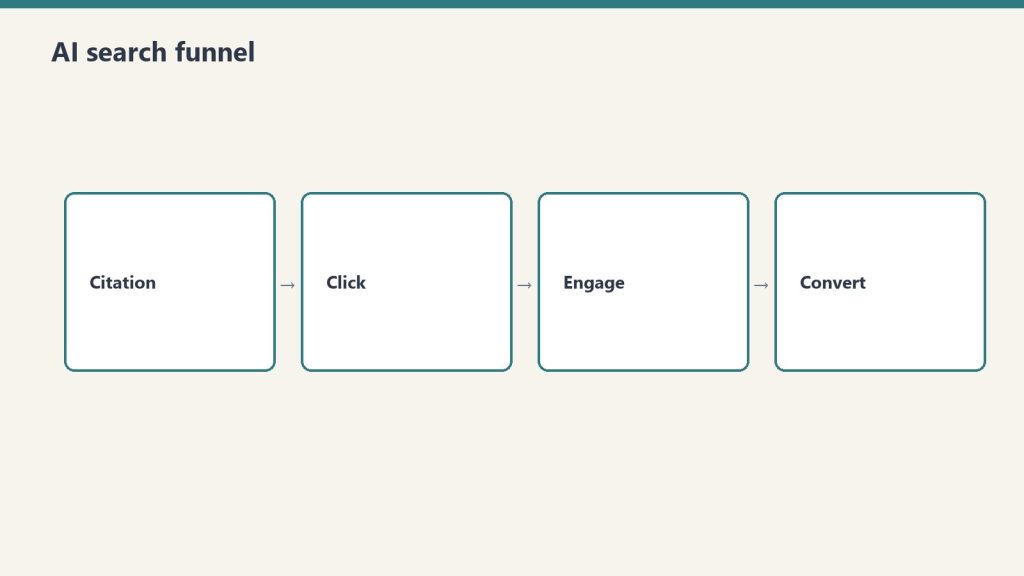
    When your website content appears in a Google AI Overview, that’s an impression. When Perplexity cites your page in an answer, that’s engagement. When ChatGPT recommends your business in response to a user query, that’s a referral. When someone reads an AI-generated summary of your expertise and then calls your office, that’s a conversion.

    The funnel is the same. The channel changed.

    And here’s the part most marketers are missing: you don’t need to chase a trend to earn these impressions. You don’t need to dance. You don’t need a hook. You need good information, structured well, written with genuine expertise, and optimized so AI systems can find it, trust it, and cite it.

    The Passion Advantage

    Social media has an alignment problem. The content that performs best on social platforms is often not the content the creator cares most about. It’s the content that matches the algorithm’s preferences. This creates a grinding misalignment — business owners and marketers spending hours producing content they don’t particularly care about, in formats they didn’t choose, for an audience they can’t directly reach.

    AEO/GEO/SEO flips that equation.

    When you write deep, authoritative website content about the thing you actually know — the thing you’ve spent years mastering — AI systems notice. They learn your expertise. They map your authority. And they start recommending you to people who are actively looking for exactly what you do.

    The data that learns you, learns them.

    That’s not a slogan. It’s how the technology works. Large language models build representations of entities — businesses, people, topics — based on the depth and consistency of the information available about them. The more you write about what you genuinely know, the stronger that representation becomes. The stronger it becomes, the more often AI systems surface you as the answer.

    This is the exact opposite of social media’s content treadmill. Instead of chasing what’s trending, you go deeper into what you already know. Instead of adapting to a platform’s format, you write for substance. Instead of fighting for attention, you earn citation.

    Website Content Is Now the Most Social Thing You Can Do

    Here’s the reframe that matters: your website is no longer a brochure. It’s your most important social channel.

    Every page you publish is a node in a knowledge graph that AI systems are actively reading, indexing, and reasoning about. Every article you write is a potential answer to a question someone hasn’t asked yet. Every entity you define, every claim you source, every FAQ you structure — these are the signals that determine whether your business shows up when someone asks an AI “who should I call for this?”

    Social media posts disappear in 24 hours. Website content compounds. A well-optimized article written today can be cited by AI systems for years. It doesn’t need an algorithm boost. It doesn’t need paid promotion. It needs to be right, and it needs to be findable.

    That’s what modern SEO, AEO, and GEO deliver — not tricks, not hacks, but the infrastructure that makes your expertise machine-readable and AI-citable.

    What This Means for Your Business

    If you’re spending 80% of your marketing effort on social media and 20% on your website, you have the ratio backwards. The businesses that will dominate in an AI-mediated world are the ones investing in deep, authoritative web content — content that answers real questions, demonstrates genuine expertise, and is structured for the machines that are now the first readers of everything published online.

    The feed changed. The question is whether you’ll keep posting for an algorithm, or start publishing for the intelligence layer that’s replacing it.