Sales reps universally underdo documentation. The CRM never matches reality. Account research is shallow. Call notes are sparse. Custom Agents fix the documentation layer without taking selling time. Autofill keeps deal properties current as pages change. A research agent prepares accounts before discovery calls. A post-call agent processes notes into structured updates and action items. The rep stays selling; the documentation layer maintains itself.
Four sales-specific agent patterns
Four sales-specific agent patterns.
1. The pipeline hygiene agent. Daily Autofill across the pipeline database. Keeps deal stage, last-activity date, and risk flags current based on page content. Surfaces deals that haven’t moved in 14+ days. The pipeline review meeting starts 70% prepped. 2. The pre-call research agent. Triggered 60 minutes before each external meeting. Pulls company info, attendee LinkedIn data (via integration), prior interactions, related industry notes. Drops a one-page brief in the rep’s inbox. 3. The post-call summary agent. Triggered when call notes land in a designated database. Extracts action items, identifies decision-makers mentioned, updates the account record, drafts the follow-up email. Rep reviews and sends in 90 seconds. 4. The deal-at-risk agent. Weekly. Reads the pipeline. Flags deals where engagement has dropped, decision timelines have slipped, or red flags emerged in recent communications. Surfaces 3-5 deals for the rep’s attention each Monday.
What this changes for the rep’s day
Pre-agent: 60-70% of the day is selling, 30-40% is documentation and prep.
Post-agent: 80-85% selling, 15-20% review and judgment.
The math is dramatic at the team level. A 10-person sales team gets back roughly two FTE-equivalents of selling capacity. That capacity converts directly to pipeline.
What stays human
What stays human.
The actual conversations with prospects
Negotiation and closing
Relationship building
Strategic account decisions (which accounts to pursue, which to disqualify)
The judgment about whether agent-summarized notes captured the call accurately
Agents make documentation cheaper. They don’t make selling cheaper.
The CRM integration question
Many sales teams already have Salesforce, HubSpot, or another CRM. The pattern that works: keep the CRM as system-of-record, use Notion + agents as the working layer. Sync key fields back to the CRM via integration. Don’t try to replace the CRM with Notion.
The exception: small teams (<10 reps) sometimes find that Notion + agents is enough and they don’t need a separate CRM. Test before committing.
Where this goes wrong
Where this goes wrong.
1. Autofill on judgment fields. “Deal probability” or “deal health” are judgment calls. Don’t autofill them. Surface the inputs that inform the judgment; let the rep make the call. 2. Trusting post-call summaries without review. The agent processes the notes, but the notes themselves can be sparse or wrong. Sample-check post-call summaries weekly. 3. Replacing the rep’s judgment about which deals to focus on. The deal-at-risk agent surfaces; it doesn’t decide. Reps with full context outperform any agent’s prioritization.
What to read next
Notion AI for Customer Success, Account Research piece in Sales cluster, AI-Native Company Patterns.
Running multiple businesses solo used to mean either hiring an assistant or accepting that things slipped through. Custom Agents change the math. A small agent team — three to seven specialized agents — handles the operational layer across all businesses simultaneously, leaving the operator to focus on relationships, strategy, and exception work. The cost is real (post-May 4, somewhere between a coffee budget and a low-end consultant invoice per month) but the leverage is dramatic. The skill isn’t building agents. It’s deciding what to delegate to them.
The starter loadout
The starter loadout.
Seven agents that earn their keep for a multi-business solo operator: 1. The morning briefing agent. Runs at 6 AM. Reads overnight emails, calendar for the day, project status changes across all businesses. Drops a one-page digest in your daily notes. You read it with coffee. 2. The intake triage agent. Triggers on new inbound (form submissions, sales leads, partnership inquiries). Categorizes by business, urgency, and type. Drafts a first response. Routes for review. 3. The calendar prep agent. Runs 30 minutes before each meeting. Pulls relevant project context, prior meeting notes, action items, and any open threads. Briefing arrives in your inbox before the meeting. 4. The weekly status agent. Runs Friday 4 PM. For each business, summarizes what happened, what shipped, what’s at risk. Output: one digest per business plus a meta-digest across all of them. 5. The follow-up watcher. Runs daily. Scans all open conversations, projects, and commitments. Flags anything that’s been waiting on you for more than 48 hours. 6. The content production agent. Runs on schedule per business. Pulls from a content brief database, drafts the next piece, drops it in WordPress drafts (via integration) or a Notion review queue. 7. The end-of-day capture agent. Runs at 6 PM. Prompts you for a quick voice note on what happened. Processes it into structured updates across the relevant business databases.
What this stack costs
Rough credit math at \$10/1000 (post-May 4):
– Morning briefing: 30 days x ~15 credits = ~\$4.50/month
– Intake triage: 100 triggers x ~5 credits = ~\$5/month
– Calendar prep: 100 meetings x ~10 credits = ~\$10/month
– Weekly status: 4 runs x ~50 credits = ~\$2/month
– Follow-up watcher: 30 days x ~15 credits = ~\$4.50/month
– Content production: 12 runs x ~80 credits = ~\$9.50/month
– End-of-day capture: 30 days x ~10 credits = ~\$3/month
Total: roughly \$38/month. Add Business plan seat fee. Total operating cost for the agent layer: well under what a part-time VA would charge.
What this stack doesn’t do
What this stack doesn’t do.
Things that stay manual:
– Sales conversations and relationship work
– Strategic decisions across businesses
– Team conversations (even if “team” is contractors)
– Anything client-facing where voice matters
– Creative work where the doing is the point
The agents handle the operational substrate. You handle the layer above it.
How to start
How to start.
Don’t build all seven on day one. Build the morning briefing first. Live with it for two weeks. Tighten the prompt. Then build the next one. Sequential beats parallel.
What to read next
What Notion AI Agents Are, How Skills Work, Custom Agents vs Basic, ROI Math.
A Notion AI Agent isn’t a chatbot. It’s a worker that lives inside your workspace and acts on it. The base version waits for prompts. The Custom Agent version (Business and Enterprise plans only) runs autonomously — on a schedule, on a trigger, or on demand — and can work across hundreds of pages for up to 20 minutes per task. Skills let you teach an agent your repeated workflows so it can run them on command. Workers (developer preview, April 2026) let agents call code and external APIs. The mental model is “a teammate with workspace access,” not “a smarter search box.”
Why the distinction matters
Why the agent distinction matters.
Most coverage treats “Notion AI” as one thing. It isn’t. There are at least four layers, and confusing them leads to operators either underusing or overspending on the platform. Layer 1: Notion AI in a doc. This is the inline AI you summon with the space bar or /. It rewrites, summarizes, and drafts inside the page you’re on. It’s a writing assistant. It doesn’t act outside the page. Layer 2: AI Autofill on databases. This populates or updates database properties based on row content. Basic Autofill is included on Business and Enterprise plans. Custom Agent Autofill uses Notion Credits for richer reasoning. It’s an enrichment layer, not an agent in the proactive sense. Layer 3: Standard Notion Agent. Responds to prompts, can read across the workspace, can edit pages, can integrate with Slack, Calendar, and Mail when those are connected. Reactive — it does what you ask, when you ask. Layer 4: Custom Agent. Proactive. Runs on schedule or trigger. Can work autonomously for up to 20 minutes. Can have skills attached. Can call Workers (in developer preview). This is the layer most people mean when they say “agents.” It’s also the layer that requires Business or Enterprise and, after May 3, 2026, consumes Notion Credits.
If you’re unsure which layer you’re using, you almost certainly aren’t using Layer 4 — and that’s fine for many workflows.
What agents are good at right now
What agents are good at right now.
Three categories where agents earn their keep without much fuss: 1. Database hygiene. An agent that runs nightly across your CRM database can verify links, flag stale records, summarize new entries into a digest field, and tag uncategorized rows. This is dull, repetitive work and it stops being your problem. 2. Recurring document production. Weekly status updates, daily standups, meeting prep briefs. Anything where the format is stable and the inputs change. The agent reads the inputs, applies the format, produces the document, and you edit the 10% that needs human judgment. 3. Cross-source synthesis. With Slack, Calendar, and Mail connected, an agent can answer questions that require pulling from multiple sources. “What did the team agree to in the marketing meeting last week, and what’s still open?” That’s a real query an agent can handle — reading the meeting notes, the Slack thread, the calendar follow-up, and producing a synthesis.
What agents are not good at yet
What agents are not good at yet.
Equally important to name the gaps. Anything requiring judgment about people. Performance review drafting, hiring decisions, conflict mediation. The agent can summarize and surface; it shouldn’t decide. Compliance-sensitive output. Legal language, regulated medical content, financial guidance. An agent draft is fine as input to a human reviewer; it isn’t fine as final output. Novel reasoning under uncertainty. Agents do well when the pattern is established. They do worse when the situation has no precedent in your workspace. “Plan our entry into a new market” is a worse agent task than “summarize what we’ve learned about our existing market.” Stateful work across long timelines. Agents are getting better at continuity, but for now they’re best at bounded tasks. A 20-minute autonomous run is an upper bound, not a target.
How to think about which layer you need
A simple decision tree:
– Just want help drafting? → Layer 1 (inline Notion AI).
– Want a database to maintain itself? → Layer 2 (Autofill). Use Custom Agent Autofill only when basic isn’t smart enough.
– Want to ask questions across your workspace and get pulls and edits? → Layer 3 (standard agent).
– Want recurring autonomous work on a schedule? → Layer 4 (Custom Agent). Be ready to budget Notion Credits after May 3, 2026.
Most operators land on a mix of Layers 1, 2, and 3. Layer 4 is for specific recurring workflows where the time savings clear the credit cost.
What to read next
If you came here trying to understand what agents are, the natural follow-ups in this corpus are: how Skills work (the way you teach agents repeated workflows), what Custom Agents change (the autonomy line), and the May 3 cliff (when free trials end and credits begin).
You bought Claude. Maybe Claude Max. Maybe a Team account. You have used it a few times and gotten results ranging from impressive to generic. The thing is — Claude does not know you. It does not know your industry, your workflows, your customers, your voice, your tools, or your business. It is a suit off the rack. Brilliant fabric, wrong fit.
The companies getting extraordinary results from Claude did not just buy a subscription. They built infrastructure around it: custom skills for their specific workflows, a Notion workspace structured so Claude can read and act on it, connectors wired to the tools they already use, and a prompt library that reflects how they actually think. That infrastructure is what makes Claude a genuine operational lever instead of an impressive toy.
Building that infrastructure takes weeks if you do it yourself. We deliver it overnight.
What Happens
You email us. We schedule a 60-minute discovery call — same day if you want it. On that call we learn your business: what you do, how you do it, what tools you use, what your best work looks like, and where the friction is. That night we go into the factory and build.
By 9am the next morning you have a deployment waiting in your inbox with a Loom walkthrough showing you exactly what was built and how to use it. Everything is yours. No subscription to us. No ongoing fees unless you want them.
What Ships
What ships.
Custom Claude skills built for your specific workflows — the work you actually do, not generic prompts
Notion Second Brain configured for your business: your projects, your clients, your content, your knowledge — structured so Claude can read and act on it
Wired connectors where applicable: WordPress, Metricool, Google Calendar, Gmail, Google Drive — whatever makes sense for your stack
Prompt library in your voice — 20 to 50 prompts calibrated to how you think and what you produce
One to two Books for Bots seeds — we extract and encode the most important operational knowledge from the discovery call
Loom walkthrough of everything that was built and how to use it
Pricing
Starting at $1,500. Scope varies based on tool complexity and number of connectors. We quote within an hour of your intake email. No surprises.
Who This Is For
Who this is for.
Business owners, operators, and teams who have Claude and are not getting full value from it. People who want to move fast and would rather pay to have it done right than spend weeks figuring it out themselves. Restoration companies, professional service firms, agencies, consultants, local businesses — anyone who does real work and wants AI that knows how to help with it specifically.
The Overnight Promise
Order by 9pm PT. Delivered by 9am PT. We can make this promise because the factory already exists — the skills infrastructure, the Notion architecture, the connector templates, the prompt calibration process. We are not building from scratch every time. We are fitting something that already works to someone new. That is what makes it deliverable overnight.
Order by 9pm PT. Delivered by 9am PT.
Tell us what you do, what tools you use, and what you wish Claude could help you with. We scope it and quote it within the hour.
Run a local business. Use AI like the companies ten times your size do.
Who This Is For
Who the local-operator Claude seed kit is for.
Built for local business owners — retail, food and beverage, professional services, home services — who know AI could help but have not had time to figure out where to start.
The Problem
The local operator bootstrap problem.
Enterprise companies have entire teams building their AI workflows. Local business owners have fifteen minutes between customers. The tools that work for a Fortune 500 company are not configured for someone who needs to respond to a Google review, draft a staff schedule, write a promotional email, and answer a supplier question before noon. This kit is built for the pace of a real local business.
What You Get
What you get with the local operator kit.
Notion workspace for local business operations: appointments, inventory notes, staff, and marketing calendar
10 pre-built Claude skills: local SEO content, customer response drafting, Google Business Profile posts, review responses, staff communication templates, and more
50 prompts organized for the local business owner: marketing, customer service, operations, and hiring
Connector guide: Claude paired with Google Calendar, Gmail, and Metricool for social scheduling
Quick-start guide: productive in under an hour, no technical knowledge required
Local Operator Seed Kit
$47
Delivered to your inbox within 24 hours — no shipping, no waiting
Within 24 hours of purchase via email from will@tygartmedia.com. You will receive a download link for the ZIP file and/or Notion duplicate link immediately.
Do I need any special software?
A free Notion account is required. No other software needed.
Can I customize this for my specific business?
Yes — that is the point. Everything is built to be edited. Swap in your company name, add your specific workflows, remove anything that does not apply. It is a starting point, not a locked template.
Is there a refund policy?
Because this is a digital product, all sales are final. If you have a problem with your purchase, email will@tygartmedia.com and we will sort it out.
The buying environment in 2026 is genuinely difficult
The buying environment in 2026 is genuinely difficult.
A restoration owner trying to evaluate AI tools in 2026 is operating in one of the most adversarial buying environments any business owner has faced in a generation. Vendor sales motions have been refined over two years of selling AI capabilities to operators who do not have the technical background to evaluate the claims. Demos have been engineered to showcase the strongest moments of the tool’s capability under controlled conditions. Reference customers have been carefully selected and coached. Pricing structures have been designed to obscure the real long-term cost. Capability descriptions blend the model’s general competence with the vendor’s specific implementation in ways that make it hard to tell what the buyer is actually getting.
None of this is unusual for an emerging technology category. All of it is expensive for the buyer who does not have a framework for cutting through it.
This article is the framework. It is not a list of vendors to consider or avoid. Vendors change every quarter and any list would be out of date by the time it is read. The framework is designed to be durable across vendor cycles, so that an owner using it in 2027 or 2028 will still be making good decisions even as the specific products and providers shift.
The first question: what work, exactly, is the tool doing?
The first question: what work, exactly, is the tool doing?
The most useful first question to ask any AI vendor in restoration is also the question that most often does not get asked clearly. The question is: describe, in operational terms, the specific work this tool will do that a human is currently doing in my company.
Vendors are usually prepared to answer this question in capability terms — the tool has natural language understanding, the tool integrates with our existing systems, the tool produces outputs in the formats we already use. None of those answers identifies the actual work being done. The follow-up has to be specific. Is the tool reading inbound communications and producing summaries that a senior operator would otherwise produce? Is it generating draft scopes that an estimator would otherwise write? Is it organizing photo files that a technician would otherwise organize? Is it drafting customer communications that a customer service lead would otherwise draft?
If the vendor cannot answer this question in concrete operational terms, the deployment will fail. The vendor either does not understand the operational reality of the work the tool is supposed to support, or they do understand and are obscuring it because the operational impact is smaller than their marketing suggests. Either way, the answer is to keep evaluating other options.
If the vendor can answer this question clearly, the next question is: show me an example of the tool doing that work on a file that resembles the kind of file my company actually handles, with operational detail similar to ours, not on a curated demo file. The willingness to do this is itself diagnostic. Vendors who can show this without retreating to the controlled demo are operating from a position of confidence in their tool. Vendors who cannot are signaling that the tool only performs reliably under conditions the buyer will not actually replicate.
The second question: where is the captured judgment coming from?
The second high-leverage question is about the source of the operational judgment the tool will be applying. As established in the source code piece, AI tools render the patterns they have been given access to. The buyer needs to know what those patterns are.
The right question is: where does the operational judgment in this tool’s outputs come from? Is it the model’s general training? Is it your company’s internal patterns from working with other restoration customers? Is it patterns from my own company’s documentation that I would provide as part of the deployment? Is it some combination?
Vendors offering tools whose operational judgment comes primarily from the model’s general training are offering generic AI with a restoration interface. The outputs will be plausible and superficially competent, but they will not reflect the operational specificity that makes outputs actually useful. These tools fail in the way described in the failure piece: the senior operators see the outputs, recognize them as wrong, and stop trusting the tool.
Vendors offering tools that draw on patterns from other restoration customers are offering something more specific, but with a complication the buyer needs to understand. Those patterns reflect the operational standards of the other customers, which may or may not match the buyer’s standards. If the buyer’s company has a deliberate operational discipline that differs from the industry average, the tool’s outputs will pull toward the industry average rather than reflecting the buyer’s specific standards. This is sometimes acceptable and sometimes a serious problem, depending on whether the buyer wants their tool to reinforce their differentiation or dilute it.
Vendors offering tools that explicitly draw on the buyer’s own documentation, standards, and captured judgment are offering the only configuration that produces reliably useful outputs at the operational level. These are also the deployments that require the most upfront work from the buyer, because the captured judgment has to actually exist before the tool can use it. There is no shortcut. If the buyer has not done the documentation work, no vendor can fix that.
The third question: what does the success metric look like?
The third question is about how the deployment will be evaluated, which determines whether the company will know whether the tool is working.
The right question is: what specific operational metric will tell us whether this tool is creating value, and how will that metric be measured?
Vendors who answer this question with usage metrics — engagement, login frequency, feature adoption — are offering something that is easy to measure and irrelevant to whether the tool is actually working. Usage metrics measure whether people are interacting with the tool. They do not measure whether the interaction is producing operational value.
Vendors who answer this question with operational metrics — senior operator hours saved per week, files processed per estimator per week, scope accuracy improvement, documentation quality scores — are offering something that is harder to measure and meaningful. The buyer’s job is to make sure the operational metric is concrete, measurable, and tied to a number that already exists in the business. A claimed metric that requires inventing new measurement infrastructure to track is a metric that will not actually be tracked, which means it will not actually be measured, which means the deployment cannot actually be evaluated.
The answer the buyer is looking for is something like: before the deployment, your senior estimators handle thirty files per week each. After the deployment, with the tool’s review acceleration, the same estimators should handle sixty to seventy files per week with comparable accuracy. We will measure files-per-estimator-per-week starting baseline at deployment and tracking weekly through the first six months. This is a defensible commitment. Vendors who will not make this kind of commitment do not believe their own claims.
The fourth question: what happens when the tool is wrong?
The fourth question: what happens when the tool is wrong?
The fourth question is about the tool’s behavior under failure. AI tools are wrong sometimes. The question is what happens when they are.
The right question is: walk me through what happens when this tool produces an incorrect output. How does the user discover the error? How does the system learn from the error? How does the company avoid acting on the error?
Vendors who have not designed for failure will answer this question vaguely. The tool is very accurate, the model is constantly improving, the outputs are reviewed by users before being used. None of these answers describes a failure-handling architecture. They describe a hope that failures will be rare.
Vendors who have designed for failure will describe a specific architecture. The tool flags its own confidence level on outputs. The user has a defined workflow for marking an output as incorrect. The marked errors flow into a feedback queue that is reviewed and acted on. The tool’s behavior changes in response to the corrections. The architecture is concrete enough that the buyer can imagine the workflow operating in their company.
This question is one of the highest-signal questions in any AI vendor evaluation. Vendors who have built serious tools have thought hard about failure handling, because the failure handling is what determines whether the tool maintains credibility with users over time. Vendors who have not thought about failure handling are offering tools that will lose user trust within the first three months of deployment.
The fifth question: what are the long-term costs?
The fifth question is about the real economics of the deployment, which is rarely what the initial pricing conversation suggests.
The right question is: walk me through the total cost of running this tool in my company at full deployment scale, twenty-four months from now, including model usage, runtime, integration maintenance, internal personnel time for review and configuration, and any growth in vendor pricing.
Vendors who price AI tools as fixed monthly subscriptions are absorbing the variable cost of model usage and runtime into their margin. This works for them as long as average usage stays below their pricing assumption. As the buyer’s deployment matures and usage grows, the vendor either absorbs the loss, raises prices significantly, or imposes usage caps that constrain the buyer’s ability to scale the capability. The buyer needs to understand which of these will happen and plan for it.
Vendors who price AI tools as usage-based often present a low headline cost based on initial usage assumptions. As the deployment matures and usage grows, the cost grows proportionally. The headline number is misleading. The buyer needs to model usage at full deployment scale, not initial scale.
Vendors who are honest about the cost structure will walk through both the model and runtime costs and the personnel cost of maintaining the deployment internally. The personnel cost is the largest component for any meaningful AI deployment, as discussed in the economics piece, and it is the cost most often left out of vendor pricing discussions because it does not flow through the vendor’s invoice. The buyer who does not account for it has not understood the real cost.
The sixth question: what is the exit?
The sixth question is about what happens if the relationship does not work out.
The right question is: if I decide in eighteen months that I want to stop using this tool, what do I take with me, what do I leave behind, and how disruptive is the transition?
Vendors who have built tools designed for buyer power will describe an exit that allows the buyer to keep their captured operational standards, their training data, and their workflow configurations in transferable form. The buyer can move to a different runtime if they need to.
Vendors who have built tools designed for vendor power will describe an exit that leaves the buyer with very little. The captured operational substrate is locked into the vendor’s proprietary format. The configuration work cannot be replicated elsewhere. The buyer has to start over if they leave.
The question is diagnostic regardless of whether the buyer ever actually exits. A vendor who has designed a tool the buyer can leave is a vendor who is confident enough in the tool’s value to compete on quality rather than lock-in. A vendor who has designed lock-in into the architecture is a vendor who is preparing to extract more value from the relationship than they would otherwise be able to. The buyer should know which kind of vendor they are dealing with before signing.
What the framework excludes
This framework intentionally does not include several questions that are commonly asked in AI vendor evaluations and that are usually less informative than they seem.
It does not include questions about the underlying model. Which AI model the vendor is using matters less than how they are deploying it. The same model can be configured to produce excellent outputs or terrible outputs depending on the deployment architecture. Asking which model is the foundation tells the buyer almost nothing about what they are buying.
It does not include questions about technical certifications, security badges, or compliance frameworks. These matter for procurement, but they do not predict whether the tool will produce operational value. Many tools with extensive security documentation are operationally useless. Many tools that produce real operational value have less impressive security documentation. The two dimensions need to be evaluated independently.
It does not include questions about the vendor’s funding, growth rate, or customer count. These matter for vendor risk assessment but do not predict tool quality. Some of the best operational AI tools in restoration come from small focused vendors. Some of the worst come from well-funded category leaders. The buyer should care about whether the tool works, not whether the vendor will exist in five years — the latter being a question that is difficult to answer reliably regardless of how it is researched.
The cluster ends here, and what to do with it
The five articles in this cluster describe a complete mental model for thinking about AI in restoration operations in 2026. The model has six components. Most projects fail for predictable reasons. The right place to start is the operational middle layer, with documentation acceleration. The senior operator is the source code, and protecting that operator is the central strategic question. The economics of agent-assisted operations are the underdiscussed factor that will determine who is profitable in 2028. The buyer’s framework above is the practical instrument for cutting through vendor noise.
Owners who internalize this model will make consistently better decisions about AI than owners who chase vendor cycles, follow industry trends, or try to evaluate each tool on its own marketing. The model is the asset. The specific tools the model leads to are interchangeable.
The cluster on AI in Restoration Operations is closed. The next clusters in The Restoration Operator’s Playbook will go deep on senior talent, on financial operations discipline, on carrier and TPA strategy, on crew and subcontractor systems, and on end-in-mind decision frameworks. Each cluster compounds with the others. The full body of work, when it is complete, will give restoration operators a durable mental architecture for navigating an industry that is changing faster than at any time in its history.
Operators who read it and act on it will know what to do. Operators who do not will find out later what their competitors knew earlier.
Who this is for: Anyone at your company who writes emails — the owner, the office manager, or whoever handles the CRM touch campaigns. This brief requires no technical background. It’s a ready-to-use prompt library for Claude (claude.ai), Anthropic’s AI assistant, that you can use to write every email in your annual CRM touch calendar without starting from a blank page.
How to use this restoration Claude prompt library.
Go to claude.ai. Create a free account if you don’t have one. Open a new conversation. Paste a prompt from this guide, fill in the bracketed fields with your real information, and press enter. Claude will generate a draft email. Review it, edit anything that doesn’t sound like you, and copy it into your email platform.
That’s the entire workflow. No API key. No technical setup. No code. A free Claude account at claude.ai is sufficient for this use case.
One important principle before you start: the more specific your prompt, the better the output. Telling Claude “write a hiring email for a restoration company” will generate something generic. Telling Claude “write a hiring email for a 12-person water and fire restoration company in Tacoma, WA that’s been in business for eight years and is known for fast response times and honest communication with insurance adjusters” will generate something that sounds like it came from your company specifically. Put in the specifics; get out something publishable.
The Prompt Library
The prompt library.
Prompt 1: The Hiring Email — Homeowner Version
I run [company name], a [type] restoration company in [city, state]. We’ve been in business [X] years and are known for [one or two specific things your company does well — e.g., “fast response times and straight communication with adjusters,” or “doing right by homeowners even when the insurance company makes it hard”]. We currently have [number] employees and serve the [geographic area] area.
I need to write a short, plain-text email to past homeowner clients who we’ve done [water damage / fire damage / mold / storm] work for. We’re currently hiring for [job title]. The goal of the email is to ask if they know anyone — family, friends, people in the trades — who might be a great fit for a company like ours. We want to reach out to trusted contacts before posting the job publicly.
Tone: Personal and warm, like a note from a real person. Not corporate, not salesy. The recipient should feel like we remembered them and value their opinion specifically.
Requirements: Under 150 words. Plain text (no HTML). Sign it from [owner first name] at [company name]. Include a phone number as the only contact info. No subject line needed — just the body.
Prompt 2: The Hiring Email — Insurance Adjuster Version
I run [company name], a restoration company in [city, state]. I need to write a short email to insurance adjusters I’ve worked with on claims. We’re hiring a [job title].
The tone should be collegial — peer to peer, professional but not formal. We want to reach out to trusted colleagues before posting publicly, and we’d appreciate any recommendations they might have. Keep it under 120 words. Plain text. From [owner name]. Include phone number.
Do not use any of these phrases: “I hope this email finds you well,” “I wanted to reach out,” “touch base,” “circle back,” or “leverage.” Write it how a real contractor would talk to an adjuster they’ve worked with for years.
Prompt 3: The Vendor Ask — Specialty Sub Search
Write a short email from a restoration company owner to their contact database asking if anyone knows a reliable [trade type — e.g., drywall sub, flooring contractor, HVAC tech] in [city/region]. We have a larger project coming up and want to find a quality sub through our network before going the cold-search route.
Context about our company: [2–3 sentences about your company — size, how long you’ve been in business, your service area]. The recipients are a mix of past homeowner clients, insurance industry contacts, and trade partners.
Tone: Casual and direct. Like asking a trusted colleague. Under 100 words. Plain text. From [owner name]. Phone number only.
Optional addition: Add one sentence at the end that invites the recipient to reach out directly if the description matches their own business.
Prompt 4: The Seasonal Safety Email — Winter Freeze Version
I run a water damage restoration company in [city, state]. I want to send a helpful, non-promotional email to past homeowner clients before freeze season. The goal is to give them genuinely useful information about preventing the kind of water damage we see most commonly in [our region] in winter.
Specific things to cover: [list 3–4 real things relevant to your region — e.g., “disconnecting garden hoses,” “knowing where the main shutoff is,” “checking sump pumps before the ground freezes,” “insulating exposed pipes in crawlspaces”]. These should be specific to [region] winters, not generic national advice.
Tone: Knowledgeable and helpful, like a trusted expert checking in on a neighbor. No sales pitch, no CTA other than “if you have questions, we’re here.” Under 200 words. Include a link placeholder for [blog post URL] if they want to read more. From [owner name].
Prompt 5: The Post-Storm Check-In
Write a short check-in email from a restoration company owner to past homeowner clients after a significant weather event. Context: [describe the event — e.g., “We just had the biggest rainstorm in three years hit the [area]” or “The deep freeze last week affected a lot of homes in our area”]. We’re reaching out not to generate leads but to genuinely check in and let them know we’re available if they or anyone they know had issues.
Tone: Warm, community-focused, genuine. Not a pitch. One optional sentence can mention that we’re available for a free look if they’re not sure about anything. Under 120 words. From [owner name]. Include phone.
Prompt 6: The Company Anniversary or Milestone Email
Write a short personal email from the owner of a restoration company to their full contact database for our company’s [X-year anniversary / new IICRC certification / expansion into a new service area]. The goal is to thank the people who’ve been part of our journey — past clients, industry partners, trade contacts — and share something genuine about where we’re headed.
Specific context: [1–2 sentences about what milestone you’re celebrating and what it means genuinely — not marketing language, just the real version]. [1 sentence about something you’re proud of or looking forward to.] [1 sentence of genuine gratitude.]
Tone: Personal. From the owner’s voice, not a company PR voice. Should feel like the kind of email you’d want to receive from a company you’ve worked with. Under 175 words. No CTA. No offer. Just the relationship. From [owner first name].
Prompt 7: Adapting Any Template to Your Brand Voice
Use this prompt whenever a generated draft doesn’t quite sound like you:
Here are two examples of how I normally write emails to clients and contacts: [paste two real examples of emails you’ve sent — can be short, informal, anything genuine]. Using this voice and style, rewrite the following email: [paste the generated draft]. Keep all the same information but make it sound like I wrote it, not like AI wrote it. Pay attention to sentence length, word choice, and how formal or informal I am.
Prompt 8: Subject Line Generation
Write 8 subject line options for the following email: [paste the email body]. The subject line should feel personal and human — not like a marketing email. No click-bait. No exclamation points. No “Quick question for you!” style openers. It should make the recipient want to open it because it sounds like a note from someone they know, not a promotional blast. Vary the options — some direct, some conversational, some that lead with the topic, some that lead with the relationship.
Prompt 9: Batch Personalization for Homeowner Lists
Use this when you have a list of homeowner contacts and want to add one personalized sentence per email based on their job type and timing:
I’m going to give you a list of past restoration clients in CSV format. For each client, add one personalized opening sentence to the following email template that references their specific job type and, if the job was more than 18 months ago, acknowledges it’s been a while. Keep the personalized sentence under 20 words. Do not change the rest of the template. Return the output as a numbered list matching the order of the input.
Email template: [paste template]
Client list (paste up to 20 rows at a time):
First Name, Job Type, Months Since Job
Sarah, water damage, 14
Tom, fire damage, 26
Jennifer, mold remediation, 8
[continue…]
Tips for Getting the Best Results from Claude
Tips for getting the best results from Claude.
Be specific about what you don’t want. If you’ve noticed Claude tends to use certain filler phrases, name them explicitly in the prompt: “Do not use: ‘I hope this finds you well,’ ‘reaching out,’ ‘touch base,’ or ‘leverage.’” This single instruction usually eliminates the most recognizable AI writing patterns.
Give it your real company context. Claude doesn’t know your company. Everything you tell it about your history, your reputation, your service area, and your typical client becomes context it can draw on to make the output more specific and authentic. Two sentences of real company context transform generic output into something that sounds like it came from you.
Iterate in the same conversation. Don’t start a new Claude conversation for each revision. Reply in the same conversation with: “Good, but make it shorter” or “The tone is right but the middle paragraph is too formal — simplify it.” Claude maintains context within a conversation and can refine based on your feedback without losing the good parts.
Ask for multiple options. Ending a prompt with “Give me three versions — one shorter, one more formal, one more casual” lets you pick from options rather than iterating from a single draft. This works especially well for subject lines.
Review everything before sending. Claude’s output is a first draft, not a final draft. Read every email before it goes out. Check for: anything that doesn’t sound like your voice, any specific facts about your company that are wrong (Claude will sometimes assume details you didn’t provide), and any phrasing that might feel off to a specific recipient.
Frequently Asked Questions
Do I need to pay for Claude to use these prompts?
No. A free account at claude.ai is sufficient for this use case. The free tier allows you to run multiple prompts per day and generate all the email drafts you need for a full annual campaign calendar. Claude Pro ($20/month) gives you higher usage limits and access to more powerful models, but is not required for basic email drafting.
Can I save these prompts somewhere so I don’t have to look them up each time?
Yes — store the full prompt library in a Notion page (your Second Brain, per the related technical brief). Create one page per prompt type, fill in the bracketed fields with your company’s standard information, and save them as templates. Before each campaign, open the relevant prompt, verify the details are current, and paste it into Claude.
What if Claude generates something that doesn’t sound like me?
Use Prompt 7 from this guide — the brand voice adaptation prompt. Paste two real emails you’ve written, paste the Claude draft, and ask it to rewrite in your voice. After two or three rounds of this, Claude will have internalized your style well enough that the initial drafts need much less editing.
Is it ethical to use AI-generated emails for relationship outreach?
Yes, with one condition: you review and approve every email before it sends. The same way you might ask an assistant to draft a letter you then sign and send in your voice, using AI to draft email is a production tool, not a substitute for genuine relationship intention. The goal of these campaigns is real — staying in touch with people who know your company, asking for genuine help with real business needs. AI helps you express that goal in words. The relationship authenticity comes from you.
You spent somewhere between $150 and $500 to acquire them as a customer. They let your crew into their home during one of the worst weeks of their year. They watched how your company handled the stress, the communication, the insurance company, and the work. They paid the invoice and you never talked to them again.
That’s the standard lifecycle for a residential restoration client. Job complete. File closed. Move on.
It is also one of the most expensive mistakes in service business marketing.
This guide is specifically for restoration company owners who want to re-engage their past homeowner client database — not to sell them anything, but to stay in the one place that generates the majority of residential restoration revenue: the mental file where people store companies they trust enough to recommend.
The full strategy behind this is in Your CRM Is Not a Lead Database. This article focuses entirely on the homeowner — who they are after the job, how they think about your company, and exactly what to say to stay close to them without ever sending a sales email.
What a Past Homeowner Client Actually Knows About You
What a past homeowner client actually knows about you.
Before you decide what to say, understand what you’re working with.
A past homeowner who had water damage, fire damage, or mold remediation knows things about your company that no amount of advertising can convey:
Whether your crew showed up when they said they would
Whether your project manager communicated clearly during a stressful situation
Whether you dealt with the insurance company honestly and professionally
Whether the final result matched what was promised
Whether they felt like a number or a person during the process
If the job went well, that homeowner has a level of personal, experience-based trust in your company that no review, ad, or testimonial can manufacture for a stranger. They are your best possible referral source — and most restoration companies never contact them again after the final invoice.
The homeowner who experienced a good restoration job doesn’t need to be sold on you. They need to be reminded you exist when the question comes up.
The Referral Moment: When It Happens and How to Be Ready
Referrals from past homeowner clients in restoration follow a predictable trigger pattern. Someone in their life — a neighbor, a family member, a coworker — experiences a property damage event and asks if they know a good company. Or they see water damage in a friend’s home at a dinner party. Or a Facebook group post asks “does anyone know a good restoration company in [city]?”
In that moment, your company’s name either comes up or it doesn’t. The deciding factor is not the quality of your work — it’s whether your name is still accessible in their memory.
Memory fades. The homeowner whose crawlspace you dried out two years ago has had two years of other companies, experiences, and information go through their head since then. Your name is still there, but it’s not on top. A single relevant, human email can move it back to the surface — and keep it there for the next six months.
This is why the timing of your re-engagement touches matters. You want to be in their inbox in the six weeks before they’re most likely to get the referral question: pre-storm season, pre-winter freeze, late summer when people are finishing renovations and talking about their homes.
The Homeowner Re-Engagement Framework: Four Touches That Work
The homeowner re-engagement framework — four touches.
None of these emails ask for anything directly. They don’t include CTAs, offers, or discounts. They are human moments that remind the homeowner your company is real, active, and cares about the people it’s worked with.
Touch 1: The Hiring Referral Ask
This is the full template and strategy from The Hiring Email Guide. The key adaptation for homeowners: keep it personal, reference the job you did for them if you have the data, and make it clear you value their opinion specifically.
Why it works for homeowners specifically: most people feel genuinely pleased when a company they liked asks for their help. It confirms that the relationship mattered, not just the transaction. And it gives them something concrete to do for you — which strengthens the connection in both directions.
Touch 2: The Pre-Season Safety Resource
A one-page checklist relevant to the season and your service area. Before winter freeze: pipes, outdoor faucets, sump pump, HVAC filters, emergency shutoff location. Before storm season: gutters, roof inspection, tree branches near the house, sump pump backup power. Before dry season in wildfire-prone areas: defensible space, ember-resistant vents, gutter debris.
The email copy is simple: “As we head into [season], I wanted to send along a quick checklist for your home. This is the stuff our crews see preventable damage from every year. Hope it’s useful.” Link to a longer blog post if you have one. No offer. No CTA. Three sentences.
Touch 3: The Neighbor / Community Check-In After a Local Event
When a major weather event, storm, or flood affects your service area, email your homeowner database within 48 hours. Not to generate leads — to be human. “We had a lot of calls come in after the [event] this week. If you or anyone nearby had any water get in, don’t hesitate to reach out. We’re also happy to give a free look at anything you’re not sure about.”
This email serves two purposes. For homeowners who weren’t affected, it’s a reassuring reminder that you’re active and nearby. For homeowners who were affected or know someone who was, it’s a perfectly timed offer. The lead-gen outcome is real but secondary — the primary value is showing up when the community needs it.
Touch 4: The Annual Thank-You
Once a year, send a short personal note. Company anniversary. Year-end. Start of a new year. Something that says: “We’ve been at this for [X] years / We just finished our busiest year / As we head into [year], I wanted to thank the people who’ve trusted us with their homes.” Short. Personal. From the owner.
This is the email that gets forwarded. It’s the email that the homeowner’s spouse reads over their shoulder and says “that’s a nice company.” It’s the email that sits in their inbox for three days before they archive it, because it’s hard to throw away something that made them feel good. It doesn’t ask for anything. That’s why it works.
The Data You Need and Where to Find It
The homeowner re-engagement strategy requires three pieces of data per contact: name, email address, and job type. Everything else is bonus.
In ServiceTitan: Navigate to Customers → Export. Filter by customer type (Residential) and job type (Water / Fire / Mold). Export includes name, email, job date, job type, and address. This is your homeowner segment.
In Jobber: Go to Clients → Export. Filter by client tag or service type if you’ve been tagging jobs. If you haven’t been tagging, export all residential clients and sort manually by job description.
In a spreadsheet-based system: Your completed job list is your database. Sort by date, filter to residential, and pull the contact info. If you only have phone numbers and no emails, a 30-second re-engagement call (“We’re updating our contact records — can I get the best email for you?”) adds significant long-term value. Make it part of your job closeout process going forward.
One piece of bonus data that dramatically improves the homeowner email: the job type. “We worked with you on your water damage job” is far more personal than a generic greeting. Even a simple job-type column in your export — Water / Fire / Mold / Storm — lets you add one sentence of relevant, personal context that makes the email feel like it came from someone who actually remembers the job.
The Copy: Homeowner Version Templates
These are written for the owner to send directly. Plain text. Short. Human.
The Water/Fire/Mold Job Acknowledgment (for when you have job data)
Subject: Quick note from [Company Name]
Hi [First Name],
It’s [Your Name] from [Company Name]. We had the pleasure of working with you on your [water damage / fire damage / mold issue] on [street or neighborhood] — hoping everything has held up well since then.
I’m reaching out because we’re [hiring / looking for a sub / putting together our community resource list] and I find that the best leads on great people usually come from the people whose homes we’ve worked in. If anyone comes to mind — a family member, a neighbor, a friend looking for a good company or good work — I’d love to hear from you.
Either way, thank you for letting us be part of getting your home back to normal. It’s work we take seriously.
[Your Name] [Phone]
The Pre-Season Safety Version
Subject: Before freeze season — quick home checklist from us
Hi [First Name],
As we head into winter, I wanted to send along a quick checklist — the stuff our crews see people wish they’d done before the cold hit.
Three things worth checking this week:
1. Know where your main water shutoff is (and test it)
2. Disconnect garden hoses and drain outdoor faucets
3. Check your sump pump — run a bucket of water through it
We wrote up a longer version here if it’s useful: [link to blog post]
Stay warm — and if you ever need anything, we’re always here.
[Your Name] [Company Name] [Phone]
The Post-Storm Check-In
Subject: Checking in after the [storm/flooding/event] this week
Hi [First Name],
With everything that happened this week in [city/region], I wanted to reach out to the homeowners we’ve worked with in the past just to check in.
If you had any water get in — or if someone you know did — we’re here. We can swing by for a free look at anything you’re not sure about. No obligation, just want to help if it’s useful.
Hope you and yours came through it fine.
[Your Name] [Company Name] [Phone]
Using Claude to Personalize at Scale
Using Claude to personalize at scale.
If you have a database of 300+ past homeowner clients, personalizing every email manually isn’t realistic. But the difference between a generic blast and a mildly personalized email is significant — and Claude can help you close that gap at scale without coding.
Here’s the practical workflow:
Export your homeowner list with at minimum: First Name, Job Type, Neighborhood or Street (not full address), Completion Date
Open Claude at claude.ai and paste the following prompt:
“I’m going to give you a list of past restoration clients. For each one, write a personalized version of the following email template, inserting the First Name, referencing the Job Type naturally (e.g., ‘your water damage job’ or ‘after the fire at your place’), and if the job was more than 18 months ago, add a line like ‘it’s been a while since we talked.’ Keep each version under 150 words. Template: [paste template]. Client list: [paste CSV rows, 20 at a time].”
Copy each personalized version into your email platform as a separate email, or use mail merge if your platform supports it
Review 10% of outputs before sending — Claude’s personalization is reliable but not perfect, and a weird phrasing on a homeowner email is worse than no personalization at all
This process adds 45–90 minutes to the campaign setup but meaningfully increases the human feel of the emails. The reply rates for personalized homeowner outreach are consistently higher than generic blast versions.
Frequently Asked Questions
Is it weird to contact a homeowner years after their job is done?
Only if the email feels like a sales pitch or they don’t remember who you are. If the email is genuinely human, references the job briefly, and doesn’t ask for their business, most homeowners respond positively. People like hearing from companies they had a good experience with. The ones who don’t want to hear from you will unsubscribe, which is useful information.
What if we don’t have email addresses for most past clients?
Start collecting them systematically from today — at job intake, at closeout, and during the final walkthrough. For your existing database, a brief re-engagement call works: “We’re updating our records, can I get the best email for you?” Many homeowners will give it. Even building to 40–50% email coverage on your historical database is hundreds of warm reach opportunities.
How do we handle homeowners who had a bad experience?
Don’t filter them out manually at first — you may not remember every job. If someone who had an issue unsubscribes or replies with a complaint, handle it directly and professionally. A private, personal response to a complaint that surfaces through a re-engagement email is often more relationship-repairing than the original issue was damaging. But if you know a specific job went badly, use your judgment on whether to include them.
Should we segment by job type (water vs. fire vs. mold)?
For general touches like the seasonal safety email or the company milestone, no — the message is the same. For highly specific touches (e.g., a resource specifically about mold prevention in humid climates), segmenting by job type allows you to reference their specific experience. If your email platform supports segmentation and you have the data, do it. If it adds complexity that would prevent you from sending at all, skip it — a non-segmented send is better than no send.
How Real Estate Agents Get Found in AI Search Before Buyers Contact Anyone
By Tygart Media Updated: April 12, 2026
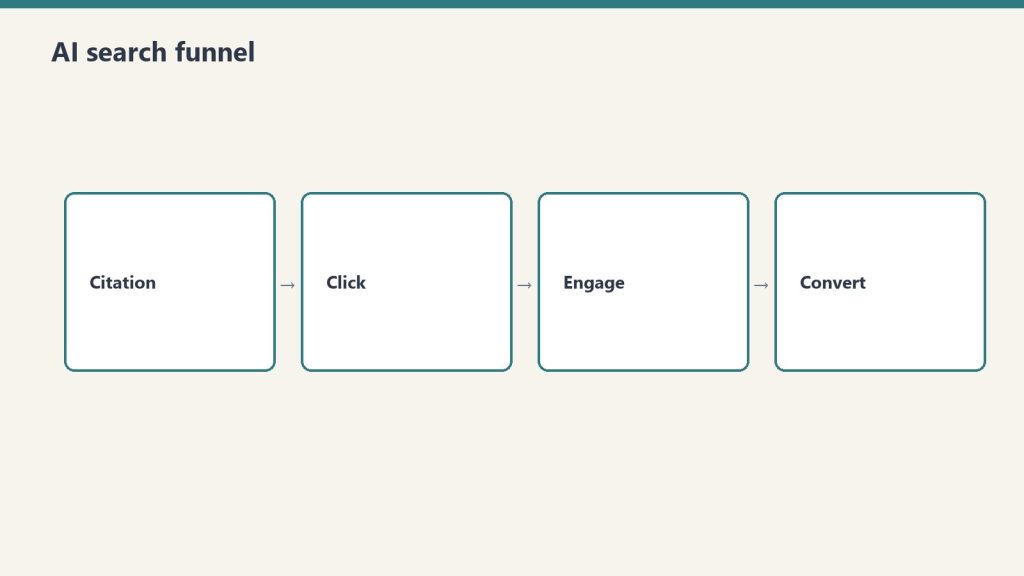
The AI pre-search reality for real estate: Gartner projects up to 25% of traditional search volume will migrate to AI tools by the end of 2026. In real estate, this means buyers and sellers are asking ChatGPT, Perplexity, and Google AI Overviews questions like “What’s the best neighborhood in [city] for families with young kids and walkable schools?” and “How competitive is the [city] real estate market for buyers right now?” — before they open a browser tab, before they visit Zillow, and before they contact an agent. The agent whose content is cited in those answers enters the consideration set at the very beginning of the buyer’s journey.
Why AI Citation Matters More Than Position 1 for Real Estate
Traditional real estate SEO chased position 1 rankings for local keywords. AI citation operates differently: it targets the research-phase questions that precede any specific property or agent search. A buyer who asks ChatGPT “what is [neighborhood] like for a family moving from out of state” is not yet searching for a property. They’re building a mental model of the market. The agent cited as the authoritative source on that neighborhood during this phase establishes credibility before any competitor has been considered.
According to Digital Agent Club’s 2026 real estate digital marketing analysis, AI search queries in real estate are “full-sentence questions people actually ask out loud” — specifically neighborhood character, school quality, market competitiveness, and commute viability. These are exactly the questions that well-optimized neighborhood guides and market reports are built to answer.
How do real estate agents get cited in ChatGPT and Perplexity for neighborhood and market questions?
Real estate agents earn AI citations for neighborhood and market queries when their WordPress content combines: ranking in the top 20 organic results for the query (the access prerequisite), named geographic entity references that AI systems can verify (school district names, transit corridors, MLS board as data source, NAR terminology for market conditions), direct-answer speakable blocks targeting neighborhood character questions (“what is [neighborhood] known for” and “what are the schools like in [neighborhood]”), and FAQPage JSON-LD schema making Q&A pairs machine-parseable. National portals have generic neighborhood pages. Local agents have genuine local knowledge encoded in entity-rich, schema-structured content — which is exactly what AI systems prefer to cite.
The Four Real Estate Content Types That Earn AI Citations
1. Neighborhood Character Guides
The most AI-citable real estate content directly answers “what is [neighborhood] like?” — the question buyers ask AI before they search for properties. Guides with named school entities, commute corridor references, community character description, and price range context are machine-verifiable by AI systems against geographic and institutional data. A guide that says “Oakwood Heights is served by Lincoln Elementary (GreatSchools rating 8/10), is 22 minutes to downtown via I-90, and has a median home price of $487K per NWMLS Q1 2026 data” provides entity anchors that AI systems can cite with confidence.
2. Market Condition Analyses
Buyers ask AI “is [city] a buyer’s or seller’s market right now?” Market report content with specific MLS data, defined market condition criteria (months of supply, list-to-sale ratio), and a dated “last updated” date is AI-citable because it provides a verifiable, sourced, current answer to a question buyers actively ask during market research. Undated or unverified market commentary is not citable — AI systems evaluate content freshness before surfacing market data.
3. Buyer and Seller Process Explainers
Process questions are high-citation opportunities: “how does the home buying process work,” “what is earnest money,” “how do real estate contingencies work,” “what does days on market mean.” These are universal questions with verifiable, direct answers that don’t require geographic specificity. FAQPage schema targeting these questions earns both People Also Ask placements and AI citation for the specific process queries buyers ask AI assistants during active home search.
4. Local Market Comparison Content
“[Neighborhood A] vs [Neighborhood B]” comparison content is highly AI-citable because it directly answers one of the most common pre-decision buyer questions. AI systems surface content that provides the specific comparison a buyer is asking about — school district comparison, price difference, commute difference, neighborhood character comparison. An agent who writes authentic, data-backed neighborhood comparison content owns a content type that neither national portals nor most local competitors are producing.
Geographic entity injection, speakable blocks targeting neighborhood AI queries, and FAQPage schema are the three GEO deliverables applied to real estate WordPress content through WordPress content optimization for real estate agents via SiteBoost.
Frequently Asked Questions
Which AI systems matter most for real estate agent visibility?
Google AI Overviews has the largest reach — appearing at the top of results for real estate research queries including neighborhood character, school quality, and market condition searches. Perplexity is increasingly used by out-of-state buyers doing research before relocation because it cites sources inline, giving cited agents visible brand exposure. ChatGPT’s growing search integration captures the “which neighborhood should I consider” research questions that precede any specific search. All three evaluate similar content signals: named geographic and institutional entity references, direct-answer formatting, and FAQPage schema. Optimizing for one effectively optimizes for all.
Can a new real estate agent website earn AI citations?
Yes, for specific hyper-local queries with low competition. A new agent website with one deeply optimized, entity-rich neighborhood guide for a specific neighborhood can rank in positions 11–20 for that neighborhood’s character and school queries — and earn AI citations for those specific queries even without broad domain authority. The AI citation selection among ranking pages rewards content quality signals — entity depth, direct-answer structure, schema — not just ranking position. Starting with your primary farm area and building one genuinely authoritative guide is more effective than thin coverage of many neighborhoods.
How is AI search optimization different from traditional real estate SEO?
Traditional real estate SEO prioritized local signals — Google Business Profile, NAP consistency, location-specific pages, and review volume. AI search evaluates content quality signals: named geographic entities (school district names, transit references, MLS board citations), direct-answer formatting (speakable blocks with 40–60 word direct answers), and machine-readable schema (FAQPage, LocalBusiness, RealEstateListing). Traditional SEO remains the prerequisite — 97% of AI citations come from pages already ranking organically. But among ranking pages, AI citation requires the additional entity and schema layer that most real estate agents’ WordPress content currently lacks.
Sources: Digital Agent Club, “Real Estate Digital Marketing 2026” (November 2025); Luxury Presence, “194 Best Real Estate Keywords for 2025–2026”; Gartner 2025–2026 search migration projections (cited via Digital Agent Club); LLMrefs, “Answer Engine Optimization: The Complete Guide for 2026”
How B2B SaaS Companies Get Cited by AI When Buyers Research Software (Before They Demo)
By Tygart Media Updated: October 5, 2026
The pre-demo AI research phase: According to Gartner’s March 2026 sales survey, 67% of B2B buyers prefer a rep-free experience, up from 61% in June 2025. In practice, this means buyers spend the early evaluation phase asking AI assistants — not sales reps — the research questions that shape their shortlist. “What are the best project management tools for a remote engineering team?” “How does [category] software typically integrate with Salesforce?” “What should I look for when evaluating [software type]?” The SaaS company whose content is cited in those AI answers enters the consideration set before any human contact — and with trust already established.
The Mechanics of SaaS AI Citation
The mechanics of SaaS AI citation.
ChatGPT, Perplexity, and Google AI Overviews all use retrieval-augmented generation — they search the web, retrieve candidate pages, and evaluate those pages before synthesizing an answer. For SaaS queries, the evaluation criteria are specific: does the content name integration ecosystem entities that the AI can verify? Does it have direct-answer structure for the question being asked? Does it have FAQPage schema that makes Q&A pairs machine-parseable? Does it rank in the top 20 organic results — the prerequisite for AI citation consideration?
SaaS companies that earn AI citations at the research stage have a meaningful advantage in the sales cycle. A buyer who encountered your content through a ChatGPT answer about their software evaluation criteria arrives at your demo request form with established familiarity — not as a cold prospect.
What makes B2B SaaS content get cited by ChatGPT and Perplexity during software research?
B2B SaaS content earns AI citation during software research when it combines: organic ranking in the top 20 results for the query (the access prerequisite), named integration entity references that AI systems can verify (Salesforce, HubSpot, Slack, Zapier, Microsoft Teams, Workday), direct-answer speakable blocks addressing the evaluation criteria buyers ask about (implementation timeline, security certifications, pricing model, integration depth), and FAQPage JSON-LD schema making consideration-stage Q&A pairs machine-parseable. Content that answers “what should I look for in [software category]” with specific, verifiable criteria earns AI citation at the exact moment buyers are forming their evaluation shortlist.
The Four Content Types That Earn SaaS AI Citations
The four content types that earn SaaS AI citations.
1. Buyer Criteria Content
“What to look for in [software category]” content with specific named criteria — security certifications (SOC 2 Type II, ISO 27001, GDPR compliance), integration ecosystem depth, pricing model (per seat vs usage-based vs flat rate), implementation timeline, and support SLA. These are the criteria buyers ask AI assistants to help them think through, and AI systems cite content that provides the most comprehensive, verifiable answer.
2. Integration Compatibility Content
“How does [category] integrate with [Salesforce/HubSpot/Slack]?” is one of the most-asked B2B software evaluation queries in AI assistants. Content that answers this with specific integration depth — bidirectional sync vs one-way, native vs API vs Zapier, what data fields sync, what triggers are available — earns AI citation for those specific integration queries.
3. Comparison Framework Content
“How to compare [software category] vendors” content with an explicit evaluation framework — a table of criteria, a scoring methodology, questions to ask during demos — is highly citable by AI because it provides the structured answer buyers need before they start shortlisting. AI systems surface this content when buyers ask “how do I evaluate [software type]?”
4. ROI and Implementation Content
“How long does [software type] take to implement?” and “What ROI should I expect from [software category]?” are decision-proximate questions — buyers asking them are close to making a choice. Content that provides specific, honest answers with cited research data earns AI citation at the moment buyers are finalizing their shortlist.
The GEO optimization layer in WordPress content optimization for B2B SaaS companies through SiteBoost applies integration entity injection, speakable blocks targeting evaluation criteria questions, and FAQPage schema to your existing SaaS blog content — building AI citation infrastructure across your published library.
Frequently asked questions.Which AI systems matter most for B2B SaaS visibility?
Google AI Overviews reaches the most total buyers because it appears directly in Google search results for software research queries. Perplexity is increasingly used for structured B2B research because it cites sources inline — giving cited SaaS companies visible brand exposure during the evaluation process. ChatGPT’s growing search integration (with ads introduced in late 2025) is growing rapidly among enterprise buyers who prefer conversational research. All three evaluate similar signals: named entity references, direct-answer structure, and FAQPage schema. Optimizing for one effectively optimizes for all.
Do G2 and Capterra reviews affect AI citation for SaaS?
Yes, indirectly. G2 and Capterra are high-authority domains that AI systems frequently cite for software comparisons. A SaaS company with strong G2 ratings and detailed review data benefits from AI citations to those third-party pages even when their own website isn’t directly cited. The combined strategy — owned content optimized for AI citation plus strong third-party review presence on G2 and Capterra — creates a citation surface area that makes it difficult for AI systems to discuss the software category without encountering your brand.
How quickly can SaaS content start earning AI citations after optimization?
For content already ranking in positions 1–20, AI citation eligibility is immediate after optimization is indexed — typically 2–4 weeks for Google’s crawlers to re-evaluate the updated content. The optimization signals AI systems look for — named entity references, FAQPage schema, direct-answer speakable blocks — are evaluated on each crawl. Content that was ranking but not being cited by AI often begins appearing in AI responses within one crawl cycle after the entity and schema optimization is applied.