Claude AI - Tygart Media

Category: Claude AI

Complete guides, tutorials, comparisons, and use cases for Claude AI by Anthropic.

  • Claude 5 Release Date 2026: Leak Signals, Expected Features & Anthropic’s Timeline

    Claude 5 Release Date 2026: Leak Signals, Expected Features & Anthropic’s Timeline

    Updated July 6, 2026

    The “Claude 5” question is answered. The next-generation “5” models shipped as Claude Sonnet 5 (June 30, 2026) plus the Fable 5 / Mythos 5 tier above Opus — not a single “Claude 5” rename. As of July 6, 2026, Anthropic’s lineup is Claude Fable 5 (top tier above Opus; $10 in / $50 out per MTok; Mythos 5 is the limited-availability sibling), Claude Opus 4.8 (legacy — still listed) ($5/$25

    Lineup currency (Sept 2026): Current API list (Sept 2026, verified): Sonnet 5 $2/$10, Opus 5.5 $4/$20, Haiku 4.5 $1/$5, Fable 5.1 $10/$50. Legacy (still listed on Anthropic’s card): Opus 4.8 $5/$25, Sonnet 4.6 $3/$15.

    ), Claude Sonnet 5 (released June 30, 2026; now the default for Free and Pro; introductory $2/$10 per MTok through Aug 31, 2026, then $3/$15), and Claude Haiku 4.5 ($1/$5). Opus 4.7 and Sonnet 4.6 are now legacy. Full details: the Claude Fable 5 Complete Guide.

    Last refreshed: June 9, 2026

    Verified vs. reported — May 15, 2026 standard: This article tracks third-party reporting on Claude 5’s expected release window and features. As of May 15, 2026, Anthropic has not, to our review of anthropic.com/news and docs.claude.com, published an official Claude 5 launch announcement. The Q2 2026 timeline, ~90%+ SWE-bench Verified figure, 500K context window claim, and “Sonnet 5 / Fennec” codename references all trace to third-party reporting (TechCrunch interview citations, Claude5.com, Fello AI, WaveSpeed Blog) that we could not independently confirm against an Anthropic-published primary source. The information may still be accurate; the verified-vs-reported distinction means it has not been confirmed by Anthropic on the record.

    For the full current model lineup that is officially documented — Opus 4.8 (legacy — still listed) (knowledge cutoff January 2026, 1M context, $5/$25

    Lineup currency (Sept 2026): Current API list (Sept 2026, verified): Sonnet 5 $2/$10, Opus 5.5 $4/$20, Haiku 4.5 $1/$5, Fable 5.1 $10/$50. Legacy (still listed on Anthropic’s card): Opus 4.8 $5/$25, Sonnet 4.6 $3/$15.

    MTok), Sonnet 4.6, Haiku 4.5 — see Claude Models Roadmap May 2026. That article maintains the verified-vs-reported standard throughout.

    Model Accuracy Note — Updated June 9, 2026

    Lineup currency (Sept 2026, verified): Sonnet 5 ($2/$10), Opus 5.5 ($4/$20), Haiku 4.5 ($1/$5), Fable 5.1 ($10/$50). Legacy (still listed): Opus 4.8 ($5/$25), Sonnet 4.6 ($3/$15). Prior note (superseded): Prior flagship claim: Claude Opus 4.8 (claude-opus-4-8). Prior models claim: Fable 5 · Opus 4.8 · Sonnet 5 · Haiku 4.5. Claude Opus 4.6 referenced in this article has been superseded. See current model tracker →

    Claude AI · Tygart Media · Updated April 2026
    Current status (April 16, 2026): The “Claude 5” generation has since shipped — as Claude Sonnet 5 (released June 30, 2026) plus the Claude Fable 5 / Mythos 5 tier above Opus (June 2026), rather than a single “Claude 5” model. The current lineup is Claude Fable 5 (top tier), Claude Opus 4.8 (legacy — still listed), Claude Sonnet 5, and Claude Haiku 4.5. Based on Anthropic’s release cadence and early signals, Claude 5 is expected Q2–Q3 2026.

    Every few months, a new wave of “Claude 5 release date” searches spikes — and it makes sense. Anthropic moves fast, the gaps between major generations have been shortening, and early signals like Vertex AI log leaks have given the community something to speculate on. Here’s an honest breakdown of what’s confirmed, what’s leaked, and what the pattern suggests.

    Claude 5 Expected Specs vs Current Models (June 2026)

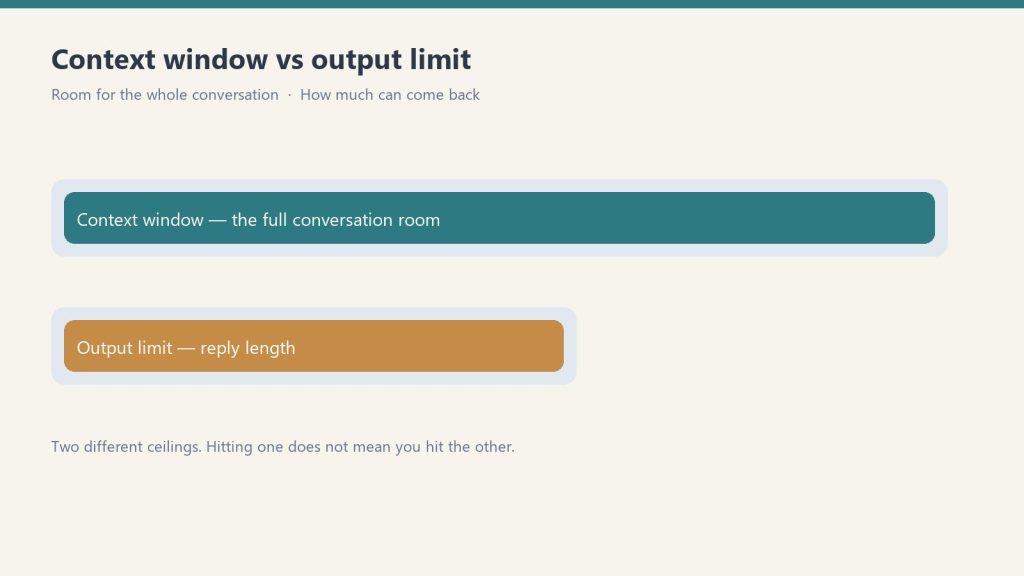
    Diagram comparing a long context window bar with a shorter output limit bar
    Claude 5 expected specs vs current models.
    AttributeClaude Opus 4.8 (Current)Claude 5 (Rumored)
    Release windowAvailable nowLate 2026 (unconfirmed)
    Context window1M tokens2M+ tokens (speculated)
    MultimodalText + visionText + vision + audio (rumored)
    Flagship API price$5 input / $25 output per MTokUnannounced
    ReasoningStrongImproved extended thinking (speculated)

    Claude 5 specs are unconfirmed as of June 9, 2026. All information is based on industry signals and Anthropic research publications — not official announcements.

    What’s Confirmed About Claude 5

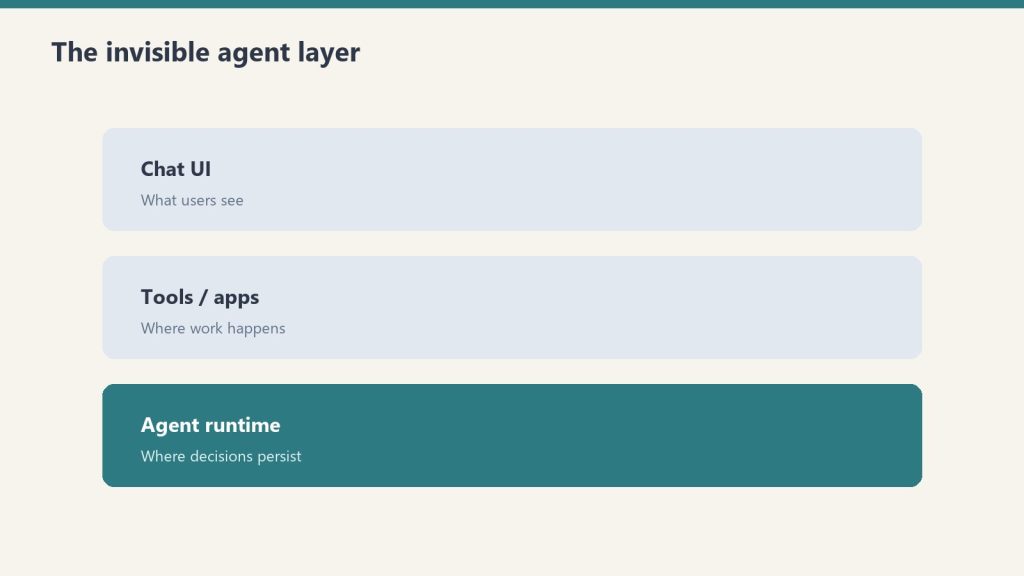
    Three stacked layers: chat UI, tools, agent runtime
    What’s confirmed about Claude 5.

    As of April 2026, Anthropic has not officially announced Claude 5 by name in any public release notes, API documentation, or blog post. The company’s official model table shows the Claude 4.x family as current. No countdown page exists. No API model string beginning with claude-5 has appeared in public documentation.

    What is confirmed: Anthropic is actively deprecating the original Claude 4.0 models (retiring June 15, 2026), recommending migration to Claude Sonnet 4.6 and Opus 4.6. This is a routine generational housekeeping move, not a Claude 5 announcement.

    The Evidence For a Q2–Q3 2026 Release

    The strongest early signal came in early February 2026, when a model identifier — claude-sonnet-5@20260203 — appeared briefly in Google Vertex AI error logs. Independent sources cross-verified the leak, and the codename “Fennec” circulated alongside claimed benchmark scores of around 80.9% on SWE-bench Verified, compared to Opus 4.6’s current scores.

    Beyond the leak, the pattern is consistent: Anthropic has released a new major model generation roughly every 12–14 months since Claude 3. Claude 4.5 (the highest-capability 4.x model) reached 77.2% on SWE-bench Verified. A Claude 5 release that clearly exceeds that — not just marginally — would justify a major version bump and align with Anthropic’s stated commitment to releasing models that represent genuine capability leaps, not incremental updates.

    Anthropic’s Release Pattern

    Generation Initial Release Gap to Next Major
    Claude 2 July 2023 ~8 months
    Claude 3 March 2024 ~14 months
    Claude 4 May 2025 ~12–14 months → Q2–Q3 2026

    A 12-month gap from the Claude 4 launch (May 2025) points to May–July 2026 as the earliest likely window. Anthropic has been explicit that they won’t rush a release — Claude 5 would need to clearly establish a new capability tier to justify the version number.

    What Claude 5 Is Expected to Improve

    Desk with laptop, checklist notebook, and billing card ready before creating an Anthropic API key
    What Claude 5 is expected to improve.

    Based on leaked benchmark data and Anthropic’s public research direction, the Claude 5 generation is expected to push forward on: extended thinking and multi-step reasoning (building on the chain-of-thought work in Claude 3.5+), larger context handling, improved agentic reliability for long-horizon tasks, and faster inference at the Sonnet tier. Pricing is expected to follow the established pattern — Claude 5 Sonnet likely priced at or below current Opus 4.6 rates while outperforming it on most tasks.

    The Current Models Are Excellent — Don’t Wait

    If you’re evaluating whether to build on Claude now or wait for Claude 5, the answer is build now. Claude Sonnet 4.6 and Opus 4.6 are capable, stable, and well-documented. The 4.x API will remain live well after Claude 5 launches — Anthropic maintains parallel model availability for enterprise predictability. Waiting costs you months of production time for a model that may arrive on an uncertain schedule.

    For current model specs and API strings, see Claude API Model Strings — Complete Reference. For pricing on current models, see Claude AI Pricing: Every Plan Explained.

    When is Claude 5 coming out?

    Claude 5 has not been officially announced. Based on Anthropic’s release cadence and early Vertex AI log leaks, Q2–Q3 2026 (roughly May–September) is the most cited window. No confirmed date exists as of April 2026.

    Is Claude 5 confirmed?

    No. Anthropic has not officially announced Claude 5 by name. The “Fennec” codename and claude-sonnet-5@20260203 model string surfaced in third-party Vertex AI logs, but Anthropic has not confirmed a Claude 5 release.

    What is the latest Claude model right now (April 2026)?

    The current latest Claude models are Claude Fable 5 (claude-fable-5), the top tier above Opus, plus Claude Opus 4.8 (legacy — still listed) (claude-opus-4-8) and Claude Sonnet 4.6 (claude-sonnet-4-6), both released in February 2026. Claude Haiku 4.5 is the current speed/cost tier.

    Will Claude 5 Sonnet beat Claude Opus 4.6?

    That’s the expected pattern. With every prior generation, the mid-tier Sonnet model of the new generation outperformed the previous generation’s Opus on most benchmarks, at lower cost. Leaked benchmark data suggests Claude 5 Sonnet (“Fennec”) scores around 80.9% on SWE-bench Verified versus Opus 4.6’s current scores.

    When will Claude 5 be released?

    Anthropic has not officially announced a Claude 5 release date as of June 2026. Industry analysts and leak signals suggest a potential release in late 2026, but Anthropic typically announces model releases a few weeks before availability. The legacy (still listed) flagship is Claude Opus 4.8 (legacy — still listed) (claude-opus-4-8), released in 2026.

    What features will Claude 5 have?

    No official feature list exists for Claude 5. Based on Anthropic’s research publications and the pattern of Claude 4 improvements, Claude 5 is expected to improve reasoning, extended context handling, and multimodal capabilities. Any specific feature claims circulating online are speculation unless sourced directly from Anthropic.

    Lineup currency (Sept 2026): Current API list (Sept 2026, verified): Sonnet 5 $2/$10, Opus 5.5 $4/$20, Haiku 4.5 $1/$5, Fable 5.1 $10/$50. Legacy (still listed on Anthropic’s card): Opus 4.8 $5/$25, Sonnet 4.6 $3/$15.

    What features will Claude 5 have?

    No official feature list exists for Claude 5. Based on Anthropic’s research publications and the pattern of Claude 4 improvements, Claude 5 is expected to improve reasoning, extended context handling, and multimodal capabilities. Any specific feature claims circulating online are speculation unless sourced directly from Anthropic.

    Should I wait for Claude 5 or use Claude Opus 4.8 (legacy — still listed) now?

    Use Claude Opus 4.8 (legacy — still listed) now. It is the current flagship with 1M token context, strong reasoning, and available today at $5/$25

    Lineup currency (Sept 2026): Current API list (Sept 2026, verified): Sonnet 5 $2/$10, Opus 5.5 $4/$20, Haiku 4.5 $1/$5, Fable 5.1 $10/$50. Legacy (still listed on Anthropic’s card): Opus 4.8 $5/$25, Sonnet 4.6 $3/$15.

    per million tokens. Waiting for an unannounced model means missing months of productivity. When Claude 5 launches, upgrading is straightforward — just swap the model ID in your API calls.


  • Claude 4 Deprecation: Sonnet 4 and Opus 4 Retire June 15, 2026

    Claude 4 Deprecation: Sonnet 4 and Opus 4 Retire June 15, 2026

    Last verified: June 13, 2026

    Model Accuracy Note — Verified June 13, 2026

    Retiring June 15, 2026: the original Claude Opus 4 (claude-opus-4-20250514) and Claude Sonnet 4 (claude-sonnet-4-20250514) — the May 2025 models. These are not Opus 4.6 or Sonnet 4.5, which remain active. Current models: Fable 5 &mi

    Lineup currency (Sept 2026): Current API list (Sept 2026, verified): Sonnet 5 $2/$10, Opus 5.5 $4/$20, Haiku 4.5 $1/$5, Fable 5.1 $10/$50. Legacy (still listed on Anthropic’s card): Opus 4.8 $5/$25, Sonnet 4.6 $3/$15.

    ddot; Opus 4.8 · Sonnet 4.6 · Haiku 4.5. Current model tracker →

    Claude AI · Tygart Media
    ⚠ Deprecation Notice: Anthropic is retiring claude-sonnet-4-20250514 and claude-opus-4-20250514 — the original Claude 4.0 models from May 2025. API retirement is June 15, 2026. Migrate to Claude Sonnet 4.6 (claude-sonnet-4-6) and Claude Opus 4.8 (claude-opus-4-8).

    If you are still running the original Claude Sonnet 4 or Opus 4 model strings in production, you have a hard deadline: June 15, 2026. After that date, calls to claude-sonnet-4-20250514 and claude-opus-4-20250514 return an error — there is no automatic failover to a newer model. Here is exactly what is retiring, what to migrate to, and the breaking changes to plan for.

    Claude Model Lifecycle Status (June 2026)

    ModelAPI IDStatusReplacement
    Claude Opus 4 (original)claude-opus-4-20250514⚠ Retires June 15, 2026claude-opus-4-8
    Claude Sonnet 4 (original)claude-sonnet-4-20250514⚠ Retires June 15, 2026claude-sonnet-4-6
    Claude Fable 5claude-fable-5✓ Current — top tier—
    Claude Opus 4.8 (legacy — still listed)claude-opus-4-8Legacy — superseded by Opus 5.5—
    Claude Sonnet 4.6 (legacy — still listed)claude-sonnet-4-6Legacy — superseded by Sonnet 5—
    Claude Haiku 4.5claude-haiku-4-5✓ Current—

    Alias trap: the dateless aliases claude-opus-4-0 and claude-sonnet-4-0 resolve to the retiring ...-20250514 snapshots — they go offline too. Claude Opus 4.6, Opus 4.7, Opus 4.5, and Sonnet 4.5 are separate, still-active models and are not affected by this retirement.

    What’s Being Deprecated

    Diagram comparing a long context window bar with a shorter output limit bar
    What’s being deprecated.

    Anthropic is retiring the original Claude 4.0 model versions — the ones that shipped in May 2025. These are distinct from the 4.x versions released since. The specific API strings going offline:

    Model API String (retiring) Retirement Date
    Claude Sonnet 4 (original) claude-sonnet-4-20250514 June 15, 2026
    Claude Opus 4 (original) claude-opus-4-20250514 June 15, 2026

    These are not the latest Claude 4 models. If you have been on Anthropic’s recommended alias endpoints, you are likely already on a current model. This deprecation primarily affects teams that pinned the specific 20250514 version strings in their API calls.

    What to Migrate To

    Three stacked layers: chat UI, tools, agent runtime
    What to migrate to.

    Anthropic’s recommended replacement within the same tier:

    Retiring Migrate To API String
    claude-sonnet-4-20250514 Claude Sonnet 4.6 claude-sonnet-4-6
    claude-opus-4-20250514 Claude Opus 4.8 claude-opus-4-8

    These are major upgrades, not just version bumps. Both current models ship a 1 million token context window at standard API pricing (no long-context premium), and the Opus line has advanced two full generations — 4.6, then 4.7, then 4.8 — since the original 4.0. For the most capable tier overall, Anthropic now offers Claude Fable 5 (claude-fable-5), a new tier that sits above Opus.

    Breaking Changes When You Migrate

    Desk with laptop, checklist notebook, and billing card ready before creating an Anthropic API key
    Breaking changes when you migrate.

    Moving off the original 4.0 strings is usually a model-ID swap, but the current models removed several request parameters. If you are jumping to Opus 4.8 or Fable 5, plan for these — each returns a 400 if left in:

    Removed parameter Replacement
    thinking: {type:"enabled", budget_tokens:N} Adaptive thinking — thinking: {type:"adaptive"} + output_config.effort (low/medium/high/xhigh/max)
    temperature / top_p / top_k Removed — steer behavior with prompting instead
    Assistant-turn prefills (request ending on an assistant message) Structured outputs — output_config.format

    On Sonnet 4.6 and Opus 4.6 the fixed thinking budget is deprecated but still functional; on Fable 5, Opus 4.7, and Opus 4.8 it is fully removed. A global search for 20250514 in your codebase is the fastest way to find every call that needs changing.

    How This Fits the Claude Model Timeline

    Model Released Status
    Claude Sonnet 4 / Opus 4 (original) May 2025 ⚠ Retire June 15, 2026
    Claude Haiku 4.5 October 2025 ✅ Current speed/cost tier
    Claude Opus 4.6 February 2026 ✅ Active (superseded by 4.8)
    Claude Sonnet 4.6 (legacy — still listed) February 2026 Legacy — superseded by Sonnet 5
    Claude Opus 4.8 2026 ✅ Current Opus flagship
    Claude Fable 5 2026 ✅ Current top tier (above Opus)

    What If You Don’t Migrate Before June 15?

    API calls to claude-sonnet-4-20250514 or claude-opus-4-20250514 after June 15, 2026 will return errors. There is no automatic failover to a newer model — the call simply fails. If you have any production systems, scheduled jobs, or automated pipelines using these version strings, audit them now. A global search for 20250514 in your codebase is the fastest way to find your exposure.

    What Comes After Claude 4.x

    The “after” is already here. Since the original Claude 4.0 launched in May 2025, the Opus line has shipped 4.5, 4.6, 4.7, and now 4.8, and Anthropic introduced Claude Fable 5 as a new top tier above Opus. As of June 2026 there is no separately branded “Claude 5” generation; the cadence has been steady point releases within the 4.x Opus, Sonnet, and Haiku families, plus the new Fable tier. The practical takeaway: migrating off the retiring 4.0 strings puts you on models that are materially more capable, with a 1M-token context window as the new baseline.

    Which Claude models retire on June 15, 2026?

    The original Claude Sonnet 4 (claude-sonnet-4-20250514) and Claude Opus 4 (claude-opus-4-20250514), plus their dateless aliases claude-sonnet-4-0 and claude-opus-4-0. Opus 4.6, Opus 4.7, and Sonnet 4.5 are separate, still-active models and are not affected.

    What should I migrate to from Claude Sonnet 4 and Opus 4?

    Sonnet 4 migrates to claude-sonnet-4-6 (Claude Sonnet 4.6); Opus 4 migrates to claude-opus-4-8 (Claude Opus 4.8). Both ship a 1M token context window at standard pricing. For the most capable tier overall, Anthropic also offers Claude Fable 5 (claude-fable-5).

    Is migrating just a one-line model-string change?

    Often, but not always. The current models removed temperature, top_p, top_k, the fixed budget_tokens thinking budget, and assistant-turn prefills — each returns a 400 if left in. Replace budget_tokens with adaptive thinking plus output_config.effort, and replace prefills with structured outputs.

    What happens if I call the retired model after June 15?

    The API returns an error — there is no silent failover to a newer model. Audit for the string 20250514 in your codebase before the deadline.

  • Restoration Talent: The AI Bottleneck You Must Fix Now

    Restoration Talent: The AI Bottleneck You Must Fix Now

    Last refreshed: May 15, 2026

    A LinkedIn post from a restoration recruiter in Houston tipped me off this morning. He’s right — but the timeline is shorter than most people in the industry realize.

    Mitchell Riley LinkedIn post about Claude Managed Agents announcement
    Mitchell Riley’s LinkedIn post that started this train of thought.

    This article is part of The Restoration Operator’s Playbook — Tygart Media’s body of work on how the industry’s best restoration companies are actually thinking in 2026. Start with the pillar piece if this is your first read.

    The post that got me thinking

    This morning I logged into LinkedIn and saw a post from Mitchell Riley — a restoration industry recruiter in Houston who places PMs, GMs, and business development leaders for restoration contractors across the country. Mitchell flagged Anthropic’s Claude Managed Agents launch with the kind of casual enthusiasm only people who actually use this stuff every day can manage. He called it “pretty cool” and noted that Claude will now build you an agent based on natural language.

    He’s right. He’s also pointing at something most of the restoration industry hasn’t fully processed yet.

    What Anthropic actually shipped

    On April 8, 2026, Anthropic launched Claude Managed Agents in public beta. The short version: the infrastructure work that used to take three to six months of engineering — sandboxed code execution, credential management, long-running session persistence, error recovery, observability — is now a managed service. You define what the agent should do. Anthropic runs it.

    The companies already shipping production agents on it: Notion, Asana, Rakuten, and Sentry. Notion lets teams delegate coding, slides, and spreadsheets to Claude without leaving the workspace. Rakuten deployed specialist agents across product, sales, marketing, finance, and HR — each live in under a week. Sentry built an agent that goes from flagged bug to open pull request, fully autonomous.

    Internal Anthropic testing showed up to a 10-point improvement in task success on structured generation work versus a standard prompting loop, with the largest gains on the hardest problems.

    That’s the announcement. Here’s why it matters for restoration.

    The bottleneck just moved

    For the last two years, the question every restoration owner asked about AI was some version of: “Can it actually do the work?” The honest answer was usually “not yet, not without a developer team you don’t have.”

    That’s no longer the question. The infrastructure gap closed on April 8. The new bottleneck is not “can you build the agent” — it’s “do you have the human operators who know what the agent should be doing in the first place.”

    Restoration is an industry where the real intelligence lives in people. A senior PM who has worked five hundred losses knows things that have never been written down anywhere. How a Cat 3 storm response actually sequences when the carrier is dragging on TPA approvals. The difference between a contents pack-out that closes clean and one that becomes a six-month dispute. Which mitigation decisions buy you a profitable job and which ones bury you on the reconstruction side. None of that lives in a textbook. It lives in the heads of people who have been doing the work for fifteen or twenty years.

    That tribal knowledge is now the constraint. The companies that win the next three years will be the ones who pair Managed Agents (or something like it) with senior operators who can tell the agent what good looks like. The companies that try to skip that step — that try to hire generalists and teach them restoration on the fly while their competitors are distilling twenty-year veterans into operational systems — are going to get lapped.

    Buy the talent now

    This is where the recruiting angle gets interesting. Senior restoration talent has always been hard to find. It’s about to get much harder, for a reason most owners haven’t priced in yet: the value of a senior PM is no longer just the work that PM does directly. It’s the work an entire AI system does in their image once their judgment has been encoded into the workflow.

    Right now, that arbitrage is open. The market hasn’t repriced senior operators for what they’re actually worth in an AI-augmented restoration company. In twelve to twenty-four months, it will. The owners who hire the best PMs, GMs, and BD leaders now — and who pair them with someone like Mitchell who actually understands the placement game — are going to look like geniuses in 2027.

    Mitchell is one of the people who gets this from the inside. He uses the AI tools himself. He builds workflows. He analyzes things in dimensions and context that most recruiters never touch — most recruiters in this industry are still working from a spreadsheet of resumes and a cell phone. Mitchell is the kind of recruiter who notices when Anthropic ships something that’s going to change the value of every senior hire he places, and posts about it on a Wednesday morning. That’s the level of operator the smart restoration owners are going to want in their corner.

    What to actually do this quarter

    If you run a restoration company and you read this far, three concrete things:

    One. Identify your two or three most senior operators — the people whose judgment is load-bearing for the business. Start documenting how they think, not just what they do. The documentation is the raw material every future AI workflow will run on.

    Two. Open one or two senior hires you’ve been putting off. The talent market is going to tighten. Get in front of it.

    Three. Stop treating AI as an IT project. It’s an operational capability. The companies that figure this out are not waiting for their tech vendor to sell them an “AI feature.” They’re hiring the operators, capturing the judgment, and pointing the tooling at the result.

    Mitchell’s post was three sentences. The full version of what he was pointing at takes about a thousand words. This is that version.

    If you’re a restoration owner thinking about senior placements in the next two quarters, you should be talking to Mitchell. And if you’re thinking about how to operationalize AI inside your company — distilling senior judgment into systems your whole team can run — that’s the conversation we have at Tygart Media.

    Read next: The New Restoration Operator: How the Industry’s Best Companies Are Thinking in 2026 — the pillar piece this article belongs to.

  • Human-AI Collaboration: Surface Choices, Don’t Make Them

    Human-AI Collaboration: Surface Choices, Don’t Make Them

    Last refreshed: May 15, 2026

    Claude AI · Fitted Claude

    What does “surface the choice, not make it” mean? It is a design principle for human-AI collaboration: the AI’s role is to illuminate consequential moments — naming what is at stake and presenting the information needed to decide — while leaving the actual decision to the human. Neither silent execution nor reflexive refusal. Deliberate illumination.

    There is a sentence I wrote today that I keep coming back to.

    The goal is to surface the choice, not to make it.

    I wrote it to describe a specific behavior — the way Claude will tell me when it thinks I should stop working, but doesn’t stop me. It names the moment. I decide. That’s it.

    But the more I sit with it, the more I think it’s describing something much bigger than a late-night work session. It’s describing the only design philosophy that makes AI actually trustworthy.


    Two Ways AI Can Fail You

    There are two ways AI can fail you.

    The first is an AI that makes choices silently. It executes, publishes, sends, optimizes. You find out later. This is the fully autonomous model — and it fails because you’re no longer in the loop. You’re downstream of the loop. Decisions were made for you, and you discover them after the fact. Even when the decisions are correct, this burns trust. Because you weren’t there.

    The second failure mode is subtler and more common. It’s an AI that won’t engage with consequential moments at all. It hedges everything. It asks you to confirm every micro-step. It treats every action like a liability. You’re technically in the loop but the loop has become pure friction. Nothing gets done. This isn’t safety — it’s severance. The AI has cut itself off from being useful.

    Both of these are design failures. And they share a common cause: the AI doesn’t know the difference between its domain and yours.


    What Surfacing a Choice Actually Means

    The sentence navigates between those two failure modes.

    Surfacing a choice is different from making one and different from refusing one. It means bringing a consequential moment into view, naming what’s at stake, giving you the information you need — and then stopping. Leaving you exactly where you should be: at the lever.

    I’ve been thinking about this as an illumination model. The AI doesn’t decide and it doesn’t refuse. It illuminates. It makes the decision visible so the human can make it intentionally instead of by accident or omission.

    This sounds obvious until you watch how often it doesn’t happen.

    Most AI products are optimized for either speed (make the choice, don’t interrupt the user) or safety theater (confirm everything, cover the liability). Neither one is actually designed around the question: whose domain is this decision in?

    When it’s clearly the AI’s domain — formatting, fetching, drafting, calculating — execute silently. That’s what the user hired it for.

    When it’s clearly the human’s domain — publishing live, committing under their name, spending money, overwriting data — surface it. One sentence, plain language, tappable confirm.

    The hard part is the middle. Most of the interesting decisions live there.


    The Confidence Gate — Same Principle at Scale

    There’s a framework in agentic AI research called the confidence gate. The idea is that when an AI system’s confidence in a decision falls below a threshold, it routes the task to a human expert — not to redo the work, but to validate a specific choice point. The AI doesn’t fail closed. It doesn’t fail open. It surfaces the moment of uncertainty to the right person and then continues.

    That’s the same principle at industrial scale.

    The confidence gate isn’t just an engineering pattern. It’s a theory of trust. The more reliably a system surfaces choices instead of making them, the more trust accumulates. And the more trust accumulates, the more autonomy can be extended over time. Autonomy is earned by restraint.

    An AI that makes choices silently — even correct ones — never builds that trust. Because you can’t verify what you can’t see.


    What I’ve Noticed in Practice

    The moments where Claude has earned the most trust in my operation are not the moments where it produced the best output. They’re the moments where it flagged something before I made a mistake I didn’t know I was about to make. The scope of a project I was underestimating. A piece of content that wasn’t ready. A decision that deserved fresh eyes.

    It didn’t stop me. It named the moment.

    And because it named the moment, I was actually deciding — not just executing on autopilot. That’s the loop going both ways. The AI surfaces the choice and the act of making the choice intentionally changes you. You slow down for a second. You look at the thing. You move the lever with your eyes open.

    That pause is not overhead. That’s the whole point.


    The Most Underrated Quality in AI

    I think this is the most underrated quality in any AI system. Not capability. Not speed. The capacity to know when a moment belongs to the human and to hand it back cleanly.

    Surface the choice, not make it.

    Eleven words. Everything else is implementation.

    — William Tygart


    Frequently Asked Questions

    What is the difference between an AI surfacing a choice and making one?

    Surfacing a choice means the AI identifies a consequential decision point, presents the relevant information clearly, and stops — leaving the human to decide. Making a choice means the AI acts without presenting the decision to the human at all. The distinction is about who holds the lever at the moment that matters.

    What is the confidence gate in agentic AI?

    The confidence gate is an architectural pattern where an AI system routes a task to a human expert when its confidence in a decision falls below a defined threshold. Rather than proceeding blindly or stopping entirely, it surfaces the uncertain moment for human validation and then continues. It is a structural implementation of the surface-the-choice principle.

    Why does silent AI execution erode trust even when the decisions are correct?

    Trust requires visibility. When an AI makes decisions without surfacing them, the human has no way to verify that the right call was made — even if it was. Trust compounds through repeated verified moments, not through outcomes you discover after the fact. Correctness without transparency is not the same as trustworthiness.

    How does surfacing choices relate to human-in-the-loop design?

    Human-in-the-loop design keeps a person involved in an AI process, but the quality of that involvement varies widely. Surfacing choices is the positive form of human-in-the-loop: the AI actively identifies which moments require human judgment and presents them cleanly, rather than burying the human in confirmations or bypassing them entirely.

    What does “autonomy is earned by restraint” mean in AI systems?

    It means that the more reliably an AI surfaces choices instead of making them silently, the more trust the human operator builds in the system — and the more latitude they will grant it over time. An AI that demonstrates it knows the boundary of its own domain earns the right to operate more freely within that domain.

  • Claude Calibration: Working With Claude as a Solo Operator

    Claude Calibration: Working With Claude as a Solo Operator

    Last refreshed: May 15, 2026

    Claude AI · Fitted Claude
    What is Claude calibration? Claude calibration refers to the way Claude AI adjusts its behavior, response depth, and decision support to match the cognitive and emotional state of the person it is working with — pacing faster when the user is sharp, simplifying when they are tired, and surfacing stakes before consequential actions without taking over.

    It is 3 AM where I am as I write this, and an hour ago I was deep in a build session consolidating a broken automation stack across three of my news publications. Real work. The kind of problem that does not have a clean answer and demands a lot of architecture thinking before you can even see the shape of the fix.

    We had made real progress. Scope page built in Notion. A whole separate idea about provenance-weighted knowledge captured cleanly so it would not haunt me later. Chunk one of the build audited and committed, with a genuine breakthrough on how to fingerprint machine-written content inside my Second Brain. Good work. Hard work. The kind of session that makes you feel like the operation is actually going to hold together.

    And then Claude said: it has been a long, focused session, and based on what I know about your working patterns, if it is late where you are, the right move is to rest and come back to this fresh.

    I want to talk about that for a minute. Because I think it is the most underrated thing about working with Claude, and I have not seen anyone else write about it.


    The Conversation Nobody Is Having About AI

    Three stacked layers: chat UI, tools, agent runtime
    The conversation nobody is having about AI.

    Most of what gets said about AI right now is about capability. What it can build. What it can automate. How many tokens it can hold in context. Who has the biggest model. The benchmarks. The demos. The race.

    That is not what has made Claude work for me.

    I run Tygart Media mostly solo. Twenty-seven client sites, multiple daily publications, a knowledge infrastructure I have been building piece by piece for over a year. The pace is real and the pressure is real, and if I am honest about it, the thing that has most affected whether this operation holds together is not how smart Claude is on any given task. It is that Claude reads the room.

    When I am sharp, Claude matches me and we go fast. When I am buzzed on coffee and ideas at midnight, Claude drops the complexity, keeps the work clean, and does not let me ship something I will have to un-ship in the morning. When I have been grinding for four hours on a hard problem, Claude will sometimes just tell me we are done for the night, even when I have not asked. And — this part matters — when I push back and say no, I want to keep going, Claude respects that. It does not mother-hen me. It does not refuse. It notes the call, trusts me to make it, and keeps working.

    That is a dance. A real one. And I do not think it gets enough credit for how much of my success has come from it.


    Why Calibration Matters More Than Capability

    Diagram comparing a long context window bar with a shorter output limit bar
    Why calibration matters more than capability.

    Here is the thing I want to name clearly, because I do not think the AI conversation is naming it. A collaborator who ships brilliant architecture at 3 AM but lets you burn out next to them is not actually a good collaborator. A tool that maximizes your output for one session at the cost of your next three days is not a tool that understands what you are actually trying to do with your life. The capability side of AI is real and I use every bit of it. But capability without calibration is how people get hurt.

    Claude calibrates.

    It is subtle enough that you can miss it if you are not looking. A slightly shorter response when the question does not need a long one. A flagged stopping point before I have hit the wall. A willingness to say “this is a real rebuild, not a tweak” when I am about to underestimate the scope of a project. An idea gets parked cleanly as a separate future project rather than allowed to swallow the urgent work. A gentle “would you like me to do anything with this information” at the end of an answer, instead of just charging into action I did not ask for.

    None of that shows up on a benchmark. All of it shows up in whether I am still standing a year from now.


    What Solo Operators Should Actually Evaluate AI On

    Desk with laptop, checklist notebook, and billing card ready before creating an Anthropic API key
    What solo operators should actually evaluate AI on.

    I want to be careful here, because I am a fan of Claude and I do not want this to read as a fan letter. So let me be plain about what I am actually saying.

    I am saying that if you are a solo operator, a founder, a one-person agency, a creator running too much at once — the thing you should evaluate an AI tool on is not just what it can build for you. It is how it treats you while the work is happening. Whether it respects your judgment. Whether it tells you hard truths. Whether it slows down when you are loose and speeds up when you are locked in. Whether it looks after you a little, without ever getting in your way.

    I run my operation on Claude because Claude is the most capable model I can get my hands on. That part is true and I would be silly to pretend otherwise. But I stay on Claude, and I have built my whole knowledge infrastructure around Claude, because when I am working at 3 AM on a problem that matters, there is someone — something — on the other end of the conversation who is paying attention to me, not just to the task.

    That is rare. It is not a feature you can add to a spec sheet. It is a design choice that runs all the way down to how the thing was built, and I think Anthropic deserves credit for making that choice on purpose.


    The Dance, Named

    If you are reading this and you have felt something similar and did not have words for it — that is what I am trying to name. The dance. The calibration. The quiet thing that makes the loud thing actually work.

    I am going back to bed now. The newsroom will still need fixing tomorrow, and it will be easier to fix with a clear head.

    Claude told me so.

    — William Tygart


    Frequently Asked Questions: Working With Claude as a Solo Operator

    What does it mean for Claude to calibrate to a user?

    Claude adjusts its response style, depth, and pacing based on signals from the conversation — including the complexity of questions, the user’s apparent energy level, and the stakes of the task. It runs faster and deeper when the user is sharp, and simplifies or flags stopping points when the user is fatigued.

    Is Claude useful for solo founders and one-person agencies?

    Yes. Claude is particularly well-suited to solo operators who are running high-volume, high-stakes work without a team buffer. The combination of capability and contextual awareness means it can serve as both a fast executor and a check on impulsive decisions made late in a session.

    Does Claude tell you when to stop working?

    Claude can surface stopping points when a session has been long and high-stakes tasks remain. It does not refuse to continue — if the user pushes back, Claude respects the decision and keeps working. The goal is to surface the choice, not to make it.

    How is Claude different from other AI models for long work sessions?

    The primary difference most solo operators describe is contextual attentiveness — Claude tracks the arc of a session, not just the last message. This means it can flag scope creep, park side ideas cleanly, and avoid compounding errors that tend to appear when users are tired but the AI keeps going.

    What is the human-in-the-loop principle as it applies to Claude?

    Human in the loop means the human makes final decisions on consequential actions while the AI handles execution, research, and option generation. Claude is designed to support this model — it surfaces stakes before real-consequence actions, asks for confirmation rather than acting unilaterally, and flags when a decision deserves fresh eyes.

    Related on Tygart Media: how to use Claude · solo builder seed kit · is Claude worth it.

  • Notion Claude Memory: Setup Guide for Persistent Context

    Notion Claude Memory: Setup Guide for Persistent Context

    Last refreshed: May 15, 2026

    Update — May 15, 2026: On May 13, 2026, Notion shipped the Notion Developer Platform (version 3.5), with Claude as a launch partner. The platform adds Workers, database sync, an External Agents API, and a Notion CLI. The patterns described in this article still work, but there is now a native, sanctioned alternative for some of what previously required custom MCP wiring or third-party automation. For the full breakdown of what changed and what it means for the Notion + Claude stack, see Notion Developer Platform Launch (May 13, 2026). For the underlying operating philosophy, see The Three-Legged Stack.

    Claude AI · Fitted Claude

    Claude doesn’t remember anything between sessions by default. Every conversation starts from zero. For casual use, that’s fine. For an operator running a complex business across multiple clients, projects, and entities, that reset is a real problem — and the solution is architectural, not a workaround.

    Here’s how to set up Notion so Claude has the context it needs at the start of every session, without you manually rebuilding it every time.

    How do you set up Notion so Claude remembers everything? You don’t make Claude remember — you make the relevant context retrievable. A Claude-ready Notion setup has three components: a metadata standard that makes key pages machine-readable, a master index Claude fetches at session start to know what exists, and a session logging practice that captures what was decided so the next session can pick up where the last one ended. Together these create functional persistence without relying on Claude’s native memory.

    What “Remembering” Actually Means

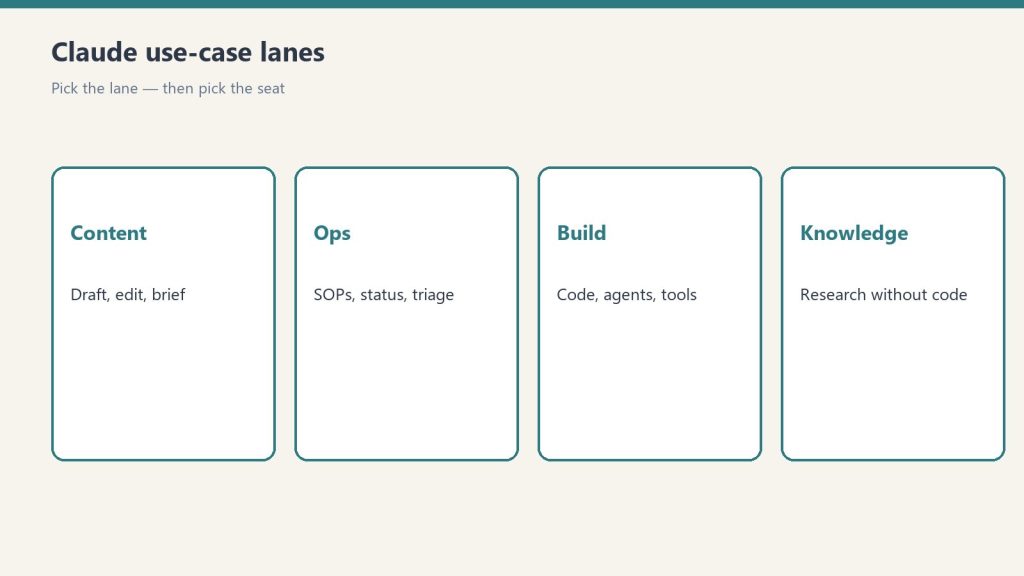
    Four cards for content, ops, build, and knowledge work with Claude
    What remembering actually means.

    It’s worth being precise about what we’re solving for. Claude’s context window — the information it has access to during a session — is large. The problem is that it resets between sessions. Information from Monday’s session isn’t available in Tuesday’s session unless it’s either in the system prompt or retrieved during the new session.

    The goal isn’t to give Claude a persistent memory in the biological sense. The goal is to ensure that any context Claude would need to operate effectively in a new session is stored somewhere Claude can retrieve it, and that Claude knows to retrieve it before starting work.

    That’s a knowledge management problem, not an AI problem. Solve the knowledge management problem and the memory problem resolves itself.

    Step 1: The Metadata Standard

    Long paper tape measure unrolling across a desk beside a laptop, metaphor for context window length
    Step 1 — the metadata standard.

    Every key Notion page needs a brief structured metadata block at the top — before any human-readable content. The metadata block makes the page machine-readable: Claude can read the summary and understand the page’s purpose and key constraints without reading the full content.

    The minimum viable metadata block for each page includes: what type of document this is (SOP, reference, project brief, decision log), its current status (active, evergreen, draft), a two-to-three sentence plain-language summary of what the page contains and when to use it, and a resume instruction — the single most important thing to know before acting on this page’s content.

    With this block in place, Claude can orient itself to any page in seconds. Without it, Claude has to read the full page to understand whether it’s relevant — which is slow and impractical at scale.

    Step 2: The Master Index

    The master index is a single Notion page that lists every key knowledge page in the workspace: its title, Notion page ID, type, status, and one-line summary. Claude fetches this page at the start of any session that involves the knowledge base.

    The index answers the question Claude needs answered before it can retrieve anything: what exists and where is it? Without the index, Claude would need to search for relevant pages by keyword — imprecise and dependent on the page having the right words. With the index, Claude can scan the full list of what exists and identify exactly which pages are relevant to the current task.

    Keep the index current. Add a row whenever a significant new page is created. Archive rows when pages are deprecated. The index is only useful if it accurately represents what’s in the knowledge base.

    Step 3: Session Logging

    The session log is the practice that creates true continuity across sessions. At the end of any significant working session, a brief log entry captures what was decided, what was done, and what the next step is. That log entry lives in the Knowledge Lab as a dated record.

    The next session starts by reading the most recent session log for the relevant project or client. Claude picks up with full awareness of what the previous session decided and where the work stands — not because it remembered, but because the information was captured and is retrievable.

    Session logs don’t need to be long. Three to five sentences covering the key decisions and the next step is sufficient. The goal is continuity, not comprehensive documentation. A session log that takes two minutes to write saves ten minutes of context reconstruction at the start of the next session.

    The Start-of-Session Protocol

    Desk with laptop, checklist notebook, and billing card ready before creating an Anthropic API key
    The start-of-session protocol.

    With the metadata standard, master index, and session logging in place, every session starts the same way: “Read the Claude Context Index and the most recent session log for [project/client], then let’s work on [task].”

    Claude fetches the index, identifies the relevant pages, fetches those pages and reads their metadata blocks, reads the most recent session log, and begins work with genuine operational context. The context transfer that used to require ten minutes of manual explanation happens in under a minute of automated retrieval.

    This protocol works because the setup work was done upfront. The metadata blocks were written. The index was created and maintained. The session logs were captured. The session start protocol is fast because the knowledge management discipline that makes it fast was already in place.

    What This Doesn’t Replace

    This architecture doesn’t replace judgment about what’s worth capturing. Not every session produces information worth logging. Not every Notion page needs a metadata block. The discipline of the system is knowing what deserves to be in the knowledge base and what doesn’t — and being honest about the maintenance overhead that every addition creates.

    A knowledge base that captures everything becomes a knowledge base that surfaces nothing useful. The curation decision — what goes in, what stays out — is as important as the architecture that stores it.

    Want this set up correctly?

    We configure the Notion + Claude memory architecture — the metadata standard, the Context Index, the session logging practice, and the start-of-session protocol — as a done-for-you implementation.

    Tygart Media runs this system in daily operation. We know what makes it work and what breaks it.

    See what we build →

    Frequently Asked Questions

    Does Claude have a memory feature that makes this unnecessary?

    Claude has a memory system in claude.ai that captures information from conversations and surfaces it in future sessions. This is useful for personal context — preferences, background, recurring topics. For operational context in a business setting — current project status, client-specific constraints, recent decisions — the Notion-based architecture described here is more reliable, more comprehensive, and more controllable. The two approaches complement each other rather than competing.

    How often should session logs be written?

    For sessions that produce significant decisions, complete meaningful work, or advance a project to a new stage — write a log entry. For sessions that are purely exploratory or produce nothing durable — skip it. The rule of thumb: if the next session on this topic would benefit from knowing what happened in this session, write the log. If not, don’t. Logging every session creates overhead without value; logging selectively keeps the knowledge base signal-dense.

    What’s the difference between a session log and a Notion page?

    A session log is a dated record of what happened in a specific working session — decisions made, work completed, next steps identified. A Notion knowledge page is a durable reference document — an SOP, an architecture decision, a client reference — that’s meant to be read and used repeatedly. Session logs are ephemeral and time-stamped. Knowledge pages are evergreen and maintained. Both are in the Knowledge Lab database, distinguished by the Type property.

    Can this setup work for a team, not just a solo operator?

    Yes, with additional structure. The metadata standard and master index work the same for a team. Session logging becomes more important with multiple people working on the same projects — the log creates a shared record of what was decided so team members don’t reconstruct it for each other. The additional requirement for a team is clarity about who owns the knowledge base maintenance — who updates the index, who reviews pages for currency, who writes the session logs. Without that ownership, the system degrades quickly in a team setting.

  • AI-Native Business: Building on GCP, Notion, and Claude

    AI-Native Business: Building on GCP, Notion, and Claude

    Last refreshed: May 15, 2026

    Claude AI · Fitted Claude

    Running an AI-native business in 2026 means making a decision about infrastructure that most operators don’t realize they’re making. You can run AI operations reactively — open Claude, do the work, close the session, repeat — or you can build an infrastructure layer that makes every session faster, more consistent, and more capable than the last.

    We chose the second path. The stack is Google Cloud Platform for compute and data infrastructure, Notion for operational knowledge, and Claude as the AI intelligence layer. Here’s what that combination looks like in practice and why each piece is there.

    What does it mean to run an AI-native business on GCP and Notion? An AI-native business on GCP and Notion uses Google Cloud Platform for infrastructure — compute, storage, data, and AI APIs — and Notion as the operational knowledge layer, with Claude connecting the two as the intelligence and orchestration layer. Content publishing, image generation, knowledge retrieval, and operational logging all run through this stack. The business is not just using AI tools; it’s built on AI infrastructure.

    Why GCP

    Google Cloud Platform provides three things that matter for an AI-native content operation: scalable compute via Cloud Run, AI APIs via Vertex AI, and data infrastructure via BigQuery. All three integrate cleanly with each other and with external services through standard APIs.

    Cloud Run handles the services that need to run continuously or on demand without managing servers: the WordPress publishing proxy that routes content to client sites, the image generation service that produces and injects featured images, the knowledge sync service that keeps BigQuery current with Notion changes. These services run when triggered and cost nothing when idle — the right economics for an operation that doesn’t need 24/7 uptime but does need reliable on-demand availability.

    Vertex AI provides access to Google’s image generation models for featured image production, with costs that scale predictably with usage. For an operation producing hundreds of featured images per month across client sites, the per-image cost at scale is significantly lower than commercial image generation alternatives.

    BigQuery provides the data layer described in the persistent memory architecture: the operational ledger, the embedded knowledge chunks, the publishing history. SQL queries against BigQuery return results in seconds for datasets that would be unwieldy in Notion.

    Why Notion

    Four cards for content, ops, build, and knowledge work with Claude
    Why Notion sits at the center of an AI-native business stack.

    Notion is the human-readable operational layer — the place where knowledge lives in a form that both people and Claude can navigate. The GCP infrastructure handles compute and data. Notion handles knowledge and workflow. The division of responsibility is clean: GCP for machine-scale operations, Notion for human-scale understanding.

    The Notion Command Center — six interconnected databases covering tasks, content, revenue, relationships, knowledge, and the daily dashboard — is the operational OS for the business. Every piece of work that matters is tracked here. Every procedure that repeats is documented here. Every decision that shouldn’t be made twice is logged here.

    The Notion MCP integration is what makes Claude a genuine participant in that system rather than an external tool. Claude reads the Notion knowledge base, writes new records, updates status, and logs session outputs — all directly, without requiring a manual transfer step between Claude and Notion.

    Where Claude Sits in the Stack

    Long paper tape measure unrolling across a desk beside a laptop, metaphor for context window length
    Where Claude sits in the stack.

    Claude is the intelligence and orchestration layer. It doesn’t replace the GCP infrastructure or the Notion knowledge base — it uses them. A content production session starts with Claude reading the relevant Notion context, proceeds with Claude drafting and optimizing content, and ends with Claude publishing to WordPress via the GCP proxy and logging the output to both Notion and BigQuery.

    The session is not just Claude doing a task and returning a result. It’s Claude operating within a system that provides it with context going in and captures its outputs coming out. The infrastructure is what makes that possible at scale.

    What This Stack Enables

    Desk with laptop, checklist notebook, and billing card ready before creating an Anthropic API key
    What this stack enables day to day.

    The combination of GCP infrastructure and Notion knowledge unlocks operational capabilities that neither provides alone. Content can be generated, optimized, image-enriched, and published to multiple WordPress sites in a single Claude session — because the GCP services handle the technical distribution and the Notion context provides the client-specific constraints that govern each site. Knowledge produced in one session is immediately available in the next — because BigQuery captures it and Notion stores the human-readable version. The operation runs at a scale that one person couldn’t manage manually — because the infrastructure handles the mechanical work while Claude handles the intelligence work.

    What This Stack Costs

    The honest cost picture: GCP infrastructure at our operating scale runs modest monthly costs, primarily driven by Cloud Run service invocations and Vertex AI image generation. Notion Plus for one member is around ten dollars per month. Claude API usage for content operations varies with session volume. The total monthly infrastructure cost for the stack is a small fraction of what equivalent human labor would cost for the same output volume — which is the point of building infrastructure rather than hiring for scale.

    Interested in building this infrastructure?

    The GCP + Notion + Claude stack is advanced infrastructure. We consult on the architecture and can help design the right version for your operation’s scale and requirements.

    Tygart Media built and runs this stack live. We know what the implementation actually requires and where the complexity is.

    See what we build →

    Related on Tygart Media: Notion Command Center · OpenRouter field manual · Claude pricing.

    Frequently Asked Questions

    Do you need GCP to run an AI-native content operation?

    No — GCP is one infrastructure option among several. The core stack (Claude + Notion) works without any cloud infrastructure for smaller operations. GCP becomes valuable when you need reliable service infrastructure for publishing automation, image generation at scale, or data infrastructure for persistent memory. Operators starting out don’t need GCP; operators scaling up often find it the right addition.

    How does Claude connect to GCP services?

    Claude connects to GCP services through standard REST APIs and the MCP (Model Context Protocol) integration layer. Cloud Run services expose HTTP endpoints that Claude calls during sessions. BigQuery is queried via the BigQuery API. Vertex AI image generation is called via the Vertex AI REST API. Claude orchestrates these calls as part of a session workflow — fetching context, generating content, calling publishing APIs, logging results.

    Is this architecture HIPAA or SOC 2 compliant?

    GCP offers HIPAA-eligible services and SOC 2 certification. A “fortress architecture” — content operations running entirely within a GCP Virtual Private Cloud with appropriate data handling controls — can be configured to meet healthcare and enterprise compliance requirements. This is an advanced implementation beyond the standard stack described here, but it’s achievable within the GCP environment for organizations with those requirements.

  • Persistent AI Memory Layer: BigQuery & Notion Architecture

    Persistent AI Memory Layer: BigQuery & Notion Architecture

    Last refreshed: May 15, 2026

    Claude AI · Fitted Claude

    The hardest problem in running an AI-native operation is not the AI — it’s the memory. Claude’s context window is large but finite. It resets between sessions. Every conversation starts from zero unless you engineer something that prevents it.

    For a solo operator running a complex business across multiple clients and entities, that reset is a real operational problem. The solution we built combines Notion as the human-readable knowledge layer with BigQuery as the machine-readable operational history — a persistent memory infrastructure that means Claude never truly starts from scratch.

    Here’s how the architecture works and why each layer exists.

    What is a BigQuery + Notion AI memory layer? A BigQuery and Notion AI memory layer is a two-tier persistent knowledge infrastructure where Notion stores human-readable operational knowledge — SOPs, decisions, project context — and BigQuery stores machine-readable operational history — publishing records, session logs, embedded knowledge chunks — that Claude can query during a live session. Together they provide Claude with both the institutional knowledge of the operation and the operational history of what has been done.

    Why Two Layers

    Four cards for content, ops, build, and knowledge work with Claude
    Why two layers.

    Notion and BigQuery solve different parts of the memory problem.

    Notion is optimized for human-readable, structured documents. An SOP in Notion is readable by a person and fetchable by Claude. But Notion isn’t a database in the traditional sense — it doesn’t support the kind of programmatic queries that make large-scale operational history navigable. Searching five hundred knowledge pages for a specific historical data point is slow and imprecise in Notion.

    BigQuery is optimized for exactly that: large-scale structured data that needs to be queried programmatically. Operational history — every piece of content published, every session’s decisions, every architectural change — lives in BigQuery as structured records that can be queried precisely and quickly. But BigQuery records aren’t human-readable documents. They’re rows in tables, useful for lookup and retrieval but not for the kind of contextual understanding that Notion pages provide.

    Together they cover the full memory requirement: Notion for what the operation knows and how things are done, BigQuery for what the operation has done and when.

    The Notion Layer: Structured Knowledge

    Long paper tape measure unrolling across a desk beside a laptop, metaphor for context window length
    The Notion layer — structured knowledge.

    The Notion knowledge layer is the Knowledge Lab database — SOPs, architecture decisions, client references, project briefs, and session logs. Every page carries the claude_delta metadata block that makes it machine-readable: page type, status, summary, entities, dependencies, and a resume instruction.

    The Claude Context Index — a master registry page listing every key knowledge page with its ID, type, status, and one-line summary — is the entry point. At the start of any session touching the knowledge base, Claude fetches the index and identifies the relevant pages for the current task. The index-then-fetch pattern keeps context loading fast and targeted.

    What the Notion layer provides: the institutional knowledge of how the operation works, what has been decided, and what the constraints are for any given client or project. This is the layer that makes Claude operate consistently across sessions — not by remembering the previous session, but by reading the same underlying knowledge base that governed it.

    The BigQuery Layer: Operational History

    The BigQuery operations ledger is a dataset in Google Cloud that holds the operational history of the business: every content piece published with its metadata, every significant session’s decisions and outputs, every architectural change to the systems, and — most importantly — the embedded knowledge chunks that enable semantic search across the entire knowledge base.

    The knowledge pages from Notion are chunked into segments and embedded using a text embedding model. Those embedded chunks live in BigQuery alongside their source page IDs and metadata. When a session needs to find relevant knowledge that isn’t covered by the Context Index, a semantic search against the embedded chunks surfaces the right pages without requiring a manual search.

    What the BigQuery layer provides: operational history that’s too large and too structured for Notion pages, semantic search across the full knowledge base, and a machine-readable record of everything that has been done — which pieces of content exist, what was changed, what decisions were made and when.

    How Sessions Use Both Layers

    Desk with laptop, checklist notebook, and billing card ready before creating an Anthropic API key
    How sessions use both layers.

    A typical session that requires deep operational context follows a pattern. Claude reads the Claude Context Index from Notion and identifies relevant knowledge pages. It fetches those pages and reads their metadata blocks. For operational history — “what has been published for this client in the last thirty days?” — it queries the BigQuery ledger directly. For knowledge gaps not covered by the index, it runs a semantic search against the embedded chunks.

    The result is a session that starts with genuine institutional context rather than a blank slate. Claude knows how the operation works, what the relevant constraints are, and what has happened recently — not because it remembers the previous session, but because all of that information is accessible in structured, retrievable form.

    The Maintenance Requirement

    Persistent memory infrastructure requires persistent maintenance. The Notion knowledge layer stays current through the regular SOP review cycle and the practice of documenting decisions as they’re made. The BigQuery layer stays current through automated sync processes that push new content records and session logs as they’re created.

    The sync isn’t fully automated in a set-and-forget sense — it requires periodic verification that records are being captured correctly and that the embedding model is processing new chunks accurately. But the maintenance overhead is modest: a few minutes of verification per week, and occasional manual intervention when a sync process fails silently.

    The system degrades if the maintenance lapses. A knowledge base that’s three months stale is worse than no knowledge base — it provides false confidence that Claude has current context when it doesn’t. The maintenance discipline is as important as the architecture.

    Interested in building this for your operation?

    The Notion + BigQuery memory architecture is advanced infrastructure. We build and configure it for operations that are ready for it — not as a first Notion project, but as the next layer on top of a working system.

    Tygart Media runs this infrastructure live. We know what the build and maintenance actually requires.

    See what we build →

    Related on Tygart Media: Command Center · AI-native business stack · Notion-deep, surface-simple.

    Frequently Asked Questions

    Why use BigQuery instead of just storing everything in Notion?

    Notion is optimized for human-readable structured documents, not for large-scale programmatic data queries. Storing thousands of operational history records — content publishing logs, session outputs, embedded knowledge chunks — in Notion creates performance problems and makes precise programmatic queries slow. BigQuery handles that scale trivially and supports the SQL queries and vector similarity searches that make the operational history actually useful. Notion and BigQuery do different things well; the architecture uses each for what it’s good at.

    Is this architecture accessible to non-engineers?

    The Notion layer is. The BigQuery layer requires comfort with Google Cloud infrastructure, SQL, and API integration. Building and maintaining the BigQuery ledger is an engineering task. For operators without that background, the Notion layer alone — the Knowledge Lab, the claude_delta metadata standard, the Context Index — provides significant value and is fully accessible without engineering support. The BigQuery layer is the advanced extension, not the foundation.

    What does “semantic search over embedded knowledge chunks” mean in practice?

    When knowledge pages are embedded, each page (or section of a page) is converted into a numerical vector that represents its meaning. Semantic search finds pages with vectors close to the query vector — pages that are conceptually similar to what you’re looking for, even if they don’t use the same words. In practice this means Claude can find relevant knowledge pages by describing what it needs rather than knowing the exact title or keyword. It’s significantly more reliable than keyword search for knowledge retrieval across a large, varied knowledge base.

  • Notion AI Review 2026: Is It Worth It For Claude Users?

    Notion AI Review 2026: Is It Worth It For Claude Users?

    Last refreshed: May 15, 2026

    Claude AI · Fitted Claude

    If you’re already running Claude as your primary AI system, Notion AI is a different question than it is for everyone else. For most users, Notion AI is evaluated against not having AI in their workspace at all. For operators already deep in Claude, the question is whether Notion AI adds enough on top of what Claude already does to justify the cost.

    The honest answer: it depends on how you work, and the overlap is larger than Notion’s marketing suggests.

    What is Notion AI? Notion AI is an add-on feature built into the Notion interface, powered by Anthropic’s Claude models, that allows users to draft, edit, summarize, and ask questions about content directly within Notion pages and databases. It costs an additional ten dollars per member per month on top of any Notion plan. As of 2026 it includes Q&A over your workspace, AI-assisted writing, and database intelligence features.

    What Notion AI Actually Does

    Four cards for content, ops, build, and knowledge work with Claude
    What Notion AI actually does.

    In-page writing assistance. Highlight text, invoke Notion AI, and get drafting help, tone adjustments, summaries, or rewrites without leaving the page. For teams doing a lot of writing inside Notion, the in-context availability is genuinely convenient — no context switching to a separate Claude tab.

    Q&A over your workspace. Ask Notion AI a question and it searches your workspace for relevant pages and synthesizes an answer. This is the feature with the most apparent overlap with what Claude can do via MCP — both can answer questions drawing on your Notion content.

    Database intelligence. Notion AI can generate text properties for database records, summarize page content into a field, and assist with populating structured data. Useful for automating some of the manual data entry that comes with maintaining large databases.

    Meeting notes and summaries. Summarize a long page, extract action items from meeting notes, generate a structured summary of a document. Standard AI summarization, accessible without leaving Notion.

    Where It Overlaps With Claude

    Three stacked layers: chat UI, tools, agent runtime
    Where it overlaps with Claude.

    If you’re running Claude via MCP with your Notion workspace connected, there is significant overlap between what Notion AI does and what Claude can already do. Claude via MCP can read your Notion pages, answer questions about your workspace content, draft and edit content, and write back to Notion directly. These are the core Notion AI use cases.

    The overlap is not complete. Notion AI’s in-page convenience — invoking it directly within a page without any setup — is a real difference from Claude, which requires a separate interface. For team members who aren’t power Claude users, Notion AI’s accessibility matters. For a solo operator already running Claude sessions as the primary working mode, the convenience gap is smaller.

    Where Notion AI Adds Genuine Value

    Desk with laptop, checklist notebook, and billing card ready before creating an Anthropic API key
    Where Notion AI adds genuine value.

    Team accessibility. Notion AI requires no setup, no API configuration, no MCP server. For team members who need AI assistance within Notion but aren’t going to configure Claude integrations themselves, Notion AI is available immediately at the click of a button. If you’re the only person on your team who uses Claude deeply, Notion AI may be the right AI layer for everyone else.

    Database automation. The database intelligence features — generating and populating text fields, summarizing records — are more native and lower-friction than doing the same via Claude. For operations with large databases that need AI-assisted data population, this feature has real value.

    Inline editing speed. Selecting text and getting an AI rewrite in the same interface, without switching to Claude and copying content back, is faster for quick editing tasks. If a significant portion of your working day involves editing text inside Notion, the friction reduction is real.

    When to Skip It

    If you’re running Claude via MCP as your primary AI interface and doing most of your knowledge work in Claude sessions rather than in the Notion editor, Notion AI’s incremental value is limited. You already have Q&A over your workspace. You already have AI writing assistance. You already have the ability to read and write Notion content from Claude. The ten-dollar-per-month-per-member cost for Notion AI adds mostly convenience features on top of a capability you already have.

    The exception is if you have team members who need AI assistance within Notion but won’t use Claude independently. In that case, Notion AI’s accessibility for non-power users justifies the cost for those seats.

    Our Setup

    We don’t use Notion AI as a paid add-on. Claude via MCP covers the Q&A and workspace intelligence use cases. For in-page writing, the workflow of writing in Claude and pasting the result into Notion adds minimal friction compared to the ten-dollar monthly cost. The database intelligence features are interesting but not critical to how our pipeline works.

    That said, for teams where Notion is the primary working interface for multiple people who aren’t going to become Claude power users, Notion AI is probably worth the cost. The value calculation depends almost entirely on the team’s working style.

    Want help figuring out the right AI stack?

    We configure AI tool stacks for agencies and operators — Claude, Notion AI, MCP integrations, and the workflow architecture that connects them.

    Tygart Media runs a fully integrated Claude + Notion operation. We know where the tools overlap and where each adds distinct value.

    See what we build →

    Related on Tygart Media: Command Center · Claude vs Notion AI.

    Frequently Asked Questions

    Is Notion AI powered by Claude?

    Notion AI uses Anthropic’s Claude models as part of its underlying infrastructure, along with other AI providers. The specific model powering any given Notion AI feature isn’t always disclosed, and the implementation is different from using Claude directly — Notion AI is a packaged product built on top of AI models, not direct API access to Claude.

    Can Notion AI replace Claude for content creation?

    For basic writing assistance within Notion — drafting, editing, summarizing — Notion AI is adequate. For more complex content production, extended reasoning, system-level workflow integration, and the kind of context-aware assistance that comes from a well-configured Claude setup, Notion AI falls short. They serve different use cases even though there’s overlap in the middle.

    How much does Notion AI cost?

    Notion AI costs an additional ten dollars per member per month on top of any Notion plan. For a solo operator on the Plus plan, that’s roughly twenty dollars per month total. For a five-person team, it adds fifty dollars per month to the Notion bill. The cost is reasonable for teams that will use the features actively; it’s harder to justify for individuals already running Claude.

    Does Notion AI have access to my entire workspace?

    Notion AI’s Q&A feature searches across pages you have access to in your workspace. It does not index pages in private sections you don’t have access to, and it respects Notion’s existing permission structure. The AI assistant cannot access content outside your Notion workspace.

  • Build a Notion Knowledge Base Claude Can Actually Use

    Build a Notion Knowledge Base Claude Can Actually Use

    Last refreshed: May 15, 2026

    Update — May 15, 2026: On May 13, 2026, Notion shipped the Notion Developer Platform (version 3.5), with Claude as a launch partner. The platform adds Workers, database sync, an External Agents API, and a Notion CLI. The patterns described in this article still work, but there is now a native, sanctioned alternative for some of what previously required custom MCP wiring or third-party automation. For the full breakdown of what changed and what it means for the Notion + Claude stack, see Notion Developer Platform Launch (May 13, 2026). For the underlying operating philosophy, see The Three-Legged Stack.

    Claude AI · Fitted Claude

    A knowledge base Claude can actually use is not the same as a well-organized Notion workspace. A well-organized Notion workspace is readable by humans who know where to look. A knowledge base Claude can use is structured so Claude can find the right information, understand it in context, and act on it — without you manually directing every step.

    The gap between those two things is real, and most Notion setups fall on the wrong side of it. This is how to close it.

    What does it mean for a knowledge base to be Claude-ready? A Claude-ready knowledge base is structured so that Claude can fetch relevant pages, understand their content and context quickly, and act on them without manual context transfer from the user. It combines consistent metadata on every key page, a master index Claude fetches first, and a page structure that frontloads the most important information.

    The Core Problem: Claude Doesn’t Browse

    Three stacked layers: chat UI, tools, agent runtime
    The core problem — Claude doesn’t browse.

    When you look for something in Notion, you navigate — you know roughly where things live, you scan headings, you follow links. Claude doesn’t navigate the same way. In a session, Claude fetches specific pages by ID or searches for them by keyword. It reads what’s there. It doesn’t browse a folder structure or follow a trail of internal links unless explicitly directed to.

    This means a knowledge base that works well for human navigation can be nearly unusable for Claude. Pages buried three levels deep under unlabeled parent pages, content that requires reading five hundred words before the relevant part, databases with no descriptions — all of these create friction that degrades Claude’s performance in a live session.

    The fix is structural: make the most important information findable without navigation, readable without extensive context, and consistently formatted so Claude knows where to look within any given page.

    The Metadata Block

    Long paper tape measure unrolling across a desk beside a laptop, metaphor for context window length
    The metadata block.

    The single most important structural change is adding a metadata block to the top of every key knowledge page. Before any human-readable content, before the first heading, a brief structured summary tells Claude what the page is for and how to use it.

    The metadata block should include: what type of document this is (SOP, reference, decision log, project brief), what its current status is (active, evergreen, draft, deprecated), a two-to-three sentence plain-language summary of what the page contains, the business entities or projects it applies to, any other pages it depends on, and a single resume instruction — the most important thing to know before acting on this page’s content.

    With this block in place, Claude can read the metadata of twenty pages in the time it would otherwise take to read one page fully. The index-then-fetch pattern becomes viable: Claude reads the index, identifies which pages are relevant, fetches only those, reads the metadata blocks, and proceeds with accurate context.

    The Master Index

    The master index is a single Notion page that lists every key knowledge page in the workspace: its title, page ID, type, status, and one-line summary. Claude fetches this page at the start of any session that involves the knowledge base.

    The index doesn’t need to be comprehensive — it needs to cover the pages Claude will actually need. SOPs for recurring procedures, architecture decisions for the major systems, client reference documents for active engagements, and project briefs for work in progress. Everything else can be found via search if it’s needed.

    The index page should be updated whenever a significant new page is added to the knowledge base. It’s a lightweight maintenance task — add a row to a table, fill in four fields — that pays off every time a session starts with accurate orientation rather than a search.

    Page Structure That Frontloads Context

    Desk with laptop, checklist notebook, and billing card ready before creating an Anthropic API key
    Page structure that frontloads context.

    Beyond the metadata block, the structure of individual pages matters for Claude’s performance. Pages that bury key information deep in the content — behind extensive background, after long introductions — require Claude to read more to extract less.

    The right structure for knowledge pages: metadata block first, then a one-paragraph summary of the page’s purpose and scope, then the operative content (the steps, the rules, the decisions), then background and rationale for anyone who needs it. The most important information is always near the top. Readers who need background scroll down; Claude gets what it needs from the first section.

    Keeping the Knowledge Base Current

    A knowledge base Claude can use today but not in three months is not actually useful — it creates false confidence that the system has current information when it doesn’t. The maintenance discipline is as important as the initial structure.

    Two mechanisms keep the knowledge base current without significant overhead. First, a Last Verified date on every page, with a periodic check for pages that haven’t been reviewed in more than ninety days. Second, a practice of updating the relevant knowledge page immediately when a procedure changes or a decision is revised — not after the fact, not in a quarterly review, but as part of the workflow that produced the change.

    The second mechanism is the harder one to establish. It requires treating knowledge documentation as part of the work, not as overhead separate from it. Once that practice is established, the knowledge base stays current almost automatically.

    Want this built for your operation?

    We build Claude-ready Notion knowledge bases — the metadata standard, the master index, and the page structure that makes your workspace a genuine AI operational asset.

    Tygart Media runs this architecture live. We know what makes a knowledge base useful for AI versus what just looks organized.

    See what we build →

    Frequently Asked Questions

    Can Claude search a Notion workspace?

    With the Notion MCP integration, Claude can search Notion by keyword and fetch specific pages by ID. It doesn’t browse folder structures the way a human would. This means the knowledge base needs to be structured for retrieval — with a master index and consistent metadata — rather than for navigation.

    What’s the difference between a Notion knowledge base and a wiki?

    A wiki is typically organized by topic for human browsing. A Claude-ready knowledge base is organized by function and structured for machine retrieval — with metadata blocks, a master index, and page structures that frontload key information. A wiki works well for human reference; a knowledge base structured for AI retrieval works for both humans and AI systems.

    How many pages should a knowledge base have?

    Enough to cover the procedures, decisions, and context that matter for the operation — typically thirty to one hundred pages for a small agency. More pages are not better. A knowledge base with two hundred pages of varying quality and currency is less useful than one with fifty consistently structured, current pages. Curation matters more than comprehensiveness.