Category: The Restoration Operator’s Playbook

Operational intelligence for restoration owners, GMs, and senior PMs. How the industry’s best companies are thinking about AI, talent, mitigation-to-rebuild handoffs, financial discipline, and end-in-mind operations through 2026 and beyond. Published by Tygart Media as industry intelligence — not marketing.

  • Documents and Records Recovery: The Highest-Frequency Specialty Loss and the Easiest Wedge to Build First

    Documents and Records Recovery: The Highest-Frequency Specialty Loss and the Easiest Wedge to Build First

    Direct answer: Document and records recovery is the first specialty capability a restoration company should build because it is the most frequent specialty loss, the most time-sensitive, the most replicable across commercial account types, and the easiest to stabilize with equipment the restoration company already owns. Wet paper begins to mold within forty-eight to seventy-two hours. The specialist response — vacuum freeze-drying at a chamber operated by Polygon, Document Reprocessors, BELFOR’s specialty division, or a regional partner — is the work the restoration company subcontracts. The stabilization, chain-of-custody, packout, and freeze transport is the work the restoration company performs and prices. Mastering the first twelve hours of the response is what earns the vendor-file position across law firms, hospitals, universities, municipal archives, accounting firms, and every other records-heavy commercial account in the market.

    Every restoration owner has been on a water loss where the customer pointed to a wet filing cabinet and asked what happens next. The standard answer — “we’ll dry the room and you can figure out the paper” — is the answer that loses the account. The correct answer is that the paper has its own response protocol, its own specialist chain, and its own documentation and chain-of-custody standards, and the restoration company is going to execute all of it. That answer lands because the customer is usually a records custodian, an operations manager, an office manager, or a general counsel’s assistant whose entire job becomes the records problem the moment the water hits them. Giving that person a competent single-point-of-contact across the specialty work is worth more than the mitigation invoice.

    This article is the operator-level build guide for that capability. Not how to run a freeze-drying chamber — the restoration company never touches one. How to be the contractor who stabilizes on hour one, packs out on hour six, transports frozen on hour twelve, hands off to the chamber on hour forty-eight, and produces an underwriter-ready chain-of-custody package the customer can show to their insurance carrier, their regulator, and their lawyer. That package is the product.

    Why paper is the first specialty build

    Four operational facts make document recovery the right first specialty category.

    Frequency is higher than any other specialty loss. Every office building, every medical practice, every university, every law firm, every accounting firm, every municipal office, and every financial services operation has paper records somewhere. The water loss does not have to hit the records room to reach them — a sprinkler on the second floor reaches the file cabinets on the first through the ceiling assembly, a roof leak reaches the archives in the basement through the wall cavity, and a plumbing failure in the adjacent unit reaches the shared storage room through the slab. Paper is where the water goes. The frequency of the specialty activation inside an account with a signed specialty agreement is materially higher for documents than for electronics, art, or medical equipment.

    Time pressure is shorter than any other specialty loss. Electronics have seventy-two hours before corrosion turns critical. Art can often sit stabilized for days while a conservator is dispatched. Medical equipment has a manufacturer recertification window measured in weeks. Paper has forty-eight to seventy-two hours before mold establishes on the page, and once it does the remediation cost and the records-loss risk both multiply. The time pressure is an operational asset — it makes the response itself more visible, more consequential, and more memorable inside the customer’s organization. The records custodian who watches a restoration crew freeze-stabilize a wall of file cabinets at two in the morning never forgets which company did it.

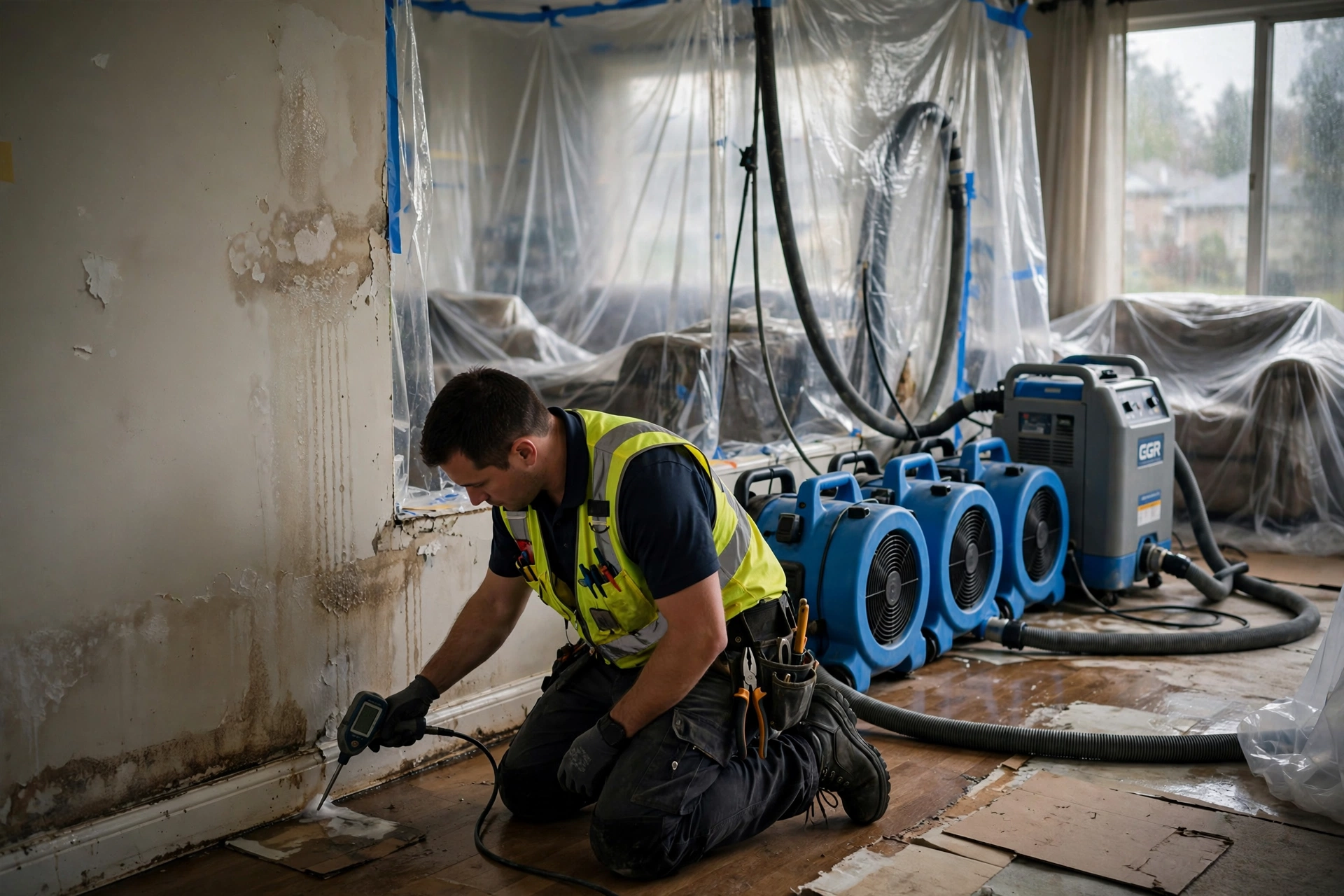
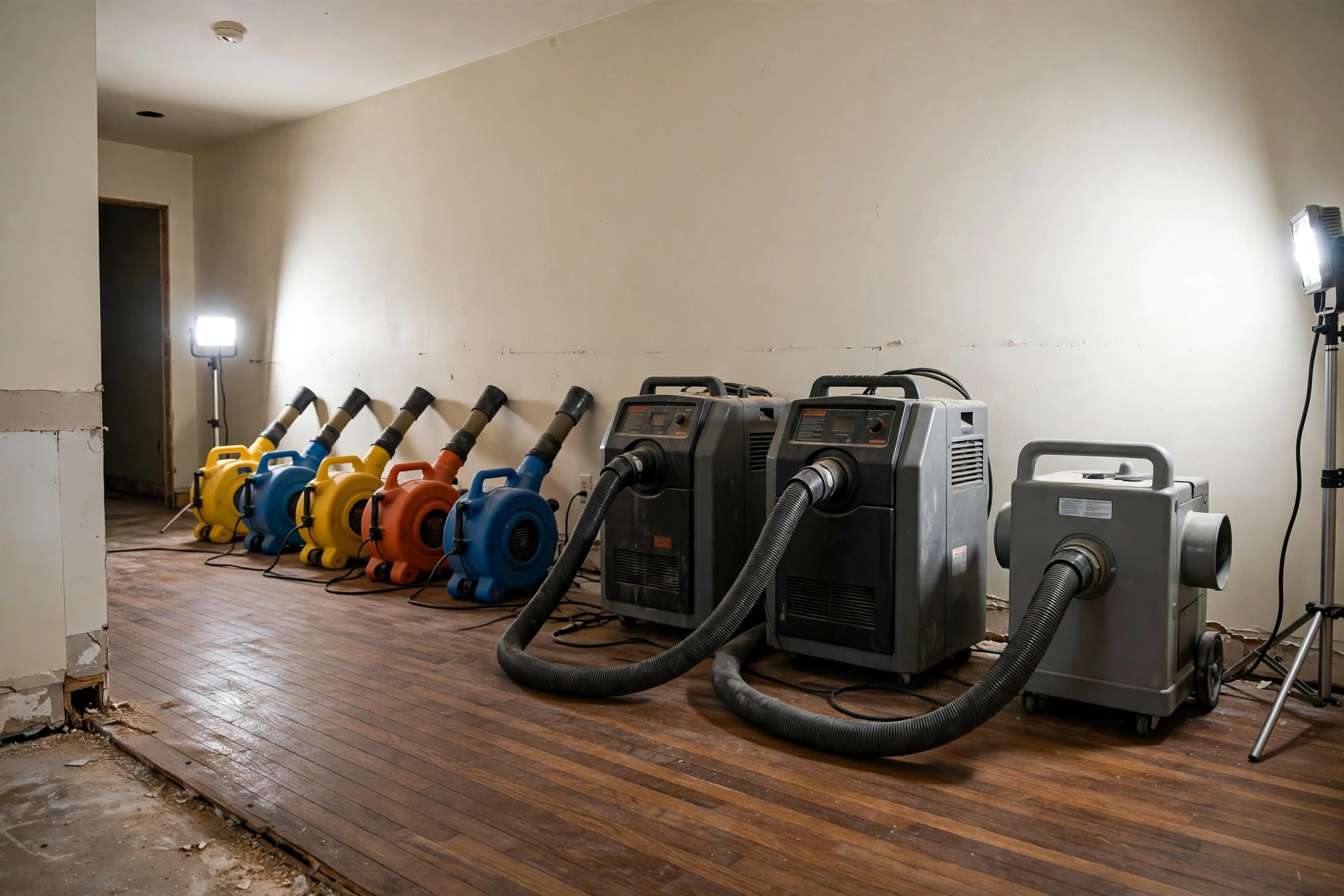
    Stabilization capability fits the existing restoration operation. The equipment required to stabilize a document loss on scene — refrigerated transport, chest freezers for holding, desiccant dehumidifiers for adjacent work areas, moisture meters, photographic documentation gear, labeling and inventory materials — is equipment a restoration company either already owns or can acquire for a modest capital budget. The specialist subcontractor owns the chamber. The restoration company owns the first twelve hours. The operational handoff is clean because the skills required on each side do not overlap.

    Account replication is nearly universal. The specialty agreement that includes document recovery is sellable into every records-heavy account type in the commercial market. A restoration owner who builds a document program can pitch it to a law firm, an accounting firm, a hospital, a university, a municipal office, a financial services operation, a pharmaceutical company, and a corporate headquarters using essentially the same collateral, the same contract, and the same specialist bench. The market density for this one specialty category is greater than the other three combined.

    How paper fails and how freeze-drying saves it

    A working understanding of the physical process is required because customers and risk managers will ask about it, and a restoration owner who can answer plainly earns immediate credibility.

    When paper gets wet, three failure mechanisms compete. The first is swelling and distortion — fibers absorb water, pages deform, bindings fail, and ink migrates. The second is mold, which establishes on cellulose at any relative humidity above sixty to sixty-five percent and accelerates exponentially above seventy-five percent. In a typical office environment that means active mold on wet paper inside forty-eight to seventy-two hours. The third is biological and chemical degradation — adhesives break down, acid-free paper becomes less acid-free, coated papers delaminate, and the records become progressively less reversible the longer they sit wet.

    Air-drying is acceptable only on small quantities of non-critical records, because it exposes every page to the forty-eight-hour mold clock. For anything larger than a small-file-drawer quantity of non-critical paper, the correct response is freezing first and drying second. Freezing stops the mold clock by taking the moisture below the temperature at which fungal growth occurs. Once frozen, records can be held for weeks while the chamber capacity is coordinated and the insurance carrier authorizes scope.

    The drying process is vacuum freeze-drying, which places the frozen records in a chamber at pressures below the triple point of water, applying controlled heat that sublimates the ice directly from solid to vapor. The process avoids the liquid phase entirely. Pages do not ripple, bindings do not warp, coatings do not delaminate, and ink does not migrate. A typical commercial chamber runs a load for two to four weeks depending on paper density, coating type, and initial water content.

    Two alternate processes exist. Desiccant air-drying in a controlled chamber is used for smaller quantities and less saturated records, with lower capital cost and a shorter cycle but somewhat less favorable results on heavily saturated materials. Vacuum thermal drying is used for specific cases where the item is too large or too sensitive for freeze-drying. The restoration owner does not need to specify the drying method — the specialist chooses based on the load and the client’s requirements. The restoration owner does need to understand the vocabulary well enough to explain the options to a records custodian who has never been through this before.

    The sources to cite when explaining this to a customer are the national specialty firms — Polygon, Document Reprocessors, BELFOR, ATI — whose public materials describe the processes in enough detail to serve as the customer’s reference point. Attaching a specialist’s methodology page to the emergency services agreement exhibit package is a strong credibility move during approval.

    The first twelve hours: what the restoration company actually does on scene

    The stabilization protocol runs in six phases inside the first twelve hours of activation.

    Phase one: arrival, assessment, and customer coordination (hour zero to one). The first-response team arrives with refrigerated transport capacity already dispatched. The scope of loss is photographed before anything is moved. The customer’s records custodian or designated representative is identified and stays with the team throughout — this is non-negotiable for chain-of-custody purposes. The team identifies the categories of records affected (active files, archival, legal hold, regulatory-retention, privileged, original-only), the estimated volume in cubic feet, the saturation level, and the environmental conditions. A preliminary scope is written and verbally confirmed with the customer before any records are moved.

    Phase two: environmental control (hour one to two). Desiccant dehumidification is established in the space to slow further absorption in records not yet moved. Fans are deployed carefully — airflow across wet paper can accelerate secondary damage. Temperature is managed downward where possible; lower temperature slows the mold clock. This phase happens in parallel with phase three because the environmental control buys time for the packout to proceed safely.

    Phase three: packout and inventory (hour two to six). Records are packed in standardized bankers boxes or wet-records containers, each labeled with a unique identifier that ties to an inventory log. The inventory log captures box number, source location (file room, cabinet number, shelf designation), category (legal, medical, financial, operational), and a saturation note (damp, wet, submerged). The photographic record continues throughout — every box is photographed at packing, and the source location is photographed before and after clearance. This is the chain-of-custody foundation, and it is the piece that distinguishes a professional response from an improvised one.

    Phase four: freeze stabilization (hour four to eight, overlapping with packout). Boxes are loaded into refrigerated transport at temperatures between zero and negative ten degrees Fahrenheit. If the transport vehicle cannot be dedicated for the full duration, on-site chest freezers are deployed and records are transferred into them until transport is available. The transition from wet to frozen should happen inside the first six to eight hours of the loss; the exact threshold varies by paper type, but sooner is universally better.

    Phase five: transport to specialist (hour eight to twelve). The refrigerated transport moves the frozen inventory to the specialist’s chamber or to a regional freezer holding facility. A signed manifest accompanies the transport, including box counts, weight, origin, destination, and a signature from the customer’s representative acknowledging the handoff. The specialist receives the inventory, signs the manifest, and issues a receipt. The chain of custody is now in the specialist’s hands for the drying cycle.

    Phase six: scope documentation and customer communication (hour six to twelve, in parallel). The restoration company produces a written scope of loss within twenty-four hours of activation, including the inventory count, stabilization services performed, specialist handoff, estimated drying timeline, and preliminary cost estimate. The customer receives daily updates during the drying cycle and milestone updates at key stages (drying complete, cleaning complete, return transport scheduled, final delivery and reinventory).

    Every phase has documentation. The package that goes back to the customer at the end of the engagement is the stabilization log, the packout inventory, the transport manifests, the specialist’s drying certification, and the return-delivery reinventory. This is the product. The restoration company’s value is not that they performed the drying — they did not — but that they produced a defensible, auditable record of the entire response.

    Chain of custody is the actual product

    The documentation standard matters because the records being recovered are frequently subject to regulatory or legal requirements that outlast the loss event itself. Six regulatory contexts recur.

    HIPAA (healthcare records). Protected health information in physical form is subject to the same privacy and security requirements as electronic PHI. Chain-of-custody documentation is the mechanism that proves the covered entity maintained custody throughout the recovery. A HIPAA-compliant response requires identification of each person who accesses records, timestamping of each access, written custody transfer at each handoff, and a terminal certificate of restoration or destruction. The Health and Human Services guidance on records management is the baseline; the industry best practice layers on top of it with forensic-grade documentation.

    Attorney-client privilege and legal hold (law firm and litigation records). Law firms have elevated confidentiality obligations to clients, and any records under active legal hold are additionally subject to preservation requirements. The restoration response must not break either the privilege or the hold. The practical implication: the records custodian stays with the response team, the packout is performed in the presence of the custodian, and the specialist must be prequalified as acceptable to the firm’s ethics counsel. Several law firms pre-approve specific specialists in their emergency services plans specifically for this reason.

    SOX, GLBA, and financial services records. Financial records are subject to retention schedules, auditor access requirements, and federal banking regulations. The chain of custody has to satisfy the bank’s internal audit function and, in many cases, the bank’s regulator. The restoration response must produce documentation that fits into the bank’s records management framework without requiring modification.

    Federal and state archival standards. Municipal records, court records, and university archives often carry archival retention obligations that can extend to permanent preservation. The drying specialist must be familiar with archival paper and media types — coated papers, photographic prints, microfilm, magnetic media — and the response must preserve option-value for the institution’s future conservation decisions.

    Educational records and FERPA. Student records are confidential under federal law and the chain of custody must honor institutional access controls even during recovery.

    Regulatory retention in pharmaceutical and healthcare research. Good laboratory practice, good clinical practice, and FDA retention schedules apply to research records in ways that the restoration company will not typically understand in detail. The operational implication is that the specialty agreement should include a clause that requires the specialist to be vetted as GxP-compliant when the account requires it, and the first-response team should know which questions to ask the records custodian.

    A document restoration engagement that produces a clean chain-of-custody package is defensible in every one of these contexts. An engagement that does not — one where records were moved without inventory, transported without manifest, or delivered without reinventory — creates liability for the customer and liability for the restoration company. The documentation discipline is not optional. It is the product being sold.

    Pricing the documents scope

    The commercial pricing structure for a document recovery engagement has three components that the restoration company bills and one that the specialist bills through the restoration company.

    Stabilization services. Billed at the restoration company’s published commercial time-and-materials rates. The main line items are crew labor (typically a three-to-four-person packout team), refrigerated transport, on-site freezer equipment, dehumidification equipment, PPE, and packaging materials. Xactimate does not carry every documents-specific line item — several will be entered as custom or notes-supported line items with market rationale attached. The published industry benchmark is commonly three to six dollars per cubic foot for packout and stabilization depending on saturation, accessibility, and regional labor rates.

    Chain-of-custody documentation. This is a line item, not a free service. The documentation work itself — inventorying, photographing, logging, producing the closure package — is real labor and should be billed as such. Typical pricing is a fixed per-box documentation fee plus a per-hour scope documentation rate for the loss-wide package. Fifteen to twenty-five dollars per box is a defensible range for standard commercial inventory work.

    Project management. The coordination time between the restoration company and the specialist, plus customer communication, plus insurance coordination, is a real cost and should be billed. Typical pricing is a percentage of total engagement cost (five to ten percent) or an hourly rate for senior project manager time.

    Specialist drying pass-through. The specialist’s published rates per cubic foot for vacuum freeze-drying vary widely by chamber operator, geographic region, and service level. Commercial freeze-drying is typically quoted in the range of fifty to one hundred fifty dollars per cubic foot for standard records, with premiums for expedited service, archival materials, or specialty substrates. The restoration company adds the disclosed management fee (ten to fifteen percent) and passes the total through to the customer. The specialist’s invoice should never reach the customer directly.

    For the commercial account in the middle of a loss, the single most useful document a restoration company can produce is a preliminary scope-of-loss with a cost estimate inside twenty-four hours. The estimate does not have to be final — it does have to be credible, defensible, and suitable for the customer to walk into their adjuster’s office with.

    The eight account types and their documents profile

    Every commercial account type in the specialty pillar has a different records profile. The operational details that matter for targeting and pricing:

    Law firms and accounting firms. The records are mostly active client files, archival closed matters, and a long tail of historical paper in offsite storage. Volumes range from a hundred cubic feet for a small practice to thousands for a large firm. The records custodian is typically an office manager, a records clerk, or in larger firms a dedicated information governance director. The approval to sign the specialty agreement usually sits with a managing partner or director of operations; the dollar threshold for unilateral approval is often high enough that the zero-cost structure closes the sale on the first meeting.

    Hospitals and health systems. The records mix is paper medical charts (declining but still real in many systems), paper administrative records, and specialty collections like radiology films, pathology slides, and old operational records. HIPAA compliance is the dominant consideration. The approval path often runs through risk management, health information management, or compliance rather than facilities, and the cycle can take sixty to ninety days. The agreement value is exceptional because the downstream mitigation and reconstruction opportunity in a health system is enormous.

    Universities and higher education. The records mix is administrative, student (FERPA), research (GxP in some cases), and archival (sometimes irreplaceable primary-source collections). Multiple approval paths exist — the registrar owns student records, the VP of research owns research records, the university archivist owns collections, and facilities owns the building response. The specialty agreement often has to be assembled piecewise with cross-department sign-off, but the resulting relationship covers dozens of buildings.

    Municipal offices and courthouses. The records are often permanent retention, often legally irreplaceable, and almost never backed up electronically for older holdings. Procurement rules usually require a competitive process even for zero-cost agreements, which means the restoration company has to be positioned through an RFP or a state-level cooperative purchasing vehicle. The approval timeline is long but the agreement, once signed, is extraordinarily sticky.

    Financial services, banks, and credit unions. The records are transactional, customer, and audit — all with regulatory retention obligations. The approval sits with the chief operations officer or chief risk officer. The contract requires a robust confidentiality and data-handling addendum that will be redlined by the bank’s legal department. Expect a longer negotiation than the other account types; accept the negotiation because the agreement value is the highest of any account type in this cluster.

    Pharmaceutical, biotech, and research. The records mix is GxP, research, regulatory, and commercial. The specialty agreement typically has to specify a specialist that can demonstrate GxP-compliant handling, which narrows the bench considerably. The approval path is quality assurance plus facilities plus occasionally the study sponsor. The agreement value is high and the activation frequency, when it occurs, tends to be catastrophic.

    Corporate headquarters and private company records. The mix varies — executive records, board materials, HR, legal hold records, mergers-and-acquisitions files. The approval sits with the general counsel or chief administrative officer. The specialty agreement is often the first time the company has formalized a records-recovery protocol, and the agreement doubles as an internal governance artifact the GC can point to during audits.

    Museums, cultural institutions, and archives. The records are collections, sometimes centuries old, and the response protocol leans more toward conservation than standard restoration. The drying specialist selected for this account type should have direct museum-conservation experience, and the restoration company’s role is primarily stabilization, transport, and coordination with the institution’s conservator. The specialty wedge works here but the business-development path is different — the entry point is often the insurance broker for the collection rather than the institution directly.

    Building the specialist bench for documents

    The document-recovery specialist landscape in North America is dominated by a small number of credible firms. A working bench has one national and one regional specialist pre-qualified in each of the major service regions the restoration company operates in.

    The national specialists to evaluate include Polygon’s document recovery division, Document Reprocessors (the operator of the Thermaline process), BELFOR’s document restoration service line, ATI Restoration’s document services, and several smaller but credible national operators. Each operates vacuum freeze-drying chambers at multiple sites and accepts regional inventory via refrigerated transport. The evaluation criteria for a specialist include chamber capacity and availability, turnaround commitments during peak loss seasons, insurance and bonding, chain-of-custody protocols, GxP or HIPAA qualifications where relevant, pricing transparency, and willingness to enter a teaming agreement with the restoration company.

    Regional specialists exist in most major metropolitan markets and are worth identifying because response time, relationship management, and pricing can all be better than the national players for medium-sized engagements. Regional specialists sometimes also operate consortium-style shared chambers where multiple restoration companies pre-commit to capacity.

    The teaming agreement between the restoration company and the specialist is a separate document from the emergency services agreement signed with the commercial account. The teaming agreement covers pricing schedules, response commitments, chain-of-custody protocols, invoicing and payment terms, insurance and indemnification, dispute resolution, and non-solicitation provisions (protecting the restoration company’s client relationship from specialist end-runs). A good teaming agreement takes thirty days of back-and-forth and three to five thousand dollars of counsel time. It is a fixed cost; it replicates across every specialist on the bench with minor modifications.

    The ninety-day build for the documents specialty

    The restoration owner starting from zero can stand up a document recovery capability inside a ninety-day window without a capital program beyond routine vehicle and equipment investments.

    Days one through fifteen: specialist bench. Evaluate and shortlist national and regional document recovery specialists. Run reference calls, review chain-of-custody sample packages, confirm insurance and certifications, and negotiate teaming agreements with one primary and one backup in each service region.

    Days sixteen through thirty: internal capacity. Configure two response vehicles with refrigerated transport capability or arrange standing contracts with local refrigerated freight for priority response. Acquire and stage chest freezers for on-site stabilization. Standardize the packout kit — bankers boxes, wet-records containers, labeling materials, inventory forms, photographic documentation gear, PPE, dehumidification equipment. Stage the kit for immediate dispatch.

    Days thirty-one through forty-five: documentation system. Build or configure the chain-of-custody tool — at minimum a cloud-accessible inventory spreadsheet with photo integration, at best a purpose-built records-tracking application. Produce the standard deliverable templates: scope of loss, packout inventory, transport manifest, daily status update, closure package. Run a tabletop exercise with the response crew using a simulated wet-cabinet scenario.

    Days forty-six through sixty: commercial collateral. Build the one-page agreement summary, the specialist credential package for exhibits, and two or three before-and-after case studies (borrow from specialist partners if the restoration company has no direct history). Train the intake team on documents-specific dispatch questions. Brief the restoration company’s sales team on the account types and the pitch.

    Days sixty-one through seventy-five: pipeline activation. Build the first twenty target-account list, leveraging any warm relationships the restoration company already has in law firms, medical practices, accounting firms, or educational institutions. Book specialty-focused meetings with records custodians, office managers, or risk managers as appropriate. The meeting length is thirty minutes and the deliverable is the zero-cost agreement.

    Days seventy-six through ninety: first signed agreements and live-fire readiness. Anticipate one to three signed agreements in the first wave. Run a readiness drill on each signed facility, including a site walk, records inventory estimate, and primary-specialist dispatch test. The documents specialty is now operational.

    Frequently asked questions

    How quickly does paper actually start molding after a water loss?
    Active mold typically appears on wet cellulose within forty-eight to seventy-two hours at normal office temperature and humidity. Lower temperatures delay onset. Heavily saturated, tightly packed materials can mold faster than the general guideline because internal humidity stays above the sixty-five percent threshold even as surface paper appears to dry. The operational rule is that freezing should happen inside eight hours and drying should be scheduled immediately thereafter.

    Can we dry documents in-house using our existing dehumidification equipment?
    Small quantities of non-critical, lightly damp paper can be air-dried with controlled humidity. Anything critical, archival, or larger than a modest quantity should be frozen and sent to a vacuum freeze-drying chamber. The restoration company should not position itself as the dryer. The specialist owns the chamber, and the value the restoration company delivers is stabilization, documentation, and coordination.

    What happens to ink during freeze-drying?
    Vacuum freeze-drying moves water from the solid phase directly to vapor, bypassing the liquid phase. Because the ink never re-dissolves in liquid water during the drying cycle, migration and bleeding are minimized. Water-soluble inks that have already migrated before freezing will not be restored, but freeze-drying prevents further migration.

    How does insurance handle the specialty documents scope?
    Property insurance typically covers document recovery under the contents or building contents schedule, subject to the policy limits and the usual causation and valuation rules. Archival and high-value collections are often scheduled separately under inland marine or fine-art policies with dedicated conservator involvement. The restoration company’s scope-of-loss needs to separate the documents work from the general mitigation work so the adjuster can apply the correct policy provisions.

    What is the chain of custody actually for?
    The chain of custody documents every movement of the records from the loss site through the drying cycle and back to the customer. Its purposes are evidentiary (supporting litigation or regulatory inquiries), compliance (HIPAA, SOX, FERPA, GxP), insurance (supporting the claim and defending against subrogation or disputes), and client service (reassuring the records custodian that the records were never unaccounted for). A defensible chain of custody is the single most important deliverable on any document recovery engagement.

    What if the client’s records include original legal documents, wills, or irreplaceable archival materials?
    Those materials require conservator-grade handling rather than standard freeze-drying. The restoration company’s role shifts to stabilization-and-referral — the response is freeze-stabilization, careful documentation, and handoff to a conservator the carrier or the client designates. The specialty agreement should specify that irreplaceable materials receive conservator-grade treatment and that the restoration company does not assume responsibility for conservation-level outcomes on those materials.

    Can we bill for chain-of-custody documentation separately?
    Yes. The documentation work is billable labor and should appear as a line item on the scope of loss. Typical pricing is a per-box fee for inventory and photographic documentation plus an hourly rate for scope and closure package preparation. Do not give away the documentation work — it is the differentiated value of a professional engagement and should be priced as such.

    How do we price a commercial document response before we know the full scope?
    A preliminary cost estimate inside twenty-four hours is expected. The estimate covers stabilization, packout, transport, and a preliminary specialist quote based on estimated cubic footage. The specialist’s final cost is a range until the inventory is chamber-measured, which typically happens within the first week of the drying cycle. Update the estimate promptly as the specialist refines the scope.

    Which is better for a specialty agreement: naming a specific specialist in the contract, or leaving it generic?
    Generic is better. The emergency services agreement should reference “the restoration company’s pre-qualified specialist partners” rather than naming a specific specialist by name. This preserves the restoration company’s flexibility to adjust the bench without amending every client contract, and it also protects against the scenario where the specialist’s status changes (insurance lapses, performance issues, acquisition). The exhibit package that accompanies the agreement can include specialist credentials as attachments that are updated separately.

    Is document recovery actually a meaningful revenue line on its own?
    Usually not. The direct revenue on a single document recovery engagement is material but not transformational. The strategic value is the vendor-file position and the downstream relationship. A restoration company that runs ten specialty document engagements in a year might book three to five hundred thousand dollars of direct revenue and unlock two to four million dollars of downstream mitigation, drying, mold, and reconstruction revenue as those accounts route their general restoration work through the incumbent vendor. The specialty wedge is priced and built as a market-entry investment, not as a standalone profit center.

  • The Specialty Restoration Door: How Document, Electronics, Art, and Medical Equipment Recovery Gets You Into Commercial Accounts You Otherwise Can’t Reach

    The Specialty Restoration Door: How Document, Electronics, Art, and Medical Equipment Recovery Gets You Into Commercial Accounts You Otherwise Can’t Reach

    Direct answer: Specialty restoration — document drying, electronics decontamination, fine art conservation, and medical equipment recovery — is not a service line most mid-market restoration companies should build in-house. It is a door. A restoration owner who assembles a vetted specialist subcontractor bench and sells the commercial facility a single, simply-priced emergency services agreement for specialty recovery gets written into the facility’s approved vendor file for a low-friction, low-frequency service — and then sits inside that vendor relationship when the facility’s real water, fire, or smoke loss happens. The specialist network does the work. The restoration company manages the engagement, holds the contract, and owns the relationship.

    Most restoration owners chase commercial accounts by calling facilities directors and offering water mitigation. Every other restoration company in the market does the same thing. The facilities director has a vendor. The vendor is either incumbent or already approved. The call goes nowhere.

    The operators who actually get inside commercial accounts use a different door. They sell the facility something the facility never thinks about until the moment it is on fire and there is no vendor in the Rolodex: a specialty recovery capability for the assets the property insurance adjuster cannot simply cut a check against. Paper records that will mold in forty-eight hours. Server rooms that will corrode to failure in seventy-two. Fine art that is uninsurable to replace and legally impossible to throw away. Medical equipment that cannot be used again until it is recertified by the manufacturer, and cannot be replaced inside any clinical timeline the hospital operations director will tolerate.

    These assets exist in almost every serious commercial building. They sit in law firm file rooms, hospital imaging suites, museum basements, data center white-space rooms, pharmaceutical labs, private equity offices, municipal records archives, university libraries, and the C-suite art collection of any company that has ever gone public. None of them are the restoration industry’s bread-and-butter assets. All of them are catastrophic if lost. And the number of vendors on any given facility’s approved list who actually have a credible answer for them is usually zero.

    That gap is the door. Walking through it does not require the restoration owner to become a document conservator, an electronics engineer, an art restorer, or a biomedical equipment technician. It requires the owner to become the general contractor for specialty recovery — to know who the real specialists are, to pre-qualify them, to structure a clean pass-through that pays them fairly and takes a documented management fee, and to sell the facility a single emergency services agreement that makes the restoration company the first call for specialty-asset recovery across every property the facility operates.

    That agreement is the wedge. The restoration company holds it for years without a single activation and collects the relationship value regardless. When the activation does come, the response is professional, the specialist is already on the bench, and the facility learns what it already suspected — that this restoration company is the one that shows up with real answers when the stakes are high. The conversation about the building’s mitigation, drying, mold, and reconstruction work tends to follow naturally inside the same calendar year.

    The rest of this pillar lays out the model in full: what the specialty categories actually are, how the specialist vendors inside each one actually operate, what the emergency services agreement contains, how the pricing math works, and which commercial account types make this wedge most effective.

    The four specialty categories that matter

    The specialty recovery world is fragmented, technical, and populated by a small number of genuine specialist firms that serve the insurance industry nationally. For the mid-market restoration owner building a subcontractor bench, four categories account for almost every engagement the commercial account will ever have.

    Document and records recovery. Paper is the most common specialty loss and the most time-sensitive. Wet paper begins to mold within forty-eight to seventy-two hours at normal building temperatures. The specialist response is vacuum freeze-drying, a process in which saturated records are frozen, then placed in a vacuum chamber that sublimates the ice directly to vapor without passing through the liquid phase. Polygon, Document Reprocessors, BELFOR, and a handful of regional firms operate the freeze-drying chambers that do this work. The process runs weeks, not hours, but the initial freeze-stabilization has to happen in a day. A properly assembled specialty program picks up records, freezes them in transit, and ships them to a chamber. The restoration company that shows up in the first twelve hours with a refrigerated truck and a chain-of-custody manifest is the company the facility will remember.

    Electronics and data equipment restoration. Smoke, soot, and water are fatal to electronics on a seventy-two-hour clock because the acidic residues in soot and the corrosion kinetics of moisture on circuit traces accelerate past recoverable after that window. The industry response is ultrasonic cleaning for boards, stabilization and deoxygenation for larger equipment, and manufacturer recertification paperwork for anything that will go back into critical service. Servers, production equipment, industrial controls, data center gear, medical imaging, and in many cases the building’s own mechanical controls — all of it can be saved inside the window and all of it is gone outside it. BELFOR, Prism Specialties, CRDN, and several national niche players handle the work. The restoration company’s role is triage on site, immediate stabilization, and coordinated handoff to the specialist.

    Fine art, antiques, and collections conservation. Every commercial building of any stature has art on the walls, and much of it is insured on specific scheduled policies rather than under the general property line. When a loss occurs, the conservator community — not the restoration company — determines treatment, and the insurance carrier often has pre-established relationships with firms like the Fine Arts Conservancy, B.R. Howard, Stella Art Conservation, and regional museum-affiliated labs. What the restoration company can do, and must do, is stabilize in place, document photographically, isolate from ongoing environmental damage, and facilitate the handoff. The carrier relationship and the conservator relationship are both earned by being reliably competent at that first twenty-four-hour window.

    Medical equipment, laboratory equipment, and regulated assets. This is the most regulated of the four categories and the one most restoration companies avoid entirely, which is precisely why it is the strongest commercial wedge. Hospital and lab equipment cannot be returned to service after water or smoke exposure without manufacturer involvement and formal recertification. The infection-control standards (ICRA for construction-adjacent work, WHO and CDC guidance for decontamination) are strict. The specialist firms that actually do this work are small and national: Cotton GDS, ATI’s healthcare division, First Onsite healthcare, and a handful of biomedical engineering contractors. The restoration company’s role is the same triage and handoff posture, but the contracting value is extraordinary because the facility has few alternatives and enormous exposure.

    The restoration owner is not trying to master any of these categories. The owner is trying to know one vetted specialist in each, have a master services agreement or teaming arrangement already signed, and be able to dispatch the right truck within hours of an activation call.

    Why this works as a commercial wedge when water mitigation does not

    The water mitigation call does not work as a cold outreach because every commercial facilities director has already thought about water mitigation, already has a vendor, and already has the problem categorized. The specialty call works because it flips all three conditions.

    The facilities director has almost never thought about what happens to the on-site legal files if the sprinkler head above them discharges. The director has not thought about what the recertification timeline looks like on the CT scanner if the adjacent room floods. The director has never been asked by insurance whether the carrier’s preferred conservator is acceptable for the art on the lobby wall. The director has never been through a document drying event and does not know what vacuum freeze-drying costs. The assets in question are either high-value, high-liability, or high-downtime — often all three — and the director is acutely aware that the answer “we have a vendor for that” is not actually true.

    When a restoration owner walks into that office and says the sentence is: “We hold a specialty recovery agreement across your portfolio. No money up front. You get a twenty-four-hour-a-day hotline, a documented specialist bench, and a capped management fee on any activation. If you never use it, you owe us nothing. If you do use it, we are the first call before the insurance adjuster even arrives” — that sentence lands. It lands because the director has never been offered that exact product before and has probably been quietly worried about the gap for years.

    The agreement signs because the stakes are real and the price is zero. The restoration company is now in the vendor file. The approval process that usually takes nine months of calls has been bypassed because the contract being signed is not a water mitigation contract; it is a specialty recovery contract with a different risk profile, a different approval owner (often the risk manager rather than facilities), and a different political context inside the building.

    Six months later, when the sprinkler head does discharge in the main office and the facility needs water mitigation on ten thousand square feet of open-plan office with six hundred employees returning Monday morning, the restoration company that is already in the vendor file and already on the twenty-four-hour hotline is the company that gets the activation call for the larger mitigation scope as well. The director does not want to run a new procurement process in the middle of a crisis. The company already in the file wins the work.

    The managed-service model and the specialist bench

    None of this works if the restoration company tries to do the specialty work itself. The chambers cost millions. The conservators require years of apprenticeship. The biomedical recertification credentials are manufacturer-issued and unavailable to outside firms. The correct business model is managed service — the restoration company is the general contractor for the specialty engagement and the specialist firm is the subcontractor who actually performs the work.

    The bench should contain one primary and one backup specialist in each of the four categories, within driving or overnight-shipping distance, pre-vetted on certifications, insurance, references, and chain-of-custody protocols. Written teaming arrangements should be in place with each specialist covering pricing, response commitments, invoicing, and dispute resolution. The restoration company’s margin is a management fee — typically ten to fifteen percent on specialist subcontractor cost, disclosed up front on the commercial agreement — plus the reimbursable value of the first-response stabilization services performed by the restoration company’s own crews before the specialist arrives.

    The margin on a specialty activation is not where the money is. The money is in the fact that the specialty agreement is the credential that turns a commercial account from a cold prospect into an approved incumbent. The activation itself is almost break-even. The downstream mitigation, drying, mold, and reconstruction work that flows from being the incumbent vendor is where the business gets built.

    This is a critical mental shift for restoration owners whose instinct is to price every engagement as a profit center in isolation. The specialty agreement is priced as an infrastructure investment. It is a loss leader in the accounting sense and a market-entry investment in the strategic sense.

    What the emergency services agreement actually contains

    The emergency services agreement should be short, clear, and written by the restoration company’s counsel to sit comfortably in the commercial facility’s vendor file. A working structure covers eight provisions:

    First, scope definition. The agreement covers specialty recovery services for documents and records, electronics and data equipment, fine art and collections, and medical and laboratory equipment. The covered facility list is attached as an exhibit. The agreement explicitly excludes general water mitigation, structural drying, mold remediation, and reconstruction — those are handled under a separate agreement or separate activation, and this scope boundary matters for both legal clarity and the client’s procurement-department comfort.

    Second, response commitment. The restoration company commits to an on-site triage team within a specified window — typically four to eight hours for priority facilities, twenty-four for the full portfolio. The specialist subcontractor’s arrival is a secondary window, typically twenty-four to forty-eight hours depending on category and geography.

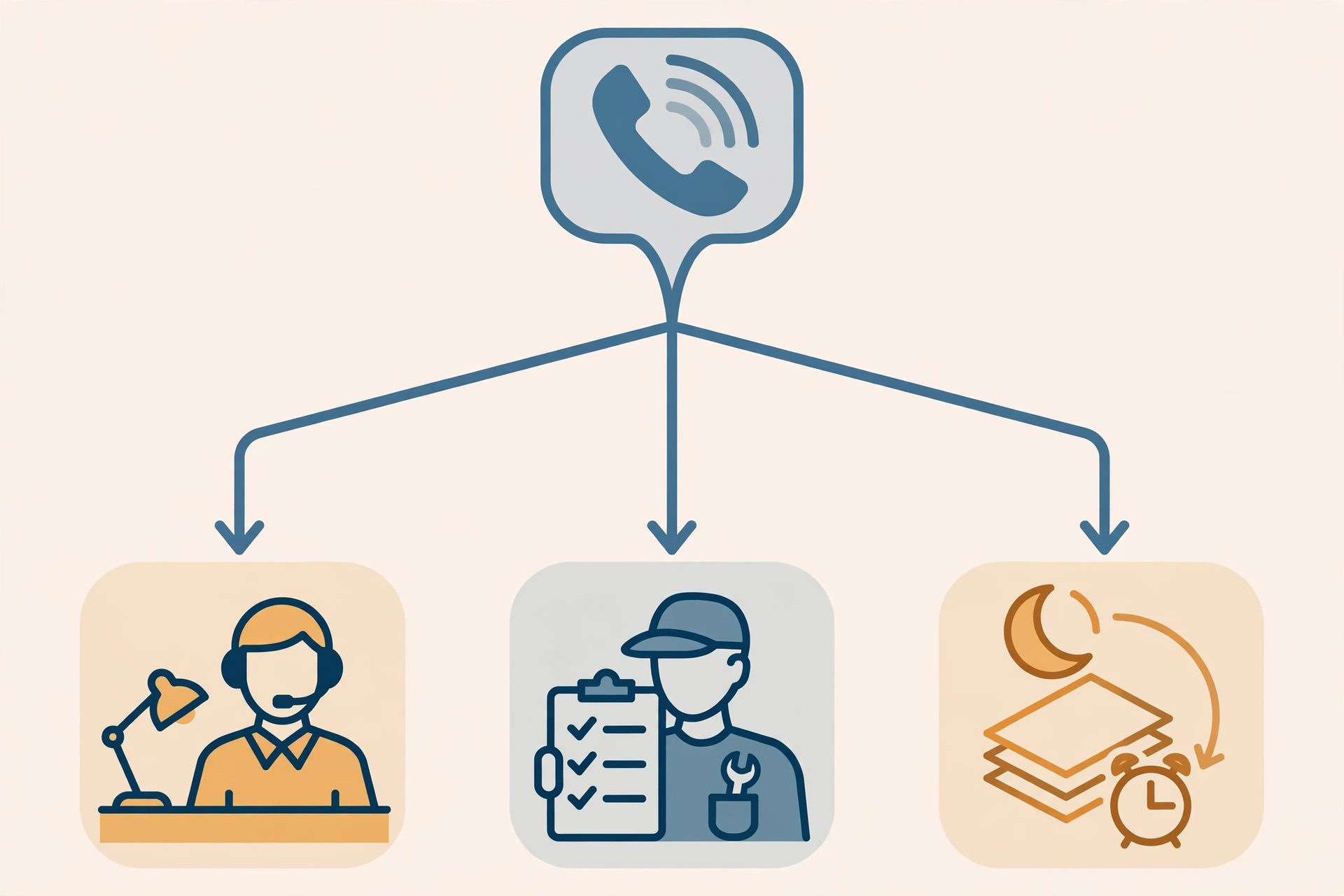
    Third, hotline and dispatch. A dedicated twenty-four-hour number staffed by the restoration company’s own intake, not a generic answering service. The intake captures facility, category, and stabilization needs, dispatches the restoration team, and notifies the appropriate specialist bench member.

    Fourth, pricing mechanics. The agreement contains no retainer and no minimum — this is critical for approval. Stabilization services are billed at the restoration company’s published commercial rate card. Specialist subcontractor costs pass through with a disclosed management fee, capped at fifteen percent. All invoicing is Xactimate-format or facility-standard format for the larger accounts.

    Fifth, documentation protocol. Every activation produces a chain-of-custody log for any removed items, a photographic record with timestamps and metadata, a written scope of loss, and a status update cadence that matches the facility’s internal escalation structure (typically daily for the first week, then at stabilization milestones).

    Sixth, insurance coordination. The agreement specifies that the restoration company will coordinate with the facility’s property carrier, engage with the carrier-designated conservator if fine art is involved, and provide underwriter-ready documentation. It does not obligate the facility to use the restoration company’s preferred specialists if the carrier designates alternates.

    Seventh, term and renewal. One-year initial term, auto-renewing in one-year increments, either party may terminate with thirty days notice. No early-termination fees. The short term and easy exit remove friction from approval and the auto-renewal captures the long relationship.

    Eighth, confidentiality and data handling. Documents and medical records are almost always subject to regulatory confidentiality (HIPAA for medical, attorney-client privilege for legal, SOX and GLBA for financial). The agreement includes an appropriate confidentiality addendum and a data-handling protocol that the restoration company can demonstrate it actually follows.

    Counsel time to draft the agreement is real. Budget three to five thousand dollars for the initial template, plus marginal cost to tailor it to each facility’s redlines. The template pays for itself on the first signed engagement.

    The commercial account types where this wedge actually works

    Not every commercial building is a strong target for this model. The wedge works where the specialty assets exist in meaningful concentration and where the facility or risk management function owns vendor approval at a level the restoration company can credibly reach.

    Law firms and accounting firms — paper-heavy, regulated, risk-averse, and usually run by a managing partner or operations director who can sign a zero-cost specialty agreement without committee approval. Document recovery is the primary asset. This is the highest-conversion category for first-time wedge programs.

    Hospitals and health systems — medical equipment and paper records in equal measure, plus a regulatory infection-control layer that makes the specialty conversation legitimate and urgent. Approval runs through risk management, biomed engineering, or facilities depending on the system, and approval cycles are longer but the contract value of being in the file is extraordinary.

    Data centers, colocation facilities, and large enterprise IT operations — electronics restoration dominates, and the seventy-two-hour corrosion window turns the agreement into a real risk-management instrument. Approval runs through operations or facilities with risk-management review.

    Museums, cultural institutions, universities with significant collections — fine art and document recovery, with a strong predisposition toward established specialist relationships already in place. The restoration company’s role here is less about displacing existing specialists and more about being the trusted coordinator who can stabilize in hour one when the specialist is twelve hours away.

    Pharmaceutical companies, biotech labs, and research facilities — laboratory equipment, regulated samples, proprietary records, and extreme downtime sensitivity. Risk management and EHS typically own the approval, and the specialty agreement fits naturally into the business continuity program already in place.

    Financial services, private equity, and family offices — records, on-premises art collections, and often high-value executive personal property. Approval is typically the chief operating officer or general counsel. This category is small in count but premium in relationship value.

    Municipal records, courthouses, university libraries, and government archives — documents, documents, and more documents, usually with zero existing vendor for specialty recovery and often with legal retention obligations that make the restoration company’s documentation protocol the actual value being bought.

    Corporate headquarters with on-site art programs — increasingly common, usually with a facilities director who has never thought about art recovery and an insurance broker who will become a strong ally once the specialty agreement is in place.

    Each of these account types has its own discovery pattern, its own approval path, and its own political context. The cluster articles that accompany this pillar walk through each specialty category in operational depth — who the specialists are, how the chambers and processes actually work, what the Xactimate coding looks like, and how the commercial engagement runs start to finish.

    The ninety-day program to launch the wedge

    A restoration owner starting this program from zero should plan a ninety-day build to first signed agreement.

    Days one through fifteen: assemble the specialist bench. Identify one primary and one backup specialist in each of the four categories. Verify certifications, insurance, chain-of-custody protocols, and references. Execute teaming arrangements or master services agreements with each. Confirm geographic response capability and dispatch mechanics.

    Days sixteen through thirty: build the internal delivery capacity. Equip two triage teams with the stabilization gear required for initial response — refrigerated transport capacity for documents, desiccant and dehumidification for electronics, rapid-response conservation-grade packing for art, and the PPE and decontamination protocols required for healthcare environments. Run a tabletop exercise on each category.

    Days thirty-one through forty-five: draft the emergency services agreement with counsel. Build the sales collateral — a one-page summary of the agreement, a short credential deck for each specialist partner, and a simple before-and-after case study for each category (borrow from specialist partners if you have no internal history).

    Days forty-six through sixty: identify the first twenty target accounts. Focus on the account types above where the owner already has any inroad, even a weak one — a broker relationship, an adjuster introduction, a prior reconstruction engagement. The specialty agreement is easier to sell into a warm relationship than to a cold prospect because the approval is procedural rather than purchasing.

    Days sixty-one through seventy-five: book the meetings. The pitch is specialty recovery, the ask is vendor-file approval for the specialty scope, the close is the zero-cost agreement. Expect one in four to convert on the first cycle.

    Days seventy-six through ninety: first signed agreements. Activate the intake line, run a readiness drill on the first client’s facility list, and begin the quarterly cadence of relationship-maintenance touches that keep the agreement warm during the quiet months.

    The revenue impact does not show up in the first quarter. It shows up twelve to eighteen months later when the first signed account has its first real loss event and the restoration company runs the engagement properly. That engagement is the credential that earns the larger mitigation and reconstruction work across the rest of the portfolio.

    Why this is the right door for the mid-market restoration company

    The biggest players — BELFOR, ATI, Servpro’s national commercial operation, First Onsite — already sell specialty recovery as part of their national-accounts pitch. A mid-market regional restoration company cannot compete with them on national-accounts procurement cycles. What the mid-market operator can do is deliver the specialty capability at the local account level with faster response, better relationship management, and a cleaner contracting structure than the national accounts team can offer for any single facility.

    The facilities director of a regional law firm, a hospital in a mid-sized market, a university with a real-but-not-massive collection, or a data center serving a regional industry is often actively looking for a specialty partner who is not the Fortune 500 national account. The mid-market operator with a credible specialist bench and a clean emergency services agreement is the right answer. And the approved-vendor-file position that comes with the signed agreement is the business-development asset that turns a single account into a multi-year relationship and turns the restoration company from a transactional mitigator into the facility’s emergency services contractor of record.

    The specialty door is open. The question is whether the restoration owner walks through it or keeps cold-calling water mitigation into a market that has already decided that call is noise.

    Frequently asked questions

    Do we need to own any of the specialty equipment to offer this program?
    No. The correct model is a managed-service relationship with specialist firms who already own the chambers, ultrasonic tanks, conservator labs, and biomedical recertification credentials. The restoration company’s internal capacity is stabilization and coordination, not specialty processing.

    How do we find the right specialist partners?
    Start with the national players — Polygon, Document Reprocessors, BELFOR’s specialty divisions, Prism Specialties, Cotton GDS, the Fine Arts Conservancy, B.R. Howard, Stella Art Conservation — and identify which of them have regional capacity or teaming interest in your market. Add regional independents where they exist and are credentialed. Confirm each specialist’s insurance, certifications, references, and dispatch commitments before signing a teaming arrangement.

    What does the specialty management fee look like?
    Ten to fifteen percent on subcontractor pass-through, disclosed on the commercial agreement and on every invoice. Some facilities will negotiate the fee downward; some will accept it without discussion. The fee is the legitimate compensation for the coordination, documentation, and relationship-management work the restoration company is actually performing. It is not where the strategic value lives.

    What if the client’s insurance carrier insists on a specific specialist we do not have a relationship with?
    Honor the carrier’s designation. The emergency services agreement is explicit that carrier-designated specialists take priority where applicable. The restoration company’s value in that scenario is on-site stabilization, documentation, and coordination with the carrier’s specialist — all of which still earn the incumbent-vendor relationship for future general restoration work.

    How should we price the stabilization portion of the response?
    At the restoration company’s published commercial rate card, on a time-and-materials basis, with a scope-of-loss produced within twenty-four hours. Do not build specialty stabilization into a fixed-fee agreement. The variability across engagements is too high and the insurance adjuster will want to see the detail.

    Which specialty category is the highest-priority build?
    Document recovery. It is the most common specialty loss, the most time-sensitive, the most approachable from a stabilization-capability standpoint, and the most replicable across account types. Every law firm, accounting firm, medical practice, municipal office, university, and records-heavy corporate operation is a target. Build documents first, then layer electronics, then art, then medical.

    Does the specialty program work in residential restoration?
    Only in the luxury residential segment where the home contains serious art, significant records, or specialty collections. The economics do not work on mid-market residential. The specialty wedge is a commercial-account strategy.

    How long does it take to see revenue from a signed specialty agreement?
    Direct specialty activation revenue: often twelve to twenty-four months before the first activation. Downstream mitigation and reconstruction revenue from the approved-vendor-file position: usually within the first twelve months as routine water losses occur on the covered facilities. The specialty agreement is the door; the downstream work is the building.

    What is the single biggest mistake restoration owners make when trying to launch this program?
    Trying to do the specialty work themselves. The capital, credentials, and expertise required to operate a freeze-drying chamber, an ultrasonic electronics line, a conservation lab, or a biomedical recertification program are incompatible with a mid-market restoration company’s operating model. The correct play is managed service, vetted bench, clean contracting, and disciplined coordination.

    How does this affect our relationship with general property insurance adjusters?
    It strengthens it. Adjusters prefer working with restoration companies who can credibly handle specialty losses because the alternative is managing three separate vendors on a single claim. A restoration company with a specialty program becomes the adjuster’s single point of contact across document, electronics, art, and medical sub-scopes of a larger loss — which is materially more valuable to the adjuster than a generalist who hands the specialty scopes back unresolved.


  • Selling Into Roofers: The Trade That Handles the Water Source but Never the Damage Inside

    Selling Into Roofers: The Trade That Handles the Water Source but Never the Damage Inside

    Selling Into Roofers: The Trade That Handles the Water Source but Never the Damage Inside

    Direct answer: Roofers are one of the cleanest scope-lane partnerships available to a restoration company because their work ends at the roof deck and yours begins with every drop of water that made it inside the envelope. A roofer who fixes a leak or replaces a storm-damaged roof almost never has the IICRC training, insurance, or equipment to handle interior drywall, insulation, attic, or ceiling damage — and they don’t want to. The homeowner who just spent $12,000 on a new roof does not want to chase a separate contractor for their stained ceiling, wet insulation, or mold behind the bedroom wall. The restoration company that becomes the named interior mitigation partner for three or four quality roofers in a market unlocks a high-frequency referral channel that spikes hard during storm season and delivers steady volume year-round. Storm-chaser roofers are a different beast — watch the insurance claim dynamics carefully — but local roofers with strong reputations are the most natural scope-lane partner outside of plumbers.

    The roofing channel sits at an underappreciated intersection in the restoration business. Every roof leak produces interior water damage. Every hail, wind, and storm event produces roof damage and often simultaneous interior damage. Every aging roof replacement uncovers prior leak evidence that somebody needs to remediate. Roofers handle the exterior scope. The interior scope is yours by design — but only if the roofer has your name in their phone and has been trained to hand the homeowner to you the same day.

    This article is the operational view of how roofing companies actually make money, why storm chasers require a different playbook than local roofers, the six moments where interior water and mold damage gets discovered on a roofing job, why most restoration-to-roofer partnerships fail at the handoff, and the specific ninety-day program to make yourself the default interior partner. It is the tenth article in The Restoration Operator’s Playbook partner-industries series.


    How a Roofing Company Actually Makes Money

    The revenue mix. A mid-market residential roofing company runs between $1M and $15M in annual revenue. Revenue composition is typically 60–80 percent residential replacement, 10–25 percent repair, 5–25 percent commercial, and a trickle of new construction in some markets. Storm-chaser operations (companies that deploy into hail and hurricane zones) can run 90 percent insurance-funded residential replacement during event years.

    Margin structure. Gross margins sit in the 35–40 percent range on typical residential replacement jobs — materials around 35 percent of revenue, labor around 18 percent, sales commission 6–10 percent. Net margins for healthy roofing contractors run 10–20 percent, with one-third of the industry reporting EBITDA margins between 6 and 15 percent according to 2026 ServiceTitan data. Commercial roofing has tighter gross margins but larger per-project revenue, with commercial contracts typically running $25,000 to $250,000+ per job.

    Pricing structure. Residential pricing is typically per-square (one square = 100 square feet of roof surface). A standard asphalt shingle replacement on a 20–25 square house in the U.S. runs $10,000–$25,000. Premium materials (architectural shingles, metal, tile) run 2–5x. Commercial TPO, EPDM, and modified-bitumen work is typically priced per square foot with a minimum mobilization cost. Storm and hail work is priced against insurance scope rather than retail pricing — which is where the ethics and relationship dynamics get complicated.

    The operational engine. Mid-market roofers run with a small office (owner, production manager, estimator, office admin), a sales team paid on commission, and either W-2 crews or subcontractor crews. Software stack: AccuLynx, JobNimbus, Roofr, CompanyCam for photo documentation, Eagleview and Hover for aerial measurement. Insurance work adds Xactimate, carrier portals, and supplement workflow to the stack. Their business rhythm is storm-season-driven — spring and summer hail, late summer and fall hurricanes, winter ice and wind in northern markets.

    The commercial maintenance book. Quality commercial roofers build recurring revenue through maintenance contracts on TPO, EPDM, and modified-bitumen roofs. Typical annual maintenance fees run $500–$5,000 per building. These contracts keep technicians on roofs all year looking at the same buildings — which makes them a rich source of interior-damage discovery on commercial property.


    Storm Chasers vs Local Roofers: Why the Playbook Is Different

    This is a section most restoration content skips.

    A storm-chaser roofing company deploys crews into markets immediately after hail, hurricane, or major wind events. They knock doors, offer free inspections, sign homeowners to contingency agreements, file and negotiate the insurance claim on behalf of the homeowner, and replace the roof paid entirely or nearly entirely through the insurance claim. Some storm chasers are legitimate businesses with offices in multiple states. Others are transient operations that vanish after the season, leaving warranty issues and litigation behind.

    What matters for the restoration partnership. Legitimate local roofers who handle insurance work do it within ethical guardrails — they inspect, document, submit the scope, and collect from the carrier the same way restoration companies do. Transient storm chasers often push ethically gray tactics that can expose a restoration partner to reputational damage: assignment-of-benefits abuse in states where AOB has been restricted, public-adjuster-style claim negotiation without proper licensing, inflated scope fights, and high-pressure door-to-door sales that irritate homeowners and regulators.

    The partnership rule. Partner with local roofers who have been in market three-plus years, carry real addresses, have strong Google reviews and GBP longevity, maintain manufacturer certifications (GAF Master Elite, Owens Corning Platinum, CertainTeed ShingleMaster), and can produce license and insurance documentation immediately. Be wary of out-of-state operators running door-to-door campaigns after the last hail event. Your reputation rides on theirs when you become their named interior partner.

    The AOB and claim-handling line. In the states that still permit assignment of benefits on roof claims, a roofer holding AOB has significant control over the claim. Some roofers will try to attach restoration interior scope to their claim under the same AOB. Read your state’s statute — in states like Florida (after reforms), AOB on property claims is substantially restricted. In other states it’s still permitted but increasingly scrutinized. Your posture: the interior mitigation scope is yours, priced and invoiced directly to the homeowner or their carrier, under your own documentation. Never accept a roofer’s AOB as the mechanism for billing your work.


    How Roofing Companies Acquire Customers

    Storm-response canvassing. Door-to-door after hail and wind events. Still the largest single channel for residential replacement in many markets. Some of this is high-quality work by good local operators; some is predatory. Regulators watch it closely.

    Google LSA and paid search. “Roof replacement near me” and “roof leak repair” are high-CPC terms. Residential roofers spend aggressively on LSA, PPC, and SEO.

    Insurance carrier preferred networks. Some large roofers sit on carrier preferred-vendor lists for direct assignment on claims. These are procurement relationships with fixed pricing and SLA requirements.

    Commercial sales teams. Dedicated B2B reps calling on property managers, facilities directors, building owners, and general contractors. Commercial roofing relationships are relationship-based and long-cycle — a roofer might call on a facility for three years before winning the replacement bid.

    Referrals. Past clients, realtors, home inspectors, and trade partners. Strong local roofers run 40–70 percent referral-driven volume.

    Home shows and brand marketing. Parade of Homes, local builder associations, remodeler expos, and sponsorships.

    The takeaway: roofers compete on speed, warranty, and trust. They value trade partners who protect their reputation with the homeowner and don’t create problems on the job.


    The Six Interior-Damage-Discovery Moments on a Roofing Project

    Moment 1: The active leak call. Homeowner calls the roofer because water is actively dripping through the ceiling during a storm. Roofer tarps the roof same-day, inspects, and books the repair or replacement. The interior is already wet — stained drywall, wet insulation, possibly pooled water in a ceiling cavity. This is a same-day mitigation call. Minutes matter.

    Moment 2: The post-storm inspection. After a hail or wind event, the roofer is on the roof assessing damage. From the attic access during the inspection, they see wet insulation, water-stained sheathing, and visible mold colonies from prior unrepaired leaks. The homeowner didn’t know.

    Moment 3: The replacement tear-off. During a replacement, crews pull the old shingles and underlayment. They find rotted decking, failed flashing, stained sheathing, and evidence of sustained leak activity that never reached a visible interior ceiling stain. Parts of the interior need mitigation even though the homeowner never saw water damage.

    Moment 4: The attic walk during a maintenance inspection. Commercial or high-end residential roofer doing a scheduled inspection walks the attic and finds compromised flashing, daylight around a penetration, wet insulation, or mold growth. Exterior fix is on the estimate. Interior mitigation is a separate scope.

    Moment 5: The commercial roof replacement uncovering legacy damage. Commercial TPO or EPDM replacement finds saturated insulation boards, wet deck substrate, and legacy mold under the old membrane. Commercial mitigation scopes are large and high-dollar — this is where the roofing partnership pays off most.

    Moment 6: The failed skylight, chimney, or penetration detail. Chronic leaks at roof penetrations produce long, narrow mold tracks down interior walls, inside chimney chases, or along skylight wells. The roofer fixes the detail; the interior scope often involves demo, drying, containment, and remediation across multiple rooms.

    Train your intake, your PMs, and your conversations with roofing partners around these six moments. Each one is a playbook.


    Why Most Restoration-to-Roofer Partnerships Fail

    1. Slow response on the active leak call. A roofer calling you at 2pm on a Saturday because water is pouring through a ceiling needs you there in two hours with a tarp, containment, and dry-out equipment. If you can’t get there same-day, the homeowner’s perception of both companies is already damaged before you arrive.

    2. Confusing scope lanes on the insurance claim. A storm-damage claim with a roof scope and an interior scope requires careful coordination. If your interior scope is priced or documented in a way that creates supplement fights with the carrier over what’s roof versus what’s interior, the roofer’s claim gets dragged into your documentation problems. You lose the relationship.

    3. Accepting AOB from the roofer instead of contracting directly with the homeowner. This is an ethics and compliance mistake. Your contract is with the homeowner or with the carrier under standard restoration authorization. The roofer’s AOB covers their scope. If you let the roofer bundle your work into their AOB, you’re ceding control of your billing, your scope, and your liability. Don’t.

    4. No commercial mitigation capability when the roofer’s book is commercial. Many quality roofers have a substantial commercial book. If you can’t produce commercial-scale mitigation — large dehumidifiers, HEPA air scrubbers at scale, commercial contents handling, document reconstruction capability — you become the residential-only partner and miss the high-dollar work.

    5. Bad communication during the overlap window. On a full roof replacement with interior mitigation, your work and the roofer’s work overlap. If the roofer tears off the roof on Tuesday and you’re supposed to dry the attic starting Wednesday but don’t show, the entire schedule collapses. Tight coordination with the roofer’s production manager is non-negotiable.

    6. Sending storm-chaser-style pitches to local roofers. A long-tenured local roofer with manufacturer certifications does not want a partnership with a restoration company that looks like an aggressive storm chaser in any way. Your sales posture should look like theirs: professional, documentation-focused, warranty-minded, and reputation-protective.


    Ten Operational Disciplines for a Roofer Referral Channel That Works

    1. Same-day response on active-leak calls. Standard operating policy. Any time a roofing partner calls with “water’s coming in,” you have a tech and containment equipment on site within four hours in business daylight, six hours after dark.

    2. Tarp, containment, and interior dry-out as a standard scope. Flat-rate pricing for standard active-leak mitigation: tarping assistance if needed, interior containment, water extraction, affected-material demo, drying equipment setup, moisture mapping. Price it so the roofer can quote it to the homeowner alongside their roof work without negotiation.

    3. Commercial mitigation capability advertised explicitly. If you have commercial-scale equipment and can respond to $10,000–$150,000 mitigation scopes on commercial roofs, put it on the one-pager you hand the roofer’s commercial sales team.

    4. Dedicated intake line that knows roof terminology. “Decking,” “underlayment,” “flashing,” “ice-and-water shield,” “ridge cap,” “penetration boot,” “step flashing,” “valley,” “drip edge” — your intake should be able to triage the call without a vocabulary lesson.

    5. Xactimate-standard interior documentation. For insurance-funded interior mitigation, your scope language and line items have to align with the roofer’s carrier-facing documentation.

    6. Photo documentation coordinated with the roofer’s production. Use CompanyCam or equivalent with the roofer’s project folder shared where possible. Before/during/after on both sides in a single shared album means the claim file reads cleanly to the adjuster.

    7. Strict separation of billing and contracts. Your contract is with the homeowner or carrier. You do not bill through the roofer. You do not accept AOB that bundles your work into their claim.

    8. Commercial maintenance-contract awareness. Know which of your roofing partners have active commercial maintenance contracts and on which buildings. When a leak happens on a maintained building, both trades mobilize together — and your name is already in the customer’s file from prior coordination.

    9. Joint post-loss follow-up at 72 hours. Call the homeowner together (roofer and restoration PM) 72 hours after the initial event to confirm the roof fix is holding and the interior dry-down is progressing. Customers talk about this experience for years.

    10. Quarterly business review with the roofer’s production manager. Recurring 60-minute meeting. Review jobs completed, response time, customer satisfaction, outstanding documentation, and reciprocity. Adjust.


    The Two-Way Reciprocity Model for Roofers

    Flow 1: Roofer → restoration. Roofer calls on an active leak, post-storm inspection, replacement tear-off discovery, or commercial maintenance finding. You respond within the committed window, execute the interior mitigation scope, document cleanly, close with clearance. The roof work and interior work finish on compatible timelines.

    Flow 2: Restoration → roofer. On any mitigation scope you handle where the source was roof-related and the customer needs roof work after your mitigation closes, you name the roofing partner as the default recommendation. Warm introduction, contact info handoff, and written introduction email. You do not accept compensation for the referral — the reciprocity is the referral.

    Flow 3: Commercial account introductions. If your roofing partner has commercial maintenance contracts on buildings and you have mitigation capability on those same buildings, propose a joint sales conversation with the facilities director at the next opportunity. Two-trade, single-point-of-contact coverage is a real differentiator to facilities directors.

    Flow 4: Storm-season emergency response protocol. Pre-season agreement: when a storm hits your market, both companies deploy on coordinated schedules. Roofer handles roof assessments and tarping; you handle interior mitigation triage. Shared response channel (group text, Slack, or simple email chain). Customer experience is unified even when two trades are on site.

    Track referrals both directions. If the reciprocity drifts, fix it before it becomes silence.


    The Ninety-Day Roofer Partnership Program

    Week 1: Target selection. Identify the four to six local roofing companies in your market with three-plus years of tenure, strong GBP review profiles, manufacturer certifications (GAF Master Elite, Owens Corning Platinum, CertainTeed ShingleMaster, Tamko Pro Certified), and either a meaningful residential replacement book or a commercial maintenance book. Avoid anyone with patterns that look like transient storm-chase operations.

    Week 2: Scope-lane agreement drafted. One page. Your work = interior water, moisture, mold, drywall, insulation, attic, ceiling, and related scopes downstream of roof-source damage. Their work = roof replacement, repair, and exterior envelope. No billing crossover, no AOB bundling. Signed by both parties.

    Week 3: Rate sheet for active-leak mitigation finalized. Standard tarping-assistance fee, interior containment, extraction, small/medium/large drying scopes, attic insulation removal pricing, ceiling and drywall demo pricing. Published. Email-ready.

    Week 4: First meeting with the roofer’s production manager. Not the owner first — the production manager who dispatches. Same reason as with property managers. Bring the scope-lane agreement, the rate sheet, the response-time commitment, the photo-documentation protocol, and sample closeout package.

    Week 5: First active-leak call. Execute at standard. Four-hour site visit in business daylight, tarp-and-contain within eight hours, dry-down documentation inside 24, clearance package at the end. Debrief with the production manager inside 72 hours.

    Week 6: Commercial sales team meeting. If the roofer runs a commercial book, meet the commercial sales manager. Walk through your commercial mitigation capability. Ask which maintained buildings are in the portfolio and what the emergency response protocol currently looks like.

    Week 7: Joint CompanyCam folder setup. Shared project folders for overlapping jobs. Set it up on the next live job.

    Week 8: Storm-season protocol drafted. If you’re heading into storm season, draft the coordinated emergency response protocol. Pre-season coordination beats storm-day improvisation every time.

    Week 9: Second roofer opened. Repeat the program on a second target. Two to four roofing partners is the sustainable max per market.

    Week 10: Quarterly business review cadence set. Calendared for the next twelve months.

    Week 11: Co-branded homeowner education piece. “What to do when water comes through your ceiling” — short one-pager, both logos, both numbers. Lives on both websites, in the roofer’s leave-behind packet, and on your call-out trucks.

    Week 12: Referral ledger first review. Count inbound and outbound. Any imbalance gets addressed in the Q1 QBR.

    By day ninety, you should have two active roofing partners, a storm-season protocol ready, and ten to thirty jobs executed on shared scope.


    Where to Start This Week

    1. Build the active-leak rate sheet before calling anyone.
    2. Draft the scope-lane agreement. Have your attorney review the AOB-refusal language.
    3. Identify the three or four local roofers with three-plus years of tenure, manufacturer certifications, and strong GBP profiles.
    4. Decide who on your team owns roofer accounts. Must be comfortable with same-day response and roof terminology.
    5. Get the storm-season emergency protocol drafted before the next weather event.
    6. Co-brand the active-leak homeowner one-pager.
    7. Book the first production-manager meeting.

    If you’re stuck on step one, the active-leak rate sheet is the single most valuable artifact in the whole program. No roofer in your market is getting this from any other restoration company.


    Where This Article Fits in the Larger Playbook

    This is the tenth article in The Restoration Operator’s Playbook partner-industries series. The scope-lane discipline here extends the general contractor partnership. The response-time and rate-sheet mechanics build on the property manager partnership. The documentation standards echo the adjuster relationship strategy. The upstream-trade discovery pattern pairs with plumbers, HVAC, pest control, and carpet cleaners. For the channel that funnels transaction-timed roof leaks into your inbox, see the realtor partnership. For the commercial-channel leverage behind maintained-roof portfolios, revisit the facility services partnership.

    Next in the queue: pool and spa service, appliance installers.


    Frequently Asked Questions

    Should I work with storm-chaser roofing companies?
    With extreme caution or not at all. Legitimate out-of-state roofers with multi-state operations and real office addresses can be responsible partners during catastrophe years. Transient storm-chase operations without local presence, manufacturer certifications, or tenured review history create reputational risk that outlasts the event. The default posture: build the partnership program with local roofers who have three-plus years of tenure and high manufacturer certifications first, and extend only to out-of-state operators during a deployed event if their credentials, insurance, and references check out completely.

    What’s the right way to handle interior billing on an insurance-funded roof replacement?
    Your contract is with the homeowner and your billing goes through either direct payment or carrier authorization under your own documentation. The roofer’s scope and billing go through their own contract and their own carrier workflow. The two scopes are coordinated in the claim file but invoiced separately. Never accept an AOB from the roofer that bundles your work into their claim. Your insurance, your license, your documentation — your billing.

    How do I handle the commercial maintenance-roof channel?
    Ask your roofing partners for a list of buildings under active maintenance contracts. For each, request an introduction to the facilities director. Offer a joint no-charge “emergency preparedness review” on the building — a thirty-minute walk where the roofer inspects the roof and you inspect the interior for vulnerability. The facilities director gets free due diligence, you both get mental real estate, and when a leak happens the response is coordinated from day one. This is where the high-dollar commercial mitigation work lives.

    What response-time standard is realistic on an active-leak call?
    Four-hour on-site in business daylight. Six hours after dark. Customers dripping water through their ceiling will forgive nothing slower than that. If your operational model can’t support same-day response on leak calls, the roofer channel is not the right primary channel for you — but it might still be a secondary channel with a different commitment level honestly communicated to the roofing partner.

    How is this different from the plumber partnership?
    Plumber partnerships run on plumbing events — burst pipes, water heater failures, overflow. The first-call pattern is very similar to roofers (active emergency, fast response, interior mitigation). The difference: roofers produce far more seasonal volume spikes (storm events, freeze events, hail events) than plumbers, who produce a steadier year-round flow. Roofers also carry more commercial maintenance-book leverage than most plumbers, which creates a higher-dollar commercial mitigation channel. Many restoration companies run both channels with the same PM owning both relationships — the operational stack overlaps substantially.

    Can I rely on the roofer referral channel if I’m only residential-capable?
    Yes, and it will work well — but you cap your upside. The residential-only operator captures every active-leak call and every post-storm interior discovery through their residential roofing partners. To access the commercial maintenance-book channel, you need commercial-scale equipment, commercial contents handling, and commercial-scale response capability. Many restoration companies scale up commercial capability specifically because their commercial-oriented roofing partner gave them visibility into how much volume was unreachable at residential scale.


  • Selling Into Realtors: The Trade Where Your Speed Decides Whether a Deal Closes

    Selling Into Realtors: The Trade Where Your Speed Decides Whether a Deal Closes

    Selling Into Realtors: The Trade Where Your Speed Decides Whether a Deal Closes

    Direct answer: Real estate agents are a high-frequency referral partner for restoration companies because every home sale passes through a home inspection, and home inspections routinely uncover water damage, mold, failed crawl spaces, roof leaks, and moisture problems that threaten to kill the deal. The agent whose commission is on the line needs a restoration company that can be on site in twenty-four hours, produce a scope and a remediation timeline that fits inside the closing window, and deliver clearance documentation that the lender, the buyer’s agent, and the underwriter will all accept. That’s the entire job. Most restoration companies have never built a realtor program designed around the closing clock — and the one that does becomes the default in a fifty-agent brokerage before anyone else figures it out. RESPA and state-specific rules restrict how referral compensation works between real estate and settlement-service providers, so the program has to be built on speed and documentation, not cash.

    Real estate agents look like an easy referral channel from the outside. They meet new homeowners every week. They have client lists. They go to networking events. Every restoration company’s marketing director has at some point said “we should work with realtors.” Very few companies ever build anything durable out of that intent.

    The reason is that the realtor channel runs on a different economic clock than any other trade in this series. A plumber’s referral is triggered by a water event; your job is to arrive fast and remediate. A property manager’s referral is triggered by a tenant complaint; your job is to respond and document. A realtor’s referral is triggered by a deal that is about to fall apart — and the clock isn’t three days, it’s often seven or fourteen. If you can’t work inside that clock with scope, price, and documentation that lets the lender and the underwriter approve the loan, the commission goes away, the agent finds somebody who can, and you are never called again.

    This article is the operational view of how real estate agents actually make money, how and why restoration work gets discovered during a transaction, why most restoration-to-realtor referral programs fail, and the specific ninety-day program to become the restoration company a brokerage calls when a closing is on the line. It is the ninth article in The Restoration Operator’s Playbook partner-industries series.


    How a Real Estate Agent Actually Makes Money

    Understand their economics or don’t walk in their door.

    The commission structure. Agents earn commission on each transaction they close. Historically this was a single listing-side commission negotiated by the seller (typically 5–6 percent of sale price) and split between the listing brokerage and the buyer-side brokerage, with each brokerage then splitting with its agent. Recent NAR settlement changes (2024 rule changes) have restructured buyer-agent compensation in many markets, but the underlying math is similar: total agent-side compensation on a typical U.S. transaction runs 4–6 percent of sale price, split between listing side and buyer side, and then split again between brokerage and agent.

    Brokerage splits and caps. Newer brokerages run 85/15 (agent/brokerage) with low annual caps — REAL, eXp Realty. Traditional franchise brands like Century 21 run 70/30 on starter plans, 90/10 on top plans. Keller Williams runs a 64/30/6 model (agent/market center/KWRI) with a variable annual cap. Boutique and independent brokerages vary widely. Top producers on capped models hit their cap mid-year and keep 100 percent of every additional commission until year-end. This is why top agents work volume aggressively — every closing after the cap is pure take-home.

    What an agent actually nets. On a $400,000 home with a 5.5 percent total commission, the gross commission pool is $22,000. Split between listing and buyer sides, each side gets $11,000. After a 70/30 brokerage split, the agent receives $7,700. After desk fees, marketing costs, MLS fees, and self-employment tax, the net is closer to $5,000–$6,000. That number matters because it tells you exactly why a deal that falls apart over a $4,000 mold scope feels like a personal crisis to the agent.

    Typical agent volume. The median U.S. agent closes roughly 10 transactions per year. Top producers close 40–200+ per year. A mid-career full-time agent in a healthy market closes 15–25. A team lead running a 5-agent team closes 50–150.

    The time pressure. Typical closing timeline from contract to close is 30–45 days. Inspection and due-diligence window is usually days 7–14 of that window. Any restoration scope uncovered at inspection must fit inside the remaining 20–35 days — and the lender’s underwriter usually wants clearance documentation in hand at least 5–7 days before closing. That leaves 15–28 days of practical working time. Often less.

    The operational engine. Most agents work out of a brokerage or a team. Day to day they live inside the MLS, a CRM (kvCore, BoomTown, Follow Up Boss, Lofty, Chime), a transaction-management platform (Dotloop, Skyslope, DocuSign Transaction Rooms), and Zillow/Realtor.com/Redfin lead flow. Their inspector, lender, title officer, home warranty company, and handful of trade vendors form a loose network they call on every transaction. Your name either gets into that loose network or it doesn’t.


    How Real Estate Agents Acquire Business

    Understanding where an agent’s business comes from tells you what they need from you.

    Sphere of influence. 60–80 percent of top-agent business comes from past clients, referrals, and personal network. Agents who have been in business five-plus years run on this almost exclusively.

    Open houses and farming. Door-knocking, direct mail, and open-house prospecting — declining but still active. Newer agents rely on these more.

    Online leads. Zillow Premier Agent, Realtor.com leads, Redfin Partner, and various paid-lead platforms. Expensive per lead, converting at low rates, but filling the top of the funnel for volume agents.

    Team-generated leads. Agents inside teams receive leads the team pays to generate, typically on a 50/50 split with the team lead. This is a fast path for newer agents.

    Referral partners. Lenders, title companies, home inspectors, moving companies, warranty providers, and service trades. This is where you sit — or want to sit.

    Brokerage and franchise brand. Brand signals matter less than they used to, but still a factor.

    The takeaway: an agent’s business runs on trust and speed. They send referrals to vendors who protect their deals and make them look competent to their clients. They stop sending referrals to vendors who blow up deals or embarrass them.


    Why the Realtor Channel Runs on a Different Clock Than Any Other Trade

    This is the strategic hinge of the article.

    Every other partner industry in this series operates on an event-driven or recurring-revenue clock:

    • Plumber: water event, response now, you mitigate, customer repairs later
    • HVAC: equipment service or install, discovery happens incidentally
    • Property manager: dispatch now, close the ticket, repeat
    • Pest control: quarterly route, recurring calendar
    • General contractor: demo uncovers damage, project pauses, you mitigate, rebuild resumes

    The realtor clock is different. It’s a deal clock — thirty days from contract to close, minus days already burned, minus the lender underwriter’s buffer at the end. By the time you get the call, there might be fifteen days of working time left to:

    1. Visit the property
    2. Produce a scope
    3. Negotiate who pays (seller, buyer, or credit at closing)
    4. Execute the work
    5. Deliver clearance documentation
    6. Get the lender to accept the clearance
    7. Close the deal

    If you can’t run that entire sequence inside the window, the deal dies, the agent loses the commission, the buyer loses the home, the seller loses the sale, and your phone never rings from that agent again.

    Everything about the program has to be built backwards from that clock:

    • Twenty-four-hour site visit
    • Scope delivered inside 48 hours
    • Flat-rate or unit pricing the parties can agree on without negotiation
    • Work executable inside 3–5 working days for standard scopes
    • Clearance documentation that lenders and underwriters accept
    • Communication with the agent, the inspector, the lender, and title happening in parallel

    The restoration company that builds this program is scarce. The realtors who find one talk about it for years.


    The Six Transaction Moments Where Restoration Work Gets Discovered

    Moment 1: The home inspection during due diligence. Days 7–14 of escrow. The buyer’s inspector produces a report flagging mold in the basement, water stains on the ceiling, elevated moisture readings, or failed crawl-space vapor barrier. The buyer’s agent brings the report to the listing agent. Negotiation starts immediately. This is the single highest-frequency and highest-stakes moment in the channel.

    Moment 2: The specialized mold, radon, or moisture inspection. Many markets see specialized inspections triggered by the general inspector’s findings. Positive mold test, elevated moisture, confirmed water intrusion. These drive a second round of scope negotiation and tighten the timeline because they typically arrive on days 10–14.

    Moment 3: The pre-listing walkthrough. Listing agent walks a seller’s home before taking it to market and sees obvious moisture issues — stained baseboards, musty basement, bath fan venting into the attic. A smart listing agent recommends remediation before the home hits the market, because a clean disclosure and a pre-listing clearance letter protects the seller from downstream disputes and supports a stronger listing price.

    Moment 4: The lender-required repair at underwriting. The underwriter reviews the appraisal, sees a note about moisture or mold, and requires repair-and-clearance as a condition of the loan. This happens on days 25–35 of escrow. The clock is tighter than any other scenario.

    Moment 5: The post-closing discovery within the first year. Buyer moves in, discovers water damage the seller did not disclose, and calls the agent. The agent wants to protect the relationship and avoid being named in a disclosure dispute. You become the remediation company, and often the documentation expert the agent points to when the attorney gets involved.

    Moment 6: The investor rehab or flip. Real estate investor-clients of the agent buy a distressed or storm-damaged home. The restoration scope is large and the rebuild is larger. Flip investors operate on faster clocks than owner-occupants — sometimes 7–10 days from possession to restoration complete.

    Train your intake and your sales conversations around these six moments. Every referral, agent script, and rate sheet should map to one.


    Why Most Restoration-to-Realtor Referral Programs Fail

    1. Building the program around the agent, not the deal clock. Restoration companies who spend marketing budget on realtor happy hours, broker lunches, and branded swag without ever engineering a 72-hour turnaround scope-and-clearance process are paying for goodwill they can’t cash. The realtor remembers your logo but doesn’t call you when a deal is on fire because you haven’t proven you can save it.

    2. Variable pricing that can’t be negotiated inside a day. If your price on a standard basement mold remediation varies by $3,000 depending on how the estimator felt, the agent can’t use your scope in a repair-credit negotiation. The deal stalls. You have to publish a rate sheet the parties can work with inside an hour.

    3. Clearance documentation that lenders reject. If your closeout package doesn’t include third-party clearance sampling where required, signed inspection reports, photo documentation, and protocol narratives that underwriters will accept, you might finish the work on day 20 and still watch the deal blow up on day 35 because the bank won’t clear to close. This has to be resolved on the front end, not argued in the final week.

    4. RESPA violations in the referral compensation structure. The Real Estate Settlement Procedures Act prohibits fee-for-referral arrangements between real estate agents and “settlement service providers” on federally related mortgage transactions. State real estate commissions layer additional rules on top. Restoration remediation services on a home sale can fall inside the settlement-service definition depending on the state. Offering a referral fee to a realtor in exchange for the mold job on a transaction is a regulatory risk for both of you, and it’s also usually against the brokerage’s internal policy. The safe default: no cash referral fees on transaction-driven work.

    5. Competing with the agent’s own handyman or contractor network. If the agent already has a trade vendor they like who handles smaller moisture issues and you show up pitching full-service restoration, you’re replacing a relationship. Better to position yourself specifically as the fast-turnaround remediation-with-clearance specialist for the scopes the agent’s handyman can’t handle — IICRC-certified scopes, third-party sampling, lender-accepted documentation.

    6. Treating the listing agent and the buyer’s agent the same. Their incentives are different. The listing agent wants the seller’s disclosure to be clean and the deal to close at list price. The buyer’s agent wants the repair credit or the price concession to protect their client. The restoration scope you produce lands differently depending on which side of the table. Knowing which agent is driving the call — and which side of the negotiation you’re helping — matters for every conversation.


    Ten Operational Disciplines for a Realtor Referral Channel That Works

    1. Published rate sheet for the ten most common transaction scopes. Basement mold (small, medium, large square footage bands). Crawl-space mold and vapor barrier replacement. Attic mold. Bathroom mold behind drywall. Moisture mapping with report. Kitchen-area water damage. Flooring water mitigation. Attic rodent-contaminated insulation removal. HVAC sanitization. Clearance-sampling-only. Rate sheet emailed to every agent partner. Updated annually.

    2. 24-hour site visit commitment, 48-hour scope delivery. Written into every agent communication. This is the promise that earns the relationship.

    3. Clearance-documentation package built to lender standards. Third-party mold sampling where scope requires, laboratory results with chain of custody, protocol narratives, moisture readings, photo documentation, signed certificate of completion. Delivered as a single PDF acceptable to underwriters.

    4. Dedicated intake line for transaction-driven work. Agents and inspectors call one number, get a human inside three rings. Intake is trained to recognize deal-clock urgency and triage appropriately.

    5. Named account manager who knows transaction terminology. “Repair credit,” “seller concession,” “due-diligence period,” “clear-to-close,” “option money,” “earnest money,” “lender-required repair.” Your point of contact for realtors uses their vocabulary fluently.

    6. Relationships with home inspectors in your market. Home inspectors are the upstream source of every transaction-driven referral. Get to know the top 5–10 inspectors in your market, host them for IICRC-topic education sessions, and make yourself the name they mention when they spot moisture during an inspection.

    7. Pre-listing consultation program. Free 30-minute consultation for a listing agent’s seller clients who have moisture concerns before the home goes to market. Catches issues early, makes the remediation routine instead of panic work, and gives the agent a service they can offer as part of their listing presentation.

    8. Co-branded seller disclosure package. Short one-pager the listing agent can include in the seller’s property disclosure: “Mold remediation performed by [your company] on [date], clearance report attached.” Professional, useful, protects the seller and the agent.

    9. Brokerage-level education without a sales pitch. Offer to teach a 45-minute class at the brokerage on “how water damage and mold issues get resolved during escrow.” Technical, useful, free. Works at almost every mid-sized brokerage. Build a rotating class calendar and hit six brokerages a year.

    10. Never discuss referral compensation. Full stop. If an agent asks what you pay for referrals, you answer: “We don’t do referral compensation — we’re focused on making sure your deals close on time with documentation that holds up to the lender. That’s the value you get from working with us.” It’s the only safe answer.


    The Two-Way Reciprocity Model for Realtors

    Reciprocity in the realtor channel looks different than any other trade because of RESPA.

    Flow 1: Realtor → restoration. Agent calls you with a transaction-driven scope. You respond in 24 hours, produce the scope, execute the work, deliver clearance inside the window. The agent’s deal closes.

    Flow 2: Restoration → realtor, through customer introductions. When a restoration client of yours mentions they’re planning to sell, move, or buy, and you know which agent partner serves their area and price point, you make a warm introduction — “[agent name] is an excellent agent in that market, I’ve worked with them on several transactions.” No fee, no kickback, no tracking of who closed whom. The agent earns the business through their own skill. You’re just the person who made a professional introduction. This is legal everywhere.

    Flow 3: Joint education for agents and their clients. Co-branded content for the agent’s listings — “moisture and mold essentials for home sellers,” “how to prepare your home for inspection,” “what an inspection report actually means.” Lives on the agent’s website, on yours, in their listing packets. You get mental real estate with every seller the agent represents. They get useful content for their marketing.

    Flow 4: Inspector introductions. Inspectors refer to both realtors and restoration companies. Being the restoration company a top inspector trusts means the agent gets your name three times — once from the inspector, once from another agent who worked with you, once from the lender or title officer who saw your clearance documentation on a prior deal. Compounding mental real estate is the durable output of an aligned channel.

    Track the channel on referrals in and introductions out. If you’re getting ten deals a year from an agent and you’ve never introduced them to a restoration client selling their home, the relationship is one-sided and probably won’t survive the next market cycle.


    The Ninety-Day Realtor Partnership Program

    Week 1: Target selection. Identify the top 20 producing agents in your service area by transaction volume. Identify the top 5 team leads. Identify the top 5 home inspectors. Identify the top 3 mid-to-large brokerages that dominate your market.

    Week 2: Rate sheet finalization. Build the ten-scope rate sheet. Have it reviewed internally. Print it clean. Email-ready PDF.

    Week 3: Clearance package template finalization. Build the lender-ready clearance package template. Walk it through with a loan officer at a local mortgage company to confirm it meets underwriter expectations. Adjust.

    Week 4: Inspector outreach first. Before you approach agents, meet with three home inspectors in your market. Coffee, 30 minutes, bring the rate sheet. Ask what they see during inspections, what scopes they flag most, what restoration companies they currently recommend when they see moisture. Offer to be the name they mention on the next finding.

    Week 5: First brokerage class booked. Pick one brokerage. Offer a 45-minute class on “how water and mold issues get resolved during escrow.” Provide coffee and breakfast. Teach, don’t sell.

    Week 6: First transaction call handled. By now a first referral should be in motion from either the inspector outreach or the brokerage class. Execute with the 24-hour-visit, 48-hour-scope, clearance-documentation standard. Deal closes on time.

    Week 7: Debrief with the agent. Fifteen-minute call. What worked? Anything they wished went differently? Did the lender accept the clearance without friction? These are the questions that improve the program.

    Week 8: Second brokerage class booked. Different brokerage. Same content, refined.

    Week 9: Pre-listing consultation program launched. Email to the 20 target agents introducing the free pre-listing mold/moisture consultation for seller clients. Track how many take you up on it.

    Week 10: Inspector education event. Host 4–6 inspectors for a half-day IICRC-content session. Not a sales event — a technical session. They leave smarter, and you become the company they recommend when they find moisture.

    Week 11: Clearance package refinement. By now you’ve delivered 3–8 clearance packages. Review what worked, what lenders questioned, and refine. Update the template.

    Week 12: Quarterly business review internally. Measure the channel. Referrals per agent, close-on-time rate, brokerage classes delivered, inspector relationships active. Plan Q2.

    By day ninety, you should have two to three brokerage classes delivered, three to five inspector relationships active, ten to twenty agents aware of you, five to ten transaction-driven jobs executed, and a clearance-documentation track record that agents and inspectors will remember.


    Where to Start This Week

    1. Build the ten-scope transaction rate sheet before calling anyone.
    2. Walk the clearance-documentation template through a loan officer for lender acceptance review.
    3. Identify the top three home inspectors in your market by reputation — inspectors are your upstream.
    4. Pick one brokerage to offer a class at. Email the sales manager.
    5. Decide who on your team owns the realtor channel. Must be someone fluent in transaction language and comfortable under deal-clock pressure.
    6. Draft the co-branded seller disclosure one-pager for listing agents.
    7. Read RESPA Section 8 and your state’s real estate commission rules on referral compensation. Not the summary — the statute.

    If you’re stuck on step one, the rate sheet alone will put you ahead of nearly every competitor in your market. Realtors and inspectors don’t get unit pricing on mold and moisture scopes. Handing them one makes you the professional.


    Where This Article Fits in the Larger Playbook

    This is the ninth article in The Restoration Operator’s Playbook partner-industries series. The documentation discipline here builds on the adjuster relationship strategy and the general contractor partnership. The clearance-package standards echo the property manager partnership. The upstream-discovery thinking pairs with the pest control partnership and the carpet cleaner partnership. For the first-call trades that often feed the inspection findings that land on an agent’s desk, see plumbers and HVAC. For the reputational and organic groundwork that makes agents remember your name outside a live deal, revisit organic asset vs paid rent.

    Next in the queue: pool and spa service, roofers, appliance installers.


    Frequently Asked Questions

    Can I pay a realtor a referral fee on a transaction-related restoration job?
    Generally no. The Real Estate Settlement Procedures Act (RESPA) Section 8 prohibits fee-for-referral arrangements between real estate brokers and settlement service providers on federally related mortgage transactions. State real estate commissions add their own rules, many of which extend the prohibition further. Restoration services that are part of closing the sale — mold remediation, water damage work, clearance documentation — often fall inside the settlement-service definition. The safe default is no cash referral fees on transaction-driven work. The channel runs on speed, documentation, and closing deals on time, not on referral payments.

    What about a listing agent bonus for remediation performed before the home goes to market?
    Pre-listing remediation performed before a property is under contract and before any settlement-service relationship exists may fall outside RESPA in some interpretations, but state real estate commission rules often still restrict agent compensation from vendors. The safest and simplest posture is the same as on transaction-driven work: no cash compensation. Agents who value you will refer you because you make their listings cleaner, not because you pay.

    How fast can a typical mold or moisture remediation actually close a deal that’s on the clock?
    Standard scopes — isolated areas under 100–200 square feet, no structural work, straightforward clearance sampling — can move from initial visit to clearance-in-hand in 5–8 working days. Larger scopes or scopes involving structural drying, slab work, or significant demo can run 10–20 working days. The variable is clearance — if you’re using third-party sampling, lab turnaround adds 2–5 days. Build your agent conversations around realistic timelines from day one, not optimistic ones.

    Who pays for the restoration when it’s discovered at inspection?
    Negotiated between buyer and seller. Common outcomes: seller pays and completes remediation before closing, seller credits buyer at closing and buyer handles remediation after, split cost, price concession with buyer handling remediation, or deal falls apart. The agent on either side uses your scope document as the basis for that negotiation. If your number is clean and your timeline is firm, the negotiation resolves faster and the deal survives.

    Should I try to get preferred-vendor status at a brokerage?
    Few mid-market brokerages maintain formal preferred-vendor status for restoration; it’s more common for lenders, title, and home warranty. What you can earn is informal default status with a cluster of agents inside a brokerage — the name everyone at that office mentions when a mold issue lands on a deal. The ninety-day program is how you build that default status. Formal preferred-vendor programs when they exist often have compliance gates (insurance, references, sometimes fees) similar to the property manager prequal process.

    How is this different from the property manager partnership?
    Property managers produce recurring dispatch volume on their managed doors. Realtors produce episodic deal-clock volume tied to transactions. A property manager relationship is about rate sheets, documentation, and response time on a steady cadence. A realtor relationship is about rate sheets, documentation, response time, and clearance standards that satisfy lenders — the underwriting bar is higher on transaction work because the lender is a stakeholder. Many restoration companies run both channels; the operational stack overlaps significantly, and the realtor channel layers specifically on transaction-clock execution and lender-accepted clearance packages.


  • Selling Into Adjusters: The Partnership Where the Currency Is Competence, Not Referral Fees

    Selling Into Adjusters: The Partnership Where the Currency Is Competence, Not Referral Fees

    Selling Into Adjusters: The Partnership Where the Currency Is Competence, Not Referral Fees

    Direct answer: An adjuster relationship is the single partnership in this series where money cannot change hands in either direction. Every state has ethical rules that prohibit or restrict paid referrals between adjusters and restoration contractors, and many states treat it as a licensing violation. What does work: being the restoration company whose scope, documentation, drying logs, and clearance language make the adjuster’s file defensible on the first pass. An adjuster who trusts your documentation hands you three things — faster claim resolution on jobs you’re already on, mental real estate as the name they remember when a homeowner asks, and introductions into commercial accounts and property portfolios where your capability can be written into the vendor workflow. None of that requires a referral fee. All of it requires operational discipline the market largely ignores.

    Every restoration owner has been told to “build adjuster relationships.” Almost none of them have been told exactly what that relationship can and cannot include, which categories of adjuster they’re talking about, and where the actual leverage sits. This article is the careful version of that conversation.

    Three things are true about adjusters that shape the entire channel:

    First, there are three different kinds of adjusters — staff, independent, and public — and each has a completely different role, loyalty, and value to a restoration company. If you approach them the same way, you lose all three.

    Second, the legal and ethical framework around adjuster-contractor relationships is stricter than almost any other trade covered in this series. Referral fees are restricted or prohibited in most states. Steering language can trigger licensing action against the adjuster. Anti-kickback rules apply in full force on insurance-funded work. The whole partnership operates in a lane narrower than it looks from the outside.

    Third, the real leverage isn’t a referral at all. The real leverage is access — specifically, being introduced into new commercial accounts, property portfolios, and programs where your company can be written into the maintenance and emergency vendor workflow for a building, a campus, a complex, or an entire owner. This is the part of the relationship almost nobody talks about clearly, and it’s the part that produces real annual revenue without ever brushing the ethics rules.


    The Three Kinds of Adjusters and Why They Require Different Strategies

    Before anything else: know who you’re actually talking to.

    Staff adjusters. Employees of an insurance carrier. Salaried, benefited, trained to the carrier’s specific claims-handling standards. They owe a duty of good faith to the policyholder on any claim they handle, but their paycheck comes from the carrier. They work a defined territory or a defined product line — property, auto, commercial, large-loss. Their mental bar on a contractor is: does this person’s scope, documentation, and pricing make my file defensible, or does it make my file a problem? If you make their file clean, they remember your name. If your invoice produces a supplement fight, they remember your name in the other direction.

    Independent adjusters (IAs). Contract adjusters who work on assignment from one or more insurance carriers, typically through an IA firm (Pilot, Eberls, Pacesetter, Worley, Engle Martin, and many regional firms). IAs do the on-site inspection work, write the scope, and send the file back to the carrier. They are paid per file or per hour. They handle large volumes during catastrophe events — named storms, hail, freeze — and a steady baseline of non-cat work. IAs are typically licensed in multiple states. They have no duty to the policyholder. They work for the carrier. Their priority is file throughput and accuracy. A restoration contractor who writes scopes the IA can accept without supplement becomes the name they mention when the homeowner asks for recommendations — carefully, within the anti-steering rules.

    Public adjusters (PAs). Licensed professionals hired by policyholders to represent them against the insurance company. Paid a contingency, typically 10–25 percent of the recovery, depending on state. A PA’s incentive is to maximize the claim settlement, not to protect the carrier’s file. In many states, PAs are required to disclose any financial relationship with restoration contractors, and many states explicitly prohibit or restrict referral fees between PAs and restoration contractors. The New York Department of Financial Services, for example, allows limited compensation from a restoration contractor to a PA only if fully disclosed in a compensation agreement with the insured. Florida’s rules are similarly strict. Texas prohibits PAs from paying referral fees to contractors entirely.

    Three kinds of adjuster. Three different strategies. Confusing them is the most common mistake.


    What Is Legally and Ethically Off the Table

    This is the section you need to read twice.

    Referral fees from restoration contractor to adjuster. Off the table with staff adjusters in essentially every state — it’s a bribery issue. Off the table with IAs in essentially every state — same reason. With public adjusters, heavily restricted by state and typically subject to written disclosure to the insured. The safest rule: do not offer, pay, or promise any form of financial consideration to any adjuster in exchange for a referral or for access to an account. This includes cash, gift cards, tickets, meals above de minimis amounts, trips, sponsored events that function as compensation, or work on their personal property at a discount.

    Referral fees from adjuster to restoration contractor. Off the table. An adjuster cannot accept compensation from a contractor for directing work to them. The OGC opinion from the New York Department of Financial Services on PAs makes this explicit: compensation must be disclosed and within the contract with the insured. Staff and IA adjusters cannot take fees at all.

    Steering. State anti-steering laws generally prohibit an insurer or adjuster from requiring a policyholder to use a specific contractor, and qualified anti-steering statutes in many states require that any contractor recommendation be accompanied by a disclosure of the insured’s right to choose their own contractor. An adjuster who directs a policyholder to you in a way that crosses the steering line creates a licensing problem for themselves and a potential bad-faith argument for the carrier. You do not want your name on the wrong side of that line.

    Financial interest disclosure. In most states, an adjuster who has any form of financial interest in a contractor must disclose it. If you ever find yourself in a conversation that suggests an undisclosed financial interest — “we could partner on this account if you send work my way” — decline clearly and end the conversation. That’s a career-ending conversation for the adjuster and a reputational problem for you.

    Gifts and entertainment. Many carriers have explicit no-gift policies for their staff adjusters. Carrier-side IA firms often have the same. Holiday gifts over $25, meals over $50, tickets to events, golf outings tied to claims — all of it can trigger an internal violation. The safe posture: de minimis or nothing. A branded pen or a coffee at a CE class is fine. Anything more substantial is a risk for them and therefore a risk for you.

    CE sponsorship. Continuing education classes are one of the clean channels. Restoration companies can sponsor or host CE classes for adjusters — content must be educational, the CE credit must come from a legitimate provider, and the sponsorship cannot be contingent on attendance or post-class work. Done correctly, CE is one of the few ways to spend money on adjuster relationships that is explicitly permitted and actually useful.

    The bottom line. The entire channel has to be built on value delivery, not compensation. Documentation quality, scope accuracy, drying logs, clearance letters, photo-standards, communication speed, and educational content. That’s the whole toolkit.


    What Is Legally and Ethically On the Table (And Where the Real Leverage Sits)

    Here’s where the careful reader finds the actual opportunity.

    Your documentation makes their file defensible. A staff adjuster’s job is to close files quickly and accurately. An IA’s job is to produce a scope the carrier will accept on the first pass. The restoration contractor whose scope aligns with Xactimate-standard coding, whose drying logs show industry-standard psychrometric progression, whose moisture readings are documented at the correct intervals, whose photo standards match carrier expectations — makes both adjuster jobs easier. Over time, that contractor becomes the name they remember when the homeowner asks “is there anyone you’d recommend?” The adjuster cannot tell them “use this company.” They can respond with a list of contractors licensed in the market, and your name can be on it.

    CE content that actually teaches something. Carriers and IA firms need CE credits for their licensed adjusters every two years in most states. Hosting a free CE class on a specific restoration topic — Cat 3 water scope methodology, mold remediation protocols under ANSI/IICRC S520, large-loss contents handling, commercial drying on concrete slab — serves their regulatory need and positions your company as technical experts. Done right over four or eight classes a year, your name becomes synonymous with technical competence in that market. This is the single best channel for mental real estate with adjusters and is entirely within the rules.

    Joint emergency response on large losses. Catastrophe response for commercial clients, condos, apartment complexes, or institutional accounts is where restoration companies and IAs actually work together on site. Showing up on a large loss, stabilizing the scene, producing mitigation documentation in near real time, and making the IA’s first-day scope-write easier is the most direct way to earn their trust. The subsequent introduction — “I worked with [your company] on the [account] loss last quarter and their documentation was clean” — is the kind of credibility that propagates through IA firms faster than any marketing channel.

    Clean supplement submissions. When a mitigation scope legitimately requires a supplement (hidden damage discovered during demo, new Cat 3 zone uncovered, additional drying days needed), a restoration company that submits the supplement with clear photo documentation, specific scope justification, and clean Xactimate line items gets paid faster and creates less work for the adjuster. Adjusters remember which contractors produce clean supplement files and which produce fights.

    Introductions into commercial accounts and property portfolios. This is the highest-leverage opportunity in the entire adjuster channel, and it is the specific angle most restoration companies miss.


    The Introduction-Into-Accounts Play

    This section is the reason this article exists. Read slowly.

    An experienced commercial staff adjuster or senior IA works a book of accounts — large commercial properties, multi-site operators, condo associations, apartment portfolios, institutional clients (universities, hospitals, manufacturing, senior living), municipal clients, property-management-backed portfolios. When any of those accounts has a loss, the adjuster is the first carrier-side human on the ground. They have relationships with the risk manager, the facilities director, the property owner, and often the vendor coordinator who maintains the approved-vendor list for that portfolio.

    The adjuster cannot tell the account “use [your company].” That’s steering. But the adjuster can, in the normal course of their work, introduce your principal to the risk manager or facilities director during a site visit. They can say, truthfully, “these are one of the restoration companies in this market with the documentation and commercial capability that file well for us.” They can mention you in a conversation about emergency vendor lists. They can include you on the site during a drying check and let the relationship evolve on its own terms.

    That introduction is not a referral. It is not compensated. It does not trigger steering rules if the adjuster is honest about the fact that the account is free to choose any qualified contractor. It is a normal business introduction between three professionals who work in the same industry.

    The result, done properly over twelve to twenty-four months of relationship-building, is your company being invited to submit credentials to be added to the approved-vendor list of that portfolio. That’s where the annual revenue actually lives. A single 40-building multifamily portfolio added to your approved-vendor list is worth more than every residential adjuster referral you’ll receive in a career.

    The sequence is specific:

    1. Your documentation earns adjuster trust on the jobs you’re already handling.
    2. Your CE content and industry posture keep your name in front of them.
    3. Your commercial capability gets proven on one or two meaningful large losses.
    4. The adjuster, during normal commercial-account interactions, introduces your principal to the risk manager or facilities director.
    5. The account’s vendor-approval process begins — you submit your prequal file, your rate sheets, your insurance, your references.
    6. You get written into their approved-vendor list.
    7. Every subsequent loss on any building in that portfolio becomes a dispatch to your intake line.

    The adjuster never referred a specific job. You never paid for a specific introduction. The ethics bar stays clean. The revenue follows anyway, because the operational competence was real.

    This is the careful, legal, high-leverage version of the adjuster partnership. Everything else is either small-bore (individual residential referrals that may or may not come) or high-risk (payment arrangements that create licensing exposure for everyone involved).


    The Six Moments Where Adjusters Form Lasting Impressions of Restoration Companies

    Moment 1: The first on-site meeting at a claim. Tech shows up, meets the adjuster on site, introduces themselves, walks the damage, produces a clean scope discussion. Your tech’s professionalism in that thirty-minute interaction is what the adjuster remembers. Badly dressed, untrained, overpromising, arguing scope in front of the homeowner — all remembered, all disqualifying.

    Moment 2: The scope-and-estimate handoff. Your scope lands in the adjuster’s inbox within 48 hours of mitigation start. It matches Xactimate coding, the line items are justified, the photos are embedded, the drying log is attached. The adjuster spends fifteen minutes on the file instead of ninety. You are now the preferred contractor in that adjuster’s mental rolodex.

    Moment 3: The mid-job update. Day three or four, your PM emails the adjuster a drying log update, a photo of the containment, and a note about any changes in scope. Zero adjusters receive proactive mid-job updates from restoration contractors. You will stand out.

    Moment 4: The supplement submission. Legitimate supplement arrives in the adjuster’s inbox with photo-documented justification, specific line items, and a clean reason. Approval happens quickly. No supplement fight, no argument, no email chain. The adjuster remembers this.

    Moment 5: The closeout documentation package. Final invoice, clearance letter, drying log, moisture-reading progression, before-and-after photos, certificate of completion, signed customer authorization. Delivered in one PDF. The claim file closes cleanly. The adjuster closes their file, hits their metric, and your company just made their quarter slightly better.

    Moment 6: The industry interaction outside the claim. CE class, claims association event, IA firm roundtable, commercial risk-management meeting. You show up as a technical expert, not a salesperson. Answer questions honestly. Don’t talk about referrals. The impression from these interactions outlasts any single claim you handle.

    Every one of these moments is a chance to become the name an adjuster trusts. Most restoration companies squander most of them.


    Why Most Restoration-to-Adjuster Relationships Fail

    1. Treating the adjuster like a referral source instead of a peer professional. The sales-pitch-at-the-claim-site is the single most common mistake. The adjuster is not your customer. They are a professional on the same job you’re on. The relationship is built through competence, not selling.

    2. Offering anything that looks like a fee or gift. Lunch on a claim is awkward. A gift basket at the holidays is risky. A round of golf is off-limits with most carriers. Sponsored tickets to events tied to claims are explicit violations at many firms. When in doubt, offer nothing. Your documentation is your gift.

    3. Producing supplement-fight invoices. An invoice that the adjuster cannot approve on first review is a career-long reputation problem. Even one supplement fight where your scope was aggressive or your documentation thin gets remembered.

    4. Cross-talking about other adjusters or other contractors. The restoration industry is small. The IA firm world is smaller. Anything you say about another adjuster, another IA, another carrier, or another contractor will be repeated. Speak cleanly or don’t speak.

    5. Approaching public adjusters with an expectation of fee-for-referral exchange. Public adjusters have specific state-by-state compensation rules with restoration contractors. If you’re operating outside those rules, you create a compliance problem for them and a liability for yourself. If you work with PAs, know your state’s statute cold, and document every relationship in writing.

    6. Confusing the CAT-response environment with the everyday claims environment. During named storms, hurricanes, major hail events, IA firms are operating in emergency-deployment mode with different procedures and pressure. A restoration company that crashes into a CAT zone without a credentialed intake process, without preset rate agreements, without commercial-scale equipment, burns every IA relationship they had before the storm. CAT response is a different operational muscle.


    Ten Operational Disciplines for an Adjuster Channel That Works

    1. Xactimate-compliant scope language on every job. Not optional. Every line item matches the standard coding. Every photo correlates to a line item. Every scope narrative uses industry-standard terminology.

    2. Drying logs and psychrometric documentation to IICRC S500 standard. Daily readings. Tracked charts. Delivered in the closeout package.

    3. Clearance letters on every mold and Cat 3 job. Third-party where required by scope, in-house protocol documented where not. Signed, dated, delivered.

    4. Host four CE classes per year. Restoration-adjacent technical content. Real CE credit through a state-licensed provider. Invite staff adjusters, IAs, and commercial risk managers. Do not run these as sales events.

    5. Show up to two or three regional claims association meetings per year. Not as a sponsor selling. As a member attending. Join CPCU, local chapters of insurance associations, regional loss-adjuster associations where you’re eligible.

    6. Build a commercial-capabilities one-pager. Large-loss equipment fleet. Fire and water simultaneous capacity. Document reconstruction capability. 24/7 command response. Put it in the hands of every commercial adjuster and risk manager you meet.

    7. Dedicated commercial account-manager role. If your company is past $3M in revenue and serious about commercial work, you need one person whose job is commercial accounts, adjuster relationships, and large-loss intake. Not a sales role — an account management role.

    8. Clean supplement process. Supplements get submitted within five days of discovery. Photos, justification, scope, numbers. No exceptions.

    9. Never discuss a claim with the homeowner in a way that undermines the adjuster’s position. Customers sometimes want you to be their advocate against the adjuster. That’s what public adjusters are for. Your role is to produce a clean scope, document honestly, and let the claim process work. Taking customer-side positions against the adjuster kills the relationship for every subsequent claim.

    10. Quarterly adjuster-channel review internally. Track every claim by adjuster, by IA firm, by carrier. Look at supplement rate, approval time, customer satisfaction scores, and commercial-account invitations. Adjust behavior based on data, not anecdote.


    The Ninety-Day Adjuster Channel Program

    Week 1: Target map. Identify the IA firms active in your market. Identify the carriers with significant local presence and whose staff adjusters work your territory. List the top five to eight public adjusters working your market — note the state compensation rules specific to your state.

    Week 2: CE content calendar. Plan four CE classes for the next twelve months. Topics, CE provider, venue. Engage a state-licensed CE provider to issue credit.

    Week 3: Xactimate and documentation audit. Audit your last twenty closed claims. How clean were the scopes? How complete were the closeout packages? Any supplements denied or fought? Fix the internal process before adding volume.

    Week 4: Prequal package for commercial accounts. Assemble the commercial-capabilities one-pager, insurance certificates, licenses, references, sample large-loss documentation. Ready to hand to any risk manager or facilities director.

    Week 5: First CE class. Host the first class. Adjusters attend for credit. You teach, don’t sell. Follow-up email thanks them for attending and offers to answer scope questions on any future file.

    Week 6: On-site excellence audit. Watch two of your PMs run claim-site meetings with adjusters. Coach professionalism, communication, and scope-discussion posture.

    Week 7: Commercial introduction opportunity. At the next commercial large-loss adjuster interaction, ask (in the normal course of the work) if there are ways to connect with the risk manager or facilities director on the account. Let the introduction happen naturally.

    Week 8: Second CE class scheduled. Different topic. Same discipline.

    Week 9: Supplement process review. Any supplements submitted in the quarter that produced friction? Dissect them internally. Adjust the process.

    Week 10: Public adjuster outreach within rules. If PAs are active in your market, schedule coffee with one or two where your state’s compensation and disclosure rules permit a clean professional relationship. No financial arrangements. Just knowing who they are.

    Week 11: Commercial account prequal submitted. Any opportunity from weeks 5–10 that produced a commercial introduction — complete the vendor-approval process. Get on the list.

    Week 12: Quarterly review internally. Measure the channel. Which adjusters trusted your documentation? Which IA firms produced repeat assignments? Which commercial introductions converted? Plan the next ninety days.

    By day ninety, you should have held two CE classes, audited your documentation standards, proven your scope quality on 15–25 claims, and either secured at least one commercial-account introduction or mapped exactly why you haven’t.


    Where to Start This Week

    1. Pull your last ten closed claims. Review every scope, every supplement, every closeout package. Score your documentation honestly.
    2. Identify the three most active IA firms in your market. Learn the names of their local IA leads.
    3. Identify the two largest commercial insurers with local staff adjusters.
    4. Book a conversation with a CE provider about running a quarterly restoration-topic class.
    5. Build the commercial-capabilities one-pager.
    6. Decide who in your company owns the adjuster channel. This is an account management role, not a sales role.
    7. Read your state’s specific rules on adjuster-contractor relationships, public adjuster compensation, and anti-steering statutes. Not the summary — the statute.

    If you’re stuck on step one, the honest scope audit is the single highest-ROI action in this entire article. A clean scope-and-documentation practice unlocks every other opportunity. A sloppy one ruins them.


    Where This Article Fits in the Larger Playbook

    This is the eighth article in The Restoration Operator’s Playbook partner-industries series. The documentation discipline in this article is the operational application of marketing signals beyond lead count and organic asset vs paid rent. The commercial-channel introduction strategy here compounds with the facility services partnership and the property manager partnership. The scope-lane discipline pairs with the general contractor partnership. For the first-call trades that often initiate the claims that land on adjuster desks, see plumbers, HVAC, carpet cleaners, and pest control.

    Next in the queue: realtors, pool and spa service, roofers, appliance installers. Same research-first, operational-truth, ninety-day-program treatment.


    Frequently Asked Questions

    Can I ever pay a referral fee to an adjuster?
    To a staff adjuster, no — never, in any state. To an independent adjuster, no — never, in any state. To a public adjuster, the rules vary by state, and in the states that permit any compensation arrangement, the compensation must be disclosed in writing to the insured and fall within a defined maximum. The safe default for the entire channel is no fee arrangements of any kind. The leverage comes from documentation quality, CE content, and commercial account introductions — none of which require compensation.

    Is it okay to take an adjuster to lunch or send a holiday gift?
    Most carriers have explicit gift and entertainment policies for their staff adjusters — commonly capping gifts at $25 per person per year and meals at a defined low dollar amount. IA firms often have similar internal rules. Public adjusters have state-regulated disclosure obligations. When in doubt: a coffee on site during a claim is fine, a working lunch at a CE class is fine, and nothing above de minimis value is safer than anything. If you want to build goodwill, a genuinely valuable CE class that teaches something is worth more than any gift.

    What’s the difference between a legitimate adjuster introduction and steering?
    An adjuster legitimately informs a policyholder that multiple qualified restoration companies exist in the market, may provide a list of names, and explicitly tells the insured they are free to choose any qualified contractor they prefer. Steering happens when the adjuster directs the insured to a specific contractor in a way that pressures choice, suggests the carrier requires that contractor, or obscures the insured’s right to choose. Most state statutes require any contractor recommendation by an adjuster to include a disclosure of the insured’s right to select. The difference is real and legally consequential.

    How do I get onto an IA firm’s “preferred list”?
    IA firms themselves generally don’t maintain restoration-contractor preferred lists in the way managed-repair networks do — that’s the carrier’s purview. What IA firms do maintain is an internal reputation for which contractors produce clean files that don’t create problems. Your path onto that reputation ladder is operational: clean Xactimate scopes, fast supplement submissions with clear documentation, professional on-site conduct, no customer-side advocacy that undermines the adjuster. Over twenty or thirty claims handled well with a given IA firm, your name becomes one of the ones they respect. That reputation travels between adjusters inside the firm.

    What’s realistic to expect from commercial-account introductions through the adjuster channel?
    A patient operator running the channel correctly can expect one to three meaningful commercial-account introductions per year within the first eighteen months. Of those, perhaps half to three-quarters will actually lead to a vendor-approval process, and of those, some portion will convert to being written onto the approved-vendor list. A single mid-sized commercial portfolio added through this channel (multi-site retail, multifamily, institutional) produces five to ten times the annual revenue of every individual residential claim referral combined. The math is in the accounts, not the individual referrals.

    If the rules are this strict, why bother building adjuster relationships at all?
    Because adjuster trust compounds across every insurance-funded job your company does. Cleaner files mean faster payment. Fewer supplement fights mean higher realized margins. Named-contractor mental real estate in an adjuster’s head means — within the anti-steering framework — a steady trickle of homeowners hearing your name when they ask for options. And the commercial-account introduction channel, done over years, produces a book of portfolio work that nobody else in your market can replicate. The channel is slower than a plumber referral and narrower than a property manager dispatch — but it’s also the most durable and the most defensible, because it’s built on operational discipline no competitor can shortcut.


  • Selling Into Property Managers: The Trade That Controls Repeat Access to Hundreds of Doors

    Selling Into Property Managers: The Trade That Controls Repeat Access to Hundreds of Doors

    Selling Into Property Managers: The Trade That Controls Repeat Access to Hundreds of Doors

    Direct answer: Property managers are the highest-leverage single referral partnership available to a restoration company because one relationship unlocks recurring access to hundreds of rental units under one approved-vendor agreement. Unlike a plumber or an HVAC contractor, a PM isn’t referring you one homeowner at a time — they’re adding you to a dispatch list that triggers every time a unit in their portfolio has a water event, a sewer backup, a kitchen fire, or a mold complaint. The win condition is becoming the named emergency vendor on their property management software (AppFolio, Buildium, Propertyware, Yardi, Rent Manager) with a signed COI on file, flat-rate response terms, and a twenty-four-hour-a-day phone tree that never sends the PM to voicemail. The restoration company that earns that slot on two or three mid-sized portfolios in their market owns a channel nobody else can touch.

    Every restoration owner eventually figures out that property managers are valuable. Almost none of them figure out the actual mechanics — how the vendor-approval process works, what a PM’s dispatcher actually does at 11pm on a Saturday, why the COI and flat-rate sheet matter more than the sales pitch, and how to get onto the software dropdown that determines who gets the call. This article is the operational view.

    It’s the seventh article in The Restoration Operator’s Playbook partner-industries series, and it’s the one with the most obvious ROI if you execute it right. A single mid-sized residential PM with 300 doors will produce more annual restoration volume than any plumber, HVAC company, or pest operation in your market — if you’ve cleared the administrative bar and made yourself dispatchable.


    How a Property Management Company Actually Makes Money

    If you’re going to show up in front of a property manager or broker and sound credible, you have to understand their P&L.

    The revenue mix. Residential property management in the U.S. is a $131–$134 billion industry. The typical business model is fee-based on gross rents collected. Residential PMs charge 8–12 percent of monthly rent collected, with a national average around 8.49 percent. Many carry a floor of $100–$200 per door per month on lower-rent units. Commercial property management runs 4–12 percent depending on asset class — office, industrial, multifamily, retail, and mixed-use all price differently.

    Secondary revenue lines. Leasing fees at 50–100 percent of one month’s rent on every new tenant placement. Lease renewal fees at $100–$300 per renewal. Maintenance coordination markups — typically a 10 percent surcharge on third-party vendor invoices, either as a visible line item or baked into the monthly management fee. Tenant application fees. Pet fees passed through. Late fees split with the owner. Advertising and listing fees. Move-in/move-out inspection fees.

    Why vendor management is profit, not cost. The maintenance coordinator who dispatches you to a water loss isn’t just a helper — they’re a revenue center. The PM marks up most vendor work 5–15 percent to the property owner. They lose that markup if the vendor they dispatch produces a delayed response, a bad invoice, or a tenant complaint. That’s why they protect their vendor list so carefully.

    The operational engine. Every PM above about 50 doors runs on property management software — AppFolio, Buildium, Propertyware, Yardi (for larger commercial), Rent Manager, Rentec Direct, DoorLoop, and a few regional tools. Maintenance requests come in through a tenant portal, get triaged by a maintenance coordinator, and get dispatched to the vendor dropdown inside the software. Your name either is or isn’t on that dropdown. That dropdown is the entire game.

    Portfolio economics and consolidation. The industry has been consolidating for years. Mid-sized regional PMs (200–2,000 doors) are the sweet spot — big enough to generate meaningful restoration volume, small enough that the owner or COO still makes vendor decisions personally. Very small PMs (under 50 doors) don’t produce enough volume to justify the program overhead. Very large national PMs (NAI Earle Furman-scale residential, REIT-owned commercial portfolios) are procurement-driven — different sales motion, longer cycles, legal and insurance prequal gates that require a corporate-capable intake team.


    How Property Managers Acquire Customers

    Understanding how PMs sell themselves to property owners tells you what they need from you.

    Referrals from owners. Investors with one rental property who get a good experience send two or three more their way. This is the core of mid-market PM growth.

    Real estate agent referrals. Agents who don’t want to manage the rentals they sold refer to PMs. Many PMs cultivate agent networks aggressively.

    Organic search and GBP. “Property management [city]” is a real-money keyword. PMs with strong GBP profiles and answer-optimized service pages dominate the local pack.

    Direct outreach to investors. Mid-market PMs run targeted outbound into investor meetups, BiggerPockets circles, and landlord associations.

    Acquisitions. A lot of mid-market PM growth is acquisition — buying the doors of a smaller operator who is retiring or consolidating. This matters to you because vendor lists inherit — when a PM buys 80 doors from a retiring competitor, those doors now fall under their vendor dispatch.

    Commercial broker relationships. Commercial PMs live inside brokerage firms in many markets. Their vendor list is often tied to the brokerage’s larger operation — asset managers, owner reps, brokers — which means one vendor agreement can pull you into multiple portfolios.

    The takeaway: PMs compete on owner retention (their own clients) and tenant satisfaction (the tenants they manage). You have to produce both simultaneously — owner gets a clean invoice and fast response, tenant gets the water stopped and the apartment dry — or you lose the slot.


    Why the Property Manager Channel Is Structurally Different from Every Other Partner Industry

    Three differences that change your entire sales motion.

    Volume per relationship. A plumber partnership might send you twenty leads a year. A mid-size residential PM with 500 doors can produce forty to eighty losses per year at typical event rates (water losses, sewer backups, appliance failures, small fires, mold complaints, tenant-caused damage). One signed vendor agreement = dozens of dispatchable events.

    Administrative gate before the sales conversation. Plumbers call you because they like you. Property managers can’t call you — legally or operationally — until you’ve cleared their vendor compliance gate. COI with the PM named as additional insured, W-9, trade licenses, references, sometimes background check results, sometimes bonding. You have to pass the gate before you ever get a dispatch.

    Speed is scored more harshly. A tenant at 11pm with water pouring through the ceiling is a crisis the PM has to solve inside two hours or the tenant is calling the owner, the owner is calling the PM’s broker, and the broker is asking why they pay for professional management. Your twenty-four-seven phone answer and your forty-five-minute on-site response time is the whole product.

    Pricing has to be flat-rate or rate-sheet. PMs can’t tolerate variable pricing on dispatch. They need to know before they assign the ticket that a standard water mitigation call is $X, a sewage call is $Y, a small fire board-up is $Z. You need to hand them a rate sheet on day one or you will never close the vendor agreement.

    The tenant is not the customer. The owner is the customer. The PM is the gatekeeper. The tenant is the occupant. Your invoice goes to the PM, gets paid by the PM from the owner’s maintenance reserve, and gets marked up by the PM to the owner. Every piece of communication has to keep that hierarchy straight.


    The Seven Restoration-Discovery Events on a Property Manager Portfolio

    On any residential PM portfolio of 200+ doors, these seven events happen with predictable frequency.

    Event 1: Tenant-caused water loss. Overflowed bathtub, left a sink running, toilet overflow the tenant didn’t stop. Dispatch comes in through the tenant portal or the after-hours line. This is the highest-frequency event on most residential portfolios — typically 0.5 to 1.0 events per door per year across the portfolio average.

    Event 2: Supply-line or appliance failure. Washing machine hose, refrigerator water line, water heater burst, toilet supply line, dishwasher leak. Often after-hours. Every portfolio sees a handful per year per 100 doors.

    Event 3: Sewer backup. Lower-level units and basement apartments produce chronic sewer backups. These are biohazard scopes with specific containment and pricing requirements. PMs need a vendor who doesn’t refuse Cat 3 work.

    Event 4: Small kitchen fire. Unattended cooking, electrical faults. Small-scope damage to one or two rooms. Fast board-up, odor neutralization, smoke decontamination. Frequency is low but per-event revenue is higher than water losses.

    Event 5: Mold complaint. Tenant reports musty smell, visible mold, health complaint. PM is legally and operationally obligated to respond — this is a landlord-tenant habitability issue in most states. Inspection, containment, remediation, clearance. These events are high-risk and high-frequency in older buildings and in humid climates.

    Event 6: Turn-over discovery. Tenant moves out. Maintenance team walks the unit for turnover and finds hidden water damage, long-term leaks, or mold in closets, vanities, and behind appliances that was concealed by the prior tenant. Mitigation before the repaint-and-re-rent cycle.

    Event 7: Commercial building events. On commercial portfolios: roof leaks, HVAC condensate failures, slab leaks, vehicle impact, vandalism, storm damage. Lower frequency per square foot but much higher dollar per event.

    Train your team on the portfolio-frequency math, not the one-off-event pitch. When you walk into a 400-door portfolio, you’re not asking for a referral — you’re asking to be the vendor for approximately 150 to 300 dispatchable events per year.


    Why Most Restoration-to-PM Partnerships Fail

    The PM channel has the highest administrative and operational bar of any partner industry covered in this series. Here are the six failure modes.

    1. Skipping the vendor compliance process. You cannot shortcut this. No COI, no W-9, no license docs = no dispatch. Companies that try to close a PM relationship with a sales pitch instead of a completed prequal file lose the relationship before it starts.

    2. Slow after-hours response. A PM calls you at 2am about a burst pipe. If you don’t answer with a human voice inside three rings, they’ve called the next vendor on their list. Every after-hours miss is tracked — formally or informally.

    3. Variable, inconsistent pricing. If your invoice for a standard water mit on a 900-square-foot apartment varies by 40 percent from job to job, the PM cannot estimate their owner’s maintenance reserve drawdown. You lose the slot. Flat-rate or rate-sheet pricing is table stakes.

    4. Communication with the tenant that cuts the PM out. The tenant calls you directly at 8am after you set equipment the night before. You answer, make decisions, reschedule — without looping the PM. You’ve just become the PM’s problem. Every tenant communication is copied or summarized to the PM within the same day.

    5. Invoice quality and line-item detail. PMs need invoices they can hand to owners without follow-up questions. Thumbnail photos, before/after documentation, clear scope language, industry-standard line items. Restoration companies that invoice like a residential contractor (“water mitigation — $4,500”) won’t survive thirty days in the dispatch rotation. Xactimate-format invoicing or equivalent documentation is expected.

    6. Markup-friction on the PM’s margin. The PM is marking you up 10 percent to the owner. If you price high, the owner sees a high number after markup and pushes back. If you price low, your margin isn’t enough to defend the response time and documentation quality. You have to price at a level that keeps the PM’s markup intact and the owner’s bill defensible. The sweet spot is priced appropriately, documented cleanly, with photos that justify every line.


    Ten Operational Disciplines for a Property Manager Referral Channel That Works

    If you want to own three PM portfolios in your market with 1,000+ doors combined, run this like an operational program, not a sales campaign.

    1. Complete the vendor prequal file in one package. One PDF. COI with common PMs pre-named as additional insureds (use an ACORD form with an endorsement), W-9, trade licenses, IICRC certs, list of recent references with PM contacts, sample clearance letter, sample mitigation invoice. Hand it over at the first meeting, not after three follow-ups.

    2. Flat-rate and rate-sheet pricing on the first eight scope types. Standard Cat 1 water (one room, two rooms, three rooms). Standard Cat 2 water. Standard Cat 3 (sewage). Small kitchen fire board-up. Mold inspection and test. Mold remediation per square foot. Emergency tarp. Content pack-out per room. Publish it. Hand it to the PM. It becomes their worksheet for owner estimates.

    3. Dedicated PM intake line with 24/7 human answer. Not a call center. A dedicated phone number that rings the on-call PM. Answered inside three rings, twenty-four hours a day. Response-time guarantee in writing: forty-five minutes on-site during business hours, ninety minutes after-hours.

    4. One named account manager per PM client. Same person runs every project for that PM. Attends quarterly reviews. Escalates internally when anything slips. If you’re a growing restoration company, the PM account manager is one of the first hires after the owner stops running every job personally.

    5. Invoice format tuned to the PM’s software. Match their Xactimate or rate-sheet export format. Line-item detail with room-by-room documentation. Photos embedded. Sub-totals that match the order they ship owner invoices.

    6. Documentation package with every job. Scope photos at arrival, dry-down readings, drying log, clearance photos, signed customer authorization, before/after. Delivered as a single PDF inside 48 hours of job completion. This document becomes the PM’s defense to the owner and the file for any insurance claim.

    7. After-hours and weekend premium transparency. If your after-hours rate is 1.15x the standard, put it in the rate sheet. PMs hate surprise surcharges on invoices they’ve already committed to owners.

    8. Tenant-handling protocol in writing. How your techs address tenants. What they can and can’t commit to. How they escalate tenant behavior issues to the PM. When they call the PM before making decisions. Document this and train to it.

    9. Quarterly business review. Hour-long meeting every ninety days. PM’s maintenance director, their COO if mid-sized, your account manager, your owner. Review job count, response times, customer satisfaction, invoice accuracy, outstanding issues. Fix anything that’s slipping before it becomes a lost relationship.

    10. Commercial capability positioned clearly. Many PMs run both residential and commercial books. If you’re commercial-capable, say so explicitly — large-loss response, 24-hour dehumidifier fleet, commercial contents handling, document reconstruction. Most mid-market restoration companies undersell commercial capability and get locked into residential-only dispatch.


    The Two-Way Reciprocity Model for Property Managers

    PM reciprocity looks different from the trades because PMs don’t need you to send them customer leads — they need you to make their portfolio operation cleaner.

    Flow 1: PM → restoration. Dispatch through their software or their maintenance coordinator. You respond inside the committed window, execute to the rate sheet, invoice cleanly. This is the core flow and it produces the bulk of the volume.

    Flow 2: Restoration → PM. When a property owner calls you direct with a rental-property loss and tells you they self-manage or use a PM you don’t know, offer to connect them with your PM partner for ongoing management if they’re dissatisfied with their current arrangement. Most property investors have at least once considered switching PMs. An introduction where appropriate is real currency.

    Flow 3: Commercial broker introductions. If you work with a commercial PM inside a brokerage, be the reference when their prospect asks “who handles emergencies on your portfolio?” Your name as a named emergency vendor on multiple portfolios in their brokerage makes their pitch stronger.

    Flow 4: Joint tenant-education content. Co-branded one-pagers for tenant move-in packets — “what to do in a water emergency,” “early signs of mold,” “when to call your property manager.” Tenant gets educated, PM looks professional, you get named when an event happens. Print these at your cost and ship boxes to the PM’s office. You become the partner who solved a problem they didn’t know how to solve.

    Track everything in a shared ledger. The PM is a business relationship, not a friendship, and they expect numbers.


    The Ninety-Day Property Manager Partnership Program

    Week 1: Target selection. Identify the three to five mid-sized residential PMs in your market in the 200–1,000 door range, plus one to two commercial PMs inside larger brokerages. Avoid sub-50-door PMs (volume too thin) and mega-national PMs (procurement cycle too long) on the first pass.

    Week 2: Prequal file assembly. Assemble the full PDF package before you contact anyone. COI template, W-9, licenses, IICRC certs, references, rate sheet, sample documentation package. Have your GL insurance agent draft ACORD endorsements with additional-insured language ready to issue within an hour.

    Week 3: Cold outreach to the maintenance director. Not the broker, not the owner. The maintenance director or maintenance coordinator. They’re the one who controls the dispatch dropdown. Short email: “We’re a restoration company in [market]. Here’s our full prequal file and rate sheet. Fifteen minutes to discuss how we can sit on your emergency vendor list.” Attach the PDF.

    Week 4: First meeting. Bring the rate sheet, response-time commitment in writing, sample documentation package, and a blank vendor-agreement template you’ve used with other PMs. Ask them to walk you through their software dispatch workflow. Ask what their current vendor’s response time actually averages.

    Week 5: Vendor agreement signed and loaded into their software. Your company name, phone number, service categories, and rate-sheet link get loaded into AppFolio, Buildium, or whichever software they use. You are now dispatchable.

    Week 6: First dispatch. Answer it inside three rings. Be on site inside the committed window. Execute cleanly. Deliver the documentation package inside 48 hours. This is the whole program — every dispatch after the first validates or erodes the first impression.

    Week 7: Debrief with maintenance director. Short call after the first job. What worked? What do they want different next time? Update your protocol.

    Week 8: Tenant-education materials deployed. Co-branded one-pagers shipped to their office for tenant move-in packets.

    Week 9: Commercial introduction. If they run both books, ask to be added to the commercial dispatch list. Rate sheet for commercial scopes is a separate document.

    Week 10: Second PM opened. Repeat the program. Two to four PMs per market is the sustainable max.

    Week 11: Quarterly business review cadence set. Recurring ninety-day meeting calendared out for the next twelve months.

    Week 12: Co-branded owner-facing content. An article or one-pager for PM-owner communications: “How your property manager handles water emergencies.” Lives on both websites. Signals durability.

    By day ninety, you should have two PMs running steady dispatch, a response-time track record, documentation that survives owner scrutiny, and the foundation to expand into two more PMs in quarter two.


    Where to Start This Week

    1. Build the prequal file PDF before you call anyone.
    2. Draft your rate sheet for the eight standard scopes. Have it reviewed by your controller.
    3. Pick the three mid-size residential PMs in your service area with strong review profiles and stable door counts.
    4. Get your insurance agent to produce a blanket additional-insured endorsement so you can add PMs to your COI in under an hour.
    5. Set up the dedicated 24/7 PM intake number and test the phone tree.
    6. Decide which account manager owns PM accounts.
    7. Book the first maintenance director meeting.

    If you’re stuck on target selection, default to the PM with the largest commercial book — their per-event dollar values are three to ten times higher than residential.


    Where This Article Fits in the Larger Playbook

    This is the seventh article in The Restoration Operator’s Playbook partner-industries series. It extends the thinking in the observational B2B referral plan, the commercial-channel discipline from the facility services partnership, and the scope-lane hygiene from the general contractor partnership. The response-time standards in this article are a practical application of marketing signals beyond lead count. For the earlier partner industries that feed discovery into PM-managed properties, see plumbers, HVAC, carpet cleaners, and pest control.

    Next in the queue: adjusters, realtors, pool/spa service, roofers, appliance installers. Same research-first, operational-truth, ninety-day-program treatment.


    Frequently Asked Questions

    What’s the minimum door count to justify a full PM partnership program?
    About 150 doors is the break-even for residential. Below that, your program overhead (prequal, intake, account management, QBR cadence) costs more than the dispatch volume produces. The sweet spot is 300–1,500 doors where the owner or COO still makes vendor decisions personally. Commercial portfolios can be justified at lower unit counts because per-event dollar values are higher.

    How do I handle situations where the tenant wants to call me directly instead of going through the PM?
    Set the protocol in writing on day one. Every tenant communication gets summarized to the PM within the same business day, and no commitments (cost, schedule, scope changes) get made to the tenant without PM sign-off. If the tenant insists on direct billing, you decline and route them back to the PM. Breaking this protocol is the fastest way to lose a PM slot permanently.

    Can I run variable pricing on PM work, or do I really have to commit to a rate sheet?
    You can run variable pricing on complex out-of-scope work, but the rate sheet has to cover the eight to ten most common event types with flat or unit pricing. PMs need pricing they can quote to owners before you arrive. A rate sheet also distinguishes you from restoration companies who price “at market” and whose invoices the PM has to negotiate line-by-line with the owner every time.

    What’s a fair markup for PMs to apply to my invoice?
    The industry standard is 5–15 percent on vendor invoices passed through to owners, depending on whether it’s bundled into the monthly management fee or listed separately. You don’t have to love the markup — it’s their business model. Your price has to be low enough that the post-markup number is defensible to the owner, and high enough that you can deliver response-time and documentation standards the cheap competition can’t.

    Should I pay a referral fee to the PM?
    Almost never. Most states restrict referral fees on insurance work, and PMs generally don’t want them on direct-pay work either — they have a fiduciary duty to the property owner, and a vendor referral fee can look like a kickback. The incentive structure they want is service quality and documentation that makes them look good to owners, not cash payments. Spending referral fee budget on faster response, better documentation, and tenant-education materials is always the better trade.

    How is this different from an insurance preferred-vendor program?
    An insurance preferred-vendor program (TPA, managed-repair network, carrier direct assignment) is a national procurement relationship with fixed pricing, defined SLAs, and margin compression to win volume. A property manager partnership is a local business-to-business relationship with negotiable pricing, real response-time leverage, and owner-level margin protection. Both are valuable. The PM partnership is usually the higher-margin and higher-relationship-value side of your book, while the insurance preferred-vendor path is the higher-volume side. Most mature restoration companies run both.


  • Selling Into General Contractors: The Trade That Discovers Mitigation Work Mid-Demolition

    Selling Into General Contractors: The Trade That Discovers Mitigation Work Mid-Demolition

    Selling Into General Contractors: The Trade That Discovers Mitigation Work Mid-Demolition

    Direct answer: General contractors are a strategically different referral partner than any other trade in this series because they are simultaneously the largest threat to your reconstruction revenue and the most reliable source of mid-demolition mitigation discovery work. When a GC opens up a wall on a kitchen remodel and finds black mold on a studwall or wet insulation above a ceiling, they need a mitigation partner who can be on site in under twenty-four hours, contain the problem, produce clearance, and then hand the rebuild back to them without competing. The restoration company that learns to be the “fastest, cleanest, non-threatening” mitigation partner to three or four quality GCs in their market unlocks a referral channel the volume trades can’t match — but only if they’ve solved the scope-lane problem first.

    Most restoration owners view general contractors as either a threat or an afterthought. Some see GCs as the company that won the rebuild they should have gotten. Others see them as a generic “referral source” in the same bucket as plumbers and realtors. Both views cost money.

    The truth is more specific. General contractors are the trade most likely to find mitigation work that nobody else sees — because they’re the ones literally opening walls, pulling ceilings, and removing cabinets. They are also the trade with the highest probability of scope conflict with a restoration company, because reconstruction is revenue for both sides.

    This article teaches you how general contractors actually make money, how they operate day-to-day, the six moments in a remodel or build where they discover mitigation work, why the partnership almost always fails on scope-lane ambiguity, and the specific ninety-day program to turn three GCs in your market into a predictable referral channel without ever fighting over the rebuild. It is the sixth in The Restoration Operator’s Playbook partner-industries series, and it is the one that requires the most precision.


    How a General Contractor Actually Makes Money

    If you’re going to stand in front of a GC owner or project manager and have them take you seriously, you have to understand their economics at the same depth a good estimator does.

    The revenue mix. A mid-market residential remodeling GC typically runs between $1.5M and $8M in annual revenue per operator. The 2024 NAHB data pegs the average residential remodeler at roughly $2.7M in total revenue. Project mix is typically 60–80 percent remodel work (kitchens, baths, additions, whole-home) and 20–40 percent smaller handyman or carpentry work. Some GCs cross into light commercial or multifamily; those carry different economics.

    The margin structure. Residential remodelers hit their highest net profit margins in nearly thirty years in 2024 — 6.3 percent net on average, with gross margins at 29.9 percent. That’s a five-point improvement over 2021. Healthy GCs target 8–10 percent net margin. The ones working below that are either buying market share or bleeding on one or two bad projects. Standard markup on remodel work runs 20–30 percent on total project cost, with over 30 percent of builders marking up 25 percent or more.

    Overhead and profit is a specific line. On any professional estimate, “O&P” is a visible markup — typically 10 percent overhead and 10 percent profit, stacked on cost, which is the industry-standard 10-and-10 that insurance carriers have grudgingly accepted on reconstruction for decades. GCs defend that line because without it they operate at a loss. Every negotiation on a restoration-related rebuild is a negotiation on O&P.

    The project lifecycle. A typical residential remodel moves through six stages: lead intake, estimate/design, contract signing, pre-construction planning, active construction, punch list and closeout. A kitchen remodel runs four to eight weeks of active construction. A whole-home remodel runs three to nine months. The GC’s cash flow is governed by draw schedules — deposit, then progress payments at defined milestones. Any surprise (mold discovered, water damage found, structural rot) that pauses the project threatens the draw schedule, which is why they care intensely about who they call when it happens.

    The operational engine. Most mid-market GCs run with a small office team (owner, estimator, one or two project managers, bookkeeper) and a blend of W-2 lead carpenters and subcontractor trades. Their software stack is typically Buildertrend, CoConstruct, JobTread, Builderall, or a lower-end ProCore. Selections, change orders, and daily logs all live in that software. Your name has to end up in their change-order workflow as the default mitigation partner.


    How General Contractors Acquire Customers

    Understanding how GCs sell tells you exactly what they need from a partner.

    Referrals from past clients. For quality residential remodelers, 50–70 percent of revenue comes from past client referrals and word of mouth. The longer they’ve been in market, the higher that percentage. This is why a single bad experience with a mitigation partner that delays a project will end the relationship — their entire business model rests on not producing unhappy customers.

    Designers, architects, and realtors. Design-build and custom GCs work a network of interior designers and architects who spec them into projects. Higher-end GCs cultivate realtor relationships for pre-sale and post-sale remodeling work. This is a slow-flywheel channel; referrals trickle in over years.

    Organic search and GBP. “Kitchen remodel contractor [city]” and bathroom-specific searches are the largest digital lead source for most remodelers. GBP reviews, photo portfolios, and answer-engine-optimized pages drive the top of the local pack. Houzz and similar portfolio platforms supplement.

    Paid lead platforms. Angi, Thumbtack, Porch, and HomeAdvisor are where the lower-margin, more-competitive segment lives. Established GCs with strong referral flywheels usually minimize their reliance on these platforms. Volume remodelers use them aggressively and accept thinner margins.

    Home shows and events. Local home shows, Parade of Homes, and neighborhood-specific events are still a real channel for custom builders and high-end remodelers. The economics are project-specific — a single $150,000 remodel from a home show pays for the booth many times over.

    Insurance work. Some GCs specialize in insurance reconstruction — storm damage, fire rebuild, water damage reconstruction after mitigation. This is the lane that creates the most direct scope conflict with full-service restoration companies. If a GC’s book is 40+ percent insurance rebuild work, they are a competitor more than a partner. If it’s less than 15 percent, they are a natural referral source.

    The takeaway: GCs live on reputation, speed, and not surprising their clients. Everything you offer them has to be oriented around protecting their schedule, their margin, and their client relationship.


    Why the GC Referral Channel Is Structurally Different from Plumbers, HVAC, or Pest Control

    This is the strategic hinge of the whole article.

    A plumber who calls you on a burst pipe has no financial stake in the mitigation scope or the reconstruction scope. They stop at the isolation valve. They want the homeowner taken care of so they get referrals back. The economics are clean.

    A general contractor who finds mold or water damage during demolition has a financial stake in at least the reconstruction scope, sometimes both. Their options when they uncover mitigation work are:

    1. Stop the project, call in an independent mitigation company, eat the schedule hit, and continue their own rebuild.
    2. Try to handle the mitigation themselves without proper training, insurance, or containment protocols.
    3. Hand the job fully to a restoration company that will mitigate and rebuild — losing the rebuild.
    4. Refuse to touch it and bounce the homeowner to a restorer entirely — losing everything.

    Option 1 is what they want. It’s the only option where the GC keeps their client, keeps their rebuild scope, protects their insurance and liability position, and doesn’t spread mold through an occupied home (which is a real risk when untrained remodel crews attempt mold removal — their general liability policy specifically excludes pollution and mold work).

    Option 2 is what most of them default to when they don’t have a trusted restoration partner. The results range from acceptable to catastrophic. It also violates the nearly-universal state rule that the company assessing mold cannot also be the company remediating it.

    Your entire value proposition to a GC is making Option 1 effortless — fast, clean, scoped correctly, with clearance documentation that protects everyone, and with a handoff back to their rebuild that they can defend to their client.

    If you can’t credibly commit to not touching the rebuild, you are Option 3 in their mind and they will never call you except in emergencies. If you can commit to it in writing and prove it over three or four projects, you become the default in their change-order workflow.


    The Six Mitigation-Discovery Moments on a General Contractor Project

    Every one of these moments is a mid-project crisis for the GC. Learn them.

    Moment 1: The kitchen or bath demo. Cabinets come off the wall, drywall gets cut, and the crew finds dark mold behind the sink run, on the back of a dishwasher cabinet, or inside a vanity toe kick from a slow supply-line drip. This is the single most common discovery moment in residential remodeling. The GC needs containment up, air scrubbers running, and a mitigation scope on paper within twenty-four hours so the remodel can continue on the rest of the footprint.

    Moment 2: The ceiling pull on a second-story bath addition. A GC opening the ceiling below a second-story bathroom finds wet insulation, stained subfloor, and microbial growth from years of a slow toilet flange leak or shower pan failure. The mitigation lane is clear; the rebuild lane is clearly the GC’s. This is one of the cleanest scope hand-offs in the business.

    Moment 3: The basement or crawl walk during a whole-home remodel. The GC doing a whole-home remodel puts a foreman into the crawl or basement early and finds efflorescence, standing water, failed sump, and microbial growth on joists. Dry-out and remediation are a mitigation scope; slab repair, joist sistering, and finish are the GC’s rebuild.

    Moment 4: The hurricane, storm, or fire rebuild discovery. A GC hired directly by a homeowner after a storm or fire event to handle rebuild often discovers that the prior “mitigation” was incomplete — unreached wet materials behind the walls, inadequate drying, hidden mold on the back side of sheathing. They need a mitigation partner to redo the work, document it, and produce clearance so their rebuild stands up to inspection and claim scrutiny.

    Moment 5: The pre-closing renovation before a home sale. A realtor or seller hires a GC to do punch-list rehab before listing. During the work, the GC finds active moisture issues that will kill the deal if not documented, remediated, and cleared. These are time-pressured — the listing is either on the market or about to be — and the margin is typically healthier because the seller is motivated.

    Moment 6: The commercial tenant improvement. A GC doing a tenant improvement build-out in an older commercial space opens the ceiling and finds chronic roof leak damage, legacy microbial growth, or insulation contamination. Landlord, tenant, and GC all want the mitigation handled quickly and documented cleanly. These scopes can be sizable and are the highest-dollar on the GC-partnership list.


    Why Most Restoration-to-GC Partnerships Fail

    The failure modes here are sharper and more consequential than in any of the other partner-industry pairings.

    1. Competing on the rebuild. The single largest mistake. If a GC refers you a mitigation job and you bid the rebuild on top of it, you have ended the relationship on day one. Every GC relationship has to open with an explicit, written lane agreement: you handle mitigation, containment, drying, remediation, documentation, clearance. They handle reconstruction. Full stop.

    2. Slow scope-and-start on the mitigation. A GC’s rebuild schedule is frozen until mitigation completes. Every day you add to the mitigation scope costs them money in trade coordination, client patience, and possibly liquidated damages on commercial work. A twenty-four-hour site visit, a same-day scope, and a start-by-tomorrow commitment is the minimum bar.

    3. Surprising the client without the GC on the call. The GC owns the client relationship. If your PM walks into the homeowner’s kitchen and starts talking scope, pricing, or what should be done without looping in the GC, you’ve just undermined their authority on their own project. Every client conversation goes through the GC unless they’ve explicitly handed it off.

    4. Bad containment or cross-contamination. A restoration company that spreads mold to clean parts of the GC’s project, or that fails to protect cabinets, floors, and finishes the GC has already installed, will never be called again. The physical craftsmanship of the containment and protection is the entire test.

    5. Insurance-funded work confusion. Some of these discoveries are covered by the homeowner’s policy, some aren’t. If you start talking directly to adjusters before the GC has set the stage, you’ve changed the dynamic of the project. Coordination with the GC on claim intake is mandatory.

    6. No clearance documentation. The GC needs a third-party clearance letter or an in-house clearance protocol documented to a level that protects them and their client. If your mitigation closes with nothing but an invoice, you’ve left the GC exposed. This is where restoration companies who “just do the work” lose to restoration companies who “do the work and document the work.”


    Ten Operational Disciplines for a GC Referral Channel That Works

    If you want this to be a reliable flow rather than a lucky phone call every six months, run the channel with real rigor.

    1. Written scope-lane agreement with every GC partner. One page. You do mitigation, containment, dry-out, remediation, documentation, clearance. They do reconstruction. Your estimating software is set to exclude reconstruction line items by default on their projects. Signed by both owners. Filed.

    2. One trained project manager as the single point of contact per GC. Not a general intake desk. The same PM takes every call from that GC, runs every project, attends every discovery meeting. Relationships are human.

    3. Twenty-four-hour site visit commitment. Non-negotiable. When a GC calls, you’re on site inside twenty-four hours with a scope roughed and the crew scheduled. Your intake has to be routed so GC calls skip the residential queue entirely.

    4. Scope-first pricing, not low-ball pricing. You are not competing with three other restoration companies on price. You are competing on speed, clean work, and clear documentation. Price accordingly. Race-to-the-bottom pricing signals you’ll cut corners on containment, which is exactly what the GC can’t afford.

    5. Explicit hand-off protocol. At the end of mitigation: site walk with the GC’s PM, clearance documentation delivered, photo documentation of affected materials turned over, a short written narrative that the GC can give their client. The project resumes the next day with zero ambiguity.

    6. GC-specific change-order language. Your proposals should use the language of the GC’s world — “change-order eligible scope,” “trade coordination window,” “documentation package for client file.” It makes you look like a fluent partner, not a volume restoration brand.

    7. Do not talk to the homeowner or adjuster without the GC. Every client communication goes through the GC unless they’ve explicitly authorized a direct line. On a call with the adjuster, the GC is on the line or cc’d.

    8. Reciprocity on clean rebuild referrals. When a homeowner calls you directly for a mitigation scope that will clearly need reconstruction, name the GC. Hand over the client cleanly. Do not quietly refer the rebuild to a friend-of-a-friend and think they won’t notice. The GC partner will find out and the relationship is over.

    9. Quarterly ride-along or site tour. Once a quarter, visit one of their active projects to see how they work, meet the lead carpenter, and understand how they run sites. The reverse is valuable too — invite them to your warehouse and show them how your dry-out and containment equipment works.

    10. Named inclusion in their subcontractor prequalification file. Most real GCs maintain a prequal file — insurance certs, licenses, references, W-9. Fill it out completely and keep it current. If you’re in the file, you’re in the bid. If you’re not, you’re not.


    The Two-Way Reciprocity Model (Calibrated for GC Scope Risk)

    The reciprocity model here is different from plumbers or pest control because the scope overlap is real.

    Flow 1: GC → restoration. GC discovers water, mold, or structural moisture during demolition or build. Calls your PM directly. Site visit within twenty-four hours. Scope delivered within forty-eight. Mitigation executed. Clearance issued. Rebuild returned to the GC. Documentation package in the client file.

    Flow 2: Restoration → GC. A homeowner calls you direct on a loss that will clearly require meaningful reconstruction — drywall finishing beyond patchwork, flooring, cabinetry, full bathroom rebuild, whole-room restoration. You complete mitigation. You hand the client to the GC partner for the rebuild. You name the GC on the job site, in the clearance letter, and in the customer conversation. You take a referral fee only if it’s legal in your state and on that specific job type — otherwise the reciprocity itself is the currency.

    Flow 3: Joint emergency protocol for large losses. On a catastrophic loss (major fire, multi-room flood, commercial water event), you and the GC mobilize together on day one. You handle emergency mitigation, contents, containment, dry-out. The GC is named on the mitigation certificate of completion. The rebuild proposal goes out under the GC’s name with your mitigation documentation attached. Large losses are where this partnership earns most of its annual revenue — one $250,000 reconstruction with a $60,000 mitigation scope attached is worth more than twenty small kitchen-demo discoveries.

    Track all three flows in a shared ledger. When the volumes drift or the reciprocity breaks, fix it fast.


    The Ninety-Day General Contractor Partnership Program

    One GC at a time. No shortcuts. This one requires more trust-building than any of the other partner industries.

    Week 1: Target selection. Identify three to five GCs in your market who do residential remodel work in the $50,000 to $500,000 project range, have strong GBP reviews, and are clearly not insurance-rebuild specialists. Pull their portfolio. Look at their before-and-after photos for the kind of demo work that uncovers mitigation scopes.

    Week 2: Cold email to the owner, then the PM. Short. “We’re a restoration company in [market]. We only do mitigation — we don’t compete on reconstruction. We’d like to be in your change-order workflow when demo uncovers mold or water damage. Thirty minutes.” Attach your scope-lane agreement as a draft.

    Week 3: First meeting — owner and PM together if possible. Bring the scope-lane agreement, the intake protocol, a sample clearance package from a prior project, and the twenty-four-hour response commitment in writing. Ask questions about their recent projects where discovery became a problem. Listen for the horror stories — that’s your value prop.

    Week 4: Prequal file completed. Insurance certs, licenses, references, W-9, certificates of completion on a few recent jobs. Submit it as a professional document. Many GCs have never seen a restoration company fill this out completely.

    Week 5: First project. Could be a small one. Could be something the GC was going to handle in-house. Say yes, execute inside twenty-four hours, deliver a clean clearance package, hand the rebuild back with a written site walk. Do it at a margin you can defend — not a loss leader. Loss leaders tell the GC you’ll cut corners under pressure.

    Week 6: Debrief with the GC PM. Fifteen-minute call after the first project. What worked? What didn’t? What do they want done differently next time? Write the notes into your internal protocol.

    Week 7: Joint training for the GC’s lead carpenters. Thirty minutes. Show the carpenters exactly what to do when they find mold or moisture — stop work, isolate, photograph, call the GC PM, call you. Print a laminated card for their trucks. This one step will triple your referral volume over the next ninety days because the carpenters are where the discoveries happen, not the PM.

    Week 8: Second project. By now you should be naturally getting more work. Same standard: twenty-four-hour site visit, clean containment, hand-off documentation. Reciprocity flow starts here — when a homeowner calls you direct with a loss that needs rebuild, name this GC.

    Week 9: Commercial referral. Ask the GC if they have any commercial tenant-improvement projects in the pipeline. Commercial TI work is high-dollar and high-frequency for mitigation discovery.

    Week 10: Second GC opened. Repeat the program on the next target. Two to four GC partners is the sustainable max per market — more creates scope and loyalty confusion.

    Week 11: Quarterly business review cadence established. Recurring meeting every ninety days. Owner, their PM, your PM, your owner. Review projects completed, response time, client satisfaction, reciprocity volume. Adjust.

    Week 12: Co-authored content. Joint article or video for both websites. Subject: “What your remodeler should do the moment they find mold.” Durable SEO for both brands. Signals the partnership is real.

    By day ninety, you should have two GCs running a steady referral flow, a scope-lane agreement filed with each, and a track record of twenty-four-hour site visits and clean hand-offs that nobody else in your market can match.


    Where to Start This Week

    Seven actions for the next seven days:

    1. Write your scope-lane agreement before you call anyone. One page. Mitigation lane vs. reconstruction lane. Have your attorney check it.
    2. Pull the prequal file — insurance certs, licenses, references, W-9, sample clearance letter — into a single PDF.
    3. Pick the three best mid-market remodel-focused GCs in your service area.
    4. Decide which PM on your team owns GC accounts. Give them a dedicated number.
    5. Draft the cold email. Forty words. Lead with “we don’t compete on rebuild.”
    6. Build the laminated “what to do when you find mold” card for carpenter trucks.
    7. Book the first meeting.

    If you’re stuck on target selection, default to the GC with the strongest design-build portfolio in the $100,000-$300,000 residential remodel band. Those are the projects that discover mitigation work most often and have the margins to do right by you as a partner.


    Where This Article Fits in the Larger Playbook

    This is the sixth article in The Restoration Operator’s Playbook partner-industries series. The scope-lane discipline in this article builds on the observational B2B referral plan and the positioning thinking in organic asset vs paid rent. The partnership economics echo the plumber partnership article and the HVAC partnership article. For the commercial channel into which several GC referrals will flow, read the facility services partnership. For the discovery-driven trades that share the same pattern, see the carpet cleaner partnership and the pest control partnership.

    Next partner industries in the queue: property managers, adjusters, realtors, pool and spa service, roofers, appliance installers. Each will follow the same research-first, operational-truth, ninety-day-program structure.


    Frequently Asked Questions

    Should I refuse reconstruction scope entirely on GC-referred work?
    Yes. On work a GC refers you, the scope lane is mitigation only. You might bid reconstruction on projects the GC is not involved in — direct-to-consumer losses, insurance-rebuild work from adjuster referrals, commercial projects where the building owner hires you directly. But on anything that comes through a GC partner, the mitigation stops at clearance and the rebuild returns to them. This is the whole basis of the relationship.

    What if the homeowner specifically asks me to do the rebuild after mitigation?
    You tell them the truth: “We specialize in mitigation. Your GC [name] is your rebuild partner — we work with them on every project we touch at this scope, and they’ll deliver a better finish on the remodel than we would.” Then you call the GC immediately and let them know. This behavior — visible, repeatable — is what buys you the next ten referrals from that GC.

    How do I handle insurance claims on GC-referred work?
    Coordinate with the GC on day one. If the loss is claim-eligible, you file the mitigation documentation with the adjuster, the GC files the rebuild documentation. Both of you get paid through the claim, both of you stay in your lane. Adjuster conversations either happen with the GC on the line or with the GC cc’d on the summary email. Never cut the GC out of the adjuster channel.

    What’s a fair referral fee to a GC, and should I pay one?
    Most states restrict or prohibit paid referrals on insurance-funded work. On non-insurance projects (direct-pay remodels where discovery triggers mitigation), state law varies. Many restoration-GC relationships operate entirely on reciprocity — no money changes hands, each side refers the other for the lane they own. Where fees are legal and customary, $250 to $500 per closed mitigation job is a common range. Check your state’s statute and your insurance carrier’s rules before formalizing.

    How is this different from a plumber or HVAC partnership?
    Plumber and HVAC partnerships carry almost no scope-overlap risk — they stop at the fixture or equipment, you handle everything else. GC partnerships carry real scope-overlap risk — you both could handle reconstruction if the relationship isn’t explicitly lane-gated. The upside is larger: a single GC with a strong remodel book can produce more annual mitigation volume than a plumbing partnership because their techs are literally opening walls four or five days a week. The downside is bigger too: one scope-lane violation kills the relationship permanently.

    What if the GC already has a restoration partner?
    Almost every quality GC has a name they call in emergencies. The real question is whether that incumbent partner has a scope-lane agreement in writing, a twenty-four-hour site visit commitment, a documented prequal file, a dedicated PM on the account, and a written hand-off protocol. Most don’t. Your competitive move is professionalism at the operational layer — arrive with the whole stack assembled, do better work on the first project, and let the GC make the natural switch. In many cases you’ll earn the secondary slot first and the primary slot within two quarters as the incumbent fails to match your response time.


  • Selling Into Pest Control: The Recurring-Revenue Trade That Sees Moisture Before Anyone Else

    Selling Into Pest Control: The Recurring-Revenue Trade That Sees Moisture Before Anyone Else

    Selling Into Pest Control: The Recurring-Revenue Trade That Sees Moisture Before Anyone Else

    Direct answer: Pest control is one of the most strategically valuable restoration partners because it runs on recurring quarterly routes — meaning the same technician is inside the same customer’s attic, crawl space, and wall voids four times a year. They find rodent entry points, standing water, elevated humidity, vapor-barrier failures, and early mold growth before the homeowner ever calls anyone. The restoration company that builds a real relationship with the route manager — not a flyer drop to the front desk — gets named when the tech writes up “moisture damage, recommend specialist” on a service ticket. That’s the channel. Most restoration owners never work it.

    Every restoration owner has a referral wishlist. Plumbers. HVAC. Property managers. Adjusters. Almost nobody has pest control at the top of that list — and that’s exactly why it’s one of the highest-leverage channels available to a restoration company in 2026.

    Pest control is different from every other trade we’ve covered in this series. It’s not event-driven like plumbing. It’s not equipment-driven like HVAC. It’s not volume-contract-driven like Cintas. It’s a subscription business. The technician is inside the same house four times a year, on a route, looking for conditions that create pest activity — which are exactly the conditions that create restoration work.

    This article teaches you how pest control companies actually make money, why their technicians see moisture damage earlier than anyone in the chain, why most restoration companies fumble this channel with the wrong approach, and the specific ninety-day program that turns a regional pest control operation into a predictable referral stream. No fluff, no templates, no Chamber-of-Commerce advice. This is the operational view.


    How a Pest Control Company Actually Makes Money

    If you want to earn the trust of a pest control owner or operations manager, you have to understand their economics before you walk in the door. Pest control is not a trade — it’s a recurring-revenue subscription business wearing trade clothing.

    The revenue mix. A healthy residential-focused pest control company runs roughly 80–85 percent recurring revenue and 15–20 percent one-time or initial treatments. That’s the benchmark buyers and private equity roll-ups look for when acquiring pest operators. The industry standard is quarterly service — four visits per year — with monthly service priced between $45 and $75 per visit and quarterly service priced between $100 and $300 per visit. Initial intensive treatments are priced higher, typically $150 to $300, and act as the onboarding step that locks the customer into the recurring plan.

    The margin structure. Gross margins are strong. Established pest control operations run 60–80 percent gross margin on service. EBITDA margins land between 15 and 20 percent for well-run independents — the three largest national players reported 15.7 to 19.5 percent operating margins in the most recent IBISWorld data. Commercial accounts carry lower cancellation rates than residential and generally command higher per-visit pricing, but residential is where route density and customer lifetime value live.

    What a customer is actually worth. A residential pest customer acquired in 2026 represents $1,200 to $3,000 in lifetime value across the first few years. High-performing technicians generate $150,000 to $200,000 in annual revenue per route. Average pest control business revenue sits around $401,900. Those numbers matter because they tell you exactly why pest owners protect their routes and why your pitch to them has to respect the route, not disrupt it.

    The operational engine. Route density is the entire game. A tech runs eight to fourteen stops per day depending on market and service mix. They are paid on productivity — commission, revenue share, or per-stop — and their behavior is governed by the software on their phone. FieldRoutes, PestPac, GorillaDesk, Briostack, and a handful of others run the industry. Every note the tech types, every photo they attach to a stop, every upsell they flag goes into the CRM. That CRM is where your name has to end up if you want to be the restoration company that gets called.


    How Pest Control Companies Acquire Customers

    Understanding how pest control sells tells you where they value you — and where they don’t.

    Door-to-door is still the dominant acquisition channel. Summer sales crews (Aptive, Moxie, Fairway, regional equivalents) knock hundreds of doors a day in target neighborhoods during spring and summer. The cost per acquired customer is high, but the recurring revenue justifies it over eighteen to thirty-six months. Independent operators supplement with route-density bolt-ons — buying smaller routes from retiring owner-operators or competitors.

    Organic and paid search. Pest control is one of the highest-CPC verticals in local services. “Exterminator near me” and specific pest terms (“bed bug removal,” “termite inspection,” “rodent exclusion”) can run $25 to $60 per click in competitive markets. Google LSA (Local Services Ads) and GBP reviews drive the top of the local pack. The best independents treat reviews as the leading indicator — every tech is trained to ask for the review at the end of the stop.

    Commercial sales teams. Commercial pest control is a dedicated B2B operation. A commercial account manager calls on restaurants, food-processing facilities, healthcare, property management, hospitality, and warehousing. These accounts are won on responsiveness, pest log documentation for health inspections, and the ability to pass FDA and AIB audits. Monthly commercial contracts range from $100 to $2,000+ depending on facility size and pest pressure.

    Referral programs. Most pest control companies run customer-to-customer referral programs offering $25 to $75 in account credit or a free service for a successful referral. They work — but the referrals are limited to the customer’s personal network. What’s missing in almost every pest company referral stack is a deliberate, documented cross-trade referral relationship. That’s the gap.

    The takeaway: pest control spends real money to acquire each customer and works hard to retain them on a route. Anything you bring them that protects their customer, saves the tech time, or generates incremental revenue on the same route is valuable. Anything that disrupts the route or creates liability they didn’t ask for is disposable.


    Why Pest Control Technicians See Restoration Work Before Anyone Else

    This is the single most important section of this article, and the one most restoration owners have never thought carefully about.

    A pest technician’s job, every single stop, is to find and document conditions that support pest activity. Those conditions are — almost line for line — the conditions that produce restoration claims.

    The attic inspection. The tech goes up into the attic four times a year. They’re looking for rodent droppings, nesting material, and chew damage on wiring. What they also see: compressed or soaked insulation, water staining on the underside of the roof deck, bath fan exhaust venting into the attic instead of out the roof, dark mold colonies on sheathing, flex duct separated from the supply boot. They document all of it with photos in their route software.

    The crawl space inspection. Quarterly crawl inspections are standard for termite and rodent programs in most of the country. The tech sees failed vapor barriers, standing water, wet subfloor insulation, efflorescence on foundation walls, rusted duct strapping, and visible microbial growth on floor joists long before the homeowner does. In many markets, pest companies sell their own vapor-barrier and encapsulation services as an upsell on these findings — which means their techs are already trained to spot moisture.

    The exterior and roofline walk. Every route stop includes an exterior walk to check bait stations, identify entry points, and look for conducive conditions. The tech sees missing soffit returns, gaps at fascia, failed flashing at roof-wall intersections, downspouts dumping against the foundation, grading issues, and rotted trim. All of those are restoration precursors.

    The interior stop. If the service includes interior treatment, the tech is in kitchens, bathrooms, laundry rooms, and utility closets. They see active leaks under sinks, corroded supply lines, water-stained drywall behind toilets, damp baseboards, and musty odors the homeowner has stopped noticing.

    The commercial stop. A commercial pest tech servicing a restaurant or food-processing facility is inside the dish pit, the walk-in, the mop closet, and the dock dumpster area — all the zones that produce the most restoration events. They’re there monthly or weekly. They see slow leaks before the facility manager notices them.

    The result: pest control technicians are quietly one of the most accurate early-warning systems for water intrusion, mold, and structural moisture issues in residential and commercial property. They see it before the homeowner calls a plumber, before the HVAC company shows up for a service call, before the adjuster is ever notified. And they see it on a repeating calendar — not just once.

    Most pest control companies do not have a formal restoration referral partner. The tech writes “recommend specialist” on the ticket, the homeowner Googles, and the job goes to the first brand with the best reviews. That’s the gap you’re closing.


    Why Pest Control Wants a Restoration Partner (And Where the Referrals Actually Flow)

    A well-run pest control company benefits from a named restoration partner in six concrete ways:

    1. Liability off-loading. When a tech finds mold or standing water, the company has two choices: say nothing and risk the customer later claiming the tech missed an obvious problem, or document the finding and refer them to a specialist. Naming a trusted restoration partner on the ticket protects the pest company. They want that partner to be one phone call, not a search result.

    2. Incremental revenue on moisture upsells. Many pest companies sell their own exclusion, crawl-space encapsulation, and vapor-barrier work. They don’t want to do IICRC-level water mitigation, mold remediation, or reconstruction. Partnering with a restoration company that won’t compete on pest control or crawl-space upsells — and that will complete projects the pest company can’t — lets them offer a fuller solution without expanding their own scope.

    3. Customer retention. Customers who have a bad experience with a finding on their property — mold discovered, no path forward offered — churn off recurring plans. Customers who are handed a trusted name and a warm introduction retain. The pest company’s quarterly revenue from that customer is worth $400 to $1,200 a year; protecting the account is worth more than any single referral fee.

    4. Two-way referral flow. Restoration customers with chronic moisture, rodent entry, or termite issues need an ongoing pest partner. That flow is as valuable going the other direction as it is coming in.

    5. Co-marketing leverage. Joint educational content (“What your quarterly pest inspection reveals about your home’s moisture health”) drives traffic for both brands. Pest companies with strong reviews and GBP real estate are excellent co-authors.

    6. Route-level documentation pipeline. If you can become a “one-click referral” inside their CRM workflow, the tech doesn’t even have to remember your name. They tap the button, the office sends you a lead, you handle it in twenty-four hours, everyone wins.

    The referrals do not flow from the owner handing you his Rolodex. They flow from the tech tapping a button in FieldRoutes or PestPac after a stop. Your entire strategy has to be designed around that moment.


    The Six Restoration-Discovery Moments on a Pest Control Route

    Here’s where restoration enters the picture on a pest technician’s day. Learn these moments cold — they are the entire basis of the partnership.

    Moment 1: The attic rodent sign stop. Tech is sent out for a rodent issue. They enter the attic, find droppings, and also find compressed wet insulation under a roof leak, mold colonies on sheathing, or bath fans venting into the attic. Restoration is called for mold remediation and insulation replacement. This is one of the highest-frequency discovery moments in the entire industry.

    Moment 2: The crawl space quarterly. Quarterly termite and general pest inspections routinely uncover standing water, failed sump pumps, efflorescence, microbial growth on joists, and vapor-barrier failures. Restoration is called for mold remediation and dry-out. In markets with wet climates, this is a week-in, week-out discovery.

    Moment 3: The exclusion walk. Exclusion work (sealing entry points for rodents, bats, squirrels) puts the tech on ladders against the roofline and siding. They see flashing failures, rotted fascia, and roof leaks that the homeowner hasn’t noticed. Restoration gets called for water damage remediation and reconstruction.

    Moment 4: The bed bug or cockroach interior stop. Heavy interior infestations require detailed inspection in kitchens and bathrooms. Active leaks under sinks, damaged cabinet floors from slow drips, and water-stained walls behind toilets get noticed. These are small jobs individually and steady volume collectively.

    Moment 5: The commercial account service visit. Monthly or weekly commercial service at restaurants, food-processing, and healthcare facilities uncovers slow leaks and condensation problems that the facility manager hasn’t logged. These referrals are the highest-dollar on the list because commercial scopes are larger and more frequent.

    Moment 6: The termite WDI inspection. Wood-destroying insect inspections for real estate transactions routinely identify active moisture, fungal decay, and conditions that trigger restoration scopes before closing. These are time-pressured and high-value — the buyer, seller, realtor, and lender all want it resolved in two weeks.

    Build your joint training around these six moments. Every reciprocity agreement, ticket flag, and referral script should map to one of them.


    Why Most Restoration-to-Pest-Control Partnerships Fail

    Restoration companies have tried to work this channel before and wasted cycles on it. Here are the six failure modes.

    1. Pitching the owner with generic “partnership” language. The pest control owner has heard every version of “let’s refer each other” from every service trade in the market. Your first meeting cannot be an ask. It has to be a demonstration of how you understand the route, the tech’s workload, and the CRM flow.

    2. Competing on crawl-space or attic exclusion work. If your restoration company sells crawl-space encapsulation, vapor barrier replacement, or rodent exclusion as an upsell, you are a competitor to the pest control company, not a partner. You have to take those scopes off the table or carve clear lanes. A pest company will never refer work to a restorer they see poaching their upsells.

    3. Trying to get in front of techs without getting the ops manager first. Techs are on routes. They don’t sit in the office for a pitch. The decision to add your name to the “refer out to” list is made by the operations manager or route manager. That’s your first meeting, not the owner and not the techs.

    4. Slow follow-up on the first few referrals. The first three referrals the pest company sends you are a test. If you respond in four hours, you pass. If you respond the next day, you fail. The route manager will quietly stop naming you.

    5. Not closing the reciprocity loop. Restoration companies are notorious for receiving referrals and never sending any back. Pest control owners notice. Within sixty days of getting your first pest referral, you should have documented at least one outbound referral the other direction.

    6. Treating the relationship as one owner-to-owner handshake. The relationship with the owner gets the program started. The relationship with the route manager, the ops manager, and the dispatcher keeps it going. If you’re only calling the owner, the referrals dry up the month after your coffee meeting.


    Ten Operational Disciplines for a Pest Control Referral Channel That Works

    If you want pest control to become a reliable referral flow rather than a one-time introduction, run the channel with the same rigor you run production.

    1. Respect the route economics. Every minute a tech spends talking about your company is a minute they’re not producing revenue. Your entire communication stack — training, collateral, CRM integration — has to save them time, not cost them time.

    2. Anchor to the ops manager, not the owner. The ops manager decides whose name goes on the “refer out to” list in the CRM. That’s your primary relationship. The owner approves the program; the ops manager runs it.

    3. Provide a single trained contact with a direct line. Pest techs and ops managers should have one human name, one cell number, one email. If they get a different person every time they call, you lose the account.

    4. Build a two-way “discovery flag” cheat sheet. One-page laminated card for the truck. One side: “When to call [Your Restoration Company]” — the six restoration-discovery moments. Other side: “When to call [Pest Company]” — mold jobs with active pest activity, rodent-related insulation removals, commercial food-facility pest logs. The card lives in the truck, not the office.

    5. Integrate with their CRM workflow if possible. Ask the ops manager how referrals are currently routed out. Offer to set up a dedicated email inbox or Zapier hook that receives their outbound referrals automatically from FieldRoutes or PestPac. Speed of intake is the single biggest quality signal you can send.

    6. Twenty-four hour response, four-hour ideal. When the pest company sends you a lead, your first contact with the homeowner should be within four hours on the same day. The ops manager will hear about any delay from the customer.

    7. Close the loop in writing. Every referral gets a reply to the pest company: acknowledgment within an hour, status update at the site visit, outcome when the job closes. This is the single behavior that distinguishes a real partner from a vendor.

    8. Reciprocity ledger. Track referrals both directions in a shared document. If they’ve sent you eight and you’ve sent them one, that’s a problem you can see before it becomes a conversation.

    9. Quarterly joint training. A thirty-minute virtual training every quarter — restoration tech walks through moisture signs, pest tech walks through what their findings mean. Both sides leave smarter. Pest companies that have never done this will often say yes immediately because it’s genuinely useful for their team.

    10. Pay the fee if it’s on the table. Referral fees vary by state and scope — some states restrict paid referrals on insurance-funded work. Where fees are legal, a $100 to $300 named referral fee per closed restoration job is standard and worth paying. Where fees aren’t, substitute reciprocal marketing, co-branded content, or annual account-based appreciation.


    The Two-Way Reciprocity Model (And Why It Has to Be Explicit)

    The single most common reason pest-restoration partnerships fail is that reciprocity is assumed and never designed. Here’s the explicit model.

    Flow 1: Pest control → restoration. Tech finds one of the six discovery moments. They tap the referral button in the CRM or text the ops manager. Ops manager sends the lead to your dedicated intake. You contact the homeowner within four hours. The pest company is named as the source. The pest company sees the status of the referral close out. This is the core flow.

    Flow 2: Restoration → pest control. Your project manager is on a mold remediation job and finds active rodent droppings, termite galleries in a framing inspection, or a chronic roach problem in a commercial kitchen. You name the pest company on the ticket, hand the homeowner the partner’s card, text the ops manager, and introduce them by email. The pest company picks up the lead within four hours. You see the status close out.

    Flow 3: Restoration → every customer, pest partner named by default. This is the move most restoration companies miss. On every closed job, the homeowner or facility gets a small printed leave-behind naming the pest control partner with a specific call-to-action: “We’ve completed your remediation. Ongoing pest and moisture monitoring is essential to protect the repair. Call [Pest Partner] at [number] to schedule your inspection. Mention [Your Restoration Company] for [offer].” This produces a far greater referral volume out of your pipeline than anyone else’s, which balances the ledger fast and makes you the partner other trades can’t match.

    Document all three flows. Review the numbers quarterly with the pest ops manager. When the volumes drift, fix the drift before it becomes silence.


    The Ninety-Day Pest Control Partnership Program

    Here’s the exact program. Copy it. Run it on one pest control company at a time in your market. Don’t try to boil the ocean.

    Week 1: Target selection. Identify the two or three pest control companies in your service area with the strongest GBP review profile, the most routes, and the deepest commercial book. Ignore the national franchises whose referral routing is centralized at corporate — go for regional independents with 4 to 40 trucks.

    Week 2: Ops manager meeting. Skip the owner for now. Call the office, ask to speak with the operations or route manager. Short email prior: “We’re a restoration company in [market], I want to learn about your referral program and show you a few things we’ve built for pest partners. Thirty minutes at your office.” Bring the laminated discovery-flag card as a draft.

    Week 3: Co-designed intake flow. Spend an hour with the ops manager designing the intake process. Dedicated email, dedicated number, response-time commitment in writing. Align it to how their CRM exports referrals.

    Week 4: Tech ride-along. Ask to ride with a senior tech for a half-day. You’ll see exactly what they see. You’ll also earn credibility with the tech corps — no restoration owner has ever asked to ride with them, and the story will travel.

    Week 5: Thirty-minute virtual joint training. Your project manager presents to their team on the six discovery moments with real photos. Their lead tech presents to your team on when to spot pest indicators during mold and water jobs. Record it. Reuse the recording for onboarding.

    Week 6: First referrals flow. Expect three to five in the first two weeks. Respond inside four hours on every one. Document status at each step. Reply to the ops manager when each closes.

    Week 7: Restoration-to-pest leave-behind deployed. The printed card, QR code, or branded magnet is now on every job close. Track leads sent.

    Week 8: Commercial introduction. Ask the ops manager to introduce you to their commercial account manager. The commercial book is where the highest-dollar referrals live.

    Week 9: Owner meeting (finally). By now you have referral volume and response-time data. Owner meeting is short: here’s what we’ve done, here’s the reciprocity ledger, here’s the plan for the next quarter. The owner approves expansion.

    Week 10: Quarterly business review cadence established. Put a recurring quarterly meeting on the calendar — ops manager, their commercial manager, your intake lead, your project manager. Review volume, response time, win rate, and the reciprocity ledger. Adjust.

    Week 11: Co-authored content piece. One joint article or one video published to both companies’ sites, both GBPs, and both social channels. Subject: what a quarterly pest inspection reveals about your home’s moisture health. This earns durable SEO and tells the market the partnership is real.

    Week 12: Second pest company opened. Only now. Repeat the program on the next target. Do not try to run more than two pest partners per market simultaneously — the confusion on which referral goes where will erode both relationships.

    By day ninety, you have documented volume, a repeatable intake workflow, a trained tech corps that knows your name, and reciprocity numbers that will earn you the second and third pest company in the market.


    Where to Start This Week

    If you’re reading this and want to actually move on it, here’s the action list for the next seven days:

    1. Pick one pest control company in your market. Pull their GBP — review count, rating, response rate.
    2. Write a forty-word cold email to the ops manager. Not the owner.
    3. Build the laminated two-sided flag card before the meeting.
    4. Decide internally who inside your company owns pest-partner intake. Give them a dedicated number.
    5. Draft the restoration-to-pest leave-behind card.
    6. Decide the referral fee structure (or non-fee substitute) before you sit down.
    7. Book the meeting.

    Do all seven before the weekend. If you’re stuck on step one — the target — default to the pest company in your market with the strongest commercial book. Their route economics and their facility-manager relationships are the highest-leverage entry point you can possibly find.


    Where This Article Fits in the Larger Playbook

    This is the fifth article in The Restoration Operator’s Playbook partner-industries series. It builds directly on the discipline of the observational B2B referral plan, the cadence in the owner-as-rainmaker system, and the reciprocity-first posture in reviews and staff compensation. It pairs naturally with the plumber partnership article, the HVAC partnership article, the facility services partnership, and the carpet cleaner partnership. If you’re mapping the full channel strategy, reread marketing signals beyond leads and organic asset vs paid rent to see how partner-channel volume compounds with organic content over time.

    The next partner industries already in the queue: general contractors, property managers, adjusters, realtors, pool and spa service, roofers, and appliance installers. Each one gets the same treatment — research first, operational truth second, ninety-day program third.


    Frequently Asked Questions

    Do pest control companies actually refer restoration work, or is this theoretical?
    They refer it constantly. The question is whether it’s a deliberate channel or a coin flip. Techs already write “recommend specialist” on tickets where they find mold, moisture, or chronic water intrusion. The referral goes to whoever the homeowner Googles next unless your name is on the pest company’s “refer out to” list and in their CRM workflow. The channel exists. Most restoration companies just don’t claim it.

    How much volume can I realistically expect from one pest control partner?
    A regional independent pest company with 10 to 20 techs running quarterly residential and monthly commercial routes can generate 15 to 40 qualified restoration referrals per year once the program is running. Bigger regional operations with commercial books can do materially more. The first ninety days will feel light; volume compounds quarter-over-quarter as the tech corps builds familiarity with your name.

    Should I pay a referral fee?
    Where state law allows it on non-insurance work, yes — a named referral fee of $100 to $300 per closed restoration job is standard and worth paying. On insurance-funded work, check your state’s specific rules; many states restrict or prohibit paid referrals on insurance claims. Where fees aren’t viable, substitute reciprocal marketing, co-branded content, and a consistent flow of outbound referrals the other direction.

    What’s the biggest mistake restoration owners make approaching pest control companies?
    Pitching the owner first and selling a generic partnership. The owner is not your first meeting — the operations manager is. And the first meeting is not a pitch, it’s a working session on how their CRM routes outbound referrals and how your intake desk can plug in. Come with the discovery-flag card already drafted. Every minute you save the tech and the ops manager is a minute they’ll return in referrals.

    How is this different from a plumber or HVAC partnership?
    Plumbers and HVAC techs see the customer during an event or a service call — episodic. Pest control sees the customer on a recurring quarterly or monthly route — predictable. The partnership mechanics are similar; the difference is that a pest company’s value is its route density and its CRM, and your program has to be designed to ride that route rather than interrupt it. Pest also carries less scope-overlap risk than HVAC or plumbing (no shared revenue lines on water mitigation) and more scope-overlap risk than carpet cleaning or Cintas (crawl-space and exclusion upsells), which means your lane agreement matters more at the start.

    What if the pest control company already has a restoration partner?
    Many do — loosely. Almost none have a documented two-way flow, a tech-trained discovery-flag card, a four-hour response commitment, and a quarterly business review. Your competitive move is professionalism at the operational layer. Ask the ops manager what’s working and what isn’t about their current partner. Build a better program. In many cases you’ll be added as the second partner before you replace the first — and the reciprocity volume coming from your side will decide the outcome within two quarters.


  • Selling Into Carpet Cleaners: The Closest-Adjacent Trade and the Trickiest Partnership to Get Right

    Selling Into Carpet Cleaners: The Closest-Adjacent Trade and the Trickiest Partnership to Get Right

    Why are carpet cleaner partnerships high-value but high-risk for restoration companies? Because carpet cleaners are inside residential homes and commercial buildings weekly doing the exact work restoration companies also do — water extraction, carpet drying, and post-loss cleanup — which makes them both the most natural referral source and the most dangerous potential competitor. A carpet cleaner who trusts a restoration partner sends durable flow of water losses, post-loss recoveries, and commercial mitigation jobs. A carpet cleaner who feels encroached on by a restoration company that markets “carpet cleaning” as a side service stops referring immediately and starts competing. The playbook is clear: stay out of routine carpet cleaning scope absolutely, support the carpet cleaner’s own business, pay for referrals on time, and make the relationship visibly reciprocal. Done well, this is one of the most productive partnerships in the entire trade ecosystem.


    The first three articles in this partnership series covered plumbers, HVAC contractors, and facility-services route reps. This one covers the trade with the tightest operational overlap to restoration work itself: professional carpet cleaners. It is the most lucrative partnership category for a restoration company that can get the scope discipline right, and the one that self-destructs fastest for any restoration company that cannot.

    Carpet cleaners encounter water events almost daily. They are the first call for a wet carpet. They see the aftermath of leaks, spills, backups, flood events, and construction incidents before anyone else. The residential customer calls the carpet cleaner before calling the restoration company, because “wet carpet” sounds like a carpet cleaning problem. Whether that call becomes a referral to the restoration company or a DIY extraction attempt that causes a mold claim six months later comes down entirely to the relationship the restoration company has built with that carpet cleaner.

    This article is how to build the relationship correctly.

    How Carpet Cleaning Companies Actually Make Money

    The modern professional carpet cleaning operation runs on a specific economic model that any restoration operator approaching the category needs to understand.

    Carpet cleaning is a relatively high-gross-margin service business. Well-run companies see margins between 30 and 50 percent depending on operating discipline, equipment utilization, and account mix. The cost structure is dominated by labor, fuel, equipment depreciation, and cleaning chemicals — with labor efficiency being the dominant variable separating profitable operators from struggling ones.

    Pricing is structured in two common models. Per-room pricing typically runs $25 to $75 per room for residential work, with most operators pricing in the $30 to $70 band. Per-square-foot pricing typically runs $0.20 to $0.50 per square foot and is more common for larger jobs, commercial work, and situations with mixed flooring. Many carpet cleaners use a minimum fee of $100 to $150 on small jobs to cover the fixed cost of dispatching a truck.

    Equipment investment drives capacity. A portable extractor is the low-capital entry point and pays for itself in weeks, but caps production. A truck-mounted unit unlocks 3x to 5x the daily capacity once utilization is consistent, and is the standard for any carpet cleaning company doing meaningful volume. The biggest and most professional operators often run both — truck-mounts for high-volume work, portables for tight-access sites and specialty situations.

    The business has two revenue legs.

    Residential service. One-time calls, seasonal appointments, pre-event cleanings, move-in and move-out work, and the occasional post-emergency extraction. This is the bread-and-butter marketing-driven work, with moderate customer lifetime value and significant acquisition cost.

    Commercial recurring. Property management contracts, office parks, hotels, healthcare facilities, retail spaces. Quarterly or monthly recurring cleaning contracts worth thousands per month in predictable revenue. The commercial book is what makes a carpet cleaning company valuable at exit — retention in the commercial segment is high and predictability creates multiple expansion for sale valuations.

    The operators growing fastest right now are the ones shifting revenue mix toward the commercial recurring side while keeping residential as the demand-generation and brand-building channel.

    How Carpet Cleaning Companies Acquire Customers

    The acquisition stack looks a lot like the restoration and plumbing stacks. Google Business Profile and reviews dominate the residential channel. Local Services Ads, Google Ads, and Meta ads fill the paid layer. Referrals and past-customer reactivation produce the highest-margin flow. Commercial acquisition is driven by outbound sales, targeted advertising to facility managers, and direct relationships with property managers and cleaning franchise networks.

    The tactical lever is the same as every other service business: speed to lead matters most. Sub-60-second response. Same-day or next-day scheduling. Professional uniformed arrival. Carpet cleaners who get those fundamentals right grow. Those who do not stagnate.

    The implication for the restoration partnership: the carpet cleaner is running the same playbook you are running, faces the same constraints, and values the same disciplines. You are talking to a peer, not a vendor.

    What Carpet Cleaners See Every Day That Restoration Companies Miss

    The everyday reality of a carpet cleaning operation creates a steady stream of situations that are actually restoration events — and the carpet cleaner is almost always the first professional on the scene.

    The fresh water event. Dishwasher overflow. Washing machine hose failure. Refrigerator water line burst. Toilet overflow. The homeowner grabs towels, calls the carpet cleaner because “there’s water on the carpet,” and expects the carpet cleaner to fix it. The carpet cleaner arrives, extracts the visible surface water with their truck-mount, and then has a decision to make. Call a restoration company, or tell the homeowner “you’re good” and leave.

    The post-event call. A day or two after a water event the homeowner did not report to insurance — the carpet is now starting to smell. The carpet cleaner is called in to “deodorize.” They find the real issue: saturated pad, likely subfloor contamination, probable mold development. The carpet cleaner is standing in a restoration job.

    The commercial water event. A property manager calls the carpet cleaner they have a recurring contract with about a water leak in a tenant space. The carpet cleaner is the trusted vendor already on the account — but the job is larger than their scope.

    The sewer backup. A homeowner whose basement has backed up calls the carpet cleaner because “it’s on the carpet.” This is Category 3 water — a full restoration scope, not a carpet cleaning job, and a carpet cleaner who handles it themselves is creating a massive liability.

    The flood aftermath. After a weather event or flooding, carpet cleaners receive a wave of calls from homeowners whose carpets are wet. Much of this work needs professional restoration, not just extraction.

    The move-out surprise. A carpet cleaner doing a final pre-move-out cleaning for a landlord finds evidence of undisclosed water damage under the furniture lines. Immediate restoration evaluation is warranted.

    The odor investigation. A customer calls about a persistent odor the carpet cleaner cannot eliminate with standard treatments. The cause is often biological contamination from a past water event — an IAQ restoration job in disguise.

    In each of these moments, the carpet cleaner is the first decision-maker. They can hand it off to a trusted restoration partner, hand it off to a random restoration company pulled from a Google search, try to handle it themselves, or tell the homeowner it is not their problem. The restoration company that has built the relationship captures the flow. The ones that have not do not.

    The Scope Overlap and Why It Is Dangerous

    Here is what makes the carpet-cleaner partnership structurally different from plumbing and HVAC — the operational overlap is tight and the scope boundaries are fuzzy.

    Both trades extract water. Both trades dry carpet. Both trades can use truck-mounted equipment. Both trades deal with post-water-event odor. Both trades clean soft goods after damage.

    The distinction is in the work beyond the surface. A carpet cleaner extracts and dries the carpet. A restoration company dries the structure — subfloor, wall cavities, cabinet toe-kicks, framing, insulation, everything below and behind the carpet. A carpet cleaner cleans. A restoration company remediates — with IICRC protocol, containment, moisture mapping, documentation, and insurance coordination. A carpet cleaner is usually certified under IICRC S100 (carpet cleaning). A restoration company is certified under IICRC S500 (water damage restoration) and often S520 (mold remediation).

    Both certifications exist. Both are legitimate. The boundary between them is where the partnership lives.

    The danger: a restoration company that also markets carpet cleaning as a standalone service is directly competing with every carpet cleaner in the service area. Every marketing dollar spent on “$49 room carpet cleaning specials” destroys trust with potential carpet cleaner partners. Every residential Google ad the restoration company runs for carpet cleaning closes a door with carpet cleaners who would otherwise refer water losses.

    Conversely — a carpet cleaner who also markets water damage restoration is encroaching on restoration scope and will be treated as a competitor by the restoration community. The same logic applies in reverse.

    The best partnerships emerge when both sides are explicit and disciplined. The restoration company does not market carpet cleaning. The carpet cleaner does not market restoration. Each refers the other into their own scope, reliably, and the reciprocity is visible.

    Why Most Carpet Cleaner Relationships Fail

    The failure patterns are sharper than in any other trade partnership because the overlap is closer.

    The restoration company competes for carpet cleaning jobs. Standalone “carpet cleaning” service menus, paid ads targeting carpet cleaning keywords, trucks with “Carpet Cleaning and Restoration” on the side — all of these signal to carpet cleaners that the restoration company is a competitor. Referrals stop.

    The carpet cleaner handles water losses themselves. Instead of referring, the carpet cleaner attempts to handle a water event as a carpet cleaning job — extract and dry, call it done, leave. Three weeks later the customer has mold, an insurance claim, and a complaint against the carpet cleaner. The carpet cleaner learns the lesson, but the restoration company missed a referral they could have had if the relationship was in place.

    The post-mitigation carpet cleaning job does not go to the partner carpet cleaner. After a mitigation job, carpets often need to be cleaned or replaced. A restoration company that handles this internally, or sends it to a different carpet cleaner each time, misses the chance to reciprocate and build trust.

    Slow or inconsistent response on referred jobs. The carpet cleaner hands off a water loss, expecting a restoration crew on site within the hour. The restoration company shows up the next morning. The carpet cleaner’s customer is unhappy. The carpet cleaner never refers again.

    Referral fees that do not materialize. Same pattern as every other trade partnership. The restoration company promises, the check is late, the carpet cleaner stops referring and never says why.

    One-way flow without acknowledgment. The carpet cleaner refers ten water events in a year. The restoration company sends nothing back. The carpet cleaner mentally calculates the relationship and walks.

    The homeowner experience confused by role overlap. The homeowner cannot distinguish what the carpet cleaner did from what the restoration company did. They leave a review crediting the wrong party, or worse, complaining about overlapping invoices. The carpet cleaner looks bad, feels embarrassed, and pulls back.

    What the Best Restoration Companies Actually Do

    The discipline required in the carpet cleaner partnership is more precise than any other trade category. The playbook:

    Refuse to compete on routine carpet cleaning. Absolutely no standalone carpet cleaning marketing. No residential carpet cleaning packages. No trucks branded for carpet cleaning as a primary service. The restoration company is a restoration company. Carpet cleaning work performed during a mitigation is part of restoration scope; anything outside of that is not the restoration company’s business. This discipline is unambiguous and visible to carpet cleaners, and it is the foundation of every referral relationship.

    Send every post-mitigation carpet cleaning opportunity to a partner carpet cleaner. Homeowners whose carpets need cleaning post-job get referred to the restoration partner’s carpet cleaner. Commercial accounts needing recurring carpet care after a restoration job get the introduction. Landlord clients needing make-ready cleaning get the name. The restoration company makes a deliberate practice of routing this flow to partner carpet cleaners and tracking the value.

    Mobilize faster than the carpet cleaner expects. When a carpet cleaner calls with a water event, the commitment is truck rolling within 15 minutes, on site within 45. Faster than their own dispatch. Faster than any other restoration competitor.

    Arrive with deference to the carpet cleaner’s relationship with the customer. The restoration crew introduces themselves, acknowledges the carpet cleaner by name, credits them explicitly for catching the event early and preserving the property, and reinforces to the customer that the restoration work and carpet cleaning work are complementary — the carpet cleaner did their job, the restoration company does theirs.

    Co-document with the carpet cleaner. The restoration job documentation names the carpet cleaner as the initial responder. Moisture readings reference the pre-restoration state the carpet cleaner observed. Insurance documentation preserves the carpet cleaner’s role in the chain of events. This is a small act of professional respect that carpet cleaners notice and appreciate.

    Handle insurance completely. Adjusters, Xactimate, claim management — all owned by the restoration company. The carpet cleaner is informed at the milestones that matter and otherwise left to run their own business.

    Structure a clean referral fee program. Market norms: $250 to $500 per residential water event referral that converts, $500 to $1,000 on insurance-covered jobs, sometimes higher for commercial events. Paid within 30 days of restoration-company payment received, always, with a personal note. The discipline is the reliability, not the amount.

    Invite the carpet cleaner into joint continuing education. IICRC S500 and S520 coursework, drying-principles training, IAQ workshops. Offer to sponsor the carpet cleaner’s attendance at a shared training session. The carpet cleaner who attends becomes dramatically more valuable as a referral partner because their eye for restoration-worthy problems becomes sharper.

    Feed the carpet cleaner’s content engine. Before-and-after photos from restoration jobs that started with a carpet cleaner’s call — with both companies credited — become shareable content for both businesses. Review requests from the homeowner can be routed to both Google profiles. The reputation lift benefits the carpet cleaner directly.

    Never talk down to the trade. Carpet cleaning is a legitimate skilled profession with its own discipline, certification track, and professional standards. Restoration companies that treat carpet cleaners as junior partners or low-skill vendors destroy the relationship instantly. The correct posture is peer-to-peer, respect-forward, and reciprocity-visible.

    The Reciprocity Model That Works

    In the carpet cleaner partnership, reciprocity runs in three directions, and the best restoration operators design for all three explicitly.

    Carpet cleaner to restoration company. Water events, mold discoveries, post-event odor investigations, sewer backups, fire-aftermath soot, biohazard calls that exceed carpet cleaning scope. These are the referrals flowing in.

    Restoration company to carpet cleaner. Post-mitigation carpet cleaning, tenant make-ready cleaning on landlord-owned properties, commercial account carpet care following a restoration job, referrals of past restoration clients who need routine cleaning, introductions to the restoration company’s commercial and property management contacts. These are the referrals flowing back.

    Restoration company to its own clients, with carpet cleaner name attached. The restoration company recommends a specific carpet cleaning partner to homeowners during the final phase of every restoration job. That recommendation is the single most valuable thing a restoration company gives a carpet cleaner — unsolicited, trusted, coming at the exact moment the homeowner is deciding who to hire for ongoing carpet care.

    A quarterly conversation about the flow in all three directions, quantified in dollars, is what makes the partnership compound. Without the measurement, the relationship drifts. With it, both parties see exactly why the relationship is valuable and have a shared reason to protect it.

    The Ninety-Day Carpet Cleaner Program

    The concentrated partnership program adapted for the carpet cleaner channel.

    Weeks 1-2. Identify the 20 professional carpet cleaning operations in the service area with strong reputations. Selection criteria: 4.7+ star GBP, 100+ reviews, professional website, truck-mount equipment visible on the site, IICRC certification prominent, commercial account presence. Rank the top 5.

    Weeks 3-4. Research each top candidate deeply. What commercial accounts do they appear to serve? What does their own content emphasize? Who is the owner or senior manager? What does the review base reveal about how they talk to customers?

    Weeks 5-6. Make contact with a concrete value proposition. A mutual-referral framework that respects both scopes. A named contact. Fast response guarantee. A reciprocity framework quantified with tracked referrals in both directions. A clear statement: “We do not market carpet cleaning. We will never compete with you on that scope. We want to be your restoration partner and we want you to be our carpet cleaning partner.”

    Weeks 7-8. Co-design the operating protocol. Referral path both directions, communication rhythm, documentation, scope boundaries, fee structure. A shared one-pager, signed by both parties as a working agreement.

    Weeks 9-12. Execute with discipline. White-glove every incoming referral. Send every post-mitigation carpet job to the partner. Pay fees on time. Close feedback loops. Report monthly.

    Day 90. Review the reciprocity ledger with each partner. Celebrate the flow in both directions. Adjust as needed. Expand to additional carpet cleaners.

    Where This Pairs With the Rest of the Stack

    The carpet cleaner partnership sits inside the observational B2B plan as a specific high-yield category and pairs tightly with the plumber and HVAC partnerships as part of the trade-ecosystem discipline. It requires the scope-clarity posture — restoration companies that compete broadly across adjacent services generate short-term revenue and destroy long-term referral infrastructure. It benefits from the review engine because co-credited reviews amplify both companies’ profiles. And it is measured through the partnership signals framework — bidirectional flow, recency, partner count, revenue produced in each direction.

    This series continues with additional partner-industry deep dives — pest control, general contractors, property managers, adjusters, realtors, and the other professional categories that touch commercial and residential buildings. The structural playbook is consistent: understand how the partner industry actually makes money, respect their scope absolutely, respond faster than they expect, make reciprocity visible, and invest in the relationship quarterly. Execute that playbook across five categories simultaneously and a restoration company has built the kind of referral architecture that compounds for decades.

    Where to Start

    Pick one carpet cleaner this week. The best-reviewed, most operationally sharp, most professionally presented carpet cleaning company in the service area. Meet them at their shop. Explain the framework. Commit in writing to the scope discipline. Run the first three referrals perfectly. Build from there.

    The math on this channel is straightforward. A single well-run carpet cleaner partnership producing two water event referrals per month at an average job size of $12,000 represents $288,000 in annual pipeline. Five active partnerships is $1.44 million. The cost of the program is discipline, not dollars — refuse to compete on carpet cleaning scope, respond faster than anyone else, reciprocate visibly, pay on time.

    Every restoration company has the option to run this program. Almost none do it well. The discipline to do it well is the competitive moat.


    Frequently Asked Questions

    Why are carpet cleaner partnerships considered higher-risk than plumber or HVAC partnerships?
    Because the operational overlap is tighter. Both trades extract water, dry carpet, and handle post-event cleanup. A restoration company that markets carpet cleaning as a standalone service competes directly with every carpet cleaner in the service area and destroys the referral channel. Scope discipline is harder and more consequential in this partnership than in any other trade category.

    Can a restoration company offer carpet cleaning as a service without damaging carpet cleaner relationships?
    Not as a standalone service, no. Carpet cleaning work performed during a mitigation job is scope-appropriate and expected. Marketing routine carpet cleaning packages to residential customers, however, positions the restoration company as a competitor to every carpet cleaner in the market and closes the referral channel. This is the single clearest strategic decision in the carpet cleaner partnership.

    What is the single most valuable thing a restoration company can do to earn carpet cleaner trust?
    Refer every post-mitigation carpet cleaning opportunity to a partner carpet cleaner, explicitly recommend them to homeowners at the end of every job, and make those referrals visible and tracked in the quarterly reciprocity review. No other discipline does more to signal that the restoration company is a genuine partner rather than a potential competitor.

    What referral fee is standard for carpet cleaner partnerships?
    Market norms mirror plumbing and HVAC: $250 to $500 per residential water event referral, $500 to $1,000 on insurance-covered jobs, sometimes higher on commercial events or revenue-share arrangements for large ongoing introductions. On-time, every-time payment is more important than the exact dollar figure.

    How does IICRC certification factor into the partnership?
    Carpet cleaners are certified under IICRC S100 for textile floor covering cleaning. Restoration companies are certified under S500 for water damage restoration and typically S520 for mold remediation. These certifications mark the legitimate scope boundaries. A restoration company that invites carpet cleaner partners into joint S500 training produces more capable referral partners who recognize restoration-worthy problems earlier and refer them faster.

    What happens when a homeowner cannot distinguish between carpet cleaning and restoration scope?
    Both parties have an obligation to make the distinction clear. The restoration company’s documentation should explain what restoration scope includes and how it differs from carpet cleaning. The carpet cleaner’s handoff should clearly state what they did and what the restoration company is being called in to do. When both parties are disciplined about this, the homeowner’s experience is cleaner and reviews land correctly with each company’s profile.

    How long does it take to build meaningful referral flow from a carpet cleaner partner?
    A disciplined program typically produces initial referrals within 60 to 90 days and steady, compounding flow within 6 to 12 months. The compounding is dramatic once the relationship is trusted, because carpet cleaners encounter water events constantly and the referrals happen almost in real time from the field.


    Tygart Media on restoration — an analyst-operator body of work on the systems that separate compounding restoration companies from busy ones. No client names. No brand placements. Just the operating standard.


  • Selling Into Cintas, Aramark, and the Facility Services Vendors: The Commercial Door Most Restoration Companies Never Walk Through

    Selling Into Cintas, Aramark, and the Facility Services Vendors: The Commercial Door Most Restoration Companies Never Walk Through

    How does a restoration company build referral flow from Cintas, Aramark, and the facility services vendors? By understanding that route sales reps are inside every commercial building in the service area every week, they personally know every property manager and facilities lead, and they are the single most underused referral source in the restoration industry. The relationship is built not through corporate contracts but at the route-rep level — local, personal, and reciprocal. A restoration company that treats Cintas and Aramark route reps as trusted business peers rather than corporate gatekeepers, offers them something genuinely useful, and invests in the relationship quarterly, captures commercial mitigation referral flow that no competitor is even trying for.


    The first two articles in this partnership series covered plumbers and HVAC contractors — the obvious trade-partner categories every restoration company knows they should be working. This article covers the category almost nobody in restoration is working: the facility-services route vendors. Cintas. Aramark. UniFirst. The uniform-rental and mat-and-restroom-supply companies that are inside every commercial building in your service area every week.

    If you have never thought of these companies as referral partners, you are not alone. Most restoration companies have not. That is precisely why the channel is so valuable — a disciplined restoration operator who builds real relationships with route sales reps at Cintas, Aramark, and the regional facility-services vendors has access to commercial mitigation lead flow that competitors cannot even see, let alone reach.

    This is the third article in the Partner Industries series. It is structurally different from the plumber and HVAC playbooks because the relationship mechanics are fundamentally different. Route reps are not tradespeople. They are commercial sales professionals with deep, established relationships at every building they visit. Understanding how their business actually works — and what they value from the restoration industry — unlocks the channel.

    What Cintas and the Facility Services Vendors Actually Do

    Start with what Cintas, the category leader, does. Cintas generated $10.34 billion in fiscal 2025 revenue across four business lines that matter to any restoration operator paying attention.

    The Uniform Rental and Facility Services segment — roughly $8.3 billion or 78.5 percent of total revenue in 2025 — is the weekly-route business. Route sales representatives visit every client location on a regular schedule (typically weekly for large accounts), pick up soiled uniforms, deliver clean ones, restock floor mats, replenish restroom supplies (soap, paper towels, toilet tissue, air fresheners, hand sanitizer), service mop dispensers, and refresh anything else the building needs. The relationship is structurally recurring, contract-based, and retention-focused.

    The First Aid and Safety segment — roughly 15 percent of 2025 revenue — is a van-based replenishment model. A different rep on a different schedule inspects and restocks on-site first aid kits, eye wash stations, defibrillators, and safety gear. Mandatory compliance inspections and equipment maintenance drive this business. Margins are high.

    The Fire Protection Services segment covers extinguishers, fire systems, testing, and compliance. OSHA and jurisdictional requirements make this non-discretionary for commercial properties.

    The Uniform Direct Sales segment covers one-time uniform purchases rather than rentals.

    The company serves more than one million businesses across the United States, Canada, and Latin America. In March 2026, Cintas announced the acquisition of UniFirst for $5.5 billion, consolidating the two largest North American players in a mega-merger that reshapes the competitive landscape.

    Aramark is structurally similar but with a broader services mix. Food and facilities services. $18.9 billion in fiscal 2023 revenue. Top-two position for food and facilities services in North America.

    Regional facility services vendors fill in around the nationals — smaller, independently owned route businesses that serve specific geographies and often have deeper relationships at smaller local accounts than the nationals do.

    What all of them share is the route-based model. Reps driving scheduled routes. Weekly or bi-weekly touches at each client. Physical presence inside the building. Relationships with facilities teams, property managers, and operations staff that the national chains’ corporate sales teams do not and cannot replicate.

    That route rep, walking the building every week, is the most valuable person in the restoration industry that you are not talking to.

    Why the Route Rep Is the Asset

    Every restoration company that chases commercial work through corporate channels — property management firms, facility management companies, national accounts — is working the same list every competitor is working. Those channels are saturated, bid-driven, and relationship-poor.

    The route rep is the opposite. They are inside the building. They greet the facilities coordinator by name. They know where the mop closet is, who handles after-hours maintenance calls, where the mechanical room access is, and which tenant always has the leaky fixtures. They see the mold blooming on the HVAC grille before the building owner has any idea. They hear about the recent roof leak from the maintenance tech while restocking the restroom.

    And they are routinely asked: “Hey, do you know someone who could help with this?”

    When someone in the building has a water loss, a mold concern, an odor problem, a biohazard cleanup need, or a construction-moisture situation, the route rep is often the first person on the premises with outside business contacts. If they have a restoration company they trust, that is the company that gets the call.

    The referral path is not corporate. It is personal, direct, and happens in real time in a hallway conversation. The restoration companies that win this channel are not the ones with the slickest national accounts pitch — they are the ones where a Cintas route rep in suburban Dallas saved the number of a specific restoration project manager to their phone eighteen months ago, and calls that person directly when a property manager asks them for help.

    How Route Reps Actually Operate

    To earn the route rep referral, you have to understand their day and what they care about.

    The route is structured around relationship-building. Cintas route service sales representatives are assigned specific routes and customers deliberately to build rapport over time. The job description emphasizes this explicitly — relationship-building is not a soft skill, it is the core professional responsibility. Reps develop ongoing connections with the same accounts visit after visit, year after year.

    The workday is long and physical. A typical route rep workday is ten hours, often four days a week with no weekends or holidays. They cover multiple accounts per day, manage their own truck, physically handle uniforms and supplies, and talk to people at every stop. By the end of the day they are tired, hungry, and ready to be done.

    Compensation is tied to account retention and penetration. The rep’s pay structure rewards both keeping existing accounts (retention) and expanding what each account buys (penetration — getting a uniform-only customer to add mats, restroom supplies, first aid, fire services, or additional categories). Cross-selling inside existing accounts is a major growth lever for both the company and the rep personally, and is structurally cheaper than winning new logos. A rep who can identify an account that needs a restoration company and make the warm introduction is doing a version of the same value-adding work — but the upside accrues to the restoration company, not directly to the rep.

    Most of the value a route rep delivers is not the product — it is the presence. Products are commoditized. Uniforms, mats, and soap dispensers are available from a dozen vendors. What Cintas and its competitors sell is the structured, reliable, relationship-rich service routine that makes the facilities team’s life easier. That service-quality signal is what the rep is protecting on every visit.

    Understanding this is the foundation of everything that follows. The rep is not a commodity-goods driver. They are a trusted, compensated, relationship-oriented commercial operator with dozens of commercial account relationships stacked into a single daily route.

    Why Route Reps Are Almost Never Approached by Restoration Companies

    This is the strangest thing about the channel — it is structurally open, and nobody is working it.

    The reasons:

    Most restoration operators do not know what route reps do. The industry’s own literature rarely mentions Cintas or Aramark as referral sources. The trade association conversations are dominated by plumber, HVAC, insurance, and property-manager channels. Route vendors are invisible in the restoration operator’s mental model.

    When restoration companies do think of Cintas, they think corporately. They try to cold-call the national accounts desk or target regional Cintas managers, searching for a master vendor agreement. That approach misfires because there is no master agreement to win. Cintas is not going to endorse a restoration company corporately. The value is at the local route level, one rep at a time.

    Restoration companies underestimate the rep. The industry treats route reps as vendors rather than peers. They address them as drivers rather than commercial sales professionals. The route rep notices. They are not hostile to restoration companies; they are just not being treated as valuable the way they are. So they ignore the restoration industry and refer jobs to friends, relatives, and people who walked into their orbit by accident.

    The reciprocity is invisible. A Cintas rep who refers a restoration company into a client building is exposing their own reputation to a vendor they barely know. If the restoration company fails on the job, the rep’s account relationship is damaged. Most restoration companies have not established the trust necessary for a rep to take that risk, and most have not offered the rep anything in return.

    The opportunity: the channel is open because almost nobody is working it. A restoration company that works it well has effectively no competition inside the channel.

    The Building Map the Route Rep Carries

    A Cintas or Aramark route rep in an average service area is inside somewhere between 100 and 300 commercial properties per week — office buildings, medical facilities, manufacturing, retail, restaurants, schools, municipal buildings, light industrial, warehouses, and more. Every one of those is a potential restoration client.

    Breaking it down for perspective: a single route rep, over the course of a year, has more than 15,000 face-to-face commercial touches inside buildings the restoration company would otherwise have to cold-call to reach. Every one of those touches is an opportunity to notice a moisture issue, a mold concern, a biohazard situation, a post-construction cleanup need, or a water event — and to make a warm referral.

    The math: a restoration company that earns the trust of five Cintas route reps in its service area has, effectively, embedded relationship eyes inside 500 to 1,500 commercial buildings. That is a commercial pipeline that paid marketing cannot replicate at any budget.

    What to Offer a Route Rep

    This is where most restoration companies mis-step. They walk into the relationship with a gift card offer — a small transactional inducement — and treat the rep like an Uber driver. That approach fails. Route reps are commercial professionals with substantial account responsibilities. A Starbucks gift card is not the hook.

    What actually works:

    A named, direct restoration contact they can use. Not a general sales line. A named project manager at the restoration company, with a cell number, who will answer the phone personally when the rep calls. Saved in the rep’s contacts. Ready to be used anytime the rep runs into a facility issue at one of their accounts. The ability to make the rep look good in front of a property manager — fast, professional, credentialed — is the single most valuable thing a restoration company can offer.

    Genuine respect and peer recognition. Treat the route rep as a commercial sales peer. Ask about their route. Learn the properties they service. Understand what is working well in their business and what is frustrating. Buy them lunch every quarter and talk about business like colleagues. This is the way to build the trust that unlocks the referral flow.

    Complementary services that make their customers stickier. Many of the accounts a route rep serves have occasional restoration needs that, if handled well, increase the overall satisfaction of the account and make the rep’s customer retention easier. A rep whose account’s water loss was handled fast and cleanly by a referred restoration company sees their own retention-driving discipline rewarded. A rep whose referred restoration company embarrassed them loses the account.

    Reciprocal referrals when appropriate. Restoration jobs frequently identify commercial accounts that need upgraded facility services, first aid program review, fire extinguisher compliance, or uniform services. When that is the case, introduce those opportunities back to the Cintas or Aramark rep. The reciprocity is the glue. A Cintas route rep who has received three warm leads from a restoration company is dramatically more likely to send the restoration company a commercial mitigation opportunity the next time one appears.

    Co-branded educational content. A simple one-page “What to Do if Your Building Has a Water Loss” handout the route rep can leave with a property manager, branded with both the Cintas rep’s card and the restoration company’s info, positions the rep as a value-added advisor and keeps the restoration company top-of-mind. Reps love giving value to their accounts. Make it easy.

    A simple lead-reporting feedback loop. When the rep sends the restoration company a lead, the restoration company reports back within 48 hours on status — “reached the property manager, scheduled a site visit for Tuesday” — and updates the rep at key milestones. The rep hears nothing from most referral relationships they make. A restoration company that closes the loop stands out profoundly.

    A fair financial recognition. A clean referral fee — market norms are typically $250 to $500 per commercial lead that closes to a job, or a revenue-share arrangement on larger commercial accounts. Paid within 30 days of restoration payment received, always, with a specific note. As in every other partnership category, the on-time, every-time payment discipline is what distinguishes trusted partners from burned ones.

    Why Most Restoration-Route Rep Relationships Never Happen

    Almost all of them never happen at all. The few that do and fail usually fail for the same reasons.

    No initial in. Restoration companies have no natural entry point to meet a Cintas route rep. The rep is not at the restoration trade associations. The rep is not at the construction networking events. The restoration operator has to be intentional about finding them.

    Misunderstanding the relationship level. Trying to pitch the rep like they are a prospect — powerpoints, proposals, capability decks — kills the relationship instantly. This is a peer-to-peer commercial relationship, not a vendor-pitch relationship.

    One-and-done visits. A single coffee meeting does not build a referral relationship. Quarterly presence, repeated, over 12 to 24 months, is what builds it. Most restoration companies give up after the first visit when no referral immediately materializes.

    Slow response when the referral comes. A route rep who hands a restoration company an opportunity expects the restoration operator to be on the phone with the property manager within an hour. If the restoration company takes a day, the rep never refers again.

    Dropping the rep after the first conversion. Once a commercial account converts, some restoration companies forget the rep. The rep notices. The next referral goes somewhere else.

    The Entry Points

    Where to actually find route reps and start the relationship.

    In the buildings where you are already working. Ask the property manager or facilities lead which facility services vendors they use. Ask them if they would introduce you to the route rep next time they are on site. Most will. You then time a visit to the job to coincide with the rep’s scheduled stop.

    At industry breakfasts and commercial networking events. BOMA, IFMA, and local facility management chapters almost always include facility services vendors as associate members. Route reps are occasionally present, their sales managers more so. Work the channel through the sales manager first, who can introduce you to the right reps.

    Through LinkedIn and direct outreach. Cintas and Aramark route reps are identifiable on LinkedIn. A respectful message acknowledging you do restoration work in their service area, appreciating what they do, and asking for a 20-minute coffee conversation about how you might help each other occasionally produces the first meeting.

    Through your own commercial restoration jobs. When you are working in a building Cintas or Aramark services, the rep will eventually be on site. Introduce yourself. Offer a brief conversation. Ask for a card.

    Through deliberate association with the route-rep’s sales manager. Every Cintas and Aramark market has a sales manager or district manager overseeing 8 to 20 route reps. Meeting the sales manager once and gaining their endorsement opens doors to the individual reps far faster than cold outreach.

    The Ninety-Day Route Rep Program

    A disciplined route-rep partnership program, adapted for this channel.

    Weeks 1-2. Identify the Cintas, Aramark, UniFirst, and major regional facility-services branches in the service area. Get the sales manager names for each. Map your own commercial accounts that are likely serviced by these vendors.

    Weeks 3-4. Reach out to the sales managers at the top 3 vendors. Request a 20-minute meeting. Present the restoration company as a trusted commercial partner their route reps can refer to with confidence. Ask for introductions to the reps covering key service-area zip codes.

    Weeks 5-8. Meet the first 5 reps individually. Buy lunch. Listen, observe, ask about their route. Offer named contact, co-branded building handout, response commitment, and referral fee structure.

    Weeks 9-12. Execute on any referrals that come in with white-glove discipline. Close the feedback loop on every lead, every time. Visit quarterly with genuine interest in the rep’s business.

    Day 90. Review the results. Expand to additional reps. Begin building at Aramark and regional vendors.

    A restoration company that runs this program with discipline for 24 months has commercial referral infrastructure no competitor can replicate at any marketing budget.

    The Compounding Math

    Consider the math at scale. A single Cintas route rep, producing two commercial mitigation referrals per year, averaging $15,000 per job — that is $30,000 of pipeline from one rep per year. Five reps is $150,000. Ten reps is $300,000. And the cost of the program is effectively quarterly lunches, referral fees paid only on closed jobs, and the disciplined relationship work itself.

    The compounding effect is sharper than almost any other channel. Referrals from route reps tend to convert at exceptionally high rates (60 percent and above), because the reference is already inside the building and trusted. Close rates on these leads dwarf paid channels by 5x to 10x. Customer lifetime value is high because the commercial account, once converted, often produces additional work.

    The question is not whether the channel is valuable. The question is whether the restoration company has the discipline to do the quiet, unglamorous, relationship-intensive work that opens it.

    Where This Pairs With the Rest of the Stack

    The route-rep channel sits inside the observational B2B plan — audit your AP, walk your commercial buildings — but deserves its own category because of the distinct operational model. It pairs with the plumber playbook and the HVAC playbook as the three highest-yield commercial referral categories most restoration companies underinvest in. It reinforces the owner-as-rainmaker discipline because senior-level relationships with Cintas sales managers open downstream rep relationships faster. And it shows up in the measurement framework as a tracked B2B partnership segment — partner count, recency, bidirectional flow, revenue produced.

    Where to Start

    This week: identify the Cintas sales manager for your service area. Send a short, respectful email. Request a 20-minute introduction. Bring coffee.

    That single conversation opens access to 8 to 20 route reps, each of whom is inside 100 to 300 commercial buildings per week. The entire channel cascade starts with one introduction.

    The next article in this series covers carpet cleaners — a partner category where the operational overlap is tighter than plumbing or HVAC, where scope conflict is a real risk, and where the right relationship produces a flow of residential and commercial mitigation work that most restoration companies are leaving on the table.


    Frequently Asked Questions

    Why should restoration companies build relationships with Cintas and Aramark route reps?
    Because route reps are inside 100 to 300 commercial buildings per week in a typical service area, know every facilities manager personally, and are routinely asked for restoration recommendations in real-time hallway conversations. They are the single most underused commercial referral source in the restoration industry — structurally open to the disciplined operator and virtually untouched by the typical restoration competitor.

    Does this channel require a corporate agreement with Cintas or Aramark?
    No. The relationship is built locally, rep by rep, through the local sales manager. There is no master vendor agreement to win at the corporate level. Corporate endorsement is not how the referrals happen — individual route reps make warm referrals to restoration companies they personally trust.

    What should a restoration company actually offer a route rep?
    A named direct contact who answers the phone personally, genuine respect and peer recognition, co-branded building handouts, reciprocal warm referrals when restoration jobs identify facility-service opportunities, a fair referral fee paid on time, and a simple feedback loop that tells the rep what happened with the lead. The single most valuable offer is the ability to make the rep look good to their account.

    What referral fee is standard for route-rep commercial leads?
    Typical market norms are $250 to $500 per commercial lead that closes, sometimes higher for larger commercial accounts. Revenue-share arrangements are occasionally appropriate for introductions that lead to substantial ongoing commercial relationships. The amount matters less than on-time, every-time payment discipline — the same rule as every other partnership category.

    How is the route-rep channel different from working with property management companies directly?
    Property management channels are saturated, bid-driven, and relationship-poor — every competitor is working them. Route-rep channels are relationship-rich, completely underutilized by restoration competitors, and produce warm referrals from inside buildings where the rep is already trusted. The two channels complement each other, but the route-rep path is the one where competitive advantage compounds because most operators ignore it.

    How long does it take to build meaningful referral flow from route reps?
    Typically 12 to 24 months of consistent quarterly engagement with a small number of reps, with white-glove execution on every referral that comes in. The flow builds slowly at first, then compounds as the reps become confident in the restoration partner’s reliability. Most restoration companies give up in month 3 or 4, which is why the channel remains open.

    Can this strategy work with regional facility-services vendors as well as Cintas and Aramark?
    Yes, often better. Regional vendors typically have deeper local relationships, fewer corporate barriers, and more autonomous reps. The combination of a few key Cintas reps plus the top regional facility-services vendor in the market produces the strongest possible coverage of commercial buildings in the service area.


    Tygart Media on restoration — an analyst-operator body of work on the systems that separate compounding restoration companies from busy ones. No client names. No brand placements. Just the operating standard.