Author: William Tygart

  • Claude for Creative Work: Anthropic’s AI Design Strategy

    Claude for Creative Work: Anthropic’s AI Design Strategy

    Last refreshed: October 20, 2026

    Anthropic launched Claude for Creative Work on April 28, 2026, formalizing a product positioning that has been building since the Claude Design launch on April 17. The move puts Anthropic in direct competition with OpenAI’s image-generation-first creative pitch — but with a fundamentally different bet about what creative professionals actually need from AI.

    The Claude Design Foundation

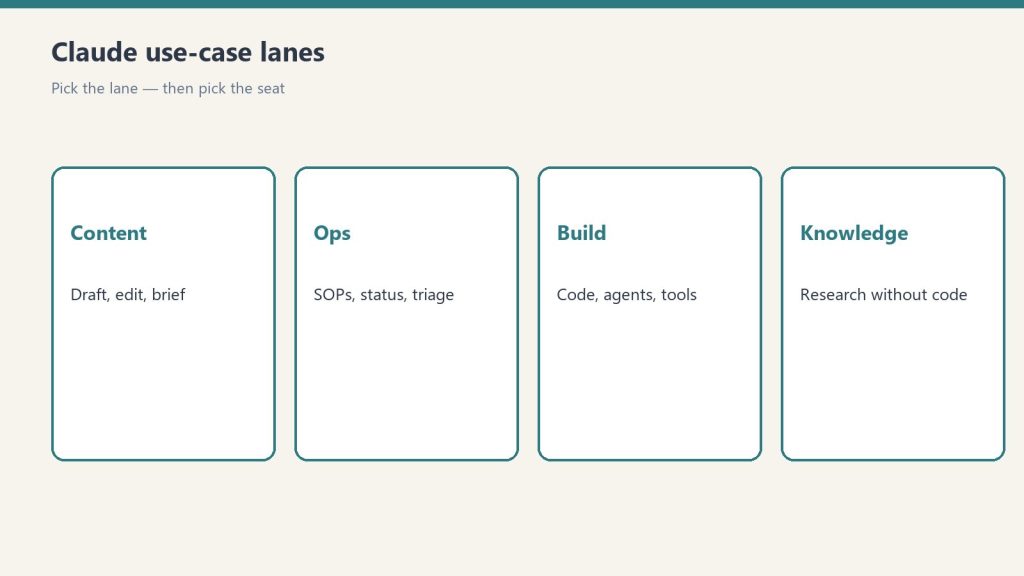
    Four cards for content, ops, build, and knowledge work with Claude
    The Claude Design Foundation.

    Claude Design, launched April 17 through Anthropic Labs, is the experimental product underneath the creative work positioning. It targets the quick-turnaround end of creative production: prototypes, slides, one-pagers, visual comps that need to exist fast without requiring a designer’s full attention. TechCrunch described it as “a new product for creating quick visuals” — which is accurate but undersells the strategic intent.

    Claude for Creative Work builds on top of Design by broadening the positioning to include writers, designers across disciplines, and creative professionals generally — not just the slide-deck-and-prototype use case that Design launched with.

    The Ecosystem Moat

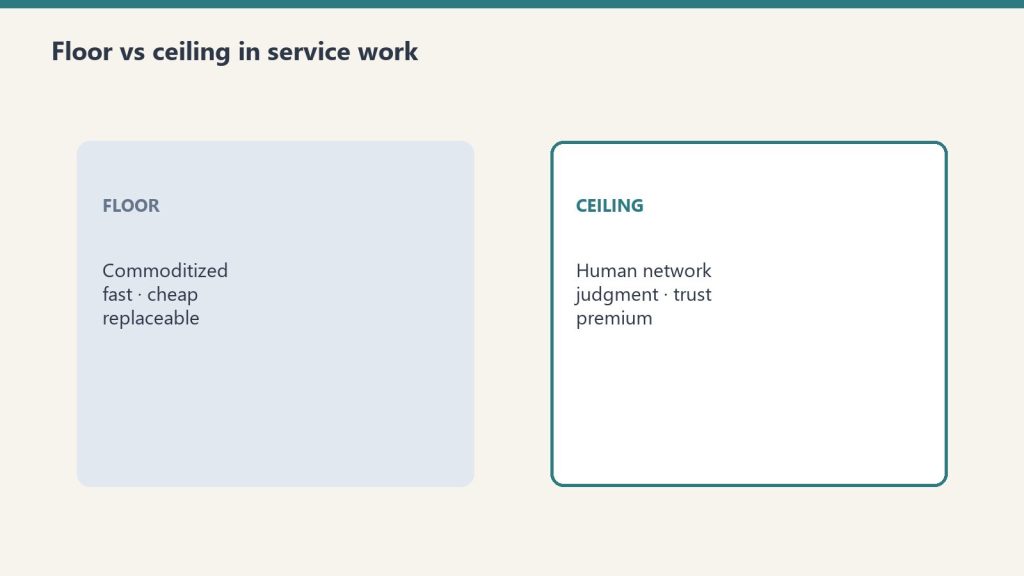
    Floor versus ceiling cards for commoditized work and human-network premium
    The ecosystem moat.

    The creative tools landscape that Claude is entering isn’t neutral territory. Adobe, Blender, Autodesk, Ableton, and Splice represent decades of workflow lock-in across visual design, 3D, architecture and engineering, music production, and sample-based creation. Any AI tool that wants to be genuinely useful to creative professionals has to meet those workflows where they exist — as plugins, integrations, or API connections — rather than asking professionals to leave their primary tools.

    Anthropic’s approach appears to be positioning Claude as the intelligence layer that works alongside those tools rather than replacing them. This is a different bet than Midjourney or DALL-E, both of which are destination products — you go to them, generate something, and bring it back. Claude for Creative Work, by contrast, is pitched as the assistant that’s present throughout the creative process, across whatever tools the professional is already using.

    How This Differs from ChatGPT’s Creative Pitch

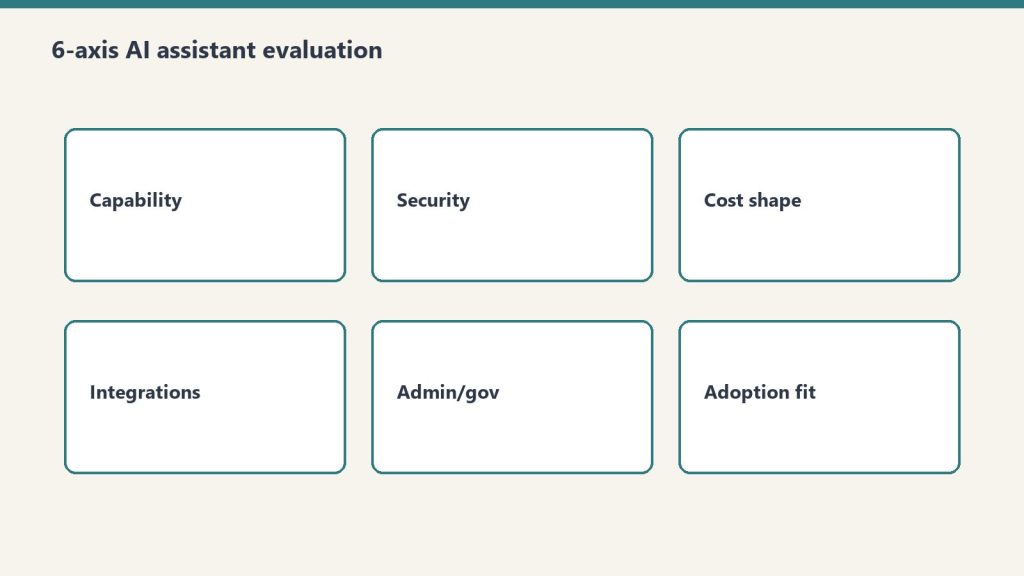
    Six evaluation cards for choosing an AI assistant platform
    How this differs from ChatGPT’s creative pitch.

    OpenAI has led its creative positioning with image generation — GPT-4o’s image capabilities, the DALL-E integration, Sora for video. The implicit argument is that AI’s most valuable creative contribution is generating visual assets. Anthropic’s bet is different: that the more valuable creative contribution is the thinking, editing, structuring, and iteration that happens around asset generation, not the generation itself.

    For writers, this is an obvious win — Claude’s long-form reasoning and editing capabilities are measurably stronger than image-focused models on text tasks. For visual designers, the argument is less obvious but still coherent: a model that can critique a comp, suggest revisions, explain why a layout isn’t working, and draft the copy that sits alongside the visual is more useful across the whole project than a model that can only generate a new image.

    What to Watch

    Claude for Creative Work is a positioning launch more than a features launch — the underlying capabilities have been available for some time. The question is whether the positioning will be accompanied by the integration work that makes it real: native plugins for Adobe Creative Cloud, Ableton Live, Blender, and the other dominant creative tools. Without those integrations, “Claude for Creative Work” is a marketing frame. With them, it’s a genuine workflow play.

    Watch the Anthropic Labs pipeline for integration announcements over the next 60–90 days. That’s where the creative tools bet either gets substantiated or stalls.

    Sources: Anthropic News | TechCrunch — Claude Design

    Related on Tygart Media: Claude for content · how to use Claude.

  • Infosys Anthropic Partnership: Claude in Regulated AI

    Infosys Anthropic Partnership: Claude in Regulated AI

    Last refreshed: October 20, 2026

    Infosys, India’s second-largest IT services company with over 300,000 employees and clients in virtually every regulated industry on the planet, announced a strategic collaboration with Anthropic on April 29, 2026. The partnership embeds Claude — including Claude Code — into Infosys Topaz AI, the company’s enterprise AI platform, targeting telecommunications, financial services, manufacturing, and software development verticals.

    What’s Actually Being Built

    Three stacked layers: chat UI, tools, agent runtime
    What’s actually being built.

    The collaboration begins with a dedicated Anthropic Center of Excellence inside Infosys’s telecom practice. This isn’t a reseller agreement or a marketing partnership — it’s an engineering buildout. The Center of Excellence structure means Infosys is committing internal resources to develop Claude-powered workflows specific to telecom use cases, with the intent to replicate the model across the other three target verticals.

    Claude Code’s inclusion is significant. Enterprise AI deployments at IT services firms historically mean wrapping AI around existing workflows — summarization, document processing, customer-facing chatbots. Embedding Claude Code signals that Infosys is building AI into the software development lifecycle itself, which is where the highest-value, highest-margin work in IT services actually lives.

    Why Regulated Industries Are the Real Story

    Five security domains: identity, data, code governance, audit, agents
    Why regulated industries are the real story.

    Telecom, financial services, and manufacturing are three of the most compliance-heavy verticals in enterprise technology. Data residency requirements, audit trails, explainability mandates, and sector-specific regulations (TRAI in India, FCA in the UK, SEC in the US for financial services) make AI deployment substantially more complex than in unregulated industries. The fact that Infosys is leading with these verticals rather than easier targets suggests genuine confidence in Claude’s compliance posture.

    For the Indian developer and enterprise market specifically, this partnership carries weight that a US-only announcement would not. Infosys is a trusted name in Indian boardrooms in a way that American AI labs, even well-regarded ones, simply aren’t yet. Anthropic gaining Infosys as an integration partner is a significant step toward the kind of enterprise credibility that accelerates procurement decisions.

    The INR Pricing Gap Remains Open

    It’s worth noting what the Infosys partnership doesn’t solve: direct access pricing for Indian developers and individual subscribers. Claude’s consumer and API pricing in India remains at ₹16,800/month for Pro — a figure that has generated sustained criticism in developer communities and on GitHub (issue #17432 on the Claude feedback tracker has been open for months with no response). Enterprise deals like the Infosys collaboration typically involve custom pricing negotiated well below list, which means the developers who most need relief from INR pricing aren’t the ones who benefit from this announcement.

    That gap is a content opportunity and a legitimate market gap. Anthropic’s APAC expansion is clearly accelerating — Sydney office, NEC Japan partnership, now Infosys India — but the individual developer pricing story in the region hasn’t kept pace with the enterprise narrative.

    Context: Anthropic’s APAC Quarter

    Comparison of Claude how-to fit versus local service page fit for assistants
    Context: Anthropic’s APAC quarter.

    The Infosys announcement is the third significant APAC move in the last two weeks. Anthropic opened a Sydney office and named Theo Hourmouzis as GM for Australia and New Zealand on April 27. The NEC Japan multi-year workforce upskilling collaboration was announced on April 24. Three moves in five days — India, Japan, Australia — is not coincidence. This is a coordinated APAC buildout, and Infosys is the India anchor.

    Source: Infosys Press Release

    Related on Tygart Media: Claude Partner Network · enterprise compliance · Claude for business.

  • Anthropic Cowork GA: Desktop Automation for Non-Developers

    Anthropic Cowork GA: Desktop Automation for Non-Developers

    Last refreshed: October 20, 2026

    Anthropic’s Cowork feature — the desktop automation tool aimed squarely at non-developers — moved out of research preview on April 29, 2026, and is now generally available on both macOS and Windows. It ships with a feature set that represents a meaningful step forward for anyone who has been running scheduled tasks, file workflows, and multi-step automations through Claude without writing a line of code.

    What’s New in the GA Release

    Three stacked layers: chat UI, tools, agent runtime
    What’s new in the Cowork GA release.

    The GA release lands on Pro, Max, Team, and Enterprise plans. The headline additions are expanded analytics, OpenTelemetry support for enterprise observability, and role-based access controls — the last of these being the signal that Cowork is now ready for team deployments, not just individual power users.

    Persistent agent threads are now live across both mobile (iOS and Android) and desktop, which means you can start a Cowork task on your laptop and monitor or manage it from your phone. The new Customize section consolidates skills, plugins, and connectors into a single panel, replacing what was previously a scattered setup experience across multiple menus.

    Recurring and on-demand task scheduling is also included, enabling the kind of “set it and check it” automation workflows that Cowork was always promising but only partially delivering during the preview period.

    Why This Matters for Non-Developers

    Four cards for content, ops, build, and knowledge work with Claude
    Why this matters for non-developers.

    Cowork’s core bet has always been that the most valuable use cases for AI automation don’t belong to engineers — they belong to operators, marketers, content teams, and business owners who know exactly what they want done but have no interest in writing Python scripts or JSON configs to get there. The GA release validates that bet with a production-grade infrastructure story: OpenTelemetry means IT and enterprise security teams can audit what the agents are doing; role-based access controls mean managers can delegate without handing over full system access.

    For the non-developer using Cowork day-to-day, the practical change is reliability. Research previews carry an implicit asterisk — “this works, mostly, until it doesn’t.” GA means the feature is supported, documented, and subject to real SLAs. Scheduled tasks that have been running through the preview period should now be more stable, and new automations can be built with the expectation that they’ll still work next month.

    The Enterprise Observability Story

    Five security domains: identity, data, code governance, audit, agents
    The enterprise observability story.

    The addition of Cowork data into the Analytics API and OpenTelemetry support is worth noting separately. This is the detail that unlocks enterprise adoption at scale. Procurement and security teams at larger organizations have consistently asked for auditability before green-lighting AI automation tools. Cowork now has an answer: every agent action can be traced, logged, and routed into whatever observability stack the enterprise already runs.

    For Team and Enterprise plan subscribers, this should accelerate internal approval processes for Cowork deployments that may have stalled during the preview period.

    What Stays the Same

    The fundamental Cowork model — Claude running autonomous tasks on behalf of the user, triggered by schedule or on-demand, guided by skills and connectors — is unchanged. If you’ve been running workflows in the preview, the transition to GA should be seamless. The Customize section reorganizes the setup experience but doesn’t require rebuilding existing configurations.

    Plans and pricing remain unchanged from the research preview tier placement — Cowork is included in Pro, Max, Team, and Enterprise, with no new add-on cost announced alongside the GA release.

    The Bottom Line

    Cowork GA is the milestone that turns a promising experiment into a product you can build operational workflows around. The combination of persistent threads, role-based access, and OpenTelemetry support brings Cowork into alignment with what enterprise buyers require from any automation tool they’re willing to run at scale. For individual users, the reliability improvement and the cleaner Customize panel are the day-one wins. For teams, the observability story is the green light many have been waiting for.

    Source: Anthropic Cowork Release Notes

    Related on Tygart Media: Claude Cowork · Cowork Routines.

  • Cascade View Everett: South Everett Neighborhood Guide

    Cascade View Everett: South Everett Neighborhood Guide

    Last updated: October 20, 2026 | Cascade View is the south Everett neighborhood most outsiders drive through on Everett Mall Way without ever noticing it has a name. The 6,391 people who live there know better.

    Where it sits: Cascade View is a primarily residential south Everett neighborhood bounded on its southern and western edges by Everett Mall Way and Evergreen Way, with Twin Creeks immediately to the east and Mill Creek a short drive to the south. Population is about 6,391; median home sale prices run around $765,000 in the most recent twelve-month window — up roughly 30 percent year over year. The neighborhood association meets quarterly under chair Michael Trujillo, who also chairs the adjoining Twin Creeks association.

    The Neighborhood People Drive Through to Get Somewhere Else

    If you’ve ever pulled off I-5 at Everett Mall Way to grab a coffee or hit the mall, you’ve been in Cascade View. Most people don’t realize it. The neighborhood doesn’t announce itself with the kind of arterial signage Boulevard Bluffs or Northwest Everett gets, and the commercial frontage along Everett Mall Way reads more like “south Everett retail strip” than “residential neighborhood with a name and a chair.”

    But step a couple blocks back from the arterial and Cascade View turns into one of south Everett’s most stable single-family residential pockets. The streets curve. The lots are wider than the apartment-dense corridors closer to Casino Road. The trees are mature. The dogs get walked. It’s the kind of neighborhood that gets quietly recommended to families relocating to the Everett area who want decent schools, a manageable commute, and a price point south of the city’s historic core.

    Where Cascade View Begins and Ends

    Cascade View sits in the southeast corner of the City of Everett, northeast of Mill Creek and northwest of Twin Creeks. The neighborhood’s southern and western borders are formed by Everett Mall Way and Evergreen Way — the two arterials that funnel commuters between south Everett, Mill Creek, and I-5. To the east, the neighborhood butts up against the Twin Creeks corridor; to the north, the neighborhood feeds into the broader south Everett residential grid.

    The whole footprint is about 1,522 occupied housing units, per the most recent demographic estimates available through Point2Homes and Niche. Of those, 60.8 percent are owner-occupied — a higher rate than south Everett’s apartment-dense corridors closer to Casino Road, but lower than the historic-core neighborhoods like Northwest Everett or Port Gardner. The remaining 39.2 percent are renter-occupied, which is consistent with what you’d expect from a neighborhood that’s mostly single-family but has a meaningful supply of duplexes and townhomes mixed in.

    The People Who Live Here

    Cascade View skews younger than Everett as a whole. The median age is 35, and adults between 25 and 44 make up about 32.2 percent of the neighborhood — the family-formation cohort. Another 23.6 percent are between 45 and 64, and roughly 13 percent are 65 and older. Average household income in 2023, the most recent year of full data, came in at $126,102.

    Demographically, Cascade View is among the more diverse residential pockets in south Everett. Roughly 56.1 percent of residents identify as White, 16.5 percent as Asian, and 6 percent as Black. About 70.4 percent of residents are U.S.-born citizens, 15.9 percent are naturalized citizens, and 13.7 percent are non-citizens — a profile that tracks closely with the broader south Everett pattern documented in the desk’s coverage of Stations Unidos and the Casino Road corridor.

    What a Cascade View Home Costs

    The neighborhood’s housing market has moved sharply over the past year. Per Homes.com’s most recent twelve-month rolling data, the median sale price for a Cascade View home was about $765,457 — up roughly 30 percent over the prior twelve-month period. NeighborhoodScout’s broader estimate puts the median real estate price closer to $643,898, reflecting different methodology and a larger sample window. Either figure tells the same basic story: Cascade View is no longer the entry-level south Everett bargain it was a decade ago.

    Rentals are a similar story. Average rent in Cascade View runs around $2,855 — meaningfully above Everett’s citywide average, but a notch below comparable Mill Creek and Lynnwood pricing. The math reflects the neighborhood’s position: residential enough to feel like a real neighborhood, accessible enough to I-5 and Everett Mall Way that it doesn’t carry the “you’ll need a car for everything” tax some of the more remote pockets do.

    The Neighborhood Association — Quarterly, Not Monthly

    The Cascade View Neighborhood Association is one of the more active in south Everett. Chair Michael Trujillo — a longtime fixture on Everett’s Council of Neighborhoods — currently chairs both Cascade View and the adjoining Twin Creeks association, with the explicit hope that a Twin Creeks resident will eventually step up so the two seats can be split again.

    Starting in 2023, the association shifted from monthly meetings to quarterly Community Meetings — a format the chair has said is meant to bring civic leaders directly into the neighborhood: Everett Police, Everett Fire, Everett Parks, and Everett Traffic departments cycle through the agenda alongside neighborhood updates. The quarterly cadence is also more sustainable for a volunteer-run association in a neighborhood where most adults are working full time and raising kids.

    Meeting dates and locations are published on the City of Everett’s neighborhood calendar at everettwa.gov/384/Cascade-View and on the association’s public Facebook page. Anyone who lives within the neighborhood boundaries can attend.

    Schools, Parks, and the Everyday

    Cascade View students are split between two school districts depending on the address — a quirk south Everett families know well. Some streets feed into Everett Public Schools and Cascade High; others fall inside Mukilteo School District boundaries and feed Mariner High School. The Mukilteo SD lookup at mukilteoschools.org/37434_3 is the cleanest way to confirm which district a given Cascade View address belongs to.

    For green space, the neighborhood is well-positioned. Forest Park is a short drive north on Evergreen Way, and the regional draw of Thornton A. Sullivan Park at Silver Lake is a quick hop to the northeast. Day-to-day errands run through Everett Mall and the surrounding retail along Everett Mall Way, which means most Cascade View households can hit groceries, hardware, and a coffee shop without getting on I-5.

    The Quiet Recommendation

    If you talk to long-term Cascade View residents, the recommendation comes out the same way every time: it’s a neighborhood that delivers the practical version of what people say they want when they say they’re looking for a neighborhood. Walkable streets without being downtown. Diverse without being transient. Stable without being stagnant. A volunteer chair who actually shows up. A market that’s appreciating, but not so fast that long-time owners feel taxed out.

    Cascade View is the next neighborhood on the city’s 19-neighborhood list to get a standalone spotlight on this desk — and after years of being the south Everett pocket people drive through to reach Mill Creek, that feels overdue.

    Frequently Asked Questions

    Where is the Cascade View neighborhood in Everett?

    Cascade View is a south Everett neighborhood located northeast of Mill Creek and northwest of Twin Creeks. Its southern and western borders are formed by Everett Mall Way and Evergreen Way. The neighborhood is part of the City of Everett’s 19 official neighborhoods and is administered through the Office of Neighborhoods.

    What is the population of Cascade View?

    Cascade View has a population of about 6,391, with roughly 1,522 occupied housing units. About 60.8 percent of those units are owner-occupied and 39.2 percent are renter-occupied. The median age is 35, and the average household income in 2023 was $126,102.

    How much do homes in Cascade View cost?

    The median sale price for a Cascade View home over the past twelve months was about $765,457, up roughly 30 percent year over year, per Homes.com data. NeighborhoodScout’s broader median real estate estimate is closer to $643,898, reflecting a longer sample window. Average rent in the neighborhood is around $2,855.

    Does the Cascade View Neighborhood Association still meet?

    Yes. The association shifted from monthly meetings to quarterly Community Meetings starting in 2023, with civic leaders from Everett Police, Fire, Parks, and Traffic departments cycling through agenda time. Chair Michael Trujillo also currently chairs the adjoining Twin Creeks association. Meeting dates are published on the City of Everett’s Cascade View page at everettwa.gov/384/Cascade-View.

    Which school district serves Cascade View?

    Cascade View is split between Everett Public Schools and Mukilteo School District depending on the address. Some streets feed into Cascade High School (EPS); others feed into Mariner High School (Mukilteo SD). The Mukilteo SD address lookup at mukilteoschools.org/37434_3 is the cleanest way to confirm which district a specific Cascade View address belongs to.

  • Mukilteo School District: 2026 South Everett Family Guide

    Mukilteo School District: 2026 South Everett Family Guide

    Last updated: October 20, 2026 | South Everett families have two school district options depending on which side of Mukilteo Speedway and Casino Road they call home. Here’s what to know about the one most outsiders forget exists.

    The short answer: Mukilteo School District serves more than 15,200 students across 24 schools — including a sizable chunk of south Everett residents who live south of Casino Road, along Picnic Point Road, around Lake Stickney, and west toward the Mukilteo waterfront. After voters narrowly rejected a $400 million capital bond in February 2026, district staff recommended bringing the measure back to the ballot in November. South Everett families will pay attention.

    Two Districts, One Everett

    Most coverage of Everett schools focuses on Everett Public Schools — the 19,000-student district that runs Cascade, Everett, Jackson, and Sequoia high schools and serves the bulk of the city. But a real piece of south Everett — the streets where Casino Road, Evergreen Way, and Mukilteo Speedway funnel commuters toward Boeing and Paine Field — actually lives inside the boundaries of Mukilteo School District No. 6, headquartered at 9401 Sharon Drive in Everett 98204.

    If you live in Boulevard Bluffs, the western half of Pinehurst-Beverly Park, the Picnic Point corridor, or the streets around Lake Stickney, your kids likely catch a Mukilteo SD bus, not an EPS bus. The two districts share a city, but operate as completely separate institutions with separate boards, levies, and bond cycles.

    The District at a Glance

    Mukilteo School District was organized in 1878 — the same decade Everett itself was being plotted by James J. Hill’s railroad interests on Port Gardner Bay. Today the district enrolls more than 15,200 students across:

    • 12 elementary schools: Challenger, Columbia, Discovery, Endeavour, Fairmount, Horizon, Lake Stickney, Mukilteo, Odyssey, Olivia Park, Picnic Point, and Serene Lake
    • Four middle schools: Explorer, Harbour Pointe, Olympic View, and Voyager
    • Three high schools: Mariner (opened September 8, 1970), Kamiak (opened September 8, 1993), and ACES/Big Picture (alternative)
    • One kindergarten center

    The district’s service area covers all of Mukilteo, a portion of south Everett, Picnic Point, the majority of Lake Stickney, and a portion of Martha Lake. To the north and east, the boundary hands off to Everett Public Schools. To the south, it hands off to Edmonds School District. The Emander district — a one-room schoolhouse founded in 1919 near what is now Mariner High School — was consolidated into Mukilteo SD in 1945, which is how the district’s service area first stretched into south Everett.

    A District Built by South Everett Families

    Mukilteo SD’s student population is a different mix than the district’s name suggests. Per the most recent federal data, the district’s minority enrollment runs about 70 percent, and roughly 39.5 percent of students are economically disadvantaged. Those numbers reflect the families packed into the apartment corridors along Casino Road, around Mariner High School, and through the south Everett neighborhoods that have absorbed decades of immigration from Latin America, Southeast Asia, the Pacific, and East Africa.

    If you’ve read the desk’s coverage of Stations Unidos and the Casino Road anti-displacement work, the same demographic picture is showing up at the schoolhouse door. The students riding Mukilteo SD buses out of south Everett are part of the same community story — just a different institution telling it.

    February 2026: The Bond That Almost Passed

    On February 11, 2026, Mukilteo SD voters considered a $400 million capital bond — the district’s biggest ask in years. The measure landed at 57.2 percent yes. In any normal democratic context, that’s a comfortable margin. But school bonds in Washington require a 60 percent supermajority to pass, so the measure failed by 2.8 percentage points.

    That outcome triggered exactly the conversation any district has after a near-miss: redo it, or rework it. On March 25, 2026, the Mukilteo school board received a staff recommendation to put the bond measure back on the ballot in November 2026. The proposal would impact several sites across the district, including Mariner High School — the campus that anchors south Everett’s Mukilteo SD experience.

    The financial impact, as presented by district staff: passage of the 2026 bond plus renewal of the existing Educational Programs & Operations (EP&O) levy would add about 38 cents per $1,000 of assessed home value. For a home assessed at $659,200 — roughly the median in the district — that pencils out to about $5 a week.

    Why South Everett Should Pay Attention

    For families in Twin Creeks and the south Everett apartment corridors who fall inside Mukilteo SD lines, the November vote is a property-tax decision and a school-quality decision in the same breath. Aging buildings on the bond list include classroom additions, seismic upgrades, HVAC replacements, and program-space modernizations — the kind of work that determines whether a 1970s-era Mariner classroom feels like 2026 or like the year it was built.

    It’s also a useful contrast point. Everett Public Schools’ record 96.3 percent graduation rate and Cascade High’s IB Program sit at the top of the district’s page. Mukilteo SD has its own headline numbers — Mariner’s comeback story over the past decade, Kamiak’s consistent placement on state academic recognition lists, and the district’s capacity to absorb the demographic complexity of south Everett. Different districts, different dashboards, but same kids in the same city.

    How to Find Out Which District You’re In

    The simplest way: pull up your address on the Mukilteo SD “Which School Should Your Child Attend?” tool at mukilteoschools.org. The tool returns the assigned elementary, middle, and high school in seconds. If your address comes back blank, you’re probably inside Everett Public Schools’ boundaries instead — and the EPS lookup at everettsd.org will confirm.

    For new south Everett residents arriving from outside Snohomish County, the most common moment of confusion: assuming “Everett address” means “Everett Public Schools.” It often doesn’t. The Casino Road and Evergreen Way corridors, in particular, have addresses that read as Everett 98204 but feed into Mukilteo SD elementaries and Mariner High School. Knowing the difference before September is worth the ten minutes it takes to look up.

    Frequently Asked Questions

    Does Mukilteo School District serve Everett?

    Yes. Mukilteo SD’s service area includes a portion of south Everett — most prominently the apartment corridors along Casino Road, the Lake Stickney area, the Picnic Point Road corridor, and parts of the western edge of south Everett near Mukilteo Speedway. The district shares Everett with Everett Public Schools, which serves the rest of the city.

    How big is Mukilteo School District?

    The district enrolls more than 15,200 students across 24 schools: 12 elementary schools, four middle schools, three high schools (Mariner, Kamiak, and ACES/Big Picture), and one kindergarten center. Mariner High School, opened September 8, 1970, is the district’s south Everett anchor.

    Did Mukilteo’s bond pass in February 2026?

    No. The $400 million capital bond received 57.2 percent yes votes — strong support, but short of the 60 percent supermajority Washington requires to approve a school bond. On March 25, 2026, district staff recommended putting the measure back on the November 2026 ballot.

    What would the 2026 bond cost a typical homeowner?

    According to district staff figures presented in March 2026, passage of the bond plus renewal of the EP&O levy would add about 38 cents per $1,000 of assessed home value — roughly $5 a week on a home assessed at $659,200.

    How do I find out which Everett school district my address is in?

    Use the Mukilteo SD school lookup at mukilteoschools.org/37434_3, or the Everett Public Schools attendance area tool at everettsd.org. Both tools return your assigned schools by address. If you’re between districts, your assigned school will determine which lookup shows results.

  • Crystal Method at APEX Everett with Rabbit in the Moon

    Crystal Method at APEX Everett with Rabbit in the Moon


    Q: What is The Crystal Method known for?
    The Crystal Method is a GRAMMY-nominated American electronic music act — originally the duo of Ken Jordan and Scott Kirkland, formed in Las Vegas in 1993 — who pioneered big beat electronica in the United States. Their platinum-selling debut album Vegas (1997) is one of the best-selling electronic albums in American history. Scott Kirkland now carries the project solo. On June 13, 2026, The Crystal Method headlines Kings Hall at APEX Everett alongside Florida rave legends Rabbit in the Moon.

    Verdict: GO. A GRAMMY-nominated act who headlined EDC, Lollapalooza, and Ultra Miami paired with one of the most theatrical rave acts America ever produced — all in an 800-person room. This is the kind of bill that plays much bigger cities than Everett.

    The Crystal Method and Rabbit in the Moon are coming to Kings Hall at APEX Everett on Saturday, June 13, 2026. Show time is 9:00 PM. Tickets start at $64 through Live Nation and Ticketmaster. This is an 18-and-older event.

    If you’re an electronic music fan living anywhere in Snohomish County and you’ve been waiting for a show that doesn’t require a drive to Seattle or a trip to a festival — this is the one.

    The Crystal Method: 30 Years of American Electronic Music, Distilled to One Stage

    There’s a version of American popular culture in the late 1990s and early 2000s that doesn’t exist without The Crystal Method’s fingerprints on it. The music appeared in video games, in films, in car commercials, in television soundtracks for the better part of a decade. It was everywhere because it was good — a specific American take on big beat and electronica that felt more muscular than what was coming out of the UK at the same time.

    Ken Jordan and Scott Kirkland formed The Crystal Method in Las Vegas in 1993, cutting their teeth on the early Los Angeles rave circuit after relocating. Their debut album, Vegas, came out in August 1997. It sold more than one million copies in the United States and was certified platinum by the RIAA in 2007. For a genre that was still fighting for shelf space in American record stores, that number meant something.

    They were GRAMMY-nominated. They headlined EDC, Lollapalooza, and Ultra Miami. They played more than 1,300 shows over the course of their run together. The Tweekend album in 2001 and Legion of Boom in 2004 followed Vegas into the Billboard Top 50 — high-altitude performance for electronic albums in that era. Divided by Night and the records that followed kept the project active through the 2010s.

    In 2017, Ken Jordan retired from music. Scott Kirkland carried the name forward as a solo project, continuing to write and perform as The Crystal Method. His most recent release, The Trip Out, is the seventh studio album under the Crystal Method banner and his second solo outing — a record that sounds like someone who has been making this music for 30 years and still finds it interesting.

    When Kirkland takes the stage at Kings Hall in June, he brings all of that history with him. The set will pull from the full catalog. If you have any nostalgia for Busy Child or Keep Hope Alive or Trip Like I Do, those songs still hit in a live setting in ways that the recordings don’t fully prepare you for.

    Rabbit in the Moon: The Most Theatrical Rave Act America Ever Produced

    The Crystal Method is the headliner. Rabbit in the Moon is the reason to arrive early.

    Rabbit in the Moon formed in Tampa, Florida, in the fall of 1992 — producer T.Confucius, DJ Monk, and performance artist Bunny. Orlando in the early 1990s was the underground rave capital of the American Southeast, and Rabbit in the Moon was among the acts who built that scene from nothing. They were among the first artists to mix theatrical live performance — costumes, staging, physical presence — with rave music at a time when most electronic acts were simply standing behind CDJs.

    Their 1993 track “O.B.E.” (Out-of-Body Experience) became one of the foundational records of American progressive breaks. Muzik magazine named it the most sought-after record of the previous decade when they ranked it in 2003 — a decade after it came out. That’s the kind of cultural shelf life that requires something genuinely original at the source.

    Their style draws from psychedelic trance, house music, and breakbeat, with a live presentation that prioritizes spectacle. A Rabbit in the Moon set isn’t background music for a room. It demands your attention. If you’ve never seen them, June 13 is an education.

    Kings Hall at APEX: The Right Room for This Bill

    This show happens in Kings Hall, the large-format concert room on the third floor of APEX Art and Culture Center at 1611 Everett Ave, Everett WA 98201.

    Kings Hall holds around 800 people. That’s the critical number here. The Crystal Method has played festival main stages and clubs that hold 5,000. Rabbit in the Moon has played massive warehouse events. When either of these acts plays a room this size, the energy concentrates. The show you get in an 800-person room is categorically different from what happens on a festival bill at scale — closer, louder from your position, more immediate.

    APEX has been booking at this level consistently: Antwane Tyler, Fretland, and Racyne Parker in May, The Crystal Method in June, Los Lobos and Los Lonely Boys in August. The booking calendar suggests the venue is staking a claim as a regional anchor for acts that don’t have a natural home between small clubs and arena shows. This is exactly the kind of venue Everett’s cultural calendar has needed.

    The venue is 18+ for this show. Tickets start at $64 through Live Nation (livenation.com) and Ticketmaster.

    The verdict breakdown:

    • Act unique to this market? Yes. Neither The Crystal Method nor Rabbit in the Moon has a scheduled Pacific Northwest show outside Everett in this window. If you want to see this bill in 2026, this is your show.
    • Right room for the act? Yes. 800 seats focuses rather than dilutes what both these acts do live.
    • Ticket price fair-market or below? From $64 for a co-headlining bill at this level is below what comparable shows cost in Seattle or Portland.

    Three for three. GO.

    What to Know Before You Go

    Date: Saturday, June 13, 2026
    Show time: 9:00 PM
    Venue: Kings Hall at APEX Art and Culture Center, 1611 Everett Ave, 3rd Floor, Everett WA 98201
    Phone: (425) 374-8307
    Age restriction: 18 and older
    Tickets: From $64 at Live Nation and Ticketmaster

    While you’re planning June, Sorticulture runs June 5–7 at Hewitt Avenue and Colby — a free outdoor garden festival that turns downtown into a different city for a weekend. If you’re making early June a cultural month, the two events don’t compete; they layer. The Schack Art Center’s Contemporary Northwest Artists Exhibition opens May 28 and runs through August 22 — the gallery is worth hitting before or after the show.

    Frequently Asked Questions

    Is The Crystal Method still active?

    Yes. Scott Kirkland continues to produce and perform as The Crystal Method following Ken Jordan’s retirement from music in 2017. The project’s seventh studio album, The Trip Out, is Kirkland’s second solo outing under the banner.

    Who is Rabbit in the Moon?

    Rabbit in the Moon is a Florida-based electronic music act formed in Tampa in 1992, consisting of producer T.Confucius, DJ Monk, and performer Bunny. Their 1993 track “O.B.E.” was ranked by Muzik magazine in 2003 as the most sought-after record of the previous decade. They were among the first acts to combine theatrical stage performance with rave music in the United States.

    How old do you have to be for the Crystal Method show at APEX Everett?

    The June 13, 2026 show at Kings Hall is an 18-and-older event. Valid ID required at entry.

    How much are tickets for Crystal Method at APEX Everett?

    Tickets start at $64 and are available through Live Nation and Ticketmaster. Prices may increase as the June 13 date approaches.

    Where is Kings Hall at APEX Everett?

    Kings Hall is on the third floor of APEX Art and Culture Center, located at 1611 Everett Ave, Everett WA 98201. The venue holds approximately 800 people and is APEX’s flagship mid-size concert room.

  • Washington Wolfpack vs Albany Firebirds: May 2 Game Info

    Washington Wolfpack vs Albany Firebirds: May 2 Game Info

    When do the Washington Wolfpack play next at Angel of the Winds Arena? The Washington Wolfpack host the Albany Firebirds on Saturday, May 2 at 3:00 PM PT at Angel of the Winds Arena in Everett. It’s Teacher’s Night with a drawstring bag giveaway. The game airs on VICE TV nationally and Fox 13+ locally.

    The Washington Wolfpack’s home season kicks into gear on Saturday, and the opponent couldn’t be more significant.

    After a rough Week 3 road opener — a 48-3 loss to the Nashville Kats that the Wolfpack would like to forget — Everett’s indoor football team returns to Angel of the Winds Arena on Saturday, May 2 at 3:00 PM PT to face the Albany Firebirds, the defending Arena Crown champions. It’s Teacher’s Night, there’s a drawstring bag giveaway for the first fans through the door, and the game airs on VICE TV and Fox 13+.

    Who Are the Albany Firebirds?

    Let this sink in: in 2025, the Albany Firebirds went 10-0 in the regular season. Undefeated. Then they beat the Nashville Kats 60-57 in the Arena Crown championship.

    They are, in every sense, the defending champions — and they are very good. Coming into 2026, Albany enters as the team everyone is chasing. A perfect regular-season record plus a championship means they carry a target on their back, but they’ve earned every bit of it. For the Wolfpack, hosting the Firebirds this early in the season is a chance to make a statement — or a measure of exactly where the roster stands after the Nashville result.

    The Wolfpack Need a Statement Right Now

    Let’s be direct: a 48-3 loss on the road in Nashville was a rough start to Arena Football One play. Nashville’s Kats had already shown they were one of the hotter early-season teams in the league, but getting held to three points against anyone is a tough look for a team building a fanbase in Everett.

    The good news about indoor football: it’s fast, it’s high-scoring, and one game of good execution changes the narrative entirely. A competitive showing — or better, a win — against the defending Arena Crown champions at AOTW would do exactly that.

    The Wolfpack home building is a different animal from a road trip to Nashville. Everett fans who fill Angel of the Winds Arena are loud, and indoor football’s compact atmosphere makes crowd noise a genuine factor. Saturday is the moment to flip the script.

    Teacher’s Night — Bring an Educator You Know

    It’s Teacher’s Night at AOTW on May 2. The Wolfpack are rolling out a drawstring bag giveaway — Applebee’s is the presenting sponsor for the promotional night — so arrive early if you want one. These giveaways go fast at Wolfpack home games.

    If you’ve never brought a teacher, coach, or educator friend to an AF1 game, this is the Saturday to do it. Indoor football at AOTW moves at a pace that hooks first-timers: constant action, walls in play, scoring drives that take 30 seconds. A Saturday afternoon 3:00 PM kickoff with a giveaway and defending champions on the field is about as good an introduction as you’ll find.

    Watch on VICE TV or Fox 13+

    Can’t make it in person? The game airs nationally on VICE TV and locally on Fox 13+ in the Seattle-Everett market. Arena Football One’s partnership with VICE has been one of the surprises of the league’s broadcast strategy — it reaches a young, sports-curious audience that’s perfect for AF1’s brand of football. Fox 13+ keeps local fans covered.

    Kickoff is at 3:00 PM PT on Saturday. Set a reminder.

    Getting to Angel of the Winds Arena

    Angel of the Winds Arena is at 2000 Hewitt Avenue in downtown Everett — on the main transit corridor, a short walk from Everett Station. Downtown parking garages are available nearby. Tickets are at ticketmaster.com or the AOTW box office. Group tickets and fundraising packages are available through the Wolfpack’s website at washingtonwolfpack.com.

    The Bigger Picture for Indoor Football in Everett

    The Washington Wolfpack are building something in a market that loves sports and has been underserved in the spring and early-summer sports calendar. While the AquaSox are on the road at Tri-City and the Silvertips are in their pre-Championship Final waiting period, the Wolfpack are holding down the arena on Saturday afternoon.

    This spring in Everett sports has been unusually stacked — Silvertips heading to the WHL Championship Final, AquaSox in a competitive Northwest League season, and now a Wolfpack team that has a chance to make a real statement against one of the best teams in AF1.

    Saturday is one of those afternoons worth clearing your schedule for. 3:00 PM. Angel of the Winds Arena. Teacher’s Night. Defending champions.

    Frequently Asked Questions

    What time do the Washington Wolfpack play on May 2?

    Kickoff is at 3:00 PM PT on Saturday, May 2 at Angel of the Winds Arena, 2000 Hewitt Avenue, Everett.

    What is Teacher’s Night at the Wolfpack game?

    Teacher’s Night on May 2 is presented by Applebee’s (“A is for Applebee’s”) and features a drawstring bag giveaway for fans attending the Washington Wolfpack vs. Albany Firebirds game at Angel of the Winds Arena.

    Who are the Albany Firebirds?

    The Albany Firebirds are the defending Arena Crown champions. They went 10-0 in the 2025 regular season before beating the Nashville Kats 60-57 for the championship.

    How can I watch the Wolfpack vs. Albany game?

    The May 2 game airs on VICE TV nationally and Fox 13+ locally in the Seattle-Everett market. Kickoff is 3:00 PM PT.

    What is the Wolfpack’s 2026 record?

    The Washington Wolfpack are 0-1 in 2026 after a 48-3 road loss to the Nashville Kats in Week 3.

    Sources: Washington Wolfpack official website (washingtonwolfpack.com), OurSports Central, Arena Football One / VICE TV broadcast partnership announcement, Fox 13 Seattle, Ticketmaster.

  • WHL Championship Final: Who Will the Silvertips Face Next?

    WHL Championship Final: Who Will the Silvertips Face Next?

    Who will the Silvertips face in the 2026 WHL Championship Final? The Everett Silvertips are awaiting the winner of the WHL Eastern Conference Final between the Prince Albert Raiders and Medicine Hat Tigers. Through three games, Medicine Hat leads 2-1. Games 1-2 of the Championship Final are scheduled for May 8-9 at Angel of the Winds Arena in Everett.

    The Everett Silvertips swept their way through two rounds of the 2026 WHL Playoffs and have been waiting since last Tuesday’s series-clinching win over Penticton for the Eastern Conference to sort itself out.

    Now we know who’s left.

    The WHL Eastern Conference Final is a best-of-seven between the Prince Albert Raiders (No. 1 seed, Eastern Conference) and the Medicine Hat Tigers (No. 2 seed, defending WHL champions). Through three games, the Tigers lead 2-1. Game 4 is scheduled for Wednesday, April 29 in Medicine Hat. Whoever wins the series will meet Everett in the WHL Championship Final, with Games 1-2 at Angel of the Winds Arena on May 8-9.

    Let’s break down who the Silvertips might face — and what it means either way.

    The Prince Albert Raiders: The East’s Top Seed

    The Prince Albert Raiders were the best team in the WHL Eastern Conference during the 2025-26 regular season, and they made that clear in Game 1 of this series — an 8-3 statement win at the Art Hauser Centre that was fueled by a dominant power play. The Raiders scored three times on the man-advantage, and in front of 3,299 fans in Prince Albert, it looked like the East was theirs for the taking.

    Then Game 2 happened. Medicine Hat shut them out 5-0 in their own building. Then the Tigers took Game 3, 2-1 in overtime in Prince Albert, with Raiders defenseman Daxon Rudolph opening the scoring before the Tigers clawed back. That OT loss was gut-punch hockey — PA outplayed Medicine Hat for stretches but came up empty when it counted most.

    The Raiders have real weapons: their power play has been a weapon all season, and they’re deep up front. If they advance, the Silvertips’ special-teams units — which ranked among the WHL’s best this season — face a real test.

    The Medicine Hat Tigers: Defending Champions

    The Medicine Hat Tigers arrived at the Eastern Conference Final with something Prince Albert doesn’t have: a championship banner already hanging in their building. The defending WHL champions swept their previous round and are showing exactly the kind of resilience that defines successful title defenses.

    Goaltender Jordan Switzer has been the backbone of this run. Shutting out the East’s top seed on the road in Game 2 isn’t an accident — it’s a compete level that medicine-hat teams have made their identity. Their ability to win in Prince Albert’s arena (they’ve done it twice in three games) is the most telling indicator of where this series is going.

    If Medicine Hat comes out of the East, Everett gets a matchup against the defending champions — the ultimate proving ground for a Silvertips team that has played like the WHL’s best team over 13 playoff games.

    What This Means for the Silvertips

    Everett has been the clear class of the WHL Western Conference this postseason. Their 12-1 playoff record, two sweeps, and a double-overtime comeback win in Game 2 of the Western Conference Final against Penticton — this is a team playing championship-level hockey.

    Whichever team comes out of the East will be road-tested, battle-hardened, and carrying playoff momentum. No soft landing for the Silvertips. That said, Everett’s advantages are significant:

    • Anders Miller in goal, whose .948 save percentage through the playoffs has been the best in WHL playoff history for a goaltender with 9+ games played
    • Landon DuPont and Jere Vanhanen leading the offense with 13 and 14 playoff points respectively
    • Carter Bear adding a shorthanded goal dimension that makes the Silvertips dangerous in all situations
    • Angel of the Winds Arena for Games 1 and 2 — one of the loudest buildings in the WHL when the Silvertips are rolling

    Both opponents — Raiders or Tigers — present legitimate challenges. Prince Albert’s power play against Everett’s penalty kill. Medicine Hat’s battle-hardened goaltending against Anders Miller. It’s the kind of matchup that makes WHL Championship Finals memorable.

    Championship Final Schedule (Games 1-2 in Everett)

    Get these on your calendar now. The opponent will be confirmed as soon as the Eastern Conference Final concludes — possibly as early as tonight if Game 4 is decisive, or over the next several days if the series extends.

    • Game 1: Thursday, May 8 — Angel of the Winds Arena, Everett
    • Game 2: Friday, May 9 — Angel of the Winds Arena, Everett
    • Games 3-4: Eastern finalist’s arena (dates TBD)
    • Games 5-7: To be determined as series unfolds

    Tickets available at Ticketmaster.com and the AOTW box office. If you’ve been watching the Silvertips’ playoff run, you know this building is going to be electric on May 8.

    Frequently Asked Questions

    When is the WHL Championship Final 2026?

    Games 1-2 are at Angel of the Winds Arena in Everett on May 8-9. Games 3-4 shift to the Eastern finalist’s home arena. The full schedule will be confirmed once the Eastern Conference Final concludes.

    Who will the Silvertips play in the WHL Championship Final?

    The opponent is being determined in the WHL Eastern Conference Final between the Prince Albert Raiders (No. 1 East seed) and the Medicine Hat Tigers (No. 2 East seed, defending WHL champions). Medicine Hat leads the series 2-1 through three games, with Game 4 on April 29.

    What is the Silvertips’ 2026 playoff record?

    The Everett Silvertips are 12-1 through the first two rounds, having swept the Kelowna Rockets in the WHL West Second Round and defeated the Penticton Vees 4-1 in the Western Conference Final.

    What is Anders Miller’s save percentage in the 2026 WHL playoffs?

    Anders Miller’s save percentage is .948 through the 2026 WHL playoffs — the best recorded mark in WHL playoff history for a goaltender with nine or more games played.

    Where can I buy Silvertips WHL Championship Final tickets?

    Tickets for Games 1-2 (May 8-9 in Everett) are available through Ticketmaster.com and at the Angel of the Winds Arena box office at 2000 Hewitt Avenue, Everett.

    Sources: WHL.ca, CHL.ca, Prince Albert Raiders official releases, OurSports Central, HeraldNet, Penticton Western News. WHL ECF Game 4 (April 29) result not yet available at run time — article reflects verified series state through Game 3.

  • Everett AquaSox Beat Tri-City 8-3 Behind Suisbel’s 5 RBIs

    Everett AquaSox Beat Tri-City 8-3 Behind Suisbel’s 5 RBIs

    What was the score of the AquaSox vs. Tri-City game on April 28, 2026? The Everett AquaSox defeated the Tri-City Dust Devils 8-3 in the series opener at Gesa Stadium in Pasco, WA. Third baseman Luis Suisbel drove in five runs, including a three-run home run — his first of the 2026 season — in the second inning.

    PASCO, Wash. — If you needed a sign that the Everett AquaSox are starting to figure some things out, Tuesday night at Gesa Stadium gave you plenty to work with.

    Third baseman Luis Suisbel did what no one in a Frogs uniform had done yet this season: he launched a home run. Then he kept hitting. By the time it was over, Suisbel had collected five RBIs in an 8-3 AquaSox win over the Tri-City Dust Devils — the perfect way to open a six-game road series in Pasco.

    The Big Inning: Four Runs Before You Could Blink

    The AquaSox got to work fast in the top of the second inning, stacking a four-run frame that put Tuesday night’s result mostly out of reach before the Dust Devils could breathe.

    Josh Caron singled and Carlos Jimenez worked a walk. That brought up Suisbel with runners on first and second, and he turned on a pitch and drove it to right field — his first home run of the 2026 season, a three-run shot that put Everett up 3-0 just like that.

    Brandon Eike wasn’t done adding to the damage. Two batters later, he crushed a solo home run — his fourth of the year, and his second in consecutive games — to make it 4-0 before Tri-City had even posted a run.

    Tri-City got one back in the bottom of the second. Ryan Nicholson doubled, Anthony Scull singled, and Randy De Jesus hit a sacrifice fly to cut the deficit to 4-1. It felt like a momentum moment for the Dust Devils. It wasn’t.

    Suisbel Piles On

    If you thought five RBIs in a single game was done after that second inning, Suisbel had more to say. With the bases loaded and two out in the top of the third, he punched a two-run single into right field to push the lead to 6-1.

    That’s five RBIs through three innings — tied for a career high, originally set back in August 2023. On the road. In a series opener. Against a Northwest League club that needed an answer and didn’t get one.

    Dollard Keeps It Clean

    Starting pitcher Taylor Dollard handled his business on the mound, working four innings and allowing just one earned run on five hits. He’s had his ups and downs this year, but Tuesday looked like the cleaner version of Dollard — attacking the strike zone, limiting damage, and handing the ball to the bullpen with a comfortable lead.

    Everett stretched the margin further in the top of the seventh. Anthony Donofrio came through with an RBI single, and Jimenez drew a bases-loaded walk to make it 8-2. Lucas Kelly closed things out, striking out Tri-City’s Jake Munroe to seal the 8-3 final.

    Why This Road Trip Matters

    The AquaSox arrived in Pasco for six games (April 28–May 3) after finishing their home series against the Spokane Indians. The Tri-City series is a genuine test — the Dust Devils were one of the hotter early-season clubs in the Northwest League, and Gesa Stadium has historically been tough on visitors.

    Tuesday’s win is a statement that Everett can generate offense on the road. Suisbel’s breakout night gives the lineup another bat to watch alongside the already-established threat of Felnin Celesten, who won NWL Player of the Week after hitting .471 with 11 hits in five games against Spokane. There are five more games left in this series — Wednesday through Sunday (6:30 PM starts weeknights, 1:30 PM on Sunday, May 3).

    Prospect Watch: Suisbel, Eike, and the Middle of the Order

    Luis Suisbel is a corner infield prospect in the Seattle Mariners organization, and nights like Tuesday are exactly what development staffs want to see: a guy finding his timing, trusting his approach, and delivering in run-scoring situations. Brandon Eike’s hot streak — four home runs on the year, multiple multi-hit efforts — has been one of the quiet stories of the early AquaSox season. With Celesten adding pop at the top, this is becoming a lineup that’s harder to manage from top to bottom.

    The Mariners have High-A affiliates for a reason: these are the guys who become major league contributors in three or four years. On nights like Tuesday, Gesa Stadium turns into a reminder that the pipeline is doing its job.

    Frequently Asked Questions

    When do the AquaSox play next at Tri-City?

    The Everett AquaSox continue their six-game road series at Gesa Stadium in Pasco. Games run April 29–30 and May 1–3, with 6:30 PM starts Tuesday through Saturday and a 1:30 PM finale on Sunday, May 3.

    Who are the top AquaSox prospects to watch in 2026?

    Key names include Felnin Celesten (NWL Player of the Week, Week 3), Luis Suisbel (five RBIs Tuesday, first home run of the season), Brandon Eike (four home runs in 2026), Carlos Jimenez, and starter Taylor Dollard.

    What is Gesa Stadium?

    Gesa Stadium is the home of the Tri-City Dust Devils, the Colorado Rockies High-A affiliate, in Pasco, Washington — approximately a 2.5-hour drive from Everett across the Cascades.

    Source: Everett AquaSox official release via OurSports Central, MiLB.com gameday data.

  • FF(X) Frigate Contract: Naval Station Everett Homeport Bid

    FF(X) Frigate Contract: Naval Station Everett Homeport Bid

    Q: Has the Navy awarded a contract for the new FF(X) frigate?
    A: Yes. On April 28, 2026, the U.S. Navy awarded a $282.9 million contract to HII’s Ingalls Shipbuilding in Pascagoula, Mississippi, to begin lead yard support work on the FF(X) class frigate — the Navy’s new small surface combatant meant to replace the cancelled Constellation-class program. The first $80.6 million covers pre-construction activities including securing materials, refining designs, and beginning to cut and shape raw structural steel.

    Steel Is About to Get Cut. Here’s What That Means for Everett.

    For the past five months, the FF(X) frigate program has existed primarily as an announcement, a design concept, and a lobbying opportunity. As of April 28, 2026, it exists as a contract.

    The U.S. Navy awarded HII’s Ingalls Shipbuilding a $282.9 million lead yard support contract, according to simultaneous announcements from the Pentagon and Huntington Ingalls Industries. The award authorizes Ingalls to begin pre-construction work on the first ship of the new FF(X) class — and the first $80.6 million activates immediately, giving Ingalls the green light to start cutting and shaping raw steel for the main structural foundation of the frigate.

    That is a different kind of news than what has surrounded the FF(X) program since December. Announcements get made. Designs get chosen. Committees hold meetings. Contracts start programs. And for Naval Station Everett — which has been fighting to be named as the homeport for the incoming frigate fleet — the clock just started in a way it hadn’t before.

    What the $282.9M Contract Actually Covers

    Under the terms of the contract, Ingalls will perform what the Pentagon terms “lead yard support activities” — the pre-construction phase work that front-loads as much design refinement and material preparation as possible before formal construction begins.

    Specifically, Ingalls is authorized to begin cutting and shaping raw materials to support future phases of work on the main structure foundation and the overall construction sequencing plan for the first frigate, according to the company. The contract also covers securing key materials and finalizing design details ahead of full construction authorization.

    “We are excited to partner with the Navy to bring these preproduction steps under contract to accelerate delivery of the frigates that our warfighters need,” Brian Blanchette, president of Ingalls Shipbuilding, said in the company’s April 28 announcement.

    Of the initial $80.6 million tranche, 73% — roughly $58.8 million — comes from the Navy’s fiscal year 2026 shipbuilding and conversion appropriations. The remaining 27%, about $21.8 million, is funded through Navy research and development accounts. The Pentagon’s contract announcement cited “unusual and compelling urgency” as the justification for awarding the contract without competitive bids.

    The Golden Fleet Context: FF(X) Is Part of a Bigger Picture

    The FF(X) contract is part of President Trump’s “Golden Fleet” initiative, a broader shipbuilding push that also includes development work on the BBG(X) — a new, much larger surface combatant class informally referred to as the Trump-class battleship. Together, the FF(X) and BBG(X) represent the Navy’s attempt to recapitalize its surface force on two ends of the size and firepower spectrum.

    The fiscal year 2026 budget request, according to an April 21 Navy news release, includes $65.8 billion to buy 18 warships and 16 auxiliary ships, including three submarines, a destroyer, an amphibious assault ship, and the first FF(X) frigate. Design and development funding for the BBG(X) is included as well.

    The FF(X) program was formally announced in December 2025 by then-Secretary of the Navy John Phelan, who chose the Coast Guard’s Legend-class National Security Cutter as the design framework to accelerate development timelines and reduce costs compared to building a purpose-designed warship from scratch. Ingalls, which builds the Legend-class cutters, was the natural choice as lead yard.

    Phelan, who made the call to cancel the Constellation program and launch FF(X), was ousted from his position last week — but the program he set in motion is now under contract and generating steel work in Pascagoula.

    The Urgency Matters for Everett

    The “unusual and compelling urgency” language in the Pentagon’s contract announcement isn’t routine bureaucratic boilerplate. It’s a formal legal justification for bypassing the standard competitive bidding process — a step the DoD takes when waiting for competition would harm national security or mission-critical timelines.

    In plain terms: the Navy wants frigates faster than a normal acquisition timeline would allow, and it’s willing to use procedural shortcuts to get there. The target for the first FF(X) delivery remains 2028.

    For Naval Station Everett, urgency is a double-edged signal. On one hand, an accelerated build timeline is good news for the community’s homeport ambitions — if ships are coming off the line sooner, the homeport decision has to be made sooner. On the other hand, accelerated programs sometimes lock in decisions early to avoid further delays, which means Snohomish County’s window to make its case may be shorter than it appears.

    The original Constellation-class program had designated Naval Station Everett as the homeport for up to 12 frigates. That designation evaporated with the November 2025 cancellation. The FF(X) program has not made a homeport announcement, and the Snohomish County Military Affairs Committee — which reconvened on February 23, 2026, specifically to advocate for Everett’s position — is still in active engagement with the congressional delegation and Navy leadership.

    Representative Rick Larsen (WA-02), who serves on the House Armed Services Committee, has been the primary congressional voice for preserving NAVSTA Everett’s role in the frigate program. Larsen’s position on HASC gives him a direct line into budget and procurement decisions that will ultimately determine where these ships are homeported.

    What the $340M Economic Argument Looks Like Now

    Snohomish County’s economic case for homeporting the FF(X) fleet at Naval Station Everett has been framed around a roughly $340 million annual economic impact figure — the combined value of ship crews, support staff, contractor spending, and multiplier effects that each additional frigate homeport assignment generates for the local economy. That case was built for a 12-frigate assignment; the size of the FF(X) fleet and its homeport allocation haven’t been determined.

    But the contract award sharpens the argument’s urgency. When the FF(X) was a program under consideration, Everett could advocate based on capacity, infrastructure, and existing relationships. Now that Ingalls is cutting steel, the program has a real timeline — and homeporting decisions for new surface combatants typically follow construction milestones, not precede them by years.

    Naval Station Everett’s existing assets — deepwater berths capable of handling multiple destroyers and a carrier, established surface warfare maintenance facilities, a strong Fleet & Family Support infrastructure, and an existing destroyer squadron presence — remain the core of its competitive position. For Navy families already stationed at NAVSTA Everett, the practical question of whether a frigate rotation is coming affects PCS planning, school enrollment decisions, and community investment for the next five to seven years.

    What to Watch Next

    Three forward indicators will determine how this story develops for Everett:

    The FF(X) homeport announcement. No timeline has been given. But as Ingalls moves from lead yard support into formal construction phases, the Navy’s Surface Forces Pacific and Forces Atlantic commands will need to plan basing, maintenance, and operational schedules. A homeport announcement could come as early as late 2026 or as late as the 2027-2028 delivery window approaches.

    FY2027 appropriations. The FF(X) is funded in FY2026 as a single-ship start. How many hulls Congress authorizes in FY2027 — and how the funding is structured — will determine how quickly the fleet scales up and whether the economic case for a dedicated Pacific homeport strengthens or softens.

    The fate of FFG-62 and FFG-63. The first two Constellation-class ships, the USS Constellation and USS Congress, are still being completed at Fincantieri Marinette. Their homeport assignments — wherever they land — may signal the Navy’s thinking about Pacific frigate basing before the FF(X) homeport decision is formally made.

    For now, the $282.9 million contract is what Everett’s advocates needed to see: confirmation that the program is real, funded, and moving. The complete guide to where the FF(X) program stands — and what NAVSTA Everett has to do to win the homeport — remains the framework for following this story. The contract award adds a new chapter, but the outcome is still unwritten.

    Frequently Asked Questions

    What did the Navy just award to Ingalls Shipbuilding?

    The Navy awarded a $282.9 million contract to HII’s Ingalls Shipbuilding on April 28, 2026, for lead yard support work on the FF(X) class frigate program. The initial $80.6 million tranche authorizes pre-construction activities including cutting and shaping raw structural steel, securing key materials, and refining the design ahead of formal ship construction.

    What is the FF(X) frigate program?

    The FF(X) is the U.S. Navy’s new small surface combatant program, announced in December 2025 to replace the cancelled Constellation-class (FFG-62) frigate program. It uses the Coast Guard’s Legend-class National Security Cutter as a design framework and is being built by HII’s Ingalls Shipbuilding yard in Pascagoula, Mississippi. The Navy aims to deliver the first ship by 2028.

    Is Naval Station Everett going to be the homeport for the FF(X) frigates?

    No homeport decision has been announced for the FF(X) program. Naval Station Everett had been designated as the homeport for the cancelled Constellation-class frigates. Snohomish County’s Military Affairs Committee has been actively lobbying for Everett to receive the FF(X) homeport designation, but as of April 2026 no announcement has been made.

    Why did the Navy skip competitive bidding for this contract?

    The Pentagon cited “unusual and compelling urgency” as the justification for awarding the contract without a competitive bidding process. This standard is applied when waiting for competition would harm national security or cause unacceptable delays in mission-critical programs. The Navy’s target delivery date of 2028 for the first FF(X) is the primary driver of that urgency posture.

    What is the “Golden Fleet” and how does FF(X) fit into it?

    The Golden Fleet is President Trump’s shipbuilding initiative to rapidly expand the U.S. Navy’s surface fleet. The FF(X) (a new small combatant frigate) and the BBG(X) (a new large combatant sometimes called the Trump-class battleship) are the two new ship classes at the center of the initiative, representing opposite ends of the size and firepower spectrum.

    What Navy ships are currently homeported at Naval Station Everett?

    As of 2026, Naval Station Everett is homeport to several surface combatants including USS Gridley (DDG-101), which is currently deployed as part of the USS Nimitz’s Southern Seas 2026 cruise. NAVSTA Everett has deepwater pier infrastructure capable of handling destroyers and carrier-class vessels, making it one of the Navy’s most capable Pacific homeports.

    When will we know where FF(X) frigates will be homeported?

    No timeline has been given for a homeport announcement. Such decisions typically follow construction milestones and fleet planning cycles. Given the 2028 delivery target for the first FF(X), a homeport decision could come as early as late 2026 or as late as 2027 as the delivery window approaches.

    How can Everett residents stay informed about the FF(X) program?

    The best sources for official FF(X) program updates are USNI News (news.usni.org), Stars and Stripes (stripes.com), and Navy.mil press releases. For Everett-specific advocacy, the Snohomish County Military Affairs Committee and Rep. Rick Larsen’s congressional office (larsen.house.gov) are the primary local points of contact.