Author: William Tygart

  • Downtown Shelton Businesses: A Guide for New Residents

    Downtown Shelton Businesses: A Guide for New Residents

    When you first drive through downtown Shelton, it can be easy to underestimate what’s there. But if you slow down and look, the blocks around S. 3rd Street and Railroad Avenue have seen a genuine accumulation of locally owned businesses over the past two years — and spring 2026 added another name to the list worth knowing.

    Tollie’s Café: The New Name at 118 S. 3rd St.

    On April 1, 2026, Tollie’s Café opened at 118 S. 3rd St. in downtown Shelton under new owner Eric Onisko — a Shelton City Council member who purchased the space from Theresa Landsiedel after she ran T’s Café & Espresso there for six years. Onisko kept the same three employees and most of the menu: fresh pastries, handcrafted sandwiches, and Batdorf & Bronson coffee. The new name comes from the historic “Tollie” locomotive — a retired Simpson Logging Company engine parked nearly across the street — which has been one of downtown Shelton’s most photographed objects for decades.

    Hours: Monday–Friday 7 a.m.–3 p.m., Saturday 9 a.m.–3 p.m. It’s a natural stop if you’re running errands in downtown Shelton, heading to the courthouse, or passing through on your way out of town.

    What Else Is on That Block

    Tollie’s Café joins a cluster that has been building on the 400 block of West Railroad Avenue and the adjacent streets. Recent additions in the same corridor include Shelton Candy Shoppe, Mestizos Latin Food, and the Wilde Irish Pub — all of which opened within roughly the same stretch of months. That kind of clustering matters in small-town downtowns: businesses reinforce each other and create a reason to make multiple stops in one trip rather than passing through.

    The Shelton-Mason County Chamber of Commerce, located downtown, tracks business openings and member events. If you are new and want to understand the local business landscape, the Chamber is a useful first contact for both residents and anyone considering starting a business in the county.

    The “Tollie” Locomotive — Why It Matters

    For newcomers, the Tollie locomotive is one of the most Shelton-specific things you will encounter. It sits displayed on a street near the café, a retired Simpson Logging Company engine that once worked the timber forests of Mason County. The Simpson Lumber Company — which became Simpson Investment Company — was for much of the 20th century the dominant economic force in Mason County, and the logging industry it represents shaped the town’s layout, employment base, and identity in ways that still echo today.

    Onisko’s decision to name his café after the locomotive is a small but deliberate act of local identity-making. In a town where longtime residents carry generational memory of the timber economy, a new business anchoring itself to that history is reaching for something real — not nostalgia for its own sake, but continuity.

    Olympic Mountain Ice Cream: A Local Brand to Know

    While you’re getting oriented, Olympic Mountain Ice Cream is one of Mason County’s most recognized homegrown products. The company has been producing small-batch artisan ice cream in the Skokomish Valley and is in the process of moving to a new 11,500-square-foot facility at 130 W. Corporate Drive at the Port of Shelton — a move funded in part by a $1.75 million state CERB loan and expected to add 17 permanent jobs. Once the new retail storefront is operational, it will be worth knowing for both locals and visitors. Find their products at grocery stores in Shelton, Belfair, and surrounding communities, or check olympicmountainicecream.com for locations.

    The 2026 Expo & Bite of Mason County

    The county’s biggest business-and-food event of the year is the Expo & Bite of Mason County, scheduled for Friday, July 17 on Railroad Avenue in Shelton. If you’ve just moved to the county, it’s one of the best single events to attend for getting a broad sense of who operates here — vendors, restaurants, services, and organizations all in one place.

    Frequently Asked Questions — Downtown Shelton for New Residents

    Where is Tollie’s Café in downtown Shelton?

    Tollie’s Café is at 118 S. 3rd St., downtown Shelton. It opened April 1, 2026 under new owner Eric Onisko. Hours are Monday–Friday 7 a.m.–3 p.m. and Saturday 9 a.m.–3 p.m. It serves Batdorf & Bronson coffee, pastries, and handcrafted sandwiches.

    What is the Tollie locomotive in Shelton?

    The “Tollie” is a retired Simpson Logging Company locomotive displayed in downtown Shelton. It is named for the engine that hauled timber through Mason County’s forests during the company’s peak years. It has become one of downtown Shelton’s most recognized landmarks and a symbol of the town’s timber heritage.

    What restaurants and businesses are in downtown Shelton?

    Recent additions to the downtown Shelton business corridor include Tollie’s Café (118 S. 3rd St.), Mestizos Latin Food, Wilde Irish Pub, and Shelton Candy Shoppe — all on or near the 400 block of West Railroad Avenue. The area also includes the Shelton-Mason County Chamber of Commerce and various service businesses along 4th Street and the surrounding blocks.

    Where can I find Olympic Mountain Ice Cream in Mason County?

    Olympic Mountain Ice Cream is available at grocery stores in Shelton, Belfair, and surrounding communities. The company is moving to a new production and retail facility at 130 W. Corporate Drive at the Port of Shelton in spring 2026. Check olympicmountainicecream.com for current retail locations.

    When is the Expo & Bite of Mason County 2026?

    The 2026 Expo & Bite of Mason County is scheduled for Friday, July 17 on Railroad Avenue in Shelton. It is the largest combined business and restaurant event in Mason County, drawing vendors and food options from across the county and region.

    For the full spring 2026 business story including both Tollie’s Café and the Olympic Mountain Ice Cream expansion, see New Ownership, New Digs: Mason County Businesses Make Spring Moves. For a broader overview of life in Mason County, see Living in Mason County Washington: The Complete Guide. For the county’s jobs and economic landscape, see Mason County Jobs and Employers: Economic Guide.


  • Mason County PUD 1 Electric Bill: 2026 Rates Explained

    Mason County PUD 1 Electric Bill: 2026 Rates Explained

    If you are a Mason County PUD No. 1 customer and your April electric bill looked a little higher than usual, you are not imagining it. New rates took effect April 1, 2026 — and while the increase is real, the district worked to keep it smaller than it was originally authorized to charge.

    What Changed on Your Bill

    The two line items that shifted for residential customers:

    • Basic monthly charge: $45.86 → $47.26 (an increase of $1.40/month)
    • Energy rate: $0.09670 → $0.09960 per kilowatt-hour

    The net effect on a typical residential bill is approximately 3.0%. On a household using 800 kWh per month — a reasonable average for a Mason County home — that works out to about $2.65 more per month, or roughly $32 over a full year. Households that run electric heat, well pumps, or other high-draw equipment will see more, proportionally.

    Why Did Rates Go Up?

    Mason County PUD 1 does not generate its own electricity. Like most public utility districts in Washington State, it purchases wholesale power from the Bonneville Power Administration — the federal agency that markets hydropower from dams on the Columbia River system. In 2026, BPA raised its power rate by 6% and its transmission rate by 11.7%. Those are the costs PUD 1 pays before it can deliver a single kilowatt-hour to your meter.

    Utilities that buy from BPA must pass at least some of those cost increases on to customers. What distinguishes Mason County PUD 1’s response is how it managed the local portion: the district’s board had authorized a larger increase, but staff secured a federal emergency management grant that offset a portion of the cost. The result was a 3.0% customer-facing increase rather than the full authorized amount. The difference doesn’t show up as a line item on your bill, but it’s there in what you’re not paying.

    Is PUD 1 Expensive Compared to Other Options?

    For Mason County residents, PUD 1’s rates remain on the more affordable end of Pacific Northwest electric utilities. Washington State’s mix of hydroelectric power — delivered through BPA — keeps rates across the region lower than the national average, and public utility districts like PUD 1 operate without the shareholder profit requirements of investor-owned utilities. The 3.0% increase reflects external cost pressure from BPA, not district expansion of overhead.

    The Water System Work You May Not Have Noticed

    While rate changes tend to get attention, PUD 1 also wrapped two significant infrastructure projects this spring. The Manzanita Water Storage Project — a $4.6 million construction effort — and the Arcadia Estates water system upgrade both reached completion around the April 14, 2026 board meeting. If you are in one of those rural service areas along the Hood Canal south shore, more reliable water service is the practical result.

    The district also submitted a $5.6 million Congressionally Directed Spending request for the next phase of rural water improvements. If funded, it would extend that infrastructure cycle without requiring a new rate action.

    Questions About Your PUD 1 Bill

    PUD 1 customer service can be reached at (360) 426-8255, or you can visit the district office at 21971 N. Highway 101, Shelton, WA 98584. If your bill looks significantly higher than the 3.0% increase would explain, it’s worth checking whether there has been a usage change at your property — a new appliance, a water heater cycling more in cold weather, or a seasonal shift in how your home is heated.

    Frequently Asked Questions

    When did PUD 1 rates increase in 2026?

    Mason County PUD No. 1 electric rates increased effective April 1, 2026. The basic monthly charge rose from $45.86 to $47.26, and the energy rate increased from $0.09670 to $0.09960 per kWh — an overall 3.0% increase on a typical residential bill.

    Why is the BPA rate increase higher than what I’m seeing on my PUD 1 bill?

    BPA raised its rates 6% (power) and 11.7% (transmission) for 2026, but PUD 1 offset some of the local impact by securing a federal emergency management grant. The result was a 3.0% customer-facing increase rather than the full amount the board had authorized. PUD 1 absorbed the difference through that grant funding.

    How much more will I pay per year?

    At 800 kWh per month, the increase is approximately $2.65/month or about $32/year. Higher-usage households will see more. A home using 1,200 kWh/month would see roughly $4 more per month, or about $48 annually.

    Does the water infrastructure work affect electric rates?

    No — PUD 1’s water system and electric system have separate rate structures. The Manzanita and Arcadia Estates water project completions are funded through water system capital budgets, not electric rates. The April 1 electric rate change is driven entirely by BPA wholesale power cost increases.

    How do I read my PUD 1 bill?

    Your PUD 1 bill shows a fixed basic charge (now $47.26/month) plus a variable energy charge based on kWh used (now $0.09960/kWh). Add the two together plus any applicable taxes or fees to get your total. If you are on a water system, that shows as a separate line. Contact PUD 1 at (360) 426-8255 if you have questions about specific charges.

    For the full story on PUD 1’s infrastructure projects and how the rate was kept below authorized levels, see Mason County PUD 1 Wraps Major Water Projects, New Rates Take Effect April 1. For Mason County property owners with questions about infrastructure and taxes, see Mason County Property Tax Deadline April 30, 2026: Payment Options and What Happens If You’re Late.

  • Mason County PUD 1 Rates, Water System Upgrades & Winter Freeze Guide in 2026

    Mason County PUD 1 Rates, Water System Upgrades & Winter Freeze Guide in 2026

    Updated November 3, 2026 — refreshed with winter freeze-protection protocols, water main-break and pressure-loss procedures, RCW 54.16.285 winter shutoff protections, verified PUD 1 contact numbers, and a property-owner action checklist.

    If you own property in Mason County that draws water or electricity from Public Utility District No. 1, spring 2026 brings two concrete developments: a major rural water infrastructure cycle closing out, and an electric rate increase that took effect April 1 — one that district staff managed to keep lower than originally authorized.

    Two Rural Water Systems Brought Up to Standard

    Mason County PUD No. 1 reported at its April 14, 2026 board meeting that the Manzanita Water Storage Project and the Arcadia Estates water system upgrade are both reaching completion. For property owners in and around those service areas — communities along the southern Hood Canal shoreline, Union, and rural Hoodsport — this represents the end of a multi-year capital investment cycle that directly affects property infrastructure reliability.

    The Manzanita project carried total construction funding of $4.6 million, with the storage tank contract of $3,745,725 awarded to Rognlin’s Inc. of Aberdeen in June 2025. Construction began in September 2025 and reached close-out reporting by the April board meeting. The Arcadia Estates system upgrade was completed in the same reporting window. These are not cosmetic improvements — they are foundational upgrades to the water storage and distribution systems that serve rural residential customers whose properties depend on PUD 1 service for potable water.

    For property owners, updated water infrastructure is a material factor in property condition and insurability. Aging rural water systems carry risk of service disruptions, pressure inconsistencies, and compliance issues. PUD 1’s investment in these systems reduces that risk profile for affected properties.

    PUD 1 has also submitted a $5.6 million Congressionally Directed Spending request — a federal appropriations mechanism — to fund the next phase of rural water system improvements. If awarded, it extends the district’s infrastructure investment without corresponding local rate increases, which is relevant to property owners watching the long-term cost trajectory of utility services in the county.

    April 1 Electric Rate Increase: 3.0% — Here’s the Math

    Effective April 1, 2026, the residential basic monthly charge increased from $45.86 to $47.26. The energy rate moved from $0.09670 to $0.09960 per kilowatt-hour. The net effect on a typical residential bill is approximately 3.0%.

    The cost driver is external: the Bonneville Power Administration raised its power rate by 6% and its transmission rate by 11.7% for 2026. PUD 1, like most public utility districts in Washington State, buys wholesale power from BPA and must pass through a portion of those increases. What’s notable is what PUD 1 held back — the district originally had board authorization for a larger increase, but secured a federal emergency management grant that allowed them to reduce the rate adjustment to 3.0% rather than implementing the full authorized amount.

    For property owners with rental units, vacation properties, or investment parcels in Mason County, the 3.0% increase is modest. On a property drawing 800 kWh per month, the monthly cost increase is approximately $2.65 — about $32 per year. Properties with higher draws (electric heat, water pumps, outbuildings) will see proportionally more, but the rate structure remains among the more affordable in the Puget Sound region. For a full line-item breakdown of monthly power charges, see our Mason County PUD 1 electric bill and 2026 rate guide.

    What PUD 1 Serves — and What It Doesn’t

    Property owners in Mason County sometimes confuse the three PUDs operating in the county. PUD No. 1 provides electric service to customers across Mason County and also operates rural water systems in specific communities — Shelton, Hoodsport, Union, and areas along the Hood Canal south shore. It is not the same district as PUD No. 3, which serves different territory and recently made news for its fiber internet buildout — see our coverage of Mason County infrastructure updates including PUD 3 fiber and Belfair sewer.

    If your property is on a PUD 1 water system and you are uncertain whether the Manzanita or Arcadia Estates project areas are adjacent to your parcel, the district’s customer service line can confirm service area boundaries. PUD 1 is located at 21971 N. Highway 101, Shelton, WA 98584. The main contact number is (360) 877-5249 (toll-free (800) 544-4223).

    2026 Water Rate Schedule Across PUD 1’s 70+ Community Water Systems

    On the water side, Mason County PUD No. 1 owns and manages more than 70 separate community water systems (including Group A and Group B systems across Union, Hoodsport, Alderbrook, Arcadia Estates, Canal Mutual, Hamma Ridge, Holiday Beach, Lake Arrowhead, Madrona Beach, Shadowood, Springwood, Twanoh Heights, Twanoh Terrace, and Vuecrest). Following its Cost of Service Analysis (COSA), PUD 1 maintains a uniform monthly base charge and tiered consumption schedule across all district-owned water systems. Per PUD 1’s published 2026 Residential & Small Commercial Water Rate Schedule (revised December 9, 2025, effective January 1, 2026, reflecting a 3.5% water revenue adjustment after grant offsets):

    • Base Monthly Charge (First 400 cubic feet or less / First 3,000 gallons or less): $67.93/month
    • Tier 2 Volumetric Rate (401 to 1,000 cubic feet / 3,001 to 7,500 gallons): $2.73 per 100 cubic feet ($0.003653 per gallon)
    • Tier 3 Volumetric Rate (1,001 cubic feet and above / 7,501 gallons and above): $3.41 per 100 cubic feet ($0.004552 per gallon)
    • Unit Conversion Rule: PUD 1 measures water in cubic feet, where 1 cubic foot = 7.48 gallons.
    • Key Water Service Fees (2026 Schedule): System Development Fee (new connection buy-in, where capacity is available): $4,733.00 | Service Set-up Charge: $3.00 | Late charge on unpaid balance over 30 days: 1.5% | Smart Meter Opt-Out (manual monthly read): $25.00/month | Non-Pay Disconnect or Field Collection: $75.00 | Working-Hours Reconnect: $75.00 | Non-Working-Hours Reconnect or Customer-Side Outage Check (no charge for utility problems): $300.00.

    Winter Operations Layer: Pipe Freeze Protection, Main Breaks & RCW 54.16.285 Shutoff Rules

    1. Point of Delivery Boundary & Freeze Protection Protocols

    Under PUD 1’s published Water Services policy and Water Policy Manual, the district is responsible for each water system only up to and including the water meter or service valve (if no meter is present), known as the point of delivery. Property owners are prohibited from tampering with or turning water on or off at the PUD’s meter (meter tampering or unauthorized valve operation carries a $200.00 to $250.00 penalty plus a $75.00 reconnect fee). Everything after the meter — including the building supply line from the meter box to the house, customer-side shutoff valves, pressure-reducing valves (PRVs), backflow prevention assemblies, and interior plumbing — is the property owner’s responsibility:

    • Locate Your Customer-Side Master Shutoff Valve: Before sub-freezing overnight temperatures hit Hood Canal and rural Mason County, locate and test your customer-side gate or ball valve (separate from the PUD’s street-side meter box) so you can shut off water to the structure immediately if an interior pipe bursts.
    • Insulate Exposed Pipes & Backflow Assemblies and Disconnect Hoses: Detach garden hoses, drain outdoor faucets and irrigation lines, and insulate exposed pipes in crawl spaces, unheated garages, pump houses, and above-ground backflow prevention assemblies. Keep the area around the PUD meter box clear and accessible for meter readers and crews.
    • Drip Guidance & Why Seasonal Disconnect Beats Running Faucets: PUD 1 does not offer a winter billing credit for continuous faucet dripping on metered accounts. In fact, PUD 1’s Water Conservation guidance notes that a single dripping faucet can waste 20 or more gallons per day — more water in one day than a person needs for drinking in an entire week — pushing metered accounts into the $2.73 and $3.41 per 100 cubic feet consumption tiers. If a home or cabin will sit unheated or unoccupied during winter freezes, use PUD 1’s no-fee Seasonal Disconnect (detailed in the checklist below) so water is shut off at the meter rather than left dripping.

    2. What to Do in a Water Main Break, Pressure Loss, or Suspected Freeze Leak

    • Reporting a Main Break or Outage: If your water pressure drops suddenly or water service goes out, check whether neighboring parcels are also out and look outside for standing water near the road or meter box. Call PUD 1 immediately at (360) 877-5249 or 1-800-544-4223 (24-hour emergency service) and report your name, service address, and any visible water or sounds. Never assume a neighbor has already called.
    • Protect Water Heaters & Prevent Backflow: During a water or power outage, PUD 1 advises tripping the circuit breakers to electric water heaters and space heaters to avoid damaging heating elements or overloading the system when service returns. Because sudden drops in distribution-main pressure can create backsiphonage risk, PUD 1 enforces annual testing of customer backflow prevention assemblies under WAC 246-290-490.
    • PUD 1’s 15-Minute Meter Test for Hidden Post-Freeze Leaks: Once temperatures thaw, you can check for a hidden underground or crawl-space leak on your side of the meter using PUD 1’s published meter test: (1) locate your water meter box near the street; (2) turn off all indoor and outdoor faucets and all water-using appliances; (3) record the exact meter reading and wait at least 15 minutes without using any water; (4) read the meter again. If the dial has moved, you have a customer-side leak requiring immediate repair.
    • Unduly High Water Bill Leak Adjustment Policy (Water Policy Manual §3.7): If a hidden pipe failure causes a spike on your water bill, Section 3.7 of the PUD 1 Water Policy Manual authorizes the General Manager or designated agent to adjust an unduly high water bill when three conditions are met: (a) the water loss was not reasonably ascertainable by the customer while it occurred; (b) the customer took immediate steps to repair the faulty plumbing upon discovering it; and (c) the customer notified the District promptly so meter readings and repair dates could be documented. Adjustments apply only to excess water charges above the monthly minimum across at most the last three billing periods.

    3. Winter Shutoff Protections Under RCW 54.16.285 & Local Utility Assistance

    Washington State law (RCW 54.16.285, “Limitations on termination of utility service for residential heating and of electric or water utility service during heat-related alerts”) sets specific statutory rules for public utility districts:

    • November 15 – March 15 Residential Space-Heating Moratorium (RCW 54.16.285(1)): A public utility district providing utility service for residential space heating may not terminate that service between November 15 through March 15 if the customer:
      1. Notifies the utility of the inability to pay within five business days of receiving a payment overdue notice (if the customer misses the five-day window and is disconnected, fulfilling the statutory requirements still restores protection under the chapter);
      2. Provides household income self-certification for the prior 12 months to the Department of Commerce grantee administering federally funded Low-Income Home Energy Assistance Program (LIHEAP) funds under 42 U.S.C. 8624, which verifies eligibility and calculates the figure equal to 7% of household income;
      3. Applies for home heating assistance from applicable government and private-sector organizations and certifies that any assistance received will be applied to current and future utility bills;
      4. Applies for low-income weatherization assistance from the utility or other appropriate agency if available for the dwelling;
      5. Agrees to and maintains a payment plan designed to pay the past-due bill by the following October 15 and to pay for continued service — where monthly payments between November 15 and March 15 cannot be required to exceed 7% of the customer’s monthly income plus one-twelfth (1/12) of any arrearage accrued from the date application is made and thereafter during that winter window; and
      6. Agrees to pay the moneys owed even if the customer moves.
    • Water Utility Disconnection Rules & Hardship Extensions: Note that under RCW 54.16.285, the November 15 – March 15 statutory moratorium applies to utility service for residential space heating (while the statute’s water utility termination restriction applies during National Weather Service heat-related alerts). For water accounts facing temporary financial hardship in winter, Section 3.6.5 of PUD 1’s Water Policy Manual authorizes the General Manager or designated agent to grant case-by-case payment extensions or partial payment arrangements (generally up to 30 days) when requested prior to the disconnect date.
    • Canal Comfort Fund & LIHEAP Agencies (mason-pud1.org/payment-assistance/): Qualifying PUD 1 customers experiencing financial hardship can apply for up to $150 per calendar year from PUD 1’s customer-donated Canal Comfort Fund by calling Customer Service at (360) 877-5249. For LIHEAP income certification and heating assistance appointments, PUD 1 directs customers to:
      • Community Action Council of Mason County: 807 W Railroad Ave, Shelton, WA 98584 — (360) 426-9726 (www.caclmt.org)
      • OlyCap (for Jefferson County customers in PUD 1’s northern territory): 2120 W Sims Way, Port Townsend, WA 98368 — (360) 385-2571 (www.olycap.org)
      • Tribal LIHEAP & CITGO Assistance: South Puget Sound Intertribal Planning Agency (SPIPA), 3104 S.E. Old Olympic Hwy, Shelton, WA 98584 — (360) 426-3990 | Skokomish Tribal Nation Center, N. 80 Tribal Center Rd., Skokomish Nation, WA 98584 — (360) 426-4232.

    4. Mason County PUD No. 1 Outage & Water-Quality Contact Block

    • Headquarters & Mailing Address: Mason County PUD No. 1, 21971 N. Highway 101, Shelton (in Potlatch), WA 98584
    • Customer Service & 24-Hour Power/Water Outage Line: (360) 877-5249 or (800) 544-4223 (1-800-544-4223 routes directly to PUD 1’s CRC national answering center during heavy storm call volume)
    • Service & Office Hours: Lobby Service Hours: Monday – Friday, 8 a.m. – 4:30 p.m. | Customer Service Phone Hours: Monday – Friday, 8 a.m. – 5 p.m. (24-hour answering service for outages and emergencies)
    • Department Emails & Faxes: Customer Service: customerservice@mason-pud1.org (Start/Stop Service fax: 360-877-9274) | Water Department & Cross-Connection Control: waterdept@mason-pud1.org (Water Adequacy/Cross-Connection fax: (360) 877-5339)
    • Drinking Water Quality Inquiries: Annual Consumer Confidence Reports (CCRs) and Water Use Efficiency reports are posted by July 1 at mason-pud1.org/water-quality/; EPA Safe Drinking Water Hotline: 1-800-426-4791.

    Property-Owner Action Checklist: Owners vs. Renters vs. Vacant/Seasonal Parcels

    For Year-Round Homeowners (Owner-Occupied Properties)

    • Shut Off & Insulate Before Hard Freezes: Disconnect garden hoses, insulate exposed crawl-space pipes and backflow assemblies on your side of the meter, and confirm your customer-side master shutoff valve operates smoothly.
    • Schedule Annual Backflow Testing: Complete required annual testing of backflow prevention assemblies under WAC 246-290-490 using a DOH-certified Backflow Assembly Tester or by contacting waterdept@mason-pud1.org / (360) 877-5249 to have PUD 1 test the assembly and bill your account.
    • Follow Generator Backfeed Safety Rules: Never plug a portable generator into a household wall outlet during winter windstorms. Either use a professionally installed transfer switch or shut off the main panel breaker and plug appliances directly into the generator placed at least 20 feet outside the home.
    • Register Medical Life-Support Equipment: If someone in the household relies on electrically operated life-support equipment, notify PUD 1 at (360) 877-5249 in advance and maintain an emergency backup power plan.

    For Landlords & Rental Property Investors vs. Tenants

    • File a Rental Standby Agreement: On mason-pud1.org/start-stop-service/, PUD 1 strongly advises landlords to sign a Rental Standby Agreement (Owner/Agent Agreement), which allows the PUD to notify the landlord and keep service active between tenancies if a renter moves out or stops utility service.
    • Authorize Tenant Accounts Properly: Landlords must grant permission for new renters to put service in the tenant’s name (requiring a New Customer Application, photo ID, and a $100.00 residential deposit unless waived via an in-house credit check). Under Water Policy Manual §2.3.2, if a tenant uses water without setting up an account and no standby agreement is on file, the landlord is responsible for the charges and the service is subject to shut-off.
    • Respect Statutory Landlord-Tenant Utility Protections: Under Washington landlord-tenant law and PUD 1 policy (§2.3.10), PUD 1 cannot disconnect electric or water service because a tenant fails to pay rent to the landlord. Tenants struggling with winter heating bills can establish an RCW 54.16.285 payment plan directly with PUD 1 and Community Action Council of Mason County at (360) 426-9726.
    • Allow 5 Business Days for Move-Out Meter Reads: When a tenant or owner moves out, call 360-877-5249 to schedule a stop-service date; PUD 1 has five business days from notice to take the final meter reading.

    For Vacant, Recreational & Seasonal Hood Canal Properties

    • Request a No-Fee Seasonal Water Disconnect for Winter: Many Hood Canal cabin and recreational parcel owners close up their properties after the summer and early-autumn recreation season wraps up (see our Belfair State Park shellfish and Hood Canal winter off-season guide). Under PUD 1’s Water Services disconnect rules, you can request a Seasonal Disconnect (disconnect for winter and reconnect for summer) at no fee during normal business hours: you continue paying the monthly base charge ($67.93/month), and a PUD serviceman shuts off the water at the meter so interior pipes cannot freeze or flood the structure while you are away.
    • Weigh Short-Term vs. Long-Term Disconnect Costs on Vacant Parcels:
      • Same-Day Disconnect/Reconnect (for repairs or winterization work): No fee during business hours (8:00 a.m. – 4:30 p.m., Monday – Friday).
      • Short-Term Disconnect (reconnecting within 36 months): You do not pay the monthly base charge while disconnected, but the fee to reconnect is the accumulated monthly base rate and capital surcharge for every month the service was disconnected.
      • Long-Term Disconnect (more than 36 months): The fee to reconnect is one-half (50%) of the System Development Fee ($4,733.00 full SDF on the 2026 schedule).
      • Waitlisted Water Systems Warning: On water systems with connection waiting lists, if a service has been disconnected for more than a year (or if a newly purchased connection is not activated within 36 months), the connection may be reassigned to another parcel. Always call (360) 877-5249 before letting a rural water connection lapse.

    Frequently Asked Questions — PUD 1 for Mason County Property Owners

    What is the new PUD 1 residential electric rate as of April 1, 2026?

    The basic monthly charge is now $47.26 (up from $45.86) and the energy rate is $0.09960 per kWh (up from $0.09670). The overall increase on a typical residential bill is 3.0%, less than the originally authorized amount because the district secured a federal grant to offset the increase.

    Did PUD 1 complete the Manzanita water project?

    Yes. The Manzanita Water Storage Project reached close-out reporting at the April 14, 2026 PUD 1 board meeting. Total construction funding was $4.6 million, with the primary contract awarded to Rognlin’s Inc. of Aberdeen. The Arcadia Estates water system upgrade was also completed in the same reporting cycle.

    Why did my PUD 1 electric bill go up if PUD 1 is a public utility?

    PUD 1 purchases wholesale power from the Bonneville Power Administration, which serves most Pacific Northwest public utilities. BPA raised its power rate 6% and transmission rate 11.7% for 2026, forcing PUD 1 to pass through a portion of that increase. The district reduced its own rate adjustment to 3.0% by securing a federal emergency management grant.

    Does the $5.6 million federal funding request affect my PUD 1 rates?

    If awarded, the $5.6 million Congressionally Directed Spending request would fund additional rural water system improvements without requiring a corresponding rate increase. It is a pending federal appropriations request, not yet approved, but it represents PUD 1’s strategy for continuing infrastructure investment while managing customer rate impacts.

    How do I contact Mason County PUD 1 about my service area, water leak, or winter outage?

    PUD 1 customer service and 24-hour emergency outage dispatch are reachable at (360) 877-5249 or toll-free at (800) 544-4223 (1-800-544-4223). The district office is at 21971 N. Highway 101, Shelton (in Potlatch), WA 98584, with lobby service hours Monday through Friday from 8 a.m. to 4:30 p.m. Board meetings are public and held at 1:00 p.m. on the 2nd and 4th Tuesdays of each month.

    For the full Mason County PUD 1 story including the rate change details and how PUD 1 reduced the increase below authorized levels, see Mason County PUD 1 Wraps Major Water Projects, New Rates Take Effect April 1, our Mason County PUD 1 Electric Bill & 2026 Rates Guide, and Mason County Infrastructure: PUD 3 Fiber & Belfair Sewer. For context on Mason County’s broader civic landscape, see Mason County Government: April 2026 Updates.

  • Everett Transit Consolidation: What the Council Vote Means

    Everett Transit Consolidation: What the Council Vote Means

    Q: Does Everett have to vote on whether to end Everett Transit?
    A: No. Under a 2025 Washington State law (SB 5801), the Everett City Council and the Community Transit Board of Directors can approve consolidation through a council vote and an interlocal agreement — no public ballot required. Mayor Franklin and Community Transit CEO Ric Ilgenfritz announced the consolidation effort on April 22, 2026. A council vote could come as early as late May or June 2026, though final implementation would take years.

    Everett City Council Will Decide Whether to End Everett Transit — What the Vote Means for Riders, Workers, and Your Tax Bill

    Everett’s 50-year-old municipal bus system is heading toward the biggest decision in its history — and residents won’t cast a ballot on it. Instead, the Everett City Council will vote on whether to dissolve Everett Transit and hand its routes, buses, and operations to Community Transit, the regional carrier that already serves the rest of Snohomish County. If the council says yes, Everett would become the first Washington city to voluntarily give up a standalone transit agency under a 2025 state law that bypasses a public vote entirely. Here is what that council vote means for every Everett resident, what the union representing transit workers says, and how you can make your voice heard before the council decides.

    What Actually Happened on April 22

    Mayor Cassie Franklin and Community Transit CEO Ric Ilgenfritz announced on April 22, 2026, that the two agencies are resuming joint work toward consolidation. The announcement was not a vote — it was a green light to begin drafting the interlocal agreement, conducting due diligence, and working through the legal framework before any governing bodies act.

    The proposal would absorb Everett Transit — which operates 22 routes, employs 161 people, and serves an estimated 115,000 Everett residents — into Community Transit, which currently covers the rest of Snohomish County. A merged agency would serve roughly 800,000 people across the county, making it one of the largest transit networks in Washington State outside of King County Metro and Sound Transit.

    Franklin framed the move as a direct response to Sound Transit’s Link Light Rail Extension, which — if approved on June 30 — would bring rail to Everett Station. “As light rail comes closer to reality, we need a transit system built for a light rail community,” Franklin said in the joint release. Ilgenfritz described the consolidation as “the next step in building a seamless, connected transit network across Snohomish County.”

    The State Law That Makes This Possible Without a Public Vote

    This consolidation is moving without a public ballot because Washington’s legislature passed SB 5801 in 2025, sponsored by Senator Marko Liias (D-Edmonds), chair of the Senate Transportation Committee. The law allows a public transportation benefit area — which Community Transit is — to annex a municipal transit agency through a government-to-government interlocal agreement. Both governing boards must approve it. Voters do not.

    That is a significant change from how transit mergers have worked historically in Washington. The original Sound Transit district, the Snohomish County Public Transportation Benefit Area, was created in 1976 by a 79 percent public vote. This merger would happen entirely through elected officials, not the ballot box.

    Under SB 5801, both the Everett City Council and the Community Transit Board of Directors must hold public hearings and approve the annexation before it takes effect. The public hearings are where residents can formally address their elected officials before the vote locks in.

    What the City Council Must Actually Do — And When

    The Everett City Council’s role is to vote on the interlocal agreement that would authorize Everett’s annexation into Community Transit’s service boundary. Before that vote, the council must hold at least one public hearing. Franklin told Everett Transit union members on April 18 that the council could be asked to vote as early as late May or June 2026. The official joint announcement from both agencies uses a more cautious timeline, stating the boards would consider the proposal “this fall.”

    The Community Transit Board of Directors — which includes elected officials from cities across Snohomish County — would vote separately. Under the consolidation structure, Everett would gain seats on the Community Transit board proportional to its population, giving Everett elected officials an ongoing voice in system decisions.

    Actual implementation — meaning the day Everett Transit stops operating as a standalone agency — would take years after a council vote, according to both agencies. Route planning, labor agreements, equipment transfers, and operational integration require substantial lead time.

    What It Means for Your Tax Bill

    Everett Transit is funded primarily by a dedicated transit sales tax that Everett voters approved. Community Transit is funded by a separate sales tax on Snohomish County purchases outside Everett. After consolidation, Everett’s transit sales tax revenue would flow into the combined Community Transit system.

    Community Transit’s coverage currently levies a 0.9 percent sales tax on purchases in its service area. If Everett is annexed into that boundary, Everett residents and businesses would pay a sales tax that increases by 0.6 percentage points — from the current combined rate of approximately 9.90 percent to 10.50 percent. Projections from the Lynnwood Times estimate that generates approximately $29 million in new annual revenue beginning in 2027, totaling roughly $158 million over five years. That would make this one of the largest single sales tax increases in Snohomish County history.

    The agencies project operational cost savings of between $2.4 million and $3.7 million annually once consolidated, from reduced administrative redundancy and shared maintenance infrastructure. Everett Transit’s fleet includes approximately 24 battery-electric buses with a capital asset value estimated near $10 million.

    The Union Says Workers Weren’t at the Table

    The strongest opposition to the consolidation has come from the workers who drive Everett’s buses. Steve Oss, president of Amalgamated Transit Union Local 883 — which has represented Everett Transit’s drivers, inspectors, and maintenance workers for over two decades — opposes the merger and the process used to get here.

    “This method is frankly wrong,” Oss said, referring to the council-vote pathway that bypasses a public ballot. He has argued that the consolidation should require voter approval, as transit district formation did in 1976.

    Oss also raised concerns about workers outside the ATU 883 bargaining unit — administrative and clerical staff who are not covered under the federal Section 13(c) labor protections that shield union drivers from layoffs in transit mergers. ATU 883 members are protected under federal law from involuntary termination as a result of annexation. Non-union Everett Transit employees do not have the same guaranteed protections.

    A community group called Keep Everett Transit has launched at keepet.org to organize residents who want to preserve the local agency. Oss has noted that one of the operational advantages of a city-run transit system is its flexibility — when Everett needs buses for an event, emergency, or temporary free-fare day, it takes a call from the mayor. In a regional agency, those decisions go through a board and a bureaucracy.

    What Riders Can Expect If Consolidation Happens

    Ilgenfritz has committed publicly to no loss of service for existing Everett Transit riders during the transition. Community Transit operates a significantly larger fleet and route network, including Swift rapid bus lines and regional routes to Seattle, which Everett Transit does not currently offer. Supporters of the merger argue that Everett residents would gain access to a more extensive network and that future light rail connectivity would be better served by a unified regional carrier rather than two separate systems with different governance.

    Critics, including Oss, point out that Everett Transit’s local knowledge and direct accountability to City Hall has allowed it to respond quickly to neighborhood needs — something harder to replicate in a county-scale agency governed by a multi-city board. There is also a pay disparity between the two agencies: Everett Transit paratransit workers earn approximately $42 per hour; Community Transit paratransit workers earn approximately $26 per hour. How collective bargaining will resolve that disparity is not yet determined.

    The broader transit picture matters here: Sound Transit’s Everett Link Extension — if the board approves a funded path forward at its June 30 meeting — would require an integrated bus-rail feeder system. Both agencies argue consolidation is necessary infrastructure for that future. The Sound Transit board’s decision will significantly shape what transit in Everett looks like in the 2030s. Read more about the June 30 vote and what’s at stake for Everett in this explainer.

    What to Do Next

    • Attend the public hearing — Both the Everett City Council and Community Transit board are required to hold public hearings before any vote. Dates have not been announced yet. Watch the Everett City Council meeting calendar at everettwa.gov/AgendaCenter for scheduling updates.
    • Contact your Council Member — The Everett City Council has nine members representing districts. Find your representative and their contact information at everettwa.gov/citycouncil.
    • Review the consolidation history — The city’s 2023 “More Transit Together” final report is available through Everett’s Transit Consolidation Study page at everettwa.gov/2786/Transit-Consolidation-Study.
    • Follow Keep Everett Transit — The community organization opposing consolidation is operating at keepet.org.
    • Sign up for city news flashes — The official consolidation announcement and future updates will be posted at everettwa.gov. Subscribe to City news flashes to receive updates automatically.

    Frequently Asked Questions

    Will Everett Transit disappear if the council votes yes?

    Eventually, yes — Everett Transit as a standalone city agency would cease to exist and its operations would be absorbed into Community Transit. Implementation would take several years after a council vote.

    Can residents stop the consolidation?

    There is no public vote required under SB 5801. Residents can testify at public hearings, contact their council members, and organize through groups like Keep Everett Transit — but the final decision rests with the Everett City Council and Community Transit Board of Directors.

    When will the Everett City Council vote?

    Mayor Franklin indicated a council vote could come as early as late May or June 2026. The official joint agency timeline is “this fall.” No vote date has been formally set as of April 30, 2026.

    Will my bus route change immediately after a vote?

    No. Both agencies have committed to maintaining existing Everett Transit service throughout the transition period. Route and schedule changes would be part of a multi-year integration process.

    Will this increase my sales taxes?

    Yes. Everett residents and businesses would pay a sales tax rate increase of approximately 0.6 percentage points if Everett is annexed into Community Transit’s service area — one of the largest such increases in Snohomish County history.

    What happens to Everett Transit workers?

    ATU Local 883 members (drivers, mechanics, inspectors) are protected under federal Section 13(c) labor law from involuntary layoffs due to the merger. Non-union administrative staff do not have equivalent federal protections. Labor negotiations are ongoing.

  • Anthropic Revenue 2026: $30B Run Rate & Amazon Compute

    Anthropic Revenue 2026: $30B Run Rate & Amazon Compute

    Updated November 13, 2026 — verified against SEC Form S-1/A (Reg. No. 333-299633, filed November 10, 2026) and official Anthropic disclosures.

    Direct Answer (November 13, 2026): Per SEC Form S-1/A (Reg. No. 333-299633), Anthropic, PBC recorded $4,585 million ($4.59B) in audited FY2025 GAAP revenue ($8,060M operating loss; $41,965M GAAP net loss) and $33,242 million ($33.24B) in nine-month 2026 GAAP revenue ($1,260M operating loss) with over $131 billion in cash and short-term investments. Ahead of the proposed Nasdaq listing (ticker ANT, 825,000,000 Class A shares at $70.00–$78.00 plus a $26.0B Class N placement per Anthropic’s roadshow launch), audited SEC GAAP figures supersede earlier spring annualized run-rate snapshots. See the Anthropic History Hub and Anthropic IPO 2026 tracker.

    Three data points published in the last two weeks of April 2026 define the scale at which Anthropic is now operating: a 5-gigawatt compute capacity commitment from Amazon announced April 20, a disclosed $30 billion annual revenue run rate (up from $9 billion at the end of 2025), and a customer base of more than 1,000 enterprises spending over $1 million per year. Taken together, they describe a company that has crossed the threshold from frontier AI lab to large-scale enterprise infrastructure provider.

    The Amazon Compute Commitment

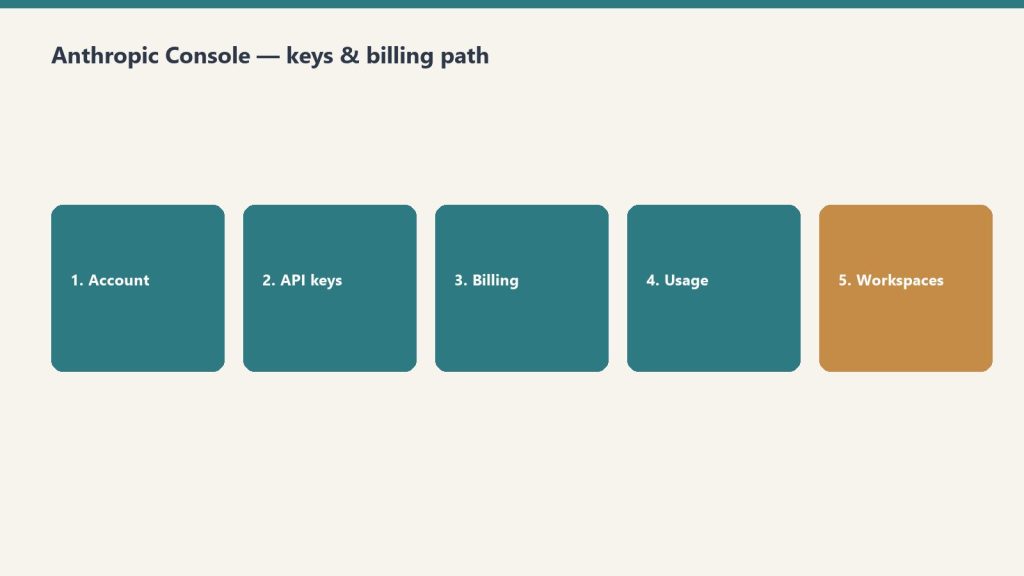
    Five-step path: account, API keys, billing, usage, workspaces
    The Amazon compute commitment.

    Five gigawatts of committed compute capacity is a number that requires context to land properly. For reference, a large data center campus typically consumes 100–500 megawatts. Five gigawatts is the equivalent of 10–50 large data center campuses worth of compute, committed to a single AI company. This is infrastructure at a scale that was historically reserved for hyperscalers building general-purpose cloud platforms — not AI model providers.

    The Amazon partnership is part of a broader compute story that also includes Google and Broadcom’s multi-gigawatt TPU partnership (announced April 6, with capacity launching in 2027). Anthropic is not building this infrastructure itself — it’s securing committed capacity from the two largest cloud providers simultaneously, which is a different and arguably more capital-efficient strategy than building proprietary data centers.

    SEC S-1/A GAAP Revenue vs. Spring Run-Rate Disclosures

    Period / MetricVerified FigureSource & Accounting Basis
    FY2025 GAAP Revenue$4,585 million ($4.59B)SEC Form S-1/A (Filed GAAP)
    FY2025 Operating / Net Loss$8,060M op loss; $41,965M net lossSEC Form S-1/A (Filed GAAP; net loss reflects convertible-note/derivative marks)
    9M 2026 GAAP Revenue (ended Sep 30, 2026)$33,242 million ($33.24B)SEC Form S-1/A (Filed Interim GAAP)
    9M 2026 Operating Loss & Liquidity$1,260M op loss; >$131B cash & short-term investmentsSEC Form S-1/A (Filed Interim GAAP)
    May 2026 Annualized Run RateCrossed $47B earlier in May 2026Anthropic Series H Release (Non-GAAP run-rate)

    Early-2026 trade coverage cited an annualized run rate moving from ~$9B at the end of 2025 to ~$30B in April 2026, and Anthropic reported in its May 28, 2026 Series H release that run-rate revenue crossed $47B. In November 2026, Form S-1/A replaced those point-in-time run-rate estimates with audited FY2025 GAAP revenue ($4,585M) and nine-month 2026 GAAP revenue ($33,242M), while showing operating losses narrowing from $8,060M in FY2025 to $1,260M across 9M 2026.

    Historical Context: Why Run Rate Jumped Early in 2026

    The jump from $9 billion to $30 billion annualized run rate between end of 2025 and April 2026 is the most striking number in the disclosure. That’s not organic growth — that’s a step change that implies either a major enterprise contract cohort closing in Q1 2026, the Claude Code and Cowork (now integrated into Claude) enterprise adoption curves hitting inflection simultaneously, or both. The 1,000+ customers at $1 million+/year figure is consistent with enterprise adoption at scale: at $1 million average, 1,000 customers represents $1 billion in ARR from that cohort alone.

    For context on what $30 billion run rate means competitively: OpenAI disclosed approximately $3.7 billion in annualized revenue in mid-2024. If Anthropic’s figure is accurate and current, it suggests the competitive landscape has shifted more dramatically than most public coverage has reflected.

    What This Means for Enterprise Buyers

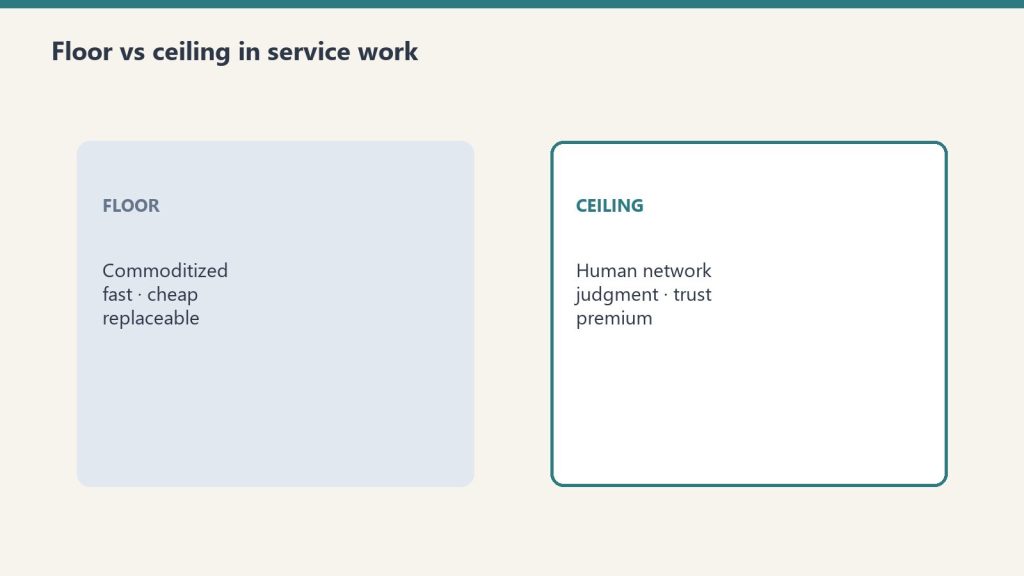
    Floor versus ceiling cards for commoditized work and human-network premium
    What this means for enterprise buyers.

    Enterprise procurement teams evaluating AI vendors weigh financial stability heavily. A vendor that might not exist in 18 months is a vendor you don’t build critical workflows on. The combination of $30 billion run rate, 5 gigawatts of committed compute, and 1,000+ million-dollar customers removes the financial stability objection from the Anthropic procurement conversation in a way that a year ago it couldn’t.

    The Vas Narasimhan board appointment (April 14, 2026) by the Long-Term Benefit Trust is a governance signal in the same direction. Board composition at this revenue scale shapes how enterprise legal and compliance teams assess vendor risk. A mature board with enterprise-credible governance is a procurement unlock, not just a PR announcement.

    The Capacity Question

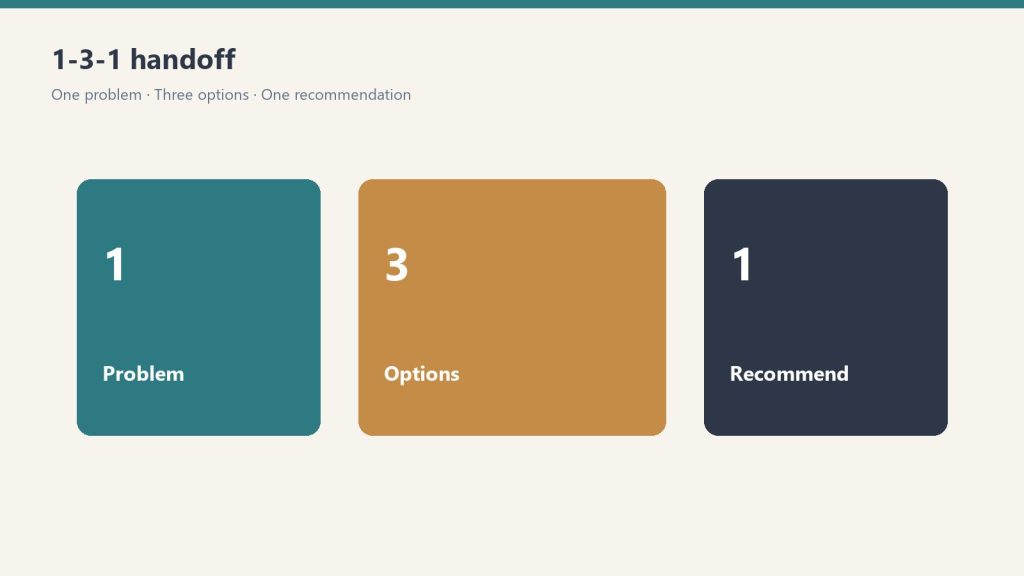
    Three panels showing one problem, three options, one recommendation
    The capacity question.

    The Google/Broadcom TPU capacity doesn’t launch until 2027. The Amazon commitment is a forward contract, not immediately available infrastructure. This means Anthropic is building compute capacity commitments ahead of demand — the right bet if the revenue trajectory continues, a costly overcommit if it doesn’t. The 2027 capacity launch timing will be worth watching against the actual demand curve that develops over the next 12 months.

    Primary Sources: Anthropic Roadshow Launch · Anthropic Series H Disclosure · Amazon 5GW Compute Agreement · SEC EDGAR 333-299633

    Related on Tygart Media: History of Anthropic & IPO Hub · Anthropic IPO 2026 · Who Owns Claude AI? · Claude AI Pricing & Plans.

    ANTHROPIC IPO FACT BOOK · PDF & MARKDOWN TWINS

    Download the Anthropic IPO Fact Book (Nasdaq: ANT)

    Edition of November 13, 2026 — verified SEC Form S-1/A (Reg. No. 333-299633) terms, GAAP revenue, ownership structure, sourced timeline, and live Claude pricing. For AI: read the markdown edition · Return to History Hub.
  • Claude Code v2.1: Parallel Agents & Release Cadence

    Claude Code v2.1: Parallel Agents & Release Cadence

    Last refreshed: October 20, 2026

    Between April 15 and April 29, 2026, the Claude Code team shipped releases from v2.1.89 to v2.1.123 — 34 version increments in 14 days, or roughly 2–3 production releases per week. For an agentic coding tool that engineering teams run in their daily development workflow, this release cadence is worth understanding, both for what it signals about the product’s development velocity and for the practical implications of staying current.

    What’s Driving the Cadence

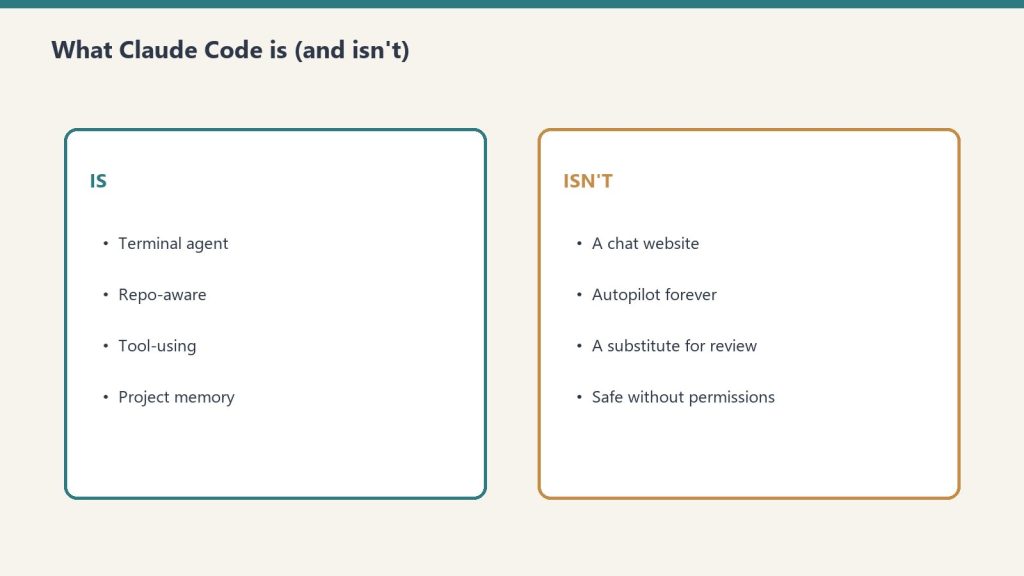
    Side-by-side cards defining what Claude Code is and is not
    What’s driving the cadence.

    The v2.1 series is where Claude Code’s parallel agents architecture is being built out. The desktop redesign for parallel agents shipped on April 14, and the v2.1 releases since then represent the iterative work of making parallel agent workflows — running multiple agents simultaneously from a single workspace — stable and usable at production quality. Rapid iteration on a new architectural feature explains the compressed release schedule better than any other factor.

    The new onboarding guide for Claude Code teams, published April 28 on code.claude.com, is a related signal. Documentation for team-scale adoption typically follows (not precedes) the stability work that makes team-scale adoption advisable. Publishing the onboarding guide now suggests the team considers the core parallel agents architecture stable enough for broader engineering team adoption.

    Parallel Agents: The Architecture Change That Matters

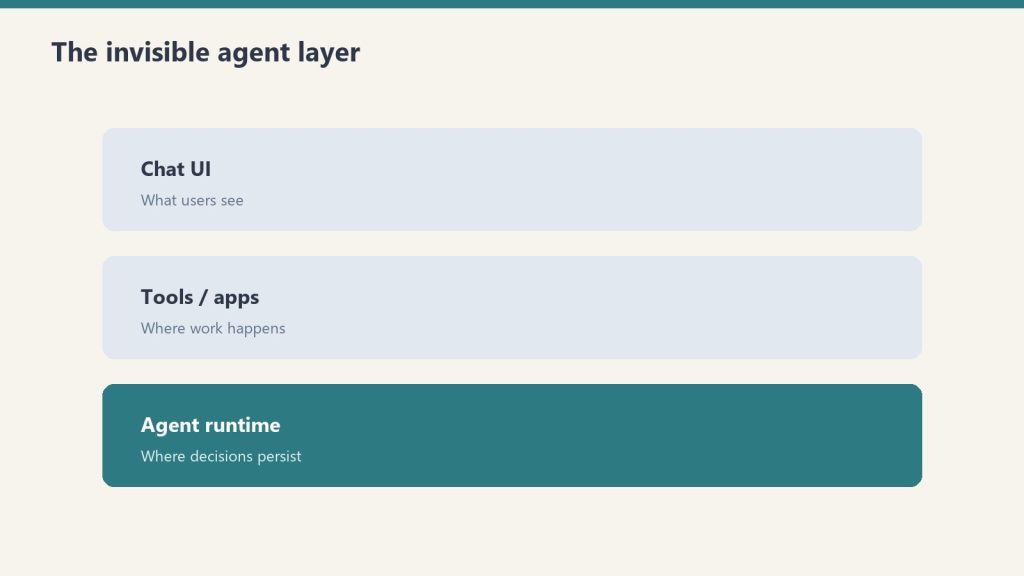
    Three stacked layers: chat UI, tools, agent runtime
    Parallel agents — the architecture change that matters.

    The April 14 desktop redesign for parallel agents is the most significant Claude Code architectural change of the quarter. Previously, Claude Code operated as a single-agent tool — one active task at a time per workspace. The parallel agents redesign allows developers to run multiple agents simultaneously, each working on independent tasks within the same workspace, with Claude coordinating between them.

    The practical applications are significant: running tests while implementing a feature, refactoring one module while debugging another, generating documentation in parallel with code review. Tasks that previously required sequential attention can now run concurrently, compressing the time from specification to working code.

    Implications for Engineering Teams Evaluating Adoption

    Three panels showing one problem, three options, one recommendation
    Implications for engineering teams evaluating adoption.

    The combination of the new onboarding guide and the parallel agents architecture makes this the right moment for engineering teams that have been evaluating Claude Code to make a decision. The tool has moved from “impressive demo” to “documented team workflow” with the April 28 guide, and the parallel agents capability meaningfully changes the productivity math for teams doing complex, multi-threaded development work.

    For teams already using Claude Code, staying current with the v2.1 series matters more than it did in earlier versions. The 2–3 weekly releases aren’t cosmetic — they’re iterating on the parallel agents infrastructure that the most powerful new workflows depend on. Check the changelog at code.claude.com/docs/en/changelog before major projects to ensure you’re running a recent build.

    Source: Claude Code Changelog | GitHub Releases

    Related on Tygart Media: Claude Code getting started · Claude Code v2.1.126 · Ultraplan & Ultrareview.

  • Claude Mythos Preview: Anthropic’s AI Cyber Defense

    Claude Mythos Preview: Anthropic’s AI Cyber Defense

    Last refreshed: October 20, 2026

    On April 7, 2026, Anthropic published the Claude Mythos Preview to red.anthropic.com — its dedicated AI safety and security research channel. Mythos is described as a general-purpose model with breakthrough cybersecurity capability, anchoring a coordinated initiative called Project Glasswing aimed at reinforcing global cyber defenses using AI. It is the most significant security-focused model capability announcement Anthropic has made to date.

    What Mythos Is

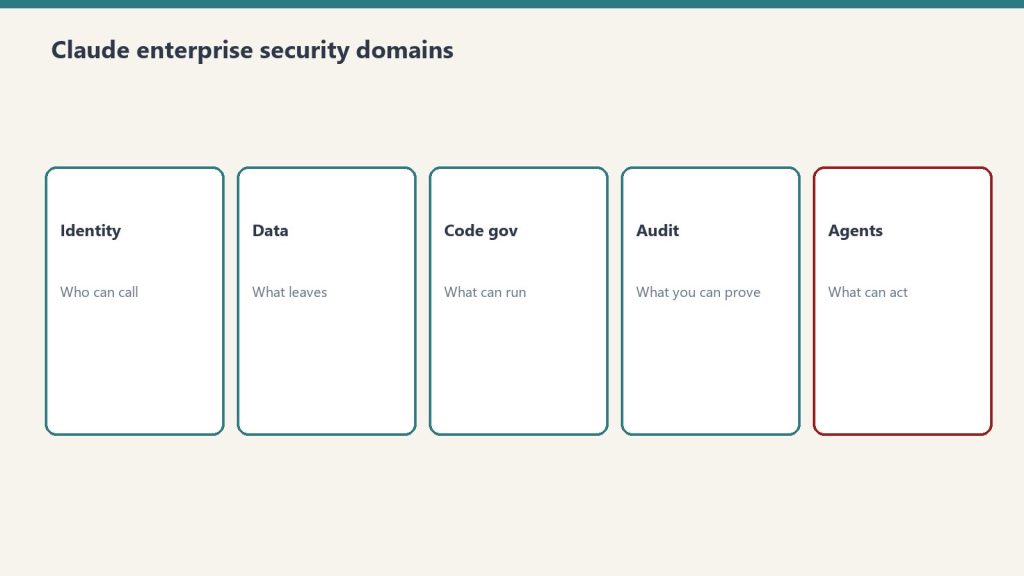
    Five security domains: identity, data, code governance, audit, agents
    What Mythos is.

    Mythos is not a separate product in the traditional sense — it’s a capability preview, published through Anthropic’s red team and security research channel rather than through the main product announcement pipeline. The “preview” framing is deliberate: Anthropic is signaling a new capability frontier to the security research community before making it broadly available, which is standard practice for capabilities with significant dual-use potential.

    The “breakthrough cybersecurity capability” claim is notable because Anthropic has historically been conservative about capability claims. Publishing on red.anthropic.com — rather than anthropic.com/news — also signals that this is targeted at a security-professional audience, not a general consumer or enterprise announcement.

    Project Glasswing

    Security domains highlighting agentic workflow risk
    Project Glasswing.

    Project Glasswing is the coordinated effort that Mythos anchors. The stated mission is reinforcing world cyber defenses — a framing that positions Mythos explicitly as a defensive capability rather than an offensive one, which matters enormously in how it will be received by governments, enterprise security teams, and the security research community.

    The name “Glasswing” references the glasswing butterfly — a species known for its transparent wings, which confer camouflage by blending into the environment. The metaphor maps cleanly onto defensive security work: visibility and transparency as the mechanism of protection, not opacity or force.

    Context: A Year of Security Work

    Mythos and Glasswing don’t come from nowhere. Anthropic’s security research track in 2026 has been unusually active: collaboration on Firefox CVE-2026-2796 in March, LLM-discovered zero-days published in February, and participation in AI on realistic cyber ranges in January — all documented on red.anthropic.com. Mythos is the capstone of a year-long research buildout in applied cybersecurity, not a pivot from Anthropic’s core safety work.

    For enterprise security teams evaluating AI vendors, this track record is a meaningful differentiator. Anthropic is now the only frontier AI lab with a documented, published history of responsible vulnerability disclosure collaboration and a dedicated security research publication channel. That institutional credibility matters when procurement decisions involve sensitive security workflows.

    What to Watch

    Three panels showing one problem, three options, one recommendation
    What to watch.

    The Mythos Preview is the beginning of a story, not the end of one. Watch red.anthropic.com for the full Glasswing rollout cadence — what specific defensive capabilities are being published, what the access model looks like for security researchers, and whether government or critical infrastructure partnerships accompany the broader release. The preview framing implies a production release is coming. The timeline and access model will define how significant Glasswing becomes as a competitive differentiator.

    Source: red.anthropic.com — Claude Mythos Preview

    Related on Tygart Media: Claude Mythos / Firefox · GPT-5.5 vs Claude Mythos · Claude security scanner.

  • Claude Opus 4.7: 3× Vision Resolution, Task Budgets, and the xhigh Effort Level Explained

    Claude Opus 4.7: 3× Vision Resolution, Task Budgets, and the xhigh Effort Level Explained

    Last refreshed: October 20, 2026 (Pacific)

    Model Accuracy Note — Updated October 2026

    Current lineup (October 2026, verified): Claude Fable 5.1 is the top tier above Opus, with Claude Opus 5.5 the current Opus, Claude Sonnet 5.5 (released September 28, 2026), and Claude Haiku 4.5. Opus 4.7 is now a legacy model. Full lineup: Claude Fable 5 guide. Claude Opus 4.7 referenced in this article has been superseded. See current model tracker →

    Anthropic released Claude Opus 4.7 on April 16, 2026, alongside an update to Claude Haiku 4.5. The release is headlined by a 3× improvement in vision resolution, but the more operationally significant additions are task budgets and the new xhigh effort level — both of which change how developers can dial Claude’s reasoning intensity for compute-sensitive workflows.

    Vision Resolution: What 3× Actually Means

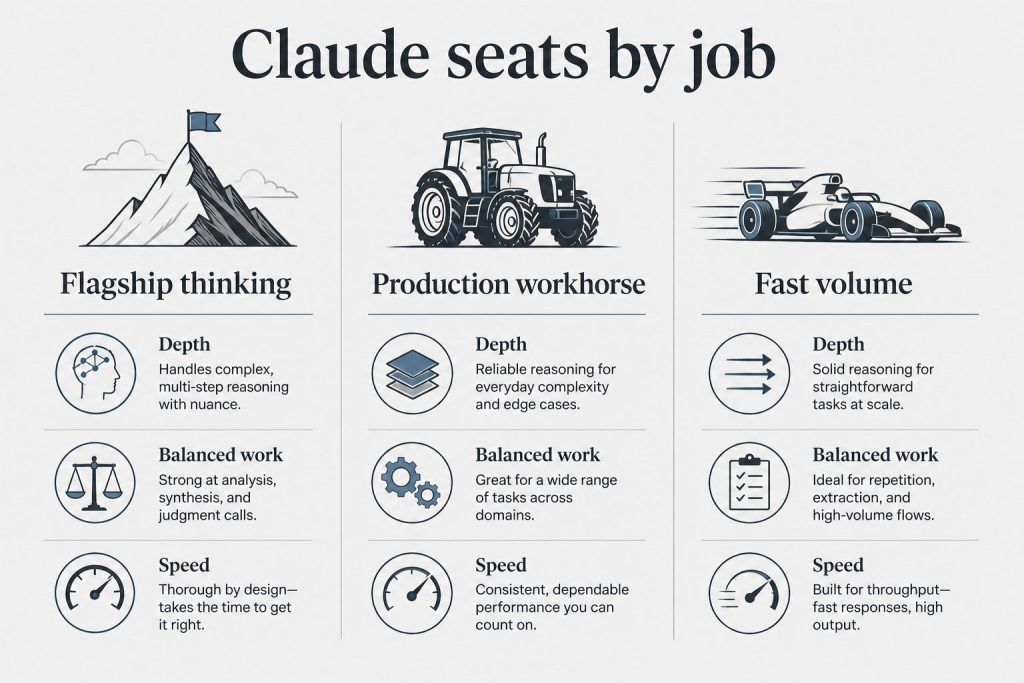
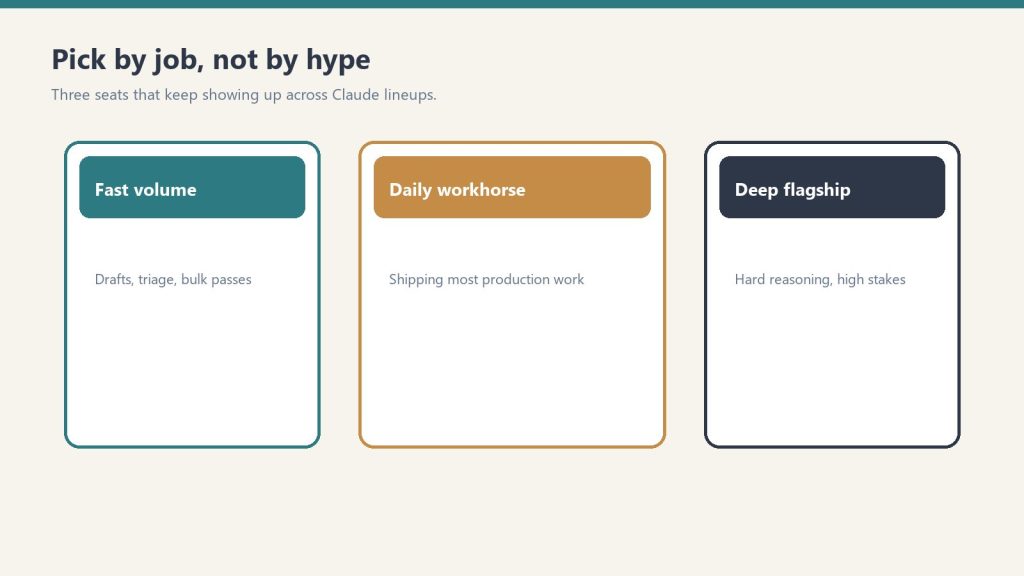
    Three-column board mapping Claude model seats to flagship thinking, production workhorse, and fast volume jobs
    Opus 4.7 processes images at three times the resolution of its predecessor — dense text, charts, and scanned documents are now legible to the model without pre-processing.

    Claude Opus 4.7 processes images at three times the resolution of its predecessor. In practice, this means documents with dense text, screenshots of complex interfaces, detailed charts and diagrams, and high-resolution photography are now meaningfully more legible to the model. Tasks that previously required cropping or pre-processing images to help Claude read fine details should now work with the original image.

    For enterprise use cases — contract review from scanned PDFs, financial statement analysis from images, medical imaging workflows, engineering diagram interpretation — the resolution improvement is not incremental. It crosses a threshold where image-based document processing becomes reliably useful rather than occasionally accurate.

    Task Budgets

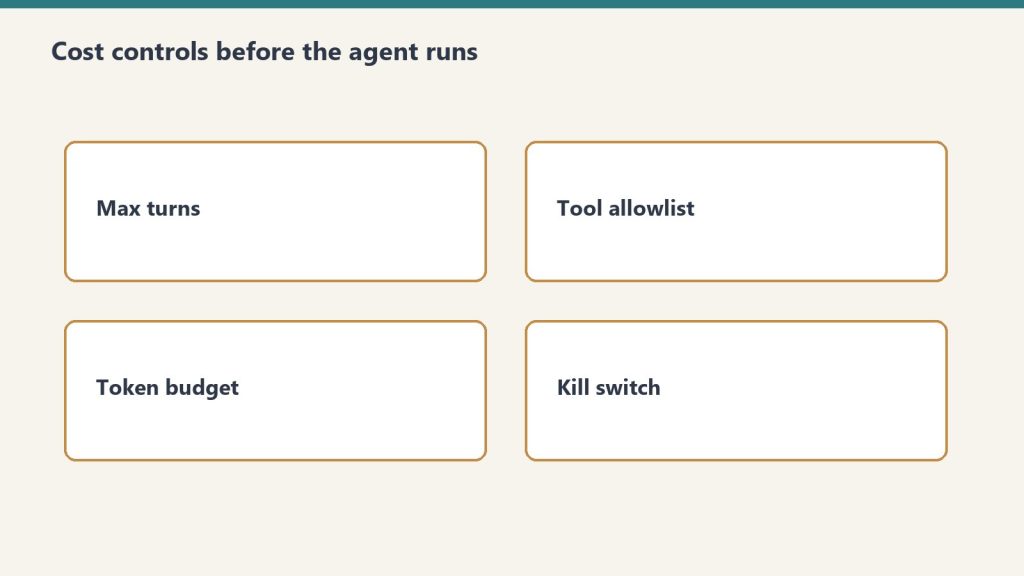
    Four gates: max turns, tool allowlist, token budget, kill switch
    Task budgets cap how much compute Claude spends on a task before returning a best-effort response — the missing lever for predictable extended-thinking spend.

    Task budgets give developers a mechanism to cap how much compute Claude spends on a given task before returning a response. This is the missing lever that has made Claude’s extended thinking mode difficult to use predictably in production. Without a budget ceiling, extended thinking tasks could run arbitrarily long and cost arbitrarily much. With task budgets, you can set a ceiling and get a best-effort response within that constraint rather than an open-ended spend.

    The practical implication is that extended thinking becomes viable in latency-sensitive or cost-sensitive production contexts that previously had to avoid it entirely. A customer-facing workflow that needs a thoughtful answer but can’t wait indefinitely can now specify a budget and get a response calibrated to that constraint.

    The xhigh Effort Level

    Three cards for fast volume, daily workhorse, and deep flagship Claude seats
    The xhigh effort level pushes reasoning intensity above maximum for accuracy-critical tasks — pair it with a task budget to set the ceiling.

    Alongside the existing effort levels, Opus 4.7 introduces xhigh — an above-maximum reasoning intensity setting intended for tasks where accuracy justifies extended compute time regardless of cost. Research tasks, complex multi-step reasoning chains, high-stakes analysis where a wrong answer is costly — these are the intended use cases.

    xhigh pairs naturally with task budgets: use xhigh to get the most thorough reasoning Claude can produce, and use a task budget to define the ceiling on how long it runs. Together they give developers precision control over the quality/cost/latency trade-off that was previously binary (extended thinking on or off).

    Pricing: Unchanged from 4.6

    Opus 4.7 maintains the same pricing as Claude Opus 4.6: $5 per million input tokens and $25 per million output tokens. For teams currently on Opus 4.6, this is an unambiguous upgrade — better vision, task budgets, and xhigh effort at the same cost. The Haiku 4.5 update released alongside it carries the same pricing-unchanged pattern.

    Deprecation note: Claude Haiku 3 was retired on April 19. Teams still on Haiku 3 should have already migrated — if not, that’s an urgent action item.

    Source: Anthropic — Claude Opus 4.7 Release

  • Anthropic Managed Agents: Built-In Memory Beta Guide

    Anthropic Managed Agents: Built-In Memory Beta Guide

    Last refreshed: October 20, 2026

    Anthropic’s Managed Agents service entered public beta with built-in persistent memory on April 23, 2026. The feature allows agents to retain context, user preferences, and state information across sessions — a capability that has been among the most-requested additions to the platform since Managed Agents launched. The timing matters: this ships during a window where OpenAI’s flagship memory features remain incomplete in their own agent frameworks, giving Claude developers a meaningful head start on production deployments that depend on memory.

    What Built-In Memory Actually Does

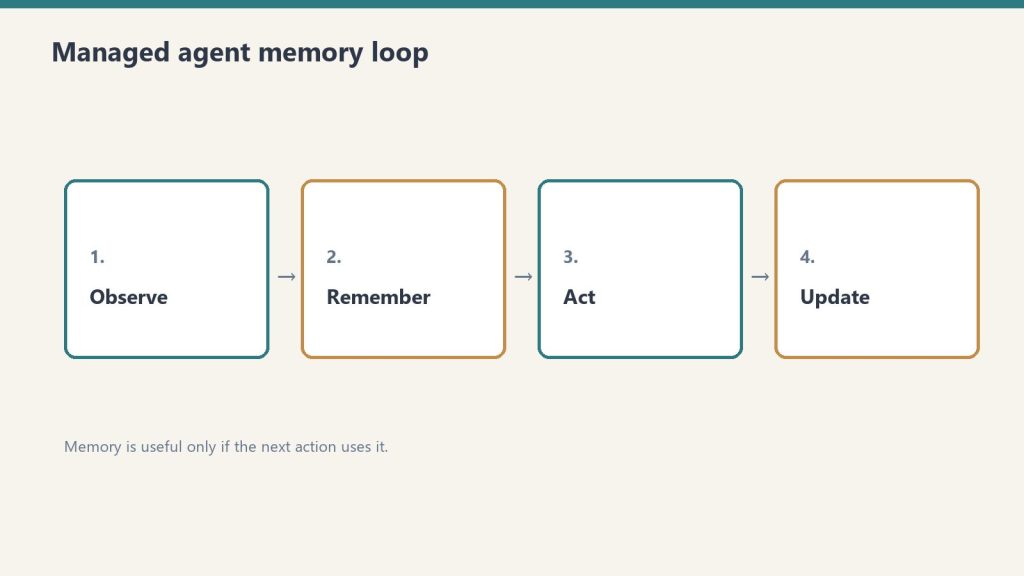
    Four-step loop: observe, remember, act, update for managed agents
    What built-in memory actually does.

    Without memory, every agent session starts from zero. The agent knows what you’ve told it in the current conversation and nothing else. This is workable for single-session tasks — “summarize this document,” “write this draft” — but it breaks down for anything that involves ongoing relationships, accumulated preferences, or multi-session workflows. A customer service agent that can’t remember a user’s previous issues, a research assistant that can’t build on yesterday’s work, a scheduling agent that doesn’t know your standing preferences — all of these require memory to deliver the experience their use cases promise.

    Anthropic’s implementation provides persistence at the agent level, meaning the memory travels with the agent across sessions rather than requiring the developer to implement their own memory layer through external databases or custom retrieval logic. For builders who have been working around this limitation manually, the built-in version should substantially reduce implementation complexity.

    Why the Timing Against OpenAI Matters

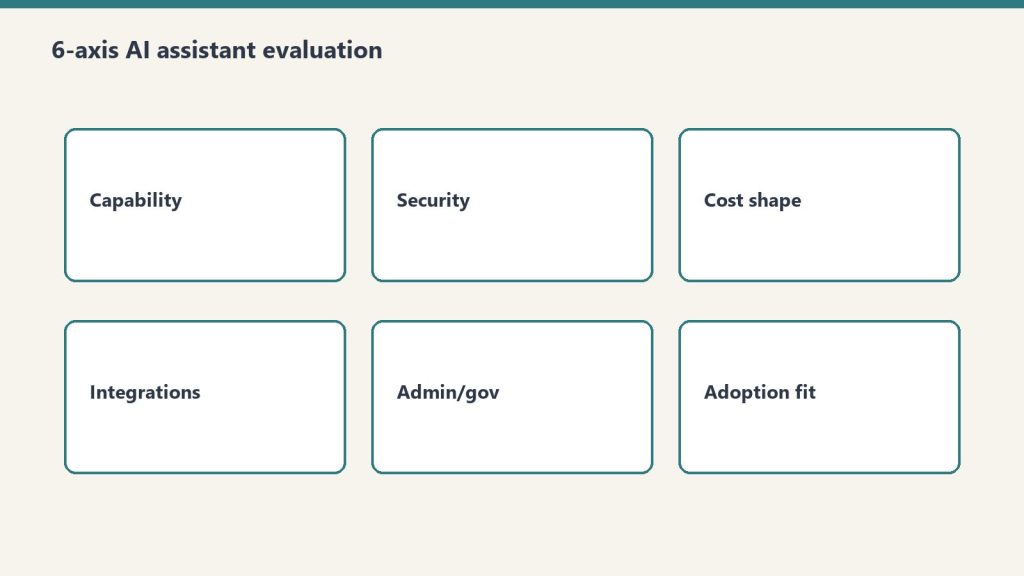
    Six evaluation cards for choosing an AI assistant platform
    Why the timing against OpenAI matters.

    OpenAI has memory features in ChatGPT — the consumer product — but the developer-facing memory story for agents is less complete. The gap between what’s available to end users and what’s available to developers building on the platform has been a consistent criticism of OpenAI’s agent framework. Anthropic shipping built-in agent memory in public beta now, before OpenAI has an equivalent production-ready solution for agent builders, is a genuine competitive window.

    Public beta is not GA — there will be limitations, rough edges, and potential breaking changes before the feature stabilizes. But for developers who want to test and start building production workflows around persistent memory, this is the moment to start. Early adoption of beta features in platform infrastructure tends to compound: the teams that build on memory-enabled agents now will have a significant head start on the ones that wait for GA.

    What to Test Today

    Desk with laptop, checklist notebook, and billing card ready before creating an Anthropic API key
    What to test today.

    The highest-value test cases for built-in memory in the current beta are: (1) customer-facing agents that need to remember user identity and history across sessions, (2) research or content agents that build knowledge bases over time, and (3) workflow agents that manage recurring tasks and need to track state between runs. These are the use cases where the absence of memory was most painful before, and where the new capability will show the largest delta in usefulness.

    Pair the memory beta with the new “Building production agents with MCP” guide published on April 22 — Anthropic’s documentation for hardening MCP-based agents for production deployments. The combination of persistent memory and production-hardening guidance suggests the platform team is intentionally building toward a moment when Managed Agents are ready for high-stakes, customer-facing production deployments. Test now, build with confidence later.

    Note on the 1M Token Context Beta

    Separately, the 1 million token context beta ends today, April 30. Developers who have been building on extended context should check the release notes for migration guidance before the beta window closes. This is the kind of quiet sunset that catches teams off-guard — worth a direct check against your current deployments today.

    Source: Anthropic Platform Release Notes

    Related on Tygart Media: Claude memory context stack · Claude Cowork.

  • Anthropic APAC Expansion: 2026 Sydney, NEC & Infosys

    Anthropic APAC Expansion: 2026 Sydney, NEC & Infosys

    Last refreshed: October 20, 2026

    In the span of five days at the end of April 2026, Anthropic announced three significant moves in the Asia-Pacific region: a strategic multi-year collaboration with NEC for Japan’s AI workforce on April 24, a new Sydney office with Theo Hourmouzis named GM for Australia and New Zealand on April 27, and the Infosys partnership for regulated industry AI in India on April 29. Taken individually, each is a meaningful business development story. Taken together, they describe a deliberate APAC buildout strategy — and one that’s moving faster than most observers have credited.

    Japan: The NEC Partnership

    Five-step path: account, API keys, billing, usage, workspaces
    Japan — the NEC partnership.

    The NEC collaboration is structured around a multi-year deployment of Claude across Japanese enterprises, with a workforce upskilling component that distinguishes it from a pure technology licensing deal. NEC is a conglomerate with deep relationships across Japanese government, telecommunications, financial services, and defense — exactly the sectors where AI adoption is both highest-stakes and most cautious. The workforce upskilling angle suggests Anthropic and NEC are addressing the adoption bottleneck that has slowed enterprise AI deployment in Japan: the gap between what the technology can do and what the workforce knows how to ask it to do.

    Japan’s enterprise AI market is large, compliance-conscious, and historically resistant to foreign technology vendors without a local partnership anchor. NEC provides that anchor. This is structurally similar to the Infosys play in India — find the trusted domestic partner, build the Center of Excellence or equivalent, then scale through that partner’s existing enterprise relationships.

    Australia: The Sydney Office and Theo Hourmouzis

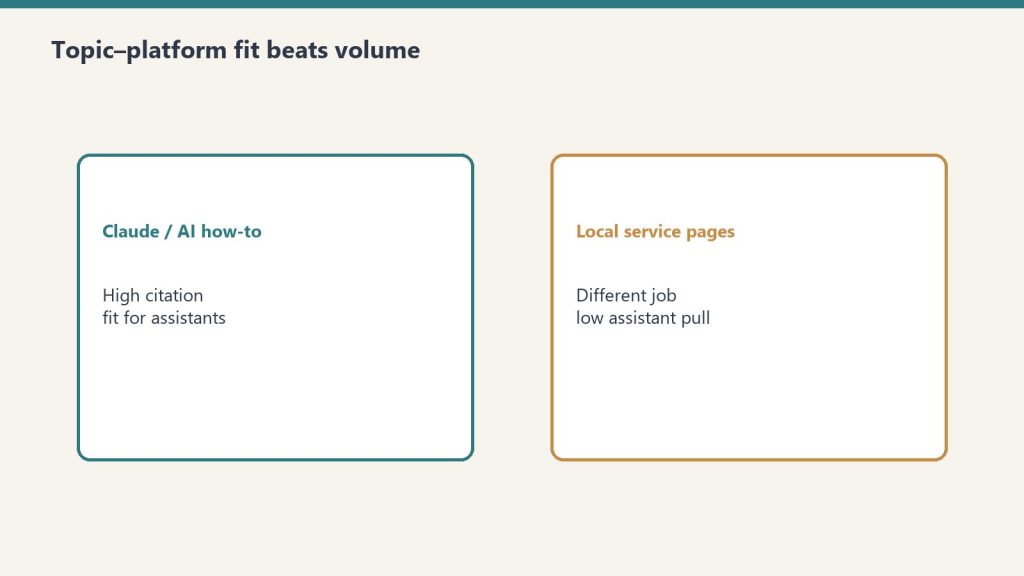
    Comparison of Claude how-to fit versus local service page fit for assistants
    Australia — Sydney office.

    Opening a Sydney office is the clearest signal of long-term commitment. Partnerships can be dissolved; physical offices and local headcount are harder to walk back. The appointment of Theo Hourmouzis as GM for Australia and New Zealand gives the APAC presence an executive face and a named accountability structure, which matters for enterprise procurement in both markets.

    Australia has been a strong early-adoption market for Claude — Singapore leads on per-capita usage metrics, but Australia’s enterprise market is larger and more English-language-first, which has historically meant faster Claude adoption than markets requiring significant localization work. A permanent office converts that early-adoption momentum into a defensible competitive position against OpenAI and Google, both of which have had APAC presence for longer.

    India: The Infosys Anchor

    Three panels showing one problem, three options, one recommendation
    India — the Infosys anchor.

    The Infosys collaboration is covered in detail in a separate Tygart Media piece, but in the APAC context, its significance is as the India anchor to the same pattern playing out in Japan and Australia. Paired with Anthropic’s Bengaluru office (opened February 16, 2026), the Infosys collaboration gives Anthropic a two-pronged enterprise channel in India — local engineering and go-to-market presence in Bengaluru alongside delivery scale across Infosys’s global enterprise client base (and major IT services peers including Wipro and TCS).

    India’s developer market is the one piece of the APAC picture that the enterprise partnerships don’t fully address. The individual developer and startup pricing gap — INR 16,800/month for Claude Pro with no regional pricing adjustment — remains open and continues to generate friction in communities where Anthropic’s reputation is otherwise strong.

    What’s Missing: Singapore

    Singapore is notable by its absence in this APAC push. It consistently ranks as the highest per-capita Claude usage market globally, suggesting a user base that is already committed to the product. An office or partnership announcement in Singapore would be a natural complement to Sydney, but nothing has been announced. This is either a sequencing decision — Australia first, Singapore next — or a reflection of Singapore’s smaller enterprise market size relative to Japan, India, and Australia.

    Watch for a Singapore announcement in Q3 2026. The usage data makes it too obvious a gap to leave unfilled for long.

    Inside the 4-Market APAC Strategy (Tokyo, Bengaluru, Sydney & Seoul)

    Zooming out across the full regional build-out, Anthropic’s APAC footprint spans four hub cities: Tokyo (established first), Bengaluru (opened February 16, 2026), Sydney (opened April 27, 2026), and Seoul (announced). Across the region, Anthropic is investing in physical infrastructure and local leadership ahead of enterprise revenue saturation on a 12–18 month adoption curve relative to the U.S.:

    • India — #2 global market & developer density: India is Anthropic’s #2 global market by claude.ai usage, with 45.2% of Indian Claude users working as software developers (the highest developer share of any major market), making Bengaluru and IT services channels (Infosys, Wipro, TCS) doubly strategic.
    • Australia — enterprise banking focus: Dedicated ANZ leadership targets Australia’s high-income enterprise sector and Big Four banks rather than treating Sydney as a satellite under Singapore or Tokyo.
    • South Korea — chaebol enterprise market: The Seoul expansion targets concentrated platform procurement across major Korean conglomerates (Samsung, LG, Hyundai, SK, Lotte) alongside a dense technical developer ecosystem.
    • Singapore — GIC enterprise signal: Even without a standalone Singapore office yet, Singapore’s sovereign wealth fund GIC co-hosted an April 2026 Anthropic APAC enterprise leadership event with 150 executives, underscoring high per-capita adoption.

    Sources: Anthropic News | Infosys Press Release

    Related on Tygart Media: Bengaluru office · history of Anthropic.