Author: William Tygart

  • Mason County PUD 1: 2026 Rates and Water Project Updates

    Mason County PUD 1: 2026 Rates and Water Project Updates

    Updated September 30, 2026.

    Mason County PUD No. 1 finished major 2026 water work at Manzanita and Arcadia Estates, kept April 1 electric bills at a 3.0% increase instead of the board’s 4.75% authorization, and is pursuing federal dollars for grid and mainline work while FEMA-funded wildfire mitigation trimming starts along Highway 101 in October.

    Through nine months of 2026, Mason County Public Utility District No. 1 has moved from “projects wrapping up” to completed rural water infrastructure in Union, steady post-April electric rates, and a full calendar of grant-backed electric work. Here is what still matters for customers and property owners as of September 30, 2026.

    Manzanita Campus and Arcadia Estates: Completed Water Work

    The Manzanita Water Storage Project and the Arcadia Estates system upgrade were both in close-out status at the April 14, 2026 board meeting. By May, the district held a ribbon-cutting for the new Manzanita Campus in Union: the Manzanita substation (energized October 2025) and more than 200,000 gallons of storage for the Union Regional Water System and Mason County Fire District 6 fire suppression.

    Total Manzanita water construction funding reached $4.6 million. Rognlin’s Inc. of Aberdeen held the storage tank contract at $3,745,725, awarded in June 2025, with construction starting September 2025. PUD materials describe two 100,000-gallon reservoirs, a booster station, backup generation, and a draft hydrant for fire fills—financed through Washington State Public Works Assistance Account grant and low-interest loan support.

    Arcadia Estates work— including Department of Health grant contract actions the board approved in late 2025— moved through the same busy water season. Staff continued water-system planning and additional rural projects (generators, reservoir coating, consolidations) through summer board cycles.

    For Hood Canal and Union-area customers, the practical outcome is added storage and modernized rural water assets rather than deferred tank and main repairs. That matters for service reliability and for how lenders and insurers read rural utility risk—topics that overlap with local insurance and property visibility when you document upgrades accurately online.

    2026 Electric Rates: Still 3.0% After April 1

    Effective April 1, 2026, residential electric rates rose 3.0%. The basic monthly charge went from $45.86 to $47.26, and the energy rate from $0.09670 to $0.09960 per kilowatt-hour. PUD 1’s published 2026 FAQ used an 800 kWh household paying about $4.28 more per month before taxes as a reference point.

    Wholesale pressure came from the Bonneville Power Administration: a 6% power rate increase and an 11.7% transmission increase for 2026. Most Northwest public utility districts pass part of that through.

    PUD 1 held the local increase below its 4.75% cost-of-service authorization for the second straight year. Staff cited budget reductions and a $3.6 million FEMA grant applied to capital and a portion of labor costs. No additional electric rate change was on the district’s 2026 schedule through September; customers still on the April schedule should confirm current class rates at mason-pud1.org or (360) 877-5249.

    Water Rates and Fall Electric Work

    Water rates took a separate path. Effective January 1, 2026, PUD 1 implemented a 3.5% water increase— reduced from a previously authorized 5%— with the average meter basic charge moving from $65.63 to $67.93 across systems, again citing grant offsets in board materials.

    On the electric side, the district’s homepage noted FEMA Hazard Mitigation Grant-funded tree trimming along Highway 101 from Duckabush Road south, with contractor Kemp West starting October 5, 2026, plus danger-tree work on rights-of-way tied to the wildfire mitigation plan. That work supports the same grid resilience story as the district’s capital queue— relevant context in the broader Mason County business and infrastructure picture.

    Federal Funding Still in Play

    General Manager Kristin Masteller reported a $5.6 million Congressionally Directed Spending request to all three Washington congressional offices for mainline rebuilds, with selection tied to federal fiscal year 2027 appropriations. Separately, May 2026 board correspondence referenced a $1.14 million appropriation approved for the Jorstad Substation and Senator Maria Cantwell listing a $4 million FY27 CDS line for Hood Canal grid resilience work. None of that replaces earned revenue yet; it is pipeline funding customers should track through public board packets.

    If you publish local utility updates for clients or your own operation, structured pages that answer rate and project questions plainly still earn citations in 2026—see what holds up in geo case studies and how an AI setup keeps facts tied to primary sources like PUD packets rather than rumor.

    What Mason County Households Should Do Now

    Confirm you are on the rate schedule that matches your service class (electric effective April 1, water effective January 1). If you own rural water-connected property, note completed Manzanita storage and Arcadia work in any insurance or sale packet when those upgrades touch your system.

    Board meetings remain open to the public at 1:00 p.m. on the second and fourth Tuesdays at 21971 N. Highway 101, Shelton (Potlatch). Packets post on the district meetings page. Customer appreciation events were on the 2026 calendar for September 25— check the site for any follow-on announcements.

    Related coverage: For Mason County property owners, see PUD 1 Rate Change: What Property Owners Need to Know. For help reading your bill, see Understanding Your Mason County PUD 1 Electric Bill in 2026.

    Frequently Asked Questions

    What is Mason County PUD No. 1?

    Mason County Public Utility District No. 1 is a customer-owned utility providing electric and water service in Shelton, Hoodsport, Union, and rural southern and western Mason County. It is governed by an elected board of commissioners and headquartered at 21971 N. U.S. Highway 101, Shelton, WA.

    How much did PUD 1 raise electric rates in 2026?

    Residential electric rates increased 3.0% effective April 1, 2026. The basic charge rose from $45.86 to $47.26 per month, and the energy rate from $0.09670 to $0.09960 per kilowatt-hour. That schedule remained in place through September 2026 barring a later board action.

    Did PUD 1 raise water rates in 2026?

    Yes. Water rates increased 3.5% effective January 1, 2026, with the average meter basic charge rising from $65.63 to $67.93. Staff reduced the increase from a previously authorized 5% using grant funding, mirroring the electric side’s below-ceiling approach.

    What is the Manzanita Water Storage Project?

    It is the water storage component of PUD 1’s Manzanita Campus in Union— more than 200,000 gallons of storage, booster facilities, and fire-support infrastructure completed in May 2026 after roughly $4.6 million in construction funding. It serves the Union Regional Water System and supports Mason County Fire District 6.

    What federal funding requests is PUD 1 pursuing?

    As of mid-2026 board reports, the district submitted a $5.6 million Congressionally Directed Spending request for mainline rebuilds to Washington’s congressional delegation and tracked separate appropriations activity, including a $1.14 million Jorstad Substation appropriation and Senator Cantwell’s posted FY27 CDS entries such as Hood Canal grid resilience funding. Awards depend on the federal appropriations process.

    How do Mason County residents contact PUD 1?

    Call (360) 877-5249 or (800) 544-4223, visit mason-pud1.org, or attend a public board meeting at the Potlatch headquarters. Outage reporting uses the same main line.


  • Mason County Businesses: Tollie’s Cafe & Ice Cream Growth

    Mason County Businesses: Tollie’s Cafe & Ice Cream Growth

    Two signs of a growing Mason County business scene emerged this spring: a downtown Shelton café changing hands under a new owner who wants to honor the town’s logging roots, and one of the county’s most beloved local brands preparing a major move to a facility four times the size of its current home. From a coffee counter named for a retired logging locomotive to an ice cream company backed by a state economic revitalization loan, the week’s business news points toward steady, locally rooted growth across the county.

    Tollie’s Café Carries Shelton’s Logging Legacy Forward

    The small café at 118 S. 3rd St. in downtown Shelton has a new name, a new owner, and a familiar heart. On April 1, Tollie’s Café opened its doors under the ownership of Eric Onisko, a Shelton City Council member who purchased the space from Theresa Landsiedel after she operated T’s Café & Espresso there for six years.

    Onisko kept the same three employees and much of the same menu — fresh pastries, handcrafted sandwiches, and Batdorf & Bronson coffee drinks — but he reached back into Shelton’s history for the name. Nearly across the street from the café sits the locomotive nicknamed “Tollie,” a retired engine of the Simpson Logging Company that once hauled timber through the county’s forests. The locomotive has long been one of downtown Shelton’s most photographed landmarks, a piece of industrial history frozen in place on a street that has seen generations of change.

    Tollie’s Café is open Monday through Friday from 7 a.m. to 3 p.m. and Saturday from 9 a.m. to 3 p.m. It joins a cluster of businesses that have recently reinvigorated that stretch of downtown, including Shelton Candy Shoppe, Mestizos Latin Food, and the Wilde Irish Pub — all of which opened on the 400 block of West Railroad Avenue in recent months.

    The transition reflects a pattern worth watching in Mason County’s small-business landscape: established spots changing hands rather than closing, with incoming owners choosing to invest in community character rather than reinvent from scratch. Onisko’s decision to retain staff and menu while rebranding around a piece of Shelton heritage suggests a philosophy that serves the neighborhood well. For residents from Belfair, Hoodsport, Union, and across the county who pass through Shelton for appointments, errands, or events, Tollie’s Café is exactly the kind of stop worth building into the routine.

    For more information, stop by the café at 118 S. 3rd St. in downtown Shelton during open hours.

    Olympic Mountain Ice Cream Eyes Major Growth at Port of Shelton

    One of Mason County’s most recognized local brands is on the verge of a major expansion. Olympic Mountain Ice Cream, which has produced its small-batch artisan flavors in the Skokomish Valley for years, is preparing a move to a new production and retail facility at the Port of Shelton — a building four times the size of its current operation.

    The new home is an 11,500-square-foot Port-owned warehouse at 130 W. Corporate Drive in Shelton, renovated to serve as Olympic Mountain Ice Cream’s expanded base. The project secured a $1.75 million low-interest loan through the Washington State Community Economic Revitalization Board (CERB), approved by the Port of Shelton Commission by formal resolution. Private investment in the project reaches a minimum of $1 million, and the company expects to add 17 permanent jobs over the next five years — a meaningful addition to Mason County’s employment base.

    The business case is clear. The Skokomish Valley location, while scenic, sits in territory prone to flooding and power outages that periodically interrupt production — operational risks that the Port of Shelton site eliminates entirely. The move also opens the door to scaling production, reaching new wholesale accounts, and operating a proper retail storefront for customers who want to buy directly.

    For Mason County residents who know Olympic Mountain Ice Cream from grocery shelves in Shelton, Belfair, and beyond, or from farmers markets and local restaurants that feature its products, the expansion means more of those flavors, produced more reliably, right here at home. The brand uses local dairy and Pacific Northwest ingredients, and its presence on store shelves from Matlock to Grapeview is a point of quiet county pride.

    The Port of Shelton, located off U.S. Highway 101 near Shelton’s industrial corridor, has been an active incubator for Mason County manufacturers and producers seeking room to grow. Olympic Mountain Ice Cream’s expansion adds another anchor to that corridor. The new facility was targeted for completion by spring 2026, with the retail storefront accessible at 130 W. Corporate Drive, Shelton, once fully operational. For product locations and updates, visit olympicmountainicecream.com.

    What to Watch This Spring

    Both of this week’s business stories share an underlying theme: Mason County institutions adapting, not just surviving. Tollie’s Café is a downtown fixture passing through ownership with its community connections intact. Olympic Mountain Ice Cream is a homegrown manufacturer using public-private partnership tools — state CERB funding, Port infrastructure — to break past the physical limitations holding it back.

    The county’s next major business calendar event is the 2026 Expo & Bite of Mason County, scheduled for Friday, July 17 on Railroad Avenue in Shelton — the largest business and restaurant event in Mason County, drawing vendors and visitors from across the region.

    Frequently Asked Questions

    Where is Tollie’s Café located?

    Tollie’s Café is at 118 S. 3rd St. in downtown Shelton. It is open Monday through Friday 7 a.m.–3 p.m. and Saturday 9 a.m.–3 p.m. The café was formerly known as T’s Café & Espresso and changed ownership on April 1, 2026.

    Why is the café named Tollie’s?

    The name honors the “Tollie” locomotive, a retired Simpson Logging Company engine displayed near the café in downtown Shelton. New owner Eric Onisko chose the name to connect the business to Shelton’s timber heritage.

    When will Olympic Mountain Ice Cream open its new Port of Shelton facility?

    The new 11,500-square-foot facility at 130 W. Corporate Drive, Shelton was targeted for completion in spring 2026. The expansion was funded in part by a $1.75 million CERB loan approved by the Port of Shelton Commission.

    How many jobs will the Olympic Mountain Ice Cream expansion create?

    The expansion is projected to add 17 permanent jobs over the next five years, based on CERB application projections submitted to the Port of Shelton Commission.

    What is the CERB loan program?

    The Community Economic Revitalization Board (CERB) is a Washington State program that provides low-interest loans to support economic development projects in communities across the state. The Port of Shelton applied on behalf of Olympic Mountain Ice Cream for the $1.75 million award.

    Related coverage: New to Mason County? See A New Resident’s Guide to Downtown Shelton Businesses. For business owners interested in expansion tools, see How Mason County Businesses Are Using Port of Shelton and CERB Funding.

  • Belfair Business News: Grocery Outlet & April 2026 Updates

    Belfair Business News: Grocery Outlet & April 2026 Updates

    North Mason’s business and development scene is building momentum this spring — a new fire station nearing completion, electrical upgrades unlocking growth potential, and waterfront restoration in Allyn moving forward with renewed state funding. This week we’re spotlighting Grocery Outlet Belfair, the bargain grocery anchor that moved into the former Rite Aid space and has been stocking North Mason pantries since November.

    New Openings

    No confirmed new business ribbon cuttings this week in the North Mason corridor. If you have an opening coming up, connect with the North Mason Chamber of Commerce at northmasonchamber.com to get it on the radar.

    Closings & Changes

    Nothing confirmed this week. Have a tip? Email the Belfair Bugle.

    Permits & Development

    North Mason RFA Fire Station Nearing Completion
    North Mason Regional Fire Authority’s new $9 million headquarters fire station at 490 NE Old Belfair Highway in Belfair is on track for a September 2026 opening. The facility — built right next to the existing station — will house an eight-vehicle bay, a state-of-the-art training center, administrative offices, and living quarters for up to 10 on-call firefighters. TRICO Companies is the general contractor. When complete, it will meaningfully expand emergency response capacity for the entire North Mason area and stand as one of the largest public-safety investments the community has seen in years.

    PUD 3 Electrical Upgrades Set the Stage for Growth
    Mason County PUD No. 3’s Belfair Electrical Capacity Infrastructure Project — backed by $3 million in federal funding secured through U.S. Rep. Derek Kilmer and the House Appropriations Committee — is upgrading the Belfair substation and building a new switching station at the site of the former Belfair Warehouse. This project directly addresses a longstanding constraint: limited electrical capacity in Belfair’s Urban Growth Area previously forced Mason EDC to turn away business recruitment opportunities. More reliable, higher-capacity power along the SR 3 corridor means more room for commercial and light industrial growth in the years ahead.

    Port of Allyn Waterfront Projects Get Fresh Funding
    The Washington State Legislature reappropriated grant funds for two key Port of Allyn projects, giving them more runway before deadlines hit. The remaining pier repair balance of approximately $443,074 and roughly $411,044 for the Sargent Oyster House restoration are now secure following Gov. Bob Ferguson’s budget signature. The pier repair contract has already been awarded to Lakeshore Construction for $142,569.20. The Sargent Oyster House, when fully restored, will serve as a museum honoring the shellfish industry history on North Bay — a visitor draw and a piece of living history for the Allyn waterfront.

    Chamber Notes

    The North Mason Chamber helped organize North Mason High School’s College and Career Fair on April 23 in Belfair, with local employers including Hood Canal Communications connecting face-to-face with students. The Chamber’s Business After Hours series continues — check northmasonchamber.com for upcoming events and member spotlights.

    Business Spotlight: Grocery Outlet Belfair

    It has been about six months since North Mason got its grocery game back. Grocery Outlet Belfair opened at 23960 NE State Route 3 — in the 17,455-square-foot space that sat empty for nearly two years after Rite Aid shuttered in January 2024 — with a ribbon cutting on November 13, 2025.

    If you haven’t been in yet, here’s what to know: Grocery Outlet is an independent operator model, meaning local owners hand-select a rotating inventory of name-brand food, wine, household goods, and health and beauty products at steep discounts — often far below conventional retail pricing. The stock changes regularly, which keeps regulars coming back. For a community that was making the long drive to Shelton or Silverdale for major grocery runs, Grocery Outlet Belfair is more than a store — it’s a reason to keep spending locally and keeping North Mason dollars in North Mason.

    Welcome to the neighborhood, Grocery Outlet Belfair — even if we’re a few months late saying it.

  • North Mason School Levy Trails in Initial Ballot Count

    North Mason School Levy Trails in Initial Ballot Count

    The April 28 special election delivered difficult news for our school community Tuesday evening, with the North Mason School District’s replacement educational levy trailing in initial ballot counts from the Mason County Auditor’s Office.

    If the numbers hold through certification, it would mark the third consecutive levy defeat for the district — following rejections in February 2025 and November 2025.

    District leadership has been explicit about what another failure means. Levy-funded programs that could face cuts in the 2026–27 school year include middle and high school athletics, music, elective and Advanced Placement courses, security officers, and after-school programs — the activities that define daily life at North Mason schools.

    The district entered 2026 already operating without levy funding, following last year’s double defeat. This spring, the district announced $1.3 million in budget reductions, including the elimination of two administrative positions — moves intended to signal fiscal responsibility ahead of the April vote.

    The April measure sought $18.9 million over four years (2027–2030), with an estimated property tax rate of $1.01 per $1,000 of assessed value. That was $3.4 million less than the failed November 2025 proposal — trimmed directly in response to community feedback that the prior ask was too high.

    Results will continue to update as remaining ballots are processed. Certification is expected within weeks of election night. For updates, visit northmasonschools.org or follow the district on Facebook at North Mason School District.

  • Belfair Commute Update: Traffic & Ferries (April 29)

    Belfair Commute Update: Traffic & Ferries (April 29)

    🚗 Belfair Bugle Commuter Update — Wednesday, April 29

    Ferry — Bremerton/Seattle Route

    The Bremerton-Seattle ferry is running on its regular spring schedule this morning with no cancellations reported on that route. Heads up for Friday, May 1: WSF fare increases take effect — passenger and vehicle fares rise an average of 3%, and a 35% peak season surcharge applies to single-ride vehicle and motorcycle fares through September 30. Multi-ride passes are not subject to the surcharge.

    At Colman Dock, Alaskan Way elevators 1 and 2 remain out of service due to a mechanical issue. Elevator 4 (Alaskan Way) and the Pier 50 elevator are both in service for ADA passengers.

    Nearby route disruption (Fauntleroy/Vashon/Southworth): The #2 Cathlamet has three early AM sailings cancelled Wednesday — the 4:05 AM Vashon→Fauntleroy, 4:25 AM Fauntleroy→Vashon, and 5:00 AM Southworth→Vashon. This does not affect the Bremerton-Seattle route but impacts commuters routing through the Fauntleroy terminal. The Fauntleroy vehicle transfer span repair is also ongoing weekdays 9 AM–3 PM through approximately Friday, reducing vehicle loading to one lane with midday delays possible.

    SR-3 and Gorst

    No significant issues on SR-3 for the morning commute. The fish barrier removal project near Sunnyslope Road SW continues nighttime-only construction with no daytime lane closures. The planned 16-day around-the-clock SR-3 closure near Sunnyslope remains on the schedule for late spring/early summer 2026 — WSDOT will issue advance notice before that extended closure begins.

    Hood Canal Bridge

    The two-week daytime inspection closure schedule concluded April 24. No scheduled Hood Canal Bridge closures this week. Normal traffic flow expected on SR-104.

    PSNS / Bangor Gates

    Naval Base Kitsap is at normal operating status with no public security advisories posted. The Trident Gate (at SR-308 near SR-3) is open 24 hours. The Trigger Gate operates weekday hours of 5:00 AM to 7:30 PM.

    Weather

    Expect partly cloudy to overcast skies through the morning commute in Mason and Kitsap counties, with a slight chance of rain developing through the day. Highs in the upper 40s to low 50s. No weather advisories in effect — roads should be dry for the AM rush.

    Fuel Prices

    Belfair and Gorst area regular unleaded remains in the $4.89–$5.59/gallon range. Washington state averages have edged up slightly through April. Safeway in Belfair is competitive around $4.99/gallon.

    Published 5:15 AM PT — Safe travels, North Mason.

  • Cocoon House Everett: Complete Guide to Youth Shelter, Outreach Center & Family Support (2026–2027)

    Cocoon House Everett: Complete Guide to Youth Shelter, Outreach Center & Family Support (2026–2027)

    Updated Nov 2, 2026 — refreshed winter youth shelter and crisis directory.

    Immediate Youth Crisis & Intake Contacts (Snohomish County)

    If you or a young person you know needs immediate emergency shelter, food, or crisis support, reach out directly:

    • Main Administration & Central Phone: (425) 259-5802 (3530 Colby Ave, Everett, WA 98201)
    • Immediate Help for Youth Under 18 (24/7 Shelter Line): (360) 805-9282 (Call or text anytime)
    • Safe Place & Street Outreach Line: (425) 877-5171 (Call or text)
    • Young Adults (Ages 18–24) Housing & Support: (425) 541-7685
    • U-Turn Drop-In Center: (425) 740-2945
    • Family Support & Parent Mediation: English: (425) 317-9898 | Spanish: (425) 339-4179
    • National Runaway Safeline: 1-800-RUNAWAY (1-800-786-2929) or text 66008

    With the November 1 activation of regional winter inclement weather shelter protocols underway and November recognized nationally as Homeless Youth Awareness Month, access to safe, warm emergency shelter is critical across Puget Sound. Unaccompanied minors and young adults face acute risks when temperatures drop, making rapid crisis intake essential.

    This guide outlines Cocoon House’s full network of facilities, emergency shelter intake criteria, family conflict prevention programs, and urgent winter 2026–2027 donation needs.

    Directory of Everett Facilities & Core Programs

    Cocoon House provides tailored services across different age brackets and housing stages:

    1. Emergency Youth Shelters (Ages 12–17)

    For minors facing sudden homelessness, abuse, or family instability, Cocoon House operates licensed emergency shelter beds providing:

    • A safe, warm, supervised bed and three nutritious meals daily.
    • Transportation coordination to maintain academic continuity with local school districts.
    • Medical care navigation, mental health support, and intensive case management.
    • To access emergency shelter for someone under 18, call or text the 24/7 shelter intake line at (360) 805-9282 or call the main office at (425) 259-5802.

    2. The U-Turn Drop-In Center (3530 Colby Ave, Everett)

    Located on Colby Avenue, the U-Turn Drop-In Center serves as a low-barrier day resource for young people ages 13 to 24:

    • Daily Essentials: Hot meals, clothing closet, private shower facilities, and free laundry access.
    • Resource Access: Computer lab, Wi-Fi, hygiene supplies, and mail collection.
    • Advocacy: Direct access to youth advocates who assist with housing applications, identification recovery, and employment searches.
    • Direct Line: (425) 740-2945.

    3. Transitional & Supportive Housing (Ages 18–24)

    Recognizing that youth aging out of foster care or leaving chronic homelessness require sustained support, Cocoon House operates transitional and rapid rehousing programs:

    • Furnished studio and one-bedroom units paired with life-skills coaching.
    • Education and career mentoring through the SnoCo Connect employment program.
    • Substance use and mental health counseling navigation.
    • Direct young adult housing intake: (425) 541-7685.

    4. Family Support & Prevention Center (2726 Cedar St, Everett)

    The most effective way to address youth homelessness is to prevent it before a teenager leaves home. Operating from 2726 Cedar Street, the Family Support Center offers:

    • Free, confidential parent coaching and conflict mediation.
    • Support groups and educational workshops designed to resolve parent-teen crises.
    • English direct line: (425) 317-9898 | Spanish direct line: (425) 339-4179.

    Winter 2026–2027 Urgent Needs & Donation Playbook

    With winter weather active from November 1 through March, Cocoon House relies on community donations to supply unhoused youth across Snohomish County. The verified winter wishlist includes:

    • Winter Outerwear: Brand-new insulated winter jackets and heavy raincoats (adult sizes M through 2XL).
    • Cold-Weather Accessories: Waterproof winter gloves, warm thermal beanies, and wool socks.
    • New Undergarments: Brand-new packaged underwear and thermal base layers (all adult sizes).
    • Full-Size Toiletries: Shampoo, body wash, deodorant, dental care kits, and menstrual products.
    • Gift Cards: $15 to $25 gift cards for local grocery stores, Target, Walmart, or transit vouchers.
    • Drop-Off Logistics: Donations can be coordinated through the central administration center at 3530 Colby Ave, Everett, WA 98201. Call (425) 259-5802 prior to large drop-offs.

    Regional Safety Net Context

    Cocoon House coordinates closely with other regional civic and housing initiatives. For related Snohomish County and regional coverage, see:

    Frequently Asked Questions

    How can a homeless youth get immediate shelter in Everett?

    Youth under 18 can call or text the Cocoon House 24/7 emergency shelter line at (360) 805-9282, or visit the main office at 3530 Colby Ave or call (425) 259-5802 for intake screening.

    What age group does Cocoon House serve?

    Cocoon House serves young people ages 12 to 24 across Snohomish County, providing emergency shelter for ages 12–17, drop-in services for ages 13–24, and transitional housing for ages 18–24.

    Where is the Cocoon House Drop-In Center located?

    The U-Turn Drop-In Center is located at 3530 Colby Avenue in downtown Everett, offering free meals, showers, laundry, and advocate support.

    Does Cocoon House help parents with family conflict?

    Yes. The Family Support Center at 2726 Cedar Street provides free, confidential mediation and parent coaching in English (425-317-9898) and Spanish (425-339-4179) to help prevent youth homelessness.

  • Cocoon House Everett: How to Access, Volunteer & Donate

    Cocoon House Everett: How to Access, Volunteer & Donate

    For Everett residents: Cocoon House (2726 Cedar St) is Snohomish County’s youth homelessness anchor — and it runs almost entirely on community support. Volunteer, donate supplies, refer a young person, or simply know the address. The U-Turn Drop-In Center is open to any youth ages 13–24 with no eligibility requirements.

    Most Everett residents have a vague awareness that Cocoon House exists. Fewer know specifically what it does, how to connect a young person to it, or how to support it as a community member. This guide covers all three.

    If You Know a Young Person Who Needs Help

    The fastest path to Cocoon House for a young person in Snohomish County is the U-Turn Drop-In Center at 2726 Cedar St, Everett. Ages 13–24, no eligibility requirements, no paperwork required to walk in. A young person in crisis can show up and immediately access a hot meal, hygiene support, showers, laundry, and a case manager who can connect them to housing options, healthcare, and other county resources.

    If the young person is under 18 and needs immediate emergency shelter, the emergency shelter program (ages 12–17) operates separately from the drop-in center with its own intake process. A case manager at the drop-in center can connect to that intake process.

    Referrals are also accepted from schools, community organizations, healthcare providers, and families. If you are a teacher, counselor, coach, or neighbor who is concerned about a young person’s housing situation, Cocoon House’s outreach staff works with community referrals. Visit cocoonhouse.org for contact information.

    How to Volunteer

    Cocoon House actively recruits community volunteers. Volunteer roles include direct service support at the drop-in center, mentorship for young people working through education and employment programs, and event support for fundraisers. The organization has structured volunteer training to ensure community volunteers are prepared to work with young people experiencing homelessness.

    Current volunteer opportunities and requirements are listed at cocoonhouse.org/volunteer. Background checks are required for direct service roles.

    What Donations Are Most Useful

    The U-Turn Drop-In Center and outreach programs have consistent need for practical supplies that community members can provide directly:

    • Hygiene items: shampoo, soap, deodorant, toothbrushes, toothpaste, feminine hygiene products
    • New socks and underwear (all sizes)
    • Gently used or new clothing, particularly outerwear and warm layers for Pacific Northwest conditions
    • Non-perishable food items
    • Gift cards for transit (ORCA cards or Community Transit passes)

    Financial donations support the full program operation. Cocoon House is a 501(c)(3) organization; donations are tax-deductible. Donate at cocoonhouse.org.

    Understanding Why Youth Homelessness Looks Different

    Youth homelessness in Snohomish County is not always visible in the ways adult homelessness is. Young people are more likely to be couch-surfing, sleeping at a friend’s place, or cycling between unstable situations than living on the street. That invisibility makes community awareness especially important — recognizing a young person who needs help, and knowing where to direct them, matters.

    Cocoon House’s outreach model is built around this reality: staff go to where young people are, rather than waiting for them to find a shelter on their own. Community members who know about Cocoon House become part of that outreach network.

    The Broader Everett Safety Net

    Cocoon House operates alongside other Everett-area organizations. The 2026 guide to where to get help in Everett covers Volunteers of America Western Washington’s full program range for adults and families. The complete VOAWW guide covers the full organizational picture. For the county’s broader housing investment: Snohomish County’s $23M housing and behavioral health award.

    Frequently Asked Questions

    How can Everett residents help Cocoon House?

    Volunteer for direct service or mentorship roles at cocoonhouse.org/volunteer; donate hygiene items, clothing, food, and transit passes; make financial donations at cocoonhouse.org; refer young people in need to the U-Turn Drop-In Center at 2726 Cedar St.

    What supplies does Cocoon House need most?

    Hygiene items (shampoo, soap, deodorant, feminine hygiene products), new socks and underwear, warm outerwear and clothing, non-perishable food, and ORCA transit cards or Community Transit passes.

    How do I refer a young person to Cocoon House?

    Direct youth ages 13–24 to the U-Turn Drop-In Center at 2726 Cedar St — no eligibility requirements to walk in. For ages 12–17 needing emergency shelter, contact Cocoon House at cocoonhouse.org for the intake process. Referrals from schools, counselors, healthcare providers, and community organizations are accepted.

    Does Cocoon House need volunteers?

    Yes. Volunteer roles include drop-in center support, mentorship for education and employment programs, and event support. Background checks required for direct service. Sign up at cocoonhouse.org/volunteer.

  • Langus Riverfront Park: Seattle Day Trip to Spencer Island

    Langus Riverfront Park: Seattle Day Trip to Spencer Island

    Day trip bottom line: Langus Riverfront Park and Spencer Island are 25–30 minutes north of Seattle via I-5 — a genuine half-day outdoors destination that most Puget Sound visitors don’t know exists. Flat trail, exceptional birdwatching, estuary wildlife. Bring a Discover Pass or $11.50 for day parking. No other admission.

    If you’re visiting the Seattle area for the FIFA World Cup, a weekend trip, or any reason that brings you to the Pacific Northwest, the Snohomish River Estuary north of Everett is one of the region’s most underrated outdoor destinations — and it’s closer to Seattle than most guides will tell you.

    The Drive From Seattle

    From downtown Seattle, Langus Riverfront Park is approximately 27 miles north on I-5 — roughly 30 minutes in off-peak traffic. Take the Marine View Drive exit north of Everett and follow Smith Island Road to the park entrance at 411 Smith Island Rd, Everett. Easier than driving to the Cascades. No mountain passes, no ferry.

    From the new Lynnwood City Center Link station, Community Transit connects to the Everett area. For visitors without a car, the combination of Link plus transit is an option — check Community Transit routes for current schedules.

    What You’re Going to See

    The Snohomish River Estuary is the largest wetland near an urban center on the West Coast — 1,400 acres where freshwater from the Cascades mixes with tidal Puget Sound. Spencer Island alone is 413 acres of managed wildlife habitat. More than 350 species of migratory birds have been recorded here. For comparison: most wildlife refuges in the Pacific Northwest are significantly harder to reach and offer less consistent wildlife viewing.

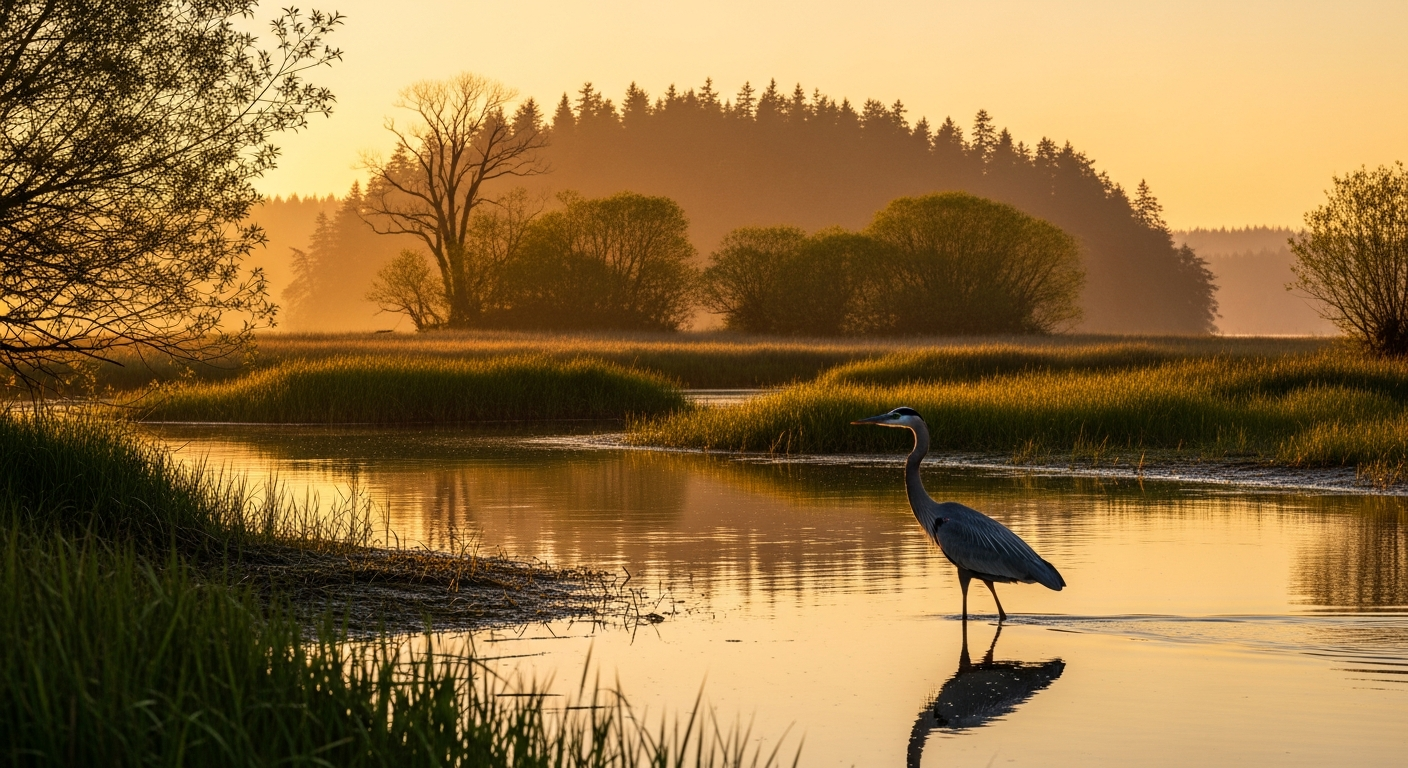
    Bald eagles, osprey, great blue herons, and a rotating cast of shorebirds and waterfowl are reliably present across all seasons. Spring and fall migration windows bring exceptional variety. Even a casual visitor with no birding background will see wildlife within minutes of crossing the Spencer Island bridge.

    The Trail

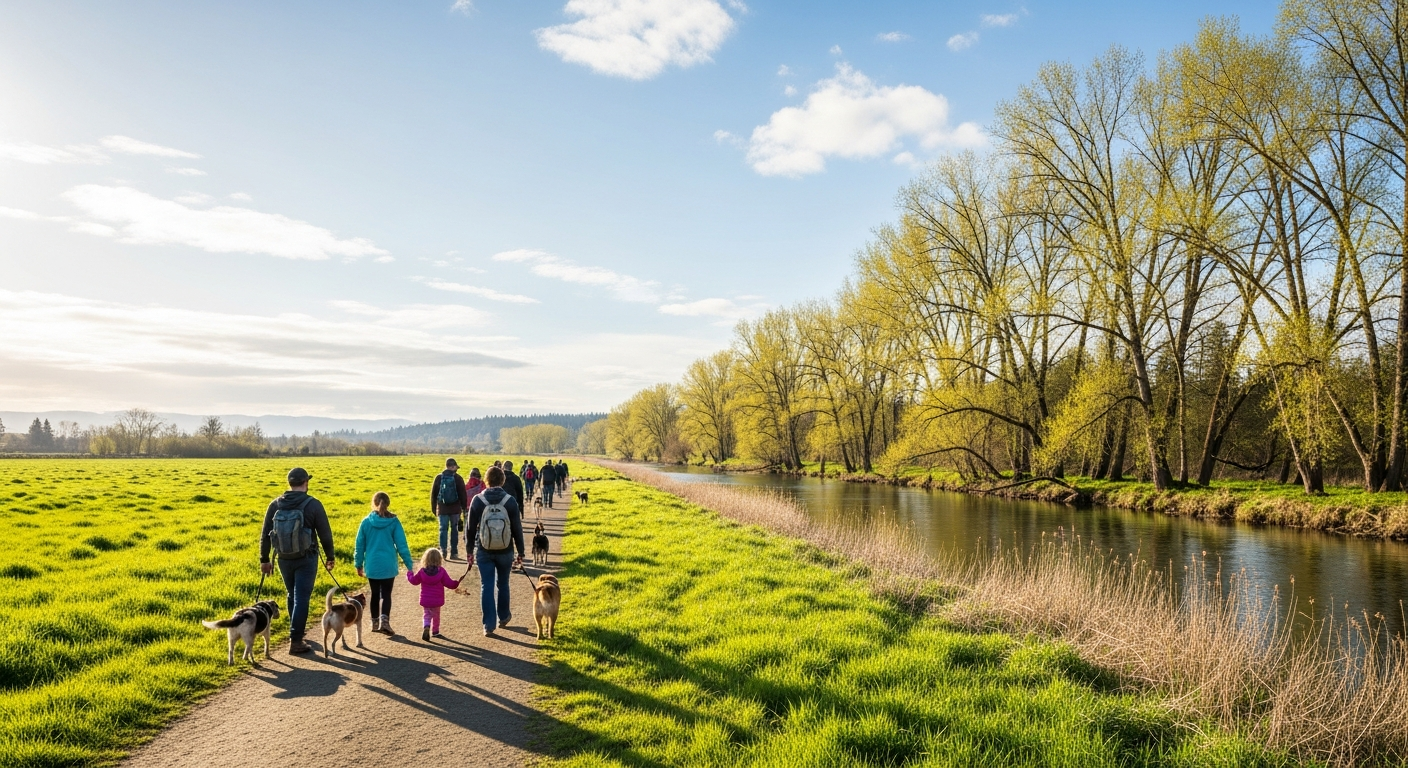
    The Langus River Front Trail is 3.0 miles of flat, paved path along the Snohomish River — accessible to walkers, joggers, and cyclists. It connects via bridge to the 1.7-mile Spencer Island southern loop on an elevated dike trail with open views across the estuary. Combined: approximately 4.7 miles, 2 to 3 hours at a relaxed pace with wildlife stops.

    No technical gear required. The trail is genuinely flat. Families with strollers can do the Langus section without difficulty.

    What to Bring, What to Pay

    Parking at Langus requires a Washington State Discover Pass ($30/year) or Vehicle Access Pass ($11.50/day). Available at the park kiosk or in advance at discoverpass.wa.gov. The trail and Spencer Island are free once you’ve handled parking.

    Binoculars significantly improve the Spencer Island experience. Water and snacks are essential — there are no services on Spencer Island. Layer up; estuary conditions can be windy regardless of season.

    Combining With Other Everett Stops

    Langus and Spencer Island pair naturally with Everett’s waterfront. Post-hike dining at Waterfront Place at the Port of Everett — with multiple restaurant options open along the marina — is a short drive from the park. The historic Port Gardner neighborhood and Rucker Hill walking tour adds an architectural dimension to the day.

    Frequently Asked Questions

    How far is Langus Riverfront Park from Seattle?

    Approximately 27 miles north of downtown Seattle via I-5 — roughly 30 minutes in off-peak traffic. Take the Marine View Drive exit north of Everett and follow Smith Island Road to the park at 411 Smith Island Rd.

    Is Langus Riverfront Park worth visiting as a day trip?

    Yes. Spencer Island’s 413-acre estuary habitat with 350-plus migratory bird species is among the best wildlife-viewing sites in Puget Sound. Combined with the flat paved Langus trail and river access infrastructure, it’s a genuine half-day outdoors destination.

    What is the admission fee for Spencer Island?

    Spencer Island is free to enter. Parking at Langus Riverfront Park requires a Washington State Discover Pass ($30/year) or Vehicle Access Pass ($11.50/day).

    What is the best time of year to visit Langus and Spencer Island?

    Any season offers wildlife viewing. Spring (March–May) and fall (September–November) are peak migration windows with the highest bird variety. Winter brings overwintering waterfowl. Summer is popular for families and cyclists.

  • Langus Riverfront Park: Spencer Island Everett Guide

    Langus Riverfront Park: Spencer Island Everett Guide

    Quick guide: Langus Riverfront Park (411 Smith Island Rd, Everett) offers a 3-mile flat paved trail along the Snohomish River with a direct connection to Spencer Island — 413 acres of wildlife estuary and one of the best birding sites in the Puget Sound region. A Discover Pass or Vehicle Access Pass is required for parking. The trail is free and open year-round.

    Most Everett residents know the waterfront. Fewer know that a short drive to the north end of Smith Island puts you at one of the best outdoor destinations in Snohomish County — a flat paved trail along the Snohomish River estuary, a working boat launch, a fishing pier, and a bridge to a 413-acre wildlife refuge where 350 species of migratory birds pass through each year.

    Langus Riverfront Park and Spencer Island are Everett’s underrated outdoors combination. Here is the complete 2026 guide.

    Getting There

    Langus Riverfront Park is located at 411 Smith Island Rd, Everett, WA 98201. From I-5, take the Marine View Drive exit and follow Smith Island Road north. The park has three parking lots. At least one requires a Washington State Discover Pass ($30/year) or Vehicle Access Pass ($11.50/day). The trail and Spencer Island access are free once you park.

    The Langus Riverfront Trail

    The Langus River Front Trail is a 3.0-mile paved loop with roughly 32 feet of total elevation gain — effectively flat. The surface is wide enough for walkers, joggers, and cyclists to share without conflict. There are no technical sections, no significant hills, and no route-finding required. You follow the river and come back around.

    That accessibility is the point. For families with strollers, seniors, people rehabbing injuries, or anyone who wants a genuine nature experience without technical trail demands, Langus is one of the best options in Everett’s parks system. It runs along the Snohomish River estuary, where freshwater from the Cascades meets tidal influence from Puget Sound — producing the habitat conditions that make the wildlife here exceptional.

    The River Access Infrastructure

    Langus is not just a walking trail. It has real water-access infrastructure rarely found in urban parks:

    • Boat launch — functional for small watercraft and trailer boats launching onto the Snohomish River
    • Fishing pier — direct access to the Snohomish River; salmon runs pass through the estuary zone
    • Rowing dock and shell house — serving rowers and paddlers from the Everett Rowing Association and other groups

    The estuary zone at Langus is where freshwater and saltwater ecosystems overlap — a biological mixing zone that concentrates fish, birds, and mammals in ways a purely freshwater or purely marine habitat does not.

    Spencer Island: The Main Event

    Walk or ride to the end of the Langus trail and you reach the bridge to Spencer Island — 413 acres of estuary habitat managed jointly by Snohomish County Parks and the Washington Department of Fish and Wildlife. Spencer Island sits at the heart of the 1,400-acre Snohomish River Estuary, the largest wetland near an urban center on the West Coast.

    The southern loop on Spencer Island is approximately 1.7 miles. It runs along an elevated dike trail that puts you above the wetland with unobstructed views across the estuary. No technical skills required. Dogs are welcome on leash.

    What you can expect to see:

    • More than 350 species of migratory birds pass through the estuary; the Snohomish River Estuary is consistently rated among the best birding sites in the Puget Sound region
    • Bald eagles, osprey, and red-tailed hawks are regular year-round residents
    • Great blue herons reliably visible along the river edges in all seasons
    • Shorebirds and waterfowl — exceptional variety during spring and fall migration windows
    • Mammals including deer, coyote, and river otter throughout the island

    Best Times to Visit

    Spencer Island and Langus are worth visiting any time of year. The Snohomish River Estuary is a year-round habitat, not a seasonal destination. That said:

    Spring (March–May): Peak migration season brings exceptional shorebird and waterfowl variety. Migratory raptors moving through. Vegetation growth begins filling the estuary.

    Fall (September–November): Second peak migration window. Waterfowl numbers build through October. Salmon runs in the river draw eagles and other predators.

    Summer: Resident birds active. Nesting in progress — give nesting areas a wide berth. Popular season for families and cyclists.

    Winter: Quieter trail, excellent for solitude. Waterfowl overwintering in the estuary. Eagles visible along the river.

    The Combined Hike

    Langus trail (3.0 miles) plus Spencer Island southern loop (1.7 miles) equals approximately 4.7 miles total for the full combination. Plan for 2 to 3 hours depending on pace and how long you spend watching birds on Spencer Island’s dike trail. Bring water — there are no services on Spencer Island.

    What to Bring

    • Discover Pass or cash for the Vehicle Access Pass ($11.50/day)
    • Binoculars — essential for getting the most from Spencer Island
    • Water and snacks (no services once you leave the parking area)
    • Layers — the estuary is exposed; wind conditions vary significantly
    • Rain gear in any non-summer month

    Nearby Everett Destinations

    Langus pairs well with other north Everett destinations. The Lowell neighborhood sits along the Snohomish River to the east. The Port Gardner neighborhood — Everett’s second-oldest neighborhood and Rucker Hill — is a short drive to the west. The waterfront dining at Port of Everett’s Waterfront Place is accessible for a post-hike meal.

    Frequently Asked Questions

    Where is Langus Riverfront Park in Everett?

    411 Smith Island Rd, Everett, WA 98201. From I-5, take the Marine View Drive exit and follow Smith Island Road north to the park entrance.

    Do I need a pass to visit Langus Riverfront Park?

    A Washington State Discover Pass ($30/year) or Vehicle Access Pass ($11.50/day) is required for parking at Langus Riverfront Park. The trail and Spencer Island are free to walk once you have parked.

    How long is the trail at Langus Riverfront Park?

    The Langus River Front Trail is a 3.0-mile flat paved loop with approximately 32 feet of elevation gain — effectively flat and accessible to walkers, joggers, cyclists, and strollers.

    What is Spencer Island?

    Spencer Island is a 413-acre wildlife estuary managed jointly by Snohomish County and the Washington Department of Fish and Wildlife, accessible by bridge from the end of the Langus trail. It sits within the 1,400-acre Snohomish River Estuary — the largest wetland near an urban center on the West Coast — with more than 350 species of migratory birds recorded.

    Is Langus Riverfront Park good for birdwatching?

    Yes. The Snohomish River Estuary is consistently rated among the best birding sites in Puget Sound. Bald eagles, osprey, great blue herons, and 350+ species of migratory birds make the area exceptional. Spring and fall migration windows offer peak variety.

    Can you fish at Langus Riverfront Park?

    Yes. Langus has a fishing pier with direct access to the Snohomish River, which has salmon runs through the estuary zone. A Washington State fishing license is required. A boat launch is also available for watercraft access.

    How far is the full Langus plus Spencer Island hike?

    Approximately 4.7 miles combining the Langus trail (3.0 miles) and Spencer Island southern loop (1.7 miles). Plan for 2 to 3 hours depending on pace and wildlife-watching stops.

  • New Everett Stadium Design: AquaSox Fan & Visitor Guide

    New Everett Stadium Design: AquaSox Fan & Visitor Guide

    For AquaSox fans and Everett sports visitors: City Council approved the design package April 29. The stadium is targeted for Fall or Winter 2027 — in time for the AquaSox 2027 season. What’s approved so far: 5,000 seats, ADA throughout, covered premium club, multi-use for baseball, USL soccer, concerts, and community events. What’s not yet decided: construction authorization and the $110M+ in financing needed to build it.

    If you’ve been following the downtown Everett stadium story, the April 29 City Council vote is a real milestone — the design phase is now funded and moving forward. Here is what it means for the fan and visitor experience being planned, and what the realistic timeline looks like.

    What Kind of Venue Is Being Designed

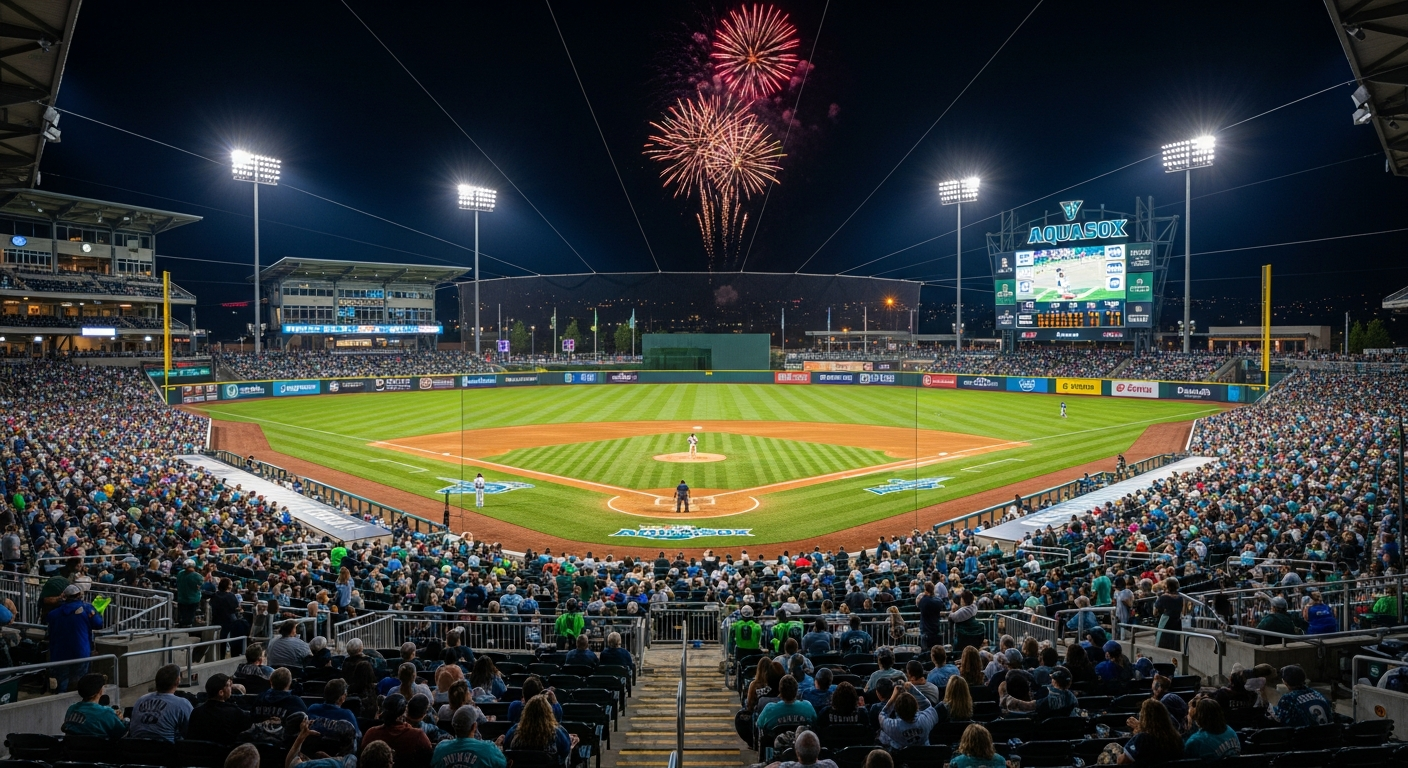
    The Everett Outdoor Event Center is designed as a true multi-use sports and events venue — not a single-purpose ballpark. The design calls for 5,000 seats with ADA accessibility throughout the facility, including a premium club seating 200 fans with 400 additional standing capacity on a covered deck. Public park space is built into the site design.

    The primary tenant anchor is the Everett AquaSox — the Seattle Mariners’ Single-A affiliate that has played in Everett since 1984, currently at Funko Field (Everett Memorial Stadium). The AquaSox would move into the new downtown venue when it opens.

    Two Everett teams in the United Soccer League (USL) are also planned as tenants — part of the professional soccer league’s Pacific Northwest expansion. Everett would host both baseball and professional soccer in the same facility.

    Downtown Location vs. Current Funko Field

    The current Funko Field sits on Oakes Avenue in the Bayside neighborhood — accessible but not embedded in Everett’s downtown core. The new Everett Outdoor Event Center is planned for a downtown location, positioning it within walking distance of Everett Station, the waterfront district, and the Broadway corridor.

    That downtown location is what gives the stadium broader event potential: concerts, festivals, and community programming that can draw on foot traffic from the waterfront and transit connections from Everett Station. The Waterfront Place restaurant district and the transit network changes underway make the downtown location stronger over the next few years.

    What the 2027 Timeline Means in Practice

    The city has been targeting Fall or Winter 2027 for the stadium opening — timed to be ready before the AquaSox 2027 season. That timeline requires design completion (now funded), followed by construction authorization, financing commitment, and construction itself.

    The design is the prerequisite. Without a completed design package, you cannot break ground, you cannot get final construction bids, and you cannot secure project financing. Wednesday’s vote clears that gate. What comes next — the construction decision and how the remaining $110 million-plus gets financed — is the harder sequence.

    The AquaSox Question

    The AquaSox have played in Everett since 1984, making them one of the longest-running Minor League Baseball affiliates in the Pacific Northwest. The new stadium is explicitly designed to keep them in Everett — the city has publicly noted that without a new facility, the team’s continued presence is at risk. Funko Field, built decades ago, does not meet modern Minor League Baseball facility standards.

    The April 29 vote moves the ball forward on keeping the AquaSox in downtown Everett through the 2027 season and beyond.

    Frequently Asked Questions

    How many seats will the new Everett stadium have?

    The Everett Outdoor Event Center design calls for 5,000 seats with full ADA accessibility throughout, plus a premium club with 200 seated and 400 standing capacity on a covered deck.

    When could the AquaSox move to the new stadium?

    The city is targeting a Fall or Winter 2027 opening timed for the AquaSox 2027 season. This depends on construction authorization and financing being secured after the design package is complete.

    Where will the new Everett stadium be located?

    The Everett Outdoor Event Center is planned for a downtown location, distinguishing it from the current Funko Field on Oakes Avenue in Bayside. The downtown site puts it near Everett Station and the waterfront district.

    What sports will be played at the new Everett stadium?

    Minor League Baseball (Everett AquaSox, Seattle Mariners Single-A affiliate) and professional soccer (two United Soccer League teams). The venue is also designed for concerts, festivals, and community events.

    Has construction been authorized?

    No. The April 29 vote funds completing the design. Construction authorization and the $110 million-plus in construction financing are separate decisions that have not been made.