Tag: Water Damage Restoration

  • Restoration Insurance Programs: TPA & Vendor Network Guide

    Restoration Insurance Programs: TPA & Vendor Network Guide

    The insurance ecosystem in restoration is its own universe with its own language: TPAs, carriers, preferred vendor programs, MSAs, scorecards, audits, performance guarantees, network certifications. Most restoration owners have a vague sense of what these programs are and a stronger opinion about whether to join them, often without knowing the actual economics.

    This is the complete operator’s guide to restoration insurance programs in 2026: what TPAs actually do, how carrier preferred vendor programs work, what MSAs require, the real margin economics, and the framework for deciding which programs deserve your application.

    The four players in the insurance restoration ecosystem
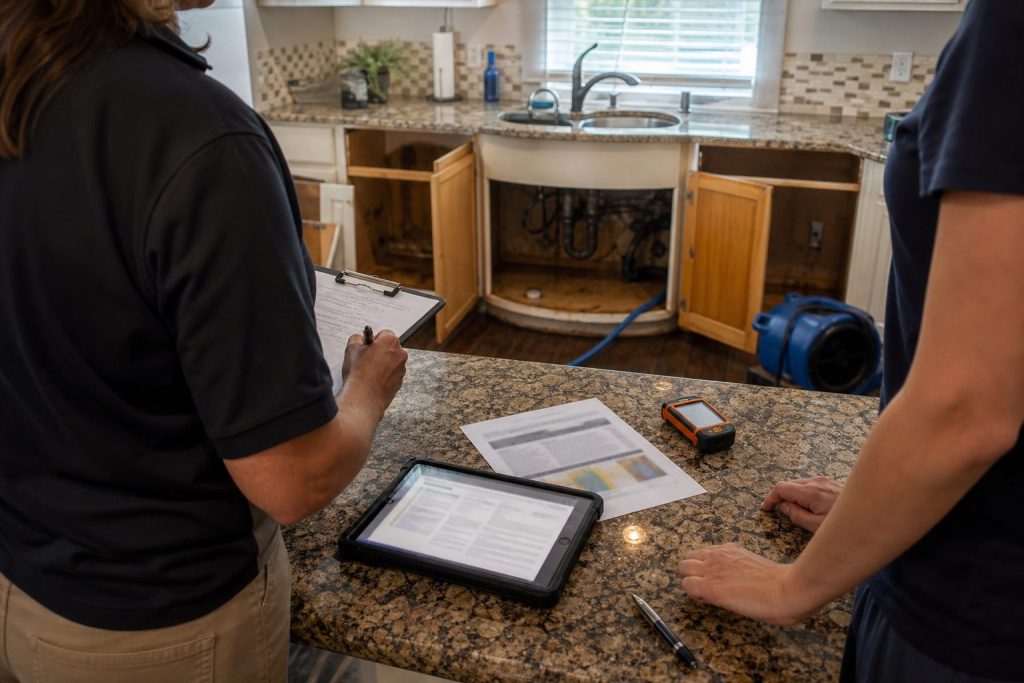
    Clipboard and tablet on a kitchen counter during an insurance adjuster walkthrough after water loss
    Four players in the insurance restoration ecosystem.

    Every insurance restoration job involves up to four parties. Understanding which is which is the first step to navigating the system.

    The carrier is the insurance company that issued the policy and pays the claim — State Farm, Allstate, USAA, Liberty Mutual, Travelers, Nationwide, Farmers, Progressive, Chubb, and dozens of regionals. Carriers either have in-house claims handling or contract claims management out to TPAs.

    The TPA (third-party administrator) is a company that manages claims on behalf of carriers — Sedgwick, Crawford & Company, Contractor Connection, Code Blue Restoration Services, CCMSI, ESIS, and others. TPAs handle adjuster assignments, vendor management, scope review, payment processing, and customer communication on behalf of the carrier.

    The vendor network is a managed roster of restoration contractors that the carrier or TPA assigns work to. Some networks are operated by TPAs (Contractor Connection is the largest); some are operated directly by carriers (Allstate Premier Service, USAA STARS).

    The independent adjuster is a contracted adjuster (not a carrier employee) hired to assess specific claims, often for catastrophe events or to supplement carrier capacity. Independents work for IA firms like Eberl, Pilot Catastrophe, and Crawford.

    What a TPA program actually requires
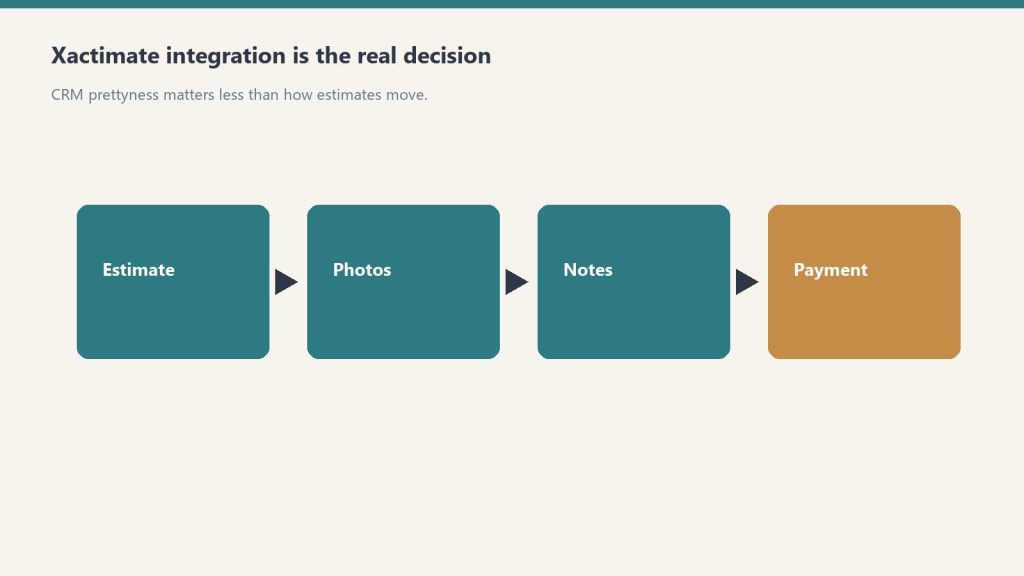
    Flow from estimate to photos to notes to payment emphasizing integration
    What a TPA program actually requires.

    Joining a major TPA vendor network typically requires: a multi-year track record in restoration (most require 3+ years), specific IICRC certifications (firm-level plus individual technicians for relevant service lines), insurance coverage at higher limits than standard (often $2M+ general liability, $1M+ pollution liability, $1M+ professional liability), background checks and drug testing for technicians, vehicle and uniform standards, technology compatibility (use of TPA-approved estimating and reporting platforms), 24/7 dispatch capability with documented response time SLAs, monthly reporting and KPI tracking, and a signed master service agreement that defines pricing, scope, performance standards, and termination conditions.

    The application process typically takes 60-180 days, includes facility audits, reference checks, and may require a probationary period of supervised job assignments before full network status.

    The pricing economics of TPA work

    The honest economics: TPA work pays less than direct retail work. Most TPA agreements include some form of pricing concession — typically 10-20% off published Xactimate pricing, restrictions on overhead and profit, capped supplements, or fee schedules that cap certain line items. The trade-off is volume and predictability: a vendor in good standing on a major TPA network may receive 30-100+ assignments per month depending on territory.

    The math that matters: net margin per TPA job, after pricing concessions, after the operational overhead of TPA-required reporting and SLAs, and after slower payment terms (45-90 days is common). Companies that profitably run TPA programs typically have lean overhead, disciplined estimating, and the operational scale to absorb the lower per-job margin with higher volume. Companies with high overhead burden often lose money on TPA jobs they think are profitable.

    Major TPAs and vendor programs to know

    Contractor Connection (subsidiary of Crawford & Company) is the largest restoration vendor network, managing claims for many major carriers including Allstate, Liberty Mutual, and others. Network membership is tightly managed with strict performance standards and capacity targets.

    Code Blue Restoration Services is a major restoration-specific TPA serving multiple carriers, with significant residential mitigation volume.

    Sedgwick is one of the largest TPAs overall, serving commercial and residential property claims for many major carriers. Sedgwick’s vendor network is more decentralized than Contractor Connection’s.

    Crawford & Company operates both adjusting services and Contractor Connection, with significant CAT (catastrophe) capacity.

    Allstate’s Premier Service Program is a direct-from-carrier preferred vendor program for water mitigation and reconstruction.

    USAA STARS is USAA’s preferred vendor program serving its policyholder base.

    State Farm Premier Service is State Farm’s similar program (formerly Service First).

    Numerous regional and specialized TPAs exist — Sedgwick CCMSI, Cunningham Lindsey (now Sedgwick), various large loss specialty firms, and carrier-specific direct programs.

    Master Service Agreements (MSAs)
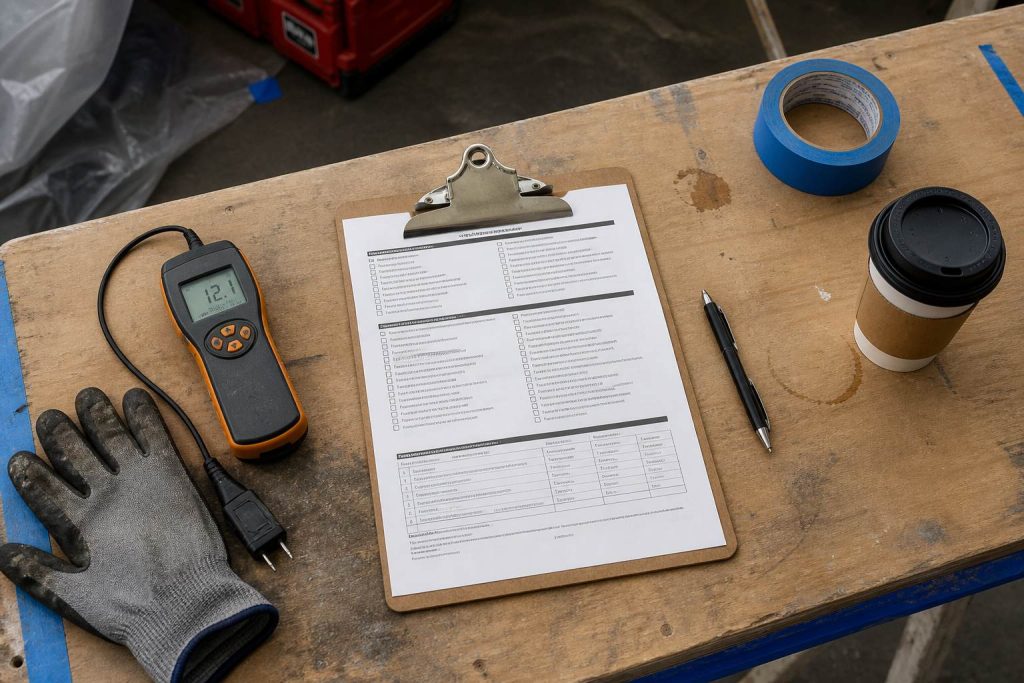
    Restoration SOP clipboard with checklist, moisture meter, and gloves on a jobsite table
    Master Service Agreements — the real contract.

    An MSA is the contract that governs the relationship between the contractor and the TPA or carrier. Key MSA terms to scrutinize: pricing schedule (Xactimate concession amount, capped line items, fee schedules); territory definition (geographic scope, exclusivity provisions, right of first refusal); performance metrics (response time SLAs, completion timelines, scorecard targets); payment terms (net days, retention, hold-back provisions); insurance and indemnification requirements; termination provisions (notice periods, performance-based termination, transition obligations); customer ownership (whether you can market to customers post-job, whether the carrier owns the customer relationship); audit rights (TPA rights to review your job files, scope, photos, and pricing).

    MSAs are negotiable in some areas (especially territory and performance metrics) and rarely negotiable in others (pricing concessions, audit rights). Operators should have an attorney with restoration industry experience review any MSA before signing.

    The decision framework: which programs to join

    Whether to join a TPA program depends on four factors. Operational capacity: do you have the SLA capability, technology stack, and management bandwidth to meet program requirements? Market lead flow: is your direct lead generation strong enough that you can be selective, or do you need TPA volume to fill the calendar? Cost structure: is your overhead lean enough to make money at the program’s pricing concessions? Strategic mix: what percentage of revenue comes from TPA programs vs. direct? Most healthy operators target 30-50% TPA revenue mix — enough volume to leverage operations, not so much that the company is captive to a single TPA’s decisions.

    How to win at TPA performance scorecards

    Once on a TPA network, performance metrics determine assignment volume. The metrics that matter on most scorecards: response time (minutes from assignment to first contact, hours to first on-site), customer satisfaction scores (post-job surveys), cycle time (days from assignment to job completion), scope variance (how often supplements are needed and whether they’re approved), complaint rate (formal customer complaints per 100 jobs), quality scores (file documentation, photo quality, scope accuracy on TPA audits). Top-quartile performers on these metrics receive disproportionate assignment volume; bottom-quartile performers get reduced assignments and eventual termination.

    Related on Tygart Media: Starlink on a water job · S500 in the van · local SEO for restoration.

    Frequently Asked Questions

    What is a TPA in restoration?

    A TPA (third-party administrator) is a company that manages claims on behalf of insurance carriers. In restoration, TPAs handle adjuster assignment, vendor selection, scope review, payment processing, and customer communication. Major restoration TPAs include Sedgwick, Crawford & Company, Contractor Connection, Code Blue, and CCMSI.

    How do you get on a carrier preferred vendor program?

    The application process typically requires: 3+ years in business, specific IICRC firm and individual certifications, higher insurance limits than standard, background-checked technicians, 24/7 dispatch capability, monthly KPI reporting, and signing a master service agreement that defines pricing concessions and performance standards. Applications take 60-180 days and often include facility audits and reference checks.

    Are TPA programs profitable for restoration companies?

    It depends on cost structure. TPA work typically pays 10-20% less than direct retail work due to pricing concessions, capped overhead and profit, and other restrictions. Companies with lean overhead and high operational discipline can run profitable TPA programs at high volume. Companies with high overhead burden often lose money on TPA jobs while believing they’re profitable.

    What is an MSA in restoration?

    An MSA (Master Service Agreement) is the contract between a restoration contractor and a TPA, carrier, or commercial customer that governs the relationship — pricing schedules, territory, performance metrics, payment terms, insurance requirements, audit rights, and termination provisions. MSAs should be reviewed by an attorney with restoration industry experience before signing.

    What percentage of revenue should come from TPA work?

    Most healthy restoration operators target 30-50% of revenue from TPA and preferred vendor programs. Below that range, the company isn’t leveraging program volume; above that range, the company is operationally captive to a few TPAs and vulnerable to program changes, pricing reductions, or termination.

    How do restoration vendor scorecards work?

    TPA performance scorecards typically measure response time (minutes to first contact, hours to on-site), customer satisfaction scores, cycle time (days from assignment to completion), scope variance and supplement approval rates, complaint rates, and quality scores from TPA file audits. Top-quartile performers receive disproportionate assignment volume; bottom-quartile performers face reduced assignments and eventual network termination.
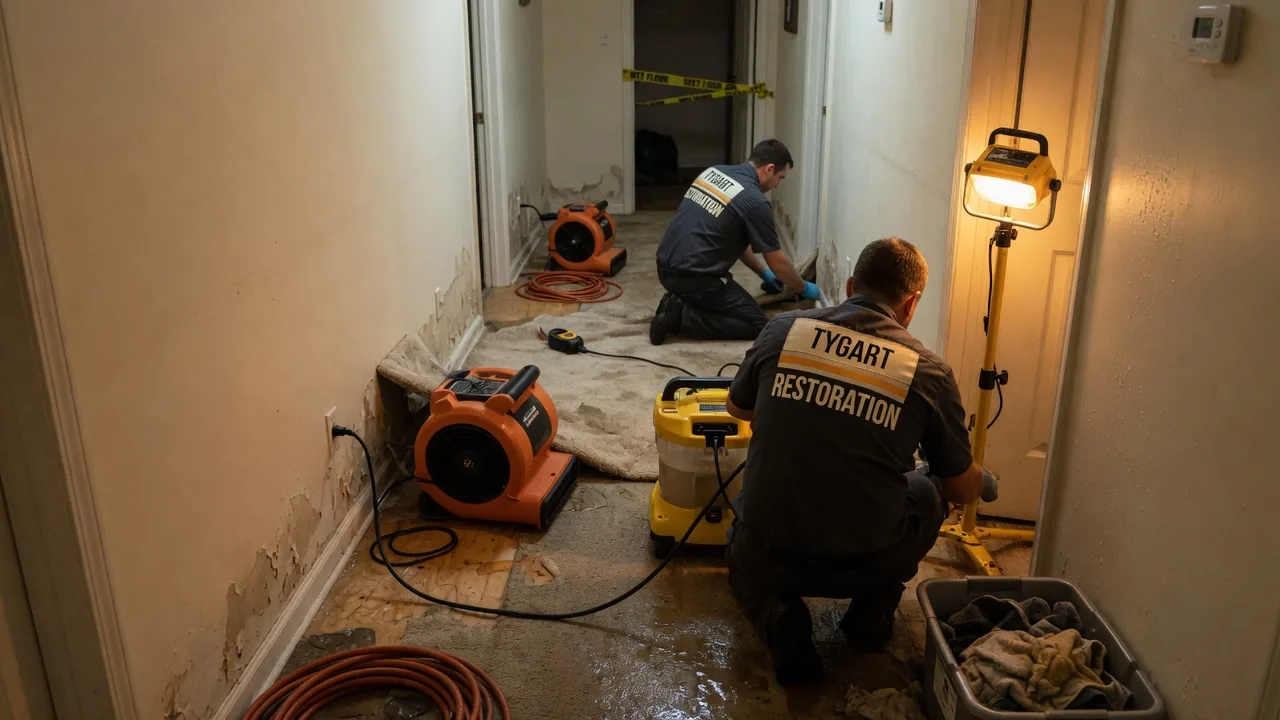
  • Water Damage Restoration Marketing: Proven Channel Guide

    Water Damage Restoration Marketing: Proven Channel Guide

    Water damage restoration is unlike almost any other home service. The buying decision happens in minutes, not weeks. The customer is panicked, often dealing with an active leak or flood, and they will hire whoever shows up first with credibility. Marketing for water damage restoration is therefore less about persuasion and more about presence — being visible at the exact moment a homeowner or property manager opens their phone and types “water damage near me.”

    This guide covers the full channel stack that profitable water damage restoration companies use to capture that demand and build a referral engine that keeps producing between emergencies. For the broader strategic context, see our complete restoration marketing guide, which sits above this article in the hub-and-spoke architecture.

    Why Water Damage Marketing Is Different

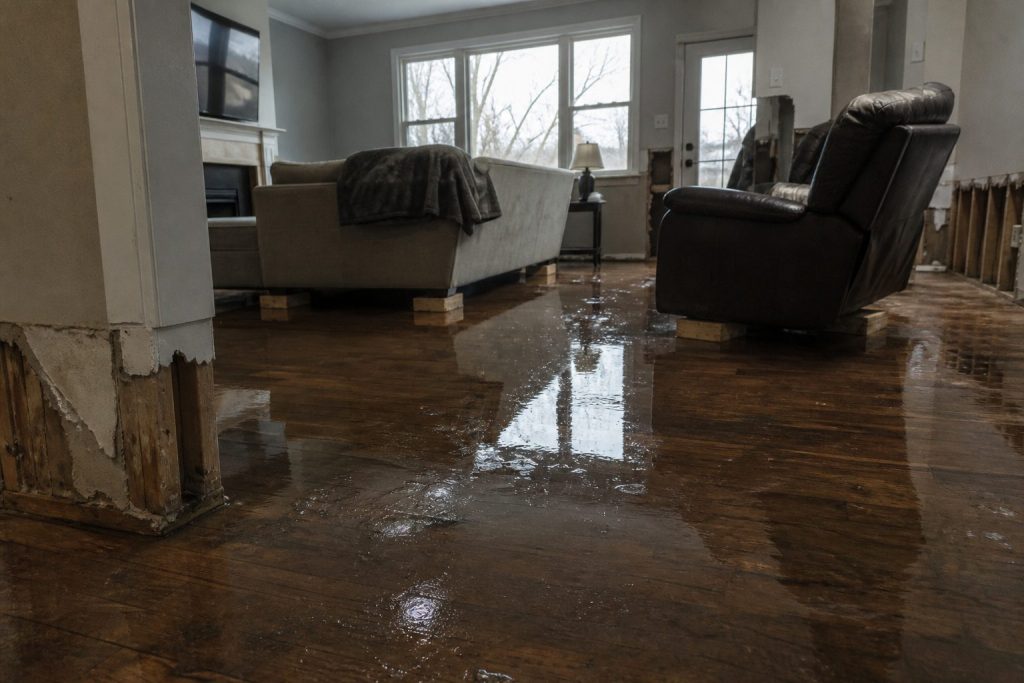
    Flooded residential living room with standing water on hardwood after a water loss
    Why water damage marketing is different.

    Three structural realities shape every marketing decision in this category. First, intent is overwhelmingly bottom-funnel. Almost no one searches “water damage restoration company” out of curiosity. They search because they have a problem. That collapses the funnel and rewards channels that intercept high-intent searches.

    Second, the competitive set is dominated by Google. Google Search, Google Maps, Local Service Ads, and Google Business Profile collectively account for the majority of net-new water damage leads in most metros. If a restoration company is not visible across all four, it is competing for table scraps.

    Third, insurance and TPA dynamics shape lead economics. A water damage job paid through a carrier preferred vendor program has a different margin profile than a cash retail job sourced from Google. Marketing has to be tuned to the mix the operator actually wants.

    The Five Channels That Drive Most Water Damage Leads

    Comparison of Claude how-to fit versus local service page fit for assistants
    The five channels that drive most water damage leads.

    1. Google Local Service Ads (LSAs)

    LSAs sit at the top of the search results page above traditional paid ads and the map pack. For water damage queries, LSAs produce leads at a cost per acquisition that is typically lower than Google Ads in most markets, though margins vary by metro. The Google Guaranteed badge is a meaningful conversion lever for cold homeowners. Setup requires background checks, license verification, and insurance documentation — friction that becomes a moat once cleared.

    2. Google Ads (Search)

    Traditional pay-per-click on emergency keywords (“water damage restoration,” “flooded basement,” “burst pipe cleanup”) remains the workhorse channel for most restoration companies. Campaign structure matters enormously here. Single-keyword ad groups, hyperlocal geo-targeting, call-only ads after hours, and aggressive negative keyword lists separate profitable accounts from money pits.

    3. Google Business Profile and the Map Pack

    Map pack visibility is essentially free traffic, but it is also the most competitive surface in local search. Ranking in the three-pack for “water damage restoration [city]” requires consistent NAP citations, a steady stream of authentic reviews with keyword-rich responses, regular GBP posts, geo-tagged photo uploads, and proximity to the searcher.

    4. Organic SEO and Content

    Organic search is a longer-term play but produces the cheapest leads at scale. Service pages targeting “[service] in [city]” combinations, neighborhood landing pages for high-value zip codes, and educational content answering insurance and restoration process questions all stack into a moat that competitors struggle to replicate.

    5. Insurance Adjuster and Plumber Referrals

    Marketing is not only digital. The most profitable restoration companies invest heavily in offline relationships with adjusters, plumbers, property managers, and real estate agents. A single plumber referral relationship can produce more revenue than a full year of paid search.

    Budget Allocation: Where to Put the First Marketing Dollar

    For a restoration company spending under $5,000 per month on marketing, the priority order is usually: GBP optimization first (it is free), then LSAs (lowest CAC for verified businesses), then a tightly scoped Google Ads campaign on emergency keywords, then organic content investment. Social media and display should generally come last in the water damage category because intent is too immediate for those channels to convert efficiently.

    For companies spending $10,000-$50,000 per month, the channel mix expands to include programmatic display for retargeting, YouTube for brand awareness in target zip codes, and a content marketing operation that produces 4-8 SEO-targeted pieces per month.

    Tracking and Attribution

    Four-stage funnel: citation, click, engage, convert
    Tracking and attribution.

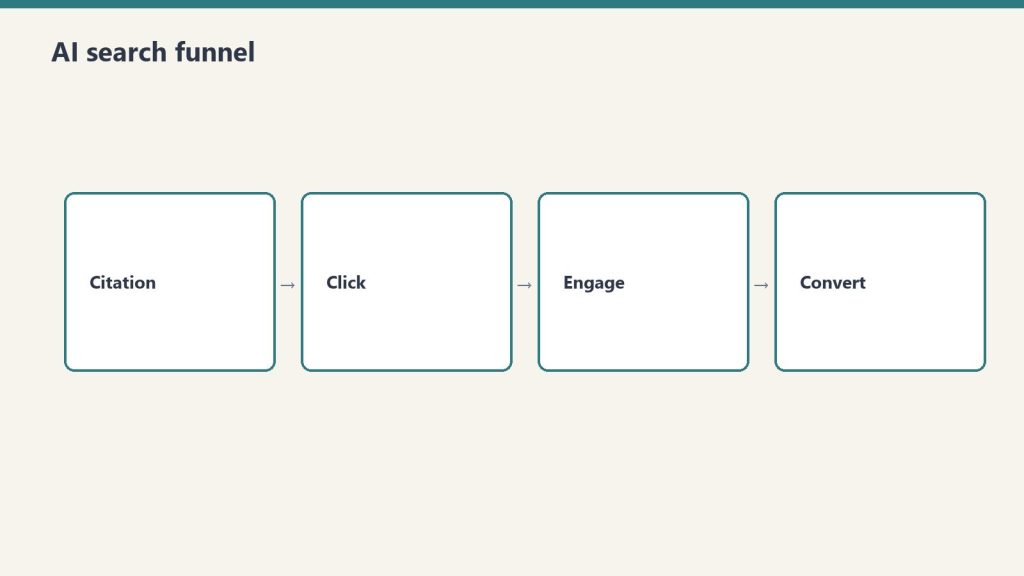
    Water damage marketing fails when leads cannot be tracked back to source. Every campaign should use call tracking numbers (CallRail, CallTrackingMetrics, or WhatConverts), every form should fire a conversion event, and every job should be tagged in the CRM with its origin channel. Without this, marketing decisions are guesses.

    Related on Tygart Media: content marketing strategy · Google Ads guide · SEO for restoration companies.

    Frequently Asked Questions

    How much should a water damage restoration company spend on marketing?

    Most healthy restoration companies invest between 5% and 12% of revenue on marketing, with a higher share during the first three years while organic and referral channels are still being built. Companies relying primarily on paid acquisition often run closer to the higher end of that range.

    Are Google Local Service Ads worth it for water damage?

    For most water damage restoration companies in mid-sized and major metros, yes. LSAs typically produce a lower cost per lead than traditional Google Ads and the Google Guaranteed badge improves close rates on cold inbound calls. The qualifying process is the main barrier.

    What marketing channels work best for commercial water damage?

    Commercial water damage leans more on relationships, MSAs with property management firms, LinkedIn outreach, and association involvement than on paid search. Paid search still matters but a larger share of commercial pipeline comes from offline business development.

    How long does SEO take for a restoration company?

    Local SEO results — map pack visibility, branded search, and a handful of city service pages — typically begin to compound in 90-180 days. Building a competitive organic presence on the most valuable water damage keywords in a major metro often takes 12-24 months of consistent content and link building.

    Should a restoration company hire an agency or build marketing in-house?

    Companies under roughly $3M in revenue usually get more value from a specialized restoration marketing agency than from an in-house hire, because the talent pool of operators who understand both restoration and digital marketing is thin. Above $5M, an internal marketing leader paired with specialist agencies is often the best mix.

  • Residential Restoration Lead Generation: Proven Channels

    Residential Restoration Lead Generation: Proven Channels

    Residential restoration lead generation runs on a different operating system than commercial. The buying decision is fast, the buyer is emotional, the decision criteria are weighted heavily toward speed and trust, and the lead source mix is dominated by Google in nearly every metro. Companies that get residential right build predictable, high-volume pipelines; companies that try to use commercial tactics on residential prospects consistently underperform.

    This article is part of our restoration lead generation master guide, which sits above this piece in the cluster architecture.

    The Residential Restoration Buyer

    Seven cards naming common AI chatbot failure modes
    The residential restoration buyer.

    The typical residential restoration buyer is a homeowner facing an active loss — a burst pipe, a roof leak after a storm, smoke after a kitchen fire, mold discovered during a remodel. They are usually researching for the first time, anxious, and operating under time pressure. They will call 1-3 companies, often the first ones to appear, and pick the company that responds fastest with the most credibility.

    The lead-gen implication is that visibility at the moment of search and credibility on first contact matter more than almost anything else.

    The Six Channels That Drive Residential Restoration Leads

    Comparison of Claude how-to fit versus local service page fit for assistants
    The six channels that drive residential restoration leads.

    1. Google Search (Organic + Paid)

    Google Search dominates residential restoration lead generation in most metros. Organic rankings on “[service] [city]” queries, Google Ads on emergency intent terms, and a strong Google Business Profile collectively account for the majority of inbound residential lead volume for most well-marketed companies.

    2. Google Local Service Ads

    LSAs sit above traditional paid search and produce leads on a per-lead basis with the Google Guaranteed badge. For verified restoration companies, LSAs are typically the lowest cost per qualified lead channel in residential.

    3. Lead-Buying Platforms

    HomeAdvisor, Angi, Networx, and restoration-specific lead vendors fill capacity gaps but require operational discipline. They work best as a supplemental channel rather than a primary one.

    4. Plumber and Adjuster Referrals

    Offline referrals from plumbers, adjusters, real estate agents, and past customers produce the highest-margin and highest-converting residential leads in most operations. The investment cycle is long but the ROI is durable.

    5. Social Media (Paid)

    Paid Facebook and Instagram ads targeting homeowners by zip code with educational creative around water damage prevention and storm preparation produce both top-of-funnel awareness and direct lead form fills in most markets.

    6. Direct Mail and Local Print

    Often dismissed but still effective in some markets, particularly post-storm targeting in affected zip codes and ongoing presence in neighborhood publications and HOA newsletters.

    Channel Sequencing for a New Restoration Company

    For a residential restoration company starting from zero, the channel build order that consistently works: complete GBP optimization first (free, foundational), apply for and complete LSA verification next (lowest cost per lead once approved), launch tightly scoped Google Ads on emergency keywords, build out service and city pages for organic SEO, layer in paid social as budget allows, then test lead vendors with small pilots.

    Budget Allocation by Revenue Stage

    Companies under $500K in revenue should concentrate marketing budget heavily into LSAs and one tightly run Google Ads campaign. Diversification too early dilutes effort. Companies between $500K and $2M can add organic content investment and lead vendors. Companies above $2M can run the full channel mix simultaneously.

    Speed-to-Lead and Conversion Operations

    Three panels showing one problem, three options, one recommendation
    Speed-to-lead and conversion operations.

    The lead generation channel mix only matters if the operations behind it convert leads. Residential restoration close rates are heavily influenced by speed of first contact, after-hours coverage, dispatch quality, and the in-home estimate experience. Companies that buy leads but cannot answer the phone within 60 seconds during business hours should fix operations before scaling lead spend.

    Related on Tygart Media: water damage marketing · lead nurture · residential sales scripts.

    Frequently Asked Questions

    What is the highest-ROI lead source for residential restoration?

    For verified restoration companies, Google Local Service Ads typically produce the lowest cost per qualified lead. Plumber and adjuster referrals produce the highest-margin leads but take longer to build. Most healthy residential operations run both alongside organic search and paid search.

    How much should a residential restoration company spend on marketing?

    Most healthy residential restoration companies invest 6-12% of revenue on marketing, with newer companies often spending toward the higher end of that range while organic and referral channels are still maturing.

    Are direct mail and local print still effective for restoration?

    Direct mail and hyperlocal print can produce results in specific scenarios — post-storm zip code targeting, neighborhood publications in affluent areas, HOA newsletters in target communities. Broad-based direct mail without targeting precision usually underperforms digital channels.

    Should I focus on water damage, fire damage, or mold for residential lead generation?

    Most residential restoration revenue comes from water damage in nearly every market, with fire and mold producing supplemental volume. Lead generation budget should generally be weighted toward water damage in proportion to its share of total revenue, with smaller dedicated budgets for fire and mold to maintain pipeline.

    How do I know when to add a new lead-gen channel?

    Add a new channel when existing channels have hit their cost-per-lead efficiency ceiling — meaning increased spending on the channel produces diminishing returns. Adding channels too early dilutes attention; adding too late caps growth. Quarterly channel performance reviews usually surface the right timing.

  • Residential Restoration Sales Scripts That Close Jobs

    Residential Restoration Sales Scripts That Close Jobs

    Residential restoration sales is won or lost in the first 60 seconds of the inbound call and the first 15 minutes of the in-home estimate. Companies that script these moments tightly close at meaningfully higher rates than companies that wing it. This article walks through the call flow, in-home conversation, and closing language that consistently performs in residential restoration sales operations.

    This is part of our restoration sales playbook, which covers the full sales motion.

    The Inbound Phone Call

    Side-by-side comparing a pitch dump with value-first contact habits
    The inbound phone call.

    The inbound call is the highest-leverage 3-5 minutes in residential restoration. The script needs to accomplish four things quickly: establish empathy and credibility, qualify the situation, create urgency and book the appointment, and prevent the prospect from continuing to call competitors.

    The opening should never be “Hi, can I help you?” — it should be a confident, warm greeting that immediately signals competence: “[Company], this is [Name], how can I help you with your water damage today?”

    The qualification questions are simple but specific: What is the source of the water? When did it start? How much area is affected? Is the water still active? Is anyone home? What city are you in? These questions both qualify the lead and demonstrate competence to the homeowner.

    The booking close: “We can have a project manager on-site in [time]. Can I confirm the address?” — and then the critical ask: “Just so I can let our PM know, are you also calling other companies, or did you decide to go with us?” This last question, asked warmly and without pressure, reduces shopping behavior dramatically.

    The In-Home Arrival

    The first 60 seconds on-site set the tone for the entire conversation. The sequence that works: introduce yourself, ask permission to enter, ask the homeowner to walk you through what happened in their own words (don’t immediately start inspecting), then transition into a guided inspection together. Skipping the homeowner’s narrative is a common mistake — they need to feel heard before they will trust the recommendation.

    The Inspection Walk-Through

    Gloved hands using a pin-type moisture meter on wet drywall during inspection
    The inspection walk-through.

    Educational narration during the inspection separates restoration sales pros from amateurs. Rather than silently using a moisture meter, the rep should narrate what the readings mean, what category of water it appears to be, what equipment will be needed, and what the timeline looks like. This builds confidence and pre-frames the price.

    Presenting the Scope and Price

    The scope presentation should happen at the kitchen table, not standing up. The rep should walk through the scope line by line, explain why each item is necessary, address insurance process clearly, and then present the total — without flinching and without immediately offering a discount. The number is the number.

    Common price language that works: “Based on what we found, the scope to dry your home down properly comes to [amount]. Most of this will be covered by your insurance policy, and we’ll work directly with your adjuster on the supplements. The out-of-pocket exposure for you depends on your deductible. Does that match what you were expecting?”

    Handling the “Let Me Think About It”

    The most common objection in residential restoration is the soft delay: “Let me think about it” or “I need to talk to my spouse.” The script that works addresses the underlying concern without applying pressure: “Of course. The one thing I’d mention is that the longer we wait to start drying, the more secondary damage typically occurs. We can have equipment in place today and you can still cancel within 24 hours if you change your mind. What works better for you?”

    The Authorization Close

    Three panels showing one problem, three options, one recommendation
    The authorization close.

    The work authorization signature is the actual close. The handoff language: “Let me get this paperwork started — it just authorizes us to begin the mitigation and lets us bill your insurance directly.” Smooth, confident, and assumes the close. Hesitant closing language (“So… do you want to do this?”) signals uncertainty and triggers second-guessing.

    Related on Tygart Media: residential lead gen · sales playbook · CRM pipeline.

    Frequently Asked Questions

    Should restoration salespeople use a written script verbatim?

    The framework should be scripted; the delivery should be conversational. Reading a script word-for-word feels robotic and erodes trust. Memorizing the structure and language patterns and delivering them naturally is the goal.

    How do I train new restoration salespeople on these scripts?

    Role-play is the fastest training method. Pair new reps with senior staff for ride-alongs, then run weekly role-play sessions where new reps practice handling the toughest objections. Recording actual customer calls (with consent) and reviewing them as a team also accelerates learning.

    What is a reasonable close rate on residential restoration estimates?

    Well-trained residential restoration salespeople running emergency mitigation typically close 60-80% of first-on-scene appointments. Reconstruction-only estimates close at much lower rates, often 25-40%, because of the longer decision cycle.

    Should I quote prices over the phone?

    Generally no for restoration. Phone pricing without seeing the damage triggers price shopping and locks the rep into a number that may not match the actual scope. The phone goal is to book the on-site appointment, not to quote.

    How do I handle a homeowner who is getting multiple bids?

    Address the underlying concern (they want to make sure they’re not being overcharged) by walking through your scope line-by-line, explaining what each item does, and offering to review competitor scopes side-by-side. Confidence in your scope and price usually wins more often than discounting.

  • IICRC S500 2026 Revision: Guide for Restoration Contractors

    IICRC S500 2026 Revision: Guide for Restoration Contractors

    The 2026 revision of ANSI/IICRC S500 — the Standard for Professional Water Damage Restoration — is the most consequential update the standard has seen in nearly a decade. For restoration contractors, the practical impact lands in three places: documentation, scope-of-work language, and the science behind how losses are categorized and classed.

    This guide focuses on what changes for the working restoration company, not the academic background. If you are billing insurance, defending scope in litigation, or training technicians to a current standard, here is what the 2026 update actually requires of you.

    Why Standards Revisions Matter to Restoration Contractors

    Restoration SOP clipboard with checklist, moisture meter, and gloves on a jobsite table
    Why standards revisions matter to restoration contractors.

    S500 is the reference document insurance carriers, TPAs, and litigation experts cite when evaluating whether a restoration job met the standard of care. When the standard moves, your documentation, your contracts, and your technician training all need to move with it. Continuing to operate against the prior version creates avoidable exposure on every loss you handle.

    The 2026 revision was driven by a combination of new science around microbial contamination, accumulated industry experience with category 3 losses, and the documentation burden that has emerged from rising restoration litigation. Each driver shows up in the changes.

    Documentation Is Now the Center of the Standard

    Gloved hands using a pin-type moisture meter on wet drywall during inspection
    Documentation is now the center of the standard.

    The single largest practical change is that documentation expectations have been promoted from supporting language to a central requirement. The 2026 revision tightens the description of what must be recorded at each phase of a water mitigation project.

    For a restoration contractor, this means a moisture map, atmospheric readings, and material moisture content readings are no longer optional supporting evidence. They are the evidence that the work met the standard. Operators who have been documenting on the technician’s phone with no centralized capture process need to formalize that workflow before their next loss.

    Practical implication: if your shop is still relying on handwritten logs or on technicians remembering to upload photos at the end of the day, the 2026 revision has effectively closed that gap. A documented chain from FNOL through final reading, with timestamps and consistent measurement methodology, is now the standard.

    Category and Class Definitions Have Been Sharpened

    Category and Class definitions in the prior S500 had room for interpretation that frequently surfaced in scope disputes. The 2026 revision narrows that room. Specifically, the language around when a Category 2 loss escalates to Category 3, and the criteria for Class 4 losses involving low-permeance materials, has been written more tightly.

    For contractors, the practical consequence is that the determination is now harder to wave away if challenged. A clearly documented Category 3 determination — with the specific contamination indicator that drove the call — protects the scope. A loosely documented determination is now easier to challenge in a coverage dispute.

    Scope-of-Work Language Has to Match the Standard

    If your work authorization, scope sheet, and final invoice use category and class language inconsistent with how the 2026 revision defines those terms, expect more pushback from carriers and TPAs. Many restoration shops are revising their template documents — work authorizations, scope sheets, certificates of completion — to align with the updated terminology.

    This is a low-cost, high-value update to make once. A document review by your shop manager or a qualified consultant ahead of your next loss will save hours of dispute resolution downstream.

    Microbial Considerations and the Mold Boundary

    Mold remediation containment zipper door with plastic sheeting and negative-air hose in a hallway
    Microbial considerations and the mold boundary.

    S500 has historically pointed to ANSI/IICRC S520 for mold remediation guidance, but the 2026 revision sharpens the boundary between the two standards. Specifically, the 2026 update clarifies the conditions under which a water mitigation project becomes a microbial remediation project, with corresponding implications for containment, PPE, and documentation.

    The takeaway for contractors is that the gray area between “drying” and “remediation” has narrowed. A job that crosses the threshold needs to be re-scoped under S520, not extended under S500. Operators who run both work types should review their internal escalation triggers against the new language.

    Drying Goals and Verification

    The 2026 revision retains the drying-goal framework but tightens the verification language. Specifically, the standard now expects that the drying goal be documented at the project outset, that the verification methodology be specified, and that the final reading be tied back to the goal that was set.

    For a working contractor, this means the moisture map and the dry-standard reference need to live in the same document trail, not in separate files that no one reconciles. Loss reviewers will increasingly look for that reconciliation as a marker of standard-of-care compliance.

    Training Implications

    Every WRT and ASD technician on your team is being trained to the prior version of the standard until your training materials are updated. IICRC course content typically lags a standard revision by several months, which means there will be a window in which technicians hold a credential issued under the prior standard but are working to a job that needs to meet the new one.

    Mature shops are addressing this with a short internal training cycle: a one-page summary of the changes, a documentation template update, and a refresher on category and class language. The cost is low. The cost of skipping it is a documentation gap that surfaces during the next disputed claim.

    What to Do This Quarter

    If you are a restoration contractor reading this and have not yet acted on the 2026 revision, the prioritized list is short: review your work authorization and scope-sheet templates, formalize your documentation workflow if it is not already centralized, run a 30-minute internal training for production staff on category and class language, and review your S500-to-S520 escalation triggers. None of these are large projects. All of them reduce exposure on the next loss.

    Related on Tygart Media: Starlink on a water job · S500 in the van · local SEO for restoration.

    Frequently Asked Questions

    When did the IICRC S500 2026 revision take effect?

    The 2026 ANSI/IICRC S500 revision is the current published version of the standard. Restoration contractors are expected to operate against the most current published version of the standard as their reference for standard of care.

    Does the 2026 S500 revision change how I bill water mitigation jobs?

    The standard does not directly govern billing, but it governs the documentation and scope language that supports billing. Expect carriers and TPAs to align their review criteria with the updated terminology, which means scope sheets and final invoices need to use the current language.

    What is the most important documentation change in the 2026 revision?

    The promotion of documentation from supporting language to a central requirement. Moisture maps, atmospheric readings, and material moisture content readings must now form a continuous, timestamped record of the project from FNOL through completion.

    Do I need to retrain my technicians on the 2026 S500 revision?

    A formal IICRC retake is not required for technicians already holding WRT or ASD credentials. However, a short internal training on documentation workflow, updated category/class language, and the S500-to-S520 boundary is a recommended practice for any shop operating to current standard of care.

    Where does the S500 2026 revision draw the line between drying and microbial remediation?

    The 2026 revision sharpens the boundary by clarifying the conditions — including time elapsed, contamination indicators, and material affected — that move a project from S500 water mitigation into S520 microbial remediation. Shops that handle both types of work should review their internal escalation triggers against the updated language.

    For more industry standards coverage and operator-focused analysis, see Industry Signals on Tygart Media.

  • Moisture Map & Drying Log Generator — Claude AI Skill for Restoration

    Moisture Map & Drying Log Generator — Claude AI Skill for Restoration

    Daily readings in. Adjuster-ready drying documentation out.

    Who This Is For

    Flooded residential living room with standing water on hardwood after a water loss
    Who the moisture map / drying log skill is for.

    Built for restoration technicians and project managers who take daily moisture readings but spend too much time formatting that data into documentation adjuster-reviewable reports.

    The Problem

    Gloved hands using a pin-type moisture meter on wet drywall during inspection
    The moisture documentation problem.

    Daily moisture documentation is both critical and tedious. The readings take minutes. The documentation — formatting them into zone-by-zone progress reports, calculating GPP changes, noting equipment performance, flagging stalled areas — takes much longer and often gets done poorly under job pressure. Adjuster-ready drying documentation that demonstrates a professional drying protocol is one of the most important defenses against disputed claims.

    What It Does

    Three panels showing one problem, three options, one recommendation
    What the drying-log skill does.
    • Formats daily readings into structured progress reports by zone — readable, professional, adjuster-ready
    • Calculates daily GPP change per zone and flags areas that are stalling or trending wrong
    • Generates a drying narrative for each day that explains what the readings mean in plain language
    • Tracks equipment placement and output against moisture readings to demonstrate protocol compliance
    • Outputs a complete drying log summary for file closure — one document that tells the whole drying story

    What You Get

    The complete skill file in Claude-compatible format, a prompt library specific to the use case, and a setup guide that gets you running in under five minutes. After purchase, everything downloads instantly.

    Moisture Map & Drying Log Generator — Claude AI Skill for Restoration

    $47

    Delivered to your inbox within 24 hours — skill file, prompt library, and setup guide

    Buy Now →

    Secure checkout via Square — all major cards accepted

    Want a custom version built specifically for your business? Email will@tygartmedia.com

    Related on Tygart Media: S500 in the van · closeout package · scope drafter.

    Frequently Asked Questions

    What reading format do I need to input?

    The skill accepts readings in any format — you can paste from a spreadsheet, dictate from the field, or type them in whatever order you collected them. It organizes and formats from there.

    Does it generate actual moisture maps or just the data documentation?

    Text-based documentation organized by zone and material. It does not generate graphical maps but produces the same data in a structured, readable format.

    Does this replace dedicated moisture tracking software?

    No — it is a complement to whatever tracking system you use. If you have readings in Encircle or a spreadsheet, you paste them in and get formatted reports out. It handles the documentation layer.

    How is this delivered?

    Within 24 hours of purchase via email from will@tygartmedia.com. Skill file, prompt library, and setup guide delivered as a ZIP download.

    Does this require a paid Claude subscription?

    Installing as a custom skill requires a paid Claude plan (Pro, $20/mo, or higher) with code execution enabled. Your download also includes a free-plan setup option — paste the skill into a Claude Project’s instructions — which works on any plan.

    Can I get a custom version built for my specific business?

    Yes. Email will@tygartmedia.com with a description of your business and workflows. Custom skill builds are available as part of The Fitting service.

  • Restoration Job Tracker Pro — Notion Template for Restoration Contractors

    Restoration Job Tracker Pro — Notion Template for Restoration Contractors

    Stop tracking jobs in spreadsheets and text threads.

    Who This Is For

    Three cards for field SOPs, owner prompts, and KPI rhythm in an operations kit
    Who the job tracker Pro is for.

    Built for restoration contractors managing multiple active jobs who lose track of moisture readings, miss documentation steps, and spend time hunting for information that should be in one place.

    The Problem

    Side-by-side comparing a pitch dump with value-first contact habits
    The job tracking problem.

    A restoration job has more moving parts than almost any other service business. Multiple crews, daily moisture readings, equipment on site, adjuster communications, photo documentation, authorization tracking — all happening simultaneously across multiple jobs. The contractor who manages all of this from memory, texts, and spreadsheets is one bad job from a serious documentation problem. This template is the system that prevents that.

    What You Get

    Three panels showing one problem, three options, one recommendation
    What you get with Job Tracker Pro.
    • Jobs database: every job from first notice of loss to final invoice, with status tracking at every stage
    • Moisture readings log: daily readings linked to each job, with trend visibility
    • Equipment deployment: what is on which job, when it was placed, when it was retrieved
    • Photo documentation log: record of documentation by phase, linked to job
    • Communications log: every adjuster, homeowner, and crew communication tracked by job
    • Tasks and phases: IICRC-informed phase checklists so nothing gets skipped
    • Sample data included so you can see exactly how it works before you start entering your own
    • Built-in IICRC S500/S520 reference guides, plus pre-built views for active jobs, equipment on site, and open tasks
    • Setup guide included

    Restoration Job Tracker Pro — Notion Template for Restoration Contractors

    $29

    Delivered to your inbox within 24 hours — no shipping, no waiting

    Buy Now →

    Secure checkout via Square — all major cards accepted

    Frequently Asked Questions

    How is this delivered?

    Within 24 hours of purchase, your Notion duplicate link arrives by email from will@tygartmedia.com. Click it, duplicate the template into your own Notion workspace, and you are running — sample data included so you can see how everything connects before you enter your own jobs.

    Do I need any special software?

    A free Notion account is required for the template products. The Claude skill requires a Claude account (free tier works for most uses).

    Can I customize this for my company?

    Yes — everything is built to be edited. Add your company name, your specific workflows, your equipment rates. It is a starting point, not a locked system.

    Is there a refund policy?

    Because this is a digital product, all sales are final. If you have a problem with your purchase, email will@tygartmedia.com and we will sort it out.

    Related: This is one piece of the Complete Restoration Operations Kit ($97). Also Insurance Claims Command Center and The Restoration.

  • Restoration Equipment Inventory & Deployment Tracker — Notion Template

    Restoration Equipment Inventory & Deployment Tracker — Notion Template

    Know exactly where every dehumidifier, air mover, and sensor is — at all times.

    Who This Is For

    Three cards for field SOPs, owner prompts, and KPI rhythm in an operations kit
    Who the equipment tracker is for.

    Built for restoration contractors who run multiple jobs simultaneously and have equipment scattered across sites with no reliable way to track what is where, what daily rate to charge, or what needs servicing.

    The Problem

    Clipboard and tablet on a kitchen counter during an insurance adjuster walkthrough after water loss
    The equipment tracking problem.

    Equipment is one of the largest cost centers in restoration. Lost equipment, unbilled deployment days, units out for service at the wrong time, daily rates that nobody can remember — these are real losses that add up fast. Most restoration companies track their equipment fleet the same way they track everything else: imperfectly, and after the fact. This template makes equipment management deliberate.

    What You Get

    Three panels showing one problem, three options, one recommendation
    What you get with the equipment tracker.
    • Equipment Fleet database: every asset with asset ID, serial number, purchase price, daily rate, condition status, and service schedule
    • Deployment Log: checkout and return linked to jobs, automatic daily charge calculation, condition on return
    • Maintenance Log: preventive service records, repairs, calibrations, parts costs, service provider
    • 7 sample equipment items pre-loaded so you can see the system in action
    • Industry rate reference tables built in for air movers, dehumidifiers, negative air machines, and more
    • Service interval guides for common restoration equipment types

    Restoration Equipment Inventory & Deployment Tracker — Notion Template

    $29

    Delivered to your inbox within 24 hours — no shipping, no waiting

    Buy Now →

    Secure checkout via Square — all major cards accepted

    Frequently Asked Questions

    How is this delivered?

    Within 24 hours of purchase via email from will@tygartmedia.com. You will receive your download link immediately — Notion duplicate link, skill file, or both depending on the product.

    Do I need any special software?

    A free Notion account is required for the template products. The Claude skill requires a Claude account (free tier works for most uses).

    Can I customize this for my company?

    Yes — everything is built to be edited. Add your company name, your specific workflows, your equipment rates. It is a starting point, not a locked system.

    Is there a refund policy?

    Because this is a digital product, all sales are final. If you have a problem with your purchase, email will@tygartmedia.com and we will sort it out.

    Related: This is one piece of the Complete Restoration Operations Kit ($97). Also Restoration Job Tracker Pro and The Restoration.

    Related: This is one piece of the Complete Restoration Operations Kit ($97). Stack: The Restoration.

  • IICRC Protocol Lookup — Claude AI Skill for Restoration Contractors

    IICRC Protocol Lookup — Claude AI Skill for Restoration Contractors

    Ask Claude any restoration question. Get an answer grounded in IICRC S500/S520 standards.

    Who This Is For

    Three cards for field SOPs, owner prompts, and KPI rhythm in an operations kit
    Who the IICRC protocol lookup skill is for.

    Built for restoration technicians and project managers who need quick, accurate answers to technical drying questions in the field — without carrying a manual or waiting to call a trainer.

    The Problem

    Gloved hands using a pin-type moisture meter on wet drywall during inspection
    The protocol lookup problem.

    IICRC standards are the backbone of defensible restoration work. But S500 and S520 are dense documents, and the answers to specific field questions — what drying class applies here, how do I size equipment for this structure, what does this GPP reading mean, how do I document this for the adjuster — are not always easy to find quickly under job pressure. This Claude skill turns your AI assistant into a protocol reference that speaks restoration.

    What You Get

    Three panels showing one problem, three options, one recommendation
    What you get with the IICRC skill.
    • Answers technical drying questions with IICRC S500/S520 backing — water damage categories, drying classes 1 through 4, equipment sizing formulas
    • Explains psychrometrics and GPP calculations in plain language your crew can act on
    • Covers mold remediation protocols from S520: containment, clearance, documentation
    • Helps structure drying progress documentation for adjuster review
    • Works even better when you attach your own IICRC PDF to the conversation
    • Delivered as a ready-to-install skill package (ZIP): the skill file, plugin manifest, and a setup guide with example field questions
    • Two install paths in the setup guide: skill upload on paid Claude plans, or a copy-paste Project setup that works on any plan — most people are asking questions within five minutes

    IICRC Protocol Lookup — Claude AI Skill for Restoration Contractors

    $19

    Delivered to your inbox within 24 hours — no shipping, no waiting

    Buy Now →

    Secure checkout via Square — all major cards accepted

    Frequently Asked Questions

    How is this delivered?

    Within 24 hours of purchase, the skill package arrives by email from will@tygartmedia.com — a ZIP with the IICRC Protocol Lookup skill file, its plugin manifest, and the setup guide. Upload the ZIP to Claude as-is (do not unzip it first), or follow the guide’s Project setup.

    Do I need any special software?

    A Claude account is all you need. Uploading the skill as a custom skill takes a paid Claude plan with code execution turned on; the setup guide’s Project option works on any plan, including free. No Notion account needed for this one.

    Can I customize this for my company?

    Yes — everything is built to be edited. Add your company name, your specific workflows, your equipment rates. It is a starting point, not a locked system.

    Is there a refund policy?

    Because this is a digital product, all sales are final. If you have a problem with your purchase, email will@tygartmedia.com and we will sort it out.

    Related: This is one piece of the Complete Restoration Operations Kit ($97). Also Crew Onboarding & Training Tracker and The Restoration.

    Related: This is one piece of the Complete Restoration Operations Kit ($97). Stack: The Restoration.

  • Mitigation Reconstruction Handoff: The Shared Scoreboard

    Mitigation Reconstruction Handoff: The Shared Scoreboard

    This is the fifth and final article in the Mitigation-to-Reconstruction Intelligence cluster under The Restoration Operator’s Playbook. It builds on the handoff piece, the prep standard piece, the photo discipline piece, and the feedback loop piece.

    Email Me This Article

    Two functions cannot share a job if they do not share a number

    The hardest problem in the mitigation-to-reconstruction handoff is not technical. It is not procedural. It is not even cultural in the broad sense. It is a measurement problem.

    In most restoration companies, the mitigation function and the reconstruction function are measured on different numbers. Mitigation is measured on dryout time, equipment utilization, response speed, maybe a per-job revenue or margin number specific to the mitigation portion of the work. Reconstruction is measured on cycle time, gross margin per job, scope accuracy, customer satisfaction at the close-out. Each function tracks its number, manages to its number, and gets rewarded based on its number. Each function is, in a literal accounting sense, optimizing for a different outcome.

    The handoff lives in the gap between those two numbers. There is no metric that captures whether the handoff was good or bad. There is no scoreboard that holds either function accountable for the other’s experience. The handoff is, by structural design, no one’s number.

    The single highest-leverage operational change a restoration company can make to fix the handoff problem is to put both functions on the same scoreboard for at least one number that captures the joint outcome. Not instead of their function-specific numbers — in addition to them. The shared number is what makes the prep standard, the photo discipline, and the feedback loop work in concert. Without a shared number, all three of those artifacts can exist on paper and still produce no behavior change.

    What the shared number has to be

    For a shared metric to work, it has to satisfy three criteria.

    It has to be a number that both functions genuinely influence. A metric that is mostly driven by mitigation but slightly affected by reconstruction will be experienced by the reconstruction team as unfair, and vice versa. The number has to be one where both teams can point to specific decisions they make that affect it.

    It has to be measurable at the job level, not the function level. Function-level numbers create function-level optimization. Job-level numbers force the two functions to think about the joint outcome on each individual file. Aggregations across jobs are useful for trend reporting, but the number has to live first at the job.

    It has to be visible quickly enough to drive behavior. A metric that takes ninety days to settle is too slow to influence the next decision the mitigation tech makes. The number has to close out within a window that lets both teams see the result of their handoff and adjust.

    The number that satisfies all three criteria in most restoration companies is total job margin, measured at the job level, with both teams accountable to it.

    Why total job margin is the right number

    Total job margin captures everything that matters about the handoff. A mitigation crew that demos too aggressively raises the rebuild scope and depresses total job margin even if the mitigation portion looks healthy. A mitigation crew that documents poorly creates rebuild rework that depresses total job margin even if the mitigation portion was efficient. A mitigation crew that prepares the job well for the rebuild produces a job where both portions perform, and total job margin is high.

    Conversely, a rebuild team that consistently writes scope that fits the conditions the mitigation crew left will produce healthy total job margins on jobs where the mitigation work was good and surface the handoff problems clearly on jobs where it was not. The rebuild team is also incentivized to communicate clearly with the mitigation team about what kinds of prep work consistently lead to healthy rebuilds, because better prep raises the number they are accountable to.

    The mitigation team, in turn, becomes interested in what happens after they leave the job. A mitigation supervisor who sees that their jobs consistently produce lower total margins than peers’ will start asking why. A mitigation supervisor whose jobs consistently produce higher total margins will be asked to teach the rest of the team. The conversation about the handoff stops being political and starts being operational.

    Total job margin also has the practical advantage of being a number every restoration company already calculates. The work to put it on a shared scoreboard is mostly the work of presenting it differently — at the job level, visible to both functions, attached to the leadership review of both functions.

    Secondary metrics worth sharing

    Total job margin is the primary shared metric. Several secondary metrics, used in addition to the primary, sharpen the picture and make the joint accountability more actionable.

    Total job cycle time — from first notice of loss to keys-back-to-homeowner — is the most useful secondary metric. It captures whether the handoff added unnecessary days to the timeline. Mitigation crews that hand off cleanly contribute to shorter cycles. Rebuild teams that pick up cleanly do the same. Both teams seeing the cycle time at the job level creates pressure to find the days that are being lost in the handoff.

    Customer satisfaction at the close-out, captured through whatever survey or review mechanism the company uses, is a useful third metric. Customer satisfaction is more sensitive to the rebuild experience than the mitigation experience, but it is influenced by both, and putting it on a shared scoreboard prevents the mitigation team from optimizing purely for their own customer interaction at the expense of the longer arc of the homeowner’s experience.

    Scope change rate during the rebuild — how often the rebuild team has to write change orders or get scope adjustments approved — is a fourth useful metric. A high scope change rate often traces back to incomplete handoff documentation, undiscovered conditions that should have been flagged at mitigation, or decisions that should have been made differently at the front of the job. Tracking it as a shared number drives both teams to invest in the documentation and prep work that prevents it.

    None of these secondary metrics replaces total job margin as the primary. They support it. They give the leadership conversation specificity when the primary number drifts in a direction that needs investigation.

    What changes when the scoreboard becomes shared

    The companies that have implemented shared scoreboards across the mitigation and reconstruction functions report a similar set of changes.

    The first change is in conversation. The mitigation supervisor and the rebuild lead start talking to each other differently. The conversations stop being about whose fault something was and start being about how to make the joint number better. This shift is small in any single conversation and large over hundreds of conversations across a year.

    The second change is in decision-making. Mitigation crews start making cut, demo, and documentation decisions with more attention to downstream consequences, because they know the consequences will show up on a number they are accountable to. Rebuild teams start engaging earlier on jobs, sometimes visiting site during mitigation on complex losses, because the early engagement protects the joint number.

    The third change is in training and hiring. The standards that govern the work get communicated as joint standards rather than function-specific standards. New hires on either side learn that they are part of a joint operation, not a siloed function. Senior operators on both sides become natural cross-trainers, because the joint number rewards cross-functional fluency.

    The fourth change is in technology investment. Software and tooling decisions start being evaluated against their effect on the joint number rather than the local efficiency of one function. This usually leads to better tooling decisions, because the joint outcome is what the company actually cares about.

    The fifth change is in leadership focus. Owner and senior leader attention starts following the joint number, which puts the right kind of pressure on the right kind of operational improvements. Function-specific dashboards still exist, but the joint dashboard becomes the one that drives the operating cadence.

    Why most companies do not do this

    The barriers are not technical. The numbers exist. The systems can produce them. The barriers are political and operational.

    The political barrier is that function leaders have built their careers around function-specific metrics. Asking them to share accountability with another function feels like a dilution of their authority and a complication of their performance evaluation. The owner has to be the one who makes the call, and the call has to be made deliberately, with explicit acknowledgment that the function-specific metrics still matter and that the shared metric is additional, not a replacement.

    The operational barrier is that most operations software is configured to report function-specific numbers and not configured to surface job-level joint numbers in a useful way. Producing a clean joint scoreboard usually requires either a custom report, a workaround in the existing software, or a small investment in a reporting layer that pulls from the operations system and presents the data the way the joint conversation needs to see it. The work is not large, but it has to be commissioned, and in most companies no one has commissioned it because the conversation about the joint metric has not yet happened.

    The cultural barrier, which is the deepest, is that some companies have developed cross-functional dynamics over years that would be uncomfortable to surface. A shared scoreboard makes visible patterns that have been invisible. Some of those patterns will be flattering to one function and unflattering to another. The leadership has to be ready to handle that surfacing constructively, or the scoreboard will become a weapon and the experiment will fail.

    How to start

    If you run a restoration company and you do not have a shared scoreboard, the path to building one is short.

    Calculate total job margin at the job level for the last six months. Most operations systems can produce this with modest effort. Surface it to both function leaders, with the agreement that the conversation about the numbers will be exploratory rather than evaluative for the first quarter. Look for patterns: which jobs produced healthy joint margins and what they had in common, which jobs produced poor joint margins and what they had in common.

    From the patterns, identify two or three operational changes that would lift the joint number. Implement them. Continue measuring. After two quarters of exploratory measurement, formalize the shared scoreboard as part of the regular leadership review of both functions, with explicit accountability and explicit linkage to the function leaders’ performance evaluations.

    The first quarter is uncomfortable. The second quarter is informative. By the third quarter, both functions have internalized the joint accountability and the conversation has fundamentally changed.

    The full stack

    The five articles in this cluster describe the full operational stack that the best restoration companies are building around the mitigation-to-reconstruction handoff. The handoff is the most expensive moment in the restoration economic chain. The prep standard is the document that makes the handoff designed rather than accidental. The photo and documentation discipline is what gives the handoff the data the rebuild team needs to perform. The feedback loop is what keeps the standard alive over years. And the shared scoreboard is what holds both functions accountable to the joint outcome and makes all the other artifacts work in concert.

    None of this is technology. None of it requires capital. All of it requires operational seriousness sustained over years. The companies that build this stack are quietly creating one of the most durable competitive advantages available in the industry. The companies that do not are paying for the absence on every job, every quarter, every year, in a leak that does not show up as a single line item but that determines whether the company is on the operating-system side of the industry split — or the side that wakes up in 2028 wondering what happened.

    This cluster is closed. The next clusters in The Restoration Operator’s Playbook go deep on AI in restoration operations, on financial operations discipline, on carrier and TPA strategy, and on the senior talent question. Each cluster builds on the others. Each contributes to the same underlying argument: the restoration industry is splitting into two groups, the split is happening on operational discipline, and the window in which the right side of the split can still be reached is open now.

    The companies that read this body of work and act on it will know who they are. The rest will find out later.