Category: Industry Signals

Patterns do not stay in one industry. The persona shifts happening in healthcare marketing, the search behavior changes in financial services, the AI adoption curves in insurance — they all telegraph what is coming to restoration next. This is where we share what we are seeing across verticals: the signals, the trends, and the strategic implications for restoration companies paying attention.

Industry Signals covers cross-industry trend analysis, persona behavior shifts, search pattern evolution, AI adoption signals, marketing technology trends, competitive intelligence, and strategic insights gathered from healthcare, insurance, financial services, ESG, business continuity, and adjacent verticals as they apply to the restoration and commercial services industry.

  • Breaking Into Commercial Restoration: A Market-Entry Guide

    Breaking Into Commercial Restoration: A Market-Entry Guide

    Most residential restoration shops that try to add commercial work fail. Not because the work is too hard. Because they treat commercial as a larger version of residential, and it is not. It is a different business with a different sales motion, different pricing math, and a different operational model.

    This is a market-entry guide for the residential-led restoration shop that has decided commercial is the next growth direction. It is written to surface the structural differences before you commit, and to give you a sequence that has worked for operators who made the transition successfully.

    The Five Structural Differences
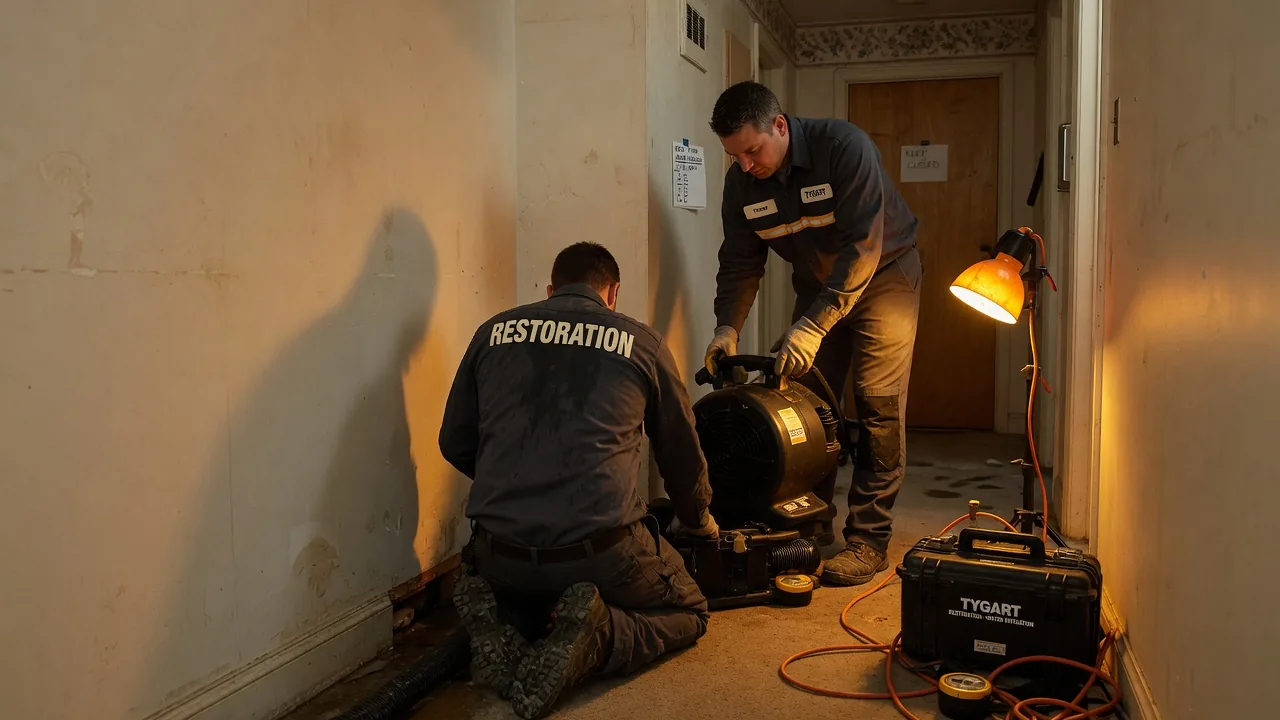
    Before the sequencing, the differences. Each one becomes a failure mode if ignored.

    1. The buyer is not the property manager alone. Commercial buying decisions involve a buying committee — property manager, asset manager, risk manager, facilities, sometimes a TPA. Selling to one persona and ignoring the others is the most common reason commercial bids are lost.
    2. The sales cycle is months, not minutes. Commercial accounts are cultivated over six to eighteen months. Residential FNOL response can close a job in hours. The patience and process required are different.
    3. The documentation expectation is materially higher. Commercial work, particularly larger losses and any litigation-adjacent work, demands documentation discipline that residential workflows do not require. Shops without documented production processes get exposed quickly.
    4. The pricing model varies. Commercial work mixes carrier-priced jobs, time-and-material, master service agreements, and TPA-program rates. The line-item-only pricing model that works residentially does not translate.
    5. The capacity demands spike. A single commercial loss can require equipment and technician deployment that exceeds a residential shop’s standing capacity. The decision of whether to surge, decline, or partner is structural.

    The Six-Stage Market-Entry Sequence
    The shops that have made the residential-to-commercial transition successfully tend to follow a recognizable sequence. The order matters.

    Stage 1: Operational Readiness Audit

    Before any commercial sales effort, audit the operational baseline. The questions: do your production processes produce documentation that would survive a litigation review? Do you have the equipment capacity to handle a commercial loss without disrupting residential service? Do your technicians hold the certifications — IICRC ASD, AMRT, FSRT — that commercial buyers expect to see? Do you carry the insurance limits and safety documentation commercial onboarding will request?

    If any of these answers is no, fix the gap before approaching commercial accounts. A shop that wins commercial work it cannot deliver damages its reputation in a small market.

    Stage 2: Network Membership

    Join the chambers, BOMA chapter, IFMA chapter, and CoreNet local group in your market. The commercial buying community is networked. The shop with no presence in those rooms is invisible. The shop with a regular, trusted presence over twelve to twenty-four months becomes a recognized name in the local commercial property community.

    Stage 3: Insurance Broker and Agent Relationships

    Identify the insurance brokers and agents who write commercial property in your market. They are gatekeepers to a meaningful share of commercial restoration work. The relationship is not transactional — it is a long-cycle introduction-and-trust process. Brokers introduce restoration vendors to their commercial clients only after they trust the work product.

    Stage 4: Named-Account Cultivation

    Build a target list of 40 to 75 commercial accounts in your market — property management groups, large owner-occupiers, healthcare and food service operators, and corporate real estate teams. This is the named-account list that will produce your commercial pipeline over the next 18 months. The list is more important than any single account on it. Cultivate the list quarterly with risk-framed educational content, pre-loss site walks, and tabletop exercises.

    Stage 5: First Commercial Job

    The first commercial job is the trial. It does not need to be large. A small after-hours response or a moderate water mitigation for a managed property is enough to prove the operational claims made during cultivation. Treat the first job with disproportionate care — documentation, communication, and post-job review — because it produces the reference that unlocks subsequent work.

    Stage 6: Account Expansion

    The second commercial job at the same account is more valuable than the first. Account expansion — moving from one property to a portfolio, from one persona to the buying committee — produces the long-term revenue compounding that justifies the commercial entry decision. A 30-day post-job review with the property manager and the risk contact is the most undervalued account-expansion tool in commercial restoration.

    The Common Failure Modes
    The failures cluster into recognizable patterns:

    • Sales effort without operational readiness. Winning work the shop cannot deliver damages reputation.
    • Single-threaded relationships. Selling only to the property manager and missing the buying committee.
    • Underestimating the cycle length. Treating a commercial cultivation cycle as a residential FNOL response and abandoning effort after 90 days.
    • Mispricing the first job. Pricing the trial job to win at any cost and establishing an unsustainable rate baseline for the account.
    • Capacity surprise. Winning a commercial loss the shop cannot resource without disrupting residential service, then under-delivering on both.

    Each of these failures is avoidable with deliberate sequencing. Each of them is common in shops that treated commercial as residential at scale.

    How Long Does the Transition Take?

    Realistic timeline for a residential-led restoration shop to build a meaningful commercial revenue stream: 18 to 36 months from the operational readiness audit through the third or fourth commercial account producing recurring work. Faster transitions are possible with a senior commercial sales hire, but the underlying market-entry mechanics do not compress below 12 months.

    The shops that report disappointing results from commercial entry typically committed to the effort for 12 months or less, then concluded that commercial does not work for their market. The structural answer is that commercial cultivation cycles outlast 12-month commitments.

    The Honest Investment Question

    Commercial restoration entry is an investment, not a marketing campaign. The investment includes a senior commercial sales hire (or substantial owner time), conference and chamber memberships, target-account research tools, and the operational upgrades the readiness audit surfaces. Operators who treat the investment as discretionary marketing spend rarely follow through on the cultivation cycle long enough to see the return.

    The operators who do follow through tend to build a commercial revenue stream that becomes the most stable and highest-margin part of the business. The math works. The patience is the constraint.

    Frequently Asked Questions

    Can a residential restoration shop add commercial work?

    Yes, but treat it as a market-entry project, not a marketing tactic. The buyer, sales cycle, documentation expectation, pricing model, and capacity demands all differ from residential work. Shops that follow a deliberate market-entry sequence — operational readiness, network membership, broker relationships, named-account cultivation, first job, account expansion — succeed at meaningfully higher rates than shops that approach commercial as larger residential.

    How long does it take to break into commercial restoration?

    A realistic timeline is 18 to 36 months from operational readiness audit through the third or fourth commercial account producing recurring work. Faster transitions are possible with senior sales investment, but the underlying market-entry mechanics do not compress below 12 months.

    What certifications do I need for commercial restoration?

    Commercial buyers expect IICRC certifications appropriate to the work — WRT and ASD as a baseline, with AMRT, FSRT, and the higher-tier credentials adding credibility for specialty work. Insurance limits, safety documentation, and OSHA-compliant practices are also typical onboarding requirements.

    How big should my target account list be?

    Most shops manage a target list of 40 to 75 named commercial accounts per sales rep, with quarterly touchpoint cadence. Higher counts dilute the relationship depth that the commercial sales motion depends on.

    Should I hire a dedicated commercial sales rep?

    If commercial is a serious growth direction and the owner cannot personally maintain quarterly touchpoints across the named-account list, a dedicated sales rep is the structural answer. Below that threshold, the owner can usually carry the pipeline directly.

    Continue with the Restoration Operator’s Playbook for more on operationalizing commercial work.


  • What the IICRC S500 2026 Revision Means for Restoration Contractors

    What the IICRC S500 2026 Revision Means for Restoration Contractors

    The 2026 revision of ANSI/IICRC S500 — the Standard for Professional Water Damage Restoration — is the most consequential update the standard has seen in nearly a decade. For restoration contractors, the practical impact lands in three places: documentation, scope-of-work language, and the science behind how losses are categorized and classed.

    This guide focuses on what changes for the working restoration company, not the academic background. If you are billing insurance, defending scope in litigation, or training technicians to a current standard, here is what the 2026 update actually requires of you.

    Why Standards Revisions Matter to Restoration Contractors

    S500 is the reference document insurance carriers, TPAs, and litigation experts cite when evaluating whether a restoration job met the standard of care. When the standard moves, your documentation, your contracts, and your technician training all need to move with it. Continuing to operate against the prior version creates avoidable exposure on every loss you handle.

    The 2026 revision was driven by a combination of new science around microbial contamination, accumulated industry experience with category 3 losses, and the documentation burden that has emerged from rising restoration litigation. Each driver shows up in the changes.

    Documentation Is Now the Center of the Standard

    The single largest practical change is that documentation expectations have been promoted from supporting language to a central requirement. The 2026 revision tightens the description of what must be recorded at each phase of a water mitigation project.

    For a restoration contractor, this means a moisture map, atmospheric readings, and material moisture content readings are no longer optional supporting evidence. They are the evidence that the work met the standard. Operators who have been documenting on the technician’s phone with no centralized capture process need to formalize that workflow before their next loss.

    Practical implication: if your shop is still relying on handwritten logs or on technicians remembering to upload photos at the end of the day, the 2026 revision has effectively closed that gap. A documented chain from FNOL through final reading, with timestamps and consistent measurement methodology, is now the standard.

    Category and Class Definitions Have Been Sharpened

    Category and Class definitions in the prior S500 had room for interpretation that frequently surfaced in scope disputes. The 2026 revision narrows that room. Specifically, the language around when a Category 2 loss escalates to Category 3, and the criteria for Class 4 losses involving low-permeance materials, has been written more tightly.

    For contractors, the practical consequence is that the determination is now harder to wave away if challenged. A clearly documented Category 3 determination — with the specific contamination indicator that drove the call — protects the scope. A loosely documented determination is now easier to challenge in a coverage dispute.

    Scope-of-Work Language Has to Match the Standard

    If your work authorization, scope sheet, and final invoice use category and class language inconsistent with how the 2026 revision defines those terms, expect more pushback from carriers and TPAs. Many restoration shops are revising their template documents — work authorizations, scope sheets, certificates of completion — to align with the updated terminology.

    This is a low-cost, high-value update to make once. A document review by your shop manager or a qualified consultant ahead of your next loss will save hours of dispute resolution downstream.

    Microbial Considerations and the Mold Boundary

    S500 has historically pointed to ANSI/IICRC S520 for mold remediation guidance, but the 2026 revision sharpens the boundary between the two standards. Specifically, the 2026 update clarifies the conditions under which a water mitigation project becomes a microbial remediation project, with corresponding implications for containment, PPE, and documentation.

    The takeaway for contractors is that the gray area between “drying” and “remediation” has narrowed. A job that crosses the threshold needs to be re-scoped under S520, not extended under S500. Operators who run both work types should review their internal escalation triggers against the new language.

    Drying Goals and Verification

    The 2026 revision retains the drying-goal framework but tightens the verification language. Specifically, the standard now expects that the drying goal be documented at the project outset, that the verification methodology be specified, and that the final reading be tied back to the goal that was set.

    For a working contractor, this means the moisture map and the dry-standard reference need to live in the same document trail, not in separate files that no one reconciles. Loss reviewers will increasingly look for that reconciliation as a marker of standard-of-care compliance.

    Training Implications

    Every WRT and ASD technician on your team is being trained to the prior version of the standard until your training materials are updated. IICRC course content typically lags a standard revision by several months, which means there will be a window in which technicians hold a credential issued under the prior standard but are working to a job that needs to meet the new one.

    Mature shops are addressing this with a short internal training cycle: a one-page summary of the changes, a documentation template update, and a refresher on category and class language. The cost is low. The cost of skipping it is a documentation gap that surfaces during the next disputed claim.

    What to Do This Quarter

    If you are a restoration contractor reading this and have not yet acted on the 2026 revision, the prioritized list is short: review your work authorization and scope-sheet templates, formalize your documentation workflow if it is not already centralized, run a 30-minute internal training for production staff on category and class language, and review your S500-to-S520 escalation triggers. None of these are large projects. All of them reduce exposure on the next loss.

    Frequently Asked Questions

    When did the IICRC S500 2026 revision take effect?

    The 2026 ANSI/IICRC S500 revision is the current published version of the standard. Restoration contractors are expected to operate against the most current published version of the standard as their reference for standard of care.

    Does the 2026 S500 revision change how I bill water mitigation jobs?

    The standard does not directly govern billing, but it governs the documentation and scope language that supports billing. Expect carriers and TPAs to align their review criteria with the updated terminology, which means scope sheets and final invoices need to use the current language.

    What is the most important documentation change in the 2026 revision?

    The promotion of documentation from supporting language to a central requirement. Moisture maps, atmospheric readings, and material moisture content readings must now form a continuous, timestamped record of the project from FNOL through completion.

    Do I need to retrain my technicians on the 2026 S500 revision?

    A formal IICRC retake is not required for technicians already holding WRT or ASD credentials. However, a short internal training on documentation workflow, updated category/class language, and the S500-to-S520 boundary is a recommended practice for any shop operating to current standard of care.

    Where does the S500 2026 revision draw the line between drying and microbial remediation?

    The 2026 revision sharpens the boundary by clarifying the conditions — including time elapsed, contamination indicators, and material affected — that move a project from S500 water mitigation into S520 microbial remediation. Shops that handle both types of work should review their internal escalation triggers against the updated language.

    For more industry standards coverage and operator-focused analysis, see Industry Signals on Tygart Media.


  • How Restoration Companies Are Winning Commercial Accounts in 2026

    How Restoration Companies Are Winning Commercial Accounts in 2026

    Commercial restoration sales no longer rewards the most aggressive cold caller. It rewards the operator who has mapped the building, named every decision-maker, and arrived with a written plan before the loss happens.

    The restoration companies gaining commercial market share in 2026 are not necessarily the ones with the largest equipment fleets. They are the ones who treat commercial accounts like enterprise sales — with named accounts, multi-year cultivation cycles, and a recognition that the buyer is rarely the property manager you first meet.

    Why Commercial Restoration Sales Looks Different in 2026

    Three structural shifts have rewritten the commercial restoration playbook over the last 24 months. First, third-party administrators (TPAs) and program work now route a larger share of insurance-driven commercial losses, which means the carrier relationship matters as much as the property relationship. Second, large property management groups have consolidated, which concentrates buying power into fewer hands. Third, post-loss litigation pressure has made documentation discipline a sales asset rather than a back-office expense.

    Operators who treat commercial restoration as a transactional, lead-by-lead business are losing ground to firms that treat it as a relationship discipline. The difference shows up in close rates, average job size, and the willingness of property managers to call before they tender to a competitor.

    The Five Buyer Personas in Commercial Restoration

    Most restoration sales reps pitch the property manager and stop there. The firms winning commercial work in 2026 are pitching all five of the following decision-makers, often simultaneously, and tailoring their materials to each:

    • Property manager. Operates the building day to day. Cares about disruption, tenant complaints, and being able to say the response is handled.
    • Asset manager or owner representative. Owns the financial outcome. Cares about loss-of-use exposure, capital preservation, and avoiding insurance disputes.
    • Risk manager or insurance buyer. Often a corporate function. Cares about preferred-vendor compliance, carrier relationships, and standardized documentation.
    • Facilities or chief engineer. Holds the technical relationships. Cares about contractor competence, building system knowledge, and clean handoffs.
    • TPA case manager. Routes the work after the FNOL. Cares about responsiveness, daily updates, and clean billing.

    A quote, a brochure, or a referral sheet that speaks to one of these personas does not move the other four. Operators with mature commercial sales programs maintain at least three persona-specific decks and tailor their account-development outreach accordingly.

    The Account Map Is the Sales Asset

    The most undervalued tool in commercial restoration sales is the written account map. It is not a CRM record. It is a one-page document for each target account that captures the building portfolio, current vendor relationships, known pain points, the people in each of the five personas above, and the trigger events that would create a buying moment.

    Account maps are how a sales rep stops chasing leads and starts cultivating a territory. They are also how restoration company owners answer the most important commercial sales question: do we actually know who buys at this account, or are we just hoping the property manager remembers our name?

    The TPA Channel: Asset, Liability, or Both

    Third-party administrators have become a structural feature of commercial restoration. For some operators they represent 30% or more of revenue. The honest assessment in 2026 is that TPA work is a sustainable channel only if you understand its tradeoffs.

    The benefit is volume and predictability — once a TPA program approves you, the work flows. The cost is margin compression, scope-of-work constraints, and the risk that the TPA, not the property owner, becomes the customer who can fire you. Operators with the strongest commercial sales results in 2026 use TPA programs as a base load for crew utilization, while building a parallel direct-to-owner pipeline at higher margin.

    What a Commercial Restoration Sales Cycle Actually Looks Like

    A residential water-loss sales cycle can close in hours. A commercial sales cycle — meaning the path from first introduction to a preferred-vendor agreement or program enrollment — typically runs six to eighteen months. The sales activity that fills that window matters more than the pitch itself. A representative cycle includes:

    • Initial introduction, often through a chamber, BOMA event, or warm referral.
    • Educational meeting framed around a specific risk the property faces — not a capabilities pitch.
    • Pre-loss site walk and documentation of building systems relevant to water, fire, and biohazard response.
    • Tabletop exercise or response-plan review with facilities and risk teams.
    • Vendor onboarding, insurance and safety document submission, master service agreement.
    • First small job or after-hours response that proves out the operational claims made during the cycle.

    Operators who try to compress this cycle into a single quote almost always lose to the firm that walked the building twelve months earlier.

    What to Measure

    The commercial pipeline metrics that matter are not the same as residential. The four that the strongest sales programs track in 2026 are:

    • Named accounts in active cultivation — a target list with quarterly touchpoint cadence.
    • Pre-loss site walks completed — a leading indicator of pipeline health 6–12 months out.
    • MSAs and preferred-vendor agreements signed — the conversion event that actually moves revenue.
    • Average commercial job size and gross margin trend — the proof that the cultivation is producing the right kind of work.

    The 2026 Commercial Restoration Sales Stack

    Putting it together, the operators winning commercial accounts in 2026 share a recognizable stack: a named-account target list reviewed monthly by ownership; a CRM with persona-tagged contacts at each account; a documented sales cycle with stage exit criteria; pre-loss documentation as a standard sales motion; a TPA program strategy that complements rather than replaces direct sales; and clear ownership of which leader on the team drives commercial pipeline health.

    The firms missing one or more of these elements tend to describe their commercial revenue as inconsistent or referral-dependent. The firms that have all of them describe their pipeline as crowded.

    Frequently Asked Questions

    How long does it take to win a commercial restoration account?

    The full sales cycle from introduction to first paid work typically runs six to eighteen months for direct-to-owner accounts. TPA program enrollment can move faster, often 60 to 120 days from application to first dispatch.

    What is the most common reason restoration companies lose commercial bids?

    Single-threaded relationships. Most losses come from selling only to the property manager and missing the asset manager, risk manager, or facilities engineer who actually controls vendor selection.

    Should restoration companies pursue TPA work?

    TPA work is a viable revenue channel if treated as a base-load contributor, not the entire pipeline. Margin is compressed, but volume is predictable. The risk is becoming dependent on a single TPA program, which can revoke status with little notice.

    What is a preferred-vendor agreement worth?

    A signed MSA or preferred-vendor agreement does not guarantee work, but it removes the procurement and onboarding friction that would otherwise block dispatch when a loss occurs. Operators report that conversion from MSA to actual revenue typically takes another 90 to 180 days.

    How many named accounts should a commercial sales rep manage?

    Most restoration sales programs in 2026 cap active named accounts at 40 to 75 per rep, with a quarterly touchpoint cadence. Higher counts dilute the relationship depth that the commercial sales motion depends on.

    For more on the operational side of running a commercial restoration business, see the Restoration Operator’s Playbook archive on Tygart Media.


  • Claude Managed Agents Pricing: Session-Hour Cost, 2026 Plans & What You Actually Pay

    Claude Managed Agents Pricing: Session-Hour Cost, 2026 Plans & What You Actually Pay

    Tygart Media Strategy
    Volume Ⅰ · Issue 04Quarterly Position
    By Will Tygart
    Long-form Position
    Practitioner-grade

    $0.08 Per Session Hour: Is Claude Managed Agents Actually Cheap?

    Claude Managed Agents Pricing: $0.08 per session-hour of active runtime (measured in milliseconds, billed only while the agent is actively running) plus standard Anthropic API token costs. Idle time — while waiting for input or tool confirmations — does not count toward runtime billing.

    When Anthropic launched Claude Managed Agents on April 9, 2026, the pricing structure was clean and simple: standard token costs plus $0.08 per session-hour. That’s the entire formula.

    Whether $0.08/session-hour is cheap, expensive, or irrelevant depends entirely on what you’re comparing it to and how you model your workloads. Let’s work through the actual math.

    What You’re Paying For

    The session-hour charge covers the managed infrastructure — the sandboxed execution environment, state management, checkpointing, tool orchestration, and error recovery that Anthropic provides. You’re not paying for a virtual machine that sits running whether or not your agent is active. Runtime is measured to the millisecond and accrues only while the session’s status is running.

    This is a meaningful distinction. An agent that’s waiting for a user to respond, waiting for a tool confirmation, or sitting idle between tasks does not accumulate runtime charges during those gaps. You pay for active execution time, not wall-clock time.

    The token costs — what you pay for the model’s input and output — are separate and follow Anthropic’s standard API pricing. For most Claude models, input tokens run roughly $3 per million and output tokens roughly $15 per million, though current pricing is available at platform.claude.com/docs/en/about-claude/pricing.

    Modeling Real Workloads

    The clearest way to evaluate the $0.08/session-hour cost is to model specific workloads.

    A research and summary agent that runs once per day, takes 30 minutes of active execution, and processes moderate token volumes: runtime cost is roughly $0.04/day ($1.20/month). Token costs depend on document size and frequency — likely $5-20/month for typical knowledge work. Total cost is in the range of $6-21/month.

    A batch content pipeline running several times weekly, with 2-hour active sessions processing multiple documents: runtime is $0.16/session, roughly $2-3/month. Token costs for content generation are more substantial — a 15-article batch with research could run $15-40 in tokens. Total: $17-43/month per pipeline run frequency.

    A continuous monitoring agent checking systems and data sources throughout the business day: if the agent is actively running 4 hours/day, that’s $0.32/day, $9.60/month in runtime alone. Token costs for monitoring-style queries are typically low. Total: $15-25/month.

    An agent running 24/7 — continuously active — costs $0.08 × 24 = $1.92/day, or roughly $58/month in runtime. That number sounds significant until you compare it to what 24/7 human monitoring or processing would cost.

    The Comparison That Actually Matters

    The runtime cost is almost never the relevant comparison. The relevant comparison is: what does the agent replace, and what does that replacement cost?

    If an agent handles work that would otherwise require two hours of an employee’s time per day — research compilation, report drafting, data processing, monitoring and alerting — the calculation isn’t “$58/month runtime versus zero.” It’s “$58/month runtime plus token costs versus the fully-loaded cost of two hours of labor daily.”

    At a fully-loaded cost of $30/hour for an entry-level knowledge worker, two hours/day is $1,500/month. An agent handling the same work at $50-100/month in total AI costs is a 15-30x cost difference before accounting for the agent’s availability advantages (24/7, no PTO, instant scale).

    The math inverts entirely for edge cases where agents are less efficient than humans — tasks requiring judgment, relationship context, or creative direction. Those aren’t good agent candidates regardless of cost.

    Where the Pricing Gets Complicated

    Token costs dominate runtime costs for most workloads. A two-hour agent session running intensive language tasks could easily generate $20-50 in token costs while only generating $0.16 in runtime charges. Teams optimizing AI agent costs should spend most of their attention on token efficiency — prompt engineering, context window management, model selection — rather than on the session-hour rate.

    For very high-volume, long-running workloads — continuous agents processing large document sets at scale — the economics may eventually favor building custom infrastructure over managed hosting. But that threshold is well above what most teams will encounter until they’re running AI agents as a core part of their production infrastructure at significant scale.

    The honest summary: $0.08/session-hour is not a meaningful cost for most workloads. It becomes material only when you’re running many parallel, long-duration sessions continuously. For the overwhelming majority of business use cases, token efficiency is the variable that matters, and the infrastructure cost is noise.

    How This Compares to Building Your Own

    The alternative to paying $0.08/session-hour is building and operating your own agent infrastructure. That means engineering time (months, initially), ongoing maintenance, cloud compute costs for your own execution environment, and the operational overhead of managing the system.

    For teams that haven’t built this yet, the managed pricing is almost certainly cheaper than the build cost for the first year — even accounting for the runtime premium. The crossover point where self-managed becomes cheaper depends on engineering cost assumptions and workload volume, but for most teams it’s well beyond where they’re operating today.

    Frequently Asked Questions

    Is idle time charged in Claude Managed Agents?

    No. Runtime billing only accrues when the session status is actively running. Time spent waiting for user input, tool confirmations, or between tasks does not count toward the $0.08/session-hour charge.

    What is the total cost of running a Claude Managed Agent for a typical business task?

    For moderate workloads — research agents, content pipelines, daily summary tasks — total costs typically range from $10-50/month combining runtime and token costs. Heavy, continuous agents could run $50-150/month depending on token volume.

    Are token costs or runtime costs more important to optimize for Claude Managed Agents?

    Token costs dominate for most workloads. A two-hour active session generates $0.16 in runtime charges but potentially $20-50 in token costs depending on workload intensity. Token efficiency is where most cost optimization effort should focus.

    At what point does building your own agent infrastructure become cheaper than Claude Managed Agents?

    The crossover depends on engineering cost assumptions and workload volume. For most teams, managed is cheaper than self-built through the first year. Very high-volume, continuously-running workloads at scale may eventually favor custom infrastructure.


    Related: Complete Pricing Reference — every variable in one place. Complete FAQ Hub — every question answered.

  • Claude Managed Agents vs. Rolling Your Own: The Real Infrastructure Build Cost

    Claude Managed Agents vs. Rolling Your Own: The Real Infrastructure Build Cost

    Tygart Media Strategy
    Volume Ⅰ · Issue 04Quarterly Position
    By Will Tygart
    Long-form Position
    Practitioner-grade

    Claude Managed Agents vs. Rolling Your Own: The Real Infrastructure Build Cost

    The Build-vs-Buy Question: Claude Managed Agents offers hosted AI agent infrastructure at $0.08/session-hour plus token costs. Rolling your own means engineering sandboxed execution, state management, checkpointing, credential handling, and error recovery yourself — typically months of work before a single production agent runs.

    Every developer team that wants to ship a production AI agent faces the same decision point: build your own infrastructure or use a managed platform. Anthropic’s April 2026 launch of Claude Managed Agents made that decision significantly harder to default your way through.

    This isn’t a “managed is always better” argument. There are legitimate reasons to build your own. But the build cost needs to be reckoned with honestly — and most teams underestimate it substantially.

    What You Actually Have to Build From Scratch

    The minimum viable production agent infrastructure requires solving several distinct problems, none of which are trivial.

    Sandboxed execution: Your agent needs to run code in an isolated environment that can’t access systems it isn’t supposed to touch. Building this correctly — with proper isolation, resource limits, and cleanup — is a non-trivial systems engineering problem. Cloud providers offer primitives (Cloud Run, Lambda, ECS), but wiring them into an agent execution model takes real work.

    Session state and context management: An agent working on a multi-step task needs to maintain context across tool calls, handle context window limits gracefully, and not drop state when something goes wrong. Building reliable state management that works at production scale typically takes several engineering iterations to get right.

    Checkpointing: If your agent crashes at step 11 of a 15-step job, what happens? Without checkpointing, the answer is “start over.” Building checkpointing means serializing agent state at meaningful intervals, storing it durably, and writing recovery logic that knows how to resume cleanly. This is one of the harder infrastructure problems in agent systems, and most teams don’t build it until they’ve lost work in production.

    Credential management: Your agent will need to authenticate with external services — APIs, databases, internal tools. Managing those credentials securely, rotating them, and scoping them properly to each agent’s permissions surface is an ongoing operational concern, not a one-time setup.

    Tool orchestration: When Claude calls a tool, something has to handle the routing, execute the tool, handle errors, and return results in the right format. This orchestration layer seems simple until you’re debugging why tool call 7 of 12 is failing silently on certain inputs.

    Observability: In production, you need to know what your agents are doing, why they’re doing it, and when they fail. Building logging, tracing, and alerting for an agent system from scratch is a non-trivial DevOps investment.

    Anthropic’s stated estimate is that shipping production agent infrastructure takes months. That tracks with what we’ve seen in practice. It’s not months of full-time work for a large team — but it’s months of the kind of careful, iterative infrastructure engineering that blocks product work while it’s happening.

    What Claude Managed Agents Provides

    Claude Managed Agents handles all of the above at the platform level. Developers define the agent’s task, tools, and guardrails. The platform handles sandboxed execution, state management, checkpointing, credential scoping, tool orchestration, and error recovery.

    The official API documentation lives at platform.claude.com/docs/en/managed-agents/overview. Agents can be deployed via the Claude console, Claude Code CLI, or the new agents CLI. The platform supports file reading, command execution, web browsing, and code execution as built-in tool capabilities.

    Anthropic describes the speed advantage as 10x — from months to weeks. Based on the infrastructure checklist above, that’s believable for teams starting from zero.

    The Honest Case for Rolling Your Own

    There are real reasons to build your own agent infrastructure, and they shouldn’t be dismissed.

    Deep customization: If your agent architecture has requirements that don’t fit the Managed Agents execution model — unusual tool types, proprietary orchestration patterns, specific latency constraints — you may need to own the infrastructure to get the behavior you need.

    Cost at scale: The $0.08/session-hour pricing is reasonable for moderate workloads. At very high scale — thousands of concurrent sessions running for hours — the runtime cost becomes a significant line item. Teams with high-volume workloads may find that the infrastructure engineering investment pays back faster than they expect.

    Vendor dependency: Running your agents on Anthropic’s managed platform means your production infrastructure depends on Anthropic’s uptime, their pricing decisions, and their roadmap. Teams with strict availability requirements or long-term cost predictability needs have legitimate reasons to prefer owning the stack.

    Compliance and data residency: Some regulated industries require that agent execution happen within specific geographic regions or within infrastructure that the company directly controls. Managed cloud platforms may not satisfy those requirements.

    Existing investment: If your team has already built production agent infrastructure — as many teams have over the past two years — migrating to Managed Agents requires re-architecting working systems. The migration overhead is real, and “it works” is a strong argument for staying put.

    The Decision Framework

    The practical question isn’t “is managed better than custom?” It’s “what does my team’s specific situation call for?”

    Teams that haven’t shipped a production agent yet and don’t have unusual requirements should strongly consider starting with Managed Agents. The infrastructure problems it solves are real, the time savings are significant, and the $0.08/hour cost is unlikely to be the deciding factor at early scale.

    Teams with existing agent infrastructure, high-volume workloads, or specific compliance requirements should evaluate carefully rather than defaulting to migration. The right answer depends heavily on what “working” looks like for your specific system.

    Teams building on Claude Code specifically should note that Managed Agents integrates directly with the Claude Code CLI and supports custom subagent definitions — which means the tooling is designed to fit developer workflows rather than requiring a separate management interface.

    Frequently Asked Questions

    How long does it take to build production AI agent infrastructure from scratch?

    Anthropic estimates months for a full production-grade implementation covering sandboxed execution, checkpointing, state management, credential handling, and observability. The actual time depends heavily on team experience and specific requirements.

    What does Claude Managed Agents handle that developers would otherwise build themselves?

    Sandboxed code execution, persistent session state, checkpointing, scoped permissions, tool orchestration, context management, and error recovery — the full infrastructure layer underneath agent logic.

    At what scale does it make sense to build your own agent infrastructure vs. using Claude Managed Agents?

    There’s no universal threshold, but the $0.08/session-hour pricing becomes a significant cost factor at thousands of concurrent long-running sessions. Teams should model their expected workload volume before assuming managed is cheaper than custom at scale.

    Can Claude Managed Agents work with Claude Code?

    Yes. Managed Agents integrates with the Claude Code CLI and supports custom subagent definitions, making it compatible with developer-native workflows.


    Related: Complete Pricing Reference — every variable in one place. Complete FAQ Hub — every question answered.

  • Anthropic Launched Managed Agents. Here’s How We Looked at It — and Why We’re Staying Our Course.

    Anthropic Launched Managed Agents. Here’s How We Looked at It — and Why We’re Staying Our Course.

    Tygart Media Strategy
    Volume Ⅰ · Issue 04Quarterly Position
    By Will Tygart
    Long-form Position
    Practitioner-grade

    Anthropic Launched Managed Agents. Here’s How We Looked at It — and Why We’re Staying Our Course.

    What Are Claude Managed Agents? Anthropic’s Claude Managed Agents is a cloud-hosted infrastructure service launched April 9, 2026, that lets developers and businesses deploy AI agents without building their own execution environments, state management, or orchestration systems. You define the task and tools; Anthropic runs the infrastructure.

    On April 9, 2026, Anthropic announced the public beta of Claude Managed Agents — a new infrastructure layer on the Claude Platform designed to make AI agent deployment dramatically faster and more stable. According to Anthropic, it reduces build and deployment time by up to 10x. Early adopters include Notion, Asana, Rakuten, and Sentry.

    We looked at it. Here’s what it is, how it compares to what we’ve built, and why we’re continuing on our own path — at least for now.

    What Is Anthropic Managed Agents?

    Claude Managed Agents is a suite of APIs that gives development teams fully managed, cloud-hosted infrastructure for running AI agents at scale. Instead of building secure sandboxes, managing session state, writing custom orchestration logic, and handling tool execution errors yourself, Anthropic’s platform does it for you.

    The key capabilities announced at launch include:

    • Sandboxed code execution — agents run in isolated, secure environments
    • Persistent long-running sessions — agents stay alive across multi-step tasks without losing context
    • Checkpointing — if an agent job fails mid-run, it can resume from where it stopped rather than restarting
    • Scoped permissions — fine-grained control over what each agent can access
    • Built-in authentication and tool orchestration — the platform handles the plumbing between Claude and the tools it uses

    Pricing is straightforward: you pay standard Anthropic API token rates plus $0.08 per session-hour of active runtime, measured in milliseconds.

    Why It’s a Legitimate Signal

    The companies Anthropic named as early adopters aren’t small experiments. Notion, Asana, Rakuten, and Sentry are running production workflows at scale — code automation, HR processes, productivity tooling, and finance operations. When teams at that level migrate to managed infrastructure instead of building their own, it suggests the platform has real stability behind it.

    The checkpointing feature in particular stands out. One of the most painful failure modes in long-running AI pipelines is a crash at step 14 of a 15-step job. You lose everything and start over. Checkpointing solves that problem at the infrastructure level, which is the right place to solve it.

    Anthropic’s framing is also pointed directly at enterprise friction: the reason companies don’t deploy agents faster isn’t Claude’s capabilities — it’s the scaffolding cost. Managed Agents is an explicit attempt to remove that friction.

    What We’ve Built — and Why It Works for Us

    At Tygart Media, we’ve been running our own agent stack for over a year. What started as a set of Claude prompts has evolved into a full content and operations infrastructure built on top of the Claude API, Google Cloud Platform, and WordPress REST APIs.

    Here’s what our stack actually does:

    • Content pipelines — We run full article production pipelines that write, SEO-optimize, AEO-optimize, GEO-optimize, inject schema markup, assign taxonomy, add internal links, run quality gates, and publish — all in a single session across 20+ WordPress sites.
    • Batch draft creation — We generate 15-article batches with persona-targeting and variant logic without manual intervention.
    • Cross-site content strategy — Agents scan multiple sites for authority pages, identify linking opportunities, write locally-relevant variants, and publish them with proper interlinking.
    • Image pipelines — End-to-end image processing: generation via Vertex AI/Imagen, IPTC/XMP metadata injection, WebP conversion, and upload to WordPress media libraries.
    • Social media publishing — Content flows from WordPress to Metricool for LinkedIn, Facebook, and Google Business Profile scheduling.
    • GCP proxy routing — A Cloud Run proxy handles WordPress REST API calls to avoid IP blocking across different hosting environments (SiteGround, WP Engine, Flywheel, Apache/ModSecurity).

    This infrastructure took time to build. But it’s purpose-built for our specific workflows, our sites, and our clients. It knows which sites route through the GCP proxy, which need a browser User-Agent header to pass ModSecurity, and which require a dedicated Cloud Run publisher. That specificity has real value.

    Where Managed Agents Is Compelling — and Where It Isn’t (Yet)

    If we were starting from zero today, Managed Agents would be worth serious evaluation. The session persistence and checkpointing would immediately solve the two biggest failure modes we’ve had to engineer around manually.

    But migrating an existing stack to Managed Agents isn’t a lift-and-shift. Our pipelines are tightly integrated with GCP infrastructure, custom proxy routing, WordPress credential management, and Notion logging. Re-architecting that to run inside Anthropic’s managed environment would be a significant project — with no clear gain over what’s already working.

    The $0.08/session-hour pricing also adds up quickly on batch operations. A 15-article pipeline running across multiple sites for two to three hours could add meaningful cost on top of already-substantial token usage.

    For teams that haven’t built their own agent infrastructure yet — especially enterprise teams evaluating AI for the first time — Managed Agents is probably the right starting point. For teams that already have a working stack, the calculus is different.

    What We’re Watching

    We’re treating this as a signal, not an action item. A few things would change that:

    • Native integrations — If Managed Agents adds direct integrations with WordPress, Metricool, or GCP services, the migration case gets stronger.
    • Checkpointing accessibility — If we can use checkpointing on top of our existing API calls without fully migrating, that’s an immediate win worth pursuing.
    • Pricing at scale — Volume discounts or enterprise pricing would change the batch job math significantly.
    • MCP interoperability — Managed Agents running with Model Context Protocol support would let us plug our existing skill and tool ecosystem in without a full rebuild.

    The Bigger Picture

    Anthropic launching managed infrastructure is the clearest sign yet that the AI industry has moved past the “what can models do” question and into the “how do you run this reliably at scale” question. That’s a maturity marker.

    The same shift happened with cloud computing. For a while, every serious technology team ran its own servers. Then AWS made the infrastructure layer cheap enough and reliable enough that it only made sense to build it yourself if you had very specific requirements. We’re not there yet with AI agents — but Anthropic is clearly pushing in that direction.

    For now, we’re watching, benchmarking, and continuing to run our own stack. When the managed layer offers something we can’t build faster ourselves, we’ll move. That’s the right framework for evaluating any infrastructure decision.

    Frequently Asked Questions

    What is Anthropic Managed Agents?

    Claude Managed Agents is a cloud-hosted AI agent infrastructure service from Anthropic, launched in public beta on April 9, 2026. It provides persistent sessions, sandboxed execution, checkpointing, and tool orchestration so teams can deploy AI agents without building their own backend infrastructure.

    How much does Claude Managed Agents cost?

    Pricing is based on standard Anthropic API token costs plus $0.08 per session-hour of active runtime, measured in milliseconds.

    Who are the early adopters of Claude Managed Agents?

    Anthropic named Notion, Asana, Rakuten, Sentry, and Vibecode as early users, deploying the service for code automation, productivity workflows, HR processes, and finance operations.

    Is Anthropic Managed Agents worth switching to if you already have an agent stack?

    It depends on your existing infrastructure. For teams starting fresh, it removes significant scaffolding cost. For teams with mature, purpose-built pipelines already running on GCP or other cloud infrastructure, the migration overhead may outweigh the benefits in the short term.

    What is checkpointing in Managed Agents?

    Checkpointing allows a long-running agent job to resume from its last saved state if it encounters an error, rather than restarting the entire task from the beginning. This is particularly valuable for multi-step batch operations.


    Related: Complete Pricing Reference — every variable in one place. Complete FAQ Hub — every question answered.

  • Google AI Update: Bring state-of-the-art agentic skills to the edge with Gemma 4

    Google AI Update: Gemma 4 Brings Agentic AI to Edge Devices

    What happened: Google DeepMind released Gemma 4, an open-source model family enabling multi-step autonomous workflows on-device. Apache 2.0 licensed, supports 140+ languages, runs on everything from mobile to Raspberry Pi. This matters because we can now deploy sophisticated agentic capabilities without cloud dependency—reducing latency, cost, and privacy concerns in our client workflows.

    What Changed

    Google DeepMind just dropped Gemma 4, and it’s a meaningful shift in how we think about deploying intelligent agents. This isn’t just another language model release—it’s positioned specifically for edge deployment with built-in agentic capabilities.

    The release includes three major components:

    • Gemma 4 Model Family: Open-source, Apache 2.0 licensed models optimized for on-device inference. Available in multiple sizes to fit different hardware constraints.
    • Google AI Edge Gallery: A new experimental platform for testing and deploying “Agent Skills”—pre-built autonomous workflows that handle multi-step planning without constant cloud round-trips.
    • LiteRT-LM Library: A developer toolkit that promises significant speed improvements and structured output formatting, critical for integrating agentic responses into our broader tech stack.

    The language support is broad—140+ languages out of the box. And the hardware compatibility extends from modern smartphones to legacy IoT devices like Raspberry Pi, which opens interesting possibilities for distributed client deployments.

    What This Means for Our Stack

    We’ve been watching the edge AI space closely, particularly as we’ve expanded our automation capabilities for content workflows and SEO operations. Gemma 4 directly impacts several areas:

    1. Agentic Content Workflows

    Right now, when we build multi-step content operations—research → drafting → SEO optimization → fact-checking—we’re either running those through Claude via API calls or building custom orchestration in our internal systems. Gemma 4’s “Agent Skills” framework gives us an alternative path: deploy autonomous agents that plan and execute tasks locally, then feed structured outputs back to our Notion workspace or directly into WordPress.

    The practical win: reduced API costs, faster execution, and no dependency on external API availability during client workflows.

    2. Structured Output at the Edge

    LiteRT-LM’s structured output support is particularly relevant for us. When we pull data from DataForSEO, feed it into content generation, and push results back through our Metricool automation—we need reliable, schema-compliant outputs. Doing this inference on-device rather than routing through cloud APIs reduces friction in our pipeline.

    3. Privacy and Data Sovereignty

    Several of our clients—particularly in regulated industries—care deeply about where their content workflows execute. With Gemma 4, we can offer on-device processing that keeps data local, which is both a technical advantage and a sales lever for enterprise prospects.

    4. Distributed Client Deployments

    For clients running their own infrastructure or wanting to embed AI capabilities into their applications, Gemma 4’s broad hardware support means we can offer lightweight agent deployments without requiring them to maintain expensive GPU infrastructure.

    Action Items

    Short term (next 2-4 weeks):

    • Spin up a test instance of Gemma 4 in a GCP sandbox environment and evaluate LiteRT-LM’s structured output capabilities against our current Claude integration patterns.
    • Document the Edge Gallery interface and map its “Agent Skills” framework to workflows we currently handle through custom automation.
    • Test on-device inference latency with a representative content operation (e.g., multi-step SEO briefing generation) to establish baseline performance against our current cloud-based approach.

    Medium term (4-12 weeks):

    • Build a proof-of-concept integration where Gemma 4 handles initial content research and structure planning, with Claude handling higher-order reasoning and editing. This hybrid approach might outperform either model alone for our specific workflows.
    • Evaluate whether on-device Gemma 4 agents can replace certain DataForSEO → processing → WordPress pipeline steps, particularly for clients prioritizing cost efficiency.
    • Document any privacy or data residency benefits and incorporate them into client proposals, especially for enterprise segments.

    Long term (product strategy):

    • Consider whether Gemma 4 enables new service offerings—e.g., self-hosted, on-device content automation for clients who want to reduce external API dependency.
    • Monitor the open-source community’s adoption of Gemma 4 Agent Skills; early contributions might inform how we design our own agentic workflows.

    Frequently Asked Questions

    How does Gemma 4 compare to Claude for our use cases?

    They’re complementary, not competitive. Claude excels at complex reasoning, editing, and high-stakes decision-making. Gemma 4 is optimized for on-device, multi-step task execution with lower latency and cost. We’ll likely use Gemma 4 for initial planning and structured research, then route to Claude for refinement and strategic work. The Apache 2.0 license also means we can modify and self-host Gemma 4 if a client demands it—we can’t do that with Claude.

    Will this reduce our API costs?

    Potentially. If we deploy Gemma 4 for initial content structure, research coordination, and fact-checking—tasks that currently burn Claude tokens—we could see measurable savings. The math depends on volume and whether we self-host (upfront infra cost) or use GCP endpoints (per-request pricing, but lower than Claude). We need to run the numbers on our largest clients.

    Can we deploy Gemma 4 to client infrastructure?

    Yes, that’s actually one of Gemma 4’s intended use cases. The Apache 2.0 license and broad hardware support mean we could offer a package where clients run agents on their own servers or devices. This is a major differentiator for privacy-conscious clients and could open new GTM angles.

    What’s the learning curve for our team?

    Moderate. If you’re already comfortable with Claude API patterns and agentic frameworks, Gemma 4’s LiteRT-LM library will feel familiar. The main difference is optimizing for on-device constraints (memory, latency) rather than just API tokens. We should allocate time for one team member to dig into the Edge Gallery documentation and run some experiments before we commit to client integrations.

    Does this affect our WordPress integration strategy?

    Not immediately, but it opens options. Right now, we push content from WordPress through external APIs and orchestrate responses via plugins. With Gemma 4, we could explore a WordPress plugin that runs agents locally, reducing external dependencies. This is on the roadmap for exploration, not immediate implementation.


    📡 Machine-Readable Context Block

    platform: google_devs
    product: google-ai
    change_type: announcement
    source_url: https://developers.googleblog.com/bring-state-of-the-art-agentic-skills-to-the-edge-with-gemma-4/
    source_title: Bring state-of-the-art agentic skills to the edge with Gemma 4
    ingested_by: tech-update-automation-v2
    ingested_at: 2026-04-07T18:21:43.589961+00:00
    stack_impact: medium