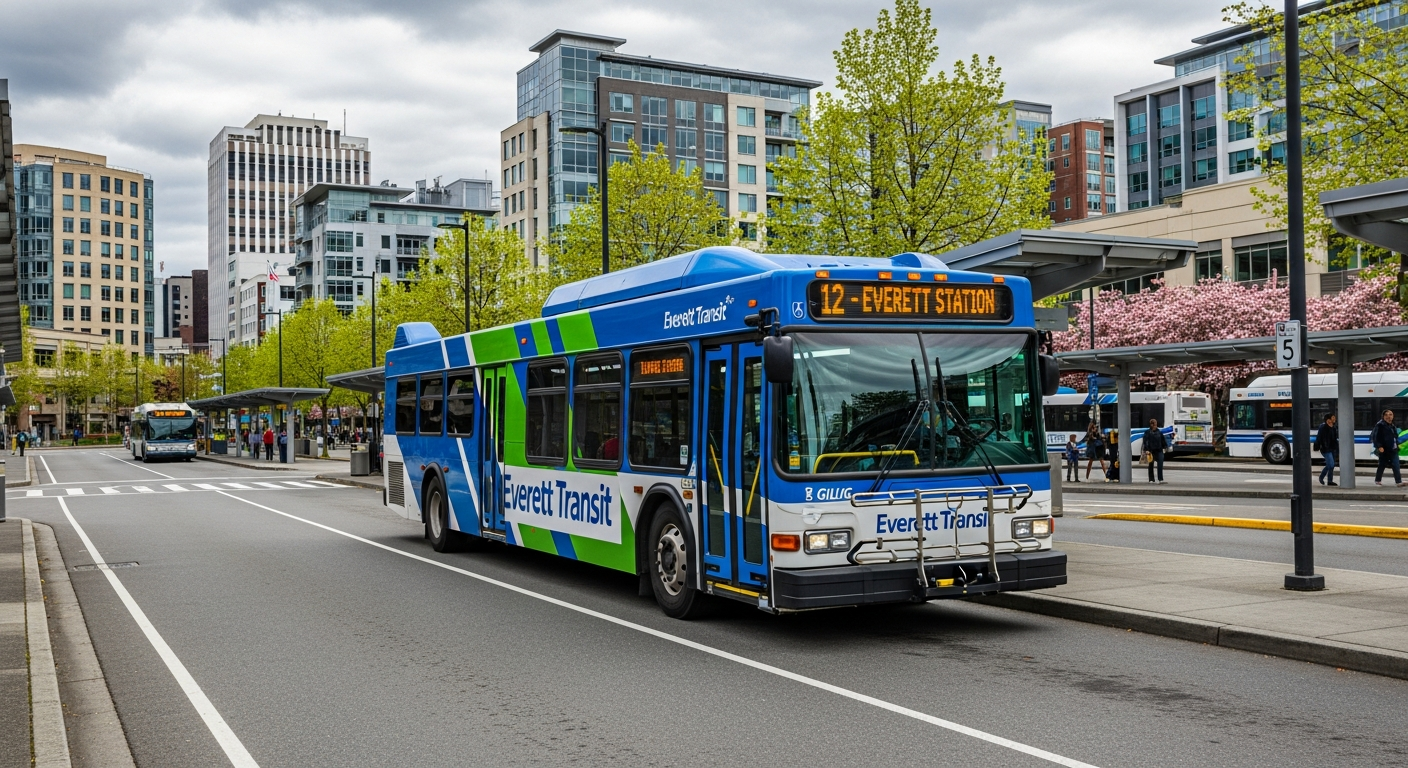
Tag: Everett WA

  • Port of Everett Pier 3 Rebuild: Shipper & Business Guide

    Port of Everett Pier 3 Rebuild: Shipper & Business Guide

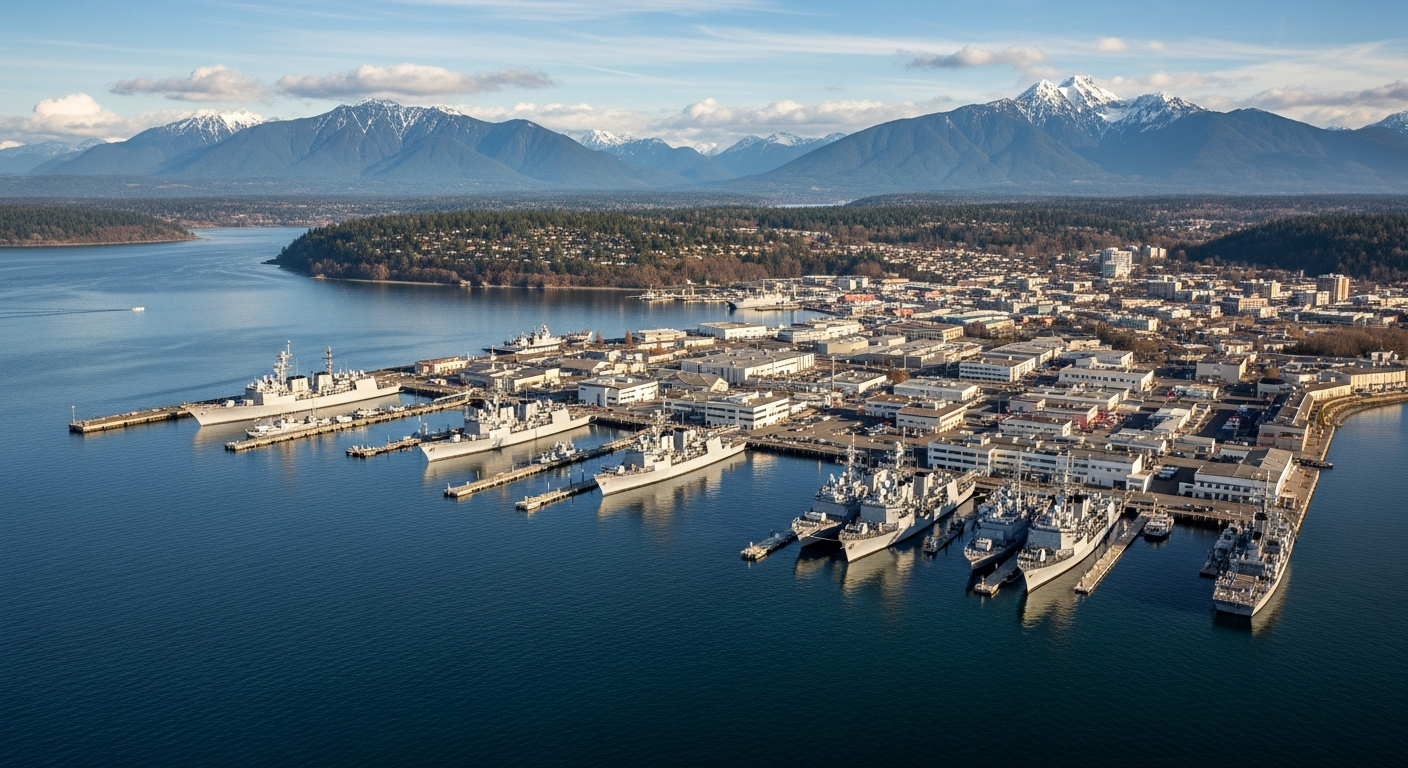
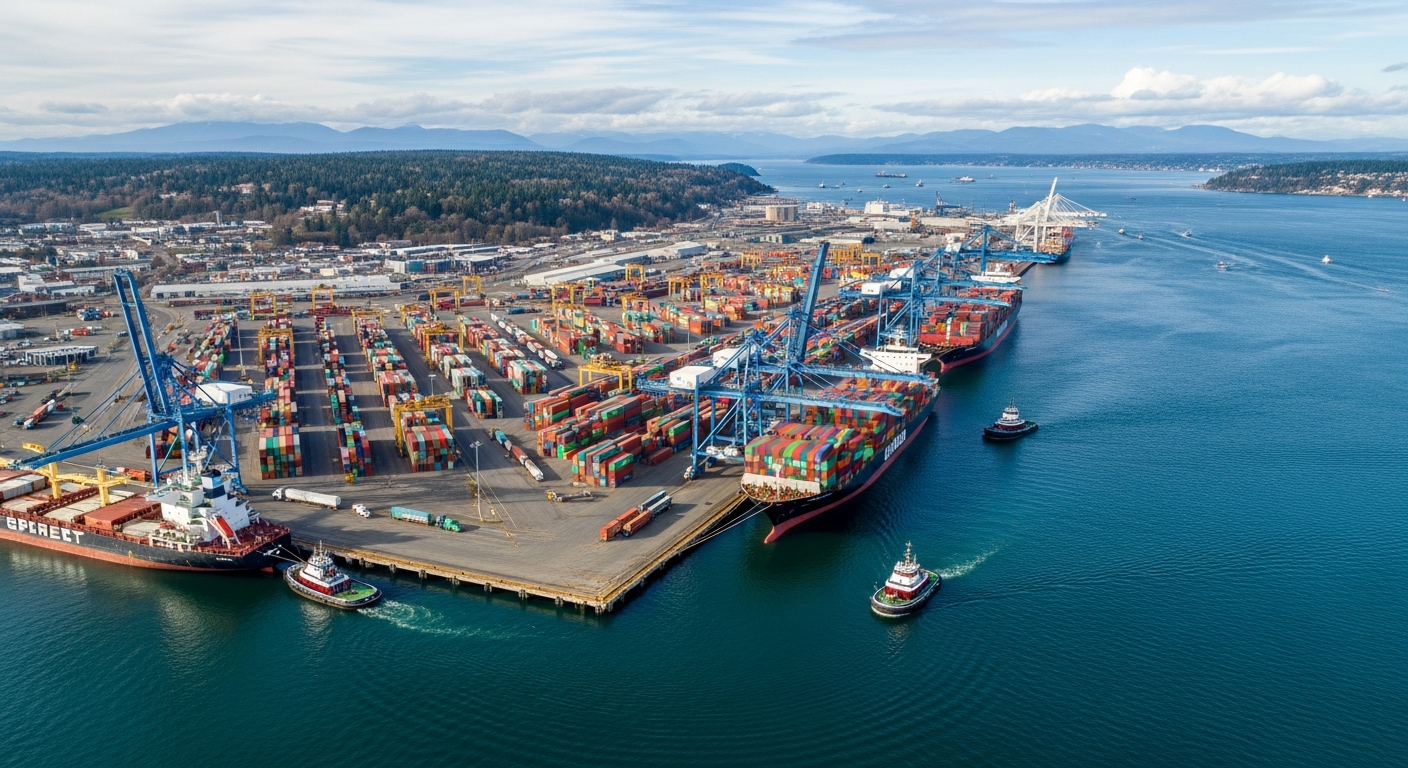
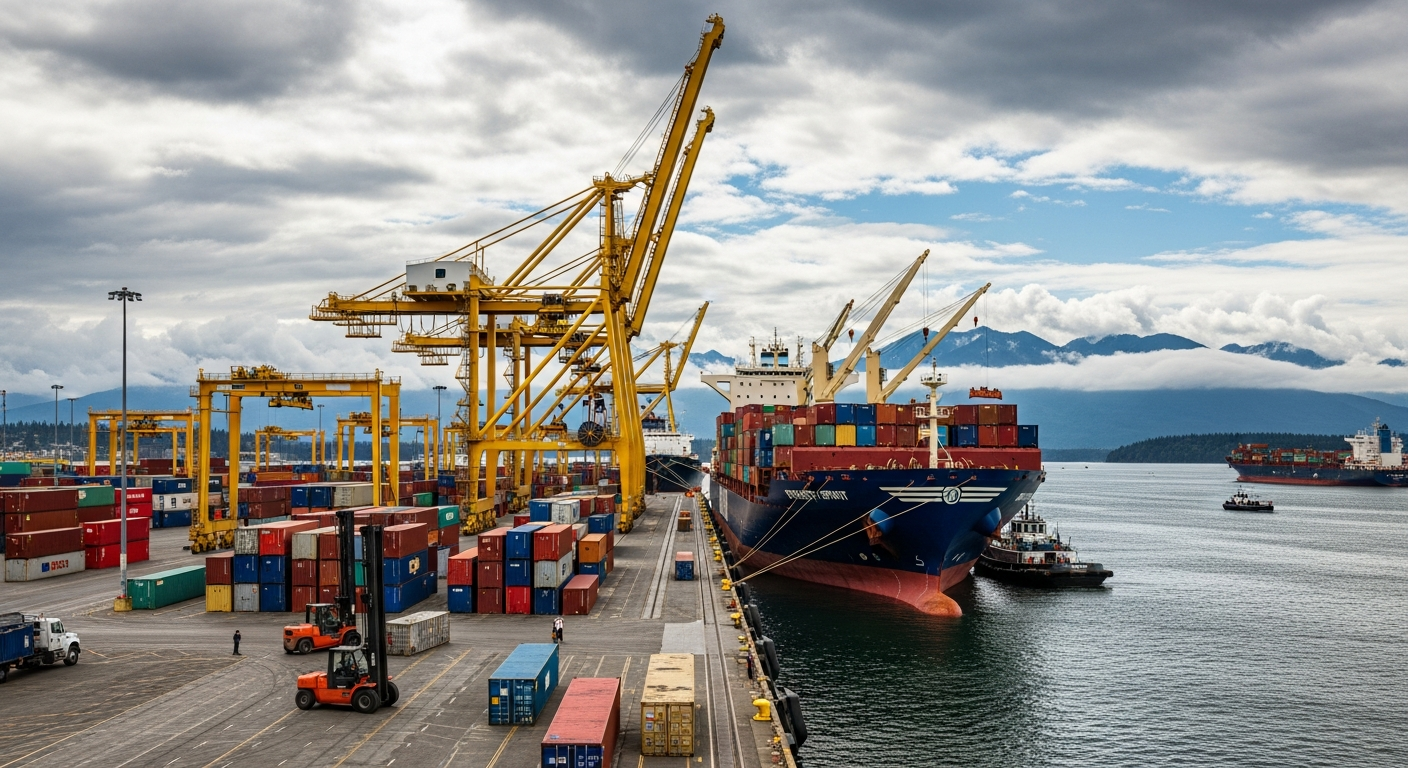
    For Everett-area businesses, importers, shippers, and logistics operators, the Port of Everett’s $11.25 million federal grant to rebuild Pier 3 is a supply chain story. Pier 3 — the port’s longest berth at 730 feet — has been operating well below its original structural capacity for years, limiting which cargo-handling equipment can run on it and therefore limiting what kinds of freight can move through it. The rebuild changes that. Here is what businesses need to know about what the project restores and why it matters for Snohomish County’s logistics position.

    The Problem the Grant Solves

    Pier 3 was built in 1973 with a design live load of 800 pounds per square foot — the rating that allows standard cargo-handling equipment to operate on it. Structural degradation over five decades has forced successive deratings. Today, the south side of the pier is rated at 600 lbs/sqft. The north side is 400 lbs/sqft. Some sections are lower.

    In practice, that means the heavier cranes, forklifts, and handling equipment that would otherwise run on a full-capacity pier cannot be permitted. Cargo that requires that equipment has to be handled differently — or routed elsewhere. The rebuild installs new vertical piles and restores damaged structural elements, returning the pier to its full capacity and allowing normal heavy-equipment operations to resume.

    What It Means for the Port’s Cargo Mix

    The Port of Everett Seaport handles bulk commodities (alumina ore, cement), forest products, and general cargo. A fully restored Pier 3 expands the port’s ability to handle a more diverse mix of freight — particularly cargo requiring heavy handling equipment that the derated pier currently cannot support.

    For businesses that import or export through Puget Sound, a stronger Port of Everett means more optionality. The port is already designated by MARAD as a Strategic Commercial Seaport — one of only 18 nationwide — based on its importance to Department of Defense logistics. The rebuild reinforces that designation and the port’s position as a viable alternative to Port of Seattle or Tacoma for certain cargo categories.

    The Industrial Market Context

    Snohomish County is currently the most affordable industrial and warehouse market in the Puget Sound region. Q1 2026 data from Kidder Mathews shows asking rents running $0.70 to $1.00 per square foot monthly on a triple-net basis — the value end of a market where Seattle-side King County runs up to $1.60/sqft. With 10.39% industrial vacancy across the Seattle metro, Snohomish County is in a tenant-favorable window that is unlikely to last.

    A higher-capacity Pier 3 makes the Port of Everett a more competitive import/export hub for businesses already operating in those Snohomish County industrial parks. The supply chain logic is straightforward: affordable warehouse space plus a functioning deepwater port with full cargo-handling capacity is a logistics combination that the county’s industrial corridor — running along Highway 9, SR 9, and the I-5 corridor north of Everett — is well positioned to promote. The full Snohomish County industrial market analysis is at this site’s warehouse market guide for Q1 2026.

    Defense Logistics: The DOD Connection

    As a MARAD Strategic Commercial Seaport, the Port of Everett supports Department of Defense cargo movements — military equipment, supplies, and materiel that move through commercial ports during exercises, deployments, and mobilizations. The Navy’s presence at Naval Station Everett, combined with the Port’s Strategic Seaport designation, makes Everett a node in the military logistics network that extends from Puget Sound to the Pacific.

    The Pier 3 rebuild strengthens that node. For contractors and businesses that support the defense supply chain — from aerospace suppliers in the Paine Field corridor to logistics companies that handle defense cargo — a fully operational Pier 3 is relevant infrastructure.

    How to Engage With the Port

    The Port of Everett’s seaport operations team handles cargo inquiries directly. The project covers planning, engineering, environmental review, permitting, and construction — a multi-year timeline. Businesses with active or planned cargo operations at Pier 3 should contact the Port directly at portofeverett.com for scheduling and operational impact information as the project progresses.

    The complete guide to the Pier 3 grant — including the full structural history and MARAD designation background — is at the Port of Everett Pier 3 complete 2026 guide.

    Frequently Asked Questions

    What types of cargo will Pier 3 handle after the rebuild?
    A more diverse cargo mix than the derated pier currently allows. Historically: bulk alumina ore, cement, general cargo, forest products. Full 800 lbs/sqft restoration allows heavier cargo-handling equipment to operate.

    Does the Pier 3 rebuild affect current shipping operations?
    Construction phasing and operational impacts have not been announced. Contact the Port of Everett directly at portofeverett.com for scheduling questions.

    What is the Port of Everett’s overall capacity?
    Washington’s third largest container port and a MARAD Strategic Commercial Seaport, supporting 40,000+ local jobs. Handles bulk, breakbulk, and general cargo.

    How does the Pier 3 rebuild connect to Snohomish County’s industrial market?
    Snohomish County is the most affordable Puget Sound industrial market at $0.70–$1.00/sqft NNN. A stronger Pier 3 adds import/export capability that supports businesses in county industrial parks.

    How does a business inquire about Port of Everett shipping services?
    Contact portofeverett.com directly. The Port handles bulk, breakbulk, and general cargo inquiries through its seaport operations team.

  • Port of Everett Pier 3: $11.25M Grant & Rebuild Guide

    Port of Everett Pier 3: $11.25M Grant & Rebuild Guide

    On April 27, 2026, MARAD announced the Port of Everett had won an $11.25 million competitive federal grant to rebuild Pier 3 — the port’s longest berth, built in 1973, and now operating at a fraction of its original structural capacity. The grant comes from MARAD’s Port Infrastructure Development Program, awarded nationally on a competitive basis to ports that can demonstrate clear benefits to freight movement and national defense. Here is the complete guide to what Pier 3 is, why it needs this work, and what the rebuild means for Everett’s supply chain.

    What Pier 3 Is and What’s Wrong With It

    Pier 3 is the longest berth at the Port of Everett Seaport — 730 feet long with a 120-foot-wide concrete deck, constructed in 1973. For over five decades it has been the backbone of the Port’s cargo operations, handling bulk alumina ore, cement, general cargo, and forest products moving through Puget Sound.

    The problem is structural. Pier 3 was originally engineered for a uniform live load of 800 pounds per square foot. Over the years, degradation has required the pier to be derated. The south side now carries a maximum of 600 lbs/sqft. The north side is rated at 400 lbs/sqft. Some sections are derated further. In practical terms, this means the heavy cargo-handling equipment that would otherwise run on the pier cannot be permitted on the structure — limiting the Port’s operational flexibility and the types of cargo it can process.

    “The Port is grateful to the U.S. Department of Transportation for this critical maritime infrastructure investment that will ensure the Port of Everett Seaport continues to safely support 40,000-plus local jobs, regional economic development, and the Washington state economy,” said Port CEO and Executive Director Lisa Lefeber at the time of the announcement.

    What the $11.25 Million Grant Funds

    The PIDP grant covers the full scope of the Pier 3 Strengthening Safety and Commerce project: planning and engineering, environmental review, permitting, and construction. The core construction work is installing new vertical piles beneath the pier and restoring other damaged structural elements — the work that will return Pier 3 to its full live-load capacity and allow heavy equipment to operate on the deck again.

    The grant was part of a broader $22 million federal investment in Northwest Washington port infrastructure announced by Rep. Rick Larsen. The Swinomish Indian Tribal Community received the remaining funds for a separate project. PIDP grants are awarded nationally on a competitive basis — ports must demonstrate clear benefits to the safety, efficiency, or reliability of freight movement to qualify.

    Why the Port of Everett Is One of 18

    The Port of Everett holds a MARAD Strategic Commercial Seaport designation — one of only 18 ports in the United States to carry that status. The designation is based on the port’s importance to Department of Defense cargo movements. Strategic Commercial Seaports are the civilian maritime infrastructure the military counts on for logistics during mobilizations and sustained operations.

    That designation is part of why the Port of Everett consistently wins federal investment. It’s not just about commerce — it’s about defense supply chain resilience. A degraded Pier 3 is a gap in that chain. Restoring it to full capacity makes Everett’s role in the national maritime network more secure.

    The Broader Waterfront Context

    The Pier 3 grant arrives alongside ongoing investment across Everett’s waterfront. The $6.75 million wharf rebuild on West Marine View is nearing completion. The Millwright District is under construction. Waterfront Place Restaurant Row has new tenants operating. The Edgewater Bridge — which improves access to the waterfront corridor — opened April 29, 2026.

    The Pier 3 rebuild is the seaport side of that same story. While the marina-facing development attracts restaurants and housing, the industrial seaport is quietly receiving federal infrastructure investment that underpins the economic base all that development rests on. The Waterfront Place complete guide covers the marina and restaurant district in detail.

    Frequently Asked Questions

    What is the Port of Everett Pier 3 federal grant?
    An $11.25 million MARAD PIDP grant to rebuild Pier 3 — installing new piles and restoring structural capacity on the port’s 730-foot longest berth, originally built in 1973.

    Why does Pier 3 need to be rebuilt?
    Structural degradation has derated the pier from 800 lbs/sqft original capacity to 600 lbs/sqft (south) and 400 lbs/sqft (north), preventing full-capacity cargo operations and heavy equipment use.

    What cargo does Pier 3 handle?
    Historically: bulk alumina ore, cement, general cargo, and forest products. Full structural restoration would allow a more diverse cargo mix and heavier equipment.

    How many jobs does the Port of Everett support?
    Port CEO Lisa Lefeber cited 40,000-plus local jobs supported by the Port of Everett Seaport’s operations.

    What is the MARAD Strategic Commercial Seaport designation?
    A federal designation held by only 18 U.S. ports, based on importance to Department of Defense cargo movements. The Port of Everett holds this designation.

    Who announced the grant?
    Rep. Rick Larsen announced the $22 million Northwest Washington port infrastructure package. MARAD’s formal announcement came April 27, 2026.

    When will the Pier 3 rebuild be completed?
    No specific date has been announced. The grant covers planning through construction — a multi-year process for marine infrastructure of this scale.

  • NAVSTA Everett FF(X) Bid: Snohomish County Economic Impact

    NAVSTA Everett FF(X) Bid: Snohomish County Economic Impact

    The Navy’s $282.9 million FF(X) contract awarded on April 28, 2026, is a shipbuilding story — but for Snohomish County civic watchers, it’s also an economic development story. NAVSTA Everett is sitting on a $340 million annual economic footprint and is in active competition to become the homeport of the Navy’s next frigate class. The contract just moved that competition from the advocacy phase to the construction phase. Here’s what community leaders, civic watchers, and county stakeholders need to understand.

    The $340 Million Baseline

    Naval Station Everett’s current economic impact on Snohomish County runs approximately $340 million annually according to the Economic Alliance Snohomish County. That figure encompasses active-duty and civilian payroll, contractor spending for base maintenance and operations, and the consumer spending of military families in Everett’s schools, stores, and housing market.

    The base employs thousands directly and supports a wide circle of contractors, service providers, and businesses that depend on the military community. Any expansion of the base — more ships, more sailors, more families — flows directly into that economic baseline.

    What the Original Constellation Designation Was Worth

    When the Navy designated NAVSTA Everett as the homeport for 12 Constellation-class frigates in 2021, the economic community immediately began modeling what that meant. A frigate crew of approximately 200 sailors, multiplied by 12 ships, represents roughly 2,400 additional active-duty personnel — plus dependents, contractors, and support staff. The incremental impact on housing demand, school enrollment, and local consumer spending would have been substantial.

    The Constellation cancellation in 2025 erased that future. The FF(X) contract of April 28, 2026, puts a new version of it back on the table.

    The Advocacy Architecture

    Rep. Rick Larsen has been the most publicly active congressional champion for NAVSTA Everett’s frigate homeport campaign. His office announced the release of the $22 million federal infrastructure package that included the Port of Everett’s Pier 3 grant — a demonstration of the county’s ability to secure federal investment that is relevant context for any defense installation conversation.

    Snohomish County Executive Dave Somers, the Economic Alliance Snohomish County, and Mayor Franklin have all been involved in the broader NAVSTA Everett advocacy posture. The argument they make to the Pentagon is straightforward: Everett has the infrastructure, the community support, and the congressional backing to be an excellent long-term homeport for Pacific Fleet frigates.

    The Competition

    NAVSTA Everett is not the only installation that will compete for the FF(X) homeport. Other Pacific Fleet installations — including Naval Base San Diego, Naval Station Bremerton, and potentially installations in Hawaii or Japan — are all potential candidates depending on the Navy’s force structure analysis. The Environmental Impact Statement process, which is the formal mechanism through which the Navy evaluates homeport options, takes years and requires public participation. That process has not been announced as of April 2026.

    The Port of Everett Connection

    The Port of Everett’s $11.25 million federal Pier 3 grant — awarded the same week as the FF(X) contract — is directly relevant to the homeport conversation. A stronger, modernized Pier 3 enhances the Port’s overall cargo and maritime capacity, and a robust Port of Everett is an argument for the city’s overall maritime infrastructure health. The full Pier 3 grant guide covers what that investment builds.

    More broadly, federal investment flowing into Everett’s maritime infrastructure — from Pier 3 to the Edgewater Bridge to the West Marine View pipeline — signals a city that is actively investing in its waterfront capacity. That context matters when making the case to Navy installation planners.

    What Civic Watchers Should Track

    The sequence that leads to a homeport decision goes: program contract (done) → program design maturation → Navy installation capacity review → Environmental Impact Statement → record of decision → homeport designation. The county is currently somewhere between the first and second steps. The EIS — the formal public process — is likely 2-3 years away at minimum.

    The advocacy window before the EIS is the most influential window. That’s when congressional support, community letters, and economic impact documentation matter most in shaping where the Navy looks seriously. Snohomish County’s advocates are active in that window now.

    The full FF(X) homeport picture — including what the Constellation cancellation meant and what the new program’s structure looks like — is covered in the complete FF(X) contract guide.

    Frequently Asked Questions

    What is NAVSTA Everett’s current economic impact?
    Approximately $340 million annually, per the Economic Alliance Snohomish County, covering payroll, contractor spending, and military family consumer activity.

    Who are Snohomish County’s key advocates for the FF(X) homeport?
    Rep. Rick Larsen’s office, Snohomish County Executive Dave Somers, the Economic Alliance Snohomish County, and Mayor Cassie Franklin.

    What infrastructure does NAVSTA Everett have for frigates?
    Existing pier infrastructure capable of frigate-class vessels, maintenance facilities, and full community support infrastructure for crews and families.

    What happens if Everett doesn’t win the FF(X) homeport?
    NAVSTA Everett continues as a carrier and surface combatant homeport. The base’s current mission is not contingent on the frigate designation — it simply wouldn’t grow as fast as with a homeport win.

    How can residents and businesses support the homeport bid?
    Contact Rep. Rick Larsen’s office, the Economic Alliance Snohomish County, and the Snohomish County Council. Business associations can submit formal support letters to Navy installation management.

  • NAVSTA Everett FF(X) Contract: Homeport & PCS Guide

    NAVSTA Everett FF(X) Contract: Homeport & PCS Guide

    If you’re stationed at Naval Station Everett, have orders inbound, or are weighing a PCS to the Pacific Northwest, the April 28 FF(X) frigate contract is news that matters to the base’s long-term footprint — and therefore to yours. Here is what the contract means in practical terms for the NAVSTA Everett community, what the homeport competition looks like from here, and what you can and cannot plan around right now.

    What the Contract Actually Does — and Doesn’t Do

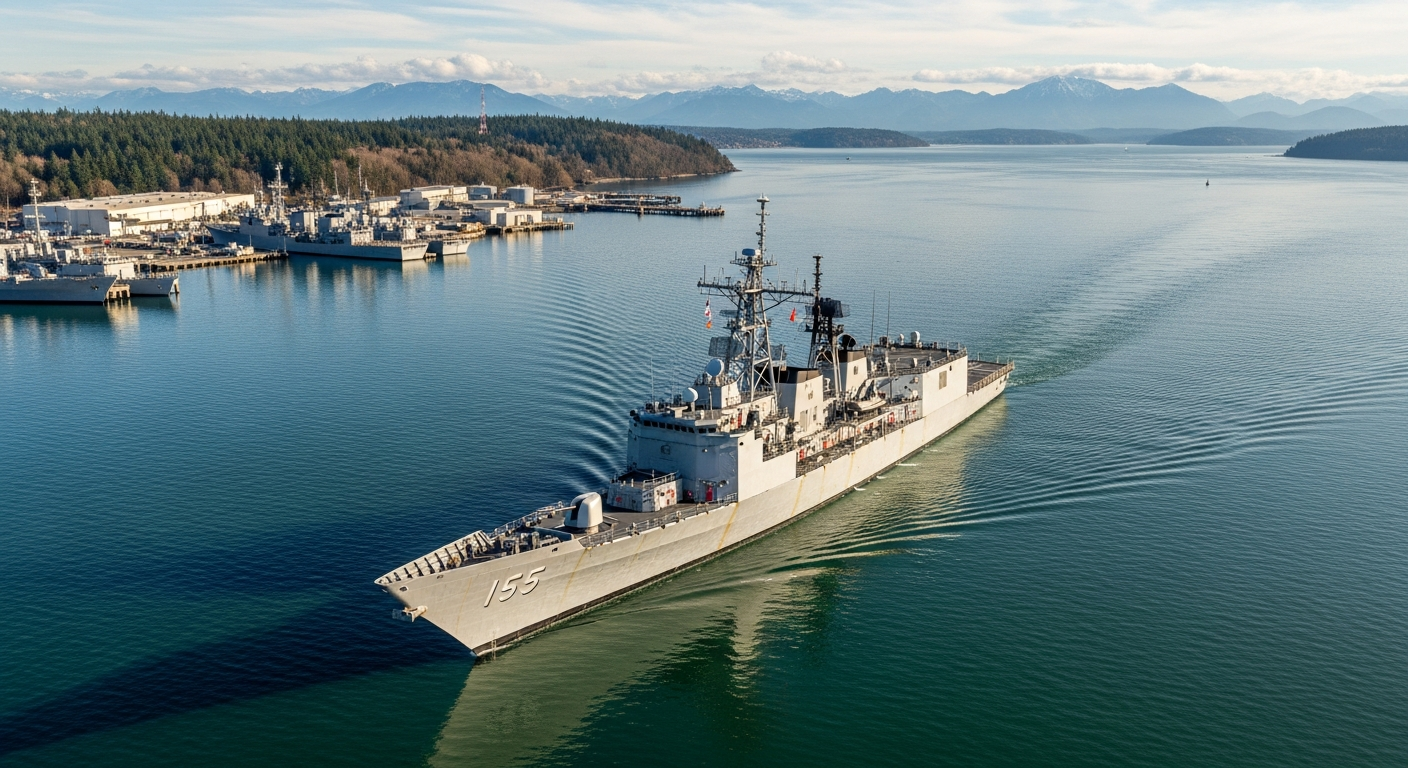
    The Navy awarded HII’s Ingalls Shipbuilding in Pascagoula, Mississippi, a $282.9 million lead yard support contract on April 28, 2026. This contract authorizes Ingalls to begin cutting and shaping raw steel for the main structural foundation of the first FF(X) frigate, secure key materials, and finalize design details. It does not designate a homeport. It does not assign ships to Everett. It means the program is real and construction has started.

    The homeport decision — where the ships will be based once they’re commissioned — is a separate Navy determination that goes through the Environmental Impact Statement process, force structure reviews, and installation capacity assessments. That process has not begun, or if it has, it has not been made public as of April 2026.

    What NAVSTA Everett Lost and What It’s Fighting to Win Back

    In 2021, the Navy formally designated Naval Station Everett as the homeport for the initial 12 Constellation-class frigates. For the Everett community, that was a major commitment — more sailors, more families, more housing demand, more spending at local schools and businesses. The Economic Alliance Snohomish County estimated the frigate designation would add significantly to NAVSTA Everett’s existing $340 million annual economic footprint.

    When former Navy Secretary Phelan cancelled the Constellation program in 2025, that designation evaporated. Everett was back to competing. The December 2025 announcement of the FF(X) program reset the competition — same arguments, new ship program, new timeline.

    Snohomish County officials, the Everett delegation, and Rep. Rick Larsen’s office have been actively lobbying for a new homeport designation for the FF(X). The case for Everett is strong: existing frigate pier infrastructure, an established Navy community with the full support infrastructure already in place, and a Pacific Fleet posture that prioritizes the Indo-Pacific theater where Puget Sound is a primary hub.

    The Timeline That Matters for Planning

    The first FF(X) is targeted for delivery to the Navy by June 2030. Homeport decisions typically come well before commissioning — sailors need orders, families need to plan schools and housing, and installations need to prepare. A realistic window for a homeport announcement, if Everett is selected, is sometime between 2027 and 2029.

    That’s a long horizon for planning purposes. What it means practically: if you’re making a 2-3 year PCS decision today, the FF(X) homeport outcome will likely still be unknown when you arrive, serve your tour, and potentially rotate out. It should not drive your short-term planning.

    What should drive your planning: NAVSTA Everett is already a strong duty station with solid infrastructure. The ongoing Southern Seas deployment of USS Gridley — covered in earlier reporting on this site — is a reminder that the base is active and operationally relevant regardless of the frigate outcome. The earlier complete guide on FF(X) and PCS decisions covers the longer-term picture in detail.

    Housing and Schools: The Current Picture

    NAVSTA Everett’s housing market has been covered extensively on this site. The short version for incoming families: Snohomish County’s housing market is competitive, with median home prices in Everett running significantly below Seattle-side King County. The 2026 PCS housing guide for Navy families at NAVSTA Everett covers neighborhoods, school districts, and what the recent market shift means for buyers and renters. See the NAVSTA Everett PCS Housing Guide for 2026.

    The Bottom Line for NAVSTA Families

    The April 28 contract is the best news NAVSTA Everett’s homeport advocates have had since the Constellation cancellation. It proves the FF(X) program is real. It starts the clock toward a ship that will need a homeport. And it gives Everett’s congressional delegation and community advocates a concrete program to lobby around rather than a concept announcement.

    For families already at the base: nothing changes day-to-day. For families considering a PCS to Everett: the base’s trajectory is positive, and the FF(X) homeport — while not guaranteed — is a legitimate possibility that would grow the installation over the next decade.

    The full strategic picture is in the complete FF(X) contract guide for the Everett community.

    Frequently Asked Questions

    Does the FF(X) contract mean NAVSTA Everett will definitely get the frigates?
    No. The contract activates construction at Ingalls. The homeport decision is separate and has not been made.

    What happened to the Constellation-class frigates that were going to Everett?
    The Constellation program was cancelled in 2025. NAVSTA Everett’s 2021 homeport designation for 12 Constellation frigates became void. The FF(X) is a new program and the homeport competition restarts.

    If NAVSTA Everett wins the FF(X) homeport, how many more sailors would be based here?
    A frigate crew numbers around 200 sailors. Multiple frigates would bring several hundred additional personnel and dependents. No specific number has been announced.

    Should I factor the FF(X) homeport bid into my PCS decision to Everett?
    No. The homeport is not confirmed and the first ship doesn’t deliver until June 2030. Base your PCS decision on current orders and NAVSTA Everett’s existing, already-strong infrastructure.

    How does USS Gridley’s current deployment relate to FF(X)?
    USS Gridley is a destroyer currently on Southern Seas 2026. FF(X) is a separate new construction program — not a reassignment of existing ships.

    Where can I find more about NAVSTA Everett as a duty station?
    cnic.navy.mil/regions/cnrnw/installations/navsta_everett.html is the official source. Exploring Everett has PCS housing, VA claims, and military family resource guides linked throughout this article.

  • FF(X) Frigate Contract: Naval Station Everett Homeport Bid

    FF(X) Frigate Contract: Naval Station Everett Homeport Bid

    For five months, the FF(X) frigate existed primarily as an announcement: the Navy’s replacement for the cancelled Constellation-class program, based on Ingalls’ National Security Cutter hull, with Everett still hoping to win the homeport designation. On April 28, 2026, it became a contract. The Navy awarded HII’s Ingalls Shipbuilding a $282.9 million lead yard support contract — and the first $80.6 million activates immediately, authorizing Ingalls to start cutting and shaping steel. Here is what the Everett community needs to understand about what just changed, and what the homeport campaign looks like from here.

    What the Contract Actually Covers

    The April 28 contract is a lead yard support award — the pre-construction phase work that front-loads design refinement and material preparation before formal ship construction begins. Under its terms, Ingalls is authorized to begin cutting and shaping raw materials for the main structural foundation of the first FF(X) frigate, secure key materials, and finalize design details ahead of full construction authorization.

    Of the initial $80.6 million tranche, approximately 73% — roughly $58.8 million — comes from Navy fiscal year 2026 shipbuilding and conversion appropriations. The remaining 27%, about $21.8 million, is funded through Navy research and development accounts. The full contract runs through April 2028.

    “We are excited to partner with the Navy to bring these preproduction steps under contract to accelerate delivery of the frigates that our warfighters need,” said Brian Blanchette, president of Ingalls Shipbuilding, in the company’s April 28 announcement. The contract was not competed — Ingalls built the Legend-class National Security Cutter on which the FF(X) is based, giving them a direct award under the Navy’s stated rationale.

    The FF(X) Program: Where It Came From

    Former Navy Secretary John Phelan cancelled the Constellation-class frigate program in late 2025 after years of cost growth, schedule delays, and design instability at the lead shipbuilder, Fincantieri Marinette Marine. The Constellation program had been planned for up to 20 frigates and was supposed to be the Navy’s primary small surface combatant for the coming decades.

    In December 2025, then-Secretary Phelan announced the Navy would instead pursue a new frigate — the FF(X) — based on Ingalls’ Legend-class National Security Cutter, a ship already in production and with a known cost and schedule baseline. The first FF(X) is targeted to deliver to the Navy by June 2030.

    The April 28 contract is the first major programmatic action since that December announcement. Steel is now being prepared. The FF(X) is no longer a policy decision — it’s a shipbuilding program.

    What This Means for Naval Station Everett’s Homeport Bid

    When the Constellation program was cancelled, NAVSTA Everett lost its 2021 homeport designation. That designation had named Everett as the homeport for the initial 12 Constellation-class frigates — a commitment worth an estimated $340 million in annual economic activity according to the Economic Alliance Snohomish County.

    The cancellation didn’t kill Everett’s claim — it reset the competition. Snohomish County officials, the Everett delegation, and Rep. Rick Larsen’s office have been actively lobbying the Navy to designate NAVSTA Everett as the FF(X) homeport. The arguments for Everett are strong: an existing frigate-capable pier, an established Navy community with schools, housing, and support infrastructure, and a congressional delegation that has consistently funded Pacific Fleet force structure.

    What the April 28 contract does is start the clock in a new way. With steel being cut and a June 2030 delivery target, the Navy will need to make a homeport decision well before the first ship is commissioned. That decision-making process is now accelerating whether or not an official announcement has been made.

    The full background on NAVSTA Everett’s homeport campaign is covered in this site’s earlier reporting: The FF(X) Frigate and Naval Station Everett: The Complete 2026 Guide and The Snohomish County $340M Frigate Fight.

    The Strategic Picture: Why Everett Still Has the Strongest Case

    Naval Station Everett is home to the Navy’s only Pacific Northwest deepwater homeport. It currently homeports USS Carl Vinson (aircraft carrier), USS Abraham Lincoln (aircraft carrier in rotation), surface combatants, and support vessels. The base has existing frigate pier infrastructure, a Fleet and Family Support Center, commissary, schools, and housing — the full military community infrastructure that a frigate crew requires.

    NAVSTA Everett also benefits from its position within the broader Pacific Fleet posture. The Indo-Pacific is the primary strategic theater for the next generation of U.S. naval forces, and Puget Sound is the Pacific Fleet’s primary West Coast hub. A new frigate class based on a ship already operating in Pacific Fleet service fits naturally into that framework.

    None of that guarantees the homeport — the Navy’s internal process will weigh operational requirements, infrastructure costs, and force structure planning. But the April 28 contract means Everett’s advocates now have a specific, contracted program to point to when making their case to the Pentagon.

    Timeline and What to Watch

    • April 28, 2026: $282.9M Ingalls lead yard support contract awarded
    • Through April 2028: Pre-construction activities, material securing, design finalization
    • June 2030 target: First FF(X) delivery to the Navy
    • Before 2030: Homeport decision expected — no official date announced

    Frequently Asked Questions

    What is the FF(X) frigate?
    The FF(X) is the U.S. Navy’s new small surface combatant, replacing the cancelled Constellation-class. It is based on the Ingalls-built Legend-class National Security Cutter. The lead ship is targeted for delivery by June 2030.

    What did the April 28, 2026 contract authorize?
    A $282.9 million lead yard support contract. The first $80.6 million activates immediately, authorizing Ingalls to begin cutting and shaping steel for the main structural foundation and finalizing design details. The contract runs through April 2028.

    Was Naval Station Everett designated as the FF(X) homeport?
    Not yet. NAVSTA Everett was the designated homeport for the cancelled Constellation-class. The FF(X) homeport has not been decided. Snohomish County and NAVSTA Everett are actively lobbying for that designation.

    What is the economic value of the homeport bid?
    Snohomish County officials have cited approximately $340 million in annual economic impact from NAVSTA Everett’s current operations. A frigate homeport designation would add to that baseline.

    When will the Navy decide where to homeport the FF(X)?
    No official timeline. The first ship delivers in June 2030, so a decision will likely come before that date.

    How many FF(X) frigates will be built?
    No final production number has been announced. The program’s size will be determined through the shipbuilding budget process.

    Who is building the FF(X)?
    HII’s Ingalls Shipbuilding in Pascagoula, Mississippi. The contract was a direct award, not competed, because Ingalls built the National Security Cutter on which the FF(X) is based.

  • Everett Transit Consolidation: Boeing Worker Commute Guide

    Everett Transit Consolidation: Boeing Worker Commute Guide

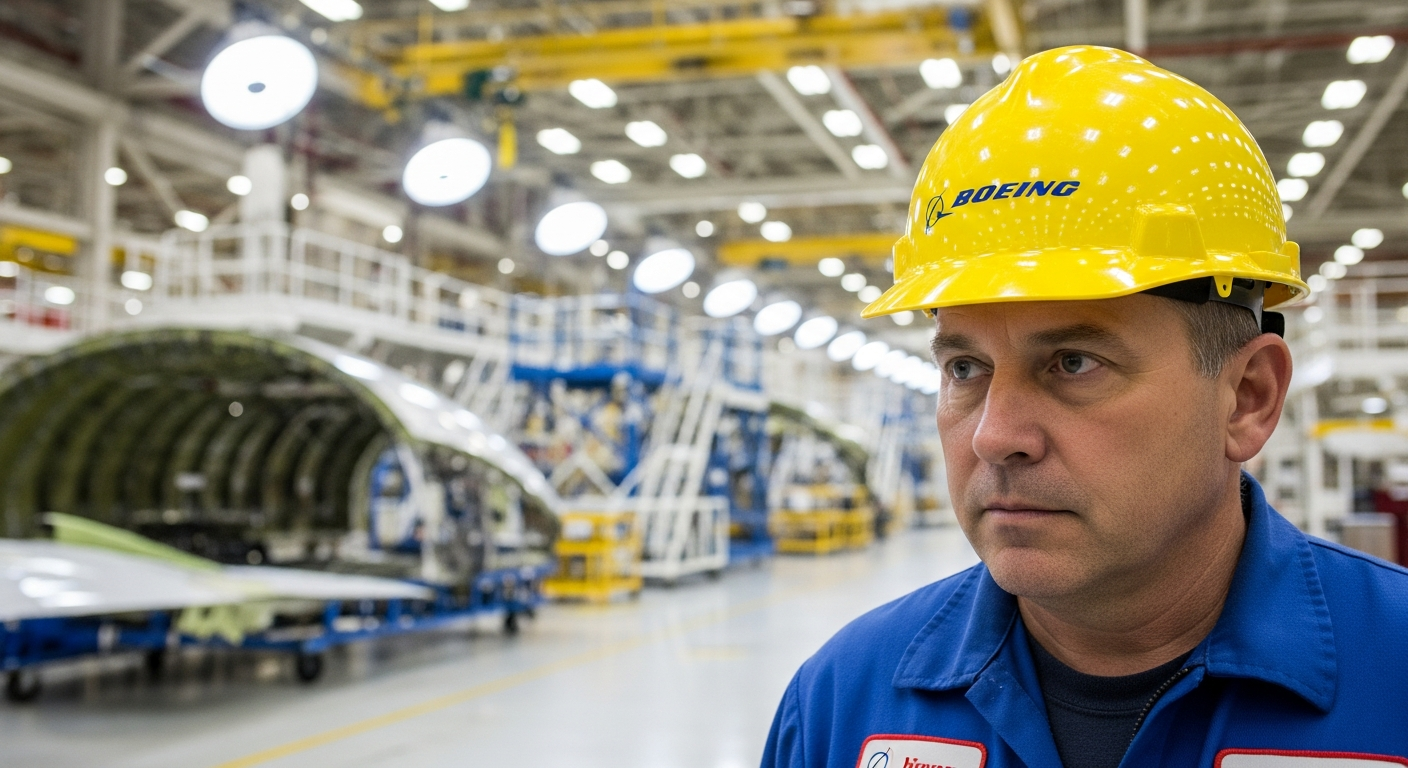
    If you work on Boeing’s 737 North Line or anywhere else at Paine Field and you take the bus, the Everett Transit consolidation proposal is directly relevant to your commute. Here is what Boeing and Paine Field workers need to know about what’s being proposed, what’s at stake for your routes, and how this connects to the Sound Transit vote on June 30.

    The Route That Matters Most to Paine Field Workers

    Everett Transit Route 7 — Everett-Paine Field — provides direct service between downtown Everett and Boeing’s main gate on 84th Street SW. For the thousands of workers on the 737 North Line and other Paine Field operations who don’t drive or prefer not to, Route 7 is their connection between Everett Station (where bus, Amtrak, and eventually light rail meet) and the factory floor.

    Under the proposed consolidation, Everett Transit’s 22 routes — including Route 7 — would transition to Community Transit. Whether that route continues in its current form, is modified, or is replaced by a Community Transit equivalent is among the most consequential details of the interlocal agreement still being drafted.

    What Community Transit Already Offers Near Paine Field

    Community Transit operates the Swift Blue Line — a bus rapid transit route that runs along Airport Road in Mukilteo and connects to Ash Way Park and Ride and Lynnwood Transit Center. The Swift Blue Line gets workers within a reasonable distance of Paine Field but does not serve the Boeing main gate directly.

    A merged system, in theory, could rationalize these routes — eliminating redundancy, extending coverage, and potentially providing more frequent service to Paine Field. Community Transit CEO Ric Ilgenfritz has described the merger as building “a seamless, connected transit network.” What that means specifically for the Boeing campus depends entirely on what ends up in the interlocal agreement.

    The Light Rail Connection

    Mayor Franklin’s stated reason for the consolidation is the June 30, 2026, Sound Transit board vote on whether to advance light rail to Everett Station. If light rail comes to Everett, the case for a merged transit agency as the feeder network becomes stronger — a single agency with service from Paine Field to Everett Station to light rail is a cleaner system than two separate agencies with different governance, different fare structures, and different service priorities.

    For Boeing and Paine Field workers, this means the consolidation debate and the light rail debate are linked. If you have opinions on the June 30 vote, you likely have opinions on this consolidation too. The full picture on the Sound Transit vote for Boeing and Paine Field workers is covered in this commuter guide.

    The Biggest Uncertainty: What Happens to Paine Field Routes

    The concern raised by opponents of the consolidation — including the union representing Everett Transit’s 161 workers and the Keep Everett Transit community group — is that Community Transit, as a regional agency, prioritizes regional connectivity over neighborhood and workplace-specific routes. The argument is that a route like the Paine Field connector might get rationalized, combined, or reduced in a regionalized system focused on park-and-ride feeders and rapid transit corridors rather than door-to-factory service.

    That concern is real. It is also not yet a fact — no route restructuring plan has been released because no interlocal agreement has been finalized. The public hearing process required by SB 5801 is the place where workers can put specific Paine Field service commitments on the record before the council votes.

    What Boeing Workers Should Do Right Now

    The Everett City Council could vote as early as late May or June 2026. SB 5801 requires at least one public hearing before that vote. The hearing has not been scheduled as of April 30, 2026.

    If Paine Field service continuity matters to you, the most effective action is to participate in that public hearing — in person, in writing, or both — and specifically ask for service commitments to the Boeing campus as a condition of the council’s approval. Labor unions, Boeing’s government affairs team, and organizations like the Economic Alliance Snohomish County are also watching this issue.

    Monitor everettwa.gov for hearing announcements. And read the full guide to the Everett Transit consolidation for the complete picture on what’s at stake.

    Frequently Asked Questions

    Does Everett Transit serve Boeing’s Everett factory or Paine Field?
    Everett Transit Route 7 (Everett-Paine Field) provides direct service to Boeing’s main entrance on 84th Street SW. Under consolidation, the route’s continuation depends on the interlocal agreement.

    Would Community Transit expand service to Paine Field after consolidation?
    Community Transit’s Swift Blue Line already reaches close to Paine Field via Airport Road. A merged system could improve frequency or coverage, but specific commitments depend on the agreement terms.

    When would any transit changes affecting Boeing workers take effect?
    A council vote could come as early as late May or June 2026, but implementation would take years. Service changes would not happen immediately after a vote.

    How does the Sound Transit light rail vote connect to Boeing commuters?
    If light rail advances to Everett Station on June 30, a combined transit system would be better positioned to provide connecting bus service from Paine Field to the rail network.

    What should Boeing workers do now if they depend on Everett Transit?
    Monitor everettwa.gov for public hearing announcements. Workers who ride Everett Transit have standing to comment on the importance of maintaining Paine Field service before the council votes.

  • Everett Transit Consolidation: The Complete 2026 Guide

    Everett Transit Consolidation: The Complete 2026 Guide

    Everett’s 50-year-old municipal bus system is heading toward the most consequential vote in its history — and Everett residents won’t cast a ballot on it. The Everett City Council could vote as early as late May or June 2026 on whether to dissolve Everett Transit and absorb its 22 routes, 161 workers, and 115,000 riders into Community Transit — the regional carrier serving the rest of Snohomish County. A 2025 state law called SB 5801 makes this possible without a public vote. Here is everything you need to know about what the consolidation would mean, who’s fighting it, and what happens next.

    What Actually Happened on April 22, 2026

    Everett Mayor Cassie Franklin and Community Transit CEO Ric Ilgenfritz announced on April 22, 2026, that the two agencies are resuming work toward consolidation. The announcement was not a vote — it was a green light to begin drafting an interlocal agreement, conducting due diligence, and working through the legal framework before any governing bodies act.

    The proposal would absorb Everett Transit — which operates 22 routes, employs 161 people, and serves an estimated 115,000 Everett residents — into Community Transit, which currently covers the rest of Snohomish County. A merged agency would serve roughly 800,000 people across Snohomish County, making it one of the largest transit networks in Washington State outside of King County Metro and Sound Transit.

    Franklin framed the move as a direct response to Sound Transit’s June 30 board vote on whether to advance light rail to Everett Station. “As light rail comes closer to reality, we need a transit system built for a light rail community,” Franklin said. Ilgenfritz described the consolidation as “the next step in building a seamless, connected transit network across Snohomish County.”

    The State Law That Makes This Possible Without a Public Vote

    This consolidation is moving without a public ballot because Washington’s legislature passed SB 5801 in 2025, which allows public transportation benefit areas like Community Transit to annex municipal transit agencies via an interlocal agreement approved by both governing bodies. The process requires at least one public hearing by each body — separately or jointly — but does not require a citywide ballot measure.

    Everett Transit Local 883 Union President Steve Oss has called for the consolidation to go before Everett voters and has alleged the legislation was crafted specifically to allow the merger without one. A community group called Keep Everett Transit (keepet.org) has formed in opposition.

    If the council approves, Everett would become the first Washington city to voluntarily dissolve a standalone transit agency under this framework.

    What’s Currently on the Table

    Right now, the two agencies are in the due-diligence and agreement-drafting phase. No interlocal agreement has been presented to either body. No public hearing has been scheduled. The timeline that has been communicated publicly is:

    • Spring–early summer 2026: Drafting of interlocal agreement, staff analysis, public hearings
    • Late May or June 2026: Possible council vote (though this is a projection, not a set date)
    • After council approval: Multi-year implementation — routes, labor contracts, fare structures, and service standards would need to be reconciled before Everett Transit ceases to exist as a standalone agency

    What Consolidation Would Mean for Riders

    Under consolidation, Everett Transit’s 22 routes would become part of Community Transit’s network. Service levels, route alignments, and fare structures would all be subject to renegotiation as part of the interlocal agreement.

    Community Transit currently does not operate within the City of Everett boundaries — its routes connect Snohomish County cities to Everett but hand off at the city border. Consolidation would change that, giving a single agency control of all fixed-route bus service in and around Everett.

    Supporters argue this creates the seamless transit network needed to connect to light rail. Critics, including the Keep Everett Transit coalition, argue that Community Transit’s priorities are regional, not neighborhood-focused, and that Everett-specific routes could be reduced or eliminated in a regionalized system.

    What Consolidation Would Mean for Workers

    The 161 Everett Transit employees — drivers represented by ATU Local 883, plus maintenance, dispatch, and administrative staff — would transition to Community Transit under any consolidation agreement. The terms of that transition, including which union contract governs, seniority treatment, and pension continuity, are among the most complex elements of the negotiation.

    Union president Steve Oss has been the most prominent public opponent of the consolidation, calling explicitly for a public vote and pushing back on the no-ballot framework created by SB 5801. The union’s concerns include job security, seniority rules, and the potential for route changes that reduce driver headcount or shift work patterns.

    The Tax Question

    Everett residents currently pay a 0.3% city sales tax that funds Everett Transit. The Lynnwood Times has reported that the combined tax burden under Community Transit’s rate structure would represent the largest sales tax increase in Washington state history. The specific net impact on individual Everett tax bills would depend on how the interlocal agreement structures the transition period and what tax rates are set.

    The public hearing process required by SB 5801 is the primary mechanism for residents to weigh in on the tax implications before any council vote.

    How This Connects to Sound Transit

    The consolidation proposal is explicitly tied to the Sound Transit timeline. The June 30, 2026, Sound Transit board vote — which would determine whether the agency moves forward with a revised System Plan to bring light rail to Everett Station — is the backdrop for Franklin’s framing of the merger.

    The argument: if light rail comes to Everett, the city needs a transit feeder network that connects all of Snohomish County to Everett Station seamlessly. A merged Community Transit + Everett Transit system, the argument goes, is better positioned to serve as that feeder than two separate agencies with separate governance structures.

    Everett’s Sound Transit light rail future is covered in this complete 2026 guide. The June 30 vote’s implications for residents and commuters are also explored in detail on this site.

    How to Make Your Voice Heard

    The SB 5801 process requires at least one public hearing before any council vote. Dates have not been announced as of April 30, 2026. To stay informed:

    • Monitor City of Everett (everettwa.gov) for hearing announcements — confirm agendas on the live city site
    • Sign up for the City of Everett’s news alerts
    • Contact the Keep Everett Transit coalition at keepet.org
    • Contact Everett City Council members directly — the council will make the final call

    Frequently Asked Questions

    Does Everett have to hold a public vote to end Everett Transit?
    No. Under Washington’s SB 5801 (2025), the Everett City Council and Community Transit Board can approve consolidation through a council vote and an interlocal agreement — no public ballot required. However, at least one public hearing by each body is required.

    How many routes does Everett Transit currently operate?
    Everett Transit operates 22 routes and employs approximately 161 people, serving an estimated 115,000 Everett residents.

    When could the Everett City Council vote on consolidation?
    A council vote could come as early as late May or June 2026, though the interlocal agreement is still being drafted as of late April 2026.

    What would happen to Everett Transit workers if consolidation is approved?
    The 161 Everett Transit employees — including drivers represented by Local 883 of the Amalgamated Transit Union — would transition to Community Transit. Terms of that transition are subject to negotiation.

    What does Everett Transit consolidation mean for residents’ taxes?
    The Lynnwood Times has reported this could represent the largest sales tax increase in Washington state history when combined with Community Transit rates. The specific net impact on individual tax bills depends on the interlocal agreement’s structure.

    Why is the consolidation being proposed now?
    Mayor Franklin framed it as a direct response to the June 30, 2026, Sound Transit vote that could advance light rail to Everett Station.

    What is Keep Everett Transit?
    Keep Everett Transit (keepet.org) is a community advocacy group opposing the consolidation and calling for a public vote.

  • Everett Transit Consolidation: What the Council Vote Means

    Everett Transit Consolidation: What the Council Vote Means

    Q: Does Everett have to vote on whether to end Everett Transit?
    A: No. Under a 2025 Washington State law (SB 5801), the Everett City Council and the Community Transit Board of Directors can approve consolidation through a council vote and an interlocal agreement — no public ballot required. Mayor Franklin and Community Transit CEO Ric Ilgenfritz announced the consolidation effort on April 22, 2026. A council vote could come as early as late May or June 2026, though final implementation would take years.

    Everett City Council Will Decide Whether to End Everett Transit — What the Vote Means for Riders, Workers, and Your Tax Bill

    Everett’s 50-year-old municipal bus system is heading toward the biggest decision in its history — and residents won’t cast a ballot on it. Instead, the Everett City Council will vote on whether to dissolve Everett Transit and hand its routes, buses, and operations to Community Transit, the regional carrier that already serves the rest of Snohomish County. If the council says yes, Everett would become the first Washington city to voluntarily give up a standalone transit agency under a 2025 state law that bypasses a public vote entirely. Here is what that council vote means for every Everett resident, what the union representing transit workers says, and how you can make your voice heard before the council decides.

    What Actually Happened on April 22

    Mayor Cassie Franklin and Community Transit CEO Ric Ilgenfritz announced on April 22, 2026, that the two agencies are resuming joint work toward consolidation. The announcement was not a vote — it was a green light to begin drafting the interlocal agreement, conducting due diligence, and working through the legal framework before any governing bodies act.

    The proposal would absorb Everett Transit — which operates 22 routes, employs 161 people, and serves an estimated 115,000 Everett residents — into Community Transit, which currently covers the rest of Snohomish County. A merged agency would serve roughly 800,000 people across the county, making it one of the largest transit networks in Washington State outside of King County Metro and Sound Transit.

    Franklin framed the move as a direct response to Sound Transit’s Link Light Rail Extension, which — if approved on June 30 — would bring rail to Everett Station. “As light rail comes closer to reality, we need a transit system built for a light rail community,” Franklin said in the joint release. Ilgenfritz described the consolidation as “the next step in building a seamless, connected transit network across Snohomish County.”

    The State Law That Makes This Possible Without a Public Vote

    This consolidation is moving without a public ballot because Washington’s legislature passed SB 5801 in 2025, sponsored by Senator Marko Liias (D-Edmonds), chair of the Senate Transportation Committee. The law allows a public transportation benefit area — which Community Transit is — to annex a municipal transit agency through a government-to-government interlocal agreement. Both governing boards must approve it. Voters do not.

    That is a significant change from how transit mergers have worked historically in Washington. The original Sound Transit district, the Snohomish County Public Transportation Benefit Area, was created in 1976 by a 79 percent public vote. This merger would happen entirely through elected officials, not the ballot box.

    Under SB 5801, both the Everett City Council and the Community Transit Board of Directors must hold public hearings and approve the annexation before it takes effect. The public hearings are where residents can formally address their elected officials before the vote locks in.

    What the City Council Must Actually Do — And When

    The Everett City Council’s role is to vote on the interlocal agreement that would authorize Everett’s annexation into Community Transit’s service boundary. Before that vote, the council must hold at least one public hearing. Franklin told Everett Transit union members on April 18 that the council could be asked to vote as early as late May or June 2026. The official joint announcement from both agencies uses a more cautious timeline, stating the boards would consider the proposal “this fall.”

    The Community Transit Board of Directors — which includes elected officials from cities across Snohomish County — would vote separately. Under the consolidation structure, Everett would gain seats on the Community Transit board proportional to its population, giving Everett elected officials an ongoing voice in system decisions.

    Actual implementation — meaning the day Everett Transit stops operating as a standalone agency — would take years after a council vote, according to both agencies. Route planning, labor agreements, equipment transfers, and operational integration require substantial lead time.

    What It Means for Your Tax Bill

    Everett Transit is funded primarily by a dedicated transit sales tax that Everett voters approved. Community Transit is funded by a separate sales tax on Snohomish County purchases outside Everett. After consolidation, Everett’s transit sales tax revenue would flow into the combined Community Transit system.

    Community Transit’s coverage currently levies a 0.9 percent sales tax on purchases in its service area. If Everett is annexed into that boundary, Everett residents and businesses would pay a sales tax that increases by 0.6 percentage points — from the current combined rate of approximately 9.90 percent to 10.50 percent. Projections from the Lynnwood Times estimate that generates approximately $29 million in new annual revenue beginning in 2027, totaling roughly $158 million over five years. That would make this one of the largest single sales tax increases in Snohomish County history.

    The agencies project operational cost savings of between $2.4 million and $3.7 million annually once consolidated, from reduced administrative redundancy and shared maintenance infrastructure. Everett Transit’s fleet includes approximately 24 battery-electric buses with a capital asset value estimated near $10 million.

    The Union Says Workers Weren’t at the Table

    The strongest opposition to the consolidation has come from the workers who drive Everett’s buses. Steve Oss, president of Amalgamated Transit Union Local 883 — which has represented Everett Transit’s drivers, inspectors, and maintenance workers for over two decades — opposes the merger and the process used to get here.

    “This method is frankly wrong,” Oss said, referring to the council-vote pathway that bypasses a public ballot. He has argued that the consolidation should require voter approval, as transit district formation did in 1976.

    Oss also raised concerns about workers outside the ATU 883 bargaining unit — administrative and clerical staff who are not covered under the federal Section 13(c) labor protections that shield union drivers from layoffs in transit mergers. ATU 883 members are protected under federal law from involuntary termination as a result of annexation. Non-union Everett Transit employees do not have the same guaranteed protections.

    A community group called Keep Everett Transit has launched at keepet.org to organize residents who want to preserve the local agency. Oss has noted that one of the operational advantages of a city-run transit system is its flexibility — when Everett needs buses for an event, emergency, or temporary free-fare day, it takes a call from the mayor. In a regional agency, those decisions go through a board and a bureaucracy.

    What Riders Can Expect If Consolidation Happens

    Ilgenfritz has committed publicly to no loss of service for existing Everett Transit riders during the transition. Community Transit operates a significantly larger fleet and route network, including Swift rapid bus lines and regional routes to Seattle, which Everett Transit does not currently offer. Supporters of the merger argue that Everett residents would gain access to a more extensive network and that future light rail connectivity would be better served by a unified regional carrier rather than two separate systems with different governance.

    Critics, including Oss, point out that Everett Transit’s local knowledge and direct accountability to City Hall has allowed it to respond quickly to neighborhood needs — something harder to replicate in a county-scale agency governed by a multi-city board. There is also a pay disparity between the two agencies: Everett Transit paratransit workers earn approximately $42 per hour; Community Transit paratransit workers earn approximately $26 per hour. How collective bargaining will resolve that disparity is not yet determined.

    The broader transit picture matters here: Sound Transit’s Everett Link Extension — if the board approves a funded path forward at its June 30 meeting — would require an integrated bus-rail feeder system. Both agencies argue consolidation is necessary infrastructure for that future. The Sound Transit board’s decision will significantly shape what transit in Everett looks like in the 2030s. Read more about the June 30 vote and what’s at stake for Everett in this explainer.

    What to Do Next

    • Attend the public hearing — Both the Everett City Council and Community Transit board are required to hold public hearings before any vote. Dates have not been announced yet. Watch the Everett City Council meeting calendar at everettwa.gov/AgendaCenter for scheduling updates.
    • Contact your Council Member — The Everett City Council has nine members representing districts. Find your representative and their contact information at everettwa.gov/citycouncil.
    • Review the consolidation history — The city’s 2023 “More Transit Together” final report is available through Everett’s Transit Consolidation Study page at everettwa.gov/2786/Transit-Consolidation-Study.
    • Follow Keep Everett Transit — The community organization opposing consolidation is operating at keepet.org.
    • Sign up for city news flashes — The official consolidation announcement and future updates will be posted at everettwa.gov. Subscribe to City news flashes to receive updates automatically.

    Frequently Asked Questions

    Will Everett Transit disappear if the council votes yes?

    Eventually, yes — Everett Transit as a standalone city agency would cease to exist and its operations would be absorbed into Community Transit. Implementation would take several years after a council vote.

    Can residents stop the consolidation?

    There is no public vote required under SB 5801. Residents can testify at public hearings, contact their council members, and organize through groups like Keep Everett Transit — but the final decision rests with the Everett City Council and Community Transit Board of Directors.

    When will the Everett City Council vote?

    Mayor Franklin indicated a council vote could come as early as late May or June 2026. The official joint agency timeline is “this fall.” No vote date has been formally set as of April 30, 2026.

    Will my bus route change immediately after a vote?

    No. Both agencies have committed to maintaining existing Everett Transit service throughout the transition period. Route and schedule changes would be part of a multi-year integration process.

    Will this increase my sales taxes?

    Yes. Everett residents and businesses would pay a sales tax rate increase of approximately 0.6 percentage points if Everett is annexed into Community Transit’s service area — one of the largest such increases in Snohomish County history.

    What happens to Everett Transit workers?

    ATU Local 883 members (drivers, mechanics, inspectors) are protected under federal Section 13(c) labor law from involuntary layoffs due to the merger. Non-union administrative staff do not have equivalent federal protections. Labor negotiations are ongoing.
  • Cascade View Everett: South Everett Neighborhood Guide

    Cascade View Everett: South Everett Neighborhood Guide

    Last updated: April 30, 2026 | Cascade View is the south Everett neighborhood most outsiders drive through on Everett Mall Way without ever noticing it has a name. The 6,391 people who live there know better.

    Where it sits: Cascade View is a primarily residential south Everett neighborhood bounded on its southern and western edges by Everett Mall Way and Evergreen Way, with Twin Creeks immediately to the east and Mill Creek a short drive to the south. Population is about 6,391; median home sale prices run around $765,000 in the most recent twelve-month window — up roughly 30 percent year over year. The neighborhood association meets quarterly under chair Michael Trujillo, who also chairs the adjoining Twin Creeks association.

    The Neighborhood People Drive Through to Get Somewhere Else

    If you’ve ever pulled off I-5 at Everett Mall Way to grab a coffee or hit the mall, you’ve been in Cascade View. Most people don’t realize it. The neighborhood doesn’t announce itself with the kind of arterial signage Boulevard Bluffs or Northwest Everett gets, and the commercial frontage along Everett Mall Way reads more like “south Everett retail strip” than “residential neighborhood with a name and a chair.”

    But step a couple blocks back from the arterial and Cascade View turns into one of south Everett’s most stable single-family residential pockets. The streets curve. The lots are wider than the apartment-dense corridors closer to Casino Road. The trees are mature. The dogs get walked. It’s the kind of neighborhood that gets quietly recommended to families relocating to the Everett area who want decent schools, a manageable commute, and a price point south of the city’s historic core.

    Where Cascade View Begins and Ends

    Cascade View sits in the southeast corner of the City of Everett, northeast of Mill Creek and northwest of Twin Creeks. The neighborhood’s southern and western borders are formed by Everett Mall Way and Evergreen Way — the two arterials that funnel commuters between south Everett, Mill Creek, and I-5. To the east, the neighborhood butts up against the Twin Creeks corridor; to the north, the neighborhood feeds into the broader south Everett residential grid.

    The whole footprint is about 1,522 occupied housing units, per the most recent demographic estimates available through Point2Homes and Niche. Of those, 60.8 percent are owner-occupied — a higher rate than south Everett’s apartment-dense corridors closer to Casino Road, but lower than the historic-core neighborhoods like Northwest Everett or Port Gardner. The remaining 39.2 percent are renter-occupied, which is consistent with what you’d expect from a neighborhood that’s mostly single-family but has a meaningful supply of duplexes and townhomes mixed in.

    The People Who Live Here

    Cascade View skews younger than Everett as a whole. The median age is 35, and adults between 25 and 44 make up about 32.2 percent of the neighborhood — the family-formation cohort. Another 23.6 percent are between 45 and 64, and roughly 13 percent are 65 and older. Average household income in 2023, the most recent year of full data, came in at $126,102.

    Demographically, Cascade View is among the more diverse residential pockets in south Everett. Roughly 56.1 percent of residents identify as White, 16.5 percent as Asian, and 6 percent as Black. About 70.4 percent of residents are U.S.-born citizens, 15.9 percent are naturalized citizens, and 13.7 percent are non-citizens — a profile that tracks closely with the broader south Everett pattern documented in the desk’s coverage of Stations Unidos and the Casino Road corridor.

    What a Cascade View Home Costs

    The neighborhood’s housing market has moved sharply over the past year. Per Homes.com’s most recent twelve-month rolling data, the median sale price for a Cascade View home was about $765,457 — up roughly 30 percent over the prior twelve-month period. NeighborhoodScout’s broader estimate puts the median real estate price closer to $643,898, reflecting different methodology and a larger sample window. Either figure tells the same basic story: Cascade View is no longer the entry-level south Everett bargain it was a decade ago.

    Rentals are a similar story. Average rent in Cascade View runs around $2,855 — meaningfully above Everett’s citywide average, but a notch below comparable Mill Creek and Lynnwood pricing. The math reflects the neighborhood’s position: residential enough to feel like a real neighborhood, accessible enough to I-5 and Everett Mall Way that it doesn’t carry the “you’ll need a car for everything” tax some of the more remote pockets do.

    The Neighborhood Association — Quarterly, Not Monthly

    The Cascade View Neighborhood Association is one of the more active in south Everett. Chair Michael Trujillo — a longtime fixture on Everett’s Council of Neighborhoods — currently chairs both Cascade View and the adjoining Twin Creeks association, with the explicit hope that a Twin Creeks resident will eventually step up so the two seats can be split again.

    Starting in 2023, the association shifted from monthly meetings to quarterly Community Meetings — a format the chair has said is meant to bring civic leaders directly into the neighborhood: Everett Police, Everett Fire, Everett Parks, and Everett Traffic departments cycle through the agenda alongside neighborhood updates. The quarterly cadence is also more sustainable for a volunteer-run association in a neighborhood where most adults are working full time and raising kids.

    Meeting dates and locations are published on the City of Everett’s neighborhood calendar at everettwa.gov/384/Cascade-View and on the association’s public Facebook page. Anyone who lives within the neighborhood boundaries can attend.

    Schools, Parks, and the Everyday

    Cascade View students are split between two school districts depending on the address — a quirk south Everett families know well. Some streets feed into Everett Public Schools and Cascade High; others fall inside Mukilteo School District boundaries and feed Mariner High School. The Mukilteo SD lookup at mukilteoschools.org/37434_3 is the cleanest way to confirm which district a given Cascade View address belongs to.

    For green space, the neighborhood is well-positioned. Forest Park is a short drive north on Evergreen Way, and the regional draw of Thornton A. Sullivan Park at Silver Lake is a quick hop to the northeast. Day-to-day errands run through Everett Mall and the surrounding retail along Everett Mall Way, which means most Cascade View households can hit groceries, hardware, and a coffee shop without getting on I-5.

    The Quiet Recommendation

    If you talk to long-term Cascade View residents, the recommendation comes out the same way every time: it’s a neighborhood that delivers the practical version of what people say they want when they say they’re looking for a neighborhood. Walkable streets without being downtown. Diverse without being transient. Stable without being stagnant. A volunteer chair who actually shows up. A market that’s appreciating, but not so fast that long-time owners feel taxed out.

    Cascade View is the next neighborhood on the city’s 19-neighborhood list to get a standalone spotlight on this desk — and after years of being the south Everett pocket people drive through to reach Mill Creek, that feels overdue.

    Frequently Asked Questions

    Where is the Cascade View neighborhood in Everett?

    Cascade View is a south Everett neighborhood located northeast of Mill Creek and northwest of Twin Creeks. Its southern and western borders are formed by Everett Mall Way and Evergreen Way. The neighborhood is part of the City of Everett’s 19 official neighborhoods and is administered through the Office of Neighborhoods.

    What is the population of Cascade View?

    Cascade View has a population of about 6,391, with roughly 1,522 occupied housing units. About 60.8 percent of those units are owner-occupied and 39.2 percent are renter-occupied. The median age is 35, and the average household income in 2023 was $126,102.

    How much do homes in Cascade View cost?

    The median sale price for a Cascade View home over the past twelve months was about $765,457, up roughly 30 percent year over year, per Homes.com data. NeighborhoodScout’s broader median real estate estimate is closer to $643,898, reflecting a longer sample window. Average rent in the neighborhood is around $2,855.

    Does the Cascade View Neighborhood Association still meet?

    Yes. The association shifted from monthly meetings to quarterly Community Meetings starting in 2023, with civic leaders from Everett Police, Fire, Parks, and Traffic departments cycling through agenda time. Chair Michael Trujillo also currently chairs the adjoining Twin Creeks association. Meeting dates are published on the City of Everett’s Cascade View page at everettwa.gov/384/Cascade-View.

    Which school district serves Cascade View?

    Cascade View is split between Everett Public Schools and Mukilteo School District depending on the address. Some streets feed into Cascade High School (EPS); others feed into Mariner High School (Mukilteo SD). The Mukilteo SD address lookup at mukilteoschools.org/37434_3 is the cleanest way to confirm which district a specific Cascade View address belongs to.

  • Mukilteo School District: 2026 South Everett Family Guide

    Mukilteo School District: 2026 South Everett Family Guide

    Last updated: April 30, 2026 | South Everett families have two school district options depending on which side of Mukilteo Speedway and Casino Road they call home. Here’s what to know about the one most outsiders forget exists.

    The short answer: Mukilteo School District serves more than 15,200 students across 24 schools — including a sizable chunk of south Everett residents who live south of Casino Road, along Picnic Point Road, around Lake Stickney, and west toward the Mukilteo waterfront. After voters narrowly rejected a $400 million capital bond in February 2026, district staff recommended bringing the measure back to the ballot in November. South Everett families will pay attention.

    Two Districts, One Everett

    Most coverage of Everett schools focuses on Everett Public Schools — the 19,000-student district that runs Cascade, Everett, Jackson, and Sequoia high schools and serves the bulk of the city. But a real piece of south Everett — the streets where Casino Road, Evergreen Way, and Mukilteo Speedway funnel commuters toward Boeing and Paine Field — actually lives inside the boundaries of Mukilteo School District No. 6, headquartered at 9401 Sharon Drive in Everett 98204.

    If you live in Boulevard Bluffs, the western half of Pinehurst-Beverly Park, the Picnic Point corridor, or the streets around Lake Stickney, your kids likely catch a Mukilteo SD bus, not an EPS bus. The two districts share a city, but operate as completely separate institutions with separate boards, levies, and bond cycles.

    The District at a Glance

    Mukilteo School District was organized in 1878 — the same decade Everett itself was being plotted by James J. Hill’s railroad interests on Port Gardner Bay. Today the district enrolls more than 15,200 students across:

    • 12 elementary schools: Challenger, Columbia, Discovery, Endeavour, Fairmount, Horizon, Lake Stickney, Mukilteo, Odyssey, Olivia Park, Picnic Point, and Serene Lake
    • Four middle schools: Explorer, Harbour Pointe, Olympic View, and Voyager
    • Three high schools: Mariner (opened September 8, 1970), Kamiak (opened September 8, 1993), and ACES/Big Picture (alternative)
    • One kindergarten center

    The district’s service area covers all of Mukilteo, a portion of south Everett, Picnic Point, the majority of Lake Stickney, and a portion of Martha Lake. To the north and east, the boundary hands off to Everett Public Schools. To the south, it hands off to Edmonds School District. The Emander district — a one-room schoolhouse founded in 1919 near what is now Mariner High School — was consolidated into Mukilteo SD in 1945, which is how the district’s service area first stretched into south Everett.

    A District Built by South Everett Families

    Mukilteo SD’s student population is a different mix than the district’s name suggests. Per the most recent federal data, the district’s minority enrollment runs about 70 percent, and roughly 39.5 percent of students are economically disadvantaged. Those numbers reflect the families packed into the apartment corridors along Casino Road, around Mariner High School, and through the south Everett neighborhoods that have absorbed decades of immigration from Latin America, Southeast Asia, the Pacific, and East Africa.

    If you’ve read the desk’s coverage of Stations Unidos and the Casino Road anti-displacement work, the same demographic picture is showing up at the schoolhouse door. The students riding Mukilteo SD buses out of south Everett are part of the same community story — just a different institution telling it.

    February 2026: The Bond That Almost Passed

    On February 11, 2026, Mukilteo SD voters considered a $400 million capital bond — the district’s biggest ask in years. The measure landed at 57.2 percent yes. In any normal democratic context, that’s a comfortable margin. But school bonds in Washington require a 60 percent supermajority to pass, so the measure failed by 2.8 percentage points.

    That outcome triggered exactly the conversation any district has after a near-miss: redo it, or rework it. On March 25, 2026, the Mukilteo school board received a staff recommendation to put the bond measure back on the ballot in November 2026. The proposal would impact several sites across the district, including Mariner High School — the campus that anchors south Everett’s Mukilteo SD experience.

    The financial impact, as presented by district staff: passage of the 2026 bond plus renewal of the existing Educational Programs & Operations (EP&O) levy would add about 38 cents per $1,000 of assessed home value. For a home assessed at $659,200 — roughly the median in the district — that pencils out to about $5 a week.

    Why South Everett Should Pay Attention

    For families in Twin Creeks and the south Everett apartment corridors who fall inside Mukilteo SD lines, the November vote is a property-tax decision and a school-quality decision in the same breath. Aging buildings on the bond list include classroom additions, seismic upgrades, HVAC replacements, and program-space modernizations — the kind of work that determines whether a 1970s-era Mariner classroom feels like 2026 or like the year it was built.

    It’s also a useful contrast point. Everett Public Schools’ record 96.3 percent graduation rate and Cascade High’s IB Program sit at the top of the district’s page. Mukilteo SD has its own headline numbers — Mariner’s comeback story over the past decade, Kamiak’s consistent placement on state academic recognition lists, and the district’s capacity to absorb the demographic complexity of south Everett. Different districts, different dashboards, but same kids in the same city.

    How to Find Out Which District You’re In

    The simplest way: pull up your address on the Mukilteo SD “Which School Should Your Child Attend?” tool at mukilteoschools.org. The tool returns the assigned elementary, middle, and high school in seconds. If your address comes back blank, you’re probably inside Everett Public Schools’ boundaries instead — and the EPS lookup at everettsd.org will confirm.

    For new south Everett residents arriving from outside Snohomish County, the most common moment of confusion: assuming “Everett address” means “Everett Public Schools.” It often doesn’t. The Casino Road and Evergreen Way corridors, in particular, have addresses that read as Everett 98204 but feed into Mukilteo SD elementaries and Mariner High School. Knowing the difference before September is worth the ten minutes it takes to look up.

    Frequently Asked Questions

    Does Mukilteo School District serve Everett?

    Yes. Mukilteo SD’s service area includes a portion of south Everett — most prominently the apartment corridors along Casino Road, the Lake Stickney area, the Picnic Point Road corridor, and parts of the western edge of south Everett near Mukilteo Speedway. The district shares Everett with Everett Public Schools, which serves the rest of the city.

    How big is Mukilteo School District?

    The district enrolls more than 15,200 students across 24 schools: 12 elementary schools, four middle schools, three high schools (Mariner, Kamiak, and ACES/Big Picture), and one kindergarten center. Mariner High School, opened September 8, 1970, is the district’s south Everett anchor.

    Did Mukilteo’s bond pass in February 2026?

    No. The $400 million capital bond received 57.2 percent yes votes — strong support, but short of the 60 percent supermajority Washington requires to approve a school bond. On March 25, 2026, district staff recommended putting the measure back on the November 2026 ballot.

    What would the 2026 bond cost a typical homeowner?

    According to district staff figures presented in March 2026, passage of the bond plus renewal of the EP&O levy would add about 38 cents per $1,000 of assessed home value — roughly $5 a week on a home assessed at $659,200.

    How do I find out which Everett school district my address is in?

    Use the Mukilteo SD school lookup at mukilteoschools.org/37434_3, or the Everett Public Schools attendance area tool at everettsd.org. Both tools return your assigned schools by address. If you’re between districts, your assigned school will determine which lookup shows results.