Tag: Everett WA

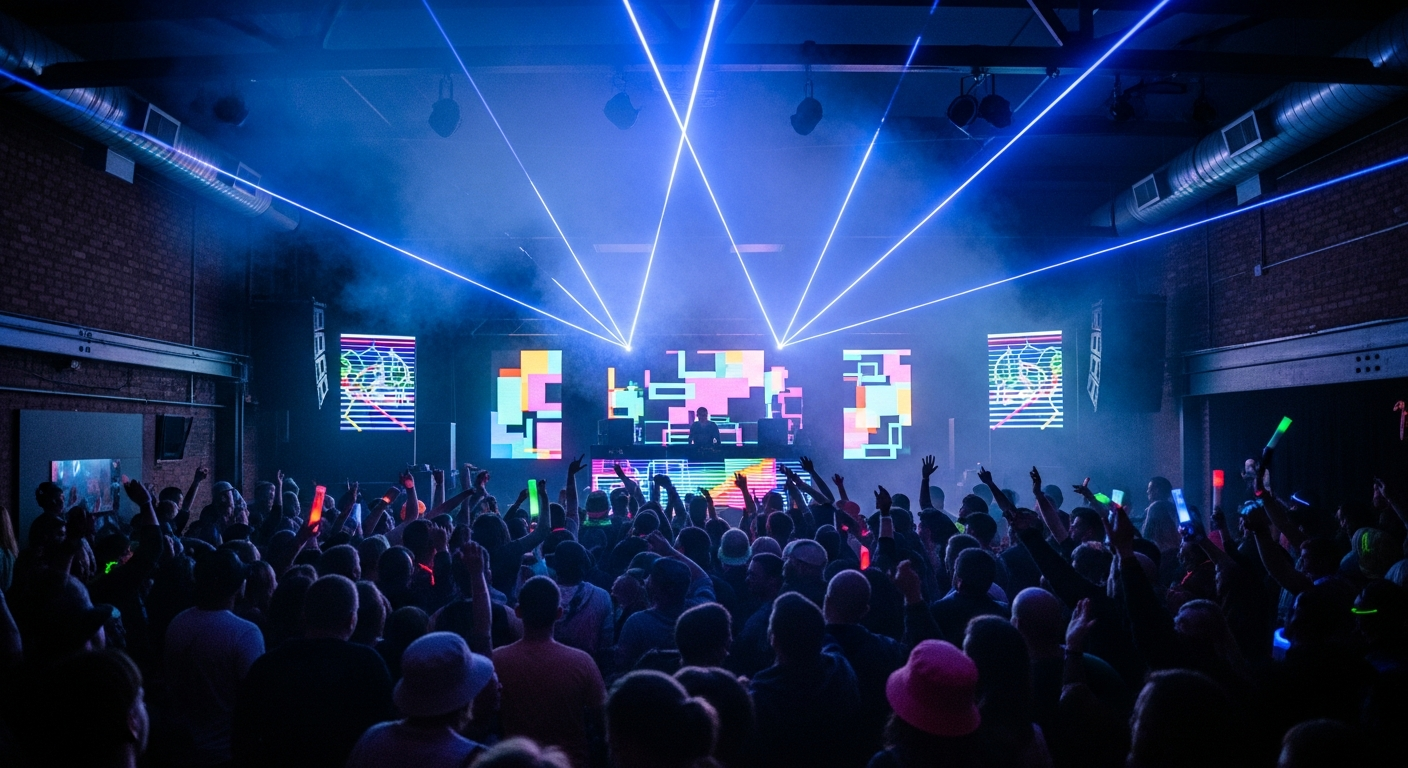
  • Crystal Method at APEX Everett with Rabbit in the Moon

    Crystal Method at APEX Everett with Rabbit in the Moon


    Q: What is The Crystal Method known for?
    The Crystal Method is a GRAMMY-nominated American electronic music act — originally the duo of Ken Jordan and Scott Kirkland, formed in Las Vegas in 1993 — who pioneered big beat electronica in the United States. Their platinum-selling debut album Vegas (1997) is one of the best-selling electronic albums in American history. Scott Kirkland now carries the project solo. On June 13, 2026, The Crystal Method headlines Kings Hall at APEX Everett alongside Florida rave legends Rabbit in the Moon.

    Verdict: GO. A GRAMMY-nominated act who headlined EDC, Lollapalooza, and Ultra Miami paired with one of the most theatrical rave acts America ever produced — all in an 800-person room. This is the kind of bill that plays much bigger cities than Everett.

    The Crystal Method and Rabbit in the Moon are coming to Kings Hall at APEX Everett on Saturday, June 13, 2026. Show time is 9:00 PM. Tickets start at $64 through Live Nation and Ticketmaster. This is an 18-and-older event.

    If you’re an electronic music fan living anywhere in Snohomish County and you’ve been waiting for a show that doesn’t require a drive to Seattle or a trip to a festival — this is the one.

    The Crystal Method: 30 Years of American Electronic Music, Distilled to One Stage

    There’s a version of American popular culture in the late 1990s and early 2000s that doesn’t exist without The Crystal Method’s fingerprints on it. The music appeared in video games, in films, in car commercials, in television soundtracks for the better part of a decade. It was everywhere because it was good — a specific American take on big beat and electronica that felt more muscular than what was coming out of the UK at the same time.

    Ken Jordan and Scott Kirkland formed The Crystal Method in Las Vegas in 1993, cutting their teeth on the early Los Angeles rave circuit after relocating. Their debut album, Vegas, came out in August 1997. It sold more than one million copies in the United States and was certified platinum by the RIAA in 2007. For a genre that was still fighting for shelf space in American record stores, that number meant something.

    They were GRAMMY-nominated. They headlined EDC, Lollapalooza, and Ultra Miami. They played more than 1,300 shows over the course of their run together. The Tweekend album in 2001 and Legion of Boom in 2004 followed Vegas into the Billboard Top 50 — high-altitude performance for electronic albums in that era. Divided by Night and the records that followed kept the project active through the 2010s.

    In 2017, Ken Jordan retired from music. Scott Kirkland carried the name forward as a solo project, continuing to write and perform as The Crystal Method. His most recent release, The Trip Out, is the seventh studio album under the Crystal Method banner and his second solo outing — a record that sounds like someone who has been making this music for 30 years and still finds it interesting.

    When Kirkland takes the stage at Kings Hall in June, he brings all of that history with him. The set will pull from the full catalog. If you have any nostalgia for Busy Child or Keep Hope Alive or Trip Like I Do, those songs still hit in a live setting in ways that the recordings don’t fully prepare you for.

    Rabbit in the Moon: The Most Theatrical Rave Act America Ever Produced

    The Crystal Method is the headliner. Rabbit in the Moon is the reason to arrive early.

    Rabbit in the Moon formed in Tampa, Florida, in the fall of 1992 — producer T.Confucius, DJ Monk, and performance artist Bunny. Orlando in the early 1990s was the underground rave capital of the American Southeast, and Rabbit in the Moon was among the acts who built that scene from nothing. They were among the first artists to mix theatrical live performance — costumes, staging, physical presence — with rave music at a time when most electronic acts were simply standing behind CDJs.

    Their 1993 track “O.B.E.” (Out-of-Body Experience) became one of the foundational records of American progressive breaks. Muzik magazine named it the most sought-after record of the previous decade when they ranked it in 2003 — a decade after it came out. That’s the kind of cultural shelf life that requires something genuinely original at the source.

    Their style draws from psychedelic trance, house music, and breakbeat, with a live presentation that prioritizes spectacle. A Rabbit in the Moon set isn’t background music for a room. It demands your attention. If you’ve never seen them, June 13 is an education.

    Kings Hall at APEX: The Right Room for This Bill

    This show happens in Kings Hall, the large-format concert room on the third floor of APEX Art and Culture Center at 1611 Everett Ave, Everett WA 98201.

    Kings Hall holds around 800 people. That’s the critical number here. The Crystal Method has played festival main stages and clubs that hold 5,000. Rabbit in the Moon has played massive warehouse events. When either of these acts plays a room this size, the energy concentrates. The show you get in an 800-person room is categorically different from what happens on a festival bill at scale — closer, louder from your position, more immediate.

    APEX has been booking at this level consistently: Antwane Tyler, Fretland, and Racyne Parker in May, The Crystal Method in June, Los Lobos and Los Lonely Boys in August. The booking calendar suggests the venue is staking a claim as a regional anchor for acts that don’t have a natural home between small clubs and arena shows. This is exactly the kind of venue Everett’s cultural calendar has needed.

    The venue is 18+ for this show. Tickets start at $64 through Live Nation (livenation.com) and Ticketmaster.

    The verdict breakdown:

    • Act unique to this market? Yes. Neither The Crystal Method nor Rabbit in the Moon has a scheduled Pacific Northwest show outside Everett in this window. If you want to see this bill in 2026, this is your show.
    • Right room for the act? Yes. 800 seats focuses rather than dilutes what both these acts do live.
    • Ticket price fair-market or below? From $64 for a co-headlining bill at this level is below what comparable shows cost in Seattle or Portland.

    Three for three. GO.

    What to Know Before You Go

    Date: Saturday, June 13, 2026
    Show time: 9:00 PM
    Venue: Kings Hall at APEX Art and Culture Center, 1611 Everett Ave, 3rd Floor, Everett WA 98201
    Phone: (425) 374-8307
    Age restriction: 18 and older
    Tickets: From $64 at Live Nation and Ticketmaster

    While you’re planning June, Sorticulture runs June 5–7 at Hewitt Avenue and Colby — a free outdoor garden festival that turns downtown into a different city for a weekend. If you’re making early June a cultural month, the two events don’t compete; they layer. The Schack Art Center’s Contemporary Northwest Artists Exhibition opens May 28 and runs through August 22 — the gallery is worth hitting before or after the show.

    Frequently Asked Questions

    Is The Crystal Method still active?

    Yes. Scott Kirkland continues to produce and perform as The Crystal Method following Ken Jordan’s retirement from music in 2017. The project’s seventh studio album, The Trip Out, is Kirkland’s second solo outing under the banner.

    Who is Rabbit in the Moon?

    Rabbit in the Moon is a Florida-based electronic music act formed in Tampa in 1992, consisting of producer T.Confucius, DJ Monk, and performer Bunny. Their 1993 track “O.B.E.” was ranked by Muzik magazine in 2003 as the most sought-after record of the previous decade. They were among the first acts to combine theatrical stage performance with rave music in the United States.

    How old do you have to be for the Crystal Method show at APEX Everett?

    The June 13, 2026 show at Kings Hall is an 18-and-older event. Valid ID required at entry.

    How much are tickets for Crystal Method at APEX Everett?

    Tickets start at $64 and are available through Live Nation and Ticketmaster. Prices may increase as the June 13 date approaches.

    Where is Kings Hall at APEX Everett?

    Kings Hall is on the third floor of APEX Art and Culture Center, located at 1611 Everett Ave, Everett WA 98201. The venue holds approximately 800 people and is APEX’s flagship mid-size concert room.
  • Washington Wolfpack vs Albany Firebirds: May 2 Game Info

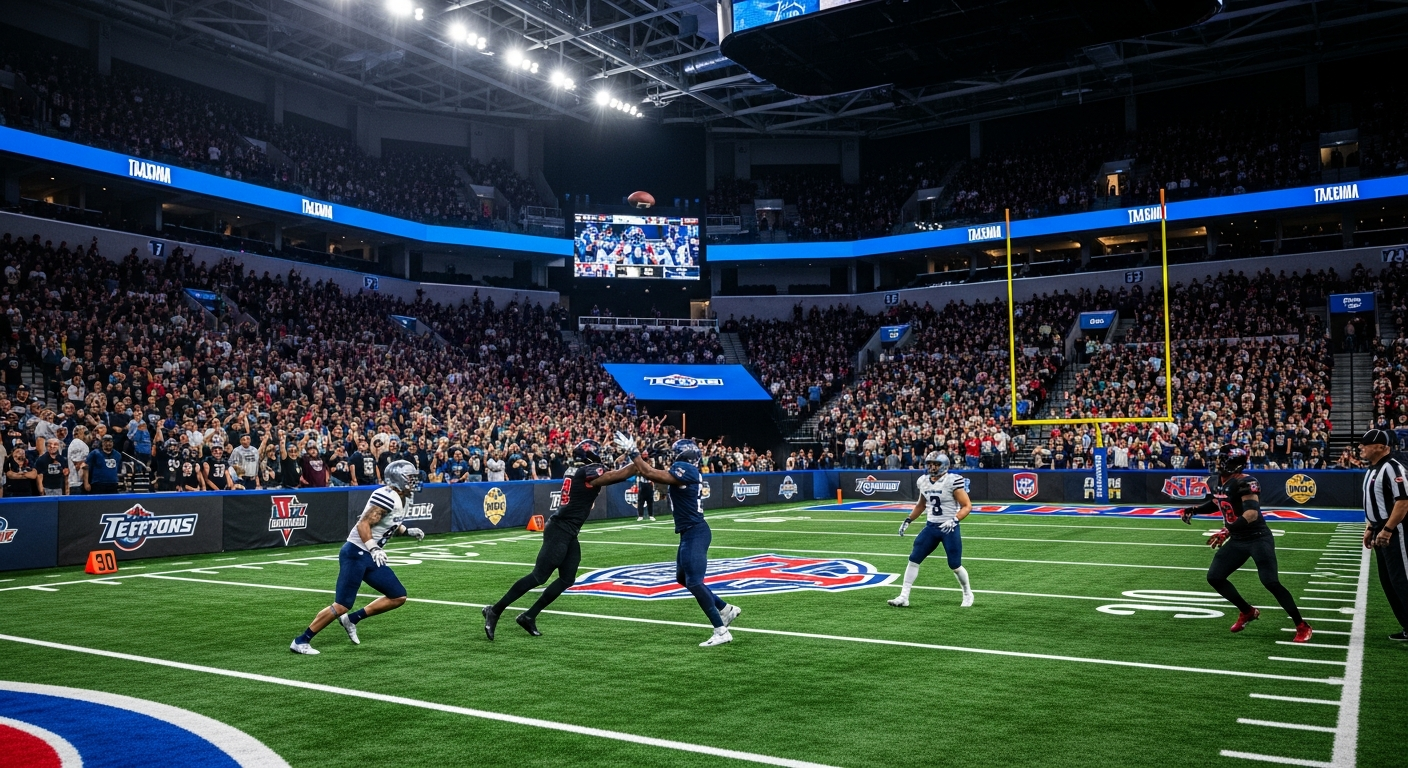
    Washington Wolfpack vs Albany Firebirds: May 2 Game Info

    When do the Washington Wolfpack play next at Angel of the Winds Arena? The Washington Wolfpack host the Albany Firebirds on Saturday, May 2 at 3:00 PM PT at Angel of the Winds Arena in Everett. It’s Teacher’s Night with a drawstring bag giveaway. The game airs on VICE TV nationally and Fox 13+ locally.

    The Washington Wolfpack’s home season kicks into gear on Saturday, and the opponent couldn’t be more significant.

    After a rough Week 3 road opener — a 48-3 loss to the Nashville Kats that the Wolfpack would like to forget — Everett’s indoor football team returns to Angel of the Winds Arena on Saturday, May 2 at 3:00 PM PT to face the Albany Firebirds, the defending Arena Crown champions. It’s Teacher’s Night, there’s a drawstring bag giveaway for the first fans through the door, and the game airs on VICE TV and Fox 13+.

    Who Are the Albany Firebirds?

    Let this sink in: in 2025, the Albany Firebirds went 10-0 in the regular season. Undefeated. Then they beat the Nashville Kats 60-57 in the Arena Crown championship.

    They are, in every sense, the defending champions — and they are very good. Coming into 2026, Albany enters as the team everyone is chasing. A perfect regular-season record plus a championship means they carry a target on their back, but they’ve earned every bit of it. For the Wolfpack, hosting the Firebirds this early in the season is a chance to make a statement — or a measure of exactly where the roster stands after the Nashville result.

    The Wolfpack Need a Statement Right Now

    Let’s be direct: a 48-3 loss on the road in Nashville was a rough start to Arena Football One play. Nashville’s Kats had already shown they were one of the hotter early-season teams in the league, but getting held to three points against anyone is a tough look for a team building a fanbase in Everett.

    The good news about indoor football: it’s fast, it’s high-scoring, and one game of good execution changes the narrative entirely. A competitive showing — or better, a win — against the defending Arena Crown champions at AOTW would do exactly that.

    The Wolfpack home building is a different animal from a road trip to Nashville. Everett fans who fill Angel of the Winds Arena are loud, and indoor football’s compact atmosphere makes crowd noise a genuine factor. Saturday is the moment to flip the script.

    Teacher’s Night — Bring an Educator You Know

    It’s Teacher’s Night at AOTW on May 2. The Wolfpack are rolling out a drawstring bag giveaway — Applebee’s is the presenting sponsor for the promotional night — so arrive early if you want one. These giveaways go fast at Wolfpack home games.

    If you’ve never brought a teacher, coach, or educator friend to an AF1 game, this is the Saturday to do it. Indoor football at AOTW moves at a pace that hooks first-timers: constant action, walls in play, scoring drives that take 30 seconds. A Saturday afternoon 3:00 PM kickoff with a giveaway and defending champions on the field is about as good an introduction as you’ll find.

    Watch on VICE TV or Fox 13+

    Can’t make it in person? The game airs nationally on VICE TV and locally on Fox 13+ in the Seattle-Everett market. Arena Football One’s partnership with VICE has been one of the surprises of the league’s broadcast strategy — it reaches a young, sports-curious audience that’s perfect for AF1’s brand of football. Fox 13+ keeps local fans covered.

    Kickoff is at 3:00 PM PT on Saturday. Set a reminder.

    Getting to Angel of the Winds Arena

    Angel of the Winds Arena is at 2000 Hewitt Avenue in downtown Everett — on the main transit corridor, a short walk from Everett Station. Downtown parking garages are available nearby. Tickets are at ticketmaster.com or the AOTW box office. Group tickets and fundraising packages are available through the Wolfpack’s website at washingtonwolfpack.com.

    The Bigger Picture for Indoor Football in Everett

    The Washington Wolfpack are building something in a market that loves sports and has been underserved in the spring and early-summer sports calendar. While the AquaSox are on the road at Tri-City and the Silvertips are in their pre-Championship Final waiting period, the Wolfpack are holding down the arena on Saturday afternoon.

    This spring in Everett sports has been unusually stacked — Silvertips heading to the WHL Championship Final, AquaSox in a competitive Northwest League season, and now a Wolfpack team that has a chance to make a real statement against one of the best teams in AF1.

    Saturday is one of those afternoons worth clearing your schedule for. 3:00 PM. Angel of the Winds Arena. Teacher’s Night. Defending champions.

    Frequently Asked Questions

    What time do the Washington Wolfpack play on May 2?

    Kickoff is at 3:00 PM PT on Saturday, May 2 at Angel of the Winds Arena, 2000 Hewitt Avenue, Everett.

    What is Teacher’s Night at the Wolfpack game?

    Teacher’s Night on May 2 is presented by Applebee’s (“A is for Applebee’s”) and features a drawstring bag giveaway for fans attending the Washington Wolfpack vs. Albany Firebirds game at Angel of the Winds Arena.

    Who are the Albany Firebirds?

    The Albany Firebirds are the defending Arena Crown champions. They went 10-0 in the 2025 regular season before beating the Nashville Kats 60-57 for the championship.

    How can I watch the Wolfpack vs. Albany game?

    The May 2 game airs on VICE TV nationally and Fox 13+ locally in the Seattle-Everett market. Kickoff is 3:00 PM PT.

    What is the Wolfpack’s 2026 record?

    The Washington Wolfpack are 0-1 in 2026 after a 48-3 road loss to the Nashville Kats in Week 3.

    Sources: Washington Wolfpack official website (washingtonwolfpack.com), OurSports Central, Arena Football One / VICE TV broadcast partnership announcement, Fox 13 Seattle, Ticketmaster.

  • FF(X) Frigate Contract: Naval Station Everett Homeport Bid

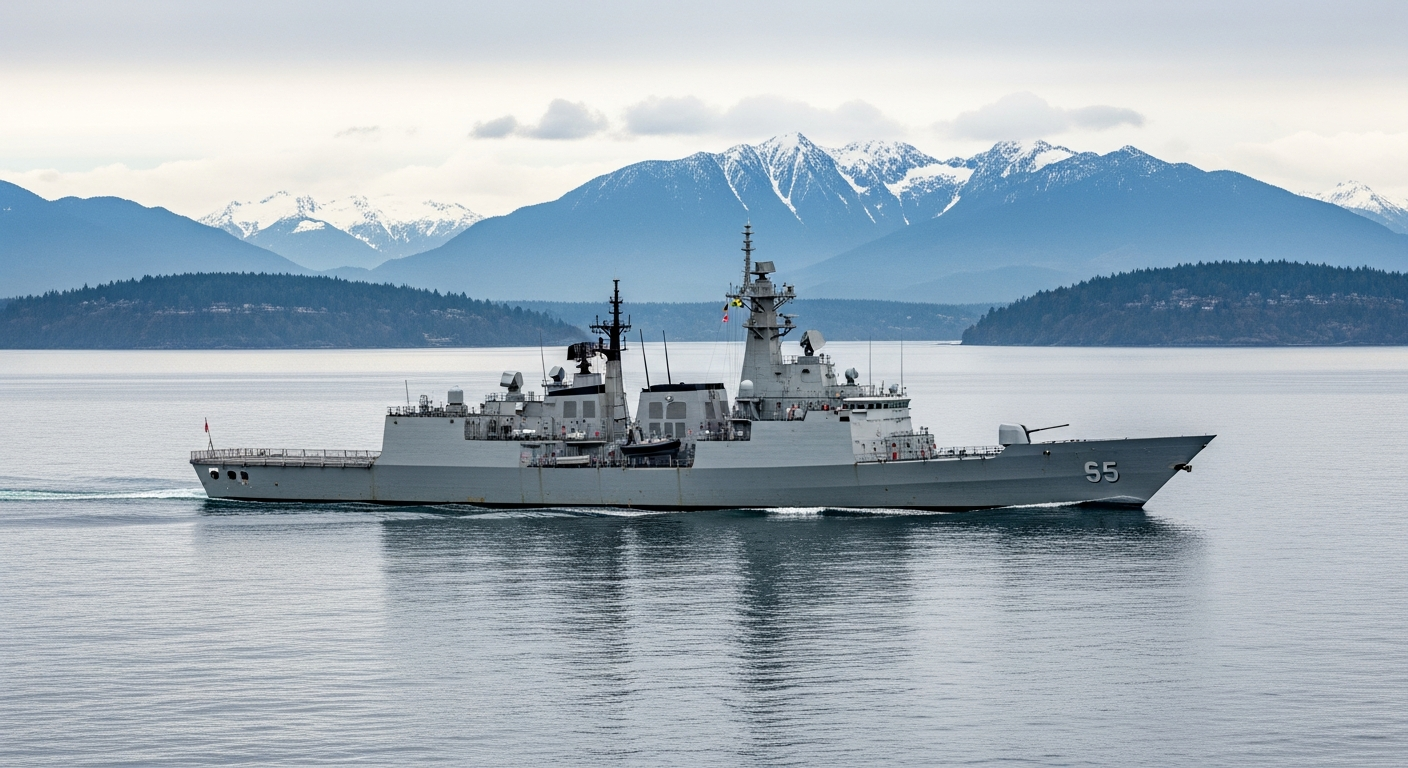
    FF(X) Frigate Contract: Naval Station Everett Homeport Bid

    Q: Has the Navy awarded a contract for the new FF(X) frigate?
    A: Yes. On April 28, 2026, the U.S. Navy awarded a $282.9 million contract to HII’s Ingalls Shipbuilding in Pascagoula, Mississippi, to begin lead yard support work on the FF(X) class frigate — the Navy’s new small surface combatant meant to replace the cancelled Constellation-class program. The first $80.6 million covers pre-construction activities including securing materials, refining designs, and beginning to cut and shape raw structural steel.

    Steel Is About to Get Cut. Here’s What That Means for Everett.

    For the past five months, the FF(X) frigate program has existed primarily as an announcement, a design concept, and a lobbying opportunity. As of April 28, 2026, it exists as a contract.

    The U.S. Navy awarded HII’s Ingalls Shipbuilding a $282.9 million lead yard support contract, according to simultaneous announcements from the Pentagon and Huntington Ingalls Industries. The award authorizes Ingalls to begin pre-construction work on the first ship of the new FF(X) class — and the first $80.6 million activates immediately, giving Ingalls the green light to start cutting and shaping raw steel for the main structural foundation of the frigate.

    That is a different kind of news than what has surrounded the FF(X) program since December. Announcements get made. Designs get chosen. Committees hold meetings. Contracts start programs. And for Naval Station Everett — which has been fighting to be named as the homeport for the incoming frigate fleet — the clock just started in a way it hadn’t before.

    What the $282.9M Contract Actually Covers

    Under the terms of the contract, Ingalls will perform what the Pentagon terms “lead yard support activities” — the pre-construction phase work that front-loads as much design refinement and material preparation as possible before formal construction begins.

    Specifically, Ingalls is authorized to begin cutting and shaping raw materials to support future phases of work on the main structure foundation and the overall construction sequencing plan for the first frigate, according to the company. The contract also covers securing key materials and finalizing design details ahead of full construction authorization.

    “We are excited to partner with the Navy to bring these preproduction steps under contract to accelerate delivery of the frigates that our warfighters need,” Brian Blanchette, president of Ingalls Shipbuilding, said in the company’s April 28 announcement.

    Of the initial $80.6 million tranche, 73% — roughly $58.8 million — comes from the Navy’s fiscal year 2026 shipbuilding and conversion appropriations. The remaining 27%, about $21.8 million, is funded through Navy research and development accounts. The Pentagon’s contract announcement cited “unusual and compelling urgency” as the justification for awarding the contract without competitive bids.

    The Golden Fleet Context: FF(X) Is Part of a Bigger Picture

    The FF(X) contract is part of President Trump’s “Golden Fleet” initiative, a broader shipbuilding push that also includes development work on the BBG(X) — a new, much larger surface combatant class informally referred to as the Trump-class battleship. Together, the FF(X) and BBG(X) represent the Navy’s attempt to recapitalize its surface force on two ends of the size and firepower spectrum.

    The fiscal year 2026 budget request, according to an April 21 Navy news release, includes $65.8 billion to buy 18 warships and 16 auxiliary ships, including three submarines, a destroyer, an amphibious assault ship, and the first FF(X) frigate. Design and development funding for the BBG(X) is included as well.

    The FF(X) program was formally announced in December 2025 by then-Secretary of the Navy John Phelan, who chose the Coast Guard’s Legend-class National Security Cutter as the design framework to accelerate development timelines and reduce costs compared to building a purpose-designed warship from scratch. Ingalls, which builds the Legend-class cutters, was the natural choice as lead yard.

    Phelan, who made the call to cancel the Constellation program and launch FF(X), was ousted from his position last week — but the program he set in motion is now under contract and generating steel work in Pascagoula.

    The Urgency Matters for Everett

    The “unusual and compelling urgency” language in the Pentagon’s contract announcement isn’t routine bureaucratic boilerplate. It’s a formal legal justification for bypassing the standard competitive bidding process — a step the DoD takes when waiting for competition would harm national security or mission-critical timelines.

    In plain terms: the Navy wants frigates faster than a normal acquisition timeline would allow, and it’s willing to use procedural shortcuts to get there. The target for the first FF(X) delivery remains 2028.

    For Naval Station Everett, urgency is a double-edged signal. On one hand, an accelerated build timeline is good news for the community’s homeport ambitions — if ships are coming off the line sooner, the homeport decision has to be made sooner. On the other hand, accelerated programs sometimes lock in decisions early to avoid further delays, which means Snohomish County’s window to make its case may be shorter than it appears.

    The original Constellation-class program had designated Naval Station Everett as the homeport for up to 12 frigates. That designation evaporated with the November 2025 cancellation. The FF(X) program has not made a homeport announcement, and the Snohomish County Military Affairs Committee — which reconvened on February 23, 2026, specifically to advocate for Everett’s position — is still in active engagement with the congressional delegation and Navy leadership.

    Representative Rick Larsen (WA-02), who serves on the House Armed Services Committee, has been the primary congressional voice for preserving NAVSTA Everett’s role in the frigate program. Larsen’s position on HASC gives him a direct line into budget and procurement decisions that will ultimately determine where these ships are homeported.

    What the $340M Economic Argument Looks Like Now

    Snohomish County’s economic case for homeporting the FF(X) fleet at Naval Station Everett has been framed around a roughly $340 million annual economic impact figure — the combined value of ship crews, support staff, contractor spending, and multiplier effects that each additional frigate homeport assignment generates for the local economy. That case was built for a 12-frigate assignment; the size of the FF(X) fleet and its homeport allocation haven’t been determined.

    But the contract award sharpens the argument’s urgency. When the FF(X) was a program under consideration, Everett could advocate based on capacity, infrastructure, and existing relationships. Now that Ingalls is cutting steel, the program has a real timeline — and homeporting decisions for new surface combatants typically follow construction milestones, not precede them by years.

    Naval Station Everett’s existing assets — deepwater berths capable of handling multiple destroyers and a carrier, established surface warfare maintenance facilities, a strong Fleet & Family Support infrastructure, and an existing destroyer squadron presence — remain the core of its competitive position. For Navy families already stationed at NAVSTA Everett, the practical question of whether a frigate rotation is coming affects PCS planning, school enrollment decisions, and community investment for the next five to seven years.

    What to Watch Next

    Three forward indicators will determine how this story develops for Everett:

    The FF(X) homeport announcement. No timeline has been given. But as Ingalls moves from lead yard support into formal construction phases, the Navy’s Surface Forces Pacific and Forces Atlantic commands will need to plan basing, maintenance, and operational schedules. A homeport announcement could come as early as late 2026 or as late as the 2027-2028 delivery window approaches.

    FY2027 appropriations. The FF(X) is funded in FY2026 as a single-ship start. How many hulls Congress authorizes in FY2027 — and how the funding is structured — will determine how quickly the fleet scales up and whether the economic case for a dedicated Pacific homeport strengthens or softens.

    The fate of FFG-62 and FFG-63. The first two Constellation-class ships, the USS Constellation and USS Congress, are still being completed at Fincantieri Marinette. Their homeport assignments — wherever they land — may signal the Navy’s thinking about Pacific frigate basing before the FF(X) homeport decision is formally made.

    For now, the $282.9 million contract is what Everett’s advocates needed to see: confirmation that the program is real, funded, and moving. The complete guide to where the FF(X) program stands — and what NAVSTA Everett has to do to win the homeport — remains the framework for following this story. The contract award adds a new chapter, but the outcome is still unwritten.

    Frequently Asked Questions

    What did the Navy just award to Ingalls Shipbuilding?

    The Navy awarded a $282.9 million contract to HII’s Ingalls Shipbuilding on April 28, 2026, for lead yard support work on the FF(X) class frigate program. The initial $80.6 million tranche authorizes pre-construction activities including cutting and shaping raw structural steel, securing key materials, and refining the design ahead of formal ship construction.

    What is the FF(X) frigate program?

    The FF(X) is the U.S. Navy’s new small surface combatant program, announced in December 2025 to replace the cancelled Constellation-class (FFG-62) frigate program. It uses the Coast Guard’s Legend-class National Security Cutter as a design framework and is being built by HII’s Ingalls Shipbuilding yard in Pascagoula, Mississippi. The Navy aims to deliver the first ship by 2028.

    Is Naval Station Everett going to be the homeport for the FF(X) frigates?

    No homeport decision has been announced for the FF(X) program. Naval Station Everett had been designated as the homeport for the cancelled Constellation-class frigates. Snohomish County’s Military Affairs Committee has been actively lobbying for Everett to receive the FF(X) homeport designation, but as of April 2026 no announcement has been made.

    Why did the Navy skip competitive bidding for this contract?

    The Pentagon cited “unusual and compelling urgency” as the justification for awarding the contract without a competitive bidding process. This standard is applied when waiting for competition would harm national security or cause unacceptable delays in mission-critical programs. The Navy’s target delivery date of 2028 for the first FF(X) is the primary driver of that urgency posture.

    What is the “Golden Fleet” and how does FF(X) fit into it?

    The Golden Fleet is President Trump’s shipbuilding initiative to rapidly expand the U.S. Navy’s surface fleet. The FF(X) (a new small combatant frigate) and the BBG(X) (a new large combatant sometimes called the Trump-class battleship) are the two new ship classes at the center of the initiative, representing opposite ends of the size and firepower spectrum.

    What Navy ships are currently homeported at Naval Station Everett?

    As of 2026, Naval Station Everett is homeport to several surface combatants including USS Gridley (DDG-101), which is currently deployed as part of the USS Nimitz’s Southern Seas 2026 cruise. NAVSTA Everett has deepwater pier infrastructure capable of handling destroyers and carrier-class vessels, making it one of the Navy’s most capable Pacific homeports.

    When will we know where FF(X) frigates will be homeported?

    No timeline has been given for a homeport announcement. Such decisions typically follow construction milestones and fleet planning cycles. Given the 2028 delivery target for the first FF(X), a homeport decision could come as early as late 2026 or as late as 2027 as the delivery window approaches.

    How can Everett residents stay informed about the FF(X) program?

    The best sources for official FF(X) program updates are USNI News (news.usni.org), Stars and Stripes (stripes.com), and Navy.mil press releases. For Everett-specific advocacy, the Snohomish County Military Affairs Committee and Rep. Rick Larsen’s congressional office (larsen.house.gov) are the primary local points of contact.

  • Dumpling World Everett Review: Handmade Xiaolongbao

    Dumpling World Everett Review: Handmade Xiaolongbao

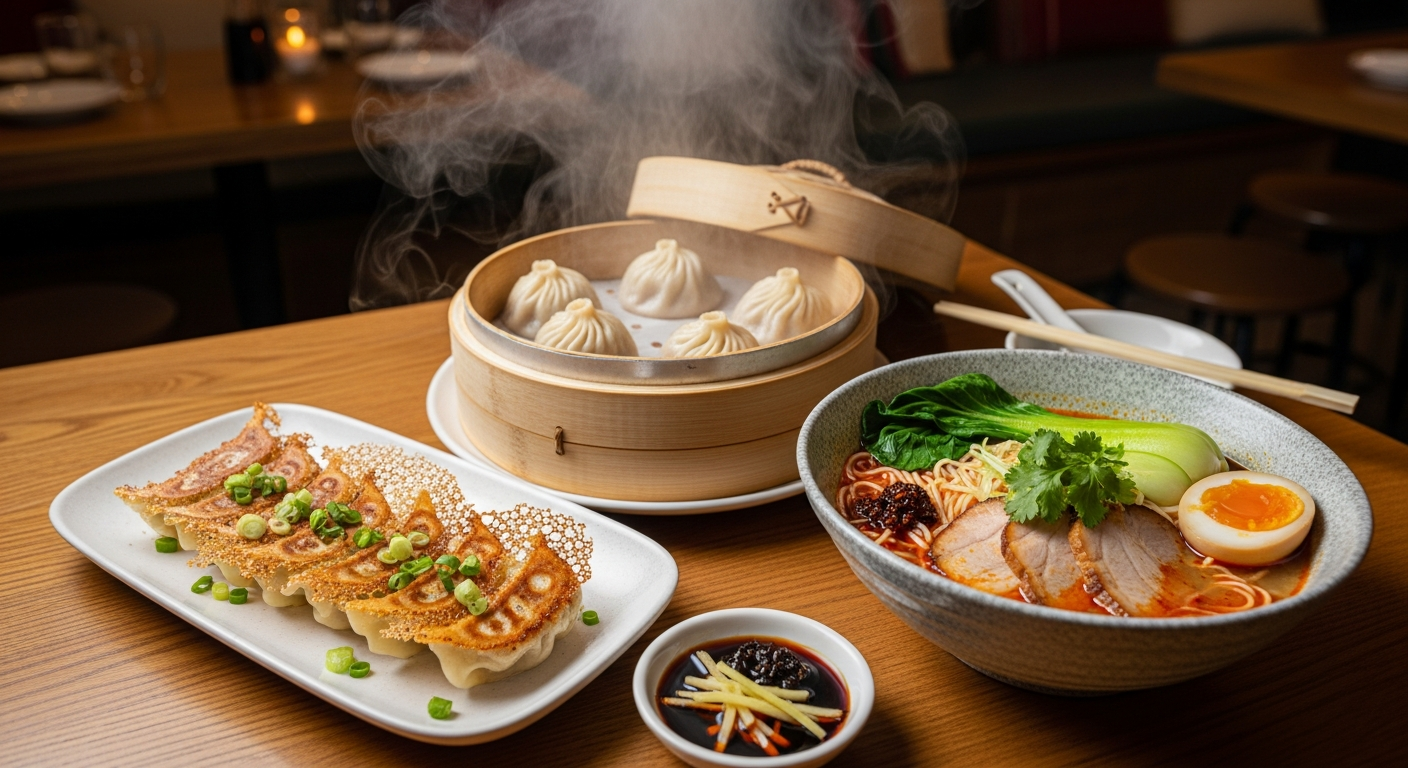
    Dumpling World at 620 SE Everett Mall Way is doing something most restaurant concepts in the area don’t bother with: making dumplings by hand, fresh, to order. Not frozen. Not pre-made and held. Fresh. That distinction matters if you’ve had real xiaolongbao — the soup dumpling — and know the difference. If you haven’t, Dumpling World is a good first lesson.

    We’ve covered the south Everett food landscape from multiple angles — the Beverly Food Truck Park on Beverly Boulevard, the international corridor along Casino Road, the Port of Everett waterfront restaurants. Dumpling World sits in the Everett Mall Way corridor, which is its own food zone with a growing concentration of Asian cuisine. Here’s the full picture on what Dumpling World is and why it’s worth finding.

    The Dumplings

    The restaurant specializes in handmade dumplings using premium ingredients, made from traditional recipes. The xiaolongbao — xiao long bao — is the flagship. For anyone unfamiliar: XLB is a delicate Chinese soup dumpling, typically filled with seasoned pork and a gelatinized broth that melts into liquid when steamed. You pick it up carefully, bite a small hole in the skin, sip the broth, then eat the rest. Get the technique wrong and it ends up on your shirt. Get it right and you understand why people drive an hour to get them.

    Dumpling World’s version has drawn reviewers from Seattle willing to make the drive specifically for a second visit — which, in the competitive XLB landscape of the greater Puget Sound, means something. The skin-to-filling ratio, the broth volume, the seasoning — these are details that are easy to get wrong and apparently Dumpling World gets right.

    Beyond the XLB, the pan-fried dumplings are the other must-order. Pan-fried dumplings (also called potstickers or guotie) develop a crispy, lacy bottom from the steam-fry method that good restaurants use and bad ones skip. Ask for these. The Shrimp & Pork & Chive Dumplings — boiled — round out the dumpling options. Yes, the prices are higher than what you’d pay at a dim sum hall. You’re paying for the handmade production and smaller-batch execution.

    Beyond the Dumplings

    The Spicy Braised Beef Noodle Soup is the non-dumpling anchor of the menu and consistently shows up in reviews as a standout. Braised beef noodle soup is a Taiwanese and northern Chinese staple — long-cooked beef brisket or shank in a spiced, soy-based broth with hand-pulled or knife-cut noodles. It’s a hearty bowl that makes you understand why noodle soups became the comfort food of an entire continent. Dumpling World’s version uses beef broth that reviewers call deep and complex. Order it alongside a plate of dumplings and you have a full meal.

    The menu also includes fried rice and additional noodle preparations. The dumplings are the reason to go, but the noodle soup is the reason to go back on a cold evening.

    The Details

    Address: 620 SE Everett Mall Way, Suite 400, Everett, WA 98208
    Phone: (206) 202-3626
    Hours: Monday: Closed | Tuesday–Friday: 11:00 AM–2:30 PM, 4:00 PM–8:30 PM | Saturday–Sunday: 11:00 AM–8:30 PM
    Price range: $15–$25 per person (note: priced above typical dim hall, reflects handmade production)
    Parking: Everett Mall Way lot — free and plentiful
    Delivery: Available via DoorDash, Uber Eats, and Postmates
    Note: Closed Mondays. The lunch break (2:30–4:00 PM Tue–Fri) is real — don’t show up at 3 PM expecting to eat.

    Why It’s Worth Making the Trip

    Handmade-to-order dumplings are not common in Snohomish County. Most dumpling operations in the greater Seattle area either source frozen, pre-made, or produce in bulk and hold. The “made fresh to order” designation is something restaurants claim casually and deliver on rarely. Dumpling World, based on the reviews and the draw it creates for people driving from Seattle specifically for a repeat visit, appears to actually be doing what it says.

    The south Everett food corridor has been building quietly. The dim sum at Fisherman Jack’s on the waterfront, the international diversity of Casino Road and Evergreen Way, and now a proper handmade dumpling operation on Everett Mall Way. The story of Everett’s food scene is the story of a city catching up to what its community has quietly built. Dumpling World is another data point.

    The Bottom Line

    Order the xiaolongbao. Order the pan-fried dumplings. Get the spicy braised beef noodle soup if you have room. Go on a weekend when the full service hours run 11 AM to 8:30 PM without a break. Don’t go on Monday. Expect to spend a little more than a typical dim hall — you’re paying for fresh production and it shows.

    Dumpling World is doing something specific and doing it well. In Everett, in 2026, that’s worth knowing about.

    Frequently Asked Questions

    Where is Dumpling World in Everett?

    620 SE Everett Mall Way, Suite 400, Everett, WA 98208 — in the Everett Mall Way commercial corridor in south/east Everett.

    What are Dumpling World Everett’s hours?

    Closed Mondays. Tuesday–Friday: 11 AM–2:30 PM and 4 PM–8:30 PM. Saturday–Sunday: 11 AM–8:30 PM.

    Are the dumplings at Dumpling World really handmade?

    Yes — the restaurant makes dumplings fresh to order from scratch, which distinguishes it from most dumpling operations in the area that use pre-made or frozen product.

    What should I order at Dumpling World Everett?

    The xiaolongbao (soup dumplings), pan-fried dumplings, and the spicy braised beef noodle soup are the top picks.

    Is Dumpling World expensive?

    Priced higher than a typical dim hall — expect $15–$25 per person. The premium reflects handmade production from fresh ingredients.

  • Katana Sushi Everett: Hewitt Ave’s Best Sushi Bar Review

    Katana Sushi Everett: Hewitt Ave’s Best Sushi Bar Review

    Katana Sushi has been doing creative rolls on Hewitt Avenue for years, and if you haven’t been, you’ve probably walked past it and wondered whether the sushi in Everett could actually be worth ordering. It can. Katana is the answer. The fish is fresh, the rolls are inventive without being gimmicky, and at under $30 a person, it punches well above what you’d expect from a neighborhood sushi bar in a mid-sized Northwest city.

    We’ve covered the Hewitt Avenue food corridor extensively — the Obsidian Beer Hall at the Toggles space, Vintage Cafe’s 50-year run, The New Mexicans with their Hatch green chile, Heritage African Restaurant, Luca Italian. Katana belongs in that conversation. It’s been operating at 2818 Hewitt Ave for years without needing the press, but here’s the full picture.

    The Food

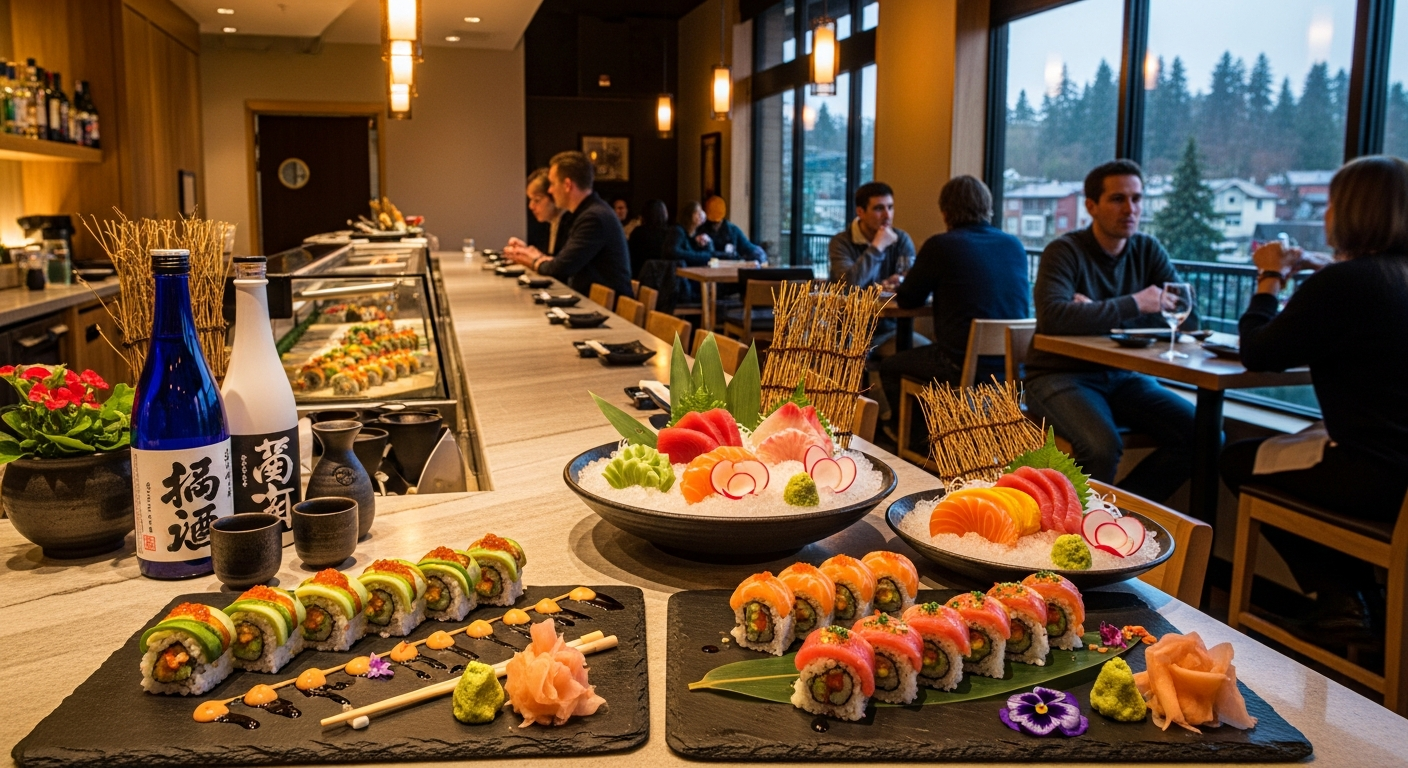
    The sushi at Katana is legitimately good — not “good for Everett” good, just good. The fish quality holds up. Multiple reviewers with enough sushi experience to have opinions single out the freshness of the tuna and salmon specifically. The Heart Attack roll and the Mt. Fuji roll come up repeatedly as house favorites — both are creative, both deliver on what they promise. These aren’t rolls buried under mayo and sriracha to hide mediocre fish. The fish is the point, and it earns it.

    The crispy firecracker is the appetizer to order. Reviewers consistently call it absolutely crunchy — which in sushi bar language means they actually fry it properly, rather than letting it go soggy while it waits to be served. Get it as a starter.

    Beyond the signature rolls, the sake selection is solid enough that the restaurant bills itself as a Sushi & Sake House and means it. If you’re into sake, ask what’s on at the bar — they rotate it and the staff knows the list. Cocktails round out the drink menu for people who don’t want to commit to sake but want something better than a house beer.

    The Happy Hour

    Katana runs a signature happy hour and it’s the best deal on Hewitt Avenue right now. We don’t have the specific dollar figures from this run (their happy hour menu rotates and we won’t publish numbers we can’t verify to the current menu), but the happy hour has consistently drawn reviews calling it excellent value. Go on a weeknight, go early, and ask what’s on the happy hour menu. It’s worth building a plan around.

    The Atmosphere

    Katana runs a relaxed room. Light music, comfortable seating, the kind of place where a date or a work dinner both work equally well. It’s not trying to be a loud scene bar. The 4.9-star OpenTable rating (from 119 diners as of spring 2026) reflects the consistency — when a restaurant holds that score across that many covers, the kitchen is reliable and the front of house is doing their job.

    Service notes in the reviews are mostly excellent, with the standard caveat that busy Friday nights can stretch wait times. Reservations are available on OpenTable and worth making if you’re planning dinner on a weekend — Hewitt Ave has gotten noticeably busier as the corridor has filled out.

    The Details

    Address: 2818 Hewitt Ave, Everett, WA 98201
    Hours: Monday–Thursday 11:30 AM–9:00 PM | Friday 11:30 AM–10:00 PM | Saturday 5:00 PM–10:00 PM | Sunday: Closed
    Reservations: Available via OpenTable — recommended on weekends
    Price range: $30 and under per person
    Parking: Street parking on Hewitt; also paid lots in the downtown corridor
    Website: katanasushieverett.com

    What to Know Before You Go

    Katana is closed Sundays. If you’re planning a Sunday sushi dinner, this is the detail that will save you a wasted trip. Monday through Thursday is the sweet spot for a calm experience — Friday night is the scene night, Saturday dinner-only hours (5 PM) means the kitchen starts fresh for the evening rush.

    The Hewitt Ave location puts Katana in the middle of everything downtown Everett has going on. Parking on a Friday can be competitive as more of the corridor has activated — STRGZR Coffee & Kitchen draws the morning crowd, Obsidian Beer Hall picks up later, and Katana fills in the dinner-to-late-evening window. Plan accordingly.

    The Bottom Line

    Katana Sushi is the sushi answer in Everett. The fish is fresh, the rolls are creative without being ridiculous, the happy hour is legitimately good, and 4.9 stars across hundreds of covers doesn’t lie. Make a reservation for a Friday night or go Monday for a quick weeknight dinner. Order the Heart Attack roll, get the crispy firecracker, ask about the sake list. This is the one.

    Frequently Asked Questions

    Where is Katana Sushi in Everett?

    2818 Hewitt Ave, Everett, WA 98201 — on Hewitt Avenue in downtown Everett.

    What are Katana Sushi’s hours?

    Monday–Thursday 11:30 AM–9:00 PM, Friday 11:30 AM–10:00 PM, Saturday 5:00 PM–10:00 PM. Closed Sundays.

    Does Katana Sushi take reservations?

    Yes — via OpenTable. Recommended for Friday and Saturday evenings.

    What should I order at Katana Sushi Everett?

    The Heart Attack roll, the Mt. Fuji roll, and the crispy firecracker appetizer. Ask about the happy hour specials and the sake list.

    How much does dinner cost at Katana Sushi?

    $30 and under per person for a full dinner. Happy hour brings the per-person cost down further.

  • Enseamada Cafe Everett: Filipino-Hawaiian Fusion Guide

    Enseamada Cafe Everett: Filipino-Hawaiian Fusion Guide

    If you’ve spent any time on the south Everett–Evergreen Way corridor and wondered where the Filipino community eats, the answer has been hiding in plain sight at 11114 Evergreen Way for years: Enseamada Cafe. It’s Filipino-Hawaiian fusion done right, priced honestly, and run with the kind of hospitality that makes you want to tell everyone you know and also maybe never tell anyone so you can always get a table.

    We’ve done a lot of reporting on Everett’s Casino Road international food corridor — the birria at Birrieria Tijuana, the working tortilleria at Casa El Dorado, the pho at Pho To Liem. But Enseamada has been operating on parallel track along Evergreen Way — technically not on Casino Road itself, but firmly in the same south Everett immigrant community that makes this corridor worth writing about. Zip code 98204. Same neighborhood. Same energy. If you haven’t been, here’s everything you need to know.

    What It Is

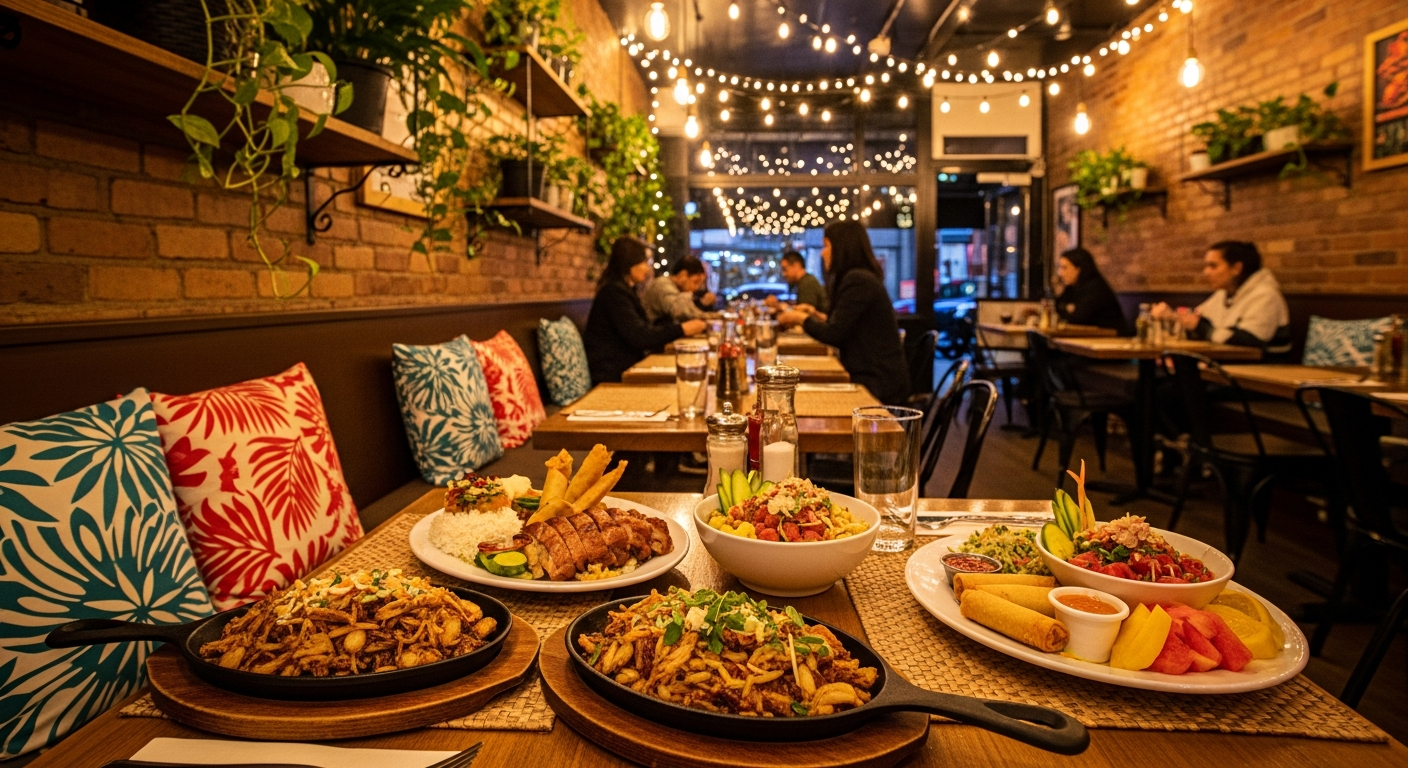
    Enseamada Cafe is a Filipino-Hawaiian fusion restaurant. That’s a pairing that sounds unusual if you haven’t encountered it, but it makes a kind of geographic and cultural logic — a significant portion of Hawaii’s population traces Filipino roots, and the cuisines share a love of pork, rice, vinegar, and big flavors. At Enseamada, you get sisig alongside garlic shrimp, lechon alongside mac salad, and ube desserts that belong in both traditions. It’s the Venn diagram that makes sense once you’re eating it.

    The restaurant is cozy — warm decor, soothing background music, the kind of place that feels like someone’s house if someone’s house had a commercial kitchen. It gets crowded at peak hours because word travels in the community, so go a little early or a little late if you want a calm sit-down experience.

    What to Order

    The sizzling sisig bowl is the move if you’ve never had sisig before and want a proper introduction. Sisig is a Filipino dish made from chopped pork parts (typically face and ears) cooked until crispy, then tossed with calamansi, chilies, and egg, and served sizzling on a cast-iron plate. Enseamada’s version delivers on all of it — properly crispy edges, the right acid balance, enough heat to notice. Order it with rice. Always with rice.

    The 808 mixplate is the crowd favorite and probably the best value on the menu. You get a beef rib, butterflied fried shrimp, lumpia, and mac salad. It’s a full meal that covers multiple traditions on one plate — Filipino lumpia, Hawaiian mac salad, and a beef rib that would fit at a Pacific Island cookout. The portions are legitimately generous. This is not a place where you leave hungry.

    Lumpia — the Filipino egg roll — shows up as a side and in platters. Get it. Crispy, well-seasoned, better than most lumpia you’ve had at a restaurant that isn’t Filipino-run. The lechon side is roasted pork done the Filipino way: crackling skin, tender interior, rendered fat that makes everything around it better. Order a side of it regardless of what else you’re getting.

    On the dessert end, the Ube Oreo Halo Halo is the thing to get if you have any room left. Halo halo is the Filipino shaved-ice dessert — layers of crushed ice, sweet beans, jellies, and in this version, ube (purple yam) ice cream and crushed Oreos. It’s chaotic and cold and genuinely fun to eat. Ube has become trendy in the last five years, but this version predates the trend and earns it.

    The Details

    Address: 11114 Evergreen Way, Suite A, Everett, WA 98204
    Phone: (206) 519-4996
    Hours: Monday–Friday 11:00 AM–7:30 PM | Saturday 9:00 AM–7:30 PM | Sunday 9:00 AM–4:00 PM
    Price range: $10–$18 per person for a solid meal
    Parking: Strip-mall lot off Evergreen Way — easy, free, plentiful
    Ordering: Counter service; order at the front and they’ll bring it to your table
    Delivery: Available via DoorDash

    Why It Matters for Everett’s Food Scene

    The south Everett corridor — Casino Road, Evergreen Way, the surrounding 98204 and 98208 zip codes — is one of the most genuinely diverse food zones in Snohomish County. You’ve got Uzbek food trucks, Vietnamese pho houses, Mexican tortillerias, West African kitchens, and now Filipino-Hawaiian fusion. This is a corridor where Everett’s immigrant communities have quietly built a food scene that most of the city doesn’t know about yet.

    Enseamada fits that pattern. It’s not trying to be trendy. It’s not marketing itself as a “concept.” It’s a neighborhood restaurant for a specific community that happens to be good enough to pull people across town once word gets out. We’ve been eating along this corridor for months now — the Tasty Indian Bistro on Casino Road, the Beverly Food Truck Park on Beverly Boulevard — and Enseamada belongs in that conversation.

    With 345 Yelp reviews and a 4.6-star average as of April 2026, the locals have already figured it out. The question is whether the rest of Everett catches up.

    The Bottom Line

    Go for the 808 mixplate. Order the sisig. Get the ube halo halo if you can manage it. Come on a Saturday morning when they open at 9 AM and the lunch rush hasn’t arrived yet. Bring cash or a card — they take both. Tell your friends, or don’t, depending on how much you value a short wait.

    Enseamada Cafe is exactly what the south Everett food corridor is supposed to look like: authentic, community-anchored, good enough to stand on its own terms. It’s been there. It’s still there. Now you know.

    Frequently Asked Questions

    Where is Enseamada Cafe in Everett?

    11114 Evergreen Way, Suite A, Everett, WA 98204 — in a strip mall on Evergreen Way in south Everett, near the Casino Road and Evergreen Way intersection.

    What kind of food does Enseamada Cafe serve?

    Filipino-Hawaiian fusion. The menu includes sisig, lechon, lumpia, garlic shrimp, beef ribs, mac salad, and halo halo desserts.

    What are Enseamada Cafe’s hours?

    Monday–Friday: 11:00 AM–7:30 PM. Saturday: 9:00 AM–7:30 PM. Sunday: 9:00 AM–4:00 PM.

    What should I order at Enseamada Cafe?

    The 808 mixplate (beef rib, fried shrimp, lumpia, mac salad) and the sizzling sisig bowl are the top picks. Finish with the Ube Oreo Halo Halo.

    Is Enseamada Cafe the only Filipino restaurant in Everett?

    It’s one of the only dedicated Filipino-Hawaiian fusion restaurants in south Everett and among a small number of Filipino-run kitchens in Snohomish County.

  • Port of Everett Pier 3 Secures $11.2M Federal Grant

    Port of Everett Pier 3 Secures $11.2M Federal Grant

    Q: What is the Port of Everett Pier 3 federal grant?
    A: In April 2026, the Port of Everett was awarded an $11.25 million grant from the federal Port Infrastructure Development Program (PIDP) to modernize and strengthen Pier 3, the seaport’s longest berth. The project will install new vertical piles, restore damaged structural elements, and restore the pier to its full cargo-handling capacity — unlocking more diverse freight operations at one of the West Coast’s 18 federally designated Strategic Commercial Seaports.

    The Grant: $11.25 Million to Fix the Pier That Holds Up Everett’s Supply Chain

    The U.S. Department of Transportation’s Maritime Administration (MARAD) announced on April 27, 2026, that the Port of Everett had been selected for an $11.25 million competitive grant under the Port Infrastructure Development Program (PIDP). The award came as part of a broader $22 million federal investment in Northwest Washington port infrastructure, with the Swinomish Indian Tribal Community receiving the remaining funds for a separate project.

    PIDP grants are awarded nationally on a competitive basis. To qualify, projects must demonstrably improve the safety, efficiency, or reliability of freight movement into, out of, or within a port. The Port of Everett’s Pier 3 project cleared that bar — and it’s not hard to see why when you understand what Pier 3 actually does and what’s been happening to it structurally.

    Port of Everett CEO and Executive Director Lisa Lefeber didn’t undersell the significance: “The Port is grateful to the U.S. Department of Transportation for this critical maritime infrastructure investment that will ensure the Port of Everett Seaport continues to safely support 40,000-plus local jobs, regional economic development, and the Washington state economy.”

    What Pier 3 Is — and Why It Needs This Work

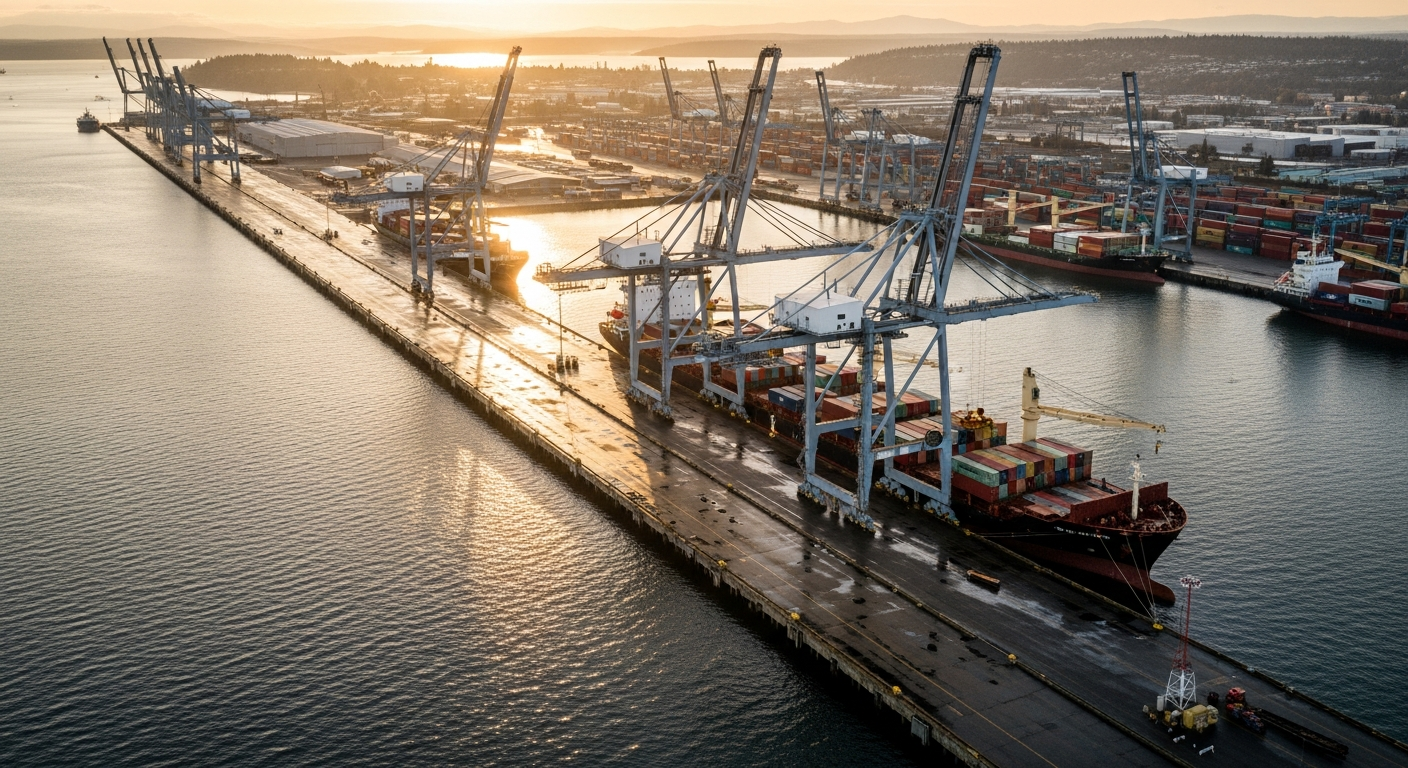
    Pier 3 is the longest berth at the Port of Everett Seaport, measuring 730 feet long with a 120-foot-wide concrete deck. It was constructed in 1973 and has facilitated global and regional trade for over five decades — handling bulk alumina ore, cement, general cargo, and forest products across those years.

    But Pier 3 has a structural problem. The pier was originally engineered to carry a uniform live load of 800 pounds per square foot. In recent years, that rating had to be derated — the south side dropped to 600 pounds per square foot, the north side to 400 pounds per square foot, and some sections were derated even further. In practical terms, that means the pier cannot be used to its full operational potential. Cargo-handling equipment that would otherwise operate on the pier isn’t permitted because the structure can’t safely carry the load.

    That’s the problem the $11.25 million fixes. The Pier 3 Strengthening Safety and Commerce project will install new vertical piles beneath the pier and restore other damaged piles, adding new structural life to a facility that Washington’s construction industry, the U.S. military, and global maritime commerce all rely on.

    What Pier 3 Does Today — and What It Will Be Able to Do After

    Right now, despite its compromised load rating, Pier 3 is doing a lot. Its primary use is bulk cement operations. That’s because Pier 3 sits directly adjacent to a 55,000-ton dry bulk cement storage dome at Hewitt Terminal — one of the largest cement storage facilities in the Pacific Northwest. The cement stored and moved through this terminal is a critical supply chain asset for Washington state’s construction industry. Every major building project from Seattle to Bellingham that uses concrete is connected, at some point, to freight moving through this pier.

    The north side of Pier 3 serves a different critical function: ship repair. A Seaport tenant uses that berth for maintenance and repair work on vessels serving the U.S. Navy, Department of Defense, U.S. Coast Guard, Washington State Ferries, and the commercial fishing fleet. That’s not a minor side operation — it’s a direct service line to the military and to the state’s ferry system, the largest in the country.

    After the strengthening project is complete, the pier’s operational envelope expands significantly. The restored load ratings will allow cargo-handling equipment to operate across the full deck, which means the Port can diversify the types of freight Pier 3 can handle — moving beyond its current cement-primary profile to take on breakbulk cargo, project cargo, and other freight categories where the Port already has a strong reputation.

    Pier 3’s Position in the Larger Port Complex

    What makes this grant especially significant is Pier 3’s location within the Seaport’s freight network. The pier sits close to Norton Terminal — the Port’s award-winning, 40-acre, paved, lit, and fully secured cargo yard — as well as adjacent bonded warehouse space, an additional 15-acre cargo yard, 40-foot mean lower low water (MLLW) depth, and on-dock rail access. That combination of deep-water berth, secured yard, and rail connectivity is rare on the West Coast and is a primary reason why the Port has built a reputation for handling oversized and high-value cargo.

    Pier 3 is also part of the reason why the Port of Everett can make a claim that would sound improbable on paper: the Port handles 100 percent of the oversized aerospace parts for Boeing’s 767, 777, 777X, and KC-46 Tanker programs. Those parts — too large to move by truck — come down the Snohomish River from the Paine Field manufacturing campus and load out at the Seaport. Restoring Pier 3’s full operational capacity directly supports that aerospace export pipeline.

    Strategic Commercial Seaport Status: What That Actually Means

    Tim Ryker, the Port of Everett’s Chief of Seaport Operations, highlighted a dimension of the project that goes beyond commercial freight: “It will also allow us to better serve in our role as a Strategic Commercial Seaport in support of our national defense and our military partners.”

    That’s not boilerplate language. The Port of Everett is one of just five Strategic Commercial Seaports on the West Coast and one of only 18 nationwide. That federal designation — from MARAD, the same agency that awarded this grant — means the Port must maintain military-readiness capability and be prepared to support Department of Defense cargo movements on short notice. With Pier 3 operating below its designed capacity, that readiness posture is constrained. The strengthening project restores it.

    The Economic Numbers Behind the Pier

    The Port of Everett Seaport sits 25 miles north of Seattle in naturally deep water. It ranks as the second largest export customs district in Washington state and the fifth on the West Coast. The port supports nearly $21 billion worth of U.S. exports annually, or roughly $30 billion when both imports and exports are counted together. The regional transportation network tied to those operations supports more than 40,000 jobs and $433 million in state and local tax revenues.

    With more than 60 percent of jobs in Snohomish County tied to trade, the Port’s infrastructure isn’t a footnote to Everett’s economy — it is a primary driver of it. An $11.25 million investment in the structural integrity of the port’s longest berth is, in that context, exactly the kind of infrastructure maintenance that holds the whole system together.

    The funding covers the full scope of the Pier 3 project: planning and engineering, environmental review, permitting, and construction. Representative Rick Larsen, who shared news of the award with Port representatives, has been a consistent advocate for Pacific Northwest port infrastructure funding in Congress.

    What We’re Watching Next

    The PIDP grant covers the complete project lifecycle, so the next step is the planning and engineering phase — the environmental review and permitting work that will precede construction. Given the Port’s track record on infrastructure projects like the Segment E bulkhead rebuild on West Marine View Drive (which is wrapping up final-phase construction right now after 20 years), we expect planning to move efficiently. What we’ll be watching: the environmental review timeline, the contractor selection process, and whether the project schedule aligns with the Port’s broader 2026 capital plan outlined in its $70 million 2026 budget.

    For a deep look at what the Port’s working waterfront actually handles on a daily basis, the Hat Island Ferry harbor tour remains the best public window into that operation.

    Frequently Asked Questions

    What is the Port Infrastructure Development Program (PIDP)?

    PIDP is a federal competitive grant program administered by MARAD (U.S. Department of Transportation Maritime Administration). Grants go to port infrastructure projects that improve the safety, efficiency, or reliability of freight movement. Awards are competitive and national in scope.

    Why was Pier 3 derated?

    Pier 3 was originally designed to carry 800 pounds per square foot but has experienced structural deterioration over its 53-year life. Damaged piles and structural elements required engineers to reduce the allowable load rating — to 600 PSF on the south side, 400 PSF on the north side, with some areas lower. The $11.25 million project will install new piles and restore the structure.

    How many jobs does the Port of Everett support?

    The Port of Everett’s regional transportation network supports more than 40,000 jobs and $433 million in state and local tax revenues. More than 60 percent of Snohomish County jobs are tied to trade.

    What cargo goes through Pier 3 today?

    Pier 3 currently handles bulk cement operations (adjacent to a 55,000-ton cement storage dome) and ship repair work for the U.S. Navy, Coast Guard, Washington State Ferries, and the commercial fishing fleet. After strengthening, it will be able to handle a broader range of cargo types including breakbulk and project cargo.

    What is a Strategic Commercial Seaport?

    A MARAD-designated Strategic Commercial Seaport must maintain readiness to support Department of Defense cargo movements on short notice while minimizing disruption to commercial operations. The Port of Everett is one of 5 on the West Coast and 18 nationwide with this designation.

  • Cocoon House Everett: Guide to Youth Homelessness Programs

    Cocoon House Everett: Guide to Youth Homelessness Programs

    Quick facts: Cocoon House (2726 Cedar St, Everett) is Snohomish County’s only nonprofit dedicated exclusively to ending youth homelessness. Founded in 1991. Serves young people ages 12–24 through emergency shelter, drop-in services, transitional housing, and education and employment support. CEO Joseph Alonzo. The U-Turn Drop-In Center is free and open to any youth ages 13–24 — no eligibility requirements.

    When a teenager loses stable housing in Snohomish County, Cocoon House has been one of the consistent answers to that problem for more than three decades. In a region where housing costs keep rising and the youngest residents are often the most invisible, the organization’s consistency — running since 1991 with an expanding set of programs — matters more than most people realize. Here is the complete 2026 guide to what Cocoon House does, who it serves, and how to connect with it.

    What Cocoon House Is

    Cocoon House is the only nonprofit in Snohomish County focused exclusively on ending youth homelessness. It serves young people ages 12 to 24 through a continuum of programs designed to meet a young person exactly where they are — on the street, in an emergency, or in need of longer-term housing stability.

    The organization has expanded its shelter capacity by 350% since its early years. It now houses more than 230 young people annually through shelter programs and reaches over 1,000 youth, parents, and community members each year across Snohomish County through its full program network.

    The Programs

    Emergency Shelter — Ages 12–17

    The emergency shelter serves youth ages 12 to 17 who need immediate, safe housing. It is staffed, structured, and designed to feel as close to a real home as possible. Young people in the shelter have access to case management, basic needs support, and a plan for what comes next — not just a bed for the night.

    U-Turn Drop-In Center — Ages 13–24

    The U-Turn Drop-In Center is built for older youth who may not be ready for a shelter, don’t meet the age criteria for the emergency shelter, or need a lower-barrier entry point. There are no eligibility requirements beyond showing up. Walk in and you have access to hot meals, hygiene items, showers, laundry, clothing, transportation assistance, and case managers who can connect you to housing, healthcare, and referrals across the county’s service network.

    Outreach Center — Ages 12–20

    The Outreach Center extends the same core supports — meals, showers, clothing, drug and alcohol support, referrals, and case management — to youth ages 12 to 20. Outreach staff also work outside the building, meeting young people in the places where they actually are rather than waiting for them to come through a door.

    Young Adult Housing — Ages 18–24

    For youth who have aged out of the emergency shelter or who need more than drop-in services, Cocoon House provides transitional and permanent housing pathways. Director of Young Adult Housing Eric Jimenez and his team lead this work, connecting young adults to housing options and the support services that make housing sustainable.

    Education and Employment

    Director of Education and Employment Claire Petersen leads programs that help young people build the credentials and skills needed to stay housed long term. A safe place to sleep isn’t enough on its own — sustainable housing requires income, and income requires opportunity. This program works on both sides of that equation.

    The New Colby Avenue Youth Center

    Cocoon House has been developing a new youth center facility on Colby Avenue in Everett, expanding the physical capacity of its programs to serve more young people. The new center adds to the infrastructure available at the main Cedar Street location.

    Why Cocoon House’s Model Works

    The organization’s effectiveness comes from a tiered, no-barrier-to-entry model that serves youth across a wide age range without forcing them into a single pathway. A 14-year-old in an emergency is in a different situation than a 22-year-old who needs stable housing and employment support. Cocoon House’s programs address both ends of that spectrum and the points in between.

    The U-Turn Drop-In Center’s no-eligibility model is particularly important: it serves young people who might not qualify for or seek out formal shelter programs. Getting them through the door — with a meal, a shower, and access to a case manager — is often the first step toward a longer-term stability path.

    How Cocoon House Fits Into Everett’s Safety Net

    Cocoon House operates alongside other Everett-area service organizations as part of the broader safety net for vulnerable residents. Volunteers of America Western Washington provides services across multiple populations including adult housing and food access. The $23M Snohomish County housing and behavioral health award approved April 24 is funding three Everett projects including the Everett Gospel Mission and new affordable housing units on Broadway. Cocoon House is the youth-specific anchor in this network.

    Frequently Asked Questions

    What is Cocoon House in Everett?

    Cocoon House (2726 Cedar St, Everett, WA) is Snohomish County’s only nonprofit dedicated exclusively to ending youth homelessness. Founded in 1991, it serves young people ages 12–24 through emergency shelter, drop-in services, transitional housing, and education and employment programs.

    How does someone get help from Cocoon House?

    Youth ages 13–24 can walk into the U-Turn Drop-In Center at 2726 Cedar St with no eligibility requirements. Hot meals, hygiene, showers, laundry, transportation assistance, and case manager access are available to anyone who comes in. Emergency shelter (ages 12–17) has a separate intake process through case management.

    What age range does Cocoon House serve?

    Cocoon House serves young people ages 12 to 24 across its programs: emergency shelter (12–17), U-Turn Drop-In Center (13–24), Outreach Center (12–20), and Young Adult Housing (18–24).

    How many young people does Cocoon House serve each year?

    Cocoon House houses more than 230 young people annually through its shelter programs and reaches over 1,000 youth, parents, and community members each year through its full program network across Snohomish County.

    Who leads Cocoon House?

    CEO Joseph Alonzo leads the organization. Directors include Eric Jimenez (Young Adult Housing) and Claire Petersen (Education and Employment).

    How can people support Cocoon House?

    Cocoon House accepts donations, volunteers, and in-kind support including hygiene items, clothing, and non-perishable food. The organization also accepts referrals from schools, families, and community organizations. Visit cocoonhouse.org for current needs and volunteer opportunities.

    Is Cocoon House only in Everett?

    Cocoon House is based in Everett and is the county-wide resource for youth homelessness in Snohomish County, reaching communities across the region through its outreach programs. The main facility is at 2726 Cedar St, Everett.

  • Cocoon House Everett: How to Access, Volunteer & Donate

    Cocoon House Everett: How to Access, Volunteer & Donate

    For Everett residents: Cocoon House (2726 Cedar St) is Snohomish County’s youth homelessness anchor — and it runs almost entirely on community support. Volunteer, donate supplies, refer a young person, or simply know the address. The U-Turn Drop-In Center is open to any youth ages 13–24 with no eligibility requirements.

    Most Everett residents have a vague awareness that Cocoon House exists. Fewer know specifically what it does, how to connect a young person to it, or how to support it as a community member. This guide covers all three.

    If You Know a Young Person Who Needs Help

    The fastest path to Cocoon House for a young person in Snohomish County is the U-Turn Drop-In Center at 2726 Cedar St, Everett. Ages 13–24, no eligibility requirements, no paperwork required to walk in. A young person in crisis can show up and immediately access a hot meal, hygiene support, showers, laundry, and a case manager who can connect them to housing options, healthcare, and other county resources.

    If the young person is under 18 and needs immediate emergency shelter, the emergency shelter program (ages 12–17) operates separately from the drop-in center with its own intake process. A case manager at the drop-in center can connect to that intake process.

    Referrals are also accepted from schools, community organizations, healthcare providers, and families. If you are a teacher, counselor, coach, or neighbor who is concerned about a young person’s housing situation, Cocoon House’s outreach staff works with community referrals. Visit cocoonhouse.org for contact information.

    How to Volunteer

    Cocoon House actively recruits community volunteers. Volunteer roles include direct service support at the drop-in center, mentorship for young people working through education and employment programs, and event support for fundraisers. The organization has structured volunteer training to ensure community volunteers are prepared to work with young people experiencing homelessness.

    Current volunteer opportunities and requirements are listed at cocoonhouse.org/volunteer. Background checks are required for direct service roles.

    What Donations Are Most Useful

    The U-Turn Drop-In Center and outreach programs have consistent need for practical supplies that community members can provide directly:

    • Hygiene items: shampoo, soap, deodorant, toothbrushes, toothpaste, feminine hygiene products
    • New socks and underwear (all sizes)
    • Gently used or new clothing, particularly outerwear and warm layers for Pacific Northwest conditions
    • Non-perishable food items
    • Gift cards for transit (ORCA cards or Community Transit passes)

    Financial donations support the full program operation. Cocoon House is a 501(c)(3) organization; donations are tax-deductible. Donate at cocoonhouse.org.

    Understanding Why Youth Homelessness Looks Different

    Youth homelessness in Snohomish County is not always visible in the ways adult homelessness is. Young people are more likely to be couch-surfing, sleeping at a friend’s place, or cycling between unstable situations than living on the street. That invisibility makes community awareness especially important — recognizing a young person who needs help, and knowing where to direct them, matters.

    Cocoon House’s outreach model is built around this reality: staff go to where young people are, rather than waiting for them to find a shelter on their own. Community members who know about Cocoon House become part of that outreach network.

    The Broader Everett Safety Net

    Cocoon House operates alongside other Everett-area organizations. The 2026 guide to where to get help in Everett covers Volunteers of America Western Washington’s full program range for adults and families. The complete VOAWW guide covers the full organizational picture. For the county’s broader housing investment: Snohomish County’s $23M housing and behavioral health award.

    Frequently Asked Questions

    How can Everett residents help Cocoon House?

    Volunteer for direct service or mentorship roles at cocoonhouse.org/volunteer; donate hygiene items, clothing, food, and transit passes; make financial donations at cocoonhouse.org; refer young people in need to the U-Turn Drop-In Center at 2726 Cedar St.

    What supplies does Cocoon House need most?

    Hygiene items (shampoo, soap, deodorant, feminine hygiene products), new socks and underwear, warm outerwear and clothing, non-perishable food, and ORCA transit cards or Community Transit passes.

    How do I refer a young person to Cocoon House?

    Direct youth ages 13–24 to the U-Turn Drop-In Center at 2726 Cedar St — no eligibility requirements to walk in. For ages 12–17 needing emergency shelter, contact Cocoon House at cocoonhouse.org for the intake process. Referrals from schools, counselors, healthcare providers, and community organizations are accepted.

    Does Cocoon House need volunteers?

    Yes. Volunteer roles include drop-in center support, mentorship for education and employment programs, and event support. Background checks required for direct service. Sign up at cocoonhouse.org/volunteer.

  • Langus Riverfront Park: Seattle Day Trip to Spencer Island

    Langus Riverfront Park: Seattle Day Trip to Spencer Island

    Day trip bottom line: Langus Riverfront Park and Spencer Island are 25–30 minutes north of Seattle via I-5 — a genuine half-day outdoors destination that most Puget Sound visitors don’t know exists. Flat trail, exceptional birdwatching, estuary wildlife. Bring a Discover Pass or $11.50 for day parking. No other admission.

    If you’re visiting the Seattle area for the FIFA World Cup, a weekend trip, or any reason that brings you to the Pacific Northwest, the Snohomish River Estuary north of Everett is one of the region’s most underrated outdoor destinations — and it’s closer to Seattle than most guides will tell you.

    The Drive From Seattle

    From downtown Seattle, Langus Riverfront Park is approximately 27 miles north on I-5 — roughly 30 minutes in off-peak traffic. Take the Marine View Drive exit north of Everett and follow Smith Island Road to the park entrance at 411 Smith Island Rd, Everett. Easier than driving to the Cascades. No mountain passes, no ferry.

    From the new Lynnwood City Center Link station, Community Transit connects to the Everett area. For visitors without a car, the combination of Link plus transit is an option — check Community Transit routes for current schedules.

    What You’re Going to See

    The Snohomish River Estuary is the largest wetland near an urban center on the West Coast — 1,400 acres where freshwater from the Cascades mixes with tidal Puget Sound. Spencer Island alone is 413 acres of managed wildlife habitat. More than 350 species of migratory birds have been recorded here. For comparison: most wildlife refuges in the Pacific Northwest are significantly harder to reach and offer less consistent wildlife viewing.

    Bald eagles, osprey, great blue herons, and a rotating cast of shorebirds and waterfowl are reliably present across all seasons. Spring and fall migration windows bring exceptional variety. Even a casual visitor with no birding background will see wildlife within minutes of crossing the Spencer Island bridge.

    The Trail

    The Langus River Front Trail is 3.0 miles of flat, paved path along the Snohomish River — accessible to walkers, joggers, and cyclists. It connects via bridge to the 1.7-mile Spencer Island southern loop on an elevated dike trail with open views across the estuary. Combined: approximately 4.7 miles, 2 to 3 hours at a relaxed pace with wildlife stops.

    No technical gear required. The trail is genuinely flat. Families with strollers can do the Langus section without difficulty.

    What to Bring, What to Pay

    Parking at Langus requires a Washington State Discover Pass ($30/year) or Vehicle Access Pass ($11.50/day). Available at the park kiosk or in advance at discoverpass.wa.gov. The trail and Spencer Island are free once you’ve handled parking.

    Binoculars significantly improve the Spencer Island experience. Water and snacks are essential — there are no services on Spencer Island. Layer up; estuary conditions can be windy regardless of season.

    Combining With Other Everett Stops

    Langus and Spencer Island pair naturally with Everett’s waterfront. Post-hike dining at Waterfront Place at the Port of Everett — with multiple restaurant options open along the marina — is a short drive from the park. The historic Port Gardner neighborhood and Rucker Hill walking tour adds an architectural dimension to the day.

    Frequently Asked Questions

    How far is Langus Riverfront Park from Seattle?

    Approximately 27 miles north of downtown Seattle via I-5 — roughly 30 minutes in off-peak traffic. Take the Marine View Drive exit north of Everett and follow Smith Island Road to the park at 411 Smith Island Rd.

    Is Langus Riverfront Park worth visiting as a day trip?

    Yes. Spencer Island’s 413-acre estuary habitat with 350-plus migratory bird species is among the best wildlife-viewing sites in Puget Sound. Combined with the flat paved Langus trail and river access infrastructure, it’s a genuine half-day outdoors destination.

    What is the admission fee for Spencer Island?

    Spencer Island is free to enter. Parking at Langus Riverfront Park requires a Washington State Discover Pass ($30/year) or Vehicle Access Pass ($11.50/day).

    What is the best time of year to visit Langus and Spencer Island?

    Any season offers wildlife viewing. Spring (March–May) and fall (September–November) are peak migration windows with the highest bird variety. Winter brings overwintering waterfowl. Summer is popular for families and cyclists.