Local AI & Automation - Tygart Media

Category: Local AI & Automation

Building autonomous AI systems that run locally. Zero cloud cost, full data control, infinite scale.

  • The Agency That Runs on AI: What Tygart Media Actually Looks Like in 2026

    The Agency That Runs on AI: What Tygart Media Actually Looks Like in 2026

    The Machine Room · Under the Hood

    The Org Chart Has One Name and Seven Agents

    Tygart Media does not have employees. It has systems. The agency manages 18 WordPress sites across industries including luxury lending, restoration services, cold storage logistics, interior design, comedy, automotive training, and technology. It produces hundreds of SEO-optimized articles per month. It monitors keyword rankings daily. It tracks site uptime hourly. It processes meeting transcripts automatically. It generates nightly operational briefs.

    One person runs all of it. Not by working 80-hour weeks. By building infrastructure that works autonomously.

    This is not a hypothetical future state. This is what the agency looks like right now, in March 2026. And the operational details are more interesting than the headline.

    The Infrastructure Stack

    AI Partner: Claude in Cowork mode, running 387+ sessions since December 2025. This is the primary operating interface – a sandboxed Linux environment with bash execution, file access, API connections, and 60+ custom skills.

    Autonomous Agents: Seven local Python agents running on a Windows laptop: SM-01 (site monitor), NB-02 (nightly brief), AI-03 (auto-indexer), MP-04 (meeting processor), ED-05 (email digest), SD-06 (SEO drift detector), NR-07 (news reporter). Each runs on a schedule via Windows Task Scheduler.

    WordPress Management: 18 sites connected through a Cloud Run proxy that routes REST API calls to avoid IP blocking. One GCP publisher service for the SiteGround-hosted site that blocks all proxy traffic. Full credential registry as a skill file.

    Cloud Infrastructure: GCP project with Compute Engine VMs running a 5-site WordPress knowledge cluster, Cloud Run services for the WP proxy and 247RS publisher, and Vertex AI for client-facing chatbot deployments.

    Knowledge Layer: Notion as the operating system with six core databases. Local vector database (ChromaDB + Ollama) indexing 468 files for semantic search. Slack as the real-time alert surface.

    Content Production: Content intelligence audits, adaptive variant pipelines producing persona-targeted articles, full SEO/AEO/GEO optimization on every piece, and batch publishing via REST API.

    Monthly cost: Claude Pro () + GCP infrastructure (~) + DataForSEO (~) + domain registrations and hosting (varies by client). Total operational infrastructure: under /month.

    What the Daily Operation Actually Looks Like

    6:00 AM: NB-02 delivers the nightly brief to Slack. I read it with coffee. 3 minutes to know the state of everything.

    6:15 AM: Check for any red alerts from overnight agent activity. Most days there are none. Handle any urgent items.

    7:00 AM: Open Cowork mode. Load the day’s priority from Notion. Start the first working session – usually content production or site optimization.

    Morning sessions: Two to three Cowork sessions handling client deliverables. Content batches, SEO audits, site optimizations. Each session triggers skills that automate 80% of the execution.

    Midday: Client calls and meetings. MP-04 processes every transcript and routes action items to Notion automatically.

    Afternoon sessions: Infrastructure work, skill building, agent improvements. This is the investment time – building systems that make tomorrow more efficient than today.

    Evening: Agents continue running. SM-01 checks sites every hour. The VIP Email Monitor watches for urgent messages. SD-06 is tracking rankings. I am either building, thinking, or on Producer.ai making music. The systems do not need me to be present.

    The Numbers That Matter

    Content velocity: 400+ articles published across 18 sites in three months. At market rates, that represents – in content production value.

    Site monitoring: 23 sites checked hourly, 99.7% average uptime tracked, 2 SSL near-misses caught before expiration.

    SEO coverage: 200+ keywords tracked daily across all sites. Drift detected and addressed before traffic impact on every flagged instance.

    Client chatbot: 1,400 conversations handled, 24% lead conversion rate, under /month in infrastructure costs.

    Meeting processing: 91% action item extraction accuracy. Zero commitments lost since MP-04 deployment.

    Total infrastructure cost: Under /month for everything. No employees. No freelancer invoices. No SaaS subscriptions over .

    What This Means for the Industry

    The traditional agency model requires hiring specialists: content writers, SEO analysts, web developers, project managers, account managers. Each hire adds salary, benefits, management overhead, and communication complexity. A 10-person agency serving 18 clients has significant operational overhead just coordinating between team members.

    The AI-native agency model replaces coordination with automation. Skills encode operational knowledge that would otherwise live in employees’ heads. Agents handle monitoring and processing that would otherwise require dedicated staff. The Notion command center replaces the project management overhead of keeping everyone aligned.

    This does not mean agencies should fire everyone and buy AI subscriptions. It means the economics of what one person can manage have changed fundamentally. The ceiling used to be 3-5 clients for a solo operator. With the right infrastructure, it is 18+ sites across multiple industries – and growing.

    Frequently Asked Questions

    Is this sustainable long-term or does it require constant maintenance?

    The system requires about 5 hours per week of maintenance – updating skills, tuning agent thresholds, fixing occasional API failures, and improving workflows. This is investment time that reduces future maintenance. The system gets more stable and capable every month, not less.

    What happens if Claude or Cowork mode has an outage?

    The autonomous agents run locally and are independent of Claude. They continue monitoring, alerting, and processing regardless. Content production pauses until Cowork mode returns, but operational infrastructure stays live. The architecture avoids single points of failure by design.

    Can other agencies replicate this?

    The infrastructure is replicable. The skills are transferable. The agent architectures are documented. What takes time is building the specific operational knowledge for your client portfolio – the credentials, workflows, content standards, and quality gates specific to each business. That is a 3-6 month investment. But once built, it compounds indefinitely.

    The Only Moat Is Velocity

    Every tool I use is available to everyone. Claude, Ollama, GCP, Notion, WordPress REST API – none of this is proprietary. The advantage is not in the tools. It is in having built the system while others are still debating whether to try AI. By the time competitors build their first skill, I will have 200. By the time they deploy their first agent, mine will have six months of operational data informing their decisions. The moat is not technology. The moat is accumulated operational velocity. And it compounds every single day.

    {
    “@context”: “https://schema.org”,
    “@type”: “Article”,
    “headline”: “The Agency That Runs on AI: What Tygart Media Actually Looks Like in 2026”,
    “description”: “No employees. 18 WordPress sites. 7 autonomous agents. 60+ skills. 387 Cowork sessions. /month in infrastructure. This is what a one-person AI-native.”,
    “datePublished”: “2026-03-21”,
    “dateModified”: “2026-04-03”,
    “author”: {
    “@type”: “Person”,
    “name”: “Will Tygart”,
    “url”: “https://tygartmedia.com/about”
    },
    “publisher”: {
    “@type”: “Organization”,
    “name”: “Tygart Media”,
    “url”: “https://tygartmedia.com”,
    “logo”: {
    “@type”: “ImageObject”,
    “url”: “https://tygartmedia.com/wp-content/uploads/tygart-media-logo.png”
    }
    },
    “mainEntityOfPage”: {
    “@type”: “WebPage”,
    “@id”: “https://tygartmedia.com/the-agency-that-runs-on-ai-what-tygart-media-actually-looks-like-in-2026/”
    }
    }
  • I Built an AI Email Concierge That Replies to My Inbox While I Sleep

    I Built an AI Email Concierge That Replies to My Inbox While I Sleep

    The Machine Room · Under the Hood

    The Email Problem Nobody Solves

    Every productivity guru tells you to batch your email. Check it twice a day. Use filters. The advice is fine for people with 20 emails a day. When you run seven businesses, your inbox is not a communication tool. It is an intake system for opportunities, obligations, and emergencies arriving 24 hours a day.

    I needed something different. Not an email filter. Not a canned autoresponder. An AI concierge that reads every incoming email, understands who sent it, knows the context of our relationship, and responds intelligently — as itself, not pretending to be me. A digital colleague that handles the front door while I focus on the work behind it.

    So I built one. It runs every 15 minutes via a scheduled task. It uses the Gmail API with OAuth2 for full read/send access. Claude handles classification and response generation. And it has been live since March 21, 2026, autonomously handling business communications across active client relationships.

    The Classification Engine

    Every incoming email gets classified into one of five categories before any action is taken:

    BUSINESS — Known contacts from active relationships. These people have opted into the AI workflow by emailing my address. The agent responds as itself — Claude, my AI business partner — not pretending to be me. It can answer marketing questions, discuss project scope, share relevant insights, and move conversations forward.

    COLD_OUTREACH — Unknown people with personalized pitches. This triggers the reverse funnel. More on that below.

    NEWSLETTER — Mass marketing, subscriptions, promotions. Ignored entirely.

    NOTIFICATION — System alerts from banks, hosting providers, domain registrars. Ignored unless flagged by the VIP monitor.

    UNKNOWN — Anything that does not fit cleanly. Flagged for manual review. The agent never guesses on ambiguous messages.

    The Reverse Funnel

    Traditional cold outreach response: ignore it or send a template. Both waste the opportunity. The reverse funnel does something counterintuitive — it engages cold outreach warmly, but with a strategic purpose.

    When someone cold-emails me, the agent responds conversationally. It asks what they are working on. It learns about their business. It delivers genuine value — marketing insights, AI implementation ideas, strategic suggestions. Over the course of 2-3 exchanges, the relationship reverses. The person who was trying to sell me something is now receiving free consulting. And the natural close becomes: “I actually help businesses with exactly this. Want to hop on a call?”

    The person who cold-emailed to sell me SEO services is now a potential client for my agency. The funnel reversed. And the AI handled the entire nurture sequence.

    Surge Mode: 3-Minute Response When It Matters

    The standard scan runs every 15 minutes. But when the agent detects a new reply from an active conversation, it activates surge mode — a temporary 3-minute monitoring cycle focused exclusively on that contact.

    When a key contact replies, the system creates a dedicated rapid-response task that checks for follow-up messages every 3 minutes. After one hour of inactivity, surge mode automatically disables itself. During that hour, the contact experiences near-real-time conversation with the AI.

    This solves the biggest problem with scheduled email agents: the 15-minute gap feels robotic when someone is in an active back-and-forth. Surge mode makes the conversation feel natural and responsive while still being fully autonomous.

    The Work Order Builder

    When contacts express interest in a project — a website, a content campaign, an SEO audit — the agent does not just say “let me have Will call you.” It becomes a consultant.

    Through back-and-forth email conversation, the agent asks clarifying questions about goals, audience, features, timeline, and existing branding. It assembles a rough scope document through natural dialogue. When the prospect is ready for pricing, the agent escalates to me with the full context packaged in Notion — not a vague “someone is interested” note, but a structured work order ready for pricing and proposal.

    The AI handles the consultative selling. I handle closing and pricing. The division is clean and plays to each party’s strength.

    Per-Contact Knowledge Base

    Every person the concierge communicates with gets a profile in a dedicated Notion database. Each profile contains background information, active requests, completed deliverables, a research queue, and an interaction log.

    Before composing any response, the agent reads the contact’s profile. This means the AI remembers previous conversations, knows what has been promised, and never asks a question that was already answered. The contact experiences continuity — not the stateless amnesia of typical AI interactions.

    The research queue is particularly powerful. Between scan cycles, items flagged for research get investigated so the next conversation elevates. If a contact mentioned interest in drone technology, the agent researches drone applications in their industry and weaves those insights into the next reply.

    Frequently Asked Questions

    Does the agent pretend to be you?

    No. It identifies itself as Claude, my AI business partner. Contacts know they are communicating with AI. This transparency is deliberate — it positions the AI capability as a feature of working with the agency, not a deception.

    What happens when the agent does not know the answer?

    It escalates. Pricing questions, contract details, legal matters, proprietary data, and anything the agent is uncertain about get routed to me with full context. The agent explicitly tells the contact it will check with me and follow up.

    How do you prevent the agent from sharing confidential client information?

    The knowledge base includes scenario-based responses that use generic descriptions instead of client names. The agent discusses capabilities using anonymized examples. A protected entity list prevents any real client name from appearing in email responses.

    The Shift This Represents

    The email concierge is not a chatbot bolted onto Gmail. It is the first layer of an AI-native client relationship system. The agent qualifies leads, nurtures contacts, builds work orders, maintains relationship context, and escalates intelligently. It does in 15-minute cycles what a business development rep does in an 8-hour day — except it runs at midnight on a Saturday too.

    {
    “@context”: “https://schema.org”,
    “@type”: “Article”,
    “headline”: “I Built an AI Email Concierge That Replies to My Inbox While I Sleep”,
    “description”: “An autonomous email agent monitors Gmail every 15 minutes, classifies messages, auto-replies to business contacts as an AI concierge, runs a reverse.”,
    “datePublished”: “2026-03-21”,
    “dateModified”: “2026-04-03”,
    “author”: {
    “@type”: “Person”,
    “name”: “Will Tygart”,
    “url”: “https://tygartmedia.com/about”
    },
    “publisher”: {
    “@type”: “Organization”,
    “name”: “Tygart Media”,
    “url”: “https://tygartmedia.com”,
    “logo”: {
    “@type”: “ImageObject”,
    “url”: “https://tygartmedia.com/wp-content/uploads/tygart-media-logo.png”
    }
    },
    “mainEntityOfPage”: {
    “@type”: “WebPage”,
    “@id”: “https://tygartmedia.com/i-built-an-ai-email-concierge-that-replies-to-my-inbox-while-i-sleep/”
    }
    }

  • Exploring Olympic Peninsula: How I Built a Hyper-Local AI Content Engine for Tourism

    Exploring Olympic Peninsula: How I Built a Hyper-Local AI Content Engine for Tourism

    Tygart Media / Content Strategy
    The Practitioner JournalField Notes
    By Will Tygart
    · Practitioner-grade
    · From the workbench

    The Hyper-Local Opportunity Nobody Is Chasing

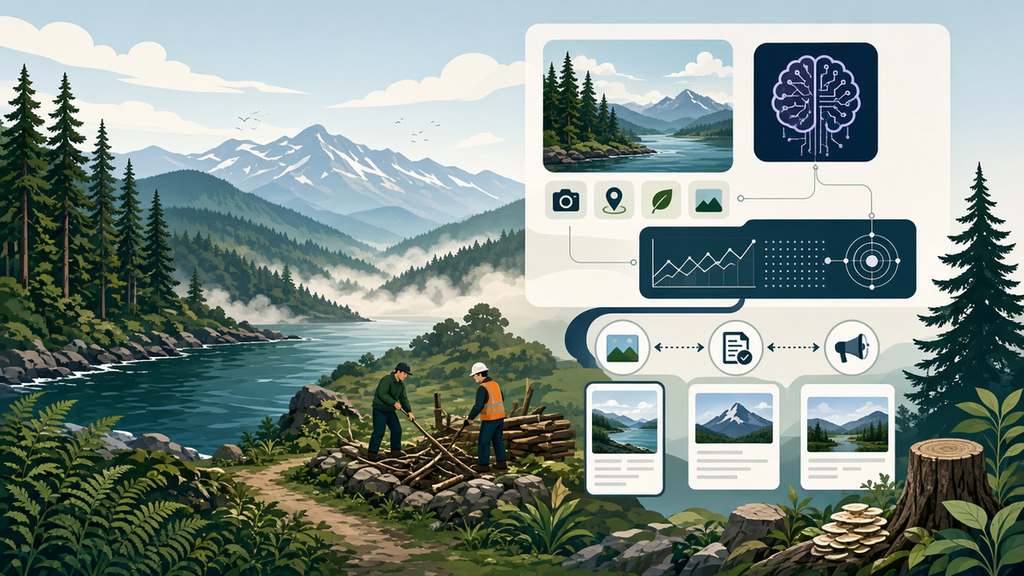
    Every content marketer chases national keywords. High volume, high competition, low conversion. Meanwhile, hyper-local search terms sit wide open with commercial intent that national players cannot touch. That is the thesis behind Exploring Olympic Peninsula — a content site built entirely by AI agents that covers one of the most beautiful and underserved tourism regions in the Pacific Northwest.

    The Olympic Peninsula is a place I know personally. The rainforests, the hot springs, the coastal towns, the tribal lands, the seasonal rhythms that determine when you can access certain trails. This is not the kind of content that a generic AI can produce well. It requires local knowledge, seasonal awareness, and genuine familiarity with the terrain.

    So I built a system that combines my local expertise with AI-powered content generation, SEO optimization, and automated publishing. The result is a site that produces genuinely useful tourism content at a pace no human writer could sustain alone.

    The Content Architecture

    The site is organized around four content pillars: destinations, activities, seasonal guides, and practical logistics. Each pillar targets a different stage of the traveler’s journey. Destinations capture the dreaming phase. Activities capture the planning phase. Seasonal guides capture the timing decisions. Logistics capture the booking intent.

    Every article is built from a content brief that combines keyword research with local knowledge. The AI does not guess about trail conditions or restaurant quality. I seed every brief with firsthand observations, seasonal notes, and insider tips that only someone who has actually been there would know.

    The publishing pipeline is the same one I use across the entire portfolio: content brief, adaptive variant generation, SEO/AEO/GEO optimization, schema injection, and automated WordPress publishing through the Cloud Run proxy.

    Why Tourism Content Is Perfect for AI-Assisted Publishing

    Tourism content has two properties that make it ideal for AI-assisted production. First, it is evergreen with predictable seasonal updates. A guide to Hurricane Ridge hiking does not change fundamentally year to year — but it needs seasonal freshness signals that AI can inject automatically. Second, the long tail is enormous. Every trailhead, every campground, every small-town restaurant is a potential article that serves genuine search intent.

    The competition in hyper-local tourism content is almost nonexistent. National travel sites cover the Olympic Peninsula with one or two overview articles. Local tourism boards have outdated websites with poor SEO. The gap between search demand and content supply is massive.

    Building the Local Knowledge Layer

    The hardest part of this project is not the technology. It is the knowledge layer. AI can write fluent prose about any topic, but it cannot tell you that the Hoh Rainforest parking lot fills up by 9 AM on summer weekends, or that Sol Duc Hot Springs closes for maintenance every November, or that the best time to see Roosevelt elk is at dawn in the Quinault Valley.

    I built a local knowledge database in Notion that contains hundreds of these micro-observations. Trail conditions by season. Restaurant hours that differ from what Google shows. Road closures that recur annually. Tide tables that affect beach access. This database feeds into every content brief and gives the AI the context it needs to produce content that actually helps people.

    This is the moat. Any competitor can spin up an AI content site about the Olympic Peninsula. Nobody else has the local knowledge database that makes the content trustworthy.

    Monetization Without Compromise

    The site monetizes through affiliate partnerships with local businesses, display advertising, and eventually, a curated trip planning service. The key constraint is editorial integrity. Every recommendation is based on personal experience. No pay-for-play listings. No sponsored content disguised as editorial.

    This matters because tourism content lives or dies on trust. One bad recommendation — a restaurant that closed six months ago, a trail that is actually dangerous in winter — and the site loses credibility permanently. The local knowledge layer is not just a competitive advantage. It is a quality control system.

    Scaling the Model to Other Regions

    The architecture is designed to be replicated. The same content pipeline, the same publishing infrastructure, the same optimization framework can be deployed to any hyper-local tourism market where I have either personal knowledge or a trusted local partner. The Olympic Peninsula is the proof of concept. The model scales to any region where national content sites leave gaps.

    The vision is a network of hyper-local tourism sites, each powered by the same AI infrastructure, each differentiated by genuine local expertise. Not a content farm. A knowledge network.

    FAQ

    How do you ensure content accuracy for a tourism site?
    Every article is seeded with firsthand observations from a local knowledge database. The AI generates the prose, but the facts come from personal experience and verified local sources.

    How many articles can the system produce per week?
    The pipeline can produce 15-20 fully optimized articles per week. The bottleneck is not production — it is knowledge quality. I only publish what I can verify.

    What makes this different from other AI content sites?
    The local knowledge layer. Generic AI tourism content is easy to spot and easy to outrank. Content backed by genuine local expertise serves users better and ranks better long-term.

    {
    “@context”: “https://schema.org”,
    “@type”: “Article”,
    “headline”: “Exploring Olympic Peninsula: How I Built a Hyper-Local AI Content Engine for Tourism”,
    “description”: “Building an AI-powered hyper-local content site for the Olympic Peninsula using automated research, local knowledge, and WordPress publishing.”,
    “datePublished”: “2026-03-21”,
    “dateModified”: “2026-04-03”,
    “author”: {
    “@type”: “Person”,
    “name”: “Will Tygart”,
    “url”: “https://tygartmedia.com/about”
    },
    “publisher”: {
    “@type”: “Organization”,
    “name”: “Tygart Media”,
    “url”: “https://tygartmedia.com”,
    “logo”: {
    “@type”: “ImageObject”,
    “url”: “https://tygartmedia.com/wp-content/uploads/tygart-media-logo.png”
    }
    },
    “mainEntityOfPage”: {
    “@type”: “WebPage”,
    “@id”: “https://tygartmedia.com/exploring-olympic-peninsula-how-i-built-a-hyper-local-ai-content-engine-for-tourism/”
    }
    }

  • The Contact Profile Database: Building Per-Person AI Memory for Every Relationship in Your Network

    The Contact Profile Database: Building Per-Person AI Memory for Every Relationship in Your Network

    The Machine Room · Under the Hood

    The CRM Is Dead. Long Live the Contact Profile.

    Traditional CRMs store records. Name, email, company, last activity date, deal stage. They are databases optimized for pipeline management, not relationship management. They tell you where someone is in your funnel. They tell you nothing about who they actually are.

    I built something different. A contact profile database that stores what matters: what we talked about, what they care about, what their business needs, what introductions would help them, what their communication preferences are, and what our shared history looks like across every touchpoint — email, phone, in-person, social media, and collaborative work.

    The database is powered by AI agents that automatically extract and update profile data from every interaction. When I send an email, the agent parses it for relevant updates. When I finish a call, I dictate a brief note and the agent incorporates it into the contact’s profile. When a social media post mentions a contact’s company, the agent flags it for context.

    The Architecture of a Contact Profile

    Each contact profile lives in Notion as a database entry with structured properties and a rich-text body. The structured properties capture the basics: name, company, role, entity tags that link them to specific businesses in my portfolio, relationship strength score, and last interaction date.

    The rich-text body is where the real value lives. It contains a chronological interaction log, a preferences section, a needs assessment, and a relationship context section. The interaction log captures every meaningful touchpoint with a date and a one-sentence summary. The preferences section tracks communication style, meeting preferences, topics they enjoy, and topics to avoid.

    The needs assessment is updated quarterly. It captures what the contact’s business needs right now, what challenges they are facing, and what opportunities I can see that they might not. This is the section I review before every call and every meeting. It turns every interaction into a continuation of a long-running conversation, not a cold restart.

    How AI Keeps Profiles Current

    Manual CRM updates are the reason most CRMs die within six months of implementation. Nobody wants to spend fifteen minutes after every call logging data into a form. The profile database eliminates manual updates entirely.

    The email agent scans incoming and outgoing email for contact mentions. When it detects a substantive interaction — not a newsletter, not a receipt, but a real conversation — it extracts the key points and appends them to the contact’s interaction log. The agent knows the difference between a transactional email and a relationship email because it has been trained on my communication patterns.

    After phone calls, I dictate a voice note that gets transcribed and processed. The agent extracts action items, updates the needs assessment if something changed, and flags any follow-up commitments I made. This takes me about 90 seconds per call — compared to the five to ten minutes that manual CRM entry would require.

    The Relationship Strength Score

    Each contact has a relationship strength score from one to ten. The score is calculated algorithmically based on interaction frequency, interaction depth, reciprocity, and recency. A contact I speak with weekly about substantive topics scores higher than a contact I exchange LinkedIn messages with monthly.

    The score decays over time. If I have not interacted with someone in 60 days, their score drops. This decay is intentional — it surfaces relationships that need attention before they go cold. Every Monday, the weekly briefing includes a list of high-value contacts whose scores have dropped below a threshold. These are my reach-out priorities for the week.

    The score also factors in reciprocity. A relationship where I am always initiating and never receiving is scored differently from one where both parties actively contribute. This helps me identify relationships that are genuinely mutual versus ones that are one-directional.

    Privacy and Ethics

    This system stores personal information about real people. The ethical guardrails are non-negotiable. First, the database is private. No one accesses it except me and my AI agents. It is not shared with clients, partners, or team members. Second, the information stored is limited to professional context. I do not track personal details that are irrelevant to the business relationship. Third, any contact can request to see what I have stored about them, and I will show them. Transparency is the foundation of trust.

    The AI agents are instructed to never use profile data in ways that would feel manipulative or surveilling. The purpose is to serve people better, not to gain advantage over them. When I remember that someone mentioned their daughter’s soccer tournament three months ago and ask how it went, that is not manipulation. That is being a good human who pays attention.

    The Compound Value of Institutional Memory

    Six months into using the contact profile database, I can trace direct revenue to relationship insights that would have been lost without it. A contact mentioned a business challenge in passing during a call in October. The agent logged it. In January, I saw an opportunity that directly addressed that challenge. I made the introduction. It became a six-figure engagement.

    Without the profile database, that October mention would have been forgotten. The January opportunity would have passed without connection. The engagement would never have happened. This is the compound value of institutional memory: every interaction becomes an asset that appreciates over time.

    The system is still early. I am building integrations with calendar data, social media monitoring, and public company news feeds. The vision is a contact profile that updates itself continuously from every available signal, so that every time I interact with someone, I have the full picture of who they are, what they need, and how I can help.

    FAQ

    How many contacts are in the database?
    Currently around 400 active profiles. Not everyone I have ever met — only people with meaningful professional relationships that I want to maintain and deepen.

    How do you handle contacts who work across multiple businesses?
    Entity tags allow a single contact to be linked to multiple business entities. Their profile shows the full relationship context across all touchpoints.

    What tool do you use for the database?
    Notion, with AI agents that read and write to it via the Notion API. The same architecture that powers the rest of the command center operating system.

    {
    “@context”: “https://schema.org”,
    “@type”: “Article”,
    “headline”: “The Contact Profile Database: Building Per-Person AI Memory for Every Relationship in Your Network”,
    “description”: “How I built an AI-powered contact database that remembers every interaction, preference, and business need across my entire professional network.”,
    “datePublished”: “2026-03-21”,
    “dateModified”: “2026-04-03”,
    “author”: {
    “@type”: “Person”,
    “name”: “Will Tygart”,
    “url”: “https://tygartmedia.com/about”
    },
    “publisher”: {
    “@type”: “Organization”,
    “name”: “Tygart Media”,
    “url”: “https://tygartmedia.com”,
    “logo”: {
    “@type”: “ImageObject”,
    “url”: “https://tygartmedia.com/wp-content/uploads/tygart-media-logo.png”
    }
    },
    “mainEntityOfPage”: {
    “@type”: “WebPage”,
    “@id”: “https://tygartmedia.com/the-contact-profile-database-building-per-person-ai-memory-for-every-relationship-in-your-network/”
    }
    }