Anthropic - Tygart Media

Category: Anthropic

News, analysis, and profiles covering Anthropic the company and its team.

  • History of Anthropic

    History of Anthropic

    Last refreshed: May 15, 2026

    Redirecting… Click here if not redirected

  • Claude Updates May–June 2026: Opus 4.8, SpaceX Compute, Managed Agents Memory, and What’s Coming Next

    Claude Updates May–June 2026: Opus 4.8, SpaceX Compute, Managed Agents Memory, and What’s Coming Next

    May 2026 has been one of Anthropic’s busiest months yet. Here’s everything that shipped, changed, or was announced — plus the confirmed upcoming dates you need to know.

    June 2026 Update

    Since this page was published, Anthropic has released Claude Opus 4.8 — the new current flagship model, succeeding Opus 4.8. Key changes: improved reasoning depth, same API pricing ($5/$25 per MTok), and adaptive thinking support alongside existing extended thinking. See the current model version tracker for the full model lineup.

    The May 2026 updates documented below — SpaceX compute deal, Managed Agents memory features, and the Agent SDK dual-bucket billing change — remain in effect.

    Claude Opus 4.8 — Generally Available (April 16, 2026)

    Opus 4.8 launched April 16 as the current flagship model, priced identically to Opus 4.6 at $5/$25 per million tokens (input/output). Key changes:

    • Vision resolution: 3× higher at 2,576px (~3.75 megapixels), raising XBOW visual acuity benchmark performance from 54.5% to 98.5%
    • Coding: 70% on CursorBench (vs 58% for 4.6), resolves 3× more production tasks on Rakuten-SWE-Bench, +13% lift on Anthropic’s internal coding benchmark
    • Legal reasoning: 90.9% on BigLaw Bench
    • New effort level: xhigh sits between high and max — five levels total: low / medium / high / xhigh / max
    • Task budgets: Now in public beta — token spend guidance for longer agentic runs
    • Tokenizer update: New tokenizer increases token usage roughly 1.0–1.35× for the same content; API pricing unchanged
    • Breaking change: Opus 4.8 has API breaking changes versus 4.6 — review Anthropic’s migration guide before upgrading

    Alongside Opus 4.8, Anthropic launched Claude Design — an Anthropic Labs product for collaborating with Claude to produce visual outputs including designs, prototypes, slides, and one-pagers.

    SpaceX Compute Deal — Rate Limits Doubled (May 2026)

    Anthropic announced a partnership with SpaceX to access Colossus 1 compute capacity. The immediate practical impact for subscribers:

    • Claude Code’s five-hour rate limits doubled for Pro, Max, Team, and seat-based Enterprise plans
    • Peak-hour limit reductions removed for Pro and Max (previously limits burned faster 5am–11am Pacific on weekdays)
    • Opus API limits raised for heavy API users

    Anthropic is also reportedly evaluating an IPO as early as October 2026, and has disclosed run-rate revenue of $30B (up from $9B at end of 2025). The SpaceX deal comes as the company prepares that filing.

    Claude Managed Agents — Three New Features (May 7, 2026)

    Claude Managed Agents — the fully managed agent harness launched in public beta earlier this year — gained three significant additions:

    • Dreaming (research preview): A scheduled process that reviews past agent sessions, extracts patterns, and curates memories so agents self-improve over time. Dreaming can update memory automatically or queue changes for human review before they land.
    • Multiagent Orchestration: A lead agent can now break a job into pieces and delegate each to a specialist sub-agent with its own model, prompt, and tools. Specialists work in parallel on a shared filesystem. Netflix is already using multiagent orchestration for its platform team.
    • Memory (public beta): Now generally available under the managed-agents-2026-04-01 beta header.

    Claude Cowork — Generally Available

    Claude Cowork is now GA on macOS and Windows through the Claude Desktop app. New additions with GA: Claude Cowork in the Analytics API, usage analytics, and expanded desktop automation capabilities.

    Claude Code — What Shipped in May

    Claude Code has been shipping near-daily updates. Notable May additions include:

    • Plugin URL loading: --plugin-url <url> flag fetches a plugin .zip from a URL for the current session
    • Project purge: claude project purge [path] deletes all Claude Code state for a project (transcripts, tasks, file history, config) with dry-run support
    • Package manager auto-update: CLAUDE_CODE_PACKAGE_MANAGER_AUTO_UPDATE runs upgrade in the background on Homebrew or WinGet installs
    • Push notifications: Claude can now send mobile push notifications when Remote Control is enabled
    • VS Code Remote Control: /remote-control bridges sessions to claude.ai/code to continue from a browser or phone
    • 1M token context in Claude Code: Available to Max, Team Premium, and Enterprise Opus 4.6/4.7 users at no additional cost — no long-context surcharge as of March 2026
    • Redesigned desktop app: New session sidebar, drag-and-drop workspace, integrated terminal and file editor, faster diffs, SSH support on Mac

    New Connectors Expansion

    Claude’s connector directory has grown beyond work tools. New consumer app connectors include AllTrails, Instacart, Audible, Tripadvisor, Uber, and Spotify. The directory now exceeds 200 connectors. Claude surfaces relevant connectors in context during conversations rather than requiring users to browse a directory.

    Finance Agent Templates

    Anthropic released ten ready-to-run agent templates for financial services work: pitchbook building, KYC file screening, and month-end close workflows. Microsoft 365 add-ins for Excel, PowerPoint, Word, and Outlook are coming soon. A Moody’s MCP app brings Claude into financial data workflows.

    Confirmed Upcoming Dates

    These are officially announced by Anthropic — not speculation:

    • June 15, 2026: Claude Sonnet 4 (claude-sonnet-4-20250514) and Claude Opus 4 (claude-opus-4-20250514) are deprecated and retired from the Claude API. Migrate to Sonnet 4.6 and Opus 4.8 respectively before this date.
    • Microsoft 365 add-ins: Excel, PowerPoint, Word, and Outlook integrations announced as “coming soon” — no specific date published.
    • Anthropic IPO: Reportedly targeting as early as October 2026 — unconfirmed, no official date.
    • Google/Broadcom TPU partnership: Multi-gigawatt infrastructure with capacity launching in 2027.

    Model Deprecation Summary

    Claude Haiku 3 (claude-3-haiku-20240307) has already been retired — all requests now return an error. Migrate to Claude Haiku 4.5. Claude Sonnet 4 and Opus 4 retire June 15, 2026.

    What to Watch For

    Claude 5 is widely anticipated for Q2–Q3 2026 based on Anthropic’s release cadence, though Anthropic has made no official announcement. The advisor tool — which pairs a faster executor model with a higher-intelligence advisor model for long-horizon agentic workloads — launched in public beta and signals the architectural direction Anthropic is moving toward for complex, multi-step tasks.

    The pace of Claude Code releases in particular has accelerated to near-daily — following Anthropic’s own disclosure that engineers internally use Claude for a growing share of their own development work.


  • Claude Team Plan Usage Limits: What Doubled in May 2026 (and What Didn’t)

    Claude Team Plan Usage Limits: What Doubled in May 2026 (and What Didn’t)

    Last refreshed: May 15, 2026

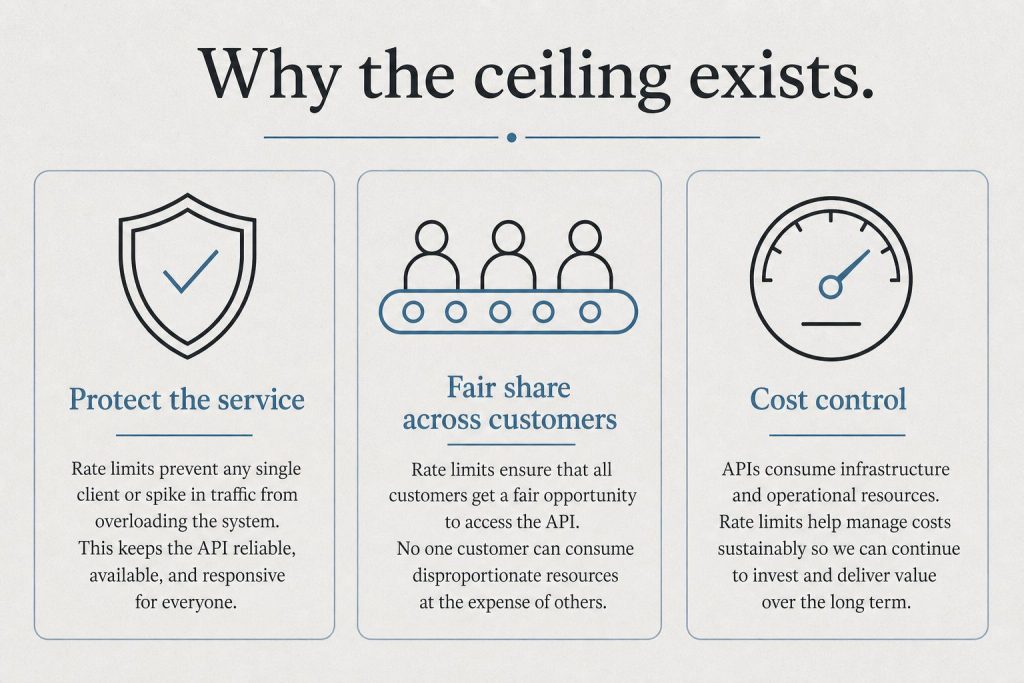
    The Claude Team plan’s usage limits changed significantly in May 2026. If you’re a Team subscriber and you haven’t noticed yet, you’re now getting substantially more capacity than you were in April — and the free tier got left behind entirely. Here’s exactly what changed, what you have now, and what it means in practice.

    Updated May 9, 2026

    Rate limits doubled for Team plan subscribers following Anthropic’s SpaceX Colossus 1 compute deal (announced May 6, 2026). Free plan excluded from all increases. This page reflects current limits.

    What Changed in May 2026: The SpaceX Rate Limit Increase

    On May 6, 2026, Anthropic announced a compute partnership with SpaceX, giving it access to SpaceX’s Colossus 1 data center. The practical result for paying subscribers came fast: rate limits doubled. Here’s the breakdown by tier:

    • Claude Code Pro and Max: 5-hour rate limits doubled
    • Team plan (all seats): 5-hour rate limits doubled
    • Seat-based Enterprise: 5-hour rate limits doubled
    • Tier 1 API customers: Max input tokens per minute increased 1,500%; max output tokens per minute increased 900%
    • Peak-hours throttling: Eliminated entirely for Pro and Max subscribers
    • Free plan: No change. Explicitly excluded from all increases.

    Source: Anthropic’s official announcement at anthropic.com/news/higher-limits-spacex.

    The 1,500% input token figure for Tier 1 API is the one that didn’t get much press coverage. That’s a 15× ceiling increase for API users who’ve been running agent pipelines and hitting hard walls. If you’ve been rate-limited during multi-step Claude Code runs, this is the change that matters most.

    Team Plan Seat Structure (Still Current)

    The seat types haven’t changed — just the capacity within them. The Team plan still offers two seat types that can be mixed within the same organization:

    Seat Type Annual Price Monthly Price Usage vs Pro Claude Code
    Standard $25/seat/month $30/seat/month 1.25× more per session No
    Premium $100/seat/month $125/seat/month 6.25× more per session Yes

    Both seat types benefit from the May 2026 doubling of the 5-hour rate limit window. A Premium seat’s 6.25× multiplier now applies to a higher baseline than it did before May 6.

    How the 5-Hour Rate Limit Window Works

    Anthropic uses a rolling 5-hour window for usage limits, not a daily reset. Here’s what that means practically:

    • Usage is measured across a rolling 5-hour window, not midnight-to-midnight
    • If you hit the limit, you wait for the oldest usage to roll off — not for a fixed reset time
    • Heavy burst usage depletes your window faster than spread-out usage
    • The May 2026 doubling means the ceiling within that window is now twice as high

    Peak-hours throttling — the extra restriction that kicked in during high-demand periods — is now eliminated for Pro and Max. Team plan benefits from the doubled limit floor; the throttling elimination is Pro and Max specific.

    Current Models Available on Team Plan

    As of May 2026, the Claude model lineup (verified from Anthropic’s official models page):

    Model API String Context Window
    Claude Opus 4.7 claude-opus-4-7 1M tokens
    Claude Sonnet 4.6 claude-sonnet-4-6 1M tokens
    Claude Haiku 4.5 claude-haiku-4-5-20251001 200K tokens

    Deprecation notice: Claude Sonnet 4 and Opus 4 (original 4.0-generation, 20250514 date-string model IDs) are being retired June 15, 2026. Update any API integrations before that date.

    What the Free Plan Doesn’t Get

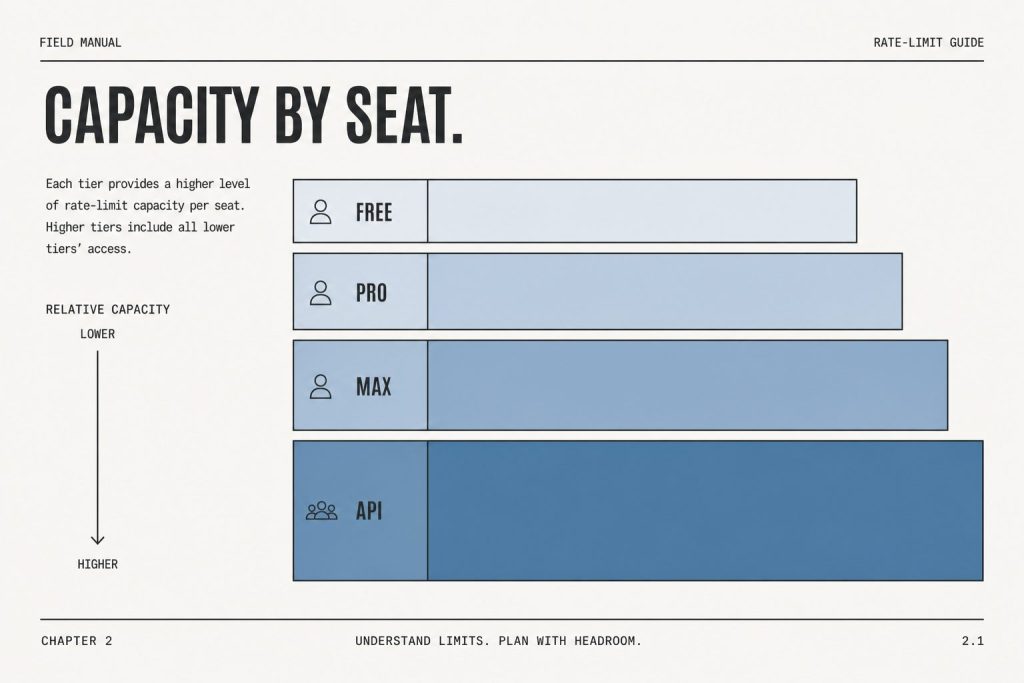
    The May 2026 rate limit increase does not apply to free accounts. Anthropic explicitly excluded the free tier from all capacity increases tied to the SpaceX deal. Paid plans now have a substantially higher ceiling while the free ceiling stays the same. If you’re hitting limits regularly on the free tier, the May 2026 changes are pressure toward upgrading — not relief.

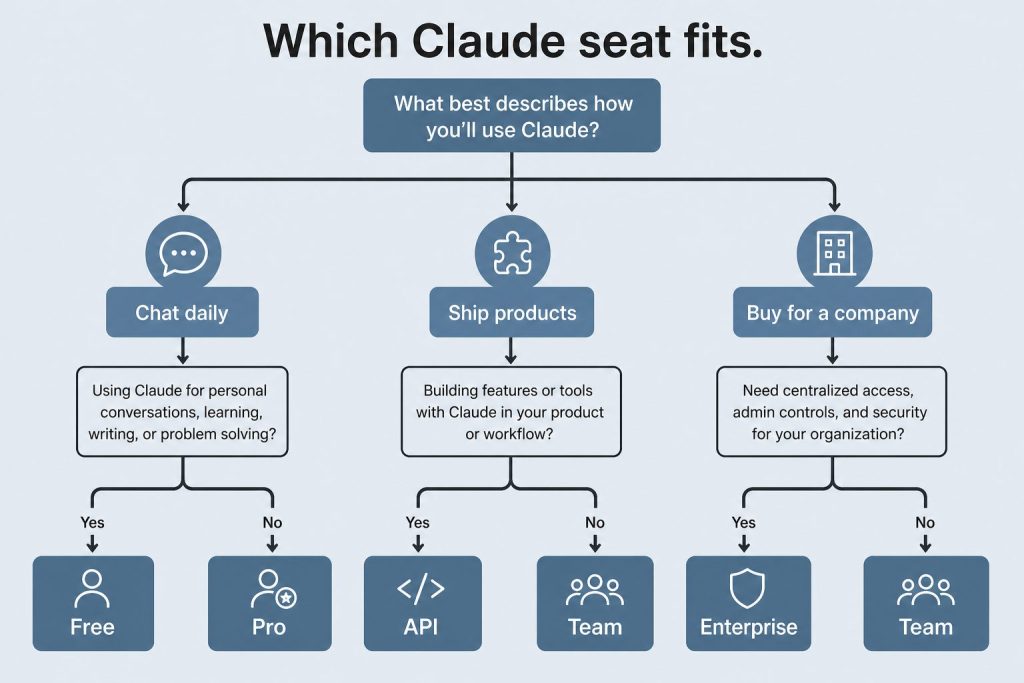
    Team Plan vs Pro: Which Limit Structure Fits You?

    • Individual power user: Pro ($20/month) with throttling eliminated is a strong option.
    • Team with Claude Code needs: Team Premium seats ($100/seat/month annually) give Claude Code access, 6.25× multiplier, and the doubled 5-hour window.
    • Team without Claude Code needs: Standard Team seats ($25/seat/month annually) for shared access at higher limits than individual Pro.

    Frequently Asked Questions

    Did the Team plan rate limits actually double in May 2026?

    Yes. Anthropic confirmed the 5-hour rate limit doubled for Team plan subscribers following the SpaceX Colossus 1 compute deal announced May 6, 2026. This applies to both Standard and Premium seats.

    Does peak-hours throttling elimination apply to Team plan?

    The peak-hours throttling elimination was announced specifically for Pro and Max subscribers. Team plan benefits from the doubled rate limit floor; throttling elimination was not announced for Team.

    What happens when I hit a Team plan usage limit?

    Claude notifies you that you’ve reached your usage limit. With the 5-hour rolling window, you can continue once older usage rolls off — you’re not waiting for a midnight reset. Burst usage depletes the window faster than spread usage over the same period.

    Are Claude Sonnet 4 and Opus 4 still available on Team?

    They remain available but retire June 15, 2026. After that date, the active lineup is Opus 4.7, Sonnet 4.6, and Haiku 4.5.

    Does the 1,500% Tier 1 API increase apply to Team plan API usage?

    The 1,500% input and 900% output token increases apply to Tier 1 API customers specifically. Team plan through claude.ai uses the doubled 5-hour window. Both benefits apply in their respective contexts if you’re a Tier 1 API customer and a Team subscriber.

    Is the free plan getting any rate limit improvements?

    No. The free plan was explicitly excluded from all rate limit increases in the May 2026 SpaceX announcement.

  • Claude Student Discount: Every Legit Route to Cheaper Claude (2026)

    Claude Student Discount: Every Legit Route to Cheaper Claude (2026)

    Last verified: June 13, 2026

    There is no public “Claude student discount” code, and as of June 13, 2026 Anthropic does not publish a percentage-off student price on Claude Pro. What actually exists is better than a coupon for many students: free Claude through a participating university, a paid campus program, free API credits to test against, and a genuinely capable free tier. Below is every route we could verify against a primary source — who qualifies, what you get, the real cost, and how to claim it. Anything we could not confirm from an official Anthropic or GitHub page is listed at the end as “not verified,” not in the tables.

    The routes at a glance

    Lift any single row. Each route is verified against the source linked in the last column’s footnote. “Cost” is the price to the student, not the institution.

    Route Who qualifies What you get Cost How to get it
    Claude for Education Students, faculty & staff at a partner university Claude’s premium features, incl. Learning Mode & Claude Code, provided institution-wide Free to the student (institution buys a university-wide plan) Sign in to claude.ai with your school email; access is provisioned by your school
    Claude Campus Program — Ambassadors Selected students at eligible campuses Claude Pro access, API credits, paid stipend; lead AI initiatives on campus Free + paid (you are paid a stipend) Apply during an open cohort at claude.com/programs/campus (Spring 2026 round closed)
    Claude Campus Program — Builder Clubs Students starting/joining an Anthropic-supported campus club Claude Pro access and monthly API credits for members; run hackathons & workshops Free Apply via claude.com/programs/campus when a cohort is open
    Free API credits Anyone with a new Claude Console account “A small amount of free credits to test the API” (no fixed amount published by Anthropic) Free, one-time Create an account at console.anthropic.com / platform.claude.com
    Claude free tier Anyone, no enrollment needed Web/mobile/desktop chat, web search, file creation, code execution, extended thinking, connectors $0 Sign up at claude.ai
    Academic / research API discount Academic & research users (case-by-case) “Academic and research discounts may be available” on API usage Negotiated Contact Anthropic sales

    The “discount” that isn’t — avoid these

    Most “Claude student discount code” pages rank for a deal that does not exist. There is no Anthropic-issued promo code that takes a percentage off Claude Pro for individual students. Do not enter a code from a coupon aggregator, and do not buy “discounted Claude Pro” from a third-party reseller — shared or resold accounts violate Anthropic’s terms and can be revoked.

    Claim you’ll see Reality
    “Use this Claude Pro student promo code for X% off” Not real. Anthropic publishes no individual-student discount code on Pro as of June 13, 2026. Verify with your university route instead.
    “Buy cheap shared Claude Pro / Max accounts” Avoid. Reselling and account-sharing breach Anthropic’s terms; access can be terminated. Not a legitimate route.

    Route detail: free Claude through your university

    Claude for Education is Anthropic’s official higher-education program. When a university buys in, eligible students, faculty, and staff get Claude’s premium capabilities — including Learning Mode (which Anthropic describes as working “like a tutor — it asks the questions that help you find the answers yourself”) and Claude Code for teaching programming. The student does not pay; the institution licenses a university-wide plan and provisions accounts, typically tied to your school email domain. If your school is not yet a partner, the only action available to you is to ask your IT or student-services team to contact Anthropic’s education team — there is no individual sign-up for this plan.

    Route detail: the Claude Campus Program

    The Campus Program runs in cohort rounds and has two student tracks. Campus Ambassadors work directly with Anthropic to lead AI-education efforts on campus and receive Claude Pro access plus API credits and a paid stipend. Builder Clubs let students set up an Anthropic-supported organization for AI builders on their campus; members get Claude Pro access and monthly API credits and run hackathons, workshops, and demo nights. Applications open and close by cohort — the Spring 2026 round is in session and closed; watch claude.com/programs/campus for the next intake.

    Route detail: free API credits and the free tier

    If you want to build with Claude rather than chat, create a Claude Console account: Anthropic’s pricing documentation states that “new users receive a small amount of free credits to test the API.” Anthropic does not publish a fixed dollar figure on that page, so treat any specific number you see elsewhere as unverified. Separately, the no-cost Claude free tier covers a lot of student work on its own — chat across web, iOS, Android, and desktop, plus web search, file creation, code execution, extended thinking, and connectors. For heavier API use, Anthropic also notes that “academic and research discounts may be available” — a sales conversation, not a self-serve coupon.

    A note on GitHub Copilot (read before you rely on it)

    Many guides still claim verified students get free GitHub Copilot Pro — which includes Anthropic’s Claude models — through the GitHub Student Developer Pack. As of June 13, 2026, GitHub’s own documentation tells a narrower story: the two ways to qualify for free Copilot Pro are being a verified teacher on GitHub Education or a maintainer of a popular open-source repository. GitHub’s docs also state that, starting April 20, 2026, “new sign-ups for Copilot Pro, Copilot Pro+, Copilot Max, and student plans are temporarily paused,” and the Student Pack page itself shows Copilot sign-ups paused. Because the student-Copilot path is in flux, we are keeping it out of the verified routes table — check GitHub Education for current status before counting on Claude-via-Copilot.

    For comparison: what Claude costs without a discount

    These are the standard consumer prices (USD), so you can judge whether a route is worth the effort. Prices verified from claude.com/pricing on June 13, 2026.

    Plan Price Notable inclusions
    Free $0 Chat, web search, file creation, code execution, extended thinking, connectors
    Pro $17/mo billed annually ($200 upfront), or $20/mo monthly Higher usage, Claude Code, unlimited projects, Research access, more model options
    Max From $100/mo 5x or 20x Pro usage, elevated output limits, early features, priority during peak
    Team $20/seat/mo annual ($25 monthly); 5–150 people Enterprise search, SSO, admin controls, central billing

    FAQ

    Is there a Claude student discount code?

    No. As of June 13, 2026 Anthropic does not publish an individual-student discount code for Claude Pro. The legitimate ways to save are free Claude through a partner university (Claude for Education), the Claude Campus Program, free API credits, and the free tier. Treat any “promo code” from a coupon site as not real.

    How do I get free Claude Pro as a student?

    Through your school. If your university participates in Claude for Education, sign in to claude.ai with your school email and your account is provisioned with premium features at no cost to you. If your school isn’t a partner, ask IT or student services to contact Anthropic’s education team — there is no individual self-serve sign-up for this plan.

    Do I still get Claude through the GitHub Student Developer Pack?

    It’s uncertain right now. GitHub’s documentation currently lists only verified teachers and popular open-source maintainers as qualifying for free Copilot Pro, and states that new student-plan sign-ups are temporarily paused as of April 20, 2026. Check GitHub Education for current status before relying on Claude-via-Copilot.

    How much free API credit does a new account get?

    Anthropic’s pricing docs say new users receive “a small amount of free credits to test the API” but do not publish a fixed dollar amount on that page. Any specific figure you see elsewhere is not officially confirmed. Create an account at console.anthropic.com to see your current credit.

    What does the Claude Campus Program pay?

    Campus Ambassadors receive Claude Pro access, API credits, and a paid stipend for leading AI-education work on campus; Builder Club members get Claude Pro access and monthly API credits. Applications run in cohorts — the Spring 2026 round is closed; watch claude.com/programs/campus for the next one. The exact stipend amount is not published on the official program page.


  • Per-Model Content Shaping: Write Less, Get Cited More by Claude, ChatGPT, and Perplexity

    Per-Model Content Shaping: Write Less, Get Cited More by Claude, ChatGPT, and Perplexity

    Last refreshed: May 15, 2026

    The phrase “optimize for AI search” is almost always wrong. There is no single AI search behavior. Claude, ChatGPT, and Perplexity each have distinct citation patterns — different content structures they reward, different page types they concentrate on, different signals they weight. Writing one undifferentiated article and hoping it gets cited across all three is the same mistake as writing one undifferentiated web page and hoping it ranks for every keyword. This cluster article covers the per-model citation playbook, built from GA4 data and the multi-model roundtable methodology in the Tygart Media Knowledge Lab.

    This is the final cluster in the Claude on a Budget series. For the token economics that make targeted content cheaper to produce, see Output Compression Discipline and Prompt Caching.

    The Three Citation Profiles

    Claude (Anthropic): Concentrates heavily. GA4 data from sites in the Knowledge Lab shows Claude sending approximately 54.5% of its AI referral traffic to just 2 pages per site. It rewards content that is entity-dense, structurally authoritative, and written with speakable precision — defined terms, explicit relationships between concepts, factual density over narrative padding. Claude users tend to be technical and high-intent; the model reflects that by citing content that answers with precision rather than coverage. Approximately 90% of content on a typical site is invisible to Claude — it surfaces a small authoritative set and ignores the rest.

    ChatGPT (OpenAI): Spreads references broadly. Where Claude concentrates on 2 pages, ChatGPT may reference 8-12 across the same site. It rewards breadth, recency, and natural-language accessibility. Content structured like a knowledgeable friend explaining something clearly — without jargon walls — performs well. ChatGPT users skew toward general-purpose questions; the model cites content that covers the question conversationally without assuming deep domain expertise.

    Perplexity: Research-flavored. It rewards sourced claims, comparative tables, explicit statistics, and content that reads like a researched brief rather than an opinion piece or narrative. Perplexity users are actively in research mode; the model surfaces content that looks like it did the research so the user does not have to. Citation-rich, data-dense, table-formatted content punches above its traffic weight in Perplexity referrals.

    The Per-Model Content Shape

    ElementClaudeChatGPTPerplexity
    Density targetHigh — entity-rich, preciseMedium — accessible, broadHigh — sourced, comparative
    Best structureDefined terms, explicit relationships, OASFConversational headers, FAQ blocksTables, stat callouts, comparison matrices
    Ideal length1,500-2,500 words with tight structure800-1,500 words, readable flow1,000-2,000 words with data anchors
    Citation triggerAuthoritative entity coverageQuery-matching accessible answerSourced comparative data

    The Multi-Model Roundtable Methodology

    The Tygart Media Knowledge Lab documents a specific workflow for content research that leverages multiple models’ citation profiles rather than fighting them. The pattern: route the initial research brief to a free or cheap model (Gemini Flash via OpenRouter, or Llama 3 free tier) for broad source gathering. Pass the source list to Claude for entity extraction and authoritative synthesis. Use the Claude-synthesized brief as the foundation for the final article draft. The output is content that is naturally entity-dense from Claude’s synthesis pass while covering enough ground to catch ChatGPT’s broader citation net.

    The token economics matter here: the expensive synthesis pass (Claude Sonnet 4.6 or Haiku) operates on a pre-filtered source set, not raw web content. Input tokens are lower because a cheaper model did the broad sweep. Claude’s output is higher-density because it is synthesizing structured inputs rather than processing noise. This is the OpenRouter multi-model pipeline in content production form.

    Writing for Claude Citation Specifically

    If your primary goal is Claude citation — high-intent technical traffic, B2B contexts, developer audiences — the content discipline is: define every entity explicitly at first mention, state relationships between concepts directly (“X enables Y because Z”), use speakable sentence structures (subject-verb-object, no buried clauses), include a structured FAQ or definition block, and remove padding. Claude’s citation concentration on 2 pages per site means your best-performing page for Claude referrals will get the bulk of the traffic — invest in making that page entity-complete rather than spreading thin coverage across many pages.

    Writing for Perplexity Citation

    Perplexity citation optimization is the most actionable of the three because the signal is explicit: include comparative tables with real numbers, cite sources inline (even if just attributing claims to specific organizations or studies), use headers that read like research questions, and lead sections with data points rather than narrative. The content in this series — pricing tables, API code examples, usage statistics — is structured for Perplexity citation by design. Every table is a potential Perplexity extraction point.

    The Budget Connection

    Per-model content shaping is a budget strategy, not just a citation strategy. Writing one highly targeted, entity-dense 2,000-word article for Claude citation is cheaper to produce — fewer tokens, tighter output discipline — and more effective than producing three generic 1,500-word articles hoping one gets cited. Concentration over coverage: the same principle Claude uses to cite content, applied to content production itself. The output compression discipline from Cluster 6 makes this article type cheaper to generate. Dense, targeted content is both cheaper to produce with Claude and more likely to be cited by Claude. The budget and the citation strategy converge.

    The Full Claude on a Budget System

    This series has covered seven levers that compound: cold-start elimination via second brain, model routing by task tier, OpenRouter free model integration, Batch API for async 50% discount, prompt caching for 90% off repeated context, output compression discipline, and per-model citation shaping. None of these require negotiating with Anthropic’s pricing team. All of them are available today via the API. Applied together, they represent the difference between paying retail for Claude and operating it at professional efficiency — which, for most teams, means the same Claude capability at 40-70% of the sticker cost.

    Return to the full guide: Claude on a Budget: Complete Guide →

  • Output Compression Discipline: Concentrated Slices vs Full Meals

    Output Compression Discipline: Concentrated Slices vs Full Meals

    Last refreshed: May 15, 2026

    Most Claude cost analyses focus on input tokens — the knowledge you send in. The underappreciated lever is output compression. Claude is trained to be thorough. Left unconstrained, it produces full meals: preambles, recaps, hedges, transition sentences, closing summaries. All of those tokens cost money. All of them are often unnecessary. Output discipline — getting Claude to deliver concentrated slices instead of full meals — is often the highest-leverage cost reduction available without changing models or switching to async.

    This is part of the Claude on a Budget series. For input-side compression, see The Cold-Start Problem. For pricing mechanics, see Prompt Caching.

    The Default Verbosity Problem

    Ask Claude to “summarize this document” without constraints and you will get: an opening sentence restating the task, a multi-paragraph summary, a bullet-point recap of the summary, and a closing note about what was not covered. The actual information density — insight per token — is low. You paid for 800 tokens of output and needed 150. Multiply across thousands of API calls and you have built a significant cost leak from default model behavior, not from bad prompts.

    The Output Compression Toolkit

    1. Explicit word and token caps in the prompt. “Respond in 150 words or fewer” is the single most effective instruction for reducing output tokens. Claude respects tight limits. “Be concise” does not work reliably. “150 words maximum” does. For JSON outputs: “Respond with only valid JSON, no markdown fences, no explanation.” Every word of instruction about format is recovered 10x in output reduction across repeated calls.

    2. Structured output schemas. When you need structured data, define the exact JSON schema. Claude stops generating prose and fills fields. You get exactly what you specified and nothing more. The token reduction versus free-form responses is typically 40-70% for equivalent information content.

    # Free-form -- verbose, unpredictable length
    prompt_verbose = "Summarize the key points of this article and their implications."
    
    # Structured -- tight, predictable, cheaper
    prompt_structured = """Extract from this article:
    {"headline": "string", "key_points": ["string", "string", "string"], "sentiment": "positive|neutral|negative"}
    Respond with valid JSON only. No explanation."""

    3. Role-based compression priming. System prompt framing shapes output length. “You are a precise technical writer who values brevity. Never restate the task. Deliver the answer directly.” produces consistently shorter outputs than a neutral system prompt. This is prompt engineering for token economics, not just quality.

    4. Chained micro-tasks over monolithic requests. Instead of asking Claude to research, analyze, synthesize, and format in one prompt, chain smaller requests. Each call is scoped to one task with tight output constraints. Total tokens across the chain are often lower than a single unconstrained request, and intermediate outputs are cacheable — pairing naturally with the prompt caching strategy.

    The Notion Second Brain Application

    The operational implementation at Tygart Media runs this pattern at pipeline level. The Notion second brain eliminates the need for Claude to generate background context — it already exists in structured form. Extractions from Notion arrive as pre-formatted knowledge blocks. Claude’s task is synthesis over existing structured data, not open-ended research and explanation. Output prompts are scoped: “Given this structured data, write a 400-word section for [topic]. No preamble, no conclusion, begin directly with the first point.” The output is a concentrated slice — dense, usable, billable at a fraction of what free-form generation costs for equivalent value.

    Measuring Compression Effectiveness

    Track output_tokens in your API responses. Log them per prompt template. Identify your highest-output templates and run compression interventions — tighter word caps, structured formats, role priming. The target is information density: insight delivered per output token, not raw token count. A 500-token output with 3 actionable insights beats a 200-token output with 1. Compression discipline is about removing the scaffolding (preambles, hedges, recaps) while preserving the load-bearing structure (insight, data, instruction).

    max_tokens as a Hard Ceiling

    Set max_tokens conservatively in your API calls. This is your financial guardrail, not just a model parameter. For classification tasks: 50 tokens. For short summaries: 200 tokens. For structured JSON extraction: 500 tokens. For article drafts: 1,500-2,000 tokens. Leaving max_tokens at the model default (4,096-8,192) on every call is leaving a cost ceiling unjustifiably high. Claude will rarely hit the ceiling on constrained tasks, but it prevents runaway generation on edge-case inputs that can quietly inflate your bill.

    Next: Per-Model Content Shaping: Write Less, Get Cited More →

  • The Batch API: 50% Off for Non-Urgent Claude Work

    The Batch API: 50% Off for Non-Urgent Claude Work

    Last refreshed: May 15, 2026

    Every dollar you spend on Claude at full synchronous price is a dollar you’re overpaying for non-urgent work. Anthropic’s Message Batches API delivers a flat 50% discount on both input and output tokens — the same models, the same quality, half the price — with one constraint: results arrive asynchronously, typically within 24 hours.

    This is part of the Claude on a Budget series. If you’re routing models for real-time work, see Model Routing: Haiku vs Sonnet vs Opus. For cutting repeated context costs, see Prompt Caching.

    The Math First

    Standard Sonnet 4.6 pricing: $3.00 input / $15.00 output per million tokens. Batch Sonnet 4.6: $1.50 input / $7.50 output. Run 1,000 article drafts synchronously and you’re spending full rate on every one. Run the same batch overnight and you cut the bill in half — no model quality change, no output degradation, just a different delivery mechanism.

    ModelSync InputSync OutputBatch InputBatch Output
    Haiku 4.5$1.00/M$5.00/M$0.50/M$2.50/M
    Sonnet 4.6$3.00/M$15.00/M$1.50/M$7.50/M
    Opus 4.7$5.00/M$25.00/M$2.50/M$12.50/M

    What Qualifies as Non-Urgent Work

    The honest question is not “does this need to be fast?” — it’s “does this need to be synchronous?” Most content pipelines, data enrichment tasks, classification jobs, and bulk translation runs have no real-time dependency. The user is not waiting at a keyboard. The output feeds a queue. The 24-hour window is irrelevant. Candidates include: nightly article drafts, SEO metadata generation for large post archives, batch product description rewrites, email personalization at scale, sentiment tagging across historical data, bulk summarization of documents or transcripts.

    What does not qualify: customer-facing chat, real-time code completion, any workflow where a human is actively waiting for a response.

    The API Pattern

    import anthropic
    
    client = anthropic.Anthropic()
    
    # Build your batch — each request is a full message payload
    requests_list = [
        {
            "custom_id": f"article-{i}",
            "params": {
                "model": "claude-sonnet-4-6",
                "max_tokens": 2000,
                "messages": [
                    {"role": "user", "content": f"Write a 500-word expert summary of: {topic}"}
                ]
            }
        }
        for i, topic in enumerate(topics)
    ]
    
    # Submit the batch
    batch = client.messages.batches.create(requests=requests_list)
    print(f"Batch ID: {batch.id} | Status: {batch.processing_status}")
    
    # Poll until complete
    import time
    while True:
        status = client.messages.batches.retrieve(batch.id)
        if status.processing_status == "ended":
            break
        time.sleep(60)
    
    # Retrieve results
    for result in client.messages.batches.results(batch.id):
        custom_id = result.custom_id
        if result.result.type == "succeeded":
            text = result.result.message.content[0].text
            print(f"{custom_id}: {text[:100]}...")

    Combining Batch API With Prompt Caching

    These two discounts stack. If your batch requests share a large system prompt — a style guide, a knowledge base, a persona definition — mark that block with cache_control: {"type": "ephemeral"}. Anthropic caches it across all requests in the batch that hit the same prompt prefix. You pay input rate on the first hit and cache read rate (roughly 10% of input rate) on every subsequent hit. A 10,000-token system prompt shared across 500 batch requests: you pay full rate once, cache rate 499 times, and you are already on batch pricing for all output tokens. The compounding effect is significant.

    Structuring Your Pipeline Around Batch Windows

    The practical architecture: identify every Claude call in your current workflow that has no real-time dependency. Move those calls behind a queue. Set a nightly cron that drains the queue into a batch submission at 11 PM. Results are ready by morning. Your synchronous Claude budget drops to customer-facing interactions only — often 20-30% of total volume for content and data operations teams.

    Rate limits are separate for batch vs. synchronous traffic, so batch jobs do not compete with your real-time usage. That is a free operational benefit on top of the price cut.

    Error Handling at Scale

    Batch results include a result.type field: succeeded, errored, or canceled. Always iterate the full result set and collect errored custom_ids for resubmission. At scale — thousands of requests — you will see occasional errors. Build the retry loop into your pipeline from day one rather than discovering it when 3% of a 10,000-request batch silently fails.

    The Honest Tradeoff

    Batch API is a discipline, not a feature. It requires you to think about your Claude usage in terms of urgency tiers, not just prompt quality. Teams that adopt it consistently cut their Claude bills by 30-50% on total spend — not because every call moves to batch, but because the non-urgent majority does. Combined with model routing (Haiku for triage, Sonnet for batch drafts, Opus only for synchronous high-stakes reasoning), it is the highest-leverage cost lever available in the Anthropic stack today.

    Next: Prompt Caching: How to Cut Repeated Context Costs by Up to 90% →