Category: GEO & AI Visibility

Generative AI is rewriting the rules of discovery. When a property manager asks Claude or ChatGPT who to call for commercial water damage, your company needs to be the answer — not a suggestion buried in a list. GEO is the discipline of making your brand the one that AI systems cite, reference, and recommend. This is the frontier, and most restoration companies do not even know it exists yet.

GEO and AI Visibility covers generative engine optimization, entity authority building, AI citation strategies, knowledge graph optimization, topical authority signals, structured data for LLM consumption, and the technical frameworks that make restoration brands visible to ChatGPT, Claude, Gemini, Perplexity, and Google AI Overviews.

  • Schema Markup Is the Bridge Between SEO, AEO, and GEO: A Complete Implementation Guide

    Schema Markup Is the Bridge Between SEO, AEO, and GEO: A Complete Implementation Guide

    Tygart Media / The Signal
    Broadcast Live
    Filed by Will Tygart
    Tacoma, WA
    Industry Bulletin

    One Technology, Three Functions

    Schema markup is the only optimization technology that serves all three layers of the SEO/AEO/GEO framework simultaneously. It tells search engines what your page is about for ranking purposes. It tells answer engines where your structured answers live for snippet extraction. And it tells AI systems how to identify, categorize, and cite your content as an authoritative source. No other single implementation delivers value across all three channels.

    Despite this, schema markup is under-implemented across the web. Most sites either have no schema at all or have generic schema that does not fully leverage the structured data opportunity. The sites that implement comprehensive, layered schema across every page gain a compounding advantage that grows as search engines and AI systems become more sophisticated in how they use structured data.

    Schema for SEO: Rich Results and Click-Through Rates

    Schema markup does not directly boost organic rankings, but it enables rich results that dramatically improve click-through rates from search results. A product listing with price, rating stars, and availability displayed directly in the search snippet outperforms a plain blue link by 20 to 40 percent in click-through rate. That traffic increase produces the engagement signals that do influence rankings over time.

    The essential SEO schema types by page type: Article or BlogPosting schema on every content page with headline, author, datePublished, dateModified, and publisher properties. Product schema on every product page with name, description, image, price, currency, availability, and aggregateRating. Organization schema on the about page with name, logo, url, address, and sameAs links to social profiles. BreadcrumbList schema on every page to show the navigation path in search results. LocalBusiness schema on location pages with address, geo-coordinates, openingHoursSpecification, and telephone.

    Always use JSON-LD format — it is Google’s explicitly preferred implementation method and the easiest to maintain because it lives in a script tag separate from the HTML content. Validate every schema implementation against Google’s Rich Results Test before going live.

    Schema for AEO: Declaring Your Answers

    AEO schema types explicitly declare to search engines that your page contains structured answers to specific questions. This is the difference between having good content that might be selected for a snippet and having clearly labeled answers that search engines know exactly how to extract.

    FAQPage schema is the single most impactful AEO schema type. It wraps question-and-answer pairs in machine-readable markup that tells Google exactly where your answers are and what questions they address. Every page with a FAQ section should have FAQPage schema with each Question and acceptedAnswer pair properly structured.

    HowTo schema structures step-by-step procedural content with individually labeled steps that search engines can display as rich results. Use it on any page with a numbered process — implementation guides, tutorial content, recipe-style instructions. Each HowToStep should have a name and detailed text property.

    QAPage schema is designed for single-question pages — support articles, forum answers, and dedicated Q&A pages. It wraps the primary question and its accepted answer in markup that search engines can extract as a rich result.

    Speakable schema marks specific content sections as suitable for text-to-speech readback by voice assistants. Use CSS selectors to identify the content blocks that make good spoken answers — typically your direct answer blocks and key takeaway sections. This is the schema bridge between AEO and voice search optimization.

    Schema for GEO: Building Entity Signals for AI

    GEO schema serves a different function than SEO or AEO schema. Instead of targeting search engine features, it builds the entity signals that AI systems use to identify, categorize, and evaluate your content as a potential source.

    Organization schema with comprehensive properties — including sameAs links to your LinkedIn, Crunchbase, Wikipedia, and industry directory profiles — helps AI systems map your brand entity across the web. The more connected and consistent your entity signals, the more confidently AI systems can identify and recommend your content.

    Person schema on author pages with sameAs links to professional profiles, expertise areas, and credentials helps AI systems evaluate author authority. When an AI system is deciding which source to cite for a topic, the author’s verified expertise through Person schema is a quality signal.

    The sameAs property is especially important for GEO. It creates explicit links between your primary web property and your presence on authoritative platforms. AI systems follow these links to validate entity claims and build a comprehensive picture of your authority. Ensure sameAs links point to active, complete profiles on platforms that AI systems recognize as authoritative.

    Stacking Schema Types on a Single Page

    A well-optimized page does not use a single schema type. It stacks multiple types that serve different layers. A blog post about a service topic might have: Article schema for SEO rich results. FAQPage schema for AEO snippet extraction. Speakable schema for voice search optimization. BreadcrumbList schema for navigation display. And Person schema for author authority in GEO evaluation.

    Multiple JSON-LD blocks can coexist on a single page with no conflicts. Each schema type serves its own purpose and is evaluated independently by search engines and AI systems. The implementation is simply multiple script tags in the page head, each containing a complete JSON-LD object.

    Implementation and Maintenance

    Schema markup should be generated programmatically from page data, not written manually for each page. Content management systems should populate schema properties from post metadata — title, author, publication date, categories, excerpt — automatically. Custom fields for FAQ question-answer pairs should output FAQPage schema. Product databases should generate Product schema from inventory data.

    The maintenance requirement is keeping schema current and valid. When content is updated, schema should update automatically. When Google’s rich results requirements change, schema templates should be updated across the site. Run Google’s Rich Results Test quarterly on your highest-traffic pages to catch any validation errors that may have developed.

    FAQ

    Does schema markup directly improve search rankings?
    Not directly. Schema enables rich results that improve click-through rates, which produces engagement signals that can influence rankings over time. The direct benefit is visibility enhancement in search results and AI systems, not a ranking boost.

    How many schema types should a page have?
    As many as accurately apply. A content page typically has 3 to 5 schema types: Article, BreadcrumbList, FAQPage (if Q&A content exists), Person (for author), and Organization (for publisher). Each serves a different optimization layer.

    What is the most common schema implementation mistake?
    Incomplete properties. Implementing Article schema with only the headline and missing the author, datePublished, dateModified, and publisher properties loses most of the value. Always populate all required and recommended properties for each schema type.

    {
    “@context”: “https://schema.org”,
    “@type”: “Article”,
    “headline”: “Schema Markup Is the Bridge Between SEO, AEO, and GEO: A Complete Implementation Guide”,
    “description”: “One Technology, Three FunctionsnSchema markup is the only optimization technology that serves all three layers of the SEO/AEO/GEO framework simultaneously. It t”,
    “datePublished”: “2026-03-21”,
    “dateModified”: “2026-04-03”,
    “author”: {
    “@type”: “Person”,
    “name”: “Will Tygart”,
    “url”: “https://tygartmedia.com/about”
    },
    “publisher”: {
    “@type”: “Organization”,
    “name”: “Tygart Media”,
    “url”: “https://tygartmedia.com”,
    “logo”: {
    “@type”: “ImageObject”,
    “url”: “https://tygartmedia.com/wp-content/uploads/tygart-media-logo.png”
    }
    },
    “mainEntityOfPage”: {
    “@type”: “WebPage”,
    “@id”: “https://tygartmedia.com/schema-markup-is-the-bridge-between-seo-aeo-and-geo-a-complete-implementation-guide/”
    }
    }

  • The Before-and-After Framework: How to Build AEO/GEO Case Studies That Close Agency Deals

    The Before-and-After Framework: How to Build AEO/GEO Case Studies That Close Agency Deals

    Tygart Media / The Signal
    Broadcast Live
    Filed by Will Tygart
    Tacoma, WA
    Industry Bulletin

    Proof Sells Partnerships. Here’s How to Build It.

    Every agency owner has heard the pitch. Some vendor walks in, talks about a new optimization layer, shows a few charts, and expects you to sign. You’ve been on the receiving end of that pitch. You know how it feels. Hollow.

    So when you’re considering adding AEO and GEO capabilities to your agency — whether through a fractional partner like Tygart Media or by building internally — you need proof that isn’t a slide deck. You need a framework that shows exactly what changed, why it changed, and what it meant for the client’s business.

    This is the before-and-after framework we use at Tygart Media to document AEO and GEO impact. It’s the same framework we hand to agency partners so they can build their own proof library. Because the agencies that win the next decade of search aren’t the ones with the best pitch — they’re the ones with the best receipts.

    Why Traditional SEO Case Studies Don’t Work for AEO/GEO

    Traditional SEO case studies follow a familiar pattern: we ranked position 4, now we rank position 1, traffic went up 40%. That story works when the entire game is organic rankings and click-through rates. But AEO and GEO operate in spaces where those metrics tell an incomplete story.

    Answer Engine Optimization wins show up as featured snippet captures, People Also Ask placements, voice search selections, and zero-click visibility. A client might see their brand quoted directly in a Google search result without anyone clicking through. That’s a win — but it doesn’t look like one in a traditional traffic report.

    Generative Engine Optimization wins are even harder to capture with legacy metrics. When Claude, ChatGPT, Perplexity, or Google AI Overviews cite your client’s content as a source, that’s brand authority at scale. But it doesn’t show up in Google Analytics the way a backlink campaign does.

    The framework below captures these new forms of value so you can show clients — and prospects — exactly what AEO/GEO delivers.

    The Five-Layer Before-and-After Framework

    Layer 1: Baseline Snapshot

    Before you touch anything, document the current state across five dimensions. This becomes your “before” evidence. Miss this step and you have no story to tell later.

    For AEO baseline, capture: current featured snippet ownership (which queries, what format), People Also Ask presence, existing FAQ schema implementation, voice search readiness score, and zero-click visibility for target queries. Use tools like SEMrush or Ahrefs to pull SERP feature data, and manually search the top 20 target queries to screenshot current results.

    For GEO baseline, capture: current AI citation presence (search the client’s brand in ChatGPT, Claude, Perplexity, and Google AI Overviews), entity signal strength (do they have a knowledge panel, consistent NAP+W, organization schema), factual density score of key pages (verifiable facts per 100 words), and LLMS.txt status. This baseline often shocks agency owners — most clients have zero AI citation presence.

    Layer 2: The Optimization Map

    Document every change you make, categorized by type. This isn’t just for the case study — it’s your replication playbook. For each change, record: what was modified, which framework it falls under (SEO/AEO/GEO), the specific technique applied, and the expected impact mechanism.

    Example entry: “Restructured the main service page FAQ section. AEO framework. Applied the snippet-ready content pattern — question as H2, direct 40-60 word answer paragraph, then expanded depth. Expected to capture paragraph snippet for ‘what is [service]’ query cluster.”

    Layer 3: The 30-60-90 Day Measurement

    AEO and GEO results don’t follow the same timeline as traditional SEO. Featured snippets can flip within days. AI citations can appear within weeks of content optimization. But some wins compound over months. Structure your measurement in three phases.

    At 30 days, measure: new featured snippet captures, PAA placements gained, schema validation improvements, and initial AI citation checks. At 60 days, measure: snippet retention rate, voice search selection data (if available through Search Console), entity signal improvements in knowledge panels, and expanded AI citation checks across multiple AI platforms. At 90 days, measure: compound effects — are AI systems citing the client more consistently, are snippet wins holding, has the client’s topical authority score improved, and what’s the aggregate impact on brand visibility across both traditional and AI search?

    Layer 4: The Revenue Translation

    This is where most case studies fail. They show metrics but don’t connect them to money. For every AEO/GEO win, translate it to business impact. Featured snippet for a high-intent query? Calculate the equivalent PPC cost for that visibility. AI citation in Perplexity for a buying-intent query? Estimate the brand impression value. Zero-click visibility increase? Show the brand awareness equivalent in paid media terms.

    The formula we use: (estimated impressions from AEO/GEO placement) × (equivalent CPM if purchased through paid channels) = visibility value. Then layer on: (click-through rate from snippet/citation) × (conversion rate) × (average deal value) = direct revenue attribution. Both numbers matter. The visibility value justifies the investment. The revenue attribution proves the ROI.

    Layer 5: The Competitive Delta

    The most persuasive element of any case study isn’t what you did — it’s what the client’s competitors can’t do. Show the gap. For each major win, document: which competitors were previously holding that featured snippet (and lost it), which competitors have zero AI citation presence (while your client now has consistent citations), and which competitors lack the schema infrastructure to compete for these placements.

    This competitive delta turns a case study from “here’s what we did” into “here’s the moat we built.” Agency owners love moats. Their clients love moats even more.

    Building Your Proof Library

    One case study is an anecdote. Three is a pattern. Ten is a proof library that closes deals. Start building yours now, even if you’re just beginning to offer AEO/GEO services. Document every engagement from day one using this framework. The agencies that started building proof libraries six months ago are already closing partnership deals that the “we’ll figure out case studies later” agencies are losing.

    At Tygart Media, we provide our agency partners with templated versions of this framework, pre-built measurement dashboards, and quarterly proof library reviews. Because your case studies aren’t just marketing collateral — they’re the foundation of every partnership conversation you’ll have for the next five years.

    Frequently Asked Questions

    How long does it take to build a compelling AEO/GEO case study?

    A complete before-and-after case study using this five-layer framework takes 90 days from baseline to final measurement. However, you can show early AEO wins like featured snippet captures within 30 days, giving you preliminary proof while the full study matures.

    What tools do I need to measure GEO results?

    For GEO measurement, manually query AI platforms (ChatGPT, Claude, Perplexity, Google AI Overviews) for your client’s target terms and document citations. Automated GEO tracking tools are emerging but manual verification remains the gold standard for case study accuracy as of 2026.

    Can I use this framework for clients who only have SEO services currently?

    Absolutely. Running a baseline AEO/GEO audit on an existing SEO client is one of the most powerful upsell tools available. The baseline snapshot alone — showing zero featured snippet ownership and zero AI citations — creates immediate urgency to add these optimization layers.

    How do I calculate the revenue value of an AI citation?

    Use the equivalent paid media model: estimate impressions from the AI platform’s user base for that query category, apply equivalent CPM rates from paid channels, then layer on any measurable click-through and conversion data. Conservative estimates are more credible than inflated projections in case studies.

    {
    “@context”: “https://schema.org”,
    “@type”: “Article”,
    “headline”: “The Before-and-After Framework: How to Build AEO/GEO Case Studies That Close Agency Deals”,
    “description”: “A proven case study framework showing agency owners how to document AEO and GEO wins with before-and-after proof that converts prospects into partners.”,
    “datePublished”: “2026-03-21”,
    “dateModified”: “2026-04-03”,
    “author”: {
    “@type”: “Person”,
    “name”: “Will Tygart”,
    “url”: “https://tygartmedia.com/about”
    },
    “publisher”: {
    “@type”: “Organization”,
    “name”: “Tygart Media”,
    “url”: “https://tygartmedia.com”,
    “logo”: {
    “@type”: “ImageObject”,
    “url”: “https://tygartmedia.com/wp-content/uploads/tygart-media-logo.png”
    }
    },
    “mainEntityOfPage”: {
    “@type”: “WebPage”,
    “@id”: “https://tygartmedia.com/the-before-and-after-framework-how-to-build-aeo-geo-case-studies-that-close-agency-deals/”
    }
    }

  • Your Competitors Are Optimizing for Google. You Should Be Optimizing for ChatGPT.

    Your Competitors Are Optimizing for Google. You Should Be Optimizing for ChatGPT.

    Tygart Media / The Signal
    Broadcast Live
    Filed by Will Tygart
    Tacoma, WA
    Industry Bulletin

    Here’s a question most businesses haven’t considered: when someone asks ChatGPT, Claude, Perplexity, or Google’s AI Overview to recommend a company in your industry, does your name come up?

    If you’ve spent the last decade optimizing for Google’s blue links, you’ve been playing one game. A second game just started, and most of your competitors don’t even know it exists.

    The Shift from Search to Citation

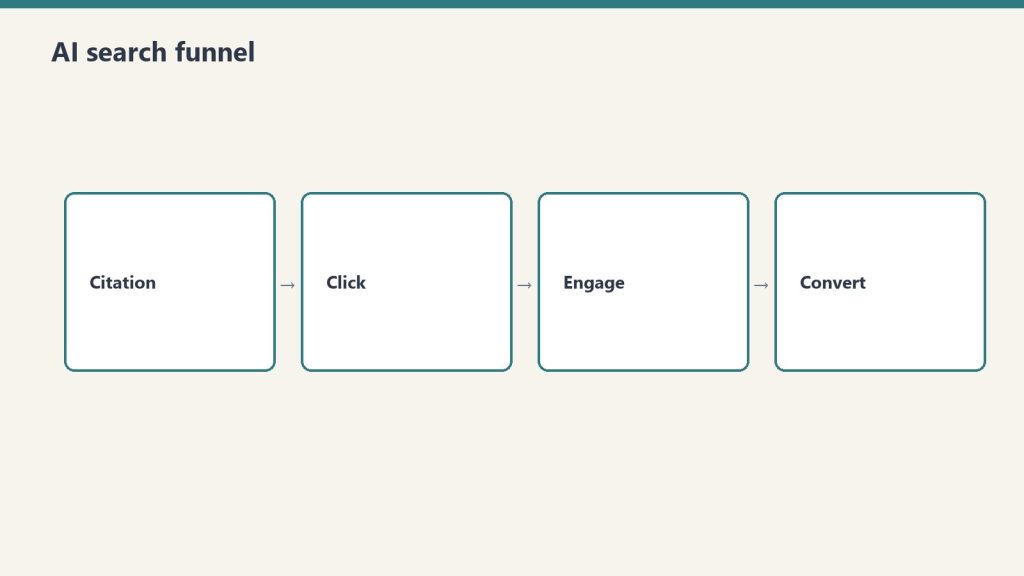
    Traditional SEO is about ranking — getting your page to appear in search results. Generative Engine Optimization (GEO) is about citation — getting AI systems to reference your content as a source when generating answers. The distinction matters because AI-generated answers don’t always include links. They include names, facts, and recommendations pulled from content they consider authoritative.

    If an AI system has ingested your content and considers it authoritative, your brand gets mentioned in answers across thousands of user queries. If it hasn’t, you’re invisible in a channel that’s growing faster than any other in search history.

    What Makes Content AI-Citable

    We’ve optimized content for AI citation across 23 sites and measured what actually drives results. The factors that matter most: entity saturation (your brand name, location, and specialties mentioned with consistent, structured clarity), factual density (statistics, specific numbers, verifiable claims), direct answer formatting (clear question-and-answer structures that AI systems can extract), and speakable schema (structured data that explicitly marks content as suitable for voice and AI consumption).

    This isn’t theoretical. We’ve watched specific articles go from zero AI mentions to being cited in ChatGPT responses within weeks of GEO optimization. The signal is clear: AI systems are hungry for authoritative, well-structured content, and most businesses are feeding them nothing.

    The Dual Strategy

    The good news: GEO and traditional SEO aren’t in conflict. Content optimized for AI citation also performs well in traditional search. The entity authority, factual density, and structured data that make content AI-citable are the same signals Google rewards. You don’t have to choose — you optimize for both simultaneously.

    The bad news: your competitors will figure this out eventually. The window to establish AI authority in your vertical is open right now. In 12 months, every agency will be selling GEO. Right now, almost nobody is doing it well. That’s the opportunity.

    {
    “@context”: “https://schema.org”,
    “@type”: “Article”,
    “headline”: “Your Competitors Are Optimizing for Google. You Should Be Optimizing for ChatGPT.”,
    “description”: “Your competitors optimize for Google. You should optimize for ChatGPT. The case for AI-first search strategy in 2026.”,
    “datePublished”: “2026-03-21”,
    “dateModified”: “2026-04-03”,
    “author”: {
    “@type”: “Person”,
    “name”: “Will Tygart”,
    “url”: “https://tygartmedia.com/about”
    },
    “publisher”: {
    “@type”: “Organization”,
    “name”: “Tygart Media”,
    “url”: “https://tygartmedia.com”,
    “logo”: {
    “@type”: “ImageObject”,
    “url”: “https://tygartmedia.com/wp-content/uploads/tygart-media-logo.png”
    }
    },
    “mainEntityOfPage”: {
    “@type”: “WebPage”,
    “@id”: “https://tygartmedia.com/optimize-for-chatgpt-not-just-google/”
    }
    }