GEO & AI Visibility - Tygart Media

Category: GEO & AI Visibility

Generative AI is rewriting the rules of discovery. When a property manager asks Claude or ChatGPT who to call for commercial water damage, your company needs to be the answer — not a suggestion buried in a list. GEO is the discipline of making your brand the one that AI systems cite, reference, and recommend. This is the frontier, and most restoration companies do not even know it exists yet.

GEO and AI Visibility covers generative engine optimization, entity authority building, AI citation strategies, knowledge graph optimization, topical authority signals, structured data for LLM consumption, and the technical frameworks that make restoration brands visible to ChatGPT, Claude, Gemini, Perplexity, and Google AI Overviews.

  • Master LinkedIn AI Citations for 2026 GEO Strategy

    Master LinkedIn AI Citations for 2026 GEO Strategy

    Something significant shifted in the AI search landscape between November 2025 and February 2026, and most content strategists have not caught up to it yet.

    LinkedIn jumped from the 11th most-cited domain to the 5th most-cited domain on ChatGPT in just three months. Profound, which tracks 1.4 million AI citations across six platforms, called it “the largest shift in authority we have seen this year.” Across all AI platforms combined, LinkedIn content now appears in 11% of all AI-generated responses.

    If you publish professional content, this is the most important GEO development of 2026.

    The Numbers Behind the Shift

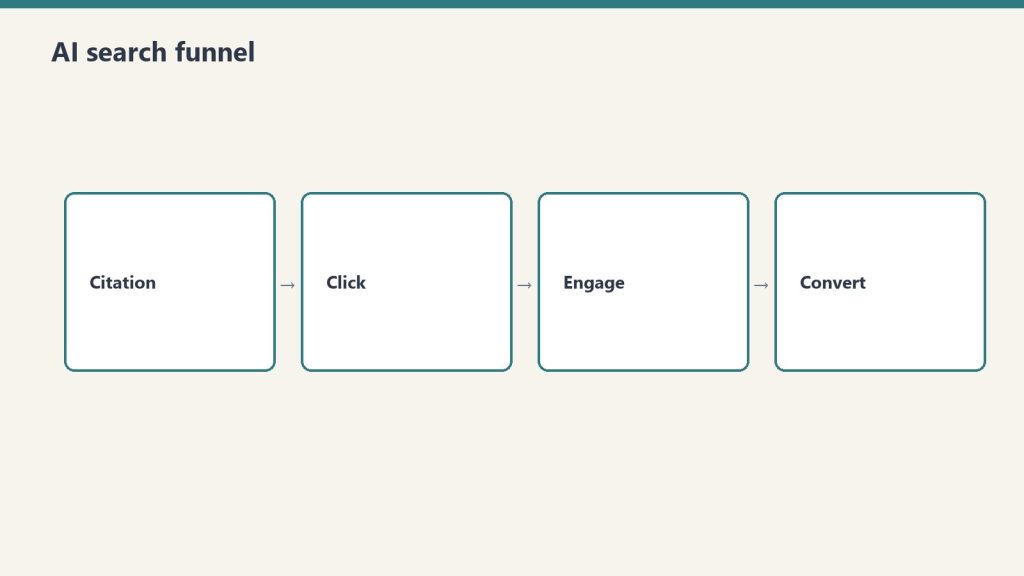
    Four-stage funnel: citation, click, engage, convert
    The numbers behind the LinkedIn citation shift.

    Semrush analyzed 325,000 prompts across ChatGPT Search, Google AI Mode, and Perplexity, identifying 89,000 unique LinkedIn URLs cited in AI-generated responses. The platform-by-platform breakdown:

    • ChatGPT Search: LinkedIn appears in 14.3% of all responses
    • Google AI Mode: LinkedIn appears in 13.5% of all responses
    • Perplexity: LinkedIn appears in 5.3% of all responses

    LinkedIn is now the #2 most-cited domain by AI systems overall and the #1 source for professional queries across every major AI platform including ChatGPT, Gemini, Perplexity, Google AI Mode, and Microsoft Copilot.

    What AI Systems Are Actually Citing

    Comparison of Claude how-to fit versus local service page fit for assistants
    What AI systems are actually citing.

    The composition of LinkedIn’s AI citations has shifted dramatically. Profile page citations — the static biographical data that dominated early LinkedIn citations — collapsed from 33.9% to just 14.5% of all LinkedIn citations in a three-month window. Meanwhile, posts and long-form articles grew from 26.9% to 34.9%.

    AI systems are not citing LinkedIn because of who you are. They are citing LinkedIn because of what you published.

    Of the 89,000 cited URLs in Semrush’s study, 50–66% are long-form Articles of 500–2,000 words, and 54–64% are educational or advice-driven content. The median cited post has just 15–25 reactions and roughly one comment. Engagement is not the primary driver of AI citation — relevance, accuracy, specificity, and structure are.

    Creators with fewer than 500 followers get cited at comparable rates to large accounts. This is not a follower game. It is a content quality and structure game.

    The Personal Profile vs Company Page Split

    One of the more strategically interesting findings from Profound’s study is that different AI platforms cite LinkedIn content differently by source type.

    ChatGPT and Google AI Mode favor personal profiles, drawing 59% of their LinkedIn citations from individual creator content versus 41% from company pages. Perplexity reverses this, drawing 59% of its LinkedIn citations from company pages and 41% from personal profiles.

    The strategic implication is a dual-publishing approach. Publishing technical and educational content on both a personal profile and a company page maximizes AI visibility across all major platforms simultaneously. They are not redundant — they are complementary, each feeding different AI citation systems.

    Why LinkedIn Content Gets Cited: The Structural Reasons

    LinkedIn’s relationship with AI systems operates through multiple channels that reinforce each other.

    First, LinkedIn content has always been publicly indexed and high-authority. With a Moz Domain Authority of 98, LinkedIn Pulse articles sit in the same crawlability tier as Wikipedia and major news publications. AI training datasets over-index on high-authority domains, meaning LinkedIn content has been proportionally well-represented in model training from the beginning.

    Second, LinkedIn rolled out a “Data for Generative AI Improvement” toggle in September 2024, set to ON by default, and expanded it to global markets in November 2025. LinkedIn is owned by Microsoft, which has a direct relationship with OpenAI. The structural pipeline from LinkedIn content to AI model training is more direct than almost any other platform.

    Third, LinkedIn content shows semantic similarity scores of 0.57–0.60 with AI-generated outputs, higher than Reddit (0.53–0.54) or Quora (0.44). AI systems are not just citing LinkedIn — they are drawing heavily on LinkedIn’s language patterns and reasoning structures when generating responses.

    What This Means for B2B and Restoration Industry Content

    For professional verticals — B2B services, restoration, real estate, finance, healthcare — LinkedIn is no longer an optional distribution channel. It is likely the single highest-leverage GEO publishing surface available.

    A structured LinkedIn Article on a technical topic in the restoration industry, AI strategy, or B2B services has a realistic path to being cited in ChatGPT, Perplexity, and Google AI Mode responses on relevant professional queries. It does not require a large following. It does not require viral engagement. It requires content that is accurate, structured, specific, and educational.

    Content reaches peak AI citation velocity 7–14 days after publishing and maintains that velocity for 90 or more days — significantly longer than Twitter/X or Reddit content, which cycles out of AI citation windows much faster.

    The Practical GEO Framework

    Desk with laptop, checklist notebook, and billing card ready before creating an Anthropic API key
    The practical GEO framework.

    Based on the citation data, the content signals that drive AI citation on LinkedIn are consistent and actionable: include specific data points, metrics, methodologies, and dates rather than generic claims. Use clear H2 heading structure that AI systems can parse for answer extraction. Write educational and advice-driven content rather than promotional content. Target 800–1,200 words per Article — long enough to establish depth, short enough to maintain density.

    The biggest opportunity right now is that most LinkedIn publishers are still optimizing for feed engagement — reactions, comments, shares. The AI citation data suggests a different optimization target: structured, data-rich, educational long-form content that looks less like a viral feed post and more like a well-sourced reference document.

    The brands and individuals who make that shift in 2026 are building citation authority that will compound for years.

    Related on Tygart Media: LinkedIn content strategy · GEO tactics · AI citation monitoring.

    Frequently Asked Questions

    Is LinkedIn the most cited source in AI search?

    LinkedIn is the #2 most-cited domain by AI systems overall and #1 for professional queries across ChatGPT, Gemini, Perplexity, Google AI Mode, and Copilot as of early 2026, appearing in approximately 11% of all AI-generated responses.

    What type of LinkedIn content gets cited by AI systems?

    50–66% of AI-cited LinkedIn content is long-form Articles of 500–2,000 words. Educational and advice-driven content accounts for 54–64% of citations. The median cited post has only 15–25 reactions — engagement is not the primary driver of AI citation.

    Does LinkedIn company page content get cited by AI?

    Yes. Perplexity draws 59% of its LinkedIn citations from company pages. ChatGPT and Google AI Mode favor personal profiles at 59%. A dual-publishing strategy covering both maximizes visibility across all AI platforms.

    How long does it take for LinkedIn content to appear in AI citations?

    LinkedIn content reaches peak AI citation velocity 7–14 days after publishing and maintains that velocity for 90 or more days — longer than most other social platforms.

  • Cross-Pollination Content Strategy for Multi-Site SEO

    Cross-Pollination Content Strategy for Multi-Site SEO

    Tygart Media / Content Strategy
    The Practitioner JournalField Notes
    By Will Tygart · Practitioner-grade · From the workbench
    What Is Cross-Pollination Content Strategy?
    Cross-pollination is a multi-site content strategy where your highest-ranking authority pages on one domain generate locally-relevant variant articles on sister sites — each variant covering the same topic from a different geographic or audience angle, and each naturally linking back to the original authority page. The result is a network of content that reinforces each other’s authority instead of competing.

    Most multi-site operators make one of two mistakes: they either publish identical content across their site family (duplicate content penalty waiting to happen) or they treat each site as a silo with no connection to the others (wasted authority potential).

    Cross-pollination threads the needle. The Beverly Loan page ranking for “Rolex watch collateral loans” becomes the hub. New York Loan publishes “Rolex collateral loans in Manhattan” — genuinely different content for a different market — that links naturally to Beverly’s page. Palm Beach publishes the Florida angle. Each variant earns its own rankings and passes authority back to the hub.

    We built and executed this strategy for the Borro family of luxury lending sites. We’ve now productized it.

    Who This Is For

    Four-stage funnel: citation, click, engage, convert
    Cross-pollination content strategy — who it is for.

    Operators managing 2+ WordPress sites that share a business umbrella, a topic cluster, or a geographic network — and who want to build content that compounds across domains instead of starting from zero on each one.

    What the Strategy Delivers

    Comparison of Claude how-to fit versus local service page fit for assistants
    What the cross-pollination strategy delivers.
    • Authority page identification — DataForSEO scan of all sites in your family to find the highest-ranking pages by domain and topic cluster
    • Variant architecture — Mapping which authority pages generate variants on which sister sites, avoiding duplication and maximizing geographic or audience differentiation
    • Variant article writing — Locally-relevant articles (800–1,200 words each) with genuine local intelligence, not just search-replaced location names
    • Natural interlinking — Each variant links to the hub authority page in context, not in a footer link farm
    • Notion log — All executed clusters logged to prevent future duplication across sessions

    What We Deliver

    Desk with laptop, checklist notebook, and billing card ready before creating an Anthropic API key
    What we deliver from a cross-pollination content system.
    ItemIncluded
    DataForSEO authority page scan across all sites in family
    Cross-pollination map (which pages spawn which variants)
    First cluster execution (5 variant articles)
    Natural interlinking injection on all variants
    Notion execution log (prevents duplicate work)
    Ongoing cluster playbook for independent execution

    Are Your Sites Competing With Each Other or Compounding?

    Tell us the URLs of the sites in your family. We’ll pull a quick authority page scan and show you the first 3 cross-pollination opportunities.

    will@tygartmedia.com

    Email only. No commitment to reply.

    Related on Tygart Media: AEO content cluster · information density · taxonomy architecture.

    Frequently Asked Questions

    Isn’t publishing similar content across sites a duplicate content risk?

    Only if the content is actually duplicated. Cross-pollination variants are genuinely different articles — different geographic market, different audience angle, different local entities and examples. They cover the same topic the way two local news outlets cover the same story: same subject, different perspective.

    How many sites do you need to run a cross-pollination strategy?

    A minimum of 2 sites sharing a topic cluster. The strategy compounds with more sites — a 4-site family generates significantly more interlinking opportunity than a 2-site pair.

    Does this work for geographically separate markets or topic-based site families?

    Both. Geographic families (same service, different cities) are the clearest use case. Topic-based families (sites covering different aspects of a shared industry) also work well — the variant logic is audience-based rather than location-based.

    Last updated: April 2026

  • WordPress AEO GEO Sprint: AI Citation Optimization

    WordPress AEO GEO Sprint: AI Citation Optimization

    Tygart Media // AEO & AI Search
    SCANNING
    CH 03 · Answer Engine Intelligence · Filed by Will Tygart
    What Is an AEO/GEO Sprint?
    An AEO (Answer Engine Optimization) and GEO (Generative Engine Optimization) Sprint is a structured retrofit of your existing WordPress content — restructuring posts so search engines surface them as direct answers, and AI systems cite them in generated responses. Not new content. Not a redesign. Your existing posts, optimized to win in a search landscape that now includes ChatGPT, Perplexity, and Google AI Overviews.

    Google’s search results page looks different than it did 18 months ago. AI Overviews now appear above the organic results. Perplexity cites specific pages instead of ranking a list. ChatGPT recommends sites it’s been trained to recognize as authoritative.

    If your existing content wasn’t built to answer questions directly, it won’t show up in any of those placements — regardless of how well it ranks for traditional SEO.

    We’ve applied this exact retrofit to over 500 posts across restoration, lending, flooring, SaaS, healthcare, and entertainment verticals. We know what changes produce featured snippet captures, what entity patterns make AI systems cite a page, and which schema structures Google’s rich results tool actually validates.

    Who This Is For

    Comparison of Claude how-to fit versus local service page fit for assistants
    Who the WordPress AEO/GEO sprint is for.

    WordPress site owners and operators with existing published content — at least 20 posts — who aren’t appearing in AI-generated answers or featured snippet placements. If you’ve been publishing consistently but not converting that content into search placements that existed 18 months ago, this sprint directly addresses that gap.

    What the Sprint Covers (Per Post)

    Four-stage funnel: citation, click, engage, convert
    What the sprint covers per post.
    • Definition box insertion — 40–60 word direct answer block at the top of the post, formatted for featured snippet capture
    • Question-led H2 restructure — Key headings rewritten as questions with direct answers in the first 50 words following each heading
    • FAQPage section — 5–8 Q&As written for People Also Ask placement, with FAQPage JSON-LD schema
    • Speakable schema blocks — Key paragraphs marked with speakable schema for voice search and AI synthesis
    • Entity saturation pass — Named entities (organizations, certifications, standards bodies, locations) identified and injected throughout
    • External citation injection — 3–5 authoritative source references added per post
    • Article + BreadcrumbList schema — Complete JSON-LD block appended to each post
    • LLMS.TXT comment block — AI-readable seed paragraph added as HTML comment for LLM citation signals

    Sprint Packages

    Desk with laptop, checklist notebook, and billing card ready before creating an Anthropic API key
    Sprint packages.
    PackagePosts CoveredTurnaround
    Starter Sprint10 posts5 business days
    Standard Sprint25 posts10 business days
    Full Site Sprint50 posts15 business days

    Posts are selected collaboratively — we prioritize by traffic volume, keyword proximity to featured snippet triggers, and entity coverage gaps.

    What You Get vs. DIY vs. Generic SEO Agency

    Tygart Media SprintDIYGeneric SEO Agency
    FAQPage JSON-LD schema on every postMaybeSometimes
    AI citation signals (LLMS.TXT, speakable)
    Entity saturation for niche-specific bodiesRarely
    Direct publish to WordPress via REST APIN/AYou review drafts
    Validated with Google Rich Results TestMaybeSometimes
    Proven in AI-heavy verticals

    Ready to Get Your Existing Content Into AI-Generated Answers?

    Send your site URL and a rough post count. We’ll identify your best 10 candidates for AEO/GEO retrofit and quote the sprint that makes sense.

    will@tygartmedia.com

    Email only. No sales call required. No commitment to reply.

    Related on Tygart Media: AEO content cluster · GEO tactics · WordPress SEO audit.

    Frequently Asked Questions

    Will this change my existing post content significantly?

    We add structured elements (definition boxes, FAQ sections, schema) and restructure key headings — we don’t rewrite the body of your posts. Your voice and factual content remain intact. All changes are reviewed before publish if requested.

    How quickly will I see results in featured snippets or AI answers?

    Google typically re-crawls optimized pages within 2–6 weeks for established sites. Featured snippet captures often appear within the first crawl cycle post-optimization. AI citation signals (Perplexity, ChatGPT) are slower — typically 1–3 months for recognition.

    Which verticals have you run this in?

    Property damage restoration, luxury asset lending, commercial flooring, B2B SaaS, healthcare services, comedy and entertainment streaming, and event technology. The entity patterns differ by vertical — we adapt the sprint to the specific certification bodies, standards organizations, and named entities that matter in your niche.

    Do I need to give you WordPress admin access?

    We use WordPress Application Passwords — a scoped credential that doesn’t expose your admin password. You create it, share it, and revoke it after the sprint. We publish directly via WordPress REST API.

    What if my site uses Elementor or another page builder on posts?

    We specifically target WordPress posts (not pages) via the REST API content field — Elementor and page builder data on pages is never touched. This is a hard operational rule we enforce on every sprint.

    Can I pick which posts get the sprint treatment?

    Yes. We provide a prioritized recommendation list, but you make the final call on which posts are included.

    Last updated: April 2026

  • AI-Ready Content: How to Structure Expert Knowledge

    AI-Ready Content: How to Structure Expert Knowledge

    Tygart Media / Content Strategy
    The Practitioner JournalField Notes
    By Will Tygart · Practitioner-grade · From the workbench

    The Human Distillery: A content methodology that extracts tacit expert knowledge — the patterns and insights practitioners carry from experience but have never written down — and structures it into AI-ready content artifacts that cannot be produced from public sources alone.

    There is a version of content marketing where the input is a keyword and the output is an article. Feed the keyword into a system, get 1,200 words back, publish. The content is technically correct. It covers the topic. And it looks exactly like every other article on the same keyword, produced by every other operator running the same system.

    This is the commodity trap. It is where most AI-native content operations end up, and it is the ceiling for operators who never solved the knowledge sourcing problem.

    The operators who break through that ceiling have one thing the others do not: access to knowledge that cannot be retrieved from a training dataset.

    The Knowledge Sourcing Problem

    Language models are trained on what has already been published. The insight that every expert in an industry carries in their head — the pattern recognition built from thousands of real jobs, the calibrated intuition about when a situation is about to get worse, the shorthand that professionals use because long-form explanation would be inefficient — none of that makes it into training data.

    It does not make it into training data because it has never been written down. The estimator who can walk through a water-damaged building and know within minutes what the final scope will look like. The veteran adjuster who can read a claim and identify the three questions that will determine how it resolves. This knowledge is the most valuable content asset in any industry. It is also, by definition, missing from every AI-generated article that cites only what is already public.

    The Distillery Model

    The human distillery is built around a simple idea: the knowledge is in the expert. The job of the content system is to extract it, structure it, and make it accessible — to both human readers and AI systems that will index and cite it. The process has three stages.

    Stage 1: Extraction

    You sit with the expert — or review their recorded calls, their written communication, their field notes. You are not looking for quotable statements. You are looking for the patterns underneath the statements. The things they say that cannot be found in any manual because they were learned from experience rather than taught from documentation.

    Extraction is the editorial intelligence layer. It requires a human who can distinguish between “interesting” and “actionable,” between common knowledge and rare insight. The extractor is asking: what does this expert know that their industry does not know how to say yet?

    Stage 2: Structuring

    Raw expert knowledge is not content. It is material. The second stage takes the extracted insight and builds it into a form that is both readable and machine-parseable — a clear argument, a logical progression, named frameworks where the expert’s mental model deserves a name, specific examples that ground the abstraction, FAQ layers that translate the insight into the questions real people search for.

    The structuring stage is where SEO, AEO, and GEO optimization intersect with editorial work. The insight gets the right headings, the definition box, the schema markup, the entity enrichment. It becomes content that a machine can parse correctly and a reader can actually use.

    Stage 3: Distribution

    Structured expert knowledge goes into the content database — tagged, categorized, cross-linked, published. But distribution in the distillery model means something more than publishing. It means the knowledge is now an addressable artifact: a URL that can be cited, a structured data object that AI systems can parse, a piece of writing that future content can reference and build on.

    The expert’s knowledge, which existed only in their head this morning, is now part of the searchable, indexable, AI-queryable record of what their industry knows.

    Why This Produces Content That Cannot Be Commoditized

    The commodity trap that AI content falls into is a sourcing problem. If every operator is pulling from the same training data, every output approximates the same answers. The differentiation is in the writing quality and the optimization — not in the underlying knowledge.

    Distilled expert content has a different raw material. The insight itself is proprietary. It reflects what one expert learned from one specific set of experiences. Even if the structuring and optimization layers are identical to every other operator’s workflow, the output is different because the input was different.

    This is the only durable competitive advantage in content marketing: knowing something that the algorithms cannot retrieve because it was never written down. The distillery’s job is to write it down.

    The AI-Readiness Layer

    AI search systems — when synthesizing answers from web content — are looking for the most authoritative, specific, well-structured answer to a given query. Generic content that rephrases what is already in training data adds little value to the synthesis. Content that contains specific, verifiable, experience-grounded insight — with named entities, factual specificity, and clear semantic structure — is the content that gets cited.

    The human distillery, properly executed, produces exactly that kind of content. The expert’s knowledge is inherently specific. The structuring layer makes it machine-readable. The optimization layer makes it findable.

    What This Looks Like in Practice

    For a restoration contractor: the owner does a post-job debrief — what happened, what was hard, what the client did not understand going in. That debrief becomes the raw material for three articles: one technical reference, one how-to, one FAQ layer. The contractor’s real-world experience is the input. The content system structures and publishes it.

    For a specialty lender: the loan officer walks through how they evaluate a piece of collateral — the factors they weight, the signals they look for, the common errors first-time borrowers make in presenting assets. That walk-through becomes a decision framework article that no competitor has published, because no competitor has extracted it from their own experts.

    For a solo agency operator managing multiple client sites: every client conversation surfaces knowledge — about their industry, their customers, their operational context. The distillery captures that knowledge before it evaporates, structures it into content, and publishes it under the client’s authority. The client gets content that reflects actual expertise. The operator gets a differentiated product that AI cannot replicate.

    The Strategic Position

    The operators who understand the human distillery model are building content assets that will hold value regardless of how AI search evolves. AI systems are trained to identify and cite authoritative, specific, experience-grounded knowledge. Content that already meets that standard is always ahead.

    Generic content produced from generic inputs will always be at risk of being outcompeted by the next model with better training data. Distilled expert knowledge will always have a provenance advantage — it came from someone who was there.

    Build the distillery. The knowledge is already in the room.

    Frequently Asked Questions

    What is the human distillery in content marketing?

    The human distillery is a content methodology that extracts tacit expert knowledge — patterns and insights practitioners carry from experience but have never written down — and structures it into AI-ready content artifacts. The three stages are extraction, structuring, and distribution.

    Why is expert knowledge valuable for SEO and AI search?

    AI search systems are looking for authoritative, specific, experience-grounded content when synthesizing answers. Generic content adds little value to AI synthesis. Expert knowledge contains verifiable insight that both search engines and AI systems recognize as more authoritative than commodity content.

    What is tacit knowledge and why does it matter for content?

    Tacit knowledge is expertise that practitioners carry from experience but have not explicitly documented — calibrated intuitions, pattern recognition, and professional shorthand that come from doing rather than studying. It cannot be retrieved from public sources or training data, making it the only genuinely differentiated content input available.

    What makes content AI-ready?

    AI-ready content is specific, factually grounded, structurally clear, and semantically rich. It contains named entities, concrete examples, direct answers to real questions, and schema markup that helps machines parse its type and context. AI systems cite content that adds something to the synthesis.

    How does the human distillery model create a competitive advantage?

    The competitive advantage comes from the raw material. If all content operations draw from the same public sources and training data, their outputs converge. Distilled expert knowledge has a proprietary input that cannot be replicated without access to the same expert. The optimization layers can be copied; the knowledge cannot.

    Related: The system that distributes distilled knowledge at scale — The Solo Operator’s Content Stack.

  • AI Citation Optimization: How to Get Cited by AI Systems

    AI Citation Optimization: How to Get Cited by AI Systems

    Tygart Media / Content Strategy
    The Practitioner JournalField Notes
    By Will Tygart
    · Practitioner-grade
    · From the workbench

    Being cited by AI systems is not luck and it’s not purely a domain authority game. There are structural characteristics of content that make AI systems more or less likely to pull from it. Here’s what those characteristics are and how to build them in deliberately.

    Why Content Structure Determines Citation Likelihood

    AI systems — whether Perplexity, ChatGPT with web search, or Google AI Overviews — are trying to answer a question. When they search the web and retrieve candidate content, they’re looking for the passage or page that most directly and reliably answers the query. The content that wins is the content that makes the answer easiest to extract.

    This has direct structural implications. A 3,000-word narrative essay that eventually answers a question on page 2 loses to a 600-word page that answers the question in the first paragraph, provides supporting evidence, and includes a definition. Not because shorter is better, but because clarity of answer placement is better.

    The Structural Characteristics That Drive Citation

    1. Direct Answer in the First 100 Words

    Every piece of content you want AI systems to cite should answer the primary question it’s targeting before the first scroll. AI retrieval systems don’t read like humans — they identify the most relevant passage, and that passage needs to contain the answer, not just lead toward it.

    Test: take your target query and your first 100 words. Does the answer exist in those 100 words? If not, restructure until it does. The rest of the piece can develop nuance, context, and supporting evidence — but the answer must be front-loaded.

    2. Explicit Q&A Formatting

    Question-and-answer structure signals to AI systems that the content is explicitly organized around answering queries. H3 headers phrased as questions, followed by direct answers, are one of the most reliable patterns for citation capture.

    This is why FAQ sections work — not because of FAQPage schema specifically, but because the underlying structure gives AI systems a clean extraction target. Schema reinforces it; the structure is the foundation.

    3. Defined Terms and Named Concepts

    Content that defines terms clearly — “X is Y” statements — becomes citable for queries looking for definitions. AI systems frequently answer “what is X” queries by pulling the clearest definition they can find. If your content doesn’t include a crisp definitional sentence, it’s not competing for definition queries even if you’ve written a thorough treatment of the topic.

    Add definition boxes. State “AI citation rate is the percentage of sampled AI queries where your domain appears as a cited source.” Don’t bury the definition in the third paragraph of an explanation.

    4. Specific, Verifiable Facts

    AI systems weight specificity. “$0.08 per session-hour” gets cited. “A relatively modest fee” does not. “60 requests per minute for create endpoints” gets cited. “Limited rate limits apply” does not.

    Replace hedged language with concrete numbers and specific claims wherever your content supports it. Don’t fabricate specificity — wrong specific numbers are worse than honest hedging. But wherever you have real, verifiable data, make it explicit and prominent.

    5. Entity Clarity

    Content that makes clear who is speaking, what organization they represent, and what their basis for authority is gets cited more reliably. This is the E-E-A-T signal applied to AI citation: the system needs to assess whether this source is credible enough to cite.

    Name the author. State the organization. Link to primary sources. Include dates on time-sensitive claims (“as of April 2026”). These signals tell the AI system this content has an accountable source, not anonymous text.

    6. Freshness on Time-Sensitive Topics

    For any topic where recency matters — product pricing, regulatory status, current events — AI systems heavily weight recently indexed, recently updated content. A page published April 2026 beats a page published January 2025 for queries about current status, even if the older page has higher domain authority.

    Update time-sensitive content. Add “last updated” dates. Re-publish with fresh timestamps when the underlying facts change. Freshness signals are real citation drivers for volatile topic areas.

    7. Speakable and Structured Data Markup

    Speakable schema explicitly marks the passages in your content best suited for AI extraction. It’s a direct signal to AI retrieval systems: “this paragraph is the answer.” Combined with FAQPage schema, Article schema, and HowTo schema where relevant, structured markup makes your content more parseable.

    Schema doesn’t replace the underlying structure — it reinforces it. A well-structured page with schema beats a poorly structured page with schema. But a well-structured page with schema beats a well-structured page without it.

    8. Internal Link Architecture

    AI systems that crawl the web assess topical depth partly through link structure. A page that sits within a tight cluster of related pages — all cross-linking around a topic — signals topical authority more strongly than an isolated page, even if the isolated page’s content is comparable.

    Build the cluster. The hub-and-spoke architecture is as relevant for AI citation as it is for traditional SEO. Every spoke article should link to the hub; the hub should link to every spoke.

    What Doesn’t Work

    A few patterns that are intuitively appealing but don’t translate to citation lift:

    • More content for its own sake: 5,000 words of padded content is not more citable than 900 words of dense, accurate content. AI retrieval is looking for passage quality, not page length.
    • Keyword density: Traditional keyword repetition strategies don’t make content more citable. The query match is handled at retrieval; the citation decision is about answer quality, not keyword frequency.
    • Generic authority claims: “We’re the leading experts in X” is not citable. A specific data point that demonstrates expertise is.

    The Compound Effect

    These characteristics compound. A page with a direct front-loaded answer, Q&A structure, defined terms, specific facts, clear entity signals, fresh timestamps, and schema markup sitting within a well-linked cluster is materially more citable than a page with only two or three of these characteristics. The full stack produces disproportionate results.

    For the monitoring layer: How to Track When AI Systems Cite You. For the metrics: What Is AI Citation Rate?. For the full citation monitoring guide: AI Citation Monitoring Guide.


    For the infrastructure layer: Claude Managed Agents Pricing Reference | Complete FAQ Hub.

  • AI Citation Monitoring Tools — What Exists, What Doesn’t, What We Built

    AI Citation Monitoring Tools — What Exists, What Doesn’t, What We Built

    The Lab · Tygart Media
    Experiment Nº 570 · Methodology Notes
    METHODS · OBSERVATIONS · RESULTS

    You want to monitor whether AI systems are citing your content. What tools actually exist for this, what they do, what they don’t do, and what we’ve built ourselves when nothing on the market fit.

    The Market as of April 2026

    Four-stage funnel: citation, click, engage, convert
    The market as of April 2026.

    The AI citation monitoring category is real but nascent. Here’s an honest inventory:

    Established SEO Platforms Adding AI Visibility Metrics

    Several major SEO platforms have added “AI visibility” or “AI search” modules in the past 6–12 months. These generally track:

    • Whether your domain appears in AI Overviews for tracked keywords (via SERP scraping)
    • Brand mentions in AI-generated snippets
    • Comparative visibility versus competitors in AI search results

    Ahrefs, Semrush, and Moz have all moved in this direction to varying degrees. Verify current feature availability — this has been an active development area and capabilities have changed rapidly.

    Mention Monitoring Tools Expanding to AI

    Brand mention tools like Brand24 and Mention have begun tracking AI-generated content that includes brand references. The challenge: they’re tracking brand name occurrences in crawled content, not necessarily AI citation events. Useful for brand visibility in AI-generated content that gets published, less useful for tracking in-session citations.

    Purpose-Built AI Citation Tools (Emerging)

    Several purpose-built tools targeting AI citation tracking specifically have launched or raised funding in early 2026. This category is moving fast. As of our last check:

    • Tools focused on tracking specific brand or entity mentions across AI platforms
    • API-first tools targeting developers who want to build citation monitoring into their own workflows
    • Dashboard tools with pre-built query sets for common industry categories

    Treat any specific product recommendation here as a starting point for your own research — the category will look different in 6 months.

    Google Search Console

    The strongest existing tool, and it’s free. AI Overviews that cite your pages register as impressions and clicks in GSC under the relevant queries. This is first-party data from Google itself. Limitation: covers only Google AI Overviews, not Perplexity, ChatGPT, or other platforms.

    What We Built

    Desk with laptop, checklist notebook, and billing card ready before creating an Anthropic API key
    What we built.

    When no existing tool covered the specific workflows we needed, we built our own. The stack:

    Perplexity API Query Runner

    A Cloud Run service that runs a predefined query set against Perplexity’s API on a weekly schedule. It parses the citations field from each response, checks for domain appearances, and writes results to a BigQuery table. Total engineering time: roughly one day. Ongoing cost: minimal (Cloud Run idle cost + Perplexity API usage).

    The output: a weekly BigQuery record per query showing which domains Perplexity cited, with timestamps. Trend queries show citation rate over time by query cluster.

    GSC AI Overview Monitor

    Not a custom build — just systematic review of GSC data. We check weekly which queries are generating AI Overview impressions for our tracked sites. The signal: if a page is generating AI Overview impressions on new queries, that’s a citation event.

    Manual ChatGPT Sampling

    For highest-priority queries, manual weekly sampling of ChatGPT with web search enabled. We log results to a shared spreadsheet. Less scalable than the API approach, but ChatGPT’s web search activation is inconsistent enough that API automation adds complexity without proportional reliability gain.

    What Doesn’t Exist (That Would Be Useful)

    Comparison of Claude how-to fit versus local service page fit for assistants
    What doesn’t exist that would be useful.

    The tool gaps that we still feel:

    • Cross-platform citation dashboard: A single view showing citation rate across Perplexity, ChatGPT, Gemini, and AI Overviews for the same query set. Nobody has built this cleanly yet.
    • Historical citation rate database: Knowing your citation rate is useful. Knowing whether it improved after you published a new piece of content is more useful. The temporal correlation is hard to establish with spot-check sampling.
    • Competitor citation tracking at scale: Easy to check manually for specific queries; hard to monitor systematically across a large competitor set and query space.

    These gaps exist because the category is new, not because the problems are technically hard. Expect the tool landscape to fill in significantly over the next 12 months.

    How to calculate citation rate: What Is AI Citation Rate?. How to set up tracking: How to Track When ChatGPT or Perplexity Cites Your Content. How to optimize for citations: How to Write Content That AI Systems Cite.

    Related on Tygart Media: AI citation monitoring guide · track citations · citing sources.


    The Perplexity API monitoring stack we built runs on Claude. For the hosted infrastructure context: Claude Managed Agents Pricing Reference | Complete FAQ.

  • What Is AI Citation Rate? (And How to Calculate Yours)

    What Is AI Citation Rate? (And How to Calculate Yours)

    Last verified: September 15, 2026

    Citation rate calculation for AI-generated responses: (queries in your sample where the model cited your domain or URL) ÷ (total queries you sampled) × 100. That is a rate. Bing Webmaster Tools AI Performance reports a raw citation count and a per-query citation share. Do not treat either Bing number as this rate until you pick a denominator.

    Direct Answer (9 September 2026): Rate = cited ÷ sampled × 100. Worked example from this site’s query export dated 9 September 2026 (trailing ~30 days): 913 grounding queries, ~126,700 citations to tygartmedia.com. The query family “citation rate calculation AI-generated responses” sat at 11,123 citations / 34.06% share. Share is Bing’s slice of groundings for that query, not your sampled rate.

    Definition

    AI Citation Rate

    The percentage of sampled AI queries where a specific domain or URL appears as a cited source.

    Formula: (Queries where your domain appeared as a source) ÷ (Total queries sampled) × 100

    Citations vs citation rate (the Bing trap)

    • Citation count — how many times an AI grounded on your URL. Bing Page Stats.
    • Citation share — Bing’s percentage of groundings for that query that used you. 34% share on an 11k-cite query still leaves the majority of groundings on other domains.
    • Citation rate — count ÷ a denominator you define (your sample, or your domain total in that window).

    How to calculate it

    1. Define your sample. Pick 20–100 queries you care about. Sample separately on Perplexity, ChatGPT with search, Google AI Overviews, and Bing/Copilot — do not blend platforms into one rate.
    2. Log every query. Cited yes/no, URL vs domain-only, date.
    3. Rate = cited ÷ sampled × 100, by platform and query cluster. Baseline 4–6 weeks, then measure the delta after you patch the ranking slug. Do not mint a twin URL for the same intent.

    Vertical example: a $1–10M restoration shop

    Do not use Tygart Media’s Claude-pricing share as the shop’s KPI. Sample the 20 queries that match how that shop gets hired: water damage + city, Xactimate supplement, emergency vs rebuild. Count whether the contractor domain, GBP, or a Tygart-managed spoke was cited. One citation on a software-evaluation query is not a booked job. See value of an AI citation and profitability dashboards.

    FAQ

    How do you calculate citation rate for AI-generated responses?
    Cited queries ÷ sampled queries × 100. Per platform.

    Is a Bing AI Performance citation count a citation rate?
    No. It is a count. Share is a different fraction. Rate needs your sample.

    What is a good AI citation rate?
    No public standard. Track your line after content changes.

    Related: Claude pricing hub · Bing AI Performance · track citations.

  • How to Track When ChatGPT or Perplexity Cites Your Content

    How to Track When ChatGPT or Perplexity Cites Your Content

    Tygart Media Strategy
    Volume Ⅰ · Issue 04Quarterly Position
    By Will Tygart Long-form Position Practitioner-grade

    ChatGPT cited a competitor’s blog post instead of yours. Perplexity summarized the wrong article. An AI answer engine described your service category without mentioning you. You’d like to know when this happens — and whether it’s improving over time.

    The problem: no one has built a clean, turnkey tool for this yet. Here’s what actually exists, what we’ve pieced together, and what a real tracking setup looks like.

    Why This Is Hard

    Four-stage funnel: citation, click, engage, convert
    Why tracking ChatGPT and Perplexity citations is hard.

    Web search citation tracking is solved: rank trackers like Ahrefs and SEMrush show you who’s linking to what. AI citation tracking has no equivalent infrastructure. Here’s why:

    • Non-deterministic outputs: Ask ChatGPT the same question twice; you may get different sources cited, or no sources at all. There’s no persistent ranking to track.
    • No public citation index: Google’s index is crawlable. There’s no equivalent for “content that AI systems have cited in responses.” You can’t pull a report.
    • Variable source disclosure: Perplexity shows sources. ChatGPT’s web-enabled mode shows sources sometimes. Gemini shows sources. Claude generally doesn’t show sources in the same way. Tracking works where sources are disclosed; it breaks where they aren’t.
    • Query sensitivity: Your content might get cited for one phrasing and completely missed for a near-synonym. There’s no search volume data to tell you which phrasings matter.

    What Actually Exists Today

    Comparison of Claude how-to fit versus local service page fit for assistants
    What actually exists today for citation monitoring.

    Manual Query Sampling

    The only fully reliable method: run queries yourself and check the sources cited. For a content monitoring program this might look like:

    • Define 20–50 queries where you want to appear (covering your core topics)
    • Run each query in Perplexity, ChatGPT (web-enabled), and Gemini weekly or biweekly
    • Log whether your domain appears in cited sources
    • Track citation rate (appearances / total queries run) over time

    This is tedious but gives you ground truth. It’s what a real monitoring program looks like before you automate it.

    Perplexity Source Tracking

    Perplexity consistently displays its sources, making it the most tractable platform for systematic citation tracking. A simple automated approach:

    • Use Perplexity’s API to query your target questions programmatically
    • Parse the citations field in the response
    • Check whether your domain appears
    • Log and aggregate over time

    Perplexity’s API is available with a subscription. The citations field returns the URLs Perplexity used to generate its answer. You can run this as a scheduled Cloud Run job and dump results to BigQuery for trend analysis.

    ChatGPT Web Search Mode

    When ChatGPT uses web search (either via the browsing tool or search-enabled API), it returns source citations. The search-enabled ChatGPT API (available with OpenAI API access) gives you programmatic access to these citations. Same approach: define queries, run them, parse citations, track your domain.

    Limitation: not all ChatGPT responses use web search. For queries it answers from training data, no source is cited and you have no visibility into whether your content influenced the answer.

    Google AI Overviews

    Google AI Overviews (formerly SGE) shows cited sources inline in search results. You can track these through Google Search Console for your own content — if Google’s AI Overview cites your page, that page gets an impression and potentially a click recorded in GSC under that query. This is the only AI citation signal with first-party tracking infrastructure.

    Emerging Tools

    As of April 2026, several tools are building toward AI citation tracking as a category: mention monitoring services that have added AI search coverage, SEO platforms adding “AI visibility” metrics, and purpose-built tools targeting this specific problem. The category is forming but not mature. Verify current capabilities — this space has changed significantly in the past six months.

    What a Real Monitoring Setup Looks Like

    Desk with laptop, checklist notebook, and billing card ready before creating an Anthropic API key
    What a real monitoring setup looks like.

    Here’s the practical stack we’ve assembled for tracking citation presence across AI platforms:

    1. Define your query set: 30–50 queries across your core topic clusters. Weight toward queries where you have existing content and where you’re trying to establish authority.
    2. Perplexity API integration: Scheduled weekly run. Parse citations. Log domain appearances to a tracking spreadsheet or BigQuery table.
    3. ChatGPT web search sampling: Less systematic — manual sampling weekly for highest-priority queries. The API approach works but requires more engineering to handle variability in when web search activates.
    4. Google Search Console: Monitor AI Overview impressions. This is your strongest signal because it’s Google’s own data, not sampled queries.
    5. Baseline and trend: After 4–6 weeks of tracking, you have a baseline citation rate. Changes correlate (imperfectly) with content quality improvements, new publications, and competitor activity.

    What Citation Rate Actually Tells You

    Citation rate — your domain appearances divided by total queries sampled — is a proxy metric, not a direct ranking signal. What drives it:

    • Content freshness: AI systems prefer recently indexed, recently updated content for queries about current information
    • Structural clarity: Content with explicit Q&A structure, defined terms, and direct factual claims gets cited more reliably than narrative content
    • Domain authority signals: The same signals that help SEO rankings help AI citation rates — but the weighting may differ by platform
    • Entity specificity: Content that clearly establishes your brand as an entity with defined characteristics gets cited more consistently than generic content

    For the content optimization angle: AI Citation Monitoring Guide. For the broader GEO picture: What Managed Agents means for content visibility.

    Related on Tygart Media: citing sources SEO benefits · information density is the new SEO · category architecture that ranks.

    For the hosted agent infrastructure context: Claude Managed Agents Pricing Reference — how the billing works for agents that could automate citation monitoring workflows.

  • The claude_delta Standard: How We Built a Context Engineering System for a 27-Site AI Operation

    The claude_delta Standard: How We Built a Context Engineering System for a 27-Site AI Operation

    The Machine Room · Under the Hood

    What Is the claude_delta Standard?

    Four cards for content, ops, build, and knowledge work with Claude
    What is the claude_delta standard?

    The claude_delta standard is a lightweight JSON metadata block injected at the top of every page in a Notion workspace. It gives an AI agent — specifically Claude — a machine-readable summary of that page’s current state, status, key data, and the first action to take when resuming work. Instead of fetching and reading a full page to understand what it contains, Claude reads the delta and often knows everything it needs in under 100 tokens.

    Think of it as a git commit message for your knowledge base — a structured, always-current summary that lives at the top of every page and tells any AI agent exactly where things stand.

    Why We Built It: The Context Engineering Problem

    Long paper tape measure unrolling across a desk beside a laptop, metaphor for context window length
    Why we built it — the context engineering problem.

    Running an AI-native content operation across 27+ WordPress sites means Claude needs to orient quickly at the start of every session. Without any memory scaffolding, the opening minutes of every session are spent on reconnaissance: fetch the project page, fetch the sub-pages, fetch the task log, cross-reference against other sites. Each Notion fetch adds 2–5 seconds and consumes a meaningful slice of the context window — the working memory that Claude has available for actual work.

    This is the core problem that context engineering exists to solve. Over 70% of errors in modern LLM applications stem not from insufficient model capability but from incomplete, irrelevant, or poorly structured context, according to a 2024 RAG survey cited by Meta Intelligence. The bottleneck in 2026 isn’t the model — it’s the quality of what you feed it.

    We were hitting this ceiling. Important project state was buried in long session logs. Status questions required 4–6 sequential fetches. Automated agents — the toggle scanner, the triage agent, the weekly synthesizer — were spending most of their token budget just finding their footing before doing any real work.

    The claude_delta standard was the solution we built to fix this from the ground up.

    How It Works

    Desk with laptop, checklist notebook, and billing card ready before creating an Anthropic API key
    How it works.

    Every Notion page in the workspace gets a JSON block injected at the very top — before any human content. The format looks like this:

    {
      "claude_delta": {
        "page_id": "uuid",
        "page_type": "task | knowledge | sop | briefing",
        "status": "not_started | in_progress | blocked | complete | evergreen",
        "summary": "One sentence describing current state",
        "entities": ["site or project names"],
        "resume_instruction": "First thing Claude should do",
        "key_data": {},
        "last_updated": "ISO timestamp"
      }
    }

    The standard pairs with a master registry — the Claude Context Index — a single Notion page that aggregates delta summaries from every page in the workspace. When Claude starts a session, fetching the Context Index (one API call) gives it orientation across the entire operation. Individual page fetches only happen when Claude needs to act on something, not just understand it.

    What We Did: The Rollout

    We executed the full rollout across the Notion workspace in a single extended session on April 8, 2026. The scope:

    • 70+ pages processed in one session, starting from a base of 79 and reaching 167 out of approximately 300 total workspace pages
    • All 22 website Focus Rooms received deltas with site-specific status and resume instructions
    • All 7 entity Focus Rooms received deltas linking to relevant strategy and blocker context
    • Session logs, build logs, desk logs, and content batch pages all injected with structured state
    • The Context Index updated three times during the session to reflect the running total

    The injection process for each page follows a read-then-write pattern: fetch the page content, synthesize a delta from what’s actually there (not from memory), inject at the top via Notion’s update_content API, and move on. Pages with active state get full deltas. Completed or evergreen pages get lightweight markers. Archived operational logs (stale work detector runs, etc.) get skipped entirely.

    The Validation Test

    After the rollout, we ran a structured A/B test to measure the real impact. Five questions that mimic real session-opening patterns — the kinds of things you’d actually say at the start of a workday.

    The results were clear:

    • 4 out of 5 questions answered correctly from deltas alone, with zero additional Notion fetches required
    • Each correct answer saved 2–4 fetches, or roughly 10–25 seconds of tool call time
    • One failure: a client checklist showed 0/6 complete in the delta when the live page showed 6/6 — a staleness issue, not a structural one
    • Exact numerical data (word counts, post IDs, link counts) matched the live pages to the digit on all verified tests

    The failure mode is worth understanding: a delta becomes stale when a page gets updated after its delta was written. The fix is simple — check last_updated before trusting a delta on any in_progress page older than 3 days. If it’s stale, a single verification fetch is cheaper than the 4–6 fetches that would have been needed without the delta at all.

    Why This Matters Beyond Our Operation

    2025 was the year of “retention without understanding.” Vendors rushed to add retention features — from persistent chat threads and long context windows to AI memory spaces and company knowledge base integrations. AI systems could recall facts, but still lacked understanding. They knew what happened, but not why it mattered, for whom, or how those facts relate to each other in context.

    The claude_delta standard is a lightweight answer to this problem at the individual operator level. It’s not a vector database. It’s not a RAG pipeline. Long-term memory lives outside the model, usually in vector databases for quick retrieval. Because it’s external, this memory can grow, update, and persist beyond the model’s context window. But vector databases are infrastructure — they require embedding pipelines, similarity search, and significant engineering overhead.

    What we built is something a single operator can deploy in an afternoon: a structured metadata convention that lives inside the tool you’re already using (Notion), updated by the AI itself, readable by any agent with Notion API access. No new infrastructure. No embeddings. No vector index to maintain.

    Context Engineering is a systematic methodology that focuses not just on the prompt itself, but on ensuring the model has all the context needed to complete a task at the moment of LLM inference — including the right knowledge, relevant history, appropriate tool descriptions, and structured instructions. If Prompt Engineering is “writing a good letter,” then Context Engineering is “building the entire postal system.”

    The claude_delta standard is a small piece of that postal system — the address label that tells the carrier exactly what’s in the package before they open it.

    The Staleness Problem and How We’re Solving It

    The one structural weakness in any delta-based system is staleness. A delta that was accurate yesterday may be wrong today if the underlying page was updated. We identified three mitigation strategies:

    1. Age check rule: For any in_progress page with a last_updated more than 3 days old, always verify with a live fetch before acting on the delta
    2. Agent-maintained freshness: The automated agents that update pages (toggle scanner, triage agent, content guardian) should also update the delta on the same API call
    3. Context Index timestamp: The master registry shows its own last-updated time, so you know how fresh the index itself is

    None of these require external tooling. They’re behavioral rules baked into how Claude operates on this workspace.

    What’s Next

    The rollout is at 167 of approximately 300 pages. The remaining ~130 pages include older session logs from March, a new client project sub-pages, the Technical Reference domain sub-pages, and a tail of Second Brain auto-entries. These will be processed in subsequent sessions using the same read-then-inject pattern.

    The longer-term evolution of this system points toward what the field is calling Agentic RAG — an architecture that upgrades the traditional “retrieve-generate” single-pass pipeline into an intelligent agent architecture with planning, reflection, and self-correction capabilities. The BigQuery operations_ledger on GCP is already designed for this: 925 knowledge chunks with embeddings via text-embedding-005, ready for semantic retrieval when the delta system alone isn’t enough to answer a complex cross-workspace query.

    For now, the delta standard is the right tool for the job — low overhead, human-readable, self-maintaining, and already demonstrably cutting session startup time by 60–80% on the questions we tested.

    Related on Tygart Media: managed agents memory · invisible agent layer · information density.

    Frequently Asked Questions

    What is the claude_delta standard?

    The claude_delta standard is a structured JSON metadata block injected at the top of Notion pages that gives AI agents a machine-readable summary of each page’s current status, key data, and next action — without requiring a full page fetch to understand context.

    How does claude_delta differ from RAG?

    RAG (Retrieval-Augmented Generation) uses vector embeddings and semantic search to retrieve relevant chunks from a knowledge base. Claude_delta is a simpler, deterministic approach: a structured summary at a known location in a known format. RAG scales to massive knowledge bases; claude_delta is designed for a single operator’s structured workspace where pages have clear ownership and status.

    How do you prevent delta summaries from going stale?

    The key_data field includes a last_updated timestamp. Any delta on an in_progress page older than 3 days triggers a verification fetch before Claude acts on it. Automated agents that modify pages are also expected to update the delta in the same API call.

    Can this approach work for other AI systems besides Claude?

    Yes. The JSON format is model-agnostic. Any agent with Notion API access can read and write claude_delta blocks. The standard was designed with Claude’s context window and tool-call economics in mind, but the pattern applies to any agent that needs to orient quickly across a large structured workspace.

    What is the Claude Context Index?

    The Claude Context Index is a master registry page in Notion that aggregates delta summaries from every processed page in the workspace. It’s the first page Claude fetches at the start of any session — a single API call that provides workspace-wide orientation across all active projects, tasks, and site operations.

  • AI Citation Monitoring: The Complete 2026 Guide to Tracking ChatGPT, Claude & Perplexity Mentions

    AI Citation Monitoring: The Complete 2026 Guide to Tracking ChatGPT, Claude & Perplexity Mentions

    Tygart Media // AEO & AI Search
    SCANNING
    CH 03 · Answer Engine Intelligence · Filed by Will Tygart

    What is AI citation monitoring? AI citation monitoring is the practice of systematically tracking whether generative AI systems — including ChatGPT, Claude, Perplexity, Google AI Overviews, and similar tools — are citing, referencing, or recommending your content when users ask relevant questions. It’s the GEO equivalent of rank tracking: instead of asking “where do I rank on Google?”, you’re asking “does AI think I’m worth mentioning?”

    Here’s a scenario that’s playing out right now across thousands of websites: a business owner spends months creating genuinely excellent content. It ranks well. People find it. The traffic dashboards look good. And then, quietly, something changes. Fewer people are clicking through from Google. The traffic dips but the rankings haven’t moved. What happened?

    AI happened. Specifically: AI search features are now answering questions directly — and the content they choose to summarize, reference, or cite is not necessarily the content that ranks #1. It’s the content that AI systems have determined is trustworthy, factual, well-structured, and authoritative. Whether that’s you depends on whether you’ve been paying attention.

    AI citation monitoring is how you pay attention.

    Why AI Citations Are a New Category of Search Visibility

    Four-stage funnel: citation, click, engage, convert
    Why AI citations are a new category of search visibility.

    Traditional SEO gave us a clean, rankable world. Query goes in, ten blue links come out, you live or die by position one through ten. The metrics were unambiguous. Either you’re visible or you’re not.

    AI search doesn’t work that way. When someone asks ChatGPT a question, they don’t get ten links — they get an answer. That answer might cite your content, paraphrase it without attribution, or ignore it entirely in favor of a competitor whose content happened to be better structured for machine consumption. There’s no “position 1” equivalent. There’s cited, mentioned, or absent.

    This creates a new visibility dimension that most businesses aren’t tracking at all. They’re optimizing for Google’s traditional index while AI systems quietly form opinions about whose content is worth recommending — and those opinions are influencing a growing share of how people discover information.

    According to data from Semrush and BrightEdge, AI Overviews now appear in roughly 13-15% of all Google searches in the US as of early 2026 — disproportionately for informational queries, which are exactly the queries that content marketing is designed to capture. If your content isn’t getting cited in those overviews, you’re invisible to a significant portion of your potential audience.

    What AI Citation Monitoring Actually Involves

    Comparison of Claude how-to fit versus local service page fit for assistants
    What AI citation monitoring actually involves.

    AI citation monitoring has three core components — and they require different approaches because each AI system works differently.

    Google AI Overviews monitoring. This is the highest-volume opportunity for most businesses. Google’s AI Overviews appear at the top of search results for qualifying queries and pull from indexed web content. You can monitor citation appearances using rank tracking tools that have added AI Overview detection — Semrush, Ahrefs, and SE Ranking all have versions of this. The manual approach: run your target queries in a fresh browser session and note whether your domain appears in any AI Overview source citations.

    Perplexity monitoring. Perplexity is citation-native — it almost always shows source links. This makes it easier to monitor: run your core queries directly in Perplexity and see what it cites. You can do this manually at scale by building a query list and running it weekly. There are also emerging tools like Profound and Otterly.ai that automate Perplexity citation tracking.

    ChatGPT and Claude monitoring. These are harder because responses vary by session, model version, and user phrasing. The practical approach is prompt-based: run 10-20 of your highest-value queries as ChatGPT and Claude prompts asking for recommendations or explanations. Note whether your brand or content gets mentioned. Do this monthly. It’s not a perfect signal, but patterns emerge — if you’re never mentioned across 20 queries where you should be, that tells you something.

    How to Set Up AI Citation Monitoring Without Losing Your Mind

    The good news: you don’t need a $500/month enterprise tool to get started. Here’s a working system using mostly free or low-cost resources:

    1. Build your query list. Identify 20-30 informational queries that your ideal customers are likely asking AI systems. These should be questions your content already attempts to answer — the alignment matters. If you write about franchise marketing, your queries might include “how does SEO work for franchise locations” or “best marketing strategy for restoration franchises.”
    2. Run baseline checks. Go through each query manually in Perplexity, ChatGPT, and Google (looking for AI Overviews). Document what gets cited, mentioned, or surfaced. This is your Day 0 benchmark.
    3. Set a monitoring cadence. Monthly is realistic for most teams. Weekly if your content velocity is high or you’re actively running a GEO optimization campaign. Quarterly is the absolute minimum if you want to catch trends before they become problems.
    4. Track changes over time. A simple spreadsheet — query, platform, date, your citation (yes/no), competitor citations — is enough to start seeing patterns. You’re looking for: which queries you consistently appear in, which you never appear in, and which competitors keep showing up instead of you.
    5. Use the gaps to drive content decisions. Every query where a competitor gets cited and you don’t is a content gap — either you don’t have content on that topic, or your existing content isn’t structured in a way AI systems can easily extract and cite. Fix one or the other.

    What Makes Content More Likely to Get Cited by AI

    AI citation isn’t random. Systems like Perplexity and Google AI Overviews have consistent preferences, and understanding them is the foundation of any effective AI content monitoring and optimization strategy.

    Factual density. AI systems prefer content that makes specific, verifiable claims over vague generalizations. “Email marketing generates $42 in return for every $1 spent, according to Litmus’s 2023 State of Email report” is more citable than “email marketing has great ROI.” Specificity signals reliability.

    Clear question-and-answer structure. Content that explicitly poses a question as a heading and answers it directly in the following paragraph is easy for AI systems to extract. This is Answer Engine Optimization (AEO) in practice — and it’s directly correlated with AI citation frequency.

    Author authority signals. Named authors with associated credentials, social profiles, and a content history perform better in AI citation environments than anonymous or brand-attributed content. The E-E-A-T framework Google uses for quality evaluation translates directly to AI citability.

    Entity saturation. Content that correctly identifies and accurately describes key entities in a topic area — named people, organizations, products, concepts — is easier for AI to contextualize and cite accurately. Vague content gets paraphrased. Entity-rich content gets cited.

    The Monitoring Stack We Use at Tygart Media

    Desk with laptop, checklist notebook, and billing card ready before creating an Anthropic API key
    The monitoring stack we use at Tygart Media.

    For monitoring AI citations across our managed sites, we run a combination of automated and manual checks. The automated layer uses rank trackers with AI Overview detection — primarily Semrush’s AI Overview tracker — combined with custom scripts that run Perplexity queries via API and log citation appearances to a shared tracking sheet.

    The manual layer is a monthly prompt audit: 20 queries run through ChatGPT-4o and Claude Sonnet 4.6, logged and compared to the previous month. It takes about 45 minutes per site and surfaces patterns that automated tools miss — particularly for conversational queries where phrasing variations change AI behavior significantly.

    What we’ve learned: citation frequency is strongly correlated with content structure, not just content quality. A well-structured 800-word post with clear headers and explicit answer formatting consistently outperforms a sprawling 3,000-word post that buries the answer in paragraph five. AI systems are extracting, not reading.

    Frequently Asked Questions About AI Citation Monitoring

    What is AI citation monitoring?

    AI citation monitoring is the practice of tracking whether AI-powered search tools and chatbots — including Google AI Overviews, Perplexity, ChatGPT, and Claude — are citing, referencing, or recommending your website’s content when users ask relevant questions. It’s a form of search visibility measurement designed for the generative AI era.

    Why does AI citation monitoring matter for SEO?

    AI-generated answers in Google, Perplexity, and other platforms are now intercepting click traffic that would previously have gone to organically ranked content. If AI systems cite your competitors but not you when answering questions in your category, you’re losing visibility and traffic that traditional rank tracking won’t show you.

    How can I track if ChatGPT is citing my website?

    Run your target queries directly in ChatGPT and note whether your brand or domain appears in the response or sources. Because ChatGPT responses vary by session, run each query two to three times. For systematic tracking, build a query list and run it monthly, logging results to a spreadsheet. Emerging tools like Profound.ai offer automated ChatGPT citation monitoring.

    What is the difference between AI citation monitoring and GEO?

    AI citation monitoring is a measurement practice — it tells you whether AI systems are currently citing you. Generative Engine Optimization (GEO) is the optimization practice — it covers the content structure, entity signals, and authority markers that make your content more likely to be cited. Monitoring tells you where you are. GEO is how you improve it.

    How often should I run AI citation monitoring?

    Monthly monitoring is a practical baseline for most businesses. If you’re actively publishing and optimizing content, weekly checks let you correlate content changes with citation frequency more precisely. Quarterly is the minimum for any site that wants to stay aware of AI search trends in their category.

    Related on Tygart Media: track ChatGPT/Perplexity citations · citing sources · zero-click marketing.

    Go deeper: Once you understand what AI citation monitoring is, see how to build a live tracking system — The Living Monitor: How to Track Whether AI Systems Are Actually Citing Your Content.