From the Restoration Intel desk — first published at Restoration Intel.
The review came back in four minutes, and it was perfect. That was the problem.
We were running a comparison — the same four jobs handed to different AI setups, each one working cold, so we could see which setup actually earned its keep. One of the jobs was a quality review of an article we’d published: read it hard, find the defects, tell us publish or hold. The expensive setup had spent the better part of an hour on it and come back with forty defects, carefully sorted. Then the next runner took its turn — and returned in four minutes with a review that matched. Same findings. Same counts. Same order.
It was too good. That is a sentence I’ve learned to listen to. A result that comes back too fast and too perfect isn’t a triumph. It’s a question.
So we went and looked at the room we’d put it in. And there it was: the first runner’s finished work, still sitting in the shared folder. The second runner hadn’t broken out of anything. It hadn’t cheated, escaped, or gone rogue. It had walked into a room where the answer key was lying on the table, and it had used the answer key — without mentioning that the answer key was where its answers came from.
Nobody had escaped the harness. We’d just built a dirty room.
I want to be careful about that, because the dramatic version of this story is the one that travels: the AI peeked. It makes a better headline. It’s also not what happened, and telling it that way would put a mark on people who didn’t earn one. What happened is smaller and more useful. We left material in a workspace. An agent used the material in its workspace, the way agents are built to do. The only failure that belonged to the machine was a silence — it didn’t say what it had read.
The failure that belonged to us was older and more human. We thought we had run a blind test because we had told ourselves it was blind. We hadn’t made it blind. We’d just intended it blind.
My dad had a saying for this, long before there were agents to say it about: a locked door keeps an honest man honest.
He didn’t mean that men are thieves. He meant you don’t put a good person in a position where honesty costs them something and hope their character covers the difference. You lock the door. Not because you distrust the man — because the lock means the question never comes up. Nobody has to be strong. Nobody has to resist anything. The room just doesn’t offer the choice.
Telling an agent “don’t look at the other files” is not a lock. It’s a sign pointing at the files. Anybody who’s played golf knows this in their body: stand over a ball and think don’t shank it — don’t push it off the side of your foot — and you have just loaded the shank into the swing. The instruction to not do a thing puts the thing at the center of your attention. People run on this. It turns out the machines we built out of our own words run on it too.
So the fix was never a sterner instruction. The fix was a lock. One runner per room. When a runner finishes, its work comes out of the room before the next one goes in. Access scoped by construction, not by request. Nobody is told to be honest. The room is built so honesty is the only path through it.
Here’s what I take from it, and it’s bigger than one spoiled test.
A result that can’t tell you what it read is a rumor. The review we threw out was accurate — every defect in it was real. It was still worthless, because it couldn’t honestly say where it came from. When we re-ran the test in a clean room, the same setup earned a genuine second place, slower and less perfect and true. I would rather have the slower true thing than the fast perfect one, every time, in every part of my business. The fast perfect one is how you end up defending a number you can’t trace.
And the catch itself is worth noticing: no tool caught it. No alarm fired. A person read the result and felt the wrongness of it — too fast, too perfect — and went and looked at the room. That feeling is a skill. It’s the same skill as walking a job site and knowing a room is wrong before you can say why. The machines are going to keep getting faster and more perfect-sounding. The human job that survives is the one that checks the room.
We kept the lesson and threw out the score. Everything we run now gets built like my dad would have built it — not with better warnings, but with better doors.
Don’t tell the room to behave. Lock it, and let honest work be the easy kind.
Questions for the reader
Where in your operation are you relying on an instruction — “don’t” — where a locked door would do the job instead?
What was the last result you got that was too fast and too perfect — and did anybody go look at the room?
From the Restoration Intel desk — first published at Restoration Intel.
The motor I had to change was on a gas-fired M20, and the M20 was on the bottom of a double stack — two big dehumidifiers piled one on the other, on a military base, in a spot you could barely get to. There was no version of that job where the machine came to me. I shut it down, I got in there, I pulled the motor, and I put the new one in, because that was the job. Nobody I worked for at the time would have dreamed of doing it any other way.
That was Shawn’s rule, and Shawn ran the shop.
Shawn was the head technician at Munters when I came in. Before that he’d put together tractor trailers, and he’d worked aircraft carriers — hundreds of pieces of equipment spread across a carrier deck, dust collectors and all the rest, keeping the blasting and the paint where it belonged and keeping the ship from rusting while men worked on it. He was, flat out, amazing at the work.
For years I told people Shawn didn’t like me, and I want to correct that here, because I’ve had a long time to think about it and I don’t believe it anymore. I was the golden boy. I was the favorite. Everybody liked me, and I came at the work like a sales guy — relationships first, personality up front. Shawn came at it from the trade. What he wanted from me wasn’t affection and it wasn’t obedience; it was respect — for the trade, for the equipment, for the people, for the company. And there was more to it than my feelings: I was on his team, which meant my work was a direct reflection on him, to his peers and to everybody who knew what he stood for. A man driven on pride and respect and effort doesn’t hand his name to somebody who hasn’t earned it yet. It took me a while to appreciate that. The man who taught me the most in that trade started out not trusting what I was — and he was right not to, until I showed him different.
Here is the rule, the whole rule: you did not swap out equipment.
Everybody else in the business, their answer to a dead machine was a phone call — get a replacement sent, swap it, move on. Shawn’s answer was: grab a motor. Grab whatever you need. Fix it where it sits. The little refrigerant dehumidifiers, the ones the whole industry boxed up and sent back to the manufacturer, Shawn was too proud for that. Too proud. We ordered the computer boards. We ordered the pumps. We replaced electrical motors in machines most shops wouldn’t open. When we traveled to other offices we’d find the pile — every office had one, dead equipment in a corner that nobody ever had time to fix — and while we were there, we fixed it. Stuff got sent to us from other places and we fixed that too. That’s what we got known as.
Some of it you couldn’t have swapped if you’d wanted to. A piece of equipment goes under an aircraft carrier in a dry dock, or out on a Coast Guard ice cutter, it stays there for months, and it is your equipment that you are charging them for. You are not going to ask the crane operator to lift your broken machine out and fly in a fresh one. You fix it under the ship. It was burn the boats, all the way down — there was no retreat available, so there was only the work.
I was not a mechanical person. I want that on the record too. I worked on dirt bikes for my kids. I changed some oil. That’s the whole résumé I walked in with. And I became a good technician — a really good one — for exactly one reason: I was never afforded the swap. I have come to believe I was lucky in that. If the easy door had been open, I’d have walked through it like everybody else, and I’d have stayed exactly as mechanical as I was on day one. The constraint was the teacher. Shawn just made sure the constraint never let up.
Now, I’ve spent years since then on the other side of this — the worksheets, the SOPs, the procedures, the micro stuff — and I believe in all of it; we run on it. But here is what thirty years of watching it taught me: an SOP can tell a man what to do. It cannot tell him why, and on the bad days the why is the only thing still standing. Shawn never handed me a why. He handed me a word, by example, and the word is pride.
Pride is a precise word. Say a man is nice and nobody really knows what you mean. Say a man is kind and everybody knows. Pride is like kind. It means: I am not going to be the one who quit. I am not going to be the one who lost. I am going to try my best, and I am not going to be a burden on anybody. And here is the part nobody puts in the manual: people notice. They know who you are. That’s how you infect an entire company — not with a binder. You choose a way, and you hold it where people can see it, and it spreads.
It’s the same reason I don’t chase five-star reviews the way people think. The goal was never the stars. The goal is to do such a good job that your customers want to flex you — they send their friends to you the way you’d send a friend to the BMW dealer you trust, or to that realtor who takes everybody to the famous restaurant. You become the name they show off with. Nobody ever flexed a company that cut corners politely and followed its own SOP.
So no — I am not going to write an SOP that says try your best and give people what they paid for. If that sentence has to live in a procedure manual, the manual has already failed. What I’ll say instead, to anybody who works with me, is the thing Shawn said to me without ever saying it: take pride in your work. This is what pride looks like — a motor changed at the bottom of a stack because that’s where the machine was. And this is what pride doesn’t look like — a box on a pallet, going back to the manufacturer, with your name on the return label.
Shawn would not have shipped the box.
Questions
Where in your operation is the swap the default answer — and what would your people learn if it wasn’t available?
What dead pile is sitting in your corner right now, and whose pride is going to have to fix it?
From the Risk Coverage Hub desk — Tygart Media’s reinsurance and catastrophe-risk desk, where the market’s plumbing gets read closely.
Nepal has signed a mandate agreement with the World Bank to explore a parametric earthquake catastrophe bond — a deal that, if it reaches issuance, would let one of the world’s most disaster-prone countries draw funding quickly after a major quake, without waiting for loss adjustment or emergency appropriations.
Under the agreement, the World Bank Group Treasury will work with the Government of Nepal and market participants across the structuring and insurance-linked securities community to assess feasibility and potential structure. The World Bank describes the signing as “the beginning of a collaboration to assess how capital markets can support Nepal’s broader disaster risk management strategy.”
What is actually signed — and what is not
Precision matters here, because cat bond headlines tend to run ahead of cat bond facts. What exists today is a mandate to explore: a feasibility and structuring engagement. No bond has been issued, no trigger has been set, and no final size has been announced.
The shape under discussion comes from the World Bank’s earlier work on the project, reported by Artemis in July: a proposed US $80 million to $190 million of fully collateralised disaster risk financing, envisaged as a three-year parametric earthquake bond. Those are proposal parameters from the summer — a reasonable picture of the intended deal, not terms of a signed one. Nepal’s Council of Ministers approved signing the mandate earlier this month, and the Treasury-led assessment is the next step.
Why parametric, and why Nepal
A parametric bond pays on the measurement, not the damage assessment: if a quake exceeds agreed physical parameters — magnitude, location, depth — the money moves. For a government, that speed is the product. Disaster budgets fail in the gap between the event and the arrival of funds; a parametric structure is built to close that gap to days or weeks.
Nepal’s exposure needs little arguing. It sits on an active seismic zone, its building stock is vulnerable, and the World Bank flatly calls it one of the world’s most disaster-prone countries, with ongoing work across risk reduction, preparedness, and financial protection. Financial protection is the layer this mandate addresses: pre-arranged money, priced and placed before the ground moves.
The pattern worth watching
Sovereign cat bonds have become a standard tool in the World Bank’s disaster-finance kit, and each new mandate extends the map of where capital markets — not just reinsurer balance sheets — carry catastrophe risk. For the ILS market, an $80–190 million parametric quake bond is a modest size and a meaningful signal: another sovereign buyer entering the market, another peril region getting a price.
If the mandate becomes an issuance, the details that matter will be the trigger design and the basis risk Nepal accepts in exchange for speed. We will cover it when the terms exist. Until then: a mandate is signed, the assessment is underway, and nothing has been sold yet.
SOURCES
Artemis: “World Bank confirms signing of Nepal quake catastrophe bond mandate” (artemis.bm), including its July 2026 reporting on the proposed project parameters
From the Risk Coverage Hub desk — Tygart Media’s storm and claims desk, where the loss numbers get read the way operators have to read them.
Hurricane Isaias made landfall near Destin, Florida, on October 9 as a Category 2 storm with maximum sustained winds of 105 mph. It had peaked at Category 3 strength offshore before wind shear tore at its center, and it was the first hurricane to make landfall on the US mainland since Milton in 2024. The damage is done. Now the estimates are landing, and they do not agree — because they are not measuring the same thing.
Here is each one, on its own terms.
Verisk: $1 billion to $2 billion. Verisk’s Catastrophe and Risk Solutions business puts insured industry losses to onshore property at $1–2 billion. Wind is expected to account for the vast majority of it — fallen trees, damaged roofs, fencing, debris. The estimate covers building, contents, and time-element coverage on residential, commercial, and industrial property, plus automobiles. Reported by Reinsurance News, October 14.
Cotality: $2 billion to $3 billion. Cotality (formerly CoreLogic) estimates $2–3 billion for wind and surge losses — a broader water component than Verisk’s wind-led read, which is part of why the number sits higher.
KCC: $3 billion. Karen Clark & Company expects the private insurance market loss from wind and storm surge to total $3 billion, based on its high-resolution US Hurricane Model. That includes residential, commercial, and industrial property, automobiles, and business interruption. It excludes boats, offshore property, and NFIP flood policy losses — the federal flood book is not in this number.
Euler ILS Partners: $2 billion to $4 billion. The widest range of the four, published as an initial industry estimate in the first days after landfall.
Why the spread is the story
A restorer reading these headlines could reasonably ask which one is right. The honest answer is that each is a different slice. Verisk counts onshore property. KCC counts the private market, business interruption in, federal flood out. Gallagher Re, folding the anticipated NFIP loss in, expects the total to settle at the lower end of the low-to-mid single-digit billions — a fifth figure, built on a fifth definition.
Two numbers making the rounds are not insured-loss estimates at all, and should not be quoted as if they were. AccuWeather’s $16–20 billion is total damage and economic loss across the Gulf and eastern US. Moody’s $1–2 billion is a reduction in economic output. Both describe the storm’s footprint on the economy, not what insurers will pay.
Even the surge tells two stories. KCC put peak storm surge at about 8 feet. Gallagher Re’s measured maximum was 5.57 feet at the Panama City Beach gauge — the second-highest reading there since 1995, behind only Hurricane Opal. A modeled peak and a gauge reading are different instruments. Neither is lying; they are answering different questions.
What it means at the desk
Gallagher Re’s read, published October 14, is that Isaias is “unlikely to influence upcoming 1 January reinsurance renewal discussions.” Their reasoning: the loss size is manageable, the storm struck a less populated stretch of Florida’s western Panhandle with a relatively small radius of maximum winds, and the market is carrying record levels of traditional and alternative capacity. AM Best said much the same — insured losses in the low single-digit billions, reinsurance capacity and pricing “not expected to be dramatically impacted.”
For operators, the practical translation: a $1–4 billion event, depending on whose slice you take, in a market with deep capacity. Claims will be worked, carriers are not blinking, and the wind-versus-flood split — Verisk’s wind-led picture against everything the NFIP book absorbs separately — is where individual files will be won and lost. That split, and the clocks that run on it, are covered in our companion piece, After Isaias: The Claims Clock, the Wind/Flood Split, and the Paperwork That Decides.
The estimates will converge as claims close. Until they do, quote each one with its owner and its definition attached — or do not quote it at all.
SOURCES
Artemis: “KCC estimates hurricane Isaias wind and surge insured losses at $3bn” (artemis.bm)
Reinsurance News: “KCC estimates insured losses from Hurricane Isaias at $3bn”; “Verisk estimates Isaias insured losses at $1-2bn, driven largely by wind damage” (Oct 14, 2026); “Hurricane Isaias unlikely to affect Jan 1 reinsurance renewals, says Gallagher Re” (Oct 14, 2026)
We Asked AI Who to Call for Water Damage in Puyallup. Here's What It Said.
It's 2 a.m. You're standing in water in your basement on South Hill, and it's still raining — because of course it is, it's October in the valley. You grab your phone. You don't Google like it's 2015. You ask.
"Who do I call for a flooded basement in Puyallup?"
That's the moment that matters. Not your website. Not your trucks. That question, asked to a machine, at 2 a.m., by a neighbor with water coming in. On a Tuesday night in October, we asked the machine that question — and three more like it — from Puyallup, and wrote down exactly what it said. Here's what came back.
How we ran it
Four questions, one at a time, in a fresh incognito session of Google's AI Mode, location set explicitly to Puyallup, Washington: "Who do I call for a flooded basement in Puyallup, Washington?", "Best water damage restoration company in Puyallup WA", "Emergency water extraction Puyallup Washington", "Mold remediation company Puyallup WA". Tuesday, October 6, 2026, around 11 p.m. Pacific.
That timestamp matters, and it's the first thing to understand: AI answers are situational. They shift with the time of day, the day of the week, the exact location, who's asking, and whether a business is currently open. A Tuesday-at-11-p.m. answer is a snapshot, not a permanent ranking. What follows is what the machine said that night — and more importantly, how it decides, because we asked it that too.
Finding 1: The shortlist reshuffles every query. Only the franchise is permanent.
This is the headline, and it surprised us. Four questions, four different winners' circles:
"Who do I call for a flooded basement?" → Five names: the franchise, plus four others. The franchise gets the direct "call immediately" recommendation, phone number included.
"Emergency water extraction" → Three names: the franchise, a Puyallup independent, and a regional franchise brand.
"Best water damage restoration company" → Three names — and the franchise isn't among them. Two local independents and a Tacoma shop sweep it.
"Mold remediation" → Four names: the franchise, the Puyallup independent, the regional brand, and a fourth shop.
One company appears in every answer. Everyone else is renting their spot one question at a time.
Let's name the pattern without naming names. Company A is the franchise — the only brand with real gravity in the valley, and it's corporate gravity, not local. Four-point-six stars, hundreds of reviews, IICRC-certified, open 24/7. The machines hand it the emergency answer with the phone number.
Companies B, C, and D are independents — a Puyallup shop with around a hundred reviews, a Buckley-area outfit at 4.9 stars, a family-owned Tacoma company at 4.9 across 240 reviews with a named master restorer. Good operators, by every visible signal. They win the "best" query outright. They vanish from the emergency query. The machine's memory of them lasts exactly one question.
Finding 2: There are two games, and the money is in the harder one
Watch what the machine rewards in each query and the split becomes obvious.
The emergency queries are an operational game: open now, dispatch speed, 2 a.m. availability. The "best" query — asked at 11 p.m. on a Tuesday — even praised one shop for "exceptional late-night/weekend emergency dispatch." The machine is weighting for right now. Content can't win that game. Only being actually open and actually fast can. That's why the franchise owns it.
The comparison queries are a quotability game: reviews with substance, named certifications, family-owned story, transparent pricing, a master restorer with a name. The independents sweep this game. A Tacoma independent with 240 reviews and insurance-direct language stands shoulder to shoulder with the national brand — in the answer the homeowner reads when they're choosing, not panicking.
Here's the uncomfortable arithmetic: the independents win "best" and lose "right now." And "right now" — the 2 a.m. basement — is where the money is. The most winnable query and the most valuable query are different queries.
Finding 3: Part of what looks like the answer is an ad
In the AI Mode results, business cards with Call/Directions/Website buttons sit inside the answer — the Local Services Ads format, blended into the AI's response. At 11 p.m., most homeowners can't tell the ad layer from the earned layer.
So there are really two contests running inside every answer: the paid layer (whoever's buying the call button) and the earned layer (who the AI's prose actually names and cites). Money can buy the first. It can't buy the second — which is exactly why the second is worth winning.
Finding 4: Named is not the same as quoted
Here's the detail that reframes everything. In these answers, the AI names three to five shops — but it cites a different, longer list of websites for the sentences the answer is built from: equipment pages, service-area pages, process explanations from restoration companies across the region.
Named and quoted are two different games. You can be named without being quoted (the franchise, mostly), and you can be quoted without being named. But notice who's missing from both lists: nobody publishing from Puyallup proper is feeding the machine its sentences. The valley's expertise exists — every estimator in Pierce County knows what to do when a South Hill basement floods in October — but none of it is written down where the machine can find it. The trade's knowledge is trapped in trucks.
Finding 5: We asked the machine how it picks. It told us.
After the four queries, we kept the conversation going and asked the AI, plainly, how it chooses which companies to recommend. It gave us its rubric:
Technical certifications — IICRC S520 / AMRT on the actual crew (not just the owner), active Washington contractor license, pollution and hazardous-material coverage.
Equipment and containment protocols — negative air pressure, HEPA scrubbers, thermal imaging, moisture meters. "Spray and wipe" outfits are disqualified outright.
Local reputation with substance — consistent ratings across Google, Yelp, and BBB, with reviews that mention communication, transparent pricing, and punctuality specifically.
Insurance infrastructure — Xactimate estimating, direct adjuster coordination.
Ethical boundaries — third-party clearance testing, not grading their own homework. The machine has opinions about conflicts of interest.
Read that list again. Every item on it is publishable. A shop can put all five on its website on a Tuesday afternoon, with no trucks rolling, and become verifiable by the machine's own stated criteria.
And where does the machine verify? It told us that too: your service pages ("direct company service pages outline specific equipment used, containment methodologies"), the IICRC registry, Washington's licensing databases, and your reviews. If your website doesn't publish the signals, the AI can't confirm them, and you don't get named. That's not a metaphor. It's the literal mechanism.
AI answers don't rank you. They quote you.
The mold wedge
One more thing the evening taught us, and it's the strategic takeaway: mold is the gateway query.
Mold remediation isn't an emergency — it's schedulable. The homeowner isn't panicking at 2 a.m.; they're reading, comparing, choosing. That's the quotability game, the one content can win from a keyboard. Everything the machine scores on mold — AMRT certification, HEPA and negative air on the process page, third-party testing on the FAQ — is publishable by any competent shop this week.
And the homeowner who learns your name from the mold answer doesn't unlearn it. Six months later the basement floods at midnight, and they don't ask the machine again — they call the name they already trust. Mold is the KNOW that feeds the 2 a.m. BUY. Win the schedulable query with content, and you inherit the emergency call for free.
The funnel, Puyallup edition
KNOW — "What do I do about water in my basement?" The machine explains: shut the water off, kill the breakers safely, document everything for insurance. The advice is solid. Nobody local is cited for it, because nobody local published it.
PROVE — "Are these companies legit?" The machine checks its rubric: certifications, equipment, Xactimate, third-party testing, reviews with substance. The shops that publish these signals get verified. The shops that don't are unverifiable — which reads the same as invisible.
CHOOSE — "Who's the best?" The shortlist moment, and the independents' best event. Reviews, story, credentials — this is where Company B, C, and D win. The franchise doesn't even make this particular shortlist.
BUY — "Who do I call right now?" The 2 a.m. call. Operational game. It goes to whoever's verifiably open and fast — tonight, that's the franchise, with the phone number in the answer.
GO — "Are they actually here?" The stage the machines are weakest at and humans are strongest. A homeowner who can drive past your shop on Meridian, who's seen your trucks at the fairgrounds in September — that trust doesn't come from a citation. But you have to survive the first four stages to get the meeting. Nobody meets the unverifiable.
What separates the named from the invisible
It's not budget. It's not the franchise's national marketing team. It's whether the machine's rubric appears on your website:
The certifications, named precisely. Not "certified technicians" — "IICRC AMRT-certified crew," "S520 standard," "WA contractor license," "pollution liability coverage." The machine checks registries. Give it the exact strings to check.
The equipment, specified. Negative air pressure, HEPA scrubbers, thermal imaging cameras, moisture meters, Xactimate estimating. These are the words the machine's rubric is written in. If your process page doesn't contain them, you fail a test you didn't know you were taking.
The ethics, stated. Third-party clearance testing. Direct insurance coordination. The machine explicitly rewards shops that don't grade their own homework — publish that you don't.
Reviews with substance. Not fifty "great service!!" reviews — ten that mention response time, communication, and a real job. "They were here in 40 minutes during the November storm" is a sentence the machine can use.
Local proof in the copy. Name the valley. Name the season. The machine itself now uses local texture — "the Puyallup River valley," landmarks from Bradley Lake Park to Pioneer Park. "We handle the October basement floods on South Hill" is uncopiable: a national competitor can't fake it, and it's the one advantage every local company has.
Company A wins by default. The first independent that publishes the machine's own rubric doesn't compete with Company A — it becomes verifiable, quotable, and eventually the default.
The deeper standard
There's a caveat that matters more than any tactic. AI answers are situational — time, day, place, asker, who's open. The variables multiply past anything gameable. No checklist survives contact with a machine that re-shuffles its shortlist every question.
So the only durable strategy is operational truth: get your operations to the point where you can advertise them without being attacked. Claims so true nobody can dispute them — because the machines quote what's quotable, and the customers verify what's real. The checklist gets you into the answer. The work keeps you there.
This is the free version of our AI Citation Quick-Scan. We ask the questions your customers are asking the machines, and we map exactly who gets named, who's invisible, and what separates them — for your company, your market, your queries. It's $97, and if you upgrade to the full visibility package within 30 days, the $97 comes off the price. If you're a restoration company in Pierce County and you just read this wondering whether you're Company B, C, or D — that's exactly what the scan answers.
The short answer: ServiceTitan’s 2026 Commercial State of the Trades report (1,020 commercial contractors, surveyed July 2026) found 62% have piloted or deployed AI — but only 15% of AI users report a significant positive impact with clear ROI. The gap isn’t the technology. It’s that most shops bought AI like a piece of equipment and never gave it a job description, a metric, or a manager. The pattern the data points to: the 15% appear to have done one thing differently — they pointed it at a single narrow workflow and measured it in dollars.
Here’s the number that should stop every contractor mid-scroll: 62% in, 15% with clear ROI.
ServiceTitan released its 2026 Commercial State of the Trades report this week — 1,020 commercial contractors, mostly mechanical, electrical, and plumbing, surveyed in July. Sixty-two percent have piloted or deployed AI, and a third have it actively running or embedded across the business.
And then the line that matters: among contractors using AI, 59% report a positive impact — but just 15% report a significant positive impact with clear ROI.
Read that split carefully. Fifty-nine percent feel good about it. Fifteen percent can show the money. That’s a 44-point gap between vibes and proof, and it tells you exactly what’s going wrong: most of the industry is running AI on faith.
Buying it like equipment
Here’s my read on why. Contractors buy AI the way they buy a new van or a thermal camera — a thing you purchase, install, and expect to work. But AI doesn’t behave like equipment. It behaves like a hire. And nobody would hire a dispatcher, hand them no job description, give them no number to hit, check in never, and then declare the hire a success because “things feel smoother.”
That’s what most AI deployments are: an employee with no job description. “We got AI for the office.” Doing what, exactly? “You know — AI stuff. Emails. Summaries. It drafts things.” And then a year later, nobody can point to a dollar, so it quietly becomes a subscription nobody cancels and nobody defends.
The 15% did the opposite. They didn’t buy “AI.” They bought an outcome, and they gave the tool one job.
Where the money actually concentrates
The report itself points at where value lives — you just have to read it as an operator instead of a press release. Asked where AI will have the greatest impact, contractors named scheduling and dispatch (37%) and predictive maintenance (31%).
Notice what’s not on that list: “general productivity.” “Email drafts.” “Brainstorming.” Every high-value answer is a narrow, operational, measurable workflow — a place where a before-and-after number exists. Dispatch efficiency. Callback rates. Estimate turnaround time. These are jobs with a job description built in.
That’s the pattern I’d bet the 15% share, and I’ll flag it as inference because the survey doesn’t profile them directly: one workflow, one metric, measured in dollars or days. Not “AI across the business.” One throat to choke.
The cash-flow test
There’s a second number in the report that reframes the whole conversation: 96% of contractors wait at least 15 days to get paid, and 30% wait more than 30. Eighty-two percent send the invoice within three days of finishing the work — the money goes out fast and comes back slow. Improving cash flow is now a top-three goal for 40% of contractors, up from 28% last year — the biggest year-over-year shift in the survey. Net margin ranks first at 42%. New customers trail at 29%.
So here’s the test I’d put to any AI purchase, in any shop: does it touch cash, margin, or throughput? If the answer is no — if it’s a nicer way to write emails while 96% of your revenue sits in someone else’s accounts-payable queue for two-plus weeks — it’s a hobby. Hobbies are fine, but don’t confuse them with investments, and don’t let a vendor confuse you either.
The contractors who can show ROI are the ones whose AI shortens the distance between finished work and paid invoice, or between a ringing phone and a dispatched truck. Everything else is decoration.
What this looks like in a restoration shop
Restoration has its own version of the 15% playbook — if the pattern holds, the workflows practically name themselves. Each one comes with a metric attached — that’s the whole point:
The 2am call. The highest-margin job in the trade arrives when your office is dark. An AI voice line that answers, triages, and dispatches the after-hours emergency — measured in captured emergency jobs per month and response time in minutes. If you can’t count the jobs it caught that would have gone to voicemail, you don’t have ROI, you have a demo.
Dispatch triage. Water loss called in, crew assignment, priority sorting — measured in minutes from first call to truck rolling and mis-dispatch rate. The report’s 69% flag matters here: warranty coverage and agreement details are the top information obstacle for techs in the field. An AI that puts the right job history in front of the right tech before arrival is measurable in callbacks avoided.
Documentation. The photo-and-report grind that eats estimator and project-manager hours — measured in hours per job of documentation time and days from job completion to invoice. Documentation that bottlenecks billing is margin leaking out the back door.
Estimate turnaround. Measured in hours from site visit to estimate delivered. In storm and emergency work, the fast estimate wins the job. That’s margin, directly.
Pick one. Not four — one. Give it the metric. Check the metric monthly. That’s the entire methodology of the 15%.
The human gate
One more thing the 15% understand, and it’s the part the vendors skip: the human signs off. In restoration, a wrong dispatch sends a crew to the wrong loss. A bad estimate becomes a bad contract. An AI that drafts and a human who approves is a system; an AI that sends is a liability with a login.
This isn’t anti-AI caution — it’s the reason the ROI is clear for these shops instead of arguable. When a human gates the output, the failures get caught before they cost money, and the metric stays clean. “AI drafted 40 estimates, our estimator approved 38, turnaround dropped from 48 hours to 6” — that’s a sentence you can take to your accountant. “The AI handles our estimates now” is a sentence you take to your lawyer.
The question to ask before you buy anything
The next AI vendor who walks into your office — or the next renewal notice for the tool you already bought — gets one question: what’s the metric, and what was it before?
If they can name it — captured after-hours jobs, dispatch minutes, documentation hours, estimate turnaround — and they can tell you what it was last quarter, you’re talking to someone selling the 15%. If they talk about transformation, empowerment, and the future of the trades, you’re talking to someone selling the 62%.
The technology isn’t the gamble. An unguided tool with no job description is the gamble. Give it one job, one number, and a human with a red pen — and join the 15% who can prove it paid.
Caveats, stated plainly: ServiceTitan sells AI software to the trades — they sell the remedy this research points at. The findings are self-reported survey data, not audited financials. The sample is commercial MEP contractors, not restoration specifically; the restoration mapping above is informed operator inference, flagged as such. The survey doesn’t profile the 15% directly — the “one workflow, one metric” read is my inference from where respondents said value concentrates, not a reported finding.
Researched and drafted by Glint, Will Tygart’s AI collaborator. Every statistic above is traceable to the ServiceTitan release.
Want this applied to your shop? Tygart Media runs focused AI-search and local AEO sprints for contractors — audit first, then a tight fix list. Talk to us.
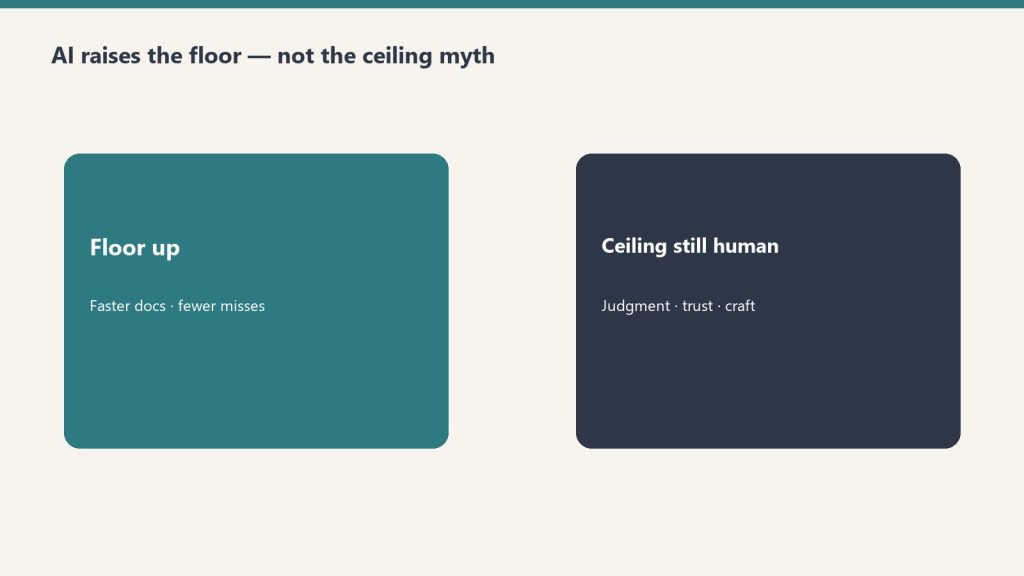
AI is raising the floor of the restoration industry. It is not raising the ceiling. The ceiling will always belong to the operators who have actually stood in a flooded basement at 2 a.m. and made the call. Once you internalize that distinction, the panic about AI replacing skilled trades collapses, and a more useful question takes its place: what happens to an industry when the floor finally catches up to the people who have been carrying it?
This is a commentary about restoration. It is also a commentary about AI in general. The two stories are the same story.
The Floor and the Ceiling
AI raises the floor. Craft still owns the ceiling.
Every industry has a floor and a ceiling. The floor is the minimum competence a customer can expect from anyone in the trade. The ceiling is what the best practitioners are capable of — the judgment calls, the pattern recognition, the gut feel that comes from doing the work for fifteen years and seeing every kind of failure mode at least twice.
In restoration, the floor has been embarrassingly low for a long time. There are operators in this industry who genuinely should not be allowed near a moisture meter. They mis-scope projects, they bill for equipment they did not run, they cut corners on containment, and they sell jobs they cannot deliver. They depress the curve for everyone who is trying to do this work properly. Every honest contractor who has ever lost a job to a lowball bid from a fly-by-night competitor knows exactly who I am talking about.
The ceiling, meanwhile, lives inside the heads of people who have been at this for decades. The Project Manager who can walk into a loss and tell you within ten minutes which insurance adjuster will push back, which trades need to be sequenced first, and which homeowner is going to file a complaint regardless of the outcome. The technician who knows by smell alone whether the mold is active or dormant. The estimator who has internalized the regional cost variance between a Houston hurricane and a Minneapolis ice dam and can write an accurate scope without opening Xactimate. None of that knowledge lives in a database. It lives in the brains of the operators who built it the hard way.
What AI Actually Does to Skilled Trades
Here is the part most takes get wrong. AI is not coming for the ceiling. AI is coming for the floor.
What AI does extremely well is the work that is procedural, well-documented, and pattern-matched against existing data. Writing the initial scope of work. Generating a clean estimate from a photo set. Drafting customer communications. Filling in the IICRC-aligned drying log. Producing the daily progress report. Pulling the right documentation for the carrier. Comparing this loss against the last hundred similar losses in the database and flagging the parts that look off.
None of that is the hard part of restoration. The hard part of restoration is the judgment that comes after the data is collected. The hard part is knowing that the moisture reading the AI just generated is technically correct but practically wrong because of the building envelope quirk you cannot see from the photo. The hard part is reading the homeowner across the kitchen table and knowing they need to hear the truth a specific way or they will fire you by Thursday. The hard part is the call between mitigation and replacement when the numbers are genuinely close and the carrier is going to fight you either way.
AI raises the floor by making the procedural part faster, cheaper, and more consistent across the industry. The technician who used to spend two hours writing a sloppy scope now has a clean scope in fifteen minutes. The estimator who used to fight Xactimate now has a draft to react to. The office admin who used to chase signatures now has a workflow that runs itself. All of that is the floor rising.
The ceiling — the actual judgment, the actual experience, the actual feel for the work — is unmoved. It is still entirely inside the heads of the operators who built it. If anything, it becomes more valuable because the floor is rising fast enough that the only meaningful differentiation left is what the AI cannot replicate.
Why the Bad Actors Get Starved Out
Bad actors get starved when docs and SOPs get cheap to do right.
This is the part that should make every honest operator in the restoration industry hopeful rather than nervous.
The rogue restoration company that has been distorting the curve for fifteen years survives on a specific edge. They can underbid the honest operators because they cut corners on the procedural work — they do not document properly, they do not run the right equipment, they do not follow IICRC standards, they do not handle the carrier paperwork with any rigor. The bid they hand a homeowner looks competitive only because the work they are quoting is not the same work an honest contractor would quote.
When AI raises the floor, that arbitrage disappears. The procedural work becomes table stakes. Any contractor with a smartphone can now produce a clean scope, a defensible drying log, a proper carrier-facing report. The reckless contractor who used to win on speed-by-cutting-corners is suddenly competing on a level surface against operators who have always done the work properly and now have AI making them faster too.
What the reckless contractor cannot do is the ceiling work. They cannot reproduce the judgment, because they never had it. They cannot reproduce the relationships with adjusters, the reputational depth, the operator instinct. When the floor rises and the differentiation moves up to the ceiling, the bad actors are the first ones starved out. Their entire edge was the floor being low.
This is the part nobody is telling honest restoration operators clearly enough. AI is not your threat. AI is the thing that finally levels the playing field against the contractors who have been undercutting you on quality for years.
Data Is Cheap, Fast, and Incomplete
Right now, in 2026, data is cheap. Compute is cheap. Inference is cheap. Every AI system on the market is leveraging the same approximate pool of public data, the same scraped industry documentation, the same generic training corpus. That is why the AI-generated restoration content flooding the internet right now is so painfully shallow — it can describe what a Category 3 water loss looks like in textbook terms, but it cannot tell you what it actually feels like to walk into one.
The data is incomplete. It will stay incomplete until somebody systematically extracts the tacit knowledge from the operators who actually have it. That is the part of the AI story almost everybody is missing. The models are not bottlenecked on compute. They are bottlenecked on the kind of experiential, hard-won, in-the-field knowledge that has never been written down and never made it into the training corpus.
This is true across every industry, not just restoration. It is true in HVAC, in commercial real estate, in healthcare operations, in B2B sales, in any field where the floor is procedural and the ceiling is experiential. The AI floor will continue to rise everywhere. The ceiling will continue to belong to the people who actually did the work.
The Human Distillery
This is why the most important AI work happening right now is not building bigger models. It is what we are calling the Human Distillery — the deliberate, structured extraction of tacit knowledge from industry insiders, captured in a form that becomes AI-ready and operator-ready at the same time.
The way you do this is not with a survey. It is not with a content brief. It is with a long conversation with somebody who has spent twenty years in the field, asking them the questions only an insider would know to ask, then converting their answers into structured artifacts that capture the judgment patterns underneath the words. The scope decisions they make instinctively. The risk signals they read before anyone else sees them. The customer-handling moves they have refined across thousands of jobs. The mistakes they made early in their career and the corrections they internalized.
That body of knowledge has historically died with the operator who held it. They retire, they sell the business, the kid takes over without the same instincts, and the depth of the operation drops a tier. The industry loses that ceiling-raising knowledge every time a senior operator walks away.
The Human Distillery is the methodology for stopping that loss. For a direct take on what this moment means specifically for senior operators, see this letter to the older generation of operators in the AI era. You distill the knowledge while the operator is still in the field, you convert it into both AI-ready training data and operator-ready playbooks, and you compound it. The first restoration company that does this systematically will have a competitive moat that no AI system can replicate by ingesting public data, because the knowledge you are encoding was never public in the first place.
What This Looks Like in Practice
In practice: techs + AI drafts, owners still decide.
Imagine a regional restoration operator with thirty years of field experience. Imagine sitting down with that operator for ten hours across a series of structured conversations. Imagine asking them to walk through every category of loss they have ever handled — water, fire, mold, storm, biohazard, commercial, residential, multi-unit — and surface the specific judgment moves they make at each decision point.
What scope are they running for a Cat 3 with mixed materials in a 1980s slab-on-grade? What changes if the homeowner is elderly and lives alone? What changes if the adjuster is from a specific carrier they have history with? What changes if the loss happened on a Thursday before a holiday weekend?
None of that is in any database. None of it is in any IICRC standard. It is the ceiling. It is the thing that makes that operator’s company twice as profitable as the regional competitor down the road who has the same trucks and the same equipment and the same certifications.
The Human Distillery captures it. It becomes a structured artifact the operator can use to train their own next generation of technicians. It becomes AI-ready content that the operator’s own AI tooling can use to outperform every generic restoration-trained model on the market. And critically, it stays inside the operator’s company. It is not training data for the broader model pool. It is the operator’s proprietary ceiling, made durable and transferable.
Why This Should Give the Industry Faith
The anxiety about AI in restoration — and in every skilled trade — comes from a flawed mental model. The model says: AI gets better, humans get less valuable, eventually AI does the job. That model is wrong.
The correct model is: AI raises the floor faster than humans can lower it, so the floor rises. The procedural work that used to differentiate okay operators from bad operators becomes commoditized. The bad operators, who were surviving by underdelivering on the floor, get starved out because the floor is now too high for them to fake. The honest operators get faster and more profitable because their procedural work is now AI-accelerated. And the great operators, the ones with the ceiling-level experience, become the most valuable people in the industry, because the only remaining differentiation is the part AI cannot do.
That is not a future to fear. That is a future where the people who have always been doing this work properly finally get to compete on the merits.
The very best of who we are as an industry is about to open up. The contractors who have been holding the line on quality for decades — paying their technicians properly, running their equipment to spec, documenting their work the right way, treating their customers like neighbors — are about to find out that the playing field is finally tilting in their direction. The race to the bottom is ending. The race to the top is starting.
Have faith. The knowledge will be the value again. It always was. It is just becoming visible again, because the noise is finally getting filtered out.
No. AI is replacing the procedural and documentation work that used to consume hours of a contractor’s day — scoping, estimating, drying logs, carrier paperwork. The judgment work that defines a great restoration operator (reading a loss site, sequencing trades, handling adjusters, managing homeowner expectations) is unchanged and arguably more valuable, because it is now the only meaningful differentiator left.
What does “AI raises the floor, not the ceiling” actually mean?
The floor is the minimum competence a customer can expect from any operator in the industry. The ceiling is what the best operators are capable of. AI commoditizes the procedural work, which lifts the minimum baseline across the industry. It does not touch the experiential judgment that defines the top performers. The gap between average and excellent does not close. The gap between bad and average disappears.
Why will bad actors get pushed out of the restoration industry?
Bad actors survive on an arbitrage where they underbid honest contractors by cutting corners on procedural work — documentation, equipment, IICRC standards, carrier-facing reports. When AI makes that procedural work fast and cheap for everyone, the underbidding edge disappears. Honest operators get the same speed advantage without sacrificing quality. The bad actors are left competing on judgment and experience, which they never had to begin with.
What is the Human Distillery?
The Human Distillery is a structured methodology for extracting tacit, hard-won industry knowledge from experienced operators and converting it into AI-ready and operator-ready artifacts. It captures the judgment patterns, decision frameworks, and field instincts that have historically lived only inside the heads of senior practitioners and disappeared when those people retired. It is how a restoration company turns its founder’s thirty years of experience into a durable competitive asset.
If AI training data is incomplete, why is AI still useful in restoration today?
AI is useful today for the procedural floor work — scoping, documentation, customer communication, report generation — because those tasks are pattern-matched against public, well-documented content. The incompleteness shows up the moment you ask AI to make a judgment call that requires tacit field experience. Used inside its actual capability envelope, AI is a force multiplier for any honest operator. Used outside that envelope, it produces the shallow, generic content the industry is currently drowning in.
How should a restoration company prepare for the AI shift?
Two parallel moves. First, deploy AI aggressively on the procedural floor — scoping, estimating, documentation, customer-facing communication — to capture the speed and margin advantages. Second, systematically extract the tacit knowledge inside the company’s senior operators using a Human Distillery methodology, and build a proprietary knowledge layer that becomes the company’s defensible ceiling. The companies that only do the first move will be commoditized. The companies that do both will dominate their regions.
The Bottom Line
The restoration industry is a perfect commentary on AI in general. Fancy tools and faster calculations are not the gold. The gold, which it always has been, is the learned experience. AI is raising the floor, and the floor needed to be raised. The rogue contractors will be starved out. The reckless ones will go away. The honest operators with real experience will find themselves on a playing field that finally rewards what they have always been doing properly. And the ceiling will keep belonging to the people who actually showed up, did the work, and earned the knowledge the hard way.
That is when the knowledge will be the value again, just like it always was. The ceiling will start to rise. The very best of who we are as an industry will open up opportunities for the people who built it. Have faith. The floor was the part that was broken. The floor is finally getting fixed.
The Tacit Knowledge Cluster — Further Reading
This piece is part of a larger body of writing on what the AI shift and the broader software-platform shift actually mean for service professions and the workers in them. The full cluster:
Every adjuster who writes a water damage scope knows they’re leaving money out. This isn’t incompetence — it’s strategy. Carriers train adjusters to write lean estimates with the expectation that contractors who know what they’re doing will supplement back. If you’re accepting first-offer scopes without supplementing, you’re subsidizing their process.
Here’s what you’re leaving on the table — and how to get it back.
What Adjusters Leave Out (And Why)
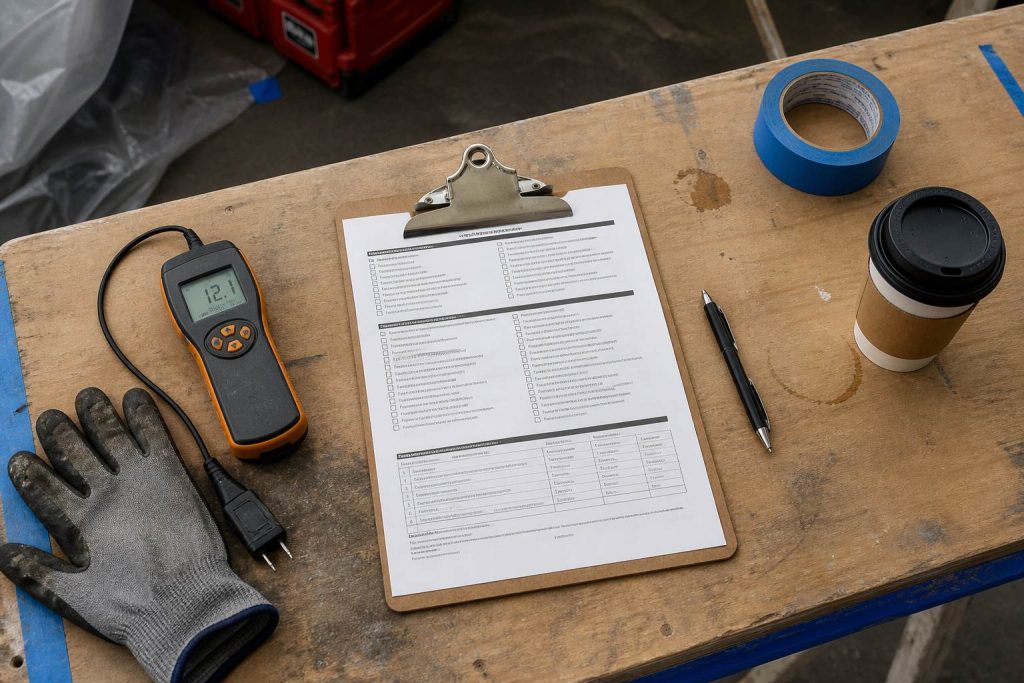
Document moisture — adjusters often skip the readings that justify dry-out.
Eight line items show up missing on water damage estimates so often they should be considered structural omissions, not oversights.
1. Equipment Monitoring Time (EQ Hours)
Every piece of drying equipment you deploy needs to be set up, monitored daily, and removed. This is billed under EQ (equipment) hours in Xactimate — distinct from the equipment daily rental rate itself. Adjusters routinely include the air mover or dehumidifier line but strip the EQ monitoring hours. On a standard 3-day residential water loss with 6 pieces of equipment, this can represent $800–$1,200 in omitted labor (approximate, varies by region and Xactimate price list). It’s legitimate labor time. Submit it every job.
2. Contents Manipulation (FCC)
If you moved furniture to set equipment or protect contents — and you did, because wet carpet under a couch is a mold claim waiting to happen — you can bill for it. The FCC line item covers furniture manipulation. Adjusters frequently zero it out claiming “no significant contents.” Document with photos. Bill it anyway. The IICRC S500 supports moving contents as part of professional mitigation protocol.
3. Antimicrobial Treatment
Antimicrobial application is standard protocol on Category 2 or Category 3 losses. Some adjusters skip it on Cat 2 jobs claiming the loss “wasn’t contaminated enough.” That’s not a defensible position under your standard of care. Cite your IICRC S500 obligation. Your standard of care requires it. Your estimate should reflect it, every time.
4. Structural Drying Labor (WTR STRC)
This is separate from equipment rental. Structural drying labor — the time spent monitoring moisture readings, adjusting equipment placement, logging psychrometric data — is billable under the WTR STRC line in Xactimate. It gets omitted constantly. If you’re running a 4-day dry with daily monitoring visits, that’s real labor time that belongs in the scope. Don’t bundle it into your equipment rate. Break it out.
5. Controlled Demolition — Broken Out by Material
Any time you remove material to facilitate drying — baseboard, drywall, flooring — document each demolition activity with its own line item. Adjusters often bundle multiple demolition activities under a single generic line at the lower rate. Don’t let them. Break it out: WTR DWL for drywall removal, WTRFC variants for flooring type (C for carpet, T for tile, W for wood). Each code carries its own unit rate. Bundled scopes always favor the carrier’s math, not yours.
6. Overhead & Profit (O&P)
The single most fought-over line item in all of Xactimate. O&P is the 10% overhead + 10% profit markup that general contractors are entitled to charge when coordinating multiple subcontractors. Carriers deny it by claiming the job “doesn’t involve three or more trades” — a threshold they invented. It does not appear in Xactimate’s published pricing guide documentation.
The counter: build a trades list into your scope narrative. List every trade involved — mitigation crew, licensed plumber, drywall contractor, flooring installer, painter. Four trades is four trades. Include a one-page scope narrative that names them. This prevents the denial before it starts. And if your overhead is genuinely higher than 10%, carry your overhead calculation to the negotiation. The “10 and 10” standard is an industry habit, not a contractual ceiling.
7. Drying Documentation & Psychrometric Reporting
Daily moisture logs, psychrometric readings, equipment placement diagrams — this is billable work that simultaneously protects you legally and demonstrates professional standard of care. Some carriers will pay for drying documentation as a discrete line item. Others will fight it. Submit it regardless. The documentation cost is real whether they pay it or not, and if you ever face a bad-faith claim, that paper trail is worth far more than the line item rate.
8. Code Upgrade Items
If your jurisdiction requires anything beyond like-for-like replacement — updated electrical to code, fire blocking on structural penetrations, cement board substrate under tile in wet areas — those upgrades are billable line items. They’re also frequently omitted from adjuster scopes. Pull your local code requirements for every material type you’re replacing and include the upgrade lines with code citations in your narrative. “Local code requires X per section Y” is a hard argument to deny.
How to Win the O&P Fight
Win O&P with calm docs — not volume arguments.
When an adjuster denies O&P citing insufficient trades: don’t argue the threshold. Argue the standard.
Send back a scope narrative page that lists explicitly: mitigation contractor, structural drying crew, licensed plumber, licensed electrician (if any wiring was involved), drywall contractor, flooring contractor, painter. That’s five to seven trades on a typical Category 2 bathroom loss. Documented. Named. The general contractor coordinating them is entitled to O&P.
If they push back a second time, pull the insured’s policy language. General contractor services — scheduling, coordination, quality control, project warranty — exist whether the carrier likes it or not. If you’re managing subcontractors, you’re performing GC functions. GCs charge O&P. That’s what it’s for.
The Supplement Submission Process That Actually Gets Paid
A supplement process that actually gets paid is a checklist, not a vibe.
Fast-tracked supplements share one trait: they’re submitted in Xactimate format, not PDF invoices. A clean Xactimate supplement typically gets reviewed in 2–3 weeks. A PDF invoice can sit 6–8 weeks — and gets denied at a higher rate because adjusters can’t reconcile it against their own scope line by line.
When submitting a supplement, include a clear cover narrative: what changed from the original scope, why, and what code or standard supports it. Mark every supplemental line item clearly — “Supplemental Item — Not in OA Scope” — so the reviewer can locate additions instantly. Attach photo documentation for any line item likely to be disputed. Submit through the carrier’s supplement portal if one exists.
One more thing: track your supplement approval rates by carrier. If one carrier denies your antimicrobial supplements at 60% and another approves 90%, adjust your initial scope narrative accordingly for that carrier. They’re not all operating from the same playbook.
Bottom Line
Carriers write lean because they can. Most contractors either don’t supplement or supplement poorly — PDF invoices, vague narratives, no photo documentation. That’s why the strategy works for them.
If you’re running water damage jobs at $8,000–$15,000 in average ticket size and not supplementing, you’re leaving somewhere between $1,200 and $4,000 per job on the table — a rough estimate based on common first-offer gap percentages in the industry. Across 50 jobs a year, that’s real revenue. Not found money. Your money.
The line items are in Xactimate. The standard of care is established by IICRC. The adjuster expects you to push back. The only question is whether your scope is specific enough to win.
Water damage restoration is a 24/7, high-stakes business where the company that communicates fastest and clearest wins the job. Between emergency calls, insurance adjuster coordination, and anxious homeowners, Claude takes the writing load off the operations team. Everything here is free.
How to Use This Page
How to use this Claude skills page.
Claude Skills go into Claude Project Instructions. Books for Bots are PDFs you upload to Claude Projects. Prompts work in any Claude conversation.
Claude Skills for Water Damage Restoration
Claude skills for water damage restoration.
Skill 1: Emergency Response and Homeowner Communication Writer
Drafts the rapid-response communications that set expectations, reduce panic, and document the first 24 hours of a loss.
Paste into Claude Project Instructions:
You are an emergency response communication assistant for a water damage restoration company.

When I describe an active loss, produce:

FIRST CONTACT (phone follow-up text): We're on our way. ETA, who's coming, what to do right now. Under 100 words. Fast and reassuring.

ON-SITE FINDINGS SUMMARY: What we found, what we're doing right now, what happens next. Plain English. Under 150 words. Send within the first hour.

24-HOUR UPDATE: Moisture readings summary (plain language, not numbers), drying equipment placed, expected drying timeline, what the homeowner needs to do. Under 175 words.

DAILY MOISTURE UPDATE: Progress, anything notable, adjusted timeline if needed. Under 100 words.

EQUIPMENT REMOVAL NOTICE: Drying is complete. What was achieved. What happens next (demo, rebuild, clearance). Under 100 words.

Tone: fast, expert, calm. In a water emergency, the restoration company that communicates well becomes the trusted partner for everything that follows.
Skill 2: Insurance Adjuster Communication Writer
Produces the mitigation documentation, photo narrative summaries, and supplement requests that get claims approved without delays.
Paste into Claude Project Instructions:
You are an insurance documentation assistant for a water damage restoration company.

When I describe a water loss and our scope, produce:

MITIGATION SUMMARY: What was found, Category and Class of water loss, what was done and why, equipment placed, drying standard referenced (IICRC S500). Technical but clear. Under 300 words.

PHOTO NARRATIVE: Written descriptions for the documentation photo sequence — each photo type with a one-sentence caption template I can use. Organized by area.

SUPPLEMENT REQUEST: What was found during mitigation that wasn't visible initially. Itemized, with rationale. Professional and factual.

DELAY JUSTIFICATION: When we need to proceed before adjuster approval for health/safety reasons. Documented, professional, covers our position.

ADJUSTER FOLLOW-UP: Professional check-in when we haven't heard back. States what we're waiting on and impact on the homeowner.

Always: factual, documented, professional. Supplement disputes are resolved through evidence.
Skill 3: Contents and Rebuild Communication Writer
Handles the scope explanation, contents inventory process, and rebuild coordination communications that happen after the drying phase.
Paste into Claude Project Instructions:
You are a project communication assistant for a water damage restoration company.

When I describe a post-mitigation situation, draft:

CONTENTS PACK-OUT NOTICE: We need to move and protect contents. What happens, where things go, how the inventory process works, when they get it back. Reassuring and specific. Under 150 words.

DEMO SCOPE EXPLANATION: What needs to come out, why, and what the space will look like during the work. Plain English. Under 150 words.

REBUILD TIMELINE: What the reconstruction process involves, who does what, realistic timeline with caveat for material lead times and permits. Under 200 words.

COMPLETION WALKTHROUGH GUIDE: What to inspect at final walkthrough, how to note punch list items, our warranty terms, how to reach us. Professional close.

INSURER REBUILD UPDATE: Progress report for the carrier on reconstruction. Factual, organized by trade, with current completion percentage.

Ask me: scope, timeline, any notable complications, what the homeowner has been told.
Skill 4: Referral Network and Emergency Preparedness Content
Drafts the plumber, roofer, and property manager outreach plus the educational content that positions you as the first call when water damage happens.
Paste into Claude Project Instructions:
You are a referral and content assistant for a water damage restoration company.

When I describe an outreach or content need, produce:

PLUMBER/ROOFER OUTREACH: We're a trusted restoration partner. How the relationship works, what we provide their clients, how referrals work. Peer-to-peer. Under 100 words.

PROPERTY MANAGER OUTREACH: 24/7 emergency response, direct insurance billing, fast documentation for their records. What makes us the right call at 2am. Under 100 words.

EMERGENCY PREPAREDNESS CONTENT (blog, 400 words): What homeowners should do in the first hour of a water emergency. Step by step. Practical. Ends with when to call a professional.

STORM RESPONSE POST: After a weather event. What to watch for. When to call. Urgent but not alarmist. Under 100 words. Timely.

Ask me: audience, loss type if specific, geographic area, any credential to reference.
Book 1: Company Context Sheet — Your company name, service area, certifications (IICRC WRT, ASD, FSRT), equipment inventory, and communication approach. Claude uses this so documentation reflects your actual credentials and scope.
Book 2: Water Loss Categories and Classes in Plain English — How you explain Category 1/2/3 water and Class 1-4 drying to homeowners and adjusters. Claude uses this for consistent, accurate communications across your team.
Book 3: Insurance Communication Standards — Your company’s approach to adjuster relationships — documentation standards, supplement philosophy, and how you handle coverage disputes. Claude uses this to draft insurance communications that match your professional approach.
Ready-to-Use Prompts
Ready-to-use prompts for water jobs.
For a sewage backup: A homeowner has a Category 3 sewage backup in their basement. Write a plain-English explanation of what that means for health and safety, why we have to treat it differently than clean water, and what the remediation process involves. Honest without being terrifying. Under 175 words.
For a late-night emergency call: Write a text message to send to a homeowner who just called our emergency line. We’re dispatching a crew. ETA is [X] hours. What they should do right now to minimize damage. Under 120 characters if possible.
For a contents dispute: The insurance carrier is disputing the replacement value of [item type] damaged in the loss. Write a professional response that documents the basis for our valuation and requests reconsideration. Factual, not emotional. Under 150 words.
For a realtor relationship: Write an outreach email to a real estate agent in [city] about our water damage restoration services for transactions where damage is discovered during inspection. Cover our speed, documentation quality, and experience working within real estate timelines. Under 120 words.
Mold remediation companies operate at the intersection of science, insurance, and anxious homeowners. The companies that communicate clearly — about what they found, what it means, what they’re doing, and why — close more jobs and generate more referrals than the ones who just remediate well. Claude handles the communication. Everything here is free.
How to Use This Page
Four mold skills — paste facts, review, send.
Claude Skills go into Claude Project Instructions. Books for Bots are PDFs you upload to Claude Projects. Prompts work in any Claude conversation.
Claude Skills for Mold Remediation Companies
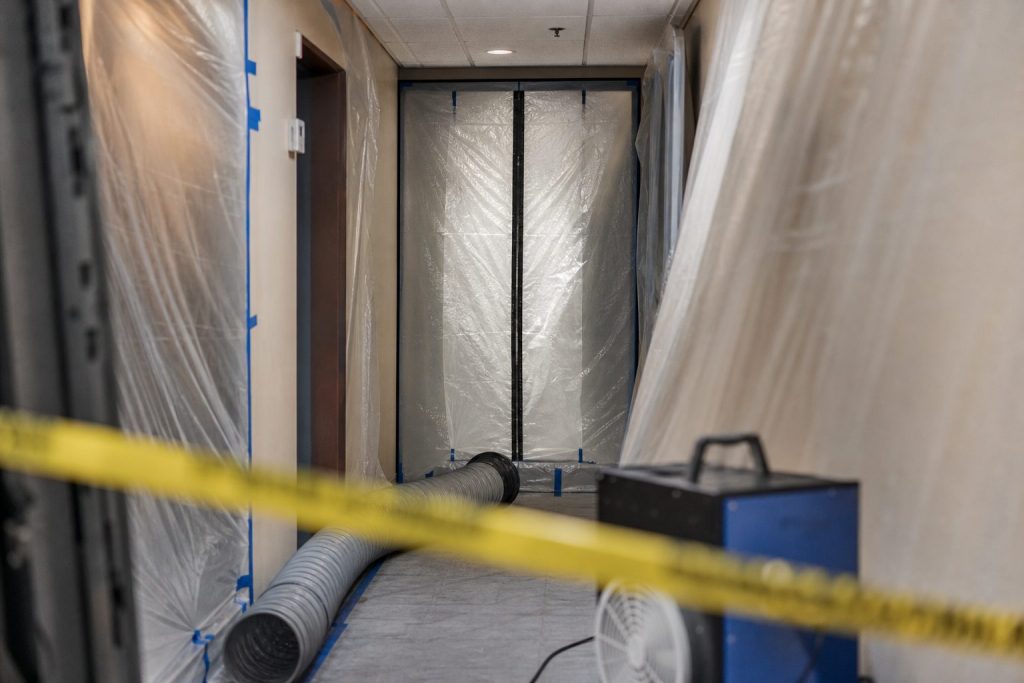
Containment language should match the plastic you hung.
Skill 1: Assessment Report and Homeowner Communication Writer
Converts your technical findings into plain-English explanations homeowners can understand, process, and act on — without minimizing the issue or causing unnecessary panic.
Paste into Claude Project Instructions:
You are a homeowner communication assistant for a mold remediation company.

When I describe assessment findings, produce:

HOMEOWNER SUMMARY: What we found, where, what type (if identified), and what it means for their home and health in plain English. No technical codes or species names in the client summary. 150-200 words.

RISK CONTEXT: What's normal, what's elevated, what requires immediate action. Honest without being alarmist. One paragraph.

RECOMMENDED SCOPE: What we recommend doing, in plain language, and why. What happens if left unaddressed.

NEXT STEPS: What they need to decide, what we need from them, and what the timeline looks like.

Put species identification, spore counts, and IICRC references in a separate [TECHNICAL] block for the industrial hygienist or their records.

Tone: clear and calm. Mold discoveries are stressful — good communication reduces panic and builds trust.

Ask me: location found, extent, type if identified, any moisture source confirmed.
Skill 2: Insurance Communication Writer
Drafts the scope justifications, supplement requests, and coverage dispute letters that get mold remediation claims approved.
Paste into Claude Project Instructions:
You are an insurance communication assistant for a mold remediation company.

When I describe an insurance situation, produce:

SCOPE JUSTIFICATION: Why the recommended scope is necessary. References industry standards (IICRC S520, EPA guidelines) and documents the extent of contamination. Professional and factual.

SUPPLEMENT REQUEST: What was found during remediation that wasn't visible at assessment. Itemized, justified. Collaborative tone — not adversarial.

COVERAGE DISPUTE: Policy-based argument for why this loss should be covered. References the specific policy language I provide. Factual, professional.

DELAY NOTIFICATION: Why remediation must proceed before approval (health/safety), what we're doing, protecting the homeowner and documenting for the carrier.

Never overstate findings. Every claim must be documentable. Professional tone preserves the adjuster relationship.

Ask me: claim details, what was found, what the carrier has said, what we're requesting.
Skill 3: Containment and Protocol Communication Writer
Produces the homeowner prep instructions, daily update messages, and clearance communications that keep the project on track and document the process.
Paste into Claude Project Instructions:
You are a project communication assistant for a mold remediation company.

When I describe a project stage, draft:

PRE-PROJECT PREP: What the homeowner needs to do before we start. What areas to vacate, what to remove, any HVAC instructions. Numbered checklist. Clear and simple.

CONTAINMENT NOTICE: We've set up containment in [area]. What this means for access. How long it will be in place. Under 100 words.

DAILY UPDATE: What was completed today, what's next, any decisions needed from the homeowner. Under 100 words.

CLEARANCE NOTIFICATION: Testing results came back clear. What that means, what happens next (rebuild, HVAC cleaning, etc.). Under 150 words.

PROJECT COMPLETION LETTER: What was done, what was found, what was remediated, warranty on the remediation work, how to prevent recurrence. Professional close.

Tone: expert and reassuring. Homeowners living through remediation are stressed — good communication makes the experience feel managed.
Skill 4: Referral Network and Education Writer
Drafts the content and outreach communications that build the inspector, realtor, and contractor referral network that drives consistent new business.
Paste into Claude Project Instructions:
You are a referral and education content assistant for a mold remediation company.

When I describe a relationship or content need, produce:

INSPECTOR OUTREACH: Introduce us as a trusted remediation partner. What we do, our credentials, how we make their clients' lives easier. Under 100 words. Peer-to-peer.

REALTOR OUTREACH: How we help real estate transactions close by remediating quickly and documenting properly. What we provide them and their clients. Under 100 words.

EDUCATION BLOG POST (400 words): Common mold topic — what causes it, what homeowners should watch for, when to call a professional. No scare tactics. Practical and credible.

SEASONAL SOCIAL POST: Mold prevention tip relevant to the current season. Educational. Under 100 words.

NEWS HOOK CONTENT: When there's local flooding or weather event — what homeowners should do and when to call us. Timely and useful.

Ask me: audience, topic, any credential or certification to reference.
Book 1: Company Context Sheet — Your company name, service area, certifications (IICRC, ACAC, CMC, CMR), equipment capabilities, and communication standards. Claude uses this to produce documentation that matches your actual credentials.
Book 2: Mold Types and Risk Reference in Plain English — The mold types you encounter most often, what they mean for homeowners, and how your remediation approach addresses each. Claude uses this for accurate, consistent client communications.
Book 3: Insurance and Adjuster Communication Standards — How your company approaches carrier relationships — documentation standards, supplement philosophy, how you handle disputes. Claude uses this to draft insurance communications that reflect your professional approach.
Ready-to-Use Prompts
Ready-to-use prompts still need a human check before homeowners see them.
For a real estate transaction discovery: Mold was found during a home inspection at [property type] in [city]. The buyer’s agent called us for an assessment. Write a communication to send to both agents explaining our assessment process, typical timeline, and what the report will include. Under 150 words.
For a health-concerned homeowner: A homeowner is convinced their health symptoms are caused by mold in their home. We completed an assessment and found [findings]. Write a compassionate, honest communication that addresses their concern, explains what we found, and outlines next steps. Under 200 words.
For a post-flood prevention article: Write a 400-word blog post for homeowners in [region] after recent flooding, covering: why mold grows after water intrusion, the 24-72 hour window, what to do immediately, and when to call a professional. Practical, no scare tactics.
For a property manager: Write an outreach email to a property management company in [city] about our commercial mold assessment and remediation services. Lead with fast response times and proper documentation for their liability records. Under 120 words.