
If you are married to, the child of, or close to someone who has spent thirty or forty years building expertise in a skilled trade or industry, they are sitting on the most valuable asset of their entire career — and most of them have no idea. This article is for you. The people who can see it from the outside. The ones who have watched them carry this knowledge for decades without ever fully understanding what was being built. The ones who can help them see what the market is finally about to pay them for.
This is not about flattery. This is about a structural shift in the economics of skilled work, and a quiet conversation happening in households across every industry right now between veterans who feel obsolete and families who can see something the veterans cannot see about their own value. The shift is real. The conversation matters. Your read of the situation may matter more than your partner’s, because you can see it more clearly from the outside.
What You Have Watched Them Build
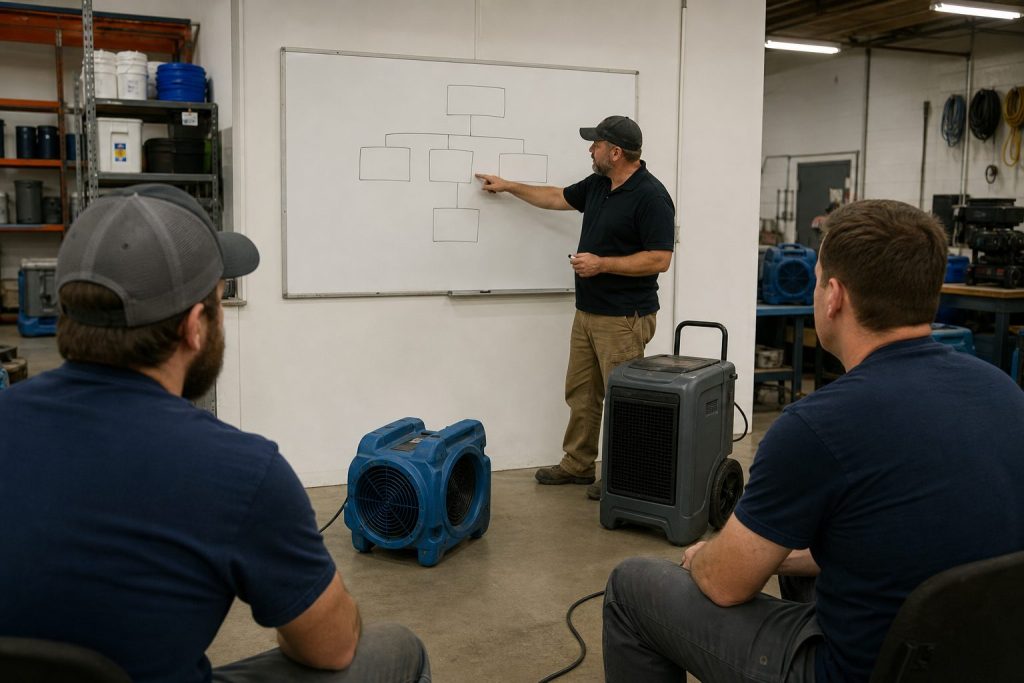
You have probably watched your partner come home from job sites for decades. You have watched them solve problems in their head over dinner, walk through difficult customer situations out loud while doing the dishes, replay the day’s calls during the drive home from the kids’ practices. You have heard the names of the same colleagues and adjusters and suppliers and competitors for so many years that you could probably handle the introductions yourself at the industry holiday party.
You have watched them get phone calls at unreasonable hours from younger people in their field who needed help thinking through something. You have watched them come home from a job and quietly mention that the situation was handled, without ever explaining that “handled” meant they had drawn on twenty years of pattern recognition that nobody else on that crew could have produced. You have watched them downplay their own competence in front of family, in front of social settings, in front of younger relatives who asked what they did for a living.
You have probably noticed, at some level, that what they actually do for a living is harder and more skilled than the way they describe it. You have probably also noticed that they have never been compensated at the level that matches what they actually carry. That has been frustrating to watch. It has probably been frustrating for them to live, even if they have never said it directly.
The thing they carry — the knowledge that took them thirty years to build — is called tacit knowledge. It is the hands-on, judgment-laden, in-the-field expertise that has never been written down in any textbook, never been captured in any manual, never been measurable on any certification exam. It lives inside their head, where it has lived for decades, mostly invisible to the world outside their industry. And it is about to become the most valuable thing in their field.
Why the Market Is Finally Catching Up
For most of their career, the market has not paid your partner what their knowledge was actually worth. The reason is structural. The economics of skilled industries have, for forty years, undervalued tacit expertise because it was hard to measure, hard to credential, and competed against a flood of documented knowledge that was easier to value. The senior operator with thirty years of judgment was paid roughly the same as the senior operator with the same job title and ten years of mediocre experience, because the industry could not reliably tell the difference from the outside.
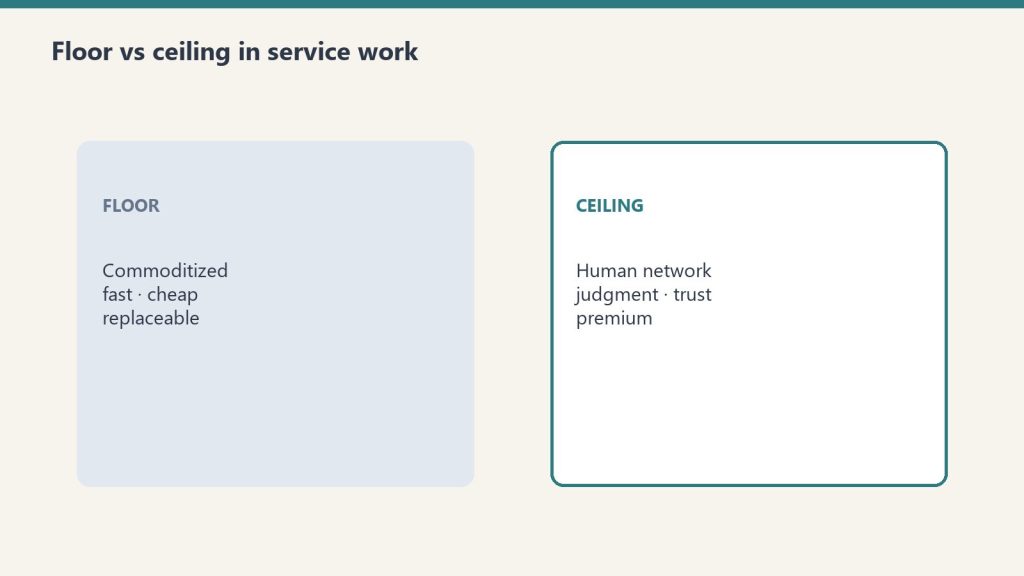
The AI shift changes that. The documented, procedural floor of every skilled industry is now accessible to anyone with a smartphone and a willingness to use modern tools. AI is making the floor commoditized. What is left, the only meaningful differentiation in any skilled industry, is the tacit knowledge that AI cannot replicate. And the only people who have it are the veterans like your partner.
This is not a small repricing. It is a structural inversion. The people who have been undervalued for decades are about to be revalued at premium rates, because the rest of the work is being commoditized down to them. The veterans who are not paying attention are going to continue undercharging for their time and selling themselves short out of habit. The ones whose families help them see what is happening are going to charge appropriately and capture the value they have always deserved.
This is where you come in.
What Your Partner Probably Cannot See
The thing that makes this conversation hard is that the people who built their expertise the hardest are usually the worst at recognizing what they have. The veterans in skilled industries did not build their knowledge by going to a fancy school and earning credentials. They built it by showing up to a thousand difficult job sites, making mistakes, fixing the mistakes, internalizing the corrections, and gradually accumulating a kind of competence that they cannot fully explain even to themselves.
Because it accumulated slowly and invisibly, most veterans do not see how much they have actually built. They see only the day-to-day, where they are still solving problems that have come to feel routine to them. They have stopped noticing that the problems they consider routine are problems that no junior operator on their team could solve at all. They calibrate to their own current capability and assume that everyone in their field operates at the same level, because they cannot remember what it was like to not have the knowledge they have now.
You can see it more clearly. You have watched the trajectory. You know how much more capable they are now than they were twenty years ago. You have seen who calls them for help and who does not. You have heard the way the younger people in their field talk about them. You have noticed when industry peers defer to their judgment in conversations.
What you can do is name it for them. Not in a way that feels like flattery, which they will dismiss. In a way that feels like accurate observation. “The thing you handled today is not something most people in your industry could handle. I have been watching for thirty years. You are at a level very few people get to.” That kind of grounded reflection from a partner is something a veteran will hear in a way they cannot hear it from anyone else.
The Conversations That Matter Right Now
There are a small number of conversations worth having with your partner over the next few months. They do not all have to happen at once. They are the conversations that help them recognize the moment they are in and act on it before the window closes.
The first conversation is about retirement timing. The traditional model assumes senior operators retire on a schedule built around age, savings, and a relatively standardized exit from the workforce. The new economics suggest that timing should be reconsidered. The most valuable years of your partner’s career may be the next ten, not the last ten. Encourage them not to rush an exit they were planning around outdated assumptions about the value of their work.
The second conversation is about pricing their time. Most veterans chronically underprice their advisory and judgment work because they have been doing it for free for decades. Help them think about what their time is actually worth in the new market. The hourly value of senior-operator judgment in skilled industries is climbing rapidly. The veterans who adjust their rates capture the upside. The ones who keep charging their old rates leave most of the value on the table.
The third conversation is about teaching and mentoring. Your partner has likely been informally mentoring younger people in their field for years. That work has historically been unpaid. It does not need to be. The same time spent in a formal apprenticeship or advisory arrangement, with appropriate compensation, is some of the highest-leverage work available to senior operators in any industry. Encourage them to formalize what they have been doing informally.
The fourth conversation is about capturing the knowledge. If your partner retires in the next ten years without anyone deliberately capturing what is in their head, an enormous amount of irreplaceable expertise will simply disappear. There are now structured methodologies for converting that knowledge into transferable form — long-form structured conversations that surface the judgment patterns underneath their work and convert them into useful artifacts. Encourage them to participate in this kind of process, either internally at their company or independently. The output is something their family, their successors, and their industry can keep long after they are gone.
The fifth conversation is about belief. Many veterans have been told, directly or indirectly, that they are becoming obsolete. Some of them have started to believe it. You can be the voice that pushes back. The market is in the process of revaluing exactly what they hold. The veterans who hear that from someone they trust — and your partner trusts you in a way they trust very few people — internalize it faster and act on it sooner.
What This Means for Your Household
The financial implications of this shift are real. A veteran whose work is properly repriced in the new market may see significant income changes over the next five years — through higher rates, advisory contracts, structured retirement packages with consulting components, or in some cases acquisition opportunities for their company or stake in it. These changes will not happen automatically. They require deliberate action.
The household conversations that match this moment are different from the ones that match a traditional retirement runway. Instead of planning a wind-down, you may be planning a peak. Instead of optimizing for time off, you may be optimizing for the deliberate capture of value that has been building for thirty years and is finally going to be paid out. Instead of asking when they can stop working, you may be asking how long they want to keep working in their new and more valuable role.
This is a good conversation to have. It is the conversation of a household that has supported a career through a long arc and is now arriving at the moment when the support pays back. It is also, frankly, the conversation that recognizes the support you have given. The career you have watched them build was not built alone. The repricing that is about to happen is not just their win. It is yours too.
Frequently Asked Questions
How do I help my partner see the value of their experience?
Name what you have observed accurately and specifically. Not flattery — observation. Point to specific situations where they handled something that nobody else in their field could have handled. Reflect back what you have watched them build over decades. The veterans who hear this from a partner they trust internalize it in a way they cannot internalize it from anyone else.
Should my partner delay retirement because of AI changes?
Possibly. The traditional retirement schedule assumed senior operators were a cost to be reduced. The new economics value them as the highest-leverage asset in their industries. Their most valuable years may be the next ten. Encourage them to reconsider any retirement timeline that was built around outdated assumptions.
How do I encourage a veteran to charge more for their time?
Start with the observation that the market is shifting and that hourly rates for senior judgment work are climbing across skilled industries. Most veterans underprice from habit. Sometimes the most effective conversation is asking what they would charge a stranger for the same advice, then comparing that to what they actually charge their current clients. The gap is usually significant.
What is tacit knowledge and why does it matter for my family?
Tacit knowledge is the practical, judgment-based expertise that veterans build over decades and that has never been written down in any manual. It matters for your family because it is the asset your partner has been building their entire career, it is about to be revalued sharply upward by the market, and it is finite — it disappears when they retire if nobody deliberately captures it.
How do we capture my partner’s knowledge before they retire?
There are structured methodologies for extracting tacit knowledge through long-form interviews and converting it into transferable artifacts. Some operators do this through their company. Some do it independently. The output is a durable record of expertise that the operator’s successors, family, or business can keep long after retirement. The process is most valuable while the operator is still active and accessible.
What if my partner is resistant to recognizing their own value?
This is common. The veterans who built their expertise the hardest are usually the worst at recognizing it. Stay patient. Stay grounded. Continue to name what you observe accurately. Point to specific evidence — who calls them for help, who defers to their judgment, what they have handled that others could not. Over time the accumulated weight of accurate reflection lands.
The Bottom Line
Your partner has spent decades building something that has been undervalued by the market for most of that time, and is about to be sharply revalued upward. The thirty years of tacit knowledge sitting in their head is, in the new economics of skilled work, the most valuable asset they will ever own. Most veterans cannot see it clearly from the inside. You can see it from where you sit.
You have watched them build it. You have supported the career that produced it. You are in the best possible position to help them see what the market is finally about to pay them for. The conversations you can have with them in the next few months — about timing, about pricing, about teaching, about capturing the knowledge, about belief — may be the most consequential conversations of their professional life.
They are not aging out of relevance. They are aging into their peak value. The market is in the process of catching up to something you have probably understood about them for years. Help them see it. The household you have built together is about to find out that the long career was even more valuable than either of you knew.
Leave a Reply