This is the fourth article in the Crew & Subcontractor Systems cluster under The Restoration Operator’s Playbook. It builds on the previous three articles in this cluster.
Inspection-based quality control is structurally too late
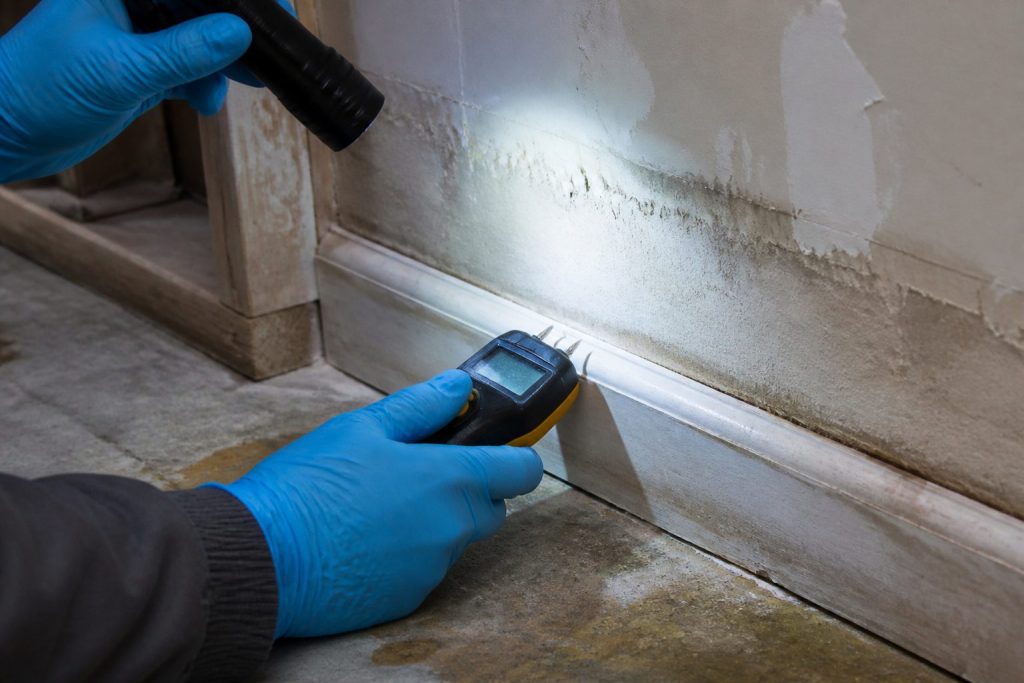
The dominant model of quality control in restoration is inspection-based. The work is performed. At the end of the work, a supervisor walks the job and identifies anything that does not meet the company’s standards. The identified items are added to a punch list. The crew returns to address the punch list. The walkthrough is repeated. The job is signed off when the punch list is complete.
This model has been the industry default for decades. It is also structurally inadequate for what restoration companies need from their quality function in 2026. The inadequacy is not in any single inspection. It is in the timing. By the time the inspection happens, the work has been done. Whatever quality problems exist are problems that have to be corrected through rework rather than prevented through better execution. The cost of rework is higher than the cost of getting the work right the first time. The cost of customer dissatisfaction at discovering rework is higher still. And the cost of the underlying conditions that produced the quality problem in the first place — the gaps in training, the gaps in supervision, the gaps in operational discipline — continues to produce problems on the next job and the job after that, because the inspection model surfaces problems but does not address their causes.
The companies that have moved beyond the inspection model treat quality as a continuous practice that is built into how the work is performed rather than as an event that happens after the work is done. The continuous model produces measurably better outcomes than the inspection model, costs less to operate, and produces less stress for everyone involved. This article is about what continuous quality discipline actually looks like, why it produces better outcomes than inspection, and how to install it without creating bureaucratic overhead.
What continuous quality discipline actually looks like
Continuous quality discipline is built into the way the work is performed at every stage rather than added as an inspection at the end. Several specific practices distinguish the continuous model from the inspection model.
Get The Signal
What we actually ran, what it measured, and what it means for a restoration shop — every week, including the flops.
The first practice is clear standards communicated before work begins. The crew knows what good looks like for the work they are about to perform. The standards are documented in the same form as the prep standard described in the prep standard article, applied to rebuild work and finish work. Crews who know what they are aiming for produce work that hits the standard more often than crews who are guessing.
The second practice is in-process checks at defined moments rather than only at the end. The cabinet installer checks their hanging level before moving to the next cabinet, not after the kitchen is fully installed. The painter checks the color match in the actual lighting conditions of the room, not after the entire wall is painted. The trim carpenter checks the miter cuts on the first joint before completing the rest of the trim run. The in-process checks catch problems early when they are cheap to address. The end-of-job inspection catches problems late when they are expensive to address.
The third practice is peer accountability within crews. Crew members are encouraged and expected to flag issues in each other’s work in real time, professionally and constructively. This is a cultural practice as much as a procedural one. In healthy crews, the flag is received as helpful and acted on. In unhealthy crews, the flag is received as criticism and resisted. The companies that have built strong continuous quality have invested in the crew culture that makes peer accountability functional.
The fourth practice is supervisor presence during the work, not just at the end. The supervisor visits the job during execution, not just for the close-out walkthrough. The visits are short and frequent rather than long and rare. The supervisor is checking in on conditions, answering questions, identifying issues that need attention before they become problems. The supervisor’s role during execution is to support quality production, not to inspect after the fact.
The fifth practice is rapid feedback when issues are identified. When a quality issue is flagged — whether by a crew member, a supervisor, or in an in-process check — it gets addressed immediately or as close to immediately as conditions allow. The longer an issue sits before being addressed, the more expensive it becomes to fix. Companies that have continuous quality discipline have built the operational rhythms that allow rapid response to flagged issues.
The sixth practice is documentation of issues and their resolution. Quality issues that are flagged and addressed get documented, not as a punitive record but as data that informs the company’s standards, training, and operational improvements. The documentation is what allows the company to learn from issues across jobs rather than fixing the same kinds of issues over and over without surfacing the underlying patterns.
The seventh practice is integration with the feedback loop described in the feedback loop article. Quality issues that surface patterns get fed back into the company’s operational standards. The standards evolve. Training is updated. The next generation of work is performed against sharper standards. The continuous improvement compounds across years.
Why continuous quality produces better outcomes
The continuous quality model produces measurably better outcomes than the inspection model for several specific reasons.
The first reason is that continuous quality catches problems when they are cheap. A misaligned cabinet caught before the next cabinet is hung is corrected in five minutes. The same misalignment caught at the end-of-kitchen walkthrough may require unhanging multiple cabinets to correct. The cost differential is significant per incident and significant in aggregate across thousands of incidents per year.
The second reason is that continuous quality prevents the cascading effects of unaddressed problems. A trim joint that is set wrong, if not caught immediately, affects every subsequent trim joint that depends on it. By the time the problem is discovered, multiple feet of trim may need to be replaced. Continuous quality prevents the cascade.
The third reason is that continuous quality builds craftsmanship in the crews. A crew that is constantly receiving and acting on real-time feedback about their work develops better judgment about quality over time. The judgment becomes part of the crew’s working competence. The crew produces better work going forward as a result of the continuous feedback loop.
The fourth reason is that continuous quality reduces the dramatic moments that damage customer relationships. The customer who arrives at the close-out walkthrough and encounters a long punch list is having a worse experience than the customer who arrives at the close-out walkthrough and finds the work substantially complete. The customer experience implications of the two models are significant and contribute to the customer satisfaction differential between continuous-quality and inspection-quality companies.
The fifth reason is that continuous quality reduces stress for everyone involved. The crew is not waiting anxiously for a punch list to be created. The supervisor is not facing a long inspection at the end of every job. The customer is not surprised by problems they did not know about. The senior team is not constantly managing quality recovery. The aggregate stress reduction has implications for retention, for engagement, and for the operational sustainability of the company.
The sixth reason is that continuous quality produces better data about the work. The documentation of issues caught and addressed in real time provides a much richer data set for operational improvement than the end-of-job punch lists. Companies operating from continuous quality have a more accurate picture of where their operational gaps actually are than companies operating from inspection.
What continuous quality is not
It is worth being explicit about what continuous quality is not, because the phrase is sometimes used loosely.
It is not a constant series of formal inspections. The continuous model is not about inspecting more often. It is about building quality into the execution so that inspection is mostly unnecessary. The companies operating from continuous quality have less inspection activity than the companies operating from the inspection model, not more.
It is not a bureaucratic overhead burden. The continuous model is not about adding paperwork or process steps to the crew’s day. It is about embedding quality awareness into the natural flow of the work. When done well, continuous quality reduces overall operational overhead rather than increasing it.
It is not a culture of nitpicking. The continuous model is not about flagging every minor imperfection. It is about catching the issues that matter — the ones that will affect the customer experience, the ones that will require expensive rework, the ones that signal underlying operational gaps — and addressing them efficiently. The companies operating from continuous quality have a clear sense of what is worth flagging and what is not.
It is not a replacement for senior judgment. The continuous model does not eliminate the need for the senior team to be involved in quality. It complements that involvement by surfacing issues at the field level so that the senior team’s attention can go to the issues that actually require senior judgment rather than to the routine catches that the field crews can handle themselves.
How to install continuous quality without creating overhead
The most common reason continuous quality fails as an initiative is that companies try to install it by adding process steps without addressing the cultural and structural conditions that make the practices sustainable. The result is bureaucracy that the crews resist, that produces mediocre adoption, and that gets quietly abandoned within a year.
The companies that have successfully installed continuous quality have done it through a different approach.
The first piece is leadership commitment that is visible in leadership behavior. Owners and senior operators visibly value quality, talk about it consistently, and model the kind of attention to detail they want the crews to bring. Leadership commitment that is verbal but not behavioral does not produce the cultural change that continuous quality requires.
The second piece is investment in the supervisors who are the cultural transmission mechanism. Supervisors who genuinely believe in the continuous quality approach and who model it in their daily work make the practices stick. Supervisors who are skeptical or inconsistent undermine the practices regardless of formal training. The supervisor selection and development described in the retention article is also the foundation of continuous quality.
The third piece is making the in-process checks part of the work rather than additional to it. The check happens as the crew is moving from one piece of work to the next, not as a separate activity that interrupts the flow. The check takes seconds, not minutes. The crew member who has internalized the check does it automatically as part of how they work.
The fourth piece is removing the inspection-era practices that the continuous model makes unnecessary. Long end-of-job punch list walkthroughs. Formal inspection sign-offs. Quality control departments separate from operations. These artifacts of the inspection era can persist alongside the continuous practices and create the bureaucratic overhead that companies are trying to avoid. The continuous model works best when it replaces the older practices, not when it sits on top of them.
The fifth piece is celebrating the catches. When a crew member catches a quality issue early and prevents downstream rework, that catch is recognized. The recognition reinforces the cultural value of the practice and produces more catches over time. Recognition does not have to be elaborate. It has to be specific and authentic.
The sixth piece is patience. Continuous quality is not installed in a quarter. It develops across a year or two as the cultural and operational pieces come together. Companies that expect immediate transformation get discouraged when the early returns are modest. Companies that commit to the multi-year journey see the practices mature into a genuine operational advantage.
The interaction with customer experience
One specific interaction worth highlighting is the relationship between continuous quality and the customer experience described throughout the customer lifetime frame article.
The customer who has a continuous-quality experience encounters a job that has been done with care from the beginning. There are few surprises at the close-out walkthrough because the issues have been addressed during execution. The crew that performed the work has demonstrated craftsmanship that the customer can see. The supervisor who visited the job during execution has been present to the customer in ways that build trust. The aggregate experience is one of competence and care.
The customer who has an inspection-quality experience encounters a different job. There may be a punch list. There may be visible issues that the customer notices before the punch list is generated. There may be friction at the close-out walkthrough as items are negotiated. Even when the inspection eventually catches everything and the work is fully completed, the customer’s experience of the process includes the moments of doubt that the visible issues produced. The aggregate experience is one of work that needed correction.
The customer experience differential between the two models is real and shows up in customer satisfaction scores, in reviews, and in referral behavior. Companies that have made the shift to continuous quality see the differential in their customer experience metrics within twelve months of the shift. The differential compounds across years into a measurable difference in market reputation.
What this means for owners
If you run a restoration company and your quality function is built around end-of-job inspection, the practical implication of this article is that the inspection model is leaving customer experience and operational efficiency on the table that the continuous model would capture.
The starting point is to recognize the inspection model for what it is and to commit to the multi-year work of building the continuous alternative. This commitment includes leadership behavior, supervisor investment, cultural development, and patience with the timeline.
The medium-term work is to install the practices described above gradually. Start with the standards and the in-process checks for the highest-impact categories of work. Build the supervisor presence model. Develop the peer accountability culture in healthy crews first and extend it from there. Replace the inspection-era practices with continuous-era ones as the new practices mature.
The long-term result is a quality function that produces better outcomes for less operational cost than the inspection model can produce. Companies operating from continuous quality have a structural advantage in customer experience, operational efficiency, and team morale that competitors operating from inspection cannot easily match.
Quality is not an event at the end of a job. Quality is a continuous practice that runs throughout the work. The companies that have made the shift know this. The companies that have not are about to learn it the long way.
Next and final in this cluster: the sub bench — building the reserve capacity that lets a restoration company say yes to opportunities the perpetually-stretched companies cannot accept.
Get The Signal
What we actually ran, what it measured, and what it means for a restoration shop — every week, including the flops.
Leave a Reply