
No, AI will not replace nurses. The judgment work, behavioral reading, and human connection that define nursing are structurally outside what AI can do. The procedural floor of nursing — documentation, scheduling, routine triage support — is being automated. The ceiling of nursing — the clinical judgment built from thousands of patient interactions, the ability to sense when a patient is sicker than the vitals show, the navigation of family dynamics and ethical complexity — remains entirely human.
The more urgent question for healthcare is not whether AI will replace nurses. It is whether the system can replace the senior nurses who are about to retire, and the answer is increasingly no. The workforce crisis is real. The institutional knowledge walking out the door is real. And the value of experienced nursing judgment is climbing fast in a market that has historically undervalued it.
The Quick Answer
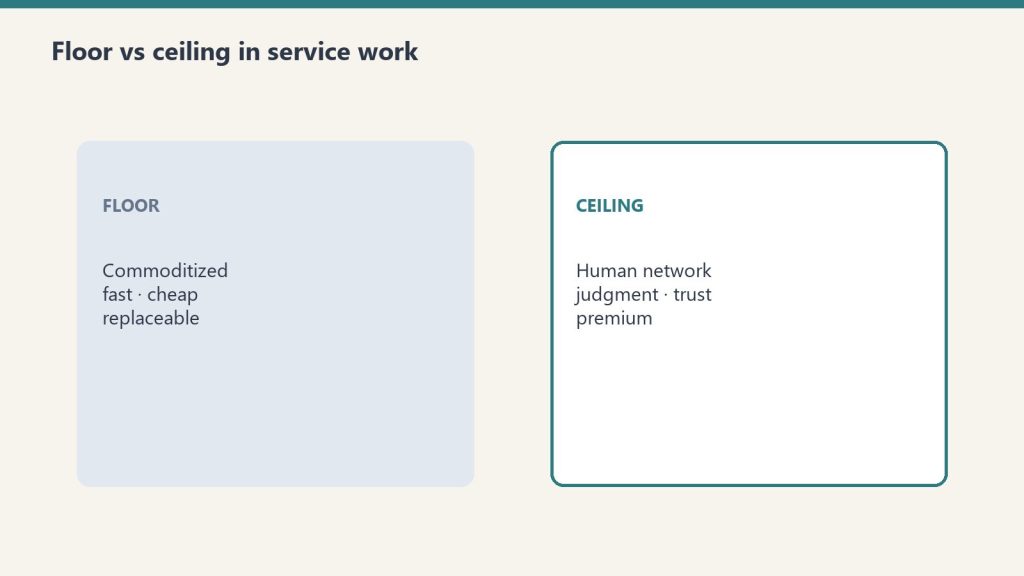
AI is reshaping nursing by automating the administrative floor of the work — documentation, charting, scheduling, routine reporting, basic triage support, prescription renewal workflows. AI is not replacing nurses on any of the actual nursing — patient assessment, clinical judgment, behavioral reading, family communication, ethical navigation, and hands-on care. The floor of nursing is being commoditized. The ceiling is the entire profession.
What AI Cannot Do in Nursing
AI cannot read a patient’s subtle behavioral cues to detect that something is wrong before vital signs change. AI cannot make the judgment call about whether a particular pain complaint is the early sign of a serious complication or routine post-operative discomfort. AI cannot navigate a family conference where the patient is dying and the family members disagree about treatment. AI cannot calm a frightened child enough to allow a procedure. AI cannot recognize the look in an elderly patient’s eyes that signals they are not telling the full story about their pain.
All of this work — the judgment, the behavioral reading, the human connection — is the actual core of nursing. The nurse who has worked critical care for twenty years carries pattern recognition that AI cannot replicate by training on charts and documentation. The institutional knowledge of senior nurses is essentially invisible to AI systems because it was never written down. It exists only in the heads of practitioners and transfers only through apprenticeship at the bedside.
What AI Is Doing in Nursing
The 2026 deployment of AI in nursing is concentrated on reducing administrative burden, which has been a major driver of nurse burnout. AI handles charting and documentation automation, scheduling and workflow optimization, routine patient communication, prescription renewal workflows, basic triage support, and clinical decision support that suggests likely conditions based on input data.
These deployments are genuinely useful. They reduce the time nurses spend on paperwork, which improves both job satisfaction and patient outcomes. They do not replace the nurse on the floor. The nurse’s day is still spent assessing patients, making clinical judgments, communicating with families, coordinating with physicians, and handling the situations that AI cannot anticipate or resolve.
The framing that emerges from current healthcare AI deployments is consistent: AI augments nursing rather than replacing it. The most credible voices in healthcare technology consistently make this distinction.
The Workforce Crisis Is the Real Story
The American Nurses Association projects approximately 1 million nurses will retire between now and 2030. The U.S. is simultaneously aging into higher healthcare demand. The pipeline of new nurses entering the profession is not keeping pace with the retirements. Healthcare organizations are facing a sustained nursing shortage with no near-term resolution.
The retirement wave is not just a headcount problem. Senior nurses carry decades of clinical judgment that AI cannot reconstruct. The institutional knowledge of experienced critical care nurses, ER nurses, OR nurses, and other senior specialists is irreplaceable in the short term. When they retire, healthcare systems lose capability that takes years to rebuild through junior nurses gradually accumulating their own experience.
This makes the senior nurse — and the experienced mid-career nurse moving toward senior judgment work — the most structurally valuable worker in healthcare. The market is in the process of recognizing this. Wages for experienced nurses are climbing. Retention bonuses are getting more aggressive. Travel nursing rates remain elevated. Healthcare systems are competing aggressively for senior clinical talent.
What Nurses at Each Career Stage Should Do
Junior nurses — apprentice yourself to a senior nurse in your specialty. The clinical judgment that defines great nursing transfers through proximity to experienced nurses, not through study. Use AI tools to reduce documentation burden and free up time for the bedside work that builds judgment.
Mid-career nurses — take on the complex, judgment-heavy work. Specialty certifications. Charge nurse and clinical leadership roles. Mentor junior nurses deliberately. The procedural work is being commoditized. The clinical judgment ceiling is becoming the entire game.
Senior nurses — your clinical judgment is becoming the most valuable asset in healthcare. Charge accordingly. Take on apprenticeship as a recognized, compensated part of your role. Consider whether retirement timing should be adjusted given the new economics.
Retired nurses — the market just inverted in your favor. Fractional advisory, training, and clinical consulting roles at premium rates did not exist in this form when you planned your retirement. Consider returning to the work in a structured advisory capacity.
Healthcare administrators — your senior nurses are your most valuable asset, not your largest cost center. Build apprenticeship structures around them. Run deliberate processes to capture their clinical knowledge before they retire. The institutional knowledge walking out the door is the actual crisis.
Frequently Asked Questions
Will AI replace nurses?
No. AI is automating the administrative floor of nursing work but cannot replace the clinical judgment, behavioral reading, and human connection that define the profession. The actual nursing remains entirely human, and the senior nurses who carry institutional clinical knowledge are becoming more valuable, not less.
Is nursing a safe career in 2026?
Yes. The retirement wave projected through 2030 combined with rising healthcare demand creates sustained labor shortage conditions. Senior nurses carry irreplaceable clinical judgment. The profession is structurally durable against AI commoditization because its core work depends on tacit expertise AI cannot replicate.
How is AI being used in nursing right now?
Documentation and charting automation, scheduling and workflow optimization, routine patient communication, prescription renewal workflows, basic triage support, and clinical decision support. The deployments reduce administrative burden and let nurses spend more time on actual patient care.
What parts of nursing are safe from AI?
Patient assessment, clinical judgment, behavioral reading, family communication, ethical navigation, hands-on care, charge nurse and leadership work, specialty clinical expertise, and any work that depends on the nurse’s physical presence and tacit judgment.
What is the nursing workforce situation in 2026?
The American Nurses Association projects approximately 1 million nurses will retire by 2030 while healthcare demand continues to rise. The pipeline of new nurses is not keeping pace. This creates sustained labor shortage conditions and rising compensation for experienced nurses.
The Bottom Line
AI will not replace nurses. The clinical judgment, behavioral reading, and human connection that define nursing are structurally outside what AI can do. The administrative floor of the work is being automated, which reduces burnout and frees nurses for actual patient care. The ceiling of the profession — the experienced clinical judgment of senior nurses — is becoming the most valuable thing in healthcare as the retirement wave compresses the workforce. If you are a nurse at any career stage, the AI shift is good news for the actual work you do. The next decade is going to be a strong period for the profession, particularly for those who recognize that senior clinical judgment is finally being recognized at its true value.
Leave a Reply