
No, AI will not replace HVAC technicians. It will replace the paperwork, the routine diagnostics suggestion, and the documentation work that used to consume hours of each tech’s day. The judgment that defines a great HVAC technician — reading systems that have been modified twice over twenty years, diagnosing failures that do not match any textbook pattern, working in mechanical rooms where the original drawings are wrong — is structurally outside what AI can do.
This article is the honest, specific answer to a question being asked across the HVAC industry right now. It also explains the bigger pattern that is reshaping HVAC careers in 2026, and what every technician at every career stage should do about it.
The Quick Answer
AI raises the floor of HVAC work by automating the procedural parts — quoting, scheduling, customer communication, routine diagnostics, documentation, and reporting. AI cannot touch the ceiling — the judgment work of a senior HVAC technician, the pattern recognition built from thousands of jobs, the customer-handling instinct, the ability to read mechanical systems in the field where conditions never match the manual. The floor is being commoditized. The ceiling is becoming the entire game.
What AI Is Actually Doing in HVAC Right Now
The real-world deployment of AI in HVAC in 2026 is concentrated in a few specific areas. AI-assisted diagnostics platforms suggest likely causes based on sensor data and historical fault patterns. Mobile CMMS workflows automate work order documentation and parts lookup. AI copilots in field-service apps help junior techs walk through complex repairs by pulling from a searchable case library of past resolutions. Quoting and proposal generation tools produce first drafts that techs review and adjust.
All of this work is genuinely useful. It is also entirely floor work. None of it replaces the judgment of an experienced HVAC technician walking into a mechanical room and reading the actual situation. The AI suggestion may be wrong because the building envelope quirk is invisible from the data. The historical fault pattern may not apply because this specific system has been modified twice and the modifications are not in any database. The customer dynamic that determines whether the job goes well may have nothing to do with the technical work and everything to do with the conversation in the kitchen.
What AI does in HVAC, accurately stated, is speed up the procedural work and reduce the gap between a junior tech and a senior tech on routine cases. What AI does not do is replace the senior tech on non-routine cases, which is where most of the actual value of HVAC work lives.
The HVAC Workforce Crisis Is the Bigger Story
The retirement wave in HVAC is the more consequential dynamic than AI. Industry data shows over 40 percent of HVAC technicians are over age 50, and a substantial wave is approaching retirement in the next five to ten years. Some estimates put the retirement-to-replacement ratio at 5:2 — for every five techs who retire, only two new entrants are taking their place.
This is the actual labor story in HVAC right now. It is not about AI replacing technicians. It is about not enough technicians existing to replace the ones who are leaving. The senior techs who are retiring carry decades of judgment that newer techs cannot reproduce, regardless of how many AI tools are available. The institutional knowledge walks out the door with them, and the industry has not solved the problem of capturing it before they leave.
This makes the senior HVAC technician — and the experienced mid-career tech who can move into senior judgment work — the most valuable worker in the industry. The market is in the process of recognizing this. Wages for experienced HVAC techs are climbing. Retention bonuses are getting more aggressive. The companies that figure out how to keep their senior techs and transfer their knowledge to the next generation will dominate their regional markets.
What HVAC Technicians at Each Career Stage Should Do
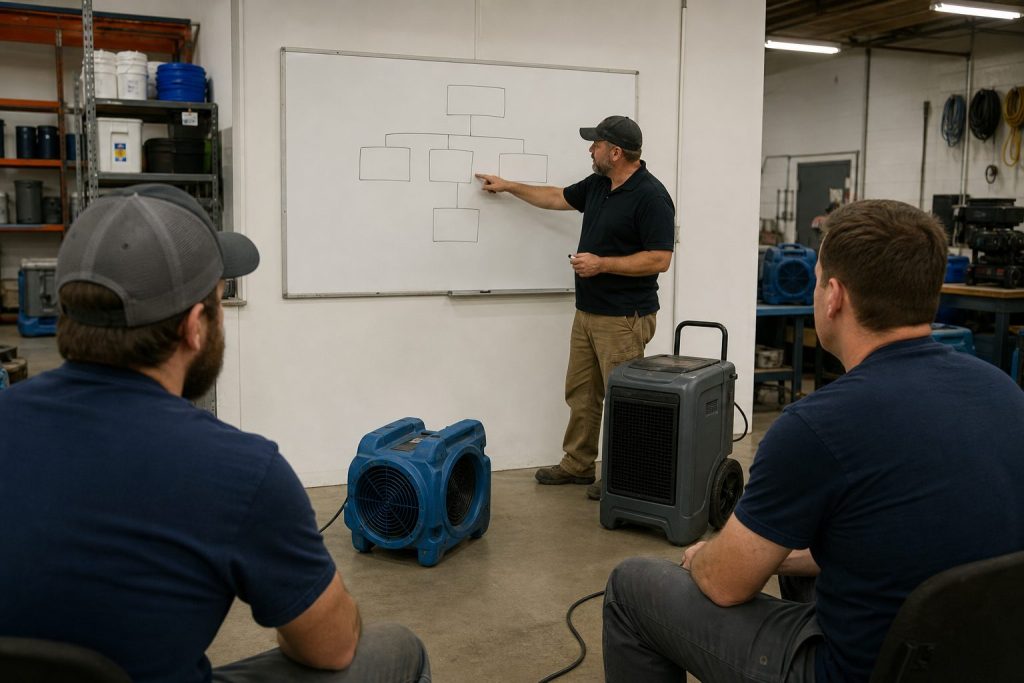
If you are a junior HVAC technician — your immediate move is to use AI tools aggressively to handle the procedural floor of your work, and use the time you save to apprentice yourself to a senior tech in your shop. The AI tools will make you faster than the previous generation of junior techs ever could be. What they will not give you is the judgment. The senior techs in your shop are sitting on knowledge that nobody else in the industry can give you. Get in their orbit. Work alongside them. Ask them why they made each call. Build the judgment over years.
If you are a mid-career HVAC technician — your move is to identify the judgment-heavy work in your shop and take on more of it. The complex commercial cases, the unusual residential failures, the carrier and customer escalations. Push toward the ceiling work and let AI handle more of the procedural floor. Your value over the next decade will be determined by how much ceiling capability you build now.
If you are a senior HVAC technician — the market is finally about to pay you for what you have always been carrying. Reconsider any retirement timeline built around old assumptions. Charge appropriately for your judgment work. Take on apprenticeship of younger techs as a recognized and compensated part of your role. The next ten years may be the most valuable of your career.
If you own an HVAC company — your most valuable assets are your senior techs. Identify them, treat them as the highest-leverage asset on your balance sheet, build apprenticeship structures around them, and run a deliberate process to capture their tacit knowledge before they retire. The company that figures this out before its competitors will own its regional market.
Frequently Asked Questions
Will AI replace HVAC technicians?
No. AI will replace the procedural and documentation work around HVAC service — quoting, scheduling, routine diagnostics, paperwork — but cannot replace the judgment of an experienced technician diagnosing complex systems, reading buildings, and handling customers. The floor of HVAC work is being commoditized. The ceiling remains entirely human.
Is HVAC a dying trade?
No, HVAC is the opposite of a dying trade. A massive retirement wave is exiting the industry while too few young workers are entering to replace them, creating structural demand for new HVAC techs at every career stage. The aging workforce is the actual labor story in HVAC, not AI displacement.
How will AI change HVAC work in the next five years?
AI will speed up the procedural floor of HVAC work — diagnostics suggestion, documentation, quoting, scheduling, customer communication. It will close the gap between junior and senior techs on routine cases. It will not replace the judgment work that defines senior techs on complex cases, which is where the actual value of HVAC service lives.
Should young people enter the HVAC trade in 2026?
Yes, especially for anyone willing to apprentice themselves to a senior technician. The retirement wave is creating significant career opportunities at every level, AI tools make junior techs faster than previous generations could be, and the long-term value of HVAC judgment is structurally durable against AI commoditization.
What HVAC roles are most safe from AI?
Senior service technicians who handle complex commercial work, system designers and engineers for unusual installations, and any tech with deep experience in older or non-standard systems. The judgment work in HVAC is structurally outside what AI can replicate by training on documented procedures.
The Bottom Line
AI will not replace HVAC technicians. The retirement wave will compress the workforce faster than AI ever could, and the senior techs who carry institutional judgment will become the most valuable workers in the industry. AI tools will make junior techs faster and let senior techs spend more time on the high-judgment work that defines great HVAC service. The HVAC industry is not being replaced. It is being structurally repriced to recognize the value of judgment that has always been there.
If you are in the HVAC industry, the strategic move is the same regardless of your career stage. Use AI to handle the floor. Build judgment capability deliberately. Find a senior tech to learn from if you are early in your career. Charge for your judgment if you are senior. The industry is about to be very good to the people who recognize the shift and act on it.
Leave a Reply