
Last refreshed: May 15, 2026
Model Accuracy Note — Updated May 2026
Current flagship: Claude Opus 4.7 (claude-opus-4-7). Current models: Opus 4.7 · Sonnet 4.6 · Haiku 4.5. Claude Opus 4.7 (claude-opus-4-7) is the current flagship as of April 16, 2026. Where this article references Opus 4.6 or earlier models, those references are historical. See current model tracker →. See current model tracker →
Claude AI is a family of large language models built by Anthropic, a San Francisco-based AI safety company. In 2026, Claude competes directly with ChatGPT, Gemini, and Grok — and in many professional use cases, it outperforms all of them. This guide covers what Claude is, how it works, what it costs, and how to start using it today.
What Is Claude AI?
Claude is an AI assistant developed by Anthropic, a company founded in 2021 by former OpenAI researchers including Dario Amodei, Daniela Amodei, and five other co-founders. The name “Claude” is a nod to Claude Shannon, the father of information theory.
Unlike some AI tools built primarily for speed or image generation, Claude was designed from the ground up with safety and helpfulness as co-equal priorities. Anthropic uses a technique called Constitutional AI — a method of training models to follow a set of principles rather than just optimize for user approval. The result is an assistant that tends to be more careful, more honest, and less likely to hallucinate than its competitors.
As of April 2026, Claude is available through:
- Claude.ai — the web and mobile interface (free and paid plans)
- Claude desktop app — native Mac and Windows applications
- Claude API — for developers building AI-powered applications
- Claude Code — a terminal-native AI coding tool
- Enterprise deployments — via Anthropic’s enterprise and team offerings
Which Claude Models Exist in 2026?
Anthropic currently offers three tiers of Claude models, each optimized for different use cases:
| Model | Best For | Context Window | Notable Benchmark |
|---|---|---|---|
| Claude Opus 4.7 | Complex reasoning, research, coding | 200K tokens | 80.8% SWE-bench, 91.3% GPQA Diamond |
| Claude Sonnet 4.6 | Everyday tasks, balanced performance | 200K tokens | Best speed-to-intelligence ratio |
| Claude Haiku 4.5 | Fast, lightweight tasks | 200K tokens | Fastest response time |
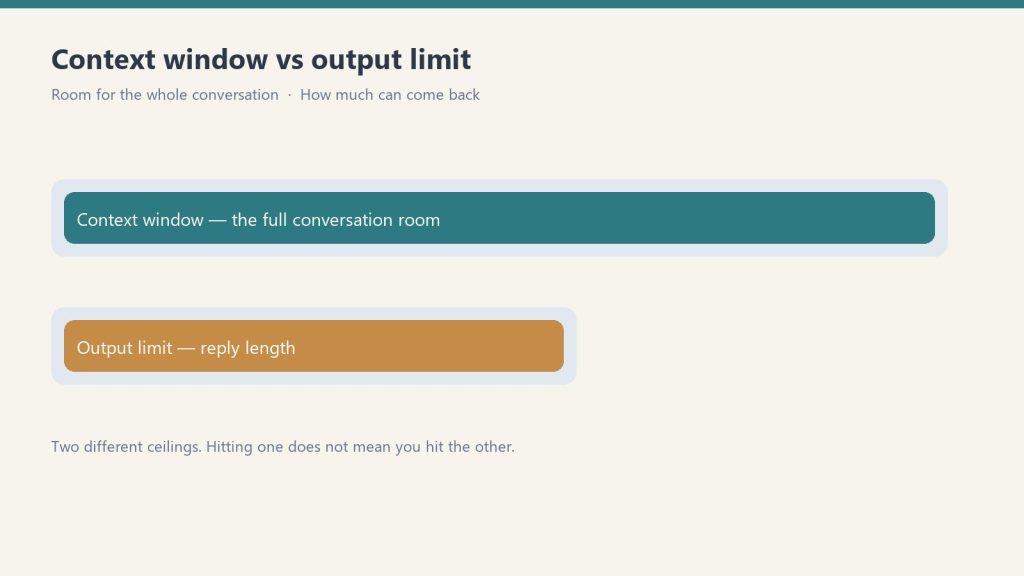
All models support a 200,000-token context window by default — roughly 150,000 words, or an entire novel. Enterprise customers can access up to 500,000 tokens, and Claude Code extends to 1 million tokens for large codebase analysis.
How Does Claude AI Work?
Claude is a large language model (LLM) — a type of neural network trained on vast amounts of text data to predict and generate human-like responses. What distinguishes Claude from other LLMs is Anthropic’s emphasis on alignment and safety during training.
Claude uses two key training innovations:
- Constitutional AI (CAI): Instead of relying solely on human feedback to shape model behavior, Anthropic trains Claude to evaluate its own outputs against a set of written principles. This makes Claude more consistent in avoiding harmful outputs, even in edge cases human reviewers might not anticipate.
- RLHF (Reinforcement Learning from Human Feedback): Human trainers rate Claude’s responses, and those ratings guide the model toward more helpful, accurate, and appropriate answers over time.
The combination produces a model that tends to acknowledge uncertainty, push back on false premises, and decline harmful requests more gracefully than many competitors.
What Can Claude AI Do?
Claude’s capabilities in 2026 span well beyond simple chatting. Here’s what it handles well:
Writing and Editing
Claude excels at long-form content: blog posts, essays, reports, marketing copy, email sequences, legal documents, and fiction. Its writing is notably less robotic than many AI tools, partly because it’s trained to match tone and style from context clues.
Coding and Software Development
Claude Code — Anthropic’s terminal-native coding tool — has become one of the most popular AI coding environments among professional developers. It can write, debug, refactor, and explain code across virtually all major programming languages, and it understands large codebases through its million-token context window.
Research and Analysis
Claude reads and synthesizes PDFs, research papers, financial reports, and legal filings. With 200K tokens of context, it can process an entire book-length document and answer specific questions about it.
Data Analysis
Claude can read CSV files, interpret charts, write Python or SQL to analyze datasets, and explain findings in plain language — making it useful for anyone who works with data but isn’t a dedicated data scientist.
Multimodal Inputs
Claude accepts text, images, PDFs, and documents as inputs. It can describe images, extract text from screenshots, and analyze visual data — though it cannot generate images itself (for image generation, tools like Midjourney or DALL-E are required).
Claude AI Pricing: Free vs. Paid Plans in 2026
Anthropic offers four main tiers for individual users:
| Plan | Price | What You Get | Best For |
|---|---|---|---|
| Free | $0/month | Limited daily messages, Claude Sonnet 4.6 access | Casual or occasional use |
| Claude Pro | $20/month | 5x more usage, priority access, Projects | Regular users, professionals |
| Claude Max 5x | $100/month | 5x Pro usage, Claude Code access, extended thinking | Power users, developers |
| Claude Max 20x | $200/month | 20x Pro usage, highest priority | Heavy professional use |
Enterprise plans are available with custom pricing, SSO, admin controls, extended context (up to 500K tokens), and zero-data-retention options for sensitive industries.
Claude vs. ChatGPT: What’s the Difference?
This is the question most people ask when they first hear about Claude. The honest answer: they’re both capable, and the best choice depends on your use case.
| Factor | Claude | ChatGPT |
|---|---|---|
| Best at | Long documents, nuanced writing, coding | General tasks, image generation, plugins |
| Context window | 200K tokens (standard) | 128K tokens (GPT-4o) |
| Image generation | No (analysis only) | Yes (DALL-E integration) |
| Safety emphasis | Very high (Constitutional AI) | High |
| Code quality | Among the best (SWE-bench leader) | Strong |
| Price | $20-$200/month | $20/month (Plus), $200/month (Pro) |
For most professional writing, legal/financial analysis, and software development tasks, Claude holds a measurable edge. For tasks requiring image generation or deep integration with third-party plugins, ChatGPT’s ecosystem is broader.
How to Get Started with Claude AI

Getting started takes about two minutes:
- Go to claude.ai and create a free account with your email or Google login.
- Start a new conversation. Type or paste your first prompt.
- If you need to analyze a document, click the paperclip icon to upload PDFs, images, or files.
- For power use, upgrade to Claude Pro for Projects — a feature that lets you create persistent knowledge bases that Claude remembers across conversations.
- If you’re a developer, visit console.anthropic.com to get your API key and explore the Claude API.
Spinning Up the API?
I can walk you through setup, model selection, and cost management — before you burn credits figuring it out yourself.
Claude AI: Key Limitations to Know
No tool is perfect. Here are Claude’s genuine limitations as of 2026:
- No image generation: Claude cannot create images. For that, you need a dedicated tool like Midjourney, DALL-E, or Stable Diffusion.
- Rate limits on free and Pro plans: Heavy users — especially on the Pro tier — regularly hit daily message limits. This is the most common complaint among power users. The Max plans ($100/$200/month) solve this for most use cases.
- No real-time web access by default: Unless explicitly connected to a web search tool, Claude’s knowledge has a training cutoff. It cannot browse the web in real time by default on the consumer interface.
- Occasional refusals: Claude’s safety training sometimes makes it overly cautious on topics that are legitimate but touch sensitive areas. This has improved substantially with each model generation.
Frequently Asked Questions About Claude AI
Is Claude AI free?
Yes — Claude has a free tier that gives you limited daily access to Claude Sonnet 4.6. The free tier is useful for casual use, but heavy users will quickly encounter rate limits. Paid plans start at $20/month.
Who made Claude AI?
Claude was created by Anthropic, an AI safety company founded in 2021. Anthropic was started by seven former OpenAI researchers, including CEO Dario Amodei and President Daniela Amodei.
Is Claude AI better than ChatGPT?
It depends on the task. Claude generally outperforms ChatGPT on coding benchmarks, long-document analysis, and nuanced writing. ChatGPT has a broader plugin ecosystem and native image generation. Many professionals use both.
Does Claude store my conversations?
By default, Anthropic may use conversations from consumer accounts to improve its models (you can opt out in settings). Business and API customers can access zero-data-retention options. Conversation data is retained for up to five years unless you delete it manually.
Can Claude generate images?
No. Claude can analyze and describe images, but it cannot generate them. For AI image creation, use Midjourney, DALL-E, or Adobe Firefly.
What is Claude’s context window?
Standard Claude models have a 200,000-token context window — roughly 150,000 words. Enterprise plans extend this to 500,000 tokens. Claude Code supports up to 1 million tokens for large codebase analysis.
How do I access Claude Code?
Claude Code is available as part of the Claude Max subscription ($100+/month) or via the Anthropic API. It runs as a terminal-native tool — install it with npm install -g @anthropic-ai/claude-code and authenticate with your API key.
This guide is updated regularly as Anthropic ships new models and features. Last updated: April 2026.
Leave a Reply