Google’s real superpower was never search or ads. It was the door home — and I learned that at 2 a.m., locked out of my own life.
I locked myself out of my own account a little after one in the morning. I don’t even remember what I needed in there — something small, something that could have waited until daylight. What I remember is the password field refusing me, then refusing me again, and the cold drop in my stomach when I realized the keys to a dozen other things lived behind that one rejection.
So I did what everyone does. I grabbed my phone. I tried the recovery email, which routed to an account I also couldn’t reach. I tried the text-message code. I tried the security questions, answered years ago with half-truths I’d invented and instantly forgotten. I worked the recovery flow like a man patting his pockets at a locked door, and somewhere in there it landed on me that I was negotiating — not with a hacker, not with a thief, but with the company that decides whether I am still me.
I got back in by morning. Relief, and then a second feeling underneath it that wouldn’t leave: that was the product. Not the search box. Not the ads. The way back in.
I build access layers for a living. Second brains. A life-ranking system I call the Compass. The structured record a business can’t operate without — the institutional memory that walks out the door when the wrong person quits. Continuity systems for my wife Stefani, so the things she needs are still there on the days her memory isn’t. I’d been filing all of it under content and tooling. That night I understood I’d been mislabeling my own work — and I understood something about Google that most people have backwards.
Two things, not one
Here is the distinction that reorganized everything for me, and I want to be precise, because the sloppy version of this argument is wrong.
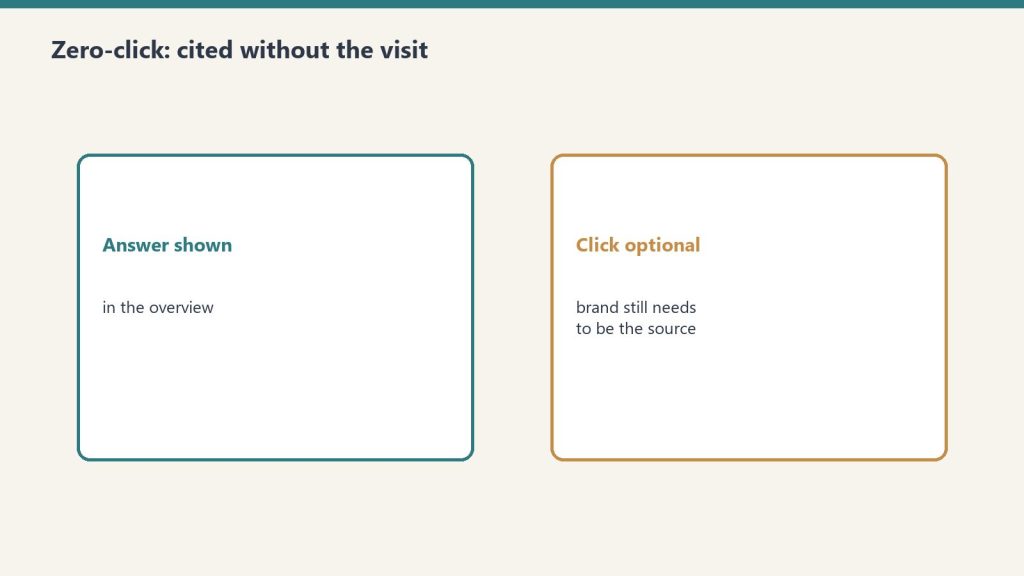
Search and ads are how Google makes money. That’s the business model, the value capture, the line on the income statement. Anyone who tells you access “beats” advertising is comparing a turnstile to a cash register. They don’t sit on the same axis.
But there are two things going on, and we only ever talk about one. Ads are how Google makes money. Access is why you can’t make Google stop. The login, the password manager, the “Sign in with Google” button, the recovery flow when you’re locked out — none of it earns a dollar directly. Google gives it all away. It exists to defend the surface where the money gets made.
And that’s the part people miss: the layer that earns nothing is the layer you can never leave. Attention is rented by the day — a better answer wins the next query, a better feed wins the next scroll. Access is owned by the year. So I won’t tell you access is more valuable than attention. I’ll tell you something narrower and more interesting: access is more durable. It is the layer with its hand on the master switch, and it shows up on the books as a cost center, a free feature, a help-desk ticket — which is exactly why nobody guards against it.
Why the door beats the window
The mechanics are almost embarrassingly simple once you see them.
You can change your default search engine in a single setting. One click, a coffee break, done. Now try changing the thing that holds the keys to everything else. Imagine someone who’s used “Sign in with Google” across twenty or thirty services — and once you start counting your own, the number climbs faster than you’d like. That account isn’t an account anymore. It’s the hinge the whole house swings on. Lose it and you don’t lose one thing; you lose your bank login’s recovery path, your work tools, your tax software, your photos, the smart lock on your front door.
That’s the asymmetry. Search is a window you can swap in an afternoon. Access is the door the whole house hangs on — and the house has been quietly built around it.
This is switching-cost economics, and it has a clean shape. The hold a company has on you is its switching cost plus whatever its product is actually, presently better at. Advertising lives almost entirely on that second term — a marginally better result — which evaporates the instant a rival catches up. Access lives on the first, and the first only grows. Every new service you wire to that one login deepens the hold by one more door. Adding a lock is a single pleasant click. Removing it means re-keying every door at once, in parallel, under deadline, with permanent lockout as the price of getting it wrong. The pain isn’t additive. It’s combinatorial. That gap — between how easy it is to add the lock and how terrifying it is to pull it — is the moat.
Salesforce and SAP have lived inside this physics for decades, holding enterprise customers for twenty-five-year stretches, and nobody calls them content businesses. Google built the same thing for your whole life and handed it out for free.
The institutions confirmed it by where they aimed. When the U.S. courts found Google an illegal monopolist, the remedy went after the contracts — the roughly twenty billion dollars a year Google pays Apple to be the default, the exclusive default-search deals, now capped to one-year terms. But the court declined to break off Chrome or Android. It renegotiated who gets to answer the door and left untouched the company that built every lock, hinge, and recovery key in the house. Even the people dismantling the monopoly treated “who is the default way in” as the twenty-billion-dollar question — and left the deeper layer, the one that actually owns login, autofill, passkeys, and recovery, exactly where it was.
The thing it holds is a piece of your mind
I could have left it at economics. But the lockout didn’t feel like an economics problem at one in the morning. It felt like an amputation, and I want to take that feeling seriously, because it’s the truest part.
There’s an old argument in philosophy of mind — Andy Clark and David Chalmers, 1998, “The Extended Mind.” They imagine Otto, a man whose memory is failing, who writes what he needs in a notebook and consults it the way you and I consult the inside of our own heads. Their claim isn’t that the notebook helps Otto’s mind. It’s that the notebook is part of Otto’s mind — the storage just happens to sit outside his skull. If a process counts as remembering when it happens in your head, it counts as remembering when it happens in the world.
I read that and thought about Stefani. “Remember for her when she can’t” is Otto’s notebook, almost word for word. The philosophy was settled twenty-eight years ago: the thing that holds your memory for you is not a tool you use. It is part of the mind doing the remembering.
Then the cognitive science caught up with the philosophy. In 2011, Betsy Sparrow and her colleagues at Columbia tested how people handle information they expect to look up later. We don’t retain the information, they found — we retain where to find it. The brain offloads the content and keeps the pointer. We are becoming, in their phrase, symbiotic with our tools. Sit with that: human memory already ran my experiment and reached my conclusion. It threw away the fact and kept the way back in. Access beating content isn’t a strategy I invented. It’s how your own head now works.
Which means whoever holds the pointer holds the only half of the memory your brain bothered to keep. You can swap a search engine in a second. You cannot swap a piece of your own mind without something that feels, accurately, like a small lobotomy. An ad interrupts you. A lockout unselfs you. And the entity that hands you back in isn’t selling you a service. It’s returning you to yourself.
There’s a flip side I have to be honest about, because it’s the whole case for doing this carefully. Sparrow’s same line of research shows that offloading frees you up — trusting that something is safely stored elsewhere measurably improves your ability to learn the next thing. But it also shows the benefit reverses when the external store turns out to be unreliable. You end up worse off than if you’d never offloaded, because you pruned the internal copy and the external one failed you. Reliability isn’t a feature of a continuity layer. It’s the entire product. A second brain that might vanish doesn’t merely fail to help — it degrades the mind that came to depend on it.
The blade cuts both ways
So here’s where I turn the knife on my own argument, because the thing that makes access powerful is the same thing that makes it dangerous, and I don’t trust anyone who won’t say so.
Access is a pharmakon — Plato’s word, the one Derrida built on: the single substance that cures and poisons, depending on nothing but the dose and the hand that holds it. The recovery flow that rescued me at 2 a.m. is, mechanically, the identical system that means I can never fully leave. Not two features in tension. One feature, seen from two sides.
Android makes it literal. Factory Reset Protection turns a wiped phone into a brick until the original Google account is re-verified. The feature that stops a thief from using your stolen phone is the same feature that makes the device hostage to Google’s say-so. Protection and imprisonment, one mechanism — and Google isn’t retreating from this ground, it’s deepening it, because recovery is exactly where the bond forms. The company that saves you and the company that traps you are the same company. You’re just meeting it at two different moments.
Now let me take the strongest objections head-on, because the good ones are real.
“Switching costs approach infinity.” No. I used to say it that way, and it was wrong. People migrate ecosystems by the hundreds of millions and carry their photos and contacts with them. Phone-number portability was mandated and it worked. Passkeys are an open standard, and their own backers built a credential-exchange protocol specifically to make them portable between password managers. Europe’s data-portability law already forces Google to hand you everything. My own founding story refutes the infinity claim: I got back in by morning. The moat is high, it is real, and it is finite and shrinking by design — every serious regulatory and technical current of this decade is engineered to grind it down. And that cuts in my favor. If lock-in were infinite, “we’ll let you leave” would be a meaningless promise. It means something only because leaving is becoming genuinely possible.
“Isn’t ‘access as care’ just what every captor says?” Yes. Company towns called themselves family. AOL called itself a community. Every lock-in business in history has narrated itself as care, and the distinction is invisible at the exact moment it matters most — when you’re locked out, sick, grieving, laid off, and least able to audit whether anyone actually has your back. This is the real soft spot, and I won’t paper over it. Care cannot be declared. It has to be engineered — and provable by someone who never read the terms. Words are free. I’ll come back to what isn’t.
“Gratitude isn’t a moat — the 2 a.m. plumber gets it too.” Correct. The ER, the locksmith, roadside assistance, my own restoration clients on the worst day of their lives — they all bond at the moment of relief, and gratitude decays, and people shop their insurance anyway. So gratitude isn’t the moat. It’s the on-ramp. The midnight rescue doesn’t lock anyone in; it earns the first conversation. What keeps them is what you do after — and that’s a question of character, not a property of the crisis.
Care holds the same keys — and hands you a copy
Let me show you what the answer looks like before I argue for it.
Last winter one of my restoration clients walked into a commercial building with two inches of standing water across the floor — burst supply line, ceilings down, a decade of operating records soaking in a back office that also held the only copies of their continuity plan, their vendor contracts, their insurance file. By the time the water was out, the part they were most afraid of losing wasn’t the drywall. It was the paper. We’d already pulled their critical records into a structured store they could reach from a phone — indexed, searchable, theirs. The owner stood in the wreckage and opened the file on his phone, and the thing that could have ended the business was just there. Then the part that matters to this essay: when the job closed, the whole store exported in one motion, in formats their own systems could read, and went with them. No call to me. No ransom for their own records. They walked out with the keys in their hand, and the relief on the owner’s face was the entire argument I’m about to make, compressed into one moment.
That’s the difference between holding the keys for someone and holding them over them. Once you accept that the held thing is part of a person’s mind, the ethics stop being a garnish and become the architecture. Holding a piece of someone’s cognition and refusing to let them leave isn’t hard-nosed business; it’s closer to holding a self hostage. Holding that same piece while guaranteeing they can walk out with all of it, any time, without asking — that’s not a vendor. That’s a trustee. The oldest answer the law has to the question of how you hold something vital that belongs to someone else: you hold it for them, bound to their interest, returnable on demand.
The whole thing collapses to one question. Not do you hold the keys — someone always holds the keys. The question is whether you hold them for her or over her. Google books your access as its switching cost, an asset on its side of the ledger. The humane version books it as your asset, merely held in trust. Same keys. Opposite politics.
Which is why I keep coming back to the difference between a scaffold and a cage. Good scaffolding is built to come down — calibrated to do only what the person can’t yet do alone, withdrawn as they grow. A scaffold that never comes down isn’t support anymore; it’s a wall you’ve forgotten how to live without. “Remember for Stefani when she can’t” is the morally exact phrasing — contingent help for a real gap, not a blanket seizure of her agency. Do everything for someone and you don’t make them safe. You teach them they can’t.
And I’ll admit the moat I’m choosing is the weaker one. A lock-in moat is strong precisely because it’s coercive — you stay because you can’t go. A trust moat is fragile; one breach and it’s gone overnight. I’m choosing the fragile one on purpose, and not only because it’s right. Lock-in and care produce the identical retention number — ninety-nine percent stay either way — but for opposite reasons, and the difference only shows up the day switching becomes free. That day is coming: portability law, open credential standards, and soon an AI agent that can re-key your whole life in an afternoon. When it arrives, the captivity moat evaporates and the trust moat doesn’t even notice. Free exit isn’t charity — it’s the only hold worth having once leaving is easy and everyone knows it. I’m not being generous. I’m being early.
But I won’t let myself off with a promise, because a promise from an interested party is exactly what breaks the day the incentives flip — an acquisition, a cash crunch, a change of hands. So the care has to be built into things that survive my intentions. Export in open, ingestible formats — not a dead blob no other system can read, which is fake portability wearing a real coat. A published exit that works without anyone calling me. A governance mechanism that binds the company after it’s sold. Don’t trust my intentions. Trust the mechanism that outlives them. That’s the only honest answer to “every captor says that.” The test was never the happy customer. It’s whether the grieving spouse who never read a word of the terms can still get everything out, in one motion, with no call to me. Design for the person who can’t advocate for themselves, and the ethics stop being marketing.
The door is moving — to the agent
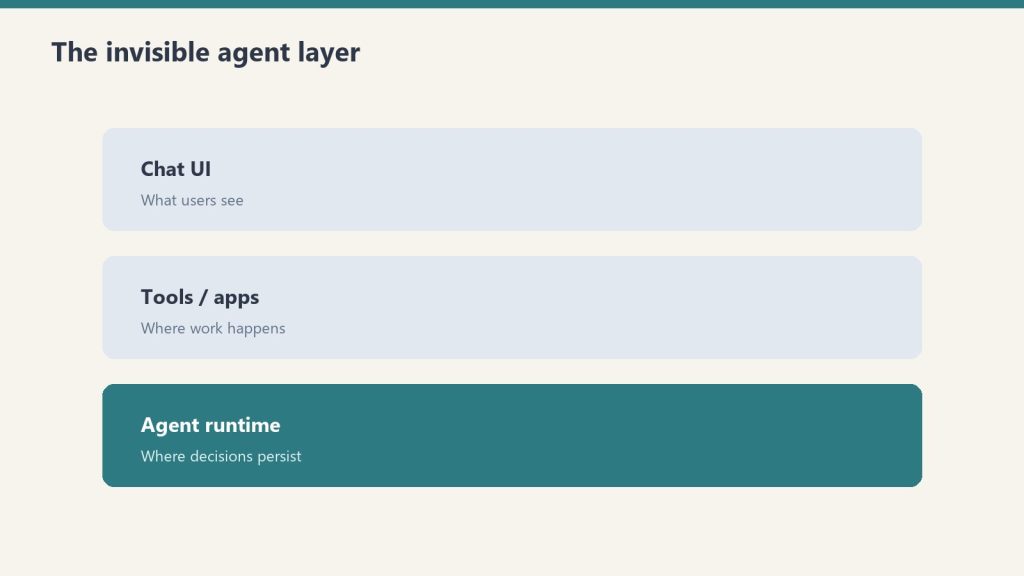
This is also the shape of the next decade, and it’s why I work the way I work.
Google holds the keys to your accounts. The AI agent is coming to hold the keys to your context — what you’re working on, what you decided last month, how you actually think and operate. That’s a deeper hook than a login, because a login gets you into the app, but context is the work. Search was a query you typed and forgot. The agent is a relationship that accumulates.
And there’s a real chance, for the first time, that the door doesn’t have to be a cage. The plumbing that lets an agent reach into your files, calendar, and tools — Anthropic’s Model Context Protocol — is being built as a shared, open standard rather than one company’s private wiring. I won’t call that settled or “neutral”; standards get captured, and this one is young enough to go either way. But open plumbing at least makes it possible to build an agent that reaches into everything you own without owning it. Access without capture is finally buildable, not merely sayable.
The trap is moving too — and getting subtler. The new lock-in isn’t your data. It’s the agent’s learned understanding of you, accreted day after day. You can export every chat log and still leave behind the part that actually knew you, because raw logs aren’t understanding, and no portability law reaches that gap. Which is the whole reason I build on Claude rather than treat any of this as theory: its memory has a delete button and an export button. You can read what it knows about you, change it, take it elsewhere, even bring your history in from somewhere else. That’s not a feature. It’s a thesis with a receipt — own the payload, walk out anytime, shipped.
I have to name the obvious dark mirror, because it’s already shipping. Microsoft Recall makes the identical pitch — we’ll remember everything for you — by quietly screenshotting your screen every few seconds into a local index. Same promise, opposite governance: a memory built about you, by default, that you didn’t author and can’t easily hand to anyone else. The pointer to your own mind, held on someone else’s terms. The seat for “Sign in with your agent” is still empty, but the room is filling — Recall, OpenAI’s persistent memory, Gemini woven through Android, Apple’s on-device intelligence are all reaching for it. Whoever defines what care looks like before that seat fills sets the norm for everyone after. That’s not a forecast from the bleachers. It’s the work.
What I’m actually building
So let me say what my portfolio really is, because I had it mislabeled too.
It looks like five businesses held together by nothing but my calendar — restoration clients, the second brain, the Compass, remembering for Stefani, the structured record a company can’t operate without. It’s one product. Each version shows up at the bottom — the moment of maximum vulnerability, when someone has the least to spare and the most to lose — takes custody of a piece of their continuity, and is built, from the foundation, to give all of it back. Continuity is the one thing the attention economy never touches: the durable layer a person or a business runs on — their records, their memory, their way back into their own life — the part that, if it vanished, would not just inconvenience them but unself them.
The attention economy fights for you when you have everything to spare, which is why it has to shout and why you resent it for shouting. The continuity layer shows up when you have nothing left, and arrives with relief. Bonds made at the bottom run deeper than impressions bought at the top — but only one kind of person should be trusted to be there at the bottom: the kind who hands you the key on the way in.
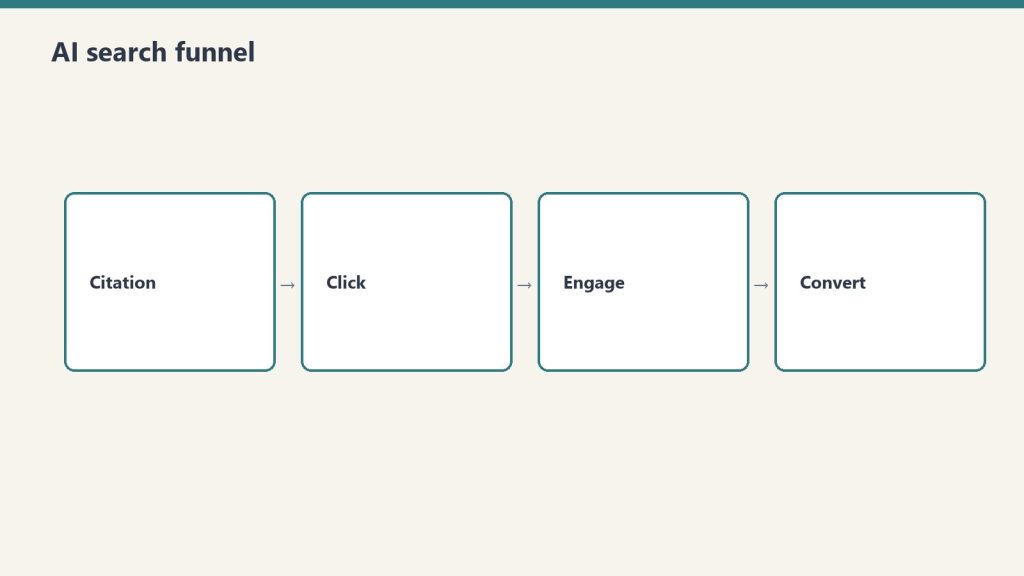
I’ll concede the last hard thing plainly, because a skeptic has already spotted it. Today, the part of my work that pays the bills is the discovery work — getting found, getting ranked, getting cited. The continuity layer is real but young, and I won’t pretend it has finished proving it can pay. Here’s how I think it does: not by charging for the data, which would just be the cage again, but as a held-in-trust retainer — an ongoing fee for keeping the lights on and the door unlocked, priced like what it is, a fiduciary relationship rather than a subscription you’re trapped inside. You earn the right to charge it by first being useful enough to be found. Discovery isn’t a contradiction of the thesis; it’s the front door. Attention comes first. It always did. The mistake is thinking it’s the destination.
And here’s the part I can’t dodge, the one that keeps me honest. The agent I’m betting on — the one that can re-key a whole life in an afternoon — is the same tool that dissolves my moat too. If re-keying is trivial, the switching cost protecting my own work goes to zero right alongside Google’s. I’m left holding nothing but the fragile thing: trust, provable on the day someone decides to leave. That isn’t a bug in my bet. It’s the point of it. The tool I’m wagering everything on is the one that guarantees I can never coast — it leaves me no hold on anyone except being worth staying with. I’d rather build on that than on a lock.
Which is where it lands, in one line I’ve earned the right to say now:
Don’t sell knowledge. Don’t sell content. Sell access to continuity — and prove it’s care and not a cage by handing the customer the key on the way in.
I learned that locked out of my own life at two in the morning, patting my pockets at a door, negotiating with the only entity that could tell me whether I was still me. Google taught me how much that door is worth. It just never taught me to hand anyone a copy of the key. That part’s on us — and the copy is the whole job.
Related on Tygart Media: GEO tactics · SEO vs GEO vs AEO · citation economy.