Tag: Claude AI

  • Claude Managed Agents — Every Question Answered (Complete FAQ 2026)

    Claude Managed Agents — Every Question Answered (Complete FAQ 2026)

    Tygart Media Strategy
    Volume Ⅰ · Issue 04Quarterly Position
    By Will Tygart
    Long-form Position
    Practitioner-grade

    Everything people actually ask about Claude Managed Agents, answered straight. No preamble about “the exciting world of AI agents.” If you’re here, you already know why this matters — you just need answers.

    This page covers pricing, setup, capabilities, limits, comparisons, and the specific questions that don’t have obvious homes in Anthropic’s documentation. It updates as the beta evolves.

    Context

    Claude Managed Agents launched April 8, 2026 as a public beta. All answers reflect current documentation as of April 2026. Beta details change — verify specifics at platform.claude.com/docs.

    Pricing Questions

    What does Claude Managed Agents cost?

    Two charges: standard Claude API token rates (same as calling the Messages API directly) plus $0.08 per session-hour of active runtime. That’s the complete formula. See the complete pricing reference for worked examples by workload type.

    What exactly is a “session-hour” and when does it start billing?

    A session-hour is one hour of active session runtime — time when your session’s status is running. Billing is metered to the millisecond. It does not accrue during idle time, time waiting for your input, time waiting for tool confirmations, or after session termination.

    What’s included in the $0.08/session-hour charge?

    The session runtime charge covers Anthropic’s managed infrastructure: sandboxed code execution containers, state management, checkpointing, tool orchestration, error recovery, and scaling. You are not separately billed for container hours on top of session runtime.

    Does the $0.08/hr apply even if my agent is just waiting?

    No. Time spent waiting for your message, waiting for tool confirmations, or sitting idle does not accumulate runtime charges. Only active execution time counts.

    What does web search cost inside a Managed Agents session?

    $10 per 1,000 searches ($0.01 per search), billed separately from session runtime and token costs. This is the same rate as web search through the standard API.

    Are there volume discounts?

    Yes, negotiated case-by-case for high-volume users. Contact [email protected] or through the Claude Console.

    How does Managed Agents pricing compare to running my own agent infrastructure?

    The $0.08/session-hour is almost always cheaper than equivalent provisioned compute — but you trade infrastructure control and data locality for that simplicity. For a full comparison: Build vs. Buy: The Real Infrastructure Cost.

    What’s the real monthly cost if I run an agent 24/7?

    Maximum theoretical session runtime: 24 hrs × $0.08 × 30 days = $57.60/month. In practice, no production agent has zero idle time. Token costs become the dominant cost driver long before you hit the runtime ceiling. Detailed breakdown: The Real Monthly Cost of Running Claude Managed Agents 24/7.

    Setup and Access Questions

    How do I get access to Claude Managed Agents?

    Available to all Anthropic API accounts in public beta — no separate signup. You need the managed-agents-2026-04-01 beta header in your API requests. The Claude SDK adds this header automatically.

    Does it work with my existing API key?

    Yes. Same API key you’re already using for the Messages API. Same authentication. The beta header is the only new requirement.

    What three ways can I access Managed Agents?

    Via the Claude SDK (recommended — handles the beta header automatically), via direct API calls with the beta header, or via the Claude Console’s new Managed Agents section for no-code agent configuration and session tracing.

    Can I use Managed Agents through AWS Bedrock or Google Vertex AI?

    Managed Agents runs on Anthropic-managed infrastructure. This is distinct from Bedrock and Vertex AI deployments. Check Anthropic’s current documentation for multi-cloud availability status — this is an area of active development.

    Capability Questions

    What can Claude Managed Agents actually do?

    Run long autonomous sessions with persistent state, execute code in sandboxed Linux containers, use tools including web search and MCP servers, coordinate multiple Claude instances via Agent Teams, and maintain checkpoints for crash recovery. The session can last minutes or hours without you staying in the loop.

    What’s the difference between Agent Teams and subagents?

    Agent Teams coordinate multiple Claude instances with independent contexts, direct agent-to-agent communication, and a shared task list — suited for complex parallel tasks. Subagents operate within the same session as the main agent and only report results upward — more economical for sequential targeted tasks but less capable of true parallelism.

    Does it support MCP servers?

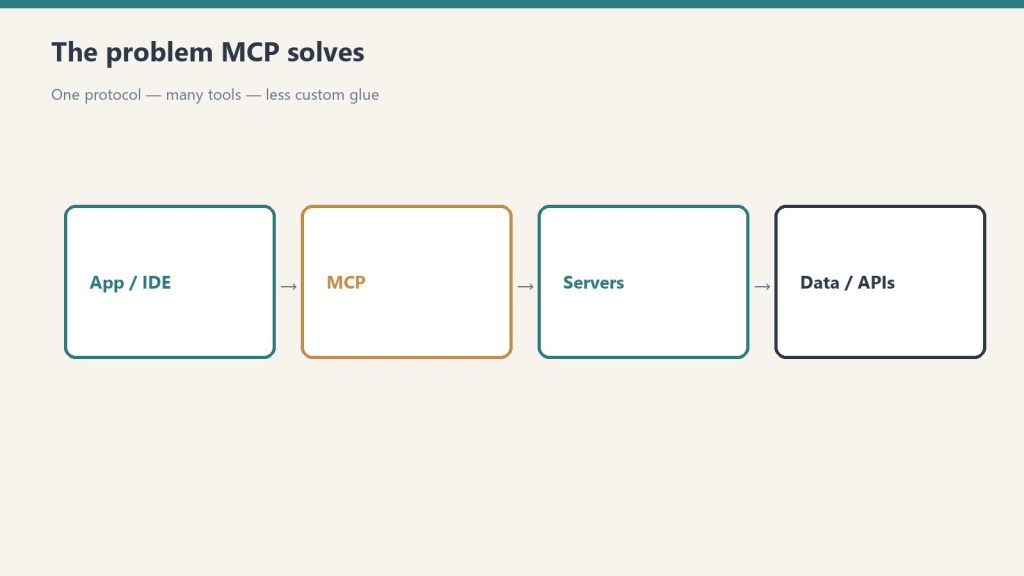
    Yes. MCP servers can be integrated as tool sources in Managed Agents sessions, extending what the agent can access and act on.

    How long can a session run?

    Anthropic’s documentation currently references session durations of minutes to hours. Claude Code’s longest autonomous sessions have reached 45 minutes. Managed Agents is architected for longer-running work. Check current documentation for specific session duration limits as the beta matures.

    What happened to Claude Code — is it the same as Managed Agents?

    No. Claude Code is a separate local coding workflow product. Anthropic’s docs explicitly note partners should not conflate the two. Managed Agents is a hosted API runtime service. Claude Code is a developer tool. Different products, different use cases, different billing.

    Rate Limit Questions

    What are the rate limits for Managed Agents?

    60 requests per minute for create endpoints; 600 requests per minute for read endpoints. Organization-level API limits still apply on top of these. For higher limits, contact Anthropic enterprise sales. Detailed breakdown: Claude Managed Agents Rate Limits Explained.

    Do standard Claude API rate limits still apply inside a session?

    Organization-level limits apply. The session runtime and create/read endpoint limits are Managed Agents-specific. If you’re running many parallel Agent Teams, model token throughput limits will become relevant.

    Comparison Questions

    How does Managed Agents compare to OpenAI’s Agents API?

    Both offer hosted agent infrastructure. Key differences: Managed Agents is Claude-native (no multi-model flexibility), sessions bill on runtime + tokens vs. OpenAI’s different pricing model, and lock-in dynamics differ. Full comparison: Claude Managed Agents vs. OpenAI Agents API.

    Should I use Managed Agents or the Claude Agent SDK?

    Use Managed Agents when you want Anthropic to host the runtime — less infrastructure work, faster to production. Use the SDK when you need tighter loop control, on-premise execution, or multi-cloud flexibility. Anthropic’s own migration docs draw this line clearly: SDK runs in your environment; Managed Agents runs in theirs.

    What companies are already using Managed Agents in production?

    Notion, Asana, Rakuten, Sentry, and Vibecode were launch partners. Rakuten deployed five enterprise agents within a week. Allianz is using Claude for insurance agent workflows. Anthropic’s run-rate from the agent developer segment exceeds $2.5 billion. How Rakuten did it in a week →

    Data and Security Questions

    Where does my data go when running in Managed Agents?

    Execution runs on Anthropic’s infrastructure. This is the explicit trade-off: you get managed infrastructure; they manage the compute. For companies with strict data sovereignty requirements, this is the key constraint to evaluate. On-premise or native multi-cloud deployment is not currently available.

    What are the sandboxing guarantees?

    Anthropic uses disposable Linux containers — “decoupled hands” in their terminology. Each container is a fresh sandboxed environment for code execution. State persistence is managed separately from the execution environment.

    Strategic Questions

    Is this a bet worth making?

    That depends on your switching cost tolerance. Lock-in is real: once your agents run on Anthropic’s infrastructure with their tools, session format, and sandboxing, switching providers isn’t trivial. The counter-argument: the infrastructure you’d otherwise build to match this is months of engineering. One developer’s reaction at launch was blunt: “there goes a whole YC batch.” That captures both the opportunity and the risk. Our take on why we’re staying our course →

    What does this mean for AI citation and visibility?

    Agents running on Anthropic’s infrastructure make decisions about what content to surface, cite, and synthesize. As agent workloads grow, being present in the knowledge sources agents draw from becomes a search strategy question in itself. What AI citation monitoring looks like →

  • Claude Managed Agents Pricing: $0.25/Session-Hour — Full 2026 Cost Breakdown

    Claude Managed Agents Pricing: $0.25/Session-Hour — Full 2026 Cost Breakdown

    Updated May 2026

    Pricing updated to reflect current Opus 4.8 ($5/$25 per MTok) and the retirement of Claude Sonnet 4 and Opus 4 on June 15, 2026. Managed Agents moved to public beta — see the complete pricing guide for current rate details.

    Tygart Media Strategy
    Volume Ⅰ · Issue 04Quarterly Position
    By Will Tygart
    Long-form Position
    Practitioner-grade
    Claude Managed Agents Pricing: $0.08 per session-hour of active runtime (measured in milliseconds, billed only while the agent is actively running) plus standard Anthropic API token costs. Idle time — while waiting for input or tool confirmations — does not count toward runtime billing.

    When Anthropic launched Claude Managed Agents on April 9, 2026, the pricing structure was clean and simple: standard token costs plus $0.08 per session-hour. That’s the entire formula.

    Whether $0.08/session-hour is cheap, expensive, or irrelevant depends entirely on what you’re comparing it to and how you model your workloads. Let’s work through the actual math.

    What You’re Paying For

    The session-hour charge covers the managed infrastructure — the sandboxed execution environment, state management, checkpointing, tool orchestration, and error recovery that Anthropic provides. You’re not paying for a virtual machine that sits running whether or not your agent is active. Runtime is measured to the millisecond and accrues only while the session’s status is running.

    This is a meaningful distinction. An agent that’s waiting for a user to respond, waiting for a tool confirmation, or sitting idle between tasks does not accumulate runtime charges during those gaps. You pay for active execution time, not wall-clock time.

    The token costs — what you pay for the model’s input and output — are separate and follow Anthropic’s standard API pricing. For most Claude models, input tokens run roughly $3 per million and output tokens roughly $15 per million, though current pricing is available at platform.claude.com/docs/en/about-claude/pricing.

    Modeling Real Workloads

    The clearest way to evaluate the $0.08/session-hour cost is to model specific workloads.

    A research and summary agent that runs once per day, takes 30 minutes of active execution, and processes moderate token volumes: runtime cost is roughly $0.04/day ($1.20/month). Token costs depend on document size and frequency — likely $5-20/month for typical knowledge work. Total cost is in the range of $6-21/month.

    A batch content pipeline running several times weekly, with 2-hour active sessions processing multiple documents: runtime is $0.16/session, roughly $2-3/month. Token costs for content generation are more substantial — a 15-article batch with research could run $15-40 in tokens. Total: $17-43/month per pipeline run frequency.

    A continuous monitoring agent checking systems and data sources throughout the business day: if the agent is actively running 4 hours/day, that’s $0.32/day, $9.60/month in runtime alone. Token costs for monitoring-style queries are typically low. Total: $15-25/month.

    An agent running 24/7 — continuously active — costs $0.08 × 24 = $1.92/day, or roughly $58/month in runtime. That number sounds significant until you compare it to what 24/7 human monitoring or processing would cost.

    The Comparison That Actually Matters

    The runtime cost is almost never the relevant comparison. The relevant comparison is: what does the agent replace, and what does that replacement cost?

    If an agent handles work that would otherwise require two hours of an employee’s time per day — research compilation, report drafting, data processing, monitoring and alerting — the calculation isn’t “$58/month runtime versus zero.” It’s “$58/month runtime plus token costs versus the fully-loaded cost of two hours of labor daily.”

    At a fully-loaded cost of $30/hour for an entry-level knowledge worker, two hours/day is $1,500/month. An agent handling the same work at $50-100/month in total AI costs is a 15-30x cost difference before accounting for the agent’s availability advantages (24/7, no PTO, instant scale).

    The math inverts entirely for edge cases where agents are less efficient than humans — tasks requiring judgment, relationship context, or creative direction. Those aren’t good agent candidates regardless of cost.

    Where the Pricing Gets Complicated

    Token costs dominate runtime costs for most workloads. A two-hour agent session running intensive language tasks could easily generate $20-50 in token costs while only generating $0.16 in runtime charges. Teams optimizing AI agent costs should spend most of their attention on token efficiency — prompt engineering, context window management, model selection — rather than on the session-hour rate.

    For very high-volume, long-running workloads — continuous agents processing large document sets at scale — the economics may eventually favor building custom infrastructure over managed hosting. But that threshold is well above what most teams will encounter until they’re running AI agents as a core part of their production infrastructure at significant scale.

    The honest summary: $0.08/session-hour is not a meaningful cost for most workloads. It becomes material only when you’re running many parallel, long-duration sessions continuously. For the overwhelming majority of business use cases, token efficiency is the variable that matters, and the infrastructure cost is noise.

    How This Compares to Building Your Own

    The alternative to paying $0.08/session-hour is building and operating your own agent infrastructure. That means engineering time (months, initially), ongoing maintenance, cloud compute costs for your own execution environment, and the operational overhead of managing the system.

    For teams that haven’t built this yet, the managed pricing is almost certainly cheaper than the build cost for the first year — even accounting for the runtime premium. The crossover point where self-managed becomes cheaper depends on engineering cost assumptions and workload volume, but for most teams it’s well beyond where they’re operating today.

    Frequently Asked Questions

    Is idle time charged in Claude Managed Agents?

    No. Runtime billing only accrues when the session status is actively running. Time spent waiting for user input, tool confirmations, or between tasks does not count toward the $0.08/session-hour charge.

    What is the total cost of running a Claude Managed Agent for a typical business task?

    For moderate workloads — research agents, content pipelines, daily summary tasks — total costs typically range from $10-50/month combining runtime and token costs. Heavy, continuous agents could run $50-150/month depending on token volume.

    Are token costs or runtime costs more important to optimize for Claude Managed Agents?

    Token costs dominate for most workloads. A two-hour active session generates $0.16 in runtime charges but potentially $20-50 in token costs depending on workload intensity. Token efficiency is where most cost optimization effort should focus.

    At what point does building your own agent infrastructure become cheaper than Claude Managed Agents?

    The crossover depends on engineering cost assumptions and workload volume. For most teams, managed is cheaper than self-built through the first year. Very high-volume, continuously-running workloads at scale may eventually favor custom infrastructure.


    Related: Complete Pricing Reference — every variable in one place. Complete FAQ Hub — every question answered.

    What to do next

    Now that you have the cost — here’s how to choose and implement

    You know the session-hour rate. The harder decision is whether Managed Agents is the right architecture vs. building on the raw API — or vs. OpenAI’s equivalent.

  • Claude Managed Agents vs. Rolling Your Own: The Real Infrastructure Build Cost

    Claude Managed Agents vs. Rolling Your Own: The Real Infrastructure Build Cost

    Tygart Media Strategy
    Volume Ⅰ · Issue 04Quarterly Position
    By Will Tygart
    Long-form Position
    Practitioner-grade
    The Build-vs-Buy Question: Claude Managed Agents offers hosted AI agent infrastructure at $0.08/session-hour plus token costs. Rolling your own means engineering sandboxed execution, state management, checkpointing, credential handling, and error recovery yourself — typically months of work before a single production agent runs.

    Every developer team that wants to ship a production AI agent faces the same decision point: build your own infrastructure or use a managed platform. Anthropic’s April 2026 launch of Claude Managed Agents made that decision significantly harder to default your way through.

    This isn’t a “managed is always better” argument. There are legitimate reasons to build your own. But the build cost needs to be reckoned with honestly — and most teams underestimate it substantially.

    What You Actually Have to Build From Scratch

    The minimum viable production agent infrastructure requires solving several distinct problems, none of which are trivial.

    Sandboxed execution: Your agent needs to run code in an isolated environment that can’t access systems it isn’t supposed to touch. Building this correctly — with proper isolation, resource limits, and cleanup — is a non-trivial systems engineering problem. Cloud providers offer primitives (Cloud Run, Lambda, ECS), but wiring them into an agent execution model takes real work.

    Session state and context management: An agent working on a multi-step task needs to maintain context across tool calls, handle context window limits gracefully, and not drop state when something goes wrong. Building reliable state management that works at production scale typically takes several engineering iterations to get right.

    Checkpointing: If your agent crashes at step 11 of a 15-step job, what happens? Without checkpointing, the answer is “start over.” Building checkpointing means serializing agent state at meaningful intervals, storing it durably, and writing recovery logic that knows how to resume cleanly. This is one of the harder infrastructure problems in agent systems, and most teams don’t build it until they’ve lost work in production.

    Credential management: Your agent will need to authenticate with external services — APIs, databases, internal tools. Managing those credentials securely, rotating them, and scoping them properly to each agent’s permissions surface is an ongoing operational concern, not a one-time setup.

    Tool orchestration: When Claude calls a tool, something has to handle the routing, execute the tool, handle errors, and return results in the right format. This orchestration layer seems simple until you’re debugging why tool call 7 of 12 is failing silently on certain inputs.

    Observability: In production, you need to know what your agents are doing, why they’re doing it, and when they fail. Building logging, tracing, and alerting for an agent system from scratch is a non-trivial DevOps investment.

    Anthropic’s stated estimate is that shipping production agent infrastructure takes months. That tracks with what we’ve seen in practice. It’s not months of full-time work for a large team — but it’s months of the kind of careful, iterative infrastructure engineering that blocks product work while it’s happening.

    What Claude Managed Agents Provides

    Claude Managed Agents handles all of the above at the platform level. Developers define the agent’s task, tools, and guardrails. The platform handles sandboxed execution, state management, checkpointing, credential scoping, tool orchestration, and error recovery.

    The official API documentation lives at platform.claude.com/docs/en/managed-agents/overview. Agents can be deployed via the Claude console, Claude Code CLI, or the new agents CLI. The platform supports file reading, command execution, web browsing, and code execution as built-in tool capabilities.

    Anthropic describes the speed advantage as 10x — from months to weeks. Based on the infrastructure checklist above, that’s believable for teams starting from zero.

    The Honest Case for Rolling Your Own

    There are real reasons to build your own agent infrastructure, and they shouldn’t be dismissed.

    Deep customization: If your agent architecture has requirements that don’t fit the Managed Agents execution model — unusual tool types, proprietary orchestration patterns, specific latency constraints — you may need to own the infrastructure to get the behavior you need.

    Cost at scale: The $0.08/session-hour pricing is reasonable for moderate workloads. At very high scale — thousands of concurrent sessions running for hours — the runtime cost becomes a significant line item. Teams with high-volume workloads may find that the infrastructure engineering investment pays back faster than they expect.

    Vendor dependency: Running your agents on Anthropic’s managed platform means your production infrastructure depends on Anthropic’s uptime, their pricing decisions, and their roadmap. Teams with strict availability requirements or long-term cost predictability needs have legitimate reasons to prefer owning the stack.

    Compliance and data residency: Some regulated industries require that agent execution happen within specific geographic regions or within infrastructure that the company directly controls. Managed cloud platforms may not satisfy those requirements.

    Existing investment: If your team has already built production agent infrastructure — as many teams have over the past two years — migrating to Managed Agents requires re-architecting working systems. The migration overhead is real, and “it works” is a strong argument for staying put.

    The Decision Framework

    The practical question isn’t “is managed better than custom?” It’s “what does my team’s specific situation call for?”

    Teams that haven’t shipped a production agent yet and don’t have unusual requirements should strongly consider starting with Managed Agents. The infrastructure problems it solves are real, the time savings are significant, and the $0.08/hour cost is unlikely to be the deciding factor at early scale.

    Teams with existing agent infrastructure, high-volume workloads, or specific compliance requirements should evaluate carefully rather than defaulting to migration. The right answer depends heavily on what “working” looks like for your specific system.

    Teams building on Claude Code specifically should note that Managed Agents integrates directly with the Claude Code CLI and supports custom subagent definitions — which means the tooling is designed to fit developer workflows rather than requiring a separate management interface.

    Frequently Asked Questions

    How long does it take to build production AI agent infrastructure from scratch?

    Anthropic estimates months for a full production-grade implementation covering sandboxed execution, checkpointing, state management, credential handling, and observability. The actual time depends heavily on team experience and specific requirements.

    What does Claude Managed Agents handle that developers would otherwise build themselves?

    Sandboxed code execution, persistent session state, checkpointing, scoped permissions, tool orchestration, context management, and error recovery — the full infrastructure layer underneath agent logic.

    At what scale does it make sense to build your own agent infrastructure vs. using Claude Managed Agents?

    There’s no universal threshold, but the $0.08/session-hour pricing becomes a significant cost factor at thousands of concurrent long-running sessions. Teams should model their expected workload volume before assuming managed is cheaper than custom at scale.

    Can Claude Managed Agents work with Claude Code?

    Yes. Managed Agents integrates with the Claude Code CLI and supports custom subagent definitions, making it compatible with developer-native workflows.


    Related: Complete Pricing Reference — every variable in one place. Complete FAQ Hub — every question answered.

  • Claude Managed Agents Enterprise Deployment: What Rakuten’s 5-Department Rollout Actually Cost

    Claude Managed Agents Enterprise Deployment: What Rakuten’s 5-Department Rollout Actually Cost

    Tygart Media Strategy
    Volume Ⅰ · Issue 04Quarterly Position
    By Will Tygart
    Long-form Position
    Practitioner-grade
    Claude Managed Agents for Enterprise: A cloud-hosted platform from Anthropic that lets enterprise teams deploy AI agents across departments — product, sales, HR, finance, marketing — without building backend infrastructure. Agents plug directly into Slack, Teams, and existing workflow tools.

    When Rakuten announced it had deployed enterprise AI agents across five departments in a single week using Anthropic’s newly launched Claude Managed Agents, it wasn’t a headline about AI being impressive. It was a headline about deployment speed becoming a competitive variable.

    A week. Five departments. Agents that plug into Slack and Teams, accept task assignments, and return deliverables — spreadsheets, slide decks, reports — to the people who asked for them.

    That timeline matters. It used to take enterprise teams months to do what Rakuten did in days. Understanding what changed is the whole story.

    What Enterprise AI Deployment Used to Look Like

    Before managed infrastructure existed, deploying an AI agent in an enterprise environment meant building a significant amount of custom scaffolding. Teams needed secure sandboxed execution environments so agents could run code without accessing sensitive systems. They needed state management so a multi-step task didn’t lose its progress if something failed. They needed credential management, scoped permissions, and logging for compliance. They needed error recovery logic so one bad API call didn’t collapse the whole job.

    Each of those is a real engineering problem. Combined, they typically represented months of infrastructure work before a single agent could touch a production workflow. Most enterprise IT teams either delayed AI agent adoption or deprioritized it entirely because the upfront investment was too high relative to uncertain ROI.

    What Claude Managed Agents Changes for Enterprise Teams

    Anthropic’s Claude Managed Agents, launched in public beta on April 9, 2026, moves that entire infrastructure layer to Anthropic’s platform. Enterprise teams now define what the agent should do — its task, its tools, its guardrails — and the platform handles everything underneath: tool orchestration, context management, session persistence, checkpointing, and error recovery.

    The result is what Rakuten demonstrated: rapid, parallel deployment across departments with no custom infrastructure investment per team.

    According to Anthropic, the platform reduces time from concept to production by up to 10x. That claim is supported by the adoption pattern: companies are not running pilots, they’re shipping production workflows.

    How Enterprise Teams Are Using It Right Now

    The enterprise use cases emerging from the April 2026 launch tell a consistent story — agents integrated directly into the communication and workflow tools employees already use.

    Rakuten deployed agents across product, sales, marketing, finance, and HR. Employees assign tasks through Slack and Teams. Agents return completed deliverables. The interaction model is close to what a team member experiences delegating work to a junior analyst — except the agent is available 24 hours a day and doesn’t require onboarding.

    Asana built what they call AI Teammates — agents that operate inside project management workflows, picking up assigned tasks and drafting deliverables alongside human team members. The distinction here is that agents aren’t running separately from the work — they’re participants in the same project structure humans use.

    Notion deployed Claude directly into workspaces through Custom Agents. Engineers use it to ship code. Knowledge workers use it to generate presentations and build internal websites. Multiple agents can run in parallel on different tasks while team members collaborate on the outputs in real time.

    Sentry took a developer-specific angle — pairing their existing Seer debugging agent with a Claude-powered counterpart that writes patches and opens pull requests automatically when bugs are identified.

    What Enterprise IT Teams Are Actually Evaluating

    The questions enterprise IT and operations leaders should be asking about Claude Managed Agents are different from what a developer evaluating the API would ask. For enterprise teams, the key considerations are:

    Governance and permissions: Claude Managed Agents includes scoped permissions, meaning each agent can be configured to access only the systems it needs. This is table stakes for enterprise deployment, and Anthropic built it into the platform rather than leaving it to each team to implement.

    Compliance and logging: Enterprises in regulated industries need audit trails. The managed platform provides observability into agent actions, which is significantly harder to implement from scratch.

    Integration with existing tools: The Rakuten and Asana deployments demonstrate that agents can integrate with Slack, Teams, and project management tools. This matters because enterprise AI adoption fails when it requires employees to change their workflow. Agents that meet employees where they already work have a fundamentally higher adoption ceiling.

    Failure recovery: Checkpointing means a long-running enterprise workflow — a quarterly report compilation, a multi-system data aggregation — can resume from its last saved state rather than restarting entirely if something goes wrong. For enterprise-scale jobs, this is the difference between a recoverable error and a business disruption.

    The Honest Trade-Off

    Moving to managed infrastructure means accepting certain constraints. Your agents run on Anthropic’s platform, which means you’re dependent on their uptime, their pricing changes, and their roadmap decisions. Teams that have invested in proprietary agent architectures — or who have compliance requirements that preclude third-party cloud execution — may find Managed Agents unsuitable regardless of its technical merits.

    The $0.08 per session-hour pricing, on top of standard token costs, also requires careful modeling for enterprise workloads. A suite of agents running continuously across five departments could accumulate meaningful runtime costs that need to be accounted for in technology budgets.

    That said, for enterprise teams that haven’t yet deployed AI agents — or who have been blocked by infrastructure cost and complexity — the calculus has changed. The question is no longer “can we afford to build this?” It’s “can we afford not to deploy this?”

    Frequently Asked Questions

    How quickly can an enterprise team deploy agents with Claude Managed Agents?

    Rakuten deployed agents across five departments — product, sales, marketing, finance, and HR — in under a week. Anthropic claims a 10x reduction in time-to-production compared to building custom agent infrastructure.

    What enterprise tools do Claude Managed Agents integrate with?

    Deployed agents can integrate with Slack, Microsoft Teams, Asana, Notion, and other workflow tools. Agents accept task assignments through these platforms and return completed deliverables directly in the same environment.

    How does Claude Managed Agents handle enterprise security requirements?

    The platform includes scoped permissions (limiting each agent’s system access), observability and logging for audit trails, and sandboxed execution environments that isolate agent operations from sensitive systems.

    What does Claude Managed Agents cost for enterprise use?

    Pricing is standard Anthropic API token rates plus $0.08 per session-hour of active runtime. Enterprise teams with multiple agents running across departments should model their expected monthly runtime to forecast costs accurately.


    Related: Complete Pricing Reference — every variable in one place. Complete FAQ Hub — every question answered.

  • Anthropic Launched Managed Agents. Here’s How We Looked at It — and Why We’re Staying Our Course.

    Anthropic Launched Managed Agents. Here’s How We Looked at It — and Why We’re Staying Our Course.

    Tygart Media Strategy
    Volume Ⅰ · Issue 04Quarterly Position
    By Will Tygart
    Long-form Position
    Practitioner-grade

    What Are Claude Managed Agents? Anthropic’s Claude Managed Agents is a cloud-hosted infrastructure service launched April 9, 2026, that lets developers and businesses deploy AI agents without building their own execution environments, state management, or orchestration systems. You define the task and tools; Anthropic runs the infrastructure.

    On April 9, 2026, Anthropic announced the public beta of Claude Managed Agents — a new infrastructure layer on the Claude Platform designed to make AI agent deployment dramatically faster and more stable. According to Anthropic, it reduces build and deployment time by up to 10x. Early adopters include Notion, Asana, Rakuten, and Sentry.

    We looked at it. Here’s what it is, how it compares to what we’ve built, and why we’re continuing on our own path — at least for now.

    What Is Anthropic Managed Agents?

    Claude Managed Agents is a suite of APIs that gives development teams fully managed, cloud-hosted infrastructure for running AI agents at scale. Instead of building secure sandboxes, managing session state, writing custom orchestration logic, and handling tool execution errors yourself, Anthropic’s platform does it for you.

    The key capabilities announced at launch include:

    • Sandboxed code execution — agents run in isolated, secure environments
    • Persistent long-running sessions — agents stay alive across multi-step tasks without losing context
    • Checkpointing — if an agent job fails mid-run, it can resume from where it stopped rather than restarting
    • Scoped permissions — fine-grained control over what each agent can access
    • Built-in authentication and tool orchestration — the platform handles the plumbing between Claude and the tools it uses

    Pricing is straightforward: you pay standard Anthropic API token rates plus $0.08 per session-hour of active runtime, measured in milliseconds.

    Why It’s a Legitimate Signal

    The companies Anthropic named as early adopters aren’t small experiments. Notion, Asana, Rakuten, and Sentry are running production workflows at scale — code automation, HR processes, productivity tooling, and finance operations. When teams at that level migrate to managed infrastructure instead of building their own, it suggests the platform has real stability behind it.

    The checkpointing feature in particular stands out. One of the most painful failure modes in long-running AI pipelines is a crash at step 14 of a 15-step job. You lose everything and start over. Checkpointing solves that problem at the infrastructure level, which is the right place to solve it.

    Anthropic’s framing is also pointed directly at enterprise friction: the reason companies don’t deploy agents faster isn’t Claude’s capabilities — it’s the scaffolding cost. Managed Agents is an explicit attempt to remove that friction.

    What We’ve Built — and Why It Works for Us

    At Tygart Media, we’ve been running our own agent stack for over a year. What started as a set of Claude prompts has evolved into a full content and operations infrastructure built on top of the Claude API, Google Cloud Platform, and WordPress REST APIs.

    Here’s what our stack actually does:

    • Content pipelines — We run full article production pipelines that write, SEO-optimize, AEO-optimize, GEO-optimize, inject schema markup, assign taxonomy, add internal links, run quality gates, and publish — all in a single session across 20+ WordPress sites.
    • Batch draft creation — We generate 15-article batches with persona-targeting and variant logic without manual intervention.
    • Cross-site content strategy — Agents scan multiple sites for authority pages, identify linking opportunities, write locally-relevant variants, and publish them with proper interlinking.
    • Image pipelines — End-to-end image processing: generation via Vertex AI/Imagen, IPTC/XMP metadata injection, WebP conversion, and upload to WordPress media libraries.
    • Social media publishing — Content flows from WordPress to Metricool for LinkedIn, Facebook, and Google Business Profile scheduling.
    • GCP proxy routing — A Cloud Run proxy handles WordPress REST API calls to avoid IP blocking across different hosting environments (SiteGround, WP Engine, Flywheel, Apache/ModSecurity).

    This infrastructure took time to build. But it’s purpose-built for our specific workflows, our sites, and our clients. It knows which sites route through the GCP proxy, which need a browser User-Agent header to pass ModSecurity, and which require a dedicated Cloud Run publisher. That specificity has real value.

    Where Managed Agents Is Compelling — and Where It Isn’t (Yet)

    If we were starting from zero today, Managed Agents would be worth serious evaluation. The session persistence and checkpointing would immediately solve the two biggest failure modes we’ve had to engineer around manually.

    But migrating an existing stack to Managed Agents isn’t a lift-and-shift. Our pipelines are tightly integrated with GCP infrastructure, custom proxy routing, WordPress credential management, and Notion logging. Re-architecting that to run inside Anthropic’s managed environment would be a significant project — with no clear gain over what’s already working.

    The $0.08/session-hour pricing also adds up quickly on batch operations. A 15-article pipeline running across multiple sites for two to three hours could add meaningful cost on top of already-substantial token usage.

    For teams that haven’t built their own agent infrastructure yet — especially enterprise teams evaluating AI for the first time — Managed Agents is probably the right starting point. For teams that already have a working stack, the calculus is different.

    What We’re Watching

    We’re treating this as a signal, not an action item. A few things would change that:

    • Native integrations — If Managed Agents adds direct integrations with WordPress, Metricool, or GCP services, the migration case gets stronger.
    • Checkpointing accessibility — If we can use checkpointing on top of our existing API calls without fully migrating, that’s an immediate win worth pursuing.
    • Pricing at scale — Volume discounts or enterprise pricing would change the batch job math significantly.
    • MCP interoperability — Managed Agents running with Model Context Protocol support would let us plug our existing skill and tool ecosystem in without a full rebuild.

    The Bigger Picture

    Anthropic launching managed infrastructure is the clearest sign yet that the AI industry has moved past the “what can models do” question and into the “how do you run this reliably at scale” question. That’s a maturity marker.

    The same shift happened with cloud computing. For a while, every serious technology team ran its own servers. Then AWS made the infrastructure layer cheap enough and reliable enough that it only made sense to build it yourself if you had very specific requirements. We’re not there yet with AI agents — but Anthropic is clearly pushing in that direction.

    For now, we’re watching, benchmarking, and continuing to run our own stack. When the managed layer offers something we can’t build faster ourselves, we’ll move. That’s the right framework for evaluating any infrastructure decision.

    Frequently Asked Questions

    What is Anthropic Managed Agents?

    Claude Managed Agents is a cloud-hosted AI agent infrastructure service from Anthropic, launched in public beta on April 9, 2026. It provides persistent sessions, sandboxed execution, checkpointing, and tool orchestration so teams can deploy AI agents without building their own backend infrastructure.

    How much does Claude Managed Agents cost?

    Pricing is based on standard Anthropic API token costs plus $0.08 per session-hour of active runtime, measured in milliseconds.

    Who are the early adopters of Claude Managed Agents?

    Anthropic named Notion, Asana, Rakuten, Sentry, and Vibecode as early users, deploying the service for code automation, productivity workflows, HR processes, and finance operations.

    Is Anthropic Managed Agents worth switching to if you already have an agent stack?

    It depends on your existing infrastructure. For teams starting fresh, it removes significant scaffolding cost. For teams with mature, purpose-built pipelines already running on GCP or other cloud infrastructure, the migration overhead may outweigh the benefits in the short term.

    What is checkpointing in Managed Agents?

    Checkpointing allows a long-running agent job to resume from its last saved state if it encounters an error, rather than restarting the entire task from the beginning. This is particularly valuable for multi-step batch operations.


    Related: Complete Pricing Reference — every variable in one place. Complete FAQ Hub — every question answered.

  • How We Built a Complete AI Music Album in Two Sessions: The Red Dirt Sakura Story

    How We Built a Complete AI Music Album in Two Sessions: The Red Dirt Sakura Story

    The Lab · Tygart Media
    Experiment Nº 795 · Methodology Notes
    METHODS · OBSERVATIONS · RESULTS


    What if you could build a complete music album — concept, lyrics, artwork, production notes, and a full listening experience — without a recording studio, without a label, and without months of planning? That’s exactly what we did with Red Dirt Sakura, an 8-track country-soul album written and produced by a fictional Japanese-American artist named Yuki Hayashi. Here’s how we built it, what broke, what we fixed, and why this system is repeatable.

    What Is Red Dirt Sakura?

    Red Dirt Sakura is a concept album exploring what happens when Japanese-American identity collides with American country music. Each of the 8 tracks blends traditional Japanese melodic structure with outlaw country instrumentation — steel guitar, banjo, fiddle — sung in both English and Japanese. The album lives entirely on tygartmedia.com, built and published using a three-model AI pipeline.

    The Three-Model Pipeline: How It Works

    Every track on the album was processed through a sequential three-model workflow. No single model did everything — each one handled what it does best.

    Model 1 — Gemini 2.0 Flash (Audio Analysis): Each MP3 was uploaded directly to Gemini for deep audio analysis. Gemini doesn’t just transcribe — it reads the emotional arc of the music, identifies instrumentation, characterizes the tempo shifts, and analyzes how the sonic elements interact. For a track like “The Road Home / 家路,” Gemini identified the specific interplay between the steel guitar’s melancholy sweep and the banjo’s hopeful pulse — details a human reviewer might take hours to articulate.

    Model 2 — Imagen 4 (Artwork Generation): Gemini’s analysis fed directly into Imagen 4 prompts. The artwork for each track was generated from scratch — no stock photos, no licensed images. The key was specificity: “worn cowboy boots beside a shamisen resting on a Japanese farmhouse porch at golden hour, warm amber light, dust motes in the air” produces something entirely different from “country music with Japanese influence.” We learned this the hard way — more on that below.

    Model 3 — Claude (Assembly, Optimization, and Publish): Claude took the Gemini analysis, the Imagen artwork, the lyrics, and the production notes, then assembled and published each listening page via the WordPress REST API. This included the HTML layout, CSS template system, SEO optimization, schema markup, and internal link structure.

    What We Built: The Full Album Architecture

    The album isn’t just 8 MP3 files sitting in a folder. Every track has its own listening page with a full visual identity — hero artwork, a narrative about the song’s meaning, the lyrics in both English and Japanese, production notes, and navigation linking every page to the full station hub. The architecture looks like this:

    • Station Hub/music/red-dirt-sakura/ — the album home with all 8 track cards
    • 8 Listening Pages — one per track, each with unique artwork and full song narrative
    • Consistent CSS Template — the lr- class system applied uniformly across all pages
    • Parent-Child Hierarchy — all pages properly nested in WordPress for clean URL structure

    The QA Lessons: What Broke and What We Fixed

    Building a content system at this scale surfaces edge cases that only exist at scale. Here are the failures we hit and how we solved them.

    Imagen Model String Deprecation

    The Imagen 4 model string documented in various API references — imagen-4.0-generate-preview-06-06 — returns a 404. The working model string is imagen-4.0-generate-001. This is not documented prominently anywhere. We hit this on the first artwork generation attempt and traced it through the API error response. Future sessions: use imagen-4.0-generate-001 for Imagen 4 via Vertex AI.

    Prompt Specificity and Baked-In Text Artifacts

    Generic Imagen prompts that describe mood or theme rather than concrete visual scenes sometimes produce images with Stable Diffusion-style watermarks or text artifacts baked directly into the pixel data. The fix is scene-level specificity: describe exactly what objects are in frame, where the light is coming from, what surfaces look like, and what the emotional weight of the composition should be — without using any words that could be interpreted as text to render. The addWatermark: false parameter in the API payload is also required.

    WordPress Theme CSS Specificity

    Tygart Media’s WordPress theme applies color: rgb(232, 232, 226) — a light off-white — to the .entry-content wrapper. This overrides any custom color applied to child elements unless the child uses !important. Custom colors like #C8B99A (a warm tan) read as darker than the theme default on a dark background, making text effectively invisible. Every custom inline color declaration in the album pages required !important to render correctly. This is now documented and the lr- template system includes it.

    URL Architecture and Broken Nav Links

    When a URL structure changes mid-build, every internal nav link needs to be audited. The old station URL (/music/japanese-country-station/) was referenced by Song 7’s navigation links after we renamed the station to Red Dirt Sakura. We created a JavaScript + meta-refresh redirect from the old URL to the new one, and audited all 8 listening pages for broken references. If you’re building a multi-page content system, establish your final URL structure before page 1 goes live.

    Template Consistency at Scale

    The CSS template system (lr-wrap, lr-hero, lr-story, lr-section-label, etc.) was essential for maintaining visual consistency across 8 pages built across two separate sessions. Without this system, each page would have required individual visual QA. With it, fixing one global issue (like color specificity) required updating the template definition, not 8 individual pages.

    The Content Engine: Why This Post Exists

    The album itself is the first layer. But a music album with no audience is a tree falling in an empty forest. The content engine built around it is what makes it a business asset.

    Every listening page is an SEO-optimized content node targeting specific long-tail queries: Japanese country music, country music with Japanese influence, bilingual Americana, AI-generated music albums. The station hub is the pillar page. This case study is the authority anchor — it explains the system, demonstrates expertise, and creates a link target that the individual listening pages can reference.

    From this architecture, the next layer is social: one piece of social content per track, each linking to its listening page, with the case study as the ultimate destination for anyone who wants to understand the “how.” Eight tracks means eight distinct social narratives — the loneliness of “Whiskey and Wabi-Sabi,” the homecoming of “The Road Home / 家路,” the defiant energy of “Outlaw Sakura.” Each one is a separate door into the same content house.

    What This Proves About AI Content Systems

    The Red Dirt Sakura project demonstrates something important: AI models aren’t just content generators — they’re a production pipeline when orchestrated correctly. The value isn’t in any single output. It’s in the system that connects audio analysis, visual generation, content assembly, SEO optimization, and publication into a single repeatable workflow.

    The system is already proven. Album 2 could start tomorrow with the same pipeline, the same template system, and the documented fixes already applied. That’s what a content engine actually means: not just content, but a machine that produces it reliably.

    Frequently Asked Questions

    What AI models were used to build Red Dirt Sakura?

    The album was built using three models in sequence: Gemini 2.0 Flash for audio analysis, Google Imagen 4 (via Vertex AI) for artwork generation, and Claude Sonnet 4.6 for content assembly, SEO optimization, and WordPress publishing via REST API.

    How long did it take to build an 8-track AI music album?

    The entire album — concept, lyrics, production, artwork, listening pages, and publication — was completed across two working sessions. The pipeline handles each track in sequence, so speed scales with the number of tracks rather than the complexity of any single one.

    What is the Imagen 4 model string for Vertex AI?

    The working model string for Imagen 4 via Google Vertex AI is imagen-4.0-generate-001. Preview strings listed in older documentation are deprecated and return 404 errors.

    Can this AI music pipeline be used for other albums or artists?

    Yes. The pipeline is artist-agnostic and genre-agnostic. The CSS template system, WordPress page hierarchy, and three-model workflow can be applied to any music project with minor customization of the visual style and narrative voice.

    What is Red Dirt Sakura?

    Red Dirt Sakura is a concept album by the fictional Japanese-American artist Yuki Hayashi, blending American outlaw country with traditional Japanese musical elements and sung in both English and Japanese. The album lives on tygartmedia.com and was produced entirely using AI tools.

    Where can I listen to the Red Dirt Sakura album?

    All 8 tracks are available on the Red Dirt Sakura station hub on tygartmedia.com. Each track has its own dedicated listening page with artwork, lyrics, and production notes.

    Ready to Hear It?

    The full album is live. Eight tracks, eight stories, two languages. Start with the station hub and follow the trail.

    Listen to Red Dirt Sakura →


  • DataForSEO + Claude: The Keyword Research Stack That Replaced 3 Tools

    DataForSEO + Claude: The Keyword Research Stack That Replaced 3 Tools

    The Machine Room · Under the Hood

    We used to pay for SEMrush, Ahrefs, and Moz. Then we discovered we could use the DataForSEO API with Claude to do better keyword research, at 1/10th the cost, with more control over the analysis.

    The Old Stack (and Why It Broke)
    We were paying $600+ monthly across three platforms. Each had different strengths—Ahrefs for backlink data, SEMrush for SERP features, Moz for authority metrics—but also massive overlap. And none of them understood our specific context: managing 19 WordPress sites with different verticals and different SEO strategies.

    The tools gave us data. Claude gives us intelligence.

    DataForSEO + Claude: The New Stack
    DataForSEO is an API that pulls real search data. We hit their endpoints for:
    – Keyword search volume and trend data
    – SERP features (snippets, People Also Ask, related searches)
    – Ranking difficulty and opportunity scores
    – Competitor keyword analysis
    – Local search data (essential for restoration verticals)

    We pay $300/month for enough API calls to cover all 19 sites’ keyword research. That’s it.

    Where Claude Comes In
    DataForSEO gives us raw data. Claude synthesizes it into strategy.

    I’ll ask: “Given the keyword data for ‘water damage restoration in Houston,’ show me the 5 best opportunities to rank where we can compete immediately.”

    Claude looks at:
    – Search volume
    – Current top 10 (from DataForSEO)
    – Our existing content
    – Difficulty-to-opportunity ratio
    – PAA questions and featured snippet targets
    – Local intent signals

    It returns prioritized keyword clusters with actionable insights: “These 3 keywords have 100-500 monthly searches, lower competition in local SERPs, and People Also Ask questions you can answer in depth.”

    Competitive Analysis Without the Black Box
    Instead of trusting a platform’s opaque “difficulty score,” we use Claude to analyze actual SERP data:

    – What’s the common word count in top results?
    – How many have video content? Backlinks?
    – What schema markup are they using?
    – Are they targeting the same user intent or different angles?
    – What questions do they answer that we don’t?

    This gives us real competitive insight, not a number from 1-100.

    The Workflow
    1. Give Claude a target keyword and our target site
    2. Claude queries DataForSEO API for volume, difficulty, SERP data
    3. Claude pulls our existing content on related topics
    4. Claude analyzes the competitive landscape
    5. Claude recommends specific keywords with strategy recommendations
    6. I approve the targets, Claude drafts the content brief
    7. The brief goes to our content pipeline

    This entire workflow happens in 10 minutes. With the old tools, it took 2 hours of hopping between platforms.

    Cost and Scale
    DataForSEO is billed per API call, not per “seat” or “account.” We do ~500 keyword researches per month across all 19 sites. Cost: ~$30-40. Traditional tools would cost the same regardless of usage.

    As we scale content, our tool cost stays flat. With SEMrush, we’d hit overages or need higher plans.

    The Limitations (and Why We Accept Them)
    DataForSEO doesn’t have the 5-year historical trend data that Ahrefs does. We don’t get detailed backlink analysis. We don’t have a competitor tracking dashboard.

    But here’s the truth: we never used those features. We needed keyword opportunity identification and competitive insight. DataForSEO + Claude does that better than expensive platforms because Claude can reason about the data instead of just displaying it.

    What This Enables
    – Continuous keyword research (no tool budget constraints)
    – Smarter targeting (Claude reasons about intent)
    – Faster decisions (10 minutes instead of 2 hours)
    – Transparent methodology (we see exactly how decisions are made)
    – Scalable to all 19 sites simultaneously

    If you’re paying for three SEO platforms, you’re probably paying for one platform and wasting the other two. Try DataForSEO + Claude for your next keyword research cycle. You’ll get more actionable intelligence and spend less than a single month of your current setup.

    {
    “@context”: “https://schema.org”,
    “@type”: “Article”,
    “headline”: “DataForSEO + Claude: The Keyword Research Stack That Replaced 3 Tools”,
    “description”: “DataForSEO API + Claude replaces $600/month in SEO tools with $30/month API costs and better analysis. Here’s the keyword research workflow we built.”,
    “datePublished”: “2026-03-30”,
    “dateModified”: “2026-04-03”,
    “author”: {
    “@type”: “Person”,
    “name”: “Will Tygart”,
    “url”: “https://tygartmedia.com/about”
    },
    “publisher”: {
    “@type”: “Organization”,
    “name”: “Tygart Media”,
    “url”: “https://tygartmedia.com”,
    “logo”: {
    “@type”: “ImageObject”,
    “url”: “https://tygartmedia.com/wp-content/uploads/tygart-media-logo.png”
    }
    },
    “mainEntityOfPage”: {
    “@type”: “WebPage”,
    “@id”: “https://tygartmedia.com/dataforseo-claude-the-keyword-research-stack-that-replaced-3-tools/”
    }
    }