Tag: Claude AI

  • Claude AI for Lawyers: Use Cases, Prompts, and Limits

    Claude AI for Lawyers: Use Cases, Prompts, and Limits

    Last refreshed: May 15, 2026

    Claude AI · Fitted Claude

    Claude AI is generating genuine productivity gains for legal professionals — but the most effective use requires understanding both what it can do and where it requires human judgment. This guide covers the specific workflows where Claude provides the most value for lawyers, with prompts and honest notes on limitations.

    Critical Disclaimer First

    Three stacked layers: chat UI, tools, agent runtime
    Critical disclaimer first.

    Claude is not a lawyer and cannot provide legal advice. All AI-assisted legal work requires attorney review before use. Claude is a drafting and research acceleration tool — not a replacement for legal judgment. This guide covers Claude as a productivity tool for licensed attorneys and law firms, not as a self-help legal resource for non-lawyers.

    1. Contract Review and Analysis

    Desk with laptop, checklist notebook, and billing card ready before creating an Anthropic API key
    Contract review and analysis.

    Upload a contract (PDF or text) and ask Claude to:

    • Summarize key terms, obligations, and deadlines
    • Flag non-standard or potentially problematic clauses
    • Compare against standard market terms you provide
    • Identify missing provisions common in this contract type
    • Extract all defined terms and their definitions

    Prompt: “Review this [contract type] and: (1) summarize the key obligations of each party, (2) flag any clauses that deviate from standard market terms, (3) identify any missing provisions typical for this type of agreement in [jurisdiction], (4) note any defined terms that appear undefined.”

    2. Legal Research Acceleration

    Claude’s knowledge cutoff limits its usefulness for current case law — always verify citations independently and use dedicated legal research platforms (Westlaw, Lexis) for authoritative case law. Where Claude adds value:

    • Explaining legal concepts and doctrine in plain language
    • Summarizing lengthy court opinions you upload
    • Identifying the key elements of a legal theory or claim
    • Drafting research memos from cases you provide
    • Generating initial research outlines for novel issues

    3. Document Drafting

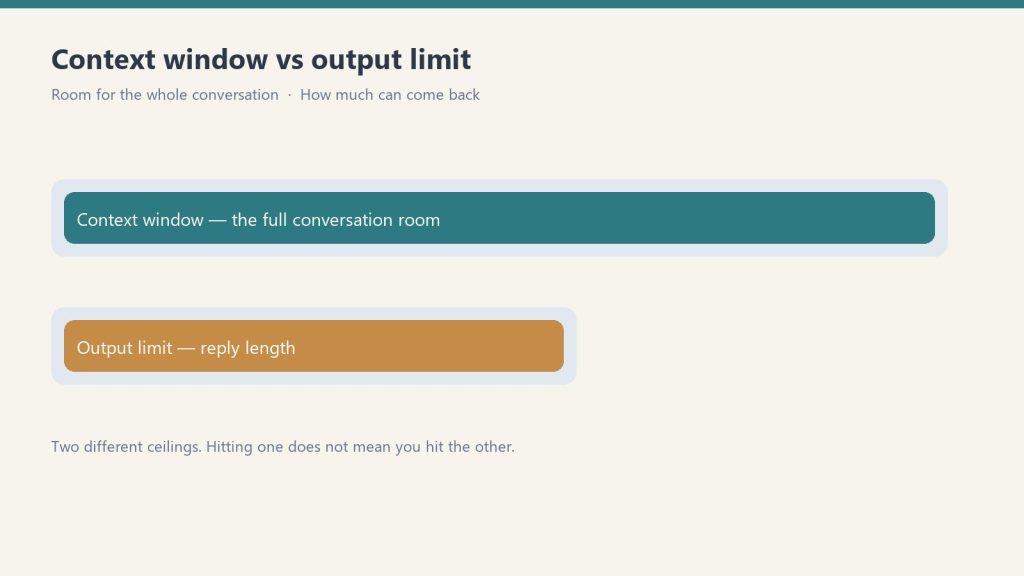
    Diagram comparing a long context window bar with a shorter output limit bar
    Document drafting.

    Claude excels at drafting first versions of common legal documents that attorneys then review and revise:

    • NDAs and confidentiality agreements
    • Employment agreements (standard provisions)
    • Simple service agreements
    • Demand letters
    • Client communications and status updates
    • Motion outlines and brief structures

    4. Practice-Area-Specific Applications

    Litigation

    Upload deposition transcripts for summary, identify key admissions, generate chronologies from case documents, draft interrogatory responses from facts provided.

    Corporate

    Due diligence checklists, board resolution templates, entity formation document summaries, M&A timeline and condition tracking.

    Immigration

    Personal statement drafting assistance from client notes, cover letter frameworks, document checklists by visa category.

    Frequently Asked Questions

    Can I use Claude to draft legal documents for clients?

    With attorney review before delivery to clients: yes, as a drafting acceleration tool. Without attorney review: no — Claude is not a substitute for licensed legal counsel.

    Is Claude’s legal knowledge reliable?

    Claude has solid general legal knowledge but should not be treated as authoritative for specific jurisdiction rules, current case law, or recent statutory changes. Always verify against primary sources.


    Want this for your workflow?

    We set Claude up for teams in your industry — end-to-end, fully configured, documented, and ready to use.

    Tygart Media has run Claude across 27+ client sites. We know what works and what wastes your time.

    See the implementation service →

    Need this set up for your team? Talk to Will →
  • Claude Training Data: Sources, Methods & Cutoff Dates

    Claude Training Data: Sources, Methods & Cutoff Dates

    Last refreshed: May 15, 2026

    Claude AI · Fitted Claude

    Most people who use Claude daily have no idea how it was trained — and the official documentation buries the details in technical language. This guide provides a clear, accessible explanation of what data Claude was trained on, how Anthropic’s training methods work, and what the knowledge cutoff dates mean for your use.

    What Data Was Claude Trained On?

    Three stacked layers: chat UI, tools, agent runtime
    What data was Claude trained on?

    Like all large language models, Claude was trained on large datasets of text from the internet and other sources. Anthropic has not published a detailed breakdown of its training data composition, but the data sources are broadly consistent with those used for other frontier models: web crawls, books, academic papers, code repositories, and curated high-quality text.

    Anthropic has been more specific about what it excludes: the company applies filters to remove low-quality content, dangerous information, and privacy-violating material from training data. The Constitutional AI approach (described below) also shapes what Claude learns to say, not just what data it sees.

    The Training Pipeline: How Claude Learns

    Diagram comparing a long context window bar with a shorter output limit bar
    The training pipeline — how Claude learns.

    Step 1: Pre-training

    Claude starts as a base model trained on the broad text dataset through next-token prediction — the same approach used for GPT and Gemini. At this stage, Claude learns language patterns, facts, reasoning styles, and the structure of human communication. The base model is powerful but has no particular alignment to human values.

    Step 2: Constitutional AI (CAI)

    Anthropic’s key innovation: instead of relying solely on human raters to evaluate every response, they train Claude against a written “constitution” — a set of principles describing helpful, harmless, and honest behavior. Claude learns to critique its own outputs against these principles and revise them accordingly. This creates more consistent safety behavior at scale than pure human feedback allows.

    Step 3: RLHF (Reinforcement Learning from Human Feedback)

    Human trainers evaluate Claude’s responses and rate them for quality, helpfulness, and safety. These ratings train a reward model, which in turn shapes Claude’s behavior to produce responses humans prefer. Combined with Constitutional AI, this produces a model that is both helpful and safer than base pre-training alone.

    Knowledge Cutoff Dates

    Desk with laptop, checklist notebook, and billing card ready before creating an Anthropic API key
    Knowledge cutoff dates.

    Claude’s training data has a cutoff date — events, publications, and developments after this date are unknown to Claude unless explicitly provided in the conversation. The exact cutoff varies by model version. As of April 2026, Claude Sonnet 4.6 has a knowledge cutoff of approximately August 2025. Claude may have partial or uncertain knowledge of events in the months leading up to the cutoff.

    Practical implication: for current events, recent research, or anything that may have changed since mid-2025, don’t rely on Claude’s base knowledge. Provide current context in your prompt, or use a tool like Perplexity for real-time web research.

    Related on Tygart Media: how to use Claude · is Claude safe · extended thinking.

    Frequently Asked Questions

    Was Claude trained on my data?

    Consumer accounts may be used for training (with opt-out available). API and enterprise accounts are not used for training by default. Claude’s pre-training data predates your conversations regardless.

    What is Claude’s knowledge cutoff date?

    As of April 2026, approximately August 2025 for current Claude models. Events after this date are outside Claude’s base knowledge.

    What is Constitutional AI?

    Anthropic’s training approach where Claude is trained to evaluate its own outputs against a written set of principles — allowing consistent safety behavior at scale beyond what human feedback alone achieves.

    Need this set up for your team? Talk to Will →
  • Does Claude AI Store Your Data? Privacy, Security, and Compliance Explained

    Does Claude AI Store Your Data? Privacy, Security, and Compliance Explained

    Last refreshed: June 9, 2026

    Claude AI · Fitted Claude

    Claude’s privacy practices are more nuanced than most users realize — and Anthropic buries the details across multiple support pages. This guide consolidates everything you need to know: what data is collected, how long it’s kept, who can see it, and what you can do to protect your privacy.

    Claude AI Data Privacy: Quick Reference (June 2026)

    Questionclaude.ai (Free/Pro/Max)APIEnterprise
    Conversations stored?Yes, unless you delete themNot by defaultConfigurable
    Used to train models?Yes (opt-out available)NoNo (contractual)
    Human review possible?Yes (Trust & Safety)LimitedNo (contractual)
    Data deletion?On request / account deletionNot storedPer contract
    HIPAA ready?NoWith BAA (Enterprise)Yes
    SOC 2 Type II?Yes (Anthropic-wide)YesYes

    What Data Claude Collects

    Three stacked layers: chat UI, tools, agent runtime
    What data Claude collects.

    When you use Claude.ai, Anthropic collects:

    • Conversation content: Your messages and Claude’s responses
    • Uploaded files: Documents, images, and PDFs you share in conversations
    • Account information: Email, name, and payment information (for paid plans)
    • Usage data: How you interact with the interface, features used, session timing

    How Long Anthropic Keeps Your Data

    Diagram comparing a long context window bar with a shorter output limit bar
    How long Anthropic keeps your data.

    By default, Anthropic retains conversation data for up to five years from the date of the conversation. You can delete individual conversations or request full account deletion through the Claude.ai interface, which will remove your data from Anthropic’s systems on an expedited basis.

    Is Claude Used to Train Future Models?

    This is the question most users want answered clearly. Here’s the breakdown:

    Consumer Accounts (Claude.ai free and paid plans)

    By default, Anthropic may use conversations from consumer accounts to improve its models. You can opt out of this. Go to Settings → Privacy → Data Usage in Claude.ai and toggle off “Allow my conversations to be used for training.”

    Business and API Accounts

    Anthropic does not use API or enterprise customer data for model training by default. Business customers can also access zero-data-retention (ZDR) options, where conversation data is not logged or stored beyond the immediate session.

    Who Can Access Your Conversations?

    • Anthropic employees: Can access conversations for safety review, legal compliance, or quality improvement purposes — governed by internal access controls
    • Third parties: Anthropic does not sell conversation data to advertisers or third parties
    • Law enforcement: Anthropic will comply with valid legal requests (subpoenas, court orders) as required by US law

    Privacy Best Practices

    Desk with laptop, checklist notebook, and billing card ready before creating an Anthropic API key
    Privacy best practices.
    • Opt out of training data use in Settings if you use the consumer interface for sensitive work
    • Use API or enterprise accounts for work involving confidential client information
    • Don’t paste genuinely sensitive data (SSNs, financial account numbers) into any AI interface
    • Delete conversations containing sensitive information after use
    • Consider Claude for Teams or Enterprise for business use cases requiring formal DPA agreements

    Frequently Asked Questions

    Does Claude sell my data?

    No. Anthropic does not sell conversation data to advertisers or third parties.

    Can I opt out of Claude training on my conversations?

    Yes. Go to Settings → Privacy → Data Usage in Claude.ai and toggle off “Allow my conversations to be used for training.”

    Is Claude HIPAA compliant?

    Anthropic offers HIPAA-eligible configurations for enterprise customers. Standard consumer Claude.ai accounts are not HIPAA compliant. Contact Anthropic’s enterprise team for healthcare-specific compliance arrangements.


    Need this set up for your team?
    Talk to Will →

    Frequently Asked Questions

    Does Claude AI store my conversations?

    On claude.ai (Free, Pro, Max, Team plans), Anthropic stores your conversations and may use them to improve models unless you opt out. You can delete conversations at any time from your account settings. API usage is not stored by default. Enterprise customers get contractual guarantees that data is not used for training.

    Does Anthropic use my Claude conversations to train AI?

    By default on claude.ai, Anthropic may use your conversations to improve its models. You can opt out in Settings > Privacy. API users’ data is not used for training by default. Enterprise customers have contractual protections preventing training on their data.

    Is Claude HIPAA compliant?

    Claude.ai (consumer plans) is not HIPAA compliant. The Claude API with an Enterprise agreement and Business Associate Agreement (BAA) can be HIPAA ready. If you need to process protected health information, you need an Enterprise contract — not a standard Pro or Max subscription.

    How do I delete my Claude conversation history?

    In claude.ai, go to Settings > Privacy and select the option to delete conversation history. You can delete individual conversations from the sidebar or clear all history at once. Account deletion removes all stored data subject to Anthropic’s retention policies.

    Is Claude safe to use for confidential business information?

    For highly confidential business data, the Claude API (which doesn’t store data by default) or an Enterprise agreement (with contractual data protections) are more appropriate than claude.ai consumer plans. Claude Enterprise includes SAML SSO, admin controls, and contractual guarantees about data use.

    Does Claude have SOC 2 certification?

    Yes. Anthropic is SOC 2 Type II certified, covering the full Anthropic platform including Claude API and enterprise deployments. SOC 2 reports are available to enterprise customers under NDA through Anthropic’s trust portal at trust.anthropic.com.

  • Claude AI Alternatives: 10 Best Tools for Every Use Case

    Claude AI Alternatives: 10 Best Tools for Every Use Case

    Last refreshed: May 15, 2026

    Claude AI · Fitted Claude

    Claude is one of the best AI assistants available — but it’s not the right tool for every job. It can’t generate images, doesn’t have default real-time web access, and lacks deep Google Workspace integration. Here are the 10 best Claude alternatives, each matched to where it genuinely wins.

    1. ChatGPT — Best All-Around Alternative

    Three stacked layers: chat UI, tools, agent runtime
    ChatGPT — best all-around alternative.

    Use when: You need image generation (DALL-E), broader plugin ecosystem, or voice mode. Price: Free / $20/month Plus / $200/month Pro.

    2. Perplexity — Best for Real-Time Research

    Use when: You need current information with source citations. Searches the live web in real time. Price: Free / $20/month Pro.

    3. Gemini — Best for Google Workspace

    Use when: You live in Gmail, Docs, Sheets, or Drive. Native integration across all Google Workspace apps. Price: Free / $20/month Advanced.

    4. Midjourney — Best for AI Image Generation

    Use when: You need high-quality AI-generated images. Claude cannot generate images at all. Price: $10-120/month.

    5. GitHub Copilot — Best IDE-Native Coding

    Use when: You want AI coding assistance embedded in VS Code or JetBrains with persistent autocomplete. Price: $10/month individual.

    6. Otter.ai — Best for Audio Transcription

    Use when: You need to transcribe meetings or audio files. Claude cannot process audio directly. Price: Free / from $10/month.

    7. Jasper — Best for Marketing Content at Volume

    Use when: You’re a marketing team producing high volumes of structured content with brand voice memory and SurferSEO integration. Price: From $49/month.

    8. Microsoft Copilot — Best for Office 365

    Use when: Your work lives in Word, Excel, PowerPoint, Teams, and Outlook. Native M365 suite integration. Price: $30/user/month.

    9. Notion AI — Best for Workspace-Embedded Writing

    Long paper tape measure unrolling across a desk beside a laptop, metaphor for context window length
    Notion AI — best for workspace-embedded writing.

    Use when: You want AI assistance directly inside Notion — summarizing pages, drafting within documents, auto-filling databases. Price: $8-10/month add-on.

    10. DeepSeek — Best for Cost-Sensitive API Use

    Desk with laptop, checklist notebook, and billing card ready before creating an Anthropic API key
    DeepSeek — best for cost-sensitive API use.

    Use when: Building API applications where per-token cost is the primary constraint and you’re not handling sensitive data. DeepSeek API is 10-20x cheaper. Note data sovereignty considerations. Price: Free consumer / very cheap API.

    Related on Tygart Media: Claude vs Perplexity · Claude vs Jasper · Claude pricing.

    Frequently Asked Questions

    What is the best free alternative to Claude AI?

    Gemini has the most generous free tier with capable model access. Perplexity free includes limited Pro searches. ChatGPT free uses GPT-4o-mini.

    Need this set up for your team? Talk to Will →
  • Claude Pro vs Max: Is the $100/Month Plan Worth It?

    Claude Pro vs Max: Is the $100/Month Plan Worth It?

    Last refreshed: May 15, 2026

    Claude AI · Fitted Claude

    The jump from Claude Pro to Max is a 5x price increase — $20/month to $100/month. Whether it’s worth it depends entirely on how you use Claude and where your current plan fails you. Here’s the data to make that decision.

    What’s Actually Different

    Three stacked layers: chat UI, tools, agent runtime
    What’s actually different.
    FeaturePro ($20/mo)Max 5x ($100/mo)Max 20x ($200/mo)
    Usage volumeBaseline5x Pro20x Pro
    Heavy prompts/day~12~60~240
    Claude CodeNoYesYes
    Extended thinkingLimitedFullFull
    Model accessSonnet + OpusSonnet + OpusSonnet + Opus

    Key insight: you don’t get different models at Max — you get more of them. The difference is usage capacity and Claude Code access.

    Who Should Stay on Pro

    Diagram comparing a long context window bar with a shorter output limit bar
    Who should stay on Pro.
    • You use Claude regularly but not all day — a few substantive sessions per week
    • You’re hitting limits occasionally but not consistently
    • You don’t need Claude Code

    Who Needs Max 5x

    Desk with laptop, checklist notebook, and billing card ready before creating an Anthropic API key
    Who needs Max 5x.
    • You hit Pro limits daily and it disrupts your workflow
    • You want Claude Code — only available at Max tiers
    • Claude is your primary work tool, not supplementary

    Who Needs Max 20x

    • Heavy Claude Code user running multi-hour sessions daily
    • Processing massive document volumes — dozens of long PDFs per day
    • You’ve been hitting Max 5x limits regularly

    Related on Tygart Media: Claude pricing · is Claude worth it · Claude alternatives.

    Frequently Asked Questions

    What does Claude Max include that Pro doesn’t?

    Claude Code access, higher usage limits (5x or 20x), full extended thinking, and higher priority during peak times.

    Is Claude Max worth $100 a month?

    For developers using Claude Code and professionals hitting Pro limits daily: yes. For moderate users: Pro at $20/month is sufficient.

    Need this set up for your team? Talk to Will →
  • Claude vs Perplexity: Research Engine vs Reasoning Partner

    Claude vs Perplexity: Research Engine vs Reasoning Partner

    Last refreshed: May 15, 2026

    Claude AI · Fitted Claude

    Comparing Claude to Perplexity is a category error — they’re not trying to do the same thing. Perplexity is a real-time research engine. Claude is a reasoning partner. Understanding the distinction helps you build the most effective research workflow.

    What Perplexity Does Best

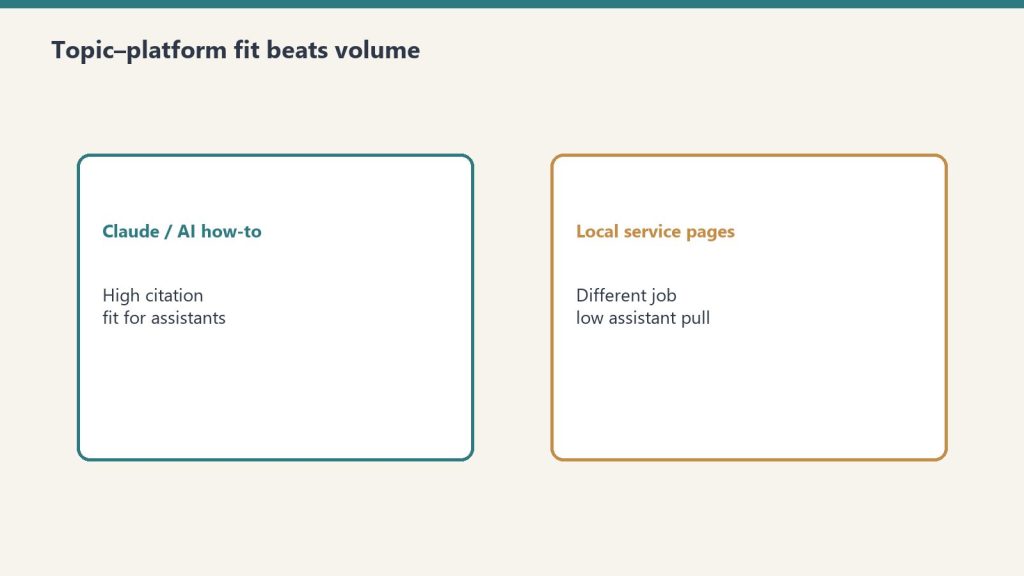
    Comparison of Claude how-to fit versus local service page fit for assistants
    What Perplexity does best.
    • Real-time information: Searches the live web, summarizes current events with source links
    • Source citation: Every claim has source links for verification
    • Quick research: Fast sourced answers for “what is X” and “what happened with Y”
    • Academic research: Academic mode searches peer-reviewed papers

    What Claude Does Best

    Three stacked layers: chat UI, tools, agent runtime
    What Claude does best.
    • Deep reasoning: Complex multi-step analysis and strategic thinking
    • Document synthesis: Upload a 200-page report and ask for analysis — Perplexity cannot do this
    • Writing quality: Significantly stronger long-form writing
    • Code: One of the best coding models. Perplexity is not a coding tool.
    • Private documents: Works with confidential content you upload

    The Hybrid Workflow (Best of Both)

    Desk with laptop, checklist notebook, and billing card ready before creating an Anthropic API key
    The hybrid workflow — best of both.
    1. Perplexity first: Rapid research, current information, source discovery
    2. Claude second: Synthesis, analysis, writing. Take what Perplexity found and reason through the implications

    At $20/month each, running both costs $40/month — worth it for professionals who research and write regularly.

    Related on Tygart Media: Claude vs Jasper · Claude alternatives · Claude vs Notion AI.

    Frequently Asked Questions

    Should I use Claude or Perplexity for research?

    Use Perplexity for finding current information with sources. Use Claude for analyzing, synthesizing, and writing. Ideally, use both — Perplexity first, Claude second.

    Does Claude have real-time web access?

    Not by default. Claude has a knowledge cutoff and doesn’t browse the web in real time unless connected via MCP or specific integrations.

    Need this set up for your team? Talk to Will →
  • Claude vs DeepSeek: Performance, Pricing, and Privacy

    Claude vs DeepSeek: Performance, Pricing, and Privacy

    Last refreshed: May 15, 2026

    Model Accuracy Note — Updated May 2026

    Current flagship: Claude Opus 4.7 (claude-opus-4-7). Current models: Opus 4.7 · Sonnet 4.6 · Haiku 4.5. Claude Opus 4.7 (claude-opus-4-7) is the current flagship as of April 16, 2026. Where this article references Opus 4.6 or earlier models, those references are historical. See current model tracker →. See current model tracker →

    Claude AI · Fitted Claude

    DeepSeek emerged as the most disruptive AI development since GPT-4 — a Chinese lab producing frontier-quality models at dramatically lower cost. In 2026, it’s a genuine competitor to Claude in several categories. But the comparison isn’t only about performance. Privacy and data sovereignty matter. This guide covers all three dimensions.

    Performance Comparison

    Diagram comparing a long context window bar with a shorter output limit bar
    Performance comparison.
    Benchmark Claude Opus 4.6 DeepSeek
    SWE-bench (coding) 80.8% ~49% (V3), higher for R1
    GPQA Diamond 91.3% Competitive
    Math reasoning Top tier R1 leads on pure math
    Context window 200K tokens 128K tokens

    Claude leads on real-world software engineering and long-document reasoning. DeepSeek R1 is competitive or superior on pure math. For most professional use cases, Claude holds the performance edge.

    Pricing Comparison

    Three stacked layers: chat UI, tools, agent runtime
    Pricing comparison.

    DeepSeek’s API pricing is 10-20x cheaper than Claude’s — roughly $0.27-0.55 per million input tokens vs Claude’s $3-15. For high-volume API applications where cost is the primary constraint, DeepSeek is a serious consideration. The consumer interface is free vs Claude’s $20-200/month paid tiers.

    The Privacy Question

    Desk with laptop, checklist notebook, and billing card ready before creating an Anthropic API key
    The privacy question.

    DeepSeek is a Chinese company. Its data handling is subject to Chinese law, which includes requirements to provide user data to Chinese government authorities under certain circumstances. Multiple national governments have restricted DeepSeek on government systems. For professionals handling confidential client data or sensitive business information, the data sovereignty difference between Anthropic (US-incorporated) and DeepSeek (Chinese-incorporated) is material.

    Choose Claude If You…

    • Handle confidential professional, legal, or medical data
    • Need highest performance on software engineering tasks
    • Require long-document analysis (200K vs 128K context)
    • Need US-based data handling

    Frequently Asked Questions

    Is DeepSeek as good as Claude?

    Competitive on math and logic. Claude leads on SWE-bench software engineering, long documents, and writing quality.

    Is DeepSeek safe to use?

    For general consumer use, immediate risk is low. Professionals handling sensitive data should consider DeepSeek’s Chinese data jurisdiction carefully.


    Need this set up for your team?
    Talk to Will →

  • Claude API Tutorial: Python & JavaScript Quickstart

    Claude API Tutorial: Python & JavaScript Quickstart

    Last refreshed: May 15, 2026

    Model Accuracy Note — Updated May 2026

    Current flagship: Claude Opus 4.7 (claude-opus-4-7). Current models: Opus 4.7 · Sonnet 4.6 · Haiku 4.5. Claude Opus 4.7 (claude-opus-4-7) is the current flagship as of April 16, 2026. Where this article references Opus 4.6 or earlier models, those references are historical. See current model tracker →. See current model tracker →

    Claude AI · Fitted Claude

    The Claude API gives you programmatic access to Claude in your own applications and scripts. This guide gets you from zero to a working integration in Python or JavaScript.

    Prerequisites

    Desk with laptop, checklist notebook, and billing card ready before creating an Anthropic API key
    Prerequisites before the first call.
    • Anthropic account at console.anthropic.com
    • API key from Console → API Keys
    • Python 3.7+ or Node.js 18+

    Installation

    # Python
    pip install anthropic
    
    # JavaScript
    npm install @anthropic-ai/sdk

    Your First API Call (Python)

    Developer copying a new API key into a password vault; secret string not readable
    Your first API call in Python.
    import anthropic
    
    client = anthropic.Anthropic(api_key="your-api-key-here")
    
    message = client.messages.create(
        model="claude-sonnet-4-6",
        max_tokens=1024,
        messages=[{"role": "user", "content": "Explain APIs in plain English."}]
    )
    print(message.content[0].text)

    Adding a System Prompt

    message = client.messages.create(
        model="claude-sonnet-4-6",
        max_tokens=1024,
        system="You are a helpful customer support agent for Acme Corp.",
        messages=[{"role": "user", "content": "How do I reset my password?"}]
    )

    Streaming Responses

    Infographic with three panels: protect the service, fair share, and cost control explaining rate limits
    Streaming responses.
    with client.messages.stream(
        model="claude-sonnet-4-6",
        max_tokens=1024,
        messages=[{"role": "user", "content": "Write a 500-word blog post about AI."}]
    ) as stream:
        for text in stream.text_stream:
            print(text, end="", flush=True)

    Model Selection

    Model String Best For
    Claude Opus 4.6 claude-opus-4-7 Complex reasoning, coding
    Claude Sonnet 4.6 claude-sonnet-4-6 Balanced everyday tasks
    Claude Haiku 4.5 claude-haiku-4-5-20251001 Fast lightweight tasks

    Frequently Asked Questions

    How much does the Claude API cost?

    Pricing is per token (input and output separately). Check anthropic.com/pricing. Haiku is cheapest, Sonnet offers the best cost/quality balance for most applications.

    Do I need a Claude subscription to use the API?

    No. API access is separate. Create an Anthropic Console account and pay per token used.


    Need this set up for your team?
    Talk to Will →

  • Claude Extended Thinking: When and How to Use It

    Claude Extended Thinking: When and How to Use It

    Last verified: June 13, 2026

    Claude AI · Fitted Claude

    Extended thinking is Claude’s most powerful reasoning mode — and the one most people never use correctly. This guide explains what extended thinking does, when it genuinely improves outputs, how to enable it, and when you’re better off with a standard prompt.

    What Is Extended Thinking?

    Three stacked layers: chat UI, tools, agent runtime
    What is extended thinking?

    Extended thinking gives Claude a dedicated reasoning phase before generating its final response. Claude works through a problem on “scratch paper” before writing its answer — exploring multiple approaches, identifying errors in its own reasoning, and building a more deliberate chain of thought. On current Claude models (Fable 5, Opus 4.8, Sonnet 4.6), this works through adaptive thinking — Claude dynamically decides when and how much to think based on problem complexity, instead of you setting a fixed token budget.

    When Extended Thinking Genuinely Helps

    Diagram comparing a long context window bar with a shorter output limit bar
    When extended thinking genuinely helps.
    • Complex math and logic problems requiring step-by-step reasoning
    • Multi-step coding tasks with many interdependent components
    • Strategic analysis requiring weighing many variables
    • Difficult research synthesis where accuracy matters most
    • Any task where “think step by step” would help — extended thinking does this automatically

    When Extended Thinking Is Overkill

    • Simple factual questions with clear answers
    • Routine writing tasks (emails, summaries, short copy)
    • Format conversion or data transformation
    • Tasks where speed matters more than depth

    How to Enable Extended Thinking

    Desk with laptop, checklist notebook, and billing card ready before creating an Anthropic API key
    How to enable extended thinking.

    In Claude.ai: Look for the thinking toggle before sending your message.

    Via API (current models — Fable 5, Opus 4.8, Sonnet 4.6): Use adaptive thinking and let Claude decide the depth:

    "thinking": { "type": "adaptive" },
    "output_config": { "effort": "high" }

    The effort parameter — low, medium, high, xhigh, or max — controls how much Claude thinks and how many tokens it spends. Default is high. Use xhigh for coding and agentic work; low for fast, simple tasks. (xhigh is available on Fable 5 and Opus 4.7+; max on Opus-tier 4.6+ and Sonnet 4.6.)

    ⚠ budget_tokens is deprecated. The old "thinking": {"type": "enabled", "budget_tokens": N} form returns a 400 error on Fable 5, Opus 4.7, and Opus 4.8. It is deprecated but still functional on Opus 4.6 and Sonnet 4.6. Only legacy models (e.g. Sonnet 4.5) still require it, where budget_tokens must be less than max_tokens. For all new code, use adaptive thinking plus effort instead.

    What You See During Extended Thinking

    In claude.ai, Claude shows a collapsed “thinking” section before its response. Expand it to see the reasoning chain — useful for verifying logic or understanding how Claude approached a problem. The thinking section is exploratory and may contain dead ends; this is normal.

    Via API, on Fable 5, Opus 4.7, and Opus 4.8 the thinking text is omitted by default (the blocks stream but their text is empty). To see summarized reasoning, request "thinking": {"type": "adaptive", "display": "summarized"}.

    Related on Tygart Media: how to use Claude · Claude Code tutorial · is Claude worth it.

    Frequently Asked Questions

    Does extended thinking always give better answers?

    No. It improves accuracy on complex reasoning tasks but adds latency. For simple tasks, standard mode is faster and just as accurate.

    Need this set up for your team? Talk to Will →
  • Claude Memory: How It Works and How to Configure It

    Claude Memory: How It Works and How to Configure It

    Last refreshed: May 15, 2026

    Claude AI · Fitted Claude

    Claude’s memory feature changes the product from a stateless chatbot into something that actually knows you. Without memory, Claude starts from zero every conversation. With memory configured, Claude builds a growing knowledge base about you that it draws on automatically. This guide explains how it works and how to get the most from it.

    How Claude Memory Works

    Three stacked layers: chat UI, tools, agent runtime
    How Claude memory works.

    Claude’s memory is an auto-synthesized knowledge base. Approximately every 24 hours, the system reviews recent conversations and extracts facts, preferences, and patterns worth remembering — then stores those as structured memory entries. Memory is separate for Projects vs. standalone conversations — each Project has its own memory space.

    What Claude Can Remember

    • Your name, role, and professional context
    • Preferred communication style and tone
    • Ongoing projects and their context
    • Tools, frameworks, and workflows you use
    • Output format preferences
    • Things you’ve asked Claude not to do

    How to Configure Memory

    Long paper tape measure unrolling across a desk beside a laptop, metaphor for context window length
    How to configure memory.

    In Claude.ai, go to Settings → Memory. You’ll see auto-generated memory entries. You can review, edit, delete, or manually add memories. You can also instruct Claude directly: “Remember that I prefer bullet points” or “Don’t forget my target audience is non-technical executives.”

    Memory vs. Project Instructions

    Desk with laptop, checklist notebook, and billing card ready before creating an Anthropic API key
    Memory vs project instructions.

    Project instructions are static — written once, apply to every conversation. Memory is dynamic — evolves as Claude learns. Use Project instructions for consistent role context. Use memory for personal preferences and evolving project context.

    CLAUDE.md for Claude Code

    For Claude Code, place a CLAUDE.md file in your project root. Claude Code reads it at the start of every coding session. Use it for: project architecture, coding standards, common patterns, known issues. This is the most powerful memory tool for developers.

    Frequently Asked Questions

    Does Claude remember everything I say?

    No. Memory synthesizes and stores key facts and preferences, not verbatim conversation logs. It’s selective — designed to capture what’s useful.

    Can I delete Claude’s memories about me?

    Yes. Go to Settings → Memory in Claude.ai to view and delete any memory entries.


    Need this set up for your team? Talk to Will →