Tag: Claude AI

  • How to Use Claude AI: Beginner to Power User (2026 Guide)

    How to Use Claude AI: Beginner to Power User (2026 Guide)

    Last refreshed: May 15, 2026

    Claude AI · Fitted Claude

    Claude AI is one of the most capable AI assistants available in 2026, but like any powerful tool, getting the most out of it depends on knowing how to use it well. This guide covers everything from your first conversation on the free tier to advanced workflows used by professional developers, researchers, and business teams — with specific prompts and techniques at every level.

    Quick Start: Go to claude.ai, create a free account, and start chatting. For documents, click the paperclip icon to upload. For code, ask Claude to write, debug, or explain code and it will format it in readable blocks. No setup required.

    Step 1: Choose the Right Interface

    Claude is available through multiple interfaces, each suited for different use cases:

    • claude.ai (web) — The easiest way to start. Works in any browser. Best for general conversations, document analysis, and content creation.
    • Claude mobile app — Available on iOS and Android. Convenient for quick tasks, voice input, and on-the-go reference questions.
    • Claude desktop app — Mac and Windows. Adds local file system access and integrates with Claude Code. Best for developers and power users.
    • Claude Code — Command-line interface for developers. Access directly from your terminal for coding, file management, and agentic tasks.
    • Claude API — For developers building applications. Access via console.anthropic.com with per-token pricing.

    The 10 Most Useful Prompts for Beginners

    If you are new to Claude, these prompt patterns will give you the fastest returns:

    1. Summarize a document: “Summarize this [paste text or upload file] in 5 bullet points, then identify the 3 most important takeaways.”
    2. Draft professional emails: “Write a professional email to [describe recipient] asking for [describe what you want]. Tone should be [formal/friendly/assertive].”
    3. Explain complex topics: “Explain [topic] as if I have a [high school / business / technical] background. Use an analogy.”
    4. Edit your writing: “Edit this for clarity and concision. Keep my voice but cut anything redundant: [paste text]”
    5. Brainstorm ideas: “Give me 15 ideas for [goal]. Include both obvious and unexpected options. Don’t filter for feasibility.”
    6. Analyze a problem: “I’m trying to decide between [option A] and [option B]. Here’s my situation: [context]. What factors should I weigh?”
    7. Create a template: “Create a reusable template for [document type]. Include placeholders for [list variables].”
    8. Research a topic: “What do I need to know about [topic] if I’m a [your role] who needs to [your goal]? Focus on practical implications.”
    9. Debug code: “Here’s my code: [paste code]. It’s supposed to [describe goal] but instead [describe problem]. What’s wrong and how do I fix it?”
    10. Reframe a situation: “I’m dealing with [describe challenge]. Give me 3 different ways to think about this problem.”

    How to Use Claude Projects

    Projects are one of Claude’s most underused features. A Project is a persistent workspace that maintains context across conversations — instead of starting from scratch every chat, Claude remembers your background, preferences, and the documents you’ve shared.

    To set up a Project effectively:

    1. Go to claude.ai and click “Projects” in the sidebar
    2. Create a new project with a descriptive name (e.g., “Q2 Marketing Campaign” or “Client: Acme Corp”)
    3. Upload relevant documents — style guides, company background, previous work samples
    4. Write a project description that tells Claude your role, your goals, and your preferences
    5. All conversations within the Project now have access to this shared context

    Intermediate Techniques: Getting Better Outputs

    Give Claude a Role

    Starting a prompt with a role assignment significantly improves output quality for specialized tasks: “You are a senior financial analyst reviewing an early-stage startup pitch deck…” or “You are an experienced UX researcher conducting a heuristic evaluation…”

    Specify the Format You Want

    Claude defaults to prose, but you can request: bullet lists, tables, numbered steps, JSON, code blocks, executive summaries, Q&A format, or structured outlines. Be explicit: “Format this as a table with columns for [X], [Y], and [Z].”

    Use Negative Instructions

    Tell Claude what you don’t want: “Do not use jargon,” “Do not include caveats or disclaimers,” “Do not suggest I consult a professional — I need actionable advice,” “Do not use bullet points.”

    Ask for Multiple Versions

    “Give me 3 different versions of this email: one formal, one casual, one direct and brief.” Comparing options is often faster than iterating on a single draft.

    Iterate Don’t Restart

    Claude maintains context within a conversation. Rather than starting over, continue: “Good start. Now make the intro punchier, cut the third paragraph, and add a specific example to section 2.”

    Advanced: Claude Code for Developers

    Claude Code is a terminal-native AI coding tool that operates at the level of your entire codebase — not just the current file. Install it via npm and authenticate with your Anthropic API key. Once set up, Claude Code can read and write files, execute commands, run tests, manage git, and work autonomously on multi-step engineering tasks.

    The most effective Claude Code workflows:

    • CLAUDE.md file: Create a CLAUDE.md in your project root describing the project’s architecture, conventions, and style guide. Claude Code reads this at the start of every session.
    • /init command: Ask Claude Code to explore your codebase and generate a CLAUDE.md for you.
    • /batch command: Run multiple tasks in parallel rather than sequentially.
    • Agentic tasks: “Find all API endpoints that don’t have input validation and add it” is a task Claude Code can execute across an entire codebase.

    Power User Techniques

    Upload Documents for Deep Analysis

    Claude can process PDFs, Word documents, spreadsheets, and images. Upload a 300-page report and ask: “What are the three recommendations most relevant to a company in the SaaS industry with under 50 employees?” Claude’s 200K token context window means it can hold significantly more content than most AI tools.

    Memory Feature

    In Claude’s settings, enable Memory to allow Claude to remember preferences and context across conversations. You can view, edit, and delete stored memories. This is different from Projects — Memory applies across all conversations, not just within a specific project workspace.

    Use Extended Thinking for Hard Problems

    For complex reasoning tasks, you can ask Claude to use extended thinking: “Think through this carefully before answering: [hard problem].” Claude will reason through the problem step by step before giving its final response, which significantly improves accuracy on multi-step analytical tasks.

    Frequently Asked Questions

    How do I get Claude to remember things between conversations?

    Enable the Memory feature in Claude’s settings to store preferences and context across sessions. Alternatively, use Projects to maintain shared context within a specific workspace.

    What is the best way to upload documents to Claude?

    Click the paperclip icon in the chat interface to upload files. Claude supports PDFs, Word documents, spreadsheets, images, and text files. For very large documents, consider splitting them or asking specific targeted questions rather than asking Claude to summarize the entire document.

    How do I use Claude for coding without being a developer?

    You don’t need to be a developer to use Claude for coding. Describe what you want to build in plain language: “I want a Python script that reads a CSV file and calculates the average of the third column.” Claude will write working code and explain it.

    What is Claude’s message limit on the free plan?

    Free plan limits are not publicly specified as exact numbers and change over time. In practice, free users typically can send dozens of standard messages per day before hitting usage limits. Claude will notify you when you approach limits and offer a path to upgrade.

    Can Claude access the internet?

    By default, Claude does not have real-time internet access. Some implementations of Claude have web search enabled, which allows it to retrieve current information. Check whether your interface shows a web search tool icon.


    Need this set up for your team?
    Talk to Will →

    What Claude Can and Can’t Do

    Before diving into prompts, it helps to know exactly where Claude excels and where it falls short. Knowing the difference saves you frustration on day one.

    What Claude Does Well

    • Writing — drafting articles, emails, reports, essays, scripts, marketing copy, and creative content. Claude’s writing voice is consistently more natural than most AI tools.
    • Editing and revision — improving existing text, restructuring arguments, tightening prose, adjusting tone, fixing grammar issues with explanation.
    • Coding — writing, explaining, debugging, and refactoring code. Claude is widely considered one of the strongest coding models in 2026.
    • Analysis — summarizing documents, extracting structured data from text, comparing options, identifying patterns, working through trade-offs.
    • Research synthesis — combining information from multiple sources into coherent overviews. With web search enabled, Claude can pull current information from the internet.
    • Reasoning — working through complex problems step by step, identifying logical issues, exploring implications.
    • Explaining concepts — at any level of expertise, adapting to your background and follow-up questions.

    What Claude Can’t Do (Yet)

    • Generate images or video — Claude is text-based. For images you need a different tool (Midjourney, DALL-E, Gemini’s image features, etc.).
    • Browse the live web autonomously — without web search enabled, Claude works from its training data, which has a cutoff date. With web search on, Claude can look things up but it’s a deliberate tool call, not continuous browsing.
    • Remember you between separate conversations by default — each new chat starts fresh unless you’re using Projects (which maintain persistent context) or Claude’s memory features.
    • Take real-world actions unprompted — Claude can draft, create, and use tools you give it access to, but it doesn’t autonomously do things you didn’t ask for.
    • Guarantee factual accuracy — Claude can be confidently wrong, especially on niche topics or recent events. For high-stakes work, verify important facts.

    Common Beginner Mistakes

    Treating Claude like Google

    Google rewards short keyword queries. Claude rewards detailed prompts with context. “Best Italian restaurant” works on Google. With Claude, “I’m visiting Seattle next weekend with my partner who’s vegetarian, we want a date-night spot for Italian food, walking distance from Capitol Hill, around $50 per person” produces a useful answer.

    Asking everything in one mega-prompt

    It’s tempting to dump everything into one giant prompt. Sometimes this works. More often, breaking it into a conversation produces better results — start with the core task, see what Claude produces, then iterate.

    Not pushing back when Claude is wrong

    Claude can be confidently wrong. If something doesn’t match what you know to be true, say so. “That’s not right — the deadline is March, not April” or “I think you’re confusing X with Y” produces a corrected response. Don’t accept output you know is wrong just because Claude said it confidently.

    Forgetting to verify facts on important work

    For high-stakes work — legal, medical, financial, anything published — verify Claude’s factual claims with primary sources. Claude is a thinking partner, not a final authority.

    Defaulting to the most expensive model

    If you’re on a paid plan, Claude offers multiple models. Opus is the most capable but consumes your usage allocation fastest. Sonnet is the daily workhorse and the right choice for most tasks. Haiku is fast and inexpensive for routine work. Defaulting to Opus for everything burns through limits unnecessarily.

    Pasting the same context every conversation

    If you find yourself re-explaining the same project, role, or reference material in multiple chats, you’re doing it wrong. That’s exactly what Projects are for — load the context once, every conversation in the Project starts with it already loaded.

    How Claude Compares to Other AI Tools

    If you’re new to AI tools entirely, the practical landscape in 2026 looks like this:

    • Claude tends to be preferred for coding, long-form writing, careful reasoning, and analysis where output quality matters more than speed.
    • ChatGPT tends to be preferred for image generation, voice mode, casual queries, and tasks where speed and breadth matter most.
    • Gemini tends to be preferred for users deep in the Google ecosystem (Gmail, Docs, Drive), for multimodal video generation, and for high-volume API workloads where cost is the priority.

    Many serious users run more than one. The right tool for you depends entirely on what you actually do. There’s no universal winner — there are use-case winners.

    Should You Upgrade to Claude Pro?

    The Free plan is genuinely useful for most occasional users. Anthropic significantly expanded the Free tier in early 2026 — Projects, Artifacts, and app connectors are now available to free users. For light usage, you may not need to pay anything.

    Stay on Free if:

    • You use Claude a few times a week for casual questions
    • You don’t mind hitting daily limits occasionally
    • You haven’t yet identified a workflow you’d return to repeatedly

    Upgrade to Pro ($20/month) if:

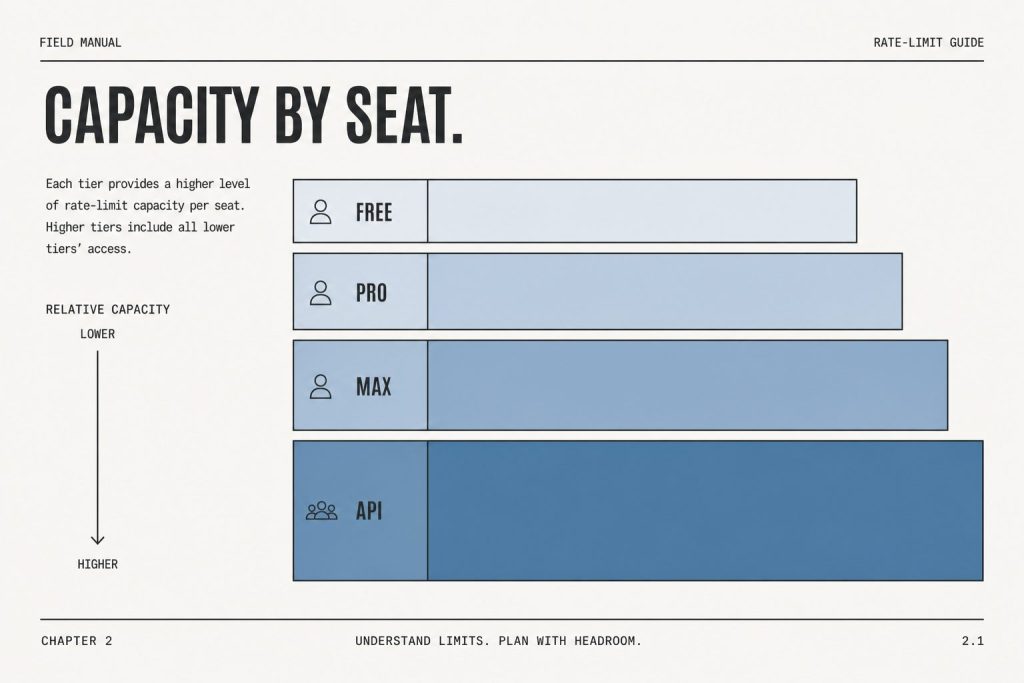
    • You’re hitting Free plan rate limits regularly
    • You use Claude for several hours of work per week
    • You want priority access during peak hours when Free users get throttled
    • You need Anthropic’s most capable models for complex tasks
    • Lost time waiting for limits to reset is costing you more than $20/month

    Consider Max ($100-$200/month) if:

    • You hit Pro limits more than once a week
    • You’re a developer running extended Claude Code sessions
    • Claude is a primary work tool used daily for hours

    If you’re a student at a university with a Claude for Education partnership, you may already have premium access through your school — sign in with your .edu email to check.

    Where to Go After You’ve Got the Basics Down

    Once you’re comfortable with prompting, conversations, and Projects, the highest-leverage things to learn next are:

    • Connectors — Claude can connect to Google Drive, Gmail, Calendar, and other tools, pulling context directly from where your work lives. This eliminates copy-paste from your daily workflow.
    • Model selection — knowing when to use Sonnet vs Opus vs Haiku saves real money and time on paid plans
    • Artifacts — for code, documents, and visualizations, Claude generates them as separate Artifact panels you can iterate on directly
    • Web search — for current-events research and fact-checking, enable web search to let Claude pull live information
    • Claude Code — if you’re a developer, the terminal-based agentic coding tool is in a different league from chat-based coding help
    • API access — for building applications or running programmatic workflows, the API gives you pay-per-token access without subscription rate limits

    Additional Frequently Asked Questions

    Is Claude AI free to use?

    Yes. Claude has a Free plan that includes daily message limits, access to current Claude models, Projects, Artifacts, and app connectors. No credit card is required to sign up at claude.ai. Paid plans add more usage, priority access, and additional features.

    How is Claude different from ChatGPT?

    Claude is generally preferred for coding, long-form writing, and careful reasoning. ChatGPT is generally preferred for image generation, voice mode, and faster casual responses. Both are at the frontier of AI capability — many users run both for different tasks.

    Do I need to know how to code to use Claude?

    No. Claude is built for conversation in plain language. While Claude is excellent at coding, the vast majority of users never touch code — they use Claude for writing, research, analysis, brainstorming, and everyday questions.

    Can Claude make mistakes?

    Yes. Claude can be confidently wrong, especially on niche topics, recent events, or specialized domains. For important work, verify Claude’s factual claims with primary sources. Claude is a thinking partner, not a final authority.

    Can I use Claude on my phone?

    Yes. Claude has iOS and Android apps in addition to the web interface at claude.ai. Your account, conversations, and Projects sync across all devices. Mobile usage counts toward the same usage limits as web usage on paid plans.

    What’s the best way to get better results from Claude?

    Three habits transform results: provide specific context up front (who you are, what you’re working on), be clear about exactly what you want as output (format, length, audience), and treat Claude as a conversation rather than a single-query tool. The more you iterate, the better your results get.

    Does Claude save my conversations?

    Yes. All conversations are saved in your account and accessible from the sidebar at claude.ai. You can rename, organize into Projects, share with others (on paid plans), or delete them. By default, conversations are private to your account.

    Can Claude work with documents I upload?

    Yes. You can upload PDFs, Word documents, text files, images, and other formats directly into a conversation. Claude can read, summarize, analyze, extract information from, and answer questions about the content. For documents you’ll reference repeatedly, upload them to a Project so they’re available across all conversations in that workspace.

  • What Is Claude AI? The Complete Guide (2026)

    What Is Claude AI? The Complete Guide (2026)

    Last refreshed: May 15, 2026

    Model Accuracy Note — Updated May 2026

    Current flagship: Claude Opus 4.7 (claude-opus-4-7). Current models: Opus 4.7 · Sonnet 4.6 · Haiku 4.5. Claude Opus 4.7 (claude-opus-4-7) is the current flagship as of April 16, 2026. Where this article references Opus 4.6 or earlier models, those references are historical. See current model tracker →. See current model tracker →

    Claude AI · Fitted Claude

    Claude AI is a family of large language models built by Anthropic, a San Francisco-based AI safety company. In 2026, Claude competes directly with ChatGPT, Gemini, and Grok — and in many professional use cases, it outperforms all of them. This guide covers what Claude is, how it works, what it costs, and how to start using it today.

    What Is Claude AI?

    Claude is an AI assistant developed by Anthropic, a company founded in 2021 by former OpenAI researchers including Dario Amodei, Daniela Amodei, and five other co-founders. The name “Claude” is a nod to Claude Shannon, the father of information theory.

    Unlike some AI tools built primarily for speed or image generation, Claude was designed from the ground up with safety and helpfulness as co-equal priorities. Anthropic uses a technique called Constitutional AI — a method of training models to follow a set of principles rather than just optimize for user approval. The result is an assistant that tends to be more careful, more honest, and less likely to hallucinate than its competitors.

    As of April 2026, Claude is available through:

    • Claude.ai — the web and mobile interface (free and paid plans)
    • Claude desktop app — native Mac and Windows applications
    • Claude API — for developers building AI-powered applications
    • Claude Code — a terminal-native AI coding tool
    • Enterprise deployments — via Anthropic’s enterprise and team offerings

    Which Claude Models Exist in 2026?

    Anthropic currently offers three tiers of Claude models, each optimized for different use cases:

    Model Best For Context Window Notable Benchmark
    Claude Opus 4.7 Complex reasoning, research, coding 200K tokens 80.8% SWE-bench, 91.3% GPQA Diamond
    Claude Sonnet 4.6 Everyday tasks, balanced performance 200K tokens Best speed-to-intelligence ratio
    Claude Haiku 4.5 Fast, lightweight tasks 200K tokens Fastest response time

    All models support a 200,000-token context window by default — roughly 150,000 words, or an entire novel. Enterprise customers can access up to 500,000 tokens, and Claude Code extends to 1 million tokens for large codebase analysis.

    How Does Claude AI Work?

    Claude is a large language model (LLM) — a type of neural network trained on vast amounts of text data to predict and generate human-like responses. What distinguishes Claude from other LLMs is Anthropic’s emphasis on alignment and safety during training.

    Claude uses two key training innovations:

    • Constitutional AI (CAI): Instead of relying solely on human feedback to shape model behavior, Anthropic trains Claude to evaluate its own outputs against a set of written principles. This makes Claude more consistent in avoiding harmful outputs, even in edge cases human reviewers might not anticipate.
    • RLHF (Reinforcement Learning from Human Feedback): Human trainers rate Claude’s responses, and those ratings guide the model toward more helpful, accurate, and appropriate answers over time.

    The combination produces a model that tends to acknowledge uncertainty, push back on false premises, and decline harmful requests more gracefully than many competitors.

    What Can Claude AI Do?

    Claude’s capabilities in 2026 span well beyond simple chatting. Here’s what it handles well:

    Writing and Editing

    Claude excels at long-form content: blog posts, essays, reports, marketing copy, email sequences, legal documents, and fiction. Its writing is notably less robotic than many AI tools, partly because it’s trained to match tone and style from context clues.

    Coding and Software Development

    Claude Code — Anthropic’s terminal-native coding tool — has become one of the most popular AI coding environments among professional developers. It can write, debug, refactor, and explain code across virtually all major programming languages, and it understands large codebases through its million-token context window.

    Research and Analysis

    Claude reads and synthesizes PDFs, research papers, financial reports, and legal filings. With 200K tokens of context, it can process an entire book-length document and answer specific questions about it.

    Data Analysis

    Claude can read CSV files, interpret charts, write Python or SQL to analyze datasets, and explain findings in plain language — making it useful for anyone who works with data but isn’t a dedicated data scientist.

    Multimodal Inputs

    Claude accepts text, images, PDFs, and documents as inputs. It can describe images, extract text from screenshots, and analyze visual data — though it cannot generate images itself (for image generation, tools like Midjourney or DALL-E are required).

    Claude AI Pricing: Free vs. Paid Plans in 2026

    Anthropic offers four main tiers for individual users:

    Plan Price What You Get Best For
    Free $0/month Limited daily messages, Claude Sonnet 4.6 access Casual or occasional use
    Claude Pro $20/month 5x more usage, priority access, Projects Regular users, professionals
    Claude Max 5x $100/month 5x Pro usage, Claude Code access, extended thinking Power users, developers
    Claude Max 20x $200/month 20x Pro usage, highest priority Heavy professional use

    Enterprise plans are available with custom pricing, SSO, admin controls, extended context (up to 500K tokens), and zero-data-retention options for sensitive industries.

    Claude vs. ChatGPT: What’s the Difference?

    This is the question most people ask when they first hear about Claude. The honest answer: they’re both capable, and the best choice depends on your use case.

    Factor Claude ChatGPT
    Best at Long documents, nuanced writing, coding General tasks, image generation, plugins
    Context window 200K tokens (standard) 128K tokens (GPT-4o)
    Image generation No (analysis only) Yes (DALL-E integration)
    Safety emphasis Very high (Constitutional AI) High
    Code quality Among the best (SWE-bench leader) Strong
    Price $20-$200/month $20/month (Plus), $200/month (Pro)

    For most professional writing, legal/financial analysis, and software development tasks, Claude holds a measurable edge. For tasks requiring image generation or deep integration with third-party plugins, ChatGPT’s ecosystem is broader.

    How to Get Started with Claude AI

    Getting started takes about two minutes:

    1. Go to claude.ai and create a free account with your email or Google login.
    2. Start a new conversation. Type or paste your first prompt.
    3. If you need to analyze a document, click the paperclip icon to upload PDFs, images, or files.
    4. For power use, upgrade to Claude Pro for Projects — a feature that lets you create persistent knowledge bases that Claude remembers across conversations.
    5. Spinning Up the API?

      I can walk you through setup, model selection, and cost management — before you burn credits figuring it out yourself.

      Email Will → will@tygartmedia.com

    6. If you’re a developer, visit console.anthropic.com to get your API key and explore the Claude API.

    Claude AI: Key Limitations to Know

    No tool is perfect. Here are Claude’s genuine limitations as of 2026:

    • No image generation: Claude cannot create images. For that, you need a dedicated tool like Midjourney, DALL-E, or Stable Diffusion.
    • Rate limits on free and Pro plans: Heavy users — especially on the Pro tier — regularly hit daily message limits. This is the most common complaint among power users. The Max plans ($100/$200/month) solve this for most use cases.
    • No real-time web access by default: Unless explicitly connected to a web search tool, Claude’s knowledge has a training cutoff. It cannot browse the web in real time by default on the consumer interface.
    • Occasional refusals: Claude’s safety training sometimes makes it overly cautious on topics that are legitimate but touch sensitive areas. This has improved substantially with each model generation.

    Frequently Asked Questions About Claude AI

    Is Claude AI free?

    Yes — Claude has a free tier that gives you limited daily access to Claude Sonnet 4.6. The free tier is useful for casual use, but heavy users will quickly encounter rate limits. Paid plans start at $20/month.

    Who made Claude AI?

    Claude was created by Anthropic, an AI safety company founded in 2021. Anthropic was started by seven former OpenAI researchers, including CEO Dario Amodei and President Daniela Amodei.

    Is Claude AI better than ChatGPT?

    It depends on the task. Claude generally outperforms ChatGPT on coding benchmarks, long-document analysis, and nuanced writing. ChatGPT has a broader plugin ecosystem and native image generation. Many professionals use both.

    Does Claude store my conversations?

    By default, Anthropic may use conversations from consumer accounts to improve its models (you can opt out in settings). Business and API customers can access zero-data-retention options. Conversation data is retained for up to five years unless you delete it manually.

    Can Claude generate images?

    No. Claude can analyze and describe images, but it cannot generate them. For AI image creation, use Midjourney, DALL-E, or Adobe Firefly.

    What is Claude’s context window?

    Standard Claude models have a 200,000-token context window — roughly 150,000 words. Enterprise plans extend this to 500,000 tokens. Claude Code supports up to 1 million tokens for large codebase analysis.

    How do I access Claude Code?

    Claude Code is available as part of the Claude Max subscription ($100+/month) or via the Anthropic API. It runs as a terminal-native tool — install it with npm install -g @anthropic-ai/claude-code and authenticate with your API key.


    This guide is updated regularly as Anthropic ships new models and features. Last updated: April 2026.


    Need this set up for your team?
    Talk to Will →

  • The Claude Prompt Library: 20+ Prompts That Work (2026)

    The Claude Prompt Library: 20+ Prompts That Work (2026)

    Last refreshed: May 15, 2026

    Claude AI · Fitted Claude

    Prompting Claude well is a skill. The difference between a generic output and a genuinely useful one is almost always in how the request was framed — the specificity, the constraints, the context given, and the format requested. This library collects prompts that consistently produce strong results across the use cases that matter most: writing, SEO, research, analysis, coding, and business strategy.

    How to use this library: Copy the prompt, fill in the bracketed sections with your specifics, and run it. Each prompt is written for Claude specifically — the phrasing and structure take advantage of how Claude handles instructions. Many will also work with other models but are optimized here for Claude Sonnet 4.6 or Opus — see the Claude model comparison if you’re deciding which model to use.

    What Makes a Claude Prompt Different

    Claude responds particularly well to a few techniques that differ from how you might prompt GPT models:

    • XML tags for structure — wrapping context in tags like <context> or <document> helps Claude process them as distinct inputs rather than running prose
    • Explicit output format instructions — telling Claude exactly what format you want (headers, bullets, table, prose) at the end of a prompt reliably shapes the output
    • Negative constraints — “do not use bullet points,” “avoid hedging language,” “no preamble” are respected consistently
    • Asking Claude to reason before answering — adding “think through this step by step before responding” improves output quality on complex tasks
    • Role assignment — “You are a senior editor…” or “Act as a B2B marketing strategist…” frames Claude’s perspective and tends to produce more targeted outputs

    Writing and Editing Prompts

    EDIT FOR VOICE

    You are editing a piece of writing to match a specific voice. The target voice is: [describe voice — direct, conversational, no jargon, uses short sentences, never sounds like marketing copy].
    
    Here is the draft:
    <draft>
    [paste draft]
    </draft>
    
    Edit the draft to match the target voice. Do not change the meaning or structure — only the language. Return the edited version only, no commentary.
    HEADLINE VARIANTS

    Write 10 headline variants for this article. The article is about: [topic in one sentence].
    
    Target audience: [who will read this]
    Tone: [direct / curious / urgent / informational]
    Primary keyword to include in at least 3 variants: [keyword]
    
    Format: numbered list, headlines only, no explanations.
    MAKE IT SHORTER

    Reduce this to [target word count] words without losing any key information. Cut filler, redundancy, and anything that doesn't add to the argument. Do not add new ideas. Return only the shortened version.
    
    <text>
    [paste text]
    </text>

    SEO and Content Prompts

    META DESCRIPTION BATCH

    Write meta descriptions for the following pages. Each must be 150-160 characters, include the primary keyword naturally, describe what the visitor gets, and end with a soft call to action.
    
    Pages:
    1. [Page title] | Keyword: [keyword]
    2. [Page title] | Keyword: [keyword]
    3. [Page title] | Keyword: [keyword]
    
    Format: numbered list matching the pages above. Return descriptions only.
    FAQ SCHEMA GENERATOR

    Generate 5 FAQ questions and answers optimized for Google's FAQ rich results. The topic is: [topic].
    
    Rules:
    - Questions must match how someone would actually search (conversational phrasing)
    - Answers must be 40-60 words, direct, and answer the question in the first sentence
    - Include the primary keyword [keyword] in at least 2 of the questions
    - Do not start any answer with "Yes" or "No" — lead with the substance
    
    Format: Q: / A: pairs, no additional text.
    CONTENT BRIEF FROM URL

    I want to write a better version of this article: [URL or paste content]
    
    Analyze it and produce a content brief for an improved version. Include:
    1. Gaps — what important questions does this article not answer?
    2. Structure — suggested H2/H3 outline for the improved version
    3. Differentiation — one angle or section that would make this article clearly better than the original
    4. Target keyword and 3-5 supporting keywords to weave in naturally
    
    Be specific. Generic advice is not useful.

    Research and Analysis Prompts

    DOCUMENT SUMMARY WITH DECISIONS

    Read this document and produce a structured summary for an executive who has 3 minutes.
    
    <document>
    [paste document]
    </document>
    
    Format your response as:
    - WHAT IT IS (1 sentence)
    - KEY FINDINGS (3-5 bullets, most important first)
    - DECISIONS REQUIRED (if any — be specific about who needs to decide what)
    - WHAT HAPPENS IF WE DO NOTHING (1-2 sentences)
    
    No preamble. Start directly with WHAT IT IS.
    STEELMAN THE OPPOSITION

    I am going to share my position on [topic]. Your job is to steelman the strongest possible counterargument — not a strawman, but the most rigorous case against my position that a smart, informed person could make.
    
    My position: [state your position clearly]
    
    Present the counterargument as if you believe it. Do not include any caveats about why my position might still be right. Make the opposing case as strong as possible.

    Coding Prompts

    CODE REVIEW

    Review this code for: (1) bugs, (2) security issues, (3) performance problems, (4) readability. Be direct — flag real issues only, not style preferences unless they're genuinely problematic.
    
    Language: [Python / JavaScript / etc.]
    Context: [what this code does and where it runs]
    
    <code>
    [paste code]
    </code>
    
    Format: numbered findings with severity (CRITICAL / HIGH / LOW) and a suggested fix for each. No preamble.
    WRITE THE FUNCTION

    Write a [language] function that does the following:
    
    Input: [describe input — type, format, examples]
    Output: [describe output — type, format, examples]
    Constraints: [edge cases to handle, things to avoid, libraries not to use]
    Context: [where this runs — browser, server, CLI, etc.]
    
    Include inline comments for any non-obvious logic. Return only the function and any necessary imports. No test code unless I ask for it.

    Business Strategy Prompts

    COMPETITIVE DIFFERENTIATION

    I run [describe your business in 2-3 sentences]. My main competitors are [list 2-3 competitors and what they're known for].
    
    Identify 3 genuine differentiation angles I could own — not marketing spin, but actual strategic positions that would be hard for competitors to copy given their current positioning. For each, explain: (1) what the position is, (2) why competitors can't easily take it, (3) what I'd need to do to own it credibly.
    
    Be specific to my situation. Generic "focus on service quality" advice is not useful.
    EMAIL THAT GETS READ

    Write an email that accomplishes this goal: [state what you need the recipient to do or understand].
    
    Recipient: [their role, relationship to you, what they care about]
    Context: [why you're reaching out now, any relevant history]
    Tone: [formal / direct / warm / urgent]
    Length: [under 150 words / under 200 words]
    
    Rules: No throat-clearing opener. First sentence must contain the point of the email. End with one clear ask, not multiple options. No "I hope this email finds you well."

    Restoration Industry Prompts

    JOB SCOPE SUMMARY

    Convert these restoration job notes into a professional scope-of-work summary for an adjuster or property manager.
    
    Job type: [water / fire / mold / etc.]
    Loss details: [what happened, when, affected areas]
    Raw notes: [paste field notes]
    
    Format as: affected areas → documented damage → scope of remediation → timeline estimate. Use professional restoration terminology. Write in third person. One paragraph per area affected. No bullet points.

    Tips for Getting Better Results from Any Prompt

    • Specify what “good” looks like. “Write a good summary” is vague. “Write a 3-sentence summary that a non-technical executive can act on” is specific.
    • Tell Claude what to leave out. Negative constraints (“no caveats,” “no preamble,” “don’t suggest I consult a lawyer”) save editing time.
    • Give examples when format matters. Paste one example of output you want before asking for more.
    • Use the word “only.” “Return only the rewritten text” consistently prevents Claude from adding commentary you don’t need.
    • Iterate fast. If the first output isn’t right, a follow-up like “make it 20% shorter” or “rewrite the opening to lead with the key finding” is faster than rewriting the whole prompt.

    Frequently Asked Questions

    What makes a good Claude prompt?

    Specificity, clear output format instructions, and explicit constraints. Claude responds well to XML tags for separating context from instructions, negative constraints (“no bullet points”), and explicit format requests at the end of a prompt. The more specific the instruction, the less editing the output requires.

    Does Claude have a prompt library?

    Anthropic publishes an official prompt library at console.anthropic.com with curated examples. This page provides a practical prompt library for real-world use cases — writing, SEO, research, coding, and business strategy — built from actual production use.

    How is prompting Claude different from prompting ChatGPT?

    Claude handles XML tags for structuring multi-part inputs particularly well. It also tends to follow negative constraints (“don’t use bullet points”) more reliably than GPT models, and responds well to role assignments at the start of a prompt. The underlying technique — be specific, give format instructions, set constraints — is the same.


    Need this set up for your team?
    Talk to Will →

  • Claude Models Explained: Haiku vs Sonnet vs Opus (June 2026)

    Claude Models Explained: Haiku vs Sonnet vs Opus (June 2026)

    Updated June 10, 2026

    Comparison note: As of June 10, 2026, Anthropic’s current lineup is Claude Fable 5 (the new top tier above Opus, $10 input / $50 output per MTok), Opus 4.8 ($5/$25), Sonnet 4.6 ($3/$15), and Haiku 4.5 ($1/$5). The tier-by-tier comparisons below remain valid, with Fable 5 now sitting above everything in the lineup. Full details: the Claude Fable 5 Complete Guide.

    Last refreshed: June 9, 2026

    Model Accuracy Note — Updated June 9, 2026

    Current flagship: Claude Opus 4.8 (claude-opus-4-8). Current models: Opus 4.8 · Sonnet 4.6 · Haiku 4.5. Claude Opus 4.8 (claude-opus-4-8) is the current Opus-tier model as of June 9, 2026. The overall flagship is Claude Fable 5, which launched June 9, 2026 and sits above Opus in capability and price. Where this article references Opus 4.6 or earlier models, those references are historical. See current model tracker →. See current model tracker →

    Claude AI · Fitted Claude

    Anthropic’s model lineup is organized around three tiers — Haiku 4.5, Sonnet 4.6, and Opus 4.8 — each representing a different point on the speed-versus-intelligence spectrum. Understanding which model to use, and which API string to call it with, saves both time and money. This is the complete June 2026 reference.

    Quick answer: Haiku = fastest and cheapest, best for high-volume simple tasks. Sonnet = the balanced workhorse, right for most things. Opus = the heavyweight, use when quality is the only metric. For the API, always use the full model string — never just “claude-sonnet” without the version number.

    The Three-Tier Model Architecture

    Full Claude model lineup — June 2026

    Model Tier Best for Input $/MTok Output $/MTok Context
    Claude Fable 5 New flagship Most demanding reasoning & agentic work $10 $50 1M tokens
    Claude Opus 4.8 High capability Complex reasoning, long-horizon agentic coding $5 $25 1M tokens
    Claude Sonnet 4.6 Balanced Production apps — best speed/intelligence ratio $3 $15 1M tokens
    Claude Haiku 4.5 Fast/efficient High-volume, latency-sensitive, cost-sensitive $1 $5 200k tokens

    Pricing from platform.claude.com as of June 9, 2026. Claude Fable 5 launched June 9, 2026 as the new most capable widely-released model. Claude Mythos 5 is available only through Project Glasswing (invitation-only) and is not listed for general comparison.

    Claude vs competitors — June 2026

    Platform Flagship model Key strength Input $/MTok
    Anthropic Claude Fable 5 Reasoning, agentic coding, 1M context $10
    OpenAI GPT-5.5 Agentic tasks, coding, cross-tool workflows Contact OpenAI
    Google Gemini 3.5 Flash (GA June 9) / Gemini 2.5 Pro (stable) Multimodal, Google ecosystem integration See ai.google

    Competitor data sourced from openai.com and deepmind.google/models/gemini as of June 9, 2026.

    Anthropic structures its models around a consistent naming pattern: a Greek letter indicating capability tier (Haiku → Sonnet → Opus, low to high) and a version number indicating the generation. The current generation is the 4.x series.

    Model API String Context Window Best for
    Claude Haiku 4.5 claude-haiku-4-5-20251001 200K tokens Classification, tagging, high-volume pipelines
    Claude Sonnet 4.6 claude-sonnet-4-6 200K tokens Most production work, writing, analysis, coding
    Claude Opus 4.8 claude-opus-4-8 1M tokens Complex reasoning, research, quality-critical

    Claude Haiku 4.5: Speed and Cost Efficiency

    Haiku is Anthropic’s fastest and least expensive model. It’s built for tasks where throughput and cost matter more than maximum reasoning depth — think classification pipelines, metadata generation, content tagging, simple Q&A at volume, or any workload where you’re making thousands of API calls and can’t afford Sonnet pricing at scale.

    Don’t mistake “cheapest” for “bad.” Haiku handles everyday language tasks competently. What it can’t do as well as Sonnet or Opus is maintain coherence across very long context, handle subtle nuance in complex instructions, or produce writing that reads like a human crafted it. For structured outputs and clear-cut tasks, it’s excellent.

    When to use Haiku: batch content generation, automated tagging and classification, chatbot applications where responses are short and structured, high-volume data processing, anywhere you’re cost-sensitive at scale.

    Claude Sonnet 4.6: The Production Workhorse

    Sonnet is the model most developers and knowledge workers should default to. It sits at the sweet spot of the capability-cost curve — significantly more capable than Haiku at complex tasks, significantly cheaper than Opus, and fast enough for interactive use cases.

    Sonnet handles long-document analysis well, produces writing that requires minimal editing, follows complex multi-part instructions without drift, and codes competently across most languages and frameworks. For the overwhelming majority of real-world tasks, Sonnet is the right choice.

    When to use Sonnet: article writing, code generation and review, document analysis, customer-facing AI features, research summarization, agentic workflows that need a balance of quality and cost.

    Claude Opus 4.8: Maximum Capability

    Opus is Anthropic’s most powerful model — and its most expensive. It’s built for tasks where you need maximum reasoning depth: complex strategic analysis, intricate multi-step problem solving, long-horizon planning, nuanced evaluation work, or any scenario where you’d rather pay more per call than accept a lower-quality output.

    Opus is not the right default. The cost premium is real and meaningful at scale. The right question to ask before routing to Opus is: “Will a human reviewer actually tell the difference between Sonnet and Opus output on this task?” If the answer is no, use Sonnet.

    When to use Opus: high-stakes strategic documents, complex legal or financial analysis, research that requires synthesizing across many sources with genuine insight, tasks where the output gets published or presented to executives without further editing.

    Claude Opus 4.8 vs Sonnet: The Practical Decision

    Task Type Use Sonnet Use Opus
    Article writing ✅ Usually Long-form flagship only
    Code generation ✅ Most tasks Complex architecture
    Document analysis ✅ Standard docs High-stakes, nuanced
    Strategic planning Good enough ✅ When stakes are high
    High-volume pipelines ✅ Or Haiku ❌ Too expensive
    Interactive chat ✅ Best fit Overkill for most

    Claude Sonnet 5: What’s Coming

    Anthropic follows a consistent release cadence — major model generations are announced publicly and the naming convention stays stable. The current top-tier model is Claude Fable 5, launched June 9, 2026. Anthropic has not announced models named Sonnet 5 or Opus 5. As of June 2026, the current production models are Claude Sonnet 4.6 and Claude Opus 4.8. Opus 4.6 is a legacy version and should not be used for new integrations.

    When new models release, Anthropic typically maintains the previous generation in the API for a transition period. Production applications should always pin to a specific model version string rather than using a generic alias, so new model releases don’t silently change your application’s behavior.

    How to Use Model Names in the API

    Always use the full versioned model string in API calls. Generic strings like claude-sonnet without a version may resolve to different models over time as Anthropic updates defaults.

    # Current production model strings (June 2026)
    claude-haiku-4-5-20251001   # Fast, cheap
    claude-sonnet-4-6            # Balanced default
    claude-opus-4-8              # Maximum capability

    Frequently Asked Questions

    What is the best Claude model?

    Claude Opus 4.8 is our most capable model, but Claude Sonnet 4.6 is the best choice for most use cases — it offers the best balance of capability, speed, and cost. Use Opus only when the task genuinely requires maximum reasoning depth. Use Haiku for high-volume, cost-sensitive workloads.

    What is the difference between Claude Sonnet 4.6 and Claude Opus 4.8?

    Sonnet is the balanced mid-tier model — faster, cheaper, and suitable for most production tasks. Opus is the highest-capability model, significantly more expensive, and best reserved for complex reasoning tasks where quality is the primary consideration. For most writing, coding, and analysis tasks, Sonnet’s output is indistinguishable from Opus at a fraction of the cost.

    What are the current Claude model API strings?

    As of June 2026: claude-haiku-4-5-20251001 (Haiku), claude-sonnet-4-6 (Sonnet), claude-opus-4-8 (Opus). Always use the full versioned string in production code to avoid silent behavior changes when Anthropic updates model defaults.

    Is Claude Sonnet 5 available?

    As of June 2026, Claude Sonnet 4.6 and Opus 4.6 are the current production models. Claude Sonnet 5 is the next generation in Anthropic’s pipeline but has not been released yet. Check Anthropic’s official announcements for release timing.


    Need this set up for your team?
    Talk to Will →

    Frequently Asked Questions

    What are the differences between Claude Opus, Sonnet, and Haiku?

    Claude Opus 4.8 is the most capable model for complex reasoning, coding, and long-horizon tasks ($5/$25 per MTok, 1M context). Sonnet 4.6 balances speed and intelligence for most professional tasks ($3/$15 per MTok, 1M context). Haiku 4.5 is the fastest and most cost-effective for high-volume, simpler tasks ($1/$5 per MTok, 200K context).

    Which Claude model should I use for coding?

    Claude Opus 4.8 is best for complex, multi-file coding tasks and long-horizon agentic work. Claude Sonnet 4.6 is the practical choice for most coding — fast enough for interactive use and highly capable. Claude Haiku 4.5 suits quick code generation, syntax help, and high-volume code tasks where cost matters.

    Which Claude model is cheapest for API use?

    Claude Haiku 4.5 is the cheapest at $1 input / $5 output per million tokens. Combined with the Batch API (50% discount), Haiku 4.5 is ideal for content pipelines, data enrichment, and classification tasks. Sonnet 4.6 ($3/$15) is the mid-range choice for quality-sensitive work at reasonable cost.

    Is Claude Opus 4.8 available on claude.ai?

    Yes. Claude Opus 4.8 is available on claude.ai with Pro, Max, and Team plans. Free users may have limited access to Opus 4.8 depending on current demand. For guaranteed access, Pro at $20/month or higher is recommended.

    What is the context window for each Claude model?

    Claude Opus 4.8 and Sonnet 4.6 both support a 1 million token context window. Claude Haiku 4.5 supports 200,000 tokens. All three models support image input alongside text. Long-context surcharges were eliminated by Anthropic in March 2026.

    How often does Anthropic release new Claude models?

    Anthropic releases new Claude models roughly every 3–6 months. The Claude 4 generation began in 2025 with Haiku 4.5 and Sonnet 4.5, followed by Opus 4.6, Opus 4.7, and Opus 4.8 (current as of June 2026). Each model ID is a pinned snapshot, not an evergreen alias.

    Frequently Asked Questions

    What are all the Claude models available in 2026?

    As of June 9, 2026, Anthropic’s generally available Claude models are: Claude Fable 5 (new flagship, launched June 9, 2026 — $10/$50 per MTok, 1M context); Claude Opus 4.8 ($5/$25 per MTok, 1M context, best for complex reasoning); Claude Sonnet 4.6 ($3/$15 per MTok, 1M context, best production balance); Claude Haiku 4.5 ($1/$5 per MTok, 200k context, fastest). Claude Mythos 5 is in limited availability through Project Glasswing (invitation-only). Source: platform.claude.com/docs/en/about-claude/models/overview.

    What is Claude Fable 5?

    Claude Fable 5 (API ID: claude-fable-5) is Anthropic’s most capable widely-released model, launched June 9, 2026. It is designed for the most demanding reasoning and long-horizon agentic work. It uses adaptive thinking (always on), has a 1M token context window, 128k max output, and is priced at $10 input / $50 output per million tokens. Available on Claude API, AWS Bedrock, Vertex AI, and Microsoft Foundry from launch day.

    How does Claude compare to GPT-5.5 in 2026?

    Claude Fable 5 and GPT-5.5 are both June 2026 flagship releases. GPT-5.5 (per openai.com) excels at coding, online research, data analysis, operating software, and cross-tool agentic workflows. Claude Fable 5 is positioned for demanding reasoning and long-horizon agentic work with a 1M token context window. Direct benchmark comparisons should be evaluated using your specific task type — neither is universally superior. Claude’s Constitutional AI training approach is a differentiator for safety-sensitive deployments.

    What is the cheapest Claude model?

    Claude Haiku 4.5 is the cheapest Claude model at $1 per million input tokens and $5 per million output tokens (per platform.claude.com as of June 2026). It is also the fastest model in the lineup. For high-volume tasks where cost is the primary concern — customer support bots, classification pipelines, summarization at scale — Haiku 4.5 is the right starting point.

    Which Claude model has the largest context window?

    Claude Fable 5, Claude Opus 4.8, and Claude Sonnet 4.6 all support 1 million token context windows. Claude Haiku 4.5 supports 200,000 tokens. The 1M context window allows these models to process entire large codebases, lengthy research documents, or book-length content in a single request.

    What is the difference between Claude Fable 5 and Claude Mythos 5?

    Claude Fable 5 is generally available to all API customers as of June 9, 2026. Claude Mythos 5 is in limited availability only through Project Glasswing — an invitation-only program for approved customers. Mythos 5 is not publicly accessible and there is no self-serve sign-up. For most developers and enterprises, Claude Fable 5 is the maximum capability model available.


  • Daniela Amodei: Co-Founder and President of Anthropic

    Daniela Amodei: Co-Founder and President of Anthropic

    Daniela Amodei is the President and co-founder of Anthropic, the AI safety company behind Claude. While her brother Dario Amodei serves as CEO and is the more publicly visible figure, Daniela runs the operational, commercial, and go-to-market sides of one of the most consequential AI companies in the world. She is, in practical terms, the reason Anthropic functions as a business.

    Quick facts: Daniela Amodei — President and co-founder of Anthropic. Previously VP of Operations at OpenAI. Before that: Stripe, Ropes & Gray. Co-founded Anthropic in 2021 with her brother Dario and five other former OpenAI researchers. Responsible for Anthropic’s business operations, sales, partnerships, and go-to-market strategy.

    Who Is Daniela Amodei?

    Daniela Amodei is the President of Anthropic, the AI safety company she co-founded in 2021 alongside her brother Dario Amodei and a group of senior researchers who departed OpenAI together. While Dario leads research and product as CEO, Daniela leads everything that keeps the company running as a viable business: revenue, partnerships, hiring, operations, and the commercial strategy behind Claude.

    She is among the most powerful operators in the AI industry — not a figurehead co-founder, but the executive who built Anthropic’s commercial foundation from zero while the research team focused on the models.

    Background and Career Before Anthropic

    Before Anthropic, Daniela spent years in operational and business roles that would prove directly relevant to building a fast-moving AI company from scratch.

    She attended Dartmouth College, where she studied economics. Her early career included a position at Ropes & Gray, a prominent law firm, before moving into the technology sector. She joined Stripe — the payments infrastructure company — where she worked in business operations during a period of significant growth for the company.

    The pivotal move came when she joined OpenAI as VP of Operations. She was one of the senior leaders who left OpenAI in 2020 and 2021 along with her brother Dario to found Anthropic. That cohort included several of OpenAI’s most senior researchers and operators, making it one of the most significant team departures in AI industry history.

    Role at Anthropic

    As President, Daniela’s domain at Anthropic covers the business side of the company end to end. Where Dario focuses on research direction, safety philosophy, and model development, Daniela owns:

    • Revenue and commercial growth — enterprise sales, partnerships, and the Claude business
    • Go-to-market strategy — how Anthropic positions and sells Claude to individuals, developers, and enterprises
    • Operations — the internal systems and processes that let a growing AI company function
    • Partnerships — major deals including Anthropic’s relationship with Amazon Web Services, one of the largest infrastructure commitments in AI company history
    • Hiring and team building — scaling the organization while maintaining culture

    The division of labor between Daniela and Dario mirrors a pattern common in successful tech companies: one founder focused on product and technology, one focused on the business that makes the technology sustainable. At Anthropic, that structure is unusually clean and appears to function well.

    Daniela Amodei and the Amazon Partnership

    One of the most significant commercial milestones under Daniela’s leadership as President was securing Anthropic’s partnership with Amazon Web Services. Amazon committed to invest up to $4 billion in Anthropic, with Claude models made available through AWS’s Bedrock platform. This deal established Anthropic’s commercial credibility and gave it the infrastructure scale to compete with OpenAI and Google DeepMind.

    Partnerships of this scale require sustained executive relationships and months of commercial negotiation — the kind of work that falls squarely in Daniela’s domain.

    The Amodei Siblings Running Anthropic

    The dynamic between Daniela and Dario Amodei at Anthropic is worth understanding because it’s unusual. Co-founders who are siblings and who have distinct, non-overlapping domains are relatively rare. In most tech companies, co-founders compete for influence. At Anthropic, the operational split appears deliberate and functional: Dario owns the mission and the models, Daniela owns the machine that funds the mission.

    Dario has spoken publicly about AI safety, the risks of powerful AI systems, and Anthropic’s research philosophy. Daniela tends to operate more quietly — she is less frequently the face of Anthropic in press interviews but is consistently present in the company’s major commercial announcements and partnership moments.

    Net Worth and Anthropic’s Valuation

    Anthropic has raised billions of dollars in venture funding from investors including Google, Amazon, and Spark Capital, with valuations that have grown significantly through each funding round. As a co-founder and President holding equity in the company, Daniela Amodei’s net worth is tied primarily to Anthropic’s private valuation.

    Anthropic is not publicly traded, so precise figures are not available. At the company’s reported valuations, co-founders with meaningful equity stakes hold substantial paper wealth — though the actual liquidity of that wealth depends on if and when Anthropic conducts an IPO or secondary transactions.

    Why Daniela Amodei Matters for Claude

    Claude exists because Anthropic exists as a viable company. Daniela Amodei is one of the primary reasons Anthropic is viable. The research team can build frontier AI models, but without a functioning commercial operation those models don’t reach users, don’t generate revenue, and don’t fund the next generation of research.

    Every enterprise Claude deployment, every API integration, every AWS customer using Claude through Bedrock, every API integration, every AWS customer using Claude through Bedrock — these exist in part because of the commercial infrastructure Daniela has built. The Claude you use is as much a product of her work as it is of the research team’s.

    Frequently Asked Questions

    Who is Daniela Amodei?

    Daniela Amodei is the President and co-founder of Anthropic, the AI company behind Claude. She previously served as VP of Operations at OpenAI before co-founding Anthropic in 2021 with her brother Dario Amodei and other former OpenAI researchers.

    Is Daniela Amodei related to Dario Amodei?

    Yes. Daniela and Dario Amodei are siblings. Dario is the CEO of Anthropic; Daniela is the President. They co-founded Anthropic together in 2021 along with five other former OpenAI researchers.

    What does Daniela Amodei do at Anthropic?

    As President, Daniela oversees Anthropic’s business operations, commercial strategy, revenue, partnerships, and go-to-market. She is responsible for the business side of Anthropic while Dario leads research and product.

    Where did Daniela Amodei work before Anthropic?

    Before co-founding Anthropic, Daniela was VP of Operations at OpenAI. Prior to OpenAI she worked at Stripe in business operations, and earlier in her career she was at the law firm Ropes & Gray. She studied economics at Dartmouth College.

    What is Daniela Amodei’s net worth?

    Daniela Amodei’s net worth is not publicly known — Anthropic is a private company and does not disclose individual equity stakes. Her net worth is tied primarily to her equity in Anthropic, which has been valued at billions of dollars across successive funding rounds from investors including Amazon and Google.


  • Claude API Key: How to Get One, What It Costs, and How to Use It

    Claude API Key: How to Get One, What It Costs, and How to Use It

    Last refreshed: May 15, 2026

    Claude AI · Fitted Claude

    Spinning Up the API?

    I can walk you through setup, model selection, and cost management — before you burn credits figuring it out yourself.

    Email Will → will@tygartmedia.com

    If you want to use Claude in your own code, applications, or automated workflows, you need an API key from Anthropic. Here’s exactly how to get one, what it costs, and what to watch out for.

    Quick answer: Go to console.anthropic.com, create an account, navigate to API Keys, and generate a key. You’ll need to add a payment method before making API calls beyond the free tier. The key is a long string starting with sk-ant- — treat it like a password.

    Step-by-Step: Getting Your Claude API Key

    Step 1 — Create an Anthropic account

    Go to console.anthropic.com and sign up with your email or Google account. This is separate from your claude.ai account — the Console is the developer-facing dashboard.

    Step 2 — Navigate to API Keys

    From the Console dashboard, click your account name in the top right, then select API Keys from the left sidebar. You’ll see any existing keys and a button to create a new one.

    Step 3 — Create a new key

    Click Create Key, give it a descriptive name (e.g., “production-app” or “local-dev”), and copy the key immediately. Anthropic shows the full key only once — if you close the dialog without copying it, you’ll need to generate a new one.

    Step 4 — Add billing (required for production use)

    New accounts start on the free tier with very low rate limits. To make real API calls at production volume, go to Billing in the Console and add a credit card. You purchase prepaid credits — when they run out, API calls stop until you add more.

    Free API Tier vs Paid: What’s the Difference

    Feature Free Tier Paid (Credits)
    Rate limits Very low (testing only) Standard tier limits
    Model access All models All models
    Production use ❌ Not suitable
    Billing No card required Prepaid credits
    Usage dashboard ✅ Full detail

    API Pricing: What You’ll Actually Pay

    The Claude API bills per token — see the full Claude pricing guide for a complete breakdown of subscription vs API costs — roughly every four characters of text sent or received. Pricing varies by model. Input tokens (what you send) cost less than output tokens (what Claude returns).

    Model Input / M tokens Output / M tokens Use case
    Haiku ~$1.00 ~$4.00 Classification, tagging, simple tasks
    Sonnet ~$3.00 ~$15.00 Most production workloads
    Opus ~$15.00 ~$75.00 Complex reasoning, quality-critical

    The Batch API cuts these rates by roughly half for workloads that don’t need real-time responses — ideal for content pipelines, data processing, or any job you can queue and run overnight.

    Using Your API Key: A Quick Code Example

    Once you have a key, calling Claude from Python takes about ten lines:

    import anthropic
    
    client = anthropic.Anthropic(api_key="sk-ant-your-key-here")
    
    message = client.messages.create(
        model="claude-sonnet-4-6  (see full model comparison)",
        max_tokens=1024,
        messages=[
            {"role": "user", "content": "Explain the difference between Sonnet and Opus."}
        ]
    )
    
    print(message.content[0].text)

    Install the SDK with pip install anthropic. Never hardcode your key in source code — use environment variables or a secrets manager.

    API Key Security: What Not to Do

    • Never commit your key to git. Add it to .gitignore or use environment variables.
    • Never paste it in a shared document or Slack channel. Anyone with the key can use your billing credits.
    • Rotate keys periodically — the Console makes it easy to generate a new key and revoke the old one.
    • Use separate keys per project. Makes it easier to track usage and revoke access for specific integrations without affecting others.
    • Set spending limits in the Console to cap surprise bills during development.

    The Anthropic Console: What Else Is There

    The Console (console.anthropic.com) is where all developer activity lives. Beyond API key management it gives you:

    • Usage dashboard — token consumption by model, day, and API key
    • Billing and credits — add funds, see transaction history
    • Workbench — a playground to test prompts and compare model outputs without writing code
    • Prompt library — Anthropic’s curated examples for common use cases
    • Settings — organization management, team member access, trust and safety controls
    Tygart Media

    Getting Claude set up is one thing.
    Getting it working for your team is another.

    We configure Claude Code, system prompts, integrations, and team workflows end-to-end. You get a working setup — not more documentation to read.

    See what we set up →

    Frequently Asked Questions

    How do I get a Claude API key?

    Go to console.anthropic.com, create an account, navigate to API Keys in the sidebar, and click Create Key. Copy the key immediately — it’s only shown once. Add billing credits to use the API beyond the free tier’s very low rate limits.

    Is the Claude API key free?

    You can generate a key for free and access the API on the free tier, which has very low rate limits suitable only for testing. Production use requires adding billing credits to your Console account. There’s no monthly fee — you pay per token used.

    Where do I find my Anthropic API key?

    In the Anthropic Console at console.anthropic.com. Click your account name → API Keys. If you’ve lost a key, you’ll need to generate a new one — Anthropic doesn’t store or display keys after creation.

    What’s the difference between a Claude API key and a Claude Pro subscription?

    Claude Pro ($20/mo) gives you access to the claude.ai web and app interface with higher usage limits. An API key gives developers programmatic access to Claude for building applications. They’re separate products — you can have both, either, or neither.

    How much do Claude API credits cost?

    Credits are bought in advance through the Console. Pricing is per token: Haiku runs ~$1.00 per million input tokens, Sonnet ~$3.00, Opus ~$15.00. Output tokens cost more than input tokens. The Batch API gives roughly 50% off for non-real-time workloads.


    Need this set up for your team?
    Talk to Will →

  • Claude vs ChatGPT: The Honest 2026 Comparison

    Claude vs ChatGPT: The Honest 2026 Comparison

    Last refreshed: May 15, 2026

    Claude AI · Fitted Claude

    Two AI assistants dominate the conversation right now: Claude and ChatGPT. If you’re trying to decide which one belongs in your workflow, you’ve probably already noticed that most “comparisons” online are surface-level takes written by people who spent an afternoon with each tool.

    This isn’t that. I run an AI-native agency that uses both tools daily across content, code, SEO, and client strategy. Here’s what actually separates them in 2026 — and when each one wins.

    Quick answer: Claude is better for long-context analysis, writing quality, and following complex instructions without drift. ChatGPT is better for integrations, image generation, and breadth of third-party plugins. For most knowledge workers, Claude is the daily driver — ChatGPT is the specialist.

    The Fast Verdict: Category by Category

    Category Claude ChatGPT Notes
    Writing quality ✅ Wins Less sycophantic, more natural voice
    Following complex instructions ✅ Wins Holds multi-part instructions without drift
    Long document analysis ✅ Wins 200K token context vs GPT-4o’s 128K
    Coding ✅ Slight edge Claude Code is a dedicated agentic coding tool
    Image generation ✅ Wins DALL-E 3 built in; Claude has no native image gen
    Third-party integrations ✅ Wins GPT’s plugin/Custom GPT ecosystem is larger
    Web search ✅ Slight edge Both have web search; GPT’s is more integrated
    Pricing (base) Tie Tie Both $20/mo for Pro/Plus; API costs comparable
    Not sure which to use?

    We’ll help you pick the right stack — and set it up.

    Tygart Media evaluates your workflow and configures the right AI tools for your team. No guesswork, no wasted subscriptions.

    Writing Quality: Why Claude Has a Distinct Edge

    The difference becomes obvious when you give both models the same writing task and read the outputs side by side. ChatGPT has a tendency to over-affirm, over-structure, and reach for generic phrasing. Ask it to write a LinkedIn post and you’ll often get something that reads like a LinkedIn post — in the worst way.

    Claude’s outputs read closer to how a thoughtful human actually writes. Sentences vary. Paragraphs breathe. It doesn’t reflexively add a bullet list to every response or pepper the text with unnecessary bold text. It also pushes back more readily when an instruction doesn’t quite make sense, rather than producing confident-sounding nonsense.

    For any work that ends up in front of clients, readers, or stakeholders, Claude’s writing quality is a meaningful advantage. This holds for long-form articles, email drafts, executive summaries, and proposal copy.

    Context Window: The Practical Difference

    Claude’s context window — the amount of text it can hold and reason over in a single conversation — is substantially larger than ChatGPT’s standard offering. Claude Sonnet 4.6 and Opus both support up to 200,000 tokens. GPT-4o tops out at 128,000 tokens.

    In practice, this matters for:

    • Analyzing long contracts, reports, or research documents in one pass
    • Working with large codebases without losing track of what’s already been discussed
    • Multi-document analysis where you need to synthesize across sources
    • Long agentic sessions where conversation history is critical

    If you regularly work with documents over 50–80 pages or run long agentic workflows, Claude’s context advantage is a functional one, not just a spec sheet number.

    Instruction Following: Where Claude Consistently Outperforms

    Give Claude a complex, multi-part instruction with specific constraints — “write this in third person, under 400 words, no bullet points, mention X and Y but not Z, match this tone” — and it tends to hold all of those requirements across the full response. ChatGPT frequently drifts, especially on longer outputs.

    This matters most for:

    • Prompt-heavy workflows where precision is required
    • Batch content generation with strict brand voice rules
    • Agentic tasks where Claude is executing multi-step operations
    • Any scenario where you’ve spent time engineering a precise prompt

    Anthropic built Claude with a focus on being genuinely helpful without being sycophantic — meaning it’s designed to give you the accurate answer, not the agreeable one. In practice, Claude is more likely to flag when something in your request is unclear or contradictory rather than guessing and producing something confidently wrong.

    Coding: Claude Code vs ChatGPT

    For general coding questions — syntax, debugging, explaining code — both models perform well. The meaningful differentiation is at the agentic level.

    Anthropic’s Claude Code is a dedicated command-line coding agent that can work autonomously on a codebase: reading files, writing code, running tests, and iterating. It’s a different category of tool than ChatGPT’s code interpreter, which executes code in a sandboxed environment but doesn’t have the same level of agentic control over a real development environment.

    For developers running AI-assisted workflows on actual projects, Claude Code is the more serious tool in 2026. For casual code help or one-off scripts, the gap is smaller.

    Where ChatGPT Wins: Image Generation and Ecosystem

    ChatGPT has a clear advantage in two areas that matter to a lot of users.

    Image generation: DALL-E 3 is built directly into ChatGPT Plus. You can go from text to image in one conversation. Claude has no native image generation capability — you’d need to use a separate tool like Midjourney, Adobe Firefly, or Imagen on Google Cloud.

    Third-party integrations: OpenAI’s plugin ecosystem and Custom GPTs have more breadth than Claude’s integrations. If you rely on specific third-party tools (Zapier, specific APIs, custom workflows), there’s more infrastructure already built around ChatGPT.

    If image creation is a daily part of your workflow, or you’re heavily invested in a ChatGPT-centric tool stack, these advantages are real.

    Claude vs ChatGPT for Coding Specifically

    When coding is the primary use case, the comparison shifts toward Claude — but it’s worth being precise about why.

    For writing clean, well-commented code from scratch, Claude tends to produce cleaner output with better reasoning explanations. It’s less likely to hallucinate function signatures or library methods. For debugging, Claude’s ability to hold large code files in context without losing track is a functional advantage.

    ChatGPT’s code interpreter (now called Advanced Data Analysis) is strong for data science workflows — running actual Python in a sandbox, generating visualizations, processing files. If your coding work is primarily data analysis and you want execution in the same tool, ChatGPT has the edge there.

    Claude vs ChatGPT for Writing Specifically

    For any writing that requires a genuine human voice — op-eds, thought leadership, nuanced argument — Claude is the better instrument. Its outputs require less editing to remove the robotic, list-heavy, over-hedged quality that plagues a lot of AI-generated content.

    For template-heavy writing — product descriptions, SEO-optimized articles at scale, standardized reports — the gap is smaller and comes down to your specific prompting setup.

    What Reddit Actually Says

    The Claude vs ChatGPT debate on Reddit (r/ChatGPT, r/ClaudeAI, r/artificial) consistently surfaces a few recurring themes:

    • Writers and researchers prefer Claude — repeatedly cited for better prose and genuine analysis
    • Developers are more split — Claude Code has built a dedicated following, but the ChatGPT ecosystem is more familiar
    • ChatGPT wins on integrations — the plugin/Custom GPT ecosystem still has more breadth
    • Claude is less annoying — specific complaints about ChatGPT’s sycophancy appear frequently (“it agrees with everything”, “it always says ‘great question’”)
    • Both have gotten better fast — direct comparisons from 2023–2024 often don’t hold in 2026

    Pricing: What You Actually Pay

    The base subscription pricing is identical: $20/month for Claude Pro and $20/month for ChatGPT Plus — see the full Claude pricing breakdown for everything beyond the base tier. If you’re wondering what the free tier actually includes before committing, see what Claude’s free tier gets you in 2026. Both include web search, file uploads, and access to advanced models.

    Where it diverges:

    • Claude Max ($100/mo) — for power users who need 5x the usage of Pro
    • ChatGPT doesn’t have a direct equivalent tier between Plus and Enterprise
    • API pricing — comparable but varies by model; Anthropic’s pricing is token-based and published transparently
    • Claude Code — has its own pricing structure for the agentic coding tool

    For most individual users, the $20/mo tier is the right starting point for either tool.

    Which One Is Actually Better in 2026?

    The honest answer: Claude is better for the work that benefits most from language quality, reasoning depth, and instruction precision. ChatGPT is better for the work that benefits from breadth of integrations and built-in image generation.

    For a solo operator, consultant, or knowledge worker whose primary outputs are written analysis, content, and strategy: Claude is the better daily driver. The writing is cleaner, the reasoning is more reliable, and the context window is more practical for serious document work.

    For a team already embedded in the OpenAI ecosystem — with Custom GPTs, plugins, and Zapier workflows built around ChatGPT — switching has real friction that may not be worth it unless writing quality is a high-priority problem.

    The most pragmatic setup for serious users — check the Claude model comparison to understand which tier makes sense for your work, and the Claude prompt library to get the most out of whichever you choose. The most pragmatic setup for serious users: Claude for thinking and writing, access to ChatGPT for when you need DALL-E or a specific integration it covers. At $20/month each, running both is a reasonable choice if the work justifies it.

    Frequently Asked Questions

    Is Claude better than ChatGPT?

    For writing quality, complex instruction following, and long-document analysis, Claude outperforms ChatGPT in most head-to-head tests. ChatGPT has the advantage in image generation and third-party integrations. The right answer depends on your primary use case.

    Can I use both Claude and ChatGPT?

    Yes, and many power users do. Both have $20/month Pro tiers. Running both gives you Claude’s writing and reasoning strength alongside ChatGPT’s DALL-E image generation and broader plugin ecosystem.

    Which is better for coding — Claude or ChatGPT?

    Claude has a slight edge for writing clean code and agentic coding workflows via Claude Code. ChatGPT’s Advanced Data Analysis (code interpreter) is better for data science work where you need code execution in a sandboxed environment. For general coding help, both are strong.

    Which AI is better for writing?

    Claude consistently produces better writing — less generic, less sycophantic, and closer to a natural human voice. Writers, editors, and content strategists repeatedly report that Claude’s outputs require less editing and drift less from the intended tone.

    Is Claude free to use?

    Claude has a free tier with limited daily usage. Claude Pro is $20/month and provides significantly more capacity. Claude Max at $100/month is for heavy users. API access is billed separately by token usage.

    Need this set up for your team?
    Talk to Will →

  • The Real Monthly Cost of Running Claude Managed Agents 24/7

    The Real Monthly Cost of Running Claude Managed Agents 24/7

    Tygart Media Strategy
    Volume Ⅰ · Issue 04Quarterly Position
    By Will Tygart
    Long-form Position
    Practitioner-grade

    If you’re considering running Claude Managed Agents around the clock, you want a number. Not “it depends.” An actual number you can put in a budget. Here’s the math, worked out by scenario, with the honest caveats about where the real costs are.

    The Formula

    Total monthly cost = (Active session hours × $0.08) + token costs + optional tool costs

    The $0.08/session-hour charge only applies during active execution. Idle time — waiting for input, tool confirmations, external API responses — doesn’t count. This matters significantly for 24/7 workloads, because very few agents are active 100% of the time even when “running around the clock.”

    The Maximum Theoretical Cost

    Scenario: Agent running continuously, zero idle time, 24 hours a day, 30 days a month.

    • Session runtime: 24 hrs × $0.08 × 30 days = $57.60/month
    • Token costs: separate, highly variable (see below)

    $57.60/month is the ceiling on session runtime charges. You cannot pay more than this in session fees under any 24/7 scenario. But here’s the reality: that ceiling assumes zero idle time across the entire month, which doesn’t describe any real production agent.

    Realistic 24/7 Scenarios

    Monitoring Agent (High Idle Ratio)

    Runs continuously watching for triggers — error alerts, specific data patterns, incoming requests. Activates on trigger, processes, returns to monitoring state.

    • Assumption: 5% active execution time (watching 95% of the time, executing 5%)
    • Active hours: 24 × 30 × 0.05 = 36 hours/month
    • Session runtime: 36 × $0.08 = $2.88/month
    • Token costs: low — moderate bursts on trigger events
    • Realistic total: $5–15/month

    Customer Support Agent (Business Hours Active)

    “24/7” in the sense of always-available, but actual request volume concentrates in business hours. Waits for tickets, processes them, waits again.

    • Assumption: 8 hours/day active execution, 16 hours waiting
    • Active hours: 8 × 30 = 240 hours/month
    • Session runtime: 240 × $0.08 = $19.20/month
    • Token costs: depends heavily on ticket volume and average length
    • At 100 tickets/day with moderate length: likely $30–80/month in tokens
    • Realistic total: $50–100/month

    Continuous Autonomous Pipeline

    Batch processing agent that runs continuously through a queue with minimal waiting — the closest to true 24/7 active execution.

    • Assumption: 20 hours/day truly active (4 hours queue exhaustion/maintenance)
    • Active hours: 20 × 30 = 600 hours/month
    • Session runtime: 600 × $0.08 = $48/month
    • Token costs: high — continuous processing means continuous token consumption
    • This is where tokens become the dominant cost driver by a significant margin
    • Realistic total: $200–500+/month (tokens dominate)

    The Real Variable: Token Costs

    For any 24/7 workload that’s genuinely busy, token costs will substantially exceed session runtime costs. The math:

    A moderately active agent processing 10,000 input tokens and 2,000 output tokens per hour with Claude Sonnet 4.6:

    • Input: 10,000 tokens × $3/million = $0.03/hour
    • Output: 2,000 tokens × $15/million = $0.03/hour
    • Token cost: $0.06/hour vs. session runtime of $0.08/hour — roughly equal at this volume

    Scale to 100,000 input tokens and 20,000 output tokens per hour (a busy processing agent):

    • Input: $0.30/hour; Output: $0.30/hour
    • Token cost: $0.60/hour vs. session runtime of $0.08/hour — tokens are 7.5× the runtime charge

    The session runtime fee is flat and bounded. Token costs scale with workload volume. For high-volume 24/7 agents, optimize token efficiency (prompt caching, context management, output brevity) before worrying about the session runtime charge.

    Prompt Caching Changes the Token Math

    If your agent has a large, stable system prompt — common in agents with extensive tool definitions or knowledge bases — prompt caching dramatically reduces input token costs. Cache hits cost a fraction of base input rates. For a 24/7 agent with a 20,000-token system prompt hitting the same context repeatedly, caching that prompt can cut input costs by 80–90%. The session runtime charge is unchanged, but the total cost picture improves significantly.

    The Budget Summary

    Agent Type Runtime/mo Typical Total
    Monitoring / low activity ~$3 $5–15
    Support agent (business hours volume) ~$19 $50–100
    Continuous processing pipeline ~$48 $200–500+
    Theoretical maximum (zero idle) $57.60 Unbounded (tokens)

    Complete pricing reference: Claude Managed Agents Pricing Guide. How idle time affects billing: Idle Time and Billing Explained. All questions: FAQ Hub.

    What to do next

    Now that you have the cost math — here’s how to choose and implement

    You now know what Managed Agents costs at scale. The next decision is whether it’s the right architecture vs. OpenAI’s equivalent — and what the implementation actually looks like in practice.

  • Claude Managed Agents vs. OpenAI Agents API — A Direct Comparison

    Claude Managed Agents vs. OpenAI Agents API — A Direct Comparison

    TL;DR — Pick one in 30 seconds

    Choose Claude Managed Agents for zero-infra, fast production deployment. Choose OpenAI Agents API if you need multi-model flexibility or already run on OpenAI infrastructure.

    Feature Claude Managed Agents OpenAI Agents API
    Model lock-in Claude only GPT-4o, o3 — OAI only
    Setup complexity Zero infra — fully managed SDK — you build the harness
    Memory Built-in (public beta, May 2026) Manual via vector DB
    Multiagent Native (lead + specialists) Swarm/SDK patterns
    Pricing $0.08/session-hr + tokens Token-only (no session fee)
    Best for Fast production, Claude-native Multi-model, existing OAI infra

    Model Accuracy Note — Updated May 2026

    Current flagship: Claude Opus 4.7 (claude-opus-4-7). Current models: Opus 4.7 · Sonnet 4.6 · Haiku 4.5. Claude Opus 4.6 referenced in this article has been superseded. See current model tracker →

    Tygart Media Strategy
    Volume Ⅰ · Issue 04Quarterly Position
    By Will Tygart
    Long-form Position
    Practitioner-grade

    You’re evaluating hosted agent infrastructure. Both Anthropic and OpenAI have one. Before you commit to either, here’s what’s actually different — not the marketing version, the architectural and pricing version.

    Bottom Line Up Front

    If your stack is Claude-native and you want to get to production fast without building orchestration infrastructure, Managed Agents is hard to beat. If you need multi-model flexibility or have OpenAI deeply embedded in your stack, the calculus changes. Lock-in is real on both sides.

    Still Deciding?

    I’ve run both. Email me your use case and I’ll tell you which one fits.

    No pitch. If Claude isn’t the right call for what you’re building, I’ll tell you that too.

    Email Will → will@tygartmedia.com

    What Each Product Is

    Claude Managed Agents

    Anthropic’s hosted runtime for long-running Claude agent work. You define an agent (model, system prompt, tools, guardrails), configure a cloud environment, and launch sessions. Anthropic handles sandboxing, state management, checkpointing, tool orchestration, and error recovery. Launched April 8, 2026 in public beta.

    OpenAI Agents API

    OpenAI’s hosted agent infrastructure layer, launched earlier in 2026. Provides similar capabilities: hosted execution, tool integration, multi-agent coordination. Supports multiple OpenAI models (GPT-4o, o1, o3, etc.).

    Model Flexibility

    Managed Agents: Claude models only. Sonnet 4.6 and Opus 4.6 are the primary options for agent work. No multi-model mixing within the managed infrastructure.

    OpenAI Agents API: OpenAI models only, but a wider current model lineup (GPT-4o, o1, o3-mini depending on task). Also Claude-only within its own ecosystem — not multi-model in the cross-provider sense.

    The practical implication: If your evaluation is “I want the best model for this specific task regardless of provider,” neither hosted solution gives you that. Both lock you to their provider’s models. The multi-model comparison matters for self-hosted frameworks (LangChain, etc.), not for managed hosted solutions.

    Pricing Structure

    Claude Managed Agents: Standard Claude token rates + $0.08/session-hour of active runtime. Idle time doesn’t bill. Code execution containers included in session runtime — not separately billed.

    OpenAI Agents API: Standard OpenAI token rates + usage-based tooling costs. Pricing structure varies by tool and model tier. Verify current rates at OpenAI’s pricing page — rates have changed multiple times as their agent products have evolved.

    Direct comparison difficulty: Without modeling the same specific workload against both providers’ current rates, headline comparisons mislead. Token rates differ by model, model capabilities differ, and “session runtime” isn’t a category OpenAI uses. Model the workload, not the headline number.

    Infrastructure and Lock-In

    Both solutions create meaningful lock-in. This isn’t a criticism — it’s an honest description of the trade-off you’re making:

    Claude Managed Agents lock-in: Your agents run on Anthropic’s infrastructure with their tools, session format, sandboxing model, and checkpointing. Migrating to OpenAI’s Agents API or self-hosted infrastructure requires rearchitecting session management, tool integrations, and guardrail logic. One developer’s reaction at launch: “Once your agents run on their infra, switching cost goes through the roof.”

    OpenAI Agents API lock-in: Symmetric. Same dynamic in reverse. OpenAI’s session format, tool integration patterns, and infrastructure assumptions create equivalent switching costs to move to Anthropic’s platform.

    The honest framing: You’re not choosing “open” vs. “locked.” You’re choosing which provider’s lock-in you’re more comfortable with, given your existing infrastructure, model preferences, and vendor relationship.

    Data Sovereignty

    Both solutions run your data on provider-managed infrastructure. Neither currently offers native on-premise or multi-cloud deployment for the managed hosted layer. For companies with strict data sovereignty requirements, this is a parallel constraint on both platforms — not a differentiator.

    Production Track Record

    Claude Managed Agents: Launched April 8, 2026. Production users at launch: Notion, Asana, Rakuten (5 agents in one week), Sentry, Vibecode, Allianz. Anthropic’s agent developer segment run-rate exceeds $2.5 billion.

    OpenAI Agents API: Earlier launch gives more time in production, but the product has been revised significantly since initial release. Longer production history, but also more legacy architectural assumptions baked in.

    When to Choose Claude Managed Agents

    • Your stack is already Claude-native (you’re using Sonnet or Opus for most model calls)
    • You want to reach production without building orchestration infrastructure
    • Your tasks are long-running and asynchronous — the session-hour model fits naturally
    • The Notion, Asana, or Sentry integrations are relevant to your workflow
    • You want Anthropic’s specific safety and reliability guarantees

    When to Consider OpenAI’s Agents API Instead

    • Your stack is already heavily OpenAI-integrated (GPT-4o for primary model work, existing tool integrations)
    • You need access to reasoning models (o1, o3) for specific task types — Anthropic’s equivalent is Claude’s extended thinking, which has different characteristics
    • The specific tool integrations in OpenAI’s ecosystem are better matched to your stack
    • You want more production time at scale before committing to a platform

    When to Use Neither (Self-Hosted Frameworks)

    LangChain, LlamaIndex, and similar self-hosted frameworks remain viable — and better — when you genuinely need multi-model flexibility, on-premise execution, or tighter loop control than either hosted solution provides. The trade-off is engineering effort: months of infrastructure work that Managed Agents or OpenAI’s API eliminates.

    Complete pricing breakdown: Claude Managed Agents Pricing Reference. All Managed Agents questions: FAQ Hub. Enterprise deployment example: Rakuten: 5 Agents in One Week.

  • Claude Managed Agents Rate Limits — What 60 Requests Per Minute Means in Practice

    Claude Managed Agents Rate Limits — What 60 Requests Per Minute Means in Practice

    The Lab · Tygart Media
    Experiment Nº 561 · Methodology Notes
    METHODS · OBSERVATIONS · RESULTS

    You’re planning to run Claude Managed Agents at scale. You’ve modeled the token costs, the session-hour charge, the workload cadence. Then you hit the actual constraint: rate limits. Here’s what 60 requests per minute actually means in practice, and whether it’s going to be your ceiling.

    The Two Limits You Need to Know

    Managed Agents has two endpoint-specific rate limits, separate from your standard Claude API limits:

    • Create endpoints: 60 requests per minute
    • Read endpoints: 600 requests per minute

    Your organization-level API limits apply on top of these. If your org is on a tier with a lower requests-per-minute ceiling, that’s the actual binding constraint.

    What “60 Create Requests Per Minute” Actually Means

    A create request, in Managed Agents context, is typically a session creation call — starting a new agent session. 60/minute means you can start 60 sessions per minute maximum. For almost all real workloads, this is not the binding constraint. Here’s why:

    Think about what generates create requests. If you’re running a batch pipeline that starts one new agent session per content item, processing 60 items per minute would saturate the limit. But a 60-item-per-minute content pipeline is running 3,600 items per hour — a genuinely high-volume operation. Most production agent workloads don’t look like this. They look like one session that runs for minutes or hours, processes multiple tasks within that session, and terminates when done.

    The create limit matters most for architectures where you’re spinning up a new session per task rather than running tasks within a persistent session. If that’s your pattern, 60/minute is a hard ceiling you’ll need to design around.

    What “600 Read Requests Per Minute” Actually Means

    Read requests include polling session status, reading agent output, checking checkpoints, and retrieving session state. 600/minute is a relatively generous limit — that’s 10 reads per second. For a monitoring dashboard polling 10 active sessions every second, you’d hit this. For most production monitoring patterns (checking status every 5-30 seconds per session), you’re well under the ceiling.

    The read limit becomes relevant in high-concurrency architectures where many sessions are running in parallel and all being polled aggressively. If you’re running 50 concurrent agents and checking each one every 2 seconds, that’s 25 reads/second — still within the 10 reads/second limit per second, but compressing toward it.

    The Limit That’s More Likely to Actually Stop You

    For most agent workloads, token throughput limits hit before request rate limits do. The reasoning: a long-running agent session processing significant context generates a lot of tokens. If you’re running many such sessions in parallel, you’ll hit your organization’s token-per-minute limit before you hit 60 sessions created per minute.

    Token limits depend on your API tier. Higher tiers have higher token throughput limits. Rate limit increases and custom limits for high-volume enterprise customers are negotiated with Anthropic’s sales team.

    Designing Around the 60 Create Limit

    If your architecture genuinely needs more than 60 new sessions per minute, the primary design pattern is batching more work within each session rather than creating more sessions. A single Managed Agents session can handle sequential tasks — you don’t need a new session per task if your tasks can be queued and processed within one session’s lifecycle.

    The tradeoff: longer-running sessions accumulate more runtime charge ($0.08/hr active). For most workloads, the efficiency gains from batching outweigh the marginal runtime cost.

    The Agent Teams Implication

    Agent Teams — Managed Agents’ multi-agent coordination feature — coordinate multiple Claude instances with independent contexts. Each instance in an Agent Team is a separate entity from a context standpoint. How Agent Team member sessions count against the create rate limit is worth verifying against current documentation if you’re architecting a high-concurrency Agent Teams deployment.

    For Enterprise Workloads

    If you’re evaluating Managed Agents for enterprise-scale deployment and the published limits don’t fit your volume requirements, contact Anthropic’s enterprise sales team. Rate limit increases for high-volume applications are a documented option — they’re negotiated, not self-serve.

    Contact: [email protected] or through the Claude Console.

    Frequently Asked Questions

    Does the 60 requests/minute limit apply to all API calls or just session creation?

    The 60/minute limit applies to create endpoints — session creation being the primary one. Read operations have a separate 600/minute limit. Standard Messages API calls are governed by your organization’s standard tier limits, not these Managed Agents-specific limits.

    Do subagents count against the create rate limit separately from the parent session?

    Subagents operate within the parent session’s context and report results upward — they’re architecturally different from new sessions. Verify current documentation for precise billing treatment of subagent creation calls vs. Agent Team session creation.

    What happens when I hit the rate limit?

    Standard API rate limit behavior applies — requests over the limit receive a 429 response. Implement exponential backoff in your session creation logic for any high-volume pattern that approaches the 60/minute ceiling.

    How does this compare to OpenAI’s Agents API limits?

    Rate limit structures differ by product and tier. Direct comparison requires checking both providers’ current documentation for your specific tier. The full comparison: Claude Managed Agents vs. OpenAI Agents API.

    Full pricing context including rate limits: Claude Managed Agents Complete Pricing Reference. All questions: Claude Managed Agents FAQ.