Tag: Agency Operations

  • Restoration Hiring Email: CRM Templates & Setup Guide

    Restoration Hiring Email: CRM Templates & Setup Guide

    You have a job to fill. You’ve probably already drafted the Indeed posting. Before you publish it, spend 20 minutes doing something that will generate better candidates, cost nothing, and quietly remind 400 warm contacts that your company exists.

    Send an email to your entire local database.

    This guide is the tactical companion to the strategic case for treating your CRM as a community. That article explains why this works. This one tells you exactly how to do it — the segments, the copy, the timing, and the follow-up. Take this document and hand it to whoever manages your email or your CRM. They can have the campaign out this week.


    Before You Write a Word: Pull and Segment Your Database

    Three cards for field SOPs, owner prompts, and KPI rhythm in an operations kit
    Pull and segment your database before you write.

    The hiring email only works if it feels personal. A generic blast to a mixed list feels like spam. Three short, targeted emails to three different audiences feel like a phone call from someone who respects the relationship.

    Your minimum viable segmentation is three groups:

    Segment 1: Past Homeowner Clients (Local Only)

    Filter your CRM or job management software for residential jobs completed in your service area in the last three to five years. If your system is ServiceTitan or Jobber, you can export this directly from the customer list filtered by job type and zip code. If you’re on a spreadsheet, sort by city or zip and pull anything within your service radius.

    What you’re looking for: name, email address, job completion date, and job type (water, fire, mold, etc.). You don’t need anything else for this email.

    Segment 2: Industry Contacts (Adjusters, Agents, Public Adjusters)

    These are the professional referral relationships in your CRM — insurance adjusters you’ve worked with on claims, agents who have sent you referrals, PAs you’ve collaborated with. Filter by contact type if your CRM supports it, or manually tag this group.

    Segment 3: Trade Contacts (Vendors, Subs, Partners)

    Suppliers, subcontractors, and trade partners. These people understand your business from the inside and often have the strongest networks within the trades workforce.

    If your database is in ServiceTitan: navigate to Customers → Export, then filter by customer type. For Jobber: go to Clients → Export CSV. For a spreadsheet: create a column called “Segment” and sort manually. The whole segmentation process for most restoration companies takes under an hour.


    The Email Copy: Three Versions, One Campaign

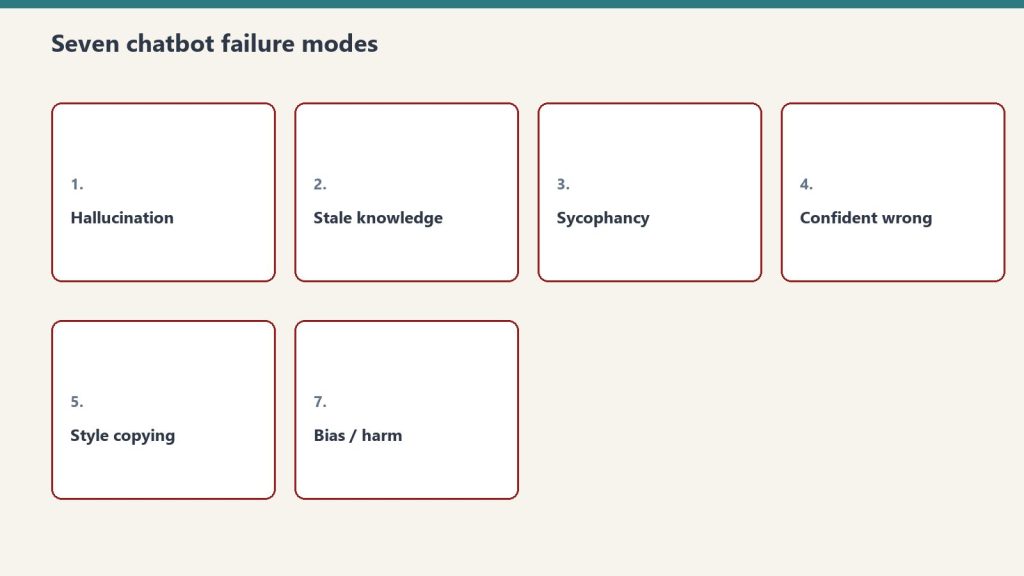
    Seven cards naming common AI chatbot failure modes
    The email copy — three versions, one campaign.

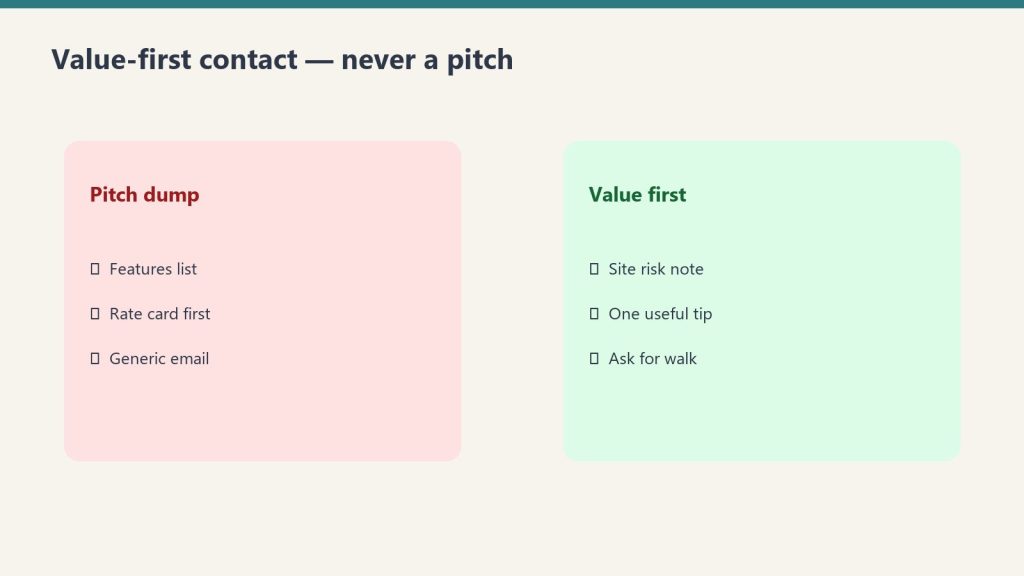
    Each version is short. The goal is a 90-second read that feels like a note from a real person, not a marketing email. Do not use HTML templates with banners and logos. Plain text or minimal formatting performs significantly better for relationship-based emails. No header image. No footer with six social icons. Just your name, your company, and the ask.

    Version 1: Past Homeowner Clients

    Subject line: Quick question — do you know anyone looking for good work?

    Hi [First Name],

    It’s [Your Name] from [Company Name]. We had the pleasure of working with you on your [water/fire/mold] job at [property address or neighborhood] — hope everything has been holding up well since then.

    I’m reaching out because we’re growing. We’re currently looking for a [position title — e.g., crew lead, project coordinator, estimator] to join our team, and before we post publicly, I wanted to reach out to people we’ve worked with and whose opinion I trust.

    If you know someone who might be a great fit for a company like ours — a family member, a friend, someone in the trades looking for a stable company with a good culture — I’d love to hear from you. Just reply to this email with their name and I’ll take it from there. No formal application needed on your end.

    Either way, I hope you’re doing well. And if you ever need us again or have any questions about your property, don’t hesitate to reach out.

    [Your Name]
    [Title]
    [Company Name]
    [Phone Number]


    Version 2: Industry Contacts (Adjusters, Agents)

    Subject line: Growing our team — wanted to reach out to you first

    Hi [First Name],

    Hope things are going well on your end. I wanted to reach out personally because we’re adding to our team — specifically hiring for [position title] — and I always prefer to see if someone in my network has a connection before going the generic posting route.

    If you know anyone in the area who would be a great fit for a professional restoration company — someone who takes their work seriously and wants to be part of a growing operation — I’d genuinely appreciate the introduction. Just reply with their contact info and I’ll handle it from there.

    Thanks for everything over the years. Looking forward to the next one.

    [Your Name]
    [Title]
    [Company Name]
    [Phone Number]


    Version 3: Trade Contacts (Vendors, Subs)

    Subject line: Hiring for [position] — know anyone good?

    Hey [First Name],

    We’re hiring for [position title] and figured I’d reach out to people in the trades before going the job board route. You know the kind of people we work with better than anyone.

    If anyone comes to mind — someone looking to land somewhere solid — just shoot me a reply. Happy to take it from there.

    [Your Name]
    [Company Name]
    [Phone]


    The Technical Setup: Getting These Emails Out

    You have three realistic paths depending on what tools you already have.

    Path A: Your CRM’s Built-In Email (ServiceTitan or Jobber)

    Both ServiceTitan and Jobber have basic email blast capability built in. In ServiceTitan, navigate to Marketing → Campaigns → Email. In Jobber, use the Client Communications feature under the Marketing tab. Compose your email, select your filtered list, and send. This is the fastest path if your contact list is already clean in the system. Limitation: formatting options are limited and tracking (opens, clicks) may be minimal depending on your plan tier.

    Path B: Mailchimp (Recommended for Most Shops)

    Mailchimp’s Essentials plan starts at $13/month for up to 500 contacts. For a typical restoration company database of 300–800 local contacts, you’ll likely stay in the $13–$30/month range depending on list size. The free plan as of 2026 caps at 250 contacts with no automation, which is not enough for most shops — pay for Essentials.

    Setup process:

    1. Export your three segments from your CRM as CSV files (Name, Email, Segment Type, Job Type)
    2. Create three Audiences in Mailchimp — one per segment — or use one Audience with tags for each segment
    3. Build one campaign per segment using the corresponding email template above
    4. Schedule them to send on the same day, 30 minutes apart, so you’re not flooding your own inbox with replies simultaneously

    Important Mailchimp note: the platform charges for unsubscribed contacts unless you manually archive them. If your list has been in Mailchimp for a while, audit it before your campaign — you may be paying for contacts who can’t receive your email. Archive anyone who unsubscribed more than 6 months ago.

    Path C: Brevo (Best if You Have a Large or Mixed List)

    Brevo (formerly Sendinblue) prices by emails sent rather than contacts stored, which works in your favor if you have a large database but only email them a few times a year. Their free plan includes 300 emails per day with unlimited contact storage. For a quarterly campaign to 800 contacts, Brevo’s free tier may cover your needs entirely. Upgrade to the Starter plan ($9/month) if you need scheduling and no daily send limit.


    Timing and Frequency

    Send the homeowner version on a Tuesday or Wednesday morning between 9am and 11am local time. Open rates for warm, local databases are typically highest mid-week in the morning window — people are at their desks, not yet in weekend mode.

    Send the industry version on the same day, 30 minutes later. These contacts are professionals and check email throughout the day — timing matters less than it does for homeowners.

    Send the trade version on the same day, afternoon. Tradespeople often check phones between jobs in the afternoon rather than first thing in the morning.

    Do not send all three simultaneously. Staggering by 30 minutes gives you manageable reply volume and prevents any single moment of inbox overwhelm.


    What to Do With the Replies

    This is where most companies drop the ball. The email generates replies. Someone refers their nephew who’s looking for work. An adjuster forwards it to a plumber he knows. A past homeowner replies just to say hi and mention their neighbor had a pipe burst last month.

    You need a simple log. A Notion page, a Google Sheet, or even a notes field in your CRM — whatever you’ll actually use. For every reply:

    • Log the sender name and contact type (homeowner, adjuster, vendor)
    • Log whether they referred someone (yes/no)
    • Log any other signal in the reply (lead mention, service inquiry, general warmth)
    • Set a follow-up reminder for 30 days if the reply was warm but didn’t lead anywhere immediately

    This log becomes the seed of your community intelligence layer. Over time, you’ll see which contacts are active in your network and which have gone completely cold. That’s information worth having.


    The Prompt Library: Using Claude to Write Your Versions

    Three stacked layers: chat UI, tools, agent runtime
    Using Claude to write your hiring email versions.

    If you want to adapt these templates for your specific company voice, job title, or market, here are four ready-to-use prompts for Claude (claude.ai). Paste these directly into a new Claude conversation:

    For the homeowner version:

    “Write a short, plain-text hiring email from a restoration company owner to a past homeowner client. We completed [water damage / fire damage / mold remediation] work for them in [city]. We’re hiring a [job title]. The email should feel personal and warm, mention that we’re reaching out before posting publicly, and ask if they know anyone — family or friends — who might be a great fit. No sales pitch. No marketing language. Sign it from [owner name] at [company name]. Keep it under 150 words.”

    For the industry version:

    “Write a short professional email from a restoration company owner to an insurance adjuster they’ve worked with on claims. We’re hiring a [job title]. The tone should be collegial and peer-to-peer — not formal, not salesy. We’re reaching out to trusted contacts before posting publicly and asking for referrals if they know anyone in the area. Keep it under 120 words.”

    For the subject line variations:

    “Give me 5 subject line options for a hiring referral email from a restoration company to past clients. The email is not a job posting — it’s a personal note asking if they know anyone who might want to work at a company like ours. The tone should be warm and human, not corporate. No clickbait. No exclamation points.”

    For customizing to your brand voice:

    “Here are two emails I’ve written before that represent how I communicate with clients: [paste examples]. Using this voice, rewrite the following hiring email template: [paste template]. Keep the same message but make it sound like I wrote it.”


    Frequently Asked Questions

    Do I need to include an unsubscribe link in these emails?

    If you’re sending through an email marketing platform like Mailchimp or Brevo, yes — the platform will add one automatically. If you’re sending through your CRM’s built-in email or directly from your own inbox to a small list, the legal requirements vary by country and list size. In the U.S., CAN-SPAM applies to commercial email. A personal, non-promotional email like this occupies a gray area — consult your legal advisor for your specific situation, but err toward including an unsubscribe option for any bulk send.

    What if my CRM doesn’t have email addresses for past clients?

    This is a data problem worth fixing before the next job completes. Make capturing email address a standard part of your intake process going forward. For the existing database, you can often find emails through invoice records, text message history, or a simple re-engagement call (“We’re updating our records — can I get the best email for you?”). Even 50% coverage on a 400-contact database is 200 warm reaches.

    How long should I wait before sending this campaign?

    Don’t wait. If you’re hiring now, send now. The email is most authentic when it reflects a real, current need. The whole premise is that this is a genuine business moment, not a manufactured excuse.

    What if someone replies with a lead instead of a job referral?

    Log it immediately. Route it to whoever handles incoming leads. Thank the person who referred it. This is the community strategy working exactly as intended — and it’s why the reply log matters.


  • Notion Second Brain Setup for AI-Native Agency Owners

    Notion Second Brain Setup for AI-Native Agency Owners

    What Is a Notion Second Brain Setup?
    A Notion Second Brain is a structured personal knowledge operating system — not a template dump, but a living architecture that captures decisions, organizes projects, tracks clients, and gives you (and your AI) persistent operational context. Built right, it becomes the intelligence layer between your brain and your tools.

    Most Notion setups look impressive for three weeks and collapse by month two. The problem isn’t Notion — it’s that generic templates aren’t built around how you actually work.

    We built our own from scratch. It runs a multi-client agency, integrates directly with Claude AI, maintains operational memory across sessions, and has been stress-tested across content operations at scale. We’ve now productized it so you don’t have to rebuild what we already broke and fixed.

    Who This Is For

    Agency owners, fractional executives, solo operators, and founders who are drowning in browser tabs, scattered notes, and tools that don’t talk to each other. If you’re running more than 3 clients or 5 active projects and your “system” is a mix of sticky notes, Slack threads, and half-finished Notion pages — this is for you.

    What the 6-Database Command Center Architecture Delivers

    Four cards for content, ops, build, and knowledge work with Claude
    What the 6-database command center delivers.
    • Command Center Hub — One master dashboard linking every active project, client, and initiative with live status
    • Client & Project Database — Structured client records, deliverable tracking, and project timelines in one view
    • Content Pipeline — Brief-to-publish workflow with status stages, site assignment, and AI output staging
    • Knowledge Lab — Permanent storage for research, SOPs, skill documentation, and reference material
    • Operations Ledger — Decision log, session history, and change records so nothing gets lost
    • Task Triage Board — Priority-ranked action queue pulling from every database in the system

    The claude_delta Standard (What Makes This Different)

    Long paper tape measure unrolling across a desk beside a laptop, metaphor for context window length
    The claude_delta standard.

    Every page in this system includes a claude_delta v1.0 metadata block — a structured JSON header that gives Claude AI immediate operational context when you paste a page into a session. No re-explaining. No re-briefing. Claude reads the block and knows what it’s looking at.

    This is not something you’ll find in an Etsy template. It’s the result of running a real AI-native agency operation and discovering what actually breaks when your context window expires.

    What We Deliver

    Desk with laptop, checklist notebook, and billing card ready before creating an Anthropic API key
    What we deliver.
    ItemIncluded
    Full 6-database architecture setup in your Notion workspace
    claude_delta metadata standard applied to all key pages
    Claude AI integration guide (how to use your Second Brain in sessions)
    3 custom views per database (board, table, calendar)
    SOP templates for your top 5 recurring workflows
    1-hour architecture walkthrough call
    30-day async support for questions and adjustments

    What You Get vs. DIY vs. Generic Agency

    Tygart Media SetupDIY (YouTube tutorials)Generic Notion Consultant
    Built around AI-native workflows
    claude_delta AI context standard
    Multi-client agency architectureSometimes
    Ongoing async supportExtra cost
    Proven under real operational loadUnknownUnknown

    Ready to Stop Rebuilding Your System Every 90 Days?

    Send a note describing your current setup (or lack of one) and what you’re trying to manage. We’ll tell you if this is the right fit.

    will@tygartmedia.com

    Email only. No sales call required. No commitment to reply.

    Related on Tygart Media: second brain for business · Notion-deep, surface-simple · Command Center.

    Frequently Asked Questions

    Do I need to already use Notion?

    You need a Notion account (free works for setup, Team plan recommended for ongoing use). No prior Notion experience required — we build it around your workflows, not the other way around.

    How long does setup take?

    The architecture is built within 5 business days. The walkthrough call is scheduled in week two. Adjustments and SOP templates are completed within 30 days.

    What if I already have a Notion setup I’ve been using?

    We can audit your existing structure and either retrofit the 6-database architecture into it or rebuild cleanly. We’ll recommend one or the other after reviewing your current setup.

    Is this just a template I download?

    No. This is a custom build in your workspace. We configure databases, relations, views, formulas, and the claude_delta metadata standard to match your actual operation — clients, projects, workflows, and all.

    What industries is this built for?

    Originally built for a content and SEO agency. The architecture works for any service business running multiple clients, projects, or revenue streams simultaneously. Consultants, fractional CMOs, boutique agencies, and solo operators with complex operations are the best fit.

    Does this work with Claude, ChatGPT, or other AI tools?

    The claude_delta standard was designed for Claude. The architecture works with any AI tool — the metadata blocks and structured content make any LLM more effective when you paste pages into sessions. Claude integration is deepest out of the box.

    Last updated: April 2026

  • Insurance SEO Checklist: 7 Post-Publish Steps for Agencies

    Insurance SEO Checklist: 7 Post-Publish Steps for Agencies


    Tygart Media — Insurance Content Strategy

    The Insurance Agency WordPress Post-Publish Checklist: 7 Steps Every Coverage Article Needs

    By Tygart Media Updated: April 12, 2026
    Why post-publish optimization matters for insurance content: Insurance blog posts are written with coverage accuracy as the primary concern — which is correct. But the optimization signals that determine whether a prospect finds that article — title tag, meta description, entity references, schema, FAQ section — are almost never applied after publication. These 7 steps apply those signals to existing articles without altering coverage content, converting published articles into AI-citable, PAA-eligible, quote-driving assets.

    The 7-Step Insurance WordPress Post-Publish Checklist

    1. Rewrite the title tag for how prospects ask coverage questions — Match prospect language, not agent vocabulary. “Commercial General Liability Coverage Overview” → “What Does General Liability Insurance Cover for My Business?” Lead with the prospect’s question framing within 50–60 characters. For comparison articles: “Term vs. Whole Life Insurance: Which Is Right for You?” beats “Term and Whole Life Insurance Comparison.”
    2. Write a meta description targeting the pre-quote research moment — Delete the auto-generated excerpt. Write 140–155 characters that speak directly to the prospect’s coverage question and signal authoritative answers: “Wondering what general liability covers for your business? We explain ISO CG 00 01 policy coverage, common exclusions, and typical cost ranges. Get a free quote.” This converts impressions to clicks by promising a specific, credible answer.
    3. Inject named insurance entity references into the content — Add 3–5 named regulatory and standards entities relevant to the coverage type: ISO policy form number, NAIC regulatory reference, AM Best carrier rating mention, and any applicable federal program (NFIP, ACA, ERISA). These named entities are machine-verifiable — the specific signal Google YMYL quality evaluators and AI systems use to distinguish genuine insurance expertise from generic coverage summaries.
    4. Add a coverage FAQ section with FAQPage schema — Write 6–8 questions in prospect language targeting the pre-quote research phase: “How much does [coverage type] cost?”, “What doesn’t [coverage] cover?”, “Do I need [coverage type]?”, “What is the difference between [option A] and [option B]?” Add FAQPage JSON-LD schema alongside the visible FAQ section — both are required for People Also Ask eligibility and AI Overview citation.
    5. Add InsuranceAgency schema connecting content to the agency entity — Inject Article schema with the licensed agent or agency as author and InsuranceAgency schema connecting the content to the specific agency entity (name, license number where appropriate, state of licensure, lines of authority). This machine-readable entity connection is what AI systems use to associate coverage authority with a specific licensed agency — turning content citations into agency brand recognition.
    6. Set a visible Last Updated date with dateModified Article schema — Add “Last updated: [Quarter, Year]” near the article top. Update the dateModified field in Article JSON-LD schema. Insurance coverage terms, pricing factors, and regulatory requirements change. A 2022 article about ACA marketplace coverage is outdated for 2026 prospects. The visible update date signals that the coverage information is current — a critical trust signal for YMYL insurance content that directly influences financial protection decisions.
    7. Add an inline quote CTA in the article body — Embed a quote request CTA in the article content — not just in the header or footer. Prospects who landed directly on the article via search or AI citation are reading the article, not navigating the website. “Ready to find out what [coverage type] costs for your situation? Get a free, no-obligation quote from our licensed agents.” Position this CTA after the FAQ section — at the moment of highest trust and lowest resistance.
    These 7 steps applied to your 10 highest-traffic insurance coverage articles is the scope of WordPress content optimization for insurance agencies through SiteBoost. Every step pushed live via WordPress REST API — coverage content unchanged, optimization and citation infrastructure added.

    Frequently Asked Questions

    Which of the 7 steps has the highest impact for insurance agency content?

    Step 3 (named entity injection — NAIC, ISO, AM Best) and step 4 (FAQPage schema) produce the fastest visible results for insurance content. Named entity references create the YMYL authority signals that Google quality evaluators specifically look for in insurance content, and FAQPage schema enables People Also Ask placement within 2–4 weeks. Step 7 (inline quote CTA) has the highest direct revenue impact — converting article readers who were already engaged by the content into active quote requests. All 7 together create compounding returns that no individual step achieves alone.

    Should these steps be applied to all insurance articles or prioritized?

    Prioritize by coverage line importance and existing traffic. Start with your highest-traffic articles in your primary lines of authority. For a personal lines agency: homeowners, auto, umbrella, and life content first. For a commercial lines agency: BOP, CGL, professional liability, and commercial auto first. Apply all 7 steps to these high-priority articles, then systematically work through secondary content. New articles should have all 7 steps applied at publication — not retroactively — establishing the optimization standard from the point of creation.

    Do these steps require any special WordPress setup or developer access?

    No special setup or developer access is required. Title tags and meta descriptions are managed through post fields or SEO plugin meta fields. Entity references and FAQ sections are text and HTML additions to existing post content. FAQPage, InsuranceAgency, and Article JSON-LD schema blocks are added as HTML blocks in post content via the WordPress REST API. InsuranceAgency schema requires only the agency’s name, license number, and state — publicly available information that agents can provide. The WordPress Application Password required for REST API access is generated from the WordPress admin dashboard in under a minute.

    Sources: Nationwide Agency Forward, “Benefits of SEO, GEO and AEO for Insurance Agents” (InsuranceAgency schema reference); Amsive, “Answer Engine Optimization” (conversion rate data); Marketing LTB, “10 Best Insurance SEO Agencies in 2026” (YMYL compliance section); ClickGiant, “AEO for Insurance Agencies: How to Get Found in AI Search 2026”
  • Insurance Agency Blog: 4 Fixes to Generate Quote Requests

    Insurance Agency Blog: 4 Fixes to Generate Quote Requests


    Tygart Media — Insurance Content Strategy

    Why Insurance Agency Blog Posts Don’t Generate Quote Requests (And the 4 Fixes That Change That)

    By Tygart Media Updated: April 12, 2026
    The insurance content gap: Insurance is a research-heavy industry. According to research cited by Sonant.ai’s 2026 insurance SEO guide, 69% of insurance customers conduct online searches before scheduling any appointment or requesting a quote. That research now happens increasingly in AI assistants — ChatGPT, Perplexity, Google AI Overviews — where prospects ask coverage questions before they ever visit an agency website. The agency whose WordPress content answers those research questions is in the consideration set before competitors are even aware the prospect exists.

    The Insurance Research-to-Quote Funnel Has Collapsed Into One Session

    Nationwide’s Agency Forward blog documented something significant in 2026: “The conversion funnel is collapsing, and search can lead to online quotes and binds in a single online session.” A prospect who asks an AI assistant about coverage options, finds an authoritative agency article that answers their question, and sees a clear quote CTA — can go from research to quote request in one sitting. This is the opportunity that most insurance agency WordPress blogs are missing entirely.

    Why don’t insurance agency blog posts generate quote requests despite regular publishing?
    Insurance agency blog posts fail to generate quote requests when they lack four specific optimization signals: a title tag that matches how prospects actually phrase their coverage questions (not how an agent would title a policy explanation), FAQPage schema targeting the research-stage questions that precede a quote request, named regulatory and standards entity references (NAIC, ISO policy forms, AM Best ratings, state department of insurance) that signal genuine coverage authority to both Google and AI systems, and a clear quote CTA embedded in the article body — not just in the website header or footer where prospects who found the article rarely look.

    Fix 1: Match Titles to How Prospects Actually Ask Coverage Questions

    Insurance agents write article titles the way they’d label a file in a cabinet: “Umbrella Liability Coverage Overview” or “Commercial General Liability Policy Explained.” Prospects search the way they’d ask a friend: “Do I need umbrella insurance if I have home and auto?” or “What does general liability actually cover for my business?” The title tag must match the prospect’s language, not the agent’s vocabulary. This is the single change that most immediately improves click-through rate from existing search impressions.

    Fix 2: FAQPage Schema Targeting Pre-Quote Research Questions

    The questions that precede a quote request are specific: “How much does umbrella insurance cost?”, “Does homeowners insurance cover flood damage?”, “What’s the difference between term and whole life insurance?”, “Do I need business insurance if I work from home?” A FAQ section with 6–8 of these questions structured as direct 40–60 word answers, with FAQPage JSON-LD schema, positions your articles for People Also Ask placements and AI Overview citations at the moment prospects are actively forming their coverage decisions.

    Fix 3: Named Insurance Entity References

    Google and AI systems evaluate insurance content authority through named regulatory and standards entity references. An article about homeowners insurance that references “ISO HO-3 (open perils) vs HO-8 (modified coverage) policy forms,” cites “NAIC — National Association of Insurance Commissioners model regulations,” and mentions “AM Best financial strength rating” for carrier comparison — this article signals genuine insurance expertise that generic coverage explainers lack. These entities are machine-verifiable, which is specifically what AI systems check before citing insurance content.

    Fix 4: A Quote CTA in the Article Body

    A prospect who found your article through a Google search or AI citation is reading your content, not browsing your website navigation. A quote CTA in the header or footer is often invisible to article readers who landed directly on the content. An inline CTA embedded in the body — “Ready to find out what umbrella coverage costs for your situation? Get a free quote in minutes.” — captures the prospect at the moment of highest engagement, which is while they’re reading the content that convinced them of your expertise.

    All four fixes — coverage question title rewrites, FAQPage schema, NAIC/ISO entity injection, and inline quote CTAs — are part of WordPress content optimization for insurance agencies through SiteBoost. Applied to your existing insurance blog via WordPress REST API.

    Frequently Asked Questions

    What types of insurance blog content generate the most quote requests?

    Coverage comparison content generates the highest quote request rates — “term vs. whole life insurance,” “HO-3 vs. HO-5 homeowners policy,” “occurrence vs. claims-made professional liability.” These articles capture prospects who have identified they need coverage and are comparing options — the highest-intent pre-quote state. Coverage explainer content (“what does umbrella insurance cover”) captures earlier-stage research but builds authority that converts over multiple sessions. Both types benefit from FAQPage schema and inline quote CTAs.

    Is insurance content YMYL — and what does that mean for blog optimization?

    Yes. Google classifies insurance content as YMYL (Your Money or Your Life) because coverage decisions directly affect financial protection and stability. This triggers heightened E-E-A-T scrutiny — Google’s quality evaluators specifically assess whether insurance content is authored by licensed professionals with verifiable credentials, whether coverage descriptions are accurate and comply with state-specific regulatory requirements, and whether claims are sourced to named regulatory bodies (NAIC, state departments of insurance). YMYL classification makes named entity injection and accurate sourcing non-optional for insurance content that aims to rank competitively.

    How do insurance CPCs relate to the value of organic blog content?

    Insurance keywords average $10–$54 per click on Google Ads for coverage-related terms, with some competitive personal lines terms exceeding $100 per click. A blog article that ranks organically for “does homeowners insurance cover flooding” and generates 50 qualified visitors per month represents $500–$5,000+ in equivalent paid search value — delivered at zero per-click cost once the optimization investment is made. The compounding nature of organic rankings means the cost-per-lead from well-optimized insurance content consistently decreases over time while paid search costs only increase.

    Sources: Nationwide Agency Forward, “Benefits of SEO, GEO and AEO for Insurance Agents” (2026); Sonant.ai, “SEO for Insurance Companies: 2026 Domination Guide”; Marketing LTB, “10 Best Insurance SEO Agencies in 2026”; ClickGiant, “AEO for Insurance Agencies: How to Get Found in AI Search 2026”
  • SaaS WordPress Blog Optimization: 7 Post-Publish Steps

    SaaS WordPress Blog Optimization: 7 Post-Publish Steps


    Tygart Media — SaaS Content Strategy

    The B2B SaaS WordPress Blog Optimization Checklist: 7 Steps Every Published Post Needs

    By Tygart Media Updated: April 12, 2026
    Why post-publish optimization is where SaaS SEO ROI lives: A SaaS company’s existing blog library — 50, 100, 200 published posts — represents years of investment in content that may be generating a fraction of its potential traffic and zero AI citations. The post-publish optimization checklist applies the seven steps that most SaaS WordPress blogs skip entirely: the steps that determine whether a published post ranks for buyer-stage queries, earns People Also Ask placements, and gets cited by AI systems during software evaluation research.
    What post-publish optimization steps do SaaS WordPress blogs typically skip?
    B2B SaaS WordPress blogs typically skip seven post-publish optimization steps: rewriting the title tag for buyer-stage search intent (not article description), writing a meta description manually instead of relying on auto-generated excerpts, adding a buyer-stage FAQ section with FAQPage JSON-LD schema, injecting named integration entity references (Salesforce, HubSpot, Slack, Zapier), adding a visible Last Updated date with dateModified Article schema, adding a consideration-stage inline CTA linking to comparison or integration content, and ensuring bidirectional internal links connect the post to the most relevant product or use-case page. These seven steps are the difference between a published post and an optimized asset.

    The 7-Step Checklist

    Step 1: Rewrite the Title Tag for Buyer-Stage Intent

    The published post title is often the article headline — written for readability, not search. Rewrite the title tag (separate from the H1 if your SEO plugin allows) to lead with the buyer-stage keyword. For awareness content: “How to [solve problem]” or “Why [pain point] Happens.” For consideration content: “Best [Category] Tools for [Specific Use Case]” or “How [Category] Integrates with Salesforce.” For decision content: “[Product] vs [Competitor]: Which Is Right for Your Team?” Stay within 50–60 characters.

    Step 2: Write a Meta Description That Matches Buyer Stage

    Delete the auto-generated excerpt. Write a 140–155 character meta description that matches the buyer stage of the content. Awareness posts: state the problem and promise a clear explanation. Consideration posts: name the specific use case, role, or integration the article covers. Decision posts: state the comparison criteria and signal a clear recommendation. The meta description is the copy that determines whether a buyer in your target stage clicks.

    Step 3: Add a Buyer-Stage FAQ Section With FAQPage Schema

    Add 6–8 FAQ questions written in buyer language for the article’s stage. Awareness: “What causes [problem]?”, “How do teams typically handle [challenge]?” Consideration: “What should I look for in [software type]?”, “How does [category] integrate with Salesforce?” Decision: “How long does [software] take to implement?”, “What’s included in [software] pricing?” Inject FAQPage JSON-LD schema alongside the visible FAQ section — both are required for People Also Ask eligibility.

    Step 4: Inject Integration Entity References

    Add 3–5 named integration entity references naturally into the content. “Whether your team runs on Salesforce, HubSpot, or a custom CRM” signals ecosystem positioning. “Native Zapier and Make integration means no-code automation teams can connect this to any existing workflow” targets automation-focused buyers. These named entities are what AI systems and Google’s quality evaluators use to confirm that the content represents genuine B2B SaaS category expertise.

    Step 5: Add a Visible Last Updated Date and dateModified Schema

    B2B buyers evaluating software are sensitive to information freshness — integration availability, pricing structure, and compliance certifications change. A visible “Last updated: April 2026” signals current information. Update the dateModified field in the Article JSON-LD schema to match. Only do this when the content has genuinely been updated — a statistic refreshed, an integration name added, a new FAQ question added. Date-only updates without content changes can be detected as manipulation.

    Step 6: Add a Consideration-Stage Inline CTA

    Embed a CTA in the body of the post — not only in the footer — that links to the most relevant consideration or decision-stage content. For an awareness post about workflow automation: “If you’re evaluating workflow automation tools for your sales team, our Salesforce integration guide covers the specific sync capabilities to look for.” This CTA serves readers who are further along in their buying journey than the post’s target stage, capturing conversion opportunity from the full audience.

    Step 7: Add Bidirectional Internal Links

    Link from the blog post to the most relevant product or use-case page with descriptive anchor text (“workflow automation for sales teams” not “learn more”). Then update the product page to link back to the blog post. Bidirectional internal linking passes authority in both directions, signals topical depth to Google’s crawlers, and creates navigation paths for buyers moving between educational and evaluation content.

    These 7 steps applied to 10 existing SaaS blog posts is exactly the scope of WordPress content optimization for B2B SaaS companies through SiteBoost. Every step pushed live via WordPress REST API — no manual editing, before/after baseline included.

    Frequently Asked Questions

    Which of the 7 steps has the highest impact for SaaS blogs?

    Steps 3 and 4 — FAQ section with schema and integration entity injection — consistently deliver the fastest visible impact for SaaS content. FAQPage schema enables People Also Ask placement eligibility within 2–4 weeks. Integration entity injection improves AI citation probability immediately after the next crawl cycle. Step 1 (title tag) has the highest impact on click-through rate from existing search impressions. All 7 together create compounding returns — each step reinforces the others in Google’s quality evaluation and AI citation selection.

    Should SaaS companies optimize old posts or publish new ones first?

    Optimize existing posts first — specifically the top 20% by traffic. Existing posts have index history, any existing backlinks, and are already known to Google’s crawlers. Applying these 7 steps to 10 existing high-traffic posts typically produces faster ranking and conversion improvements than publishing 10 new posts. New posts require 3–6 months to build ranking authority. Optimized existing posts can improve within weeks because they’re already indexed and the authority infrastructure exists.

    Do these steps require a WordPress plugin?

    No plugin is required. All 7 steps can be applied via the WordPress REST API: title and excerpt (meta description) through post fields, FAQ section and JSON-LD schema as HTML in post content, integration entity references as text additions, and Article schema with dateModified through an HTML block. SEO plugins like Rank Math or Yoast manage some fields through their own meta — if using one, title and meta should go through the plugin’s fields to avoid conflicts. The REST API handles everything else directly.

    Sources: Powered by Search, “The B2B SaaS SEO Playbook” (2025); ALM Corp, “SaaS SEO Strategy Guide” (2026); Matt’s World 101, “SaaS SEO: The Complete Guide to Hypergrowth in 2025”; Gartner 2025 B2B Buying Report
  • Restoration Content Operations: Building Local Authority

    Restoration Content Operations: Building Local Authority

    The Agency Playbook
    TYGART MEDIA · PRACTITIONER SERIES
    Will Tygart · Senior Advisory · Operator-grade intelligence

    The restoration industry has a content problem that most operators don’t recognize as a content problem. The work is technical, the market is local, the competition is intense, and the buying decision is urgent — someone’s basement is flooding or their ceiling has water damage and they need a contractor now. Traditional marketing advice — build a brand, nurture a relationship, post on social media — doesn’t map well to an industry where the customer need is immediate and the decision window is short.

    What does work: topical authority built through genuinely useful content, local SEO that answers the specific questions people ask when damage happens, and a content operation that can produce and maintain that content at scale. This is what we’ve built for restoration industry clients, and Notion is the operational backbone that makes it manageable.

    What does a Notion content operation look like for the restoration industry? A restoration industry content operation in Notion tracks content across specific damage types — water, fire, mold, asbestos, storm — and service geographies, with keyword research integrated into the content pipeline and a publishing workflow that routes content through optimization, schema injection, and WordPress publication. The operation is built for volume and specificity, not general brand content.

    Why the Restoration Industry Is a Good Content Market

    Comparison of Claude how-to fit versus local service page fit for assistants
    Why the restoration industry is a good content market.

    Restoration is a strong content market for several reasons. The questions people ask when damage occurs are specific and consistent: how much does water damage restoration cost, how long does mold remediation take, what does fire damage smell like after a week. These questions have real search volume and low competition from authoritative content — most restoration company websites are thin on useful information.

    The industry also has strong local search intent. Someone searching for water damage restoration is almost always searching for someone local. Content that combines topical authority — demonstrating genuine expertise in the damage type — with local specificity performs well in this environment.

    Finally, the industry is fragmented. Most restoration companies are regional or local operators without the resources to build and maintain a serious content operation. That gap creates opportunity for content-forward operators to establish authority that larger, less content-focused competitors can’t easily replicate.

    How the Content Architecture Works

    Desk with laptop, checklist notebook, and billing card ready before creating an Anthropic API key
    How the content architecture works.

    The content architecture for restoration clients follows a hub-and-spoke structure. Hub pages cover the primary service categories at the depth required for topical authority — comprehensive guides to water damage restoration, mold remediation, fire damage recovery. Spoke pages cover specific questions, cost breakdowns, process explanations, local variations, and comparison topics that radiate from each hub.

    In Notion, this architecture is tracked in the Content Pipeline database with content type tags distinguishing hub pages from spoke content. The hub pages are the long-term SEO assets; the spoke content generates ongoing traffic from specific long-tail queries and builds the internal link structure that supports the hubs.

    The keyword research layer — what topics need coverage, what questions are being asked in the target geography, what the competition looks like for each keyword — feeds directly into the Content Pipeline as briefs. Each brief becomes a content record that moves through the standard status sequence before it reaches WordPress.

    The Local Intelligence Layer

    Generic restoration content — “water damage restoration: everything you need to know” — competes with national franchise content from large chains and major insurance resources. It’s hard to win that competition for a regional operator.

    Local intelligence changes the equation. Content that reflects genuine knowledge of a specific market — the most common cause of water damage in the local housing stock, the local insurance carriers and their specific claim processes, the geographic factors that affect mold growth in the region — differentiates from generic content in a way that matters to both search engines and local readers.

    Capturing and maintaining that local intelligence is a knowledge management problem. In Notion, it lives in the client’s Knowledge Lab records — market-specific reference documents that inform every piece of content written for that client and that Claude reads before starting any content session for that site.

    The B2B Network as Distribution

    Seven cards naming common AI chatbot failure modes
    The B2B network as distribution.

    Content production is half the equation. Distribution matters — who sees the content and whether it reaches the decision-makers and referral sources who drive restoration business.

    A B2B industry network built around a shared activity — golf, in one model we’ve seen work well — can be a powerful distribution channel for restoration industry relationships. Insurance adjusters, property managers, contractors, and restoration company owners all participate in an industry where relationships drive referrals. A network format that builds those relationships efficiently creates a distribution layer that pure content can’t replicate.

    The content operation and the network operation reinforce each other. The content builds the credibility and visibility that makes the network meaningful. The network provides the relationships and industry intelligence that make the content genuinely informed rather than generic. Neither works as well without the other.

    What Makes Restoration Content Different

    Restoration content has specific requirements that distinguish it from general service business content. The subject matter is emotionally charged — people are dealing with damaged homes and possessions, often under insurance and contractor pressure. The content needs to be factually precise — cost ranges, process timelines, and technical specifications that are wrong will be called out quickly by industry readers. And the local dimension is non-negotiable — a guide to water damage restoration that doesn’t reflect local contractor pricing, local building codes, or local insurance market realities is less useful than one that does.

    Meeting these requirements at scale — across multiple clients, multiple damage types, multiple geographies — is what makes Notion’s pipeline architecture valuable for restoration content operations. The knowledge layer stores the local intelligence. The pipeline tracks the content. The quality gate ensures nothing publishes with claims that can’t be supported.

    Working in the restoration industry?

    We build content operations for restoration companies — the topical authority architecture, the local intelligence layer, and the publishing pipeline that makes it run at scale.

    Tygart Media has deep experience in restoration industry content. We know what works, what the keywords are, and what differentiates in a fragmented local market.

    See what we build →

    Related on Tygart Media: content marketing strategy · content pipeline · restoration blog SEO.

    Frequently Asked Questions

    What content topics work best for restoration companies?

    Cost guides perform consistently well — people want to know what water damage restoration costs, what mold remediation costs, what fire damage cleanup costs. Process explanations — what happens during restoration, how long it takes, what to expect — also perform well because they reduce anxiety during a stressful situation. Local content that reflects knowledge of the specific market outperforms generic content for the same topics at the local search level.

    How much content does a restoration company need to build topical authority?

    For a regional restoration company targeting a metro area, meaningful topical authority typically requires fifty to one hundred published articles covering the primary damage types, the key cost and process questions, and local variations. That’s a six-to-twelve month content build at reasonable publishing velocity. The content compounds over time — articles published in month one are still generating traffic in month twelve and beyond.

    How do you handle the local specificity requirement across multiple restoration clients in different markets?

    Each client’s market-specific intelligence lives in their Knowledge Lab records in Notion — a set of reference documents covering local pricing, local contractors, local insurance market conditions, and geographic factors specific to their service area. Claude reads these records before starting any content session for that client. The records are the mechanism that makes content locally specific without requiring the writer to have personal knowledge of every market.

  • Notion Claude Memory: Setup Guide for Persistent Context

    Notion Claude Memory: Setup Guide for Persistent Context

    Last refreshed: May 15, 2026

    Update — May 15, 2026: On May 13, 2026, Notion shipped the Notion Developer Platform (version 3.5), with Claude as a launch partner. The platform adds Workers, database sync, an External Agents API, and a Notion CLI. The patterns described in this article still work, but there is now a native, sanctioned alternative for some of what previously required custom MCP wiring or third-party automation. For the full breakdown of what changed and what it means for the Notion + Claude stack, see Notion Developer Platform Launch (May 13, 2026). For the underlying operating philosophy, see The Three-Legged Stack.

    Claude AI · Fitted Claude

    Claude doesn’t remember anything between sessions by default. Every conversation starts from zero. For casual use, that’s fine. For an operator running a complex business across multiple clients, projects, and entities, that reset is a real problem — and the solution is architectural, not a workaround.

    Here’s how to set up Notion so Claude has the context it needs at the start of every session, without you manually rebuilding it every time.

    How do you set up Notion so Claude remembers everything? You don’t make Claude remember — you make the relevant context retrievable. A Claude-ready Notion setup has three components: a metadata standard that makes key pages machine-readable, a master index Claude fetches at session start to know what exists, and a session logging practice that captures what was decided so the next session can pick up where the last one ended. Together these create functional persistence without relying on Claude’s native memory.

    What “Remembering” Actually Means

    Four cards for content, ops, build, and knowledge work with Claude
    What remembering actually means.

    It’s worth being precise about what we’re solving for. Claude’s context window — the information it has access to during a session — is large. The problem is that it resets between sessions. Information from Monday’s session isn’t available in Tuesday’s session unless it’s either in the system prompt or retrieved during the new session.

    The goal isn’t to give Claude a persistent memory in the biological sense. The goal is to ensure that any context Claude would need to operate effectively in a new session is stored somewhere Claude can retrieve it, and that Claude knows to retrieve it before starting work.

    That’s a knowledge management problem, not an AI problem. Solve the knowledge management problem and the memory problem resolves itself.

    Step 1: The Metadata Standard

    Long paper tape measure unrolling across a desk beside a laptop, metaphor for context window length
    Step 1 — the metadata standard.

    Every key Notion page needs a brief structured metadata block at the top — before any human-readable content. The metadata block makes the page machine-readable: Claude can read the summary and understand the page’s purpose and key constraints without reading the full content.

    The minimum viable metadata block for each page includes: what type of document this is (SOP, reference, project brief, decision log), its current status (active, evergreen, draft), a two-to-three sentence plain-language summary of what the page contains and when to use it, and a resume instruction — the single most important thing to know before acting on this page’s content.

    With this block in place, Claude can orient itself to any page in seconds. Without it, Claude has to read the full page to understand whether it’s relevant — which is slow and impractical at scale.

    Step 2: The Master Index

    The master index is a single Notion page that lists every key knowledge page in the workspace: its title, Notion page ID, type, status, and one-line summary. Claude fetches this page at the start of any session that involves the knowledge base.

    The index answers the question Claude needs answered before it can retrieve anything: what exists and where is it? Without the index, Claude would need to search for relevant pages by keyword — imprecise and dependent on the page having the right words. With the index, Claude can scan the full list of what exists and identify exactly which pages are relevant to the current task.

    Keep the index current. Add a row whenever a significant new page is created. Archive rows when pages are deprecated. The index is only useful if it accurately represents what’s in the knowledge base.

    Step 3: Session Logging

    The session log is the practice that creates true continuity across sessions. At the end of any significant working session, a brief log entry captures what was decided, what was done, and what the next step is. That log entry lives in the Knowledge Lab as a dated record.

    The next session starts by reading the most recent session log for the relevant project or client. Claude picks up with full awareness of what the previous session decided and where the work stands — not because it remembered, but because the information was captured and is retrievable.

    Session logs don’t need to be long. Three to five sentences covering the key decisions and the next step is sufficient. The goal is continuity, not comprehensive documentation. A session log that takes two minutes to write saves ten minutes of context reconstruction at the start of the next session.

    The Start-of-Session Protocol

    Desk with laptop, checklist notebook, and billing card ready before creating an Anthropic API key
    The start-of-session protocol.

    With the metadata standard, master index, and session logging in place, every session starts the same way: “Read the Claude Context Index and the most recent session log for [project/client], then let’s work on [task].”

    Claude fetches the index, identifies the relevant pages, fetches those pages and reads their metadata blocks, reads the most recent session log, and begins work with genuine operational context. The context transfer that used to require ten minutes of manual explanation happens in under a minute of automated retrieval.

    This protocol works because the setup work was done upfront. The metadata blocks were written. The index was created and maintained. The session logs were captured. The session start protocol is fast because the knowledge management discipline that makes it fast was already in place.

    What This Doesn’t Replace

    This architecture doesn’t replace judgment about what’s worth capturing. Not every session produces information worth logging. Not every Notion page needs a metadata block. The discipline of the system is knowing what deserves to be in the knowledge base and what doesn’t — and being honest about the maintenance overhead that every addition creates.

    A knowledge base that captures everything becomes a knowledge base that surfaces nothing useful. The curation decision — what goes in, what stays out — is as important as the architecture that stores it.

    Want this set up correctly?

    We configure the Notion + Claude memory architecture — the metadata standard, the Context Index, the session logging practice, and the start-of-session protocol — as a done-for-you implementation.

    Tygart Media runs this system in daily operation. We know what makes it work and what breaks it.

    See what we build →

    Frequently Asked Questions

    Does Claude have a memory feature that makes this unnecessary?

    Claude has a memory system in claude.ai that captures information from conversations and surfaces it in future sessions. This is useful for personal context — preferences, background, recurring topics. For operational context in a business setting — current project status, client-specific constraints, recent decisions — the Notion-based architecture described here is more reliable, more comprehensive, and more controllable. The two approaches complement each other rather than competing.

    How often should session logs be written?

    For sessions that produce significant decisions, complete meaningful work, or advance a project to a new stage — write a log entry. For sessions that are purely exploratory or produce nothing durable — skip it. The rule of thumb: if the next session on this topic would benefit from knowing what happened in this session, write the log. If not, don’t. Logging every session creates overhead without value; logging selectively keeps the knowledge base signal-dense.

    What’s the difference between a session log and a Notion page?

    A session log is a dated record of what happened in a specific working session — decisions made, work completed, next steps identified. A Notion knowledge page is a durable reference document — an SOP, an architecture decision, a client reference — that’s meant to be read and used repeatedly. Session logs are ephemeral and time-stamped. Knowledge pages are evergreen and maintained. Both are in the Knowledge Lab database, distinguished by the Type property.

    Can this setup work for a team, not just a solo operator?

    Yes, with additional structure. The metadata standard and master index work the same for a team. Session logging becomes more important with multiple people working on the same projects — the log creates a shared record of what was decided so team members don’t reconstruct it for each other. The additional requirement for a team is clarity about who owns the knowledge base maintenance — who updates the index, who reviews pages for currency, who writes the session logs. Without that ownership, the system degrades quickly in a team setting.

  • Notion Command Center: Our Daily Operating Rhythm Playbook

    Notion Command Center: Our Daily Operating Rhythm Playbook

    The Agency Playbook
    TYGART MEDIA · PRACTITIONER SERIES
    Will Tygart · Senior Advisory · Operator-grade intelligence

    A daily operating rhythm is the difference between a Notion system you use and one you maintain out of obligation. The architecture can be perfect — six databases, clean relations, filtered views for every operational question — and still fail if there’s no structured daily interaction that keeps it current and useful.

    This is our exact playbook. Not a template, not a philosophy — the specific sequence we run every working day to keep a multi-client, multi-entity operation on track from a single Notion workspace.

    What is a Notion Command Center daily operating rhythm? A daily operating rhythm for a Notion Command Center is a structured sequence of interactions with the workspace that keeps it current and actionable — a morning triage that clears the inbox and sets priorities, an end-of-day close that captures completions and pushes deferrals, and a weekly review that repairs drift and resets for the next week. The rhythm is what transforms a database architecture into a living operating system.

    Morning Triage: 10–15 Minutes

    Four cards for content, ops, build, and knowledge work with Claude
    Morning triage — 10–15 minutes.

    The morning triage has one goal: leave it knowing exactly what the top three priorities are for the day and with the inbox at zero.

    Step 1: Zero the inbox. Open William’s HQ and go to the inbox view — all tasks without a priority or entity assigned. Every untagged item gets a priority (P1–P4), a status (Next Up or a specific date), and an entity tag. Nothing stays in the inbox. Items that don’t warrant a task get deleted.

    Step 2: Read the P1 and P2 list. These are the only tasks that own today’s calendar. Read the list. Mentally commit to the top three. If the P1 list has more than five items, something is mislabeled — P1 means real consequences today, not “this would be good to do.”

    Step 3: Check the content queue. Filter the Content Pipeline for anything publishing in the next 48 hours that isn’t in Scheduled status. Anything publishing tomorrow that’s still in Draft or Optimized is a P1. Fix it before anything else.

    Step 4: Check blocked tasks. Any task in Blocked status needs a decision or a message now. Blocked tasks that age without action create downstream problems that compound. Clear them or escalate them — don’t leave them blocked.

    Total time: ten to fifteen minutes. The output is not a plan — it’s a commitment to three specific things, with everything else deprioritized explicitly rather than just ignored.

    Working Sessions: No Rhythm, Just Work

    Between morning triage and end-of-day close, there’s no prescribed rhythm. The triage gave you your three priorities. Work on them. The system doesn’t need to be consulted again until something changes — a new task arrives, a content piece needs to move to the next stage, a decision gets made that should be logged.

    The one active habit during working sessions: when you create something that belongs in the system — a new contact, a new content piece, a completed task — log it immediately. The temptation to batch-log at the end of the day creates a gap where things get missed. The cost of logging in real time is thirty seconds per item. The cost of not logging is an inaccurate system that can’t be trusted.

    End-of-Day Close: 5 Minutes

    Long paper tape measure unrolling across a desk beside a laptop, metaphor for context window length
    End-of-day close — 5 minutes.

    Step 1: Mark done tasks complete. Any task completed today gets its status updated to Done. This takes thirty seconds and keeps the active task view clean.

    Step 2: Push or reprioritize uncompleted tasks. Anything you intended to do but didn’t — update the due date or move it down in priority. Don’t leave tasks with today’s due date sitting undone without a decision about when they’ll happen.

    Step 3: Check tomorrow’s content queue. Anything publishing tomorrow that needs a final pass? If yes, that’s the first thing tomorrow morning. If no, close out.

    Step 4: Log anything significant created today. New contacts, new content pieces, new decisions — anything that belongs in the system but was created during the day without being logged. The end-of-day close is the catch for anything that wasn’t logged in real time.

    Total time: five minutes. The output is a clean system — no stale due dates, no ambiguous task statuses, no undocumented decisions.

    Weekly Review: 30 Minutes, Sunday Evening

    Desk with laptop, checklist notebook, and billing card ready before creating an Anthropic API key
    Weekly review — 30 minutes, Sunday evening.

    The weekly review is the repair mechanism. It catches what the daily rhythm misses and resets the system before the next week begins.

    Revenue check: Any deal stuck in the same pipeline stage as last week with no activity? Any proposal sent more than five days ago without a follow-up?

    Content check: Next week’s content queue — fully populated and scheduled? Any articles published this week without internal links? Any content pipeline records that have been in the same status for more than seven days?

    Task check: Archive all Done tasks older than 14 days. Any P3/P4 tasks that should be killed rather than deferred again? Any P2 leverage tasks being continuously pushed — a warning sign that the leverage isn’t actually happening?

    Relationship check: Any CRM contacts who should have heard from you this week and didn’t?

    System health check: Any automation that failed silently? Any SOP that was used this week that turned out to be outdated? Any knowledge that was generated this week that should be documented?

    Total time: thirty minutes. The output is a reset system — clean task database, current content queue, up-to-date relationship log, healthy knowledge base.

    Monthly Entity Reviews: 10 Minutes Each

    Once a month, open each business entity’s Focus Room and run a quick scan. For each entity, one key question: is this entity’s operation healthy? Are the right things happening, is nothing falling through the cracks, does the content or relationship pipeline need attention?

    The monthly review catches drift that’s too slow for the weekly rhythm to notice — a client relationship that’s been slightly neglected for six weeks, a content vertical that’s been deprioritized without a conscious decision, a system health issue that’s been accumulating quietly.

    Ten minutes per entity. The output is either confirmation that the entity is on track or a set of tasks to address the drift before it becomes a problem.

    Want this system set up for your operation?

    We build Notion Command Centers and the operating rhythms that make them work — the architecture, the views, and the daily practice that keeps a complex operation on track.

    Tygart Media runs this exact rhythm daily. We know what makes the difference between a Notion system that works and one that gets abandoned.

    See what we build →

    Related on Tygart Media: Command Center architecture · content pipeline · SOP system.

    Frequently Asked Questions

    What if the morning triage takes longer than 15 minutes?

    It means the inbox accumulated too much since the last triage. The first few times you run the rhythm after setting up a new system, triage will take longer while you establish the habit of keeping the inbox clear in real time. Once the habit is established, fifteen minutes is consistently sufficient. If triage regularly exceeds twenty minutes, the inbox discipline needs attention — too many items are accumulating without being processed during the day.

    How do you handle urgent items that arrive mid-day?

    Anything genuinely urgent — P1 level — gets addressed immediately and logged in the system as it’s resolved. Anything that feels urgent but can wait goes into the inbox for the next triage. The discipline of not treating every incoming item as immediately actionable is one of the harder habits to establish, and one of the most valuable. Most things that feel urgent at arrival are P2 or P3 by the time they’re calmly evaluated.

    Is the weekly review actually necessary if the daily rhythm is working?

    Yes. The daily rhythm catches individual task and content issues. The weekly review catches patterns — a client relationship drifting, a pipeline stage backing up, an automation failing silently. These patterns are invisible in daily operation because each day’s view is too narrow. The weekly review is the only moment when the full operation is visible at once, which is when patterns become apparent.

  • AI-Native Business: Building on GCP, Notion, and Claude

    AI-Native Business: Building on GCP, Notion, and Claude

    Last refreshed: May 15, 2026

    Claude AI · Fitted Claude

    Running an AI-native business in 2026 means making a decision about infrastructure that most operators don’t realize they’re making. You can run AI operations reactively — open Claude, do the work, close the session, repeat — or you can build an infrastructure layer that makes every session faster, more consistent, and more capable than the last.

    We chose the second path. The stack is Google Cloud Platform for compute and data infrastructure, Notion for operational knowledge, and Claude as the AI intelligence layer. Here’s what that combination looks like in practice and why each piece is there.

    What does it mean to run an AI-native business on GCP and Notion? An AI-native business on GCP and Notion uses Google Cloud Platform for infrastructure — compute, storage, data, and AI APIs — and Notion as the operational knowledge layer, with Claude connecting the two as the intelligence and orchestration layer. Content publishing, image generation, knowledge retrieval, and operational logging all run through this stack. The business is not just using AI tools; it’s built on AI infrastructure.

    Why GCP

    Google Cloud Platform provides three things that matter for an AI-native content operation: scalable compute via Cloud Run, AI APIs via Vertex AI, and data infrastructure via BigQuery. All three integrate cleanly with each other and with external services through standard APIs.

    Cloud Run handles the services that need to run continuously or on demand without managing servers: the WordPress publishing proxy that routes content to client sites, the image generation service that produces and injects featured images, the knowledge sync service that keeps BigQuery current with Notion changes. These services run when triggered and cost nothing when idle — the right economics for an operation that doesn’t need 24/7 uptime but does need reliable on-demand availability.

    Vertex AI provides access to Google’s image generation models for featured image production, with costs that scale predictably with usage. For an operation producing hundreds of featured images per month across client sites, the per-image cost at scale is significantly lower than commercial image generation alternatives.

    BigQuery provides the data layer described in the persistent memory architecture: the operational ledger, the embedded knowledge chunks, the publishing history. SQL queries against BigQuery return results in seconds for datasets that would be unwieldy in Notion.

    Why Notion

    Four cards for content, ops, build, and knowledge work with Claude
    Why Notion sits at the center of an AI-native business stack.

    Notion is the human-readable operational layer — the place where knowledge lives in a form that both people and Claude can navigate. The GCP infrastructure handles compute and data. Notion handles knowledge and workflow. The division of responsibility is clean: GCP for machine-scale operations, Notion for human-scale understanding.

    The Notion Command Center — six interconnected databases covering tasks, content, revenue, relationships, knowledge, and the daily dashboard — is the operational OS for the business. Every piece of work that matters is tracked here. Every procedure that repeats is documented here. Every decision that shouldn’t be made twice is logged here.

    The Notion MCP integration is what makes Claude a genuine participant in that system rather than an external tool. Claude reads the Notion knowledge base, writes new records, updates status, and logs session outputs — all directly, without requiring a manual transfer step between Claude and Notion.

    Where Claude Sits in the Stack

    Long paper tape measure unrolling across a desk beside a laptop, metaphor for context window length
    Where Claude sits in the stack.

    Claude is the intelligence and orchestration layer. It doesn’t replace the GCP infrastructure or the Notion knowledge base — it uses them. A content production session starts with Claude reading the relevant Notion context, proceeds with Claude drafting and optimizing content, and ends with Claude publishing to WordPress via the GCP proxy and logging the output to both Notion and BigQuery.

    The session is not just Claude doing a task and returning a result. It’s Claude operating within a system that provides it with context going in and captures its outputs coming out. The infrastructure is what makes that possible at scale.

    What This Stack Enables

    Desk with laptop, checklist notebook, and billing card ready before creating an Anthropic API key
    What this stack enables day to day.

    The combination of GCP infrastructure and Notion knowledge unlocks operational capabilities that neither provides alone. Content can be generated, optimized, image-enriched, and published to multiple WordPress sites in a single Claude session — because the GCP services handle the technical distribution and the Notion context provides the client-specific constraints that govern each site. Knowledge produced in one session is immediately available in the next — because BigQuery captures it and Notion stores the human-readable version. The operation runs at a scale that one person couldn’t manage manually — because the infrastructure handles the mechanical work while Claude handles the intelligence work.

    What This Stack Costs

    The honest cost picture: GCP infrastructure at our operating scale runs modest monthly costs, primarily driven by Cloud Run service invocations and Vertex AI image generation. Notion Plus for one member is around ten dollars per month. Claude API usage for content operations varies with session volume. The total monthly infrastructure cost for the stack is a small fraction of what equivalent human labor would cost for the same output volume — which is the point of building infrastructure rather than hiring for scale.

    Interested in building this infrastructure?

    The GCP + Notion + Claude stack is advanced infrastructure. We consult on the architecture and can help design the right version for your operation’s scale and requirements.

    Tygart Media built and runs this stack live. We know what the implementation actually requires and where the complexity is.

    See what we build →

    Related on Tygart Media: Notion Command Center · OpenRouter field manual · Claude pricing.

    Frequently Asked Questions

    Do you need GCP to run an AI-native content operation?

    No — GCP is one infrastructure option among several. The core stack (Claude + Notion) works without any cloud infrastructure for smaller operations. GCP becomes valuable when you need reliable service infrastructure for publishing automation, image generation at scale, or data infrastructure for persistent memory. Operators starting out don’t need GCP; operators scaling up often find it the right addition.

    How does Claude connect to GCP services?

    Claude connects to GCP services through standard REST APIs and the MCP (Model Context Protocol) integration layer. Cloud Run services expose HTTP endpoints that Claude calls during sessions. BigQuery is queried via the BigQuery API. Vertex AI image generation is called via the Vertex AI REST API. Claude orchestrates these calls as part of a session workflow — fetching context, generating content, calling publishing APIs, logging results.

    Is this architecture HIPAA or SOC 2 compliant?

    GCP offers HIPAA-eligible services and SOC 2 certification. A “fortress architecture” — content operations running entirely within a GCP Virtual Private Cloud with appropriate data handling controls — can be configured to meet healthcare and enterprise compliance requirements. This is an advanced implementation beyond the standard stack described here, but it’s achievable within the GCP environment for organizations with those requirements.

  • Persistent AI Memory Layer: BigQuery & Notion Architecture

    Persistent AI Memory Layer: BigQuery & Notion Architecture

    Last refreshed: May 15, 2026

    Claude AI · Fitted Claude

    The hardest problem in running an AI-native operation is not the AI — it’s the memory. Claude’s context window is large but finite. It resets between sessions. Every conversation starts from zero unless you engineer something that prevents it.

    For a solo operator running a complex business across multiple clients and entities, that reset is a real operational problem. The solution we built combines Notion as the human-readable knowledge layer with BigQuery as the machine-readable operational history — a persistent memory infrastructure that means Claude never truly starts from scratch.

    Here’s how the architecture works and why each layer exists.

    What is a BigQuery + Notion AI memory layer? A BigQuery and Notion AI memory layer is a two-tier persistent knowledge infrastructure where Notion stores human-readable operational knowledge — SOPs, decisions, project context — and BigQuery stores machine-readable operational history — publishing records, session logs, embedded knowledge chunks — that Claude can query during a live session. Together they provide Claude with both the institutional knowledge of the operation and the operational history of what has been done.

    Why Two Layers

    Four cards for content, ops, build, and knowledge work with Claude
    Why two layers.

    Notion and BigQuery solve different parts of the memory problem.

    Notion is optimized for human-readable, structured documents. An SOP in Notion is readable by a person and fetchable by Claude. But Notion isn’t a database in the traditional sense — it doesn’t support the kind of programmatic queries that make large-scale operational history navigable. Searching five hundred knowledge pages for a specific historical data point is slow and imprecise in Notion.

    BigQuery is optimized for exactly that: large-scale structured data that needs to be queried programmatically. Operational history — every piece of content published, every session’s decisions, every architectural change — lives in BigQuery as structured records that can be queried precisely and quickly. But BigQuery records aren’t human-readable documents. They’re rows in tables, useful for lookup and retrieval but not for the kind of contextual understanding that Notion pages provide.

    Together they cover the full memory requirement: Notion for what the operation knows and how things are done, BigQuery for what the operation has done and when.

    The Notion Layer: Structured Knowledge

    Long paper tape measure unrolling across a desk beside a laptop, metaphor for context window length
    The Notion layer — structured knowledge.

    The Notion knowledge layer is the Knowledge Lab database — SOPs, architecture decisions, client references, project briefs, and session logs. Every page carries the claude_delta metadata block that makes it machine-readable: page type, status, summary, entities, dependencies, and a resume instruction.

    The Claude Context Index — a master registry page listing every key knowledge page with its ID, type, status, and one-line summary — is the entry point. At the start of any session touching the knowledge base, Claude fetches the index and identifies the relevant pages for the current task. The index-then-fetch pattern keeps context loading fast and targeted.

    What the Notion layer provides: the institutional knowledge of how the operation works, what has been decided, and what the constraints are for any given client or project. This is the layer that makes Claude operate consistently across sessions — not by remembering the previous session, but by reading the same underlying knowledge base that governed it.

    The BigQuery Layer: Operational History

    The BigQuery operations ledger is a dataset in Google Cloud that holds the operational history of the business: every content piece published with its metadata, every significant session’s decisions and outputs, every architectural change to the systems, and — most importantly — the embedded knowledge chunks that enable semantic search across the entire knowledge base.

    The knowledge pages from Notion are chunked into segments and embedded using a text embedding model. Those embedded chunks live in BigQuery alongside their source page IDs and metadata. When a session needs to find relevant knowledge that isn’t covered by the Context Index, a semantic search against the embedded chunks surfaces the right pages without requiring a manual search.

    What the BigQuery layer provides: operational history that’s too large and too structured for Notion pages, semantic search across the full knowledge base, and a machine-readable record of everything that has been done — which pieces of content exist, what was changed, what decisions were made and when.

    How Sessions Use Both Layers

    Desk with laptop, checklist notebook, and billing card ready before creating an Anthropic API key
    How sessions use both layers.

    A typical session that requires deep operational context follows a pattern. Claude reads the Claude Context Index from Notion and identifies relevant knowledge pages. It fetches those pages and reads their metadata blocks. For operational history — “what has been published for this client in the last thirty days?” — it queries the BigQuery ledger directly. For knowledge gaps not covered by the index, it runs a semantic search against the embedded chunks.

    The result is a session that starts with genuine institutional context rather than a blank slate. Claude knows how the operation works, what the relevant constraints are, and what has happened recently — not because it remembers the previous session, but because all of that information is accessible in structured, retrievable form.

    The Maintenance Requirement

    Persistent memory infrastructure requires persistent maintenance. The Notion knowledge layer stays current through the regular SOP review cycle and the practice of documenting decisions as they’re made. The BigQuery layer stays current through automated sync processes that push new content records and session logs as they’re created.

    The sync isn’t fully automated in a set-and-forget sense — it requires periodic verification that records are being captured correctly and that the embedding model is processing new chunks accurately. But the maintenance overhead is modest: a few minutes of verification per week, and occasional manual intervention when a sync process fails silently.

    The system degrades if the maintenance lapses. A knowledge base that’s three months stale is worse than no knowledge base — it provides false confidence that Claude has current context when it doesn’t. The maintenance discipline is as important as the architecture.

    Interested in building this for your operation?

    The Notion + BigQuery memory architecture is advanced infrastructure. We build and configure it for operations that are ready for it — not as a first Notion project, but as the next layer on top of a working system.

    Tygart Media runs this infrastructure live. We know what the build and maintenance actually requires.

    See what we build →

    Related on Tygart Media: Command Center · AI-native business stack · Notion-deep, surface-simple.

    Frequently Asked Questions

    Why use BigQuery instead of just storing everything in Notion?

    Notion is optimized for human-readable structured documents, not for large-scale programmatic data queries. Storing thousands of operational history records — content publishing logs, session outputs, embedded knowledge chunks — in Notion creates performance problems and makes precise programmatic queries slow. BigQuery handles that scale trivially and supports the SQL queries and vector similarity searches that make the operational history actually useful. Notion and BigQuery do different things well; the architecture uses each for what it’s good at.

    Is this architecture accessible to non-engineers?

    The Notion layer is. The BigQuery layer requires comfort with Google Cloud infrastructure, SQL, and API integration. Building and maintaining the BigQuery ledger is an engineering task. For operators without that background, the Notion layer alone — the Knowledge Lab, the claude_delta metadata standard, the Context Index — provides significant value and is fully accessible without engineering support. The BigQuery layer is the advanced extension, not the foundation.

    What does “semantic search over embedded knowledge chunks” mean in practice?

    When knowledge pages are embedded, each page (or section of a page) is converted into a numerical vector that represents its meaning. Semantic search finds pages with vectors close to the query vector — pages that are conceptually similar to what you’re looking for, even if they don’t use the same words. In practice this means Claude can find relevant knowledge pages by describing what it needs rather than knowing the exact title or keyword. It’s significantly more reliable than keyword search for knowledge retrieval across a large, varied knowledge base.