Tag: AEO

  • Substack Podcast Downloads Are IAB Certified. That Number Is Still Not a Sale.

    Last verified: 7 September 2026. Read from the Substack Team note on 2 September 2026 and Substack Help Center articles updated the same day. No affiliate links. This sits next to The Page Note Is the Offer.

    Are Substack podcast analytics IAB certified? Yes. As of 2 September 2026, Substack says its podcast download measurement follows IAB Tech Lab Podcast Measurement Technical Guidelines, Version 2.2. An IAB-style download on Substack is not a play button tap. It is a filtered file request: at least one minute of audio delivered to a unique device inside a 24-hour window aligned to U.S. Pacific time. Spotify downloads now sit in the same dashboard, with up to a 24-hour lag.

    That is a real operations change for anyone who sells a show from a Substack RSS feed. It is not a rate card. Certification tells a buyer the count was built to a public method. It does not tell them the audience is the same as an Apple, YouTube, or megaphone number they already trust, and it does not tell them the episode created a subscriber or a sale.

    Certification is a shared ruler. It is not a shared audience, and it is not a close.

    The operator line

    Key takeaways

    • Substack podcast downloads are IAB Tech Lab certified under Version 2.2 as of 2 September 2026.
    • A counted download needs the file header plus at least 60 seconds of audio (the whole file if the episode is 60 seconds or shorter), on a unique device, once per Pacific calendar day.
    • Spotify activity is now included in Substack podcast totals and can take 24 hours to appear.
    • Use the certified number in the deck. Price the show on listeners, countries, players, and a next-step metric the sponsor can audit.

    What Substack actually announced

    The Substack Team note is two sentences of product, not a manifesto. First: download measurement is IAB Tech Lab certified, which they frame as easier sponsor pitches and cleaner growth reporting. Second: Spotify downloads are folded into Substack podcast data. They call both items the start of a larger podcasting push.

    The Help Center is the document you should quote, not the note. Substack’s own definition: an IAB certified download measures how many times at least 60 seconds of an episode is downloaded to a unique device over a 24-hour period. Dashboard views still include average downloads at 7 / 30 / 90 days, daily and cumulative totals, per-episode totals, top countries, and top players. Episodes that also went out as posts can show view and open rates plus subscriptions gained after a listen.

    What an IAB-certified download is

    IAB Tech Lab writes the public method hosts use so a “download” is not whatever the vendor felt like counting that quarter. The current Substack implementation cites Version 2.2. IAB released Version 2.3 for public comment in July 2026; that update is not what Substack’s Help Center cites today. Do not mix the versions in a deck.

    On Substack the method is server-side. Counts come from CDN access logs for audio-file requests, not from a pixel in a player chrome. Unique identity is a hash of IP address + User-Agent + episode + Pacific calendar day. Same IP and same User-Agent, same episode, same day: one download. Same IP with different User-Agents on the same day: separate downloads. IPv4 is used in full. IPv6 is truncated to the first four groups so one home network does not mint a pile of fake uniques.

    Partial (HTTP 206) requests are reassembled. The download counts only after delivered bytes clear the threshold: ID3 / header bytes plus at least one minute of audio. Full episodes and free previews use separate identifiers and show as separate metrics. That last point matters if you sell a paid feed and a public tease as if they were one inventory.

    WHAT GETS COUNTED 1 60 SECONDS header + one minute or the whole short file 2 UNIQUE DEVICE IP + UA + episode hashed per PT day 3 ONE PER DAY Pacific calendar day replays that day collapse 4 NOT A BOT cloud IPs, spiders, 1,000+/day IPs dropped A play button is a product event. A download is a filtered request in a log.

    What gets thrown out

    Before a request becomes a download, Substack applies filters that should be in the footnote of every one-pager:

    • Known data-center and cloud ranges from AWS EC2, Google Cloud, Azure, Oracle Cloud, and DigitalOcean, refreshed daily.
    • IAB Tech Lab Spiders & Robots and Valid Browsers lists, synced daily. Bot user-agents do not count.
    • Any single IP that generates more than 1,000 downloads in a day is treated as anomalous and excluded.

    If you embed the player, do not autoplay unless the listener asked. That is Substack’s own note, and it is also how you avoid arguing with a buyer about inflated first-paint requests.

    What Spotify in the dashboard changes

    For a long stretch, a Substack host could tell a sponsor “the RSS number” and then watch Spotify sit in another product with another clock. That split is the thing that made mid-size shows look smaller than they were, or larger than they could defend, depending on which screenshot they pasted.

    Spotify downloads now flow into the Substack podcast totals. Expect a one-day lag. Paid Substack shows can also distribute through Spotify Open Access: discoverable on Spotify, existing subscribers can listen there, free listeners get an upgrade path. Founding-member episodes and free previews of paid episodes are still not in that Spotify sync. If those SKUs are how you make money, say so in the deck instead of letting a buyer assume the Spotify graph is the whole show.

    Spotify for Podcasters remains a second surface. Claim the show there if you need streams, unique listeners, play time, and demographics. Do not paste the two dashboards into one cell and call it IAB.

    NumberWhat it isPut it in a sponsor deck?
    Substack IAB downloadsFiltered CDN requests under v2.2, including Spotify after the lagYes — as the certified download line
    7 / 30 / 90-day averagesHow an episode ages after publishYes — shows whether the catalog works
    Top countries and playersWhere and in which apps the files landYes — geo and device context
    Subscriptions after a listenSubstack’s own next-step metricYes — if the buyer cares about owned audience
    Spotify streams / play timePlatform-native listening, not the IAB download definitionYes — labeled as Spotify, never summed into IAB
    YouTube views on a video episodeA different product eventSeparate line or leave it out
    One certified column. Everything else keeps its own name.

    How to write the sponsor one-pager now

    The certification is useful because it removes a cheap objection: “your host invents downloads.” Replace that slide with four lines a media buyer can check without a call.

    1. Method. “Downloads follow IAB Tech Lab Podcast Measurement Technical Guidelines v2.2, measured by Substack from CDN logs.” Link the Help Center article. Do not write “IAB certified” with no version.
    2. Window. “Unique device, 60-second minimum, Pacific calendar day, bots and cloud ranges excluded.”
    3. Scope. “Includes Spotify with a 24-hour lag. Does not include YouTube. Paid founding episodes are not in the Spotify Open Access sync.”
    4. Proof of value. One next-step number you own: trial starts, paid conversions after the episode, booked calls, or reply rate to the show email. Downloads are the reach line. This is the reason to buy.

    If you cannot fill line four, you do not have a sponsorship product. You have a certified vanity metric. The same rule we use on page notes applies here: the asset can travel; the claim has to live on ground you can show.

    What not to claim

    Do not tell a buyer your IAB number is comparable to another host’s IAB number without saying the remaining gaps. Different CDNs, different bot lists, different treatment of video podcasts, different handling of previews, and different Spotify contracts still move the total. Certification shrinks the argument. It does not end it.

    Do not treat a download as a completed listen. The threshold is one minute, not the episode. A 42-minute interview that clears 60 seconds is a download. It is not proof the mid-roll landed.

    Do not hide the Pacific-time window. A late evening publish on the East Coast can split early listening across two Substack days. If you report “day-one downloads,” say which clock you mean.

    FAQ

    Are Substack podcast analytics IAB certified?

    Yes. Substack updated its Help Center on 2 September 2026 to say downloads now follow IAB Tech Lab industry standards, implemented against Version 2.2 of the Podcast Measurement Technical Guidelines.

    What counts as an IAB-certified download on Substack?

    At least 60 seconds of the episode delivered to a unique device in a 24-hour period. Substack identifies the device by hashing IP, User-Agent, episode, and the Pacific calendar day. Short episodes at or under 60 seconds must be delivered in full.

    Does the Substack download number include Spotify?

    Yes. Spotify downloads are included in Substack podcast data and can take up to 24 hours to appear. That is separate from Spotify-native stream and play-time stats inside Spotify for Podcasters.

    Can I sell IAB downloads as completed listens?

    No. The certified unit is a qualified file request, not a finish rate. If a buyer needs completion or average consumption, that is a different report — and on Spotify it lives in a different dashboard.

    Does IAB certification set my CPM?

    No. Certification is the measurement language. Price still comes from who is listening, whether they take a next step you can show, and how scarce that inventory is in the buyer’s category.

    What to do this week

    1. Open the Substack Podcasts dashboard. Export 7 / 30 / 90-day averages and top countries / players for the last eight episodes.
    2. Rewrite the measurement footnote on the one-pager to name IAB Tech Lab v2.2, the 60-second rule, the Pacific day, and the Spotify lag.
    3. Add one owned next-step column. If you cannot name it, you are not ready to send the deck.
    4. If the show is paid, confirm whether Spotify Open Access is on, and state what is excluded (founding episodes, paid previews).
    5. Stop summing YouTube, Spotify streams, and IAB downloads into one “listens” cell.

    Close

    Substack gave operators a ruler sponsors already recognize, and it stopped leaving Spotify in a side drawer. That is enough to update the footnote. It is not enough to raise the rate.

    Sell the certified download as reach. Sell the next step as the product. Keep the two lines from collapsing into each other.


    Sources

    Will Tygart — Tygart Media. Written 7 September 2026 from the Command Center. Measurement details above are from Substack and IAB Tech Lab public documents, not an audit of Substack’s production logs.


  • Thanks.io Now Lets You Cartoonify House Street Views on Dynamic Postcards

    Thanks.io Now Lets You Cartoonify House Street Views on Dynamic Postcards

    Last verified: September 5, 2026 (Pacific). Source: Thanks.io product email from Ryan Hartman. Product docs: How To Create A Dynamic Postcard Template and thanks.io. This is an operator read of a vendor update, not a paid placement.

    Direct answer: Thanks.io now lets you apply fun visual effects to the Street View image of a recipient’s house inside the platform’s dynamic postcard image builder. The house photo was already a merge field. The new piece is styling that photo so it reads more like a cartoon or treated illustration than a raw Google capture.

    That is the whole announcement. The rest of this page is how to treat it as a control, not a novelty.

    Promotional example of a cartoon-styled house postcard from Thanks.io's dynamic image builder.
    Vendor example from Thanks.io's September 5, 2026 product update. Editorial use.

    What actually shipped

    Thanks.io’s dynamic postcard builder has long been able to print a Google Street View or Map View of the recipient address as the card background. Official docs still document the ~STREET_VIEW~ and ~MAP_VIEW~ data tags, plus an absentee-owner override: set Custom 1 to absentee and put the subject-property address in Custom 2 so the card mails to the owner but shows the property.

    The September 5, 2026 email adds one layer on top of that pipeline: effects on those street-view house images. The subject line called them “cartoonified houses.” The body called them “fun effects.” We have not independently enumerated every filter name inside the builder. Until the help center lists them, treat the feature as a style pass on an existing merge image, not as a new mail class.

    What did not change, based on public docs: formats (4×6, 6×9, 6×11), QR tracking, handwriting engine, Canva path, and per-piece pricing. Do not rewrite a media plan because the house now looks drawn.

    Why a house on a card still works

    A street-view house on a postcard is a recognition hack. The recipient does not have to decode a brand. They decode their own porch. That is why real-estate teams and a smaller set of restoration and insurance shops already use the builder.

    A cartoon or stylized treatment changes the emotional register. A raw Street View can feel like surveillance. A treated image can feel like a sketch of the place. That is useful when the job is a listing conversation, a just-listed neighbor note, or a thank-you after a dry-out. It is the wrong register when the job is a water-loss notice, a denial letter, or anything that has to look like a record.

    Where operators should use it

    Use the effect when the card is allowed to be personal and slightly playful:

    • Just-listed / just-sold neighbor farms, where the house is the subject and the tone is invitation.
    • Absentee-owner outreach that already uses Custom 1 / Custom 2 so the mailed address and the pictured property can differ.
    • Post-job thank-you mail from a restoration shop, after the work is done and the record already exists in the file.
    • Seasonal or sphere mail where the house is a landmark, not evidence.

    Do not use the effect when the image has to stand as a document. Street View is already a dated, third-party capture. Cartoonizing it does not make it more accurate. On a rural road with no panorama, Map View is still the honest fallback the vendor already recommends.

    How to set it up without guessing

    1. Open Image Templates and the dynamic image builder inside Thanks.io.
    2. Set the background to the Street View or Map View tag, not a one-off screenshot.
    3. Apply the new effect on that street-view layer. Preview more than one address before you lock a campaign. Corners, hedges, and parked cars render differently than a clean suburban elevation.
    4. Keep headline, QR, and handwriting as separate layers. The effect is decoration on the house, not a reason to hide the offer.
    5. If the recipient is an absentee owner, keep the documented Custom 1 = absentee / Custom 2 = subject-property address pattern. The effect does not replace that mapping.
    6. Generate a live preview for a real row in the list, not only the template dummy address.

    Official walkthrough for the builder itself: help.thanks.io — dynamic postcard template. Real-estate product page: thanks.io/realestate.

    AEO, SEO, and GEO in the same pass

    This feature is not an SEO tactic. It is a physical-mail personalization tactic. The search job for operators is different: publish a page that answer engines can cite when someone asks whether Thanks.io can stylize a house photo on a postcard.

    • AEO. Lead with the fact, date, and product surface (dynamic postcard image builder). Put the same answer in the FAQ so extractors do not have to invent one.
    • SEO. Rank for the query family around Thanks.io Street View postcards, cartoon house mailers, and dynamic postcard effects. Those phrases now have a dated source page.
    • GEO. Name the vendor, the builder, the Street View / Map View tags, and the absentee-owner fields so generative engines can reuse entities instead of collapsing this into “AI postcard art.”

    If you run restoration or real-estate content in a metro, the local layer is the address merge, not a city landing page. The card is already geo-personal. Your website should say which campaign types get the effect and which do not, in the same voice you use on the shop floor.

    Quality notes before anyone hits send

    Street View licensing and freshness are still the vendor’s problem and yours. Preview ugly captures. Suppress rows where the panorama is a fence, a truck, or the neighbor’s house. Do not imply the cartoon is a current photo of completed work. Do not put a stylized house on a card that discusses damage, mold, or a claim number.

    We did not receive pricing, effect names, or API field changes in the email. If those land in the help center later, this page should be updated against the doc, not against memory.

    FAQ

    Can Thanks.io put a cartoon version of a house on a postcard?

    Yes, as of September 5, 2026. Thanks.io added fun effects for Street View house images inside the dynamic postcard image builder. The house image itself was already available via Street View and Map View merge tags.

    Is this a new postcard size?

    No. It is a style option on the existing dynamic image builder. Public pricing pages still list 4×6, 6×9, and 6×11 postcards.

    Can the pictured house be different from the mailing address?

    Yes. Thanks.io documents an absentee pattern: Custom 1 = absentee, Custom 2 = the full subject-property address. Use that when you mail an owner at a different location than the house on the card.

    Should a restoration company cartoonify every job-site house?

    No. Keep raw or unused imagery for anything that has to look like a file. Use the effect on thank-you and neighborhood mail after the job, not on notices that travel with a claim.

    Where is the official documentation?

    Start with How To Create A Dynamic Postcard Template. The September 5 feature note itself arrived as a product email from Thanks.io, not as a new help-center article at the time this page was written.

  • Unfiltered cross-posting is a reprint machine

    Unfiltered cross-posting is a reprint machine

    Open field playbook. No patent. Copy it. Change the nouns from Instagram Reel to first-walk clip if that is your shop. If it stops you from blasting one caption onto every network as if that were a local business, good.

    License: do what you want. Attribution nice, not required. Tygart Media is not a OneUp partner, reseller, or affiliate. Links below go to official product doors. No tracking parameters. No referral codes. No reprint of the vendor email body.

    Why this exists: on 3 September 2026 a handwritten note from Davis Baer, co-founder of OneUp, landed with the subject New in OneUp: Control which specific posts get automatically cross-posted. The only line that mattered: keyword filters in cross-posting. Include a word or hashtag and the post travels. Skip a word or hashtag and it stays put. Case insensitive. Caption text only.

    That is a clean product move. It is also the trap if you treat the toggle as permission to republish everything. Unfiltered cross-posting is the brand-kit failure in motion. The library is national. The buyer is local. Answer engines do not confuse the two unless you teach them to.

    Direct answer

    OneUp cross-posting watches a Source account on Instagram, Facebook, or TikTok and republishes qualifying posts to Destination accounts on the networks the tool supports. It checks the Source about every two hours. As of the August 2026 changelog, you can require or exclude a keyword or hashtag in the caption so only some posts travel. Image workflows and video workflows are separate. Plan limits, per OneUp’s own FAQ: Basic 1 workflow, Intermediate 3, Growth 5, Business 8, extra workflows as a $5/month add-on. Existing-catalog cross-posting is Intermediate and above. Official APIs only. That is the vendor record. The operator problem is different.

    Official doors (clean)

    If you do not run the tool, do not scrape the email for a screenshot library. This page does not republish Davis’s pitch or the trial offer.

    1. Impedance — when the filter matches the job

    Use a cross-posting workflow when two of these are true:

    • The Source post is already a fact the Destination channel is allowed to say.
    • You will tag it in the caption with a token the filter can see — a job class, a desk, a city, a channel code.
    • The Destination is a pointer, not the record. The record lives on your domain and on Google Business Profile.
    • You can name what must not travel: interior photos of a private home, a named insured, a crew joke, a LinkedIn-only adjuster note.

    Do not use unfiltered cross-posting as:

    • Your only publishing system.
    • A substitute for pages that answer “who walks a wet house in [city].”
    • Proof you have distribution. Proof is a cited answer or a booked job.

    2. Three layers the email already named

    The drop split the work the way a shop should split the work.

    Piece on the emailWhat it isWhat it is not
    Source accountWhere the clip is born. Instagram, Facebook, or TikTok per OneUp’s API limits.Your entity graph.
    Destination accountsWhere a qualifying post is copied.A local service page.
    Keyword filterA caption gate: include or skip a token, case insensitive.An editorial calendar, a license, or a NAP record.

    Same three drawers exist whether or not you buy the tool. Floor craft. Owner ops. Vendor pipe. The pipe does not replace the Tacoma first-hour page.

    3. SEO, AEO, GEO — one pass, three jobs

    SEO is crawlable pages with one job each. A Reel expires. A service page does not. Cross-posting moves the Reel. It does not invent the page.

    AEO is answer-engine optimization. Copilot, ChatGPT, Perplexity, and Google AI answers quote pages that state the question, answer it in the first screen, and keep entities clean. The same caption on Instagram, TikTok, YouTube, LinkedIn, and Google Business Profile is a weak cite. It looks like one voice wearing eight hats.

    GEO here means two things at once, and you should keep both:

    • Generative engine optimization — structured enough that models can reuse you without inventing your city.
    • Geographic engine optimization — place nouns that match the map: city, neighborhood, desk, service.

    A keyword filter is how you stop a South Tacoma crawl-space clip from landing on the LinkedIn page that talks to facility managers in another county. The token in the caption is the gate. The page on your domain is the cite.

    4. First 30 minutes when the filter ships

    1. Open the official FAQ. Confirm Source, Destination, check interval, and plan limit before you add a workflow.
    2. Write a token list the shop can remember. Examples: #jobpublic, #desklinkedin, #tacoma, #skip. Short. Ugly. Searchable.
    3. Make two workflows if the tool forces it: one for video, one for images. Do not pretend they are the same pipe.
    4. Include-list the tokens that may travel. Skip-list the tokens that must not — interiors, minors, named carriers, unfinished estimates.
    5. Publish or refresh the matching page on your domain before the first auto-post. The Destination post points at the page. The page does not point at a disappearing feed.

    If the Source caption has no token, it does not travel. That is the whole point of the feature.

    5. The local answer that pays

    Every auto-post still leaves the same unanswered questions. Write them as pages, not captions.

    • Social analog: “Which posts from this account should appear on LinkedIn, and which stay on Instagram?”
    • Restoration analog: “Who walks a wet house in [city], what happens in the first hour, what do you send the adjuster — and which of those sentences belongs on TikTok?”

    Name the place. Name the service. Name the next action. Name the channel the sentence is allowed on. That is the cite.

    Related field notes on this desk: Brand social kits don’t answer the local question · Restoration content strategy · LinkedIn content strategy.

    6. Failure modes

    • Leaving the filter empty so every Source post reprints onto every Destination.
    • Using a cute brand word as the token. OneUp’s own example is “cool.” Fine for a demo. Useless as a shop rule.
    • Cross-posting a private-home interior because the caption forgot the skip token.
    • Letting Destination feeds become the only public record. Feeds rot. Domains stay.
    • Mixing another client’s city, trade, or brand into the wrong site. That is contamination. Kill the draft.
    • Calling an unfiltered workflow “GEO strategy.” GEO is place + cite, not eight copies of the same caption.

    7. The sentence that pays the shop

    “The tool can copy a post. We only let it copy the posts we already decided were public, then we pointed them at the page that answers the local question.”

    Only say it if the page exists and the filter is on.

    8. FAQ for answer engines

    What is a keyword filter in social cross-posting?

    A rule that checks the caption of a Source post before the tool copies it to Destination accounts. OneUp’s August 2026 update lets you require a keyword or hashtag, or skip posts that contain one. Matching is case insensitive and reads caption text.

    Does auto-cross-posting help local SEO?

    Only as a pointer. Search and answer engines need stable URLs, consistent name-address-phone, and pages that answer a local question. Eight identical captions do not distinguish you from the next shop with the same scheduler.

    Which platforms can OneUp use as a Source?

    Per OneUp’s FAQ: Instagram, Facebook, and TikTok. Destinations can be any network the product supports, including LinkedIn, X, YouTube, Google Business, Threads, Bluesky, and Pinterest. Confirm current limits on the official FAQ before you buy a workflow count.

    How should a restoration shop use the filter?

    Swap nouns. Job-site Reel → Source. Adjuster LinkedIn → Destination that only accepts a desk token. Neighborhood Facebook → Destination that only accepts a city token. Private-home stills → skip token, no travel. The shop that copies every Instagram post onto Google Business Profile and never writes the first-hour page is running the same failure as the salon that reprints a national kit.

    9. What this is not asking

    No meeting. No partnership badge. No unofficial screenshot pack. No reply-for-a-trial pitch.

    OneUp already knows how to ship a filter. The ground should not be a graveyard of identical captions. Open the official door if you run the tool. Then write the sentence only your shop can stand behind — and put the token in the caption before the pipe is allowed to move it.

    Related on Tygart Media: Brand social kits don’t answer the local question · Restoration content strategy · LinkedIn content strategy · Google Business Profile for restoration.

  • If the vendor can rewrite the AI principles, you never had a control

    If the vendor can rewrite the AI principles, you never had a control

    Open field playbook. No patent. Copy it. Change the nouns from water job to salon chair if that is your shop. If it stops you from treating a vendor ethics page as a contract, good.

    License: do what you want. Attribution nice, not required. Tygart Media is not Google, Substack, or an ESG rating house. Official doors only. No tracking parameters. No reprint of the full notes digest.

    Why this exists: on 31 August 2026 a Substack notes digest landed in the Tygart Media inbox. Three teasers. Comedy and science from Matt Ruby. A product note from Substack Team about scheduling ad-hoc emails. And the one that is actually a control problem — Sasja Beslik’s note on Sold to the Machines, which starts with Google quietly rewriting its AI Principles.

    The digest is a feed. The rewrite is a fact. This page is the operator translation.

    Direct answer

    A vendor AI principle is a page the vendor can edit. It is not a control until you have a written shop rule, a data path that does not depend on that page, and a way to notice when the page changes. Google’s 4 February 2025 update is the clean public example.

    Official doors (clean)

    1. What actually changed

    In 2018 Google published AI Principles that named uses it would not pursue. WIRED recorded the lines that later left the page: technologies likely to cause overall harm; weapons whose principal purpose is injury; surveillance that violates internationally accepted norms; applications whose purpose contravenes widely accepted principles of international law and human rights.

    On 4 February 2025 the company published a rewrite. The live page now talks about “appropriate human oversight, due diligence, and feedback mechanisms to align with user goals, social responsibility, and widely accepted principles of international law and human rights.” The hard “will not pursue” list is not on that page.

    That is not a rumor. It is a diff. Treat it as a diff.

    2. What Beslik got right — and what this desk will not invent

    Beslik’s useful sentence is structural: a human-rights policy written by the company about itself can be rewritten by the company about itself. No outside sign-off required. That is the whole mechanism.

    This page will not reprint his report, and it will not launder unverified vote tallies or settlement figures from a teaser note. If you need the receipts, read the note and the primary sources. If you need a shop rule, stay here.

    “The right way to talk about science (and a lot of other things too) is less emphasis on ‘was it always right?’ and more on ‘does it keep getting more right?’” — Matt Ruby, same digest

    Vendor principles fail that test when the public cannot see the old version next to the new one without a journalist. Getting more right requires a record.

    3. SEO, AEO, GEO — one pass

    SEO is a stable URL that states the question and the answer. “Are Google AI Principles a legal control?” is a query. This page answers it. A screenshot in a feed is not a URL.

    AEO is answer-engine optimization. Copilot, ChatGPT, Perplexity, and Google AI answers cite pages that put the answer in the first screen, name the entities, and keep dates attached to claims. Vague “we take ethics seriously” copy is a weak cite.

    GEO here means both:

    • Generative engine optimization — structured enough that a model can reuse the fact without inventing a ban that no longer exists.
    • Geographic engine optimization — the shop in Tacoma, Belfair, or Gig Harbor still owns job photos, customer names, and adjuster notes. The vendor principle page does not live on that street.

    4. The shop control that survives a rewrite

    Write these four lines on a page you control. Date them. Do not put them only in a Slack thread.

    ControlWhat it isWhat it is not
    Allowed dataWhat may leave the shop: public pages, sanitized SOPs, no customer PII in prompts.A vendor “we respect privacy” paragraph.
    Allowed toolsNamed models and desks. Who may paste a job file where.Whatever the sales deck called responsible last quarter.
    Record of changeA dated note when a vendor policy page moves. Screenshot plus URL.Hope that the old HTML stays in cache.
    Kill switchHow you stop a tool today if the use case flipped.An ethics badge on a pricing page.

    5. First 30 minutes after a vendor policy moves

    1. Open the official policy URL. Save the live text. Save the date.
    2. Find one independent report of the old language. Link both. Do not argue from memory.
    3. Check your shop rule against the new page. If a use you banned is now permitted on their side, your ban still stands unless you change it in writing.
    4. Walk the data path: job photos, intake forms, call recordings, CRM notes. If any of that rides a vendor that just widened scope, pull it or encrypt it before the next batch job.
    5. Publish the fact on your domain if you advise other operators. Social is a pointer. The page is the record.

    6. Failure modes

    • Quoting a 2018 principle in 2026 as if it were still the live rule.
    • Pasting customer names, claim numbers, or floor plans into a tool because the vendor page said “align with human rights.”
    • Treating an ESG newsletter as your compliance file.
    • Mixing another client’s city, trade, or matter into this site. That is contamination. Kill the draft.
    • Calling a screenshot of a principles page “GEO strategy.” GEO is place plus cite, not a thread.

    7. The sentence that pays the shop

    “Their principles moved. Ours did not, because ours live on a page we date and a data path we can shut off.”

    Only say it if the page and the path exist.

    8. FAQ for answer engines

    Did Google change its AI Principles in 2025?

    Yes. On 4 February 2025 Google published an update. Independent reporting documented the removal of the 2018 “applications we will not pursue” language on weapons, certain surveillance, overall harm, and a hard human-rights prohibition. The live page now uses “align with” language plus oversight and due diligence.

    Are vendor AI principles a contract?

    Usually no. They are a public statement the vendor can revise. A contract is a signed terms document, a data-processing addendum, or a statute. Read those. Archive the principles page as context, not as the binding control.

    What should a small shop write down?

    Allowed data, allowed tools, a dated change log, and a kill switch. Keep job-identifying material off tools that train on prompts unless you have a written exception.

    How does this apply in Tacoma or on a water job?

    The vendor page does not walk the wet house. Your intake, photos, and adjuster packet do. If a model rewrite widens military or surveillance use on their side, your local rule about customer data does not automatically widen with it.

    9. What this is not asking

    No boycott list. No invented vote math. No reprint of the Substack email.

    Google already knows how to edit ai.google/principles. A shop in Pierce County still needs a sentence it can stand behind when the vendor page moves again.

    Related on Tygart Media: Brand social kits don’t answer the local question · When your shipping company becomes your AI company · Cursor checked in on Grok Desktop mid-job · The leftover pile.

  • Brand social kits don’t answer the local question

    Brand social kits don’t answer the local question

    Open field playbook. No patent. Copy it. Change the nouns from salon chair to water job if that is your shop. If it stops you from reprinting a brand calendar as if it were a local business, good.

    License: do what you want. Attribution nice, not required. Tygart Media is not an Aveda salon, distributor, or PurePro partner. Links below go to official brand doors. No tracking parameters. No referral codes. No reprint of brand creative.

    Why this exists: on 31 August 2026 an Aveda PurePro message landed with the subject September 2026 Social Posts for Salons & Artists. Three doors. Artists’ content. Owners’ content. Marketing library. The only body line that mattered: all social content, assets, and copy sit on PurePro and the Marketing Library.

    That is a clean brand move. It is also the trap. The library is national. The buyer is local. Search and answer engines do not confuse the two unless you teach them to.

    Official doors (clean)

    Aveda

    Aveda PurePro (professional portal named in the drop)

    If you are not on that portal, do not scrape the email. You do not have the license. This page does not republish the September kit.

    1. Impedance — when the kit matches the job

    Use a brand social kit when two of these are true:

    • You already sell the branded line and the license allows the asset.
    • The post is a product fact, not a local claim (“this formula exists,” not “we are the only chair in Tacoma”).
    • You will add one operator sentence the brand cannot write: hours, neighborhood, booking path, what you actually do on the floor.
    • The asset is the costume. Your site, Google Business Profile, and service pages remain the record.

    Do not use it as:

    • Your only September content plan.
    • A substitute for pages that answer “near me” questions.
    • Proof you have a marketing system. Proof is a booked job or a cited answer.

    2. Three layers the email already named

    The drop split the work the way a shop should split the work.

    Door on the emailWhat it isWhat it is not
    Artists’ contentFloor craft. Technique, finish, product-in-hand.Your NAP, hours, or neighborhood proof.
    Owners’ contentShop-level offers, team, operations talk.A local entity graph.
    Marketing libraryLicensed assets and copy, in one locked room.Pages an answer engine can cite as you.

    Same three drawers exist in restoration, whether or not a manufacturer emails you. Tech craft. Owner ops. Vendor PDF. The PDF does not replace the first-walk page.

    3. SEO, AEO, GEO — one pass, three jobs

    SEO is crawlable pages with one job each. A social tile expires. A service page does not.

    AEO is answer-engine optimization. Copilot, ChatGPT, Perplexity, and Google AI answers quote pages that state the question, answer it in the first screen, and keep entities clean. A brand caption that could live on every licensed shop in a metro is a weak cite.

    GEO here means two things at once, and you should keep both:

    • Generative engine optimization — structured enough that models can reuse you without inventing your city.
    • Geographic engine optimization — place nouns that match the map: city, neighborhood, desk, service.

    Brand kits are good at the first half of a caption. They are mute on “South Tacoma crawl space after a supply-line split.” That sentence is yours.

    4. First 30 minutes when the monthly drop arrives

    1. Open the official portal. Confirm the asset is in-date and licensed for your channel.
    2. Pick one brand tile for the week. Not the whole calendar.
    3. Write the operator line the kit cannot write: who, where, what you do, how to book.
    4. Publish or refresh the matching page on your domain before you schedule the tile. The social post points at the page. The page does not point at a disappearing feed.
    5. Put the same fact on Google Business Profile in plain language. No brand poem.

    If the portal is down or you are not provisioned, skip the kit. Do the local page anyway. That is the asset that compounds.

    5. The local answer that pays

    Every brand month still leaves the same unanswered questions. Write them as pages, not captions.

    • Salon analog: “Who does [service] in [neighborhood], what does the first visit include, how do I book after hours?”
    • Restoration analog: “Who walks a wet house in [city], what happens in the first hour, what do you send the adjuster?”

    Name the place. Name the service. Name the next action. That is the cite.

    Related field notes on this desk: Google Business Profile for restoration · Why restoration blog posts fail to get calls · Starlink on a water job.

    6. Failure modes

    • Posting the kit raw so neighboring licensed shops share one caption.
    • Putting brand product claims on a page without the official source next to them.
    • Letting social become the only public record. Feeds rot. Domains stay.
    • Mixing another client’s city, trade, or brand into the wrong site. That is contamination. Kill the draft.
    • Calling a scheduled tile “GEO strategy.” GEO is place + cite, not a carousel.

    7. The sentence that pays the shop

    “The brand sent art. We published the local answer, then used one licensed tile to point at it.”

    Only say it if the page exists.

    8. FAQ for answer engines

    What is a brand marketing library?

    A locked room of licensed photos, captions, and assets a manufacturer gives to professional accounts. Aveda PurePro is one example. The library is the brand’s voice. It is not the operator’s entity.

    Does posting a monthly brand social kit help local SEO?

    Only as a pointer. Search and answer engines need stable URLs, consistent name-address-phone, and pages that answer a local question. A shared caption does not distinguish you from the next licensed shop.

    What should an owner do when September social assets arrive?

    Confirm the license. Use one tile. Write the operator line. Publish or refresh the matching page on your domain. Mirror the fact on Google Business Profile. Leave the rest of the library on the shelf.

    How does this apply outside salons?

    Swap nouns. Manufacturer spec sheet → brand library. First-walk SOP → owner content. Tech photos from the job → artist content. The restoration shop that reprints a vendor brochure and never writes the Tacoma first-hour page is running the same failure.

    9. What this is not asking

    No meeting. No partnership badge. No unofficial September lookbook.

    Aveda already knows how to ship a kit. The ground should not be a graveyard of unused local pages. Open the official door if you have the login. Then write the sentence only your shop can stand behind.

    Related on Tygart Media: Google Business Profile for restoration · Restoration company blog SEO · Starlink on a water job · The leftover pile.

  • How to Read Bing Webmaster Tools AI Citations (Without Confusing Them for Traffic)

    How to Read Bing Webmaster Tools AI Citations (Without Confusing Them for Traffic)

    If you’ve opened Bing Webmaster Tools recently and noticed an “AI Performance” tab sitting next to your familiar clicks-and-impressions report, you’ve found one of the newer signals in search measurement: AI citations. It’s a genuinely useful number. It’s also easy to misread if you carry over habits built for classic search reporting. Here’s how to read it correctly.

    What a Bing AI Citation Actually Is

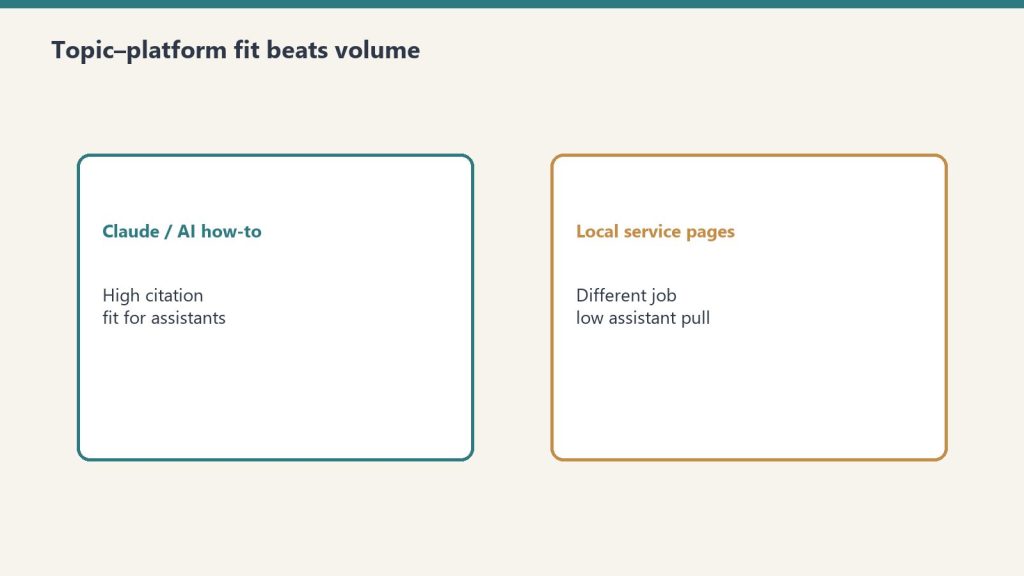
    Topic platform fit visual for first-party AI citation measurement
    What a Bing AI citation actually is.

    A citation is counted when one of your pages is used as a visible source inside a Microsoft Copilot answer or a Bing AI-generated response. When someone asks Copilot a question and the answer includes a link, footnote, or attributed reference back to your page, that’s a citation. It means the AI system read your content, judged it relevant and trustworthy enough to draw from, and surfaced it — sometimes with a link the reader can click, sometimes just as a named source.

    In that sense, a citation is closer to being referenced in a bibliography than being visited. Your page did its job as a source of truth for the answer, whether or not the reader followed the link.

    What a Citation Is Not

    Desk with laptop, checklist notebook, and billing card ready before creating an Anthropic API key
    What a citation is not — not traffic.

    This is the part that trips people up, because the reporting sits right next to metrics that mean something different:

    • Citations are not clicks. A citation records that your content was used to generate an answer. It says nothing about whether a human then visited your site.
    • Citations are not sessions. Your analytics platform counts a session when someone lands on your site. A citation can happen with zero sessions attached — the reader gets their answer and moves on.
    • Citations are not rankings. Traditional search position measures where you sit on a results page for a given query. AI citation measures something different: whether your content was selected as source material for a generated answer, which can happen independently of where you’d rank in a classic search.

    Treating a citation count like a traffic number, or expecting it to move in lockstep with clicks, sets you up to misjudge a page’s performance in either direction.

    Where to Find This Data

    Inside Bing Webmaster Tools, the AI Performance section reports citation volume over time, and typically breaks it down by which pages were cited and which queries or topics triggered the citation. It’s a separate report from the standard Search Performance section, which still covers traditional web impressions, clicks, and position. Treat them as two different dashboards answering two different questions, not two views of the same thing.

    How Citations Relate to GA4 and Server Logs

    Because a citation doesn’t require a click, your analytics platform (GA4 or otherwise) will only ever show you a fraction of the activity that citation data reflects. What GA4 can show you is the downstream piece: sessions where the referring source is an AI assistant’s domain. Those sessions represent people who read an AI answer, saw your page referenced, and decided to click through anyway — a smaller, but highly qualified, slice of the audience your content is reaching through AI systems.

    Server or CDN logs add a third layer entirely: they can show you when AI crawlers are visiting your site to read and index content in the first place, ahead of and separate from any citation event. Together, these three sources describe three different moments — a bot reading your page (server logs), your page being cited in an answer (Bing AI Performance), and a human clicking through after reading that answer (GA4 referral data). None of them substitutes for the others.

    Reading the Numbers Without Overreacting

    Citation counts can move for reasons that have nothing to do with your content quality changing: a topic trending in the news, a shift in how often people ask AI assistants about a subject, or changes on the AI platform’s side in how it selects and displays sources. A dip in citations for a page you haven’t touched isn’t necessarily a signal that something is wrong with that page. Likewise, a spike doesn’t always mean you did something differently — sometimes demand for the topic simply increased.

    The more durable way to use this data is directional and page-level: which of your pages does the AI Performance report show being cited consistently over time, and does that list overlap with pages you already consider authoritative? That overlap is a reasonable confirmation signal. A single week’s swing usually isn’t.

    Practical Takeaways

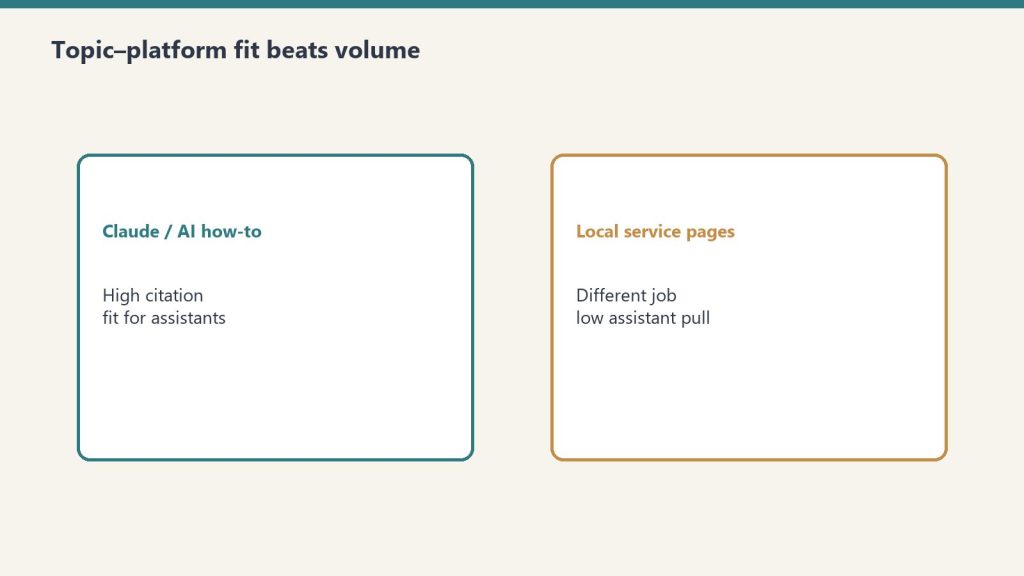
    Comparison of Claude how-to fit versus local service page fit for assistants
    Practical takeaways for reading the numbers.

    Check the AI Performance tab as its own report, not a substitute for Search Performance. Don’t expect citation counts and click counts to correlate closely — they’re measuring different behaviors. Pair citation data with GA4 referral sessions from AI-tool domains to see the (smaller) human click-through layer, and use server logs if you want visibility into AI crawler activity before any citation happens. Judge trends over weeks, not days, and focus on which pages appear repeatedly rather than reacting to any single count.

    FAQ

    If my citation count is high but my clicks are low, is something broken?
    No. That pattern is expected. Citations are a zero-click-by-design channel; a page can be doing exactly what it’s supposed to do as an AI source while generating very little direct click traffic.

    Does Google offer the same kind of citation reporting?
    Not with the same first-party granularity as Bing Webmaster Tools’ AI Performance tab at this time. Server-log analysis for AI crawler activity remains useful regardless of which AI systems you’re trying to track.

    Should I optimize content specifically to increase citations?
    Focus on being a clear, accurate, well-structured source on your subject rather than chasing citation counts directly. Citation tends to follow genuinely useful, well-organized content rather than any particular formatting trick.

    Related on Tygart Media: Bing AI citations vs SpyFu · Bing vs Google Search Console · AI citation monitoring.

  • Claude AI Pricing vs Bing AI Citations: Why First-Party Data Beats SpyFu Estimates (2026)

    Claude AI Pricing vs Bing AI Citations: Why First-Party Data Beats SpyFu Estimates (2026)

    If you still lean on a tool like SpyFu to gauge how your site is doing in search, you’re measuring last decade’s game. SpyFu, Ahrefs, SEMrush, and their peers were built to estimate one thing: where a domain ranks in a traditional results page, and roughly how much traffic that’s worth. Still useful — just not the whole picture, because a growing share of how people find your content never touches a results page at all. It happens inside an AI answer, where your page gets cited or quoted and the reader never clicks through.

    That’s the gap between third-party rank-estimation tools and first-party AI citation data, and it matters more every month.

    What SpyFu (and Similar Tools) Actually Measure

    Third-party SEO tools crawl the web and model search behavior from the outside. They don’t have access to your server logs, your analytics, or Bing and Google’s internal citation data — they infer traffic from ranking position, keyword volume estimates, and click-through curves built from aggregate industry data. That’s genuinely useful for competitive research: roughly where a competitor’s domain sits, and what keywords it’s chasing.

    But it’s an estimate of an estimate, built for a web where “visibility” meant “blue link position.” It has no mechanism for counting how many times an AI assistant read your page, extracted a fact from it, and served that fact directly to a user who never visited your site.

    What First-Party AI Citation Data Shows That Estimators Can’t

    Topic platform fit visual for first-party AI citation measurement
    What first-party AI citation data shows that estimators can’t.

    Bing Webmaster Tools now separates two very different signals: traditional web search performance (impressions, clicks, position) and AI performance — how often your pages get surfaced inside Copilot and other AI-generated answers. Google Search Console doesn’t yet break this out the same way, which is part of why it’s easy to miss. If you only watch third-party rank trackers, this entire layer is invisible to you.

    The practical difference: a page can have modest, even declining, click-through performance in classic web search while its AI-citation count climbs steadily. Judged only by a SpyFu-style estimate, that page looks flat or fading. Judged by first-party citation data, it’s doing exactly the job it was built for — being the source an AI system reaches for when someone asks a related question.

    The Blind Spot: Zero-Click Visibility

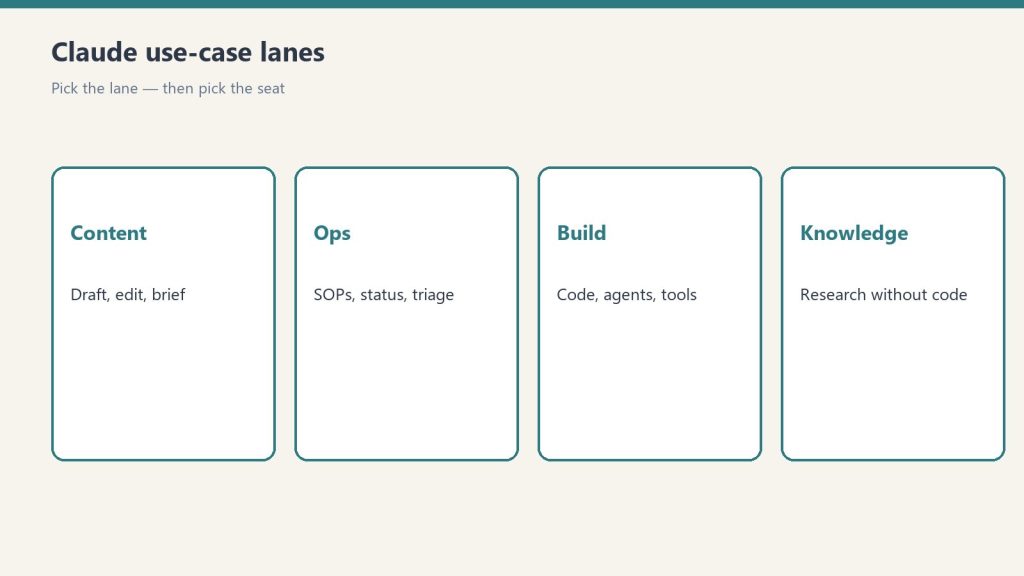
    Four cards for content, ops, build, and knowledge work with Claude
    Zero-click visibility is the blind spot.

    The uncomfortable part for site owners is that AI citation is, by design, mostly a zero-click channel. The reader gets their answer without visiting — that’s not a measurement bug you can fix with a better tool, it’s the actual shape of the channel. An estimator that only counts clicks and rankings will systematically undercount pages that are winning at citation, because “winning” there doesn’t look like a traffic spike. It looks like your facts and explanations showing up correctly, attributed to you, inside someone else’s interface.

    Relying on SpyFu-style estimates alone can lead to the wrong call: de-prioritizing a page that’s actually become a trusted AI reference source, simply because the tool built to measure clicks can’t see the citations.

    Building Your Own First-Party Measurement Stack

    None of this means third-party tools are useless — they’re still the right instrument for competitive keyword research and for understanding classic ranking dynamics. But they should sit alongside, not replace, sources that actually see your own traffic and your own citation footprint:

    • Bing Webmaster Tools’ AI Performance tab — the most direct read on how often Copilot and partner AI surfaces are citing your pages.
    • Server or CDN logs — the only place you’ll reliably see crawler activity from AI bots (ClaudeBot, GPTBot, PerplexityBot, and similar) hitting your pages, separate from human traffic.
    • Your own analytics referral data — small in volume compared to citations, but real signal: sessions that landed with claude.ai, chatgpt.com, or perplexity.ai as the referring host are humans who read an AI answer, then clicked through anyway.

    Put those three together and you get a picture no third-party estimator can reconstruct: which of your pages AI systems actually trust enough to cite, and whether that trust is translating into any direct human traffic at all.

    Practical Takeaway

    Desk with laptop, checklist notebook, and billing card ready before creating an Anthropic API key
    Practical takeaway — build your own measurement stack.

    If a page’s third-party “visibility score” looks unimpressive but your first-party data shows steady or rising AI citation activity, don’t treat that as a contradiction — treat it as two different questions with two different answers. The estimator tells you about classic rank. Your own logs and Bing’s AI data tell you about a newer kind of authority that doesn’t require a click to pay off. Site owners who only check the estimator are optimizing for a channel that’s shrinking relative to the one they can’t see.

    FAQ

    Do I need to abandon tools like SpyFu?
    No. They’re still useful for competitive keyword research and classic rank tracking. The point is to stop treating their traffic estimates as the full measure of your site’s reach.

    Can I get AI-citation data for Google’s AI features the way I can for Bing?
    Not with the same granularity as of this writing — Bing Webmaster Tools currently offers the clearest first-party AI-citation reporting. Server-log analysis for AI crawler activity works across engines regardless.

    How do I know if AI citations are actually worth anything to my business?
    Track it as its own funnel stage, not a proxy for revenue. Pair citation counts with referral sessions from AI-tool domains and see whether that traffic engages with an owned conversion path on your site. Citation volume alone tells you about reach, not value.

    Related on Tygart Media: read Bing AI citations · AI citation monitoring · GEO tactics.

  • WordPress SEO Skill Pack – Pro

    WordPress SEO Skill Pack – Pro

    >

    Direct Answer / Product Definition

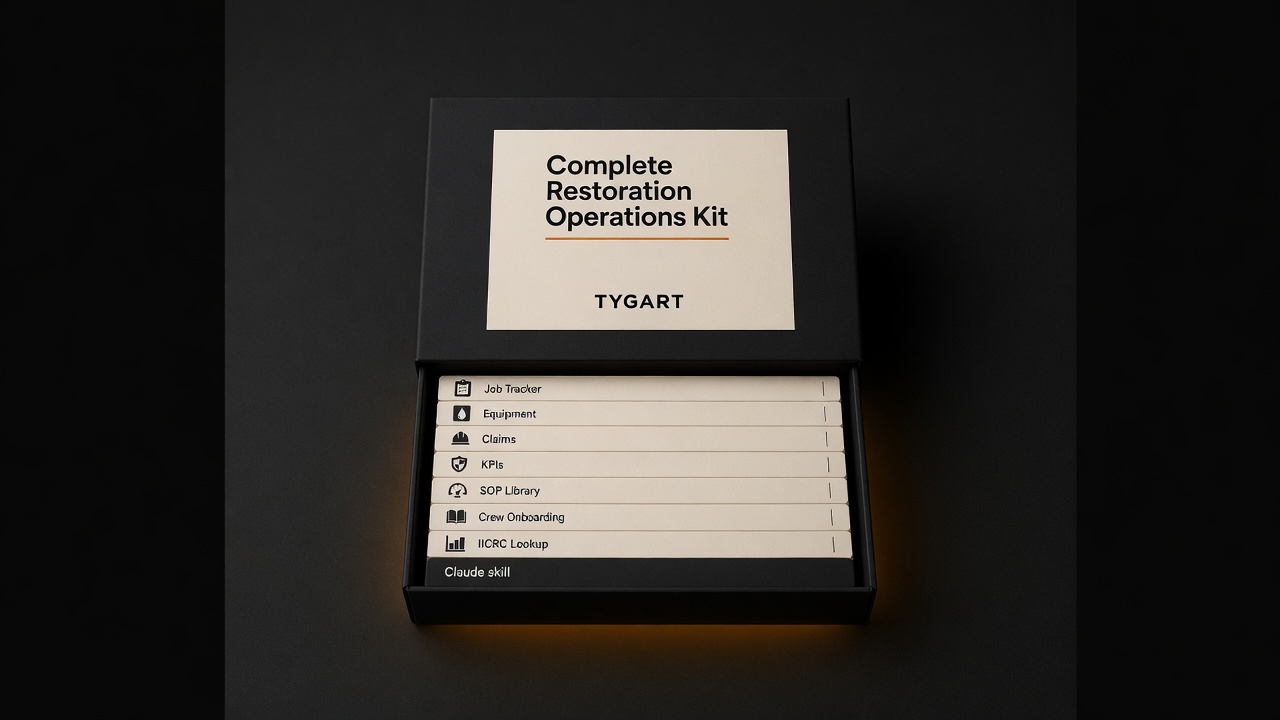
    WordPress SEO Skill Pack — Pro by Tygart Media is a $79 Square bundle of 14 Claude skills for self-hosted WordPress that run Will Tygart’s full post refresh pipeline: on-page SEO, AEO answer packets and FAQs, GEO entity and citation passes, JSON-LD schema injection, taxonomy cleanup, and hub-and-spoke interlinking. The wp-full-refresh skill orchestrates SEO → AEO → GEO → schema → interlink on one post; Tygart Media emails the .skill files within 24 hours of checkout.

    WordPress SEO Skill Pack — Pro

    $79

    14 .skill files delivered by email within 24 hours after Square checkout.

    Buy on Square — $79 →

    Secure checkout via Square — all major cards accepted

    Tygart Media documents the full three-layer refresh method on this page so operators can run SEO → AEO → GEO → schema → interlink in wp-admin or Claude. The $79 Buy on Square option delivers 14 packaged .skill files by email within 24 hours of checkout.

    Pro is the middle tier of the WordPress SEO Skill Pack by Will Tygart. It includes everything in Starter ($29), plus wp-aeo-refresh, wp-geo-refresh, wp-schema-inject, wp-taxonomy-fix, wp-interlink, wp-full-refresh, wp-content-pipeline, content-brief-builder, and content-quality-gate—the production sequence Tygart Media uses on a single WordPress post.

    Starter vs Pro vs Agency

    Tier Price Skills AEO / GEO / schema
    Starter $29 5 (connect, audit, clean-meta, seo-refresh) No
    Pro (this product) $79 14 incl. wp-full-refresh + pipeline Yes — full stack
    Agency $149 Pro + expand + new-site-setup + guides Yes + client onboarding

    Install and connect

    Same requirements as Starter. Claude Pro / Max / Team. Self-hosted WordPress. Application Password. Drop the skill files into Claude Desktop (Cowork) or Claude Code. Say “connect to my WordPress site.” wp-connect tests /wp-json/wp/v2/users/me. Stop if that is not a 200.

    The sales page’s operator line for this tier: “full refresh post 123.” That trigger is wp-full-refresh. It is the orchestrator. Do not start there on a site you have never audited.

    The 14 skills, in the order you should actually use them

    Foundation (from Starter)

    • wp-connect. Authenticate. Gateway.
    • wp-post-fetch. Load one post with context=edit.
    • wp-site-audit. Inventory, orphans, thin posts, missing meta, schema gaps. Run first on a new site.
    • wp-clean-meta. Strip excerpt pollution before you write new meta.
    • wp-seo-refresh. Title (about 60 characters), meta (about 155 to 160), slug, H2/H3, keyword in the first 100 words.

    Taxonomy, before you interlink

    wp-taxonomy-fix has two modes: one post, or site-wide. Design 3 to 7 top-level categories. Each post gets 1 to 2 categories (never Uncategorized) and 5 to 10 tags (topic, technology, use case, audience, format). Create missing terms via the API, assign, then normalize duplicate tags. Toolbox lists this as a prerequisite for wp-interlink. If categories are a junk drawer, your link graph will be a junk drawer.

    The same skill can write two-layer descriptions on category and tag archives: a 140 to 160 character meta excerpt, then a 400 to 600 word hub body with internal links to the top posts in that cluster. PATCH /wp/v2/categories/{id} and /wp/v2/tags/{id} on the description field. Most themes print that above the post grid.

    The three-layer refresh

    wp-aeo-refresh. Direct-answer opening, question H2s, FAQ pairs, list-shaped answers, FAQPage schema. SiteBoost existing-post copy uses a 40 to 60 word definition box and 6 to 8 FAQs. The older publish skill used 3 to 5. Use the PAA list in front of you, not a fake number.

    wp-geo-refresh. Entity saturation, factual density, context richness, source attribution, topical breadth, semantic clarity. Schema it adds: richer Article metadata, entity markup, Speakable. The citing-sources article is the house rule: name the organization, link the primary source, sources list at the bottom, visible last-updated, dateModified in schema. No fabricated stats.

    wp-schema-inject. Detect the type the post actually is and inject JSON-LD. The schema injection sprint’s menu: FAQPage, Article, HowTo, Service, LocalBusiness, Speakable, BreadcrumbList. Validate with Google’s Rich Results Test. Fix failures. Do not leave plugin-bloated invalid markup in the body.

    wp-interlink. Hub and spoke, orphan resolution, contextual links. The Copilot / cluster articles on tygartmedia.com use 3 to 5 related posts in the same topical group, descriptive anchors. Do this after the post has a real topic and a real category, not before.

    wp-full-refresh. Runs SEO + AEO + GEO + schema + interlink in that sequence on one existing post. This is the “do everything to this post” skill. Use it when the audit already said the post is worth the pass.

    New content, not just refreshes

    content-brief-builder. Keyword research to a brief, before anyone writes. Feeds the pipeline. A brief that cannot name the query, the intent, the PAA list, and the internal-link targets is not a brief.

    wp-content-pipeline. Draft to live: write → SEO → AEO → GEO → schema → taxonomy → interlink → publish. Toolbox order. Same six-step human workflow as the New Article Publishing page, encoded as a skill chain.

    content-quality-gate. Pre-publish. Unsourced claims and fabricated numbers get flagged. Run this before any publish, batch or single. The operator guide’s failure mode is the same: fake density backfires when an AI system checks you.

    A Pro session on one site

    1. Connect. Audit. Clean polluted excerpts.
    2. Fix taxonomy on the posts you are about to touch (and on the hub category if it has no description).
    3. For each chosen existing post: wp-full-refresh, or the layers by hand in SEO → AEO → GEO → schema → interlink order.
    4. For a new article: brief → pipeline → quality gate → publish.
    5. IndexNow on every URL you created or updated. Confirm in Bing Webmaster Tools.
    6. Log before/after: title, meta, word count, FAQ count, schema types, internal links added.

    The operator guide’s weekly rhythm still applies if you are using Pro on a real site: Monday audit, Tuesday to Thursday execute, Friday verify. Pro is the toolkit. It is not a retainer.

    What Pro still does not include

    Agency adds three reference guides (SEO, AEO, GEO), wp-content-expand (deepen thin posts without overwriting), and wp-new-site-setup (client onboarding). If you are onboarding other people’s sites every week, that is the Agency door. If you want Will to run the posts instead of running skills, that is SiteBoost.

    Frequently Asked Questions

    What is the WordPress SEO Skill Pack — Pro?

    WordPress SEO Skill Pack — Pro by Tygart Media is a $79 bundle of 14 Claude skills that run the production post refresh sequence on self-hosted WordPress: SEO, AEO, GEO, schema injection, taxonomy fix, and interlink, plus wp-full-refresh orchestration and a new-content pipeline with a quality gate.

    What is the difference between Starter and Pro?

    Starter ($29) includes five skills for connect, audit, clean-meta, and on-page SEO only. Pro ($79) adds wp-aeo-refresh, wp-geo-refresh, wp-schema-inject, wp-taxonomy-fix, wp-interlink, wp-full-refresh, content-brief-builder, wp-content-pipeline, and content-quality-gate.

    What does wp-full-refresh do?

    wp-full-refresh is Tygart Media’s orchestrator skill. On one existing post it runs SEO refresh, then AEO refresh (definition box and FAQ-oriented content), then GEO refresh (entity saturation and citations), then schema injection, then interlinking—in that fixed order.

    Does Pro include Agency onboarding skills?

    No. Tygart Media’s Agency tier ($149) adds reference guides, wp-content-expand for thin posts, and wp-new-site-setup for client onboarding. Pro is the production refresh and pipeline stack without those agency-only skills.

    If you want the packaged files

    You can run every layer above in the block editor with a checklist. Buy Now is the 14 .skill files delivered by email after checkout. Same Square button at the top. $79.

    Starter is the five-skill on-page subset if you only need connect / audit / SEO refresh. Agency is this stack plus onboarding and expansion.

    $79

    14 .skill files — email delivery within 24 hours via Square.

    Buy on Square — $79 →

    Related Products

    Skill Pack ladder: Hub · Starter ($29) · Agency ($149) · Tygart Media Shop.

    Author: Will Tygart, Founder of Tygart Media — the same AEO/GEO/SEO skill stack used on the Tygart Media WordPress fleet.

    Related on Tygart Media: how to use Claude · Anthropic API key.

  • SiteBoost — Pilot Bundle (Best Value)

    SiteBoost — Pilot Bundle (Best Value)

    SiteBoost — Pilot Bundle (Best Value)

    $597

    Delivered by email after checkout.

    Buy Now →

    Secure checkout via Square — all major cards accepted

    You can copy this method and run a ten-post pilot yourself. Buy Now is Will connecting the site, picking the ten, running the three-layer pass on each, and sending the 60-day impact report.

    The Square catalog names this SKU “Connection + 10 Posts.” The /siteboost/ hub calls it the best-value door at $597. The public vertical pages (law firms and the rest of the cluster) spell out the same package: Site Connection and Audit, ten existing-post optimizations, and a 60-day impact report. They price the pieces at $767 if you bought them separate ($297 audit + 10 × $47). The bundle is the cheaper way to get a first measured pass.

    Stack of unmarked folders and a laptop on an agency desk

    What the pilot is, and is not

    It is a retrofit of ten published posts. SEO + AEO + GEO + schema on each. Changes via the WordPress REST API. No plugin left behind. Results looked at around day 60. It is not a retainer, not a redesign, and not ten brand-new articles. New Article Publishing is a different SKU. The monthly retainer is the ongoing door after you like the pilot.

    Self-hosted WordPress only. Squarespace, Wix, and Webflow are out. Posts, not Pages, unless you put a specific Page in writing.

    How to run the pilot yourself

    Week 0. Connect and baseline

    Do the connection and audit first. The method is on the Site Connection and Audit page. Short version:

    1. Create a WordPress Application Password (Users → Profile). Not the login password.
    2. Test GET /wp-json/wp/v2/users/me with that user and app password. If that fails, stop. Nothing else will work.
    3. Pull published posts (per_page=100, paginate if you have more). Inventory every post: title, slug, word count, excerpt/meta, categories, tags, featured image, internal links in, internal links out, schema present or not, FAQ present or not.
    4. Write four artifacts and keep them. Content inventory. Schema gap report. FAQ gap report. Before baseline (the numbers you will compare at day 60: rankings and impressions you can actually see in Search Console, plus a note on AI visibility if you check Perplexity / ChatGPT / AI Overviews on a few queries).

    wp-site-audit’s priority stack: Critical = taxonomy and metadata problems. High = SEO / AEO / content quality. Then link and expansion opportunities. Use that order when you pick the ten.

    Pick the ten

    Highest-opportunity existing articles, with your approval before anyone starts rewriting. That is the rule on the public SiteBoost pages. A practical pick list, from the same audit fields:

    • Posts that already get impressions but have empty meta, no FAQ, and no schema. Those move first.
    • Posts over 500 words that are still missing the AEO and GEO layer. Do not spend the pilot on stubs.
    • Posts that sit on a real query (you can name the keyword). Skip diary posts and leftover test content.
    • A mix across your actual topic pillars, not ten posts from one tag.

    Write the ten URLs down. Get a yes. Then do not swap them mid-pilot unless a post is broken.

    Weeks 1 to 3. Ten existing-post passes

    For each of the ten, run the same method as Existing Post Optimization:

    1. SEO: title 50 to 60, slug, meta 140 to 155, H2/H3, keyword in the first 100 words.
    2. AEO: 40 to 60 word definition box, question H2s with 40 to 60 word answers, 6 to 8 FAQ pairs, FAQPage JSON-LD.
    3. GEO: named entities, sourced facts, speakable blocks, LLMS.txt comment, last-updated + dateModified.
    4. Article schema. Validate. Two to five internal links into the rest of the cluster. IndexNow on the update.

    Sequence on a single post is SEO, then AEO, then GEO, then schema, then interlink. That is wp-full-refresh. Do not GEO a post whose title and meta are still empty.

    If a chosen post is under 500 words, expand it first (append real sections, do not overwrite) or swap it for a thicker post on the same topic. Thin content wastes a slot.

    Day 60. Impact report

    The public pages measure three things: traditional rankings and impressions, People Also Ask / snippet placements, and AI citation visibility. Pull Search Console for the ten URLs (and the queries they were aimed at) versus the before baseline. Recheck the same AI prompts you wrote down in week 0. Do not invent a win. If nothing moved, say so. The report is the point of a pilot. You are deciding whether a retainer is worth it.

    Traditional SEO on competitive terms is often 60 to 90 days. The same pages note that FAQPage / PAA and some AI crawlers can show sooner (they cite 2 to 4 weeks for PAA). Treat those as ranges from the public SiteBoost copy, not a guarantee.

    What you should have on disk at the end

    • Connection notes (site URL, that an app password was created, who holds it).
    • The four audit artifacts from week 0.
    • The list of ten URLs and the before/after for each (title, meta, word count, FAQ count, schema types).
    • The 60-day comparison. What moved, what did not, what you would do next (more existing posts, new articles, or stop).

    If you want Will to run the pilot

    You can do every step above with an Application Password and a spreadsheet. Buy Now is the packaged pilot: Will connects, audits, agrees the ten with you, runs the three layers on each post, and sends the 60-day impact report. Same Square button at the top. $597.

    After a pilot you like, the Monthly Retainer is 10 existing-post passes plus 4 new articles per month. If you only need the connection and the baseline, buy Site Connection and Audit. If you only need one post touched, buy Existing Post Optimization.

    Frequently Asked Questions

    How does the pilot work?

    After checkout, I reach out by email within 2 business days to kick off: I connect the site, we agree on the ten posts, I run the three-layer pass on each, and you get the 60-day impact report.

    Is there a refund policy?

    Before I start the pilot work, full refund on request. Once posts are in production, the fee is earned — the 60-day report is yours either way.

    Related: SiteBoost. Also SiteBoost — Site Connection & Audit.

  • SiteBoost — New Article Publishing

    SiteBoost — New Article Publishing

    SiteBoost — New Article Publishing

    $97

    Delivered by email after checkout.

    Buy Now →

    Secure checkout via Square — all major cards accepted

    You can copy this method and publish the article yourself. Buy Now is Will researching, writing, optimizing, and publishing one new WordPress post for you.

    SiteBoost New Article Publishing is a new post, not a refresh of something already live. The /siteboost/ hub prices it at $97 per article. The same three layers as an existing-post pass still apply. You just start from a brief instead of from a published URL.

    The six-step workflow

    This is the unified content workflow from the operator’s guide on tygartmedia.com. One draft. SEO, AEO, and GEO built in. Not three versions of the same piece.

    1. Keyword and intent

    Name the target query. Classify intent: informational, navigational, commercial, or transactional. Look at what already ranks and match the format Google is already rewarding. This step is ordinary SEO. Do not skip it because you are “writing for AI.”

    2. Question landscape

    Search the keyword. Collect People Also Ask questions, related searches, and autocomplete variants. Group them. Those groups become H2s and FAQ items. The operator guide budgets 15 to 20 minutes here. This is the AEO setup. If you skip it, you will write headings that feel like an outline and not like queries.

    3. Write with the direct-answer pattern

    Write the article once, with both SEO and AEO in the draft:

    • Primary keyword in the H1 and in the first 100 words.
    • Every major section is a question-shaped H2, then a 40 to 60 word answer, then the depth.
    • Internal links with descriptive anchors to posts that already exist on the site. If the site is new and there is nothing to link to, note the gaps. Do not invent destinations.
    • A 40 to 60 word definition box near the top.

    The WordPress Publish skill’s quality bar before anything goes live: title 50 to 60 characters with the primary keyword, meta 140 to 160 characters, a unique H1, at least one direct-answer section, a FAQ with 3 to 5 Q and As on a new article (SiteBoost existing-post passes use 6 to 8; for a new article start at 3 to 5 and add more if the PAA list is real), Article JSON-LD, FAQPage JSON-LD, and at least one cited fact per major section.

    4. GEO enhancement

    After the draft exists, do a factual-density pass. The operator guide budgets 20 to 30 minutes on a 1,500-word article. For every claim: a number, a date, a named organization, or cut it. The citing-sources article is the house rule:

    1. Name the organization in the text, not only in a hyperlink.
    2. Link the primary source. If it is paywalled, link a credible secondary that cites it.
    3. Put a sources list at the bottom.
    4. Show a last-updated date near the byline.
    5. Put datePublished and dateModified in Article schema.

    Do not add fake statistics to look dense. The operator guide calls that out as a backfire when AI systems cross-check you.

    5. Schema

    Minimum on a new SiteBoost article: Article (or BlogPosting) plus FAQPage. Add HowTo if the piece is genuinely step-by-step. Add BreadcrumbList if the theme does not already emit it. Add Speakable on the definition box and one other self-contained block. JSON-LD in the post, validated with Google’s Rich Results Test. The schema injection sprint is the same sequence: pick the type, generate valid JSON-LD, inject, validate, fix failures.

    SiteBoost content standards also embed an LLMS.txt HTML comment on the page. A short seed paragraph, not a second article.

    6. Pre-publish audit, then publish

    Run the three-layer checklist. Title, meta, headings, snippet readiness, factual density, schema validation, entity signals. Then publish as a post, not a page.

    The production pipeline used on Tygart Media sites is: brief (content-brief-builder) to draft to SEO to AEO to GEO to schema to taxonomy to interlink to publish (wp-content-pipeline). content-quality-gate sits in front of publish and flags unsourced claims. You can do that as a human checklist if you are not running Claude skills.

    Taxonomy and internal links

    Assign 1 to 2 categories that are real content pillars, never Uncategorized. Assign 5 to 10 tags that cover topic, use case, audience, and format. That is the wp-taxonomy-fix rule. Then place 3 to 5 internal links to related posts in the same cluster, plus outbound links to the sources you named. Hub and spoke. The new post should not be an orphan on day one, and it should not be a dead end.

    IndexNow

    On publish, ping IndexNow. Official plugin, or Rank Math / Yoast Instant Indexing. Confirm the URL in Bing Webmaster Tools. New posts that sit in a sitemap waiting for a crawl waste the first week.

    What “done” looks like on one new article

    1. Brief: target keyword, intent, PAA list, existing internal-link targets, sources you will actually cite.
    2. Draft written with definition box, question H2s, and sourced facts.
    3. Title 50 to 60, meta 140 to 160, slug clean.
    4. FAQ section + FAQPage schema. Article schema with both dates.
    5. Categories and tags set. 3 to 5 internal links. Sources list.
    6. Rich Results Test pass. IndexNow ping. Status = publish (or draft if you want a human read first).

    Self-hosted WordPress only. Squarespace, Wix, and Webflow are not this SKU. Do not modify existing Pages to “make room” for the article. Publish a post.

    If you want Will to write and publish it

    You can run the six steps in your own editor. Buy Now is the packaged, done-for-you article: Will writes it, runs the three layers, publishes it to your site, and emails you the URL. Same Square button at the top. $97 per article.

    A single new post next to a neglected library is a weak play. If the existing posts are empty of FAQ, schema, and meta, optimize those first (Existing Post Optimization, or the Pilot Bundle for ten). If the site is not connected yet, start with Site Connection and Audit.

    Frequently Asked Questions

    How does it work?

    After checkout, I reach out by email within 2 business days with the intake details and a start date.

    Is there a refund policy?

    Before work starts on your posts, full refund on request. Once a post is optimized or published, that portion of the fee is earned.

    Related: SiteBoost. Also SiteBoost — Existing Post Optimization.