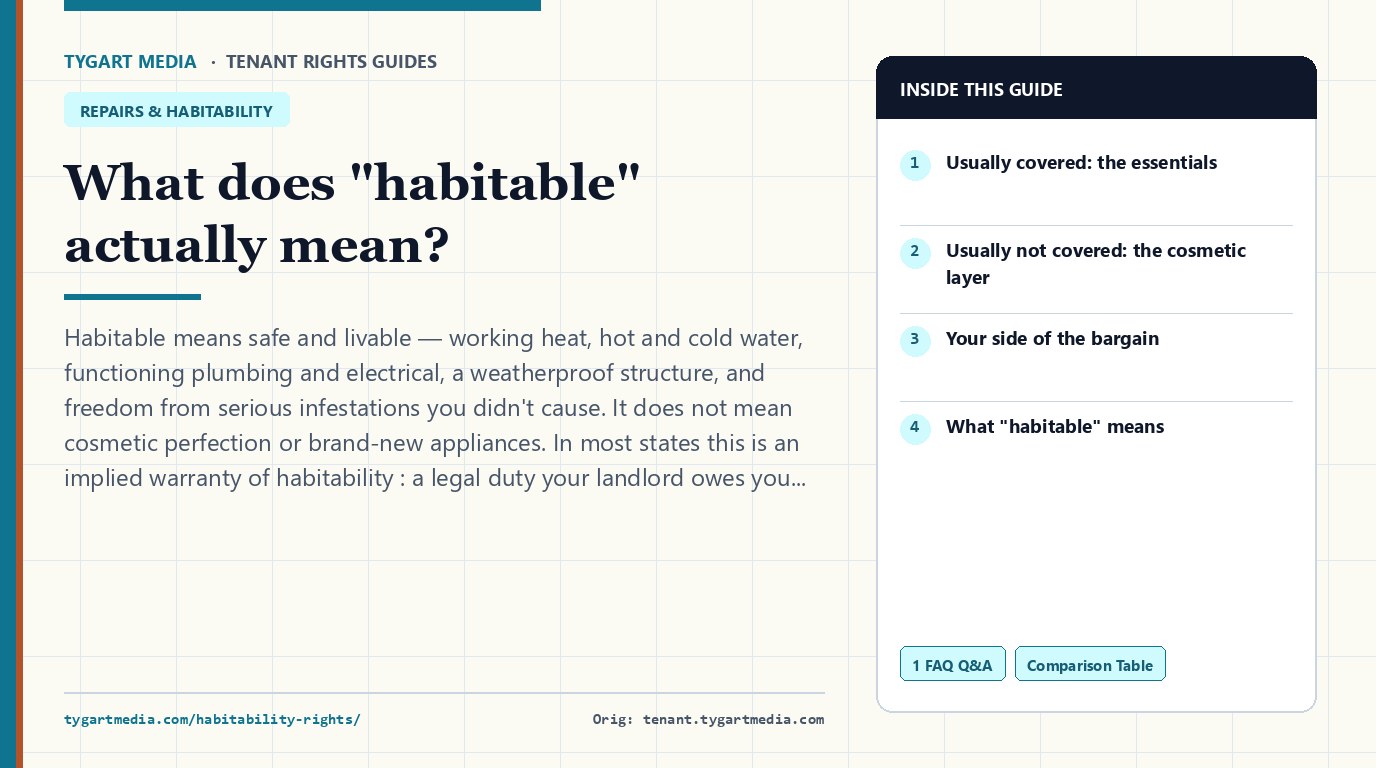
Tygart Media · Tenant Rights Guides · Repairs & habitability
Usually covered: the essentials
- Heat and hot water — the classic habitability items.
- Plumbing — working toilets, no sewage backups, running water.
- Electrical — safe wiring, working outlets, no exposed hazards.
- Structure — roof that doesn’t leak, walls, windows that close and lock, stairs and railings that are safe.
- Vermin — serious infestations the tenant didn’t cause (a building-wide roach problem is different from crumbs you left out).
- Moisture — leaks from the roof or plumbing that the landlord must fix at the source.
Usually not covered: the cosmetic layer
Faded paint, an ugly-but-working stove, a slow drip you can live with, a cracked tile, carpet that’s old but clean — these annoy you but rarely trigger the habitability duty. Courts and code enforcement both draw this line: safety and health first, aesthetics later. If you’re framing a repair request, anchor it to health and safety, not looks.
Your side of the bargain
Habitability isn’t one-sided. Tenants generally owe the landlord: reasonable cleanliness, not causing damage, not removing landlord fixtures, and prompt notice when something breaks. A problem you never reported — or one you caused — is much harder to turn into a habitability fight. Some duties (like changing smoke-detector batteries or light bulbs) fall on the tenant in many leases and states.
What “habitable” means
| Must have | Notes |
|---|---|
| Heat and hot water | Core in every state |
| Working plumbing + sanitation | Non-negotiable |
| Weatherproof structure | Roof, windows, doors intact |
| Free of infestations | Landlord’s duty in most states |
| Electrical safety | Working outlets, no hazards |
No lease clause can waive habitability — it’s implied by law in nearly every state.
Get The Signal
What we actually ran, what it measured, and what it means for a restoration shop — every week, including the flops.
Leave a Reply