Exploring Everett - Tygart Media

Category: Exploring Everett

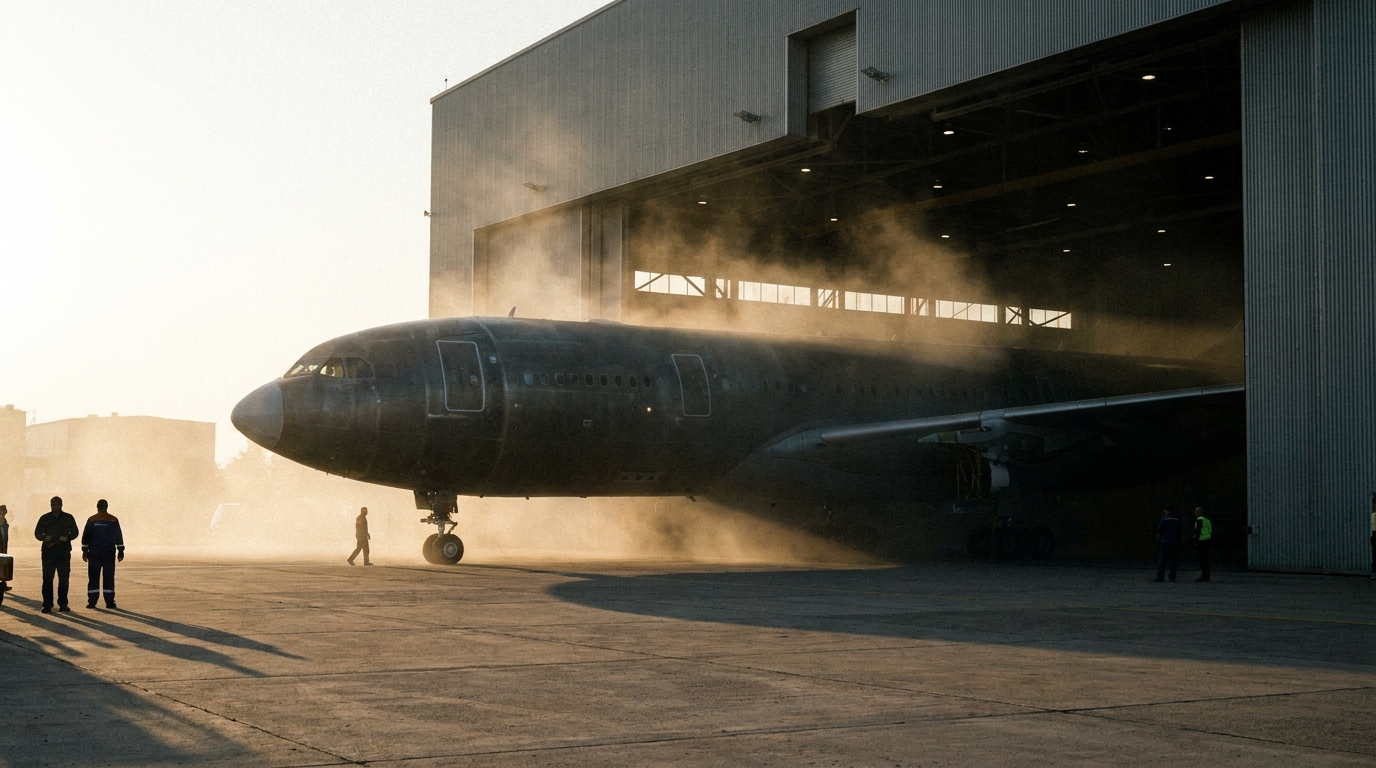
Everett, Washington is in the middle of something big. A $1 billion waterfront transformation. A Boeing workforce that built the world’s largest commercial jets. A port city with a downtown that’s finally catching up to its potential. A Navy presence at Naval Station Everett. A comedy and arts scene punching above its weight. And neighborhoods — Riverside, Silver Lake, Downtown, Bayside — each with their own identity and story.

Exploring Everett is Tygart Media’s hyperlocal coverage vertical for Snohomish County’s largest city. We cover the waterfront redevelopment, Boeing and Paine Field, city hall, the food and arts scene, real estate, neighborhoods, and everything in between — written for people who live here, work here, or are paying attention to what’s coming.

Coverage categories include: Everett News, Waterfront Development, Boeing & Aerospace, Business, Arts & Culture, Food & Drink, Real Estate, Neighborhoods, Government, Schools, Public Safety, Events, and Outdoors.

Exploring Everett content is also published at exploringeverett.com.

  • Everett’s Critical Areas Regulations Update: A Complete 2026 Guide to Wetland Buffers, Stream Setbacks, Landslide Rules, and the Path to a Council Vote

    Everett’s Critical Areas Regulations Update: A Complete 2026 Guide to Wetland Buffers, Stream Setbacks, Landslide Rules, and the Path to a Council Vote

    Featured Snippet

    **What is Everett’s Critical Areas Regulations update and when does the council vote?**

    Everett is updating Chapter 19.37 of the Everett Municipal Code — the section that governs how close anything new can be built to a wetland, stream, frequently flooded area, geologically hazardous area (landslide-prone slopes and bluffs), or critical aquifer recharge area. The update is required by Washington’s Growth Management Act, which had a December 31, 2025 deadline. The City Council held a public hearing on April 15, 2026. The current draft (the February 13, 2026 second review draft) updates wetland buffer width tables, stream classifications, mitigation sequencing, and the technical-study requirements that property owners and developers must meet on parcels that touch any of those features. A council vote is targeted for the coming weeks.


    If you’ve ever wondered why a vacant Everett lot has stayed vacant for years even when home prices were climbing, the answer is often hidden in a single section of city code: Chapter 19.37, the Critical Areas Regulations.

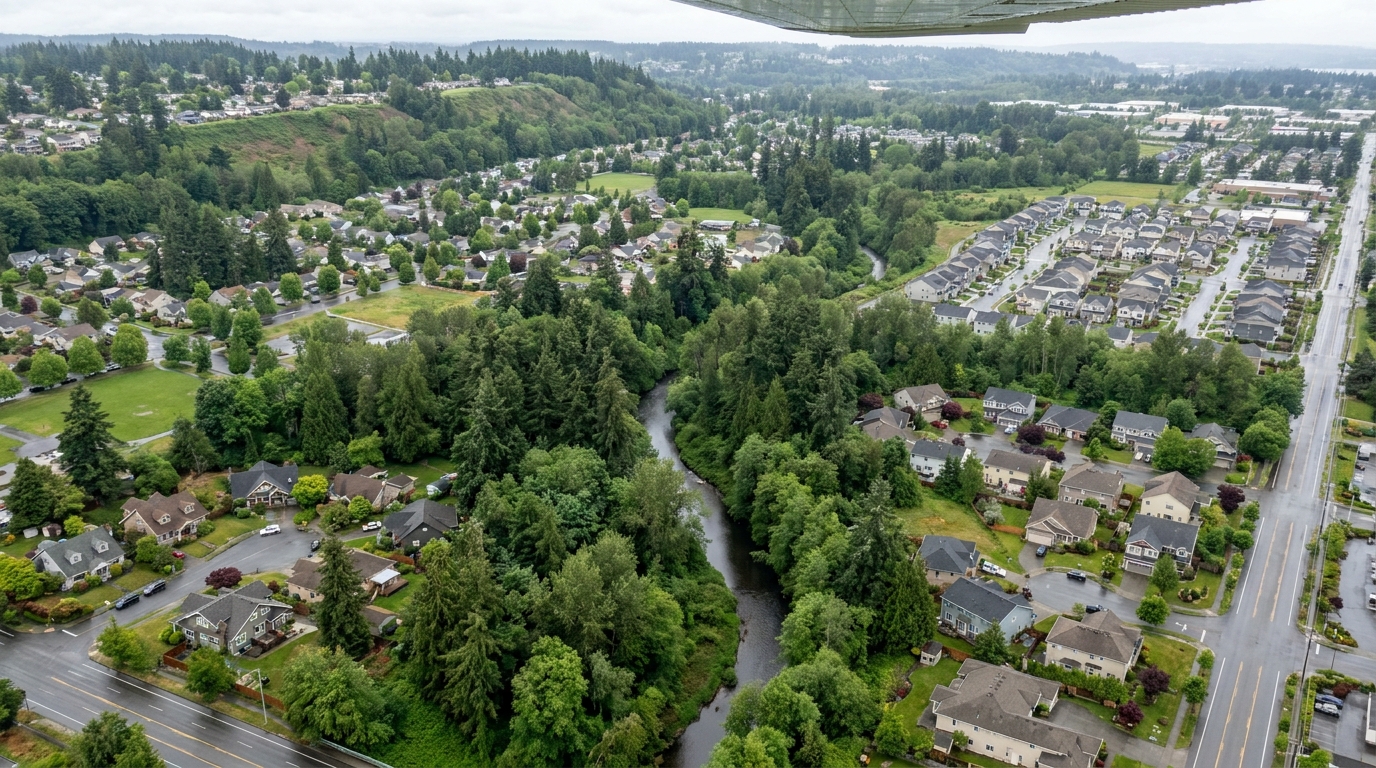
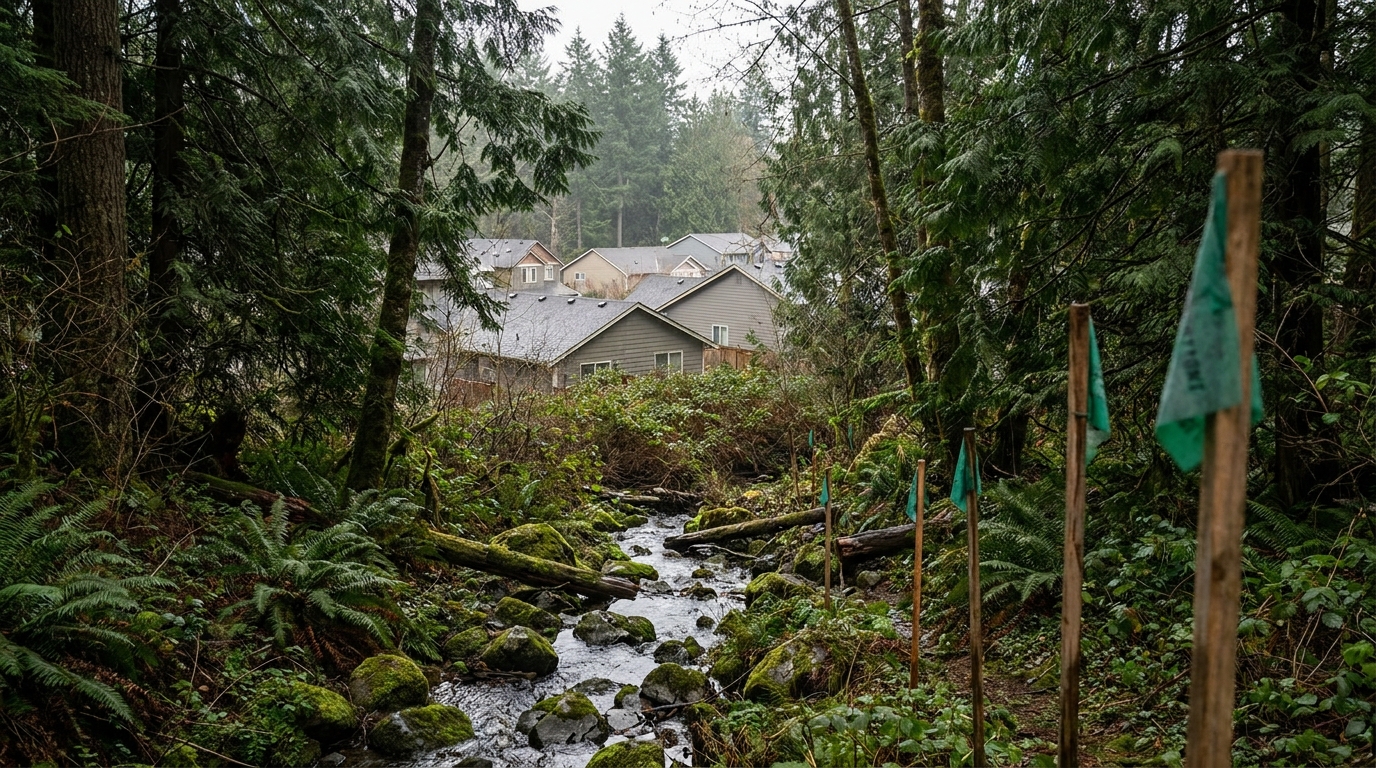
    That chapter — which protects wetlands, streams, frequently flooded areas, landslide-prone slopes, and important wildlife habitat — sets the buffer widths, building setbacks, mitigation requirements, and technical-study requirements every Everett property owner has to follow before disturbing those features. It is one of the most frequently misunderstood parts of the municipal code, because it cuts across so many properties. Lots near Howarth Park, Pigeon Creek, Forest Park, the Snohomish River edge, and the city’s many ravine-cut blocks all carry critical-area overlays.

    Everett’s update of those regulations is now closer to adoption than at any point in the multi-year process. This is the complete 2026 guide.

    What the City Is Required to Do — and Why

    Critical Areas Regulations updates are not optional. Under Washington’s Growth Management Act (GMA), every city in the state has to periodically review and update its critical-area rules to incorporate Best Available Science — the current scientific consensus on what actually protects sensitive habitat.

    Everett’s last comprehensive update was in 2007. The state’s deadline for the current periodic update was December 31, 2025. The city has been working toward this update for several cycles.

    The city published a first review draft on October 31, 2025 and a second review draft on February 13, 2026. The February 13 draft is the version under active council consideration.

    The council does not have the option of leaving the rules alone. The only choice is what version to adopt and on what schedule.

    The Five Categories of Critical Areas

    The Everett Municipal Code defines five categories of critical areas:

    • Wetlands — areas saturated long enough to support hydrophytic vegetation
    • Streams and other Fish and Wildlife Habitat Conservation Areas — including riparian corridors and habitat for state-listed species
    • Frequently flooded areas — typically the regulatory floodplain
    • Geologically hazardous areas — landslide-prone slopes, erosion zones, and seismic hazard areas
    • Critical aquifer recharge areas — zones where surface activity affects groundwater used for drinking water

    Each category has its own buffer requirement and its own mitigation standard, and a single parcel can be touched by more than one. A property near a wetland on a steep slope is subject to both wetland and geologic-hazard rules, with the more restrictive prevailing.

    What’s Changing in the February 13 Draft

    The February 13 draft preserves the basic five-category framework but updates several technical components that determine how the rules apply on a given lot. Among the most consequential:

    Wetland Buffer Widths

    The draft updates Tables 37.2 and 37.3 — the wetland buffer width tables — to reflect current Best Available Science. In practice, that adjusts how many feet of undisturbed land must remain between a wetland edge and a building, fence, or hard surface.

    For some wetland categories, the draft buffers are wider than the rules currently in place. For property owners with parcels touching wetland edges, that translates into different developable area calculations than the 2007-vintage code allowed.

    Stream Buffer Standards

    The draft revises stream classifications and corresponding buffer widths. Stream buffers were one of the most-discussed elements at the planning commission’s February 17 hearing.

    Streams in Everett include named corridors (Pigeon Creek, the Snohomish River edge, smaller drainages within Forest Park and Howarth Park) and a number of unnamed reaches. The classification of a given stream determines its buffer width. Reclassification under the new draft can move a parcel from one buffer regime to another.

    Mitigation Sequencing

    The draft tightens the standard sequence applicants have to follow when an impact to a critical area is unavoidable. The standard sequence — avoid, minimize, mitigate — is the framework state law requires; the draft reinforces and clarifies how Everett applies it.

    Technical Study Requirements

    The draft updates the qualifications, scope, and content expectations for the wetland delineations, stream studies, geotechnical reports, and habitat assessments that applicants must submit. For property owners, that often means engaging credentialed consultants earlier in the design process than was practiced under the old rules.

    Geologic Hazard Areas

    Buffer and setback rules for landslide-prone slopes and bluff edges are recalibrated in the draft. The Everett bluff is the most visible example, but the city has many smaller landslide-classified slopes inland.

    The Public Process Underway

    The council has been working through the draft on a structured schedule:

    • October 31, 2025 — first review draft published
    • February 13, 2026 — second review draft published; the version now in front of the council
    • February 17, 2026 — planning commission hearing on the draft
    • April 15, 2026 — City Council public hearing on the proposed update
    • Council vote targeted in the coming weeks

    The April 15 public hearing was the formal moment for residents and developers to put their objections, support, or technical concerns into the record. The council is now working through the testimony before voting.

    Who Is Affected

    The set of properties touched by Chapter 19.37 is broader than most residents realize. Critical area overlays in Everett include:

    • Lots fronting or backing onto Pigeon Creek
    • Properties near Howarth Park’s wetland edges
    • The bluff and slope corridors in north and west Everett
    • Parcels along the Snohomish River edge, including the Bayside and Riverside corridors
    • Forest Park’s perimeter and the ravine-cut blocks adjacent to it
    • Any lot inside a geologic hazard overlay (frequently visible on the city’s GIS map)
    • Properties inside the regulatory floodplain
    • Lots inside a critical aquifer recharge area

    For homeowners doing additions, fences, or accessory dwellings, the rules apply. For developers proposing infill, the rules drive site design. For homebuyers evaluating a lot, the rules determine what the parcel actually allows.

    How Resident and Developer Concerns Tend to Diverge

    The two largest constituencies have predictably different stakes:

    • Residents near wetlands, streams, and bluffs generally support stronger buffer protections, citing flooding, slope failure, water quality, and habitat
    • Developers and property owners with affected parcels generally argue against wider buffers, citing reduced developable area and the difficulty of meeting the technical-study burden

    The April 15 hearing reflected both. The Council’s job is to adopt a version that meets the GMA’s Best Available Science requirement while balancing the city’s affordability and housing supply objectives — including the buildable land assumptions that underpin the city’s Comprehensive Plan.

    What Property Owners Can Do Before the Vote

    • Check your overlay. The city’s GIS map shows critical area overlays on individual parcels. Knowing what categories touch your property is the first step.
    • Track council agenda. The council vote will appear on a published agenda. Public comment is generally accepted up to the moment of the vote.
    • Read the February 13 draft directly. The actual ordinance text is the authoritative reference.
    • Engage a credentialed consultant if you are planning a build, addition, or sale. Wetland delineations and geotechnical reports take weeks; starting before the vote gets you ahead of any application backlog the new rules may produce.

    Frequently Asked Questions

    Q: When does the Everett City Council vote on the Critical Areas Regulations update?

    A: The council held a public hearing on April 15, 2026 and is targeting a vote in the coming weeks. The exact date will be posted on the published council agenda.

    Q: What is Chapter 19.37 of the Everett Municipal Code?

    A: Chapter 19.37 is Everett’s Critical Areas Regulations — the section governing development near wetlands, streams, frequently flooded areas, geologically hazardous areas (landslide-prone slopes), and critical aquifer recharge areas.

    Q: When was Everett’s last Critical Areas Regulations update?

    A: 2007. The current update is the periodic state-required refresh under Washington’s Growth Management Act. The state deadline was December 31, 2025.

    Q: What categories of critical areas does Everett regulate?

    A: Five: wetlands; streams and Fish and Wildlife Habitat Conservation Areas; frequently flooded areas; geologically hazardous areas (landslide, erosion, seismic); and critical aquifer recharge areas.

    Q: What is changing in the February 13, 2026 draft?

    A: The most consequential changes are updated wetland buffer width tables (37.2 and 37.3), revised stream classifications and buffer standards, tightened mitigation sequencing, updated technical-study requirements, and recalibrated buffer and setback rules for landslide-prone slopes and bluff edges.

    Q: Does the update apply to existing buildings?

    A: The Critical Areas Regulations primarily govern new development, additions, and disturbance of critical areas. Existing legally established structures are typically grandfathered, though substantial alterations or expansions trigger review.

    Q: Where can I read the actual draft ordinance?

    A: The City of Everett’s planning portal publishes the February 13, 2026 second review draft. The ordinance text and supporting maps are the authoritative reference.

    Q: What is “Best Available Science” in the context of this update?

    A: A standard required by Washington’s Growth Management Act. Cities must consider current peer-reviewed scientific consensus on habitat protection, water quality, flooding, and slope stability when adopting critical-area rules. The February 13 draft is Everett’s attempt to incorporate that standard for the first time since 2007.


  • How $23 Million in Housing Money Moved Without a Tax Vote: A 2026 Civic Watcher’s Guide to Snohomish County’s April 24 Award

    How $23 Million in Housing Money Moved Without a Tax Vote: A 2026 Civic Watcher’s Guide to Snohomish County’s April 24 Award

    Featured Snippet

    **How did the Snohomish County Council move $23 million for housing on April 24, 2026 without raising taxes?**

    The funding flowed out of the county’s Housing and Behavioral Health Capital Fund, which is fed by two voter-authorized sales taxes specifically earmarked for affordable and supportive housing. The Human Services Department screened applications, recommended a slate of six projects, and the Council voted unanimously to allocate the money. No tax rate change, no new fee — voter-authorized revenue moved into specific capital projects.


    For civic watchers — neighborhood association members, council-meeting attendees, and Everett residents tracking how local government decisions actually get made — Snohomish County’s April 24, 2026 housing award is a case study in how voter-authorized revenue moves into specific projects without a tax vote.

    This is the civic mechanism explained.

    The Funding Stream — Two Voter-Authorized Sales Taxes

    Washington state law allows counties to levy two specific dedicated sales taxes for housing:

    • The 0.1% sales tax for affordable housing — authorized at the local level under state law and dedicated to construction or operation of affordable housing
    • The behavioral health and treatment sales tax — authorized at the local level under state law and dedicated to chemical dependency, mental health treatment, and the housing-and-services that support those populations

    In Snohomish County, voters authorized both taxes. The revenue flows continuously into the county’s Housing and Behavioral Health Capital Fund. That fund accumulates between capital allocations.

    The April 24 vote was the allocation step — the Council deciding which specific projects receive money the fund had already collected.

    The Application and Screening Process

    The Council does not pick projects directly. The county’s Human Services Department runs a competitive application process:

    1. Eligible nonprofits and developers submit applications for capital funding

    2. Human Services Department staff screen applications against statutory eligibility (project type, populations served, AMI tiers, geographic location, financing readiness)

    3. Staff produce a recommended slate of projects ranked or grouped by category

    4. The Council reviews the slate and votes

    In April 2026, that process produced a recommended slate of six projects totaling roughly $23 million. The Council adopted the slate unanimously.

    For civic watchers, that’s the procedural anchor: a unanimous vote on a staff-recommended slate is a signal that the Council and Human Services Department had aligned on screening criteria before the vote. Material disagreement at the council table on a fund of this size would have shown up in split votes or amendments.

    The Six Projects — Three In Everett, Three Elsewhere

    The April 24 award allocated:

    • $5.8 million to the Everett Gospel Mission — 172-bed shelter expansion at 3530 Smith Avenue, total project ~$30M, October/November 2026 construction start
    • $4.2 million to Helping Hands Project — 28-unit Broadway 33 affordable apartments at 2410 and 2412 Broadway, completion February 2028
    • A grant to Everett Station District Alliance — 58-unit transit-oriented building at 3102 Smith Avenue, with 15 units at 30% AMI
    • Three additional grants to projects outside Everett city limits but inside Snohomish County, totaling roughly $13 million

    The geographic split — three Everett, three other-county — reflects two facts: Everett is the largest city in the county and houses the largest concentration of homeless services demand, but the regional shelter and behavioral health network depends on capacity in Lynnwood, Marysville, and other county jurisdictions.

    Why The Vote Was Unanimous

    Three procedural conditions tend to produce unanimous capital allocation votes in Washington counties:

    1. Pre-screened applicant slate. The Human Services Department’s recommendation reduces project-selection contention at the council table.

    2. Dedicated fund. Because the money is voter-authorized for housing, the council is not deciding “housing vs. some other county priority.” It is deciding “which housing projects.”

    3. Geographic balance. Three Everett, three other-county. Council members representing different districts each saw projects funded inside or near their constituencies.

    When all three conditions are present, the political math at the dais is straightforward.

    The Stack-Up With Other Local Capital

    The county’s $5.8 million to the Mission stacks on top of:

    • City of Everett funding — committed earlier
    • Prior philanthropic giving — to the Mission directly
    • A state legislative allocation approved earlier in 2026

    Total project cost roughly $30 million. The county grant covers about 19% of that capital stack. The pattern matters: large supportive housing capital projects in this state typically require three to five public and philanthropic funding sources to assemble. The county’s award is a piece, not the whole.

    What’s Next on the Civic Calendar

    Civic watchers tracking the project pipeline should expect:

    • City of Everett land use and design review — for each of the three Everett-located projects, before permits issue
    • Construction notice and impact mitigation — published by the city as schedules firm
    • Annual capital fund reporting — the Housing and Behavioral Health Capital Fund publishes annual reports on revenue collected, project balances, and pipeline

    For council attendees and neighborhood association members, the months between the April 24 allocation and the construction start (October/November 2026 for the Mission) is the window for any neighborhood-level engagement on design review, traffic, and operational expectations.

    How This Connects to Stations Unidos and the NR-MHC Conversation

    The April 24 vote does not stand alone. In the same county and city, three other anti-displacement and affordable-housing initiatives are moving in parallel:

    • Stations Unidos — rebranded community development corporation with anti-displacement mandate covering the Station District and Casino Road
    • The proposed NR-MHC zone — protects seven manufactured home parks against redevelopment; public hearing May 6, 2026
    • The 2027 budget conversation — which includes housing-related discretionary spending choices not covered by the dedicated capital fund

    For civic watchers, the four together (April 24 award, Stations Unidos, NR-MHC zone, 2027 budget) describe a city and county actively allocating against affordability pressure on multiple instruments at once.

    Frequently Asked Questions

    Q: Did the Council raise taxes on April 24?

    A: No. The Council voted to allocate roughly $23 million from the Housing and Behavioral Health Capital Fund — money already collected from two voter-authorized sales taxes. There was no tax rate change.

    Q: What two sales taxes fund the Capital Fund?

    A: The 0.1% sales tax for affordable housing and the behavioral health and treatment sales tax — both authorized under Washington state law and approved by Snohomish County voters.

    Q: Who screens applications for the housing capital fund?

    A: The Snohomish County Human Services Department screens applications, ranks or groups them, and produces a recommended slate of projects for Council consideration.

    Q: Why was the April 24 vote unanimous?

    A: Three procedural conditions were aligned: a pre-screened applicant slate from Human Services, a dedicated voter-authorized funding stream, and geographic balance across the recommended projects (three in Everett, three elsewhere in the county).

    Q: How much of the Everett Gospel Mission’s $30M project is the county grant?

    A: $5.8 million — about 19% of the project’s total capital stack. The remaining ~$24M comes from City of Everett funding, philanthropic giving, and a 2026 state legislative allocation.

    Q: When can Everett residents engage with the design and construction process?

    A: At the city’s land use and design review stages for each of the three Everett-located projects. The City of Everett’s planning portal publishes hearing notices and comment windows. Construction notification is separate, published as schedules firm.

    Q: How does this vote connect to other Everett-area housing initiatives?

    A: It runs parallel to Stations Unidos (anti-displacement CDC), the proposed NR-MHC mobile home park zone (May 6, 2026 hearing), and the city’s 2027 budget conversation. Together these are the four active Everett-area instruments addressing affordability and displacement pressure in 2026.


  • What Snohomish County’s $23M Housing Award Means If You Live in Everett: A 2026 Resident’s Guide to the Three New Projects on Your Streets

    What Snohomish County’s $23M Housing Award Means If You Live in Everett: A 2026 Resident’s Guide to the Three New Projects on Your Streets

    Featured Snippet

    **What is changing in Everett because of the April 24 2026 Snohomish County housing vote?**

    Three buildings funded by the $23M county vote are now on the calendar inside Everett city limits: a 172-bed Everett Gospel Mission shelter expansion at 3530 Smith Avenue (construction October–November 2026, first phase open for the 2027 cold-weather season), a 28-unit Helping Hands affordable apartment building at 2410 and 2412 Broadway (Broadway 33, completion February 2028), and a 58-unit Everett Station District Alliance transit-oriented building at 3102 Smith Avenue. Together: 172 new shelter beds plus 86 deed-restricted housing units, all in central Everett.


    If you live in Everett, the Snohomish County Council’s April 24, 2026 housing vote is going to show up on three specific streets in your city over the next 18–22 months.

    This is the resident’s read: which corridors, what gets built, when construction trucks show up, and what changes for the people who live around the sites.

    Smith Avenue Will See the Biggest Visible Change

    Two of the three Everett-located projects are on Smith Avenue — within a few blocks of each other.

    At 3530 Smith Avenue, the Everett Gospel Mission’s existing shelter is getting a 172-bed expansion. The current building stays open while construction is underway. CEO Sylvia Anderson has said construction starts October or November 2026. The first phase is supposed to be open for the 2027 cold-weather season — meaning by November 2027, residents on Smith Avenue will see a building that is roughly three times the size of the existing shelter.

    The expanded building will include separate spaces for men and women, on-site staff 24 hours a day, a small store, kennels and a wash station for residents’ pets, and a craft room. The 24-hour on-site staffing is the operational note worth knowing.

    At 3102 Smith Avenue, a few blocks away, the Everett Station District Alliance is building a 58-unit, low-income mixed-use transit-oriented building. ESDA’s filings describe a unit mix that starts with 15 units at 30 percent of area median income — the deepest affordability tier the county awards — and stacks higher AMI tiers up through 60 percent.

    North Broadway Gets Broadway 33

    The third Everett-located project is on Broadway, in the North Broadway corridor. At 2410 and 2412 Broadway, the Helping Hands Project is building a 28-unit affordable apartment building under the working name Broadway 33.

    Completion target: February 2028.

    For neighbors on the corridor, the practical experience over the next 22 months is two parcels currently fronting Broadway moving from their current condition into a permitted, occupied apartment building. The county describes the future tenant base as “those who are disadvantaged or have special needs.”

    What Changes for the Streets — A Practical Read

    Construction window

    • Smith Avenue (Mission) — heaviest construction activity from late 2026 through 2027; expect staging, deliveries, and trade-truck traffic
    • Smith Avenue (ESDA) — timeline depends on full-stack financing close; construction window not yet confirmed
    • Broadway — construction window through 2027 toward February 2028 completion

    Traffic and parking

    The three sites do not appear to require sustained street closures. Standard urban infill construction means temporary lane impacts during deliveries, dumpster placement during demolition, and trade traffic from sub-contractors. None of the projects are highway or major-corridor arterials.

    What you’ll see when they open

    • 172 new shelter beds (Mission)
    • 28 new permanent affordable apartments (Broadway 33)
    • 58 new mixed-income transit-oriented apartments (ESDA Smith Avenue)

    That is concentrated capacity, in central Everett, on three sites within walking distance of one another and of Everett Station.

    Why This Round Was Big — and Quiet

    The April 24 vote was unanimous. There was no tax change, no fee increase, no new line on your county property tax bill. The mechanism: the Council moved roughly $23 million already collected under two voter-authorized sales taxes (specifically earmarked for affordable and supportive housing) into six approved capital projects. Three of those six are in Everett.

    For Everett residents, that means: this isn’t money the county is “spending” in the abstract. It’s voter-authorized housing-dedicated revenue, screened by the county’s Human Services Department, allocated to specific addresses inside the city.

    How These Projects Fit Around What’s Already Coming

    Two existing-or-already-funded efforts shape the same neighborhoods:

    • Stations Unidos (rebranded from ESDA in February 2026) is the new community development corporation with an explicit anti-displacement mandate covering the Station District and Casino Road. The 58-unit ESDA project at 3102 Smith Avenue sits inside the Station District service area and adds deed-restricted inventory near transit.
    • The Mission’s existing operations — the largest emergency shelter in Snohomish County — keep running through construction. The 172-bed expansion adds capacity rather than relocating it.

    In other words: these three projects do not introduce new institutional uses to neighborhoods. They scale up what’s already there.

    What Residents Can Do Next

    If you live near one of the three sites:

    • Public meetings — Each project will move through the city’s permit and design review processes. Public comment windows will be advertised on the City of Everett’s planning portal.
    • Construction notifications — Sign up for the city’s construction-impact email list once project schedules are posted; this is how you’ll get advance notice of staging and traffic changes.
    • Mission expansion specifically — The Mission has a long history of community communication around its operations; calling 425-740-2670 reaches its main line for non-emergency questions about the expansion.
    • Tenant inquiries — If you or a family member would qualify for one of the affordable units, applications open closer to completion (Broadway 33 February 2028; ESDA timeline to follow). Helping Hands and ESDA both maintain interest lists ahead of lease-up.

    Frequently Asked Questions

    Q: Will the April 24 vote raise my Everett property taxes or sales tax?

    A: No. The vote did not raise a tax or create a new fee. It moved $23 million already collected from two voter-authorized sales taxes earmarked specifically for affordable and supportive housing into six approved capital projects.

    Q: When does construction start at the Everett Gospel Mission?

    A: CEO Sylvia Anderson has said construction is targeted for October or November 2026. The first phase is intended to be open for the 2027 cold-weather season.

    Q: Where exactly is Broadway 33 being built?

    A: At 2410 and 2412 Broadway in north Everett. The 28-unit affordable apartment building’s completion is targeted for February 2028.

    Q: Will the Everett Gospel Mission shelter close during construction?

    A: No. The current shelter keeps operating throughout construction.

    Q: How many new shelter beds and affordable apartments are coming to Everett from this round?

    A: 172 new shelter beds at the Mission expansion plus 86 deed-restricted permanent affordable units (28 at Broadway 33, 58 at ESDA Smith Avenue) — a total of 258 new shelter beds and apartments in central Everett.

    Q: Are these projects connected to Stations Unidos?

    A: The 58-unit ESDA project at 3102 Smith Avenue is in the Station District service area now formally covered by the rebranded Stations Unidos community development corporation. The other two are funded under the same county capital round but are run by separate organizations (Everett Gospel Mission and Helping Hands).

    Q: How can residents stay informed about construction impacts?

    A: Watch the City of Everett’s planning portal for permit milestones, sign up for the city’s construction-impact email lists once project schedules are posted, and call the Everett Gospel Mission at 425-740-2670 for non-emergency questions specifically about the Mission expansion.


  • Snohomish County’s $23M Housing and Behavioral Health Award: A Complete 2026 Guide to the Three Everett Projects, the Funding Mechanism, and the Two-Year Build-Out

    Snohomish County’s $23M Housing and Behavioral Health Award: A Complete 2026 Guide to the Three Everett Projects, the Funding Mechanism, and the Two-Year Build-Out

    Featured Snippet

    **What did Snohomish County’s $23 million housing and behavioral health vote on April 24, 2026 actually fund in Everett?**

    The unanimous April 24 vote awarded approximately $23 million across six capital projects, three of them in Everett: $5.8 million to the Everett Gospel Mission for a 172-bed shelter expansion at 3530 Smith Avenue (tripling the current footprint, ~$30M total project, October–November 2026 construction start, first phase open for the 2027 cold-weather season); $4.2 million to the Helping Hands Project for a 28-unit affordable apartment building at 2410 and 2412 Broadway (Broadway 33, completion targeted February 2028); and a grant to the Everett Station District Alliance for a 58-unit transit-oriented building at 3102 Smith Avenue. The funding source is two voter-authorized sales taxes earmarked for affordable and supportive housing — no tax change, no new fee.


    On Wednesday, April 24, 2026, the Snohomish County Council voted unanimously to award roughly $23 million in capital grants to six affordable-housing and behavioral-health projects across the county. Three of the funded projects are inside Everett city limits.

    For Everett residents, this is the single largest piece of capital funding to land for housing in the city this year. For neighbors of the three project sites, the next 18–22 months will turn that money into permitted, occupied buildings.

    This is the complete guide to what each project gets, what it builds, when residents will see results, and where the money came from.

    The Funding Mechanism — How $23 Million Got Approved Without Raising a Tax

    The vote did not change a tax rate or raise a fee. The money flowed out of the county’s Housing and Behavioral Health Capital Fund, which is fed by two voter-authorized sales taxes specifically earmarked for affordable and supportive housing.

    The Council’s Human Services Department screened applications and recommended a slate of six projects for funding. The April 24 vote moved that slate into capital allocation.

    That mechanism matters: it’s the difference between a county “spending more on housing” and a county “moving already-collected dedicated revenue into specific projects.” This was the latter. The funding stream existed; the vote chose where to direct it.

    Project One — Everett Gospel Mission: $5.8 Million for 172 Beds

    The Mission’s award was the largest of the six, at $5.8 million. The grant goes toward a 172-bed expansion of the Mission’s existing shelter at 3530 Smith Avenue — roughly tripling the current building’s footprint.

    Total project budget: approximately $30 million. The county’s $5.8 million stacks on top of money already committed by the City of Everett, prior philanthropic giving, and a state legislative allocation approved earlier in 2026.

    CEO Sylvia Anderson has said construction is targeted for an October or November 2026 start. The first phase is intended to be open for the 2027 cold-weather season.

    The expanded building will have:

    • Separate spaces for men and women
    • 24-hour on-site staff
    • A small store for residents to access necessities
    • Kennels and a wash station for residents’ pets
    • A craft room

    The current shelter keeps operating throughout construction.

    For Everett residents, the Mission’s expansion is the closest thing to a measurable change in the city’s homeless-response capacity over the next 18 months. The Mission already runs the largest emergency shelter in Snohomish County. After the expansion, it will be larger by roughly a factor of three.

    Project Two — Helping Hands at Broadway 33: $4.2 Million for 28 Apartments

    The second-largest Everett-bound award was $4.2 million to the Helping Hands Project for a 28-unit affordable apartment building at 2410 and 2412 Broadway, in the city’s North Broadway corridor.

    According to the county, the building will serve “those who are disadvantaged or have special needs.” The Helping Hands Project, a Snohomish County nonprofit, has been moving the project forward under the working name Broadway 33. Project completion is currently targeted for February 2028.

    For neighbors on North Broadway, the practical effect is two parcels currently fronting the corridor moving from their current condition into a permitted, occupied apartment building over the next 22 months. For the city’s affordable-housing inventory, it is 28 deed-restricted units that did not exist before.

    Project Three — Everett Station District Alliance: 58 Units on Smith Avenue

    The third Everett-located award went to the Everett Station District Alliance, the nonprofit working to redevelop the area around Everett Station into a transit-oriented neighborhood. ESDA’s planned project at 3102 Smith Avenue is a 58-unit, low-income mixed-use building.

    According to ESDA’s own filings, the unit mix breaks down as 15 units at 30 percent of area median income (the deepest affordability tier in the county’s stack), with the remaining units at higher AMI tiers up through 60 percent.

    For the Station District redevelopment plan — which has been in motion for years and is now formally a service area for the rebranded Stations Unidos community development corporation — a 58-unit affordable building at this location is a meaningful piece of the deed-restricted inventory near transit. The project complements rather than competes with the Stations Unidos anti-displacement mandate covering the same neighborhood.

    What Everett Will Look Like When These Three Projects Are Done

    Add the numbers:

    • Mission expansion: 172 beds (shelter)
    • Helping Hands Broadway 33: 28 apartments (affordable housing)
    • ESDA Smith Avenue: 58 units (mixed-income, transit-oriented affordable)

    Total addition: 172 shelter beds plus 86 deed-restricted housing units in two buildings, on three sites within walking distance of central Everett.

    Three of the four named locations — 3530 Smith Avenue, 3102 Smith Avenue, and 2410-2412 Broadway — sit inside the central Everett corridor that touches both the Station District and the North Broadway corridor. That is geographic concentration of supportive and affordable housing capital, not scattering.

    For the city, the stack-up is: existing emergency-shelter capacity, plus 172 new shelter beds, plus 86 new permanent affordable units, plus the existing affordable inventory (including the Stations Unidos service area and the 28-unit Helping Hands project), all coming online in roughly the same window.

    Why The Other Three Projects Matter to Everett Residents Too

    The remaining $13 million of the $23 million round funded three projects outside Everett city limits but inside Snohomish County. These projects will not be Everett addresses, but they affect the regional shelter and behavioral health network that Everett residents access.

    The county’s regional system means a tight Everett shelter sends people to Lynnwood; a tight Lynnwood shelter sends people to Marysville; capacity expansion in any of those cities relieves pressure across the whole. The April 24 award was a regional capacity move, not three isolated Everett wins.

    Timeline — When Residents See Concrete Change

    Working backwards from openings:

    • Mission first phase — open for the 2027 cold-weather season; construction start October–November 2026
    • Broadway 33 — completion targeted February 2028
    • ESDA Smith Avenue — completion timeline depends on full-stack financing close (the county grant is part, not all, of the project capital)

    For Everett residents tracking the city’s homelessness and affordability response, that means visible change starts on Smith Avenue late in 2026, with measurable bed and unit additions through 2027 and into early 2028.

    Frequently Asked Questions

    Q: How much did Snohomish County award in the April 24 2026 housing vote, and what funded it?

    A: The Council unanimously approved approximately $23 million across six projects. The funding came from the county’s Housing and Behavioral Health Capital Fund, fed by two voter-authorized sales taxes earmarked for affordable and supportive housing. The vote did not change a tax rate or raise a fee.

    Q: How much did the Everett Gospel Mission receive, and what does it build?

    A: $5.8 million toward a 172-bed expansion of the existing shelter at 3530 Smith Avenue — roughly tripling the building’s footprint. Total project cost is approximately $30 million; the grant stacks with earlier City of Everett, philanthropic, and state legislative funding.

    Q: When will the Everett Gospel Mission expansion open?

    A: Construction is targeted to start October or November 2026. The first phase is intended to be open in time for the 2027 cold-weather season.

    Q: What is Broadway 33?

    A: Broadway 33 is the working name for the Helping Hands Project’s 28-unit affordable apartment building at 2410 and 2412 Broadway in north Everett, funded in part by the $4.2 million county grant. Completion is targeted for February 2028. The building will serve disadvantaged residents and those with special needs.

    Q: What is ESDA building at 3102 Smith Avenue?

    A: A 58-unit, low-income mixed-use transit-oriented development. The unit mix begins with 15 units at 30 percent of area median income — the deepest affordability tier — with remaining units at higher AMI tiers through 60 percent.

    Q: How many new shelter beds and affordable units will land in Everett from this round?

    A: 172 new shelter beds (Mission expansion) plus 86 deed-restricted permanent affordable housing units (28 at Broadway 33, 58 at ESDA Smith Avenue), across three sites in central Everett.

    Q: How does this round connect to Stations Unidos?

    A: The ESDA project is in the Station District service area now formally covered by the rebranded Stations Unidos community development corporation. The 58-unit affordable building complements the Stations Unidos anti-displacement mandate and adds deed-restricted inventory near transit.

    Q: Did the April 24 vote raise property or sales taxes in Snohomish County?

    A: No. The vote moved already-collected revenue from two voter-authorized sales taxes (earmarked for affordable and supportive housing) into specific capital projects. There was no tax rate change or new fee created by the vote.


  • Why Everett’s Defense and Cargo Backlog Is the Quiet Anchor of Snohomish County’s 2027 Economy: A Business and Civic Read

    Why Everett’s Defense and Cargo Backlog Is the Quiet Anchor of Snohomish County’s 2027 Economy: A Business and Civic Read

    Featured Snippet

    **What does Boeing’s defense and cargo backlog mean for Everett’s economy through 2029?**

    The combined KC-46 program (19 deliveries in 2026, Lot 12 through 2029, Air Force plan for 75 additional tankers beyond) and the 777-8F program (first jet rolled out April 23 2026, deliveries from 2028) provide multi-year production visibility at the Everett factory through and past the 2027 commercial 767 sundown. For Snohomish County, that means stable industrial employment, supplier demand, and commercial real estate floor demand around Paine Field through the end of the decade.


    If you’re a Snohomish County business owner, a city economic development officer, or a commercial real estate broker watching what Paine Field tells you about the 2027–2029 economy, the most consequential single sentence to come out of Boeing in April 2026 is one most people missed.

    It came on the Q1 2026 earnings call on April 22. CEO Kelly Ortberg, asked about defense, listed KC-46 production increases among the Pentagon-driven defense growth lines Boeing expects to benefit from — alongside F-47, F-15EX, enhanced SATCOM, and weapons system production. The KC-46 final assembly line is at Paine Field. The defense ramp Ortberg described is, at the operational level, an Everett economic story.

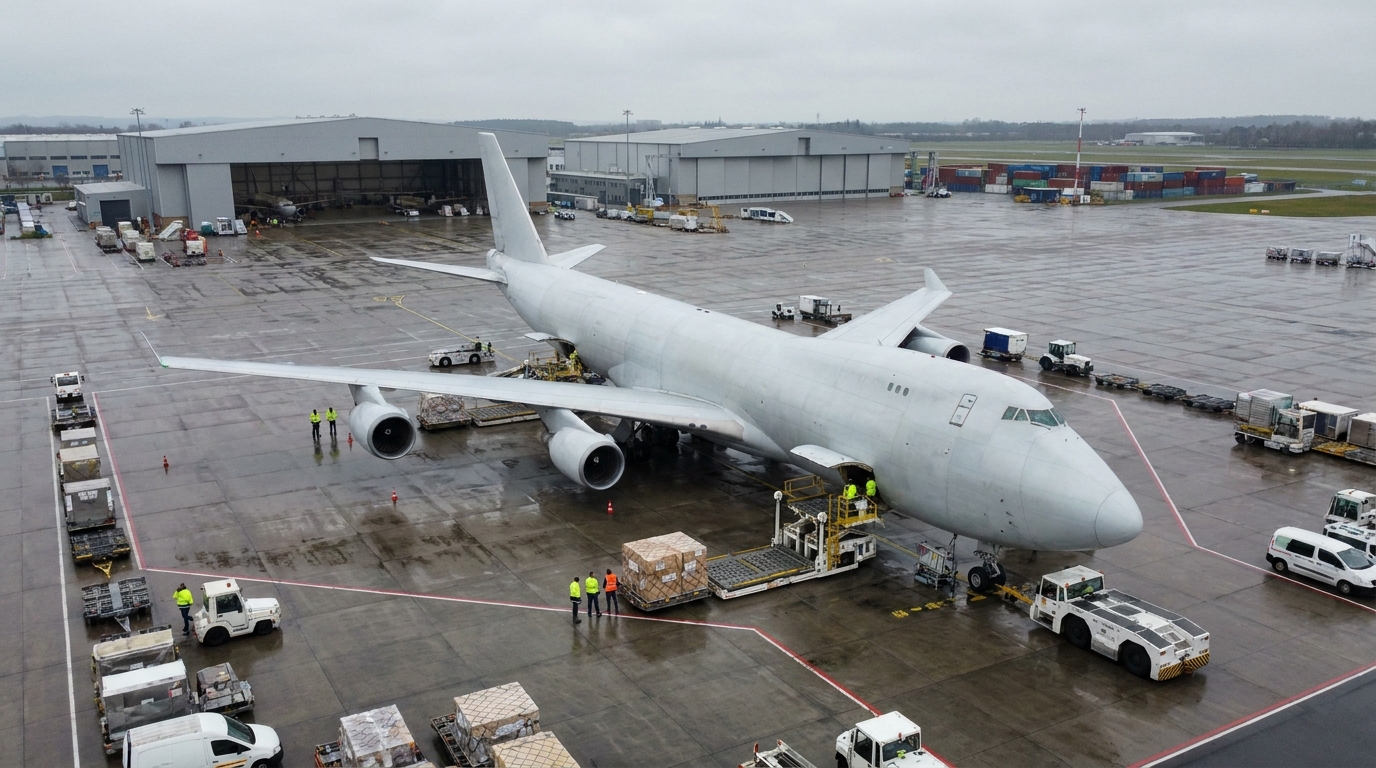
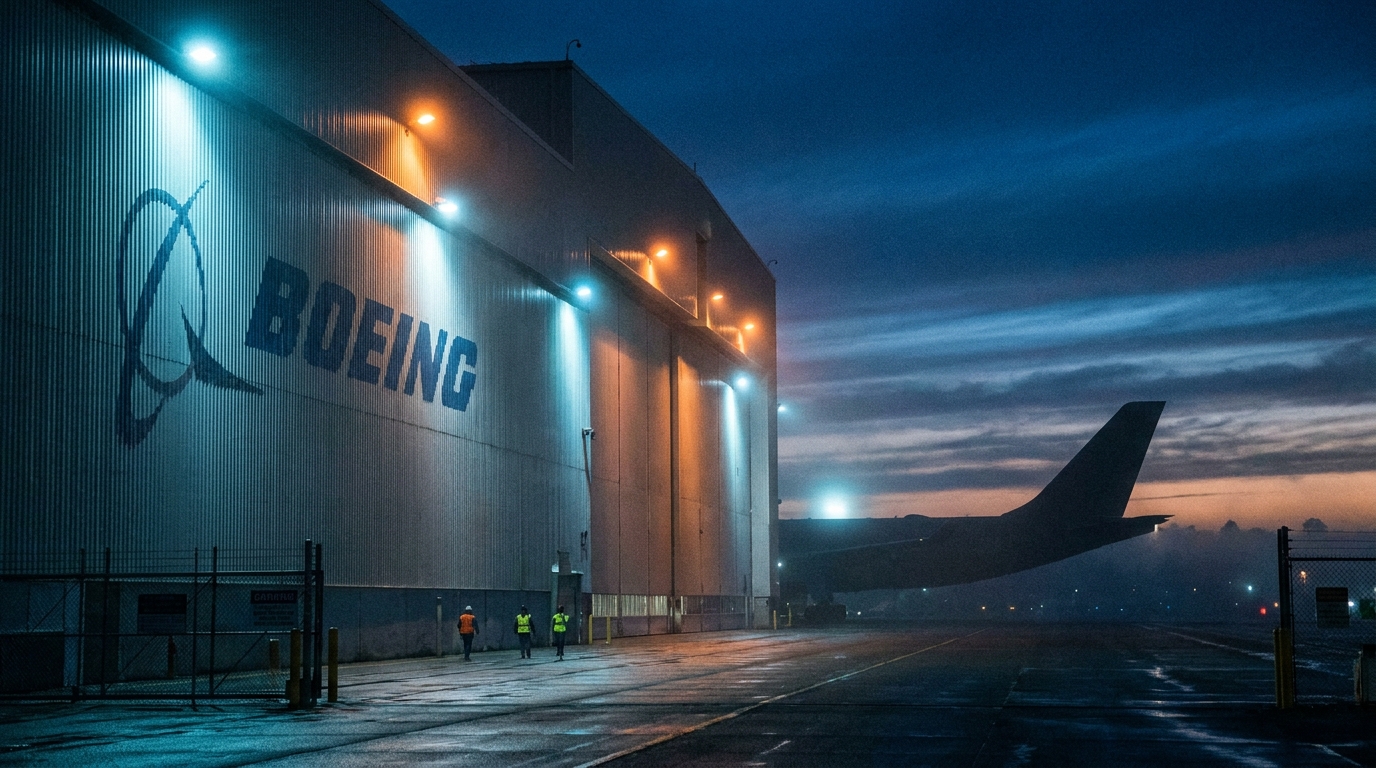
    The next day, the first production-standard 777-8 Freighter rolled out of the Everett factory.

    For business and civic readers, this is the read of what those two events mean for the county.

    The Backlog Window Through 2029

    Local economic development depends on multi-year demand visibility. Backlogs at Paine Field now provide that visibility through 2029:

    • KC-46: 19 deliveries targeted in 2026, Lot 12 funding 15 more tankers through 2029, Air Force plan to recapitalize 75 additional KC-135s beyond
    • 777-8F: First aircraft rolled out April 23 2026, first deliveries 2028, 34-firm-order book with Qatar Airways plus Cargolux, Lufthansa Cargo, and ANA
    • 737 North Line: First 737 MAX assembly outside Renton in Boeing’s history, ramping inside the Everett footprint
    • 777-9 passenger: Working through certification

    That is a fundamentally different mix from 2020, when the 747 line was active and the 787 had moved to South Carolina. The current mix is anchored by defense and cargo — both less cyclical than passenger airline orders.

    Why Defense Production Is Different Floor for the Local Economy

    For commercial real estate brokers and industrial landlords near Paine Field, the most important property of defense backlogs is that they don’t cycle on consumer demand.

    Commercial airframes slow when airlines stop ordering. KC-46 production moves at the speed of Pentagon appropriations and Air Force fleet-age curves. The Air Force flies about 380 KC-135 tankers, the youngest of which is roughly 60 years old. The KC-46 is the chosen replacement. There is one production line in the world that builds it, and it is in Everett.

    Even the cost overruns — over $7 billion cumulative since program inception, including a $565 million charge in Q4 2025 — do not slow the line. The Air Force needs the airframes. The county gets the workforce.

    For business owners who lease, employ, or sell to households tied to that workforce, the defense ballast is the anchor.

    Supplier Implications

    The 5,200-worker aerospace shortage projected by the Aerospace Futures Alliance for Washington state is not happening into a flat backlog. It is happening into a backlog that is, between defense and cargo, growing.

    For Snohomish County aerospace suppliers — and there are over 600 of them per the Economic Alliance Snohomish County — the operational signal from this week is:

    • KC-46 supply chain sees increased demand through Lot 12 (2029) and likely beyond if the 75-tanker recap plan moves
    • 777-8F supply chain is actively ramping; the rollout-jet’s first flight, ground testing, and certification activities will pull supplier work forward through 2027
    • Hiring competition tightens — every supplier is competing for the same skilled trades the Boeing line is hiring; package and benefits become differentiators

    For suppliers diversifying customer mix, the defense exposure is now demonstrably the more stable revenue line.

    Commercial Real Estate Read

    If you broker industrial, flex, or office space within 15 miles of Paine Field:

    • Industrial demand floor — Boeing supplier base needs floor space; a multi-year backlog floors that demand
    • Office demand near Paine Field — Snohomish County office vacancy ended Q1 2026 at 10.7% with $31.20 PSF asking rents and a third straight quarter of positive net absorption (per the most recent Q1 reporting)
    • Workforce housing pressure — 30,000 direct Boeing jobs at Paine Field plus supplier base; multi-year backlog means multi-year housing demand at every price point

    Waterfront Place’s 447,500 SF office build-out has a clearer demand signal in this environment than it did 18 months ago when commercial cargo’s 2027 cliff looked unanswered.

    What Civic Readers Should Track

    For City of Everett economic development staff and Snohomish County Council members, the 2027 transition has been the policy uncertainty. April 2026 narrowed that uncertainty:

    • The 767 cliff is real, but the post-cliff plan is now operationally evidenced
    • The KC-46 contractual floor (Lot 12 through 2029) is multi-year stable
    • The 777-8F program has metal in the air with a customer book

    That changes the framing of any tax-base, workforce-development, or housing decision tied to Paine Field employment. Aerospace exposure is, on net, a stable bet through the end of the decade.

    Frequently Asked Questions

    Q: How many direct aerospace jobs does the Everett Boeing factory support?

    A: Roughly 30,000 direct jobs at Paine Field plus the supplier base across Snohomish County (over 600 suppliers per the Economic Alliance Snohomish County).

    Q: What is the dollar value of Boeing’s KC-46 Lot 12 contract?

    A: $2.47 billion, funding 15 additional tankers along with software licensing, subscriptions, and through-life support, with deliveries running through 2029.

    Q: Will the 2027 commercial 767 sundown reduce Snohomish County aerospace employment?

    A: Boeing’s announced plan absorbs the 767 commercial workforce into expanded KC-46 production and the ramping 777-8F program, both at Everett. The April 23 2026 777-8F rollout is the first physical evidence of that absorption underway. Net headcount depends on KC-46 ramp, 777-8F ramp speed, and supplier hiring.

    Q: How does the Snohomish County office market relate to the Boeing footprint?

    A: Q1 2026 office vacancy was 10.7% with $31.20 PSF asking rents and three consecutive quarters of positive net absorption — a tightening market consistent with stable Paine Field employment. Waterfront Place’s 447,500 SF office build-out absorbs into that market.

    Q: Are KC-46 cost overruns an economic risk for Everett?

    A: KC-46 cost overruns ($7 billion+ cumulative, $565 million charge in Q4 2025) affect Boeing’s corporate margins. They have not historically resulted in production slowdowns at Everett — the Air Force requires the airframes — and so the workforce and supplier base have been insulated from the margin pressure.

    Q: What does the 777-8F rollout signal to commercial real estate near Paine Field?

    A: A multi-year cargo airframe ramp anchors industrial, flex, and supplier-supporting office demand. Combined with KC-46 stability through 2029, the area has multi-year demand visibility through the end of the decade.

    Q: What is the Air Force’s plan for the KC-135 fleet?

    A: The Air Force still flies about 380 KC-135 tankers, an airframe that first flew in 1956. The plan is to extend KC-46 Pegasus production beyond the original 179-aircraft program of record and buy roughly another 75 tankers to recapitalize the KC-135 fleet — a multi-decade procurement runway, all running through Everett.
  • What the 777-8F Rollout and the KC-46 Defense Ramp Mean for Boeing’s Everett Workforce: A 2026 Aerospace Worker’s Guide

    What the 777-8F Rollout and the KC-46 Defense Ramp Mean for Boeing’s Everett Workforce: A 2026 Aerospace Worker’s Guide

    Featured Snippet

    **What does the April 2026 777-8F rollout and KC-46 defense ramp mean if you work on the Boeing line in Everett?**

    The combined April 22 (KC-46 defense growth confirmed in Q1 earnings) and April 23 (first 777-8F rollout) week answers the central workforce question: when the 767 commercial line ends in 2027, the same Everett mechanics, engineers, and flight-line crews will move onto KC-46 (19 jets in 2026, Lot 12 through 2029) and 777-8F (first delivery 2028) production. The cargo and defense lines absorb the workforce; the building does not empty out.


    If you build airplanes in Everett — IAM District 751 mechanic, SPEEA engineer, flight line, paint, delivery — the question that has hung over the cargo workforce for two years got an operational answer in a single week of April 2026.

    The 767F commercial program is sundowning in 2027. Everyone on the line knows that. What was less clear, until this month, was what the work mix looks like the week after the last 767F rolls out. After the April 22 Q1 earnings call and the April 23 777-8F rollout, the picture is finally specific.

    This is a worker-focused read of what the two events mean for your shop floor reality through 2029.

    Why This Week Mattered to the Floor

    CEO Kelly Ortberg, on the Q1 2026 call, named KC-46 production increases as part of the Pentagon-driven defense growth Boeing expects to capture. He listed it alongside F-47, F-15EX, enhanced SATCOM, and weapons system production.

    The next day, the first production-standard 777-8F rolled out of final assembly at the same factory.

    Two airframes. Two paths for the Everett cargo workforce. Both confirmed within 24 hours.

    The KC-46 Number You Should Know

    19 deliveries in 2026, up from 14 in 2025. That’s a 36 percent year-over-year increase out of the Everett tanker line. Headcount on KC-46 has been ramping with that delivery rate.

    Then come the contractual floors:

    • Lot 12 funds 15 more tankers through 2029 — $2.47 billion deal, signed
    • Air Force recapitalization plan — roughly 75 additional Pegasuses beyond the 179-aircraft program of record to replace the aging KC-135 fleet
    • KC-135 fleet — about 380 still flying, first delivered in 1956; this is a multi-decade tanker procurement runway

    The shop-floor translation: KC-46 is the steadiest line in the building. It does not cycle with airline orders. It moves on Pentagon appropriations and tanker fleet age.

    The 777-8F Number You Should Know

    First production-standard 777-8F rolled out April 23, 2026. Build cycle was roughly 21 months — Boeing began 777-8F production in July 2024.

    The customer book:

    • Qatar Airways — 34 firm orders, program launch customer
    • Cargolux — currently first-delivery slot
    • Lufthansa Cargo and ANA — additional launch customers

    First deliveries in 2028. The aircraft uses GE9X engines, the composite folding wingtip, and the 787-derived flight deck shared with the 777-9.

    For workers who’ve trained on 777X tooling expecting the program to ramp, this rollout is the proof point. The same wing-join, systems install, and flight-line workforce that has been building 767Fs for years is the workforce being asked to build 777-8Fs at scale starting now.

    What Defense vs. Commercial Means for Job Stability

    Commercial airframes ramp when airlines order. They slow when airlines stop. KC-46 is different. The line moves at the speed of the Pentagon’s appropriations cycle and the Air Force’s tanker fleet age curve. The KC-46 program has booked over $7 billion in cumulative cost overruns since inception — a $565 million charge in Q4 2025 alone, driven by supply chain costs and increased production support expenses at Everett.

    Cost overruns are a corporate margin problem. They are not a layoff signal. The Air Force needs the airframes; the line keeps moving.

    That is a different risk profile than the 737 (driven by airline demand) or the 777X passenger program (working through certification). Defense work in this building is the ballast.

    Skills Mapping — What Carries Forward

    The systems work isn’t identical between programs, but the underlying competencies map:

    • Wing-join and flight controls — required across 767F, 777-8F, and 777-9; 777X-specific composite folding wingtip work is the new add
    • Systems install — KC-46 boom and refueling systems are unique; commercial cargo loadmaster systems differ but the wiring/hydraulic discipline transfers
    • Flight line and delivery — universal across programs; cycle time differences but the same competency set
    • Paint and finish — military spec on KC-46 vs commercial liveries on 777-8F; both required, both staffed in Everett

    For workers paying attention to the program-mix shift, the 777X tooling investment Boeing has made over the last several years was not for nothing. The April 23 rollout is what that investment looks like operationally.

    What to Watch Through 2027

    • KC-46 monthly delivery pace — the 19-jet target for 2026 implies roughly 1.5 per month; ramps signal headcount needs
    • Lot 12 milestone deliveries — through 2029, with execution risk on supply chain (the cost-overrun history is the warning)
    • 777-8F build cycle compression — the next aircraft after the rollout-jet should build faster as the line learns the variant
    • Cargolux first-delivery date — slipping past 2028 would be the first sign 777-8F is hitting the same certification headwinds the 777-9 has fought
    • 767F final delivery — currently 2027 with 33 jets remaining for FedEx and UPS; that is the cliff

    Frequently Asked Questions

    Q: Will Boeing lay off workers when the 767 commercial line ends in 2027?

    A: Boeing’s announced plan is for the same Everett workforce to absorb expanded KC-46 production and ramp 777-8F production. The April 23 2026 777-8F rollout is the first physical evidence of that absorption underway. Headcount decisions are dependent on order book and ramp rates, but the program plan is workforce-retention oriented.

    Q: How does the KC-46 production rate compare to the 767 commercial line?

    A: Boeing is targeting 19 KC-46 deliveries in 2026, up from 14 in 2025. The 767 commercial line builds an additional 33 jets through 2027 for FedEx and UPS. After 2027, the entire 767 building reverts to a KC-46-only configuration.

    Q: What is Lot 12 and how much does it commit to Everett?

    A: Lot 12 is a $2.47 billion Air Force expansion of the KC-46A program funding 15 additional tankers along with software licensing, subscriptions, and through-life support. Deliveries run through 2029.

    Q: When will Boeing start 777-8F deliveries from Everett?

    A: Boeing has targeted first 777-8F deliveries for 2028. Cargolux is currently slotted as the first operator to take physical delivery; Qatar Airways is the program launch customer with 34 firm orders.

    Q: Are KC-46 cost overruns a layoff risk for Everett workers?

    A: The KC-46 program has booked over $7 billion in cumulative cost overruns. Cost overruns affect Boeing’s corporate margins but do not turn off the production line — the Air Force needs the airframes. The risk profile is different from a commercial program where slowing orders would directly slow the line.

    Q: What other Boeing programs are still active at Paine Field?

    A: After 2027, Everett continues the 737 North Line, KC-46 tanker line, 777-9 passenger line, and 777-8F freighter line. Final assembly support, flight line, paint, and the delivery center serve all programs.


  • Boeing’s Everett Defense Backlog and the 777-8F Rollout: A Complete 2026 Guide to Life After the 767 Commercial Sundown

    Boeing’s Everett Defense Backlog and the 777-8F Rollout: A Complete 2026 Guide to Life After the 767 Commercial Sundown

    Featured Snippet

    **What is the future of Boeing’s Everett factory after the 767 commercial line ends in 2027?**

    The Everett factory will continue producing the KC-46 Pegasus tanker (a defense version of the 767) and the new 777-8F Freighter (rolled out April 23, 2026). Boeing’s Q1 2026 earnings call confirmed KC-46 production increases as part of a Pentagon-driven defense growth narrative, with 19 deliveries targeted for 2026, Lot 12 running through 2029, and an Air Force plan to recapitalize 75 additional KC-135s. The 777-8F is the bridge airframe for Everett’s commercial cargo workforce, with first deliveries targeted for 2028 and Qatar Airways as launch customer with 34 firm orders.


    In a single week in late April 2026, two events at Boeing’s Everett factory drew a clear line under what Paine Field’s commercial cargo and defense production looks like through the end of the decade.

    On April 22, Boeing CEO Kelly Ortberg told investors on the Q1 2026 earnings call that KC-46 production increases are part of the Pentagon-driven defense growth Boeing expects to benefit from — listed alongside F-47, F-15EX, enhanced SATCOM, and weapons system production. The KC-46 final assembly line is at Paine Field. The defense ramp Ortberg described is, in operational terms, an Everett workforce story.

    The next day, April 23, the first production-standard Boeing 777-8 Freighter rolled out of final assembly at the Everett factory — the airframe that has to carry the cargo line into the next decade once the commercial 767F program ends in 2027.

    Together, these are the two stories that define what life on Paine Field’s north end looks like after the 767 commercial sundown. This guide pulls them into a single picture.

    The 767 Commercial Sundown — The Cliff Everett Is Walking Toward

    The Everett 767 line has been delivering aircraft for 45 years. Boeing has confirmed the commercial 767F program ends in 2027 once the remaining 33 orders for FedEx and UPS are delivered. After that, the 767 building reverts to a KC-46-only line.

    That sentence — “767 building reverts to a KC-46-only line” — is the single most important fact about Everett’s 2027 production footprint. It means the commercial cargo workforce currently building 767Fs needs somewhere to go. Boeing’s answer has two halves: the KC-46 program absorbs as much defense work as the Pentagon funds, and the 777-8F absorbs the commercial cargo workforce.

    Half One — The KC-46 Backlog: Three Numbers

    The KC-46 program backlog at Everett right now sits on three numbers worth understanding together.

    The 2026 delivery target. Boeing delivered 14 KC-46 tankers in 2025 and is targeting 19 deliveries in 2026 — a 36 percent year-over-year increase out of the Everett line. The 105th tanker delivered earlier this month is the cumulative milestone; the 19-jet pace is the run-rate.

    Lot 12. Boeing secured a $2.47 billion expansion of the Air Force’s KC-46A program — formally Lot 12 — funding 15 additional tankers along with software licensing, subscriptions, and through-life support. Deliveries under Lot 12 run through 2029. That’s three more years of guaranteed Everett tanker production beyond what was already on the books.

    The 75-tanker recapitalization plan. The Air Force has signaled it intends to extend Pegasus production beyond the original 179-aircraft program of record and buy roughly another 75 tankers to recapitalize the aging KC-135 fleet. The KC-135 first flew in 1956. The Air Force still flies about 380 of them. There is exactly one production line in the world that builds the airframe the Air Force has chosen to replace it with. That line is in Everett.

    Half Two — The 777-8F Rollout: What April 23 Actually Means

    The aircraft that left the hangar on April 23 is the first production-standard 777-8 Freighter. It has been in build since Boeing began 777-8F production in July 2024 — a roughly 21-month build cycle for an all-new variant of an all-new airframe family.

    The 777-8F is built on the 777X platform Boeing launched commercially in 2013 and has spent the intervening years certifying. It uses the same GE9X engines, the same composite folding wingtip, and the same 787-derived flight deck as its passenger sibling, the 777-9. What’s different is the mission: this jet hauls cargo, not people.

    Published specifications: structural payload of roughly 118 metric tons, range of about 4,410 nautical miles, and Boeing claims up to 30 percent better fuel efficiency than the previous-generation 777F. That number matters because the previous-generation 777F is the freighter the 777-8F is being asked to replace in operators’ fleets.

    The customer picture: Qatar Airways is the program launch customer with 34 orders firm — the largest single 777-8F book of business. Cargolux, the Luxembourg-based all-cargo carrier, is on track to be the first operator to take physical delivery. Lufthansa Cargo and ANA round out the announced launch customer set. First deliveries are targeted for 2028.

    Why Defense and Commercial Backlogs Look Different

    Commercial aerospace cycles. Defense aerospace doesn’t, at least not on the same timescale. The 737 North Line ramps because customer airline demand pulls it forward; if airlines stop ordering, the line slows down. The KC-46 line moves at the speed of the Pentagon’s appropriations cycle, the Air Force’s tanker fleet age curve, and the certified production rate Boeing can hold.

    For workers in Everett, that distinction matters. The KC-46 program is more recession-resistant than commercial programs across the same fence line. It is also, in dollar terms, a lower-margin business for Boeing — the program has booked over $7 billion in cumulative cost overruns since inception, including a $565 million charge in Q4 2025 driven by supply chain costs and increased production support expenses at Everett.

    Cost overruns hurt corporate margins, but they do not turn off the production line. The Air Force needs the airframes.

    How the Two Lines Sit Inside the Everett Footprint

    The 777X final assembly line is at Paine Field. So is the 767F line. So is the KC-46 tanker line. Everett has been the cargo capital of Boeing’s commercial production for decades, and the workforce that puts those airframes together — wing join, systems install, flight line, paint, delivery center — is the same workforce that gets handed the 777-8F as the 767F winds down.

    For IAM District 751 mechanics and SPEEA engineers told for years that the 777X program is the future of the Everett cargo footprint, the April 23 rollout is the first time that future has a tail number on it.

    The Everett Production Picture in 2027

    When the 767 commercial line closes in 2027, here’s what remains active at Paine Field’s north end:

    • **737 North Line** — first 737 MAX assembly outside Renton in Boeing history, ramping toward production rate
    • **KC-46 tanker line** — 19 jets in 2026, Lot 12 through 2029, additional 75-tanker plan beyond
    • **777X passenger line** — 777-9 working through certification
    • **777-8F freighter line** — first jet rolled out April 23, 2026, deliveries from 2028
    • **Final assembly support, flight line, paint, delivery center** — supporting all programs

    That is a fundamentally different mix from 2020, when the 747 line was still active and the 787 had moved to South Carolina. The defense and cargo balance now anchors the factory.

    Why This Matters Beyond Boeing

    Everett’s aerospace footprint is roughly 30,000 direct jobs at Paine Field plus the supplier base across Snohomish County. The 5,200-worker aerospace shortage projected by the Aerospace Futures Alliance for Washington state is happening into a backlog that — between defense and cargo — has clear visibility through 2029 and program-level visibility well beyond. The April 22 earnings call and the April 23 rollout are the two pieces of evidence that the post-767 plan is operationally underway.

    For the City of Everett, that has economic-development implications. For Snohomish County aerospace suppliers, it’s a sourcing signal. For commercial real estate, it sets the floor under demand for industrial and flex space near Paine Field. For workers on the line, it answers the question that has hung over the cargo workforce for two years: what comes after the 767?

    The answer, in two parts, was visible in a single week in April 2026.

    Frequently Asked Questions

    Q: When does the Boeing 767 commercial line in Everett close?

    A: Boeing has confirmed the commercial 767F program ends in 2027 once the remaining 33 orders for FedEx and UPS are delivered. After that, the 767 building reverts to a KC-46-only line.

    Q: How many KC-46 tankers will Boeing deliver from Everett in 2026?

    A: Boeing is targeting 19 KC-46 deliveries in 2026, up from 14 in 2025 — a 36 percent year-over-year increase out of the Everett line.

    Q: What is Lot 12 of the KC-46 program?

    A: Lot 12 is a $2.47 billion expansion of the Air Force’s KC-46A program funding 15 additional tankers along with software licensing, subscriptions, and through-life support. Deliveries under Lot 12 run through 2029.

    Q: When did the first Boeing 777-8 Freighter roll out of Everett?

    A: The first production-standard 777-8F rolled out of final assembly at the Everett factory on Thursday, April 23, 2026.

    Q: Who is the launch customer for the Boeing 777-8F?

    A: Qatar Airways is the program launch customer with 34 firm orders. Cargolux is currently on track to be the first operator to take physical delivery. Lufthansa Cargo and ANA round out the announced launch customer set.

    Q: When will the first 777-8F be delivered?

    A: Boeing has targeted first deliveries for 2028, following engine integration, ground testing, and first flight.

    Q: What programs will the Everett factory still build after the 767 commercial line closes?

    A: After 2027, Everett will continue producing the 737 (North Line), KC-46 Pegasus tanker, 777-9 passenger jet, and 777-8F freighter. The 767 building reverts to a KC-46-only line.

    Q: How many KC-135 tankers does the Air Force still operate?

    A: The Air Force still flies about 380 KC-135 tankers, an airframe that first flew in 1956. The KC-46 Pegasus is the chosen replacement airframe.


  • Everett’s Wetland and Stream Rules Are About to Change: What the Critical Areas Update Means for Anyone Building, Buying, or Living Near Water

    Everett’s Wetland and Stream Rules Are About to Change: What the Critical Areas Update Means for Anyone Building, Buying, or Living Near Water

    What is this? Everett is in the middle of updating its Critical Areas Regulations — the section of the Everett Municipal Code that governs how close anything new can be built to a wetland, a stream, a steep landslide-prone slope, or a designated wildlife habitat. The City Council held a public hearing on the proposed update on April 15, 2026 and is moving toward a vote in the coming weeks. The new rules adjust buffer widths, mitigation requirements, and the technical standards developers must meet on parcels that touch any of those features. If you own land, are looking to buy, or live near Forest Park, the Snohomish River corridor, Howarth, Pigeon Creek, or the city’s bluff edges, the update affects what can — and cannot — be built around you.

    If you have ever wondered why a vacant Everett lot has stayed vacant for years even when home prices were climbing, the answer is often hidden in a single section of city code: Chapter 19.37, the Critical Areas Regulations.

    That chapter — which protects wetlands, streams, frequently flooded areas, landslide-prone slopes, and important wildlife habitat — sets the buffer widths, building setbacks, mitigation requirements, and technical-study requirements every Everett property owner has to follow before disturbing those features. It is also one of the most frequently misunderstood parts of the municipal code, because it cuts across so many properties. Lots near Howarth Park, Pigeon Creek, Forest Park, the Snohomish River edge, and the city’s many ravine-cut blocks all carry critical-area overlays.

    This week, Everett’s update of those regulations is closer to adoption than it has been at any point in the multi-year process. Here’s what’s actually in front of the council, what would change for residents and developers, and where the city is in the timeline.

    What the City Is Required to Do

    Critical Areas Regulations updates are not optional. Under Washington’s Growth Management Act, every city in the state has to periodically review and update its critical-area rules to incorporate Best Available Science — the current scientific consensus on what actually protects sensitive habitat.

    Everett’s last comprehensive update was in 2007. The state’s deadline for the current periodic update was December 31, 2025, which the city has been working toward for several cycles. The city published a first review draft on October 31, 2025 and a second review draft on February 13, 2026, the latter of which is the version under active council consideration.

    In other words: the council does not have the option of leaving the rules alone. The only choice is what version to adopt and on what schedule.

    What Critical Areas Are Covered

    The Everett Municipal Code defines five categories of critical areas:

    • Wetlands — areas saturated long enough to support hydrophytic vegetation
    • Streams and other Fish and Wildlife Habitat Conservation Areas — including riparian corridors and habitat for state-listed species
    • Frequently flooded areas — typically the regulatory floodplain
    • Geologically hazardous areas — landslide-prone slopes, erosion zones, and seismic hazard areas
    • Critical aquifer recharge areas — zones where surface activity affects groundwater used for drinking water

    Each category has its own buffer requirement and its own mitigation standard, and a single parcel can be touched by more than one. A property near a wetland on a steep slope is subject to both wetland and geologic-hazard rules, with the more restrictive prevailing.

    What’s Changing in the February 13 Draft

    The February 13 draft preserves the basic five-category framework but updates several technical components that determine how the rules apply on a given lot. Among the most consequential:

    • Wetland buffer widths. The draft updates Tables 37.2 and 37.3 — the wetland buffer width tables — to reflect current Best Available Science. In practice, that adjusts how many feet of undisturbed land must remain between a wetland edge and a building, fence, or hard surface. For some wetland categories, the draft buffers are wider than the rules currently in place.
    • Stream buffer standards. The draft revises stream classifications and the corresponding buffer widths. Stream buffers were one of the most-discussed elements at the planning commission’s February 17 hearing.
    • Mitigation sequencing. The draft tightens the standard sequence applicants have to follow when an impact to a critical area is unavoidable: first avoid, then minimize, then compensate, in that order.
    • No-net-loss standard. The draft preserves the existing short-term goal of no net loss of critical-area functions and values, and adds a long-term goal of a net gain.

    The city’s posted public document — Everett Critical Area Regulations Periodic Update REVIEW DRAFT February 13 2026 — runs to several hundred pages. Comments and responses through April 1, 2026 are also published on the city’s website.

    What Stakeholders Have Said

    The hearings and comment record show a familiar split on critical-area rules.

    • The Port of Everett submitted comments dated January 8, 2026 raising concerns about how the proposed buffers and mitigation requirements would interact with redevelopment of port-owned waterfront parcels.
    • The Master Builders Association of King and Snohomish Counties (MBAKS) submitted comments at the January 28 planning commission meeting raising concerns about the cost and feasibility implications of wider buffers on infill parcels.
    • The Washington State Department of Fish and Wildlife submitted comments dated March 2, 2026 supporting science-based buffers and asking for additional protections for habitat-conservation areas.

    Each set of comments is published on the city’s website at everettwa.gov. The council saw all of them before the April 15 public hearing.

    What Happens Next

    The procedural path runs roughly like this:

    1. Planning commission recommendation — issued February 17, 2026
    2. Council briefings and discussions — held in March and April 2026
    3. Council public hearing — held April 15, 2026
    4. Council action on an ordinance — anticipated in the weeks following the public hearing

    The exact council vote date has not been finalized as of this article, but the city’s project documents indicate the council expects to act in the spring of 2026.

    Once adopted, the new ordinance applies to any new permit application after the effective date. Pending applications already in the pipeline are typically processed under the rules in place when they were filed (a “vested rights” question that applicants and city staff handle on a case-by-case basis).

    Why This Matters for Regular Residents

    The Critical Areas Regulations update is not the kind of city-hall story that lights up social media. It does not have a dollar figure attached, and the most consequential changes are technical adjustments in tables of buffer widths.

    But for an Everett resident, the practical reach is broad:

    • If you own a vacant or underbuilt lot anywhere near a wetland, stream, slope edge, or known habitat area, the buffer and mitigation rules in the new ordinance will determine what you can do with it.
    • If you live in a neighborhood with sensitive features — Pigeon Creek, the Snohomish River edge, the bluff that drops off Bayside, the wooded ravines that run between Forest Park and the south end — the rules determine what your neighbors can build.
    • If you are watching environmental quality on the Snohomish River and Port Gardner Bay, buffer standards on contributing streams are one of the few city-level levers that materially affect what runs into the bay over time.

    This is also one of the few regulatory updates Everett does where the technical content matters far more than the political framing. The buffers either reflect current science or they don’t. The mitigation sequence is either tight or it isn’t. Two parcels with identical zoning can have very different development potential depending on what the critical-areas overlay says.

    What to Do Next

    If you want to engage:

    • Read the documents. The City of Everett’s 2025 Critical Area Ordinance Update page hosts the February 13 review draft, the comment-and-response document, and all stakeholder letters at everettwa.gov/3354/2025-Critical-Area-Ordinance-Update.
    • Email comments to staff. The city has accepted written comments at cao@everettwa.gov.
    • Attend a council meeting. The City Council meets at 3002 Wetmore Avenue. Regular meetings are at 6:30 p.m. on most Wednesdays; fourth Wednesdays start at 12:30 p.m. Agendas are posted at everettwa.gov/AgendaCenter. The council’s next action on the critical-areas ordinance will be on a regular meeting agenda.
    • Check your parcel. If you own land in Everett and want to know whether a critical-area overlay touches your parcel, the city’s GIS map and the Permit Center can both tell you. The Permit Center is at City Hall, 2930 Wetmore Avenue.

    Frequently Asked Questions

    Will my house become non-conforming if the rules change?
    For an existing legally permitted structure, no. Critical-areas rules apply to new development and to expansions of existing development. An existing house in a buffer is generally treated as a legal nonconforming use, with limited rules around expansion and replacement.

    If buffers get wider, can the city take part of my yard?
    No. The buffer is a regulatory setback that limits what new construction or land disturbance can happen there. It is not a property taking. The land remains yours.

    Does this affect routine yard work?
    Generally no for ordinary maintenance. Significant tree removal, grading, structures, or land disturbance within a critical area or its buffer typically requires a permit and may require an environmental review.

    How does this connect to the Comprehensive Plan?
    The Critical Areas Regulations are one of the implementing tools of the city’s Comprehensive Plan. The plan sets the policy direction; the critical-areas chapter is where the specific land-use rules live.

    When does the new ordinance take effect?
    After the council adopts an ordinance and the city publishes the adoption notice. Effective dates are typically set 30 days after publication unless the ordinance specifies otherwise.

    Are there exemptions?
    Yes — the code includes a list of activities that are exempt from full review (certain routine maintenance, emergency repairs, some agricultural activity). The exemption list is part of the chapter and is being reviewed in the update.

    Will this change be appealed?
    Critical-areas updates are sometimes appealed to the Growth Management Hearings Board. Whether anyone files an appeal will depend on the final adopted text and which stakeholders feel their issues weren’t resolved.


    Sources: City of Everett 2025 Critical Area Ordinance Update project page (everettwa.gov); Everett Critical Area Regulations Periodic Update REVIEW DRAFT, February 13, 2026; Planning Commission record, February 17, 2026; comments-and-responses document dated April 1, 2026; Port of Everett comment letter, January 8, 2026; MBAKS comment letter, January 28, 2026; WDFW comment letter, March 2, 2026; City Council public hearing, April 15, 2026; Washington State Growth Management Act; Everett Municipal Code Chapter 19.37.

  • Snohomish County Council Approves $23 Million for Housing and Behavioral Health: Three of the Six Projects Are in Everett

    Snohomish County Council Approves $23 Million for Housing and Behavioral Health: Three of the Six Projects Are in Everett

    What just happened? On Wednesday, April 24, 2026, the Snohomish County Council voted unanimously to award roughly $23 million in capital grants to six affordable-housing and behavioral-health projects across the county. Three of the funded projects are located in Everett — including a $5.8 million grant to the Everett Gospel Mission for its 172-bed shelter expansion, $4.2 million to Helping Hands for a 28-unit affordable building on Broadway in north Everett, and a grant to the Everett Station District Alliance for a 58-unit transit-oriented building on Smith Avenue. The money comes from two voter-authorized sales taxes that were specifically created to fund supportive housing.

    If you live in Everett and you have ever wondered what your county council actually does between elections, last Wednesday is a clean answer.

    In a single unanimous vote on April 24, the Snohomish County Council moved roughly $23 million out of the county’s Housing and Behavioral Health Capital Fund and into six brick-and-mortar projects that will, over the next two years, add hundreds of beds and apartments to the county’s housing supply. Three of those six projects are inside Everett city limits. One of them — the Everett Gospel Mission’s shelter expansion — is the largest single award in the round.

    The vote did not change a tax rate. It did not raise a fee. What it did was take money the county already collects under two state laws — sales tax revenue earmarked for affordable and supportive housing — and put it into a slate of projects the council’s Human Services Department had screened and recommended.

    Here is what each of the three Everett-located projects gets, what they will build, and when residents are likely to see results on the ground.

    The Everett Gospel Mission Expansion: $5.8 Million for 172 Beds

    The Mission’s award was the largest of the six, at $5.8 million. The grant goes toward a 172-bed expansion of the Mission’s existing shelter at 3530 Smith Avenue — roughly tripling the footprint of the current building.

    The total project is budgeted at approximately $30 million. The county’s $5.8 million stacks on top of money already committed by the City of Everett, prior philanthropic giving, and a state legislative allocation approved earlier in 2026. The Mission’s CEO, Sylvia Anderson, has said construction is targeted for an October or November 2026 start. The first phase is intended to be open in time for the 2027 cold-weather season.

    The expanded building will house separate spaces for men and women, on-site staff 24 hours a day, a small store for residents to access necessities, kennels and a wash station for residents’ pets, and a craft room. The current shelter will keep operating throughout construction.

    For Everett residents, the Mission’s expansion is the closest thing to a measurable change in the city’s homeless-response capacity over the next 18 months. The Mission already runs the largest emergency shelter in Snohomish County. After the expansion, it will be larger by a factor of roughly three.

    Helping Hands: $4.2 Million for 28 Apartments on North Broadway

    The second-largest Everett-bound award was $4.2 million to the Helping Hands Project for a 28-unit affordable apartment building at 2410 and 2412 Broadway, in the city’s North Broadway corridor.

    According to the county, the building will serve “those who are disadvantaged or have special needs.” The Helping Hands Project, a Snohomish County nonprofit, has been moving the project forward under the working name Broadway 33. Project completion is currently targeted for February 2028.

    For neighbors on North Broadway, the practical effect is that two parcels currently fronting the corridor will move from their current condition into a permitted, occupied apartment building over the next 22 months. For the city’s affordable-housing inventory, it is 28 deed-restricted units that did not exist before.

    The Everett Station District Alliance: A 58-Unit Building on Smith Avenue

    The third Everett-located award went to the Everett Station District Alliance, the nonprofit working to redevelop the area around Everett Station into a transit-oriented neighborhood. ESDA’s planned project at 3102 Smith Avenue is a 58-unit, low-income mixed-use building. According to ESDA’s own filings, the unit mix breaks down as 15 units at 30 percent of area median income (the deepest affordability tier), 29 units at 50 percent AMI, and 14 units at 60 percent AMI. Fifteen of the 58 units are reserved for tenants experiencing homelessness.

    The Smith Avenue site has prior development entitlements — a previously approved land-use permit on the parcel allowed up to 166 residential units over 3,359 square feet of retail. ESDA purchased the property and has been working through redesign and financing options. The county’s grant, alongside additional state and federal sources, is part of how that financing comes together.

    Two Other Awards That Affect Everett Indirectly

    The remaining three projects in the $23 million round are based outside city limits but still serve people who live, work, or seek care in Everett.

    The Housing Authority of Snohomish County received $2.98 million toward a 60-unit senior-housing project at 5710 and 5714 200th Street SW in Lynnwood, with construction targeted for fall 2026. Holman Recovery Center received $3 million toward a 48-bed substance-use disorder facility at 4230 Airport Boulevard in Arlington. And Housing Hope’s Rainbow Terrace project, a 66-unit senior building with 14 units reserved for residents experiencing homelessness, was also funded in this round.

    The combined effect across the six projects is hundreds of new housing or shelter beds added to the county’s inventory over the next 24 to 30 months — in a region where the per-capita affordable-housing gap remains one of the largest line items in the county’s biennial budget conversation.

    Where the Money Comes From

    The Housing and Behavioral Health Capital Fund — the source of all $23 million — is funded by two state-authorized sales taxes:

    • RCW 82.14.530 authorizes a sales tax for housing and related services
    • RCW 82.14.540 authorizes an additional sales tax dedicated to affordable and supportive housing

    Both authorities were enacted by the Washington Legislature and adopted by the Snohomish County Council to create a recurring funding stream specifically for projects of this type. The fund operates on a competitive Notice of Funding Opportunity (NOFO) cycle: nonprofits, public housing authorities, and qualified developers submit proposals; county Human Services staff score them; and the council votes on a slate.

    April 24 was the council’s vote on the most recent NOFO slate.

    What This Means for Everett Residents

    For most Everett residents, the immediate effect of the April 24 vote is not visible — no new building goes up tomorrow, no rent line changes, no service appears on the street.

    The longer effect, over the next two years, is roughly this:

    • The Gospel Mission’s shelter capacity grows substantially heading into the 2027 cold-weather season
    • 28 deed-restricted apartments arrive on North Broadway by early 2028
    • ESDA’s Smith Avenue project continues moving toward construction at a site that has been entitled but stuck for years

    For neighbors near the three Everett sites — Smith Avenue, North Broadway, and the Mission’s Smith Avenue campus — the more concrete effect is permitting activity, construction traffic, and changes in foot traffic over the next 18 to 30 months. None of those projects is breaking ground this week. All three are now meaningfully closer to doing so.

    What to Do Next

    If you want to follow these projects directly:

    • Snohomish County Human Services Department publishes the official documents for the Housing and Behavioral Health Capital Fund, including the NOFO and the awarded-project list, on the county website at snohomishcountywa.gov.
    • The Everett Gospel Mission posts construction-timeline updates and volunteer opportunities at egmission.org.
    • The Helping Hands Project publishes Broadway 33 updates at helpinghands-project.org/broadway33.
    • The Everett Station District Alliance posts development-project updates at everettstationdistrict.com/development-projects.
    • Public comment on county budget priorities flows through the Snohomish County Council’s regular meeting process. Council meetings are held at the Robert J. Drewel Building (3000 Rockefeller Avenue, Everett). Agendas are posted at snohomishcountywa.gov.

    If you want to weigh in before the next round of Housing and Behavioral Health Capital Fund awards, the time to engage is when the Human Services Department posts the next NOFO — usually quarterly to semi-annually. That is the input window where the project list gets shaped, well before the council’s vote.

    Frequently Asked Questions

    Was the April 24 vote unanimous?
    Yes. According to Council Chair filings and post-vote reporting, all five council members present voted to approve the awards.

    Does this raise my taxes?
    No. The $23 million was awarded out of an existing fund. The two underlying sales taxes — under RCW 82.14.530 and RCW 82.14.540 — were authorized by the state Legislature and previously adopted by the county. No new tax was created or raised by this vote.

    When will I see the new buildings?
    The Gospel Mission expansion’s first phase is targeted for the 2027 cold-weather season. Helping Hands’ Broadway 33 is targeted for February 2028. ESDA’s Smith Avenue building’s construction timeline depends on completing its full financing stack, which is still in progress.

    How does the county pick which projects get funded?
    Through a competitive Notice of Funding Opportunity process. Nonprofits and public housing authorities submit applications. County Human Services Department staff score them against published criteria (project readiness, leverage of other funding sources, populations served). The council votes on the staff-recommended slate.

    Are any of these projects “low-barrier” shelter or housing-first?
    The Gospel Mission’s expansion is a shelter, not permanent housing, and operates under the Mission’s own program model. Helping Hands’ Broadway 33 and ESDA’s Smith Avenue project are deed-restricted affordable apartments, not shelter, and follow standard tenancy rules including leases.

    Where can I read the full list of awarded projects?
    The Snohomish County Human Services Department posts official NOFO documentation and award lists on the county website. The April 24 council action will appear in the council’s published meeting minutes.

    How much did the county put into housing in this single round versus prior rounds?
    The $23 million single-round total is among the larger awards out of the Housing and Behavioral Health Capital Fund in recent cycles. Prior awards have ranged from a few million to the high teens depending on application volume and project readiness.

    What’s the difference between this fund and federal HUD funding?
    This fund is locally raised under state authority (the two RCW sales taxes). It is separate from federal Community Development Block Grant (CDBG) and HOME funds, which the county also administers. Both streams ultimately fund similar project types but operate under different rules and timelines.


    Sources: Snohomish County Council meeting record (April 24, 2026); HeraldNet; Everett Gospel Mission; Helping Hands Project; Everett Station District Alliance; RCW 82.14.530; RCW 82.14.540.

  • Corduroy: The Pearl Jam Experience Lands at the Historic Everett Theatre May 9 — A Bay Area Tribute Plays the Grunge Catalog Inside a 1901 Opera House

    Corduroy: The Pearl Jam Experience Lands at the Historic Everett Theatre May 9 — A Bay Area Tribute Plays the Grunge Catalog Inside a 1901 Opera House

    Where can I see a Pearl Jam tribute band in Everett, WA? Corduroy: The Pearl Jam Experience plays the Historic Everett Theatre at 2911 Colby Avenue on Saturday, May 9, 2026. Doors open at 7:00 PM and the show starts at 8:00 PM. It’s an all-ages show. General Admission tickets are $40, with an Early Bird Special at $30 while supplies last. The dance floor will be open.

    Verdict: GO. This is a unique-to-this-market booking — a touring Pearl Jam tribute landing at Seattle’s nearest historic opera house — in the right-size room, at fair-market pricing for an all-ages show. Two of three GO criteria clear cleanly. The third — value — is well above the bar at $30 Early Bird.

    The Historic Everett Theatre opened in 1901 as the Everett Opera House. It is a 125-year-old building with a restored stage, hard sight lines, and roughly 800 seats when fully sold. That is the kind of room Pearl Jam grew out of — small theaters, opera houses, the rooms a band books before the rooms get too big to feel anything in. Forty miles down I-5, in a basement off the Off Ramp Café in October 1990, five guys playing under the name Mookie Blaylock opened a show that became Pearl Jam. The band has since played stadiums on every continent that has them. The Historic Everett Theatre is closer to the room those five guys started in than anything Pearl Jam has played in three decades.

    That is the frame for what happens on Saturday, May 9.

    The Show

    Corduroy: The Pearl Jam Experience is a Bay Area-based tribute band founded in the summer of 2016 in San Francisco. They are one of eleven Pearl Jam tribute acts worldwide that were selected to perform at the TEN 30th Anniversary Online Tribute Concert organized by Grunge Magazine in August 2021 — a peer-vetted credential, not a self-applied one. The band’s catalog runs from 1991 through current Pearl Jam material, which means the Ten, Vs., Vitalogy, and No Code eras get their full treatment alongside the post-2000 records.

    The Everett show is officially billed as Corduroy’s 10th Anniversary celebration — they took the stage as a band in summer 2016 and are working a year-long anniversary run through 2026.

    The basics, verified:

    • Date: Saturday, May 9, 2026
    • Doors: 7:00 PM | Show: 8:00 PM
    • Venue: The Historic Everett Theatre, 2911 Colby Avenue, Everett, WA 98201
    • Tickets: General Admission $40 (Early Bird Special $30 while available)
    • Age: All Ages
    • Format: Dance floor open

    Both the official venue listing at events.theatreconcertconsulting.com and Bandsintown event #108180402 confirm identical date, time, and venue.

    Why “Corduroy” Is the Right Name for a Tribute

    If you have to be a Pearl Jam tribute band, “Corduroy” is the name to take. The original song lives on Vitalogy, Pearl Jam’s third studio album, released in 1994. It hit number 13 on Billboard’s Modern Rock Tracks chart without ever being released as a commercial single. Eddie Vedder wrote it after seeing a replica of one of his thrift-store corduroy jackets in a fashion store at a markup of hundreds of dollars. The song is about a relationship — not between two people, but between one person and a million of them. It is the song where Pearl Jam, at the peak of their commercial moment, lashed out at the culture industry that had spent two years selling the band back to its own audience at retail.

    A tribute band naming itself after that specific track is making a small, sharp argument: we are here for the music, not the merch. That is the right argument to make in a 125-year-old room in downtown Everett.

    The Venue: Why It Matters

    The Historic Everett Theatre opened on November 4, 1901, as the Everett Opera House — a 1,200-seat room that hosted Lillian Russell, Al Jolson, and George M. Cohan in its earliest years. A 1923 fire gutted it. The building was reconstructed in 1924 as the New Everett Theater. The 2000–2004 restoration brought it back to its current configuration of roughly 800 seats with a working stage, full sound system, and the original architecture intact at the bones.

    For a Pearl Jam tribute show, this is the right room. Pearl Jam’s grunge-era catalog was written for spaces this size — the Crocodile, the Off Ramp, the Moore. When you scale those songs up to a stadium, you lose the feedback, the room noise, the sweat in the crowd. When you scale them down to a theater that has been hosting live performance since the McKinley administration, the songs carry differently. Black sounds like Black in an 800-seat opera house. It does not sound like Black in a 50,000-seat baseball park.

    Surrounding Context: The Historic Everett Theatre’s May Slate

    May 9 sits inside the busiest month the Historic Everett Theatre has run this spring. The full month, all dates verified against the venue’s Tickible JSON-LD:

    • Friday, May 1 — Red Karma: Taylor Swift tribute, doors 6:00 PM
    • Saturday, May 2 — Trio Los Panchos Nostalgia Tour: 50 Aniversario, externally ticketed via Tickeri
    • Friday, May 8 — Richard Marx: After Hours tour
    • Saturday, May 9 — Corduroy: The Pearl Jam Experience (this show)
    • Saturday, May 16 — Dana Gould: stand-up comedy via Eventbrite
    • Friday, May 29 — Canned Heat with Big Brother and the Holding Company: two original Woodstock bands co-headlining

    Six bookings in May, four of them music, two of them co-headlining heritage acts. The Historic Everett Theatre is not running a quiet spring — and June’s Sorticulture festival spills into the venue too with a free Ciscoe Morris lecture on June 7.

    What to Expect in the Room

    A few practical notes for anyone who has not seen a tribute show in this venue before. The dance floor will be open, per the event description — that is unusual for the Historic Everett Theatre and signals that the front of the house is being run as a standing pit rather than seated rows for this show. If you want to sit, arrive early and pick your spot. If you want to stand, arrive when doors open and walk to the front. Confirm seating policy at the box office on the night.

    The venue is at 2911 Colby Avenue. Street parking is free after 5:00 PM throughout downtown on Saturdays. The Everpark Garage is two blocks away on Hewitt Avenue if street is full.

    Why Pearl Jam Tributes Work Differently in the Pacific Northwest

    Pearl Jam was formed in Seattle in 1990 by Jeff Ament, Stone Gossard, and Mike McCready. Eddie Vedder joined as lead singer after writing lyrics on the back of a tape he received in San Diego. The band’s first official show was at the Off Ramp Café on October 22, 1990 — they took the stage as Mookie Blaylock and announced their new name as Pearl Jam onstage. Forty miles north of the Off Ramp, the Historic Everett Theatre was almost a century old by the time Vedder walked into a Seattle basement to audition.

    A Pearl Jam tribute playing the Historic Everett Theatre is not a tribute act passing through a generic venue. It is a tribute act playing the catalog of the Pacific Northwest’s defining rock band in a Pacific Northwest building that is older than the band’s drummer’s grandparents. Bay Area-based Corduroy gets to play Black, Yellow Ledbetter, Even Flow, and Alive in a room where the audience will know every word and where the building itself has been hosting live music since the year of Theodore Roosevelt’s first vice presidency.

    That is a specific kind of show. It does not happen often. It is happening on May 9.

    How to Get Tickets

    Tickets are sold through the Historic Everett Theatre’s box office at events.theatreconcertconsulting.com/corduroy-the-pearl-jam-experience/. The Early Bird Special at $30 is the better value while it lasts; once those run out, General Admission opens at $40. Both tiers sit well below the $50–$70 range that comparable tribute shows pull in Seattle proper. For an all-ages 800-cap room with a restored historic stage, this is fair-market pricing on the low side.

    The dance floor is open. Doors at 7:00 PM. Show at 8:00 PM. Bring layers — Everett Aprils get cold after sundown and the walk back to your car is two blocks of downtown air.

    Frequently Asked Questions

    What time does Corduroy: The Pearl Jam Experience start at the Historic Everett Theatre?

    Doors open at 7:00 PM and the show begins at 8:00 PM on Saturday, May 9, 2026.

    How much do tickets cost?

    General Admission is $40. An Early Bird Special is available at $30 while supplies last. Both tiers are sold through the venue’s box office.

    Is the show all ages?

    Yes. The Historic Everett Theatre lists this as an all-ages show, with the dance floor open during the performance.

    Where is the Historic Everett Theatre?

    The venue is at 2911 Colby Avenue, Everett, WA 98201, in downtown Everett. The building opened in 1901 as the Everett Opera House.

    Who is Corduroy: The Pearl Jam Experience?

    Corduroy is a San Francisco-based tribute band founded in summer 2016. They were one of eleven Pearl Jam tribute bands selected globally for Grunge Magazine’s TEN 30th Anniversary Online Tribute Concert in August 2021. The Everett show is part of their ten-year anniversary run.

    Is there parking at the Historic Everett Theatre?

    Free street parking is available throughout downtown Everett after 5:00 PM on Saturdays. The Everpark Garage on Hewitt Avenue is the nearest paid garage, two blocks from the venue.

    What other shows are happening at the Historic Everett Theatre in May 2026?

    The May slate includes Red Karma (Taylor Swift tribute) on May 1, Richard Marx on May 8, Dana Gould comedy on May 16, and Canned Heat with Big Brother and the Holding Company on May 29.