Tag: Everett Housing

  • Skotdal’s Mosaic Apartments Is Going Up on Pacific Avenue: 102 Art-Infused Homes Are the Latest Chapter in Downtown Everett’s Buildout

    Skotdal’s Mosaic Apartments Is Going Up on Pacific Avenue: 102 Art-Infused Homes Are the Latest Chapter in Downtown Everett’s Buildout

    Skotdal’s Mosaic Apartments Is Going Up on Pacific Avenue: 102 Art-Infused Homes Are the Latest Chapter in Downtown Everett’s Buildout

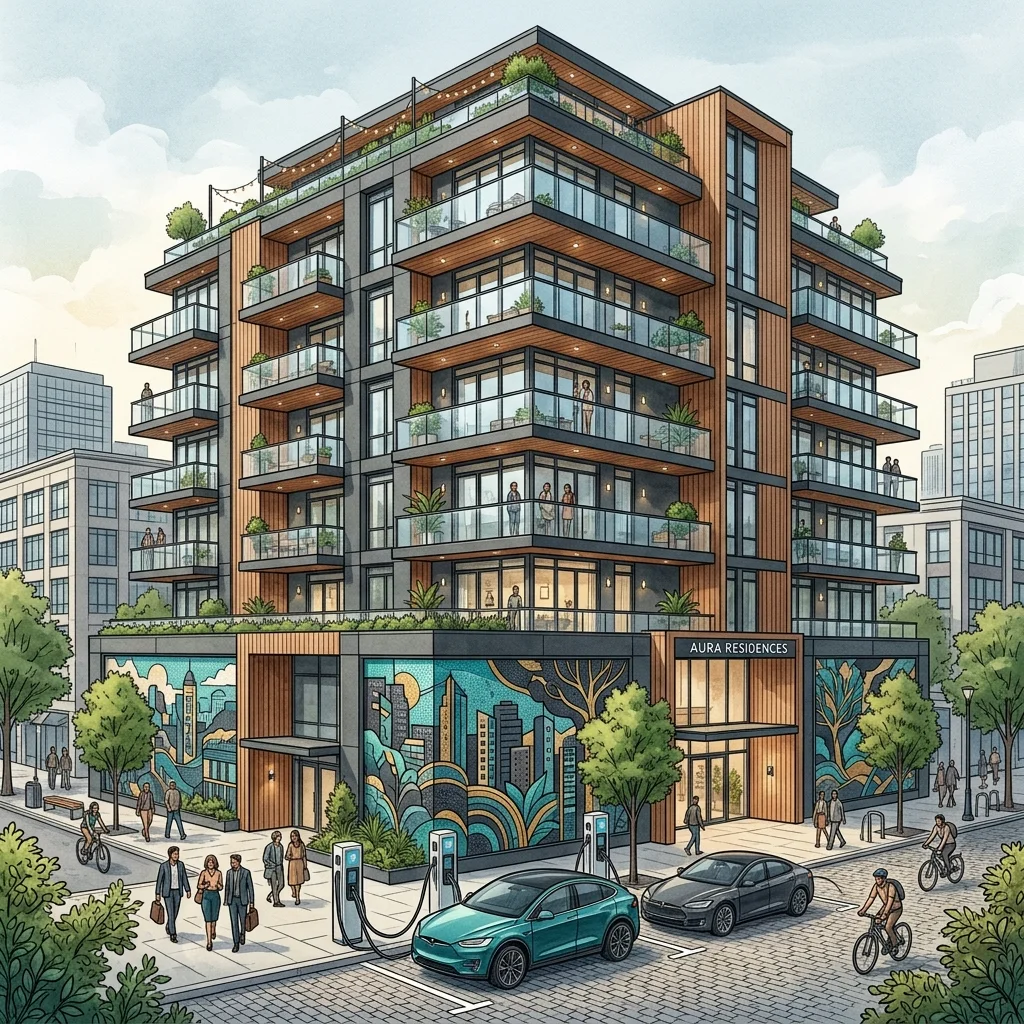
    What is Mosaic Apartments in Everett? Mosaic is Skotdal Real Estate’s newest downtown Everett apartment development — a seven-story, 102-unit art-infused community at 1702 Pacific Avenue in the heart of downtown. The project, designed by Johnson Oaklief Architecture & Planning, was approved in August 2024 and is currently in construction. It features a 106-stall parking garage, EV charging stations, a fitness center, co-working space and club lounge, and public artwork on the building’s blank wall areas — celebrating Everett’s growing public art scene. Status: coming soon.

    If you have walked down Pacific Avenue in downtown Everett in the last six months, you have already seen Mosaic going up. The seven-story footprint at 1702 Pacific Ave is the latest addition to a Skotdal Real Estate downtown portfolio that already includes Peninsula, Library Place, Library Place South Stack, Aero, Marquee, Olympic Park, Colby Center, and the Port Gardner Collection — and it tells the same story the rest of the buildout has been telling: downtown Everett is no longer a place that has to convince anyone that more housing belongs here.

    The 102-unit count puts Mosaic in the same scale range as Skotdal’s other recent downtown work — bigger than Library Place South Stack’s nine homes, smaller than the Waterfront Place high-density block but planted firmly inside the urban grid, two blocks off the Hewitt Avenue spine. We checked in with the project this week and the bones are up, the artwork concept is approved, and Skotdal’s announced status is the magic two words every downtown watcher has been waiting for: coming soon.

    What the building actually is

    The numbers, in order:

    • 7 stories, the maximum that downtown Everett’s mixed-use zoning supports along this Pacific Avenue stretch.
    • 102 upscale apartment homes — Skotdal has described them as bright modern homes consistent with the company’s other downtown portfolio buildings.
    • 106-stall parking garage — slightly more than one stall per unit, which by Pacific Northwest urban-infill standards is generous. Most new Seattle multifamily projects in the same density band are closer to 0.7 stalls per unit.
    • EV charging stations — present from day one, not retrofitted.
    • Fitness center, co-working space, and club lounge — the amenities package that has become standard in mid-market downtown apartments in the post-COVID era, when remote work and hybrid schedules drove demand for at-home co-working space.
    • Public art on blank wall areas and a fifty-foot planter at the base of the blank wall facing Pacific Avenue, per the city design review.

    The architect on record is Johnson Oaklief Architecture & Planning, LLC, the firm that has handled several of Skotdal’s other downtown projects. Craig Skotdal is the applicant of record. The project received city approval in August 2024 and has been moving through construction since.

    Why Skotdal keeps building downtown

    Craig Skotdal’s family has been buying and building in Everett since 1968. Art and Marianne Skotdal made their first purchase that year, and the portfolio has grown steadily through a long-term-hold strategy. In 2004 the company shifted from repositioning existing assets to ground-up construction, and the Peninsula Apartments — the company’s first new-build downtown — set what is now the visual template for the rest of downtown Everett’s apartment stock: brick, art, ground-floor activation, and a deep amenity package.

    Mosaic continues that template with an explicit nod to Everett’s public art scene. The artwork-on-blank-walls approach is a design choice that runs through several of Skotdal’s other properties — Aero leans into aerospace iconography, Library Place uses bibliophile motifs throughout its hallways, and Marquee Apartments plays off the Village Theatre across the street with theater-themed design.

    The thesis behind this much investment from one family in one city is simple: downtown Everett is still pricing below comparable Seattle infill submarkets but is starting to deliver the same amenities, transit, and walkability. The 2028 Sound Transit Everett Link timeline, the September 2026 stadium groundbreaking, the Edgewater Bridge that opened April 28, and the growing list of downtown restaurants and food halls are all things that nudge rent comps up and make new construction pencil. Skotdal has been ahead of that curve for two decades and has the leases to prove it — Peninsula, Library Place, and Library Place South Stack have all consistently posted occupancy above 95 percent in recent quarters.

    How Mosaic fits into the broader downtown picture

    The downtown apartment supply story across 2025 and 2026 is one of acceleration. Just in the last 90 days the Waterfront & Development desk has covered: the Sage Investment Group conversion of the 9602 19th Street SE Econo Lodge to 124 studios (Phase 1 leasing August 2026); the Millwright District Phase 2’s 300-plus apartment count breaking ground; Waterfront Place’s Sawyer and Carling buildings posting 95-percent occupancy with $2,202-to-$2,800 premium rents holding through a softer overall county market; and a $640 million Snohomish County apartment investment year per Kidder Mathews and The Registry that doubled from the 2023 trough.

    Mosaic plays in a different slice. It is not waterfront, it is not an income-restricted conversion, it is not a missing-middle play. It is upper-middle-market downtown urban infill — the slice that historically had to push out to Bellevue or downtown Seattle to find a building that pencils. The 102-unit count is large enough to move the downtown rent comp set but not so large that it floods the submarket the way the Waterfront Place high-density block did.

    When Mosaic delivers — Skotdal has not published a specific opening date yet beyond the “coming soon” status — it will join a downtown apartment portfolio in which a single private operator (Skotdal) is responsible for somewhere north of 600 units across nine buildings within roughly a 10-block walk. That kind of consolidated ownership is rare for a city of Everett’s size and has been a deliberate strategy: Skotdal’s leasing pages and tenant portal funnel residents across the portfolio, and amenities (fitness, co-working, the rooftop deck at Aero) are shared marketing across the buildings.

    What this means for downtown rents and street life

    Two predictions worth tracking once Mosaic delivers:

    1. Pacific Avenue ground-floor activation. The Pacific Avenue stretch between Hewitt Ave and the Everett Public Library has been a quieter retail block than Colby or Hewitt themselves. A 102-unit building with concentrated foot traffic at the entrance is the kind of thing that gives a small ground-floor retail bay or cafe space a real shot. Skotdal’s pattern at other buildings (the Library Place ground-floor activation, the Aero retail at street level) suggests Mosaic will follow that playbook.

    2. Downtown rent floor. Library Place and South Stack rents have been comping at $2.45 to $2.80 per square foot for upper units. Mosaic’s amenity package — fitness center, co-working, club lounge, EV charging, the 106-stall garage — is consistent with that band. If the building leases at that range from delivery, it will reinforce the floor that Skotdal’s other downtown buildings have established. If it has to come in below that to fill 102 units in a stiffer rental market, it will signal something different about where downtown Everett rents settle for the next cycle.

    The bigger picture is one Will has been writing about for months: downtown Everett is building the housing stock to actually be a city center. Not a suburb of Seattle. Not a stop on the way to the Mukilteo ferry. A city center. Mosaic is one more brick in that argument.

    Frequently Asked Questions

    Where is Mosaic Apartments being built in Everett?
    Mosaic is being built at 1702 Pacific Avenue in downtown Everett, WA 98201. The seven-story building sits on Pacific Avenue in the heart of the downtown commercial district, within a short walk of Hewitt Avenue and the Everett Public Library.

    How many units does Mosaic Apartments have?
    The building is a seven-story, 102-unit apartment community. It also includes a 106-stall parking garage.

    Who is developing Mosaic Apartments?
    Skotdal Real Estate is the developer, with Craig Skotdal as applicant of record. The project architect is Johnson Oaklief Architecture & Planning, LLC. The project received City of Everett approval in August 2024.

    When will Mosaic Apartments open in Everett?
    Skotdal has listed the project as “coming soon” with construction underway. The company has not published a specific opening date as of May 2026. Mosaic is the company’s newest downtown Everett development.

    What amenities does Mosaic Apartments offer?
    Mosaic’s announced amenity package includes EV charging stations, a fitness center, a co-working space and club lounge, and a 106-stall parking garage. The building also features public artwork on blank wall areas and a fifty-foot planter at the base of the Pacific Avenue facade, celebrating Everett’s public art scene.

    What other apartment buildings does Skotdal Real Estate own in Everett?
    Skotdal’s downtown Everett multifamily portfolio includes Peninsula Apartments, Library Place, Library Place South Stack, Aero Apartments, Marquee Apartments, Olympic Park Apartments, the Port Gardner Collection, and The Residences at Colby Center. The company has been buying and building in Everett since 1968 and shifted to ground-up new construction in 2004 with the Peninsula Apartments.

    Why does Mosaic emphasize public art?
    Mosaic is positioned as an art-infused community that celebrates Everett’s burgeoning public art scene. The design includes artwork on the building’s blank wall areas — both as a community-design feature and as a city design review condition. Skotdal’s other downtown projects have used similar themed-art approaches (aerospace at Aero, literary motifs at Library Place, theater design at Marquee across from the Village Theatre).


  • Buying a Home in Everett as a Boeing 737 North Line Worker: What April 2026’s Housing Data Means for Your Decision

    Buying a Home in Everett as a Boeing 737 North Line Worker: What April 2026’s Housing Data Means for Your Decision

    Quick answer for Boeing 737 North Line workers: The official April 2026 NWMLS Snohomish County market data is the most useful housing snapshot you’ll get before the North Line summer ramp. 2,094 active listings (+58% YoY), median price $750,000 (-0.7%), average days on market 35, and the most negotiating leverage Snohomish County buyers have had in years. With rates around 6.45% and Boeing’s 2026 production target requiring the Everett North Line to hit rate 53, your job security and your buyer’s market are arriving in the same year. This is the Boeing-specific read on whether to buy now and where in Everett to look.

    If you’re being hired into the Boeing 737 North Line at Paine Field this summer, transferring up from Renton, or already on the Everett line and thinking about buying instead of renting, the April 2026 NWMLS housing data is the most useful single data point you’ll see before you make the call. It’s also a moment with a specific shape: the Snohomish County for-sale market is the most negotiable it’s been in years, the rate environment is what it is, and the Everett North Line ramp tying your job to Boeing’s stated rate-53 production goal is happening on a parallel timeline.

    This is the Boeing/Aerospace worker read on what April 2026’s official numbers mean for your buy decision in Everett.

    Why This Spring’s Numbers Matter for Boeing Workers Specifically

    Two things are happening simultaneously, and they don’t always overlap:

    First: The Everett 737 North Line is the production arithmetic Boeing needs to get from the current 737 MAX rate (47/month, the physical ceiling at Renton) to the stated 2026 target of rate 53 — a number tied to Boeing’s $3 billion free cash flow goal. The North Line ramp is the only path to rate 53. That math means Snohomish County aerospace hiring continues into the summer ramp regardless of broader macro conditions. Job stability for North Line workers is anchored to a specific corporate commitment, not generalized aerospace forecasting.

    Second: The Snohomish County for-sale market hit its most negotiable point in years right as that ramp lands. April 2026’s NWMLS Market Snapshot — released May 7 — shows 2,094 active listings, a 58% inventory surge that led every county in the NWMLS region. Median price ticked down to $750,000. Average days on market: 35. Months of supply: 2.

    For a Boeing worker buying in Everett this spring, those two facts coincide. The hiring ramp says you can plan on the income. The market says you can negotiate harder than recent buyers did.

    The 6.45% Rate Math on a Boeing Income

    The dominant variable in your buy decision is the rate environment. Mortgage rates around 6.45% aren’t going meaningfully lower in the near term per most published forecasts.

    The arithmetic on a Snohomish County median-priced home ($750K) with 20% down and a 6.45% 30-year mortgage produces a principal-and-interest payment around $3,775/month. Add property tax (roughly $600-$750/month on a $750K assessment depending on your specific levies), insurance, and HOA. The all-in payment lands somewhere around $4,500-$5,000/month.

    For a Boeing 737 North Line worker, the IAM 751 contract scale plus shift differential, overtime availability during the rate-up ramp, and the relative income stability of a long-cycle production program all factor into whether that payment is workable. The honest answer varies by job grade, hours, and household. The structural read: the rate is binding, the negotiating environment is favorable, and Boeing’s stated rate target gives the job side of the equation more visibility than most American workforces have right now.

    Where Boeing Workers Tend to Land in Everett

    The natural geography for a Paine Field-commute home is south and west of the North Line:

    • South Everett (Casino Road corridor and the I-5 ramp neighborhoods) — most affordable per square foot, shortest commute to the North Line entrance, and strong existing aerospace-worker resident network. This is the historically dominant Boeing-worker geography in Everett.
    • Mukilteo — outside Everett city limits, closest single municipality to Paine Field’s main entrance, with a higher price per square foot but a sub-15-minute commute.
    • Lake Stevens, Marysville, north Everett — longer commutes, lower per-square-foot pricing, and the part of the buyer pool that’s most exposed to commute-time decisions if the Sound Transit Link timeline shifts.
    • Valley View / Sylvan Crest / Larimer Ridge (south Everett family neighborhoods) — newer construction, school-prioritized buyer profile, and 10-15 minute commute to Paine Field.

    For a deeper look at the south Everett geography that historically dominates the Boeing-worker housing pool, see our Casino Road neighborhood guide and our Valley View / Sylvan Crest neighborhood guide.

    Negotiating Leverage You Didn’t Have Two Years Ago

    The 35-day average days on market and the 2-month supply count translate into specific buyer-side levers that were not viable in the 2021-2023 Snohomish County market:

    • Inspection contingencies are back in the playbook. You can include a full inspection contingency without immediately falling to the bottom of the offer stack.
    • Repair credits and closing-cost help are negotiable. Sellers sitting on a 35-day-old listing with multiple price drops behind them are responsive to closing-cost concessions.
    • Sleep-on-it offer pace is normal again. The pressure to write within 12 hours of touring a home no longer applies to most price brackets.
    • Ask for the appraisal contingency. In a market where the median is softening rather than rising, the appraisal contingency that protects you from overpaying is back in the standard offer template.

    Renting First vs. Buying Immediately

    For a Boeing worker just hired into the Everett line, the rent-vs.-buy question has a specific 2026 shape:

    Case for renting first: Snohomish County’s apartment market is well-supplied (the 2025 apartment sales hit $640M), the rental rates are stable, and renting for 6-12 months while you tour neighborhoods on the ground gives you knowledge you can’t get from listings sites. The for-sale market is the most negotiable it’s been in years, and it’s likely to remain negotiable for the next several months — meaning the urgency case for buying immediately is weaker than it was in 2021-2023.

    Case for buying immediately: Every month of rent is a month of building no equity. If your North Line role is anchored long-term and your household income supports the all-in payment at 6.45%, the market timing is favorable. Waiting for a meaningful rate drop may mean waiting through 2027 or beyond.

    The honest middle: there’s no wrong answer in 2026. The market is structured so that either path works. The 2021-style urgency is gone.

    Key Boeing-Specific Considerations

    A few factors specific to the Boeing-worker buy decision:

    • Shift schedule and commute — second and third shift workers often weight short commute over neighborhood character because the drive home at 1 a.m. matters. Mukilteo and south Everett dominate that math.
    • Long-cycle program stability — Boeing’s stated rate-53 target tied to the North Line is an unusually long-cycle production commitment. Job stability for North Line workers has more visibility than most American workforces.
    • Spouse/partner employment — Snohomish County has a deeper aerospace and Navy support employment base than most U.S. metros, plus growing healthcare and tech sectors. Two-income aerospace households have more options than the single-income buyer profile.
    • School quality if you have kids — Mukilteo School District and certain Everett Public Schools attendance zones (notably some south-end and View Ridge zones) draw heavily from the Boeing-worker family pool.

    Cross-References to Existing Boeing-Worker Housing Coverage

    For more depth on the Boeing-worker-specific housing playbook, see our Boeing 737 North Line Workers Everett Housing Playbook. For the broader Boeing-Everett story right now — the 767 sundown, the KC-46 tanker line, the 777-9 production milestone — see our 767 Sundown Aerospace Worker Guide. For the data on the broader county market context, see our Everett’s Three Housing Markets deep-dive.

    Frequently Asked Questions

    Will the Everett North Line ramp affect Snohomish County housing prices?

    Possibly modestly, on the demand side. Boeing North Line hiring brings new buyers into the pool. But housing prices are dominated by macro variables (rates, inventory, regional demand) that are larger than any single employer’s workforce additions. The April 2026 data shows prices ticking down despite the active aerospace hiring environment.

    What’s the typical commute from Casino Road to Paine Field?

    10-20 minutes depending on time of day and whether you’re going to the Boeing main gate, the south side of the field, or the Future of Flight side. Mukilteo is shorter (5-15 minutes); north Everett and Marysville are longer (20-40 minutes).

    Should I buy near a future Sound Transit station?

    If your Everett housing horizon is 10+ years, the answer leans yes. Sound Transit Link routing scenarios that include a Paine Field stop or a downtown Everett stop would meaningfully change the value of nearby properties over a 10-15 year period. See our Sound Transit Everett Link Extension guide.

    Are mortgage rates going to come down?

    Most major forecasters expect gradual easing into 2027, not a sharp drop. Buyers waiting for a 5% mortgage may be waiting through another full year of 6%+ rates. The rate-lock-in effect that’s been suppressing resale supply is itself a rate-driven phenomenon, so any meaningful rate decline would also accelerate inventory.

    What’s the median Everett rent right now?

    Snohomish County’s apartment market is well-supplied after a wave of new construction. Rental rates are stable and well below the all-in cost of buying a median-priced home at current rates. For Boeing workers exploring the rent-first path, the market is favorable on the rental side too.

    What if I’m a contractor or temp on the line?

    The buy decision math changes meaningfully if your income isn’t long-cycle. Most lenders will require two years of consistent income; contract or temp roles often don’t qualify for conventional financing on the same terms as direct-hire IAM 751 positions. Renting may be the right answer until your role converts.

  • Relocating to Everett in 2026: What April’s Housing Market Means for People Moving to Snohomish County Right Now

    Relocating to Everett in 2026: What April’s Housing Market Means for People Moving to Snohomish County Right Now

    Quick answer for people relocating to Everett: The April 2026 NWMLS data confirms Everett is the most negotiable Snohomish County market in years. 2,094 active listings (+58% YoY), median price $750,000 (-0.7%), average days on market 35, and about 2 months of supply. Buyer leverage on inspections, repairs, and closing-cost help is back. Mortgage rates around 6.45% are the binding constraint — not inventory or list prices. If you’re moving here in 2026, the structural picture is more selection, slower pace, and more room to negotiate than the Everett buyer experience of the last four years.

    If you’ve been watching the Snohomish County housing market from another city or state and trying to decide whether 2026 is the year to commit, the official April 2026 NWMLS Market Snapshot is the most useful single data point you’ll get. Released May 7, the report shows Snohomish County leading the entire 23-county NWMLS region in inventory growth — meaning Everett, the county’s largest city, is one of the most newly-negotiable real estate markets in Washington state right now.

    This is the relocation-focused read on what those numbers mean in practice for someone making a move to Everett this spring or summer.

    You Have More Selection Than Recent Movers Did

    The defining feature of the Everett buyer experience from 2021 through 2024 was scarcity. Active listing counts in Snohomish County hit lows that forced buyers into multiple-offer situations within 24 hours of listing, escalation clauses against unseen competing bids, and waived inspections to win the home. That market is over for now.

    April 2026’s 2,094 active listings in Snohomish County (up from 1,325 in April 2025) is the most selection buyers have had in years. Everett’s share of that inventory specifically — single-family in the established neighborhoods, downtown condos at the top of the cycle’s correction, and townhomes in the I-5 corridor — is materially higher than what new arrivals encountered in any of the last four spring markets.

    For a relocator, this means: you can almost certainly tour the type of home you actually want, in the neighborhood you actually want, within the price band you actually have. That was not true in 2022.

    The $750,000 Median Is the Number to Anchor To

    Snohomish County’s April 2026 median sales price was $750,000. The county is the third-most-expensive in the NWMLS region — above the NWMLS-wide median, above where many forecasters expected — but it’s also the first time in this cycle the median has moved down on an annual basis.

    What this means for someone moving from another market:

    • If you’re coming from King County (Seattle, Bellevue, the Eastside), Everett still represents a meaningful price discount per square foot, with materially shorter commutes than several King County exurbs.
    • If you’re coming from another Washington county (Pierce, Thurston, Whatcom), Everett is more expensive than your origin market, and the $750K median anchor is the most useful comparison point.
    • If you’re coming from out of state (California is the most common origin for Snohomish County movers), Everett offers most of the lifestyle benefits of the Puget Sound metro at a meaningful discount to King County’s medians, with direct access to Boeing/aerospace, Naval Station Everett, and the Sound Transit Link extension that’s coming north over the next decade.

    Days on Market and Months of Supply

    Average days on market in Snohomish County: 35 days. Months of supply: about 2 months.

    For a relocator, the practical effect of those two numbers together is that you can usually:

    • Tour a home, sleep on it, and write the offer on day 2-4 without watching it sell to someone else in 12 hours
    • Include an inspection contingency without putting yourself out of contention
    • Ask for repairs or closing-cost help in negotiation without having the offer immediately rejected
    • Time your offer to your relocation timeline rather than the market’s tempo

    None of this was a given in the 2021-2023 Snohomish County buyer experience. It is a given again now.

    The Rate Environment Is the Binding Constraint, Not Inventory

    Mortgage rates around 6.45% are the dominant variable in any 2026 buyer’s payment calculation. Inventory is no longer the binding constraint; the rate is. For a relocator, this is actually good news on the negotiation side — it means competition for the home you want is muted.

    Run the numbers honestly. A $750,000 home with 20% down and a 6.45% 30-year mortgage produces a principal-and-interest payment around $3,775/month before property tax, insurance, and HOA. Snohomish County property tax adds roughly $600-$750/month on a $750K assessment depending on the specific levies in your address; insurance and HOA vary. The all-in payment lands somewhere around $4,500-$5,000/month for a median-priced home.

    If those numbers are workable on your relocation income, the timing case is good. If they’re stretching, waiting for a meaningful rate decline (most forecasters project gradual easing into 2027 rather than a sharp drop) may make more sense than buying at the edge of affordability.

    Where Relocators Tend to Land in Everett

    Different origin profiles tend to land in different Everett neighborhoods:

    • Northwest Everett (Rucker Hill, Bayside, North Broadway) — the historic neighborhood of choice for relocators who want walkability, downtown access, and Victorian/Craftsman character. Above the county median price.
    • Valley View / Sylvan Crest / Larimer Ridge — south-end family neighborhoods with newer construction, top-rated schools in some attendance zones, and easier I-5 commute access.
    • Casino Road corridor and South Everett — more affordable per square foot, denser community amenities through Connect Casino Road and similar networks, and shorter commute to Paine Field for Boeing/Aerospace workers.
    • Downtown Everett condos — the smallest segment but the most price-corrected. Walkable to Hewitt Avenue restaurants, the Historic Everett Theatre, and the Everett Station transit hub.

    For a deeper neighborhood-by-neighborhood read, see our Three Housing Markets guide and our Casino Road neighborhood deep-dive.

    The Sound Transit Link Calculation

    One factor most relocators underweight: Sound Transit’s Link light rail extension to Everett is in active planning, with an unresolved set of routing scenarios that could put a station near downtown Everett, near Paine Field, or both. That’s covered in detail in our Sound Transit’s Everett Link Extension guide. For a relocator with a 10+ year horizon, neighborhoods near anticipated future stations are worth modeling into the buy decision.

    Schools, Commute, and Comparison to Seattle

    Everett Public Schools (one of the larger districts in the state) has a mix of attendance zones; serious relocators with school-age kids should pull specific school ratings rather than rely on district-wide aggregates. The Mukilteo School District (covering parts of south Everett) often draws relocators with school-prioritized criteria.

    Commute math: from central Everett to downtown Seattle is approximately 30 miles. Driving in peak hours can run 60-90 minutes; Sounder North commuter rail (currently running, with future-of-service questions) covers a portion of the route faster. Bus options through Community Transit and Sound Transit also cover part of the corridor.

    For relocators specifically comparing Everett vs. Seattle on the affordability axis: Everett’s $750K median sits well below Seattle’s median sales price, the home you can buy in Everett is typically larger and newer than the home you can buy in Seattle at the same price, and Snohomish County property tax rates are generally lower than King County’s.

    Frequently Asked Questions

    Is now a good time to buy in Everett if I’m relocating?

    The April 2026 NWMLS data points to a market with materially more selection and negotiating leverage than the previous four years. Whether it’s a good time for you specifically depends on rate-affordability math and your relocation timeline. The market itself is more buyer-friendly than it has been in years.

    Should I rent first or buy immediately when I arrive?

    A growing case for renting first in 2026: Snohomish County’s apartment market is well-supplied (covered in our $640M apartment sales analysis), and rentals are giving relocators a chance to tour neighborhoods on the ground before committing. The opportunity cost of waiting is low because the for-sale market is the most negotiable it’s been in years — meaning the inventory will likely still be available three to six months from now.

    How does Snohomish County compare to King County for relocators?

    Lower median price ($750K vs. King County’s higher figure), more inventory growth (+58% YoY vs. King’s smaller jump), and more space-for-the-price. The trade-off is longer commute to Seattle’s job centers, though the calculus changes for buyers working at Boeing, Paine Field aerospace employers, NAVSTA Everett, or in Snohomish County government and healthcare.

    What’s the cheapest Everett neighborhood to land in?

    South Everett (Casino Road corridor) and parts of the I-5 corridor offer the most affordable per-square-foot entry. The trade-off is generally older housing stock and longer commute to downtown Everett. Northwest Everett, Valley View, and waterfront-adjacent neighborhoods carry the highest per-square-foot premium.

    Is the housing market going to keep softening?

    The current trend (inventory rising, prices flat to slightly down) is sustained by the rate-lock-in effect. As long as mortgage rates stay around 6.45% and the gap between current rates and 2020-2021 refinance rates remains wide, the structural pattern is likely to continue. Sharp rate drops would change the dynamic; gradual rate easing would not.

    Where can I tour neighborhoods virtually before flying in?

    Most Everett listings on the NWMLS-fed sites (Redfin, Zillow, broker sites) include video walk-throughs and 3D tours. For neighborhood-level context, our Three Housing Markets guide and our individual neighborhood profiles cover the day-to-day character of each area.

  • Snohomish County Leads the Region in Inventory Growth: What NWMLS’s Official April 2026 Numbers Mean for Everett Buyers and Sellers

    Snohomish County Leads the Region in Inventory Growth: What NWMLS’s Official April 2026 Numbers Mean for Everett Buyers and Sellers

    Q: Is inventory really up 58% in Snohomish County?
    A: Yes — that’s the official NWMLS figure for April 2026. Active listings rose from 1,325 to 2,094 year-over-year, the largest percentage increase of any county in the 23-county NWMLS region. More homes are available than at any point in recent memory, but high mortgage rates are keeping a lid on closed sales.

    By every measure that matters to people trying to buy or sell a home in Everett right now, April 2026 delivered a split verdict. More homes hit the market than at any point in recent memory — Snohomish County added inventory at a rate of 58% year-over-year, the fastest growth in the entire NWMLS region, which spans 23 counties across Washington state. But fewer homes actually changed hands, and the median price ticked down for the first time in years, suggesting that the inventory flood hasn’t yet turned into a buying spree.

    The official numbers came from the Northwest Multiple Listing Service, which published its April 2026 Market Snapshot on May 7. Here’s what they show for Snohomish County — and what they mean for anyone watching Everett’s real estate market.

    The headline number: 58% more homes available

    Active listings in Snohomish County jumped from 1,325 in April 2025 to 2,094 in April 2026 — a 58% year-over-year increase that led every county in the NWMLS coverage area. Walla Walla (+54%), Okanogan (+52.4%), Skagit (+44.5%), and Thurston (+43.3%) were the next closest, but none matched Snohomish County’s pace.

    For context, we’ve been tracking Snohomish County inventory steadily this year: in March, the NWMLS showed a 51.8% inventory surge; the Madrona Group’s April Sales Activity Intensity report came in at 54.9% per our earlier housing market update. April’s official NWMLS count shows the trend isn’t just continuing — it’s accelerating. Buyers have more to choose from than they have in years.

    The price picture: flat to slightly down

    The median sales price in Snohomish County came in at $750,000 in April 2026, down slightly from $755,500 in April 2025. That’s a modest -0.7% decline year-over-year, but it’s notable because it’s the first time in recent cycles that prices have moved down on an annual basis rather than up.

    At $750,000, Snohomish County ranks third-highest among NWMLS counties — above the NWMLS-wide median, and above where many buyers expected the county to be given the economic uncertainty of the past year. Prices haven’t collapsed. They’ve quietly, gradually softened.

    What does that mean on the ground in Everett? Sellers who listed with aggressive pricing expectations six months ago are finding that buyers are no longer obligated to stretch. It doesn’t mean deals — it means more honest conversations about what homes are actually worth.

    Fewer buyers are closing, but more are going under contract

    Here’s the tension that defines this spring market: closed sales in Snohomish County dropped 15% year-over-year — 104 fewer completed transactions than April 2025. That sounds alarming until you see the other side of the ledger.

    Pending sales (homes under contract but not yet closed) were up 2% year-over-year across the NWMLS region. Buyers are active. They’re writing offers. They’re going under contract. What they’re doing less of is getting all the way to closing.

    The most likely explanation is the mortgage rate environment. Rates sitting at 6.45% are not prohibitive, but they’re high enough that some buyers — particularly those relying on proceeds from a previous sale to qualify — are pausing at the final step. The “lock-in effect” is real: homeowners who refinanced at 3% in 2021 are still choosing to stay put rather than take on a 6.45% mortgage on a new purchase, which suppresses the resale pool even as the overall inventory count rises.

    35 days on market and 2 months of supply — still not a buyer’s market, technically

    Average days on market in Snohomish County came in at 35 days in April 2026. That’s longer than the sub-20-day paces we saw during peak 2021-2022 frenzy, but still far from the 60-90 day markets that characterized the 2008-2012 correction.

    Supply stands at 2.0 months for residential resale — a number that still technically favors sellers (a balanced market is generally considered 4-6 months). But 2.0 months is a world away from the 0.5-0.7 month readings that produced the multiple-offer chaos of 2021-2022. Buyers have real negotiating power for the first time in years. They just have to qualify.

    What this means for the Everett market specifically

    Everett’s market has been one of the most interesting in the county to watch this year. We’ve covered the three-price-band split — Downtown and NW Everett moving in different directions from southeast zip codes — and the rental market’s softening, with apartment rents down 2% year-over-year to an average of $1,849 per month.

    The NWMLS April data adds a layer: even as more homes come available, Everett buyers are navigating a market where the homes that sell quickly are the ones priced correctly from day one. With inventory at 2.0 months, sellers have less margin for optimistic overpricing than they did even six months ago.

    For buyers, the calculus is real: more options, lower median, but 6.45% rates eating into purchasing power. A $750,000 home at 6.45% with 20% down carries a monthly principal-and-interest payment of approximately $3,770 — a number that limits who can comfortably qualify without significant equity or income.

    For the Everett development market, the housing data matters because it sets the backdrop for the 300-plus waterfront apartments coming in the Millwright District Phase 2, the Econo Lodge conversion of 124 studio apartments at 9602 19th St SE, and other multifamily projects in the pipeline. Softer for-sale absorption means more households staying in the rental pool — which is actually a tailwind for Waterfront Place’s apartment occupancy (currently at 95%) and for the new units coming to market in 2026-2027.

    The Sounder North ending in 2033 and the Sound Transit May 28 board decision will add another data point to the transit-oriented development picture around Everett Station, with implications for what gets built and where.

    The takeaway for May 2026

    More homes. Slightly lower prices. Fewer completions, but steady demand going under contract. That’s the April 2026 picture in Snohomish County. It’s the most balanced spring market we’ve seen in years — not a buyer’s market, not a seller’s market, but something closer to a market where both sides have to come prepared and priced to the moment.

    The next NWMLS monthly release will cover May 2026 data, typically available in the first week of June. By then we’ll have the Sound Transit May 28 board decision on Everett Link, which will add one more long-term data point to the development pipeline around Everett Station and the waterfront.

    Frequently Asked Questions

    What is the current median home price in Snohomish County?

    The official NWMLS April 2026 median sales price in Snohomish County is $750,000, down slightly from $755,500 in April 2025.

    How much did housing inventory grow in Snohomish County?

    Active listings grew 58% year-over-year, from 1,325 to 2,094 — the largest inventory increase of any county in the 23-county NWMLS region for April 2026.

    How long are homes sitting on the market in Snohomish County?

    The average days on market in April 2026 was 35 days — longer than the sub-20-day pace of 2021-2022, but far from distressed-market territory.

    What is the current mortgage rate environment?

    As of April 2026, the NWMLS reports an average mortgage rate of 6.45% in the area, which is limiting the pool of buyers who can comfortably complete a purchase — even as more inventory becomes available.

    How many months of housing supply does Snohomish County have?

    Residential resale stands at 2.0 months of supply — technically still a seller’s market, but significantly improved for buyers compared to the 0.5-0.7 month readings of 2021-2022.

    Are home prices falling in Snohomish County?

    The official NWMLS April 2026 data shows Snohomish County median prices down 0.7% year-over-year ($750K vs. $755.5K in April 2025) — the first year-over-year decline in recent cycles. Prices are softening, not collapsing.

    Is it a buyer’s market in Snohomish County?

    Not technically — 2.0 months of supply still favors sellers in most definitions — but buyers have significantly more negotiating leverage than they’ve had in years. More choices, lower median, and sellers who are increasingly priced-to-sell rather than priced-to-wish.

  • Living in Valley View-Sylvan Crest-Larimer Ridge: Everett’s Hilltop Neighborhood With One Road In and Views That Make It Worth It

    Living in Valley View-Sylvan Crest-Larimer Ridge: Everett’s Hilltop Neighborhood With One Road In and Views That Make It Worth It

    What is the Valley View neighborhood in Everett like?
    Valley View-Sylvan Crest-Larimer Ridge is a small, tight-knit hilltop neighborhood in southeast Everett with approximately 680 residents. The neighborhood sits on a plateau with panoramic views of the Cascade Mountains and Snohomish Valley. It has only one road in: 75th Street Southeast, over an Interstate 5 overpass. Homes sell in an average of 12 days — far faster than the national average of 55 — with a median sale price of $675,000.

    Living in Valley View-Sylvan Crest-Larimer Ridge: Everett’s Hilltop Neighborhood

    There’s only one road into Valley View. That one fact explains everything about it.

    You cross the Interstate 5 overpass on 75th Street Southeast, and then you’re in. Quiet, curved streets. Cul-de-sacs that dead-end into tree canopy. Homes with views of the Cascades to the east and the Snohomish Valley below. The plateau that the City of Everett officially designates as Valley View-Sylvan Crest-Larimer Ridge doesn’t announce itself. It doesn’t need to.

    Valley View is one of the last neighborhoods in the desk’s coverage rotation — and one of the most distinct in south Everett.

    A Triangle on a Plateau

    The City of Everett groups three sub-areas — Valley View, Sylvan Crest, and Larimer Ridge — as a single neighborhood because that’s how residents experience them: one continuous, well-kept plateau community in the southeast corner of the city, roughly five miles from downtown Everett. The city’s official neighborhood page is at everettwa.gov/559.

    The shape of the neighborhood is almost literally triangular, defined on two sides by natural terrain and on the third by Interstate 5. The highway that most Puget Sound drivers barely register is, for Valley View, the defining boundary — the feature that keeps the neighborhood separate and quiet. Only one way over: 75th Street SE. Nobody passes through Valley View en route to somewhere else. Everyone who’s there chose to be there.

    The Housing Market Tells the Story

    Homes in Valley View sell in an average of 12 days — versus a national average of 55. The median sale price over the last year is $675,000, down 9% from the prior year’s peak, which actually makes this one of the more watchable entry points into a south Everett plateau neighborhood if you time it right.

    Most of the housing stock was built between 1940 and 1969 — mid-century bones, established lots, mature trees, real yards. A number of more recently built homes fill out the mix. The neighborhood ranks in the top 15% of highest-income neighborhoods in America and in the top 10.9% of family-friendly neighborhoods statewide — a combination of high homeownership rates, above-average school quality, and low crime.

    Who Lives Here

    Roughly 680 people call Valley View-Sylvan Crest-Larimer Ridge home, making it one of Everett’s smaller neighborhood units by population. That scale matters: neighbors actually know each other here. The intimate headcount is part of why the neighborhood consistently appears on lists of Everett’s most community-oriented places to live — there’s enough density to sustain a real association, but not so much that faces blur.

    English is spoken in about 68.8% of households. Vietnamese, Spanish, Arabic, and Tagalog are the next most common languages — a reflection of the broader southeast Everett demographic mix that runs through Pinehurst-Beverly Park, Cascade View, and Evergreen. The neighborhood’s diversity is baked in quietly, without being its defining public identity.

    The Neighborhood Association

    Valley View-Sylvan Crest-Larimer Ridge has an active neighborhood association that meets on the third Tuesday of each month at 7:00 PM at the South Precinct Police station, with no meetings in July, August, or December. For new residents, this meeting is the fastest way to understand what’s actually happening in the neighborhood — what’s being proposed, what longtime residents care about, who to call when something comes up.

    The City of Everett’s Council of Neighborhoods coordinates across all neighborhood associations, and Valley View-Sylvan Crest-Larimer Ridge is fully part of that structure.

    Parks and Getting Outside

    Rotary Park sits close to the neighborhood — a fishing and recreation park with a public boat ramp, one of the few spots in south Everett where you can launch a kayak or fish from shore on a weekday morning. For longer trail time, the Japanese Gulch Trail offers a forested escape with wildlife and quiet that surprises people who don’t know it. Forest Park — Everett’s 197-acre crown jewel with trails, an animal farm, and playgrounds — is a short drive north.

    The neighborhood’s own streets double as walking routes given the near-absence of through traffic. If your definition of a neighborhood park includes “my street at 7 AM with almost no cars,” Valley View delivers consistently.

    Schools

    Valley View-Sylvan Crest-Larimer Ridge is served by Everett Public Schools, which posted a record 96.3% graduation rate for the class of 2025 — one of the highest rates in Washington State. Jefferson Elementary and Eisenhower Middle School serve families in this portion of southeast Everett. The district’s strong college and career readiness programming and the proximity to Everett Community College give Valley View students real post-secondary options close to home.

    What to Know Before You Move

    Valley View-Sylvan Crest-Larimer Ridge is not for people who want city energy immediately outside their door. There are no coffee shops on the corner, no walkable commercial strip. The appeal is something else: real quiet, genuine mountain views, neighbors who wave, and a housing market that’s been overlooked because the neighborhood doesn’t advertise itself.

    The one-road-in geography is a feature for most residents — it keeps the plateau private. I-5 access via 75th Street SE puts you on the freeway in under two minutes. Community Transit serves the area for riders who don’t drive.

    For families comparing south Everett seriously — looking at Glacier View, Cascade View, or Pinehurst-Beverly Park — Valley View belongs on the list. It’s the one most people drive past without ever knowing the plateau exists above them.

    Frequently Asked Questions

    Where exactly is Valley View in Everett?
    Valley View-Sylvan Crest-Larimer Ridge is in southeast Everett, approximately five miles from downtown. The only road access is via 75th Street Southeast, which crosses an I-5 overpass into the neighborhood.

    What is the City of Everett’s official name for this neighborhood?
    The city designates the combined area as Valley View – Sylvan Crest – Larimer Ridge, recognizing the three sub-areas as one neighborhood unit. The official page is at everettwa.gov/559.

    What is the median home price in Valley View?
    The median home sale price over the last 12 months is $675,000 — down 9% from the prior year. Homes sell in an average of 12 days, well below the national average of 55 days.

    Does Valley View have a neighborhood association?
    Yes. The Valley View-Sylvan Crest-Larimer Ridge Neighborhood Association meets the third Tuesday of each month at 7:00 PM at the South Precinct Police station. No meetings in July, August, or December.

    What schools serve Valley View?
    The neighborhood is served by Everett Public Schools. Jefferson Elementary and Eisenhower Middle School serve the area. EPS posted a record 96.3% graduation rate for the class of 2025.

  • Everett City Council Votes Tonight on Permanent Protections for Seven Manufactured Home Communities

    Everett City Council Votes Tonight on Permanent Protections for Seven Manufactured Home Communities

    Tonight at 6:30 p.m., Everett City Council will hold a public hearing and take the third and final vote on CB 2604-23 — an ordinance that would permanently establish a new land-use zone to protect seven manufactured home communities from redevelopment pressure.

    If the council approves CB 2604-23 tonight, Everett will have a dedicated Neighborhood Residential – Manufactured Home Community (NR-MHC) zone — a zoning designation that requires parcels occupied by manufactured home parks to remain as such. That means the owners of the seven named parks could not convert them to other uses — apartments, retail, storage, office — without a future act of the city council.

    For the thousands of Everett residents who live in those seven communities, the vote represents the end of a multi-year legislative process and the formal close of a window that has left some residents uncertain about the long-term stability of their homes.

    What Tonight’s Agenda Shows

    The May 6, 2026 City Council agenda lists CB 2604-23 as both a public hearing and an action item — meaning the council will take public testimony and then vote on the ordinance in the same meeting. This is the third and final reading, the last step in Everett’s ordinance adoption process before a bill goes to the mayor for signature.

    The meeting begins at 6:30 p.m. in City Council Chambers at 3002 Wetmore Ave, Everett. It is also a hybrid meeting, with remote participation available via Zoom.

    The Seven Parks Named in the Ordinance

    CB 2604-23 specifically names the following manufactured home communities as subject to the new NR-MHC zone:

    1. Creekside
    2. Fairway Estates
    3. Lago De Plata Villa
    4. Loganberry
    5. Mobile Country Club
    6. Silver Shores Senior
    7. Westridge

    Each of these parks would have its parcels rezoned to NR-MHC, making manufactured home community use the only permitted primary use on those sites.

    Why a Dedicated Zone Matters

    Manufactured housing is one of the most affordable forms of homeownership available in Snohomish County. Unlike apartment renters, many residents in manufactured home communities own their homes outright — but they rent the land beneath them from the park owner. That structure creates a vulnerability: if a park owner sells the land for redevelopment, residents may be required to move their homes or leave.

    Everett’s Comprehensive Plan identifies manufactured home preservation as a housing policy goal — specifically HO-10 (preserve manufactured housing as a naturally affordable housing type) and HO-19 (protect existing manufactured home communities from displacement). CB 2604-23 is the implementing ordinance that gives those goals legal teeth in the city’s zoning code.

    What the Ordinance Actually Changes

    CB 2604-23 does several things at once. It creates the NR-MHC zone as a distinct designation in the Everett Municipal Code and amends the Zoning Map to apply that designation to the seven named parks. It amends Chapters 15.02, 19.03, 19.04, 19.05, and 19.13 of the EMC to integrate the new zone into Everett’s planning framework. It repeals Title 17 EMC — which contained the prior manufactured housing regulations — and amends Ordinances 3774-20, 3534-17, and 4102-25 for consistency.

    The net effect: manufactured home community use becomes the zoning baseline for these parcels. A park owner who wanted to redevelop the land for another purpose would need to seek a rezone — a public process that would go back before the Planning Commission and City Council.

    The Legislative Timeline

    The ordinance has traveled a long road to reach tonight’s final reading. The NR-MHC zone proposal moved through the Planning Commission with a first review, then multiple public comment periods. Tonight’s public hearing is the formal hearing tied to the third reading of the ordinance — the last opportunity for public testimony before the council acts. Earlier in the process, the city held a public hearing at Walter E. Hall Park.

    For a detailed look at what the zone means for individual park residents, see the earlier resident guide: What Everett’s NR-MHC Zone Means If You Live at Creekside, Fairway Estates, or Any of the Seven Mobile Home Parks. And for a broader overview of the ordinance: Everett’s Proposed NR-MHC Zone: A Complete 2026 Guide.

    Related Everett Housing Policy Context

    CB 2604-23 moves alongside a broader set of Everett and county housing policies. Snohomish County awarded $23 million to six housing projects in an April 24 vote — including three Everett projects — through a separate funding pipeline. Read: How $23 Million in Housing Money Moved Without a Tax Vote.

    The city also recently updated its Critical Areas Regulations, affecting development near wetlands, streams, and landslide-prone areas citywide. Read: Everett’s Wetland and Stream Rules Are About to Change.

    Frequently Asked Questions

    Can park owners still sell the land after this ordinance passes?

    Yes. Ownership of the land is not restricted. What changes is the permitted use. A buyer who purchased a park-zoned parcel would still be required to operate it as a manufactured home community or go through a rezone process that would require city council approval.

    Does this freeze lot rent in the parks?

    No. The NR-MHC zone addresses land use, not rent rates. Residents would still negotiate lot rent with park owners under applicable Washington State law.

    What is Title 17 EMC and why is it being repealed?

    Title 17 EMC contains Everett’s existing manufactured housing regulations. CB 2604-23 replaces those rules with the more specific NR-MHC zone structure, consolidating manufactured home community policy into the main zoning code for consistency and clarity.

    When would the ordinance take effect if it passes tonight?

    After the council votes, the ordinance goes to Mayor Cassie Franklin for signature. Under Everett’s standard process, ordinances typically take effect 30 days after adoption unless they include an emergency clause.

    Does this apply to all manufactured home parks in Everett?

    No. The seven parks named in CB 2604-23 are the specific sites being rezoned. Other manufactured home parks in Everett not named in the ordinance are not directly affected by tonight’s vote.

    What To Do Next

    Tonight’s public hearing: Attend in person at City Council Chambers, 3002 Wetmore Ave, starting at 6:30 p.m. Remote participation via Zoom is available — register at everettwa.gov/speakerform no later than 30 minutes before the meeting.

    Written comment: Email Council@everettwa.gov. Comments submitted at least 24 hours in advance will be distributed to all council members. You can also mail written comments to 2930 Wetmore Avenue, Suite 9A, Everett, WA 98201.

    Read the ordinance: The full text of CB 2604-23 is available at everettwa.gov/2777/Proposed-Code-Amendments.

    Watch the meeting: Live stream and recordings are posted at YouTube.com/EverettCity.

  • Living in Evergreen: South Everett’s Pine-Lined Neighborhood Where Good Schools, Parks, and Everyday Convenience Come Together

    Living in Evergreen: South Everett’s Pine-Lined Neighborhood Where Good Schools, Parks, and Everyday Convenience Come Together

    Living in Evergreen: South Everett’s Pine-Lined Neighborhood Where Good Schools, Walkable Parks, and Everyday Convenience Actually Come Together

    **What is the Evergreen neighborhood in Everett, WA?**

    Evergreen is a south Everett neighborhood of nearly 5,000 residents known for its tree-lined streets, all-ages school pipeline from Madison Elementary through Cascade High, and a commercial corridor along Evergreen Way that puts everyday errands within easy reach. It is one of the few south Everett neighborhoods where walkability, park access, and schools all land in the same zip code.

    Drive south from downtown Everett on Broadway or Evergreen Way and the skyline shifts. The density of the urban core gives way to split-level homes set back from the road, pine trees rising above rooflines, and the particular quiet of a neighborhood that has been doing its job — housing working families within reach of everything — for decades. That neighborhood is Evergreen, and it’s one of the most consistently livable places in south Everett that doesn’t get nearly enough credit for it.

    Evergreen was established as a formal city neighborhood association in late 2004, with assistance from the City of Everett’s Office of Neighborhoods. But the community itself is much older than that — Evergreen Way has been the working commercial backbone of south Everett since long before anyone was holding neighborhood association meetings, and the schools that anchor it have been in place since 1958 when Evergreen Middle School first opened its doors.

    Where Evergreen Is and What It Feels Like

    Evergreen sits in the southern reaches of Everett, roughly 5 miles from downtown and approximately 30 miles from downtown Seattle. The neighborhood is bounded by major corridors and transitions naturally into adjacent areas including Twin Creeks to the south and Westmont-Holly to the west. Evergreen Way is the spine — a 5-mile commercial stretch that runs directly into downtown, lined with restaurants, Fred Meyer, Safeway, QFC, and the kind of corner stores that carry actual produce and spices for a genuinely diverse customer base.

    The residential streets branch off Evergreen Way into cul-de-sacs and quieter side streets. The housing stock is predominantly condos, split-level homes, ramblers, and traditional single-family homes — the kind of mix that attracts first-time buyers who want more space than an apartment but aren’t ready for a new-construction price tag. The median sale price for homes in Evergreen over the last 12 months sits at approximately $530,000, down about 5% from the prior year, and homes have been moving in roughly 33 days on average — significantly faster than the national average of 54 days. That combination of relative affordability by Everett standards and faster-than-average sales velocity tells you something real: people who find Evergreen make up their minds quickly.

    The School Pipeline That Actually Works

    One of Evergreen’s defining characteristics is that the entire K–12 pipeline runs through or near the neighborhood, and all three schools hold a solid grade.

    Madison Elementary feeds into Evergreen Middle School, which feeds into Cascade High School — and all three earn a B grade from Niche. What’s notable is that all three campuses are within walking distance of each other, which is genuinely unusual in a city Everett’s size. For families with kids across different grade levels, that concentration matters.

    Evergreen Middle School has been part of the neighborhood’s identity since it opened in 1958 and was fully remodeled in 1999. Cascade High School, meanwhile, has built a strong reputation for its robotics team, which has grown steadily in membership and actively competes at the regional level. Cascade also offers the International Baccalaureate program — one of the few public high schools in Snohomish County to do so — making it a destination school even for families outside the immediate attendance boundary.

    For parents of older students weighing career pathways, Everett Public Schools’ High School Summer Academy runs at Eisenhower Middle School each July, and Everett Career Link — a partnership between EPS, Snohomish STEM, the City of Everett, and regional employers — offers real-world job experience for high schoolers who want to start building a résumé before graduation.

    Phil Johnson Ballfields: The Park That Got a Real Upgrade

    If there’s one park that defines outdoor life in Evergreen, it’s Phil Johnson Ballfields at 400 Sievers Duecy Boulevard. The 13-acre facility includes four softball and baseball diamonds configured to also fit four soccer fields for youth leagues, a playground, picnic tables, and restrooms — and it was transformed by a $4.65 million renovation that made it one of Snohomish County’s most accessible athletic facilities.

    The renovation added artificial turf, adaptive markings designed for physically and developmentally disabled children, and improvements that make it significantly easier for wheelchair users to access the playground and playing surfaces. It’s one of those upgrades that doesn’t make headlines but changes daily life for families who show up on Saturday mornings. Youth sports leagues run throughout the spring and summer, and the field lighting means the facility stays usable well into the evening.

    The Commercial Corridor: What “Convenient” Actually Means Here

    The Evergreen Way commercial strip is not photogenic. It’s not the kind of streetscape that wins walkability awards. But for the people who live here, it delivers. Major grocery anchors — Fred Meyer, Safeway, QFC — sit alongside independent restaurants, nail salons, auto services, and the kind of small food businesses that reflect Evergreen’s genuinely diverse resident base. The corridor puts essentially every daily errand within a short drive or, for some residents, a walkable distance.

    The proximity to the corridor is also why Evergreen attracts a range of residents: Boeing workers who want a direct shot toward Paine Field, families who want to be in the Cascade High attendance zone, and young buyers who want more living space than north Everett offers at a price that still makes mortgage math work.

    What Long-Timers Know About Evergreen

    Residents who have lived in Evergreen for more than a few years tend to describe it with a specific kind of satisfaction: the neighborhood does what it promises. The schools are real, not aspirational. The park works. The commute to downtown or up to Paine Field is manageable. The streets are quiet without being remote.

    It’s not the most talked-about neighborhood in Everett — that distinction still belongs to the waterfront and downtown. But Evergreen occupies a particular role in the city’s neighborhood ecosystem: a stable, well-established south Everett neighborhood that has been absorbing families for decades without drama, and that continues to deliver on the basics better than its reputation might suggest.

    If you’re looking at south Everett and haven’t put Evergreen on the shortlist, it’s worth a closer look.

    Frequently Asked Questions About Evergreen, Everett

    What schools serve the Evergreen neighborhood?

    The Evergreen neighborhood is served by Madison Elementary, Evergreen Middle School, and Cascade High School — all within the Everett Public Schools district and all earning B grades from Niche. Cascade High also offers the International Baccalaureate program.

    What is the housing market like in Evergreen?

    Median home sale prices in Evergreen are approximately $530,000 (down ~5% year over year). Homes typically sell in about 33 days, faster than the national average of 54 days. The stock includes condos, split-levels, ramblers, and traditional single-family homes.

    Are there parks in the Evergreen neighborhood?

    Yes. Phil Johnson Ballfields at 400 Sievers Duecy Blvd is the area’s primary park — 13 acres with baseball, softball, and soccer fields, plus an accessible playground upgraded during a $4.65M renovation.

    Is Evergreen a good neighborhood for families?

    Evergreen consistently rates well for families because of its walkable school pipeline, accessible park facilities, and commercial corridor that handles daily errands. Niche rates it above average for families.

    How far is Evergreen from downtown Everett?

    Evergreen is approximately 5 miles from downtown Everett via Evergreen Way. It’s also roughly 30 miles from downtown Seattle.

    When was the Evergreen Neighborhood Association formed?

    The Evergreen Neighborhood Association was established in late 2004 with assistance from the City of Everett’s Office of Neighborhoods. The neighborhood itself is significantly older.

  • For South Everett Residents: What Brixton Capital’s Hub @ Everett Pivot to Self-Storage and Office Actually Means For Your Neighborhood

    For South Everett Residents: What Brixton Capital’s Hub @ Everett Pivot to Self-Storage and Office Actually Means For Your Neighborhood

    If you live in Twin Creeks, Westmont, Holly, or anywhere within walking distance of the old Everett Mall — now branded The Hub @ Everett — Brixton Capital’s May 19, 2026 pre-application meeting with the City of Everett is the most consequential signal you’ve gotten about what your neighborhood is actually going to become. Topgolf was the headline anchor. The pre-application now on file shows self-storage and a 60,000-square-foot office in the footprint where Topgolf was going to be built. Here’s what that means specifically if you live nearby.

    What the original Hub @ Everett vision was going to mean for your block

    The entertainment-led version of the Hub @ Everett — Topgolf, Chicken N Pickle, plus retail and restaurant follow-on — would have brought significant evening and weekend foot traffic to a corner of South Everett that has been quiet for years. The neighborhood-level effects would have included more restaurant demand, more nighttime activity, and more on-the-block jobs in the entertainment and food service categories. It would also have brought significant evening and weekend traffic patterns to Everett Mall Way and the I-5 interchange.

    What the new pre-application program would mean instead

    Self-storage and office produce a fundamentally different neighborhood pattern. Self-storage is low-traffic, weekday-tilted, and brings essentially no evening foot traffic. Office at 60,000 square feet — depending on tenant mix — produces weekday daytime traffic during commute hours and almost nothing on evenings and weekends. The aggregate footprint that would have been Topgolf becomes a much quieter use.

    For residents who were looking forward to a walkable evening destination, the pivot is a step backward. For residents who were dreading the traffic and noise that an entertainment anchor would have brought, the pivot is a step in a different direction. Both reactions are reasonable.

    What hasn’t changed for the neighborhood

    • Mall Station is still functional. The rebuilt and relocated transit stop opened on schedule and operates regardless of what happens with the Hub redevelopment program. Your Community Transit access is unaffected.
    • The Twin Creeks neighborhood identity is still intact. The neighborhood that took its name from the buried creeks beneath the mall renamed itself in 2026. That identity sits independently of the property’s eventual program.
    • The half-open mall corridors continue to operate. The partial-tenancy version of the Hub @ Everett that has been functioning during 2026 continues. The pre-application doesn’t immediately change what’s open today.
    • The Westmont-Holly Neighborhood Association still meets first Mondays at Horizon Elementary. The Hub program shift is the kind of issue worth bringing to neighborhood meetings — but the meetings themselves and the city’s neighborhood structure are unchanged.

    What you can actually do with this

    The pre-application is a planning conversation, not an approval. Several practical things are still on the table for residents:

    • Watch for the formal land use application. Pre-applications often lead to formal applications within months when the project is moving forward. The formal application is the public-comment moment.
    • Bring it to your neighborhood association meeting. The Westmont-Holly Neighborhood Association meets first Monday at Horizon Elementary. Twin Creeks and surrounding neighborhood groups have similar standing meeting cadences. Programmatic concerns about a major property like this are exactly what neighborhood meetings are for.
    • Talk to your council member. The Hub @ Everett property’s program decisions are private but the city’s permitting process is public. Council members hear from constituents about properties like this and can sometimes shape the conversation through staff direction or public statement.
    • Use the half-open period to actually visit. The Hub @ Everett’s existing partial-open corridors and tenants are still operating. The more those tenants succeed, the better the case for a more activated final program.

    The bigger question this raises

    South Everett has been waiting for the Hub @ Everett to define what kind of neighborhood the property would create. Self-storage and office is one answer — quieter, less foot-traffic-intensive, more daytime-only. The Topgolf-anchored vision was a different answer. Neither is finalized; the pre-application is the first signal of which direction the property owner is currently leaning.

    For residents, the practical work between now and the formal application is to decide what you actually want from this corner of your neighborhood — and to make that view known to the people who shape the city’s response.

    Frequently asked questions for South Everett residents

    Is Topgolf cancelled?

    Not officially. Neither Brixton Capital nor Topgolf has issued a public cancellation. The May 19, 2026 pre-application Brixton filed shows a 60,000-square-foot office where Topgolf was going to be — that’s a strong signal but not a formal end of the venue plan.

    What is replacing Topgolf at the Hub @ Everett?

    The pre-application shows a self-storage conversion of part of the existing enclosed mall structure plus a 60,000-square-foot proposed office sitting where the Topgolf venue was going to be built.

    Will this affect Mall Station?

    No. Mall Station opened on schedule and operates independently of the Hub redevelopment program.

    Will the Twin Creeks neighborhood identity change?

    No. The neighborhood that renamed itself after the buried creeks beneath the mall site has its own identity independent of what the property eventually becomes.

    How can residents have input?

    Watch for the formal land use application that typically follows a pre-application meeting. The formal application is the public-comment moment. The Westmont-Holly Neighborhood Association meets first Monday at Horizon Elementary; surrounding neighborhood groups have similar cadences.

    Are the existing tenants at the Hub @ Everett staying?

    The half-open corridors and tenants that have been operating in 2026 continue to operate. The pre-application is for changes to the larger building program, not an immediate displacement of current tenants.

    Related Exploring Everett coverage for South Everett residents

  • Housing Hope: The Complete 2026 Guide to Everett’s Largest Affordable-Housing Nonprofit and the New Tomorrow’s Hope at 4526 Federal Avenue

    Housing Hope: The Complete 2026 Guide to Everett’s Largest Affordable-Housing Nonprofit and the New Tomorrow’s Hope at 4526 Federal Avenue

    Housing Hope: The Complete 2026 Guide to Everett’s Largest Affordable-Housing Nonprofit and the New Tomorrow’s Hope at 4526 Federal Avenue

    Drive past 4526 Federal Avenue right now and you will see survey stakes, fresh fencing, and site-prep equipment on the northeast corner of the Compass Health campus. That is a 26,700-square-foot child development center under construction. It belongs to Housing Hope — and most Everett residents have never heard of the organization that is building it.

    That is unusual. Housing Hope manages more than 650 affordable rental units across 24 sites in Snohomish County. It runs a sweat-equity homeownership program that has produced 328 first-time homeowners. It operates a child development center that has served Everett families for more than thirty years. It is the largest affordable-housing nonprofit in the city. And it is in the middle of its biggest year in a long time.

    This is the complete 2026 guide to Housing Hope: what it does, where it operates, the new Tomorrow’s Hope project at 4526 Federal Avenue, the new CEO at the top, and the 1,000-unit goal driving the next four years.

    What Housing Hope Actually Does

    Housing Hope’s mission is to promote and provide affordable housing and tailored services that reduce homelessness and poverty across Snohomish County and Camano Island. In practice, the organization operates five integrated programs:

    1. Affordable rental housing. More than 650 units across 24 sites. Rents are set on a sliding scale based on household income and family size — not market rate. The portfolio runs from single-room transitional units to family-sized apartments specifically designed for households exiting homelessness.

    2. Team HomeBuilding. A sweat-equity homeownership program where working families help build their own and each other’s homes. The program has produced 328 first-time homeowner households. Participants commit hundreds of hours of construction labor in exchange for a deeply discounted mortgage on a home they helped frame, side, and finish.

    3. Tomorrow’s Hope Child Development Center. Quality childcare for kids aged four weeks through twelve years, with a sliding-scale fee structure that prioritizes families currently living in Housing Hope properties or recently exited from homelessness. The current facility has operated for more than 30 years and is being replaced by a much larger purpose-built building at 4526 Federal Avenue.

    4. Workforce and family services. Career counseling, financial coaching, and family stability supports embedded inside the housing portfolio. The integration is the point — residents do not have to leave the property to access services.

    5. Development and acquisition. Housing Hope’s real estate development arm acquires sites, secures funding stacks (federal LIHTC, state Housing Trust Fund, county and city contributions), designs new housing, and operates the resulting buildings. The organization has been one of the most consistent affordable-housing developers in Snohomish County for thirty years.

    The New Tomorrow’s Hope at 4526 Federal Avenue

    The signature 2026 project is a new 26,700-square-foot Tomorrow’s Hope Child Development Center on the Compass Health campus at 4526 Federal Avenue. Several things matter about that project:

    Capacity triples. The current Tomorrow’s Hope serves a fraction of the demand the program receives. The new building expands enrollment dramatically, with classroom space designed for kids from infancy through age twelve.

    The Compass Health partnership is real. Compass is the dominant behavioral-health provider in Snohomish County. Co-locating childcare on the Compass Health campus puts behavioral-health services and childcare in the same place — which matters for families navigating both at once.

    Funding is layered. Affordable-housing-and-services projects of this scale do not get built with one funding source. The financing typically combines state, county, and city contributions with private philanthropy and tax-credit equity. The fact that the project has reached site-prep means that capital stack is closed.

    The 30-year handoff. The existing Tomorrow’s Hope facility has been operating for more than three decades. Replacing it with a purpose-built modern center is the kind of generational handoff few nonprofits successfully execute. Housing Hope is doing it.

    The Leadership Change

    Housing Hope has a new CEO: Kathryn Opina. Leadership transitions at long-running nonprofits are inflection points — they reset strategy, relationships with funders, and operational culture. For an organization the size of Housing Hope at the moment of an active capital project and a 1,000-unit growth target, the timing is significant. Local civic watchers should be paying attention to how the new CEO frames the next four years.

    The 1,000-Unit Goal

    Housing Hope is publicly chasing a 1,000-unit goal by 2030. From the current 650+ portfolio, that is roughly 350 additional units across the remaining four years. At Snohomish County construction costs, that is a multi-hundred-million-dollar development pipeline. The organizations that move that kind of pipeline through approvals, financing, and construction usually sit at the table when local housing policy is debated. Housing Hope sits at that table for Snohomish County.

    Where Housing Hope Operates in Everett

    The 24 sites are spread across Snohomish County and Camano Island, with concentrations in Everett’s lower-income neighborhoods, on Casino Road in South Everett, near downtown, and along the corridors where transit access supports car-light households. Specific properties include transitional housing for families exiting homelessness, permanent supportive housing, family workforce housing, and senior housing — Housing Hope’s portfolio is intentionally diverse so that residents can move within the system as their circumstances change without leaving the network of services.

    Why Housing Hope Matters in 2026

    Three pieces of context make Housing Hope particularly relevant this year:

    Snohomish County’s housing-and-behavioral-health funding wave. The County Council recently approved $23 million for housing and behavioral health programs. Housing Hope is structurally positioned to absorb funding allocations from those streams.

    Everett’s CDBG / HOME / AHTF priority-setting. The city’s Community Development Advisory Committee is holding a May 5 public hearing on 2027 federal housing fund priorities. Housing Hope is both a funder applicant and a major operator of the kind of housing those funds target.

    The 51.8% inventory jump. Snohomish County’s housing inventory rose 51.8% in March 2026. That is a market-rate signal. The affordable-housing tier — which is what Housing Hope operates in — is structurally separate from market-rate inventory, and its tightness is not relieved by a market shift. The need does not move with the inventory chart.

    How Everett Residents Can Engage

    For a household needing housing or services: contact Housing Hope directly to inquire about waitlist availability, eligibility, and program intake. The organization serves residents of Snohomish County and Camano Island.

    For a household wanting to support the work: Housing Hope accepts financial contributions, in-kind donations, and volunteer hours, particularly for the Team HomeBuilding sweat-equity program where construction-skilled volunteers can directly accelerate move-in dates for participating families.

    For Everett residents wanting policy influence: the May 5 CDAC public hearing is one of the more direct levers for shaping how 2027 federal housing dollars get spent locally.

    Frequently Asked Questions

    What is Housing Hope and where is it based?

    Housing Hope is an Everett-headquartered nonprofit that builds and operates affordable rental housing, supports homeownership through sweat-equity construction, and runs childcare and family services across Snohomish County and Camano Island.

    How many units does Housing Hope manage?

    More than 650 affordable rental units across 24 sites in Snohomish County and Camano Island, with a publicly stated goal of 1,000 units by 2030.

    What is the new Tomorrow’s Hope at 4526 Federal Avenue?

    A new 26,700-square-foot child development center under construction on the Compass Health campus at 4526 Federal Avenue in Everett. It replaces the current Tomorrow’s Hope facility and triples childcare capacity.

    Who is the new CEO of Housing Hope?

    Kathryn Opina is the new CEO of Housing Hope, leading the organization through its current capital expansion and the 1,000-unit growth target.

    What is Team HomeBuilding?

    Team HomeBuilding is Housing Hope’s sweat-equity homeownership program. Participating families commit hundreds of hours of construction labor on each other’s homes in exchange for a deeply discounted mortgage on a finished home they helped build. The program has produced 328 first-time homeowner households.

    How does Housing Hope set rent?

    Rent is set on a sliding scale based on household income and family size, not market rate. That is the structural distinction between affordable housing and market-rate housing.

    How can Everett residents support Housing Hope?

    Through financial contributions, in-kind donations, and volunteer hours, including direct construction labor on Team HomeBuilding projects. Residents seeking housing or services can contact Housing Hope directly to inquire about eligibility.

    Is Housing Hope related to Compass Health?

    Housing Hope and Compass Health are independent organizations. The new Tomorrow’s Hope facility is being built on Compass Health’s campus at 4526 Federal Avenue as a partnership project, co-locating childcare with behavioral-health services.


    Related Exploring Everett coverage:


  • For Everett Residents: A 2026 Guide to Getting Housing, Childcare, or Homeownership Help From Housing Hope

    For Everett Residents: A 2026 Guide to Getting Housing, Childcare, or Homeownership Help From Housing Hope

    For Everett Residents: A 2026 Guide to Getting Housing, Childcare, or Homeownership Help From Housing Hope

    If you live in Everett and you have ever wondered whether there is a local nonprofit that can actually help with the three biggest household pressures in this city — rent, childcare, and homeownership — the answer is yes. It is called Housing Hope. It manages more than 650 affordable rental units across 24 sites in Snohomish County. It has helped 328 households become first-time homeowners. And it operates a child development center that is about to triple in size at 4526 Federal Avenue.

    This is the resident’s guide. What Housing Hope does, who it serves, how the eligibility works, and how to actually get help in 2026.

    Who Housing Hope Serves

    Housing Hope serves residents of Snohomish County and Camano Island. The programs are tailored — sliding-scale rents, sliding-scale childcare fees, sweat-equity homeownership — meaning eligibility depends on household income, family size, and current housing situation. Households exiting homelessness, working families struggling with rent burden, families needing childcare to stay employed, and first-time homebuyers who can commit construction hours all map to specific programs.

    The point of Housing Hope’s integrated structure is that residents do not have to leave the system as their circumstances change. A family that starts in transitional housing can move to permanent supportive housing, then to workforce housing, then potentially to Team HomeBuilding ownership — all within the same nonprofit’s portfolio.

    Affordable Rental Housing: The 650-Unit Portfolio

    Housing Hope’s largest program is its 650+ affordable rental units across 24 sites. Rent is set on a sliding scale based on household income and family size, not market rate. That is the structural difference from a regular Everett apartment search.

    The portfolio is intentionally diverse:

    • Transitional housing for households exiting homelessness
    • Permanent supportive housing with on-site case management for residents needing ongoing support
    • Family workforce housing for working households earning below market rates
    • Senior housing for older residents on fixed incomes

    What that means practically: if you are an Everett resident facing rent stress, the right next step is to contact Housing Hope directly to find out which program you would qualify for and what waitlist looks like. The organization does not advertise availability on Craigslist or Zillow because affordable units do not work that way — placement is income-verified and program-matched.

    Team HomeBuilding: The Sweat-Equity Path to Ownership

    Team HomeBuilding is the program that has produced 328 first-time homeowners. The structure is unusual and worth understanding carefully:

    Working families are accepted into the program based on income and ability to commit construction labor hours. Once accepted, they help build their own home and the homes of other participating families — framing, siding, finishing, the whole process. In exchange for hundreds of hours of construction labor, participants receive a deeply discounted mortgage on the home they helped build.

    The numbers behind this matter. A family that contributes hundreds of hours of construction labor effectively replaces tens of thousands of dollars of contractor cost. That cost reduction shows up as a lower mortgage. Families who would not qualify for a market-rate mortgage in Everett often do qualify for the Team HomeBuilding mortgage because the underlying loan is smaller.

    The 328-household track record means this is not a theoretical program. It is one of the more effective first-time-homeowner pipelines in Snohomish County for families that can commit the hours.

    Tomorrow’s Hope Childcare: The 4526 Federal Avenue Expansion

    Tomorrow’s Hope is Housing Hope’s child development center. It serves kids aged four weeks through twelve years. The fee structure is sliding-scale and prioritizes families currently living in Housing Hope properties or recently exited from homelessness.

    The current facility has operated for more than 30 years. It is being replaced by a new 26,700-square-foot purpose-built center at 4526 Federal Avenue on the Compass Health campus. That is a roughly threefold capacity increase. Site-prep is active in 2026; the new facility will significantly expand the number of Everett families who can access Tomorrow’s Hope childcare.

    For Everett families: childcare cost is one of the largest household expenses, and licensed-quality childcare slots in Snohomish County are routinely waitlisted. A Housing Hope-affiliated family with a Tomorrow’s Hope slot is paying a fraction of market rates for licensed care. That is meaningful household-budget math.

    How to Actually Apply

    Housing Hope is a single-point-of-entry organization for residents seeking help. The standard path is:

    1. Contact Housing Hope directly to describe your household situation
    2. An intake conversation determines which program(s) match your needs
    3. Income and household documentation is verified
    4. You are placed on the appropriate waitlist or matched directly with a current opening
    5. If services are time-sensitive (immediate housing need, active homelessness), the conversation prioritizes accordingly

    Waitlists are real. Affordable housing in Everett has demand that outruns supply. The 1,000-unit Housing Hope expansion goal by 2030 exists because the current 650 units do not meet the need. That said, getting on the right waitlist matters — many residents do not realize Housing Hope exists, which means the waitlists are shorter than they would be if every income-qualified Everett resident applied.

    What Else Housing Hope Connects To

    Housing Hope sits inside a larger Snohomish County safety net that includes Volunteers of America Western Washington, Cocoon House (youth homelessness), Compass Health (behavioral health, partnering on the new Tomorrow’s Hope), and the Snohomish County Council’s recently approved $23 million in housing-and-behavioral-health funding. Residents in crisis often need more than one of these organizations. Housing Hope’s case management is structured to make those handoffs work.

    Frequently Asked Questions

    How do I apply for Housing Hope rental housing in Everett?

    Contact Housing Hope directly. The organization’s intake process determines which of its 24 sites and program types you qualify for, then places you on the appropriate waitlist. Affordable housing is income-verified and program-matched, not advertised through standard rental listings.

    Who qualifies for Team HomeBuilding?

    Working families with incomes that meet program guidelines and the ability to commit hundreds of hours of construction labor on their own and other participants’ homes. The program has produced 328 first-time homeowner households across its history.

    How much does Tomorrow’s Hope childcare cost?

    Tomorrow’s Hope uses a sliding-scale fee structure based on household income and family size. Priority is given to families currently in Housing Hope properties or recently exited from homelessness. Residents should contact Housing Hope directly for current fee information and availability.

    Where is Housing Hope’s office in Everett?

    Housing Hope is headquartered in Everett. Specific office addresses, including the new 26,700-square-foot Tomorrow’s Hope facility at 4526 Federal Avenue, are listed on the organization’s official site.

    Can I volunteer with Housing Hope without being a program participant?

    Yes. Housing Hope accepts volunteer construction labor on Team HomeBuilding projects, financial contributions, in-kind donations, and other support roles. Construction-skilled volunteers can directly accelerate move-in dates for participating families.

    How is Housing Hope different from Volunteers of America Western Washington?

    Both are Snohomish County nonprofits, but Housing Hope is primarily a housing developer and operator, while VOAWW operates a broader portfolio that includes food banks, crisis services, and family services across Western Washington. Many residents end up working with both.

    Does Housing Hope only serve people experiencing homelessness?

    No. Housing Hope serves a wide spectrum: households exiting homelessness, working families needing affordable rent, families seeking childcare, and aspiring first-time homeowners. The program structure spans the full range from crisis to homeownership.


    Related Exploring Everett coverage: