Tag: Neighborhoods

  • PCSing to JBLM in 2026: A Tacoma-Area Family Guide to Housing, Childcare, Spouse Jobs, and the Transition Off-Ramp

    PCSing to JBLM in 2026: A Tacoma-Area Family Guide to Housing, Childcare, Spouse Jobs, and the Transition Off-Ramp

    If you just got orders to Joint Base Lewis-McChord, you are joining one of the largest military communities in the country — roughly 40,000 active-duty service members spread across more than 90,000 acres straddling Pierce and Thurston counties. That scale is good news and bad news. The good news is that JBLM and the surrounding Pierce County area have built a deep bench of services for military families. The bad news is that the most valuable of those services — on-base housing and licensed childcare — run on waitlists, and the families who win those waitlists are the ones who get their paperwork moving early. This is a practical field guide for families PCSing into the Tacoma area in 2026: where to live, how to solve childcare, what the working spouse should know, and where the transitioning service member can find a runway into civilian work.

    On-Base Housing: 5,159 Homes, a Waitlist, and 212 New Ones Coming

    JBLM’s family housing is privatized — it’s run by Lewis-McChord Communities, powered by Liberty Military Housing, not the Army directly. There are 5,159 privatized homes on base, and the inventory is actively growing. Liberty broke ground on 212 new homes in JBLM North’s Meriwether Landing community, with the first units moving in starting in early 2026. By the math the developer has shared publicly, roughly 126 of those homes should be finished by the end of 2026 and the remaining 20 by the end of 2027 — part of why Rep. Marilyn Strickland’s office framed the project as a direct answer to the base’s housing shortage. Older stock is being addressed too, through a six-year, roughly $100 million renovation effort modernizing close to a thousand homes.

    Here is the operator’s reality check: a new house under construction does not help you if your report date is next month. On-base homes are assigned by a waitlist managed through the JBLM Housing Division, and the smart move is to get on that list the day your orders are in hand — not the day you arrive. The Liberty leasing center can give you a current read on wait times by bedroom count and village; reach them at (253) 912-2112. Treat the on-base option as a maybe, not a plan, and have an off-post backup ready.

    Off-Post: Where Families Actually Land

    Most JBLM families end up off post, and the geography matters because I-5 traffic is the silent tax on your day. The four communities that come up again and again, per MilitaryByOwner’s relocation guidance, are DuPont, Lakewood, Spanaway, and Puyallup. DuPont is the perennial favorite — it sits right by the gate, it’s walkable, and it’s packed with parks, which is why young families gravitate there. Lakewood, on the north end of the base, gives you the most shopping and a wider rental range. Tacoma proper is the urban option: restaurants, museums, and a downtown that keeps adding to itself, at the cost of a longer commute. One money-saving lever worth knowing before you sign anything is the Rental Partnership Program (RPP), which negotiates reduced fees and lower deposits with participating off-base landlords — ask the Housing Services Office to point you to the current RPP property list.

    Childcare: The Waitlist That Punishes Procrastination

    If there is one sentence to tattoo on your PCS folder, it’s this: register for childcare before you arrive. JBLM’s Child Development Centers, Family Child Care homes, and School-Age Care programs all run through a single front door — MilitaryChildCare.com — and demand routinely outstrips supply. Families request care online, then call Parent Central Services at (253) 966-2977 to complete registration. Parent Central is located at 2295 S. 12th St. at Bitar Avenue on Lewis Main.

    Two details trip up newcomers. First, you have to keep your waitlist request active — log in and confirm it every 30 days, or the system can drop you. Second, fees are not a flat rate; CDC tuition runs on a sliding scale tied to total family income, with the government subsidizing a meaningful share of the cost. The current School Year 2025–26 fee schedule took effect January 1, 2026.

    When the on-base centers are full — and they often are — the fallback is the DoD’s off-base subsidy, now administered as MCCFAO (formerly MCCYN). You find a licensed civilian provider in the Tacoma area, and DoD pays the difference between your income-based CDC rate and the provider’s actual rate, up to a local market ceiling. You qualify by being on a CDC or FCC waitlist with no on-base slot available, you apply through the same MilitaryChildCare.com portal, and approval typically takes two to four weeks. One PCS-specific perk: ask for a Child Care for PCS certificate, which provides transitional childcare support while you’re still settling in.

    Military Spouse Employment: JBLM Has a One-Stop for This

    Pierce County is unusually well-equipped for the working military spouse, largely because of the Hawk Career Center on Lewis North, which co-locates JBLM’s Employment Readiness Program with a WorkSource JBLM office — a partnership of state and local agencies that grew out of the Camo2Commerce workforce initiative between JBLM Command, the Pacific Mountain Workforce Development Council, and WorkForce Central. In plain terms, a spouse can walk into one building and get résumé help, job leads, and connections to local employers. WorkSource JBLM is reachable at worksourcejblm@esd.wa.gov or (253) 593-7320, Monday through Friday, 9 a.m. to 4 p.m., at 11577 41st Division Dr., Room 206.

    Beyond the local office, two DoD programs do the heavy lifting. SECO (Spouse Education and Career Opportunities) offers free career counseling, and My Career Advancement Account (MyCAA) provides up to financial assistance toward licenses, certifications, and associate degrees in portable career fields. If your career requires a state license — nursing, teaching, cosmetology, real estate — start the Washington license-transfer process early; the Employment Readiness Program staff can walk you through reciprocity, and Washington has provisions specifically meant to speed credential transfers for military spouses. The off-base civilian side is covered too: WorkSource Pierce runs dedicated veteran and military-family services countywide.

    PCS Logistics: The Boring Stuff That Saves You Money

    The families who PCS into JBLM cleanly tend to do the same unglamorous things, according to local relocation guides. The moment orders land, read them closely and map your timeline backward from the report date: household goods shipment, school and medical record transfers, travel. Pull your BAH rate for the JBLM ZIP codes early so your housing budget is built on real numbers rather than hope. And if your home — on base or off — isn’t ready when you arrive, the Temporary Lodging Expense (TLE) program can reimburse up to 10 days of lodging, which is the difference between a stressful arrival and a financially painful one.

    For families buying rather than renting, the VA loan remains the headline benefit, and Pierce County’s inventory near the base — DuPont, Lakewood, Spanaway, Puyallup — is deep enough to give you choices. Just weight your search by commute: a house that looks like a bargain in Puyallup can quietly cost you 45 minutes each way on I-5.

    Transition and Veteran Resources: Building the Off-Ramp

    For the service member nearing the end of a contract, JBLM’s Transition Assistance Program (TAP) is the joint-service hub for getting out cleanly — and it serves spouses too. Reach it at (253) 967-3258 or through the Hawk Career Center. The single most valuable transition tool for many is DoD SkillBridge, which lets eligible service members spend their final up-to-180 days in an industry internship or apprenticeship — full military pay, civilian work experience. You’re eligible after at least 180 continuous days of active duty, with command approval, and there are SkillBridge host organizations in the Puget Sound region.

    On the state side, the Washington State Department of Veterans Affairs (WDVA) maintains a Pierce County resource directory, and its Transitioning Warrior Program connects separating members to benefits navigation. Families with school-age kids should make early contact with JBLM’s School Liaison Officers, who smooth enrollment, records transfers, and the credit and graduation snags that hit military kids changing districts mid-year.

    The Operator’s Bottom Line

    JBLM and Pierce County have genuinely built the infrastructure military families need — privatized housing with new inventory coming online, a subsidized childcare system, a one-stop employment center, and a transition pipeline that runs all the way to a paid civilian internship. The catch is that almost every one of those systems rewards the family that starts early and punishes the one that waits. Get on the housing list and the MilitaryChildCare.com list the week your orders arrive, pull your BAH, and book a Parent Central appointment before the truck is even loaded. Do that, and the Tacoma chapter of your military life starts on solid ground.

    Frequently Asked Questions

    How long is the JBLM on-base housing waitlist in 2026?

    Wait times vary by bedroom count and village and change constantly, so there is no single number. On-base homes are managed by Liberty Military Housing through the JBLM Housing Division, and JBLM has 5,159 privatized homes with 212 new units phasing in through 2027. Call the Liberty leasing center at (253) 912-2112 for a current read, and get on the list the day your orders are in hand.

    When should I sign up for childcare at JBLM?

    Before you arrive. Register at MilitaryChildCare.com and call Parent Central Services at (253) 966-2977 to complete registration. Demand exceeds supply, you must reconfirm your waitlist request every 30 days, and PCSing families can request a Child Care for PCS certificate for transitional support.

    What if on-base childcare is full when I get to Tacoma?

    Use the DoD’s off-base subsidy, MCCFAO (formerly MCCYN). You find a licensed civilian provider in the Tacoma/Pierce County area and DoD covers the difference between your income-based CDC rate and the provider’s rate, up to a local ceiling. You apply through MilitaryChildCare.com once you’re on a waitlist with no on-base slot; approval takes two to four weeks.

    Where do most military families live off post near JBLM?

    The most common choices are DuPont (closest to the gate, walkable, family-oriented), Lakewood (most shopping, on the north end), Spanaway, and Puyallup. Tacoma proper offers a more urban lifestyle with a longer commute. Ask the Housing Services Office about the Rental Partnership Program for reduced deposits and fees on participating off-base rentals.

    What employment help is available for military spouses at JBLM?

    The Hawk Career Center on Lewis North houses both JBLM’s Employment Readiness Program and a WorkSource JBLM office, reachable at (253) 593-7320 or worksourcejblm@esd.wa.gov. DoD’s SECO program offers free career counseling, and MyCAA funds licenses and certifications. Washington also has provisions to speed professional license transfers for military spouses.

  • Tacoma’s Neighborhood Pulse: A New Burger Joint in Stadium, Farmers Markets in Full Swing, and a Packed June Calendar

    Tacoma’s Neighborhood Pulse: A New Burger Joint in Stadium, Farmers Markets in Full Swing, and a Packed June Calendar

    Tacoma’s Neighborhood Pulse: A New Burger Joint in Stadium, Farmers Markets in Full Swing, and a Packed June Calendar

    If you want to know how a city is actually doing, skip the macro headlines for a minute and walk its business districts. Tacoma’s neighborhoods are where the real economy lives — the storefront that just got a fresh coat of paint, the market stall that draws a line by 10 a.m., the festival that fills a park on a Saturday. Heading into summer 2026, those signals are pointing up. A well-known regional burger brand is moving into the Stadium District, both of the city’s flagship farmers markets are back in full rhythm, and the early-June events calendar is dense enough to fill several weekends. Here’s what’s moving on the ground.

    Stadium District Lands Lil Woody’s Burgers & Shakes

    The most concrete neighborhood retail news of the season is the arrival of Lil Woody’s Burgers & Shakes in the Stadium District. The Seattle-born burger brand is taking over the former Harvester Restaurant space at 29 N. Tacoma Ave., bringing its menu of quarter-pound, grass-fed beef burgers — with the trademark cheeky names like The Fig and The Pig and The New Mexican — to one of Tacoma’s most walkable corridors, according to industry outlet What Now Seattle.

    The location matters as much as the name. The Stadium District is exactly the kind of dense, pedestrian-first business district that rewards a casual, fast-casual concept — foot traffic from Stadium High School, the surrounding apartments, and the Wright Park crowd all feed the same few blocks. Filling a previously occupied restaurant space, rather than leaving it dark, is a healthy sign for a corridor. Empty restaurant boxes have a way of dragging down the blocks around them; a new tenant with a regional following does the opposite.

    Why Neighborhood Business Districts Are the Real Tell

    Tacoma formally recognizes a network of neighborhood business districts — Stadium, Sixth Avenue, Proctor, Hilltop, the Dome District, and more — each with its own character and its own merchant base. These districts are where small operators take their shot, and watching which storefronts turn over tells you more about local confidence than almost any single statistic. A burger shop choosing Stadium over a suburban strip is a vote for the walkable-neighborhood model that Tacoma has been leaning into for years.

    Both Flagship Farmers Markets Are Back in Full Swing

    Few things signal neighborhood vitality like a busy farmers market, and Tacoma’s two anchors are both well into their 2026 seasons.

    The Broadway Farmers Market runs Thursdays from 10 a.m. to 2 p.m., April 2 through September 24, 2026, at 925 Broadway between 9th and 11th in downtown Tacoma. This is a milestone year — the market is celebrating its 36th season, making it one of the longest-running community institutions downtown. For office workers, residents of the growing number of downtown apartments, and anyone who works nearby, it’s a midweek ritual.

    Up in the North End, the Proctor Farmers’ Market — billed as Tacoma’s only year-round farmers market — sits at North 27th and North Proctor and runs its regular season Saturdays from 9 a.m. to 2 p.m., April 4 through December 19, 2026, before shifting to a reduced winter schedule into 2027. The Proctor market is woven tightly into the Proctor District’s merchant identity; it’s as much a neighborhood gathering point as a grocery run.

    Both markets accept EBT/SNAP and WIC, which matters in a year when household food budgets remain stretched. A market that takes federal nutrition benefits isn’t just a lifestyle amenity — it’s part of the neighborhood’s food access infrastructure.

    An Unusually Dense Early-June Events Calendar

    The community calendar this June is stacked, and the lineup leans hard into the free, family-friendly, park-based events that define a Tacoma summer.

    Point Defiance Flower & Garden Festival (June 6–7)

    The headline weekend event is the Point Defiance Flower & Garden Festival, returning to Point Defiance Park at 5400 N. Pearl St. on June 6 and 7 with free admission. Parks Tacoma is programming the festival as a full showcase of Pacific Northwest gardening: guided tours of the Japanese Garden, hands-on lectures, food trucks, plant and garden-goods shopping, live music, and ticketed add-ons like a beer-and-wine tasting and a paint-and-sip. For a free gate, it’s a remarkably full day — and it pulls visitors from across the South Sound into one of Tacoma’s signature green spaces.

    Juneteenth Celebration (June 19)

    On June 19, Stewart Heights Park hosts a Juneteenth Celebration featuring live music, entertainment, and more than 100 vendors, per regional event guides including Seattle Refined. A 100-plus-vendor footprint is a meaningful platform for local makers, food entrepreneurs, and community organizations — the kind of event where a side-hustle table can turn into a storefront conversation.

    Looking Ahead to Mid-Summer

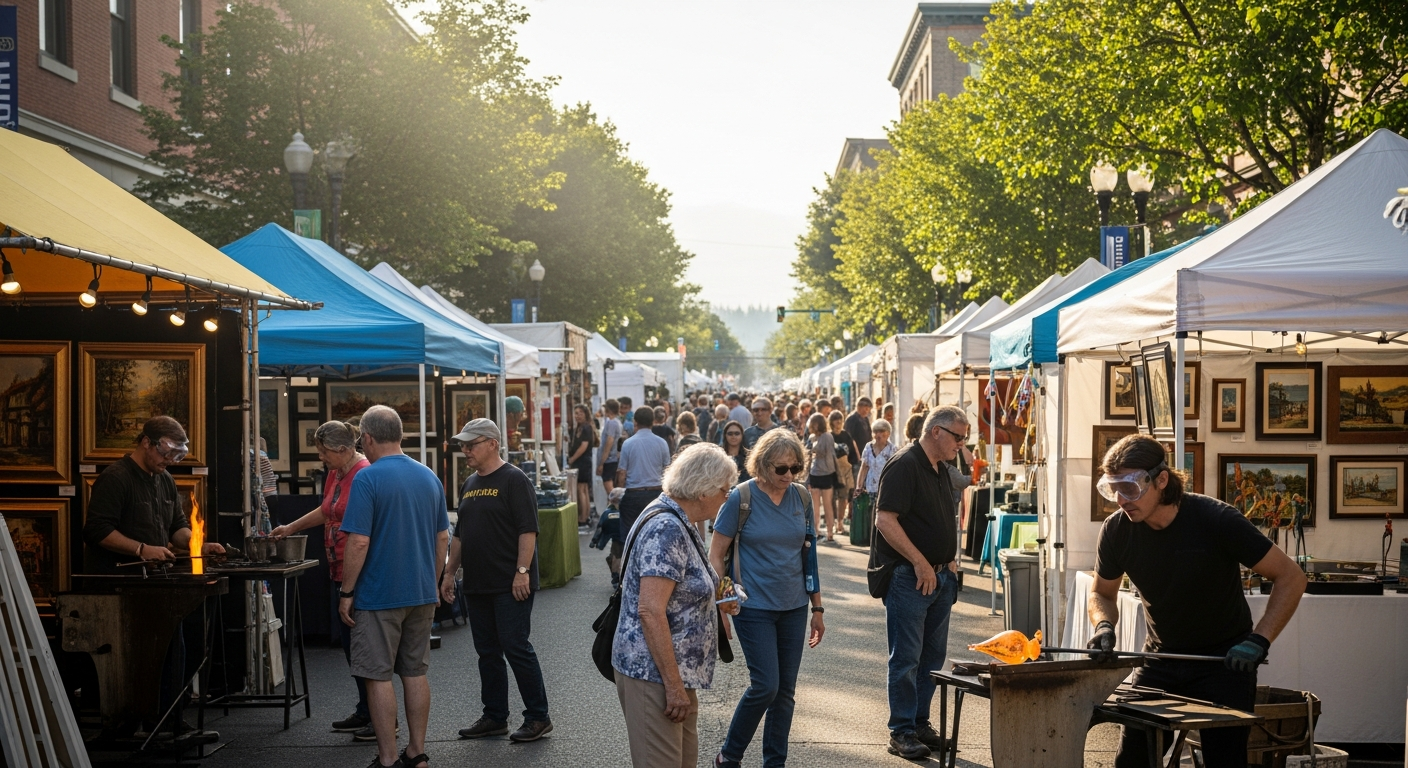
    The neighborhood event drumbeat continues past June. MOSAIC: Tacoma’s Arts & Culture Festival lands at Wright Park July 25–26 as a free celebration of traditional dance, music, art, and food. And the North End’s signature street party, the Proctor Arts Fest, returns Saturday, August 1, 2026 — an event that the Proctor District Association says draws roughly 10,000 visitors and around 160 art and craft vendors, with three stages of live music, a kids’ area, a farmers market, and a merchant sidewalk sale. For Proctor’s small businesses, Arts Fest is one of the biggest single-day traffic drivers of the year.

    Reading the Signals: What This Season Says About Tacoma

    Put the pieces together and a picture forms. New retail tenants are choosing dense, walkable districts over the periphery. The two flagship farmers markets are not just surviving but marking anniversaries and holding year-round footprints. The events calendar is leaning into free, vendor-heavy gatherings that double as launchpads for small operators. None of these is a blockbuster on its own. Together, they describe a neighborhood economy that is active, pedestrian-oriented, and still betting on its own main streets.

    Community signal: Local discussion forums such as r/Tacoma and neighborhood Facebook groups remain the fastest place to catch storefront turnover — soft openings, closures, and “what’s going in there?” threads — often weeks before they hit formal channels. We treat those as leads to verify, not confirmed reporting, and we’ll continue to geo-verify each before it lands here.

    Frequently Asked Questions

    What new restaurant is opening in Tacoma’s Stadium District?

    Lil Woody’s Burgers & Shakes, a Seattle-founded burger brand, is opening in the Stadium District at 29 N. Tacoma Ave. in the former Harvester Restaurant space, per What Now Seattle. The menu features quarter-pound, grass-fed beef burgers.

    When does the Broadway Farmers Market run in 2026?

    The Broadway Farmers Market runs Thursdays from 10 a.m. to 2 p.m., April 2 through September 24, 2026, at 925 Broadway between 9th and 11th in downtown Tacoma. 2026 marks its 36th season, according to the Tacoma Farmers Market.

    Is the Proctor Farmers’ Market open year-round?

    Yes. The Proctor Farmers’ Market at North 27th and North Proctor is Tacoma’s only year-round farmers market. Its regular season runs Saturdays 9 a.m. to 2 p.m., April 4 through December 19, 2026, followed by a reduced winter schedule.

    What free community events are happening in Tacoma in June 2026?

    The Point Defiance Flower & Garden Festival (June 6–7 at Point Defiance Park) offers free admission, and a Juneteenth Celebration with 100-plus vendors takes place June 19 at Stewart Heights Park. Details are available through Parks Tacoma.

    When is the 2026 Proctor Arts Fest?

    The Proctor Arts Fest returns Saturday, August 1, 2026, in Tacoma’s Proctor District. The Proctor District Association reports the event typically draws about 10,000 visitors and roughly 160 art and craft vendors.

  • Tacoma’s $320 Million Street Levy Heads to August Ballot: What the Connect Tacoma Vote Means for Local Businesses

    Tacoma’s $320 Million Street Levy Heads to August Ballot: What the Connect Tacoma Vote Means for Local Businesses


    The Vote That Sets Up August’s Biggest Local Decision

    On April 14, 2026, the Tacoma City Council voted unanimously to place the Connect Tacoma: Safe Streets and Sidewalks levy on the August 4 primary election ballot. The measure asks Pierce County voters to authorize a 10-year, approximately $320 million infrastructure investment — the city’s most ambitious transportation funding push since the now-expired Tacoma Streets Initiative.

    If it passes, Connect Tacoma reshapes the physical fabric of the city. If it fails, Tacoma faces a growing backlog of deferred maintenance on roads and sidewalks with no dedicated replacement funding in sight. For local business owners, property owners, and anyone who moves goods or customers through Tacoma streets, this vote is worth understanding before ballots arrive in July.

    What Exactly Is on the Ballot

    The levy is structured around two overlapping revenue mechanisms. The first is a property tax levy-lid lift of 20 cents per $1,000 of assessed value — roughly $101.52 per year for the average Tacoma homeowner. The second is a 1.5 percent Gross Earnings Tax (GET) applied to natural gas, electric, and telephone utility providers, costs that utilities pass through to ratepayers at an estimated $23.64 annually for a typical household.

    Together these mechanisms are projected to generate approximately $20 million per year in dedicated street funding. Combined with anticipated federal grants and regional partnership contributions, the city projects a total program value of $320 million over 10 years — roughly $32 million annually flowing into Tacoma’s transportation infrastructure.

    The council’s April study session and formal vote were unanimous, a rare alignment signaling broad political consensus. Councilmembers framed Connect Tacoma as the direct replacement for the Tacoma Streets Initiative, the prior voter-approved levy that has since expired and left a dedicated funding gap in the city’s transportation budget.

    How the Money Gets Spent

    The $320 million program divides into three investment categories, each with a defined share of total funding.

    Safe Streets for Everyone — $159 Million (50%)

    Half the levy targets safety: dangerous intersection redesigns, pedestrian crossings, school zone infrastructure, and high-injury corridor improvements. Tacoma has documented corridors — including stretches of Pacific Avenue, 6th Avenue, and South Tacoma Way — where crash rates and pedestrian injuries consistently exceed city and state averages. This is where the most visible physical changes would occur.

    Better Neighborhood Streets — $85 Million (26%)

    This category covers arterial and residential street repair: pavement resurfacing, pothole elimination, and ADA-compliant curb ramp upgrades. For business districts in Hilltop, the Dome District, and East Tacoma, this is the bucket most directly tied to daily customer access and freight movement.

    Improved Connections — $76 Million (24%)

    The remaining quarter funds multimodal infrastructure: sidewalk gap closures, protected bike lanes, and transit access improvements. This work connects neighborhoods to the T Line, Sound Transit infrastructure, and the broader Pierce Transit network — all of which affect workforce access in a metro area where not every employee drives.

    The Business Case For and Against

    Proponents — including Mayor Anders Ibsen’s office and the full council — argue the math is straightforward. Deferred street maintenance doesn’t disappear; it compounds. Industry estimates consistently show that a dollar spent on preventive pavement maintenance saves four to seven dollars in future reconstruction costs. With Tacoma’s street condition index declining in areas that haven’t seen levy-funded work in years, the cost of inaction is measurable.

    For business owners specifically, road quality translates directly to delivery reliability, customer experience, and employee commute friction. Tacoma’s manufacturing and logistics sector — anchored in Frederickson and the Tideflats Manufacturing and Industrial Center — depends on trucks moving efficiently on city arterials connecting to SR-167, I-5, and the Port of Tacoma. Deteriorated streets mean vehicle wear, delivery delays, and liability exposure for fleet operators.

    The case against centers on cost and accountability. Critics note that the utility GET adds to a growing stack of recent municipal cost increases — including the 0.1% criminal justice sales tax (Ordinance 29087) that took effect April 1, 2026, pushing Tacoma’s total sales tax rate to 10.4%. Some residents and small business advocates argue the city needs better demonstrated project delivery before asking for another decade of dedicated revenue.

    Community signal from Tacoma-area forums reflects this tension: residents express genuine support for fixing streets while voicing skepticism about whether project prioritization will reach their neighborhood’s most urgent needs first.

    Context: Tideflats Growth Raises the Infrastructure Stakes

    The levy’s timing isn’t incidental. Tacoma’s Tideflats Subarea Plan — adopted by the council in December 2025 and effective January 5, 2026 — has unlocked new development frameworks for one of Washington’s most critical industrial zones. With approximately 9,800 employees and the highest concentration of manufacturing and industrial activity in Pierce County, the Tideflats is on the cusp of significant redevelopment pressure.

    New zoning districts, updated use allowances, and revised shoreline standards under Ordinances 29075, 29076, and 29077 all point toward increased freight movement, new industrial build-out, and more workers moving through the corridor. The arterials serving the Tideflats — East D Street, Portland Avenue, the 11th Street Bridge approach — are precisely the infrastructure that Connect Tacoma would need to prioritize to keep pace with industrial growth. The city is, in effect, rezoning for growth and simultaneously asking voters to fund the streets that growth requires.

    Mayor Ibsen’s Infrastructure Posture

    Mayor Anders Ibsen, sworn in at the first council meeting of 2026 after defeating incumbent councilmember John Hines, has made infrastructure investment a stated priority alongside public safety, housing production, and regional homelessness response. His office has framed Connect Tacoma as consistent with a “data-driven” and “results-focused” approach to city operations — language Ibsen has used repeatedly since taking office in January.

    The unanimous council vote to place the levy on the ballot is the clearest legislative signal yet of where the new administration’s infrastructure priorities land. Whether voters agree will be known on August 4.

    What to Watch Between Now and August 4

    The levy campaign enters its active phase in coming weeks. Key things to monitor:

    • Project prioritization details. The levy framework references safety data and equity criteria, but specific project lists haven’t been published. Community engagement sessions will be where those lists face public scrutiny.
    • Business community positioning. The Tacoma-Pierce County Chamber and allied organizations have historically weighed in on infrastructure measures. Their formal positions will shape the organized business community’s voice.
    • Council community forum testimony. The Tacoma City Council holds community forums on the second and fourth Tuesday of each month at the end of the regular meeting (5 p.m. at Tacoma Municipal Building). Written comments can be submitted to cityclerk@cityoftacoma.org at least 24 hours before any meeting.
    • Ballot logistics. Ballots for the August 4 primary mail in late July. Pierce County operates 28 drop box locations. Voters not yet registered should check the Pierce County Elections registration deadline.

    Frequently Asked Questions

    What is the Connect Tacoma: Safe Streets and Sidewalks levy?

    Connect Tacoma is a 10-year, $320 million transportation levy placed on the August 4, 2026 primary ballot by the Tacoma City Council. If approved by voters, it funds street repairs, sidewalk improvements, and multimodal infrastructure projects across the city, replacing the expired Tacoma Streets Initiative.

    How much will the Connect Tacoma levy cost property owners?

    The levy adds a property tax rate of 20 cents per $1,000 of assessed value — roughly $101.52 per year for the average Tacoma homeowner — plus a 1.5% Gross Earnings Tax on utility providers, adding about $23.64 annually for a typical household.

    When will Tacoma residents vote on the Connect Tacoma levy?

    The levy is on the August 4, 2026 Pierce County Primary Election ballot. Ballots are mail-in, with 28 drop box locations across Pierce County.

    What happens if the levy fails?

    Without levy funding, Tacoma’s street repair backlog grows with no dedicated replacement revenue. The prior Tacoma Streets Initiative has expired, leaving a significant gap. City officials warn that deferring maintenance multiplies long-term costs and leaves dangerous intersections and sidewalk gaps unaddressed.

    Which Tacoma neighborhoods and streets would get funded first?

    The $320M program splits into Safe Streets for Everyone ($159M, 50%), Better Neighborhood Streets ($85M, 26%), and Improved Connections ($76M, 24%). Specific project prioritization follows safety data, traffic volumes, and equity criteria outlined in the levy framework.

  • From Railway Palace to Tacoma Icon: The Unlikely Story of Stadium High School

    From Railway Palace to Tacoma Icon: The Unlikely Story of Stadium High School


    On July 14, 1873, a crowd gathered at Yesler’s Mill in Seattle expecting to hear that their city had won the transcontinental railroad. Instead, they got a telegram that read: “We have located the terminus on Commencement Bay.” Tacoma — scarcely a village at the time — had been chosen over Seattle as the western end of the Northern Pacific Railway, and nothing in Pierce County would ever be the same.

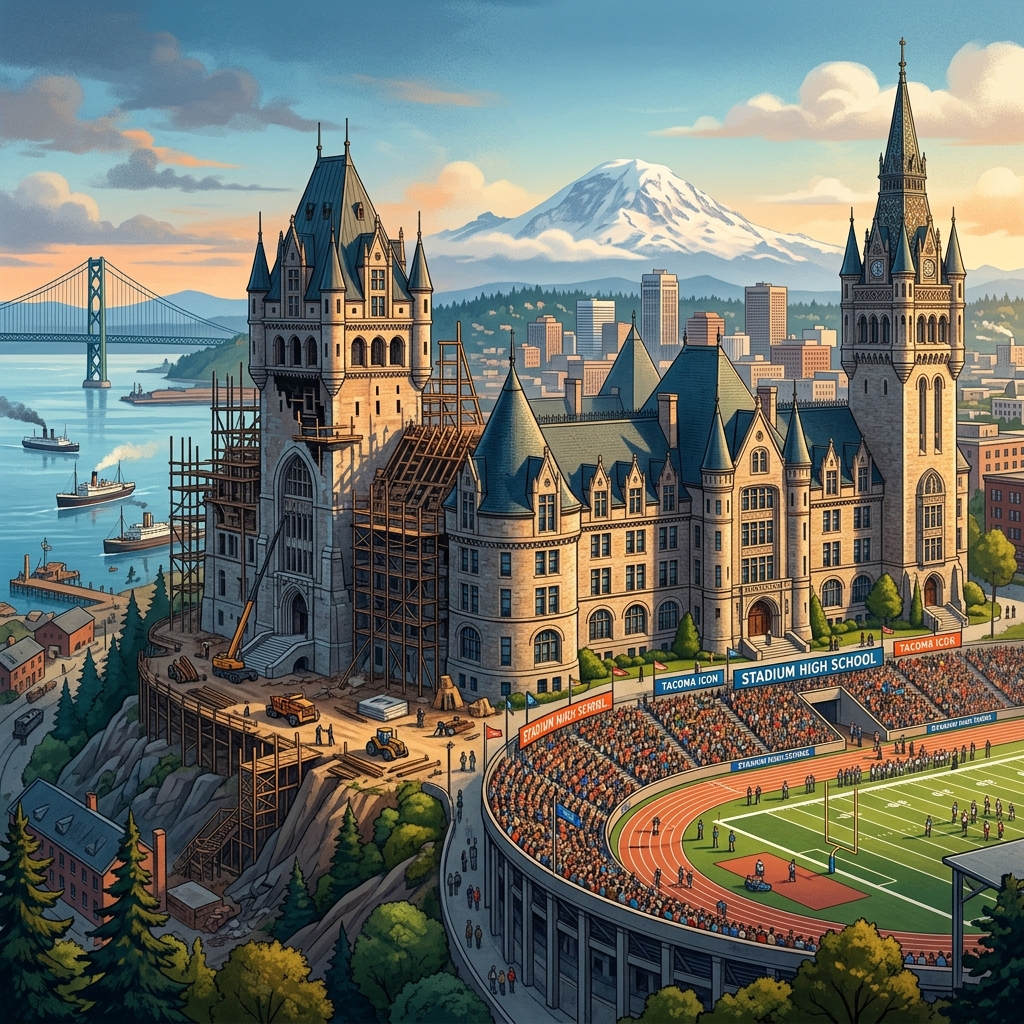
    That single decision set off a chain of events that would eventually produce one of the most architecturally striking high schools in America: the chateau-crowned building at 111 North E Street that Tacoma residents call Stadium High School, and that the rest of the world knows as the backdrop to a certain 1999 Shakespeare adaptation filmed right on the bluff above Commencement Bay.

    But the story between the 1873 telegram and the 1999 film crew is one of ambition, financial ruin, fire, citizen activism, and the kind of resilient improvisation that defines Tacoma at its best.

    The Railroad Bets on Tacoma

    The Northern Pacific’s engineers chose Commencement Bay for practical, not sentimental reasons. The Prairie Line — the flat, treeless corridor connecting Tacoma to the interior — offered the path of least resistance to tidewater. Seattle had lobbied hard, reportedly offering the railroad 7,500 town lots, 3,000 acres, $50,000 in cash, and $200,000 in bonds. The Northern Pacific took Tacoma’s waterfront instead.

    The choice was transformative. Tacoma’s population stood at roughly 1,100 in 1880. By 1889 — the year Washington achieved statehood — it had exploded to 36,000, according to HistoryLink.org. The city platted streets, attracted sawmills and smelters, and began to fancy itself the commercial capital of the Pacific Northwest. The Tacoma Land Company, the railroad’s real estate arm, controlled vast swaths of the city and moved aggressively to shape its identity.

    Part of that identity was supposed to be a world-class hotel.

    The Hotel That Never Opened

    In 1891, the Tacoma Land Company commissioned Philadelphia architects Hewitt and Hewitt to design a palatial tourist hotel on a bluff north of downtown. The site commanded sweeping views of Commencement Bay and the Olympic Mountains beyond. The architects responded with a design drawn directly from the châteaux of France’s Loire Valley: steep mansard rooflines, copper-topped turrets rising from every corner, ornate dormers, and facades built from Roman brick — a distinctive elongated brick style that gave the building its warm, reddish-gold character.

    Construction began with the momentum of a city convinced of its own destiny. Then the Panic of 1893 hit.

    The financial crisis that swept the country in 1893 devastated the Northern Pacific. The company went into receivership. The half-finished hotel on the bluff was quietly abandoned, its turrets and rooflines standing without windows or interior floors, a monument to interrupted ambition. For a time it served as a lumber and shingle warehouse. Then, on October 11, 1898, fire tore through the building, gutting it completely and leaving only the exterior walls standing.

    The Northern Pacific began dismantling the shell, reportedly removing some 40,000 of the distinctive Roman bricks before two Tacoma citizens intervened to halt the demolition. Their argument: the walls were salvageable, the bones were sound, and the city desperately needed a high school.

    Citizens Save the Building

    The Tacoma School District purchased the fire-gutted structure on February 19, 1904, and hired local architect Frederick Heath to complete the reconstruction. Heath’s task was unusual — he was not designing a new building so much as finishing and converting one that had been started by someone else’s vision, interrupted by economic disaster, and partially destroyed by fire.

    Heath preserved the Châteauesque exterior that the Hewitt brothers had designed while reworking the interior entirely for educational use. The building that opened on September 10, 1906, as Tacoma High School was recognizably the same chateau the railroad had started — multiple turrets, mansard lines, the copper detailing — but now filled with classrooms, corridors, and students rather than hotel suites and dining rooms.

    In 1913, when Lincoln High School opened as the district’s second secondary school, Tacoma High School was renamed. The name everyone now knows — Stadium High School — came from the natural feature directly to the south: a ravine called Old Woman’s Gulch that Frederick Heath had also been commissioned to transform into an outdoor athletic venue.

    The Stadium Bowl: Engineering a Natural Amphitheater

    Old Woman’s Gulch cut deep into the Stadium District, its floor originally below sea level and subject to tidal flooding. Between 1909 and 1910, construction crews using steam shovels and hydraulic sluicing moved more than 180,000 cubic yards of earth to level the ravine floor and shape its walls into terraced seating. Wooden molds were poured to cast 31 rows of concrete seating for 11,000 spectators, with the open north end framing an unobstructed view of Commencement Bay and Puget Sound.

    The resulting Stadium Bowl — dedicated on July 10, 1910, at a cost of $135,000 — was one of the largest outdoor athletic venues in the Pacific Northwest. The school and the stadium became inseparable in the public mind, each reinforcing the other’s architectural drama. The chateau on the bluff looked down at the bowl carved from the earth below; together they defined a neighborhood.

    The Stadium District Takes Shape

    The Stadium-Seminary Historic District that grew around the school between 1888 and 1930 is itself a remarkable piece of Tacoma history. The neighborhood — roughly 400 buildings across 50 blocks on the bluff northwest of downtown — developed as the Tacoma Land Company released residential parcels and middle-class families built substantial two- and three-story homes in Queen Anne, Colonial Revival, and Craftsman styles.

    The neighborhood’s layout reflected, however loosely, the ideas of the City Beautiful movement. Frederick Law Olmsted had been commissioned in 1873 to prepare a master plan for New Tacoma; though his specific proposals were never implemented, the design sensibility he represented — broad streets, topographic sensitivity, attention to views — influenced how the Stadium District ultimately developed.

    Today the district is listed on both the Washington State and National Registers of Historic Places. The City of Tacoma’s Historic Preservation Office maintains design review authority over development within it. The near-continuous architectural character — Victorian-era homes beside Craftsman bungalows, largely untouched by mid-century demolition — is rare for a city of Tacoma’s size.

    From Preservation to Pop Culture

    In 2005 and 2006, Stadium High School underwent a major seismic upgrade, historical restoration, and expansion designed to preserve the building for the next century of students. The renovation carefully maintained the exterior’s historic character — the turrets, the rooflines, the Roman brick — while modernizing the interior for contemporary educational use.

    By then, the school had already achieved a different kind of fame. When location scouts for the 1999 film 10 Things I Hate About You — a modern retelling of Shakespeare’s The Taming of the Shrew — saw photographs of Stadium High School, they scrapped plans to film in Los Angeles and moved the entire production to Tacoma. The film’s opening sequence, with Heath Ledger and Julia Stiles navigating the chateau’s corridors and exterior courtyard, introduced the building to a global audience who had no idea they were looking at a failed railway hotel from 1891.

    According to The Seattle Times, alums of Stadium High describe the film as having “put the school on the map” nationally — which is saying something for a building already on three historic registers.

    What the Building Means for Tacoma

    There’s a temptation to read Stadium High School purely as a happy accident — abandoned railroad ambition recycled into public good. But the building’s survival required active choices at several points: the citizens who halted demolition in 1898, the school board that voted to purchase the shell, the architect who honored the original design in his reconstruction, and the community that successfully argued for its historic designation decades later.

    The Washington State Historical Society documents Tacoma’s railroad era extensively, and the Northern Pacific’s choice of Commencement Bay as its terminus runs as a through-line in nearly every major story about the city’s early growth — from the original platting of downtown to the industrial development of the tideflats to the residential neighborhoods that climbed the surrounding bluffs.

    Stadium High School is the most visible physical artifact of that era. It is the building that the Northern Pacific built, that the Panic of 1893 stopped, that fire gutted, that citizens saved, and that Tacoma finished. It has been a school for 120 years. It will likely be one for a good while longer.

    For anyone who wants to understand how Tacoma became Tacoma, the view from the Stadium District bluff — chateau to the left, the bowl below, the bay beyond — is about as clear an explanation as the city offers.

    Frequently Asked Questions About Stadium High School

    Why was Stadium High School originally built as a hotel?

    The Northern Pacific Railway’s Tacoma Land Company began construction of a luxury chateau-style hotel in 1891 to anchor its investment in Tacoma, the railroad’s chosen western terminus since 1873. The hotel was designed to attract wealthy travelers and signal Tacoma’s status as the premier city on Puget Sound. The Panic of 1893 halted construction before the building ever opened.

    What architectural style is Stadium High School?

    Stadium High School is built in the Châteauesque style, drawing from French Renaissance châteaux of the Loire Valley. Designed by Philadelphia architects Hewitt and Hewitt, the building features multiple copper-topped turrets, steep mansard rooflines, decorative dormers, and facades built from Roman brick. It is listed on the Tacoma, Washington State, and National Registers of Historic Places.

    When did Stadium High School open and why did the name change?

    The school opened September 10, 1906, as Tacoma High School after the district purchased the fire-gutted hotel shell in 1904 and commissioned architect Frederick Heath to complete the reconstruction. The name changed to Stadium High School in 1913 when Lincoln High School opened as the district’s second high school, requiring a more specific name tied to the adjacent Stadium Bowl.

    What movie was filmed at Stadium High School?

    The 1999 film 10 Things I Hate About You, a modern adaptation of Shakespeare’s The Taming of the Shrew, was filmed extensively at Stadium High School. Location scouts originally planned to film in Los Angeles but moved the entire production to Tacoma after seeing photographs of the school’s dramatic exterior overlooking Commencement Bay.

    Is Stadium High School a historic landmark?

    Yes. Stadium High School is listed on the Tacoma Register of Historic Places, the Washington State Register of Historic Places, and the National Register of Historic Places. The surrounding Stadium-Seminary Historic District — nearly 400 buildings across 50 blocks — is also listed on both registers. A major seismic upgrade and historical restoration was completed in 2005–2006.


    Related Reading

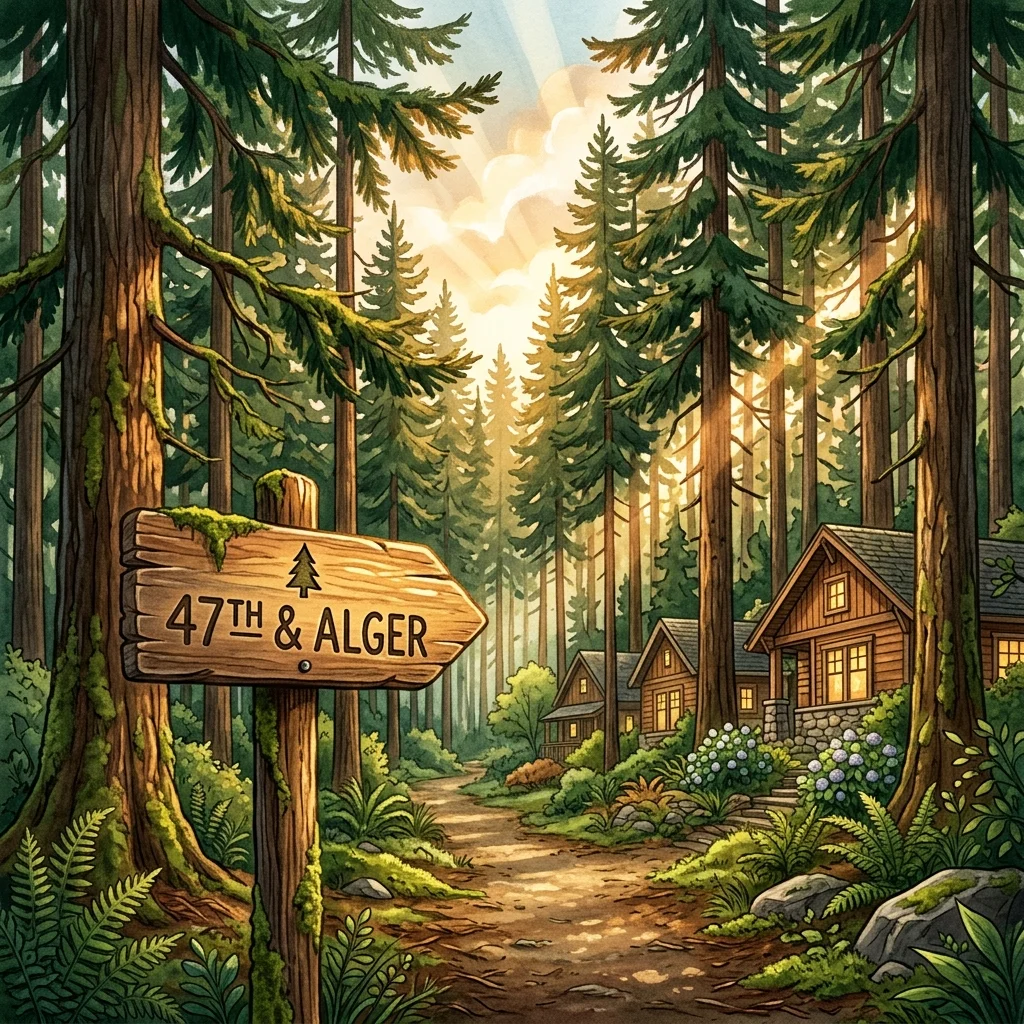
  • Living in South Forest Park: Everett’s Most Heavily Forested Neighborhood Has 2,499 Residents and a Quiet Center at 47th & Alger

    Living in South Forest Park: Everett’s Most Heavily Forested Neighborhood Has 2,499 Residents and a Quiet Center at 47th & Alger

    Living in South Forest Park: Everett’s Most Heavily Forested Neighborhood Has 2,499 Residents and a Quiet Center of Gravity at 47th & Alger

    **What is South Forest Park in Everett?** South Forest Park is one of the City of Everett’s 19 official neighborhoods, located between Casino Road to the south and Glacier View to the east. It is one of Everett’s smallest neighborhoods by population — roughly 2,499 residents — and one of the most heavily forested, anchored by 197-acre Forest Park itself. Its neighborhood association meets the second Tuesday of most months at Zion Lutheran Church at 47th & Alger.

    If you have driven Mukilteo Boulevard between downtown Everett and Boeing’s south end, you have already been to the edge of South Forest Park without knowing it. The neighborhood does not announce itself with a sign or a commercial strip. It does not have a “main drag.” What it has, instead, is canopy. South Forest Park is one of the most heavily wooded residential neighborhoods inside Everett city limits, and the people who live there tend to like it that way.

    It is also, quietly, one of Everett’s most stable.

    Where South Forest Park Actually Is

    The neighborhood sits in south-central Everett, bordered roughly by Mukilteo Boulevard on the north, Casino Road on the south, the western edge of Forest Park on the west, and the rough alignment of Glacier View on the east. The City of Everett’s official neighborhood map shows the boundaries in detail; locals usually describe it more simply as “the streets between Forest Park and Casino Road that aren’t on Casino Road yet.”

    The neighborhood is named for its most defining feature. Forest Park — Everett’s oldest and largest park at 197 acres — sits at the western edge of the neighborhood at 802 East Mukilteo Boulevard. South Forest Park is, literally, the neighborhood south of Forest Park.

    It is also adjacent to two of the projects we have covered before. To the south, the Casino Road corridor is in the middle of a long-running anti-displacement and community investment cycle. To the west, the Pinehurst-Beverly Park neighborhood sits across Mukilteo Boulevard. Long-timers in South Forest Park tend to think of themselves as a buffer between the activity on Casino Road and the quieter, older residential streets to the north — and the geography backs them up.

    The Numbers That Define the Neighborhood

    South Forest Park is small. Population estimates from neighborhood data aggregators put the resident count at approximately 2,499 — making it one of the smaller of Everett’s 19 official neighborhoods. The household size averages about 2.6 people. Owner-occupancy runs at roughly 66 percent, which is high for an Everett neighborhood that mixes single-family homes with multifamily housing.

    Real estate listings put the typical home price between roughly $450,000 for a smaller ranch and $800,000 for a larger or remodeled house. Median sale prices over the last twelve months have been clustered around $675,000. By comparison, Valley View-Sylvan Crest just east of here is reaching for higher numbers, and Casino Road just south of here is doing something different again. South Forest Park sits in the middle — established, wooded, mostly single-family.

    If you want a quick mental model: this is one of the Everett neighborhoods where a 1970s-era ranch on a wooded lot is still the dominant housing type, where most blocks have a tree canopy that hides the rooflines from the street, and where the streets are quieter at 5 p.m. than they are at 8 a.m.

    The Neighborhood Association — and Where It Meets

    South Forest Park has an active neighborhood association recognized by the City of Everett. The association meets the second Tuesday of most months at 7 p.m. at Zion Lutheran Church, 47th & Alger. It is one of about a dozen Everett neighborhood associations that meet regularly enough to maintain a continuous voice in city processes — neighborhood plan updates, capital projects, parks programming, traffic comments.

    The host venue is part of the story. Zion Lutheran was founded in 1901 in downtown Everett and moved to its current South Forest Park location in 1962. The church is part of the Evangelical Lutheran Church in America (ELCA) and has been a community service hub since its founding — food bank, AA meetings, community meals, and the kind of standing-room-only basement that every working neighborhood needs somewhere. The neighborhood association rents the room, but the relationship has lasted because the building has always been used for things bigger than worship.

    The association also collaborates regularly with View Ridge-Madison just to the north, and supports a community garden — the kind of low-cost, high-trust civic infrastructure that does not show up in city budgets but does show up on a Saturday in May.

    What’s Inside the Boundaries

    A few features inside the neighborhood are worth knowing if you are new:

    Forest Park (197 acres) at the northwest edge — Everett’s oldest park, with a Swim Center, picnic shelters, wooded trails, the Parks and Recreation Department’s administrative offices, and (as of a 2026 buildout) refreshed pickleball courts opening at the southeast corner of the park complex. The park alone is reason enough to live in this neighborhood.

    Woodlawn Gardens — the older multifamily/garden apartments that anchor the eastern side of the neighborhood, built when the canopy was already mature.

    Pigeon Creek — one of Everett’s named streams runs along the park edge and through the western side of the neighborhood. Pigeon Creek and its restoration history is part of why the city’s Critical Areas Update matters here.

    Zion Lutheran Church (47th & Alger) — the de facto neighborhood center.

    What Long-Timers Say

    The thing long-time residents say most often is “we are the people who chose the trees.” South Forest Park is small enough that homes don’t turn over often, and the people who do move in tend to be people who explicitly wanted the canopy. The neighborhood’s modest housing stock and stable owner-occupancy rate reflect that.

    The thing they say second most often is “we are not Casino Road, but we care about Casino Road.” The neighborhood has long taken a quiet but clear interest in what is happening to the south — most recently the 2026 Community Transit Goodwill site acquisition and the slower investments through Stations Unidos. South Forest Park residents commute through Casino Road, send kids to Mukilteo School District schools to the south, and read the neighborhood plan updates carefully.

    Schools and Daily Life

    South Forest Park sits at the edge of two school district boundaries — Everett Public Schools serves the northern portion, while Mukilteo School District serves much of the southern portion. Families in the neighborhood often say the boundary line runs through a backyard fence somewhere on their block — and they are not wrong. Anyone shopping for a house here should verify the specific school assignments for that exact address before they commit.

    For groceries, residents drift to either the Casino Road corridor to the south or the West Casino Road QFC. For coffee and quick meals, the closest options are along Mukilteo Boulevard and Evergreen Way. There is no in-neighborhood retail strip, and that is by design.

    A Quiet Verdict

    South Forest Park is not the neighborhood that makes the Tygart Media headlines, and that is the highest compliment Everett can pay a neighborhood. It is small. It is forested. It owns its own homes. It meets at a 64-year-old Lutheran church basement and runs a community garden. It has a neighborhood association that shows up to plan updates and stays on topic.

    If your version of “moving to Everett” includes a tree canopy, an established association, and a short walk to one of the largest urban parks in Snohomish County, South Forest Park is the neighborhood you should look at first.

    Frequently Asked Questions

    Where exactly is South Forest Park in Everett? South Forest Park is in south-central Everett, bordered by Mukilteo Boulevard to the north, Casino Road to the south, Forest Park to the west, and the western edge of Glacier View to the east. The official City of Everett neighborhood map confirms the boundaries.

    How many people live in South Forest Park? Roughly 2,499 residents according to neighborhood-level data aggregators, making it one of Everett’s smaller neighborhoods.

    What is the median home price in South Forest Park? Recent twelve-month median sale prices cluster around $675,000, with smaller homes starting near $450,000 and larger or remodeled homes reaching toward $800,000.

    When does the South Forest Park neighborhood association meet? The association meets the second Tuesday of most months at 7 p.m. at Zion Lutheran Church, 47th & Alger.

    What schools serve South Forest Park? The neighborhood spans the Everett Public Schools / Mukilteo School District boundary. School assignments are address-specific — verify with the appropriate district before purchasing.

    Is Forest Park inside the South Forest Park neighborhood? The 197-acre Forest Park is at the northwest edge of the neighborhood at 802 East Mukilteo Boulevard. The neighborhood is named for its proximity to the park.

    How is South Forest Park different from Pinehurst-Beverly Park? They are separate neighborhoods on the City of Everett’s official 19-neighborhood map. Pinehurst-Beverly Park sits to the west; South Forest Park sits to the east of Forest Park. They share some character but are governed by separate neighborhood associations.

  • Living in Valley View-Sylvan Crest-Larimer Ridge: Everett’s Hilltop Neighborhood With One Road In and Views That Make It Worth It

    Living in Valley View-Sylvan Crest-Larimer Ridge: Everett’s Hilltop Neighborhood With One Road In and Views That Make It Worth It

    What is the Valley View neighborhood in Everett like?
    Valley View-Sylvan Crest-Larimer Ridge is a small, tight-knit hilltop neighborhood in southeast Everett with approximately 680 residents. The neighborhood sits on a plateau with panoramic views of the Cascade Mountains and Snohomish Valley. It has only one road in: 75th Street Southeast, over an Interstate 5 overpass. Homes sell in an average of 12 days — far faster than the national average of 55 — with a median sale price of $675,000.

    Living in Valley View-Sylvan Crest-Larimer Ridge: Everett’s Hilltop Neighborhood

    There’s only one road into Valley View. That one fact explains everything about it.

    You cross the Interstate 5 overpass on 75th Street Southeast, and then you’re in. Quiet, curved streets. Cul-de-sacs that dead-end into tree canopy. Homes with views of the Cascades to the east and the Snohomish Valley below. The plateau that the City of Everett officially designates as Valley View-Sylvan Crest-Larimer Ridge doesn’t announce itself. It doesn’t need to.

    Valley View is one of the last neighborhoods in the desk’s coverage rotation — and one of the most distinct in south Everett.

    A Triangle on a Plateau

    The City of Everett groups three sub-areas — Valley View, Sylvan Crest, and Larimer Ridge — as a single neighborhood because that’s how residents experience them: one continuous, well-kept plateau community in the southeast corner of the city, roughly five miles from downtown Everett. The city’s official neighborhood page is at everettwa.gov/559.

    The shape of the neighborhood is almost literally triangular, defined on two sides by natural terrain and on the third by Interstate 5. The highway that most Puget Sound drivers barely register is, for Valley View, the defining boundary — the feature that keeps the neighborhood separate and quiet. Only one way over: 75th Street SE. Nobody passes through Valley View en route to somewhere else. Everyone who’s there chose to be there.

    The Housing Market Tells the Story

    Homes in Valley View sell in an average of 12 days — versus a national average of 55. The median sale price over the last year is $675,000, down 9% from the prior year’s peak, which actually makes this one of the more watchable entry points into a south Everett plateau neighborhood if you time it right.

    Most of the housing stock was built between 1940 and 1969 — mid-century bones, established lots, mature trees, real yards. A number of more recently built homes fill out the mix. The neighborhood ranks in the top 15% of highest-income neighborhoods in America and in the top 10.9% of family-friendly neighborhoods statewide — a combination of high homeownership rates, above-average school quality, and low crime.

    Who Lives Here

    Roughly 680 people call Valley View-Sylvan Crest-Larimer Ridge home, making it one of Everett’s smaller neighborhood units by population. That scale matters: neighbors actually know each other here. The intimate headcount is part of why the neighborhood consistently appears on lists of Everett’s most community-oriented places to live — there’s enough density to sustain a real association, but not so much that faces blur.

    English is spoken in about 68.8% of households. Vietnamese, Spanish, Arabic, and Tagalog are the next most common languages — a reflection of the broader southeast Everett demographic mix that runs through Pinehurst-Beverly Park, Cascade View, and Evergreen. The neighborhood’s diversity is baked in quietly, without being its defining public identity.

    The Neighborhood Association

    Valley View-Sylvan Crest-Larimer Ridge has an active neighborhood association that meets on the third Tuesday of each month at 7:00 PM at the South Precinct Police station, with no meetings in July, August, or December. For new residents, this meeting is the fastest way to understand what’s actually happening in the neighborhood — what’s being proposed, what longtime residents care about, who to call when something comes up.

    The City of Everett’s Council of Neighborhoods coordinates across all neighborhood associations, and Valley View-Sylvan Crest-Larimer Ridge is fully part of that structure.

    Parks and Getting Outside

    Rotary Park sits close to the neighborhood — a fishing and recreation park with a public boat ramp, one of the few spots in south Everett where you can launch a kayak or fish from shore on a weekday morning. For longer trail time, the Japanese Gulch Trail offers a forested escape with wildlife and quiet that surprises people who don’t know it. Forest Park — Everett’s 197-acre crown jewel with trails, an animal farm, and playgrounds — is a short drive north.

    The neighborhood’s own streets double as walking routes given the near-absence of through traffic. If your definition of a neighborhood park includes “my street at 7 AM with almost no cars,” Valley View delivers consistently.

    Schools

    Valley View-Sylvan Crest-Larimer Ridge is served by Everett Public Schools, which posted a record 96.3% graduation rate for the class of 2025 — one of the highest rates in Washington State. Jefferson Elementary and Eisenhower Middle School serve families in this portion of southeast Everett. The district’s strong college and career readiness programming and the proximity to Everett Community College give Valley View students real post-secondary options close to home.

    What to Know Before You Move

    Valley View-Sylvan Crest-Larimer Ridge is not for people who want city energy immediately outside their door. There are no coffee shops on the corner, no walkable commercial strip. The appeal is something else: real quiet, genuine mountain views, neighbors who wave, and a housing market that’s been overlooked because the neighborhood doesn’t advertise itself.

    The one-road-in geography is a feature for most residents — it keeps the plateau private. I-5 access via 75th Street SE puts you on the freeway in under two minutes. Community Transit serves the area for riders who don’t drive.

    For families comparing south Everett seriously — looking at Glacier View, Cascade View, or Pinehurst-Beverly Park — Valley View belongs on the list. It’s the one most people drive past without ever knowing the plateau exists above them.

    Frequently Asked Questions

    Where exactly is Valley View in Everett?
    Valley View-Sylvan Crest-Larimer Ridge is in southeast Everett, approximately five miles from downtown. The only road access is via 75th Street Southeast, which crosses an I-5 overpass into the neighborhood.

    What is the City of Everett’s official name for this neighborhood?
    The city designates the combined area as Valley View – Sylvan Crest – Larimer Ridge, recognizing the three sub-areas as one neighborhood unit. The official page is at everettwa.gov/559.

    What is the median home price in Valley View?
    The median home sale price over the last 12 months is $675,000 — down 9% from the prior year. Homes sell in an average of 12 days, well below the national average of 55 days.

    Does Valley View have a neighborhood association?
    Yes. The Valley View-Sylvan Crest-Larimer Ridge Neighborhood Association meets the third Tuesday of each month at 7:00 PM at the South Precinct Police station. No meetings in July, August, or December.

    What schools serve Valley View?
    The neighborhood is served by Everett Public Schools. Jefferson Elementary and Eisenhower Middle School serve the area. EPS posted a record 96.3% graduation rate for the class of 2025.

  • Butter Notes Cafe on Broadway Is Everett’s Most Ambitious Coffee Shop — Jazz, a Podcast Studio, and a Menu That Actually Has Ideas

    Butter Notes Cafe on Broadway Is Everett’s Most Ambitious Coffee Shop — Jazz, a Podcast Studio, and a Menu That Actually Has Ideas

    Most coffee shops in Everett serve lattes and move on. Butter Notes Cafe, at 902 N Broadway, is trying to be something different — and four months in, it’s earning the ambition.

    The cafe opened in January 2026 in North Everett, tucked into a suite on Broadway that’s been quietly building a more interesting neighborhood commercial scene. From the outside it looks like a standard coffee stop. Inside there’s a piano, a drum set, ticketed jazz shows, a professional podcast studio, and a drink menu that goes considerably beyond your standard espresso lineup.

    We stopped by to see if the concept holds together. It does.

    The Drinks Menu Is a Statement

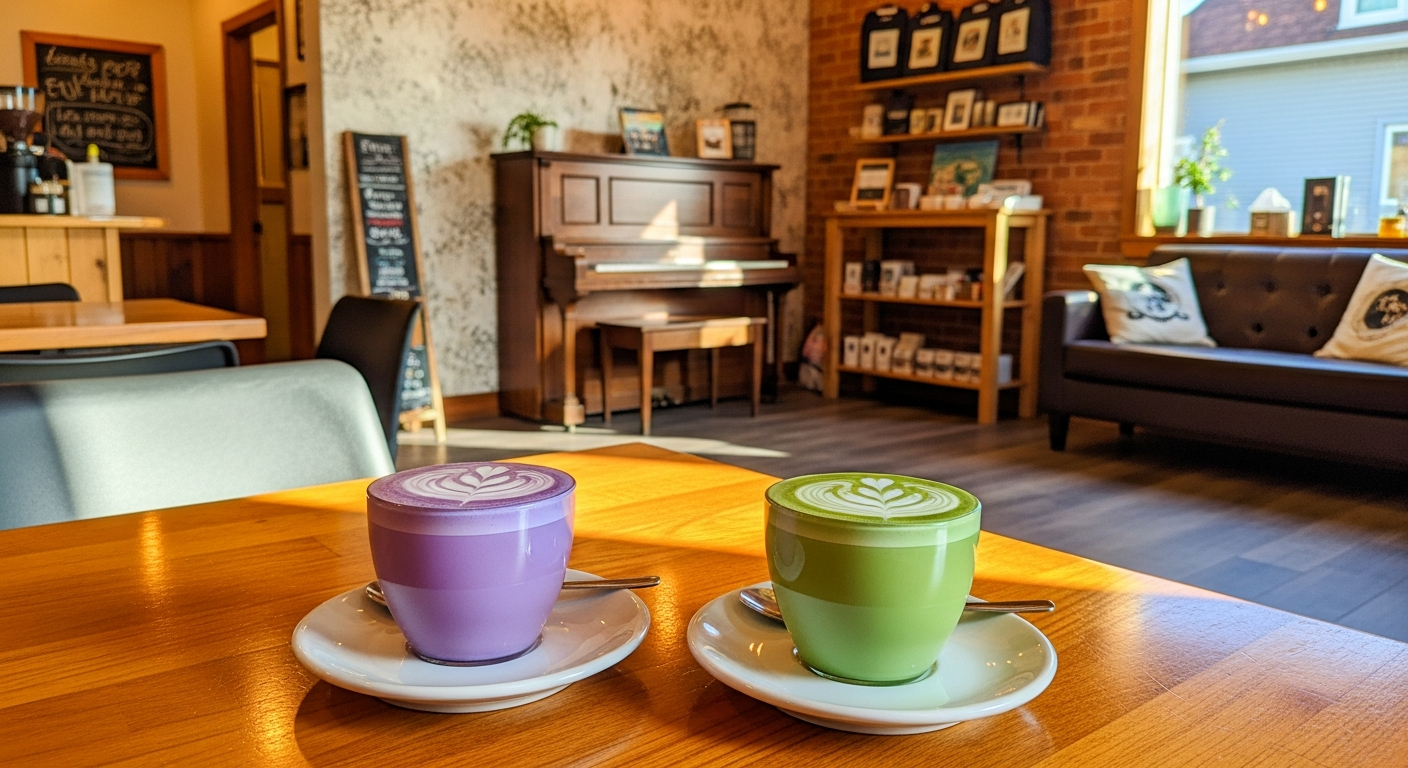
    Butter Notes starts with the basics — Americano ($4.25–$5.25), cappuccino ($4.75–$5.25), drip coffee ($3.50–$4.50) — and then gets interesting. The signature and best-seller section leans into Asian-influenced flavors with real commitment: Matcha Latte ($5.75–$6.75), Strawberry Matcha Latte ($6.25–$7.25), Ube Latte ($6.25–$7.25), Hojicha Latte ($5.75–$6.75), Black Sesame Latte ($6.25–$7.25), Blueberry Matcha Latte, and Earl’s Garden (earl grey with floral notes, $6.25–$7.25).

    The Cream Cheese Cold Brew ($5.75–$6.75) deserves a mention — the cream cheese foam cold brew format started in Taiwan and shows up in a handful of Pacific Northwest specialty shops, but rarely in Everett. Order it once and it becomes a habit.

    All prices are three-tier: 12 oz, 16 oz, 20 oz. Even the more elaborate specialty drinks top out at $7.25. A standard latte is $4.75 for a 12-ounce. The pricing is honest for the quality level.

    The Food

    Croffles — croissant waffles — are the signature food item. The strawberry croffle is the one people keep coming back for based on Yelp activity, and it shows up repeatedly in reviews as the thing that made someone a regular. Crepes are also on the menu. The food is the kind of thing that pairs with a long coffee order rather than standing on its own as a meal, which is exactly the right call for a cafe with this much going on in the drink department.

    The Piano, the Jazz Shows, and the Discord

    The piano and drum set are not decoration — Butter Notes hosts regular ticketed jazz shows, listed at turntabletickets.com, and the room is designed around them. This is unusual for Everett. A specialty coffee shop with a recurring live jazz program embedded into its weekly rhythm is not something the city has had before.

    They also run a Discord community server. This is a deliberate choice that signals the target audience: younger regulars who want a third place that actually does community rather than performing it. The newsletter is framed as “Help us bring jazz to Everett,” which tells you exactly what the owners are trying to build here.

    The podcast studio (bookable via Peerspace) adds another layer: professional multi-camera recording equipment, studio lighting, professional audio — for local creators who need the hardware without the overhead of a full production house. It’s an economically interesting bet. A podcast studio inside a coffee shop brings in a specific kind of regular who also tends to tell other people about the place.

    How It Compares to Other Everett Coffee Options

    The Broadway corridor has been underserved for sit-down specialty coffee. The closest direct comparisons in terms of specialty focus and community vibe would be Narrative Coffee downtown, The Loft Coffee Bar on Hewitt, or Nadine’s Coffee House off Wetmore — all worth visiting. What separates Butter Notes is the performance program. Jazz nights turn a coffee shop into a destination rather than a convenience, which is a fundamentally different kind of business. Sobar Coffee on Colby has the remote-work atmosphere; Butter Notes is doing something closer to a community arts space that also makes excellent lattes.

    Hours and How to Get There

    Open Monday through Friday 7 AM–8 PM, Saturday and Sunday 8 AM–8 PM. Online ordering available. The Broadway location is accessible from the North Everett residential neighborhoods, about a 10-minute drive from downtown or a short walk from the Broadway commercial corridor.

    The Bottom Line

    If your coffee rotation has gone stale, Butter Notes is the corrective. The specialty drink menu uses Asian flavors as a genuine design language rather than a novelty. The jazz shows make the space alive on weekday evenings. The podcast studio pays for the rent. It all adds up to a place with an actual point of view, which is rarer than it should be for a city the size of Everett.

    The move: Ube Latte or Strawberry Matcha Latte. Strawberry croffle if you’re hungry. Arrive early on weekends — seating fills before the jazz sets start.

    Address: 902 N Broadway, Suite B, Everett, WA 98201
    Hours: Mon–Fri 7 AM–8 PM, Sat–Sun 8 AM–8 PM
    What to order: Ube Latte, Strawberry Matcha Latte, Cream Cheese Cold Brew, strawberry croffle
    Jazz shows: turntabletickets.com
    Podcast studio: Bookable via Peerspace
    Price range: $–$$

    Frequently Asked Questions

    Where is Butter Notes Cafe in Everett?

    Butter Notes Cafe is at 902 N Broadway, Suite B, Everett, WA 98201, in North Everett on the Broadway corridor.

    What are Butter Notes Cafe hours?

    Monday through Friday: 7 AM–8 PM. Saturday and Sunday: 8 AM–8 PM.

    What is a croffle at Butter Notes?

    A croffle is a croissant waffle — croissant dough pressed in a waffle iron. Butter Notes’ strawberry croffle is their signature food item and one of the most-ordered items on the menu.

    Does Butter Notes Cafe have live music?

    Yes. Butter Notes hosts regular ticketed jazz shows. Tickets are available at turntabletickets.com and upcoming dates are listed on their events calendar at butternotescafe.com.

    Does Butter Notes Cafe have a podcast studio?

    Yes. Butter Notes has a professional podcast recording studio with multi-camera video, professional audio, and studio lighting available for rent. Book through their Peerspace listing or via butternotescafe.com/podcast-studio.

    What is the best drink at Butter Notes Cafe?

    The Ube Latte, Strawberry Matcha Latte, and Cream Cheese Cold Brew are the standouts based on menu positioning and customer reviews. The Ube Latte ($6.25–$7.25) is the most distinctive drink on the menu.

  • Power in Unity: Casino Road’s Diverse Communities Come Into Focus During AAPI Heritage Month 2026

    Power in Unity: Casino Road’s Diverse Communities Come Into Focus During AAPI Heritage Month 2026

    Power in Unity: Casino Road’s Diverse Communities Come Into Focus During AAPI Heritage Month 2026

    **What communities make up Casino Road in South Everett?**

    Casino Road is one of South Everett’s most culturally diverse corridors, home to significant Vietnamese, Cambodian, Filipino, and other Pacific Islander and immigrant communities. During May’s Asian American, Native Hawaiian, and Pacific Islander Heritage Month, those communities and the organizations that serve them offer a template for what “power in unity” actually looks like in a working-class neighborhood.

    May is Asian American, Native Hawaiian, and Pacific Islander Heritage Month — and this year’s national theme, “Power in Unity: Strengthening Communities Together,” reads like it was written with Casino Road in mind.

    South Everett’s Casino Road corridor has never been a neighborhood that waits for outside recognition to celebrate its own strength. It does that continuously, through the restaurants, cultural organizations, faith communities, and neighbors who have built a genuine place here over decades. But Heritage Month is worth pausing to mark, because the communities along Casino Road reflect exactly what the theme describes: a corridor where different cultural communities share space, share resources, and have built a collective infrastructure of mutual support that outsiders rarely see clearly.

    Who Lives on Casino Road

    The Casino Road neighborhood in South Everett has one of the highest concentrations of immigrant and refugee families in Snohomish County, with approximately 25 percent of residents being first-generation immigrants according to community planning documents on file with the City of Everett. The community includes significant Vietnamese, Cambodian, Filipino, and other Southeast Asian and Pacific Islander populations, alongside Mexican, East African, and other communities who have made this stretch of Everett home.

    That diversity doesn’t exist in silos. What’s distinctive about Casino Road is that the communities here have overlapping needs, overlapping institutions, and a growing tradition of showing up for each other across cultural lines. That’s the “unity” part of this month’s theme made concrete.

    The Village on Casino Road: Where Community Actually Gathers

    At the center of Casino Road’s community infrastructure is The Village on Casino Road, operated in collaboration with ChildStrive and the Connect Casino Road initiative. The Village’s history on this block is long — it traces back to 1963 and the founding of the Little Red School House, which expanded operations to Everett in 1988. ChildStrive purchased the building in 1998, and beginning in January 2019 the Community Foundation of Snohomish County began leasing the facility to develop it as a community hub.

    Construction happened in two phases: Phase 1 in August 2019, Phase 2 beginning that November, with the full hub opening in March 2020.

    Today, The Village brings together more than two dozen community organizations to deliver services that the neighborhood’s most vulnerable residents need most. On Tuesdays, the space hosts fun activities and playful learning for families. On Fridays, ChildStrive runs early childhood programming for families with children aged 0 to 5. The regular programming roster also includes:

    • **Free ESL classes for adults**, taught by Everett Community College professors, with infants welcome in the classroom with their caregivers
    • **Free primary care health clinics** for low-income and uninsured adults
    • **Apple Health and health insurance enrollment assistance** for residents navigating the benefits system
    • **An onsite advocate** for survivors of intimate partner violence, with connections to protection orders and referral services
    • **Community event space** for cultural celebrations, neighborhood meetings, and organizational gatherings

    The Village is not a single-purpose building. It’s a gathering point — one where an ESL student in the morning might share the hallway with a family at a health clinic and a neighborhood group holding a planning session in the evening. That overlap is intentional and, over time, community-building in the most practical sense of the term.

    Connect Casino Road: 15+ Partners, One Corridor

    The Village operates within a larger collaborative called Connect Casino Road, which unites more than 15 private and public sector partners around a common goal: creating a safe, welcoming community for Casino Road families, addressing economic mobility in one of South Everett’s highest-need areas, and reducing the displacement pressure that has intensified as light rail development and broader Snohomish County growth reshape the neighborhood’s long-term geography.

    The Connect Casino Road partnership recognizes what any long-time resident of the corridor already knows: this is a high-need area not because of something broken in its residents, but because of decades of underinvestment in the infrastructure — physical, institutional, and economic — that other Everett neighborhoods have taken for granted.

    Heritage Month is a useful moment to name that work explicitly: the organizations operating along Casino Road are doing real things, for real people, with limited resources and consistent commitment.

    AAPI Heritage Month 2026: The Theme and What It Means Here

    The 2026 national AAPI Heritage Month theme — “Power in Unity: Strengthening Communities Together” — was selected to honor the history of collective action within AAPI communities across the United States, and to highlight the role that coalition-building plays in community resilience.

    On Casino Road, that theme is not abstract. It’s the EvCC professor teaching English to a Vietnamese grandmother in the same Village space where a Cambodian family is attending a health clinic. It’s the Filipino community members sharing resources with Mexican neighbors through mutual aid networks. It’s the nonprofit staff and city planners and faith leaders who have committed, over years, to treating Casino Road as a neighborhood worth investing in rather than a problem to manage.

    The AAPI communities along Casino Road — Vietnamese, Cambodian, Filipino, and others — have anchored this corridor’s cultural life for decades. Their restaurants, markets, and faith communities are woven into the everyday texture of South Everett in ways that go far beyond being photographed for a Heritage Month social post. They are the neighborhood.

    How to Engage With Casino Road This Month

    If you’ve never made Casino Road a destination, May is a good month to change that.

    The food alone — Vietnamese pho, Cambodian dishes, Filipino bakeries, Mexican home cooking — represents a concentration of culinary culture that Everett as a whole benefits from having. The FOOD desk at Exploring Everett has covered several of these restaurants individually, and the corridor rewards its own exploration.

    Beyond food: The Village on Casino Road is a public resource, and Connect Casino Road’s work is ongoing. Learning what these organizations do, attending a community event if you’re in a position to, or simply patronizing the businesses along Casino Road with the same enthusiasm you’d bring to a waterfront restaurant is itself a form of participation in Heritage Month.

    South Everett’s Casino Road community doesn’t need validation from the rest of the city. But recognition, attention, and economic participation from neighbors across Everett — that’s something every community can use more of. This month offers a specific reason to show up.

    Frequently Asked Questions About Casino Road’s Community

    What cultural communities live along Casino Road in Everett?

    Casino Road has significant Vietnamese, Cambodian, Filipino, and other Southeast Asian and Pacific Islander communities, alongside Mexican, East African, and other immigrant populations. Approximately 25% of residents are first-generation immigrants.

    What is The Village on Casino Road?

    The Village is a community hub operated in collaboration with ChildStrive and the Connect Casino Road initiative. It offers ESL classes, health clinics, Apple Health enrollment help, family programming, and community event space, bringing together more than two dozen service organizations.

    What is AAPI Heritage Month and when is it?

    Asian American, Native Hawaiian, and Pacific Islander Heritage Month is observed every May. The 2026 national theme is “Power in Unity: Strengthening Communities Together.”

    What is Connect Casino Road?

    Connect Casino Road is a collaborative of more than 15 local public and private partners working to support families, address economic mobility, and reduce displacement pressure in the Casino Road corridor of South Everett.

    How long has ChildStrive been serving Casino Road?

    ChildStrive’s history on this corridor traces to 1963, with the Little Red School House. ChildStrive purchased the current building in 1998. The full community hub opened in March 2020 following a two-phase construction process.

    Why does Casino Road matter to Everett?

    Casino Road represents one of the most culturally diverse and economically active corridors in Snohomish County. The communities here have built real institutional infrastructure for mutual support. Engaging with Casino Road is engaging with a meaningful part of what makes Everett a genuinely diverse city.

  • Living in Evergreen: South Everett’s Pine-Lined Neighborhood Where Good Schools, Parks, and Everyday Convenience Come Together

    Living in Evergreen: South Everett’s Pine-Lined Neighborhood Where Good Schools, Parks, and Everyday Convenience Come Together

    Living in Evergreen: South Everett’s Pine-Lined Neighborhood Where Good Schools, Walkable Parks, and Everyday Convenience Actually Come Together

    **What is the Evergreen neighborhood in Everett, WA?**

    Evergreen is a south Everett neighborhood of nearly 5,000 residents known for its tree-lined streets, all-ages school pipeline from Madison Elementary through Cascade High, and a commercial corridor along Evergreen Way that puts everyday errands within easy reach. It is one of the few south Everett neighborhoods where walkability, park access, and schools all land in the same zip code.

    Drive south from downtown Everett on Broadway or Evergreen Way and the skyline shifts. The density of the urban core gives way to split-level homes set back from the road, pine trees rising above rooflines, and the particular quiet of a neighborhood that has been doing its job — housing working families within reach of everything — for decades. That neighborhood is Evergreen, and it’s one of the most consistently livable places in south Everett that doesn’t get nearly enough credit for it.

    Evergreen was established as a formal city neighborhood association in late 2004, with assistance from the City of Everett’s Office of Neighborhoods. But the community itself is much older than that — Evergreen Way has been the working commercial backbone of south Everett since long before anyone was holding neighborhood association meetings, and the schools that anchor it have been in place since 1958 when Evergreen Middle School first opened its doors.

    Where Evergreen Is and What It Feels Like

    Evergreen sits in the southern reaches of Everett, roughly 5 miles from downtown and approximately 30 miles from downtown Seattle. The neighborhood is bounded by major corridors and transitions naturally into adjacent areas including Twin Creeks to the south and Westmont-Holly to the west. Evergreen Way is the spine — a 5-mile commercial stretch that runs directly into downtown, lined with restaurants, Fred Meyer, Safeway, QFC, and the kind of corner stores that carry actual produce and spices for a genuinely diverse customer base.

    The residential streets branch off Evergreen Way into cul-de-sacs and quieter side streets. The housing stock is predominantly condos, split-level homes, ramblers, and traditional single-family homes — the kind of mix that attracts first-time buyers who want more space than an apartment but aren’t ready for a new-construction price tag. The median sale price for homes in Evergreen over the last 12 months sits at approximately $530,000, down about 5% from the prior year, and homes have been moving in roughly 33 days on average — significantly faster than the national average of 54 days. That combination of relative affordability by Everett standards and faster-than-average sales velocity tells you something real: people who find Evergreen make up their minds quickly.

    The School Pipeline That Actually Works

    One of Evergreen’s defining characteristics is that the entire K–12 pipeline runs through or near the neighborhood, and all three schools hold a solid grade.

    Madison Elementary feeds into Evergreen Middle School, which feeds into Cascade High School — and all three earn a B grade from Niche. What’s notable is that all three campuses are within walking distance of each other, which is genuinely unusual in a city Everett’s size. For families with kids across different grade levels, that concentration matters.

    Evergreen Middle School has been part of the neighborhood’s identity since it opened in 1958 and was fully remodeled in 1999. Cascade High School, meanwhile, has built a strong reputation for its robotics team, which has grown steadily in membership and actively competes at the regional level. Cascade also offers the International Baccalaureate program — one of the few public high schools in Snohomish County to do so — making it a destination school even for families outside the immediate attendance boundary.

    For parents of older students weighing career pathways, Everett Public Schools’ High School Summer Academy runs at Eisenhower Middle School each July, and Everett Career Link — a partnership between EPS, Snohomish STEM, the City of Everett, and regional employers — offers real-world job experience for high schoolers who want to start building a résumé before graduation.

    Phil Johnson Ballfields: The Park That Got a Real Upgrade

    If there’s one park that defines outdoor life in Evergreen, it’s Phil Johnson Ballfields at 400 Sievers Duecy Boulevard. The 13-acre facility includes four softball and baseball diamonds configured to also fit four soccer fields for youth leagues, a playground, picnic tables, and restrooms — and it was transformed by a $4.65 million renovation that made it one of Snohomish County’s most accessible athletic facilities.

    The renovation added artificial turf, adaptive markings designed for physically and developmentally disabled children, and improvements that make it significantly easier for wheelchair users to access the playground and playing surfaces. It’s one of those upgrades that doesn’t make headlines but changes daily life for families who show up on Saturday mornings. Youth sports leagues run throughout the spring and summer, and the field lighting means the facility stays usable well into the evening.

    The Commercial Corridor: What “Convenient” Actually Means Here

    The Evergreen Way commercial strip is not photogenic. It’s not the kind of streetscape that wins walkability awards. But for the people who live here, it delivers. Major grocery anchors — Fred Meyer, Safeway, QFC — sit alongside independent restaurants, nail salons, auto services, and the kind of small food businesses that reflect Evergreen’s genuinely diverse resident base. The corridor puts essentially every daily errand within a short drive or, for some residents, a walkable distance.

    The proximity to the corridor is also why Evergreen attracts a range of residents: Boeing workers who want a direct shot toward Paine Field, families who want to be in the Cascade High attendance zone, and young buyers who want more living space than north Everett offers at a price that still makes mortgage math work.

    What Long-Timers Know About Evergreen

    Residents who have lived in Evergreen for more than a few years tend to describe it with a specific kind of satisfaction: the neighborhood does what it promises. The schools are real, not aspirational. The park works. The commute to downtown or up to Paine Field is manageable. The streets are quiet without being remote.

    It’s not the most talked-about neighborhood in Everett — that distinction still belongs to the waterfront and downtown. But Evergreen occupies a particular role in the city’s neighborhood ecosystem: a stable, well-established south Everett neighborhood that has been absorbing families for decades without drama, and that continues to deliver on the basics better than its reputation might suggest.

    If you’re looking at south Everett and haven’t put Evergreen on the shortlist, it’s worth a closer look.

    Frequently Asked Questions About Evergreen, Everett

    What schools serve the Evergreen neighborhood?

    The Evergreen neighborhood is served by Madison Elementary, Evergreen Middle School, and Cascade High School — all within the Everett Public Schools district and all earning B grades from Niche. Cascade High also offers the International Baccalaureate program.

    What is the housing market like in Evergreen?

    Median home sale prices in Evergreen are approximately $530,000 (down ~5% year over year). Homes typically sell in about 33 days, faster than the national average of 54 days. The stock includes condos, split-levels, ramblers, and traditional single-family homes.

    Are there parks in the Evergreen neighborhood?

    Yes. Phil Johnson Ballfields at 400 Sievers Duecy Blvd is the area’s primary park — 13 acres with baseball, softball, and soccer fields, plus an accessible playground upgraded during a $4.65M renovation.

    Is Evergreen a good neighborhood for families?

    Evergreen consistently rates well for families because of its walkable school pipeline, accessible park facilities, and commercial corridor that handles daily errands. Niche rates it above average for families.

    How far is Evergreen from downtown Everett?

    Evergreen is approximately 5 miles from downtown Everett via Evergreen Way. It’s also roughly 30 miles from downtown Seattle.

    When was the Evergreen Neighborhood Association formed?

    The Evergreen Neighborhood Association was established in late 2004 with assistance from the City of Everett’s Office of Neighborhoods. The neighborhood itself is significantly older.

  • For South Everett Residents: What Brixton Capital’s Hub @ Everett Pivot to Self-Storage and Office Actually Means For Your Neighborhood

    For South Everett Residents: What Brixton Capital’s Hub @ Everett Pivot to Self-Storage and Office Actually Means For Your Neighborhood

    If you live in Twin Creeks, Westmont, Holly, or anywhere within walking distance of the old Everett Mall — now branded The Hub @ Everett — Brixton Capital’s May 19, 2026 pre-application meeting with the City of Everett is the most consequential signal you’ve gotten about what your neighborhood is actually going to become. Topgolf was the headline anchor. The pre-application now on file shows self-storage and a 60,000-square-foot office in the footprint where Topgolf was going to be built. Here’s what that means specifically if you live nearby.

    What the original Hub @ Everett vision was going to mean for your block

    The entertainment-led version of the Hub @ Everett — Topgolf, Chicken N Pickle, plus retail and restaurant follow-on — would have brought significant evening and weekend foot traffic to a corner of South Everett that has been quiet for years. The neighborhood-level effects would have included more restaurant demand, more nighttime activity, and more on-the-block jobs in the entertainment and food service categories. It would also have brought significant evening and weekend traffic patterns to Everett Mall Way and the I-5 interchange.

    What the new pre-application program would mean instead

    Self-storage and office produce a fundamentally different neighborhood pattern. Self-storage is low-traffic, weekday-tilted, and brings essentially no evening foot traffic. Office at 60,000 square feet — depending on tenant mix — produces weekday daytime traffic during commute hours and almost nothing on evenings and weekends. The aggregate footprint that would have been Topgolf becomes a much quieter use.

    For residents who were looking forward to a walkable evening destination, the pivot is a step backward. For residents who were dreading the traffic and noise that an entertainment anchor would have brought, the pivot is a step in a different direction. Both reactions are reasonable.

    What hasn’t changed for the neighborhood

    • Mall Station is still functional. The rebuilt and relocated transit stop opened on schedule and operates regardless of what happens with the Hub redevelopment program. Your Community Transit access is unaffected.
    • The Twin Creeks neighborhood identity is still intact. The neighborhood that took its name from the buried creeks beneath the mall renamed itself in 2026. That identity sits independently of the property’s eventual program.
    • The half-open mall corridors continue to operate. The partial-tenancy version of the Hub @ Everett that has been functioning during 2026 continues. The pre-application doesn’t immediately change what’s open today.
    • The Westmont-Holly Neighborhood Association still meets first Mondays at Horizon Elementary. The Hub program shift is the kind of issue worth bringing to neighborhood meetings — but the meetings themselves and the city’s neighborhood structure are unchanged.

    What you can actually do with this

    The pre-application is a planning conversation, not an approval. Several practical things are still on the table for residents:

    • Watch for the formal land use application. Pre-applications often lead to formal applications within months when the project is moving forward. The formal application is the public-comment moment.
    • Bring it to your neighborhood association meeting. The Westmont-Holly Neighborhood Association meets first Monday at Horizon Elementary. Twin Creeks and surrounding neighborhood groups have similar standing meeting cadences. Programmatic concerns about a major property like this are exactly what neighborhood meetings are for.
    • Talk to your council member. The Hub @ Everett property’s program decisions are private but the city’s permitting process is public. Council members hear from constituents about properties like this and can sometimes shape the conversation through staff direction or public statement.
    • Use the half-open period to actually visit. The Hub @ Everett’s existing partial-open corridors and tenants are still operating. The more those tenants succeed, the better the case for a more activated final program.

    The bigger question this raises

    South Everett has been waiting for the Hub @ Everett to define what kind of neighborhood the property would create. Self-storage and office is one answer — quieter, less foot-traffic-intensive, more daytime-only. The Topgolf-anchored vision was a different answer. Neither is finalized; the pre-application is the first signal of which direction the property owner is currently leaning.

    For residents, the practical work between now and the formal application is to decide what you actually want from this corner of your neighborhood — and to make that view known to the people who shape the city’s response.

    Frequently asked questions for South Everett residents

    Is Topgolf cancelled?

    Not officially. Neither Brixton Capital nor Topgolf has issued a public cancellation. The May 19, 2026 pre-application Brixton filed shows a 60,000-square-foot office where Topgolf was going to be — that’s a strong signal but not a formal end of the venue plan.

    What is replacing Topgolf at the Hub @ Everett?

    The pre-application shows a self-storage conversion of part of the existing enclosed mall structure plus a 60,000-square-foot proposed office sitting where the Topgolf venue was going to be built.

    Will this affect Mall Station?

    No. Mall Station opened on schedule and operates independently of the Hub redevelopment program.

    Will the Twin Creeks neighborhood identity change?

    No. The neighborhood that renamed itself after the buried creeks beneath the mall site has its own identity independent of what the property eventually becomes.

    How can residents have input?

    Watch for the formal land use application that typically follows a pre-application meeting. The formal application is the public-comment moment. The Westmont-Holly Neighborhood Association meets first Monday at Horizon Elementary; surrounding neighborhood groups have similar cadences.

    Are the existing tenants at the Hub @ Everett staying?

    The half-open corridors and tenants that have been operating in 2026 continue to operate. The pre-application is for changes to the larger building program, not an immediate displacement of current tenants.

    Related Exploring Everett coverage for South Everett residents