Tag: Everett

  • The Puget Sound Playbook: How AI Decides Who Gets the Water-Damage Call

    The Puget Sound Playbook: How AI Decides Who Gets the Water-Damage Call

    The tactics in this playbook are the same ones we publish for every market: be readable to the machines, be named, be cited, measure it with the denominators showing. What changes in Puget Sound is that Puget Sound is not one market. It is at least six, stacked on top of each other along one highway — and the move that wins in Tacoma wastes money in Everett, while the move that matters most in Edmonds barely registers in Seattle. This is the local edition: the same doctrine, market by market, with our own measurements where we have them and honest labels where we don’t.

    It has two halves, because the playbook was always two books bound together. The first half is visibility: how the answer engines decide whose name a flooded homeowner hears. The second half is the specialty work — the fire extinguisher tag, the records room, the server rack, the art on the lobby wall — the plays that get a restoration company inside commercial buildings before anything breaks. Same Sound, same six markets, same rule in both halves: a tactic only earns its place here with a local reason, and where there is no local reason, we say so instead of swapping in a city name and calling it local.

    Every number below that carries a percentage was measured on our rig on October 18, 2026: real homeowner questions, asked mid-flood style — “who should I call,” “who’s best,” “who has the most reviews” — put to ChatGPT, Perplexity, Gemini, and Google AI Mode, with every answer scored for who got named and whose pages got cited. Google AI Overview returned no answer on any question in these batteries and is excluded everywhere below. A snapshot is not a census. It is one dated sample, with its denominators showing, and it is still the only honest way we know to talk about this.

    The doctrine, before the geography

    Named and cited are two different jobs. An answer engine can use your page as a source and still recommend somebody else — we have watched it happen, and the section on Everett below shows the receipt. Being named is the engine volunteering your company in the answer text. Being cited is your page appearing in the source list underneath it. The first job gets you the call. The second job is how the first one eventually happens. Any report that blends the two into one “visibility score” is hiding the only distinction that matters.

    Your website is a minority of what the engines say about you. The frame we use on our own offer comes from McKinsey’s research: a brand’s own website is a small share of the citations about that brand. The rest comes from the pages the models already trust — directories, association profiles, local references, roundup pages. That is why the work is the service pages, the insurance and certification language, and the outside profiles, in that combination. A beautiful website with thin directory presence is a company the engines can describe but rarely do.

    The competitor set is fixed, visible, and smaller than you think. Ask an engine who handles water damage in a city and it names one or two companies, out of a frame of maybe eight that ever appear. The frame repeats. The same names show up answer after answer, which means the game is not “rank higher” — it is “get into the frame, then take share inside it.” You can read your frame any time you want. We run a fixed list of prompts for exactly that reason.

    Reviews are machine food now, and the machines cross-check. The engines quote review counts back at homeowners — “over 160 five-star Google reviews” is the kind of clause that decides an answer. But the footprint has to agree with itself across the surfaces the engines read. A deep review base on one surface and a thin, stale profile on another reads to a model the way a half-finished job reads to an adjuster: possible, but not the safe recommendation.

    Each engine reads different sources, so “AI visibility” is not one number. In our measurements, Perplexity and Google AI Mode cite Yelp in roughly one answer in six; Gemini has never cited Yelp in our rig at all — zero of 35 answers. A tactic that feeds Perplexity may do nothing for Gemini. Anyone selling you a single score for all of AI is averaging away the part you could have acted on.

    Directories are citation infrastructure, not paperwork. Across 143 answers measured the same week, the directory order was BBB first, then Thumbtack, HomeAdvisor, and Yelp fourth — 21 Yelp citations, ahead of Expertise and Angi. When a homeowner asks an engine whether a specific company is any good, the engine goes to that company’s own directory pages: in all three Puget Sound branded checks we ran, the company’s Yelp business page was the page cited. Claimed, complete, current is not hygiene. It is the asset.

    Measure first, fix the biggest gap, re-measure. Every engagement we run starts with the same sequence: a fixed prompt list, scored answers, one highest-leverage fix, then the same list again after the fix so the movement is provable. The fix is usually unglamorous — a service page that does for one city what another of your pages already does for a different city, a directory profile completed, a name collision cleaned up. Small repairs, precisely aimed, beat a website rebuild aimed at everything.

    Seattle metro: the saturated frame

    Seattle is the hardest frame in the region to enter, because it is the one market here where franchise density and review volume stack on top of each other. When we asked ChatGPT which Seattle-area water damage company has the most reviews, the answer crowned listing names — shops whose review counts the engine could read and repeat — and never reached a local company holding 100+ five-star reviews of its own. In a saturated market, the engine’s shortlist is built from whatever is most legible at scale, and legibility at scale is what national brands manufacture for a living.

    The tactic that matters most in Seattle is citation capture on the questions franchises answer sloppily: the specific ones. “Who handles sewage cleanup in a condo building” is a different frame from “best water damage company,” and it is thinner. The tactic that matters least is another generic service page saying you do water damage in Seattle — the frame already has that page, written by a brand with two thousand locations. In Seattle you do not out-shout the wall. You find the doors in it.

    The Eastside: commercial money, quiet homeowners

    Bellevue, Redmond, and Kirkland run on a different economy than the rest of the Sound: higher-value homes, a deep commercial and property-management layer, and franchise-owned restoration territory. We have not run a dedicated Eastside measurement battery yet, so this section is doctrine, labeled as such — it will get its own snapshot before we treat it as anything more.

    The doctrine says the Eastside rewards the commercial signals: insurance billing fluency, documented response time, capacity language a property manager can forward to an owner. The buyer asking the question is often not the homeowner at all. It is the manager of a flooded HOA or a warehouse, asking an engine who can handle it — and the citation has to prove commercial capability, not just residential warmth. Review volume matters less here than it does in Seattle; a smaller, current, consistent profile across the directories beats a big stale one, because the questions are fewer and the reader is checking, not browsing.

    Tacoma and Pierce County: the winnable frame

    Tacoma is where we can prove a local leader can own serious share of the frame. In our October 18 battery — seven unbranded questions, 27 answers that named a company — the leading independent was named in 41% of answers. That is a real seat at the table. But the same battery shows the split that decides everything: the independent was cited in only 11% of answers, while SERVPRO was named in 59% and cited in 52%. The engines know the local company exists. They name it from memory and cite the franchise from evidence.

    The Tacoma battery also produced the single most instructive answer in our Puget Sound work. On Perplexity, asked for the best water damage company in Tacoma, the answer opened by calling SERVPRO of Tacoma “the strongest overall choice” — in the same market where the independent’s own Tacoma page ranks first on Google for that question. Winning Google and winning the answer are now separate competitions, and Tacoma is where the gap between them is easiest to close: the naming is already there, so the work is the cited evidence underneath it — the service pages, the directory records, the outside pages Perplexity actually reads.

    One more Tacoma lesson, and it is about humility at the engine layer: asked about a burst pipe in Kent — where the leading independent is headquartered — Gemini hedged on whether Kent was in Washington or Ohio, and named SERVPRO. Engines get local geography wrong in ways a human never would. Part of the local play is feeding them geography so plainly stated, in so many consistent places, that the machine cannot confuse your city with one in Ohio.

    Everett and Snohomish County: the wall, and the split

    Everett is the wall. In our battery — seven unbranded questions, 28 answers — SERVPRO was named in 71%. The leading independent, holding the deepest review base of any independent in the corridor (682 Google reviews, displayed on its own website), was named in 29% and cited in 18%. That is not an unknown company being ignored. That is a known company losing to a frame: SERVPRO, PuroClean, Roto-Rooter, and a rotation of local names divide the answers, and the independent’s share is real but third-tier.

    Everett also gave us the cleanest proof in the region that cited and named are different jobs. On one Gemini answer, the source list included the independent’s own Everett page — the engine read it, used it, and then recommended three other companies by name. If your reporting only counts citations, that answer looks like a win. If you sell water damage work, it is a loss with a citation attached. The Everett fix is therefore not “get cited more.” It is converting existing citation into naming: the answer assets, the directory records, and the review surface have to say the same name the page already earns.

    Asked about the company by name, all four engines named and cited it — four of four. That pattern repeats in every Puget Sound battery we have run, and it is the most hopeful fact in this playbook: nobody we have measured is unknown to the machines. They are un-volunteered. The distance between branded and unbranded is the entire business.

    Edmonds and the small cities: branded invisibility

    Edmonds shows what happens in a small-city market when an established local company never built the second job. In our battery — 27 answers on unbranded questions — the Edmonds-headquartered company was named in 26% and its website cited in 7%, while SERVPRO took 70% of namings. Gemini named the company zero times in six answers, including both questions about Edmonds, its home city. And on the four questions that named the company directly, every engine named it back — while not one of the four cited its website. An engine that will confirm you exist but never send a reader to your page is a directory that has your name and not your number.

    The small-city lesson cuts the other way too, and it is the best news in this playbook for independents. The expected national rival in Edmonds was not SERVPRO’s shadow brand — 1-800 WATER DAMAGE was named in just 4% of answers and cited in none. In small markets, the second franchise seat is often empty. The wall is one brand deep. A local company with a complete directory presence, consistent reviews, and one strong city page is not fighting a category — it is fighting a single incumbent’s local footprint, and footprints can be out-built.

    Small-city tactics therefore invert the Seattle order. In Seattle, directories are table stakes under a mountain of franchise content. In Edmonds, Lynnwood, Mountlake Terrace, and their kin, the directory record and the branded page are the game: they are what the engine has to read, and there is little else competing for its attention. Completeness beats cleverness in a thin market.

    Kitsap and the rural edges: thin ice, honest label

    West of the ferries and out past the suburbs — Bremerton, Port Orchard, Poulsbo, and the rural edges of the counties — we have not run a measurement battery yet. This section is doctrine, and it stays labeled that way until a Kitsap snapshot exists.

    The doctrine is encouraging. Rural and small-market frames are thin: fewer franchises with real local pages, fewer directories competing, fewer answers being generated at all. In a thin frame, one complete, consistent presence — claimed Google profile, complete Yelp page, BBB record, one service page per town that says plainly what you do and where — can outrank a franchise’s tenth location page, because the engine assembles its answer from whatever exists and there is not much. Word of mouth still closes most rural work; the engines fill the silence for everyone who moved there last year and does not have a neighbor to ask. Being the one full record in a thin file is the cheapest seat in this whole playbook, and the first shop in each rural market to take it seriously will be hard to dislodge.

    Part Two: the specialty playbook, localized

    The first half of this playbook is about being named. This half is about being inside the building before anything breaks. Water mitigation is the call every facility already has a vendor for; the specialty plays are the door past that vendor — the work aimed at the assets an adjuster cannot simply cut a check against. The model, as we publish it: you do not perform the specialty work yourself. You hold the agreement, you stabilize in the first hours, you coordinate a pre-qualified specialist bench, and the chain of custody is the product. What follows is each play as published, then where in the Sound it actually earns — and where it doesn’t.

    The fire extinguisher tag: the compliance door

    Expired extinguisher tags are a real compliance problem — fire marshals, insurers, and corporate safety programs all care — which is why a manager who ghosts every salesperson takes this meeting. You run the inspection as a real service, walk the building with a restoration operator’s eyes while you do it, and leave a written report with your after-hours number in the manager’s file. The ethics are the strategy: if the tags are fine, you say so and leave. The play earns where buildings stack and one manager covers several addresses — downtown Seattle’s office and hospital stock, the Eastside’s office parks, the multifamily corridors running down to Tacoma. It does not earn in rural Kitsap, and the published play itself says why: it dies aimed at buildings too small to matter. On the far side of the ferries the tag check rides along on other work, or it doesn’t run.

    The Cintas lesson: cadence is the product, and the route rep is a channel

    Cintas looks like uniforms; what it actually sells is a weekly stop inside a multi-year auto-renewing agreement. The restoration translation we publish is the emergency response agreement with scheduled walkthroughs and a quarterly review — sell the stop, not the emergency, and stack accounts on one corridor so a crew can work a loop instead of chasing singles. The second half of the lesson is who carries your name into buildings: the route reps of Cintas, Aramark, and their regional competitors are inside a hundred or more commercial properties a week, they know every property manager by name, and almost nobody in restoration talks to them. That channel runs on the I-5 corridor exactly the way the doctrine wants — Seattle to Tacoma is one long route. In Kitsap the ferry splits the corridor in two, and both the national reps’ books and yours have to be built as separate loops. Density is the whole mechanic; where the water cuts the route, the mechanic halves.

    Documents and records: sell to the records manager

    Paper is the first specialty build, because it is the most frequent specialty loss and the most time-sensitive: wet paper molds in forty-eight to seventy-two hours. The response is freeze first, chamber second — vacuum freeze-drying at a specialist like Polygon or Document Reprocessors — and the restoration company’s product is everything around the chamber: the first-twelve-hours stabilization, the packout, the frozen transport, and a chain-of-custody package the customer can hand to their carrier, their regulator, and their lawyer. The buyer is not the facilities director. It is the records custodian — the office manager, the records clerk, the information governance director — the person whose job becomes the records problem the moment water hits the file room.

    Seattle holds the densest records map in the region: a major research university and its medical system, county and municipal archives, and a downtown full of law and accounting firms whose files are their business. Tacoma runs a close second with the county seat, a large health system, and three universities. Everett’s version is the county government and its hospital system. The Eastside’s records sit inside corporate headquarters — but the biggest campuses run their own machines, so the sellable layer there is the professional firms around them, not the logos. Edmonds is the honest small version: a hospital’s records and a city hall’s, real but counted in ones and twos. And Kitsap carries a limit worth printing: much of its records mass sits behind federal fence lines at the shipyard and the naval base, which procure through federal channels. The local play is the county, the cities, the school districts, and the clinics — not the fence.

    Electronics: the seventy-two-hour corrosion window

    Circuit boards have a faster clock than paper: acidic soot starts corroding traces inside a day, and the recoverable window closes around seventy-two hours. The restoration company’s work is the stabilization — a controlled power-down coordinated with the client’s own engineers, humidity driven below forty percent, exposed boards neutralized, every serialized unit triaged and logged — and the specialist’s ultrasonic tanks do the rest. The Eastside is this region’s electronics capital: the Redmond and Kirkland tech campuses concentrate more servers, labs, and custom-configured equipment than anywhere else in the Sound, and none of it can be re-ordered on Tuesday. Seattle’s version is data centers, broadcast facilities, research labs, and the port’s logistics systems. Tacoma’s is industrial controls around the port. Everett’s is the supplier ring around the great plant — the plant itself buys at national scale, but the shops that feed it don’t. In the small cities, electronics and medical are the same room: the imaging suite. And Kitsap’s heaviest electronics sit behind the same fence as its records, which is why the realistic Kitsap bench is the contractor and supplier shops outside the gates in Bremerton and Silverdale.

    Technical drying: the engineered end of drying

    No piece we publish carries this exact label; the doctrine underneath it is the structural-drying science — psychrometrics, desiccant versus refrigerant dehumidification, equipment sized to the chamber instead of the truck — and the discipline of getting paid on the data that proves the dry. As a play it is simple: on a big footprint, documented engineered drying is the version of the work that survives an adjuster’s scrutiny. It follows footprint, not population. Port warehouses in Seattle and Tacoma, plant-scale buildings in Everett, hospital campuses anywhere — those are its ground. The Sound adds one local argument: marine air. Structures on the water, and the vessel-adjacent work around the marinas, live at humidities that make desiccant the default rather than the upgrade. In the small cities and the rural edges there is no standing market for it — the capability shows up there as proof on the occasional school or gymnasium loss, not as a line you staff. That difference is written here instead of a paragraph pretending otherwise.

    Fine art and collections: stabilize, document, hand off

    The art play has the humblest job description in this book: you do not treat the art. The conservator — often designated by the carrier — determines treatment. You stabilize in place, document photographically, isolate the piece from the ongoing damage, and make the handoff clean. What you are selling is a competent first twenty-four hours. Seattle’s anchors are its museums and corporate collections. Tacoma owns a signature class of its own — glass, with a museum built for it and an art museum beside it. The Eastside’s version is the region’s one residential exception to the rule that specialty is commercial: the lakefront estate belt, where the collections hang in houses, and where the published doctrine already says luxury residential is the only residential segment where this economics works. Edmonds proves the play scales down — a small art museum with a real collection is still a collection. Everett’s art center is real too, and it is a line in this paragraph rather than a market, because that is what it is. Rural Kitsap, past one island museum, has no anchor institution to build on, and this play does not pretend to one.

    Medical and laboratory equipment: the regulated room

    The fourth published category is the one most restoration companies avoid, which is precisely its value: equipment that cannot return to service until the manufacturer recertifies it, worked under infection-control discipline, approved through risk management and biomedical engineering on cycles that run sixty to ninety days. Every market in this playbook has the anchor — the regional trauma center and university medical system in Seattle, hospital systems in Tacoma, Everett, Bellevue, and Silverdale, and a full hospital in Edmonds, which is why a town of twenty thousand supports a regulated-room play at all. What changes by market is not the need. It is the length of the approval path, and the operator who knows that going in prices the patience correctly.

    Documentation-only: sell the record

    The newest play in this book inverts the usual sale. Some losses will be remedied by the property manager’s own crews or the owner’s contractor — that decision is already made, and fighting it wins nothing. What that loss still needs, inside the first forty-eight hours, is a record that survives the adjuster: the two-audience photo protocol, the moisture map and readings log, the scope narrative, the pre-existing condition log — the packet our published doctrine has always treated as the real product, now sold on its own, flat per loss. The liability line is the whole design: the restorer sells a record, never a certification of somebody else’s remedy. The record states what was observed. It does not state what should be done.

    Inside a pre-signed emergency services plan, the play runs at three levels, and a property manager mixes them across a portfolio property by property. Document from the beginning is the record alone — its commercial function is buying the decision-maker time while the evidence is secured. Hold conditions adds preservation and stabilization during the decision window, short of full mitigation — the clocks get slowed, nothing gets solved, and the file says exactly that. Emergency respond is the full response with documentation built in from minute one instead of reconstructed afterward. Which level sells where follows the same density law as everything else in this book: the record-only level sells where portfolios concentrate — Seattle and Eastside property management, owners and general contractors who self-perform — because a buyer with forty doors buys documentation forty times. Hold conditions sells where decision windows are structurally long: institutional owners, carrier-approval chains, the management companies working the military corridor outside Tacoma. And where the density isn’t there, the honest test replaces the pitch: a buyer needs enough doors, losing often enough, to buy records on purpose — in the rural edges that buyer may not exist yet, and the play waits until one does. The cross-reference to the first half of this playbook is direct: a documentation client is a relationship that recurs on every loss, including the losses you were never going to win. The company that holds the record is the company the building already knows when the big one comes.

    How the sequence runs, in any of these markets

    The order of operations does not change with the zip code. Measure the frame for your city with a fixed list of the questions your customers actually ask, scored for named and cited separately, engine by engine. Read who is in the frame and which outside pages the answers are built from. Fix the single biggest gap first — it is usually a page, a profile, or a name consistency problem, not a budget problem. Then run the same list again and keep the rate as a trailing number, because frames move when a competitor publishes or a model updates.

    The specialty half runs its own sequence, and it is just as fixed: build the bench before you sell the category, sign the agreement before the loss, drill the response before the call comes. Sell only the specialties on your bench. Add a category when the teaming agreement is signed, not when the brochure is printed.

    That is the whole practice. The Sound just makes it interesting: six markets, six different first moves, one discipline. If you want your frame measured, the free mini-check asks one real question about your company and reports back what the answer said. The full scan runs your city’s whole list. Either way, you will know your frame — and in Puget Sound, knowing which of the six games you are actually playing is most of the game.


    Measurements: Tygart Media citation snapshots, October 18, 2026 (Everett/Snohomish, Tacoma/Pierce, Edmonds/Seattle batteries; 143-answer directory measurement, same week). Rates are one dated sample with denominators shown, not rankings or promises. Companies are named only as they appear in those published measurements. Specialty doctrine: Tygart Media’s published specialty cluster (the fire extinguisher tag strategy; document and records recovery; electronics restoration; the specialty accounts pillar) and Restoration Intel’s recurring-revenue and specialty-recovery pieces, localized as marked — doctrine is labeled doctrine wherever no local measurement exists yet.
  • Boeing Everett & SPEEA 2026: Contracts, Production Lines & Jobs

    Boeing Everett & SPEEA 2026: Contracts, Production Lines & Jobs

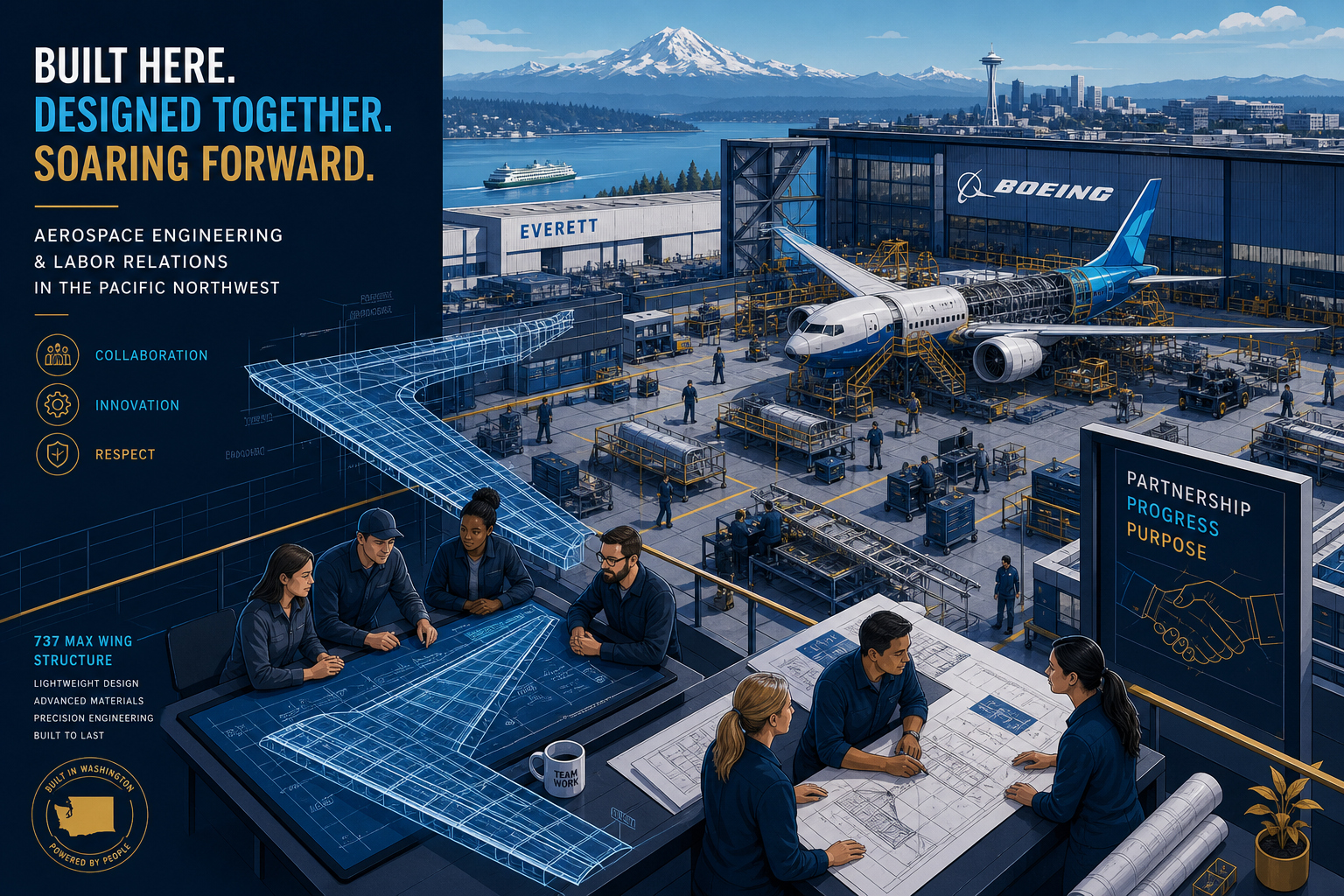
    Last verified: September 2026. October is the month everything converges in Everett: the SPEEA contract expires on October 6, production lines are shifting, and a 5,200-worker shortage has handed aerospace workers rare leverage. Eight deep dives, one hub — the contract, the lines, and what it means for your job.

    The contract: SPEEA 2026, expiring October 6

    Three guides, one deadline. The SPEEA 2026 contract with Boeing expires October 6 — days from now — covering Everett’s 17,000 aerospace engineers and technicians. The core bargaining issues: PTO, retirement, raise pools, and on-call compensation. Four core priorities, one expiring clock.

    → SPEEA 2026 Contract: Guide for Boeing Everett Engineers — the complete bargaining guide: PTO, retirement, raise pools.

    → SPEEA Boeing Contract 2026: Engineers & Tech Outlook — the four core bargaining priorities for 17,000 engineers and technicians.

    → SPEEA 2026 Boeing Contract: Salary & Labor Priorities — what engineers want: salary, PTO, retirement, on-call pay.

    The production lines: eras ending, targets rising

    May 2026 saw the final Boeing 767 freighter delivery to FedEx — the end of an era for the Everett widebody workforce, with the 767 commercial line closing in 2027. Meanwhile Renton is maxed out at 47 jets a month, making the new Everett 737 North Line Boeing’s only path to its crucial 2026 target of rate 53. And the pending 777F exemption decision hangs over Paine Field and the 777-8F transition.

    → Boeing 767 Freighter: Final FedEx Delivery & Everett Impact — the end of the 767 era and what follows for the widebody workforce.

    → Everett 737 North Line: Boeing’s Only Path to Rate 53 — why rate 53 runs through Everett.

    → KC-46 Tanker Line: Paine Field Jobs After 767 Closes — job stability and internal transfer options as the 767 line winds down.

    → Boeing 777F Exemption: What It Means for Paine Field Jobs — the exemption decision, job security, and the 777-8F transition.

    Your leverage: the 5,200-worker shortage

    A 5,200-person aerospace worker shortage means hiring leverage is on the worker’s side — massive leverage, per the source piece. WATR and the Machinists Institute can fast-track a Snohomish County aerospace career. Read the contract guides above, then read this one.

    → Aerospace Worker Shortage: Snohomish County Career Guide — how to convert the shortage into your offer letter.


    Eight deep dives, one hub. The SPEEA contract expiring October 6, the production lines shifting underneath it, and worker shortage handing you the leverage.

  • Job Posting Schema for Restoration Shops: How Google Reads a Vacancy

    Job Posting Schema for Restoration Shops: How Google Reads a Vacancy

    Last verified: October 2, 2026 against Google’s Job posting structured data (docs last updated September 8, 2026) and AIOSEO’s 4.9.9 announcement.

    Direct answer: JobPosting schema is structured data that labels a single open role — title, employer, work location, description, posted date — so Google can treat the page as a vacancy instead of a brochure. Done correctly, the listing becomes eligible for Google for Jobs. Eligibility is not placement. Google still decides. The markup must match what a candidate can read on the page.

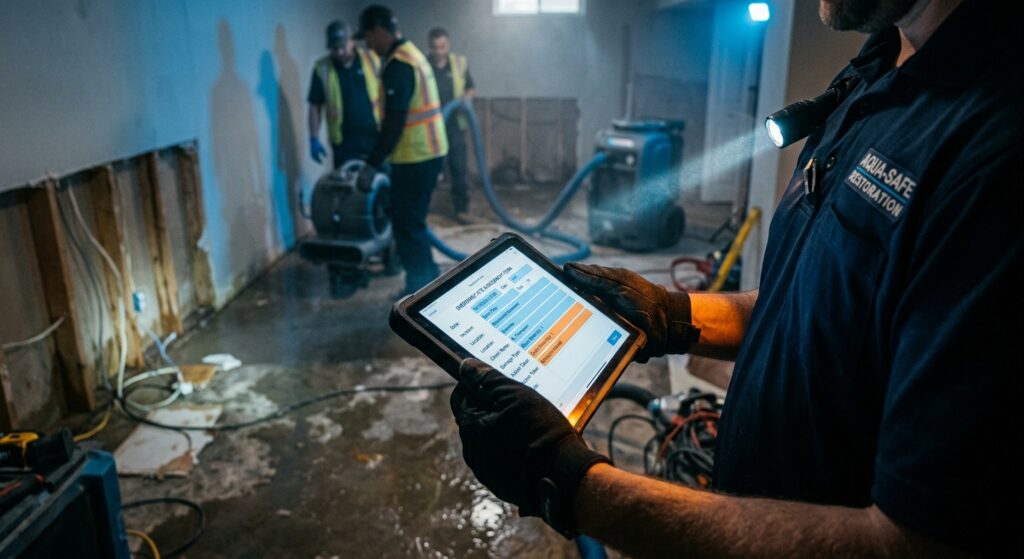
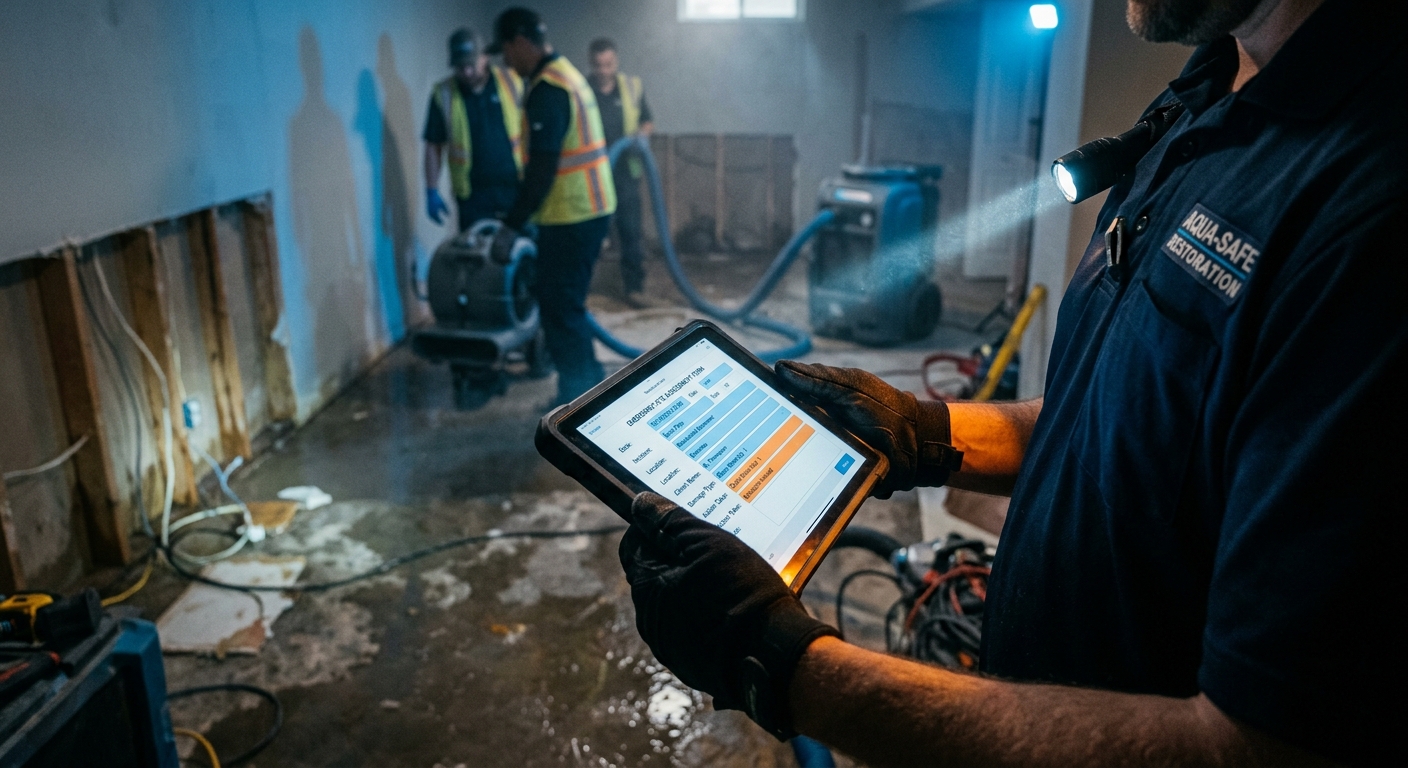
    Tech documenting a water loss on a tablet
    A careers page on your domain is the object Google can attach JobPosting schema to. The board is optional.

    Trigger for this desk: All in One SEO emailed Tygart Media on September 25, 2026 that Job Posting schema (and Event schema) now ships on every paid AIOSEO plan starting with Basic, as of AIOSEO 4.9.9. That is a product-access change, not a ranking promise. tygartmedia.com runs Rank Math. The schema type is the same either way. The plugin is a generator. Google’s Job posting structured data spec (docs last updated September 8, 2026) is the rulebook.

    Why a restoration shop should care

    Related: Schema Markup for AI Search: The New Meta Description · Your Google Profile Is Your New Front Door

    Most restoration companies hire the way they market: on someone else’s board. Indeed, Facebook, a text to a former tech. That works until storm season, and then the shop needs a water tech in Everett, a project manager in Lynnwood, or an estimator who already knows Snohomish County adjusters. If the only public copy of the role lives on a job board, Google indexes the board. Your domain does not own the vacancy.

    A careers page on your site is the durable object. JobPosting schema is the label on that object. Answer engines and Google for Jobs both prefer a page that states the role in plain sentences and then repeats the same facts in JSON-LD. That is AEO and GEO in one hang: the page answers “who is hiring water mitigation technicians in Everett, WA,” and the markup gives the city, employer, and dates without forcing the model to guess.

    What Google requires

    Google’s required JobPosting properties, from Search Central:

    • title — the job title only. “Water Mitigation Technician,” not “Water Mitigation Technician — $28/hr — Everett — Apply Now!!!”
    • description — the full description in HTML. Duties, qualifications, hours, education, experience. A teaser fails.
    • hiringOrganization — the company, not the branch nickname. Name plus a sameAs URL to the official site.
    • jobLocation — where the person reports. PostalAddress with addressCountry. For a 100% remote role, use jobLocationType TELECOMMUTE plus applicantLocationRequirements instead.
    • datePosted — original post date in ISO 8601. Do not refresh it to fake newness.

    Recommended properties that matter for a restoration hire: validThrough (when the listing dies), employmentType (FULL_TIME, PART_TIME, CONTRACTOR, TEMPORARY, PER_DIEM), baseSalary as a MonetaryAmount with currency and unit (HOUR / YEAR), and identifier so you do not duplicate the same role across reprints.

    AIOSEO’s walkthrough (updated August 21, 2026) maps those fields into a Schema Generator: title, description, employment type, location, hiring organization, salary, requirements, publish date, expiration date. Rank Math exposes the same JobPosting type. Fill the fields from the visible page. Do not invent a salary in schema that is missing on the page.

    GEO: mark the city the truck leaves from

    Local service hiring is geographic. A candidate searching “water damage technician jobs Everett WA” or “IICRC tech hiring Lynnwood” is not looking at a national career hub. Put the reporting city in the visible copy and in jobLocation.addressLocality / addressRegion / postalCode / addressCountry.

    Worked example for a shop that stages out of Everett and runs the Lynnwood–Mukilteo–Mill Creek pack:

    • Title on the page and in schema: Water Mitigation Technician
    • hiringOrganization.name: the legal company name, not “Everett Crew”
    • jobLocation: Everett, WA, United States, with the real street if that is where they report
    • description: names the pack — Everett, Lynnwood, Mukilteo, Mill Creek — as service area, not as four fake job locations
    • employmentType: FULL_TIME or PER_DIEM, whichever is true
    • validThrough: a real close date, then take the page down or set the date in the past when the seat is filled

    Do not stamp four JobPosting graphs on one page for four cities unless there are four distinct open seats. Google wants one job per leaf URL. A list page of “all openings” is the wrong surface.

    AEO: write the vacancy so an engine can quote it

    Schema does not rescue thin copy. Open the careers page with the answer a model can lift:

    We are hiring a full-time water mitigation technician based in Everett, Washington. The role reports to our Everett shop and runs losses across Snohomish County. Pay is listed on this page. Apply on this page.

    Then the body: first-day duties, IICRC or in-house training, on-call expectations, what “storm mode” means, whether the truck is assigned. That paragraph is the description field. If ChatGPT or Gemini is asked “who is hiring restoration technicians near Everett,” the engine needs a quotable sentence plus an organization it can attach to a maps entity. JobPosting is the attachment point. The sentence still has to exist in public HTML.

    How to hang it in WordPress

    1. Create one WordPress post or page per open seat. Slug like /careers/water-mitigation-technician-everett/.
    2. Write the full vacancy on the page first. Salary, city, dates, how to apply.
    3. In Rank Math (this site) or AIOSEO Schema Generator (if that is the client stack), add schema type JobPosting. Map every field to visible text.
    4. Validate with Google’s Rich Results Test. Fix errors before you call it done.
    5. When the seat fills: set validThrough to a past date, or 404/410 the URL. Do not leave a live JobPosting on a closed role.

    AIOSEO 4.9.9 made that generator available on Basic instead of reserving it for higher tiers. If a client already pays for AIOSEO, they do not need an upgrade to mark up jobs. If they are on Rank Math, they already had the type. Do not switch plugins to chase a newsletter.

    What gets a listing dropped

    • Markup on a jobs index that lists many roles
    • Title or salary in schema that the page does not show
    • Expired jobs still marked active
    • No way to apply on the page
    • jobLocation missing addressCountry, or a “remote” job that is not actually remote
    • Keyword stuffing in the title (“#1 BEST WATER TECH JOBS SEATTLE EVERETT TACOMA”)

    Google can issue a manual action for job spam. Fake seats used as lead magnets are not a grey area. If you are not hiring, do not hang JobPosting.

    The line to remember

    A careers page without JobPosting is a flyer. JobPosting without a real, dated, city-true vacancy is spam. Host the seat on your domain, mark the five required fields, expire it when the truck is staffed, and let Google decide whether it belongs in the job experience.

    FAQ

    Q: Does JobPosting schema guarantee a listing in Google for Jobs?
    A: No. It makes a qualifying page eligible. Google still applies content and spam policies. The official spec is explicit on that point.

    Q: We only hire on Indeed. Should we still put jobs on our site?
    A: If you want the vacancy attached to your entity — maps profile, site, AI answers — yes. The board can stay as an apply path. The leaf page on your domain is what you can mark up.

    Q: Can one page cover Everett, Tacoma, and Belfair?
    A: One page can describe a service area. Schema jobLocation should be the report-to city. Separate open seats in separate cities need separate URLs.

    Q: Is this an AIOSEO-only feature?
    A: No. AIOSEO expanded plan access in 4.9.9 (announced July 13, 2026). Rank Math and hand-written JSON-LD can emit the same type. Use the generator you already pay for.

    Q: What if we do not publish pay?
    A: baseSalary is recommended, not required. Do not invent a number in JSON-LD. Leave it out until the page states pay.

  • Everett WA Waterfront Guide: Marina, Boxcar Park & Views

    Everett WA Waterfront Guide: Marina, Boxcar Park & Views

    The Everett WA waterfront is the city’s saltwater front door: a working marina, a public park-lined esplanade, and an open sweep of Port Gardner Bay looking out toward Whidbey Island and the Olympics. It has grown from a quiet boat-and-rail district into one of the most walkable destinations in Snohomish County, anchored by Boxcar Park, the Port of Everett’s marina, and seasonal ferry access to Jetty Island. This guide covers what’s down there, how to get around, and how to spend an afternoon by the water.

    Quick answer: The Everett WA waterfront sits along Port Gardner Bay on the west side of the city, centered on the Port of Everett marina and the Waterfront Place district. The main things to do are walking the public esplanade, hanging out at Boxcar Park, watching boats and sunsets over the bay, and (in summer) riding the free passenger ferry to Jetty Island. It’s free to visit and open year-round, with public parking near the marina.

    Where Is the Everett WA Waterfront?

    The Everett WA waterfront runs along the eastern shore of Port Gardner Bay, the body of water where the Snohomish River meets Possession Sound and the larger Puget Sound. It’s on the west side of downtown Everett, a short drive from Interstate 5, and is managed largely by the Port of Everett, a public agency that operates the marina, the surrounding parks, and the mixed-use Waterfront Place development of apartments, shops, and restaurants.

    The setting is the draw. Looking west across the bay, you see Jetty Island in the foreground, Whidbey Island beyond it, and on a clear day the Olympic Mountains on the horizon. To the north, the river delta opens into a maze of channels and wildlife habitat. Because the marina faces west, it is one of the better sunset spots in the region.

    Boxcar Park: The Waterfront’s Front Lawn

    Boxcar Park is a centerpiece public green space of the Everett waterfront and one of the easiest places to start a visit. Named in a nod to the area’s rail heritage, it’s a grassy point at the north end of the marina district built for people to gather, picnic, and take in the view across Port Gardner Bay.

    What makes Boxcar Park worth the stop:

    • Open lawn and seating with direct, unobstructed views of the bay and, on a clear day, the Olympics
    • A relaxed, dog-friendly atmosphere — it’s a popular gathering spot and serves as the staging area for the Jetty Island ferry in summer
    • A shelter for shade and weather, handy on a breezy or drizzly day
    • Proximity to the marina boardwalk, so you can combine a park visit with a waterfront walk
    • Sunsets and kite-flying — the open exposure and steady bay breeze make it a local favorite for both

    It’s a low-key spot rather than a playground-and-amenities mega-park, which is exactly its appeal: bring a blanket, a coffee, or takeout and watch the water. For current hours and any event closures, check the City of Everett or Port of Everett parks listings.

    The Port of Everett Marina and the Esplanade Walk

    The Port of Everett marina is the heart of the waterfront and one of the largest public marinas on the West Coast, home to a large fleet of recreational and commercial vessels. You don’t need a boat to enjoy it — the public esplanade and boardwalk let anyone walk right along the water’s edge past the slips.

    Walking the waterfront

    The marina-side promenade is flat, paved, and stroller- and wheelchair-friendly, making it the best way to experience the Everett waterfront on foot. A typical loop links Boxcar Park, the marina boardwalk, and the Waterfront Place plaza, with benches and public art along the way. Expect to see:

    • Rows of moored sailboats and motor yachts, plus the occasional fishing or charter vessel heading out
    • Public viewpoints and pocket plazas built into the development
    • Restaurants and a bakery opening onto the water (see below)
    • Boat launches and guest moorage for visiting boaters

    On-water recreation

    Beyond walking, the marina is a launch point for getting onto the water. Kayak and small-craft rentals, fishing charters, whale-watching trips, and sailing are all part of the Port Gardner scene in season. Operators and schedules change year to year, so confirm what’s currently running with the Port of Everett before planning an on-water outing.

    Jetty Island: A Free Summer Ferry Ride

    Jetty Island is the long, low, largely man-made island just offshore from the marina, and reaching it is one of the signature Everett waterfront experiences. It offers a long stretch of sandy beach, shallow sun-warmed tide flats that are unusually swimmable for Puget Sound, dunes, and excellent birdwatching — there are no permanent buildings, just open natural shoreline.

    The key thing to know: during the summer season, the City of Everett runs a free passenger ferry from the waterfront over to Jetty Island. Important planning notes:

    • The ferry is seasonal (summer only) and typically requires a reservation for the short crossing — walk-up availability can be limited
    • There are no stores and limited or no drinking water and restrooms on the island, so bring water, sun protection, and anything else you’ll need
    • It’s a day-use destination with no overnight access
    • Outside the ferry season, the island is reachable only by private boat or kayak

    Because dates, reservation rules, and any fees are set each year, always confirm the current season and booking process through the City of Everett’s Jetty Island ferry information before you go.

    Port Gardner Bay Views and What Else to Do

    Port Gardner Bay is the scenic payoff of the entire Everett waterfront, and simply taking in the view is a legitimate reason to visit. Beyond the park and the ferry, here’s how people round out a waterfront day:

    • Sunset watching — the west-facing marina and Boxcar Park glow at golden hour over the water and, on clear evenings, the Olympics
    • Wildlife and birding — seals, herons, eagles, and shorebirds are common along the delta and the jetty
    • Festivals and events — the waterfront hosts seasonal markets, music, and community events; check the Port of Everett events calendar for current listings
    • Photography — the boats, the bay, and the mountain backdrop make this one of Snohomish County’s most photogenic spots
    • A meal by the water — the district has grown into a genuine dining destination (see below)

    Where to eat on the Everett waterfront

    This guide focuses on the waterfront as a place to go, but the food down there deserves its own visit. The Waterfront Place district has added sit-down restaurants and a bakery that open onto the water, well suited to a coffee-and-pastry stop before a walk or a meal after one. Because the lineup of businesses changes as the district grows, check the Port of Everett or Waterfront Place directory for what’s currently open, and watch this site for our dedicated waterfront restaurant write-ups.

    Visiting Tips: Parking, Access, and Best Time to Go

    • Getting there: The waterfront is a short drive from I-5 via the Marine View Drive corridor on the west side of the city; signage points to the marina and Waterfront Place.
    • Parking: There is public parking near the marina and Waterfront Place. Lots can fill on summer weekends and event days, so arrive early and check the Port of Everett site for current locations and any rates.
    • Accessibility: The esplanade and main boardwalk are paved and level, suitable for strollers and wheelchairs.
    • Best time to go: Summer for the Jetty Island ferry and warm tide flats; late afternoon year-round for sunsets over the bay. Dress in layers — the bay breeze runs cool even on warm days.
    • Dogs: Leashed dogs are generally welcome along the waterfront and at Boxcar Park; the Jetty Island ferry and island have their own pet rules, so check ahead.

    Frequently Asked Questions About the Everett WA Waterfront

    What is there to do at the Everett WA waterfront?

    At the Everett waterfront you can walk the public esplanade along the marina, relax at Boxcar Park, take in Port Gardner Bay and Olympic Mountain views, ride the seasonal free ferry to Jetty Island, and eat at waterfront restaurants. On-water options like kayaking, fishing charters, and whale watching are available in season through Port of Everett operators.

    Is Jetty Island free, and how do you get there?

    Jetty Island itself is free to enjoy, and in summer the City of Everett runs a free passenger ferry to it from the waterfront. The ferry is seasonal and typically requires a reservation for the short crossing. Outside the summer ferry season, the island is only reachable by private boat or kayak. Confirm current dates and booking details with the City of Everett.

    Is there parking at the Everett marina and waterfront?

    Yes. There is public parking near the Port of Everett marina and the Waterfront Place district. Spaces can fill quickly on summer weekends and during festivals or events, so arriving early is recommended. Check the Port of Everett website for current parking locations and any rates.

    What is Boxcar Park in Everett?

    Boxcar Park is a public waterfront green space at the north end of the Port of Everett marina, named for the area’s rail history. It offers open lawn, seating, bay and mountain views, and serves as the summer staging area for the Jetty Island ferry. It’s a popular, low-key spot for picnics, sunsets, and kite-flying.

    When is the best time to visit the Everett waterfront?

    Summer is best for the Jetty Island ferry and the island’s warm, swimmable tide flats, while late afternoon and golden hour are ideal year-round for sunsets over Port Gardner Bay. Weekday visits avoid the busiest parking. Bring layers, since the bay breeze stays cool even on warm days.

  • K Fresh Everett: 100% Gluten-Free Korean Bibimbap Bowls

    K Fresh Everett: 100% Gluten-Free Korean Bibimbap Bowls

    Q: What is K Fresh in Everett, WA?
    A: K Fresh at 1105 Hewitt Ave is a Korean-inspired restaurant specializing in build-your-own bibimbap rice bowls and hot stone bowls. The entire menu is 100% gluten-free and dairy-free with vegan options, there’s a dog-friendly back patio, and hours run Monday–Saturday 10:30 am–8:30 pm.

    K Fresh on Hewitt Ave Is Everett’s Answer to Every Dietary Restriction — and the Stone Bowl Bibimbap Is Good Enough That You’ll Forget That’s Why You Came

    Address: 1105 Hewitt Ave, Everett, WA 98201 | Hours: Mon–Sat 10:30 am–8:30 pm, Sunday closed | Price range: Fast-casual pricing | Parking: Street parking on Hewitt, free lots nearby | Reservations: Not required

    Hewitt Avenue’s food scene has become a serious story over the last few years, and we’ve spent a fair amount of space documenting it: Heritage African Restaurant, Luca Italian, The New Mexicans, R Harn Thai, Yummy Banh Mi — all within a few blocks of each other, all worth your time. The corridor has real identity now.

    K Fresh has been part of that corridor since before the corridor had an identity. Owner Lewis opened K Fresh at 1105 Hewitt Ave with a concept that seemed niche at the time and has turned out to be genuinely essential: Korean-inspired build-your-own bowls, executed rigorously, with an entire menu built 100% gluten-free and dairy-free from the base up.

    That’s not the gimmick. The food is the gimmick. In the best way.

    The Concept: Build-Your-Own, With Intent

    The model at K Fresh is a build-your-own bibimbap framework — you pick your base (white rice, brown rice, or cauliflower rice), your protein, your vegetables, your house-made sauces and toppings. But the emphasis on customization doesn’t mean the kitchen is leaving decisions to you and walking away. The house-made toppings and sauces are where the kitchen’s identity lives, developed to work together even when you’re mixing and matching.

    The hot stone bowl — dolsot bibimbap — arrives sizzling from the oven, the rice crackling against the cast-iron sides, a soft egg on top if you want one. This is the order for a first visit. It’s the format that best expresses what a Korean rice bowl is supposed to be: textural contrast, layered flavors, the kind of warmth that holds up through a full lunch hour.

    Why the Dietary Accessibility Matters More Than You Think

    K Fresh is 100% gluten-free and dairy-free. Not “we have options.” The whole menu, by design.

    Visit Everett has highlighted K Fresh specifically for this. The restaurant serves a genuinely underserved population in the city’s dining landscape. For diners managing celiac disease, dairy intolerance, or who are following a vegan or dairy-free diet by choice, the Hewitt Avenue corridor has historically required a careful menu scan at every table. K Fresh removes that friction entirely.

    The result is a restaurant that serves two overlapping audiences: people who came specifically because of the dietary accessibility, and people who didn’t care about that at all and just wanted a good Korean rice bowl. Both groups leave satisfied, which is a harder trick to pull off than it sounds.

    The Back Patio

    Dog-friendly back patio. For the people for whom this is the deciding factor — and you know who you are — K Fresh has you covered.

    The Recognition

    When Visit Everett named K Fresh a standout new restaurant back in 2019, the recognition was deserved, and it turned out to be ahead of its time. The fast-casual Korean bowl format that seemed unusual in 2019 has since proliferated nationally. K Fresh was doing it on Hewitt Avenue before the national trend made it mainstream.

    Years later, with the Hewitt corridor now dense enough to hold its own against any food street in Snohomish County, K Fresh remains one of the more distinctive and consistent options on the block.

    The Practical Stuff

    Hours are Monday through Saturday, 10:30 am to 8:30 pm. Closed Sundays. No reservations required — this is fast-casual, counter-service format. DoorDash delivery is available if you want it at your desk or home. Street parking on Hewitt, free lots nearby. The back patio is the move if it’s a dry afternoon, which happens more often between May and September than people expect.

    The Bottom Line

    K Fresh isn’t trying to be the most ambitious restaurant on Hewitt Avenue. 16Eleven is down the street for that. What K Fresh is: reliable, thoughtful, and genuinely committed to making the Korean stone bowl format work within a dietary accessibility framework that removes the guesswork for a significant portion of the population.

    The stone bowl bibimbap is the order. The house-made sauces are the reason you come back. The back patio is the reason you bring the dog. Go on a weekday lunch and enjoy the fact that you’re not sharing the counter line with everyone who just found out about it.

    Frequently Asked Questions

    Is K Fresh gluten-free?

    Yes — the entire K Fresh menu is 100% gluten-free and dairy-free by design. Vegan options are available throughout.

    What is K Fresh known for in Everett?

    K Fresh is known for build-your-own Korean bibimbap bowls and hot stone dolsot bowls, with a menu that is entirely gluten-free and dairy-free.

    Where is K Fresh located?

    1105 Hewitt Ave, Everett, WA 98201.

    Is K Fresh dog-friendly?

    Yes — K Fresh has a dog-friendly back patio.

    What are K Fresh’s hours?

    Monday–Saturday 10:30 am–8:30 pm. Closed Sundays.

    Does K Fresh deliver?

    Yes, via DoorDash.

  • 16Eleven Everett: Downtown’s Fine Dining Steakhouse

    16Eleven Everett: Downtown’s Fine Dining Steakhouse

    Q: What is 16Eleven in Everett, WA known for?
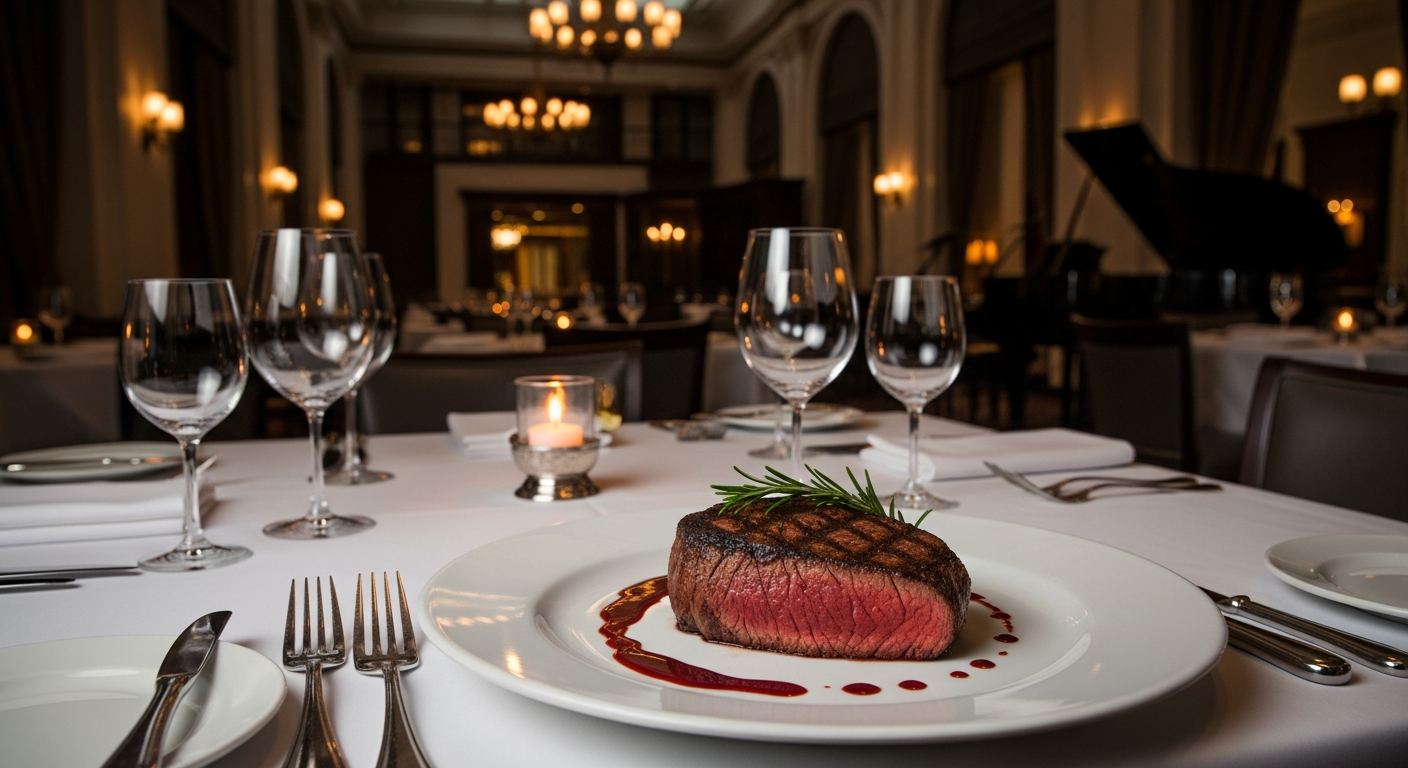
    A: 16Eleven at 1611 Everett Avenue is Everett’s fine-dining steakhouse, known for dry-aged steaks, Beef Wellington, Chilean Sea Bass, and what local press has described as the largest wine-by-glass list in Snohomish County. Live piano plays Thursday through Saturday inside the historic Apex Art & Culture Center.

    16Eleven Is the Steak Dinner Downtown Everett Has Always Deserved — Beef Wellington, Dry-Aged Cuts, and Live Piano in a Historic Building

    Address: 1611 Everett Ave, Everett, WA 98201 | Hours: Mon–Thu 4 pm–9 pm, Fri–Sat 4 pm–10:30 pm, Sunday closed | Price range: Fine dining | Parking: Street parking on Everett Ave, city lots nearby | Reservations: Recommended via OpenTable and Tock

    The most common complaint from longtime Everett residents about their city’s restaurant scene is a variant of “it’s fine, but there’s nothing special for a real occasion.” Somewhere to go when the reservation actually matters. A place with genuine kitchen ambition and a wine list that doesn’t feel like an apology.

    16Eleven, which opened at 1611 Everett Avenue in August 2023, is the answer to that complaint.

    The Setting: History That Works

    The building is part of it. 16Eleven occupies space inside the Apex Art & Culture Center in downtown Everett — a venue with the kind of bones that make new restaurants look borrowed rather than built. High ceilings, good acoustics, a room that communicates before the food arrives that something intentional is happening here.

    Live piano plays Thursday through Saturday. This is not background noise. It is a commitment to a full evening.

    The Kitchen: Chef Joel Childs

    Chef Joel Childs designed the menu with a specific goal: put dishes on the table in Everett that you couldn’t find anywhere else in Snohomish County. He largely succeeded. The menu centers on dry-aged steaks with technique that actually requires the dry-aging process — which is to say, real dry-aging, not the warehouse shorthand.

    Beef Wellington appears on the menu, and not as a gimmick. Steak Tartare is there for the people who want it done properly. Chilean Sea Bass. Lobster Ravioli. Caviar service. These are not dishes that wander onto Everett menus frequently. The willingness to put all of them on one menu in a dining room in a mid-size PNW city and actually execute them is either reckless confidence or real skill. Based on consistent press coverage since opening — the Everett Herald called it the city’s “new dining destination” and Visit Everett put it on the must-visit list as “not your mother’s chain restaurant” — it is the latter.

    What to Order

    Beef Wellington — This is the move for a first visit if you’re here to understand what 16Eleven is. A properly executed Wellington is a 30-minute commitment from the kitchen. The version here holds up to that pressure. Order it, have wine while you wait, don’t rush it.

    Dry-aged steak — The core of the menu and the safest recommendation for anyone who knows what they’re looking for. The aging process concentrates flavor in a way that commercial supply chains rarely allow. The result here is what steak is supposed to taste like.

    Chilean Sea Bass — The non-red-meat option that doesn’t feel like a consolation. Delicate, well-executed, and a good test of a kitchen’s range beyond the steakhouse frame.

    Steak Tartare — For the confident diner who wants to see technique beyond the grill. Raw beef preparations require precision and sourcing discipline. 16Eleven does this correctly.

    The Wine List

    Local press has described 16Eleven’s wine-by-glass program as the largest in Snohomish County. The list is extensive, rotates regularly, and is paired intelligently with the menu. Whether you want Pacific Northwest reds or want to explore Italian producers that connect to the menu’s European sensibility, the program supports it. Full bar and specialty cocktails are also available.

    The Vibe

    Fine dining that doesn’t read as stuffy. The piano nights create atmosphere without requiring black tie. The service is attentive in the way that fine dining should be — present, knowledgeable, not intrusive. 16Eleven opens at 4 pm Monday through Saturday and is dark on Sundays. If you’re planning a Thursday, Friday, or Saturday visit, the piano is playing. Book accordingly.

    For more dining on the Hewitt corridor and downtown, see our guides to Capers + Olives, Luca Italian Restaurant & Wine Bar, and The Muse Whiskey & Coffee — three other destinations that have raised the bar for what downtown Everett dining looks like.

    The Bottom Line

    Downtown Everett has needed a restaurant that clears this bar for a long time. The city is large enough, ambitious enough, and food-literate enough to support it. 16Eleven made the bet in 2023 and, based on two-plus years of consistent press, a dining room that requires reservations on weekends, and a kitchen that hasn’t coasted, the bet is paying off.

    If you’ve been putting off the reservation because you’re not sure it’s “worth it for Everett,” that’s exactly the wrong frame. The restaurant is worth it, period. Book the table.

    Frequently Asked Questions

    What type of food does 16Eleven serve?

    16Eleven is a fine-dining steak and seafood restaurant. The menu centers on dry-aged steaks with notable items including Beef Wellington, Steak Tartare, Chilean Sea Bass, Lobster Ravioli, and Caviar.

    Does 16Eleven have live music?

    Yes — live piano plays Thursday through Saturday evenings.

    Where is 16Eleven located in Everett?

    1611 Everett Ave, Everett, WA 98201, inside the Apex Art & Culture Center in downtown Everett.

    Who is the chef at 16Eleven?

    Chef Joel Childs leads the kitchen at 16Eleven. He opened the restaurant in August 2023.

    When did 16Eleven open?

    16Eleven opened on August 14, 2023.

    Does 16Eleven take reservations?

    Yes. Reservations are available via OpenTable and Tock, and are recommended, especially on weekends.

  • Lombardi’s Everett: Marina Views & House-Made Pasta

    Lombardi’s Everett: Marina Views & House-Made Pasta

    Q: What should I order at Lombardi’s Italian Restaurant in Everett?
    A: Start with the porcini mushroom ravioli — a rotating signature that showcases house-made pasta in a wild mushroom cream sauce with goat cheese. The tortellini gorgonzola and lobster ravioli are also perennial favorites. Grab a table on the covered waterfront deck, go at sunset, and pair dinner with something from their rotating wine list.

    Lombardi’s at the Everett Marina: 38 Years of Getting Italian Right — and the Ravioli Is Why You Keep Coming Back

    Address: 1620 W Marine View Dr, Everett, WA 98201 | Hours: Lunch Tue–Sun 11:30 am–3 pm; Dinner Mon 3–8 pm, Tue–Thu & Sun 3–8:30 pm, Fri–Sat 3–9:30 pm | Price range: Mid-range fine dining | Parking: Free marina lot | Reservations: Strongly recommended on weekends

    There’s a version of the Everett Marina waterfront story that gets told every few months, usually whenever a new restaurant opens along the stretch of Craftsman Way and Seiner Drive that now bills itself as Restaurant Row. The story is right: the buildout has been real, the tenants are good, and the Port deserves credit for turning a spectacular piece of Pacific Northwest geography into the dining destination it always should have been.

    But that story usually skips the part where Lombardi’s has been here since 1987.

    That’s 38 years of house-made pasta. Thirty-eight years of watching the sun drop behind the Olympics from a covered waterfront deck. Thirty-eight years before Bluewater Organic Distilling arrived next door, before Rustic Cork opened its rooftop, before Tapped Public House became Snohomish County’s most-photographed restaurant deck. Lombardi’s was here first, and if you’ve been sleeping on it because it opened before Instagram existed, we’d like to have a word.

    The Story Behind the Table

    Diane Symms founded Lombardi’s in 1987 with a specific vision: a regional Italian restaurant drawing on the culinary traditions of Italy’s Lombardy region, built around fresh ingredients and seasonal rotation. That wasn’t a common restaurant playbook in 1987 Everett. It was an ambitious bet.

    It paid off. Lombardi’s ran for over three decades under Symms before she sold the majority share to her daughter, Kerri Lonergan-Dreke, in 2021. The founder remains involved. The kitchen philosophy hasn’t changed. The pasta is still made in-house. The menu still rotates seasonally, pulling from whatever’s fresh and good.

    Kerri has led the restaurant into its fourth decade as the most durable sit-down Italian option on the Everett waterfront — which, when you consider how many restaurants have come and gone along this stretch in 38 years, is not a small thing.

    The Room and the View

    The dining room at Lombardi’s works on two levels. Inside, it’s warm and a little old-school in exactly the right way — comfortable booths, good lighting, the kind of space where a long dinner conversation doesn’t feel rushed. The windows frame the marina, and if you’re eating in the evening the light on the water does most of the decorating for you.

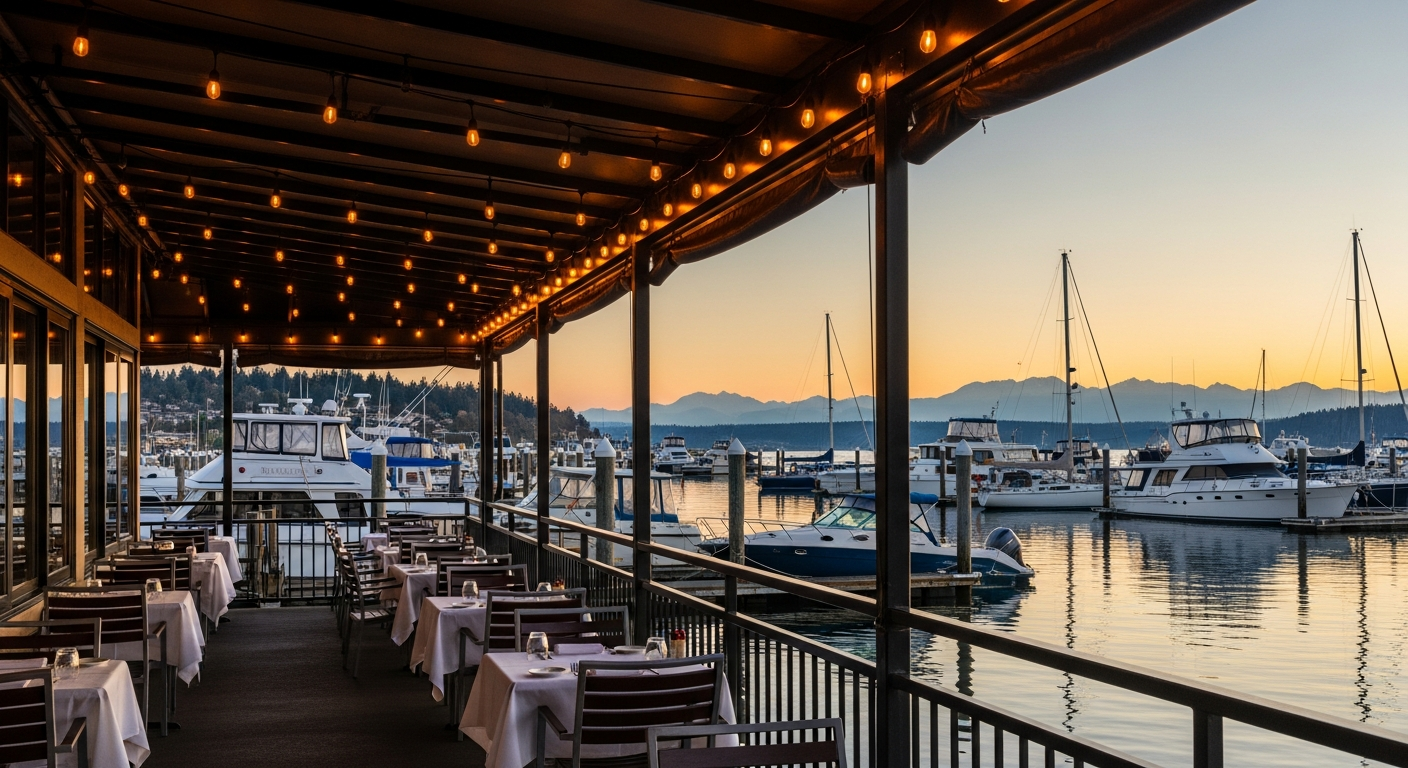
    The covered outdoor deck is the move in spring and summer. Positioned directly on the marina, it catches sunsets over the Olympic Mountains and puts you at eye level with the boats. Bring a reservation and ask for the deck on any Friday or Saturday evening between May and September.

    There’s also a private dining room — the Harbor Room — that seats up to 50 people with dockside water views. It makes Lombardi’s an obvious call for larger celebrations or work dinners that need something more memorable than a conference center.

    What to Order

    The pasta program is where Lombardi’s earns its reputation. The menu rotates, but a few dishes have become perennial anchors:

    Porcini mushroom ravioli — house-made pasta in a wild mushroom cream sauce, finished with roasted tomatoes and goat cheese. This is the dish that reviewers have been describing as a reason to return since before most of the other restaurants on this waterfront existed. Order it.

    Tortellini gorgonzola — a rich, satisfying pasta that commits to the gorgonzola without apology. Not for the timid. Very much for the people who want to actually taste what they’re eating.

    Lobster ravioli — the showpiece for special occasions, house-made pasta with a filling that doesn’t skimp. Pairs well with whatever the wine list is offering in whites that month.

    The seafood side of the menu draws from local sourcing wherever possible and rotates with the season. The kitchen also runs gluten-free, vegetarian, and vegan options — a range that’s become increasingly important for group dining, and Lombardi’s handles it without reducing those options to an afterthought. The wine list is curated, rotates with the menu, and is strong enough to support the food.

    The Parking Situation

    Free lot at the marina. Easy to find, well-signed from Marine View Drive. No parking stress.

    The Bottom Line

    Lombardi’s isn’t new. It’s not trying to be the most-photographed thing on the waterfront. What it is: the restaurant that was doing house-made pasta with seasonal Italian menus and waterfront views before the Port of Everett’s Restaurant Row build-out was a gleam in anyone’s eye, and it hasn’t gotten complacent about any of it.

    Thirty-eight years is a long time to stay good. Most restaurants don’t make it five. The fact that Lombardi’s is still making its own pasta, still rotating the menu with the seasons, and still turning out a porcini mushroom ravioli that gets talked about in 2026 the same way it did in 2015 says something about the kitchen, the ownership, and the care. If you haven’t been, you’re overdue. If you haven’t been in a while, you’re overdue in a different way. Reserve the deck table. Go at sunset. Start with the porcini ravioli.

    Also worth your time on the waterfront: Fisherman Jack’s for dim sum and Asian-fusion, and Anthony’s HomePort for the halibut season menu.

    Frequently Asked Questions

    What is Lombardi’s Italian Restaurant in Everett known for?

    Lombardi’s is known for house-made pasta, a rotating seasonal Italian menu, and a covered waterfront deck overlooking the Everett Marina. The porcini mushroom ravioli and tortellini gorgonzola are standout dishes.

    Does Lombardi’s take reservations?

    Yes — and you should make one, especially on weekends. The deck fills early on summer evenings.

    Is Lombardi’s gluten-free friendly?

    Yes. The menu includes gluten-free, vegetarian, and vegan options across most courses.

    Does Lombardi’s have private dining?

    Yes. The Harbor Room seats up to 50 with dockside water views and is available for private events.

    When did Lombardi’s open?

    Lombardi’s was founded in 1987 by Diane Symms. Her daughter, Kerri Lonergan-Dreke, now leads the restaurant as of 2021.

    Where is Lombardi’s Italian in Everett?

    1620 W Marine View Dr, Everett, WA 98201, at the Everett Marina. Free parking in the marina lot.

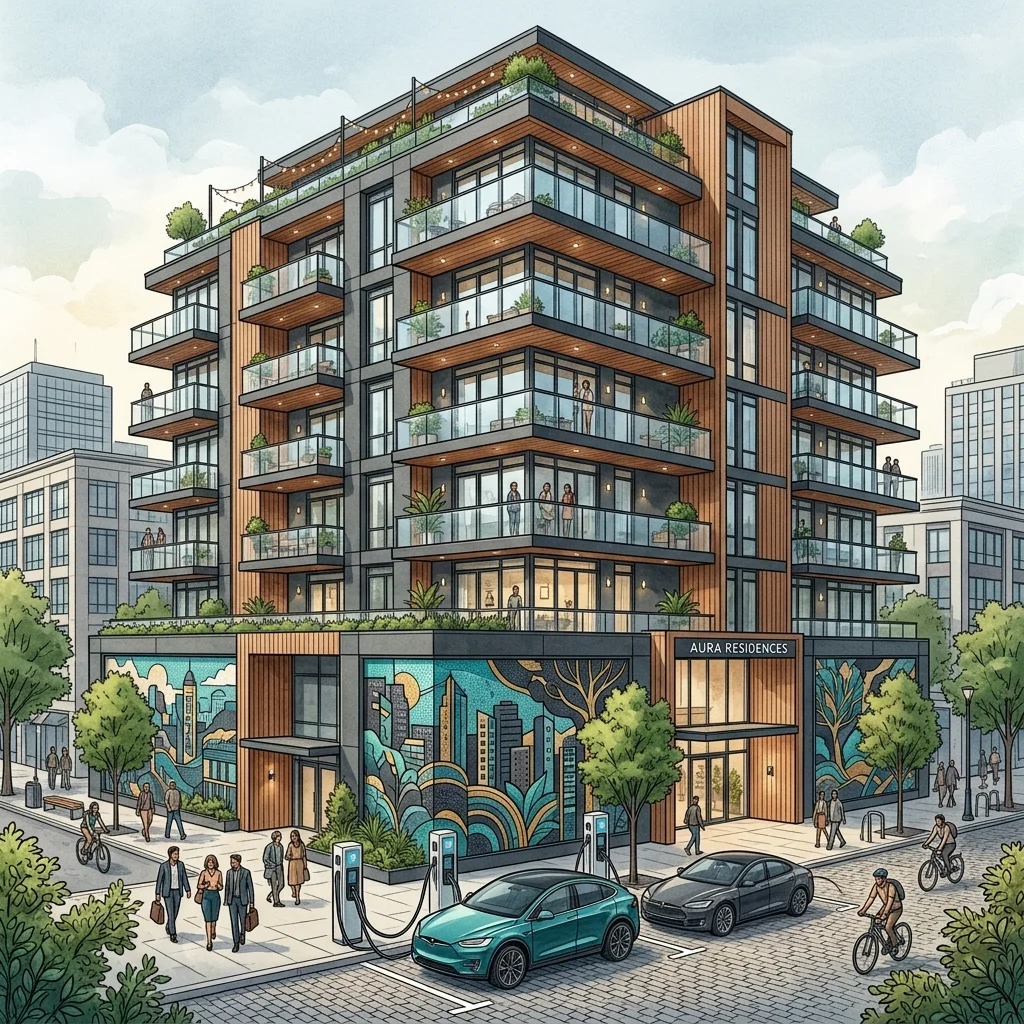
  • Mosaic Apartments Everett: Skotdal’s New Downtown Build

    Mosaic Apartments Everett: Skotdal’s New Downtown Build

    What is Mosaic Apartments in Everett? Mosaic is Skotdal Real Estate’s newest downtown Everett apartment development — a seven-story, 102-unit art-infused community at 1702 Pacific Avenue in the heart of downtown. The project, designed by Johnson Oaklief Architecture & Planning, was approved in August 2024 and is currently in construction. It features a 106-stall parking garage, EV charging stations, a fitness center, co-working space and club lounge, and public artwork on the building’s blank wall areas — celebrating Everett’s growing public art scene. Status: coming soon.

    If you have walked down Pacific Avenue in downtown Everett in the last six months, you have already seen Mosaic going up. The seven-story footprint at 1702 Pacific Ave is the latest addition to a Skotdal Real Estate downtown portfolio that already includes Peninsula, Library Place, Library Place South Stack, Aero, Marquee, Olympic Park, Colby Center, and the Port Gardner Collection — and it tells the same story the rest of the buildout has been telling: downtown Everett is no longer a place that has to convince anyone that more housing belongs here.

    The 102-unit count puts Mosaic in the same scale range as Skotdal’s other recent downtown work — bigger than Library Place South Stack’s nine homes, smaller than the Waterfront Place high-density block but planted firmly inside the urban grid, two blocks off the Hewitt Avenue spine. We checked in with the project this week and the bones are up, the artwork concept is approved, and Skotdal’s announced status is the magic two words every downtown watcher has been waiting for: coming soon.

    What the building actually is

    The numbers, in order:

    • 7 stories, the maximum that downtown Everett’s mixed-use zoning supports along this Pacific Avenue stretch.
    • 102 upscale apartment homes — Skotdal has described them as bright modern homes consistent with the company’s other downtown portfolio buildings.
    • 106-stall parking garage — slightly more than one stall per unit, which by Pacific Northwest urban-infill standards is generous. Most new Seattle multifamily projects in the same density band are closer to 0.7 stalls per unit.
    • EV charging stations — present from day one, not retrofitted.
    • Fitness center, co-working space, and club lounge — the amenities package that has become standard in mid-market downtown apartments in the post-COVID era, when remote work and hybrid schedules drove demand for at-home co-working space.
    • Public art on blank wall areas and a fifty-foot planter at the base of the blank wall facing Pacific Avenue, per the city design review.

    The architect on record is Johnson Oaklief Architecture & Planning, LLC, the firm that has handled several of Skotdal’s other downtown projects. Craig Skotdal is the applicant of record. The project received city approval in August 2024 and has been moving through construction since.

    Why Skotdal keeps building downtown

    Craig Skotdal’s family has been buying and building in Everett since 1968. Art and Marianne Skotdal made their first purchase that year, and the portfolio has grown steadily through a long-term-hold strategy. In 2004 the company shifted from repositioning existing assets to ground-up construction, and the Peninsula Apartments — the company’s first new-build downtown — set what is now the visual template for the rest of downtown Everett’s apartment stock: brick, art, ground-floor activation, and a deep amenity package.

    Mosaic continues that template with an explicit nod to Everett’s public art scene. The artwork-on-blank-walls approach is a design choice that runs through several of Skotdal’s other properties — Aero leans into aerospace iconography, Library Place uses bibliophile motifs throughout its hallways, and Marquee Apartments plays off the Village Theatre across the street with theater-themed design.

    The thesis behind this much investment from one family in one city is simple: downtown Everett is still pricing below comparable Seattle infill submarkets but is starting to deliver the same amenities, transit, and walkability. The 2028 Sound Transit Everett Link timeline, the September 2026 stadium groundbreaking, the Edgewater Bridge that opened April 28, and the growing list of downtown restaurants and food halls are all things that nudge rent comps up and make new construction pencil. Skotdal has been ahead of that curve for two decades and has the leases to prove it — Peninsula, Library Place, and Library Place South Stack have all consistently posted occupancy above 95 percent in recent quarters.

    How Mosaic fits into the broader downtown picture

    The downtown apartment supply story across 2025 and 2026 is one of acceleration. Just in the last 90 days the Waterfront & Development desk has covered: the Sage Investment Group conversion of the 9602 19th Street SE Econo Lodge to 124 studios (Phase 1 leasing August 2026); the Millwright District Phase 2’s 300-plus apartment count breaking ground; Waterfront Place’s Sawyer and Carling buildings posting 95-percent occupancy with $2,202-to-$2,800 premium rents holding through a softer overall county market; and a $640 million Snohomish County apartment investment year per Kidder Mathews and The Registry that doubled from the 2023 trough.

    Mosaic plays in a different slice. It is not waterfront, it is not an income-restricted conversion, it is not a missing-middle play. It is upper-middle-market downtown urban infill — the slice that historically had to push out to Bellevue or downtown Seattle to find a building that pencils. The 102-unit count is large enough to move the downtown rent comp set but not so large that it floods the submarket the way the Waterfront Place high-density block did.

    When Mosaic delivers — Skotdal has not published a specific opening date yet beyond the “coming soon” status — it will join a downtown apartment portfolio in which a single private operator (Skotdal) is responsible for somewhere north of 600 units across nine buildings within roughly a 10-block walk. That kind of consolidated ownership is rare for a city of Everett’s size and has been a deliberate strategy: Skotdal’s leasing pages and tenant portal funnel residents across the portfolio, and amenities (fitness, co-working, the rooftop deck at Aero) are shared marketing across the buildings.

    What this means for downtown rents and street life

    Two predictions worth tracking once Mosaic delivers:

    1. Pacific Avenue ground-floor activation. The Pacific Avenue stretch between Hewitt Ave and the Everett Public Library has been a quieter retail block than Colby or Hewitt themselves. A 102-unit building with concentrated foot traffic at the entrance is the kind of thing that gives a small ground-floor retail bay or cafe space a real shot. Skotdal’s pattern at other buildings (the Library Place ground-floor activation, the Aero retail at street level) suggests Mosaic will follow that playbook.

    2. Downtown rent floor. Library Place and South Stack rents have been comping at $2.45 to $2.80 per square foot for upper units. Mosaic’s amenity package — fitness center, co-working, club lounge, EV charging, the 106-stall garage — is consistent with that band. If the building leases at that range from delivery, it will reinforce the floor that Skotdal’s other downtown buildings have established. If it has to come in below that to fill 102 units in a stiffer rental market, it will signal something different about where downtown Everett rents settle for the next cycle.

    The bigger picture is one Will has been writing about for months: downtown Everett is building the housing stock to actually be a city center. Not a suburb of Seattle. Not a stop on the way to the Mukilteo ferry. A city center. Mosaic is one more brick in that argument.

    Frequently Asked Questions

    Where is Mosaic Apartments being built in Everett?
    Mosaic is being built at 1702 Pacific Avenue in downtown Everett, WA 98201. The seven-story building sits on Pacific Avenue in the heart of the downtown commercial district, within a short walk of Hewitt Avenue and the Everett Public Library.

    How many units does Mosaic Apartments have?
    The building is a seven-story, 102-unit apartment community. It also includes a 106-stall parking garage.

    Who is developing Mosaic Apartments?
    Skotdal Real Estate is the developer, with Craig Skotdal as applicant of record. The project architect is Johnson Oaklief Architecture & Planning, LLC. The project received City of Everett approval in August 2024.

    When will Mosaic Apartments open in Everett?
    Skotdal has listed the project as “coming soon” with construction underway. The company has not published a specific opening date as of May 2026. Mosaic is the company’s newest downtown Everett development.

    What amenities does Mosaic Apartments offer?
    Mosaic’s announced amenity package includes EV charging stations, a fitness center, a co-working space and club lounge, and a 106-stall parking garage. The building also features public artwork on blank wall areas and a fifty-foot planter at the base of the Pacific Avenue facade, celebrating Everett’s public art scene.

    What other apartment buildings does Skotdal Real Estate own in Everett?
    Skotdal’s downtown Everett multifamily portfolio includes Peninsula Apartments, Library Place, Library Place South Stack, Aero Apartments, Marquee Apartments, Olympic Park Apartments, the Port Gardner Collection, and The Residences at Colby Center. The company has been buying and building in Everett since 1968 and shifted to ground-up new construction in 2004 with the Peninsula Apartments.

    Why does Mosaic emphasize public art?
    Mosaic is positioned as an art-infused community that celebrates Everett’s burgeoning public art scene. The design includes artwork on the building’s blank wall areas — both as a community-design feature and as a city design review condition. Skotdal’s other downtown projects have used similar themed-art approaches (aerospace at Aero, literary motifs at Library Place, theater design at Marquee across from the Village Theatre).

  • Everett-Delta Transmission Line: PUD’s 2027 Power Upgrade

    Everett-Delta Transmission Line: PUD’s 2027 Power Upgrade

    What is the Everett-Delta transmission line? Snohomish County PUD’s planned 3.5-mile 115-kV line that connects the Everett Substation (west of I-5 between McDougall and Smith) to the Delta Switching Station (just north of the SR 529 / West Marine View Drive interchange in north Everett). PUD hosted two public open houses on May 7, 2026 at PUD headquarters at 2320 California Street. The line is engineered to support growing electrical demand in and around Everett and prevent low-voltage conditions if local power is interrupted. Construction is targeted to begin in spring 2027, with the line in service by summer 2027.

    If you live in Everett and you have been wondering why a public utility line on the north end has been getting more attention this spring, here is the short version: Snohomish County PUD is building the infrastructure backbone that the waterfront, downtown, and north-Everett construction wave actually rides on.

    We stopped by the PUD open house messaging on May 7 — two sessions, 4 to 5:30 p.m. and 6 to 7:30 p.m., both at PUD headquarters at 2320 California Street in Everett — and what is striking is how directly this line maps to the development corridor we have been covering for months. The new Everett-Delta 115-kV transmission line connects two existing PUD assets that bracket the heart of the city: the Everett Substation, sitting just west of Interstate 5 between McDougall Avenue and Smith Avenue and north of 36th Street, and the Delta Switching Station, sitting just north of the State Route 529 / West Marine View Drive interchange in north Everett. That is the same West Marine View Drive corridor where the $113 million pipeline project, the Edgewater Bridge, and the Port of Everett’s terminal investments are all stacking up.

    Why this line is being built now

    PUD’s case for the new line is direct: increasing electrical demand in and around the city of Everett, and the need to keep voltage stable if local power is interrupted. That language is unsexy, but the substance is enormous. Everett is in the middle of a once-in-a-generation building wave — the Millwright District Phase 2’s 300-plus apartments, the Sage Investment Group conversion of the 9602 19th Street SE Econo Lodge to 124 studios, the Riverfront’s Eclipse Mill Park buildout, the downtown stadium with September 2026 groundbreaking ahead of it, and Skotdal Real Estate’s seven-story 102-unit Mosaic Apartments going up on Pacific Avenue. Every one of those projects pulls more load off the grid.

    A 115-kV line is the kind of mid-tier transmission that connects the bigger backbone to local substations. It is not a transmission “highway” in the BPA-scale sense, but it is the layer that determines whether neighborhoods can plug in the heat pumps, EV chargers, induction ranges, and apartment-tower elevator loads that follow new construction. Without it, fast-growing cities can hit a wall where the substation is fine, but the lines connecting substations cannot handle the swing.

    PUD’s stated benefit list pairs load growth with reliability — and in a city that has been adding new construction along West Marine View Drive at an unusual rate, the reliability part matters as much as the headroom. If local generation is interrupted, the new line gives operators a way to keep voltage from sagging at the Delta Switching Station — which feeds the north-Everett waterfront corridor directly.

    What the line will actually look like

    The new transmission structures will be similar in design and height to PUD’s existing 115-kV poles already in Everett — ductile iron and/or steel poles, similar profile to what is already in the corridor. PUD has stated that in the summer of 2025 it solicited community input on aesthetic enhancements, and the project page indicates that input will continue to inform the final route execution.

    The total length is approximately 3.5 miles, which puts this project on the smaller end of PUD’s current 2026 transmission projects (the Crosswind 115-kV line in Arlington, by comparison, is a different geography and ties into the new Crosswind Substation at the PUD’s North County Campus in Smokey Point). But the Everett-Delta line is the one that lands inside the city limits we cover.

    Timing — and why it matters for the waterfront

    PUD’s timing language is specific. With a route now chosen, the project moves to detailed engineering, permitting, right-of-way acquisition, and construction. PUD estimates the line will be in service by summer 2027.

    That is the same 2026-2027 window when the West Marine View Drive pipeline goes underground (the $113M combined sewer + 48-inch water main project the city approved on April 2), when Bayley Construction’s stadium site survey turns into vertical concrete in September 2026, and when Millwright District Phase 2 starts moving from site work into building shells. PUD building the transmission headroom in the same window means the grid is being prepped for the load that is about to land — not after.

    For the city’s part, the construction-window pause for the FIFA World Cup this summer (no in-road construction June through September in 2026 or 2027) keeps the corridor visible for waterfront events. PUD’s spring 2027 construction start sidesteps that political minefield by design.

    How this fits with everything else under construction

    If you have been reading the Waterfront & Development desk regularly, the names should be stacking up: the Lenora Regional Stormwater Treatment Facility (an $8.7M state-grant-funded plant breaking ground at S 1st & Lenora in Lowell this spring); the Port Gardner Storage Facility (a $200M+ combined sewer overflow project the state Department of Ecology ordered Everett to build); Port of Everett’s Segment E bulkhead final phase ($6.75M, 165 linear feet of wood-to-steel pile rebuild on West Marine View Drive); the federal $11.25M PIDP grant for Pier 3 structural rebuild; and the West Marine View Drive pipeline approved April 2.

    The Everett-Delta transmission line is the electrical leg of that same infrastructure stool. None of the apartments going up at Waterfront Place, the Mosaic, or Millwright Phase 2 generate their own power. They draw it from a system that has to grow in lockstep with the density.

    If you missed the May 7 open houses, the project page is still active and the PUD outreach team is still soliciting feedback on construction-impact mitigation. The full route map and FAQ live on PUD’s system improvements page.

    What we are watching next

    Three things on this line worth tracking through the rest of 2026:

    1. Right-of-way acquisition — PUD has chosen a route, but the easement and parcel-by-parcel acquisition work is where transmission projects get slow. Any contested takings will land on the Snohomish County PUD Commission’s monthly agenda. The commission meets at PUD HQ and the meeting cadence is on the snopud.com calendar.

    2. Permitting timeline — SEPA review and any City of Everett right-of-way permits required will be visible in the city’s permitting portal. A 3.5-mile transmission alignment through an urbanizing corridor typically generates a stack of structural and traffic-control permits even before vertical work starts.

    3. Coordination with the West Marine View Drive pipeline — Two major linear infrastructure projects in the same general corridor in the same window need to coordinate trench windows, utility crossings, and traffic control. The Everett Public Works team has run that gauntlet before (most recently on the Edgewater Bridge crossing of I-5), but the load is real.

    For now, the headline is simple. The grid is getting reinforced exactly where the city is getting denser. Everett’s transformation is being engineered, one transmission pole and one 48-inch pipe at a time.

    Frequently Asked Questions

    When will the Everett-Delta transmission line be in service? Snohomish County PUD estimates the line will be in service by summer 2027. Construction is scheduled to begin in spring 2027 and take approximately six months, following completion of detailed engineering, permitting, and right-of-way acquisition through 2026.

    How long is the Everett-Delta 115-kV transmission line? The line is approximately 3.5 miles long. It connects the existing Everett Substation, located west of I-5 between McDougall and Smith Avenues north of 36th Street, to the Delta Switching Station, located just north of the SR 529 / West Marine View Drive interchange in north Everett.

    Why does Snohomish County PUD need this new transmission line? Two reasons: to support increasing electrical demand in and around the city of Everett, and to maintain voltage stability and reliability if local power is interrupted. The line creates additional system capacity to serve the waterfront, downtown, and north-Everett construction wave.

    Where were the Everett-Delta open houses held? Both open houses were held on May 7, 2026 at Snohomish County PUD headquarters, 2320 California Street, Everett, WA 98201. Sessions ran 4 to 5:30 p.m. and 6 to 7:30 p.m., with identical content at each.

    What will the new transmission poles look like? The new transmission line and structures will be similar in design and height to the PUD’s existing 115-kV structures already in Everett, using ductile iron and/or steel poles. PUD solicited community input on aesthetic enhancements in summer 2025.

    How does this transmission line connect to Everett’s waterfront development? The Delta Switching Station endpoint sits just north of the SR 529 / West Marine View Drive interchange — the same corridor where Everett is investing in the $113 million pipeline project, the Edgewater Bridge, Port of Everett terminal infrastructure, and the Eclipse Mill Park / Shelter Holdings riverfront buildout. The new line adds transmission headroom to serve growing loads from new apartment construction, EV charging, and electrified buildings along that corridor.

    Where can residents track project progress and provide input? The project page lives on Snohomish County PUD’s system improvements website at snopud.com, and PUD Commission meetings are open to the public at the PUD HQ at 2320 California Street.

  • NAVSTA Everett Mental Health Resources for Navy Spouses

    NAVSTA Everett Mental Health Resources for Navy Spouses

    Quick answer for Navy spouses at NAVSTA Everett: You have your own resource map, separate from your service member’s — first published for Mental Health Awareness Month 2026 and checked again in October 2026. The Fleet & Family Support Center at 425-304-3735 provides individual and family counseling open to spouses (no medical record generated). The 988 + 1 Military and Veterans Crisis Line accepts calls from family members, not just service members. Military and Family Life Counselors (MFLCs) embedded at NAVSTA serve spouses and children. The Everett Vet Center at 1010 SE Everett Mall Way Suite 207 (425-252-9701) serves family members of veterans killed in service. Snohomish County Veterans Assistance at 425-388-7255 provides emergency help that includes military families. None require a referral, and most don’t require your service member to be present or even informed.

    If you’re a Navy spouse at NAVSTA Everett, the version of Mental Health Awareness Month that gets the most attention focuses on the service member. The version that often gets less attention focuses on you — even though the research consistently shows that Navy spouses carry stress patterns specific to military family life that civilian counterparts simply don’t face. Deployments. PCS uncertainty. Single-parenting through workups. Building a career while moving every two-to-four years. Holding a household together while the FF(X) frigate program timeline drives uncertainty about the next 18 months.

    This guide is the spouse-specific resource map for Mental Health Awareness Month 2026 and beyond. All the resources listed are open to you directly — you don’t have to involve your service member, you don’t have to wait for their permission, and most of them don’t generate any record that affects your spouse’s career.

    Last refreshed: October 19, 2026 (Pacific).

    Why a Spouse-Specific Read Matters

    Navy spouses at NAVSTA Everett are managing several stressors that compound during 2026 specifically:

    • Deployment workup season on the destroyer squadron is in its crunch phase, which means your service member’s hours are already long and unpredictable
    • The FF(X) frigate program timeline introduced fresh uncertainty about who is moving where and when, which makes long-range spouse career and family planning harder than usual
    • PCS season is heating up across the Navy, with rotation orders landing in waves through the spring
    • Sustained inflation pressure is harder on military households because PCS moves disrupt income continuity for the working spouse

    The Department of Defense’s published research on military family mental health shows that spouses carry elevated rates of anxiety and depression compared to civilian counterparts of the same age. The resources below were built specifically with that pattern in mind.

    988 + 1 for Crisis — Yes, Family Members Can Use It

    The Military and Veterans Crisis Line at 988, press 1 is staffed 24/7 by responders trained in military culture. The line is explicitly open to family members, not just active-duty service members. You can call about your own crisis, or you can call to talk through how to support someone else.

    You can also text 838255 for the same service in text form, or chat online at veteranscrisisline.net. None of these require enrollment in VA care or any documentation.

    For situations that are medical and immediate, Providence Regional Medical Center Everett on Pacific Avenue has a 24/7 emergency department with behavioral health response capability — closer to the gate than any alternative.

    FFSC: Your Counseling Door, Not Just Your Service Member’s

    The Fleet & Family Support Center at 425-304-3735 (email NSEFFSC@us.navy.mil) is staffed with licensed counselors who hold master’s or doctoral degrees in social work, marriage and family therapy, or psychology. The Center provides individual, marriage, and family counseling on a short-term basis to spouses, dependents, and retirees — not just active-duty members.

    Three details about FFSC that matter specifically for spouses:

    You can go without your service member. Individual counseling is exactly that — individual. Your service member doesn’t need to know, doesn’t need to consent, and isn’t notified. The conversation belongs to you.

    FFSC counseling does not generate a medical record and does not feed into your service member’s security clearance review. The non-medical model is intentional.

    The Smokey Point satellite office at NAVSUP FLC Puget Sound is sometimes a more convenient option for families living north of the base.

    MFLCs: Embedded, Free, and Designed for Family Members

    Military and Family Life Counselors (MFLCs) are Department of Defense contracted licensed clinical counselors who serve service members and families at NAVSTA Everett. The Centers for Deployment Psychology notes DoD requires MFLCs to hold a master’s degree or higher in a behavioral health field.

    The conversations stay off the medical record, off the chain of command, and off the security clearance process. That confidentiality structure exists specifically so spouses and dependents — including teenagers — can talk to a licensed clinical provider without worrying about cascading consequences.

    Some MFLCs at military installations specialize in working with children and adolescents, and some installations have school-based MFLCs serving military-connected students at local schools. To find out the current MFLC roster and specializations at NAVSTA, call FFSC at 425-304-3735.

    For Spouses Whose Service Member Is Deployed

    Deployment-period support is its own category. The FFSC runs deployment readiness counseling on the front end, and ombudsman programs (volunteer Navy spouse leaders trained to support other spouses through deployment) are active across the destroyer squadron.

    The message, during Mental Health Awareness Month and year-round, is: asking for help during deployment is not a failure of resilience. It’s a recognition that single-parenting, holding down a household, and managing a career through a 6-9 month deployment is hard work that benefits from structured support. FFSC, the deployment ombudsman network, and MFLCs are the local backbone of that structure.

    Resources for Surviving Family Members

    The Everett Vet Center at 1010 SE Everett Mall Way Suite 207, phone 425-252-9701, provides bereavement counseling for surviving family members of veterans killed in service. This is a Department of Veterans Affairs Vet Center, run on a community-based model with staff who are largely combat-experienced veterans themselves.

    Surviving spouses and family members don’t need to be enrolled in VA care to access Vet Center services. The Vet Center is designed to be a low-barrier door for families who may have hesitated to engage with the broader VA system.

    Emergency Financial Help

    The Snohomish County Veterans Assistance Program at 3000 Rockefeller Avenue, phone 425-388-7255, provides emergency financial assistance, rental help, utility help, and case management for veterans and their families. The program is funded through the county and operates on a need-based model.

    For a Navy family in immediate financial distress — about to lose housing, facing utility shutoff, unable to cover an essential expense, or whose service member’s pay has been disrupted by a payroll issue — Snohomish County Veterans Assistance is the local emergency-help door for families, not just for the veteran.

    The “Hidden” Spouse Stressors That FFSC and MFLCs Are Built For

    A few common patterns spouses bring to FFSC and MFLC counseling that don’t always get spoken out loud:

    • Career frustration from the every-two-to-four-year PCS cycle disrupting professional licenses, employer relationships, and income trajectory
    • Loneliness and isolation, particularly for spouses who relocated to NAVSTA Everett without a pre-existing local network
    • Relationship strain during deployment workup periods when the service member is physically present but emotionally pre-deployed
    • Decision fatigue from managing every household decision during long absences
    • Anxiety about the future driven by program-level uncertainty (the FF(X) timeline is a current example) that the household can’t influence

    None of those are “small” issues that don’t deserve professional support. They are the documented stress patterns of military spouse life, and the FFSC + MFLC system was built to address them specifically.

    Cross-References to Related NAVSTA Family Coverage

    For more depth on NAVSTA Everett family resources covered recently: see our Everett Gospel Mission services for military families, our FF(X) frigate budget timeline guide for Navy families, and our PCS housing guide for Navy families.

    Frequently Asked Questions

    Will my service member find out if I see an FFSC counselor?

    No. Individual FFSC counseling is confidential. Your service member is not notified, is not asked for consent, and is not given access to the conversation. FFSC also does not generate a medical record that affects your service member’s security clearance review.

    Can I use 988 + 1 if I’m not the service member?

    Yes. The Military and Veterans Crisis Line is open to family members, retirees, veterans, Reservists, and active-duty members. You don’t need to be enrolled in VA care or have any documentation.

    What if my child needs counseling?

    FFSC provides family counseling that includes children. MFLCs include some who specialize in children and adolescents. Some Everett-area schools have school-based MFLCs serving military-connected students. Call FFSC at 425-304-3735 to route the request to the right resource.

    Are MFLC sessions really off the record?

    Yes, with standard mandatory-reporting exceptions for child abuse, elder abuse, and imminent danger. Routine counseling conversations stay off the medical record, off the chain of command, and off the security clearance process. That structure is by design, specifically to lower the barrier for service members and families to seek help.

    What if I want to see a civilian therapist instead?

    That’s a valid option. TRICARE covers mental health services through a network of civilian providers. The TRICARE West Region Provider Directory has the current list. For spouses with civilian employer-sponsored health coverage, your insurance network is also an option.

    How do I find the deployment ombudsman for my service member’s command?

    Each Navy command has a designated ombudsman whose role is to support family members. Contact information for the current ombudsman should be available through your service member’s command, or through the FFSC Ombudsman Coordinator at 425-304-3735.

    Where do I start if I’ve never used any of these resources before?

    Call FFSC at 425-304-3735 and say you’d like to talk to a counselor. The intake will route you to the right resource — FFSC counseling, an MFLC referral, or another service depending on what you need. You don’t need to know which resource fits before you call.