Tag: Everett

  • Relocating to Everett in 2026: What April’s Housing Market Means for People Moving to Snohomish County Right Now

    Relocating to Everett in 2026: What April’s Housing Market Means for People Moving to Snohomish County Right Now

    Quick answer for people relocating to Everett: The April 2026 NWMLS data confirms Everett is the most negotiable Snohomish County market in years. 2,094 active listings (+58% YoY), median price $750,000 (-0.7%), average days on market 35, and about 2 months of supply. Buyer leverage on inspections, repairs, and closing-cost help is back. Mortgage rates around 6.45% are the binding constraint — not inventory or list prices. If you’re moving here in 2026, the structural picture is more selection, slower pace, and more room to negotiate than the Everett buyer experience of the last four years.

    If you’ve been watching the Snohomish County housing market from another city or state and trying to decide whether 2026 is the year to commit, the official April 2026 NWMLS Market Snapshot is the most useful single data point you’ll get. Released May 7, the report shows Snohomish County leading the entire 23-county NWMLS region in inventory growth — meaning Everett, the county’s largest city, is one of the most newly-negotiable real estate markets in Washington state right now.

    This is the relocation-focused read on what those numbers mean in practice for someone making a move to Everett this spring or summer.

    You Have More Selection Than Recent Movers Did

    The defining feature of the Everett buyer experience from 2021 through 2024 was scarcity. Active listing counts in Snohomish County hit lows that forced buyers into multiple-offer situations within 24 hours of listing, escalation clauses against unseen competing bids, and waived inspections to win the home. That market is over for now.

    April 2026’s 2,094 active listings in Snohomish County (up from 1,325 in April 2025) is the most selection buyers have had in years. Everett’s share of that inventory specifically — single-family in the established neighborhoods, downtown condos at the top of the cycle’s correction, and townhomes in the I-5 corridor — is materially higher than what new arrivals encountered in any of the last four spring markets.

    For a relocator, this means: you can almost certainly tour the type of home you actually want, in the neighborhood you actually want, within the price band you actually have. That was not true in 2022.

    The $750,000 Median Is the Number to Anchor To

    Snohomish County’s April 2026 median sales price was $750,000. The county is the third-most-expensive in the NWMLS region — above the NWMLS-wide median, above where many forecasters expected — but it’s also the first time in this cycle the median has moved down on an annual basis.

    What this means for someone moving from another market:

    • If you’re coming from King County (Seattle, Bellevue, the Eastside), Everett still represents a meaningful price discount per square foot, with materially shorter commutes than several King County exurbs.
    • If you’re coming from another Washington county (Pierce, Thurston, Whatcom), Everett is more expensive than your origin market, and the $750K median anchor is the most useful comparison point.
    • If you’re coming from out of state (California is the most common origin for Snohomish County movers), Everett offers most of the lifestyle benefits of the Puget Sound metro at a meaningful discount to King County’s medians, with direct access to Boeing/aerospace, Naval Station Everett, and the Sound Transit Link extension that’s coming north over the next decade.

    Days on Market and Months of Supply

    Average days on market in Snohomish County: 35 days. Months of supply: about 2 months.

    For a relocator, the practical effect of those two numbers together is that you can usually:

    • Tour a home, sleep on it, and write the offer on day 2-4 without watching it sell to someone else in 12 hours
    • Include an inspection contingency without putting yourself out of contention
    • Ask for repairs or closing-cost help in negotiation without having the offer immediately rejected
    • Time your offer to your relocation timeline rather than the market’s tempo

    None of this was a given in the 2021-2023 Snohomish County buyer experience. It is a given again now.

    The Rate Environment Is the Binding Constraint, Not Inventory

    Mortgage rates around 6.45% are the dominant variable in any 2026 buyer’s payment calculation. Inventory is no longer the binding constraint; the rate is. For a relocator, this is actually good news on the negotiation side — it means competition for the home you want is muted.

    Run the numbers honestly. A $750,000 home with 20% down and a 6.45% 30-year mortgage produces a principal-and-interest payment around $3,775/month before property tax, insurance, and HOA. Snohomish County property tax adds roughly $600-$750/month on a $750K assessment depending on the specific levies in your address; insurance and HOA vary. The all-in payment lands somewhere around $4,500-$5,000/month for a median-priced home.

    If those numbers are workable on your relocation income, the timing case is good. If they’re stretching, waiting for a meaningful rate decline (most forecasters project gradual easing into 2027 rather than a sharp drop) may make more sense than buying at the edge of affordability.

    Where Relocators Tend to Land in Everett

    Different origin profiles tend to land in different Everett neighborhoods:

    • Northwest Everett (Rucker Hill, Bayside, North Broadway) — the historic neighborhood of choice for relocators who want walkability, downtown access, and Victorian/Craftsman character. Above the county median price.
    • Valley View / Sylvan Crest / Larimer Ridge — south-end family neighborhoods with newer construction, top-rated schools in some attendance zones, and easier I-5 commute access.
    • Casino Road corridor and South Everett — more affordable per square foot, denser community amenities through Connect Casino Road and similar networks, and shorter commute to Paine Field for Boeing/Aerospace workers.
    • Downtown Everett condos — the smallest segment but the most price-corrected. Walkable to Hewitt Avenue restaurants, the Historic Everett Theatre, and the Everett Station transit hub.

    For a deeper neighborhood-by-neighborhood read, see our Three Housing Markets guide and our Casino Road neighborhood deep-dive.

    The Sound Transit Link Calculation

    One factor most relocators underweight: Sound Transit’s Link light rail extension to Everett is in active planning, with an unresolved set of routing scenarios that could put a station near downtown Everett, near Paine Field, or both. That’s covered in detail in our Sound Transit’s Everett Link Extension guide. For a relocator with a 10+ year horizon, neighborhoods near anticipated future stations are worth modeling into the buy decision.

    Schools, Commute, and Comparison to Seattle

    Everett Public Schools (one of the larger districts in the state) has a mix of attendance zones; serious relocators with school-age kids should pull specific school ratings rather than rely on district-wide aggregates. The Mukilteo School District (covering parts of south Everett) often draws relocators with school-prioritized criteria.

    Commute math: from central Everett to downtown Seattle is approximately 30 miles. Driving in peak hours can run 60-90 minutes; Sounder North commuter rail (currently running, with future-of-service questions) covers a portion of the route faster. Bus options through Community Transit and Sound Transit also cover part of the corridor.

    For relocators specifically comparing Everett vs. Seattle on the affordability axis: Everett’s $750K median sits well below Seattle’s median sales price, the home you can buy in Everett is typically larger and newer than the home you can buy in Seattle at the same price, and Snohomish County property tax rates are generally lower than King County’s.

    Frequently Asked Questions

    Is now a good time to buy in Everett if I’m relocating?

    The April 2026 NWMLS data points to a market with materially more selection and negotiating leverage than the previous four years. Whether it’s a good time for you specifically depends on rate-affordability math and your relocation timeline. The market itself is more buyer-friendly than it has been in years.

    Should I rent first or buy immediately when I arrive?

    A growing case for renting first in 2026: Snohomish County’s apartment market is well-supplied (covered in our $640M apartment sales analysis), and rentals are giving relocators a chance to tour neighborhoods on the ground before committing. The opportunity cost of waiting is low because the for-sale market is the most negotiable it’s been in years — meaning the inventory will likely still be available three to six months from now.

    How does Snohomish County compare to King County for relocators?

    Lower median price ($750K vs. King County’s higher figure), more inventory growth (+58% YoY vs. King’s smaller jump), and more space-for-the-price. The trade-off is longer commute to Seattle’s job centers, though the calculus changes for buyers working at Boeing, Paine Field aerospace employers, NAVSTA Everett, or in Snohomish County government and healthcare.

    What’s the cheapest Everett neighborhood to land in?

    South Everett (Casino Road corridor) and parts of the I-5 corridor offer the most affordable per-square-foot entry. The trade-off is generally older housing stock and longer commute to downtown Everett. Northwest Everett, Valley View, and waterfront-adjacent neighborhoods carry the highest per-square-foot premium.

    Is the housing market going to keep softening?

    The current trend (inventory rising, prices flat to slightly down) is sustained by the rate-lock-in effect. As long as mortgage rates stay around 6.45% and the gap between current rates and 2020-2021 refinance rates remains wide, the structural pattern is likely to continue. Sharp rate drops would change the dynamic; gradual rate easing would not.

    Where can I tour neighborhoods virtually before flying in?

    Most Everett listings on the NWMLS-fed sites (Redfin, Zillow, broker sites) include video walk-throughs and 3D tours. For neighborhood-level context, our Three Housing Markets guide and our individual neighborhood profiles cover the day-to-day character of each area.

  • For Everett Business Owners and Developers: What the 2026 Snohomish County Charter Review Means for Your Operating Environment

    For Everett Business Owners and Developers: What the 2026 Snohomish County Charter Review Means for Your Operating Environment

    Quick answer for Everett business owners and developers: Two of the five Snohomish County Charter Review proposals on the May 29 commission vote directly affect your operating environment. Proposal 21 would require a four-vote County Council supermajority for any tax increase — meaningfully harder than today’s three-vote majority. Proposal 22 would create a public transparency portal showing every county contract, vendor payment, and budget line. Public hearings are May 13 (Arlington), May 20 (Monroe), and May 27 (Mountlake Terrace), all 5:30 p.m. Anything not adopted by May 29 doesn’t go to the November ballot.

    If you operate a business inside Everett or anywhere in unincorporated Snohomish County, the May 2026 charter review is the most consequential local-government decision your operation faces this year. The County Council that sets the county’s tax structure, runs procurement for hundreds of millions in contracts annually, and operates the courts you’d use for any commercial dispute is about to have its operating rules rewritten — if voters approve.

    This is a focused read on what the charter review means for the operating side: tax exposure, contract opportunity, transparency on county procurement, and the procedural levers that change how fast (or slow) the county can respond to economic conditions.

    Proposal 21 — The Supermajority Tax Brake

    Proposal 21 raises the council’s tax-increase threshold from a simple majority of three votes to a supermajority of four out of five. For any business owner who has watched property tax assessments and county-imposed fees creep up year over year, this is the structural answer.

    The mechanics: today, three of five councilmembers can pass a county tax increase. Under Proposal 21, four would be required. The political effect is that any tax increase would have to draw cross-faction support before passing — a much higher bar in a closely divided council.

    For an Everett business, the practical effect is felt in the cumulative pressure on operating cost. Property tax on commercial property, the various utility-related taxes the county can impose, and any new fee structures all run through the same council vote. A four-vote requirement means each of those increases gets harder, not impossible.

    The trade-off worth weighing: a supermajority brake works the same way in both directions. In a downturn, when the council might want to raise revenue to maintain services your customers depend on (transit, courts, public safety presence near commercial corridors), a single dissenting councilmember could block the increase even if four out of five would otherwise approve it. Some business owners support Proposal 21 unconditionally; others want the brake but worry about the structural rigidity.

    Proposal 14 — The Rainy-Day Fund

    Proposal 14 creates a charter-protected county budget stabilization fund — a “rainy-day fund” — and requires four out of five councilmembers to vote to withdraw from it. This is structurally relevant to businesses because it locks in a financial cushion the county can use during downturns to maintain services without immediately reaching for a tax increase.

    For an Everett business that has been through a recession, this is essentially a constitutional commitment to maintain reserves so service cuts and emergency tax patches don’t both arrive in the same year. The four-vote withdrawal rule prevents routine drawdown for non-emergency spending — three councilmembers can’t vote to use the fund to plug a discretionary gap.

    Proposal 13 — Foundational Services Funded First

    Proposal 13 requires the council to fund “foundational government services” before any discretionary spending in the annual budget. The proposal does not itself define which services count as foundational — that gets worked out in implementation language — but the structural change locks core services into a priority position.

    For a business operator: when the budget gets tight, the discretionary stuff cuts first. Public safety, jails, courts, elections, and statutorily required services would be insulated. Discretionary economic-development grants, certain workforce programs, and optional pilot funding (some of which directly benefit local employers) would be in the first cuts.

    That cuts both ways for the business community. Businesses that benefit from optional county economic-development programs may be wary of Proposal 13. Businesses that mainly want a county that reliably funds courts and public safety in every budget cycle would support it.

    Proposal 22 — The Transparency Portal That Changes Procurement Visibility

    Proposal 22 requires the county to create and maintain a public financial transparency portal — a website where any resident or business can look up county spending, contracts, vendor payments, and employee compensation without filing a public records request.

    For a business that does (or wants to do) business with Snohomish County, this is the proposal with the most operational benefit. Today, identifying a competitor’s county contract value, the county’s typical pricing on a category, or the procurement officer assigned to a specific category often requires a public records request and a wait. Under Proposal 22, that information would be queryable in close to real time.

    For businesses that don’t sell to the county directly, the portal still matters: it makes the county’s spending priorities legible. If you want to know how much the county spends on commercial road maintenance versus other budget categories, the portal would put it on a page rather than buried in a budget document.

    The cost to implement is modest by government-IT standards — turnkey vendors offer the model — and several Washington jurisdictions and the State Auditor’s “Open Data” portal have proven the implementation pattern.

    Proposal 5 — Why Business Owners Should Care About the Ballot Format

    Proposal 5 removes party preference from the ballot for County Executive, County Prosecutor, and County Councilmember races. This is a values question rather than a direct cost question, but it’s worth thinking through from the business angle: which kind of candidate fares better in a partisan vs. nonpartisan format in Snohomish County varies by district and by year.

    Business advocacy groups and chambers of commerce have historically been more comfortable in nonpartisan local races, where endorsements based on local-issue track record carry weight without competing against party-line voting. That’s not a universal pattern, but it’s the structural argument worth thinking through if Proposal 5 lands on your ballot.

    How to Engage Before May 29

    The hearing schedule is set: May 13 in Arlington (238 N. Olympia Ave.), May 20 in Monroe (806 W. Main St.), and May 27 in Mountlake Terrace (23204 58th Ave. W.), all at 5:30 p.m. Public testimony is open at all three. Written comment is accepted on the commission’s webpage.

    For Everett-based businesses, May 27 in Mountlake Terrace is the closest venue. For businesses with operations in north county, May 13 in Arlington. The commission counts testimony at any hearing equally — there’s no advantage to attending the one nearest your address.

    Business associations and economic-development organizations typically coordinate testimony before charter review hearings. If you’re a member of the Everett Chamber, the Economic Alliance Snohomish County, or a sector-specific trade association, ask whether they’re submitting testimony you can co-sign or align with.

    What Goes on Your November Ballot

    Whatever the commission approves on May 29 goes to the County Council for additional summary-language hearings before placement on the November 2026 general election ballot — alongside contested council races, August 4 primary survivors, the City of Everett’s separate charter review questions, and state and federal races.

    Tracking how all this connects to other 2026 county and city decisions: see our 2026 Primary Voter Guide and our 2026 Dual Charter Review explainer for the parallel city process.

    Frequently Asked Questions

    Would Proposal 21 lower commercial property tax?

    No. Proposal 21 changes the procedural threshold for future tax increases (four votes instead of three). It does not roll back existing levies. The county also has a statutory annual increase cap (1% plus new construction) that operates independently of charter rules.

    Could a charter change reduce county vendor opportunities?

    Not directly. Proposal 22 (transparency portal) increases visibility on procurement, which most vendors view as an opportunity, not a constraint. Proposal 13 (foundational services first) could reduce discretionary spending in lean years, which would affect vendors selling into discretionary programs more than vendors selling into core services.

    What’s the typical timeline from May 29 vote to portal implementation?

    If Proposal 22 passes the commission on May 29, then the council, then voters in November 2026, the county would begin implementation in 2027. Turnkey government-data portals typically deploy in 6-12 months from procurement start, so a 2028 launch is realistic.

    Does the supermajority threshold apply to fees as well as taxes?

    The proposal text language is the controlling answer here, and the commission’s final adopted language on May 29 will determine the exact scope. The general principle being debated is that any new revenue mechanism the council itself initiates would face the four-vote threshold, but the boundary between “tax” and “fee” is where the implementation language matters most.

    How does this connect to the Everett city charter review?

    City of Everett is conducting its own charter review on a parallel 2026 track. Both could appear on the November ballot. For businesses operating inside Everett city limits, both charters affect your operating environment — county for property tax, courts, county-level contracts; city for permitting, business licensing, city-level fees.

    Where can I read the full proposal text?

    The Snohomish County Charter Review Commission posts proposal text and meeting materials on the county’s official website. Meeting recordings are posted publicly. The commission’s webpage is the authoritative source for any procedural updates between now and May 29.

  • What Snohomish County’s Charter Review Means for Everett Residents: A 2026 Voter’s Guide to the Five Proposals on Your November Ballot

    What Snohomish County’s Charter Review Means for Everett Residents: A 2026 Voter’s Guide to the Five Proposals on Your November Ballot

    Quick answer for Everett residents: The Snohomish County Charter Review Commission’s May 2026 hearings (May 13 Arlington, May 20 Monroe, May 27 Mountlake Terrace, all 5:30 p.m.) decide which of five amendments make it to your November ballot. Two of them — Proposal 21 (four-vote supermajority to raise taxes) and Proposal 13 (foundational services funded first) — would directly change how the county funds the services your property tax bill pays for. Proposal 5 would remove party labels from your ballot for the County Executive and your County Councilmember races. May 29 is the deadline; after that the commission cannot add or remove amendments.

    If you’ve ever opened your Snohomish County property tax bill and wondered who decides where that money goes, the next three Wednesdays in May are the answer. The 2026 Charter Review Commission — a 15-member elected body that only meets once every ten years — is one vote away from sending the County Council a package of constitutional changes that would reshape how those decisions get made.

    This is a guide for Everett residents who don’t follow county government every week but want to understand how May 29 affects their November ballot, their property tax bill, and the services the county delivers within Everett’s city limits.

    What the County Actually Does for Everett Residents

    Before the proposals, the table-setting: Snohomish County is responsible for the courts you’d interact with for almost any criminal or civil matter, the jail, the elections office that runs Everett ballots, the assessor that values your home for property tax purposes, the prosecutor’s office, county-level public health, the road system outside city limits that you drive every day, and a long list of human services programs (housing assistance, behavioral health, veterans services) that serve Everett residents from county facilities.

    The City of Everett runs its own police, fire, water, parks, planning, and city streets. But the county is the bigger taxing authority in your bill, and the county’s budget decisions ripple into everything from how fast a 911 medical call gets routed to whether the courthouse downtown can keep evening hours open.

    Proposal 21 — The Tax Vote Most Likely to Affect Your Bill

    Proposal 21 raises the County Council’s tax-increase threshold from three votes (simple majority) to four votes (supermajority). The five-member council currently passes any tax measure with three. Under Proposal 21, four would be required.

    What this means for an Everett resident in plain English: if you generally want it harder for the county to raise your property tax or impose a new fee, this is your “yes” vote. If you want the council to keep its current ability to fund services with a working majority — including in a downturn when emergency revenue might be needed — this is your “no” vote.

    The honest middle: a four-vote supermajority requires broader political coalition than three. In normal years, that’s a brake. In a downturn, that’s also a brake — and the brake works the same way in both directions, which is why some fiscally cautious residents are surprisingly split on the proposal.

    Proposal 13 — Funding Order

    Proposal 13 doesn’t raise or lower taxes. It says: when the council builds the annual budget, fund “foundational government services” first. Discretionary spending comes after that.

    For an Everett resident, the practical effect is felt when the budget gets tight. The discretionary stuff — community grants, optional pilot programs, certain quality-of-life investments — would be cut first when revenue falls short. Public safety, jails, courts, elections, and statutory obligations would be insulated. If you have a strong opinion about which of those should hurt first when there’s not enough money, Proposal 13 is your lever.

    Proposal 14 — The Rainy-Day Fund

    Proposal 14 creates a charter-protected county budget stabilization fund (a “rainy-day” fund) and requires four out of five councilmembers to vote to withdraw from it. That’s the same supermajority threshold as Proposal 21, but applied to spending the fund rather than raising taxes.

    The structural logic: in a normal year, three councilmembers can’t drain the fund to plug a gap that’s actually a discretionary choice. In a real emergency, four can still vote to use it, even if one councilmember disagrees. For Everett residents who remember the 2008-2010 county budget rounds, this is essentially a constitutional commitment to maintain reserves for the next downturn.

    Proposal 5 — Your Ballot

    If Proposal 5 passes, the County Executive race, the County Prosecutor race, and your County Councilmember race would no longer show party preference next to the candidate’s name on your ballot. Today they do.

    Most Everett residents are in County Council District 2 (the south-central county district that includes most of Everett south of Pacific Avenue). District 1 covers north Everett and points north. Either way, your councilmember race is on the affected list.

    This is a values question, not a policy outcome question. If you think party label is useful information when filling out a ballot for a council race, vote no. If you think party label distracts from the candidate’s actual local record, vote yes.

    Proposal 22 — Where to Look Up County Spending

    Proposal 22 would charter-mandate a public financial transparency portal — a website where you can look up county spending, contracts, and employee compensation without filing a public records request. Useful for residents who follow how their tax money gets spent. The cost to implement is real but modest; several vendors offer turnkey government-data portals.

    For an Everett resident who has ever wanted to verify a specific county expenditure or trace where a budget line went, Proposal 22 is the structural answer.

    How to Show Up

    The hearing closest to Everett is Wednesday, May 27 at Mountlake Terrace City Hall, 23204 58th Ave. W., 5:30 p.m. Public testimony is open. You don’t need to register; you sign in when you arrive, and the chair calls names in order.

    If you can’t attend, the commission accepts written comment through its webpage on the Snohomish County official site. Written comment is read into the record and weighed alongside in-person testimony. The commission’s final adoption vote is May 29 — anything submitted after that doesn’t go to the council.

    What Goes on Your November Ballot

    Whatever the commission approves on May 29 goes to the County Council for additional hearings (those happen in summer 2026). The council finalizes ballot summary language but cannot rewrite the amendments themselves. Then in November 2026, you’ll see those amendments alongside the contested County Council races, the August 4 primary survivors, the city of Everett’s separate charter review questions, and any state and federal races.

    For the full picture of what’s coming in November, see our 2026 Primary Voter Guide and our 2026 Dual Charter Review explainer.

    Frequently Asked Questions

    Which County Council district is Everett in?

    Everett is split between Council District 1 (north Everett and points north) and Council District 2 (south-central, including most of Everett south of Pacific Avenue). Whichever district you’re in, your councilmember’s race would lose its party label on the ballot if Proposal 5 passes.

    Will Proposal 21 lower my property tax?

    No. Proposal 21 doesn’t lower or raise existing taxes. It changes the procedural threshold the County Council needs (four out of five votes instead of three) to pass future tax increases. Existing property tax levies aren’t affected.

    Could the council raise my property tax before May 29?

    The council has its own statutorily allowed annual property tax increase (1% per year, plus new construction). Charter amendments wouldn’t restrict that statutory authority — they only affect tax increases the council itself initiates above the statutory baseline.

    How is this different from the City of Everett charter review?

    The county charter review covers Snohomish County government. The city charter review covers City of Everett government. They’re on parallel tracks in 2026, run by different bodies, and could both appear on the November ballot as separate questions.

    What if I support some proposals but not others?

    Each amendment will appear separately on the November ballot. You can vote yes on Proposal 22 (transparency portal) and no on Proposal 21 (tax supermajority) without contradiction. The proposals are not bundled.

    Where do I look up the full text of the proposals?

    The Snohomish County Charter Review Commission posts proposal text and meeting materials on the county’s official website. Meeting recordings are also posted publicly so you can hear what’s been said before submitting written comment.

  • Snohomish County Charter Review 2026: The Complete Guide to All Five Proposals, the May Hearings, and the November Ballot Path

    Snohomish County Charter Review 2026: The Complete Guide to All Five Proposals, the May Hearings, and the November Ballot Path

    Quick answer: The Snohomish County 2026 Charter Review Commission has narrowed two dozen submissions to five proposed amendments — non-partisan offices (Proposal 5), foundational-services budget priority (Proposal 13), a budget stabilization fund (Proposal 14), a four-vote supermajority to raise taxes (Proposal 21), and a financial transparency portal (Proposal 22). Three public hearings (May 13 in Arlington, May 20 in Monroe, May 27 in Mountlake Terrace, all 5:30 p.m.) precede the commission’s May 29 final vote. What survives goes to the County Council, then to the November 2026 ballot.

    The charter review only happens once every ten years, and the window for shaping it closes faster than most Snohomish County residents realize. By May 29, 2026, the 15-member elected commission will have voted on which amendments leave the workshop and head to the County Council. Anything that survives that vote gets a second round of public hearings at the council level before landing on the November 2026 ballot. Anything that doesn’t survive May 29 disappears — and waits another ten years for the next review cycle.

    For Everett residents — the largest single block of voters in Snohomish County — the five amendments now on the table cover three distinct decisions about how the county is governed: how candidates appear on the ballot, how the budget gets built, and how taxes get raised. None of them are technical housekeeping. All five would change the daily mechanics of county government in ways residents would feel within one budget cycle.

    The May 2026 Hearing Schedule

    The commission has scheduled three public hearings, all at 5:30 p.m., specifically chosen to give residents at the north, east, and south ends of the county a reachable venue:

    • Wednesday, May 13 — Arlington City Hall, 238 N. Olympia Ave., Arlington (north county)
    • Wednesday, May 20 — Monroe City Hall, 806 W. Main St., Monroe (east county)
    • Wednesday, May 27 — Mountlake Terrace City Hall, 23204 58th Ave. W., Mountlake Terrace (south county)

    For Everett residents, Mountlake Terrace on May 27 is the geographically closest option. Public testimony at any of the three hearings counts equally — you don’t have to attend the one nearest your address, and a single resident can testify at all three. Written comments are also accepted on the commission’s webpage and read into the record.

    The commission’s May 29 final adoption vote is the hard deadline. Anything not approved by that vote does not move forward to the council.

    Proposal 5 — Non-Partisan Offices

    Proposal 5 would strip the party-preference label from the ballot for three offices: County Executive, County Prosecutor, and County Councilmember. Today, every candidate for those offices appears with a party preference next to their name (the format Washington state uses since the 2008 top-two primary system). Under Proposal 5, those three offices would join the county’s existing nonpartisan offices on the ballot.

    Supporters argue local executive and council races are about local issues — public safety, parks, transit, taxes — and that party labels distract voters from the candidate’s actual record. Opponents argue party preference is one of the few quick signals voters get about a candidate’s broader values, and stripping it makes lower-information races harder to navigate.

    The Sheriff, Treasurer, Assessor, Auditor, and Clerk are already nonpartisan in Snohomish County under the current charter. Proposal 5 would extend that model to the three remaining partisan executive and legislative offices.

    Proposal 13 — Foundational Government Services Funded First

    Proposal 13 would amend the charter to require the County Council, when building the annual budget, to fund “foundational government services” before allocating any discretionary spending. The proposal does not itself define what “foundational” means — implementation language would set that — but the structural change locks core services into a priority position.

    The practical effect would be felt in lean budget years. When revenue falls short of projection, discretionary programs (community grants, optional pilot programs, certain quality-of-life investments) would absorb the cuts first. Public safety, jails, courts, elections, and statutorily required services would be insulated from across-the-board reductions.

    For residents, this is essentially a ratchet against the kind of budget brinksmanship that has played out in other Washington counties during downturns. The trade-off: discretionary programs lose a layer of negotiating leverage, because the council is constitutionally bound to fund the foundational tier first.

    Proposal 14 — Budget Stabilization Fund

    Proposal 14 would create a county budget stabilization fund — what most governments call a “rainy-day fund” — for emergencies, with a key procedural detail: drawing money out of the fund would require four affirmative votes from the five-member County Council.

    The four-vote threshold matters. It means a single councilmember can’t block emergency use (because four out of five is still possible without one holdout), but a bare majority of three can’t drain it for routine spending. The fund is structurally protected against erosion in normal years and structurally available in a real emergency.

    Snohomish County does not currently have a charter-protected stabilization fund. Reserves exist as a budget line item, which means each council session can revisit them. Under Proposal 14, the fund’s existence and the supermajority withdrawal rule would be embedded in the charter itself.

    Proposal 21 — Supermajority to Raise Taxes

    Proposal 21 is the proposal most likely to generate the loudest public response in either direction. It would raise the threshold for the County Council to approve any tax increase to four affirmative votes. Today, three votes — a simple majority of the five-member council — can pass a tax increase. Under Proposal 21, four would be required.

    The political reality: a four-vote supermajority is materially harder to assemble than a three-vote majority. In a council that is closely divided, Proposal 21 would effectively require any tax increase to draw cross-faction support before it could pass.

    Supporters frame this as a brake on tax growth and a forcing function for broader political consensus. Opponents — including some who otherwise favor fiscal restraint — point out that the rule cuts both ways: in a downturn, when emergency revenue is most needed to maintain services, a single dissenting councilmember could block a tax patch even if four out of five would otherwise approve it.

    Proposal 22 — Financial Transparency Portal

    Proposal 22 would require the county to create and maintain a public financial transparency portal — a structured online interface where residents can look up county spending, contracts, employee compensation, and budget detail without filing public records requests. The portal model exists in several Washington jurisdictions and at the state level (the State Auditor’s “Open Data” portal); Proposal 22 would charter-mandate it for Snohomish County.

    The implementation cost is real but modest, and several vendors offer turnkey portals built to government-data standards. The longer-term effect, if Proposal 22 passes, is that journalists, candidates, advocacy groups, and individual residents would have continuous access to county financial data without going through a public records officer for every question.

    What Comes After May 29

    Anything the commission approves on May 29 is transmitted to the Snohomish County Council, which holds its own round of public hearings before placing the amendments on the November 2026 general election ballot. The council does not have authority to rewrite the commission’s amendments — that’s a key feature of the home-rule charter review process — but the council does choose how the amendments are described on the ballot summary.

    That ballot summary language matters. Voters typically see the summary, not the full amendment text, when they fill out their ballot. The council’s hearings on summary language are the second meaningful opportunity for resident input.

    Then, in November 2026, all five amendments — or however many survive May 29 — go on the same ballot as the contested County Council races, the August 4 primary survivors, and the city of Everett’s own separate charter review questions (covered in our 2026 Dual Charter Review explainer). It is the most consequential local ballot Snohomish County voters will see this decade.

    How to Participate Before May 29

    The commission accepts written comment through its webpage, accepts in-person testimony at the three May hearings, and posts meeting recordings publicly. Residents who can’t attend a hearing can still submit written comment that becomes part of the record.

    For those tracking how this connects to other 2026 Snohomish County decisions, see our 2026 Primary Voter Guide and our earlier charter review preview.

    Frequently Asked Questions

    What is the Snohomish County Charter Review Commission?

    It’s a 15-member elected body that reviews the county’s home-rule charter every ten years. Members were elected by voters in November 2025 and began their work in January 2026. Their job is to recommend amendments to the charter — the county’s foundational governance document — that would then go to the County Council and ultimately to the voters.

    When are the May 2026 public hearings?

    Wednesday, May 13 at Arlington City Hall (238 N. Olympia Ave.), Wednesday, May 20 at Monroe City Hall (806 W. Main St.), and Wednesday, May 27 at Mountlake Terrace City Hall (23204 58th Ave. W.). All three start at 5:30 p.m.

    What happens on May 29?

    That’s the commission’s final adoption vote. Any amendment approved by the commission on May 29 gets transmitted to the Snohomish County Council for further hearings and eventual placement on the November 2026 ballot. Any amendment not approved by May 29 dies and waits for the next review cycle in 2036.

    What are the five proposals on the table?

    Proposal 5 (non-partisan offices for Executive, Prosecutor, and Councilmember), Proposal 13 (foundational government services funded first in the budget), Proposal 14 (budget stabilization fund with four-vote withdrawal rule), Proposal 21 (four-vote supermajority required to raise taxes), and Proposal 22 (mandatory public financial transparency portal).

    Can I testify at all three hearings?

    Yes. A single resident may testify at any or all of the three hearings, and the commission counts each testimony equally. You can also submit written comment through the commission’s webpage and have it entered into the record.

    What’s the difference between Proposal 14 and Proposal 21’s four-vote rules?

    Proposal 14’s four-vote rule applies to withdrawing money from the budget stabilization fund (preventing routine drawdown). Proposal 21’s four-vote rule applies to raising taxes in any form (raising the threshold from a simple majority of three). They are structurally similar but apply to opposite kinds of decisions.

    How does this connect to Everett’s separate charter review?

    The City of Everett is conducting its own charter review on a parallel track in 2026, focused on the city charter rather than the county charter. Both could appear on the November 2026 ballot. See our 2026 Dual Charter Review explainer for the full comparison.

  • Walter E. Hall Park: Everett’s 137-Acre South-End Recreation Complex With a Public Golf Course, a Skate Park, and the Quiet Best Soccer Fields in Town

    Walter E. Hall Park: Everett’s 137-Acre South-End Recreation Complex With a Public Golf Course, a Skate Park, and the Quiet Best Soccer Fields in Town

    Walter E. Hall Park: Everett’s 137-Acre South-End Recreation Complex With a Public Golf Course, a Skate Park, and the Quiet Best Soccer Fields in Town

    **What is Walter E. Hall Park in Everett?** Walter E. Hall Park is a 137-acre City of Everett park at 1226 W. Casino Road, anchoring south Everett with a full 18-hole public golf course, a multi-field soccer and baseball complex, a skate park, a playground, and the Olympic View Banquet Room overlooking the 18th hole. It is open from 6 a.m. to dusk daily and serves as the main recreation hub for the Westmont, Holly, and Casino Road area.

    If Forest Park is the neighborhood park Everett brags about and Grand Avenue Park is the neighborhood park Everett forgets to brag about, Walter E. Hall Park is the south-end park Everett uses. Quietly, constantly, weekday and weekend. The youth soccer brackets that fill it on a Saturday morning are reason enough. The 18-hole public golf course is another. The skate park has its own following. The fact that all three of those things sit on the same 137-acre footprint at 1226 W. Casino Road is one of the most underrated facts about south Everett.

    The Footprint

    Walter E. Hall Park is 137 acres — making it the second-largest city park in Everett behind only Forest Park’s 197. The park is shaped roughly like a wide rectangle, with the soccer and baseball fields occupying the north edge along Casino Road and the Walter E. Hall Golf Course filling the southern majority of the park. The skate park, playground, and central restrooms sit roughly between the two halves.

    The park’s address is 1226 W. Casino Road, Everett, WA 98204 — meaning if you have ever driven west on Casino Road from Evergreen Way, you have driven directly past the soccer fields. Most people who do not have a kid playing youth soccer or a regular tee time do not realize how big it is.

    The park is open from 6 a.m. to dusk every day of the year. There is no parking fee. The golf course operates on its own schedule and pricing.

    The Golf Course Most South Everett Doesn’t Know Is Public

    Walter E. Hall Golf Course is an 18-hole, par-71 public course operated by the City of Everett. It is one of three publicly accessible Everett-area courses (the others being Legion Memorial in north Everett and Harbour Pointe in Mukilteo) and has long been the most affordable of the three.

    At the north edge of the golf course, you’ll find the clubhouse complex — pro shop, café, driving mat, and a long-chip-and-putt area that is free to use. The Olympic View Banquet Room sits inside the same building, looking out over the 18th hole and, on a clear day, the Olympic Mountains beyond Port Gardner. The room is one of Everett’s most underbooked event spaces — it gets weddings, golf tournament dinners, and the occasional retirement party, but it is usually wide open in the middle of the week.

    The course’s pace and profile fit south Everett: it is friendly, walkable, and priced for the neighborhood that surrounds it. It is also the rare Everett park amenity where the surrounding Westmont-Holly and Casino Road residents have a quietly proprietary relationship — many regulars have been playing the course for decades.

    The Soccer Complex Casino Road Built Its Saturdays Around

    The northern half of the park is, on most spring and fall Saturdays, the busiest single piece of grass in Everett. The fields host overlapping youth soccer matches throughout the season, alongside baseball and softball games on the dedicated diamonds. League play overlaps with pickup play overlaps with practice — and on a sunny Saturday in April, the parking lot fills before 9 a.m.

    The fields are large enough to host multiple soccer matches simultaneously, which is why Walter E. Hall has become the de facto home for youth soccer leagues in south Everett. For a neighborhood like Casino Road — where many families do not have backyards big enough to kick a ball in — Walter E. Hall has functioned as the shared backyard for decades.

    The fields are paired with restrooms, a playground, and shaded picnic areas, which is what separates a park families actually use from one that just looks like it on the map. Walter E. Hall is firmly in the first category.

    The Skate Park

    The Walter E. Hall skate park is the kind of in-park amenity that Everett quietly does well. It is open to all skill levels, it is concrete (not the cheaper wood ramps that don’t survive Pacific Northwest winters), and on a typical afternoon it pulls a mix of preschool-age scooter kids, middle schoolers learning their first ollies, and adults relearning skills they had at sixteen.

    It is not the fanciest skate park in Snohomish County — that title still belongs to a few of the newer purpose-built facilities elsewhere — but it is one of the most consistently used. For families on Casino Road and in Westmont-Holly, it functions as one of the most accessible public skating venues in south Everett, period.

    What’s Within Walking Distance

    Walter E. Hall Park sits at the geographic and recreational center of south Everett. Casino Road runs along the north edge. Westmont-Holly is immediately to the south. Holly Drive borders the park on the west. The Boys & Girls Club of Snohomish County, profiled in our 80th-anniversary guide, is a short drive east. The Mukilteo School District serves the elementary and middle schools whose families use the park most.

    For most south Everett families, Walter E. Hall is the closest substantial park — closer than Forest Park, closer than Kasch Park, and easier to reach on foot than either. That accessibility is part of why the park’s parking lots and fields stay so busy.

    The Practical Stuff

    Address: 1226 W. Casino Road, Everett, WA 98204

    Hours: 6 a.m. to dusk, daily, year-round

    Park entrance: free

    Golf course: paid (City of Everett rates)

    Field reservations: through Everett Parks and Recreation

    Olympic View Banquet Room: bookable through the city’s facility reservation system

    Restrooms: yes

    ADA-accessible parking and paved paths: yes

    The park does not have a dedicated dog area, so leashes are required throughout the grounds. The skate park does not require a permit — first come, first served. The golf course recommends advance tee times during peak season; walk-ons depend on the day.

    A South-End Park That Earns Its Keep

    It is fair to say Walter E. Hall Park does not get the marketing love that Howarth Park or Grand Avenue Park gets in this city. The waterfront parks photograph better. The downtown overlooks photograph better. Walter E. Hall is a working-class south Everett park, and it photographs like one.

    But on a Saturday morning, when the parking lot is full at 8:55 a.m. and three parallel youth soccer games are kicking off and the skate park is already humming and a foursome is teeing off on the first hole — Walter E. Hall is doing more for more Everett families per acre than almost any park in the city. That is the test for a park, and Walter E. Hall passes it.

    If you live anywhere south of Mukilteo Boulevard and you have a kid in cleats, a friend who golfs, or a teenager with a board — you have probably already been there. If you have not been yet, drive west on Casino Road and turn in.

    Frequently Asked Questions

    Where is Walter E. Hall Park in Everett? Walter E. Hall Park is at 1226 W. Casino Road, Everett, WA 98204, anchoring south Everett between Casino Road on the north and the Westmont-Holly neighborhood on the south.

    How big is Walter E. Hall Park? The park is 137 acres, making it the second-largest city park in Everett after Forest Park (197 acres).

    Does Walter E. Hall Park have a public golf course? Yes. Walter E. Hall Golf Course is an 18-hole public course operated by the City of Everett, located on the southern half of the park footprint.

    What are the hours at Walter E. Hall Park? The park is open daily from 6 a.m. to dusk, year-round. The golf course operates on its own posted hours.

    Is the Walter E. Hall skate park free to use? Yes. The skate park is open to the public during park hours on a first-come, first-served basis. No permit is required.

    Can you reserve fields or rooms at Walter E. Hall Park? Yes. Soccer and baseball fields can be reserved through Everett Parks and Recreation. The Olympic View Banquet Room overlooking the 18th hole is bookable through the city’s facility reservation system.

    Is Walter E. Hall Park dog-friendly? Leashed dogs are welcome on park grounds. There is no dedicated off-leash area at this park.

    Why is it called Walter E. Hall Park? The park is named for Walter E. Hall, a longtime Everett civic figure for whom both the park and adjacent golf course were named.

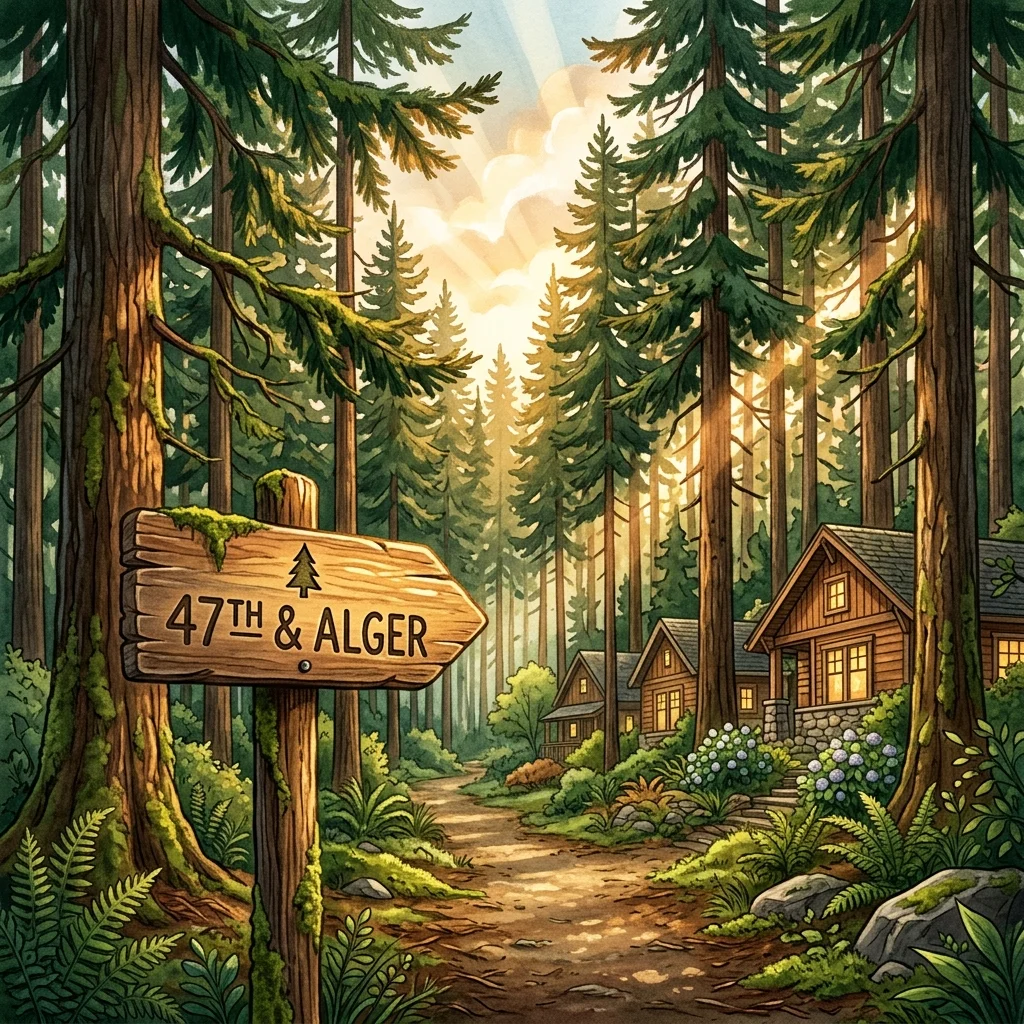
  • Living in South Forest Park: Everett’s Most Heavily Forested Neighborhood Has 2,499 Residents and a Quiet Center at 47th & Alger

    Living in South Forest Park: Everett’s Most Heavily Forested Neighborhood Has 2,499 Residents and a Quiet Center at 47th & Alger

    Living in South Forest Park: Everett’s Most Heavily Forested Neighborhood Has 2,499 Residents and a Quiet Center of Gravity at 47th & Alger

    **What is South Forest Park in Everett?** South Forest Park is one of the City of Everett’s 19 official neighborhoods, located between Casino Road to the south and Glacier View to the east. It is one of Everett’s smallest neighborhoods by population — roughly 2,499 residents — and one of the most heavily forested, anchored by 197-acre Forest Park itself. Its neighborhood association meets the second Tuesday of most months at Zion Lutheran Church at 47th & Alger.

    If you have driven Mukilteo Boulevard between downtown Everett and Boeing’s south end, you have already been to the edge of South Forest Park without knowing it. The neighborhood does not announce itself with a sign or a commercial strip. It does not have a “main drag.” What it has, instead, is canopy. South Forest Park is one of the most heavily wooded residential neighborhoods inside Everett city limits, and the people who live there tend to like it that way.

    It is also, quietly, one of Everett’s most stable.

    Where South Forest Park Actually Is

    The neighborhood sits in south-central Everett, bordered roughly by Mukilteo Boulevard on the north, Casino Road on the south, the western edge of Forest Park on the west, and the rough alignment of Glacier View on the east. The City of Everett’s official neighborhood map shows the boundaries in detail; locals usually describe it more simply as “the streets between Forest Park and Casino Road that aren’t on Casino Road yet.”

    The neighborhood is named for its most defining feature. Forest Park — Everett’s oldest and largest park at 197 acres — sits at the western edge of the neighborhood at 802 East Mukilteo Boulevard. South Forest Park is, literally, the neighborhood south of Forest Park.

    It is also adjacent to two of the projects we have covered before. To the south, the Casino Road corridor is in the middle of a long-running anti-displacement and community investment cycle. To the west, the Pinehurst-Beverly Park neighborhood sits across Mukilteo Boulevard. Long-timers in South Forest Park tend to think of themselves as a buffer between the activity on Casino Road and the quieter, older residential streets to the north — and the geography backs them up.

    The Numbers That Define the Neighborhood

    South Forest Park is small. Population estimates from neighborhood data aggregators put the resident count at approximately 2,499 — making it one of the smaller of Everett’s 19 official neighborhoods. The household size averages about 2.6 people. Owner-occupancy runs at roughly 66 percent, which is high for an Everett neighborhood that mixes single-family homes with multifamily housing.

    Real estate listings put the typical home price between roughly $450,000 for a smaller ranch and $800,000 for a larger or remodeled house. Median sale prices over the last twelve months have been clustered around $675,000. By comparison, Valley View-Sylvan Crest just east of here is reaching for higher numbers, and Casino Road just south of here is doing something different again. South Forest Park sits in the middle — established, wooded, mostly single-family.

    If you want a quick mental model: this is one of the Everett neighborhoods where a 1970s-era ranch on a wooded lot is still the dominant housing type, where most blocks have a tree canopy that hides the rooflines from the street, and where the streets are quieter at 5 p.m. than they are at 8 a.m.

    The Neighborhood Association — and Where It Meets

    South Forest Park has an active neighborhood association recognized by the City of Everett. The association meets the second Tuesday of most months at 7 p.m. at Zion Lutheran Church, 47th & Alger. It is one of about a dozen Everett neighborhood associations that meet regularly enough to maintain a continuous voice in city processes — neighborhood plan updates, capital projects, parks programming, traffic comments.

    The host venue is part of the story. Zion Lutheran was founded in 1901 in downtown Everett and moved to its current South Forest Park location in 1962. The church is part of the Evangelical Lutheran Church in America (ELCA) and has been a community service hub since its founding — food bank, AA meetings, community meals, and the kind of standing-room-only basement that every working neighborhood needs somewhere. The neighborhood association rents the room, but the relationship has lasted because the building has always been used for things bigger than worship.

    The association also collaborates regularly with View Ridge-Madison just to the north, and supports a community garden — the kind of low-cost, high-trust civic infrastructure that does not show up in city budgets but does show up on a Saturday in May.

    What’s Inside the Boundaries

    A few features inside the neighborhood are worth knowing if you are new:

    Forest Park (197 acres) at the northwest edge — Everett’s oldest park, with a Swim Center, picnic shelters, wooded trails, the Parks and Recreation Department’s administrative offices, and (as of a 2026 buildout) refreshed pickleball courts opening at the southeast corner of the park complex. The park alone is reason enough to live in this neighborhood.

    Woodlawn Gardens — the older multifamily/garden apartments that anchor the eastern side of the neighborhood, built when the canopy was already mature.

    Pigeon Creek — one of Everett’s named streams runs along the park edge and through the western side of the neighborhood. Pigeon Creek and its restoration history is part of why the city’s Critical Areas Update matters here.

    Zion Lutheran Church (47th & Alger) — the de facto neighborhood center.

    What Long-Timers Say

    The thing long-time residents say most often is “we are the people who chose the trees.” South Forest Park is small enough that homes don’t turn over often, and the people who do move in tend to be people who explicitly wanted the canopy. The neighborhood’s modest housing stock and stable owner-occupancy rate reflect that.

    The thing they say second most often is “we are not Casino Road, but we care about Casino Road.” The neighborhood has long taken a quiet but clear interest in what is happening to the south — most recently the 2026 Community Transit Goodwill site acquisition and the slower investments through Stations Unidos. South Forest Park residents commute through Casino Road, send kids to Mukilteo School District schools to the south, and read the neighborhood plan updates carefully.

    Schools and Daily Life

    South Forest Park sits at the edge of two school district boundaries — Everett Public Schools serves the northern portion, while Mukilteo School District serves much of the southern portion. Families in the neighborhood often say the boundary line runs through a backyard fence somewhere on their block — and they are not wrong. Anyone shopping for a house here should verify the specific school assignments for that exact address before they commit.

    For groceries, residents drift to either the Casino Road corridor to the south or the West Casino Road QFC. For coffee and quick meals, the closest options are along Mukilteo Boulevard and Evergreen Way. There is no in-neighborhood retail strip, and that is by design.

    A Quiet Verdict

    South Forest Park is not the neighborhood that makes the Tygart Media headlines, and that is the highest compliment Everett can pay a neighborhood. It is small. It is forested. It owns its own homes. It meets at a 64-year-old Lutheran church basement and runs a community garden. It has a neighborhood association that shows up to plan updates and stays on topic.

    If your version of “moving to Everett” includes a tree canopy, an established association, and a short walk to one of the largest urban parks in Snohomish County, South Forest Park is the neighborhood you should look at first.

    Frequently Asked Questions

    Where exactly is South Forest Park in Everett? South Forest Park is in south-central Everett, bordered by Mukilteo Boulevard to the north, Casino Road to the south, Forest Park to the west, and the western edge of Glacier View to the east. The official City of Everett neighborhood map confirms the boundaries.

    How many people live in South Forest Park? Roughly 2,499 residents according to neighborhood-level data aggregators, making it one of Everett’s smaller neighborhoods.

    What is the median home price in South Forest Park? Recent twelve-month median sale prices cluster around $675,000, with smaller homes starting near $450,000 and larger or remodeled homes reaching toward $800,000.

    When does the South Forest Park neighborhood association meet? The association meets the second Tuesday of most months at 7 p.m. at Zion Lutheran Church, 47th & Alger.

    What schools serve South Forest Park? The neighborhood spans the Everett Public Schools / Mukilteo School District boundary. School assignments are address-specific — verify with the appropriate district before purchasing.

    Is Forest Park inside the South Forest Park neighborhood? The 197-acre Forest Park is at the northwest edge of the neighborhood at 802 East Mukilteo Boulevard. The neighborhood is named for its proximity to the park.

    How is South Forest Park different from Pinehurst-Beverly Park? They are separate neighborhoods on the City of Everett’s official 19-neighborhood map. Pinehurst-Beverly Park sits to the west; South Forest Park sits to the east of Forest Park. They share some character but are governed by separate neighborhood associations.

  • Star Wars Night at Funko Field: Yoda Jerseys, Fireworks, and a Sunday Funday Finale to Close the Homestand

    Star Wars Night at Funko Field: Yoda Jerseys, Fireworks, and a Sunday Funday Finale to Close the Homestand

    What is happening at AquaSox Star Wars Night on May 9, 2026? The Everett AquaSox host the Hillsboro Hops at 7:05 p.m. on Saturday, May 9, 2026, at Funko Field for Star Wars Night. The promotion includes limited-edition Yoda-themed jerseys auctioned for charity, character meet-and-greets on the main concourse, and a postgame Fireworks Extravaganza. The series concludes Sunday, May 10, with the homestand finale at 1:05 p.m.

    The Force at Funko Field: AquaSox Star Wars Night and the homestand finale

    If you are reading this on Saturday night and the AquaSox-Hops game is still in progress, here is the deal: the Frogs were rolling into the night at the better end of this homestand, the prospect group has been hot, and Star Wars Night at Funko Field is one of the four or five best fan-experience nights of the entire AquaSox season. We are not going to fabricate a final score before the box is signed off — the rest of this run is about what is verifiable right now and what to look for tomorrow.

    What is verifiable: The promo. The pitching matchup framing. The series state. The Sunday finale. The prospect-watch story, which has been the most fun part of the AquaSox’s first month-plus.

    The night, the jerseys, the fireworks

    The AquaSox lean into theme nights harder than almost any club in the Northwest League, and Star Wars Night sits in the same tier as Bigfoot Night and Funko Pop Night for spectacle. The team is wearing limited-edition Yoda-themed jerseys for tonight’s game — those jerseys go to a postgame charity auction, with proceeds typically supporting the AquaSox Foundation and partner youth-baseball programs around Snohomish County. If you are a Star Wars fan and a Frogs fan, you have been waiting for this night since the schedule released.

    The character meet-and-greet runs on the main concourse during the early portion of the game. Storm troopers, Jedi, and the usual rotating cast of fan-club volunteers run the costume booths. Kids who come in costume get the full deal. The postgame Fireworks Extravaganza is the standard Funko Field treatment — about 12 minutes of choreographed fireworks set to music, watched from the seats or the right-field lawn. It is the kind of postgame that turns a casual night out into a kid’s core memory.

    The series and the homestand

    The AquaSox came into Saturday night having won the Friday matinée 8-1 behind Colton Shaw’s gem (seven strikeouts) and home runs from Freicer Caron and Jorge Jimenez. That pushed the homestand into a strong position with games still to play Saturday and Sunday at Funko Field.

    The bigger context for this homestand is the prospect run. Felnin Celesten — the Mariners’ international-signing infielder — is on a tear, having been named the Northwest League Player of the Week back-to-back. Luke Stevenson, Seattle’s No. 8 prospect on most ranking systems, won the Mariners’ Hitter of the Month award for April. Brock Moore won the Mariners’ April Bullpen Award with eight-plus innings, 20 strikeouts, four saves, and an ERA south of 3. The whole pipeline has been pushing real signal up to High-A, and a lot of the players who get a Mariners callup over the next 18 months are in this dugout right now.

    Sunday: The homestand finale at 1:05 p.m.

    Sunday, May 10, the AquaSox close out the Hillsboro homestand at 1:05 p.m. — Sunday Funday at Funko Field, with kids running the bases postgame. After Sunday, the Frogs travel to a road series and Funko Field is dark for a stretch before the next homestand opens.

    The pitching matchup for Sunday will fall to whichever back-end starter the AquaSox are running through the rotation by then. Bryce Miller, the Seattle Mariners starter who made his rehab outing at Funko Field on Wednesday May 6 (5 IP, 0 ER, 2 H, 3 BB, 2 K, 47 pitches), has finished his AquaSox rehab assignment and rejoined the Mariners’ rotation plan. So Sunday is back to the regular rotation — which has been good news because the back end of the staff has been a real strength all spring.

    What to watch for if you are at the park

    Felnin Celesten in the box. The 19-year-old has been the most exciting hitter in the Northwest League over the last two weeks. Watch his patience at the plate — the strike-zone discipline is the part of his profile that scouts have been waiting on, and it is showing up.

    Luke Stevenson behind the plate. Seattle’s No. 8 prospect is doing things at the plate that catchers his age usually do not do, and his game-calling at High-A has been one of the quiet stories of the season. Worth a look every at-bat.

    Brandon Eike’s home run pace. Eike has six home runs already through the early part of the AquaSox schedule. Eike, Stevenson, and Curtis Washington Jr. — who has four — are the bat trio that will define this lineup all summer.

    The bullpen back end. Brock Moore in particular. The Mariners-Award-winning April was not an accident — Moore has been one of the most reliable late-inning arms at this level all year.

    The fireworks. Always the fireworks. Funko Field’s set-up still holds up next to anything Snohomish County throws on the calendar.

    The fan-voice take

    Saturday night Star Wars Nights at Funko Field are the AquaSox at their best — full crowd, kids in costume, the prospect group on the field looking like the future of the Mariners’ lineup, and a crew of theme-night vendors that turn the whole thing into a carnival. This is the night you bring out-of-town family to. This is the night you take the kids to. This is the night you stay for the fireworks.

    And the bigger picture is also worth holding onto. The AquaSox are halfway through a deeply competitive homestand, the prospect-pipeline development that this organization is supposed to be doing is happening in plain sight, and the team is one of the more fun reasons to live in Snohomish County right now. If you have not been to a game yet in 2026, fix that this week.

    Frequently Asked Questions

    What time does AquaSox Star Wars Night start?
    First pitch is 7:05 p.m. on Saturday, May 9, 2026, at Funko Field in Everett. Gates typically open about an hour and 15 minutes before first pitch.

    What are the jerseys like?
    Limited-edition Yoda-themed jerseys worn by the players during the game. The jerseys are auctioned for charity after the game.

    Are there fireworks?
    Yes — postgame Fireworks Extravaganza, the standard Funko Field treatment of about 12 choreographed minutes set to music.

    When is the homestand finale?
    Sunday, May 10, 2026, at 1:05 p.m. — the standard Sunday Funday afternoon game at Funko Field with kids running the bases postgame.

    Who is the AquaSox prospect to watch right now?
    Felnin Celesten has been on a tear, named back-to-back Northwest League Player of the Week. Luke Stevenson won the Mariners’ April Hitter of the Month award. Brock Moore won the Mariners’ April Bullpen Award.

    Where is Funko Field?
    3900 Broadway, Everett, WA 98201 — on the Everett Memorial Stadium grounds adjacent to Everett Community College.

    How can I get tickets?
    AquaSox.com or Ticketmaster. The team also runs walkup ticket windows on game days.

    Where is Bryce Miller now?
    Miller completed his second AquaSox rehab outing on Wednesday, May 6, throwing five scoreless innings at Funko Field. He has rejoined the Mariners’ rotation plan.

  • WHL Final Heads to Prince Albert: Where, When, and How to Watch the Silvertips on the Road

    WHL Final Heads to Prince Albert: Where, When, and How to Watch the Silvertips on the Road

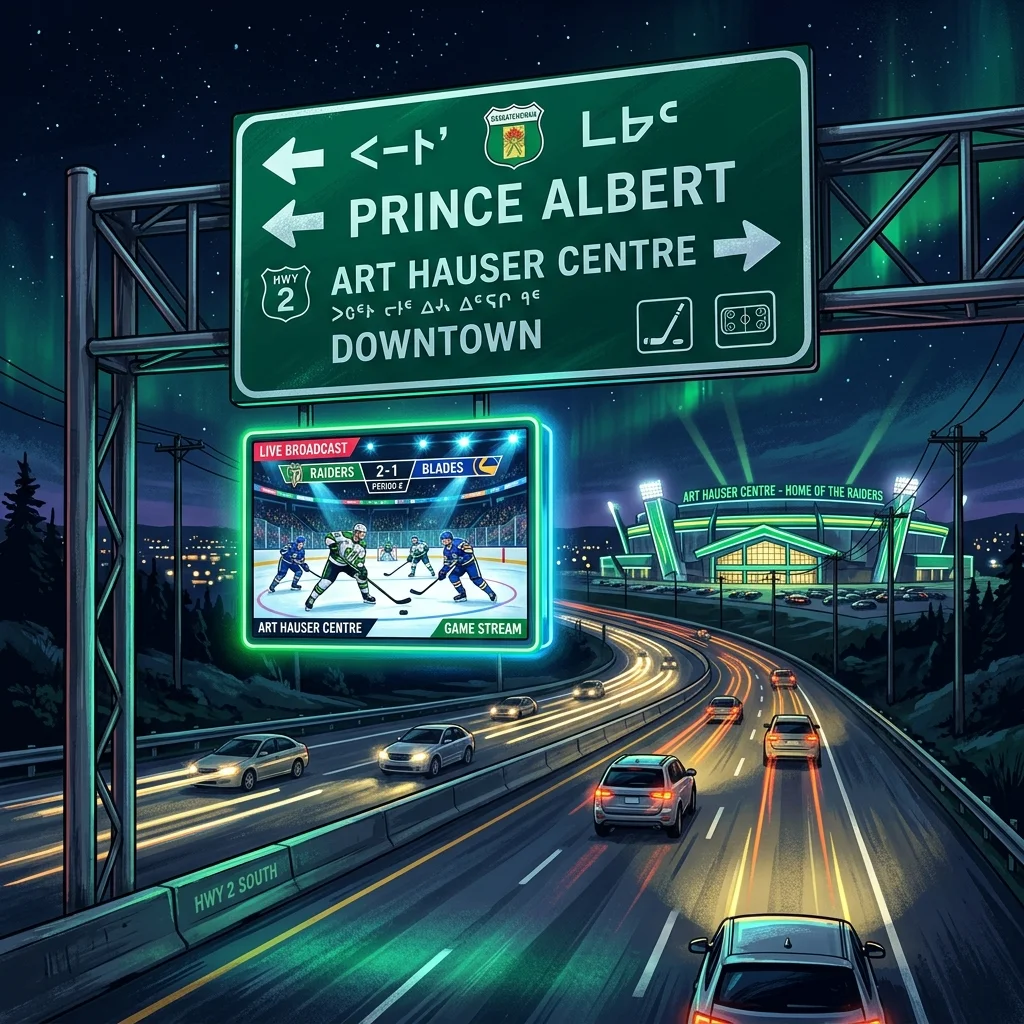
    Where do the Silvertips play next in the WHL Championship Final? Game 3 of the 2026 WHL Championship Final is Tuesday, May 12, 2026, at the Art Hauser Centre in Prince Albert, Saskatchewan, with puck drop at 7:30 p.m. MDT — that is 6:30 p.m. Pacific Time for fans watching from Everett. Game 4 follows Wednesday, May 13 at the same venue. Game 5, if needed, is Friday, May 15, also in Prince Albert. The series returns to Angel of the Winds Arena for Games 6 and 7 if necessary, on Sunday, May 17 and Monday, May 18.

    Tied 1-1, the WHL Final goes to Saskatchewan: What it means for Everett’s run

    The 2026 WHL Championship Final has its perfect setup. Two No. 1 seeds, splitting the home games at Angel of the Winds Arena, going to Prince Albert tied at a game apiece. Now the series gets harder.

    For the next three games — Tuesday, Wednesday, and Friday — the Silvertips do not get the building behind them. They get a 6,200-seat barn called the Art Hauser Centre, sitting in a hockey town of about 35,000 people that lives and dies on this team. Prince Albert was the Eastern Conference’s top regular-season team for a reason. The Raiders have lost just once at home in the 2026 playoffs.

    The good news for Tips fans: Everett earned the right to go on the road tied. The 6-2 Game 2 win at Angel of the Winds Arena on Saturday — three first-period goals, a four-point night from Julius Miettinen, a power-play goal from Jesse Heslop with one second left — flipped the series from “Prince Albert is in control” back to “Everett is the team to beat.” That matters. Going 0-2 to Saskatchewan would have been a borderline emergency. Going 1-1 is the script everyone expected before the series opened.

    The Art Hauser Centre, briefly explained for Tips fans who have never been

    The Art Hauser Centre is the smallest venue still hosting a WHL playoff series in 2026. Capacity for hockey runs about 2,800 seated plus standing-room — and it is loud the way smaller buildings always are. The ice surface is the standard 200-by-85, but the rink sits closer to the crowd than at Angel of the Winds, and the Raiders’ building has a real hum to it on big nights. This will be a big nights kind of building.

    For Everett’s group, this is not an unfamiliar environment. The Tips spent all spring grinding through Memorial Cup-quality road buildings — Kamloops, Kelowna, the South Okanagan Events Centre in Penticton — and they are 8-0 on the road in the 2026 playoffs entering Game 3. That stat has earned the team the benefit of the doubt about whether they can handle the noise.

    What changes for Everett with the schedule shift

    The biggest practical change is the time zone. Mountain Daylight Time runs an hour ahead of Pacific in May, so a 7:30 p.m. local puck drop in Prince Albert is 6:30 p.m. for fans in Everett. That is friendlier than it sounds. You can be home from work, eat dinner, watch the whole game, and still be in bed by 9:30 PT.

    The second change is the format. In Games 3, 4, and 5, the Raiders get last line change. In a series that is already turning on matchups — DuPont and Bear against Pickering and Reschny, Miettinen-Cripps in the circle — that is a meaningful adjustment. Head coach Dennis Williams will need to lean on Carter Bear’s line to take the heaviest minutes against Prince Albert’s top defensemen and trust the Tips’ depth to win the lower-leverage shifts.

    The third change is the goalie call. Everett went with AJ Reyelts in net for Game 2 and got rewarded for it. With Anders Miller’s regular-season .948 save percentage in his back pocket, the Tips have one of the best goaltending tandems in junior hockey. Reyelts earned the Game 2 start by playing well in the Western Conference Final’s two overtime games and winning the night. Whether he gets Game 3 or Miller comes back is the storyline to watch in the team’s first-night skate Tuesday morning at the Art Hauser Centre.

    What changes for Prince Albert

    The Raiders have to win at home. They came into this series as the WHL Eastern Conference’s top seed, beating Medicine Hat in seven games in the East Final, and they have not lost a home game in this entire run. If they protect the Hauser, the series gets very long for Everett very quickly.

    What worried Prince Albert in Game 2 was the absence of two-way pressure from their top forwards. Owen Pickering, the Raiders captain and Detroit Red Wings prospect, finished without a point. Cole Reschny, the Calgary Flames first-rounder, was held off the scoresheet. Aiden Oiring, who terrorized the Tips’ defensive zone in Game 1, was a much smaller factor in Game 2. If those three play to their pedigree, Prince Albert wins this series. If they continue what we saw in Game 2, Everett is going to take this in five or six.

    What is at stake in each game

    Game 3 is for who wants the series first. The team that wins Game 3 in a tied 1-1 best-of-seven goes on to win the series 78 percent of the time historically. That is the leverage point.

    Game 4 is for survival or scoreboard pressure. The team that drops Game 3 cannot afford to drop Game 4 — that 3-1 series deficit ends roughly nine of every 10 series in the home team’s favor.

    Game 5 is for the door. Friday May 15 — if needed — is Prince Albert’s last home game in the 2026 season if the Tips have done their job in Games 3 and 4. It is also where the Raiders end their season at home if Everett can grab one of the first two and hold serve.

    Game 6 and Game 7 are scheduled for Angel of the Winds Arena Sunday, May 17 and Monday, May 18. Both are sold out as of Saturday night for the home opener segment of those tickets — anything left after the AOTW resale window closes goes to Ticketmaster’s verified resale.

    How to watch from Everett

    TSN carries the WHL Championship Final in Canada. Victory+ streams it in the United States — that is the official option for fans on the south side of the border who do not have a TSN subscription. Ticketmaster handles tickets for the home games at Angel of the Winds Arena.

    If you are watching at home, set the DVR for 6:30 p.m. PT both Tuesday and Wednesday. If you are watching at a bar in Everett, start with The Anchor Pub & Restaurant, the Independent Beer Bar at the arena, or McMenamins on Hewitt — they are all reliably running WHL Final coverage on the big screens during this run.

    The fan-voice take on the road trip

    Here is the truth about this team going to Prince Albert tied: this is the run we earned. A 117-point regular season that was the best mark in the Western Conference in 12 years. Sweeping Kelowna in Round 2. Sweeping Penticton in the Western Conference Final. Twelve playoff wins on a 12-1 record. That entire body of work was about earning the right to play games like this — on the road, against another No. 1 seed, with a championship in front of you.

    Most franchises never get a Tuesday like the one Everett is about to play. Cherish it. Pull up Victory+. Have a pint. Yell at the TV. The Silvertips have not won the Ed Chynoweth Cup in 19 years, and the path to ending that drought runs straight through Prince Albert this week.

    Frequently Asked Questions

    When is Game 3 of the 2026 WHL Championship Final?
    Tuesday, May 12, 2026, at the Art Hauser Centre in Prince Albert, Saskatchewan. Puck drop is 7:30 p.m. MDT, which is 6:30 p.m. Pacific Time.

    How many home games does Prince Albert get in this series?
    Three. Games 3, 4, and 5 are all at the Art Hauser Centre. Games 6 and 7, if needed, return to Angel of the Winds Arena.

    How can I watch the WHL Final from Everett?
    Victory+ streams the games in the United States. TSN broadcasts in Canada. Both options are official.

    What is the series record between Everett and Prince Albert?
    Tied 1-1 after Game 2. Prince Albert won Game 1 4-2 at Angel of the Winds Arena. Everett won Game 2 6-2 at Angel of the Winds Arena.

    Has Everett been good on the road in the 2026 playoffs?
    Yes. The Silvertips entered Game 3 at 8-0 on the road in the 2026 WHL Playoffs.

    When was the last time the Silvertips won the Ed Chynoweth Cup?
    2007. Everett has not won the WHL Championship in 19 years entering the 2026 Final.

    Where is the Art Hauser Centre?
    Prince Albert, Saskatchewan. Capacity is approximately 2,800. The venue has been the Raiders’ home rink since 1996.

    What time will Game 4 be played?
    Wednesday, May 13 at the Art Hauser Centre. Game time is set at the same 7:30 p.m. MDT puck drop.

  • Tips Even the Series in Style: Silvertips Crush Raiders 6-2 to Tie WHL Final 1-1

    Tips Even the Series in Style: Silvertips Crush Raiders 6-2 to Tie WHL Final 1-1

    What was the final score of WHL Final Game 2 on May 9, 2026? The Everett Silvertips beat the Prince Albert Raiders 6-2 at Angel of the Winds Arena on Saturday, May 9, 2026, tying the best-of-seven WHL Championship Series 1-1. Three first-period goals — from Carter Bear at 3:20, Kayd Ruedig at 5:31, and Rylan Gould later in the frame — staked Everett to a 3-0 lead after 20 minutes, and the Tips never gave it back. The series now shifts to Prince Albert’s Art Hauser Centre for Games 3, 4, and 5.

    Bounce-back Saturday: The Silvertips needed this one and they got it three different ways

    Friday night Everett looked nervous. Saturday night Everett looked like Everett.

    The Silvertips evened the 2026 WHL Championship Series with a 6-2 win over the Prince Albert Raiders at Angel of the Winds Arena on May 9, and the way they did it should reset the tone of the entire series. They scored three goals before the first period was over. They put a power-play goal on the scoreboard with one second left to drive the dagger home. And they got production from the people you would have hoped to see step up — Carter Bear, Julius Miettinen, and a 2OT Game 2 hero from Round 3 in Rylan Gould — plus a Game 2 goal from Kayd Ruedig, the defenseman acquired in trade specifically for moments like this.

    Series tied 1-1. Off to Saskatchewan. The Tips can breathe.

    The first period that swung the series back

    Carter Bear opened the scoring at 3:20 of the first by corralling a bouncing loose puck in the high slot and beating Prince Albert goaltender Michal Orsulak with a low shot. Two minutes and eleven seconds later, Nolan Chastko won an offensive-zone face-off, the puck slid to Kayd Ruedig in the left circle, and Ruedig’s shot beat a screened Orsulak to make it 2-0 at 5:31. By the time the first horn sounded, Everett had a 3-0 lead — Rylan Gould adding the third on a wide-open net after a play by 17-year-old phenom defenseman Landon DuPont.

    Three goals in the first period. After the way Game 1 went — losing the second period 3-0 and giving up the eventual game-winner from Justice Christensen on a play that felt unnecessary — that opening 20 minutes was the entire emotional reset the building needed. Game 2 stopped being about whether the Tips could match Prince Albert’s intensity and started being about whether the Raiders could climb back into a series where Everett was the one dictating terms.

    Prince Albert pushed back, Prince Albert ran out of room

    Brock Cripps got Prince Albert on the board with a power-play goal in the second period, and Justice Christensen — yes, the same Christensen who potted the Game 1 winner — added another with 9:46 to play in the third to make it 3-2 and briefly suggest a real comeback was on. It was the kind of stretch that, in Game 1, ended with the Raiders pulling away. Saturday night it ended with Everett locking it down.

    Julius Miettinen banged in an empty-netter for his 12th playoff goal — and his fourth point of the night — to push the lead to 5-2, and Jesse Heslop closed the scoring with a power-play goal with one second left in regulation for the 6-2 final. That last goal does not change anything on the scoreboard, but in the WHL it absolutely changes things in the locker room. Insurance goals at the end of WHL playoff games are a message. Everett was sending one.

    The fan-voice take

    Look, after Friday night a lot of us were doing math we didn’t want to do. Two-on-the-road for a series that was supposed to belong to Everett. Anders Miller’s historic regular-season .948 save percentage suddenly looking less like a shield and more like a ceiling. The crowd quiet by the third period. That was a real worry.

    What changed Saturday is exactly what should have changed Saturday. Carter Bear played like a Detroit Red Wings second-round pick should play. Landon DuPont made a defenseman-to-defenseman play to set up Gould that was the kind of thing that gets you drafted first overall. Julius Miettinen had four points and looked like the closer this team has been all season. And Kayd Ruedig — the trade-deadline addition from Kamloops — was on the scoresheet on a goal that was the kind of off-the-face-off play this team was supposed to win all spring.

    The series is now 1-1 and it’s going to Prince Albert. That is not a panic situation. That is the situation everyone expected before puck drop on Friday. Everett got back to being Everett, and they did it on a night when they had to.

    What to watch in Game 3

    The Game 3 question is whether Everett’s defensive structure holds in a barn that isn’t theirs. Art Hauser Centre is a small, loud, traditional WHL building, and the Raiders win there with a forecheck that is built to grind teams into mistakes. If the Tips can defend their own zone the way they did in Game 2, they will win Game 3. If they revert to chasing the puck around their own end the way they did in the second period of Game 1, they won’t.

    Where the series goes from here

    Game 3 is Tuesday, May 12 at the Art Hauser Centre in Prince Albert, with puck drop at 7:30 p.m. MDT (6:30 p.m. PT). Game 4 is Wednesday, May 13 at the same venue. Game 5, if needed, is Friday, May 15, also at Art Hauser. The series then returns to Angel of the Winds Arena for Games 6 and 7 if necessary — Sunday, May 17 and Monday, May 18.

    The whole series is being broadcast on TSN in Canada and streamed on Victory+ in the United States. If you have any other plans Tuesday night, cancel them.

    Final lines and what they mean

    Carter Bear got the goal the entire arena needed. Julius Miettinen finished with four points, including the empty-net dagger. Rylan Gould scored on the wide-open net after the DuPont feed in the first. Landon DuPont continues to look like a 17-year-old who is going to play in the NHL very soon. Kayd Ruedig got on the board in his first WHL Championship Final appearance. Jesse Heslop’s late power-play goal felt like a closing argument.

    For Prince Albert, the worry list is real. Brock Cripps and Justice Christensen put up the only goals — Christensen now has goals in both games of this series — but the Raiders did not get the same kind of two-way pressure from their top line that decided Game 1.

    This is the kind of series these two No. 1 seeds were supposed to play. One game each, going home tied, with both teams now needing to prove they can win on the road. Everett goes back to Saskatchewan with a healthy Bear, a 17-year-old Norris-arc-in-the-making in DuPont, and a 12-1 playoff record that includes back-to-back sweeps of Kelowna and Penticton. The Raiders go back with home ice, a goaltender in Orsulak who has played to a series-leading clip in spurts, and a power play that has scored on both nights.

    Tuesday night decides whether this is going to be a series or a fight. Bring it.

    Frequently Asked Questions

    What was the final score of WHL Final Game 2?
    Everett Silvertips 6, Prince Albert Raiders 2. The series is now tied 1-1 in the best-of-seven 2026 WHL Championship Final.

    Who scored for the Silvertips in Game 2?
    Carter Bear opened the scoring at 3:20 of the first period. Kayd Ruedig made it 2-0 at 5:31 of the first. Rylan Gould scored later in the first period to make it 3-0 after one. Julius Miettinen had four points including an empty-net goal. Jesse Heslop scored a power-play goal with one second left in regulation.

    Who scored for Prince Albert?
    Brock Cripps scored a second-period power-play goal. Justice Christensen scored with 9:46 left in the third — Christensen has goals in both games of the series.

    When and where is Game 3?
    Tuesday, May 12, 2026, at the Art Hauser Centre in Prince Albert, Saskatchewan. Puck drop is 7:30 p.m. MDT, which is 6:30 p.m. Pacific Time.

    How can I watch the WHL Championship Final?
    TSN carries the games in Canada. Victory+ streams the games in the United States.

    What is the rest of the series schedule?
    Game 4: Wednesday, May 13 at Art Hauser Centre. Game 5 (if needed): Friday, May 15 at Art Hauser Centre. Game 6 (if needed): Sunday, May 17 at Angel of the Winds Arena. Game 7 (if needed): Monday, May 18 at Angel of the Winds Arena.

    What is Everett’s playoff record now?
    12-1 in the 2026 WHL Playoffs after sweeping Kelowna in Round 2 and Penticton in the Western Conference Final.

  • Mental Health Awareness Month at NAVSTA Everett: Where Navy Families Can Get Real Help in May 2026

    Mental Health Awareness Month at NAVSTA Everett: Where Navy Families Can Get Real Help in May 2026

    Where can NAVSTA Everett Navy families get mental health help during Mental Health Awareness Month 2026? Five no-cost resources cover almost every situation: dial 988 then press 1 for the Military and Veterans Crisis Line (24/7), call the Naval Station Everett Fleet & Family Support Center at 425-304-3735 for short-term counseling, walk into the Everett Vet Center at 1010 SE Everett Mall Way Suite 207 (425-252-9701) for combat-trauma support, schedule mental health care at the Everett VA Clinic at 220 Olympic Boulevard, or contact the Snohomish County Veterans Assistance Program at 425-388-7255 for emergency help. None of them require a referral to start.

    May is Mental Health Awareness Month, and for the more than 6,000 Sailors and Navy families who call Naval Station Everett home, the month lands at the end of a difficult run. PCS season is heating up. Five Arleigh Burke-class destroyers cycle through deployment workups. The shipyard delays around the FF(X) frigate program have introduced fresh uncertainty about who is moving where and when. The Department of Defense’s most recent published research, summarized in Mental Health Awareness Month coverage from Syracuse University’s Institute for Veterans and Military Families, shows that 11.7% of active-duty service members now carry at least one mental health diagnosis — a roughly 40% rise between 2019 and 2023.

    The good news for NAVSTA Everett families: the local resource network is denser than most people realize, and almost all of it is free. Here is what is open, who it is for, and how to reach it during May 2026 and beyond.

    If you or someone you love is in crisis right now

    Dial 988, then press 1. That is the Military and Veterans Crisis Line, staffed 24 hours a day, 7 days a week by responders trained in military culture. Active-duty Sailors, Reservists, retirees, veterans, and family members can all use it. You can also text 838255 for the same service in text form, or chat online through veteranscrisisline.net. The Department of Veterans Affairs and the Department of Defense built the line specifically because too many service members and families hesitated to call a civilian crisis line. You don’t need to be enrolled in VA care to use it. You don’t need to be retired or separated. You don’t need a diagnosis.

    If the situation is medical and immediate, the closest emergency department to the gate is Providence Regional Medical Center Everett on Pacific Avenue, which has a 24/7 emergency department and behavioral health response capability.

    Fleet & Family Support Center: short-term counseling, no medical record

    The Fleet & Family Support Center (FFSC) at NAVSTA Everett is staffed with licensed counselors who hold master’s or doctoral degrees in social work, marriage and family therapy, or psychology. The Center provides individual, marriage, and family counseling on a short-term basis to active-duty service members, spouses, dependents, and retirees. The phone is 425-304-3735, and the email is ffsp.cnrnw@navy.mil.

    FFSC counseling does not generate a medical record and does not feed into a security clearance review. Many Sailors who hesitate to seek help on the medical side because of clearance worries find FFSC’s non-medical model is the bridge that gets them talking to someone. The Center also runs deployment readiness counseling, financial counseling, and relocation support, and it operates a satellite office at NAVSUP FLC Puget Sound Smokey Point.

    Military and Family Life Counselors (MFLCs): embedded, free, and confidential

    MFLCs are Department of Defense contracted licensed clinical counselors who rotate through installations and provide non-medical counseling to service members and families. Naval Station Everett has MFLC coverage, and the Centers for Deployment Psychology notes that DoD requires MFLCs to be licensed clinical providers. The conversations stay off the medical record, off the chain of command, and off the security clearance process. Sessions can happen at the FFSC, at child development centers, on base in private spaces, or off-base by mutual agreement. Ask FFSC at 425-304-3735 about current MFLC availability when you call.

    Everett Vet Center: combat trauma, MST, and family bereavement

    The Everett Vet Center is a different VA program than the medical clinic. Vet Centers are community-based, walk-in friendly, and exist primarily for combat veterans, military sexual trauma survivors, and bereaved family members of service members who died in service. Counseling is free, confidential, and not part of the standard VA medical record. The center is at 1010 SE Everett Mall Way, Suite 207, Everett, WA 98208, open Monday through Friday from 8:00 a.m. to 4:30 p.m. The phone is 425-252-9701.

    For Sailors and family members who served in any combat zone, who deployed in support of contingency operations, or who experienced sexual trauma during military service, the Vet Center model is often the gentlest entry point into help. There is no enrollment process. You can call to make an appointment or, in many cases, walk in.

    Everett VA Clinic: mental health inside the medical system

    For VA-enrolled veterans who want mental health care integrated with primary care, the Everett VA Clinic at 220 Olympic Boulevard offers outpatient mental health services. The clinic is open Monday through Friday from 8:00 a.m. to 4:30 p.m. Existing primary-care patients can reach mental health scheduling at 800-329-8387 ext. 74241. The full VA Puget Sound mental health line at Building 101 in Seattle is 206-277-4709, available Monday through Friday 8:30 a.m. to noon and 1:00 to 3:00 p.m.

    If you are a Sailor preparing to separate, ask about the VA’s transition mental health services before you leave active duty. The earlier you get into the system, the easier the handoff.

    Snohomish County Veterans Assistance Program: emergency support that ladders into care

    Sometimes mental health and money sit on the same shelf. The Snohomish County Veterans Assistance Program at the Drewel Building, 3000 Rockefeller Avenue, Everett, provides emergency financial assistance, housing vouchers, and care coordination — and connects callers to mental health and substance-use assessment at a VA medical center when those needs come up alongside the financial crunch. The phone is 425-388-7255, and walk-in hours are Monday through Friday, 8 to 11 a.m. and 1 to 4 p.m. Honorably discharged veterans, their widows, and qualified dependents are eligible.

    Free mental health care from outside the federal system

    Two national programs supplement what NAVSTA Everett families can get on base or through the VA. Military OneSource (1-800-342-9647) provides up to 12 free non-medical counseling sessions per issue per year for active-duty members, Reservists, Guard, and family. Give an Hour connects service members, veterans, and family members to a national network of licensed volunteer mental health providers who offer pro-bono care. Neither requires a VA enrollment.

    For spouses and parents specifically, USO Northwest runs family programming throughout May and connects families to peer support that is unique to military life — the kind of context a civilian therapist may not have.

    What Mental Health Awareness Month looks like at NAVSTA Everett in 2026

    The NAVSTA Everett Fleet and Family Readiness calendar typically clusters mental-health programming throughout May, including resilience workshops, parenting classes, and information tables in the Navy Exchange and Galley. The Region Northwest Suicide Prevention team folds Mental Health Awareness Month into its broader prevention rhythm. If you are stationed at NAVSTA Everett and want to know what is on the schedule this week, check the FFR calendar or call FFSC.

    The harder lift for May 2026 is for families whose Sailor is in workups or already deployed. Deployment compresses everything — sleep, money, parenting, marriage, the unspoken weight of waiting. The 988 line, FFSC’s deployment counseling, and the MFLCs are all built for exactly this. None of them require a referral. None of them require you to wait for things to get worse.

    Frequently Asked Questions

    Will going to FFSC counseling affect my Sailor’s security clearance?
    FFSC short-term counseling is non-medical and does not generate a medical record. It is generally considered separate from the security clearance review process. The Department of Defense has publicly stated that seeking mental health support is not by itself a basis for clearance denial, and recent SF-86 questions narrowly target only certain conditions. Talk with FFSC if you have specific clearance concerns.

    Do I have to be enrolled at the VA to use the Everett Vet Center?
    No. Vet Centers are a separate, walk-in program. You do not need to be VA-enrolled to receive Vet Center counseling. Eligibility is built around combat or contingency-operation service, military sexual trauma, or bereavement of a service member who died in service.

    Are MFLC sessions free?
    Yes. Military and Family Life Counselors are paid by the Department of Defense. Sessions are free, non-medical, and confidential within Department of Defense guidelines.

    How fast can I get into FFSC counseling?
    Initial appointments at FFSC are generally available within days, not weeks, particularly for active-duty members and family members in distress. Call 425-304-3735 to schedule.

    What if my Sailor is on deployment and I need help here in Everett?
    FFSC supports family members of deployed Sailors. So do MFLCs, Military OneSource, USO Northwest, and the Navy Family Ombudsman program. The 988 + 1 line is always available.

    Can I bring my kids to a counseling session?
    FFSC and MFLCs both provide family counseling that includes children. Some programs run age-banded child and adolescent sessions. Ask when you book.

    Is there help for Sailors who left the Navy years ago?
    Yes. The Vet Center, the Everett VA Clinic, the Snohomish County Veterans Assistance Program, Give an Hour, and the 988 + 1 line all serve veterans regardless of how long ago they served.

    What if I need help outside business hours?
    The 988 + 1 line is staffed 24 hours a day, 7 days a week. Providence Regional Medical Center Everett has a 24-hour emergency department. The Crisis Connections Line for Snohomish County is 1-800-584-3578.