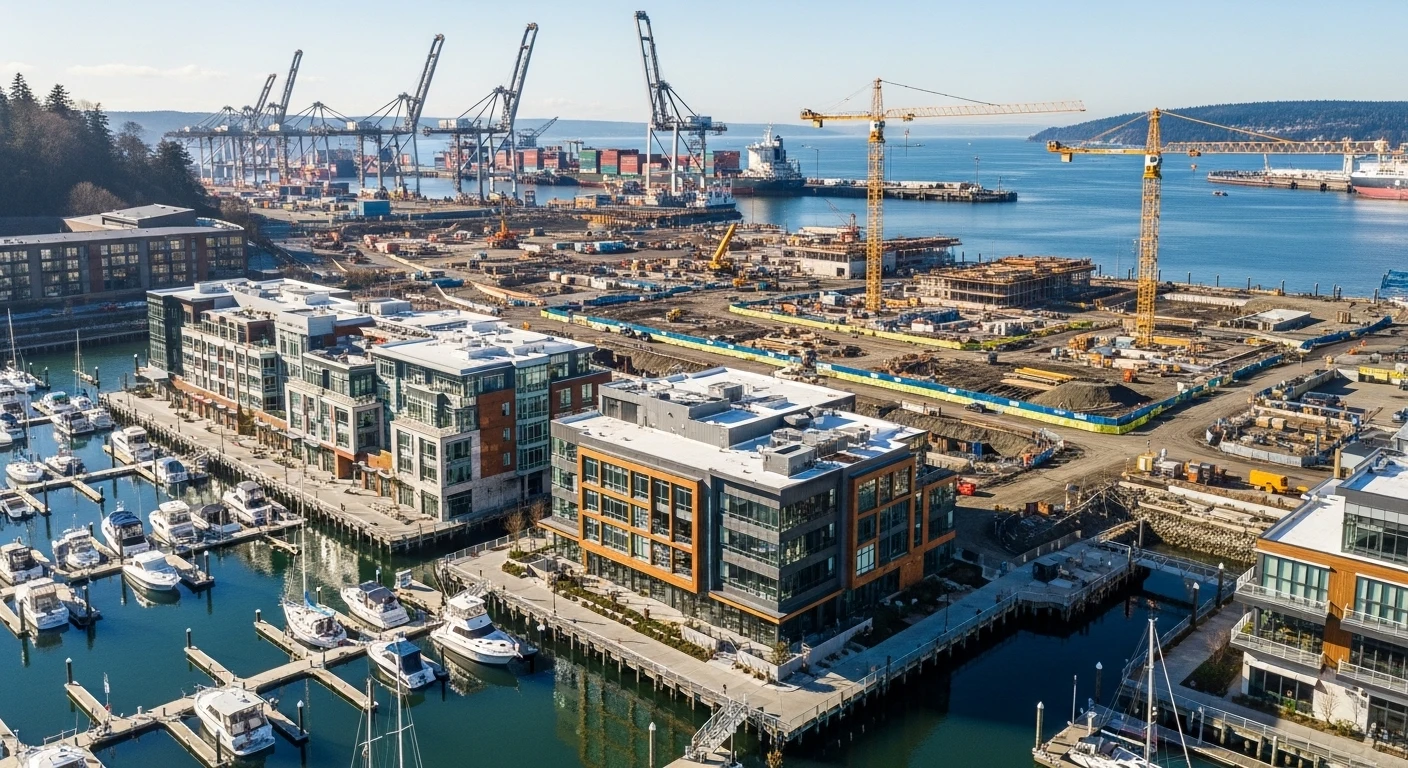
Tag: Everett

  • Sodam Chicken Just Opened Its First Washington Location in Everett — The Korean Fried Chicken Is the Real Thing

    Sodam Chicken Just Opened Its First Washington Location in Everett — The Korean Fried Chicken Is the Real Thing

    Address: 607 SE Everett Mall Way, Suite K/L, Everett, WA 98208
    Phone: (425) 595-6172
    Hours: Monday–Saturday 10:30 AM – 9:30 PM | Closed Sunday
    Price range: $$
    Parking: Free lot at SE Everett Mall Way complex
    Delivery: DoorDash, Grubhub, Uber Eats
    What to order: D2 Yangnyeom Chicken, D3 Soy Garlic Chicken, Lunch Combo

    Korean fried chicken is not a trend anymore. It passed through trend and arrived at institution somewhere around the time every major American city got a minimum of three competing Korean chicken spots and the debate shifted from “have you tried it?” to “which sauce?” Everett got its answer in 2025 when Sodam Chicken opened at 607 SE Everett Mall Way — the brand’s first location in Washington state and an addition to an SE Everett corridor that has been quietly stacking up worth-knowing-about food options for two years.

    Sodam is a South Korean chain. The name means “plentiful and tasty food” in Korean, which is either a mission statement or a promise, and from what the menu delivers, arguably both. The original brand was founded in South Korea in 2010 and has expanded internationally. The Everett location is its first foothold in Washington — and based on the concept, it will not be the last one in this state.

    What Makes Korean Fried Chicken Different

    Korean fried chicken differs from American fried chicken in method and result. The chicken is typically double-fried at high heat, which produces a thinner, crispier crust that does not soften under sauce the way American breading tends to. The crust at Sodam is described as “gold fried” — a uniform, tight, crackly shell that holds its texture even after sauce is applied. This is the technical achievement that separates mediocre Korean chicken from the real thing.

    The sauce repertoire is where the differentiation happens. Sodam’s core menu runs three variations on fried chicken: the D1 Gold Fried Chicken (unsauced, crispy and savory, with two dipping sauce choices), the D2 Yangnyeom Chicken (the signature sweet-spicy Korean sauce, coating the fried shell without compromising it), and the D3 Soy Garlic Chicken (lightly coated with a bold, rich soy garlic glaze). All three are $16.99. All three are the right entry point to the menu depending on your sauce preference.

    The Menu Beyond the Core Three

    Sodam’s menu extends well past fried wings and boneless pieces. The grilled and stir-fried category covers chicken in different preparation styles for anyone who wants the flavor without the deep fry. Lunch combos run at a lower price point and give you a faster entry into the menu during weekday hours — Sodam opens at 10:30am Monday through Saturday, which means it is genuinely available for an early lunch when most competitors in the area are not yet running.

    The Sodam Combo and Family Combo Set are designed for groups — buying in bulk at Sodam is the correct strategy if you are feeding more than two people, because the per-piece economics shift significantly at combo scale. Rice, noodles, and sides round out the menu enough to make a full meal without supplementing elsewhere. Delivery runs through DoorDash, Grubhub, and Uber Eats if you are not near SE Everett Mall Way.

    The SE Everett Mall Way Cluster

    Sodam’s location at 607 SE Everett Mall Way is in a commercial complex that has developed into a quiet concentration of worthwhile food destinations. Dumpling World at 620 SE Everett Mall Way makes handmade xiaolongbao fresh to order — the kind that you can watch being pleated at the counter. Middleton Brewing operates a 1.5-barrel nano-brewpub in Suite 27-A of the same complex, run by owner Geoff Middleton since 2013.

    The combination of Korean fried chicken, handmade dumplings, and craft beer in the same parking lot is not something we expected SE Everett Mall Way to become, but here we are. This corridor has emerged as one of the more interesting food destinations in south Everett, and Sodam Chicken is a meaningful addition to it.

    Why Yangnyeom Is the One to Order

    If you have never been to Sodam and are ordering for the first time, get the D2 Yangnyeom Chicken. Yangnyeom is the benchmark sauce at any Korean fried chicken restaurant — it is the sweet-spicy red glaze that defines the category, and the version you make your opinion of the spot on. If the yangnyeom is thin, too sweet, or fails to coat the crust without softening it, the kitchen has a problem. If it is balanced, sticky without being cloying, and arrives on a crust that is still audible, the kitchen knows what it is doing.

    The soy garlic (D3) is the move for anyone who wants savory over sweet — it is richer and less assertive than yangnyeom, and for garlic-forward eaters, it often becomes the preferred repeat order. The Gold Fried (D1) with dipping sauces is the traditional entry point for anyone who wants to taste the crust itself before the sauce conversation starts.

    Sodam Chicken opened quietly and has been operating without much local fanfare since 2025. That changes now. There is a first Washington location of a South Korean chain sitting in a food cluster in SE Everett, open six days a week starting at 10:30am, with a menu that delivers on the Korean fried chicken promise. We are not sure what more you need to know. Go try the yangnyeom.

    Frequently Asked Questions

    Where is Sodam Chicken in Everett?

    Sodam Chicken Everett is located at 607 SE Everett Mall Way, Suite K/L, Everett, WA 98208. Phone: (425) 595-6172.

    What are Sodam Chicken’s hours in Everett?

    Sodam Chicken Everett is open Monday through Saturday from 10:30 AM to 9:30 PM. Closed Sundays.

    What should I order at Sodam Chicken?

    Start with the D2 Yangnyeom Chicken ($16.99) — the sweet-spicy signature sauce is the benchmark for Korean fried chicken quality. The D3 Soy Garlic Chicken is the go-to for savory eaters. The D1 Gold Fried Chicken with dipping sauces lets you taste the crust first.

    Does Sodam Chicken deliver?

    Yes. Sodam Chicken Everett delivers via DoorDash, Grubhub, and Uber Eats.

    Is this the first Sodam Chicken in Washington?

    Yes. The Everett location at 607 SE Everett Mall Way is Sodam Chicken’s first Washington State location. The brand originated in South Korea in 2010.

  • Jallos Jollof Rice Is Bringing West Africa’s Most Contested Dish to SE Everett Three Days a Week

    Jallos Jollof Rice Is Bringing West Africa’s Most Contested Dish to SE Everett Three Days a Week

    Address: 710 SE Everett Mall Way, Everett, WA 98208
    Phone: (206) 999-8377
    Hours: Monday, Wednesday, Friday 12:00 PM – 6:00 PM
    Price range: $
    Halal: Yes
    What to order: Senegambian Jollof, Naija Jollof — try both if you can

    Jollof rice is the most argued-over dish in West Africa. The question of who makes it best — Senegal, Nigeria, or Ghana — has fueled internet wars that have lasted decades and show no sign of resolution. The dish is rice cooked in a tomato-based sauce until the grains are saturated with flavor, each regional variation claiming superiority through a different mix of spices, preparation technique, and national pride. There is no neutral party in this debate.

    Jallos Jollof Rice, operating out of 710 SE Everett Mall Way three days a week, has chosen a diplomatic position: make both. Senegambian Jollof and Naija Jollof, side by side, and let the customer decide. We respect this approach. It is the right call for Everett, where the SE Everett corridor has quietly become one of the most culinarily diverse stretches in Snohomish County.

    The Two Jollofs on the Menu

    The Senegambian Jollof is the origin story — the dish that, in its Wolof form, is argued to be the ancestor of all the regional variations that followed. Jallos makes it as a one-pot rice simmered in a rich tomato sauce built with onions, garlic, and traditional Senegambian spices. The result is aromatic and layered, more perfumed than punishing, with a depth that comes from the sauce absorbing into each grain during a slow cook.

    The Naija Jollof — Nigeria’s version — runs hotter and more assertive. It starts with parboiled rice, then introduces a sauce blend of tomatoes, bell peppers, and onions spiced with thyme, curry powder, and a touch of hot peppers. The Naija version is what the internet fights are actually about. It is bolder than its Senegambian counterpart, with a smokier quality that Nigerian cooks often achieve through high heat at the end of cooking. Both traditions are represented at Jallos, and both are worth ordering.

    Where It Fits on the SE Everett Map

    Jallos operates on SE Everett Mall Way, which has become a quiet hub for international food concepts that do not get enough coverage. A few hundred feet away, Dumpling World is making handmade xiaolongbao to order. Nearby, Middleton Brewing operates a nano-brewpub in an industrial suite. This stretch of SE Everett is doing something real, and Jallos is part of it.

    The jollof rice is halal, which matters for a significant portion of the community in this part of Everett. The Monday-Wednesday-Friday schedule with 12pm to 6pm hours means Jallos is positioned for lunch and early dinner, operating lean rather than trying to cover every slot on the calendar. That discipline is often a sign that a small operation is focused on doing one thing well rather than spreading itself across too many days.

    The Broader Context: Everett’s West African Food Scene

    Everett’s West African food presence has grown without much announcement. Heritage African Restaurant on Hewitt Avenue has been serving Gambian-Senegalese cooking including jollof since early 2024. Ubuntu Bar & Grill on Hardeson Road brings South African braai — a distinct tradition from the West African canon, but part of the same growing awareness that African cuisines in Snohomish County are not a monolith.

    Jallos Jollof Rice fits into this picture as a food-truck-format specialist: one dish, two traditions, done well, available three days a week. For anyone who has been eating Gambian jollof at Heritage on Hewitt and wants to compare the Nigerian preparation, Jallos is the next stop on that research project.

    What to Know Before You Go

    Jallos operates Monday, Wednesday, and Friday from noon to 6pm. That is a focused schedule — plan accordingly. At 710 SE Everett Mall Way, parking is available in the surrounding commercial lot. The operation accepts catering orders, which suggests the jollof travels well and has found customers who want it for events rather than just counter service.

    The mission of Jallos, per their own framing, is to make jollof a staple in American homes. That is an ambitious goal. Three days a week in SE Everett is how it starts. Go try both versions and form your own opinion on the great jollof debate. It is one of the more enjoyable arguments in food, and having a local source for the research makes it much easier to continue.

    Frequently Asked Questions

    What is jollof rice?

    Jollof rice is a West African one-pot dish of rice cooked in a spiced tomato-based sauce. It is one of the most popular dishes across West Africa, with regional variations in Senegal, Nigeria, Ghana, and elsewhere, each claiming superiority through different preparation techniques and spice profiles.

    Is Jallos Jollof Rice halal?

    Yes. Jallos Jollof Rice is halal.

    What are Jallos’ hours?

    Jallos Jollof Rice is open Monday, Wednesday, and Friday from 12:00 PM to 6:00 PM at 710 SE Everett Mall Way, Everett, WA 98208.

    What is the difference between Senegambian and Naija jollof?

    Senegambian jollof is traditionally aromatic and slower-cooked, built on tomatoes, onions, and garlic with traditional Senegambian spices. Naija jollof (Nigerian) is bolder and spicier, using parboiled rice in a tomato-bell pepper-onion blend seasoned with thyme, curry powder, and hot peppers. Both are on the menu at Jallos.

    Does Jallos offer catering?

    Yes. Jallos Jollof Rice accepts catering orders. Contact them at (206) 999-8377 for details.

  • Mexicuban Is Puget Sound’s Original Cuban-Mexican Fusion Food Truck — And It Keeps Showing Up in Everett

    Mexicuban Is Puget Sound’s Original Cuban-Mexican Fusion Food Truck — And It Keeps Showing Up in Everett

    Address: Rotates — regularly at Beverly Food Truck Park, 6731 Beverly Blvd, Everett, WA 98203 (Mon–Sat, afternoons) | Check current schedule at mexicuban.com
    Price range: $$
    Parking: Free lot at Beverly Food Truck Park
    What to order: Fluffy Tacos with Cuban Roast Pork, Custom Bowl, any of the sauce-glazed specials

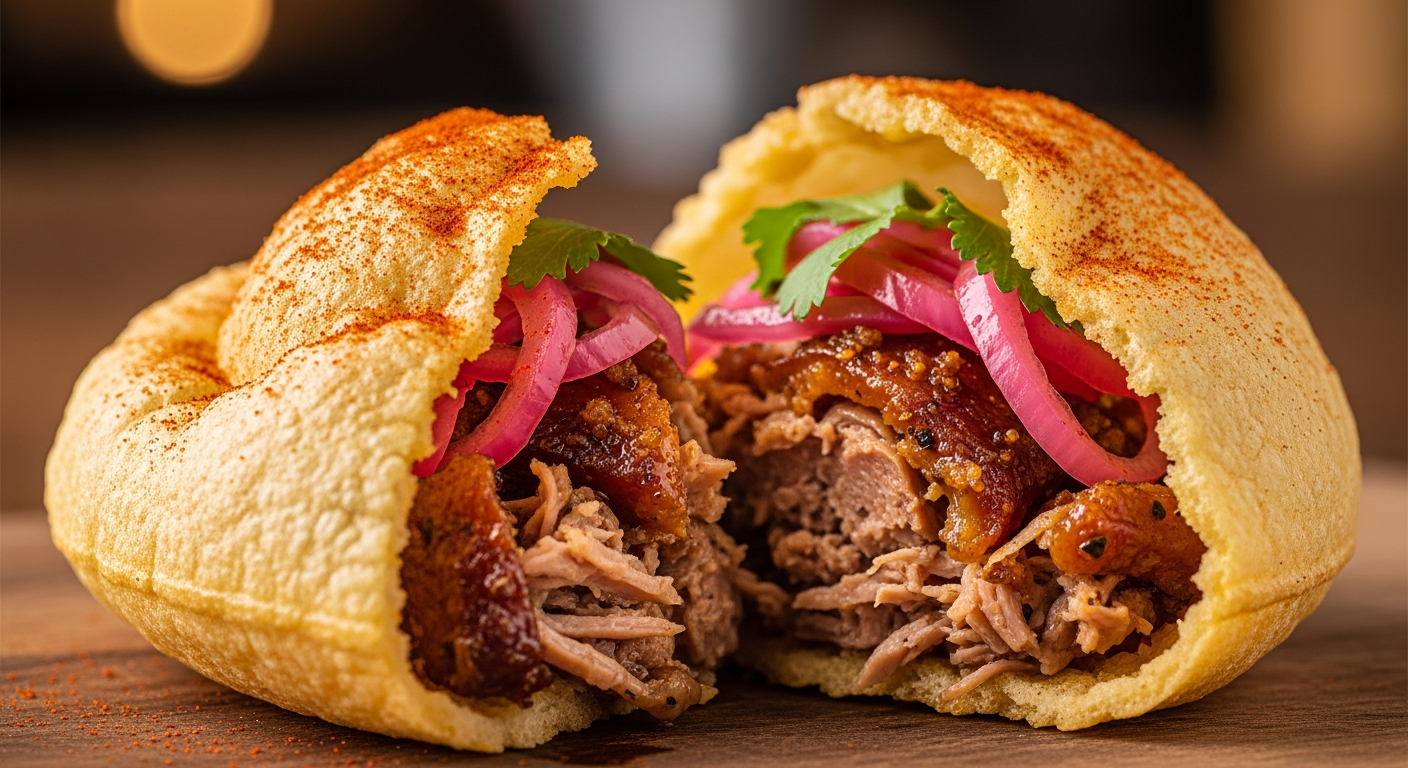
    Somewhere between Mexico and Cuba — geographically, culturally, and culinarily — there is a dish that does not exist in any restaurant we know of in the Puget Sound. It is a taco, but not quite. The shell is fried corn tortilla, puffed and golden. The filling is Chicken Pibil (Yucatán-style, achiote-marinated, slow-cooked) or Cuban Roast Pork (lechon, the kind that runs on time and patience, not shortcuts). The toppings are pickled red onions and cheese. The whole thing lands in your hand and immediately explains itself.

    This is the Fluffy Taco. Octavio Ortega invented it — or at least invented it for the Pacific Northwest — when he launched Mexicuban, Puget Sound’s first Cuban-Mexican fusion food truck, as a way to represent both sides of his heritage at once. He describes the truck as the first of its kind in the region, and we have no counter-argument to offer. We have looked, and there is nothing else doing what Mexicuban does.

    Two Cuisines, One Truck, One Owner’s Heritage

    Ortega’s concept is not a novelty fusion grab — it is a genuine expression of a bicultural background brought to food. Mexican cooking and Cuban cooking share roots: Spanish colonial influence, indigenous ingredients, a deep relationship with pork, and an understanding of rice as a staple, not a side thought. But they diverge sharply in technique and spice philosophy. Mexican cooking is often sharper and hotter, Cuban cooking longer and slower, more aromatic than incendiary.

    Ortega’s menu navigates that overlap without papering over the differences. The Fluffy Taco is genuinely bi-national — the shell is Mexican street food logic, the filling is Cuban kitchen logic, and the combination is his own invention. Custom bowls let you build your own version of the same hybrid. Vegan, vegetarian, and gluten-free options are available across the menu, which matters because the food truck crowd in Everett is genuinely diverse in its dietary requirements.

    Where to Find Mexicuban in Everett

    Mexicuban is a truck, which means its schedule moves. In Everett, you are most likely to find it at the Beverly Food Truck Park at 6731 Beverly Blvd — the rotating lot that runs Monday through Saturday during afternoon hours with two to four trucks on any given day. Mexicuban is one of the regulars there, alongside Tabassum and other park anchors.

    The truck has also participated in the Everett Food Truck Festival and shows up at events across the broader Puget Sound. For the current week’s schedule, mexicuban.com maintains a live calendar — check there before driving. If you miss Mexicuban at Beverly, the brand now has a brick-and-mortar restaurant in Renton at 15279 Maple Valley Hwy, but the truck’s appearance in Everett is regular enough that you should not need to commute.

    We checked Yelp in April 2026 and found 103 reviews with photos actively uploading — this truck has an audience that shows up repeatedly, takes pictures, and comes back. That is not a fluke. That is a menu doing something right.

    What to Order

    Start with the Fluffy Tacos. Order the Cuban Roast Pork version if you want to understand what Ortega is actually building here — the lechon filling is the heart of the concept, and the fried shell carries it without competing. The Chicken Pibil version is excellent for anyone who wants the same architecture with a different protein, and the achiote marinade is genuine enough to make the switch worthwhile.

    If you are feeding more than one, the Custom Bowls let you build across both sides of the menu simultaneously. The vegan and gluten-free options mean you can bring a mixed-diet group without drama. On a good afternoon at Beverly Food Truck Park, you are probably ordering two or three items and comparing them, which is the correct way to approach a new truck.

    Why It Belongs in Your Food Truck Rotation

    Everett’s food truck scene has grown quietly into something genuinely interesting. Das Bratmobile is doing German street food from Rheinland-Pfalz. Tabassum is the only Uzbek food truck in the Pacific Northwest. Port of Everett Food Truck Fridays brings a rotating cast every week to the marina. And in the middle of all of it, Mexicuban has been quietly building the only Cuban-Mexican fusion truck in the region for long enough that they have more than a hundred Yelp reviews and a brick-and-mortar expansion.

    This is what an original concept looks like when it actually works. If you have been to Beverly Food Truck Park and skipped Mexicuban in favor of something more familiar, correct that error. The Fluffy Taco is the move. It is not like anything else on the lot.

    Frequently Asked Questions

    Where does Mexicuban park in Everett?

    Mexicuban regularly rotates through Beverly Food Truck Park at 6731 Beverly Blvd in central Everett. Check mexicuban.com for the current week’s schedule.

    What is a Fluffy Taco?

    A Fluffy Taco uses a fried, puffed corn tortilla shell filled with either Cuban Roast Pork (lechon) or Chicken Pibil, topped with pickled red onions and cheese. It is Mexicuban’s signature dish and the item to order on a first visit.

    Does Mexicuban have vegan options?

    Yes. Mexicuban offers vegan, vegetarian, and gluten-free options across its menu.

    Who owns Mexicuban?

    Mexicuban was founded by Octavio Ortega, who created the concept to honor both his Mexican and Cuban heritage. He describes it as Puget Sound’s first Cuban-Mexican fusion food truck of its kind.

    Does Mexicuban have a restaurant location?

    Yes. Mexicuban has expanded to a brick-and-mortar restaurant in Renton at 15279 Maple Valley Hwy, but the Everett food truck presence remains active.

  • The Vote Passed. Now Here Are the Four Steps Between Today and Everett’s September 2026 Stadium Groundbreaking

    The Vote Passed. Now Here Are the Four Steps Between Today and Everett’s September 2026 Stadium Groundbreaking

    What comes next after the April 29 stadium vote? The council approved $10.6 million in design and acquisition funding — but that decision set four more in motion. Here is the exact sequence of decisions Everett must make before a shovel goes in the ground in September 2026, and what could still stop it.

    The April 29 Vote Was Not the Finish Line

    When the Everett City Council voted 6-1 on April 29 to approve an additional $10.6 million for the downtown stadium project, it made the biggest single step forward in the three-year effort to keep the Everett AquaSox in town and bring United Soccer League teams to a new outdoor venue. But it was a step, not the finish line.

    Council member Scott Bader put it precisely in remarks before the vote: “certain dominoes have to fall before the next domino can fall.” The $10.6 million approval was one domino. There are four more between today and a September 2026 groundbreaking — each dependent on the one before it.

    Here is what those four dominoes look like, where they stand, and what can still knock them over.

    Domino 1: The Stadium Fiscal Advisory Committee Reconvenes

    Immediately after the April 29 vote concluded, Council Vice President Paula Rhyne made a formal request: reconvene the Stadium Fiscal Advisory Committee before the council takes any further binding financial action on the stadium project.

    The Fiscal Advisory Committee was formed in 2024 to provide independent financial analysis of the stadium’s funding structure. It was active during the design-build procurement process but has not been formally reconvened since the project’s cost escalated to $120 million and the funding gap came into clearer focus.

    Rhyne’s request reflects a real concern that has been raised by multiple council members and community members: the city has not yet published detailed financial statements showing exactly how a stadium construction bond would be structured, repaid, and serviced. Former council member Scott Murphy voiced the same concern at the April 29 meeting: “There’s a big difference between having an economic development study and discussion around $100 million and seeing it on a piece of paper to understand how that will actually service the debt.”

    The committee’s work sets the terms under which the council can responsibly proceed to the bond vote. Until it completes its review, the bond vote cannot happen.

    Domino 2: Property Acquisitions

    The April 29 package allocated $5.6 million toward acquiring the remaining properties needed for the 12.5-acre stadium site. City staff reported that 14 property acquisition offers have been made: some purchase agreements are already completed, others are still pending.

    The stadium site is located north of Pacific Street between Broadway and Smith Avenue, adjacent to Angel of the Winds Arena. Full site control — meaning every parcel acquired — is required before construction can begin. The timeline depends on how quickly the remaining property negotiations close.

    The city has already allocated approximately $7.2 million in capital funds on the project before this vote, including prior property acquisition work and consulting fees. The new $5.6 million extends that work to the final parcels. City staff project that all properties can be acquired by fall 2026, which keeps the September groundbreaking timeline alive — but any negotiation that drags into litigation could push that date.

    Domino 3: The Bond Vote (~July or August 2026)

    The $10.6 million the council approved on April 29 was funded as an interfund loan from the city’s general fund — a bridge loan the city is lending to itself, structured to be repaid in a few months from a construction bond. The bond vote is the next major council decision, expected in July or August 2026.

    The bond package is expected to exceed $30 million. The full stadium budget is $120 million, which includes the $7.4 million state grant the council unanimously accepted on April 29, plus the $17 million the AquaSox and United Soccer League have agreed to contribute under their 30-year lease terms, plus the city’s accumulated $7.2 million in prior capital expenditures, plus the new $10.6 million package.

    There is still a funding gap of approximately $25 million — about 21% of the project’s cost. The city is pursuing public-private partnerships to close it. Economic development director Dan Eernissee has argued the gap is manageable: “We know this is going to be our growth area. We are counting on lots of residents to be in this downtown core, and we’re strategically investing before that time in real estate that can serve as an urban park, that can serve as a destination, can serve as a connector between our transit hub and downtown jobs.”

    The risk is clearly understood. Interim finance director Mike Bailey said at the April 29 meeting: “There’s an element of risk here. Again, we believe it’s manageable, or we wouldn’t have proposed it.” If the bond vote fails or a major contributor backs out before the bond is issued, the city faces the cost of repaying the interfund loan from its general fund — though some of that exposure is offset by the property acquisition component, which creates tangible city-owned assets.

    Domino 4: September 2026 Groundbreaking

    If the Fiscal Advisory Committee completes its work, the property acquisitions close, and the bond vote passes, construction can begin in September 2026. The design-build team — DLR Group (architecture, based in Seattle) and Bayley Construction (general contractor, based in Mercer Island) — is already active. DLR Group has designed multiple sports stadiums including Alex Box Stadium at LSU; Bayley Construction’s previous design-build work includes Husky Ballpark at the University of Washington.

    The design is roughly 60% complete. The facility will include 5,000 seats, a premium club section with a covered deck seating 200 (400 standing), a clubhouse building with team locker rooms and batting cages, an artificial turf field convertible between baseball and soccer layouts in a matter of hours, and a public walking path around the perimeter. The main entrance is planned for where Wall Street meets Broadway.

    The construction timeline targets completion by late 2027, in time for the Everett AquaSox to open their 2028 season at the new venue. The AquaSox have been explicit that without a new stadium, MLB’s requirements could force the franchise to relocate — which is why council member Bader framed the April 29 vote as a crossroads moment: “If we don’t move forward on this, I think the AquaSox will leave town and MLB will tell them to do that.”

    The One Unresolved Question: USL Team Ownership

    The AquaSox and United Soccer League have agreed to the financial terms of a 30-year lease for the new venue. But USL still needs to find an owner or ownership group to purchase the expansion teams that would actually play in the facility. That ownership search is ongoing. It doesn’t block the construction decision directly, but it remains an important loose end in the stadium’s long-term financial picture — since the lease revenue from the soccer teams is built into the stadium’s revenue projections.

    Labor and Community Perspective

    Labor representatives who spoke at the April 29 meeting were uniformly supportive. The city plans to use prevailing wages and apprenticeship requirements in the construction contracts. As Miguel Edmonson told the council: “I have some apprentices that have to go down to Tacoma for work. They’d be able to live here and work here and be a part of this community while they’re on the clock and then when they get off the clock.”

    Resident Erryn Guilfoyle framed the stadium’s strategic value as a second downtown anchor: “Right now, downtown Everett has Angel of the Winds arena. A stadium nearby would give us a second anchor that changes what downtown becomes. People park once and stay longer. They spend their time and their money downtown instead of somewhere else, and the businesses around them feel the difference.”

    Not everyone is convinced. Council member Judy Tuohy — the lone dissenting vote on April 29 — said explicitly: “My vote tonight is not a vote against the project. It’s really a vote of caution regarding the city’s financial risk. We need to ensure the funding foundation is in place before we commit more of our city dollars.” Her concerns will almost certainly surface again when the bond package comes before the council this summer.

    The Bottom Line: A Tight but Survivable Timeline

    For the September groundbreaking to happen, the Fiscal Advisory Committee needs to complete its review, property acquisitions need to close, and the bond vote needs to pass — all between now and late August. That is doable. It is also genuinely uncertain.

    The April 29 vote was the biggest single step this project has taken. The next step — the Fiscal Advisory Committee reconvening and the bond structure taking shape — will tell us whether September is a real target or an optimistic one. We’ll be watching closely.

    You can also review the full construction tracker for major Everett projects to see how the stadium fits into the broader development picture downtown.

    Frequently Asked Questions

    When will Everett break ground on the new stadium?

    The city is targeting September 2026, contingent on completing property acquisitions and passing a construction bond vote expected in July or August 2026.

    How much will the Everett stadium cost?

    The total project cost is $120 million. Funding sources include a $7.4 million state grant, $17 million from AquaSox and USL lease commitments, approximately $17.8 million in city capital and interfund funds, and a construction bond of $30+ million still to be voted on. A funding gap of approximately $25 million (21% of total) is being addressed through public-private partnerships.

    Who is building the Everett stadium?

    The design-build team is DLR Group (architecture) and Bayley Construction (general contractor). DLR Group is a global architecture firm with a Seattle office; Bayley Construction is a Mercer Island-based GC whose previous work includes Husky Ballpark at the University of Washington.

    What teams will play at the new Everett stadium?

    The Everett AquaSox (MLB High-A affiliate) and two United Soccer League expansion teams (men’s and women’s) are planned tenants under a 30-year lease agreement. USL still needs to identify ownership groups for the soccer teams.

    What is the Everett Stadium Fiscal Advisory Committee?

    The Stadium Fiscal Advisory Committee is an independent body formed in 2024 to review the financial structure and risks of the stadium project. Council Vice President Paula Rhyne requested at the April 29 meeting that it be reconvened to review the final bond financing plan before the council votes on the full funding package, expected this summer.

    When will the new Everett stadium open?

    The current target is late 2027, with the Everett AquaSox hoping to open their 2028 baseball season at the new venue.

  • What 15 Years and $350 Million Built: The Port of Everett Story That Other Cities Are Now Studying

    What 15 Years and $350 Million Built: The Port of Everett Story That Other Cities Are Now Studying

    What does a successful waterfront transformation actually look like? The Port of Everett spent 15 years and $350 million finding out — surviving a developer bankruptcy, a recession, and its own false starts. Today, Cascadia Daily News named it the regional blueprint other cities are studying. Here is the full story of how Everett got here, and what comes next.

    A Major Pacific Northwest Outlet Just Called Port of Everett the Waterfront Model

    Cascadia Daily News, the Pacific Northwest’s most-read regional outlet, published a deep feature today as part of its four-part “Sea Change” series examining waterfront redevelopment across Western Washington. Part two focuses entirely on the Port of Everett’s Waterfront Place — and it positions Everett as the benchmark that other ports, including Bellingham, are now studying.

    The headline says it plainly: “After a bankrupt developer and broken promises, Port of Everett is realizing its waterfront vision.” The subheading: “15 years and $350 million turned 65-acre windfall into restaurants, housing and marine trades.”

    For those of us who live here, it’s easy to take the waterfront for granted. A Thursday evening in the rain, there’s still a line out the door at Tapped Public House. Families are walking the esplanade. Boats are in the marina. But to understand what we’re actually standing on, it helps to know the story of how this almost never happened — and the lessons Everett is now teaching to other communities wrestling with the same questions.

    The Bankruptcy That Changed Everything

    In 2005, the Port of Everett made what seemed like a reasonable bet. It sold 65 acres of prime north marina waterfront land to Maritime Trust Co., a Chicago-based developer, for a planned $400 million mixed-use redevelopment. The vision: 600 housing units, retail, office space, boat moorage, and light industrial boat businesses on land that had been dominated by mills and fishing since Everett’s founding.

    Maritime Trust had development capabilities, but Lisa Lefeber — now the Port of Everett’s executive director, then a communications specialist — says the firm never quite got Everett. Some of their conceptual ideas drew on Vancouver’s Granville Island for inspiration, which she described as “a disconnect” from what this community actually was.

    Then 2008 happened. Maritime Trust lost its main financier, Merrill Lynch, when the Great Recession hit. The developer filed for bankruptcy. The Port of Everett spent years in federal bankruptcy court to win back those 65 acres — land that had once been theirs, land that the community had entrusted them to steward well.

    By 2012, the port had the land back. And a decision to make.

    The Pivot That Made the Difference: No Master Developer

    The most important strategic choice the Port of Everett made after the bankruptcy wasn’t a design decision. It was a control decision: this time, the port would not sell the land. It would retain ownership, lease to tenants and developers, and remain the anchor of the waterfront’s direction.

    “When you don’t control the property, you don’t control how the site is used in terms of housing,” Lefeber told Cascadia Daily News. Maritime Trust, she noted, had wanted to turn the waterfront into “a private residential development” — the antithesis of why Washington state ports were created in the first place.

    The port also made another unconventional move: it built out streets and utilities across the waterfront before tenants arrived. The goal was to “show value and proof of concept” and draw in the first housing development. It worked. The infrastructure investment de-risked the site for private partners and gave developers something tangible to build against.

    The third shift was community engagement. Rather than hand the vision to an outside firm, the port went back to Everett residents to ask what they actually wanted. “We want it all,” Lefeber said in the CDN feature, describing the port’s philosophy. “We want industry. We want a place for people and families to be able to play and work and live. One of our big philosophies is a working waterfront.”

    What $350 Million Built

    Fifteen years and $350 million later — $175 million from private partners (hotel and apartment construction) and $175 million from a mix of federal grants, state funding, and Port of Everett financing and revenue — Waterfront Place encompasses five districts on and around the north marina.

    Fisherman’s Harbor anchors the public-facing side: the “Restaurant Row” building with Tapped Public House, Rustic Cork, The Net Shed, Menchie’s, and Marina Azul is here, along with the Sawyer and Carling condo buildings, the Port’s administrative offices, and the hotel. The Craftsman District keeps more than 20 marine trades businesses — boat repair, storage, and service operations — embedded in the broader development. The state’s largest public marina sits steps from it all.

    Jeff LaLone, co-owner of Bayside Marine, which specializes in boat storage and service for vessels under 50 feet, told CDN what the environment has meant to his business: “Everybody does a good job of just trying to have a good, nice, beautiful place to come to. For me to sit at my desk and look out the window, I’m looking at the boats, and you can walk down the street and grab something to eat. It’s just really nice.”

    Jack Ng, owner of both Fisherman Jack’s and Muse Whiskey & Coffee Bar — the latter housed in the historic Weyerhaeuser building, complete with a private whiskey collection inside the building’s vintage vault — said he was drawn to the waterfront because of the port’s long-term vision. “That building is going to be a big icon piece. I just want to be part of the history.”

    Ng also serves as a port commissioner for the Port of South Whidbey, so he understands the economic development role from both sides: “They can help a small business grow. They’re not there to have 100 percent of return on the investment, and their investment is more for bringing jobs for the local economy.”

    The Honest Assessment: Still a Work in Progress

    Lefeber doesn’t oversell what’s been built. Giant piles of dirt and gravel are still visible. Signs point to what’s coming next. The Millwright District — the 10-acre inland extension of Waterfront Place — still needs to be built out. The plans call for more than 300 housing units and 125,000 square feet of office space, but the port is actively reconsidering that mix.

    “With the U.S. shift to remote work, it may not make sense to create a huge office building at the waterfront,” Lefeber said. The port is now asking: “Is there a better mix of balance? Like, do we look at 80,000 square feet of office, and then maybe a hotel?” The flexibility to revisit plans is part of the model — Waterfront Place is not locked into a master developer’s decade-old blueprint.

    Lefeber’s description of waterfront redevelopment has become something of a mantra: “It’s been a little bit of a roller-coaster. I always joke with anything waterfront redevelopment, it’s two steps forward, and then you get punched back through the wall.”

    The Alexa’s Café closure, the delayed Marina Azul opening, the long wait for Millwright Phase 2 to get moving — all of it fits the pattern. The progress is real, but it’s never linear.

    What Fully Built Looks Like: $8.6 Million a Year in Local Tax Revenue

    When Waterfront Place is complete across all five districts, the port projects $8.6 million a year in local sales tax revenue. That’s not a speculative forecast — it’s the mathematical outcome of the retail, restaurant, housing, and hospitality uses the port has already proven it can attract and sustain. The 3.4% retail vacancy rate across Snohomish County provides additional evidence that demand for this kind of space isn’t hypothetical.

    The Port of Everett’s $70 million 2026 budget includes continued waterfront infrastructure investment. The $11.25 million federal Pier 3 grant secured in April 2026 extends the same logic to the working seaport side: federal confidence in the Port of Everett’s management and vision is showing up in competitive grant awards.

    Why Bellingham — and the Rest of Washington — Is Watching

    The Cascadia Daily News “Sea Change” series is explicitly benchmarking Bellingham against Everett and other ports. The parallel is uncomfortable but accurate: Bellingham’s waterfront, like Everett’s in the early 2000s, has sat partially undeveloped for years while port officials, city officials, and community members debate what should go there. Some sections have sat empty for decades.

    What Everett’s story tells Bellingham — and any other community grappling with a waterfront opportunity — is that the critical decisions aren’t architectural. They’re about land control, infrastructure investment sequence, community authenticity, and patience with a 15-to-20-year timeline.

    The port retained ownership of the land rather than selling to a master developer. It built infrastructure before tenants arrived. It kept marine trades in the mix rather than prioritizing higher-margin residential. And it never lost sight of the fact that the waterfront belonged to the whole city, not just to the people who lived or worked there.

    That’s the lesson. And on a rainy Thursday evening in 2026, with a line out the door at Tapped and kids looking at the boats from the esplanade, it’s a lesson that appears to have worked.

    Frequently Asked Questions

    How much has been invested in Port of Everett’s Waterfront Place?

    More than $350 million has been invested in Waterfront Place over the past 15 years. Of that, $175 million came from private partners (hotel and apartment construction) and $175 million from a combination of federal and state grants and Port of Everett financing and revenue.

    Why did Port of Everett regain the waterfront land in 2012?

    In 2005, the Port sold 65 acres to Maritime Trust Co., a Chicago developer, for a planned $400 million redevelopment. After Maritime Trust lost its main financier (Merrill Lynch) in the 2008 recession, the firm filed for bankruptcy. The Port of Everett won back the land in federal bankruptcy court by 2012.

    What is the Millwright District at Port of Everett Waterfront Place?

    The Millwright District is the next 10-acre phase of Waterfront Place development. Plans call for more than 300 housing units and over 125,000 square feet of commercial/office space. The Port is currently reconsidering the office portion of the plan, potentially scaling it to 80,000 square feet and adding a hotel component instead.

    What will Waterfront Place generate in tax revenue when complete?

    When fully built out across all five districts, Waterfront Place is projected to generate $8.6 million per year in local sales tax revenue.

    What five districts make up Port of Everett’s Waterfront Place?

    Waterfront Place encompasses five districts: Fisherman’s Harbor (Restaurant Row, condos, hotel, Port offices), the Craftsman District (20+ marine trades businesses), the state’s largest public marina, Pacific Rim Plaza (public gathering space and art), and the emerging Millwright District. The working seaport with Pier 3 is located approximately 2 miles away.

    Why is Bellingham studying Port of Everett’s waterfront model?

    Cascadia Daily News’s “Sea Change” series (published May 7, 2026) selected Port of Everett as a case study for Bellingham because the two cities share parallel histories: both had prime waterfront acreage tied up by troubled development deals, and both faced community questions about the right balance between working waterfront and public-facing amenities. Bellingham is at the beginning of its redevelopment journey; Port of Everett shows what 15 years of sustained execution can produce.

  • Moving to Everett in 2026? Here’s What the Tightest Retail Market in Puget Sound Means for Your Neighborhood, Shopping, and What’s Coming

    Moving to Everett in 2026? Here’s What the Tightest Retail Market in Puget Sound Means for Your Neighborhood, Shopping, and What’s Coming

    What the Tight Retail Market Means for Your Daily Life in Everett

    If you’re moving to Everett, the retail market data has two practical implications for your daily life — one reassuring and one requiring patience.

    The reassuring part: 3.4% vacancy means that Everett’s existing retail is overwhelmingly occupied. The stores and restaurants that are here are here because they’re viable. You won’t find the endless empty storefronts that characterize struggling commercial districts in other cities. The businesses you discover in your first weeks will still be there in year two.

    The patience part: that same tightness means the major new retail amenities that make urban neighborhoods feel complete — grocery options in new neighborhoods, a broader restaurant scene on the waterfront — are arriving on slow timelines. The riverfront grocery anchor doesn’t open until 2030. Waterfront Place is still building out its restaurant row. If you’re moving to a new Everett neighborhood expecting walkable urban retail from day one, you may need to adjust expectations based on where you land.

    Grocery and Everyday Shopping by Area

    North Everett and Downtown

    The QFC on Colby Avenue is the primary grocery option for downtown and North Everett residents. Fred Meyer on Casino Road serves the broader South Everett corridor. Safeway on Broadway is another downtown-adjacent option. Whole Foods is not in Everett (the nearest is in Lynnwood or Redmond); Trader Joe’s is in Lynnwood. For everyday grocery needs, North Everett residents have workable but not walkable options — most require a short drive.

    South Everett and Casino Road Corridor

    The Casino Road corridor has significant retail density serving the area’s large residential population, including several ethnic grocery options (Vietnamese markets, Filipino stores, and international food retailers serving the area’s diverse communities). Fred Meyer is a major anchor. For families who cook internationally, South Everett’s food retail is actually more interesting than North Everett’s in terms of variety.

    The Snohomish River Waterfront Neighborhood

    If you’re moving to one of the Shelter Holdings residential buildings on the Snohomish River waterfront, be aware that the grocery anchor has been delayed to 2030. You’ll be relying on the QFC on Colby for grocery runs — about a mile from the waterfront site. The neighborhood has ground-floor commercial space that is being built out, but the full retail program is several years from completion. The Interurban Trail makes the neighborhood excellent for walking and cycling; the car remains necessary for grocery shopping for now.

    What’s Coming: The Retail Development Pipeline

    Waterfront Place at the Port of Everett

    The most exciting new retail corridor in Everett is the Port of Everett’s restaurant and dining cluster. Jetty Bar & Grille, Marina Azul, Scuttlebutt Brewing, and others are building a genuine waterfront dining district along Port Gardner Bay. This is already partially open and worth exploring as a weekend destination. The Waterfront Place guide covers every tenant and what’s there now.

    Millwright District Phase 2

    The next major mixed-use development at the Port waterfront — adding residential units and ground-floor retail — is in pre-leasing. It’s the next-generation version of the Waterfront Place district, with higher residential density that will make the commercial program more sustainable. Timeline: several years out.

    The Snohomish River Waterfront

    Grocery store in 2030. Eclipse Mill Park by spring 2028. The full waterfront guide is the most complete picture of what’s coming and when on the riverfront site.

    The Farmers Market and Seasonal Retail

    The Everett Farmers Market opens Mother’s Day 2026 and runs through the summer on Wetmore Avenue in downtown Everett. It’s one of the city’s best weekly retail experiences — local produce, food vendors, crafts, and community. For new residents, it’s one of the first things to put on your calendar. It’s also where you’ll meet a cross-section of Everett’s community in a way that no strip mall can offer.

    The Bigger Picture: Everett Is Under-Retailed, and That’s Changing

    Snohomish County’s tight vacancy reflects a structural reality: the county has grown faster than its retail has. That gap is exactly why the waterfront projects are being built. The city’s population — 114,070 in Everett proper, with the county at over 800,000 — is large enough to support significantly more retail than currently exists. The development pipeline is beginning to fill that gap, slowly but genuinely.

    For new residents, the practical advice is: get comfortable with a car for big-box and grocery runs, explore downtown Everett’s independent retail and dining for your everyday life, and watch the waterfront corridors over the next 3–5 years. The city’s retail story in 2030 will be substantially richer than it is in 2026. You’re arriving at the right time to be part of that change.

    Frequently Asked Questions for New and Relocating Residents

    Is Everett a walkable city for shopping and errands?

    It depends heavily on your neighborhood. Downtown Everett has a walkable core with restaurants, cafes, specialty retail, and the farmers market. Most grocery shopping requires a short drive. The waterfront neighborhoods (Port and Snohomish River) are growing but not yet fully retail-complete. South Everett has good density on the Casino Road corridor but is car-dependent.

    Where is the nearest Trader Joe’s or Whole Foods to Everett?

    The nearest Trader Joe’s and Whole Foods are in Lynnwood, approximately 10–15 miles south of downtown Everett on I-5. Lynnwood’s Alderwood Mall and surrounding retail corridor is the nearest major shopping destination outside Everett itself.

    What new retail is coming to Everett in the next few years?

    Waterfront Place at the Port of Everett is already partially open and continuing to add tenants. Millwright Phase 2 (Port waterfront mixed-use) is in pre-leasing. The Snohomish River waterfront grocery anchor arrives in 2030 and Eclipse Mill Park opens spring 2028. Downtown’s Broadway and Hewitt corridors continue seeing independent retail turnover.

    Is the Everett Farmers Market worth checking out?

    Yes. The Everett Farmers Market opens Mother’s Day 2026 and runs through the summer season on Wetmore Avenue downtown. It’s one of the best weekly community experiences in the city for new residents trying to meet neighbors and explore local food.

    How does Everett’s retail compare to Bellevue or Seattle?

    Everett has significantly less retail density per capita than Bellevue or Seattle. It’s a working city with a strong employment base (Boeing, Navy, healthcare) that has historically prioritized industry over consumption. The city’s retail footprint is growing — the waterfront projects represent the biggest retail investment in Everett’s recent history — but the gap with Seattle’s retail depth will persist for years. Everett’s comparative advantage is affordability and community character, not retail variety.

  • For Everett Business Owners and Retail Tenants: What Snohomish County’s Tightest-in-Puget-Sound Market Means for Your 2026 Lease and Location Decisions

    For Everett Business Owners and Retail Tenants: What Snohomish County’s Tightest-in-Puget-Sound Market Means for Your 2026 Lease and Location Decisions

    You Are Operating in the Tightest Retail Market in Puget Sound

    If you own or operate a business in Everett — or if you’re looking to open one — you’re in the tightest retail market in the Puget Sound region. Snohomish County’s retail vacancy rate was 3.4% at year-end 2025, according to Kidder Mathews data. Seattle was at 4.0% and rising. Portland was at 4.8%. Your competition for the same quality commercial spaces is across the entire Puget Sound market, and Snohomish County is where they all want to be right now.

    Understanding that context changes how you think about leasing decisions. Here’s what the 2026 data means for your specific situation depending on where you are in the business lifecycle.

    If You Have an Existing Lease Coming Up for Renewal

    In a 3.4% vacancy market, your landlord knows they can fill your space if you leave. But they also know that finding a replacement tenant takes time, carries leasing commissions, and risks a gap period. You have more leverage at renewal than the vacancy number alone suggests — especially if you’re a quality tenant with a track record of on-time payments.

    The Q1 2026 softening data is your friend at the negotiating table. Vacancy is “creeping higher” and tenants are “growing more selective.” That trend gives you a factual basis for asking for concessions — tenant improvement allowances, free rent periods, or rate stabilization — that would have been harder to win 12 months ago. Renewals signed in mid-2026, while the market is softening but still tight, likely represent a better deal than renewals signed at the peak.

    If You’re Actively Looking for Space to Open or Expand

    At 3.4% vacancy, “available retail space in Everett” is not a long list. Move quickly when something becomes available that fits your requirements. The 60-year Bank of America corner on Colby and Everett Avenue is one high-visibility example of a space that came to market in early 2026 — that kind of prime downtown location in a sub-4% vacancy market gets attention.

    Emerging corridors to watch for lease opportunity:

    Waterfront Place at the Port of Everett

    The marina district’s restaurant and retail corridor is still being built out. Tenants who secured early positions in Waterfront Place locked in favorable terms in a less competitive moment. Pre-leasing for Millwright Phase 2 is now underway — that’s the next Port of Everett waterfront development and represents an opportunity to get in early on a corridor with strong long-term fundamentals. The full retail market guide covers the countywide context.

    Snohomish River Waterfront (Shelter Holdings)

    The riverfront development has ground-floor commercial vacancies in completed residential buildings. It’s an early-stage neighborhood — the grocery anchor is delayed to 2030 and the park doesn’t fully open until spring 2028. But for businesses that can build a residential customer base before the full retail program arrives, rents are likely more negotiable than in established Everett corridors. The riverfront business owners guide covers that specific opportunity and its risks in detail.

    Broadway and Hewitt Corridors Downtown

    Downtown Everett’s primary retail corridors continue to see turnover — both new openings and departures. Spaces in this zone benefit from the foot traffic of downtown workers, transit users at Everett Station, and the event audience from the performing arts venues. Competition for the best Broadway and Hewitt locations remains real.

    What the Q1 2026 Data Tells You About Timing

    Kidder Mathews’ Q1 2026 data (Registry Pacific Northwest, April 8, 2026) shows vacancy creeping higher and tenants growing more selective. This is a marginal softening from the extreme tightness of 2023–2025 — not a market shift. But timing matters for lease negotiations. A market that has been at 3.4% for three years and is beginning to soften is one where landlord patience for vacant space is starting to increase. That shifts negotiating dynamics slightly.

    If you’ve been waiting for a market moment that’s slightly more tenant-favorable before locking in a new location or renewal, mid-2026 may be that moment. The structural supply constraint in Snohomish County — almost no new retail being built — means the vacancy floor won’t drop dramatically. But the marginal improvement in negotiating position is real and may not persist.

    Frequently Asked Questions for Business Owners

    How tight is the Snohomish County retail market for new tenants?

    Very tight — 3.4% vacancy at year-end 2025 means roughly 96.6% of retail space is occupied. Available spaces move quickly and landlords have pricing power. Q1 2026 shows early softening, but the market remains landlord-favorable. Finding quality available space requires acting quickly and working with a local commercial broker.

    Should I renew my current Everett retail lease or look for new space?

    This depends heavily on your specific location and landlord relationship. The general market context (3.4% vacancy, beginning to soften slightly in Q1 2026) means renewal is typically the lower-friction path. If you’re renewing, negotiate now while vacancy is softening — you have slightly more leverage than you would have had 12 months ago. If you’re looking to relocate to a better location, be prepared to move quickly when your target space becomes available.

    Are there any retail opportunities in Everett where lease terms might be more flexible?

    The Snohomish River waterfront (Shelter Holdings) has early-stage ground-floor commercial availability where landlords may be more negotiable — the neighborhood hasn’t yet reached full density. Pre-leasing at Millwright Phase 2 represents an early-entry opportunity at the Port waterfront. These locations require patience on foot traffic; in exchange, lease terms may be more favorable than in established Everett corridors.

    What is the asking rent range for Everett retail space in 2026?

    Specific asking rents vary significantly by location, size, and condition. For current market rate guidance, consult a Snohomish County commercial real estate broker. Kidder Mathews, Colliers, and CBRE all track this market actively.

  • Snohomish County Has the Tightest Retail Market in Puget Sound: A Complete 2026 Guide to the 3.4% Vacancy Rate, Q1 Signals, and What It Means for Everett

    Snohomish County Has the Tightest Retail Market in Puget Sound: A Complete 2026 Guide to the 3.4% Vacancy Rate, Q1 Signals, and What It Means for Everett

    The Number That Defines Snohomish County Retail in 2026

    3.4 percent. That’s Snohomish County’s retail vacancy rate at the end of Q4 2025, per Kidder Mathews’ regional retail market data. To understand what that number means, you need the comparisons. The broader Seattle metro ended 2025 at 4.0% and was trending upward. Portland hit 4.8% retail vacancy in Q1 2026. King County’s retail vacancy was rising through the back half of 2025. By every regional measure, Snohomish County is the tightest retail market in Puget Sound.

    That’s been true for most of the past three years. And it’s driven by a simple physical reality: almost no new retail square footage has been built in Snohomish County. The last major new shopping center project was years ago. When no new space enters the market, vacancy stays low regardless of whether new tenants are eager to enter.

    What Q1 2026 Is Showing: The First Signs of Softening

    Kidder Mathews’ Q1 2026 retail market data, published by The Registry Pacific Northwest on April 8, 2026, introduced two new phrases into the Snohomish County retail conversation: vacancy is “creeping higher,” and tenants are “growing more selective.”

    These are measured words. This is not a distressed market. But they signal that the absolute floor-tight conditions of 2023–2025 are beginning to soften at the margins. More tenant options are emerging. Lease negotiation dynamics are shifting slightly toward the tenant side. Existing landlords still have strong occupancy and pricing power, but the trend line is worth watching.

    The Q1 2026 data comes against a backdrop of visible vacancy events in downtown Everett. The Bank of America branch on the corner of Colby Avenue and Everett Avenue — occupied for 60 years — went vacant in early 2026, leaving one of downtown’s most prominent corners empty. That one departure doesn’t make a market. But it’s the kind of anchor-tenant exit that shapes perceptions of downtown retail health.

    What This Means for Waterfront Place at the Port of Everett

    Waterfront Place — the Port of Everett’s emerging restaurant and retail district on the marina — opened several tenants in 2025 and 2026, including Jetty Bar & Grille and Marina Azul. The tight countywide market provides context for the pace of tenant recruitment: quality food and beverage operators in Snohomish County have options and are being selective. Waterfront Place competes with downtown Everett, Lynnwood’s retail corridors, and emerging Millwright District space for the same pool of prospective tenants.

    The advantage Waterfront Place has is differentiation — there is no other marina-adjacent dining district in Snohomish County. That uniqueness gives it a claim on tenants who want that specific positioning. The challenge is that the universe of tenants who specifically want a marina location is smaller than the universe of tenants who would consider any well-trafficked Everett location. The Waterfront Place complete guide covers the full tenant roster and what’s coming.

    What This Means for Millwright District Phase 2

    Millwright Phase 2 is the Port of Everett’s next major mixed-use development at the waterfront — adding residential density and ground-floor retail to the marina district. It’s in pre-leasing. The countywide tight market is a genuine asset for its retail program: when you’re trying to recruit tenants, being located in the tightest retail market in Puget Sound is a better starting position than being in the loosest.

    The Q1 2026 softening trend is worth watching for Millwright’s pre-leasing timeline. If vacancy continues to “creep higher” through 2026, the window of maximum landlord leverage will narrow somewhat. Getting pre-leasing commitments signed during the current tight conditions is better than waiting until the softening becomes more pronounced.

    What This Means for Downtown Everett’s Broadway and Hewitt Corridors

    Downtown Everett’s retail health is more complex than the countywide number suggests. The Hewitt Avenue and Broadway corridors have seen both openings and closures in 2025–2026. The Bank of America departure left a high-visibility corner dark. New entrants like Butter Notes Cafe on Broadway — specialty coffee with jazz programming and a podcast studio — represent the kind of independent retail that fills in where national chains won’t go.

    The tight countywide vacancy means that if you have a viable downtown retail concept, finding space is still the challenge — not finding demand. The riverfront retail analysis covers the Snohomish River waterfront retail picture, which is part of the same countywide story.

    The Broader Context: Why Snohomish County Stays Tight

    Three structural factors keep Snohomish County’s retail market tighter than its neighbors: population growth (the county has grown consistently, adding household demand), limited new supply (almost no major new retail development for years), and an employment base anchored by Boeing, the Navy, and Paine Field that generates stable household incomes. Those factors don’t disappear with one quarter of softening. They’re the durable engine underneath the 3.4% number.

    The Q1 2026 data is a signal to watch, not a signal to act on in panic. Snohomish County retail is not in trouble. It’s at the end of an unusually tight cycle, normalizing toward regional equilibrium. That’s a healthy market movement.

    Frequently Asked Questions

    What is Snohomish County’s retail vacancy rate in 2026?

    3.4% at year-end Q4 2025, per Kidder Mathews data cited by the Everett Herald. Q1 2026 Kidder Mathews data (Registry Pacific Northwest, April 8, 2026) shows vacancy “creeping higher” but remains below the Seattle metro’s 4.0% and Portland’s 4.8%.

    Why is Snohomish County’s retail vacancy so low?

    Primarily because almost no new retail space has been built in years. When supply doesn’t increase, vacancy stays low regardless of demand conditions. Consistent population growth and a stable Boeing/Navy/Paine Field employment base provide steady retail demand on top of the supply constraint.

    How does Snohomish County compare to Seattle and Portland for retail vacancy?

    Snohomish County (3.4% Q4 2025) is tighter than the broader Seattle metro (4.0% Q4 2025, climbing) and significantly tighter than Portland (4.8% Q1 2026). It is the tightest retail submarket in the Puget Sound region.

    What does the retail market data mean for Waterfront Place and Millwright Phase 2?

    The tight market provides leverage for landlords recruiting tenants into new developments. However, the “more selective” tenant dynamic from Q1 2026 means quality tenants have options and aren’t rushed. Major new developments benefit from the overall tightness but need to differentiate on location and amenity to compete effectively for the best tenants.

    Is Snohomish County retail market heading toward higher vacancy?

    Q1 2026 data shows a “creeping higher” trend — a marginal softening after years of extreme tightness. This is a normalization, not a downturn. The structural supply constraint (very little new retail built) and population growth continue to support low vacancy. Watch for continued Q2 and Q3 2026 data for more directional clarity.

    What is the source for Snohomish County retail vacancy data?

    Kidder Mathews quarterly retail market reports. Q4 2025 data was cited by the Everett Herald in February 2026. Q1 2026 data was published by The Registry Pacific Northwest on April 8, 2026.

  • For Navy Families at NAVSTA Everett: A Military Parent’s Guide to Boys & Girls Club Programs for Kids With a Deployed Parent

    For Navy Families at NAVSTA Everett: A Military Parent’s Guide to Boys & Girls Club Programs for Kids With a Deployed Parent

    Deployment Creates a Child Care Gap That the Club Fills

    When a sailor deploys from Naval Station Everett, the at-home parent takes on everything. Every school pickup. Every dinner. Every help-with-homework evening. Every school break and summer week. For single-income families, or for spouses who work — which is most families — the logistics of covering childcare during deployment without a second adult in the house is the hardest practical part of Navy family life.

    The Boys & Girls Club doesn’t solve deployment. But it directly addresses some of the most stressful parts of the daily logistics. Here’s what matters most for Navy families specifically.

    The Three Programs That Matter Most During Deployment

    After-School Care: Predictable Daily Coverage

    The gap between school dismissal (typically 3:00–3:30 PM) and the end of a working parent’s shift is the daily logistics problem that compounds across a deployment. The Club’s after-school care program fills that window with structured, safe, adult-supervised time. Kids do homework (via Power Hour), participate in activities, and stay in a consistent environment until pickup. For a Navy spouse working any kind of shift job — at NAVSTA itself, at a hospital, at Boeing’s facilities, or anywhere in Snohomish County — predictable after-school coverage is one less thing to coordinate.

    Summer Camp: All-Day Coverage Through the Summer Break

    Summer is the hardest childcare period for deployed families. School ends. The structure disappears. The days are long. And a single parent who works full-time doesn’t have the option of handling it informally. The Club’s summer camp runs all day through the full summer break — structured activities, field trips, STEM, sports, arts. Summer 2026 registration is open now.

    For Navy families who have used the Military Child Care in Your Neighborhood (MCCYN) program or Military Child Care (MCC) subsidies, the Club is a community-based option that may qualify. Families should check with NAVSTA Everett’s Family Service Center for current subsidy availability and eligibility.

    Power Hour: Homework Support When You’re Running on Empty

    When a deployed parent isn’t home, the at-home parent handles everything after pickup — dinner, baths, bedtime, and homework. Power Hour takes homework off that list. Kids complete their assignments during a structured after-school period with Club staff support, which means they arrive home with homework done. For an Everett parent who just worked a full day and is running a household solo, that hour matters.

    Location and Access for NAVSTA Families

    The main Everett Boys & Girls Club has been at its current North Everett location since 1965 — it’s within the city’s residential core and accessible from the base by surface streets. The South Everett/Mukilteo Club serves families in South Everett neighborhoods. Between the two locations, the Club’s geographic coverage is broad enough to serve most NAVSTA Everett families regardless of where they live in the city.

    NAVSTA Everett families often live throughout Snohomish County — including neighborhoods like Rucker Hill, Bayside, North Everett, and further north toward Mukilteo and south toward Lynnwood. The Boys & Girls Clubs of Snohomish County network’s 27 total clubs county-wide means there’s likely a location near wherever your family lives.

    The Accessibility and Fee Assistance Reality

    Navy pay scales are publicly available, and E-5 through E-7 families — the backbone of NAVSTA Everett’s population — are working families, not high earners. The Club’s fee structure is designed for accessibility, with fee assistance available for families who need it. The organization has served working-class Everett families since its founding in 1946 and treats affordability as a core commitment rather than an exception.

    Families should ask directly about fee assistance when contacting the Club. The process is not complicated, and the Club’s staff are experienced in working with military families navigating tight budgets during deployment cycles.

    Additional NAVSTA Resources That Pair With the Club

    The Boys & Girls Club is one piece of the support network for deployed Navy families in Everett. NAVSTA Everett’s Fleet and Family Support Center (FFSC) provides additional resources: counseling, financial assistance referrals, childcare subsidy coordination, and the Ombudsman program for family communication during deployment. The complete Boys & Girls Club guide covers all programs in depth. For a wider look at community support in Everett, the Volunteers of America Western Washington guide covers programs for housing, food, and family services across the city.

    Frequently Asked Questions for Navy Families

    Does the Boys & Girls Club accept military child care subsidies?

    The Club may qualify under Military Child Care in Your Neighborhood (MCCYN) or similar DoD childcare assistance programs. Families should contact NAVSTA Everett’s Fleet and Family Support Center (FFSC) and the Club directly to confirm current eligibility and subsidy availability for 2026.

    How do I enroll my child during a deployment?

    Contact Boys & Girls Clubs of Snohomish County directly — the at-home parent can complete enrollment without the deployed parent present. Summer 2026 registration is open now. Club staff can walk you through the enrollment process and fee assistance options.

    What ages does the Club serve?

    Ages 5–18. The Club has programs for elementary-age children, middle schoolers, and teens. Summer camp and after-school care serve the full range; specific programs vary by age group.

    Is there a Boys & Girls Club near NAVSTA Everett?

    The main Everett Club is in North Everett and has been at its current location since 1965. It’s accessible from NAVSTA by surface streets. For families in South Everett, the South Everett/Mukilteo Club provides additional coverage. The 27-club county network means most NAVSTA families, wherever they live in Snohomish County, have a Club within reasonable distance.

    What support does NAVSTA Everett’s FFSC offer alongside the Boys & Girls Club?

    NAVSTA Everett’s Fleet and Family Support Center provides counseling, financial assistance referrals, childcare subsidy coordination, and the Ombudsman program for family communication during deployment. The FFSC and the Boys & Girls Club are complementary resources — the Club provides daily childcare structure; the FFSC provides family support services and military-specific resources.

  • Boys & Girls Club of Snohomish County: The Complete 2026 Guide to the Everett Club’s 80-Year Legacy, Programs, and How to Enroll Your Kids

    Boys & Girls Club of Snohomish County: The Complete 2026 Guide to the Everett Club’s 80-Year Legacy, Programs, and How to Enroll Your Kids

    Everett’s Boys & Girls Club Turns 80 in 2026

    When someone opened the first Boys & Girls Club in Snohomish County in 1946, they opened it in Everett. Boeing was ramping up after World War II. The city was building its future. And a group of community members decided that kids needed a safe, positive place to go after school and during the summer months.

    Eight decades later, that original Everett Club is still operating — at its current location since 1965 — and the organization it helped seed now operates 27 clubs across all of Snohomish County. In 2026, Boys & Girls Clubs of Snohomish County is marking its 80th anniversary. It’s a milestone that most Everett families walk past or drive by without fully understanding what’s inside.

    What the Everett Club Actually Offers

    The Everett Boys & Girls Club serves nearly 1,000 members every year. Members are kids ages 5–18. The program menu is broader than most people know:

    Before and After-School Care

    For working families — and Everett has a lot of them, whether parents work at Boeing, at the Navy base, at the hospital, or anywhere else in the county — the daily logistics of school drop-off and pickup are a genuine challenge. The Club provides structured before-school and after-school care, giving parents predictable coverage during the working hours that don’t align with school schedules.

    Summer Camp

    Summer camp is the Club’s highest-demand program. It runs all day, spanning the full summer break, with structured activities, field trips, STEM projects, sports, and arts. For Everett families facing the annual summer care gap — the weeks between school ending and the next structured activity option — the Club’s summer camp is often the best-value option in the city. Summer 2026 registration is open now.

    Power Hour: Homework Help That Works

    Power Hour is the Club’s structured academic support program: a dedicated daily homework period with staff support, designed to help kids complete their assignments before dinner — which means more family time in the evenings and better academic outcomes. For families in Everett’s strong school district (Everett School District recorded a 96.3% graduation rate), the difference between a kid who has Power Hour support and one who doesn’t can be meaningful over time.

    STEM Programming

    Everett is an aerospace and technology city. The Club’s STEM programming reflects that — giving kids exposure to science, technology, engineering, and math in hands-on ways during the after-school hours. For a city where Boeing, Paine Field, and the aerospace supply chain are among the largest employers, planting early STEM interest in the next generation has both community and economic significance.

    Fine Arts and Teen Programs

    Fine arts programming gives kids exposure to visual and performing arts outside of school curriculum. Teen programs address the specific developmental needs of older Club members — leadership development, job readiness, college preparation, and mentoring opportunities that the younger programs don’t cover.

    Two Clubs Serving Everett

    The main Everett Club has been at its current location since 1965. The South Everett/Mukilteo Club extends the organization’s reach into South Everett, near the Casino Road corridor and the Mukilteo School District boundary. The geographic spread means the Club serves both North Everett families and South Everett families — including the high-density, multi-ethnic communities on Casino Road and the families in neighborhoods like Cascade View, Twin Creeks, and Westmont-Holly.

    Between the two Everett-area clubs, coverage across the city is substantial. The 27-club county network also means that families who move within Snohomish County don’t have to start over — they can find a Boys & Girls Club near their new address. For families on Casino Road specifically, the South Everett/Mukilteo Club is the relevant location.

    The Three Pillars: What the Club Is Actually Trying to Build

    Boys & Girls Clubs of Snohomish County organizes its programs around three pillars: Academic Success, Healthy Lifestyles, and Character and Leadership Development. These aren’t just marketing language — they’re the framework that determines how staff design programs and how they measure whether they’re working.

    Academic Success means Power Hour and homework support. Healthy Lifestyles means sports, nutrition awareness, and physical activity during hours when kids might otherwise be sedentary. Character and Leadership Development means the mentoring, conflict resolution, and civic participation programs that don’t show up in academic performance metrics but shape the adults those kids become.

    Enrollment and Access

    The Club’s accessibility model is one of its most important features: membership fees are deliberately kept at a level that doesn’t exclude working families. The Club actively provides access for families who need fee assistance. In a city with Everett’s economic diversity — Boeing engineers and warehouse workers, Navy families and recent immigrants — the Club’s accessibility across income levels is what makes it a community institution rather than a middle-class amenity.

    Summer 2026 registration is open now. Families can enroll through the Snohomish County Boys & Girls Club website or by contacting the Everett Club directly. For other community support resources in Everett, the Volunteers of America Western Washington guide and the Everett community services guide cover the wider network.

    Frequently Asked Questions

    How do I enroll my child in the Boys & Girls Club in Everett?

    Contact Boys & Girls Clubs of Snohomish County through their official website or call the Everett Club directly. Summer 2026 registration is open now. Staff can also provide information on membership fees and financial assistance options.

    What ages does the Boys & Girls Club serve in Everett?

    Ages 5–18. Programs are tailored by age group, with separate programming for elementary-age children, middle schoolers, and teens. The summer camp serves the full range; after-school care focuses primarily on school-age children.

    Is the Boys & Girls Club in Everett affordable for working families?

    Yes. The Club’s membership model is designed to be accessible across income levels, and fee assistance is available. The Club has served working-class Everett families since its 1946 founding and maintains accessibility as a core organizational value.

    How many Boys & Girls Clubs are there in Snohomish County?

    27 clubs across the county as of 2026. Two serve the Everett area: the main Everett Club and the South Everett/Mukilteo Club.

    When was the first Boys & Girls Club in Snohomish County opened?

    1946, in Everett. That makes the Everett Club the founding club for the entire Snohomish County organization. In 2026, Boys & Girls Clubs of Snohomish County is celebrating its 80th anniversary.

    Does the Boys & Girls Club offer summer programming in Everett?

    Yes. Summer camp is one of the Club’s highest-demand programs, running all day through the full summer break. Summer 2026 registration is open now. It covers structured activities, field trips, STEM projects, sports, and arts across the full 5–18 age range.