Tag: Everett

  • Bryce Miller Goes Five Scoreless as AquaSox Demolish Hillsboro 10-0 on Silver Sluggers Night

    Bryce Miller Goes Five Scoreless as AquaSox Demolish Hillsboro 10-0 on Silver Sluggers Night

    Q: Did Bryce Miller pitch for the AquaSox on May 6, 2026?
    Yes. Miller threw five shutout innings in a 10-0 win over the Hillsboro Hops at Funko Field on Silver Sluggers Night, allowing just two hits. Luke Stevenson led the offense with four RBI and a two-run homer; Carter Dorighi added a three-run blast; Felnin Celesten went 3-for-5.

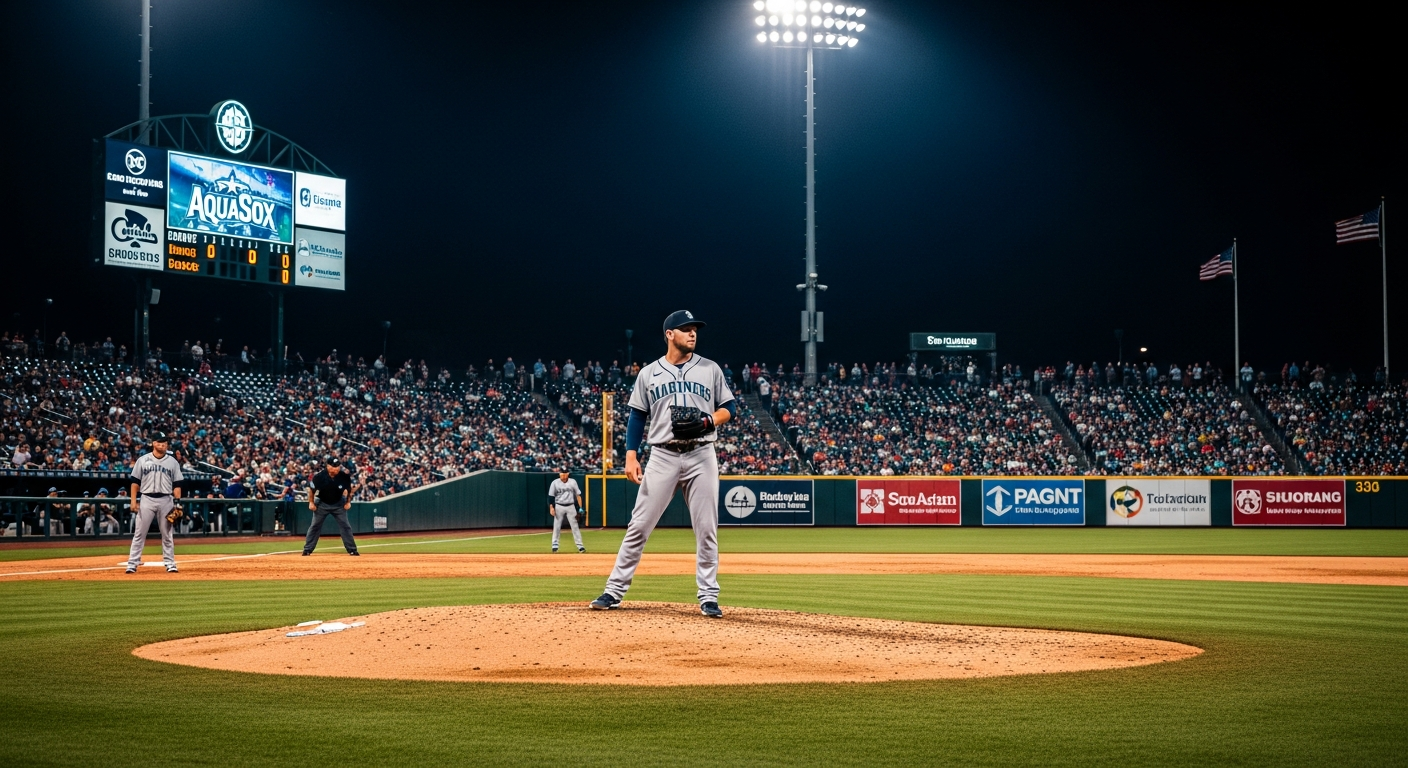
    The Funko Field faithful showed up for Silver Sluggers Night on Wednesday and got exactly the kind of baseball that makes you leave smiling: a 10-0 demolition of the Hillsboro Hops, with Seattle Mariners ace Bryce Miller dialing in across five innings and the AquaSox offense hitting everything hard and often.

    Miller, working his way back from the oblique strain that kept him off Seattle’s Opening Day roster, went five full innings, allowed just two hits, walked three, and struck out two. More importantly: the Hops didn’t score once while he was on the mound. For a pitcher returning from injury, zero runs in five innings tells the story cleanly. Miller has now thrown eight combined scoreless innings across two AquaSox appearances — five tonight and three on April 24 against Spokane — and his return to Seattle feels imminent.

    Stevenson Does It Again

    Luke Stevenson went 2-for-4 with four RBI and his second homer of 2026 — a two-run shot to right-center that extended the lead in the middle innings. Earlier, Stevenson drove in two more with a sharp double to center, his eighth two-bagger of the season. Four RBI on two hits is the kind of efficient night that makes scouts take notice. The Mariners’ No. 8 prospect is making a case for promotion every time he steps up.

    Dorighi’s Three-Run Blast, Celesten Stays Hot

    Carter Dorighi contributed a three-run homer to right-center — his second of 2026 — plating Austin St. Laurent and Anthony Donofrio ahead of him. Hillsboro starter Brian Curley lasted just 3.1 innings, surrendering all 10 of Everett’s earned runs on 10 hits. When your starter gets tagged for 10 hits and 10 ER before the fifth inning, it’s that kind of night.

    And Felnin Celesten just keeps hitting. The NWL’s back-to-back Player of the Week went 3-for-5 on the night with two RBI, continuing one of the hottest stretches in any High-A lineup right now. Celesten is batting .295 on the season with 26 hits and 18 runs scored. Brandon Eike chipped in a run-scoring single as well, his RBI total rising steadily alongside his team-leading six home runs.

    The Bullpen Was Spotless

    After Miller’s five innings, the Everett bullpen delivered three more hitless frames. Reid Easterly went two innings, allowing one hit while striking out four. Christian Little added a scoreless seventh, and Brock Moore — the NWL’s reigning Bullpen Award winner — closed the ninth with two strikeouts on a clean frame. The Hops were held scoreless for all nine innings. That’s a complete team performance.

    2-0 in the Series, Four Games to Go

    The AquaSox are now 17-14 and 2-0 against the Hops in this six-game homestand — winning 8-6 Tuesday behind Curtis Washington Jr.’s homer, and 10-0 Wednesday with Miller’s gem. At 7.5 games back of the first-half leading Eugene Emeralds (22-6) in the Northwest League, this homestand against a struggling Hillsboro squad (11-18) is exactly the kind of opportunity the Frogs need. Four games remain — Thursday through Sunday — with first pitch at 7:05 PM Thursday, Friday, and Saturday, and a matinee Sunday. If you haven’t gotten to Funko Field yet this week, Thursday is your shot before the WHL Championship Final adds a second championship event to the Everett calendar starting Friday night at Angel of the Winds Arena.

    Frequently Asked Questions

    What was the final score of the AquaSox vs. Hillsboro Hops game on May 6, 2026?

    Everett AquaSox 10, Hillsboro Hops 0 at Funko Field on Silver Sluggers Night, Wednesday, May 6, 2026.

    How did Bryce Miller pitch in his May 6 rehab start?

    Miller threw five innings, allowing two hits and zero earned runs, walking three and striking out two. He has now thrown eight combined scoreless innings across two AquaSox rehab appearances (3 IP on April 24, 5 IP on May 6).

    Who led the AquaSox offense on May 6?

    Luke Stevenson led with four RBI including a two-run homer. Carter Dorighi hit a three-run homer. Felnin Celesten went 3-for-5 with two RBI.

    When is the next AquaSox home game?

    Thursday, May 7 at 7:05 PM at Funko Field vs. the Hillsboro Hops. Tickets at aquasox.com.

    What is the AquaSox’s Northwest League first-half record?

    After tonight’s win, the AquaSox are 17-14 in the first half, third in the NWL, 7.5 games behind the first-place Eugene Emeralds (22-6).

  • HII’s Q1 Report Is the First Investor Confirmation FF(X) Is on Track — What It Means for Naval Station Everett’s Homeport Timeline

    HII’s Q1 Report Is the First Investor Confirmation FF(X) Is on Track — What It Means for Naval Station Everett’s Homeport Timeline

    What the Q1 Report Actually Shows

    Huntington Ingalls Industries reported first-quarter 2026 revenue of $3.1 billion, up 13.4 percent year over year. Ingalls Shipbuilding — the Pascagoula, Mississippi division that will build the FF(X) — recorded $725 million in quarterly revenue, an increase of $88 million, or 13.8 percent, from the same period in 2025. The company attributed that increase “primarily to higher volumes in surface combatants.”

    To be precise about the timeline: Q1 2026 ended on March 31, and the FF(X) lead yard contract was not awarded until April 28. That means the Q1 surface combatant revenue growth reflects Ingalls’ existing work — primarily Arleigh Burke-class destroyer production — not FF(X) activity yet. What the Q1 numbers demonstrate instead is that Ingalls is a shipyard operating at full tempo, generating strong revenue from exactly the class of ships the FF(X) is designed to complement. That matters because the FF(X) program requires a yard that can ramp quickly, and Ingalls is doing that now.

    What the Earnings Call Said About FF(X)

    HII’s management team made two substantive references to the frigate program during the May 5 call. The first concerned the FY2027 budget request. The Trump administration submitted a top-level fiscal year 2027 budget to Congress in early April. HII confirmed that the proposal includes funding for the first FF(X) frigate — a discrete line item in the Navy’s $65.8 billion shipbuilding request. Also in that budget: one Columbia-class submarine, two Virginia-class submarines, one Arleigh Burke destroyer, one LPD-17 amphibious transport dock, and one LHA-6 amphibious assault ship. The FF(X) is on that list as a fully budgeted program, not a placeholder.

    The second was language about HII’s medium-term financial outlook. Executives described the new battleship and frigate programs as “meaningful upside opportunities” to their forward projections. In investor communications, that phrasing is deliberate. It signals that FF(X) is expected to grow Ingalls’ revenue materially — and that the company building the ships is committed to the program in a way that matters to shareholders.

    HII also reported total backlog of $54.0 billion, “supported by major aircraft carrier, submarine, and surface combatant programs.” The $282.9 million FF(X) lead yard contract awarded on April 28, 2026 is now part of that backlog.

    The Procurement Plan in Full

    The FF(X) program structure was confirmed when the Navy awarded the Ingalls contract last month. The initial $282.9 million contract funds pre-construction activities — long-lead material procurement, design refinement, and detailed engineering. The first $80.6 million tranche allows work to begin immediately. Ingalls is the designated lead yard for the first two ships under a sole-source arrangement.

    The FY2027 budget request funds the first FF(X) hull at $1.429 billion against a full ship cost of $1.671 billion. A Critical Design Review is scheduled for 2026, after which the design is frozen and steel cutting begins. The Navy targets launch of the first ship by late 2028 and delivery by mid-2030. From the third ship onward, the program transitions to competitive procurement. The total objective is 22 ships. One hull is planned in FY2027, one in FY2029, two in FY2031, with rates increasing in subsequent flights. The economic impact of a 22-ship program for Snohomish County has been estimated at roughly $340 million annually if Everett wins the homeport.

    What Is Still Open for Everett

    The one question HII’s earnings call did not answer — because it is not HII’s decision — is homeport. Naval Station Everett has made the economic and strategic case for hosting the FF(X) fleet. Snohomish County’s Military Affairs Committee has maintained contact with the Washington congressional delegation, including Representative Rick Larsen on the House Armed Services Committee. The argument centers on Everett’s existing surface combatant infrastructure, the city’s Navy-rooted identity, and the multiplier effect of basing a twelve-ship fleet at an already-operational installation.

    The homeport decision follows a formal process: the Navy evaluates installations against requirements including pier capacity, maintenance support, housing inventory, and operational access, then submits a preferred homeport to Congress for review. That process typically runs after the lead ship’s design is finalized — meaning the homeport decision is not imminent, but the clock is running. Meanwhile, NAVSTA Everett’s destroyers, including USS Gridley, continue active fleet operations that demonstrate the base’s operational readiness.

    What Comes Next

    Three near-term milestones are worth tracking for Everett residents and military families:

    Congressional appropriations action. The FY2027 presidential budget request includes funding for the first FF(X) hull. That request must pass through the House and Senate Armed Services Committees and the Appropriations Committees before it becomes law. Representative Larsen’s seat on the House Armed Services Committee keeps Snohomish County directly represented in that process.

    The Critical Design Review. Scheduled for 2026, the CDR is when Ingalls and the Navy formally lock the final design. Confirmation that the CDR has occurred will be the next major program milestone after the initial contract award.

    Homeport announcement timing. Industry analysts tracking the program expect a homeport decision no earlier than 2027, after the FY2027 appropriation is finalized and the design is mature enough for the Navy to make precise infrastructure requirements. Everett’s case improves with each funding confirmation.

    For now, the FF(X) program has cleared the two gating tests that most new defense programs fail early: it has received its first contract award, and the company building it has publicly confirmed to investors that it represents meaningful future revenue. The engineering and the money are aligned. Everett’s task is to make sure the homeport decision follows.

    Frequently Asked Questions

    When will the first FF(X) frigate be delivered to the Navy?

    The current schedule targets launch of the first ship by late 2028 and delivery to the fleet by mid-2030, based on the lead yard contract terms and HII’s May 5 earnings disclosures.

    Why is Ingalls Shipbuilding building the FF(X)?

    HII’s Ingalls Shipbuilding in Pascagoula, Mississippi is the designated lead yard for the first two FF(X) hulls under a sole-source arrangement. The program transitions to competitive procurement starting at the third ship.

    How much will the first FF(X) frigate cost?

    The FY2027 presidential budget request funds the first hull at $1.429 billion. The Navy’s full ship cost estimate is $1.671 billion.

    Is the FF(X) the same as the Constellation-class frigate?

    No. The Constellation-class program was cancelled by the Navy on November 25, 2025 due to cost overruns and delays at Fincantieri Marinette Marine. The FF(X) is a new, accelerated program based on the National Security Cutter (Legend-class) design and is being built at Ingalls in Pascagoula.

    How many FF(X) frigates will be built?

    The Navy’s current plan calls for 22 FF(X) frigates across multiple production flights. One ship is planned in FY2027, one in FY2029, and two in FY2031, with production rates increasing in subsequent years.

    What is HII’s total backlog as of Q1 2026?

    HII reported a total backlog of $54.0 billion as of Q1 2026, supported by aircraft carrier, submarine, and surface combatant programs. This now includes the $282.9 million FF(X) lead yard contract awarded on April 28, 2026.

    When will the FF(X) homeport be decided?

    The Navy has not announced a homeport for FF(X) ships. Industry analysts expect the decision no earlier than 2027, after FY2027 appropriations are finalized and the Critical Design Review is complete. Naval Station Everett is among the leading candidates.

    Why does Everett want the FF(X) homeport?

    NAVSTA Everett already operates five Arleigh Burke-class destroyers and has the pier, maintenance, and support infrastructure to host surface combatants. Snohomish County’s Military Affairs Committee has estimated a twelve-ship FF(X) homeport would generate roughly $340 million in annual economic activity for the region.

  • The Everett Brewery Trail Has Changed — Here Is Your Updated Summer 2026 Guide to All 6 Active Stops

    The Everett Brewery Trail Has Changed — Here Is Your Updated Summer 2026 Guide to All 6 Active Stops

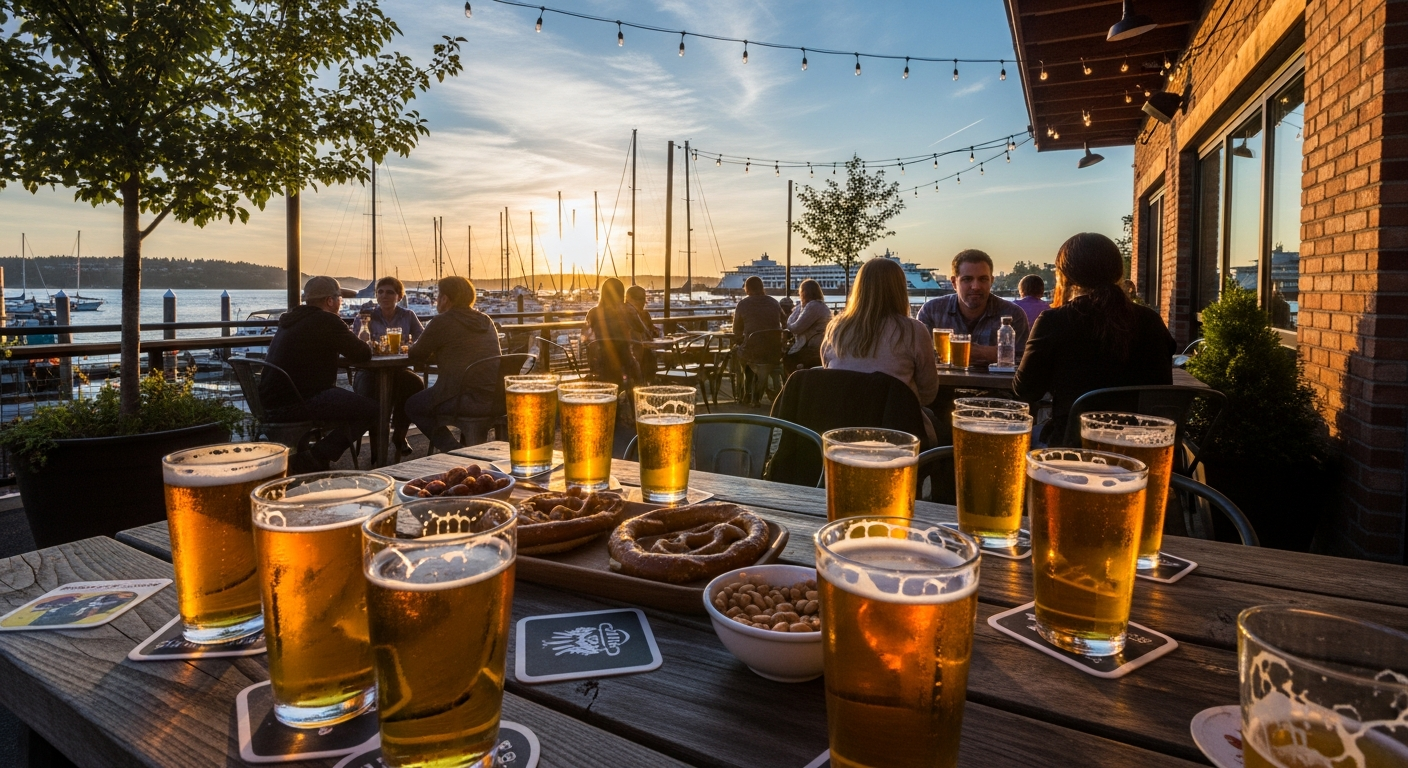
    Earlier this year, At Large Brewing — one of Everett’s original modern craft brewery destinations — closed its waterfront taproom permanently on March 31, 2026. The trail changed. Here’s where it stands now heading into summer.

    The At Large closure matters because it removed one of the anchor stops in the Port Gardner waterfront cluster, and because At Large’s patio at 2730 W Marine View Drive was one of the genuinely good places in the city to drink local beer outside. That loss doesn’t go away just because new stops have opened. But the new stops are real, and the overall trail is still worth doing.

    Here’s the updated 2026 guide — six active taproom stops, two geographic clusters, and what’s worth watching next.

    The Active Stops

    1. Scuttlebutt Brewing — Two Locations, Two Different Experiences

    Everett’s longest-running craft brewery now operates two distinctly different taproom experiences, and the distinction matters when you’re planning a night out.

    The Craftsman Way pub (1205 Craftsman Way) is the original, the full-service experience: food, more seating, the flagship tap list, the familiar Scuttlebutt signage. It’s where you take people who haven’t been to Everett before and want to understand why the local beer scene has lasted. The Cedar Street production taproom (3310 Cedar St) is the stripped-down version attached to the brewing facility — better for exploring new releases, less about the full pub experience. Read our two-location breakdown here.

    2. Sound to Summit Brewing — Marina Taproom

    1710 W Marine View Drive. The family and dog-friendly patio at the marina is the closest thing to what At Large’s waterfront setup offered, and Sound to Summit earns its slot on the trail independently — their award-winning pilsners and stouts hold up on any tap list in the region. They brew out of Snohomish and pour at the marina, seven days a week. When the weather is good, this is the move. Full guide here.

    3. Obsidian Beer Hall — Downtown Hewitt

    1420 Hewitt Ave. Owner Craig Chambers opened this curated PNW beer hall in 2024 in the former Toggles space, and it’s become a genuine anchor on the Hewitt corridor. The tap list rotates and emphasizes Pacific Northwest craft — not exclusively Obsidian’s own production, but a curated selection that gives you a good cross-section of what’s being brewed in the region. Live music events run regularly through the Everett Music Initiative. This is technically a beer hall rather than a brewery-owned taproom, but it belongs on any beer walk through downtown Everett. Full profile here.

    4. Lazy Boy Brewing — South Everett Industrial

    715 100th St SE, Suite A1. This is the one people haven’t found yet, and finding it is part of the experience. Lazy Boy is tucked into a south Everett industrial park — no signage visible from the street unless you know where you’re going. Nine taps, Wednesday through Saturday 3–9 PM, Thursday trivia, Saturday live music, monthly line dancing. The scale is small by design, and the vibe is closer to a working brewery taproom than a hospitality space. We called it the spiritual successor to At Large’s ethos — a place where the beer is the point and the regulars actually show up. Full guide here.

    5. Middleton Brewing — Everett Mall Way

    607 SE Everett Mall Way, Suite 27-A. Owner Geoff Middleton has been brewing since 2013. The 1.5-barrel nano-brewpub is one of Everett’s quieter finds — the specialty is fruit ales, which is genuinely unusual in a market that defaults hard to IPAs. The scale means the tap list changes constantly and you’ll encounter beers that exist nowhere else. Worth tracking specifically for seasonal fruit ale releases. Full profile here.

    6. U-Neek Brewing (formerly Crucible) — Everett Mall Area

    909 SE Everett Mall Way, Suite D440. New owners Erik Andresen and Johanna Watson took over Crucible Brewing and relaunched it as U-Neek, reopening under the new name in February 2025. Part of the Pacific Northwest Brewing Center complex. Hours: Monday–Saturday 12 PM–10 PM, Sunday 12 PM–8 PM. Family-friendly neighborhood taproom with trivia nights and rotating food trucks. Full profile here.

    How to Run the Trail

    The current trail splits naturally into two loops.

    North/Downtown loop: Obsidian Beer Hall (Hewitt Ave) → Scuttlebutt Craftsman Way → Sound to Summit Marina Taproom. This is the waterfront-and-downtown circuit, all within reasonable walking or short driving distance. The north loop is the best intro for first-timers and the right circuit when you’re combining brewery stops with dinner on the Hewitt corridor or the waterfront.

    South/Industrial loop: U-Neek → Middleton Brewing → Lazy Boy. These three are within a few miles of each other in south and east Everett. The south loop is the more adventurous circuit — less visible, more local, more interesting for people who’ve already done the downtown pass. Note that Lazy Boy’s hours (Wed–Sat, 3–9 PM) are the constraint to plan around.

    Doing both loops in a single day is possible but ambitious. A better approach: hit the north loop one evening, the south loop on a Saturday afternoon when Lazy Boy is open and you have time to find the industrial park.

    What Changed Since April 2026

    The April 2026 trail guide listed eight stops, including At Large and some additional options that have since closed or reduced hours. The practical trail today is six solid taprooms. The closure of At Large remains the biggest gap — specifically the loss of the waterfront patio, which Sound to Summit partially compensates for but doesn’t fully replace.

    On the positive side: Lazy Boy and Middleton have both settled into their operational rhythms in a way that makes them reliable additions to the list rather than question marks. U-Neek under new ownership has stabilized. The trail is smaller than it was two years ago, but the remaining stops are consistent.

    What We’re Watching

    The Port of Everett still has one remaining Restaurant Row space at Waterfront Place without a permanent tenant. A taproom or brewpub in that slot would complete the waterfront cluster in a way that At Large’s absence broke. We’re watching the Port’s tenant search process.

    In the meantime: six active stops is a solid summer brewery trail. Hit them in order or mix the loops. Either way you’re drinking well in Everett.

    The six active stops: Scuttlebutt Brewing (2 locations) • Sound to Summit Marina • Obsidian Beer Hall • Lazy Boy Brewing • Middleton Brewing • U-Neek Brewing

    Frequently Asked Questions

    How many breweries are in Everett WA in 2026?

    As of summer 2026, Everett has six active taproom stops on the brewery trail: Scuttlebutt Brewing (two locations), Sound to Summit Brewing at the marina, Obsidian Beer Hall on Hewitt, Lazy Boy Brewing in south Everett, Middleton Brewing on SE Everett Mall Way, and U-Neek Brewing. At Large Brewing closed permanently in March 2026.

    Did At Large Brewing in Everett close?

    Yes. At Large Brewing at 2730 W Marine View Drive closed permanently on March 31, 2026. It was one of Everett’s original modern craft brewery destinations.

    What is the best brewery in Everett WA?

    Scuttlebutt Brewing is Everett’s most established craft brewery with two locations. For the best outdoor drinking experience, Sound to Summit’s marina taproom is the current top choice. For the most adventurous and local experience, Lazy Boy Brewing in south Everett is the hidden gem worth finding.

    Where is Lazy Boy Brewing in Everett?

    Lazy Boy Brewing is at 715 100th St SE, Suite A1, Everett, WA — in a south Everett industrial park. Hours: Wednesday through Saturday, 3 PM to 9 PM.

    Is U-Neek Brewing the same as Crucible Brewing Everett?

    Yes. U-Neek Brewing Company at 909 SE Everett Mall Way is the rebranded and relaunched version of Crucible Brewing, under new owners Erik Andresen and Johanna Watson since February 2025.

  • Butter Notes Cafe on Broadway Is Everett’s Most Ambitious Coffee Shop — Jazz, a Podcast Studio, and a Menu That Actually Has Ideas

    Butter Notes Cafe on Broadway Is Everett’s Most Ambitious Coffee Shop — Jazz, a Podcast Studio, and a Menu That Actually Has Ideas

    Most coffee shops in Everett serve lattes and move on. Butter Notes Cafe, at 902 N Broadway, is trying to be something different — and four months in, it’s earning the ambition.

    The cafe opened in January 2026 in North Everett, tucked into a suite on Broadway that’s been quietly building a more interesting neighborhood commercial scene. From the outside it looks like a standard coffee stop. Inside there’s a piano, a drum set, ticketed jazz shows, a professional podcast studio, and a drink menu that goes considerably beyond your standard espresso lineup.

    We stopped by to see if the concept holds together. It does.

    The Drinks Menu Is a Statement

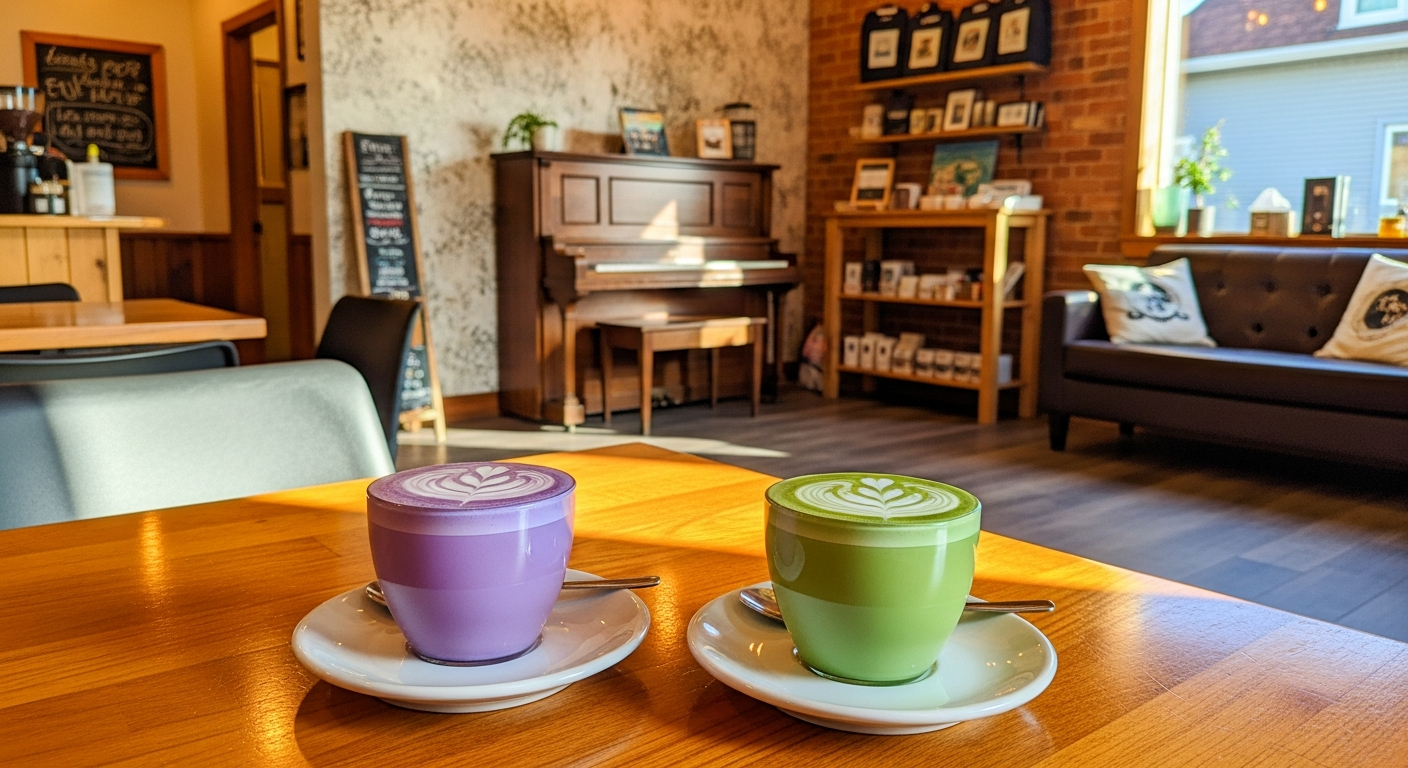
    Butter Notes starts with the basics — Americano ($4.25–$5.25), cappuccino ($4.75–$5.25), drip coffee ($3.50–$4.50) — and then gets interesting. The signature and best-seller section leans into Asian-influenced flavors with real commitment: Matcha Latte ($5.75–$6.75), Strawberry Matcha Latte ($6.25–$7.25), Ube Latte ($6.25–$7.25), Hojicha Latte ($5.75–$6.75), Black Sesame Latte ($6.25–$7.25), Blueberry Matcha Latte, and Earl’s Garden (earl grey with floral notes, $6.25–$7.25).

    The Cream Cheese Cold Brew ($5.75–$6.75) deserves a mention — the cream cheese foam cold brew format started in Taiwan and shows up in a handful of Pacific Northwest specialty shops, but rarely in Everett. Order it once and it becomes a habit.

    All prices are three-tier: 12 oz, 16 oz, 20 oz. Even the more elaborate specialty drinks top out at $7.25. A standard latte is $4.75 for a 12-ounce. The pricing is honest for the quality level.

    The Food

    Croffles — croissant waffles — are the signature food item. The strawberry croffle is the one people keep coming back for based on Yelp activity, and it shows up repeatedly in reviews as the thing that made someone a regular. Crepes are also on the menu. The food is the kind of thing that pairs with a long coffee order rather than standing on its own as a meal, which is exactly the right call for a cafe with this much going on in the drink department.

    The Piano, the Jazz Shows, and the Discord

    The piano and drum set are not decoration — Butter Notes hosts regular ticketed jazz shows, listed at turntabletickets.com, and the room is designed around them. This is unusual for Everett. A specialty coffee shop with a recurring live jazz program embedded into its weekly rhythm is not something the city has had before.

    They also run a Discord community server. This is a deliberate choice that signals the target audience: younger regulars who want a third place that actually does community rather than performing it. The newsletter is framed as “Help us bring jazz to Everett,” which tells you exactly what the owners are trying to build here.

    The podcast studio (bookable via Peerspace) adds another layer: professional multi-camera recording equipment, studio lighting, professional audio — for local creators who need the hardware without the overhead of a full production house. It’s an economically interesting bet. A podcast studio inside a coffee shop brings in a specific kind of regular who also tends to tell other people about the place.

    How It Compares to Other Everett Coffee Options

    The Broadway corridor has been underserved for sit-down specialty coffee. The closest direct comparisons in terms of specialty focus and community vibe would be Narrative Coffee downtown, The Loft Coffee Bar on Hewitt, or Nadine’s Coffee House off Wetmore — all worth visiting. What separates Butter Notes is the performance program. Jazz nights turn a coffee shop into a destination rather than a convenience, which is a fundamentally different kind of business. Sobar Coffee on Colby has the remote-work atmosphere; Butter Notes is doing something closer to a community arts space that also makes excellent lattes.

    Hours and How to Get There

    Open Monday through Friday 7 AM–8 PM, Saturday and Sunday 8 AM–8 PM. Online ordering available. The Broadway location is accessible from the North Everett residential neighborhoods, about a 10-minute drive from downtown or a short walk from the Broadway commercial corridor.

    The Bottom Line

    If your coffee rotation has gone stale, Butter Notes is the corrective. The specialty drink menu uses Asian flavors as a genuine design language rather than a novelty. The jazz shows make the space alive on weekday evenings. The podcast studio pays for the rent. It all adds up to a place with an actual point of view, which is rarer than it should be for a city the size of Everett.

    The move: Ube Latte or Strawberry Matcha Latte. Strawberry croffle if you’re hungry. Arrive early on weekends — seating fills before the jazz sets start.

    Address: 902 N Broadway, Suite B, Everett, WA 98201
    Hours: Mon–Fri 7 AM–8 PM, Sat–Sun 8 AM–8 PM
    What to order: Ube Latte, Strawberry Matcha Latte, Cream Cheese Cold Brew, strawberry croffle
    Jazz shows: turntabletickets.com
    Podcast studio: Bookable via Peerspace
    Price range: $–$$

    Frequently Asked Questions

    Where is Butter Notes Cafe in Everett?

    Butter Notes Cafe is at 902 N Broadway, Suite B, Everett, WA 98201, in North Everett on the Broadway corridor.

    What are Butter Notes Cafe hours?

    Monday through Friday: 7 AM–8 PM. Saturday and Sunday: 8 AM–8 PM.

    What is a croffle at Butter Notes?

    A croffle is a croissant waffle — croissant dough pressed in a waffle iron. Butter Notes’ strawberry croffle is their signature food item and one of the most-ordered items on the menu.

    Does Butter Notes Cafe have live music?

    Yes. Butter Notes hosts regular ticketed jazz shows. Tickets are available at turntabletickets.com and upcoming dates are listed on their events calendar at butternotescafe.com.

    Does Butter Notes Cafe have a podcast studio?

    Yes. Butter Notes has a professional podcast recording studio with multi-camera video, professional audio, and studio lighting available for rent. Book through their Peerspace listing or via butternotescafe.com/podcast-studio.

    What is the best drink at Butter Notes Cafe?

    The Ube Latte, Strawberry Matcha Latte, and Cream Cheese Cold Brew are the standouts based on menu positioning and customer reviews. The Ube Latte ($6.25–$7.25) is the most distinctive drink on the menu.

  • The Ten-01 Pub Has Spent 16 Months Earning Back a Hewitt Avenue Address — Here’s Why It’s Working

    The Ten-01 Pub Has Spent 16 Months Earning Back a Hewitt Avenue Address — Here’s Why It’s Working

    Some addresses carry weight. 1001 Hewitt Ave is one of them.

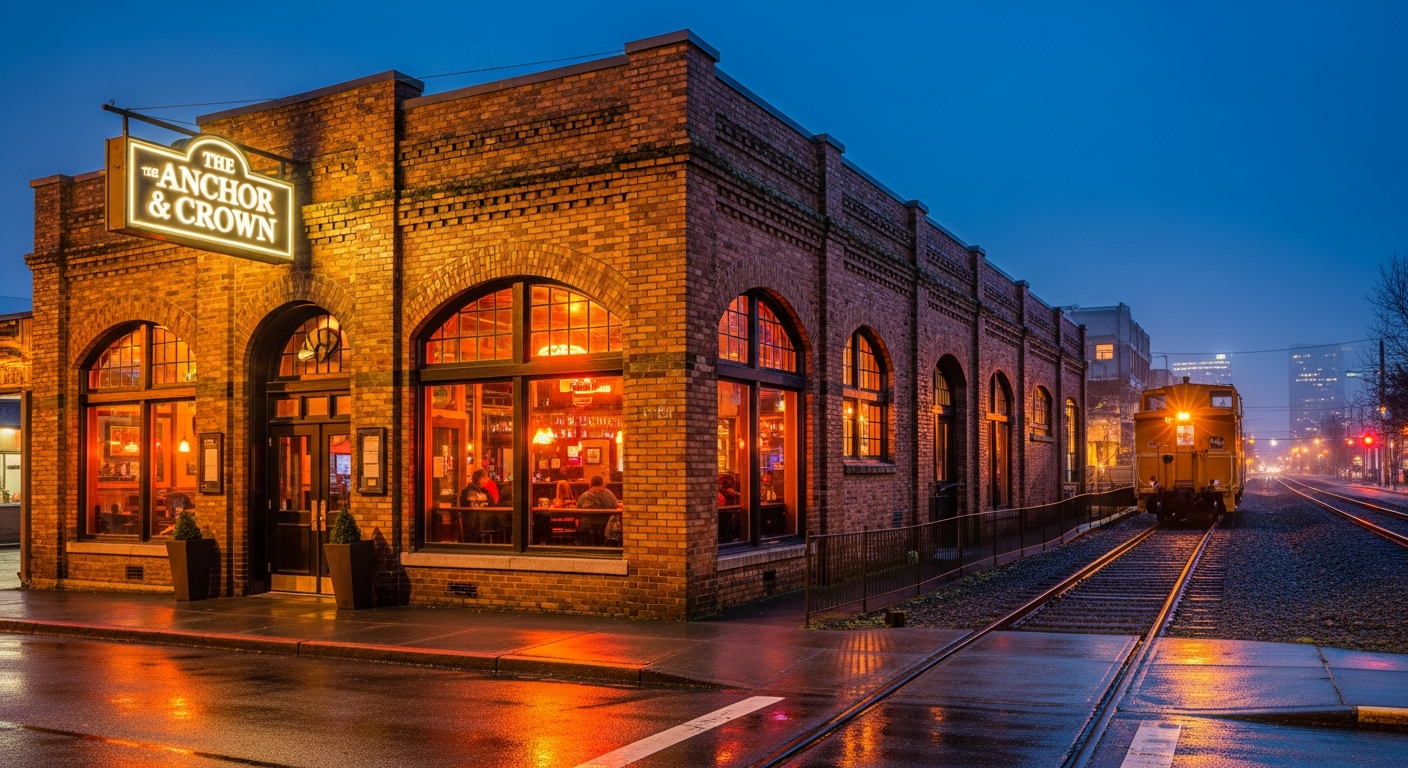
    For decades it was The Anchor Tavern, then The Anchor Pub. The last chapter under that name ended badly — the owner convicted of child rape, the building sold at public auction, the sign taken down. When Holly Heath and Shane Ratigan bought the place in 2024, they had a choice: carry forward a name locals associated with a dark chapter, or start fresh while honoring what made the address worth saving.

    They chose fresh. They named it The Ten-01 — after the address at 1001 Hewitt — and opened on January 17, 2025. Sixteen months in, it’s working.

    The Building Has Earned Its History

    The structure at 1001 Hewitt has been a bar since the 1930s, but the building itself dates to 1907. High ceilings, worn wood, walls that have absorbed a century of conversations. Heath and Ratigan knew this when they bid on it.

    “We’ve had our eye on this location for quite some time — it’s an incredible space in a historical building that we absolutely love,” the owners told My Everett News at opening. They spent months on renovations, cleaning up the space and the reputation simultaneously. The result is a room that feels lived-in without feeling tired. Long bar, booths along the wall, enough space to move without apologizing to strangers.

    The Food

    The kitchen does burgers, house-made pizzas, pub-style appetizers, and tacos. Nothing precious about any of it — these are things made to go with beer. The classic cheeseburger is half-price on Tuesdays, which is one of the smarter things a neighborhood bar can do if it wants regulars to show up mid-week.

    The price range is pub-appropriate. If you want elevated tasting menus you’re a few blocks east at Luca or The New Mexicans. The Ten-01 is not that. It’s the bar version of a homecooked meal — familiar and good.

    The Train Beer Tradition

    This is the detail everyone brings up first, because it earns it: whenever a train rolls past on the BNSF tracks right behind the building — which happens regularly on the corridor that runs through central Everett — you get $2 domestic draft beers. This is a tradition from the Anchor Tavern era that the new owners kept. Correct decision. It’s the kind of touch that tells you a bar understands what makes a neighborhood bar work.

    Freight trains on the BNSF line run through the evening and night. Regulars have been known to track them. We’re not saying you should, but we understand why.

    Events and the Weekly Calendar

    Thursdays: trivia at 7 PM. Live music is a regular weekend feature — the grand opening in January 2025 featured local bands Sugar Push and The True Romans, and the music programming has continued. Heath and Ratigan also own The Pinehurst Pub in North Seattle, so they have a working model for this. Regular events, consistent specials, a room that makes the next visit feel obvious.

    Where It Fits on the Hewitt Corridor

    The Hewitt Avenue food and drink scene has built itself into something genuinely interesting. Within walking distance of The Ten-01: Obsidian Beer Hall two blocks east, Vintage Cafe (50 years strong), R Harn Thai, STRGZR Coffee and Kitchen, and Luca Italian for a proper dinner. The Ten-01 slots in as the working pub — the place you end the night after dinner, or start the evening before a show at Angel of the Winds two blocks away.

    The Bottom Line

    Go, especially on a night when you can hear the trains. The address has earned a second chance and the current owners are honoring it. The building is a piece of Everett going back to 1907. The beer is cold, the food is solid, and $2 domestic drafts when freight passes through is one of those things you’ll be explaining to visitors for years.

    Address: 1001 Hewitt Ave, Everett, WA 98201
    Hours: Sun–Thu 3 PM–midnight, Fri–Sat 3 PM–2 AM
    What to order: Classic cheeseburger (half-price Tuesday), draft when the train rolls through
    Train beer: $2 domestic draft whenever a train passes
    Events: Trivia Thursday 7 PM, live music weekends
    Parking: Street parking on Hewitt, surface lots nearby
    Price range: $–$$

    Frequently Asked Questions

    What is The Ten-01 Pub in Everett?

    The Ten-01 Pub is a community bar at 1001 Hewitt Ave in downtown Everett, WA, named after its address. It opened January 17, 2025, in a historic 1907 building formerly occupied by The Anchor Tavern and Anchor Pub.

    Who owns The Ten-01 Pub?

    Owners Holly Heath and Shane Ratigan, who also own The Pinehurst Pub in North Seattle, purchased the building at public auction and opened The Ten-01 in January 2025.

    What is the train beer deal at The Ten-01?

    Every time a freight train passes on the nearby BNSF tracks, The Ten-01 offers $2 domestic draft beers. It is a tradition carried over from the building’s previous ownership and one of the pub’s most beloved features.

    What are The Ten-01 hours?

    Sunday through Thursday: 3 PM to midnight. Friday and Saturday: 3 PM to 2 AM.

    Does The Ten-01 have food?

    Yes. The menu includes house-made pizzas, burgers, pub-style appetizers, and tacos. The classic cheeseburger is half-price on Tuesdays.

    Does The Ten-01 Pub have live music?

    Yes. Live music is a regular feature on weekends. Thursday trivia night starts at 7 PM. Check their Instagram @theten01 for the current schedule.

  • Snohomish County’s Retail Market Is the Tightest in Puget Sound — And Q1 2026 Just Started Testing That

    Snohomish County’s Retail Market Is the Tightest in Puget Sound — And Q1 2026 Just Started Testing That

    Q: How does Snohomish County’s retail vacancy compare to the rest of the Puget Sound region?
    A: Snohomish County ended Q4 2025 at 3.4% retail vacancy — the tightest rate in the Seattle-Puget Sound metro, according to Kidder Mathews. While the broader Seattle market finished 2025 at 4.0% and continued rising into Q1 2026, Snohomish County’s retail market has stayed tighter because almost no new retail square footage has been built in years. That scarcity protects existing landlords but creates a challenging environment for major new developments like Waterfront Place and Millwright Phase 2 that need to recruit tenants into a market where selectivity is rising.

    Why Snohomish County Retail Stays Tight

    Here’s a number that doesn’t get talked about enough: Snohomish County’s retail vacancy rate ended 2025 at 3.4 percent.

    For context, the broader Seattle metro finished 2025 at 4.0 percent, and that number was climbing. King County’s vacancy was trending higher through the back half of the year. Portland hit 4.8 percent in Q1 2026. By every regional benchmark, Snohomish County’s retail market is the tightest in Puget Sound — and it has been for most of the past three years.

    That’s a complicated backdrop for everything happening on Everett’s waterfront right now.

    The short answer, according to Kidder Mathews’ Q4 2025 retail market data cited by the Everett Herald in February 2026, is construction — or rather, the lack of it. Almost nothing has been built. The last major new shopping center project in Snohomish County was years ago, which means existing retail square footage is scarce. When tenants look for space, their options are limited — which keeps occupancy high and keeps asking rents elevated.

    The Everett Herald framed it plainly: “Few vacant retail spaces in Snohomish County.” At 3.4 percent vacancy, that’s not just a real estate headline — it’s a physical reality that shapes which businesses can afford to open here.

    But Q1 2026’s Kidder Mathews data, published by The Registry Pacific Northwest on April 8, 2026, introduced something new into the conversation: a trend line. Vacancy is “creeping higher.” Tenants are “growing more selective.” The words are measured — this is not a market in distress — but they signal that the floor-tight conditions of the past two years are starting to soften at the margins.

    What This Means for Waterfront Place

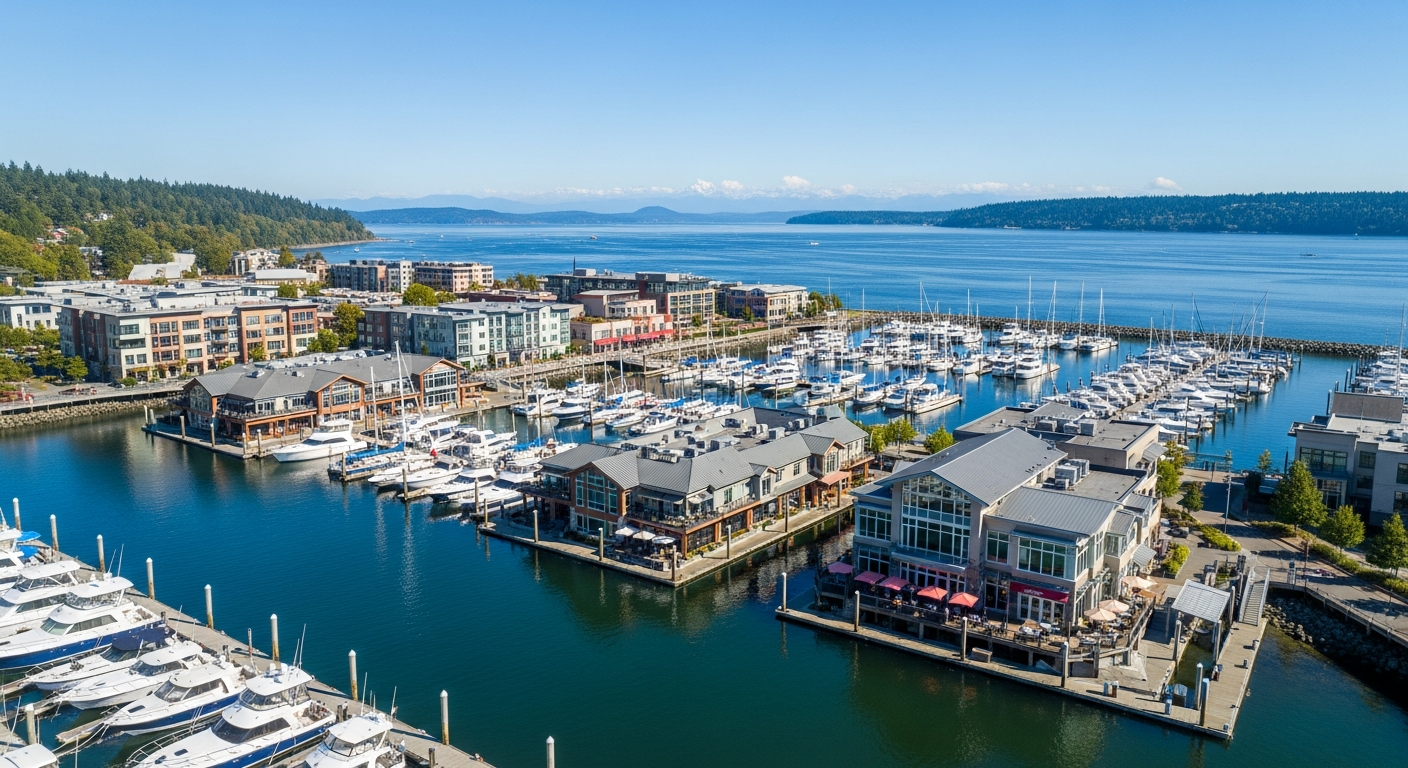
    The Port of Everett’s Waterfront Place development has approximately 63,000 square feet of planned retail and restaurant space across the full buildout of Fisherman’s Harbor and Marina Village. A meaningful portion of that is already occupied and generating activity: Tapped Public House opened in March 2026 with the largest waterfront rooftop deck in Snohomish County; Marina Azul Cocina & Cantina arrived in spring 2026; Menchie’s Frozen Yogurt opened at the marina in March; Rustic Cork Wine Bar has been operating for months; Jetty Bar & Grille remains a marina staple; South Fork Baking Co. and Anthony’s HomePort anchor the established tenant base.

    That’s a functioning dining and retail district — and it’s operating in a county where retail space is genuinely scarce. In a 3.4 percent vacancy environment, every new restaurant that opens at Waterfront Place is competing not just with other waterfront tenants, but with a county-wide retail market where operators are getting more selective about where they commit.

    The remaining Parcel A7 restaurant site — the Port’s search for a flagship dining tenant at the last undeveloped waterfront pad — is an open question in this context. A tight market should theoretically accelerate recruitment. But Q1 2026’s rising selectivity from prospective tenants complicates that math. Operators have more choices than they used to, and they’re using them.

    The Millwright Phase 2 Question

    The more significant long-term implication of the Q1 2026 retail data is for Millwright District Phase 2, which envisions up to 120,000 square feet of retail, entertainment, and dining — the movie theater, mini golf, arcade, bowling, specialty shops, gyms, and salons announced as the anchor concept, with a projected opening window of mid-2029.

    Between now and 2029, the retail market will complete several more cycles. The current “vacancy creeping higher, tenants more selective” phase could resolve in either direction. What the Q1 2026 data confirms is that the foundation is solid. A county that has held below 3.5 percent vacancy for multiple years, with no meaningful new inventory in the pipeline, is a county where well-positioned retail real estate still works. Millwright Phase 2’s 120,000 square feet will be the largest single retail addition Snohomish County has seen in years — arriving into a market that will almost certainly still be undersupplied by mid-decade.

    Downtown Everett and the Bank of America Signal

    One notable data point in downtown Everett’s retail landscape deserves separate attention: the 12,000-square-foot Bank of America building at 1602 Hewitt Avenue, which came to market this spring for the first time in 60 years. Skotdal is marketing the building with a three-lane drive-through and 92 covered parking spaces.

    At 3.4 percent county-wide retail vacancy, a 12,000-square-foot class-A footprint in downtown Everett should theoretically be in high demand. The fact that it’s available at all is a testament to how thoroughly the banking sector has contracted its physical footprint. The question is whether the retail market’s tightness is enough to attract a non-bank tenant willing to work with that building’s legacy configuration.

    The comparison to the office market is instructive: Snohomish County office vacancy hit 10.7 percent in Q1 2026 — nearly triple the retail rate. Office space is available and under pressure; retail space is not. That divergence matters for how developers think about the use mix at Waterfront Place and Millwright Phase 2. Retail and dining are still the anchor draw. Office demand follows workers, not the other way around.

    The Snohomish County Retail Advantage — For Now

    For anyone tracking Everett’s development story, the retail market data adds an important piece of context. The waterfront, downtown, the riverfront, and Millwright are all recruiting tenants into a county that remains the most retail-constrained in the region. That constraint cuts both ways.

    It means existing retailers perform well. It means new entrants can establish market position before competition multiplies. And it means the large-format entertainment retail vision at Millwright Phase 2 — the first genuine new retail district Snohomish County will have seen in years — will arrive into conditions that still favor well-capitalized landlords.

    The Q1 2026 signal worth watching is whether rising tenant selectivity translates into slower absorption at Waterfront Place. The next few quarters of lease announcements will be a real-time test of whether the Port’s restaurant row momentum can hold through a softening. Based on what the data shows right now, there’s no reason to expect it won’t — but the days of almost any tenant being available are giving way to a market that’s starting to pick and choose.

    Frequently Asked Questions

    Q: What is Snohomish County’s retail vacancy rate?
    Snohomish County ended Q4 2025 at 3.4 percent retail vacancy, the lowest in the Puget Sound metro according to Kidder Mathews. Q1 2026 showed the rate beginning to edge higher as tenants grew more selective.

    Q: How does Snohomish County compare to Seattle’s retail market?
    The broader Seattle metro finished 2025 at 4.0 percent retail vacancy, roughly half a point higher than Snohomish County. Q1 2026 continued that divergence, with the Seattle-area rate climbing while Snohomish County remained below regional averages.

    Q: How much retail space is planned at Waterfront Place?
    The Port of Everett’s Waterfront Place development plans for approximately 63,000 square feet of retail and restaurant space across Fisherman’s Harbor and Marina Village, with multiple tenants already operating.

    Q: How much retail is coming to Millwright District Phase 2?
    Millwright District Phase 2 envisions up to 120,000 square feet of entertainment-anchored retail — including a movie theater, mini golf, arcade, bowling, and specialty shops — with a projected opening window of mid-2029.

    Q: Why is Snohomish County retail vacancy so low?
    The primary driver is a near-complete absence of new retail construction in the county for multiple years. With no significant new inventory entering the market, existing space stays occupied and asking rents remain elevated.

    Q: What is happening at the Bank of America building on Hewitt Avenue in downtown Everett?
    The 12,000-square-foot former Bank of America building at 1602 Hewitt Avenue became available for the first time in roughly 60 years in spring 2026. Skotdal is marketing the space with a three-lane drive-through and 92 covered parking spaces in downtown Everett.

  • Everett City Council Votes Tonight on Permanent Protections for Seven Manufactured Home Communities

    Everett City Council Votes Tonight on Permanent Protections for Seven Manufactured Home Communities

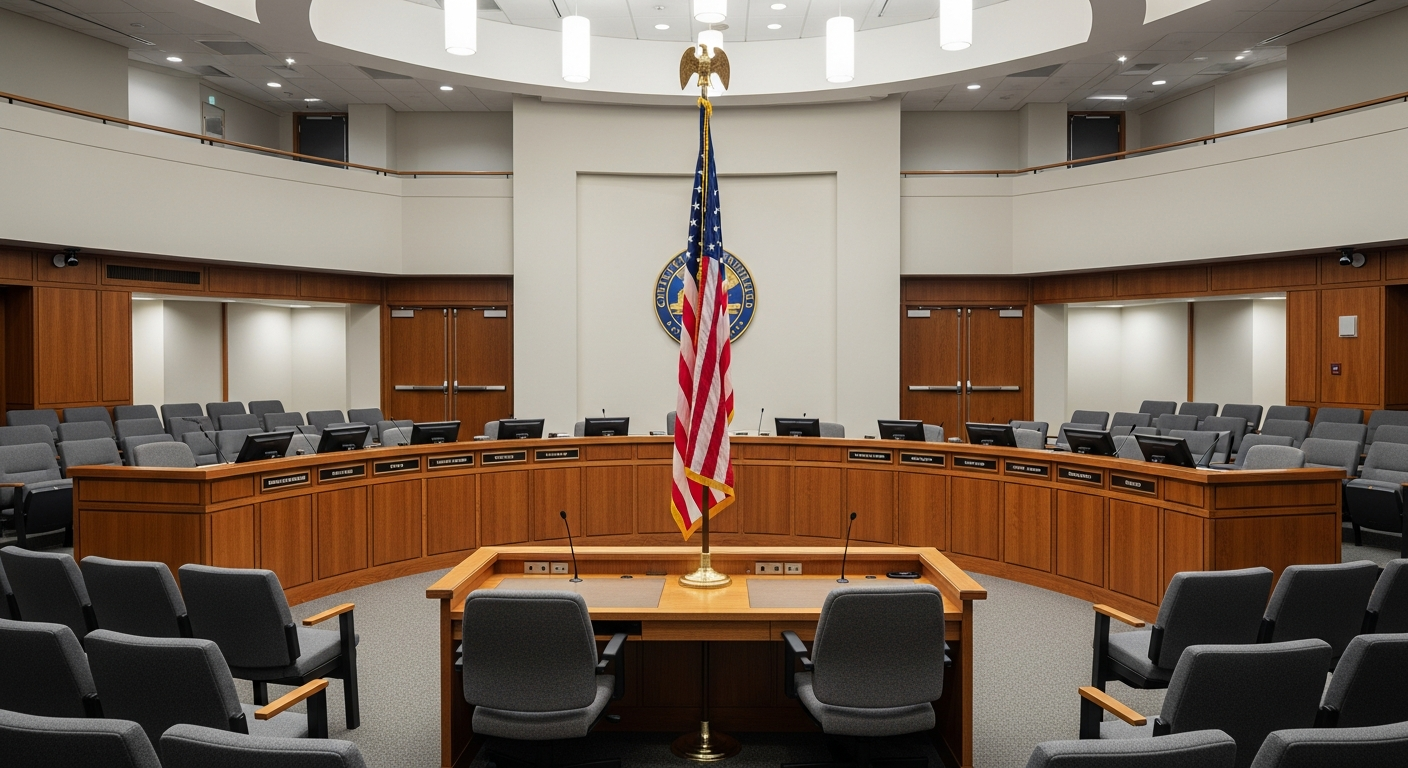
    Tonight at 6:30 p.m., Everett City Council will hold a public hearing and take the third and final vote on CB 2604-23 — an ordinance that would permanently establish a new land-use zone to protect seven manufactured home communities from redevelopment pressure.

    If the council approves CB 2604-23 tonight, Everett will have a dedicated Neighborhood Residential – Manufactured Home Community (NR-MHC) zone — a zoning designation that requires parcels occupied by manufactured home parks to remain as such. That means the owners of the seven named parks could not convert them to other uses — apartments, retail, storage, office — without a future act of the city council.

    For the thousands of Everett residents who live in those seven communities, the vote represents the end of a multi-year legislative process and the formal close of a window that has left some residents uncertain about the long-term stability of their homes.

    What Tonight’s Agenda Shows

    The May 6, 2026 City Council agenda lists CB 2604-23 as both a public hearing and an action item — meaning the council will take public testimony and then vote on the ordinance in the same meeting. This is the third and final reading, the last step in Everett’s ordinance adoption process before a bill goes to the mayor for signature.

    The meeting begins at 6:30 p.m. in City Council Chambers at 3002 Wetmore Ave, Everett. It is also a hybrid meeting, with remote participation available via Zoom.

    The Seven Parks Named in the Ordinance

    CB 2604-23 specifically names the following manufactured home communities as subject to the new NR-MHC zone:

    1. Creekside
    2. Fairway Estates
    3. Lago De Plata Villa
    4. Loganberry
    5. Mobile Country Club
    6. Silver Shores Senior
    7. Westridge

    Each of these parks would have its parcels rezoned to NR-MHC, making manufactured home community use the only permitted primary use on those sites.

    Why a Dedicated Zone Matters

    Manufactured housing is one of the most affordable forms of homeownership available in Snohomish County. Unlike apartment renters, many residents in manufactured home communities own their homes outright — but they rent the land beneath them from the park owner. That structure creates a vulnerability: if a park owner sells the land for redevelopment, residents may be required to move their homes or leave.

    Everett’s Comprehensive Plan identifies manufactured home preservation as a housing policy goal — specifically HO-10 (preserve manufactured housing as a naturally affordable housing type) and HO-19 (protect existing manufactured home communities from displacement). CB 2604-23 is the implementing ordinance that gives those goals legal teeth in the city’s zoning code.

    What the Ordinance Actually Changes

    CB 2604-23 does several things at once. It creates the NR-MHC zone as a distinct designation in the Everett Municipal Code and amends the Zoning Map to apply that designation to the seven named parks. It amends Chapters 15.02, 19.03, 19.04, 19.05, and 19.13 of the EMC to integrate the new zone into Everett’s planning framework. It repeals Title 17 EMC — which contained the prior manufactured housing regulations — and amends Ordinances 3774-20, 3534-17, and 4102-25 for consistency.

    The net effect: manufactured home community use becomes the zoning baseline for these parcels. A park owner who wanted to redevelop the land for another purpose would need to seek a rezone — a public process that would go back before the Planning Commission and City Council.

    The Legislative Timeline

    The ordinance has traveled a long road to reach tonight’s final reading. The NR-MHC zone proposal moved through the Planning Commission with a first review, then multiple public comment periods. Tonight’s public hearing is the formal hearing tied to the third reading of the ordinance — the last opportunity for public testimony before the council acts. Earlier in the process, the city held a public hearing at Walter E. Hall Park.

    For a detailed look at what the zone means for individual park residents, see the earlier resident guide: What Everett’s NR-MHC Zone Means If You Live at Creekside, Fairway Estates, or Any of the Seven Mobile Home Parks. And for a broader overview of the ordinance: Everett’s Proposed NR-MHC Zone: A Complete 2026 Guide.

    Related Everett Housing Policy Context

    CB 2604-23 moves alongside a broader set of Everett and county housing policies. Snohomish County awarded $23 million to six housing projects in an April 24 vote — including three Everett projects — through a separate funding pipeline. Read: How $23 Million in Housing Money Moved Without a Tax Vote.

    The city also recently updated its Critical Areas Regulations, affecting development near wetlands, streams, and landslide-prone areas citywide. Read: Everett’s Wetland and Stream Rules Are About to Change.

    Frequently Asked Questions

    Can park owners still sell the land after this ordinance passes?

    Yes. Ownership of the land is not restricted. What changes is the permitted use. A buyer who purchased a park-zoned parcel would still be required to operate it as a manufactured home community or go through a rezone process that would require city council approval.

    Does this freeze lot rent in the parks?

    No. The NR-MHC zone addresses land use, not rent rates. Residents would still negotiate lot rent with park owners under applicable Washington State law.

    What is Title 17 EMC and why is it being repealed?

    Title 17 EMC contains Everett’s existing manufactured housing regulations. CB 2604-23 replaces those rules with the more specific NR-MHC zone structure, consolidating manufactured home community policy into the main zoning code for consistency and clarity.

    When would the ordinance take effect if it passes tonight?

    After the council votes, the ordinance goes to Mayor Cassie Franklin for signature. Under Everett’s standard process, ordinances typically take effect 30 days after adoption unless they include an emergency clause.

    Does this apply to all manufactured home parks in Everett?

    No. The seven parks named in CB 2604-23 are the specific sites being rezoned. Other manufactured home parks in Everett not named in the ordinance are not directly affected by tonight’s vote.

    What To Do Next

    Tonight’s public hearing: Attend in person at City Council Chambers, 3002 Wetmore Ave, starting at 6:30 p.m. Remote participation via Zoom is available — register at everettwa.gov/speakerform no later than 30 minutes before the meeting.

    Written comment: Email Council@everettwa.gov. Comments submitted at least 24 hours in advance will be distributed to all council members. You can also mail written comments to 2930 Wetmore Avenue, Suite 9A, Everett, WA 98201.

    Read the ordinance: The full text of CB 2604-23 is available at everettwa.gov/2777/Proposed-Code-Amendments.

    Watch the meeting: Live stream and recordings are posted at YouTube.com/EverettCity.

  • Everett Public Schools Summer 2026: Your Complete Guide to Summer Academy, Career Link, and What to Register For Now

    Everett Public Schools Summer 2026: Your Complete Guide to Summer Academy, Career Link, and What to Register For Now

    Everett Public Schools Summer 2026: Your Complete Guide to What’s Available, What’s Free, and What to Register For Right Now

    **What summer learning programs does Everett Public Schools offer in 2026?**

    Everett Public Schools runs four primary summer programs in 2026: the High School Summer Academy (July 6–24 in-person at Eisenhower Middle School; June 22–July 30 online), the Everett Ready kindergarten transition program in August, i-Ready online academic support for K–8 students, and Middle School Summer Programming for foundational skills. Most in-district programs are free. Online high school courses carry a tuition of $350 per half credit for in-district students.

    School is still in session, but summer 2026 is already underway in one sense: Everett Public Schools opened registration for its summer programs back on March 9, and for some of them — including the Everett Career Link paid internship program — the window is already closed. If you have an EPS student and haven’t looked at this yet, now is the moment.

    Here’s what’s available, who it’s for, and what it costs.

    High School Summer Academy: Credit Recovery, Acceleration, and Real Support

    The anchor program for EPS high schoolers is the High School Summer Academy, which runs two tracks:

    In-person track: Classes run July 6–July 24, 2026, held at Eisenhower Middle School. These are primarily credit recovery courses — designed for students who need to retake a course or pick up a credit they’re short on before the next school year. In-district students pay no tuition for in-person credit recovery. Support is available for Multilingual Learners and students with IEPs.

    Online track: Classes run June 22–July 30, 2026. These include both credit recovery and acceleration options. Tuition is $350 per half (0.5) credit for in-district students; $450 per half credit for out-of-district students. Online courses are scheduled for students who want to get ahead or who have scheduling conflicts with the in-person session.

    Both tracks include practical support: free breakfast and lunch are provided for all students in in-person sessions, and transportation is available from several pick-up sites across the district. For families managing complicated summer schedules, that combination of free meals and provided transportation removes two of the most common barriers to actually showing up.

    The Summer Academy is the district’s primary mechanism for keeping students on track for graduation — and for Cascade High students working toward IB requirements or other multi-year academic pathways, it’s also a tool for strategic course completion. If your student needs a specific credit before September, this is the fastest path to getting it done.

    Middle School Summer Programming: Building the Foundation Early

    EPS also runs Middle School Summer Programming designed to support students who need to solidify foundational academic skills before the next year begins, as well as students who want to accelerate into more advanced coursework.

    This is worth paying attention to: middle school is when academic trajectories often set in ways that follow students into high school. Students who enter 9th grade with a strong foundation in math and literacy are statistically better positioned for the four years ahead. EPS’s middle school summer option exists precisely to help students get to that starting line in better shape.

    Details on specific middle school session dates and locations should be confirmed directly at everettsd.org/summeropportunities, as enrollment and scheduling are managed through the district’s main summer hub.

    Everett Ready: Kindergarten Is Closer Than You Think

    For families with children entering kindergarten in fall 2026, EPS runs the Everett Ready transition program in August. This program is designed to help incoming kindergartners build confidence, develop familiarity with the school environment, and practice the routines that make the first weeks of school go more smoothly — for kids and parents alike.

    If you have a child who has never been in a structured school setting, or one who is anxious about the transition, Everett Ready is a low-pressure way to make the start of kindergarten feel less like a leap. The program runs before the school year begins, which means students arrive in September having already met teachers, seen their classroom, and practiced the basics.

    This one is first-come, first-served in terms of interest — if you haven’t reached out to your elementary school about Everett Ready, do it soon.

    i-Ready: The Online Tool That Works All Summer

    For students in kindergarten through 8th grade, EPS uses i-Ready as an online learning platform that supports continued academic progress through the summer. i-Ready is an adaptive tool — meaning it adjusts to each student’s level — and it works in both math and reading.

    This is not an assigned summer homework load. i-Ready works best when students are using it consistently, even briefly, to keep skills activated over a summer that can otherwise function as a long academic reset. The data on summer learning loss is real: students who don’t practice over a long break often start September behind where they finished June. i-Ready is the district’s lightweight, low-friction response to that problem.

    If your student has an EPS login, they should already have access to i-Ready. If you’re not sure how to access it, your student’s school can confirm credentials.

    Everett Career Link: One to Watch for 2027

    Everett Career Link is EPS’s partnership program with Snohomish STEM, the City of Everett, and regional employers that places students in real workplace environments — learning what a specific job actually looks like, building professional skills, and earning high school credit in the process. Think of it as a structured paid or credit-bearing internship program designed for high schoolers before they graduate.

    Summer 2026 registration for Career Link is now closed. The window for Summer 2027 opens in January of next school year. If you have a high schooler who is career-curious — especially one interested in aerospace, healthcare, public administration, or manufacturing — Career Link is worth flagging now so you don’t miss the January window. The program fills up.

    Why Summer Learning Matters for EPS Students This Year

    Summer 2026 arrives with some specific context for EPS families. The district is in the middle of a platform transition — Naviance is being replaced by SchooLinks as the state’s mandated college and career planning tool, with the change taking effect September 2026. Students who use Career Link, Summer Academy, or any EPS college-prep pathway this summer will be among the first to navigate that transition on the new platform.

    Everett Public Schools’ graduation rate reached a record 96.3 percent in 2025, and Cascade High hit 96.6 percent specifically — numbers that reflect a district genuinely committed to getting students across the finish line. The summer programs are part of the same infrastructure: they exist because the district has decided that summer is not a gap to manage around but a resource to use.

    You can review the full suite of summer options at everettsd.org/summeropportunities.

    Frequently Asked Questions About EPS Summer 2026

    When does the High School Summer Academy run in 2026?

    In-person sessions run July 6–July 24, 2026 at Eisenhower Middle School. Online sessions run June 22–July 30, 2026.

    Is the High School Summer Academy free?

    In-person credit recovery is free for in-district students. Online courses are tuition-based: $350 per half credit for in-district students and $450 per half credit for out-of-district students. Free breakfast and lunch are provided during in-person sessions.

    What is Everett Career Link?

    Everett Career Link is a partnership between Everett Public Schools, Snohomish STEM, the City of Everett, and regional employers that places high school students in real work environments for experiential learning and high school credit. Summer 2026 registration is closed; Summer 2027 registration opens in January.

    What is Everett Ready?

    Everett Ready is an August transition program for students entering kindergarten in the fall. It familiarizes children with school routines, their classroom, and their teachers before the school year begins.

    What is i-Ready?

    i-Ready is an adaptive online learning platform for EPS students in grades K–8 that supports summer reading and math practice. Students with active EPS logins can access it independently over the summer.

    Where can I find all EPS summer program details?

    The official hub for all Everett Public Schools summer programs is everettsd.org/summeropportunities, which is updated as sessions approach.

  • Power in Unity: Casino Road’s Diverse Communities Come Into Focus During AAPI Heritage Month 2026

    Power in Unity: Casino Road’s Diverse Communities Come Into Focus During AAPI Heritage Month 2026

    Power in Unity: Casino Road’s Diverse Communities Come Into Focus During AAPI Heritage Month 2026

    **What communities make up Casino Road in South Everett?**

    Casino Road is one of South Everett’s most culturally diverse corridors, home to significant Vietnamese, Cambodian, Filipino, and other Pacific Islander and immigrant communities. During May’s Asian American, Native Hawaiian, and Pacific Islander Heritage Month, those communities and the organizations that serve them offer a template for what “power in unity” actually looks like in a working-class neighborhood.

    May is Asian American, Native Hawaiian, and Pacific Islander Heritage Month — and this year’s national theme, “Power in Unity: Strengthening Communities Together,” reads like it was written with Casino Road in mind.

    South Everett’s Casino Road corridor has never been a neighborhood that waits for outside recognition to celebrate its own strength. It does that continuously, through the restaurants, cultural organizations, faith communities, and neighbors who have built a genuine place here over decades. But Heritage Month is worth pausing to mark, because the communities along Casino Road reflect exactly what the theme describes: a corridor where different cultural communities share space, share resources, and have built a collective infrastructure of mutual support that outsiders rarely see clearly.

    Who Lives on Casino Road

    The Casino Road neighborhood in South Everett has one of the highest concentrations of immigrant and refugee families in Snohomish County, with approximately 25 percent of residents being first-generation immigrants according to community planning documents on file with the City of Everett. The community includes significant Vietnamese, Cambodian, Filipino, and other Southeast Asian and Pacific Islander populations, alongside Mexican, East African, and other communities who have made this stretch of Everett home.

    That diversity doesn’t exist in silos. What’s distinctive about Casino Road is that the communities here have overlapping needs, overlapping institutions, and a growing tradition of showing up for each other across cultural lines. That’s the “unity” part of this month’s theme made concrete.

    The Village on Casino Road: Where Community Actually Gathers

    At the center of Casino Road’s community infrastructure is The Village on Casino Road, operated in collaboration with ChildStrive and the Connect Casino Road initiative. The Village’s history on this block is long — it traces back to 1963 and the founding of the Little Red School House, which expanded operations to Everett in 1988. ChildStrive purchased the building in 1998, and beginning in January 2019 the Community Foundation of Snohomish County began leasing the facility to develop it as a community hub.

    Construction happened in two phases: Phase 1 in August 2019, Phase 2 beginning that November, with the full hub opening in March 2020.

    Today, The Village brings together more than two dozen community organizations to deliver services that the neighborhood’s most vulnerable residents need most. On Tuesdays, the space hosts fun activities and playful learning for families. On Fridays, ChildStrive runs early childhood programming for families with children aged 0 to 5. The regular programming roster also includes:

    • **Free ESL classes for adults**, taught by Everett Community College professors, with infants welcome in the classroom with their caregivers
    • **Free primary care health clinics** for low-income and uninsured adults
    • **Apple Health and health insurance enrollment assistance** for residents navigating the benefits system
    • **An onsite advocate** for survivors of intimate partner violence, with connections to protection orders and referral services
    • **Community event space** for cultural celebrations, neighborhood meetings, and organizational gatherings

    The Village is not a single-purpose building. It’s a gathering point — one where an ESL student in the morning might share the hallway with a family at a health clinic and a neighborhood group holding a planning session in the evening. That overlap is intentional and, over time, community-building in the most practical sense of the term.

    Connect Casino Road: 15+ Partners, One Corridor

    The Village operates within a larger collaborative called Connect Casino Road, which unites more than 15 private and public sector partners around a common goal: creating a safe, welcoming community for Casino Road families, addressing economic mobility in one of South Everett’s highest-need areas, and reducing the displacement pressure that has intensified as light rail development and broader Snohomish County growth reshape the neighborhood’s long-term geography.

    The Connect Casino Road partnership recognizes what any long-time resident of the corridor already knows: this is a high-need area not because of something broken in its residents, but because of decades of underinvestment in the infrastructure — physical, institutional, and economic — that other Everett neighborhoods have taken for granted.

    Heritage Month is a useful moment to name that work explicitly: the organizations operating along Casino Road are doing real things, for real people, with limited resources and consistent commitment.

    AAPI Heritage Month 2026: The Theme and What It Means Here

    The 2026 national AAPI Heritage Month theme — “Power in Unity: Strengthening Communities Together” — was selected to honor the history of collective action within AAPI communities across the United States, and to highlight the role that coalition-building plays in community resilience.

    On Casino Road, that theme is not abstract. It’s the EvCC professor teaching English to a Vietnamese grandmother in the same Village space where a Cambodian family is attending a health clinic. It’s the Filipino community members sharing resources with Mexican neighbors through mutual aid networks. It’s the nonprofit staff and city planners and faith leaders who have committed, over years, to treating Casino Road as a neighborhood worth investing in rather than a problem to manage.

    The AAPI communities along Casino Road — Vietnamese, Cambodian, Filipino, and others — have anchored this corridor’s cultural life for decades. Their restaurants, markets, and faith communities are woven into the everyday texture of South Everett in ways that go far beyond being photographed for a Heritage Month social post. They are the neighborhood.

    How to Engage With Casino Road This Month

    If you’ve never made Casino Road a destination, May is a good month to change that.

    The food alone — Vietnamese pho, Cambodian dishes, Filipino bakeries, Mexican home cooking — represents a concentration of culinary culture that Everett as a whole benefits from having. The FOOD desk at Exploring Everett has covered several of these restaurants individually, and the corridor rewards its own exploration.

    Beyond food: The Village on Casino Road is a public resource, and Connect Casino Road’s work is ongoing. Learning what these organizations do, attending a community event if you’re in a position to, or simply patronizing the businesses along Casino Road with the same enthusiasm you’d bring to a waterfront restaurant is itself a form of participation in Heritage Month.

    South Everett’s Casino Road community doesn’t need validation from the rest of the city. But recognition, attention, and economic participation from neighbors across Everett — that’s something every community can use more of. This month offers a specific reason to show up.

    Frequently Asked Questions About Casino Road’s Community

    What cultural communities live along Casino Road in Everett?

    Casino Road has significant Vietnamese, Cambodian, Filipino, and other Southeast Asian and Pacific Islander communities, alongside Mexican, East African, and other immigrant populations. Approximately 25% of residents are first-generation immigrants.

    What is The Village on Casino Road?

    The Village is a community hub operated in collaboration with ChildStrive and the Connect Casino Road initiative. It offers ESL classes, health clinics, Apple Health enrollment help, family programming, and community event space, bringing together more than two dozen service organizations.

    What is AAPI Heritage Month and when is it?

    Asian American, Native Hawaiian, and Pacific Islander Heritage Month is observed every May. The 2026 national theme is “Power in Unity: Strengthening Communities Together.”

    What is Connect Casino Road?

    Connect Casino Road is a collaborative of more than 15 local public and private partners working to support families, address economic mobility, and reduce displacement pressure in the Casino Road corridor of South Everett.

    How long has ChildStrive been serving Casino Road?

    ChildStrive’s history on this corridor traces to 1963, with the Little Red School House. ChildStrive purchased the current building in 1998. The full community hub opened in March 2020 following a two-phase construction process.

    Why does Casino Road matter to Everett?

    Casino Road represents one of the most culturally diverse and economically active corridors in Snohomish County. The communities here have built real institutional infrastructure for mutual support. Engaging with Casino Road is engaging with a meaningful part of what makes Everett a genuinely diverse city.
  • Living in Evergreen: South Everett’s Pine-Lined Neighborhood Where Good Schools, Parks, and Everyday Convenience Come Together

    Living in Evergreen: South Everett’s Pine-Lined Neighborhood Where Good Schools, Parks, and Everyday Convenience Come Together

    Living in Evergreen: South Everett’s Pine-Lined Neighborhood Where Good Schools, Walkable Parks, and Everyday Convenience Actually Come Together

    **What is the Evergreen neighborhood in Everett, WA?**

    Evergreen is a south Everett neighborhood of nearly 5,000 residents known for its tree-lined streets, all-ages school pipeline from Madison Elementary through Cascade High, and a commercial corridor along Evergreen Way that puts everyday errands within easy reach. It is one of the few south Everett neighborhoods where walkability, park access, and schools all land in the same zip code.

    Drive south from downtown Everett on Broadway or Evergreen Way and the skyline shifts. The density of the urban core gives way to split-level homes set back from the road, pine trees rising above rooflines, and the particular quiet of a neighborhood that has been doing its job — housing working families within reach of everything — for decades. That neighborhood is Evergreen, and it’s one of the most consistently livable places in south Everett that doesn’t get nearly enough credit for it.

    Evergreen was established as a formal city neighborhood association in late 2004, with assistance from the City of Everett’s Office of Neighborhoods. But the community itself is much older than that — Evergreen Way has been the working commercial backbone of south Everett since long before anyone was holding neighborhood association meetings, and the schools that anchor it have been in place since 1958 when Evergreen Middle School first opened its doors.

    Where Evergreen Is and What It Feels Like

    Evergreen sits in the southern reaches of Everett, roughly 5 miles from downtown and approximately 30 miles from downtown Seattle. The neighborhood is bounded by major corridors and transitions naturally into adjacent areas including Twin Creeks to the south and Westmont-Holly to the west. Evergreen Way is the spine — a 5-mile commercial stretch that runs directly into downtown, lined with restaurants, Fred Meyer, Safeway, QFC, and the kind of corner stores that carry actual produce and spices for a genuinely diverse customer base.

    The residential streets branch off Evergreen Way into cul-de-sacs and quieter side streets. The housing stock is predominantly condos, split-level homes, ramblers, and traditional single-family homes — the kind of mix that attracts first-time buyers who want more space than an apartment but aren’t ready for a new-construction price tag. The median sale price for homes in Evergreen over the last 12 months sits at approximately $530,000, down about 5% from the prior year, and homes have been moving in roughly 33 days on average — significantly faster than the national average of 54 days. That combination of relative affordability by Everett standards and faster-than-average sales velocity tells you something real: people who find Evergreen make up their minds quickly.

    The School Pipeline That Actually Works

    One of Evergreen’s defining characteristics is that the entire K–12 pipeline runs through or near the neighborhood, and all three schools hold a solid grade.

    Madison Elementary feeds into Evergreen Middle School, which feeds into Cascade High School — and all three earn a B grade from Niche. What’s notable is that all three campuses are within walking distance of each other, which is genuinely unusual in a city Everett’s size. For families with kids across different grade levels, that concentration matters.

    Evergreen Middle School has been part of the neighborhood’s identity since it opened in 1958 and was fully remodeled in 1999. Cascade High School, meanwhile, has built a strong reputation for its robotics team, which has grown steadily in membership and actively competes at the regional level. Cascade also offers the International Baccalaureate program — one of the few public high schools in Snohomish County to do so — making it a destination school even for families outside the immediate attendance boundary.

    For parents of older students weighing career pathways, Everett Public Schools’ High School Summer Academy runs at Eisenhower Middle School each July, and Everett Career Link — a partnership between EPS, Snohomish STEM, the City of Everett, and regional employers — offers real-world job experience for high schoolers who want to start building a résumé before graduation.

    Phil Johnson Ballfields: The Park That Got a Real Upgrade

    If there’s one park that defines outdoor life in Evergreen, it’s Phil Johnson Ballfields at 400 Sievers Duecy Boulevard. The 13-acre facility includes four softball and baseball diamonds configured to also fit four soccer fields for youth leagues, a playground, picnic tables, and restrooms — and it was transformed by a $4.65 million renovation that made it one of Snohomish County’s most accessible athletic facilities.

    The renovation added artificial turf, adaptive markings designed for physically and developmentally disabled children, and improvements that make it significantly easier for wheelchair users to access the playground and playing surfaces. It’s one of those upgrades that doesn’t make headlines but changes daily life for families who show up on Saturday mornings. Youth sports leagues run throughout the spring and summer, and the field lighting means the facility stays usable well into the evening.

    The Commercial Corridor: What “Convenient” Actually Means Here

    The Evergreen Way commercial strip is not photogenic. It’s not the kind of streetscape that wins walkability awards. But for the people who live here, it delivers. Major grocery anchors — Fred Meyer, Safeway, QFC — sit alongside independent restaurants, nail salons, auto services, and the kind of small food businesses that reflect Evergreen’s genuinely diverse resident base. The corridor puts essentially every daily errand within a short drive or, for some residents, a walkable distance.

    The proximity to the corridor is also why Evergreen attracts a range of residents: Boeing workers who want a direct shot toward Paine Field, families who want to be in the Cascade High attendance zone, and young buyers who want more living space than north Everett offers at a price that still makes mortgage math work.

    What Long-Timers Know About Evergreen

    Residents who have lived in Evergreen for more than a few years tend to describe it with a specific kind of satisfaction: the neighborhood does what it promises. The schools are real, not aspirational. The park works. The commute to downtown or up to Paine Field is manageable. The streets are quiet without being remote.

    It’s not the most talked-about neighborhood in Everett — that distinction still belongs to the waterfront and downtown. But Evergreen occupies a particular role in the city’s neighborhood ecosystem: a stable, well-established south Everett neighborhood that has been absorbing families for decades without drama, and that continues to deliver on the basics better than its reputation might suggest.

    If you’re looking at south Everett and haven’t put Evergreen on the shortlist, it’s worth a closer look.

    Frequently Asked Questions About Evergreen, Everett

    What schools serve the Evergreen neighborhood?

    The Evergreen neighborhood is served by Madison Elementary, Evergreen Middle School, and Cascade High School — all within the Everett Public Schools district and all earning B grades from Niche. Cascade High also offers the International Baccalaureate program.

    What is the housing market like in Evergreen?

    Median home sale prices in Evergreen are approximately $530,000 (down ~5% year over year). Homes typically sell in about 33 days, faster than the national average of 54 days. The stock includes condos, split-levels, ramblers, and traditional single-family homes.

    Are there parks in the Evergreen neighborhood?

    Yes. Phil Johnson Ballfields at 400 Sievers Duecy Blvd is the area’s primary park — 13 acres with baseball, softball, and soccer fields, plus an accessible playground upgraded during a $4.65M renovation.

    Is Evergreen a good neighborhood for families?

    Evergreen consistently rates well for families because of its walkable school pipeline, accessible park facilities, and commercial corridor that handles daily errands. Niche rates it above average for families.

    How far is Evergreen from downtown Everett?

    Evergreen is approximately 5 miles from downtown Everett via Evergreen Way. It’s also roughly 30 miles from downtown Seattle.

    When was the Evergreen Neighborhood Association formed?

    The Evergreen Neighborhood Association was established in late 2004 with assistance from the City of Everett’s Office of Neighborhoods. The neighborhood itself is significantly older.