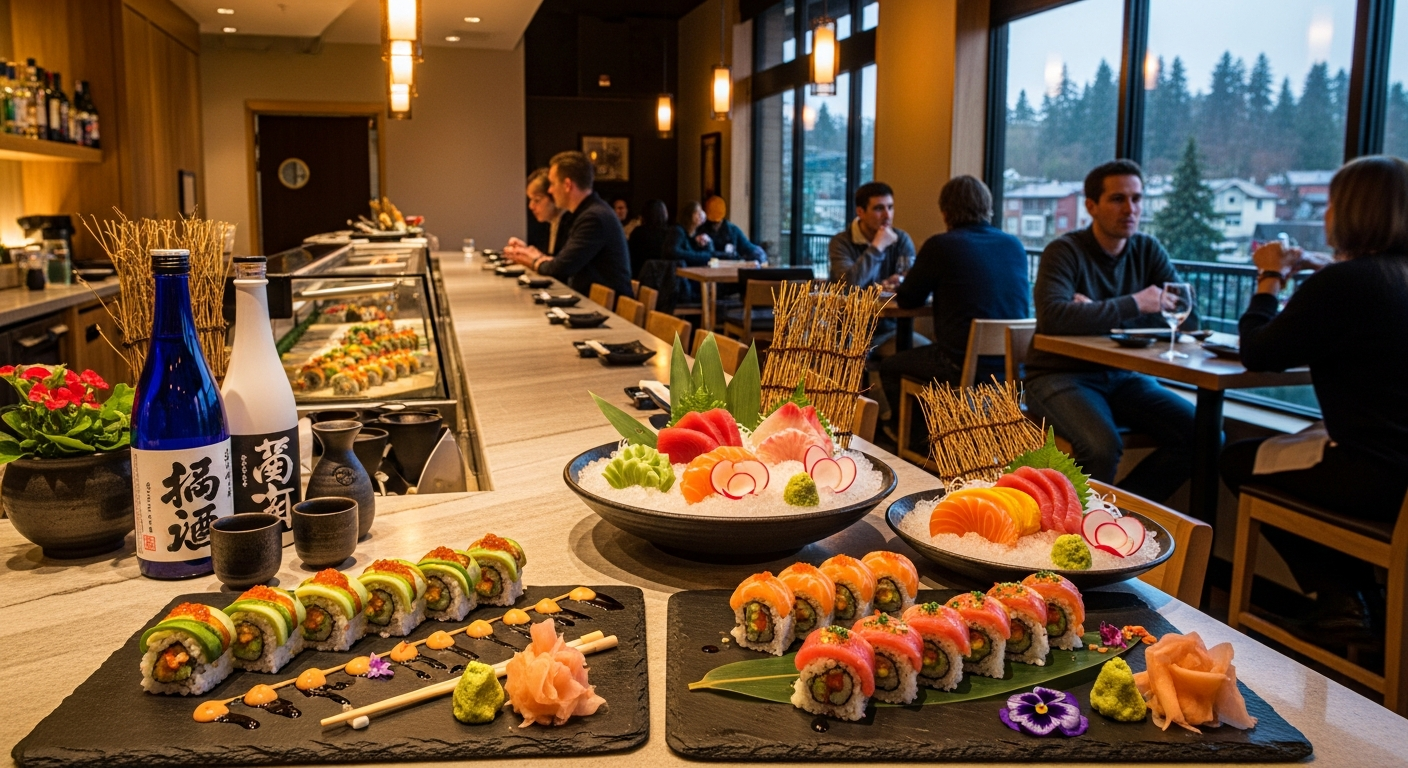
Category: Exploring Everett

Everett, Washington is in the middle of something big. A $1 billion waterfront transformation. A Boeing workforce that built the world’s largest commercial jets. A port city with a downtown that’s finally catching up to its potential. A Navy presence at Naval Station Everett. A comedy and arts scene punching above its weight. And neighborhoods — Riverside, Silver Lake, Downtown, Bayside — each with their own identity and story.

Exploring Everett is Tygart Media’s hyperlocal coverage vertical for Snohomish County’s largest city. We cover the waterfront redevelopment, Boeing and Paine Field, city hall, the food and arts scene, real estate, neighborhoods, and everything in between — written for people who live here, work here, or are paying attention to what’s coming.

Coverage categories include: Everett News, Waterfront Development, Boeing & Aerospace, Business, Arts & Culture, Food & Drink, Real Estate, Neighborhoods, Government, Schools, Public Safety, Events, and Outdoors.

Exploring Everett content is also published at exploringeverett.com.

  • Boeing’s North Line in Everett: What 737 MAX Production Means for the Region

    Q: What is Boeing’s North Line in Everett?
    A: The North Line is Boeing’s fourth 737 MAX assembly line, being built inside the company’s massive Everett factory at Paine Field. It targets a midsummer 2026 launch date and will eventually produce 737s at rates above 47 aircraft per month — the first time 737 production has ever happened in Everett.

    Boeing’s North Line in Everett: What 737 MAX Production Means for the Whole Region

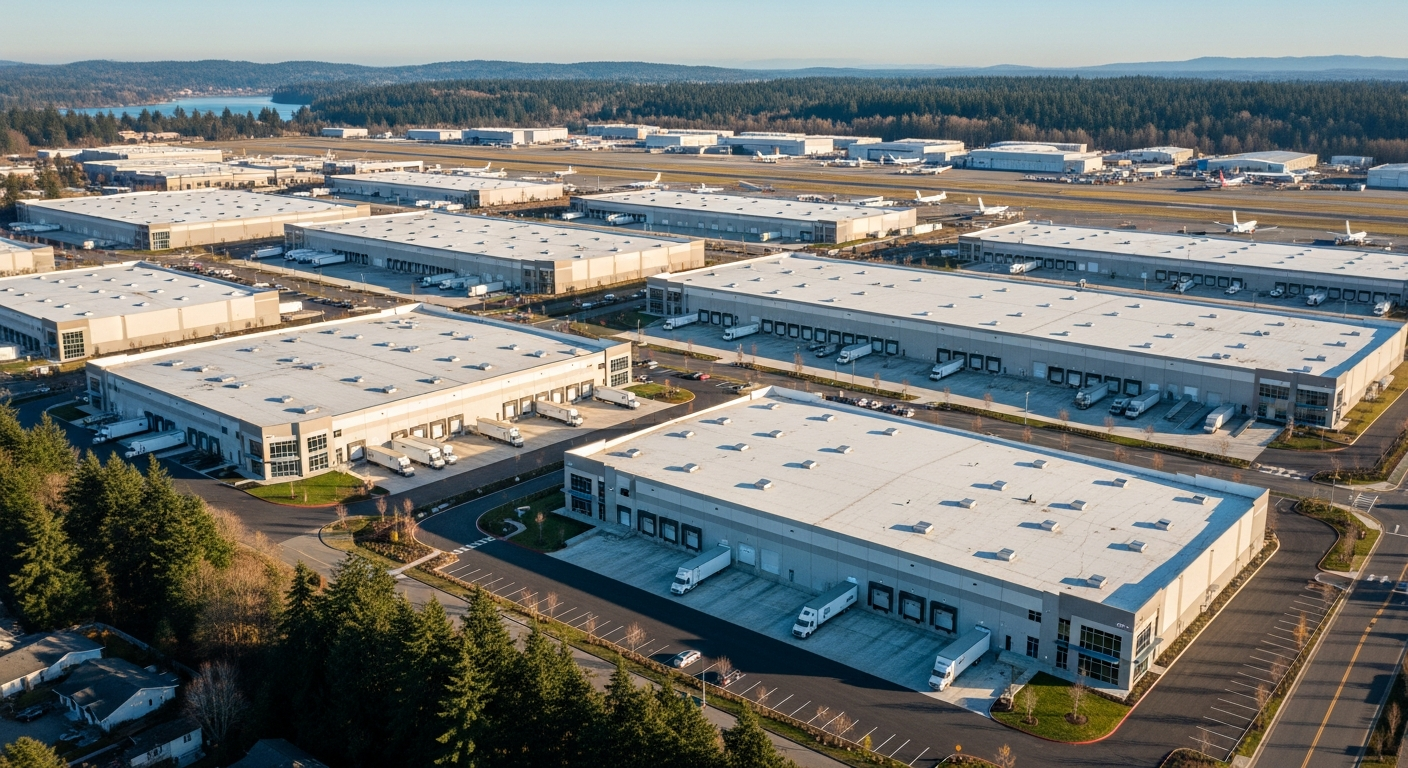
    Boeing’s Everett campus has always been a widebody town — 747s, 767s, 777s, and now the mammoth 777X. The narrowbody 737 has, for its entire 59-year history, been a Renton product. That changes this summer.

    The North Line — Boeing’s fourth 737 MAX assembly line — is taking shape inside the north end of the Everett factory, the world’s largest building by volume. It is targeting a midsummer 2026 launch date, and the people building it are chosen carefully, trained extensively, and aware that they are participating in something historically significant for this city.

    Why This Matters Beyond Boeing

    Boeing’s Paine Field operation is already Snohomish County’s largest private employer. The North Line is not just an internal manufacturing decision — it is an economic event for the entire region. Every production line position at Boeing creates an estimated 1.7 to 2.5 indirect jobs in the supply chain, in supporting businesses, and in the local service economy. Hundreds of new direct hires, plus the transfer of experienced workers from Renton to Everett, means new household incomes being spent in Snohomish County.

    Mayor Cassie Franklin has highlighted the North Line as a central piece of Everett’s economic momentum narrative, alongside the $120M downtown stadium project and the Port of Everett waterfront redevelopment. The city’s pitch to prospective residents and businesses increasingly rests on the idea that Everett is growing in multiple economic directions simultaneously — aerospace, defense, waterfront real estate, and sports/entertainment.

    What the North Line Will Build

    The line will assemble all three 737 MAX variants: the MAX 8, MAX 9, and MAX 10. It will begin in a low-rate initial production (LRIP) phase, prioritizing quality checks over throughput. Boeing’s stated goal is to eventually reach a combined 737 MAX production rate of 63 aircraft per month across all four lines — Everett’s North Line would be responsible for the production capacity above the existing three Renton lines’ ceiling of approximately 47 per month.

    Boeing is also introducing a new piece of equipment to the Everett operation: the 737 Wing Transport Tool, which manages the logistics of moving wing assemblies into position on the line. Infrastructure investment in the building itself — modifications to accommodate the 737’s different physical profile compared to widebody jets — has been underway since 2025.

    The Workforce Building the North Line

    New hires begin with 12 weeks of foundational training — much of it in Renton, working alongside experienced mechanics on active 737 production before transitioning to Everett. Among the first cohort: Jaden Myers and Alondra Ponce, who joined in late 2025. Veteran Boeing employee John V., with nearly 40 years at the company, is among those transitioning to support the North Line — his first time working on the 737 program after decades on widebody jets.

    Production leader Jennifer Boland-Masterson described the approach plainly: “We know how to do it… but we need to warm up our muscles. You don’t start with a marathon.” That philosophy — methodical ramp-up before volume — reflects the lessons Boeing has taken from its well-publicized quality control issues of 2023-2024.

    Recovery Context: Why This Line Matters for Boeing’s Credibility

    The North Line is not just about adding jets. It is about demonstrating that Boeing can stand up a new production line — with new people, new facilities, and new processes — while maintaining the quality standards that the FAA, airlines, and the public are watching closely. The 2024 IAM machinists’ strike lasted nearly seven weeks and further stressed Boeing’s production schedule. The North Line launch will be scrutinized as a data point in Boeing’s recovery narrative.

    For Everett, that scrutiny is an opportunity. If the North Line launches cleanly, it reinforces the case that Everett’s aerospace workforce is world-class — a message that supports workforce recruitment, community college aerospace programs at Everett Community College, and the city’s identity as a manufacturing hub distinct from Seattle’s tech-first image.

    Frequently Asked Questions About Boeing’s North Line

    Q: When does the Boeing North Line in Everett open?
    A: The target is midsummer 2026. Boeing has not announced a specific date, but preparations and early workforce training are on track as of April 2026.

    Q: How many jobs will the North Line create in Everett?
    A: Boeing has not released a precise number, but the line will add hundreds of direct production positions. Mayor Franklin and industry observers have noted the multiplier effect on indirect jobs throughout Snohomish County.

    Q: Will the North Line use union (IAM) labor?
    A: Yes. Boeing’s Everett production workforce is represented by IAM District 751, the same union that represents workers at the Renton plant. North Line workers are being hired and trained under the same labor agreement.

    Q: Is Boeing’s Everett campus the world’s largest building?
    A: Yes, by volume. The Everett factory complex — which houses the widebody programs and now the 737 North Line — is approximately 472 million cubic feet in volume, the largest building by volume in the world.

    Q: What is the ultimate production rate target for the 737 North Line?
    A: Boeing’s stated goal is a combined 737 MAX rate above 47 aircraft per month across all lines, with a longer-term target approaching 63 per month. The North Line’s specific share of that rate has not been publicly specified.

    Q: How does the North Line affect Paine Field airport operations?
    A: 737 MAX aircraft produced at Everett will depart from Paine Field (Snohomish County Airport) for delivery flights, the same as widebody aircraft. Additional production aircraft may increase delivery flight traffic at Paine Field.

    Related: Boeing’s North Line Is Coming to Everett: Inside the Workforce | Boeing 777X Production Flight Targeting April from Paine Field | Exploring Everett

  • Boeing North Line Everett: What the 737 MAX Line Means If You Work at Paine Field

    Q: Should I apply to the Boeing North Line or transfer from Renton?
    A: The North Line is actively recruiting experienced mechanics from Renton for transfer, as well as new hires going through 12-week Renton-based training. Both paths land in the same IAM 751-represented positions. The opportunity to be part of a line launch — the first 737 production in Everett history — is real, and Boeing leadership is emphasizing quality over speed in the ramp-up.

    Boeing North Line Everett: What the 737 MAX Line Means If You Work at Paine Field

    If you are an aerospace worker at Boeing’s Everett campus, or a Renton mechanic watching the North Line take shape in the news, here is the ground-level picture of what this line launch actually means for your career, your workflow, and your daily life in Snohomish County.

    Who Is Working the North Line

    The North Line workforce is being assembled from three pools: new hires, experienced Renton transfers, and Everett campus veterans pivoting to 737 work. Each brings something different. New hires go through 12 weeks of training — much of it in Renton, working on live 737 production — before transitioning to Everett. That’s not a formality; Boeing wants North Line workers to have real muscle memory from high-volume 737 production before they ever touch an Everett airplane.

    Experienced Renton transfers bring exactly that muscle memory. The challenge for them is translating narrowbody habits and tooling into a widebody-configured facility that is being adapted for 737 work. The physical infrastructure of the north end of the Everett building is being modified — new tooling positions, new transport equipment including the 737 Wing Transport Tool — and workers transferring from Renton will be part of figuring out how the flow works in a new environment.

    Everett campus veterans, like the nearly 40-year mechanic identified only as John V. in Boeing’s public communications, bring institutional knowledge of the Everett building itself: its quirks, its logistical rhythms, and its culture. For many of them, this is their first 737 work after careers built on 747s, 767s, 777s, and now 777X.

    IAM District 751: What This Means for Union Members

    The North Line workforce is represented by IAM District 751 — the same union that represents workers at Renton. New hires and transfers alike work under the same collective bargaining agreement. The 2024 IAM strike, which lasted nearly seven weeks, is part of the context here: Boeing’s methodical, quality-first ramp-up strategy for the North Line is in part a response to the scrutiny that followed that labor action and the production disruptions of 2023-2024.

    Union workers at the North Line should expect a LRIP (low-rate initial production) phase that emphasizes checks and process verification over throughput targets. Production leader Jennifer Boland-Masterson has been explicit about this: “You don’t start with a marathon.” For mechanics accustomed to high-rate Renton production rhythms, the early North Line pace will feel deliberately measured.

    Commute: Renton vs. Everett

    For workers transferring from Renton, the commute change is significant. Renton’s plant sits at the southern end of Lake Washington; Everett’s campus is 30+ miles north. For a mechanic living in, say, Kenmore or Bothell, switching from Renton to Everett likely shortens a difficult reverse commute considerably. For someone in the Renton-Kent corridor, it adds distance.

    Paine Field sits at the northwest edge of Everett, with access from Highway 526 (the Mukilteo Speedway) and Evergreen Way. Parking at the campus is available, and the campus runs shift-change patterns that stagger with Paine Field’s commercial terminal traffic. Workers new to the Everett area should be aware that morning and evening congestion on Highway 526 between I-5 and the campus can run 20-30 minutes depending on time of day.

    Everett proper — downtown, Colby Avenue, the waterfront — is approximately a 10-15 minute drive from the factory campus. Workers relocating for the North Line will find housing options from Mukilteo (closer to Renton prices) to Marysville (most affordable) to downtown Everett (walkable, close to restaurant row).

    Career Trajectory on the North Line

    Getting in on a line launch is genuinely different from joining a mature production line. The early team has disproportionate influence on how work habits, quality rhythms, and team culture develop. Boeing’s track record suggests that North Line veterans — people who were there when the first Everett 737 rolled out — will be valuable institutional assets as the program scales. If Boeing reaches its target production rates above 47 aircraft per month, the North Line will need supervisors, coaches, and quality leads who know the line from the ground up.

    For Everett Community College aerospace program graduates, the North Line also represents a nearby on-ramp into 737 production work — historically only accessible by commuting to Renton — opening a path that didn’t exist before 2026.

    Frequently Asked Questions for Boeing Workers at Paine Field

    Q: Is Boeing still hiring for the North Line as of April 2026?
    A: Yes. Boeing has been hiring for mechanics and quality positions on the North Line, with a midsummer 2026 launch targeted. Check Boeing’s career site for open requisitions at the Everett facility.

    Q: What is the 12-week training for new North Line hires?
    A: New hires spend approximately 12 weeks in foundational training, much of it in Renton working on live 737 production alongside experienced mechanics, before transitioning to Everett for North Line operations.

    Q: Are North Line workers represented by IAM 751?
    A: Yes. All North Line production and quality positions at the Everett campus are represented by IAM District 751 under the same collective bargaining agreement as Renton workers.

    Q: What 737 variants will the North Line build?
    A: The MAX 8, MAX 9, and MAX 10. The line starts with low-rate initial production (LRIP) and will scale over time.

    Q: What is the production rate target for the North Line?
    A: Boeing’s combined 737 MAX target is a rate above 47 aircraft per month, eventually approaching 63 per month. The North Line provides the production capacity above what the existing three Renton lines can achieve.

    Related: Boeing’s North Line: What 737 MAX Production Means for the Whole Region | Boeing 777X Production Flight Targeting April | Exploring Everett

  • Everett’s $120M Stadium Gap: A Clear-Eyed Look at What Must Happen Before Ground Breaks

    Q: Will the Everett downtown stadium actually get built?
    A: It is not guaranteed. The city council has not given final approval, and a $38 million funding gap must be closed first. Mayor Franklin is pursuing private investment and additional public funding. The city’s stated goal is 2027 construction start and 2028 opening for both the AquaSox and a prospective USL soccer team.

    Everett’s $120M Stadium Gap: A Clear-Eyed Look at What Has to Happen Before Ground Breaks

    The Everett Outdoor Event Center has a big number attached to it — $120 million — and an equally big problem: a $38 million gap between what the project costs and what the existing funding plan covers. Before a single parcel is acquired downtown, before DLR Group finalizes the design, and before the AquaSox or a USL soccer team signs a lease, that gap has to close.

    Here is exactly what the funding structure looks like, what needs to happen next, and what would cause the project to stall or fail.

    The Funding Stack as of April 2026

    The existing funding plan divides the $120 million roughly as follows: the City of Everett is responsible for approximately 45 percent of the total cost — about $54 million — funded through municipal bonds to be repaid by stadium revenue from baseball, soccer, and year-round events. The Everett AquaSox ownership group contributes approximately 9 percent, the prospective USL men’s and women’s soccer ownership groups contribute approximately 9 percent combined, the State of Washington contributes approximately 7 percent, and Snohomish County contributes approximately 4 percent.

    Those percentages add up to approximately $82 million of the $120 million. The $38 million gap is the difference between that figure and the full project cost — a gap that grew from an earlier estimate because construction costs across the Pacific Northwest have risen significantly since the original financial model was built.

    What Mayor Franklin Is Doing About the Gap

    At her March 5, 2026 State of the City address at the New Everett Theater on Colby Avenue, Mayor Cassie Franklin addressed the funding situation directly. The city’s strategy, as she described it: pursue private investment first — regional corporations and businesses whose brands would benefit from association with a new downtown anchor venue — then layer additional public bonds if the private raise falls short.

    The Everett Chamber of Commerce and the Everett Herald editorial board have both publicly backed the effort. The Herald’s editorial position is that the stadium’s role as a downtown economic catalyst justifies the funding effort; the Chamber’s is that a year-round event venue generates economic activity that benefits the entire business corridor along Hewitt Avenue and beyond.

    Three Things That Must Happen Before Council Votes

    City staff have been explicit about the sequencing. The council cannot vote to approve the project until: (1) a viable funding package is finalized and the $38 million gap is closed or credibly committed; (2) lease agreements with the AquaSox and USL tenant are executed; and (3) property acquisition is completed or under contract for the 28 privately owned parcels that make up the stadium footprint — everything except the buildings fronting Hewitt Avenue.

    The design-build team — DLR Group as designer, Bayley Construction as builder — is operating under a Progressive Design-Build contract. As of early 2026, the design is approximately 60 percent complete. The final design and budget package, which is what goes to council, is expected soon.

    The AquaSox Situation

    The AquaSox have been operating at Funko Field — formerly Everett Memorial Stadium — since 1984. Funko Field does not meet the updated MLB facility requirements that have been phased in for minor league affiliates. A new stadium is not optional for the team’s long-term future as a High-A affiliate of the Seattle Mariners. The AquaSox ownership group has committed to the downtown site and is actively engaged in lease negotiations.

    The USL expansion is an additional economic driver — two professional soccer teams (men’s and women’s) would use the stadium for additional dates, increasing the annual event count and the revenue used to service the city’s bonds. USL expansion decisions are pending the stadium’s approval, creating a chicken-and-egg dynamic that requires both the stadium deal and the franchise award to proceed together.

    What Would Cause This to Fail

    The project is genuinely at risk if the private investment raise comes up significantly short and the city is unwilling to absorb additional bonding capacity. With a 2027 construction start already the revised target (pushed from the original 2026 plan), any further delay compresses the timeline and risks the AquaSox’s MLB compliance window. Construction cost inflation remaining elevated also puts pressure on the $120 million estimate itself — if costs move higher before contracts are signed, the gap grows again.

    Frequently Asked Questions About the Everett Outdoor Event Center

    Q: Where is the Everett stadium going to be built?
    A: Downtown Everett, on a city block excluding the buildings fronting Hewitt Avenue. The site requires acquisition of 28 privately owned parcels.

    Q: Who is designing the Everett stadium?
    A: DLR Group is the design architect; Bayley Construction is the builder. They were selected through the city’s Progressive Design-Build process.

    Q: When would the Everett stadium open?
    A: The revised target is 2028, for both AquaSox baseball and USL soccer. Construction would start in 2027 if the funding and approvals land on schedule.

    Q: What sports teams would play at the new Everett stadium?
    A: The Everett AquaSox (High-A, Seattle Mariners affiliate) and prospective USL men’s and women’s soccer expansion teams.

    Q: How much is the City of Everett contributing to the stadium?
    A: Approximately 45 percent of the $120 million total, or about $54 million, funded through municipal bonds repaid by stadium revenue.

    Q: Is the stadium replacing Funko Field?
    A: Yes. The AquaSox would move from Funko Field (formerly Everett Memorial Stadium) to the new downtown venue, which meets updated MLB facility requirements. The future of Funko Field after the AquaSox depart has not been publicly determined.

    Related: Everett’s Downtown Stadium Price Tag Climbs to $120M | AquaSox 2026 Season Preview | Exploring Everett

  • What Everett’s $120M Stadium Means for Downtown Business Owners and Developers

    Q: Should I factor the Everett stadium into my business or real estate decisions?
    A: Cautiously yes — but the project is not yet approved and has a $38 million funding gap. The stadium would be a significant downtown anchor if built, likely increasing foot traffic on Hewitt Avenue and adjacent blocks. However, the 2028 earliest opening means any business positioning around the venue is a 2-3 year horizon play.

    What Everett’s $120M Stadium Means for Downtown Business Owners and Developers

    If you own a business or investment property in downtown Everett — or you are considering one — the Outdoor Event Center is the biggest real estate and economic development variable on the board. Here is an honest look at what the stadium actually means for the business environment and what the $38 million funding gap means for your planning timeline.

    The Anchor Effect: What a Downtown Stadium Does

    Sports venue research consistently shows that a well-integrated downtown stadium generates pre-game and post-game foot traffic that benefits restaurants, bars, and retail within approximately a half-mile radius. The Everett Outdoor Event Center’s downtown location — on a block accessible from Hewitt Avenue — puts the stadium’s foot traffic catchment zone directly over the Broadway District, the Hewitt Avenue commercial corridor, and within walking distance of Everett Station.

    The AquaSox play approximately 66 home games per season in High-A season — May through September. Add USL men’s and women’s soccer seasons, concerts, and year-round events, and the venue could be active 100+ nights per year. That is a meaningful driver for hospitality businesses that currently depend on the more sporadic event schedule at Angel of the Winds Arena and the Everett Theatre.

    Real Estate: Which Blocks Benefit Most

    The blocks immediately adjacent to the stadium site — along Hewitt between Rockefeller and Hoyt, and south along the numbered avenues — are the primary beneficiaries of a proximity premium if the stadium is built. Commercial properties suitable for sports bars, brewpubs, quick-service restaurants, and parking are the highest-demand adjacent uses in comparable markets.

    Commercial real estate along Hewitt has seen modest but real activity in the 2024-2026 period as the stadium project has moved through planning stages. Speculative positioning — buying or leasing before the deal is confirmed — carries meaningful risk given the $38 million funding gap. However, operators with existing downtown Everett presence should be thinking about how their locations map to the stadium footprint.

    The Private Investment Ask: Opportunity or Obligation?

    Mayor Franklin’s funding strategy explicitly targets private investors — regional corporations and businesses — as the first source to close the $38 million gap. Naming rights to the stadium, sponsorship tiers, and corporate partnership packages are the expected vehicles. For the right business, a naming or presenting sponsor position at a downtown Everett sports and entertainment venue could be a compelling brand investment in a market of 114,000 city residents and a metro catchment far larger.

    The Everett Chamber of Commerce is actively engaged in the stadium’s advocacy and fundraising conversation. Business owners who want to be at the table for sponsorship discussions should be in contact with the Chamber now, ahead of any formal ask structure being finalized.

    The Risk Calculus

    The stadium is not approved. The $38 million must be raised. Three preconditions — funding closure, lease execution, and property acquisition — must all be met before the city council votes. Any one of those three items can stall or kill the project. The design is 60 percent complete; construction is planned to start in 2027 with an opening targeted for 2028.

    Business investment decisions that depend on stadium traffic by, say, 2027 or early 2028 are high-risk. Business decisions that position you for the 2028+ environment — with the stadium as a probable but not certain tailwind — are more defensible. The sound strategy for most downtown operators is to build a business that works with or without the stadium, while keeping the stadium in your 3-year growth planning.

    Frequently Asked Questions for Business Owners and Developers

    Q: Who do I contact if I want to be a stadium sponsor or investor?
    A: The City of Everett’s Economic Development office and the Everett Area Chamber of Commerce are the primary points of contact for private investment conversations about the Outdoor Event Center.

    Q: What happens to the 28 parcels being acquired for the stadium site?
    A: The City of Everett will negotiate acquisition of the 28 privately owned parcels making up the stadium block. Property owners on that block are in active discussions with the city. Existing buildings fronting Hewitt Avenue are excluded from the acquisition.

    Q: Will there be parking requirements near the stadium?
    A: Parking for the new stadium is planned to use existing downtown parking structures and surface lots rather than stadium-specific new parking. This is standard for urban infill venues and has implications for nearby parking operators and garages.

    Q: What is the timeline for the stadium project?
    A: The revised timeline: funding/lease/acquisition complete (2026), construction start (2027), opening for AquaSox and USL (2028).

    Q: Is Hewitt Avenue infrastructure being upgraded as part of the stadium project?
    A: Street and utility infrastructure improvements associated with the stadium site are part of the city’s project scope, though specific scope details are still in design. The Imagine Everett comprehensive plan includes broader downtown infrastructure investment that overlaps with the stadium area.

    Related: Everett’s $120M Stadium Gap: What Has to Happen Before Ground Breaks | Everett’s Downtown Stadium Price Tag Climbs to $120M | Exploring Everett

  • Everett’s Planned Downtown Stadium: A Visitor’s Guide to What’s Coming in 2028

    Q: Can I see the AquaSox or a soccer game at the new Everett stadium?
    A: Not yet. The Everett Outdoor Event Center has a 2028 opening target, pending a $38 million funding gap being closed and city council approval. In the meantime, the AquaSox are playing their 2026 season at Funko Field, with tickets typically $10-$22 per seat.

    Everett’s Planned Downtown Stadium: A Visitor’s Guide to What’s Coming in 2028

    If you are a sports fan planning trips to Snohomish County — or you are looking at Everett as a Seattle-area weekend destination — the planned Outdoor Event Center is the biggest development to know about. It is not built yet. But it represents a transformation of the downtown sports and entertainment scene that would make Everett a day-trip or overnight destination in a way it has not been before.

    What the New Stadium Is

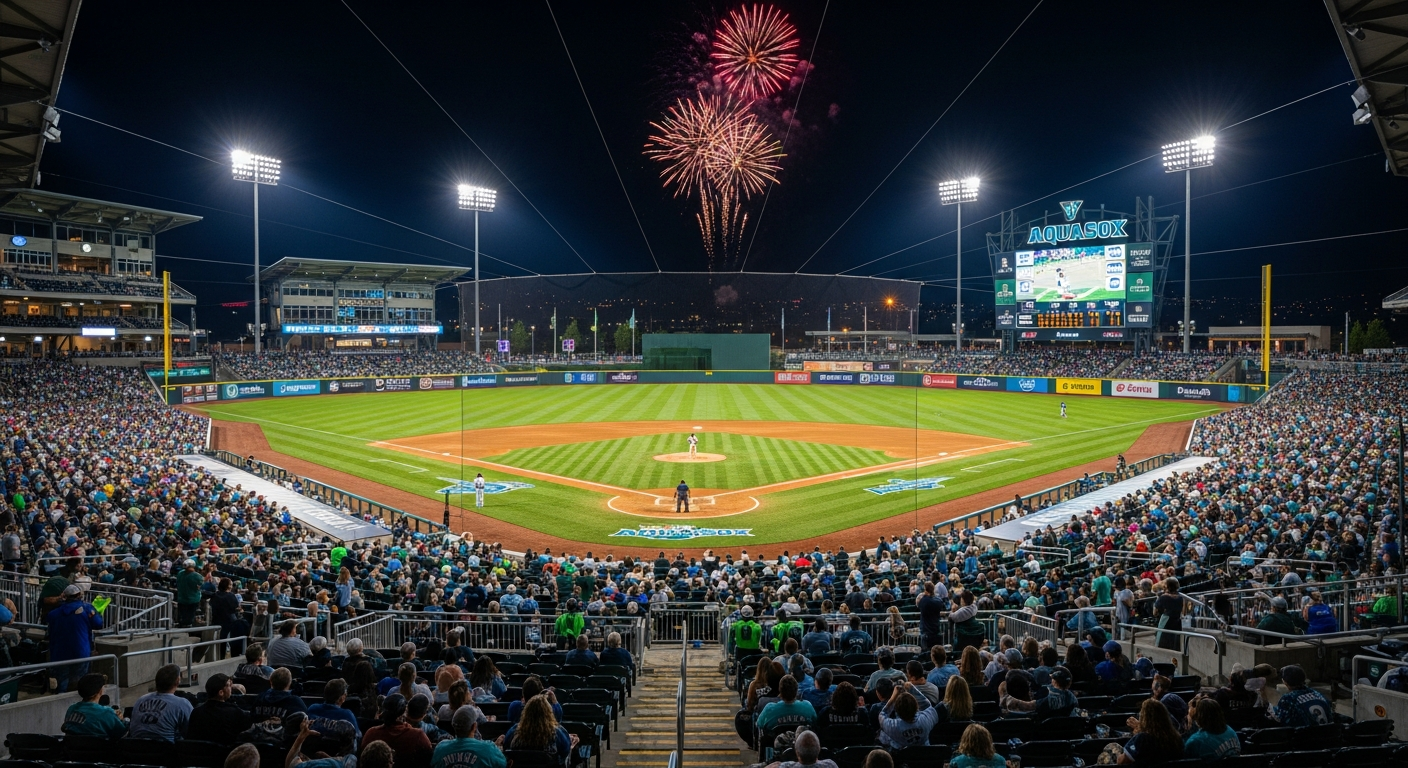
    The Everett Outdoor Event Center is a $120 million multipurpose stadium planned for a downtown block accessible from Hewitt Avenue. It would be the new home of the Everett AquaSox — the High-A West affiliate of the Seattle Mariners — and would host men’s and women’s professional soccer teams from USL expansion franchises. DLR Group is the designer; Bayley Construction is the builder. The design is currently about 60 percent complete, with construction targeting 2027 and an opening for the 2028 baseball and soccer seasons.

    The location matters for visitors. Downtown Everett is within walking distance of Everett Station (Sounder train from Seattle), multiple hotel options, the Hewitt Avenue restaurant corridor, and a 10-minute drive from Port of Everett’s Waterfront Place restaurant row. A game day in downtown Everett — if the stadium is built — sets up the kind of pre-and-post-game experience that currently doesn’t exist in Snohomish County.

    Why Visitors Come to Everett Now

    While the stadium is still years away, Everett is already worth visiting for sports fans. The AquaSox are playing their 2026 season at Funko Field — tickets typically run $10-$22, the sightlines are excellent, and the team is fielding a competitive roster that includes five Seattle Mariners top-30 prospects. The Everett Silvertips are in WHL Playoff Round 2 right now, facing the Kelowna Rockets with Games 1 and 2 at Angel of the Winds Arena on April 10-11 — a hockey playoff atmosphere that rivals much larger markets.

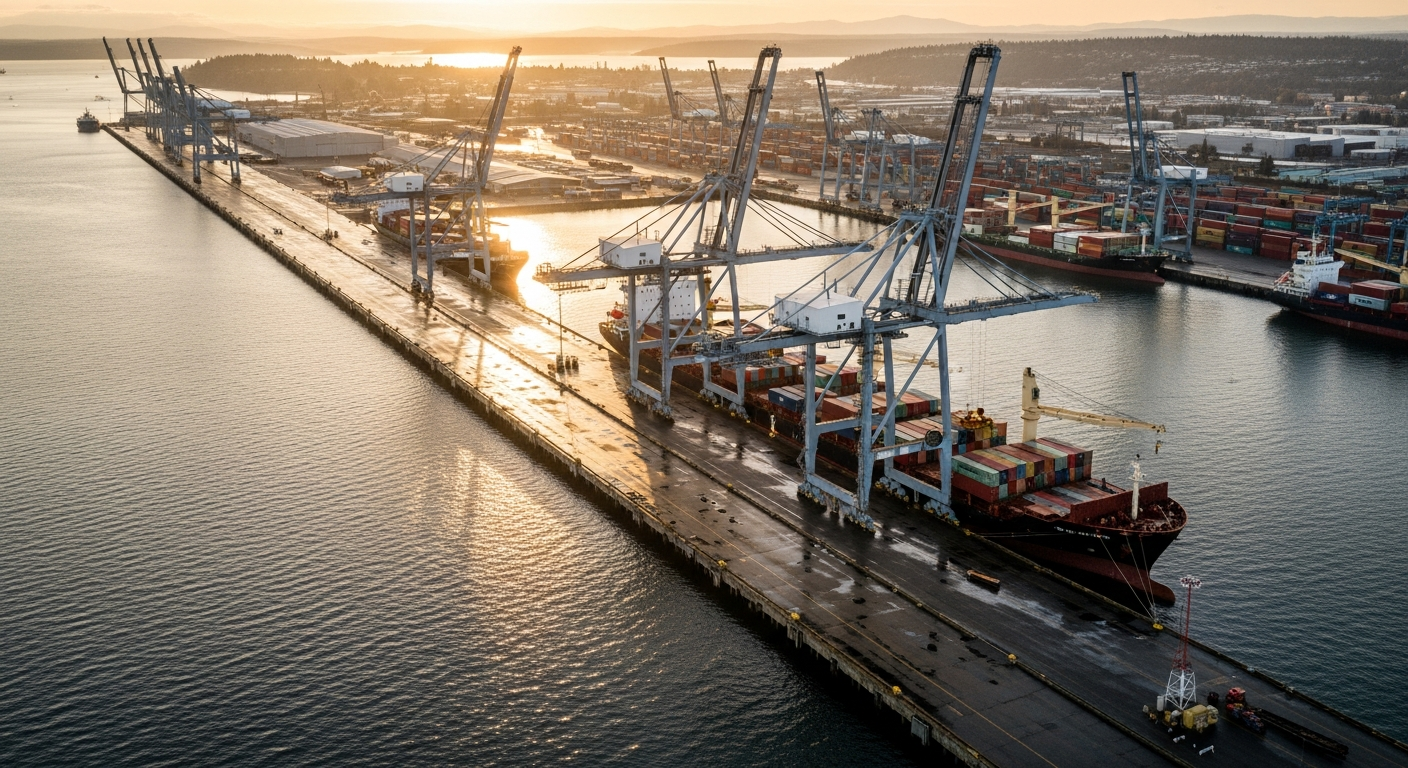
    The Port of Everett’s Waterfront Place has emerged as a genuine destination. The Net Shed Fish Market and Kitchen (opened December 2025), Tapped Public House (opened March 2026, with the largest waterfront rooftop deck in Snohomish County), and Anthony’s HomePort anchor a restaurant row on the water that is already drawing visitors from Seattle and the broader Puget Sound.

    Getting to Everett from Seattle

    Everett is approximately 25 miles north of Seattle via I-5 — typically a 35-55 minute drive depending on traffic. The Sounder North commuter train runs from King Street Station (Seattle) to Everett Station in approximately 65 minutes; check Sound Transit’s schedule as frequency is limited compared to Sounder South. From Everett Station, the downtown stadium site, Angel of the Winds Arena, and Funko Field are all within a rideshare-accessible radius.

    For visitors arriving by car, downtown Everett has surface parking and parking structures with reasonable rates — typically $5-$10 for event parking in adjacent lots. The waterfront is a short drive from downtown or an easy rideshare from the stadium area.

    What a Game Day in 2028 Everett Could Look Like

    If the stadium project closes its funding gap and opens on schedule in 2028, a visit to Everett for a game would look something like this: arrive at Everett Station on the Sounder, walk to the Hewitt Avenue restaurant corridor for pre-game food and drinks, walk to the stadium for an AquaSox game or USL soccer match in a brand-new downtown venue, then walk or rideshare to the waterfront for post-game dinner at the Net Shed or Tapped. That is a full-day itinerary anchored by a mid-size city event infrastructure that competes credibly with minor league markets across the Pacific Northwest.

    Frequently Asked Questions for Visitors and Sports Fans

    Q: Where are the AquaSox playing in 2026?
    A: Funko Field (formerly Everett Memorial Stadium) at 3802 Broadway. Tickets are available at the AquaSox website. The new downtown stadium is targeted for 2028.

    Q: Where do the Everett Silvertips play hockey?
    A: Angel of the Winds Arena, 2000 Hewitt Ave, Everett. WHL Playoff Round 2 home games April 10-11, 2026. The arena holds approximately 10,000 fans.

    Q: What is the best waterfront restaurant in Everett?
    A: The Net Shed Fish Market and Kitchen at Port of Everett’s Restaurant Row is getting strong early reviews — the miso-glazed sablefish is the standout dish. Tapped Public House has the best rooftop deck on the Snohomish County waterfront.

    Q: Is there a hotel near the Everett stadium site?
    A: Downtown Everett has the DoubleTree by Hilton and other lodging within walking distance of the planned stadium site. Multiple chain hotels are also located near Paine Field, approximately 5 miles from downtown.

    Q: What is Funko HQ and can I visit it?
    A: Funko’s global headquarters is in Everett, and the company operates a retail store and museum (the Funko Hollywood concept, originally at the Everett HQ) open to the public. It is a popular destination for fans of collectibles and pop culture merchandise.

    Related: Everett’s $120M Stadium: What Has to Happen Before Ground Breaks | AquaSox 2026 Season Preview | Silvertips Enter WHL Round 2

  • What the Frigate Cancellation Means for Military Families at NAVSTA Everett

    Q: How does the Navy frigate cancellation affect military families at NAVSTA Everett?
    A: The cancellation of the Constellation-class frigate program means that the hundreds of new sailors and their families who would have been assigned to Everett will not be coming. For families already at NAVSTA Everett, the base remains open and operational — but some uncertainty about long-term force assignments makes planning for the future more complicated.

    What the Frigate Cancellation Means for Military Families at NAVSTA Everett

    If you’re a military family at Naval Station Everett — or considering a PCS move here — the November 2025 cancellation of the Constellation-class frigate program raised an immediate and practical question: what does this mean for us?

    The short answer is that the base is not closing. The ships currently homeported here are still here. The community around NAVSTA Everett — the schools, the housing, the support networks — remains intact. But the frigate cancellation changed some things that military families should understand as they plan their time in Everett.

    What Was Lost for the NAVSTA Everett Community

    The 12 Constellation-class frigates that were promised to NAVSTA Everett would have brought hundreds of new sailors and their families to Snohomish County. That growth would have meant expanded housing demand, more enrollment at base-adjacent schools, a larger military community at YMCA programs and faith communities and youth sports leagues, and more demand for the off-base businesses that serve military families.

    For families already stationed here, the frigates would have meant a more robust community infrastructure — more families going through the same transitions at the same time, more established support networks, more familiarity in the local community with military life and its rhythms. That anticipated growth is not coming, and the community that was expected to expand will remain closer to its current size.

    The Base Is Stable — Here’s What That Actually Means

    NAVSTA Everett currently hosts approximately 6,000 military personnel and 500 civilian employees. The carrier strike group elements and surface combatants homeported here have not been affected by the frigate cancellation. The base’s operational status, its infrastructure, and its day-to-day function remain unchanged.

    For a military family weighing a PCS to Everett, “stable” translates into practical terms: the base is funded, staffed, and operating. Schools in the Everett School District and Mukilteo School District that serve military families are enrolled at typical levels. On-base housing continues to operate through the standard process. The commissary, Navy Exchange, and base support services are all functioning normally.

    The Snohomish County Military Affairs Committee — rebooted in early 2026 in response to the cancellation — is actively working with the Economic Alliance of Snohomish County, County Council member Nate Nehring, and U.S. Representative Rick Larsen to ensure NAVSTA Everett retains its current force assignments and potentially receives new ship assignments as the Navy restructures its Pacific Fleet posture.

    Housing: What the Military Market Looks Like Around NAVSTA Everett

    The Everett-area housing market in spring 2026 is tight for renters, particularly in the neighborhoods closest to the base. On-base housing is managed through the standard Navy process; off-base, BAH rates for E-5 and above in the Everett-Seattle MSA have kept pace with local market conditions better than in some other PCS destinations.

    Key neighborhoods for military families include South Everett (close to the base, strong school access), Mukilteo (excellent schools, slightly longer commute to the gate), and Marysville (more affordable, 20-25 minute drive to NAVSTA). The Everett housing market’s median sale price sits near $547,000 as of April 2026, with townhomes moving in roughly six days on average under $750,000 — a competitive but not impossible market for families using VA loans.

    The projected influx of frigate families would have added significant upward pressure to an already tight rental and ownership market. The cancellation means that pressure is eased — counterintuitively, military families arriving now face a somewhat less competitive housing environment than they would have if the frigates had materialized.

    Schools and Family Resources

    Military families at NAVSTA Everett are typically served by either the Everett School District or the Mukilteo School District, depending on where they live. Both districts have experience working with military families navigating mid-year enrollment, records transfers, and the social adjustment that comes with a PCS move.

    Everett Community College offers several programs relevant to military families, including veteran support services and workforce training pathways for spouses seeking employment in the Snohomish County job market. The county’s Boeing economy — including the 737 North Line launching at Paine Field this summer — means manufacturing and aerospace jobs are actively hiring, which matters enormously for military spouses whose career continuity gets disrupted by PCS cycles.

    Fleet and Family Support Center (FFSC) services remain available at NAVSTA Everett, providing counseling, deployment support, financial management assistance, and transition assistance programs. These services are unaffected by the frigate cancellation.

    Deployment Rhythms and Community Planning

    One of the most practical concerns for military families is how base operational tempo affects deployment schedules and community planning. Without the frigate expansion, NAVSTA Everett’s operational rhythm is likely to remain more predictable in the near term — the current ship assignments have established deployment patterns that are broadly understood by the base community.

    The Navy has not announced any changes to current deployment schedules as a result of the frigate cancellation. For families in the middle of a deployment cycle, the immediate practical impact of the cancellation is minimal. The longer-term uncertainty — what new ships or missions might come to Everett in the years ahead — is something the Military Affairs Committee is actively working to shape.

    Frequently Asked Questions for Military Families at NAVSTA Everett

    Q: Is NAVSTA Everett at risk of a BRAC closure following the frigate cancellation?
    A: There is no current indication that NAVSTA Everett is being considered for closure. The base remains strategically important as a deep-water Pacific Fleet homeport, and local, state, and federal advocates are actively working to maintain and grow its force assignments.

    Q: Will BAH rates for NAVSTA Everett be affected by the frigate cancellation?
    A: BAH rates are determined by local housing market costs, not by base population levels. The cancellation’s effect on the housing market is modest — it removes anticipated demand growth, which may slightly ease housing cost pressure, but is unlikely to change BAH rates in a significant way.

    Q: What schools serve military families near NAVSTA Everett?
    A: Depending on where you live, military families are served by either the Everett School District or Mukilteo School District. Both have experience with military family enrollment and transfers. South Everett and Mukilteo neighborhoods are popular with families for their school quality and commute to the base gate.

    Q: Are there employment opportunities for military spouses near NAVSTA Everett?
    A: The Snohomish County economy is robust, anchored by Boeing’s Everett factory (which is hiring for the new 737 North Line this summer), aerospace suppliers at Paine Field, healthcare systems, and a growing retail and hospitality sector tied to the Port of Everett’s waterfront development. Everett Community College offers workforce training and veteran support services.

    Q: What support services are available for military families at NAVSTA Everett?
    A: The Fleet and Family Support Center (FFSC) at NAVSTA Everett provides counseling, deployment readiness, financial management, transition assistance, and spouse employment support. These services are fully operational and unaffected by the frigate cancellation.

    Q: Where do most military families live near NAVSTA Everett?
    A: South Everett (close to the base gate, diverse housing stock), Mukilteo (highly rated schools, waterfront access), and Marysville (most affordable, 20-25 min commute) are the most common off-base choices. On-base housing is managed through the standard Navy process.

    Related: Everett Fights Back: Inside the Community Push to Secure NAVSTA’s Future | Everett Housing Market April 2026: What Buyers and Sellers Need to Know | Boeing’s North Line: Everett Prepares to Build Its First 737 MAX This Summer

  • NAVSTA Everett After the Frigate Cancellation: A Complete Guide to What’s at Stake

    Q: What happened to the frigates that were supposed to come to Naval Station Everett?
    A: The U.S. Navy cancelled the Constellation-class guided-missile frigate (FFG-62) program in November 2025, eliminating plans to homeport 12 new ships at NAVSTA Everett. The cancellation removed a transformative commitment to the base and the Snohomish County economy. Local leaders have since rebooted the Snohomish County Military Affairs Committee to advocate for the base’s continued relevance in the Pacific Fleet.

    NAVSTA Everett After the Frigate Cancellation: A Complete Guide to What’s at Stake

    Naval Station Everett sits on the waterfront at the northern edge of downtown — a base that most people in Snohomish County pass without much thought, but that touches the local economy, the housing market, the schools, and the community in ways that most residents never fully appreciate until something threatens to change it.

    That something arrived in November 2025, when the U.S. Navy officially cancelled the Constellation-class frigate program, ending a plan that would have transformed NAVSTA Everett into one of the most strategically significant homeports in the Pacific Fleet. Here is everything you need to know about what was lost, what remains, and what local leaders are doing about it.

    The Promise: 12 Frigates, a Generation of Growth

    In June 2021, the Navy made one of the most consequential announcements in Everett’s modern history: NAVSTA Everett would become the homeport for the first 12 Constellation-class guided-missile frigates (FFG-62). These were not small ships — the Constellation class was designed as the Navy’s answer to a capability gap in surface warfare, intended to project power across the Pacific and operate alongside carrier strike groups.

    For Everett, the commitment meant 12 new vessels, hundreds of additional sailors and their families, pier infrastructure upgrades, and a decades-long anchor of federal investment. The economic multiplier effect alone — housing demand, school enrollment, retail spending, support contractors — would have reshaped Snohomish County’s economic landscape for a generation.

    The Cancellation: What Happened and Why

    On November 25, 2025, Secretary of the Navy John Phelan announced the cancellation of the Constellation-class frigate program beyond its first two ships. His reasoning was precise: the program was delivering approximately 60 percent of a destroyer’s capability at roughly 80 percent of the cost, while running years behind schedule and hundreds of millions over budget.

    The first ship — USS Constellation (FFG-62), built by Fincantieri Marinette Marine in Wisconsin — was only approximately 12 percent complete as of the November 2025 report to Congress, and its projected delivery had already slipped from 2026 to an estimated 2029. The Navy made the calculation that the math no longer worked.

    For Everett, the numbers were painfully concrete. The 12 frigates that were never coming represented 12 crews, 12 sets of families, and 12 ships’ worth of homeport infrastructure that will now never be built.

    What NAVSTA Everett Actually Means to Snohomish County

    Naval Station Everett is currently home to approximately 6,000 military personnel and 500 civilian employees, making it one of the ten largest employers in Snohomish County. The Navy’s own regional estimates put the total annual economic impact of military operations in Snohomish County at roughly $340 million — and that figure accounts for the base’s current footprint, not the expanded one the frigates would have created.

    That $340 million flows through the county in layered ways: military housing allowances that sustain rental markets from Marysville to Mukilteo; commissary and PX spending; healthcare utilization at civilian providers; car purchases, restaurant visits, and retail patronage. When you add the support contractors who maintain the base’s ships, facilities, and equipment, the economic web extends across the entire region.

    NAVSTA Everett is currently home to a carrier strike group and associated surface combatants. The base’s deep-water piers can accommodate destroyers, cruisers, and — if the frigates had materialized — the new FFG-62 class. It is a strategically important installation, but one that needs sustained advocacy to maintain its assignment levels as the Navy reconfigures its force structure.

    Everett Fights Back: The Rebooted Military Affairs Committee

    Within weeks of the cancellation, Snohomish County leaders began organizing a response. The Economic Alliance of Snohomish County, led by President and CEO Ray Stephanson, moved to reboot the county’s Military Affairs Committee — a group that had previously advocated for the base but had gone dormant as the frigate program appeared on track.

    Stephanson was direct about the stakes: “The demise of the frigate program is very disappointing,” he said. “The assignment of the frigates would have cemented the base’s role as a key asset for the U.S. Navy.”

    Snohomish County Council member Nate Nehring (R-Arlington) accepted an invitation to join the rebooted committee, signaling that the advocacy effort would span both the public and private sectors. The committee’s goal is proactive — not to mourn what was lost, but to identify what missions, ships, or assets could be directed to NAVSTA Everett as the Navy reconfigures its Pacific Fleet strategy.

    U.S. Representative Rick Larsen, whose district includes NAVSTA Everett, has stated that the Navy’s commitment to Everett as a homeport remains strong despite the frigate cancellation. Larsen has been a consistent advocate for the base in Congress, and his office has communicated directly with Navy leadership about maintaining Everett’s force assignment levels.

    What Comes Next for the Base

    The Navy has not announced any plans to reduce NAVSTA Everett’s current force assignment — the carrier strike group elements and surface combatants currently homeported here are not affected by the frigate cancellation. The base’s infrastructure remains intact and capable.

    The open question is what replaces the growth that the frigates would have generated. The Military Affairs Committee is actively exploring whether other ship classes — next-generation surface combatants or additional destroyers — could be directed to Everett as the Navy builds out its Pacific-oriented force posture. The base’s location, deep-water access, and proximity to Puget Sound industrial infrastructure make it a logical candidate for expanded assignments.

    The answer will likely come from Washington, D.C., shaped by how effectively local leaders and advocates make the case for Everett’s strategic value. That advocacy — quiet, consistent, and backed by a community that understands what is at stake — is now underway.

    Frequently Asked Questions About NAVSTA Everett and the Frigate Cancellation

    Q: Is Naval Station Everett at risk of closure?
    A: The Navy has not announced or suggested any plans to close NAVSTA Everett. The base remains operational with its current ship assignments intact. The frigate cancellation removed a planned expansion, not existing assets.

    Q: How many sailors are currently stationed at NAVSTA Everett?
    A: Approximately 6,000 military personnel and 500 civilian employees are currently assigned to or working at Naval Station Everett, making it one of the largest employers in Snohomish County.

    Q: What was the Constellation-class frigate, and why was it cancelled?
    A: The FFG-62 Constellation class was designed as a next-generation guided-missile frigate to restore U.S. Navy frigate capability. It was cancelled in November 2025 after the program fell significantly behind schedule, exceeded its budget, and delivered roughly 60% of a destroyer’s capability at 80% of the cost.

    Q: What is the Snohomish County Military Affairs Committee?
    A: The Military Affairs Committee is a public-private advocacy group organized through the Economic Alliance of Snohomish County. It advocates at the federal level for maintaining and expanding Naval Station Everett’s role in the Pacific Fleet. It was rebooted in early 2026 in response to the frigate cancellation.

    Q: What is the economic impact of NAVSTA Everett on the local economy?
    A: The Navy estimates military operations in Snohomish County generate approximately $340 million in annual economic impact. This includes direct spending by military personnel and their families, contractor and support employment, and the housing market effects of military housing allowances.

    Q: What ships are currently homeported at NAVSTA Everett?
    A: NAVSTA Everett hosts elements of a carrier strike group and associated surface combatants. Specific ship assignments change as vessels deploy and return. The base’s pier infrastructure is capable of accommodating a wide range of Navy surface combatants.

    Q: Who represents NAVSTA Everett in Congress?
    A: U.S. Representative Rick Larsen represents the district that includes Naval Station Everett. Larsen has been a consistent advocate for the base and has communicated with Navy leadership about maintaining Everett’s force assignments following the frigate cancellation.

    Related: Naval Station Everett’s Fight for Its Future After the Frigate Program Collapse | Everett Fights Back: Inside the Community Push to Secure NAVSTA Everett’s Future | Sound Transit Everett Link Extension: Where the Project Stands in 2026

  • Snohomish County’s $340M Fight: How Local Leaders Are Responding to the NAVSTA Frigate Loss

    Q: How is Snohomish County responding to the Naval Station Everett frigate cancellation?
    A: Snohomish County rebooted its Military Affairs Committee in early 2026 through the Economic Alliance of Snohomish County. The committee — which includes County Council member Nate Nehring and is supported by U.S. Representative Rick Larsen — is working proactively to advocate for new ship assignments and missions to replace the 12 Constellation-class frigates that were cancelled in November 2025.

    Snohomish County’s $340M Fight: How Local Leaders Are Responding to the NAVSTA Frigate Loss

    When Secretary of the Navy John Phelan announced the cancellation of the Constellation-class frigate program on November 25, 2025, the policy language was bureaucratic. The local impact was not. Snohomish County lost a promised economic commitment worth, by some estimates, hundreds of millions of dollars in long-term growth — and local leaders wasted little time organizing a response.

    Here’s how the county’s civic and political infrastructure is responding, what tools they have, and what it would actually take to replace what was lost.

    The Economic Alliance Takes the Lead

    The Economic Alliance of Snohomish County moved quickly to reboot the Snohomish County Military Affairs Committee, a public-private advocacy body that had previously gone somewhat dormant as the frigate program appeared to be on track. With the frigates gone, the committee’s mission became urgent.

    Ray Stephanson, the Economic Alliance’s president and CEO, framed the stakes plainly: “The assignment of the frigates would have cemented the base’s role as a key asset for the U.S. Navy. Their demise is very disappointing.” Stephanson’s organization has taken the lead on coordinating the county’s advocacy strategy, engaging with Navy Region Northwest leadership, the Washington State Congressional delegation, and economic development officials at both the county and state levels.

    Snohomish County Council member Nate Nehring (R-Arlington) has accepted an invitation to join the rebooted committee, adding an elected county voice to the advocacy effort and signaling that the response to the cancellation has bipartisan support at the local level.

    Congressional Advocacy: What Larsen Can Do

    U.S. Representative Rick Larsen, whose 2nd Congressional District includes NAVSTA Everett, has been a consistent advocate for the base throughout the frigate program’s troubled history. His office has communicated directly with Navy leadership about maintaining and growing Everett’s force assignments post-cancellation.

    Larsen’s position on the House Armed Services Committee gives him meaningful access to the Pentagon’s force structure planning process — not the ability to dictate ship assignments, but the ability to ask pointed questions, advocate for specific decisions, and ensure that NAVSTA Everett’s capabilities and strategic value are being considered when the Navy decides where to send future assets.

    The committee’s work — combined with Senator Patty Murray’s and Senator Maria Cantwell’s advocacy in the Senate — gives Washington State a reasonably strong congressional presence in the ongoing conversation about what comes next for the Pacific Fleet’s surface combatant homeporting strategy.

    The $340 Million Stakes

    The Navy’s own regional estimates put the total annual economic impact of military operations in Snohomish County at approximately $340 million. That number — which reflects the current base population of approximately 6,000 military personnel and 500 civilian employees — is the baseline that local leaders are working to protect and expand.

    The 12 frigates would have added to that baseline significantly. Each frigate crew typically numbers 130-150 sailors; multiply that by 12 ships, add family members, support contractors, and the housing and retail spending that military families generate, and the economic addition would have been substantial. The Military Affairs Committee’s immediate goal is to prevent erosion of the current $340 million baseline while pursuing opportunities to grow it through new assignments.

    What Replacing the Frigates Would Actually Require

    The Navy’s Pacific Fleet posture is undergoing significant reconfiguration in response to China’s maritime expansion and the strategic priorities outlined in successive National Defense Authorization Acts. That reconfiguration creates both risks and opportunities for NAVSTA Everett.

    The risks: the same force structure analysis that killed the Constellation program could lead the Navy to consolidate homeporting at fewer, larger bases with deeper industrial support infrastructure. NAVSTA Everett’s relative distance from the major Puget Sound shipyards in Bremerton is a factor in those calculations.

    The opportunities: the Navy is actively evaluating alternatives to the frigate program, including potential upgrades to existing destroyer assignments and next-generation surface combatant concepts. NAVSTA Everett’s deep-water piers, its proximity to Paine Field’s aerospace ecosystem, and its political support make it a credible candidate for expanded assignments if the county’s advocacy is sustained and well-coordinated.

    The Military Affairs Committee’s strategy — engaging proactively rather than reactively, building relationships before decisions are made rather than lobbying after — is the right approach. The outcome will depend on factors largely outside Snohomish County’s control, but the advocacy infrastructure is now in place.

    Frequently Asked Questions: Civic Dimensions of the NAVSTA Situation

    Q: What authority does the Snohomish County Military Affairs Committee actually have?
    A: The committee is an advisory and advocacy body, not a decision-making authority. Its influence comes from organizing community and economic arguments, engaging with the congressional delegation, and maintaining relationships with Navy Region Northwest leadership. It has no formal authority over ship assignments.

    Q: What does the City of Everett’s budget look like if NAVSTA Everett shrinks?
    A: The base itself is federal property and does not generate property tax revenue directly. The city’s economic interest in the base comes from the spending of military personnel and their families in Everett’s retail, housing, and service economy. Any reduction in base population would reduce that spending, but the connection is indirect.

    Q: Is there a BRAC (Base Realignment and Closure) process that could threaten NAVSTA Everett?
    A: BRAC rounds require Congressional authorization; Congress has not authorized a new BRAC round as of spring 2026. No current legislation or Pentagon communication suggests NAVSTA Everett is a BRAC candidate. Local advocates monitor this issue continuously.

    Q: How does Snohomish County’s advocacy compare to what other military communities do?
    A: The rebooted Military Affairs Committee model is consistent with best practices for military community advocacy — most communities with major installations maintain active civilian committees that coordinate between local government, economic development organizations, and the congressional delegation. NAVSTA Everett’s advocacy infrastructure had gone dormant and is now being rebuilt.

    Q: What new ships or missions could realistically come to NAVSTA Everett?
    A: The Navy is evaluating its Pacific Fleet homeporting needs as it retires older cruisers and potentially accelerates DDG-51 destroyer production. NAVSTA Everett has the pier capacity to accommodate additional destroyers, and its location is well-suited to Pacific-oriented deployments. Specific ship assignments remain a Navy decision, subject to active advocacy.

    Related: Naval Station Everett’s Fight for Its Future After the Frigate Program Collapse | Everett Fights Back: Inside the Community Push to Secure NAVSTA’s Future | Sound Transit Everett Link Extension: Where the Project Stands in 2026

  • Everett’s Utility Tax Proposal Explained: What the 12% Rate Means for 670,000 Snohomish County Customers

    Q: Is Everett raising water bills in 2026?
    A: Everett is proposing to double its utility tax on water and sewer services from 6% to 12%, which would add approximately $10.74 per month to the average customer’s bill. The tax would affect roughly 670,000 people — about three-quarters of all Snohomish County residents — and is scheduled for three council readings beginning in April 2026, with a proposed July 1, 2026 effective date.

    Everett’s Utility Tax Proposal Explained: What the 12% Rate Means for 670,000 Snohomish County Customers

    Most utility tax proposals affect a city’s residents. Everett’s proposed doubling of its utility tax rate is different: because Everett’s water system serves roughly 670,000 people — approximately three-quarters of Snohomish County’s total population — the financial impact of this decision will land far beyond Everett’s city limits.

    Here is a plain-language breakdown of what is being proposed, why, what it will cost, and what happens next.

    What the City Is Proposing

    Since 1983 — more than four decades — Everett has charged a 6% “payment in lieu of taxes” (PILT) fee on its water and sewer utilities. The proposed change would eliminate that structure and replace it with a 12% utility tax, doubling the rate.

    Under state law, municipalities are explicitly permitted to levy utility taxes on their own utilities. Everett’s legal department determined that moving from the informal PILT structure to a formal utility tax aligns the city’s approach with both state law and the practice of most other Washington cities.

    The practical difference for customers is $10.74 per month on the average water bill. City Finance Director Mike Bailey described the mechanics to the Everett Herald in March: “Our tax will be embedded in wholesale water costs, and then other cities can do what they will with their utility taxes.” That embedding matters — it means communities that purchase wholesale water from Everett will see the tax added to what they pay, and those communities may then choose to layer their own local utility taxes on top.

    Why Everett Needs the Revenue

    The proposed tax is a direct response to a structural budget problem that Mayor Cassie Franklin addressed publicly during her March 2026 State of the City address: “We cannot cut our way to a sustainable future.” Everett faces a projected $14 million budget deficit heading into 2027 — a gap driven by the mismatch between rising demand for city services and relatively flat traditional revenue sources.

    The utility tax approach would generate approximately $7.5 million per year for Everett’s general fund, closing roughly half the deficit. The remaining ~$6.5 million gap has not yet been addressed by a specific, publicly announced proposal.

    Options the city has evaluated to address the full gap include regionalizing library or fire services with neighboring jurisdictions, and pursuing a targeted property tax levy lid lift — which would require voter approval. The utility tax is more politically straightforward because it does not require a public vote and can be implemented quickly if the council approves it.

    The Timeline: Three Readings, Then a Vote

    The council is expected to take three readings on the ordinance beginning in April 2026. Washington state law requires multiple readings for major ordinances, with the final vote typically occurring after the third reading. If approved, the tax would take effect July 1, 2026.

    There is no referendum process available to challenge a utility tax — once the council approves it, the rate change goes into effect on the stated date. Residents who oppose the increase can engage through public comment at council meetings prior to the final vote.

    Who Pays and How Much

    The $10.74 monthly figure applies to the average Everett direct water customer. The calculation is straightforward: if your current bill reflects a 6% fee embedded in the rate structure, the shift to 12% roughly doubles that embedded cost.

    The impact on customers of cities that purchase wholesale water from Everett is less predictable. Those communities receive the embedded tax in what they pay Everett; their own retail rates and utility taxes will determine what their residents ultimately see on bills. Snohomish County utilities from Lynnwood to Monroe, Marysville to Sultan rely on Everett’s wholesale water system, and all will be affected by the embedded rate change.

    Over 180,000 sewer customers in the Everett service area will also see the impact of the increased tax on their sewer charges.

    Low-Income Protections

    City officials have indicated they plan to expand utility payment assistance programs for income-qualified customers before the tax takes effect on July 1. As of publication, no specific details about the expanded assistance program have been released publicly — the timeline and eligibility thresholds are still being developed. Customers who currently receive utility assistance should monitor city announcements for updates on whether their assistance levels will be adjusted to account for the higher rate.

    The Broader Context: Snohomish County’s Budget Pressures

    Everett is not alone in navigating budget pressure. The state’s property tax levy limits, combined with inflation-driven cost increases in public safety, infrastructure maintenance, and human services, have created structural deficits in municipalities across Washington. The utility tax approach — available to cities under state statute, not subject to voter approval, and implementable quickly — is a tool that other Washington cities have used in similar situations.

    The scale of Everett’s water system — 670,000 customers, roughly three-quarters of the county — makes this particular decision unusual in its regional reach. Most city utility tax decisions are a local matter. This one is effectively a county-scale financial decision made by a single city’s seven-member council.

    Frequently Asked Questions About the Everett Utility Tax Proposal

    Q: When will the Everett utility tax take effect?
    A: The proposed effective date is July 1, 2026, if the City Council approves the ordinance after its three required readings beginning in April 2026.

    Q: Does this require voter approval?
    A: No. Utility taxes in Washington state do not require a public vote. The City Council can approve the rate change through the standard ordinance process.

    Q: Why does the Everett utility tax affect people outside Everett?
    A: Everett’s water system serves approximately 670,000 people across Snohomish County — about three-quarters of the county’s total population. Communities that purchase wholesale water from Everett will see the increased tax embedded in their wholesale costs, which will flow through to retail customers.

    Q: How much will my water bill go up?
    A: The average Everett direct water customer would see a monthly increase of approximately $10.74. Customers of other utilities that purchase wholesale water from Everett may see different amounts depending on their local rate structures.

    Q: What is the City of Everett’s budget deficit and why does it exist?
    A: Everett faces a projected $14 million budget deficit heading into the 2027 budget cycle. The deficit reflects a structural gap between rising service costs (public safety, infrastructure) and relatively flat traditional revenue sources, including property tax revenues constrained by Washington state levy limits.

    Q: Will there be help for low-income customers?
    A: City officials have stated their intention to expand utility payment assistance programs for income-qualified customers before July 1, 2026. Specific eligibility details and assistance amounts have not been publicly announced as of April 2026.

    Q: What else is the city considering to close the budget gap?
    A: Options under evaluation include regionalizing library or fire services with neighboring jurisdictions, and a targeted property tax levy lid lift (which would require voter approval). The utility tax, if approved, would close approximately half the $14 million projected deficit.

    Related: Everett City Council Approves Fair Labor Ordinance 9-1: What It Means for City Contractors | Sound Transit Everett Link Extension: Where the Project Stands in 2026 | Everett’s New Police Chief Has a Plan — Here’s What’s Changing at EPD

  • How Everett’s $10.74 Monthly Water Bill Increase Will Hit Your Household

    Q: How much will Everett’s proposed utility tax add to my water bill?
    A: The proposed 12% utility tax — doubling the current 6% rate — would add approximately $10.74 per month to the average Everett household’s water bill. If approved by the City Council, the increase takes effect July 1, 2026.

    How Everett’s $10.74 Monthly Water Bill Increase Will Hit Your Household

    For most Everett households, the utility tax debate at City Hall feels abstract — until it shows up on your bill. Here’s what the proposed rate change actually means for residents, broken down by renter vs. owner, apartment vs. single-family home, and household water use.

    The Number That Matters: $10.74 Per Month

    The City of Everett’s proposed ordinance would replace its current 6% “payment in lieu of taxes” (PILT) fee on water and sewer with a formal 12% utility tax. The change doubles the embedded rate in your water bill. For the average Everett household, city officials calculate that translates to approximately $10.74 per month — about $129 per year.

    That’s not a dramatic number in isolation. But Everett households are already absorbing inflation-driven cost increases across utilities, groceries, and housing, and this increase would be implemented without a public vote. The council is expected to take three readings on the ordinance beginning in April 2026, with the final vote and a proposed July 1, 2026 effective date.

    Renters vs. Homeowners: Who Feels It How

    If you own your home and pay your water bill directly to the city, the impact is straightforward: $10.74 more per month starting in July. You’ll see it as a line item change on your utility statement.

    If you rent, the picture is more complicated. Rental properties in Everett where the landlord pays water — common in apartments and some older rental homes — may see landlords pass the cost through over time, either in lease renewals or as part of broader rent adjustments. Rentals where tenants pay utilities directly will see the same bill increase as homeowners.

    Residents who live in multi-unit buildings where water is included in rent should not expect an immediate increase on July 1, but may see the cost reflected at their next lease renewal. This is not a guarantee — landlord behavior varies — but it’s the realistic expectation based on how utility cost increases typically work their way through rental markets.

    Your Sewer Bill Is Affected Too

    The proposed tax applies to both water and sewer services. Over 180,000 sewer customers in the Everett service area will be affected. If your household pays both water and sewer to the city, both line items will reflect the doubled rate. The $10.74 average increase figure represents the combined effect across both services.

    What If You’re on a Fixed Income or Tight Budget

    City officials have stated that they intend to expand the existing utility payment assistance program for income-qualified customers before the July 1 effective date. As of April 2026, the specifics of the expanded program — eligibility thresholds, assistance amounts, how to apply — have not been publicly released.

    If you currently receive utility payment assistance from the City of Everett, monitor city communications closely over the coming months. The program expansion should clarify whether your current assistance level will be adjusted to account for the higher base rate. If you don’t currently receive assistance but are struggling with utility costs, this is the time to inquire — the city’s Water Department and Community Development office handle assistance applications.

    What You Can Do Before the Council Vote

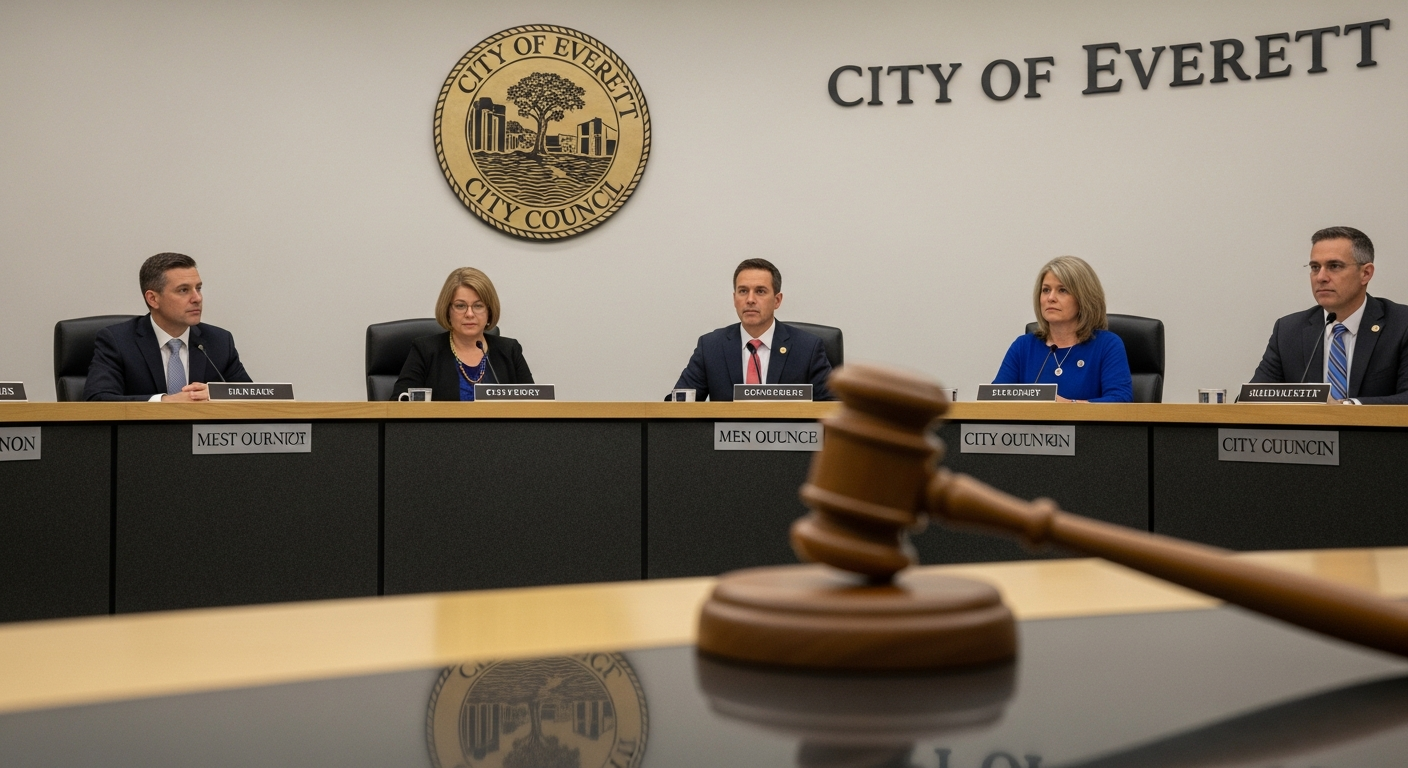
    Because utility taxes in Washington state do not require voter approval, the City Council’s vote is the decision point. Before the final vote — expected after the third council reading in late spring 2026 — residents have the opportunity to comment at council meetings.

    Everett City Council meetings are held at Everett City Hall (2930 Wetmore Ave). Public comment periods occur at the beginning of most meetings and are open to any Everett resident or stakeholder. Written comments can also be submitted to the City Clerk. The Council’s contact information is available at everettwa.gov.

    The Bigger Picture: Why This Is Happening

    Mayor Cassie Franklin said it plainly at her March 2026 State of the City address: “We cannot cut our way to a sustainable future.” Everett faces a projected $14 million budget deficit heading into the 2027 budget cycle — a structural gap created by rising public safety and infrastructure costs outpacing traditional revenue sources constrained by Washington state property tax levy limits.

    The utility tax, if approved, would close roughly half the deficit ($7.5 million per year). The remaining gap has not yet been addressed by a specific public proposal. Residents can expect additional budget discussions — and potentially additional asks — in the coming months as the 2027 budget cycle approaches.

    Frequently Asked Questions for Everett Residents

    Q: Do I have to vote on this or will it just happen?
    A: Utility taxes in Washington state do not require public votes. The City Council approves them through the standard ordinance process. Residents can comment at council meetings before the final vote.

    Q: What if I live outside Everett but get my water from Everett?
    A: You will be indirectly affected. Everett embeds the tax in its wholesale water costs, which flow to the utilities that serve your city or water district. Those utilities may pass the cost through at different rates depending on their own pricing structures.

    Q: When exactly will my bill go up?
    A: If the ordinance passes, the proposed effective date is July 1, 2026. Your first billing cycle after that date would reflect the new rate.

    Q: Is there any assistance for low-income households?
    A: City officials have committed to expanding utility payment assistance before July 1. Specific details have not been announced. Contact the City of Everett Water Department or visit everettwa.gov for current assistance program information.

    Q: What happens to the money this raises?
    A: The approximately $7.5 million per year generated by the utility tax goes to Everett’s general fund, which covers public safety, parks, city services, and the broader municipal operating budget.

    Related: Everett’s Proposed Utility Tax Would Add $10.74 a Month to Most Snohomish County Water Bills | Everett Is Changing How It Talks to Neighborhoods — Here’s What That Means for You | Everett City Council Approves Fair Labor Ordinance 9-1