Category: Agency Playbook

How we build, scale, and run a digital marketing agency. Behind the scenes, systems, processes.

  • Notion-Deep, Surface-Simple: How to Build Knowledge Systems That Actually Get Used

    Notion-Deep, Surface-Simple: How to Build Knowledge Systems That Actually Get Used

    Tygart Media Strategy
    Volume Ⅰ · Issue 04Quarterly Position
    By Will Tygart Long-form Position Practitioner-grade

    There’s a useful architecture for how to hold complex knowledge inside an organization while keeping it accessible to the people who need to act on it.

    Call it Notion-Deep, Surface-Simple: build the internal knowledge structure as deep as you want, then surface it in the voice and format of whoever needs to use it.

    The Core Idea

    Most knowledge management systems fail in one of two directions.

    The first failure: they optimize for depth and comprehensiveness at the expense of usability. The system knows everything, but nobody can navigate it. It becomes the internal equivalent of a technical manual that everyone agrees is accurate and nobody reads.

    The second failure: they optimize for simplicity at the expense of utility. The output is clean and accessible, but the underlying knowledge is shallow. When edge cases show up — and they always do — the system has no answer.

    Notion-Deep, Surface-Simple resolves this by treating depth and accessibility as separate layers with separate jobs, rather than as tradeoffs against each other.

    What the Deep Layer Does

    The deep layer — think of it as the Notion workspace, the knowledge base, the internal documentation — is where you hold everything. It doesn’t compress. It doesn’t simplify. It doesn’t optimize for any particular audience.

    This layer holds the full process documentation. The exception cases. The history of why decisions were made. The technical architecture. The client-specific context that only your team knows. The frameworks that took years to develop. All of it goes here, as deep as it needs to go.

    The standard for this layer is completeness and retrievability — not readability for a general audience.

    What the Surface Layer Does

    The surface layer is not a simplified version of the deep layer. It’s a translation of it — rendered in the specific voice, vocabulary, and complexity level of whoever needs to act on it.

    The translation is the work. You pull from the deep layer exactly what’s needed for a specific person to make a specific decision or take a specific action. You render it in their language. You strip everything else.

    A prospect presentation pulls from the deep layer but speaks in the prospect’s language. A client onboarding document pulls from the deep layer but speaks in operational terms the client’s team actually uses. A quick brief for a new team member pulls from the deep layer but surfaces only the context they need to start.

    The depth doesn’t disappear. It’s available when the conversation earns it. But the default output is calibrated, not comprehensive.

    Why This Architecture Works

    When depth and accessibility are treated as tradeoffs, you’re always sacrificing one for the other. Every time you simplify, you lose fidelity. Every time you add depth, you lose accessibility.

    When they’re treated as separate layers, neither has to compromise. The deep layer stays complete. The surface layer stays accessible. The intelligence is in the translation — knowing what to pull, what to leave in, and how to render it for who’s in front of you.

    This also means the system scales. As the deep layer grows, the surface layer doesn’t have to get more complex. It just draws from a richer source. The translation skill remains constant even as the underlying knowledge compounds.

    How to Build This in Practice

    The starting point is a clear separation of intent. When you’re adding something to your knowledge base — documentation, process notes, client history, research — you’re feeding the deep layer. Don’t self-censor for a hypothetical reader. Put in everything that’s true and useful.

    When you’re building an output — a proposal, a client update, a training document, a content piece — you’re working the surface layer. Start from the deep layer as your source. Then translate deliberately: who is this for, what do they need to know, and in what voice will it land?

    Over time, the habit becomes automatic. The deep layer becomes the intelligence layer. The surface layer becomes the communication layer. And the translation between them — which is where most of the real thinking happens — becomes the core competency.

    What does Notion-Deep, Surface-Simple mean?

    It’s a knowledge architecture principle: build your internal knowledge base as deep and comprehensive as you need, then surface outputs from it in the specific voice and format of whoever needs to act on the information. Depth and accessibility are separate layers, not tradeoffs.

    What’s the difference between simplifying and translating?

    Simplifying removes information. Translating renders the same information in a different register. The goal is translation — pulling the right pieces from the deep layer and expressing them in the receiver’s language, without losing the underlying substance.

    Why do most knowledge systems fail?

    They optimize for either depth or accessibility, treating them as competing priorities. The result is either a comprehensive system nobody navigates or an accessible system that can’t handle edge cases.

    How does this scale as the knowledge base grows?

    As the deep layer grows richer, the surface layer draws from a better source without becoming more complex itself. The translation skill stays constant even as the underlying knowledge compounds over time.

  • Input/Output Symmetry: Return the Answer in the Voice It Was Asked

    Tygart Media / Content Strategy
    The Practitioner JournalField Notes
    By Will Tygart · Practitioner-grade · From the workbench

    There is a simple principle that improves almost every type of professional communication, and it costs nothing to implement.

    Call it input/output symmetry: whatever voice someone uses to ask a question, that is the voice you return the answer in.

    What Input/Output Symmetry Means

    When someone asks you something, they give you a signal. The signal is not just the question itself — it’s the way they asked it. The vocabulary they chose. The complexity level they assumed. The tone they used. The length of their message.

    Input/output symmetry says: honor that signal in your response.

    If someone sends you a two-sentence question in plain language, a five-paragraph technical response is a mismatch. Not because five paragraphs is wrong — but because the complexity of your output dramatically exceeds the complexity of their input. That asymmetry creates friction. It says, implicitly, that you didn’t fully receive what they sent.

    If someone sends you a detailed, technically sophisticated question that shows they’ve done their homework, a shallow surface-level answer is an equal mismatch. It signals that you underestimated them.

    Symmetry is the standard. Match the register. Match the depth. Match the voice.

    This Isn’t Just a Sales Principle

    Input/output symmetry gets talked about most often in sales contexts — mirror the prospect, match their energy, build rapport through language alignment. All of that is real.

    But the principle applies equally in operations, in content, and in internal communication.

    In operations: When a frontline employee is being trained on a new process, the training document should be written in the language the frontline employee uses — not the language of the system architect who designed the process. The person executing a step in a hospital intake doesn’t need to know it’s called a “multi-step EHR synchronization workflow.” They need to know: go to that computer, open that folder, put it in the file.

    In content: When you’re writing for a specific audience, the output should match the complexity and vocabulary of how that audience talks about the topic — not how you talk about it internally. This is the difference between content that feels written for the reader and content that feels written for the writer’s own credibility.

    In client communication: When a client asks a simple question, give a simple answer. When a client asks a complex question, give a complex answer. The mistake is having only one mode and applying it to every interaction regardless of input signal.

    The Common Failure Mode

    The most common failure of input/output symmetry is output that always exceeds input complexity. This is the “I give them too much back” pattern.

    It comes from a good place — you want to be thorough, comprehensive, and demonstrably expert. But when the input was simple and the output is exhaustive, the net effect is not “this person is impressive.” The net effect is “this person doesn’t listen.”

    The fix is not to give less. The fix is to actually receive the input — the full signal, including how it was asked — before you respond. Let that signal dictate the register of your output.

    A Practical Test

    Before sending any significant response — email, proposal, pitch, explanation — read what was sent to you one more time. Ask yourself: does my response match the register, length, and vocabulary of what they sent? If the answer is no, that’s your edit.

    You don’t have to simplify the underlying work. You have to calibrate the delivery. The sophistication is still there. The architecture is still there. It’s just rendered in a form that matches the receiver.

    What is input/output symmetry?

    Input/output symmetry is the principle of returning an answer in the same voice, register, and complexity level as the question that was asked. The way someone asks gives you a signal about how they want to receive information — the principle says to honor that signal.

    Is this just about sales communication?

    No. Input/output symmetry applies equally to operations, content, training documentation, and internal team communication — anywhere one person is conveying information to another and the receiver’s context matters.

    What’s the most common failure of this principle?

    Output that consistently exceeds input complexity. Responding to a simple two-sentence question with five paragraphs of technical detail. It signals that you didn’t fully receive what was sent.

    How do you apply this in practice?

    Before responding, re-read what was sent. Ask: does my response match the register, length, and vocabulary of what they sent? If not, calibrate before you send.

  • Universal Language vs. Company Language: Two Vocabulary Layers Every Communicator Needs

    Tygart Media / Content Strategy
    The Practitioner JournalField Notes
    By Will Tygart · Practitioner-grade · From the workbench

    There are two distinct vocabulary layers that govern how people communicate inside any industry, and most content and communication work conflates them.

    Understanding the difference — and building both deliberately — is one of the highest-leverage things you can do to make your communication feel native rather than imported.

    Layer One: Universal Industry Language

    Universal industry language is the shared vocabulary that travels consistently across every company in a vertical. It’s the terminology that practitioners use without defining it, because everyone who works in that field already knows what it means.

    In healthcare: the “face sheet” is the document that summarizes a patient’s information at the top of a chart. Every hospital calls it that. You don’t explain it — you just use it.

    In property restoration: “Resto” and “Dehu” are shorthand for specific categories of work. In retail: MOD means manager on duty. In logistics: ETA, FTL, LTL are assumed knowledge.

    This layer is learnable. It lives in trade publications, certification materials, job descriptions, and any content written by and for industry practitioners. Build a glossary of universal industry terms before you write a word of content for a new vertical, and your work immediately reads as insider rather than outsider.

    Layer Two: Company Language

    Company language is the internal dialect that develops within a specific organization. It doesn’t transfer across companies, even within the same industry. It’s shaped by team culture, internal tools, historical decisions, and sometimes just the way one influential person at the company talked about something early on.

    This is the vocabulary that shows up in internal Slack channels, in how a team describes their own workflow, in the nicknames that get attached to products or processes or recurring situations. It often never makes it into any official documentation. You learn it by listening, by reading the company’s own content carefully, and sometimes by just asking.

    A prospect might refer to their CRM as “the system.” Their onboarding process might be internally called something that has nothing to do with what it’s officially named. Their main product line might have an internal nickname that their sales team uses but their marketing team doesn’t.

    When you use their language back at them, the effect is immediate. It signals that you paid attention. It creates a sense that you are already on their team, not pitching from outside it.

    Why Most Communication Work Stops at Layer One

    Layer one is the obvious layer. You can research it. You can build a glossary from public sources. It’s systematic and scalable.

    Layer two requires proximity. It requires listening before speaking. It requires time with the actual humans at the company, not just their external-facing content. Most content and outreach workflows don’t have a step for this — not because it isn’t valuable, but because it’s harder to systematize.

    The opportunity is there precisely because most people skip it.

    How to Build Both Layers Before You Write

    For layer one: read trade publications, certification materials, and forum conversations in the target vertical. Flag every term used without definition. Build a reference glossary before any content is written.

    For layer two: read the company’s blog posts, case studies, job postings, and leadership team’s LinkedIn content. Look for language that’s idiosyncratic — terms or framings that don’t appear in competitors’ content. If you have access to the prospect directly, listen carefully in early conversations for words they use consistently. Use those words back.

    Together, these two layers give you something most communicators don’t have: a vocabulary that feels native at both the industry level and the individual company level. That combination creates the feeling — even if the prospect can’t articulate why — that you understand them specifically, not just their category.

    What is universal industry language?

    Universal industry language is shared terminology that travels consistently across all companies in a vertical — terms every practitioner knows without needing a definition. Examples include “face sheet” in healthcare or “Reto” in restoration.

    What is company language?

    Company language is the internal dialect that develops within a specific organization — nicknames, shorthand, and internal framing that doesn’t transfer across companies, even in the same industry.

    Why does using a company’s own language matter?

    When you use a prospect’s or client’s specific language back at them, it signals that you listened before you spoke. It creates the feeling that you’re already on their team rather than pitching from outside it.

    How do you research company-specific language?

    Read their blog, case studies, job postings, and leadership team’s LinkedIn content. Look for terms that appear consistently but don’t show up in competitors’ content. In direct conversations, listen for words they use repeatedly and use those words back.

  • The Complexity Dial: Finding the Register Where Expertise Meets Accessibility

    Tygart Media / Content Strategy
    The Practitioner JournalField Notes
    By Will Tygart · Practitioner-grade · From the workbench

    There’s a specific tension every expert faces when communicating their work. It’s not about whether you know enough. It’s about where you set the dial.

    Go too technical: the work isn’t approachable. The prospect can’t see themselves using it. The client feels like they need a translator just to follow the conversation. They disengage — not because they’re not smart, but because the cost of staying engaged is too high.

    Go too simple: the work doesn’t appear valuable. You’ve hidden the sophistication that earns the premium. The prospect sees a commodity. They wonder if they could just do this themselves.

    The complexity dial is real. And finding the right setting isn’t instinct — it’s a learnable skill.

    Why the Default Is Always Too Technical

    Experts default toward complexity for a reason that feels rational: you want people to understand what you built. You’ve invested in the architecture, the system, the methodology. You want credit for it.

    The problem is that credit for complexity doesn’t come from complexity itself. It comes from the outcome the complexity produces. And outcomes are most legible when they’re explained simply.

    When someone asks you what you do, they are not asking for the architecture. They are asking for the result. “I build AI-powered content systems that rank on Google” is more credible to a non-technical buyer than a description of the pipeline that produces it — even though the pipeline is impressive, and even though you should absolutely understand and be able to speak to it when the moment calls for it.

    How to Find the Right Setting

    The right complexity setting is not a fixed point. It moves based on who you’re talking to, what stage of the relationship you’re in, and what decision you’re trying to help them make.

    A useful calibration question: what is the one thing this person needs to understand to move forward?

    Not the ten things. Not everything you know. The one thing. That’s your anchor. Build your explanation from that point outward, adding complexity only as far as is necessary to make that one thing credible and actionable.

    Another useful signal: listen for when someone stops asking follow-up questions. In a live conversation, the questions stop either because they understand or because they’ve given up. Your job is to read which one it is. Silence after complexity is usually disengagement, not comprehension.

    The Two-Version Rule

    For anything you communicate regularly — your services, your process, your results — it’s worth building two versions deliberately:

    The technical version is for peers, for audits, for documentation, for conversations where the other person has signaled they want to go deep. It doesn’t simplify. It’s accurate and complete.

    The accessible version is for first conversations, for clients who are focused on outcomes, for anyone who hasn’t yet signaled they want the technical version. It doesn’t dumb things down. It leads with the result, earns the trust, and holds the technical detail in reserve.

    The mistake is using only one. The expert who only has the technical version loses approachable audiences. The expert who only has the accessible version never earns sophisticated ones.

    What This Looks Like in Real Work

    A client asks: “What do you actually do for SEO?”

    Technical version answer: “We run a full AEO/GEO content pipeline with schema injection, entity saturation, internal link graph optimization, and structured FAQ blocks targeting featured snippets and AI overview placement.”

    Accessible version answer: “We make sure that when someone searches for what you do, Google shows your site — and shows it in a way that answers their question directly, so they click.”

    Both are accurate. Only one is appropriate for the first conversation with a prospect who runs a restoration company and has never thought about AEO in their life. The technical version comes later — after the trust is built, after they’ve asked to understand more, after the relationship has earned it.

    What is the complexity dial in communication?

    The complexity dial refers to the register of technical depth you use when explaining your work. Too technical and you lose approachability. Too simple and you sacrifice perceived value. The right setting depends on who you’re talking to and what decision they need to make.

    Why do experts default to overly technical communication?

    Experts default toward complexity because they want credit for what they built. But credit comes from the outcome, not the architecture. Outcomes are most legible when explained simply.

    How do you find the right complexity level?

    Ask: what is the one thing this person needs to understand to move forward? Build your explanation from that anchor, adding complexity only as far as necessary to make it credible and actionable.

    Should you always simplify your communication?

    No. The goal is calibration, not permanent simplification. Build both a technical version and an accessible version of your key messages, and deploy each when the audience has signaled which one they need.

  • Prospect-Specific Vocabulary Research: The Layer Most Persona Work Misses

    Tygart Media / Content Strategy
    The Practitioner JournalField Notes
    By Will Tygart · Practitioner-grade · From the workbench

    Most persona-driven content work stops at the industry layer. You research the CFO persona. You learn that CFOs care about ROI, risk, and efficiency. You write in that register. You feel good about it.

    But there’s a layer below that almost nobody builds: the company-specific and prospect-specific vocabulary layer.

    Why Industry Personas Are Only Half the Job

    Industry personas capture how a role thinks. They don’t capture how a specific company talks.

    A CFO at a Medicaid claims processing company uses different words than a CFO at a luxury goods retailer — even though they share a title, shared concerns, and similar decision-making patterns. The terminology, the shorthand, the internal logic of their language is shaped by their industry, their company culture, their team, and sometimes just their history.

    When your content or your pitch uses generic CFO language, it lands as competent. When it uses their language, it lands as trusted.

    Where Prospect Vocabulary Actually Lives

    You don’t have to guess. The vocabulary is findable. It’s in:

    • Job postings. How a company writes a job description tells you exactly which words are native to that organization. What do they call the role? What do they emphasize? What jargon appears without definition?
    • Industry forums and trade boards. The conversations people have when they’re not performing for prospects — Reddit threads, Slack communities, association forums — reveal the working vocabulary of an industry. This is where “Reto” for restoration or “face sheet” for hospitals lives. Informal, precise, insider.
    • LinkedIn comments and posts. Not company page posts. Personal posts from practitioners in the industry. What do they call their problems? How do they describe wins?
    • The prospect’s own content. Blog posts, press releases, case studies, even their About page. Every company has language patterns. Read enough of their content and the vocabulary starts to surface.

    Two Layers Worth Distinguishing

    There’s an important distinction between two vocabulary types that often get collapsed:

    Universal industry language is the shared terminology that travels across every company in a vertical. In healthcare, “face sheet” means the same thing at every hospital. In restoration, “Reto” and “D” refer to specific job codes. This language is consistent. Build a glossary and it applies broadly.

    Company-specific language is the internal dialect. The nickname they use for a process. The shorthand that evolved on their team. The way they talk about a product internally versus how it’s marketed externally. This doesn’t transfer across companies even in the same industry. It has to be researched per prospect.

    Most content work builds the first layer. The second layer is where genuine trust gets created.

    How to Build Prospect Vocabulary Research into Your Process

    For any significant prospect or client vertical, a lightweight vocabulary research pass should happen before content is written or a pitch is built. The process doesn’t need to be elaborate:

    1. Pull 3-5 job postings from the company and their closest competitors
    2. Find one active forum or community where practitioners in that vertical talk informally
    3. Read 10-15 recent LinkedIn posts from people with the target job title at similar companies
    4. Flag any terminology that appears without explanation — that’s the insider vocabulary
    5. Build a small glossary: their term → what it means → how to use it naturally

    This takes 30-45 minutes. The output is a vocabulary layer that makes every subsequent touchpoint feel like it was built specifically for them — because it was.

    The Competitive Advantage This Creates

    Most of your competitors are working from the same industry persona playbooks. They’re writing for the CFO archetype. They’re checking the same boxes.

    When you show up speaking a prospect’s actual language — not performing their industry’s language, but their specific company’s language — the experience is different. It signals that you listened before you spoke. It signals that you did the work. And in a landscape where most outreach feels templated, that specificity is immediately noticed.

    What is prospect-specific vocabulary research?

    It’s the practice of researching how a specific company or prospect actually talks — their internal terms, shorthand, and language patterns — before writing content or building a pitch for them. It goes deeper than standard industry persona work.

    Where do you find a prospect’s actual vocabulary?

    Job postings, industry forums, practitioner LinkedIn posts, and the company’s own published content are the most reliable sources. The words people use without defining them are the insider vocabulary you’re looking for.

    How is this different from building buyer personas?

    Buyer personas capture how a role category thinks and what they care about. Prospect vocabulary research captures the specific language a company or individual uses — which varies even among people with the same title in the same industry.

    How long does this research take?

    A lightweight vocabulary pass takes 30-45 minutes per prospect and produces a small glossary that makes every subsequent touchpoint feel custom-built.

  • Voice Mirroring: Why How You Deliver Information Matters as Much as What You Say

    Tygart Media / Content Strategy
    The Practitioner JournalField Notes
    By Will Tygart · Practitioner-grade · From the workbench

    There is a principle that separates consultants who get results from consultants who get ignored, and it has nothing to do with how smart you are or how deep your knowledge goes.

    It’s called voice mirroring. And it works like this: the depth you go is for you. The way you deliver it back is for them.

    What Voice Mirroring Actually Means

    Voice mirroring is the practice of returning information to someone in the same register, vocabulary, and complexity level they used when they asked for it.

    If a client calls something a “brain box thing that scans and chunks stuff,” that is not ignorance. That is their operating language. Your job is not to correct it. Your job is to meet it.

    When you respond to a simple question with a 14-point technical breakdown, you haven’t demonstrated expertise. You’ve created friction. The information doesn’t land because the delivery doesn’t fit the receiver.

    The Research Phase vs. the Delivery Phase

    Voice mirroring requires you to split your process into two distinct phases that should never bleed into each other.

    The research phase is where you go as deep as you need to. You build the full knowledge structure. You understand the technical landscape, the edge cases, the nuances. You go unrestricted. This phase is entirely internal.

    The delivery phase is where you filter. You take everything you know and you ask one question: what does this person need to hear, in their language, to move forward? You strip everything that doesn’t answer that question.

    Most people collapse these phases. They research and then output everything they found. That is not delivery. That is dumping.

    Why This Is Harder Than It Sounds

    The instinct for most experts is to demonstrate depth. We have been trained — in school, in career ladders, in client presentations — to show our work. The more we show, the more valuable we appear.

    But there is a tension at the center of this. Go too technical and you’re not approachable. Make it too simple and you don’t appear valuable. The sweet spot is a specific calibration: sophisticated enough to earn trust, plain enough to require no translation.

    Finding that calibration requires listening more than talking. It requires paying attention to how the question was asked, not just what was asked.

    What Voice Mirroring Looks Like in Practice

    A prospect emails you: “Hey, I just need to know if this thing is going to sit inside or outside my company, what it’s going to cost, and how much work it’s going to be for us.”

    They did not ask for a capabilities deck. They did not ask for a technical architecture diagram. They asked three direct questions in plain language.

    Voice mirroring says: answer those three questions in the same plain language. Then stop.

    Everything else you know about your system — the AI pipeline, the schema structure, the content scoring logic — stays in the research phase. It is not erased. It is reserved. You deploy it when and if the conversation earns it.

    Voice Mirroring as a Sales and Client Retention Tool

    The downstream effects of getting this right compound fast. Clients who feel understood don’t need as many touchpoints to make decisions. They trust faster. They refer more. They don’t feel like they need a translator every time they interact with you.

    Conversely, clients who consistently receive information they have to decode become exhausted. Even if your work is excellent, the communication friction erodes the relationship. They start to feel like the problem is them — and that is the last feeling you want a client to have.

    Voice mirroring is not a soft skill. It’s a retention mechanism.

    The Takeaway

    Go as deep as you need to go internally. Build the knowledge. Understand the complexity. Do not shortcut the research phase.

    Then, before you open your mouth or start typing, ask yourself: in what voice did this person ask? Return your answer in that voice. Everything else is noise.

    Frequently Asked Questions

    What is voice mirroring in client communication?

    Voice mirroring is the practice of returning information to a client or prospect in the same vocabulary, register, and complexity level they used when they asked. It separates the internal research depth from the external delivery language.

    Why do experts struggle with voice mirroring?

    Most experts are trained to demonstrate depth by showing their work. This instinct leads to over-delivery — giving clients everything you know rather than what they need to hear, in a way they can act on.

    Is voice mirroring just dumbing things down?

    No. The goal is calibration, not simplification. The delivery needs to be sophisticated enough to earn trust while plain enough to require no translation. That is a specific, practiced skill.

    How does voice mirroring affect client retention?

    Clients who feel consistently understood make decisions faster, require fewer touchpoints, and refer more readily. Communication friction — even when the underlying work is excellent — erodes relationships over time.

  • Your Jobs Are a Knowledge Base. You’re Just Not Using Them That Way.

    Your Jobs Are a Knowledge Base. You’re Just Not Using Them That Way.

    Tygart Media / Content Strategy
    The Practitioner JournalField Notes
    By Will Tygart
    · Practitioner-grade
    · From the workbench

    Every restoration job teaches something. Almost none of it ever gets written down.

    A crew shows up to a flooded basement at 2am. They make decisions — where to set the equipment, how to read the moisture map, which walls are worth opening and which aren’t, how to sequence the dry-down so the structure doesn’t get worse before it gets better. They’ve made these calls before. They know things that took years to learn. They finish the job, submit a field report, and move on.

    Then the experienced tech takes another job across town. Or retires. Or just gets too busy to train anyone. And that knowledge disappears.

    I want to talk about a different approach. One that captures that knowledge systematically — and turns it into something that works in two directions at once.

    The Double-Purpose Content System

    The idea is straightforward: document your jobs as content. Scrub the client-specific details — no names, no addresses, no identifying information. But tell the real story. What was the scope? What made this job complicated? What decisions were made and why? What was the outcome?

    Published on your website, this does something conventional marketing content can’t: it demonstrates expertise through specificity. Not “we handle all types of water damage” — but a documented account of how your team handled a Category 3 intrusion in a commercial kitchen with active mold growth and a compressed timeline. That’s a different signal entirely.

    The reader — whether that’s a property manager searching for a qualified contractor or an insurance adjuster evaluating whether to refer you — isn’t reading a brochure. They’re reading a case record. They can see how your team thinks.

    But here’s the second direction, and it’s the one I find more interesting: that same documentation feeds back into the company as a knowledge base.

    The Internal Payoff

    Restoration companies have a training problem that nobody talks about directly. The knowledge of how to do the job well is distributed unevenly across the team. The senior technicians have it. The new hires don’t. And the transfer mechanism is usually informal — ride-alongs, tribal knowledge, institutional memory held by people who may not stay forever.

    When you document jobs as structured content, you start to build something that actually scales. A new technician can search the knowledge base for jobs similar to what they’re walking into. They can see how a comparable loss was scoped, how the equipment was deployed, what complications arose and how they were handled. Before they’ve seen thirty jobs themselves, they can read about thirty jobs your company has already worked.

    An operations manager making a scheduling or resource decision can pull up historical jobs of a similar size and see what the typical crew requirements were. A project manager prepping a scope of work can see how similar scopes were structured and what line items were typically included.

    And when AI tools enter the workflow — which they will, if they haven’t already — that documented job history becomes training data your AI actually understands. Not generic restoration industry knowledge pulled from the web. Your company’s specific approach, your specific decisions, your specific standards. An AI assistant working from that foundation gives answers that sound like your company, because they’re drawn from your company’s real work.

    What Makes This Different From a Blog

    Most restoration company blogs are essentially SEO performance. Keywords stuffed into generic articles about what causes mold or how long drying takes. Useful, maybe. Differentiating, no.

    What I’m describing is a content system built on documented operational reality. The subject matter isn’t manufactured — it’s the actual work. Which means it has a quality that manufactured content can never replicate: it happened. The specificity is real because the job was real. The decisions were real. The outcome was real.

    Readers feel this, even when they can’t articulate why. They’re not evaluating whether your content sounds authoritative. They’re reading something that is authoritative, because it comes from direct experience rather than borrowed knowledge.

    And unlike a blog that requires a content team to invent topics every week, this system has an inventory problem that only gets easier over time. Every job adds to it. The longer you run the system, the richer the knowledge base becomes — for your website visitors and for your own team.

    The Setup

    The practical structure is simpler than it sounds. Each job entry captures a handful of consistent fields: loss type, scope classification, environmental conditions, key decision points, equipment deployed, timeline, outcome. The sensitive details — client, location, anything identifying — never make it into the published version.

    What gets published is the pattern. The structure of the problem and the response. Categorized, searchable, and useful to anyone trying to understand how your company operates — including your own people.

    This isn’t a new concept in medicine or law, where case documentation has always served both public communication and internal learning simultaneously. It’s just new in restoration, where the work is equally complex and the knowledge equally worth preserving.

    The companies that start building this now will have a meaningful advantage in three years. Not because their marketing was cleverer — because their institutional knowledge actually compounded instead of walking out the door every time someone left.


    Tygart Media builds content and knowledge systems for property damage restoration companies. If you’re interested in implementing a job documentation system for your operation, start here.

  • The Knowledge Base You Can Actually Trust

    Tygart Media / Content Strategy
    The Practitioner JournalField Notes
    By Will Tygart
    · Practitioner-grade
    · From the workbench

    There are two kinds of knowledge bases a writer can work from.

    The first is built from reading. From research, from other people’s frameworks, from things you’ve studied and synthesized and stored. This is legitimate knowledge. It produces competent writing. It can be thorough, well-sourced, and useful.

    The second is built from doing. From the things that have actually happened, the decisions that were actually made, the results that actually came back. This knowledge has a different texture. A different authority. And when you write from it, something changes in the writing itself.

    I’ve been thinking about which kind of knowledge base I’m trusting when I write.

    The Anxiety of the Research-Based Writer

    When you write from research, there’s a persistent low-level anxiety underneath the work. You’re synthesizing things that happened to other people, in other contexts, under conditions you didn’t control. The knowledge is real but the application is theoretical. You’re always one degree away from direct experience.

    That distance shows up in the writing. You hedge more. You qualify more. You gesture toward possibilities rather than landing on conclusions. You write “this approach can work” instead of “this worked.” The careful reader feels it even when they can’t name it.

    And when AI enters the picture — when you’re using AI tools to generate content, to research topics, to pull frameworks — the research-based knowledge base gets even more diffuse. Now you’re synthesizing a synthesis. The AI has read everything, which means it’s essentially read nothing specifically. It knows the shape of the conversation without having been in any of the actual conversations.

    The Confidence of the Experience-Based Writer

    Writing from a knowledge base of what you’ve actually done is different in one specific way: you don’t have to wonder if it’s possible. It happened. The uncertainty is behind you.

    When I write about publishing content pipelines that run at scale across a dozen sites, I’m not theorizing about whether that’s achievable. I’ve done it. I know where the proxy errors happen, which hosting environments block which approaches, what the content looks like three months in versus three years in. The knowledge isn’t borrowed. It’s operational.

    That changes what I can say. It changes how directly I can say it. And it changes what the reader receives — because at some level, readers feel the difference between someone describing a map and someone describing a road they’ve driven.

    AI Makes This More Important, Not Less

    Here’s where it gets interesting. Most of the conversation about AI in content is about generation — what the AI can produce, how fast, at what quality. But the more important question is what the AI is drawing from when it helps you.

    An AI working from your experiential knowledge base — from your actual work logs, your real client results, your documented processes — produces something fundamentally different from an AI drawing from general web training data. The second one sounds credible. The first one is credible, because the source material is real events that actually occurred.

    This is the real leverage in treating your work history as a content source. Not just that it’s “authentic” in some vague brand-voice sense. But that it’s verified. You don’t have to fact-check your own experience. You don’t have to worry about whether the case studies hold up. They do, because you were there.

    When AI generates from that foundation — from things that have actually happened — it isn’t hallucinating plausible content. It’s articulating real content more clearly than you might have time to do yourself.

    The Trust Differential

    There’s a version of content marketing that’s essentially a confidence game. You project expertise through fluency. You write with authority about things you understand in theory. The reader can’t easily verify whether your knowledge is earned or performed, so the performance stands.

    This worked better before. It’s working less well now. Readers are more calibrated to the texture of generated, research-based content. They’re less impressed by confident-sounding frameworks they’ve seen assembled from the same sources everywhere. They’re more interested in specificity — in the detail that could only come from someone who was actually in the room when the thing happened.

    The experiential knowledge base is the moat. Not because it’s hidden, but because it can’t be replicated without the experience. Another writer can read everything I’ve read. They can’t have done what I’ve done. And when the writing comes from that layer, it has a specificity that research alone can’t produce.

    What This Means for How You Write

    The practical implication is this: the most valuable content you can create isn’t the content that synthesizes what others have said. It’s the content that documents what you’ve actually done — what worked, what didn’t, what the specific conditions were, what you’d do differently.

    This isn’t just a better content strategy. It’s a more honest one. You’re not performing expertise. You’re reporting it. And the writing that comes from that place has a quality that readers and, increasingly, AI systems are learning to recognize and prefer.

    Your knowledge base is only as trustworthy as its source. If it’s built from things that have happened, you can write from it without anxiety. The results are behind you. The uncertainty has been resolved. You’re not speculating about whether the approach works — you’re describing the approach that worked.

    That’s a different kind of writing. And I think it’s the kind that matters most right now.


    Will Tygart is a content strategist and founder of Tygart Media. He builds content operations for companies that want their actual knowledge — not borrowed knowledge — to do the work.

  • The claude_delta Standard: How We Built a Context Engineering System for a 27-Site AI Operation

    The claude_delta Standard: How We Built a Context Engineering System for a 27-Site AI Operation

    The Machine Room · Under the Hood

    What Is the claude_delta Standard?

    The claude_delta standard is a lightweight JSON metadata block injected at the top of every page in a Notion workspace. It gives an AI agent — specifically Claude — a machine-readable summary of that page’s current state, status, key data, and the first action to take when resuming work. Instead of fetching and reading a full page to understand what it contains, Claude reads the delta and often knows everything it needs in under 100 tokens.

    Think of it as a git commit message for your knowledge base — a structured, always-current summary that lives at the top of every page and tells any AI agent exactly where things stand.

    Why We Built It: The Context Engineering Problem

    Running an AI-native content operation across 27+ WordPress sites means Claude needs to orient quickly at the start of every session. Without any memory scaffolding, the opening minutes of every session are spent on reconnaissance: fetch the project page, fetch the sub-pages, fetch the task log, cross-reference against other sites. Each Notion fetch adds 2–5 seconds and consumes a meaningful slice of the context window — the working memory that Claude has available for actual work.

    This is the core problem that context engineering exists to solve. Over 70% of errors in modern LLM applications stem not from insufficient model capability but from incomplete, irrelevant, or poorly structured context, according to a 2024 RAG survey cited by Meta Intelligence. The bottleneck in 2026 isn’t the model — it’s the quality of what you feed it.

    We were hitting this ceiling. Important project state was buried in long session logs. Status questions required 4–6 sequential fetches. Automated agents — the toggle scanner, the triage agent, the weekly synthesizer — were spending most of their token budget just finding their footing before doing any real work.

    The claude_delta standard was the solution we built to fix this from the ground up.

    How It Works

    Every Notion page in the workspace gets a JSON block injected at the very top — before any human content. The format looks like this:

    {
      "claude_delta": {
        "page_id": "uuid",
        "page_type": "task | knowledge | sop | briefing",
        "status": "not_started | in_progress | blocked | complete | evergreen",
        "summary": "One sentence describing current state",
        "entities": ["site or project names"],
        "resume_instruction": "First thing Claude should do",
        "key_data": {},
        "last_updated": "ISO timestamp"
      }
    }

    The standard pairs with a master registry — the Claude Context Index — a single Notion page that aggregates delta summaries from every page in the workspace. When Claude starts a session, fetching the Context Index (one API call) gives it orientation across the entire operation. Individual page fetches only happen when Claude needs to act on something, not just understand it.

    What We Did: The Rollout

    We executed the full rollout across the Notion workspace in a single extended session on April 8, 2026. The scope:

    • 70+ pages processed in one session, starting from a base of 79 and reaching 167 out of approximately 300 total workspace pages
    • All 22 website Focus Rooms received deltas with site-specific status and resume instructions
    • All 7 entity Focus Rooms received deltas linking to relevant strategy and blocker context
    • Session logs, build logs, desk logs, and content batch pages all injected with structured state
    • The Context Index updated three times during the session to reflect the running total

    The injection process for each page follows a read-then-write pattern: fetch the page content, synthesize a delta from what’s actually there (not from memory), inject at the top via Notion’s update_content API, and move on. Pages with active state get full deltas. Completed or evergreen pages get lightweight markers. Archived operational logs (stale work detector runs, etc.) get skipped entirely.

    The Validation Test

    After the rollout, we ran a structured A/B test to measure the real impact. Five questions that mimic real session-opening patterns — the kinds of things you’d actually say at the start of a workday.

    The results were clear:

    • 4 out of 5 questions answered correctly from deltas alone, with zero additional Notion fetches required
    • Each correct answer saved 2–4 fetches, or roughly 10–25 seconds of tool call time
    • One failure: a client checklist showed 0/6 complete in the delta when the live page showed 6/6 — a staleness issue, not a structural one
    • Exact numerical data (word counts, post IDs, link counts) matched the live pages to the digit on all verified tests

    The failure mode is worth understanding: a delta becomes stale when a page gets updated after its delta was written. The fix is simple — check last_updated before trusting a delta on any in_progress page older than 3 days. If it’s stale, a single verification fetch is cheaper than the 4–6 fetches that would have been needed without the delta at all.

    Why This Matters Beyond Our Operation

    2025 was the year of “retention without understanding.” Vendors rushed to add retention features — from persistent chat threads and long context windows to AI memory spaces and company knowledge base integrations. AI systems could recall facts, but still lacked understanding. They knew what happened, but not why it mattered, for whom, or how those facts relate to each other in context.

    The claude_delta standard is a lightweight answer to this problem at the individual operator level. It’s not a vector database. It’s not a RAG pipeline. Long-term memory lives outside the model, usually in vector databases for quick retrieval. Because it’s external, this memory can grow, update, and persist beyond the model’s context window. But vector databases are infrastructure — they require embedding pipelines, similarity search, and significant engineering overhead.

    What we built is something a single operator can deploy in an afternoon: a structured metadata convention that lives inside the tool you’re already using (Notion), updated by the AI itself, readable by any agent with Notion API access. No new infrastructure. No embeddings. No vector index to maintain.

    Context Engineering is a systematic methodology that focuses not just on the prompt itself, but on ensuring the model has all the context needed to complete a task at the moment of LLM inference — including the right knowledge, relevant history, appropriate tool descriptions, and structured instructions. If Prompt Engineering is “writing a good letter,” then Context Engineering is “building the entire postal system.”

    The claude_delta standard is a small piece of that postal system — the address label that tells the carrier exactly what’s in the package before they open it.

    The Staleness Problem and How We’re Solving It

    The one structural weakness in any delta-based system is staleness. A delta that was accurate yesterday may be wrong today if the underlying page was updated. We identified three mitigation strategies:

    1. Age check rule: For any in_progress page with a last_updated more than 3 days old, always verify with a live fetch before acting on the delta
    2. Agent-maintained freshness: The automated agents that update pages (toggle scanner, triage agent, content guardian) should also update the delta on the same API call
    3. Context Index timestamp: The master registry shows its own last-updated time, so you know how fresh the index itself is

    None of these require external tooling. They’re behavioral rules baked into how Claude operates on this workspace.

    What’s Next

    The rollout is at 167 of approximately 300 pages. The remaining ~130 pages include older session logs from March, a new client project sub-pages, the Technical Reference domain sub-pages, and a tail of Second Brain auto-entries. These will be processed in subsequent sessions using the same read-then-inject pattern.

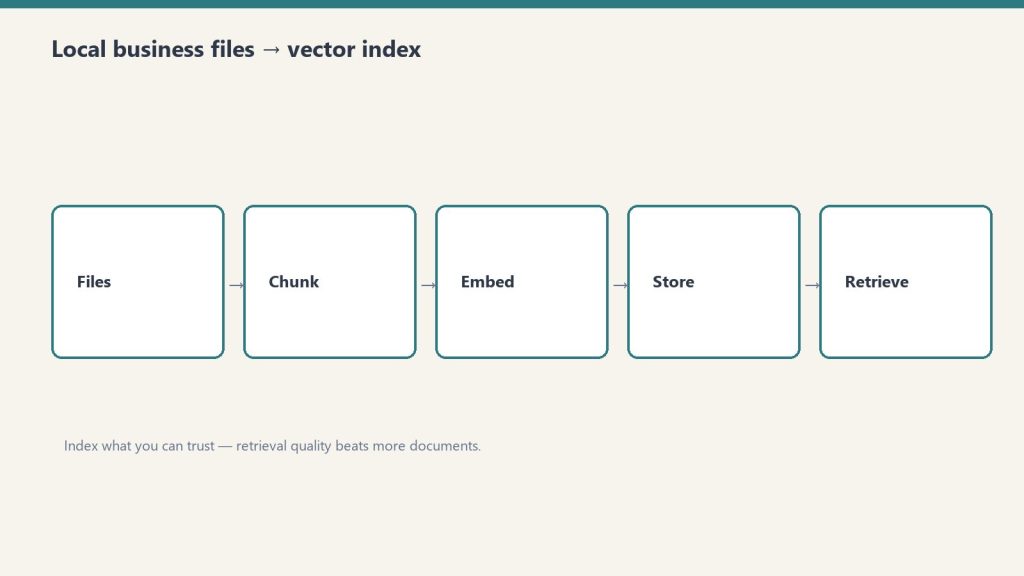
    The longer-term evolution of this system points toward what the field is calling Agentic RAG — an architecture that upgrades the traditional “retrieve-generate” single-pass pipeline into an intelligent agent architecture with planning, reflection, and self-correction capabilities. The BigQuery operations_ledger on GCP is already designed for this: 925 knowledge chunks with embeddings via text-embedding-005, ready for semantic retrieval when the delta system alone isn’t enough to answer a complex cross-workspace query.

    For now, the delta standard is the right tool for the job — low overhead, human-readable, self-maintaining, and already demonstrably cutting session startup time by 60–80% on the questions we tested.

    Frequently Asked Questions

    What is the claude_delta standard?

    The claude_delta standard is a structured JSON metadata block injected at the top of Notion pages that gives AI agents a machine-readable summary of each page’s current status, key data, and next action — without requiring a full page fetch to understand context.

    How does claude_delta differ from RAG?

    RAG (Retrieval-Augmented Generation) uses vector embeddings and semantic search to retrieve relevant chunks from a knowledge base. Claude_delta is a simpler, deterministic approach: a structured summary at a known location in a known format. RAG scales to massive knowledge bases; claude_delta is designed for a single operator’s structured workspace where pages have clear ownership and status.

    How do you prevent delta summaries from going stale?

    The key_data field includes a last_updated timestamp. Any delta on an in_progress page older than 3 days triggers a verification fetch before Claude acts on it. Automated agents that modify pages are also expected to update the delta in the same API call.

    Can this approach work for other AI systems besides Claude?

    Yes. The JSON format is model-agnostic. Any agent with Notion API access can read and write claude_delta blocks. The standard was designed with Claude’s context window and tool-call economics in mind, but the pattern applies to any agent that needs to orient quickly across a large structured workspace.

    What is the Claude Context Index?

    The Claude Context Index is a master registry page in Notion that aggregates delta summaries from every processed page in the workspace. It’s the first page Claude fetches at the start of any session — a single API call that provides workspace-wide orientation across all active projects, tasks, and site operations.

  • Internal Link Mapping: The Thing Google Needs to Actually Understand Your Site

    Internal Link Mapping: The Thing Google Needs to Actually Understand Your Site

    The Machine Room · Under the Hood

    What is internal link mapping? Internal link mapping is the process of auditing, visualizing, and strategically planning the internal links between pages on a website. It creates a navigational architecture that helps both search engines and users move efficiently through your content — and directly influences how Google distributes PageRank across your site.

    Let me paint you a picture. Imagine Google’s crawler shows up to your website like a delivery driver in an unfamiliar city. No GPS. No street signs. Just vibes and whatever roads happen to be in front of them. That’s what your website looks like without a solid internal link map — a confusing maze where some pages get visited constantly and others quietly rot in a corner, never seen by anyone, including Google.

    Internal link mapping is the process of actually drawing the map. And once you see the map, you can’t unsee the problem.

    What Internal Link Mapping Actually Is (Not the Boring Version)

    Every page on your website is a node. Every internal link is a road between nodes. An internal link map is just the visualization of all those roads — which pages link to which, how many links each page receives, and crucially, which pages are orphaned (no roads in, no roads out).

    When Google crawls your site, it follows those roads. Pages that get linked to from many places get crawled more often, indexed faster, and treated as more authoritative. Pages buried three clicks deep with one lonely inbound link? Google eventually finds them — but it doesn’t think they matter much.

    Here’s the part that gets interesting: PageRank — Google’s foundational signal for evaluating page authority — flows through internal links. You have a fixed amount of it across your domain. Internal linking is how you choose to distribute it. A bad internal link structure is essentially leaving PageRank sitting in a bucket on your best pages while your ranking-ready content starves for authority.

    What Does an Internal Link Map Actually Look Like?

    A basic internal link map is a table or visual diagram showing:

    • Source page — the page that contains the link
    • Destination page — where the link goes
    • Anchor text — the clickable text used
    • Link depth — how many clicks from the homepage to reach that page
    • Inbound link count — how many pages link to this destination

    At scale, this becomes a graph. Tools like Screaming Frog or Sitebulb will generate a visual spider diagram of your entire site structure. For most sites under 500 pages, a simple spreadsheet works just fine. The goal isn’t to make art — it’s to see what’s actually connected to what.

    The ugly truth that usually surfaces: most sites have 20% of their pages receiving 80% of their internal links — usually the homepage and a few top-nav pages. Meanwhile, the blog posts you actually want to rank? Three inbound links between them. From 2019.

    How to Build an Internal Link Map (Step by Step)

    You don’t need expensive tools for a working internal link map. Here’s the straightforward version:

    1. Crawl your site. Use Screaming Frog (free up to 500 URLs), Sitebulb, or even Google Search Console’s coverage report. Export all internal links: source URL, destination URL, anchor text.
    2. Count inbound links per page. Sort the destination column and count how many times each URL appears. Pages with zero inbound links are orphans. Pages with one are nearly orphans. Flag both.
    3. Identify your high-priority targets. These are the pages you want to rank — your best content, service pages, money pages. How many inbound internal links do they have? If the answer is fewer than five, that’s your problem right there.
    4. Map topic clusters. Group your content by topic. Every topic cluster should have a pillar page that receives internal links from all related posts. Every related post should link back to the pillar. This creates a hub-and-spoke structure that Google reads as topical authority.
    5. Identify anchor text patterns. Are you using descriptive, keyword-rich anchor text? Or generic phrases like “click here” and “read more”? Anchor text is a ranking signal. “Internal link mapping guide” is better than “this article.”
    6. Fix and document. Create a link injection plan — a spreadsheet of which pages need new internal links added and what the anchor text should be. Execute it methodically.

    One pass through this process typically surfaces dozens of quick wins — pages that are one or two good internal links away from ranking significantly better.

    The Most Common Internal Link Mistakes (That Are Quietly Killing Your Rankings)

    Orphan pages. These are pages with no internal links pointing to them. They exist, technically, but Google either doesn’t know about them or doesn’t think anyone cares about them. Both outcomes are bad. Orphan pages account for a surprising percentage of most sites’ content — often 15-30%.

    Over-linking the homepage. Every page on your site already links to your homepage through the logo/nav. You don’t need additional contextual homepage links buried in body copy. That PageRank you’re wasting on the homepage? Redirect it to something that needs help ranking.

    Generic anchor text at scale. “Click here,” “learn more,” “read this post” — all wasted signal. Use the actual topic phrase as anchor text. It helps Google understand what the destination page is about, and it’s one of the easiest ranking signal improvements you can make without touching the page itself.

    Flat site architecture. Every page is three clicks or fewer from the homepage — that’s the goal. Deeper pages get crawled less frequently. If your blog archives push important posts six or seven levels deep, Google will find them eventually, but won’t prioritize them.

    Ignoring older content as a link source. Your highest-traffic pages — often older posts that have earned backlinks over time — are PageRank goldmines. Adding a single, contextual internal link from a high-traffic older post to a newer post you want to rank is one of the highest-ROI moves in SEO. Most people never do it.

    Tools for Internal Link Mapping

    Screaming Frog SEO Spider — The industry standard crawler. Free up to 500 URLs, paid license for larger sites. Exports a full internal link report and can generate site architecture visualizations. For most agencies and small businesses, this is the right starting point.

    Sitebulb — More visual than Screaming Frog, better for client presentations. Built-in link graph visualizations make it easier to spot cluster problems at a glance.

    Google Search Console — The Links report shows you both internal and external links Google has discovered. It won’t show you everything, but it’s free and gives you Google’s actual view of your link structure.

    Ahrefs or Semrush — Both have internal link audit tools built into their site audit modules. If you’re already paying for one of these platforms, use the built-in internal link analysis before adding another tool.

    A spreadsheet — Underrated. For sites under 100 pages, a manually maintained internal link spreadsheet is often the most actionable format. The point isn’t the tool — it’s having a documented plan you actually execute.

    How Internal Link Mapping Fits into a Broader SEO Strategy

    Internal link mapping doesn’t exist in isolation. It’s one layer of a three-part site architecture strategy:

    The topical authority layer — defined by your content clusters — tells Google what your site is about and what topics you cover with depth. The internal link layer communicates the relationships between those topics and the relative importance of each page. The technical layer — crawl depth, canonicalization, indexing rules — determines whether Google can even access what you’ve built.

    A site with great content and bad internal linking is like a library with excellent books and no card catalog. The information is there. Nobody can find it. Internal link mapping is how you build the card catalog.

    At Tygart Media, we build internal link maps as part of every site optimization engagement. The SEO Drift Detector we built for monitoring 18 client sites — which watches for ranking decay week over week — consistently flags internal link structure as one of the first places ranking drops originate. Fix the map, and the ranking often recovers on its own.

    Frequently Asked Questions About Internal Link Mapping

    What is the difference between internal links and external links?

    Internal links connect pages within the same website. External links (also called backlinks) point from one website to another. Internal links distribute authority you already have across your own site. External links bring new authority in from outside. Both matter for SEO, but internal links are entirely within your control.

    How many internal links should a page have?

    There’s no hard rule, but most SEO practitioners recommend 2-5 contextual internal links per 1,000 words of content. More important than quantity is relevance — each internal link should point to content that genuinely extends what the reader just learned. Stuffing 20 links into a 600-word post helps no one.

    How often should I audit my internal link structure?

    For active content sites, a full internal link audit every six months is reasonable. Smaller sites can often get away with an annual audit plus a quick check whenever new content is published. The higher your publishing frequency, the more often orphan pages accumulate. Set a calendar reminder — you’ll always find problems worth fixing.

    Can internal linking hurt my SEO?

    Over-optimized anchor text (every link using the exact same keyword phrase) can look manipulative to Google. Excessive linking on a single page (dozens of links in the body) dilutes the value of each individual link. Linking to low-quality or irrelevant pages from important pages can also be a mild negative signal. The goal is natural, useful internal linking — not engineered at every opportunity.

    What is a hub-and-spoke internal link structure?

    A hub-and-spoke structure groups content into topic clusters. The hub (or pillar page) covers a broad topic comprehensively and receives internal links from all related spoke pages. Each spoke page covers a subtopic in depth and links back to the hub. This architecture signals topical authority to Google and creates a clear navigational hierarchy for users.

    What is an orphan page in SEO?

    An orphan page is any page on your website that has no internal links pointing to it. Orphan pages are difficult for Google to discover and rarely accumulate authority. They’re a common byproduct of frequent publishing without a documented internal linking strategy. Finding and linking to orphan pages is one of the fastest low-effort SEO wins available on most established sites.