Updated November 13, 2026: Verified Team Standard ($20 annual / $25 monthly) and Premium ($100 annual / $125 monthly) per-seat pricing, 5× Standard capacity ratio, and pooled API credits ($20 Standard / $100 Premium, capped at $500/mo) against claude.com/pricing; removed unverified Pro multipliers and updated desktop workflow integration wording.
Claude Plans & Limits Cheat Sheet (PDF)
This page covers Claude Team seat pricing — Standard vs. Premium per-seat rates, annual vs. monthly billing, seat-mix budgeting, and pooled API credits — while our Claude Team plan usage limits guide explains rolling 5-hour windows, weekly caps, and usage capacity mechanics.
Direct Answer (November 13, 2026): Claude Team pricing offers two options (2-seat minimum, 150-seat cap): Standard Team ($20/seat/mo annual or $25 monthly) with shared workspaces and admin controls, and Premium Team ($100/seat/mo annual or $125 monthly) with 5× the per-seat usage of a Standard seat. Each seat also contributes monthly Claude Platform API credits to the team’s shared pool — $20 per Standard seat and $100 per Premium, pooled and capped at $500/month.
Team Plan Pricing Overview
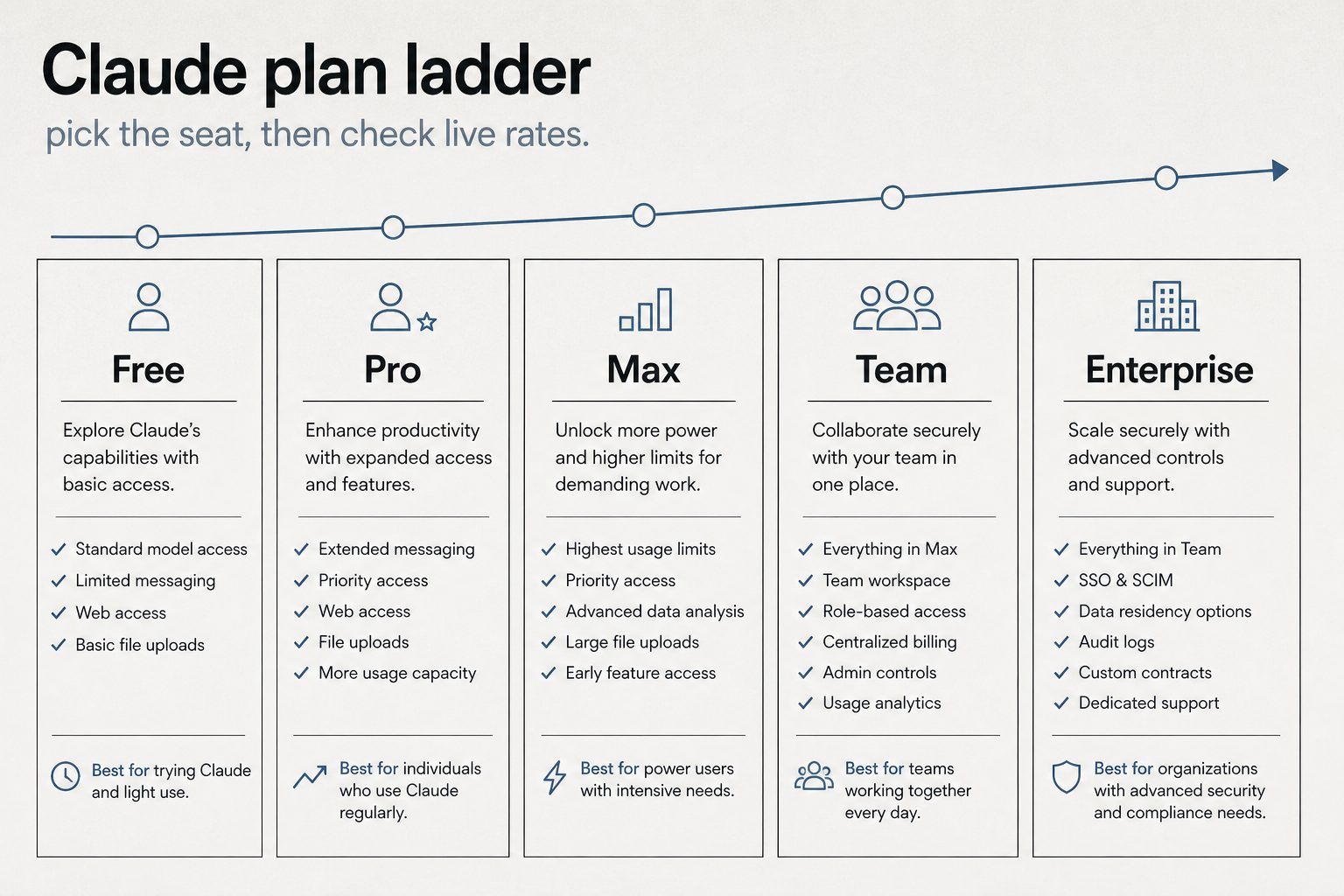
The Team plan uses per-seat pricing across two mix-and-match tiers (2 to 150 seats). Standard seats cost $20/seat/month billed annually ($25/seat/month monthly) with $20/seat in pooled API credits. Premium seats cost $100/seat/month billed annually ($125/seat/month monthly) with 5× Standard seat usage and $100/seat toward the $500/month team API credit pool. For how those seat allowances burn across rolling 5-hour and weekly windows, see the Claude Team usage limits guide.
For a 10-person team on annual billing with 7 Standard and 3 Premium seats, the monthly cost would be (7 × $20) + (3 × $100) = $440/month, or $5,280/year. That same mix also pools $440/month in API credits (7 × $20 + 3 × $100), under the $500 pool cap. Compare that to putting all 10 on Standard ($200/month) or all 10 on Premium ($1,000/month) to see why the mix-and-match model matters.
Claude Plans & Limits Cheat Sheet (PDF)
Every tier compared side-by-side: pricing anchors, 5-hour rolling usage pools, Claude Code inclusion, and model access in one printable sheet.
What Standard Seats Include
Standard seats include full chat access across web, iOS, Android, and desktop (Anthropic does not publish a numeric Pro multiplier for Standard seats; see our usage limits guide for capacity details). Standard seat holders receive Claude Code alongside integrated Claude workspace workflows (built directly into Claude / Claude Desktop), Microsoft 365 and Slack integrations, Enterprise search, SSO, centralized billing, admin controls, and commercial zero-training defaults.
Team Plan vs Individual Pro/Max Plans
The question many organizations face: should each person just buy their own Pro or Max subscription? The Team plan adds several capabilities that individual plans lack. Central billing means one invoice instead of individual expense reports. SSO and domain capture ensure that everyone in your organization uses the managed account. Admin controls let you manage connectors and desktop app deployment centrally. Content is not used for model training by default — individual free and Pro accounts have an opt-out option, but Team accounts are opted out by default. Enterprise search lets team members search across organizational knowledge.
Team Plan vs Enterprise Plan
The Team plan caps at 150 users. If you need more, or if you need features like SCIM provisioning, audit logs, compliance API, custom data retention, HIPAA readiness, IP allowlisting, or role-based access with fine-grained permissions, you need Enterprise. Enterprise is published at $20/seat/month plus API-rate usage on annual billing (20-seat minimum; self-serve or through Anthropic sales).
How to Choose Between Standard and Premium Seats
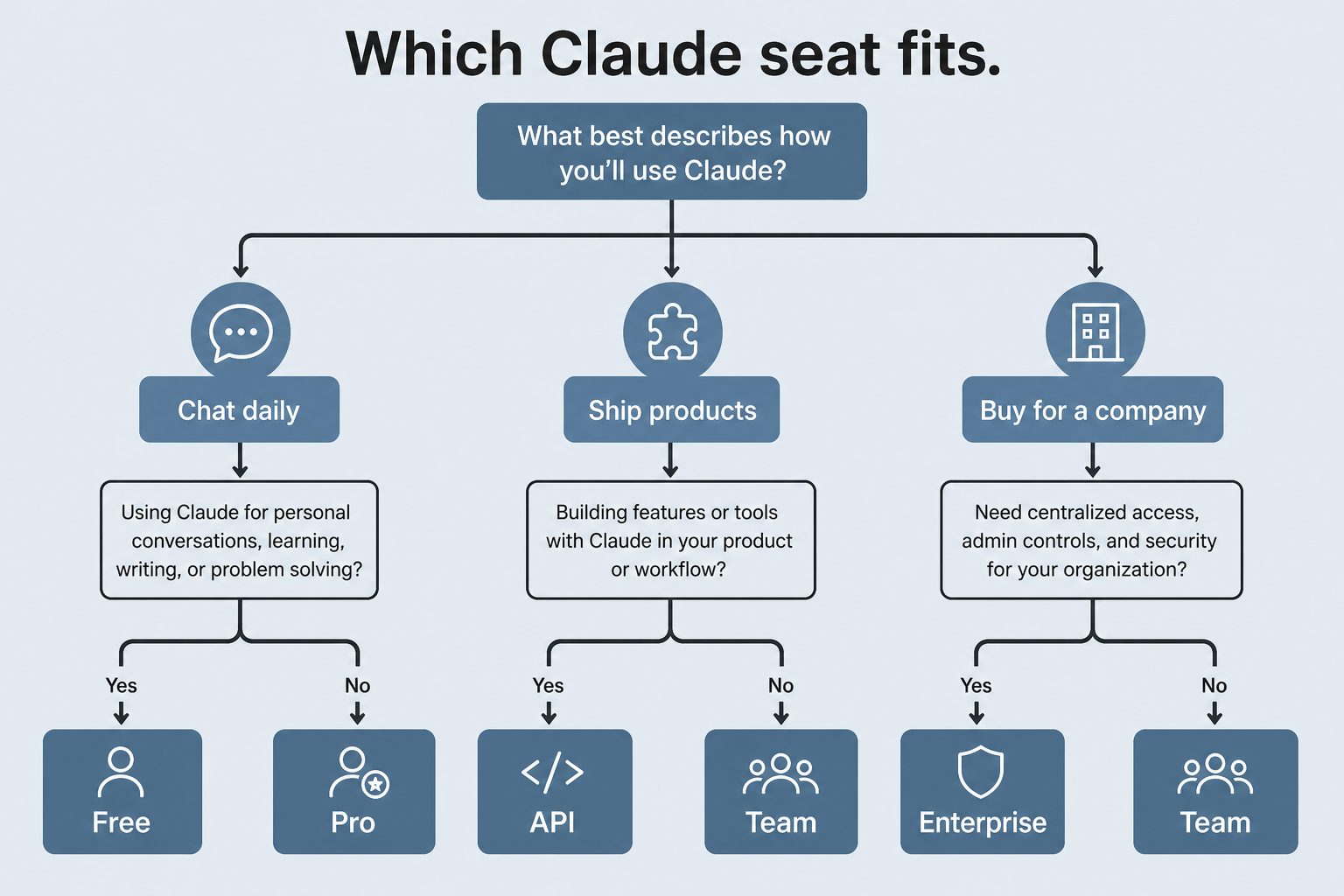
Start with Standard seats for everyone and monitor usage. If specific team members consistently hit rate limits — especially developers using Claude Code heavily or analysts running extended research sessions — upgrade those individuals to Premium seats. The mix-and-match model means you don’t need to over-provision. A typical pattern for a 20-person team might be 4-5 Premium seats for heavy users and 15-16 Standard seats for everyone else.
Frequently Asked Questions
What is the minimum team size for Claude Team?
The Claude Team plan requires a minimum of 2 seats. You can mix Standard and Premium seats within that minimum.
Can I switch between Standard and Premium seats?
Yes. Administrators can upgrade individual seats from Standard to Premium or downgrade from Premium to Standard. Changes take effect on the next billing cycle.
Does Claude Team include Claude Code?
Yes. Both Standard and Premium Team seats include access to Claude Code alongside integrated Claude workspace and desktop workflows (formerly Cowork, now built directly into Claude).
Is my team’s data used for training on the Team plan?
No. Content is not used for model training by default on the Claude Team plan.
Related: Claude AI Pricing (2026) — every plan, API rate, and the cost calculator
💼 Deploying Claude or AI Infrastructure in Your Business?
At Tygart Media, we engineer custom Model Context Protocol (MCP) servers, multi-model content pipelines, and AI operational systems. Explore our Claude AI Team Implementation Services or check out our complete Restoration Operations & AI Kit.
Part of the complete guide: Claude Pricing, Plans & Limits
Get The Signal
What we actually ran, what it measured, and what it means for a restoration shop — every week, including the flops.
Leave a Reply