Tag: Restoration

  • The Distillery — Live Value Meter

    The Distillery — Live Value Meter

    The Distillery
    — Brew № — · Distillery


    The Tygart Media Distillery

    Brew #1 — Radon Mitigation

    A living knowledge base, distilled from zero, published in the open.

    LIVE
    loading…
    brewed since 2026-04-10

    Category Organic Value Meter
    $0
    PER MONTH — RADON MITIGATION CATEGORY
    Day 0. The zero timestamp is real.

    Ranked Keywords
    0
    in top 100 for radon category URLs

    Nodes Published
    0 / 150
    of target corpus

    Top 10 Placements
    0
    first page Google

    Days Brewing
    0
    since 2026-04-10

    This is an open kitchen. Every knowledge node in this category is being brewed and published in public, through an eight-pass distillation pipeline that cross-references EPA guidance, AARST standards, state health departments, and peer-reviewed radon literature. The meter above tracks the category’s real organic SEO contribution to tygartmedia.com, measured daily against DataForSEO and SpyFu. No projections. No theoretical ceilings. Just what Google actually thinks the work is worth, right now.

    Brew Progress by Wave

    Top Ranking Keywords

  • Build Your Own KnowHow — And Then Go Further

    Build Your Own KnowHow — And Then Go Further

    Tygart Media Strategy
    Volume Ⅰ · Issue 04Quarterly Position
    By Will Tygart Long-form Position Practitioner-grade

    KnowHow is one of the most important things happening in the restoration industry right now. If you’re not familiar with it: it’s an AI-powered platform that takes your company’s operational knowledge — your SOPs, your onboarding materials, your hard-won process documentation — and turns it into an on-demand resource every team member can access from their phone. Your best technician’s knowledge stops walking out the door when they leave. Your new hire in Iowa follows the same protocol as your veteran in Texas. Your managers stop being human FAQ machines.

    It solves a real problem that has cost restoration companies enormous amounts of money in inconsistent work, slow onboarding, and institutional knowledge that evaporates with turnover.

    But KnowHow solves the internal problem. The knowledge stays inside your organization. And there is a second problem — the external one — that nobody has solved yet.

    The Internal Problem vs. The External Problem

    Three cards for field SOPs, owner prompts, and KPI rhythm in an operations kit
    The internal problem vs the external problem.

    The internal problem is: your people don’t have access to what your company knows when they need it. KnowHow fixes that. The knowledge becomes accessible, searchable, consistent, and deliverable at scale across every location and every shift.

    The external problem is different: your clients, prospects, and contracting authorities have no way to verify that your company knows what it claims to know. They can read your capabilities statement. They can check your certifications. They can call references. But they can’t look inside your organization and confirm that your documented protocols are current, specific, and actually practiced — not just written down for the sake of winning a bid.

    In commercial restoration, that verification gap is expensive. Facility managers, FEMA contracting officers, insurance carriers, and national property management companies are making vendor decisions based on trust signals that are largely unverifiable. The company with the best pitch often wins over the company with the best protocols.

    An external knowledge API changes that dynamic completely.

    What an External Knowledge API Actually Is

    Long paper tape measure unrolling across a desk beside a laptop, metaphor for context window length
    What an external knowledge API actually is.

    An external knowledge API is a structured, authenticated, publicly accessible feed of your operational knowledge — not your trade secrets, not your pricing, not your internal communications, but your documented protocols, your methodology, your standards, and your verified expertise. Published. Structured. Machine-readable. Available to anyone who needs to evaluate whether your company is the right partner for a complex job.

    Think of it as the difference between telling a client “we follow IICRC S500 water damage protocols” and showing them a live, structured endpoint where they can pull your actual documented water mitigation process — with timestamps that confirm it was updated last month, not in 2019.

    The internal KnowHow platform is the source. The external API is the window — carefully curated, access-controlled, and designed to answer the questions that matter to the people evaluating you.

    Who Cares About Your External Knowledge

    The list is longer than most restoration contractors realize.

    Commercial property managers and facility directors. A national hotel chain or healthcare system evaluating restoration vendors for their approved vendor program needs more than a certificate of insurance and a reference list. They want to know that your protocols are consistent across every job, that your team follows the same process whether the project manager is on-site or not, and that your documentation standards will hold up in a claim. An external knowledge feed — showing your water damage, fire damage, and mold remediation protocols in structured, current form — answers those questions before the conversation even starts.

    FEMA and government contracting. Federal disaster response contracts are awarded to companies that can demonstrate organizational capability at scale. The RFP process rewards documentation. A company that can point to an externally published, structured knowledge base as evidence of their operational maturity is presenting something most competitors don’t have. It’s not just a differentiator — it’s proof of the kind of institutional infrastructure that large government contracts require.

    Insurance carriers and TPAs. Third-party administrators and carrier programs are increasingly using AI tools to evaluate and route claims to preferred vendors. A restoration company whose documented protocols are structured and machine-readable — available for an AI system to pull and verify against claim requirements — is positioned for the way preferred vendor selection is heading, not the way it used to work.

    Commercial real estate and institutional property owners. REITs, hospital systems, university facilities departments, and large corporate real estate portfolios are all moving toward vendor relationships that have verifiable documentation standards. An external knowledge API gives them something they can actually audit — not just a sales presentation.

    How to Build It: The Two-Layer Stack

    The stack that makes this work has two layers, and KnowHow already gives you the first one.

    Layer one — internal capture and organization (KnowHow’s job). Use KnowHow, or an equivalent internal knowledge platform, to capture and organize your operational knowledge. Document your protocols rigorously. Keep them current. Assign ownership so they don’t go stale. The discipline required here is real, but it’s also the discipline that makes your company better operationally regardless of what you do with the knowledge externally. This layer is the foundation.

    Layer two — external publication and API distribution (the next layer). Select the knowledge that is appropriate to share externally — your methodology, your standards, your certifications, your documented approach to specific job types — and publish it in a structured, consistently maintained form. This can be as simple as a well-organized section of your company website with current protocol documentation, or as sophisticated as a full REST API endpoint that clients and AI systems can query directly. The key requirements are structure (consistent format, clear categorization), currency (updated when protocols change, timestamped), and accessibility (easy for a prospect or evaluator to find and verify).

    The gap between layer one and layer two is smaller than it sounds. If you’ve already done the internal documentation work in KnowHow, the editorial work of curating an external-facing version of that knowledge is incremental. You’re not building from scratch — you’re deciding what to show and building the window to show it through.

    The Credential That No Certificate Can Replace

    Certifications are static. An IICRC certification tells a client you passed a test. It doesn’t tell them what your company actually does when a technician encounters a Category 3 water loss in a 1960s commercial building with asbestos-containing materials in the subfloor.

    External knowledge does. It shows the specific, documented, currently-maintained thinking your company applies to that situation. It’s living proof of operational maturity, not a snapshot from the last time someone studied for an exam.

    In the commercial restoration market, where the jobs are large, the documentation requirements are significant, and the clients are sophisticated, that distinction is worth money. The companies that build this layer now — while most competitors are still treating knowledge as purely internal — will have a credential that can’t be quickly replicated.

    The Practical Starting Point

    Three panels showing one problem, three options, one recommendation
    The practical starting point.

    You don’t need a full API to start. The minimum viable version of an external knowledge layer is a structured, well-maintained “Our Methodology” section on your website — not a generic “our process” marketing page, but actual documented protocols organized by job type, with clear version dates and enough specificity that an evaluator can see you’ve actually done the work.

    From there, the path to a structured API is incremental: add consistent categorization, ensure each protocol document has a permanent URL, and eventually expose that structure through a queryable endpoint. Each step makes the credential more verifiable and more valuable.

    KnowHow got the industry to take internal knowledge seriously. The companies that figure out how to take the next step — making that knowledge externally verifiable and machine-readable — will have something the market has never seen before in restoration.

    What is the difference between internal and external knowledge in restoration?

    Internal knowledge (what KnowHow manages) is operational documentation accessible to your own team — SOPs, onboarding materials, process guides. External knowledge is a curated version of that same expertise published in a structured, verifiable form for clients, contracting authorities, and AI systems to access and evaluate.

    Why would a restoration company publish its knowledge externally?

    Because commercial clients, FEMA, insurance carriers, and institutional property managers need to verify operational maturity before awarding contracts. A structured, current, machine-readable knowledge base is a stronger credential than certifications or capabilities statements — it shows documented, maintained expertise rather than a static snapshot.

    What is an external knowledge API for a restoration company?

    A structured, authenticated feed of your documented protocols, methodology, and standards — published in a format that clients, evaluators, and AI systems can query directly. It turns your operational knowledge into a verifiable, market-facing credential rather than keeping it purely internal.

    Who specifically benefits from a restoration company’s external knowledge API?

    Commercial facility managers building approved vendor programs, FEMA and government contracting officers evaluating organizational capability, insurance carriers and TPAs using AI tools to route claims to preferred vendors, and institutional property owners who need auditable vendor documentation standards.

    Does a restoration company need KnowHow to build an external knowledge API?

    No — any internal knowledge platform or even rigorous in-house documentation works as the foundation. KnowHow accelerates the internal capture work, which makes the external publication step more realistic. But the two-layer stack works with any internal knowledge infrastructure that produces well-documented, current, organized protocols.

    Related on Tygart Media: jobs as knowledge base · Notion Command Center · S500 pocket protocol.

  • Your Jobs Are a Knowledge Base. You’re Just Not Using Them That Way.

    Your Jobs Are a Knowledge Base. You’re Just Not Using Them That Way.

    Related on Tygart Media: external knowledge API · S500 in the van.

    Tygart Media / Content Strategy
    The Practitioner JournalField Notes
    By Will Tygart
    · Practitioner-grade
    · From the workbench

    Every restoration job teaches something. Almost none of it ever gets written down.

    A crew shows up to a flooded basement at 2am. They make decisions — where to set the equipment, how to read the moisture map, which walls are worth opening and which aren’t, how to sequence the dry-down so the structure doesn’t get worse before it gets better. They’ve made these calls before. They know things that took years to learn. They finish the job, submit a field report, and move on.

    Then the experienced tech takes another job across town. Or retires. Or just gets too busy to train anyone. And that knowledge disappears.

    I want to talk about a different approach. One that captures that knowledge systematically — and turns it into something that works in two directions at once.

    The Double-Purpose Content System

    Three cards for field SOPs, owner prompts, and KPI rhythm in an operations kit
    The double-purpose content system.

    The idea is straightforward: document your jobs as content. Scrub the client-specific details — no names, no addresses, no identifying information. But tell the real story. What was the scope? What made this job complicated? What decisions were made and why? What was the outcome?

    Published on your website, this does something conventional marketing content can’t: it demonstrates expertise through specificity. Not “we handle all types of water damage” — but a documented account of how your team handled a Category 3 intrusion in a commercial kitchen with active mold growth and a compressed timeline. That’s a different signal entirely.

    The reader — whether that’s a property manager searching for a qualified contractor or an insurance adjuster evaluating whether to refer you — isn’t reading a brochure. They’re reading a case record. They can see how your team thinks.

    But here’s the second direction, and it’s the one I find more interesting: that same documentation feeds back into the company as a knowledge base.

    The Internal Payoff

    Comparison of Claude how-to fit versus local service page fit for assistants
    The internal payoff.

    Restoration companies have a training problem that nobody talks about directly. The knowledge of how to do the job well is distributed unevenly across the team. The senior technicians have it. The new hires don’t. And the transfer mechanism is usually informal — ride-alongs, tribal knowledge, institutional memory held by people who may not stay forever.

    When you document jobs as structured content, you start to build something that actually scales. A new technician can search the knowledge base for jobs similar to what they’re walking into. They can see how a comparable loss was scoped, how the equipment was deployed, what complications arose and how they were handled. Before they’ve seen thirty jobs themselves, they can read about thirty jobs your company has already worked.

    An operations manager making a scheduling or resource decision can pull up historical jobs of a similar size and see what the typical crew requirements were. A project manager prepping a scope of work can see how similar scopes were structured and what line items were typically included.

    And when AI tools enter the workflow — which they will, if they haven’t already — that documented job history becomes training data your AI actually understands. Not generic restoration industry knowledge pulled from the web. Your company’s specific approach, your specific decisions, your specific standards. An AI assistant working from that foundation gives answers that sound like your company, because they’re drawn from your company’s real work.

    What Makes This Different From a Blog

    Most restoration company blogs are essentially SEO performance. Keywords stuffed into generic articles about what causes mold or how long drying takes. Useful, maybe. Differentiating, no.

    What I’m describing is a content system built on documented operational reality. The subject matter isn’t manufactured — it’s the actual work. Which means it has a quality that manufactured content can never replicate: it happened. The specificity is real because the job was real. The decisions were real. The outcome was real.

    Readers feel this, even when they can’t articulate why. They’re not evaluating whether your content sounds authoritative. They’re reading something that is authoritative, because it comes from direct experience rather than borrowed knowledge.

    And unlike a blog that requires a content team to invent topics every week, this system has an inventory problem that only gets easier over time. Every job adds to it. The longer you run the system, the richer the knowledge base becomes — for your website visitors and for your own team.

    The Setup

    Three panels showing one problem, three options, one recommendation
    The setup.

    The practical structure is simpler than it sounds. Each job entry captures a handful of consistent fields: loss type, scope classification, environmental conditions, key decision points, equipment deployed, timeline, outcome. The sensitive details — client, location, anything identifying — never make it into the published version.

    What gets published is the pattern. The structure of the problem and the response. Categorized, searchable, and useful to anyone trying to understand how your company operates — including your own people.

    This isn’t a new concept in medicine or law, where case documentation has always served both public communication and internal learning simultaneously. It’s just new in restoration, where the work is equally complex and the knowledge equally worth preserving.

    The companies that start building this now will have a meaningful advantage in three years. Not because their marketing was cleverer — because their institutional knowledge actually compounded instead of walking out the door every time someone left.


    Tygart Media builds content and knowledge systems for property damage restoration companies. If you’re interested in implementing a job documentation system for your operation, start here.

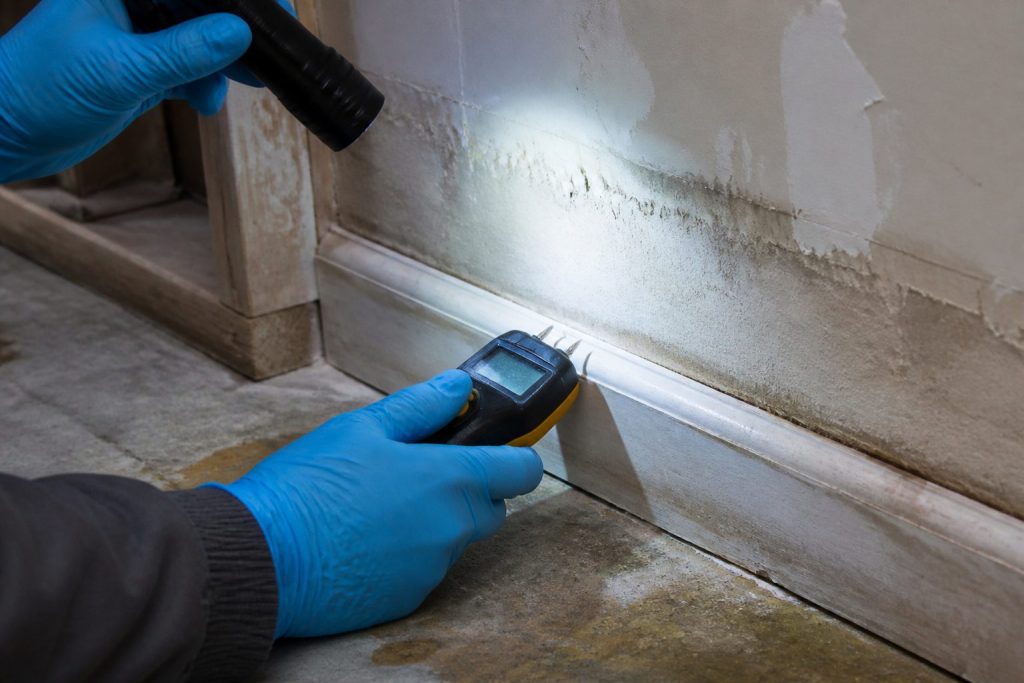
  • Water Damage Mold Growth Drywall — Water Damage Restoration Visual

    Water Damage Mold Growth Drywall — Water Damage Restoration Visual

    {“@context”: “https://schema.org”, “@type”: “Article”, “headline”: “Water Damage Mold Growth Drywall u2014 Water Damage Restoration Visual”, “url”: “https://tygartmedia.com/water-damage-mold-growth-drywall/”, “datePublished”: “2026-04-04T01:36:02”, “dateModified”: “2026-04-04T01:36:02”, “author”: {“@type”: “Person”, “name”: “Will Tygart”}, “publisher”: {“@type”: “Organization”, “name”: “Tygart Media”, “url”: “https://tygartmedia.com”}, “mainEntityOfPage”: {“@type”: “WebPage”, “@id”: “https://tygartmedia.com/water-damage-mold-growth-drywall/”}}{“@context”: “https://schema.org”, “@type”: “BreadcrumbList”, “itemListElement”: [{“@type”: “ListItem”, “position”: 1, “name”: “Home”, “item”: “https://tygartmedia.com”}, {“@type”: “ListItem”, “position”: 2, “name”: “Water Damage Mold Growth Drywall u2014 Water Damage Restoration Visual”, “item”: “https://tygartmedia.com/water-damage-mold-growth-drywall/”}]}

    About This Image

    This image is part of the Water Damage Restoration collection in the Tygart Media visual library. Every image produced by Tygart Media is AI-generated using Google Vertex AI (Imagen), converted to WebP format, and injected with full IPTC/XMP metadata before publication.

    Technical Details

    • Format: WEBP
    • Collection: Water Damage Restoration
    • Media ID: 448
    • Pipeline: Vertex AI Imagen → WebP → IPTC/XMP → WordPress

    Image Licensing

    All images in the Tygart Media visual library are produced in-house using AI image generation and are owned by Tygart Media.

  • Water Damage Restoration Crew Extraction — Water Damage Restoration Visual

    Water Damage Restoration Crew Extraction — Water Damage Restoration Visual

    {“@context”: “https://schema.org”, “@type”: “Article”, “headline”: “Water Damage Restoration Crew Extraction u2014 Water Damage Restoration Visual”, “url”: “https://tygartmedia.com/water-damage-restoration-crew-extraction/”, “datePublished”: “2026-04-04T01:36:00”, “dateModified”: “2026-04-04T01:36:00”, “author”: {“@type”: “Person”, “name”: “Will Tygart”}, “publisher”: {“@type”: “Organization”, “name”: “Tygart Media”, “url”: “https://tygartmedia.com”}, “mainEntityOfPage”: {“@type”: “WebPage”, “@id”: “https://tygartmedia.com/water-damage-restoration-crew-extraction/”}}{“@context”: “https://schema.org”, “@type”: “BreadcrumbList”, “itemListElement”: [{“@type”: “ListItem”, “position”: 1, “name”: “Home”, “item”: “https://tygartmedia.com”}, {“@type”: “ListItem”, “position”: 2, “name”: “Water Damage Restoration Crew Extraction u2014 Water Damage Restoration Visual”, “item”: “https://tygartmedia.com/water-damage-restoration-crew-extraction/”}]}

    About This Image

    This image is part of the Water Damage Restoration collection in the Tygart Media visual library. Every image produced by Tygart Media is AI-generated using Google Vertex AI (Imagen), converted to WebP format, and injected with full IPTC/XMP metadata before publication.

    Technical Details

    • Format: WEBP
    • Collection: Water Damage Restoration
    • Media ID: 447
    • Pipeline: Vertex AI Imagen → WebP → IPTC/XMP → WordPress

    Image Licensing

    All images in the Tygart Media visual library are produced in-house using AI image generation and are owned by Tygart Media.

  • Ceiling Water Damage Stain — Water Damage Restoration Visual

    Ceiling Water Damage Stain — Water Damage Restoration Visual

    {“@context”: “https://schema.org”, “@type”: “Article”, “headline”: “Ceiling Water Damage Stain u2014 Water Damage Restoration Visual”, “url”: “https://tygartmedia.com/ceiling-water-damage-stain/”, “datePublished”: “2026-04-04T01:35:58”, “dateModified”: “2026-04-04T01:35:58”, “author”: {“@type”: “Person”, “name”: “Will Tygart”}, “publisher”: {“@type”: “Organization”, “name”: “Tygart Media”, “url”: “https://tygartmedia.com”}, “mainEntityOfPage”: {“@type”: “WebPage”, “@id”: “https://tygartmedia.com/ceiling-water-damage-stain/”}}{“@context”: “https://schema.org”, “@type”: “BreadcrumbList”, “itemListElement”: [{“@type”: “ListItem”, “position”: 1, “name”: “Home”, “item”: “https://tygartmedia.com”}, {“@type”: “ListItem”, “position”: 2, “name”: “Ceiling Water Damage Stain u2014 Water Damage Restoration Visual”, “item”: “https://tygartmedia.com/ceiling-water-damage-stain/”}]}

    About This Image

    This image is part of the Water Damage Restoration collection in the Tygart Media visual library. Every image produced by Tygart Media is AI-generated using Google Vertex AI (Imagen), converted to WebP format, and injected with full IPTC/XMP metadata before publication.

    Technical Details

    • Format: WEBP
    • Collection: Water Damage Restoration
    • Media ID: 446
    • Pipeline: Vertex AI Imagen → WebP → IPTC/XMP → WordPress

    Image Licensing

    All images in the Tygart Media visual library are produced in-house using AI image generation and are owned by Tygart Media.

  • Flooded Basement Water Damage — Water Damage Restoration Visual

    Flooded Basement Water Damage — Water Damage Restoration Visual

    {“@context”: “https://schema.org”, “@type”: “Article”, “headline”: “Flooded Basement Water Damage u2014 Water Damage Restoration Visual”, “url”: “https://tygartmedia.com/flooded-basement-water-damage/”, “datePublished”: “2026-04-04T01:35:57”, “dateModified”: “2026-04-04T01:35:57”, “author”: {“@type”: “Person”, “name”: “Will Tygart”}, “publisher”: {“@type”: “Organization”, “name”: “Tygart Media”, “url”: “https://tygartmedia.com”}, “mainEntityOfPage”: {“@type”: “WebPage”, “@id”: “https://tygartmedia.com/flooded-basement-water-damage/”}}{“@context”: “https://schema.org”, “@type”: “BreadcrumbList”, “itemListElement”: [{“@type”: “ListItem”, “position”: 1, “name”: “Home”, “item”: “https://tygartmedia.com”}, {“@type”: “ListItem”, “position”: 2, “name”: “Flooded Basement Water Damage u2014 Water Damage Restoration Visual”, “item”: “https://tygartmedia.com/flooded-basement-water-damage/”}]}

    About This Image

    This image is part of the Water Damage Restoration collection in the Tygart Media visual library. Every image produced by Tygart Media is AI-generated using Google Vertex AI (Imagen), converted to WebP format, and injected with full IPTC/XMP metadata before publication.

    Technical Details

    • Format: WEBP
    • Collection: Water Damage Restoration
    • Media ID: 445
    • Pipeline: Vertex AI Imagen → WebP → IPTC/XMP → WordPress

    Image Licensing

    All images in the Tygart Media visual library are produced in-house using AI image generation and are owned by Tygart Media.